


Reviewed by ThaiLawOnline, a licensed Thai law firm practising in Thailand since 2006. Thai lawyer of record: Wichuda Atthamethakon, LL.M., Thai Bar Licence 3149/2556.
Last updated on
Deportation and a criminal case: the 2026 procedure
The 2026 deportation regulation was published on 27 August and took effect on 28 August 2026. Deportation is a separate decision from the criminal sentence. Clause 5 includes immigration offences, unlawful work and Foreign Business Act offences; its separate five-year category concerns an offence’s statutory imprisonment threshold, not a requirement for every foreign defendant to receive a five-year sentence. Prison authorities must give at least 15 days’ notice before the relevant release. Suspended sentences and fine-only outcomes are also referred for consideration. Referral does not itself mean an automatic deportation order.
A lawyer handling bail or sentencing should also check the immigration position and any proposed deportation or re-entry order. Serving a sentence, paying a fine or obtaining a suspended sentence does not by itself resolve permission to stay.
Visa-exempt arrivals from 15 September 2026
Eligible travellers entering under the revised exemption receive 30 days, rather than the former 60 days. This does not retrospectively shorten an existing admission stamp. Check the permitted-until date in your passport and apply for any extension before expiry; an extension requires approval. A mistaken assumption about the old allowance does not prevent overstay penalties. See the Royal Thai Embassy’s notice and our current exemption guide.
Short answer: overstaying costs 500 baht per day, capped at 20,000 baht, which you reach on day 40. But the money is not the problem. Overstay is a criminal offence under section 81 of the Immigration Act B.E. 2522, punishable by up to two years’ imprisonment, a fine of up to 20,000 baht, or both, and once you pass 90 days a re-entry ban follows automatically. Paying the fine does not clear the ban. It settles the days you already overstayed and nothing else.
The decision that changes everything is whether you walk into immigration yourself or are caught. Under 1 year, surrendering voluntarily after 90 days means a 1-year ban; being arrested for the same overstay means 5 years. See both ladders.
What Does Overstaying Cost in 2026?
| Length of overstay | Fine at the airport or immigration office | What else happens |
|---|---|---|
| 1 day | 500 THB | Usually paid on departure and that is the end of it. There is no grace period: day one counts. |
| 2 to 39 days | 500 THB per day | Paid on departure. No automatic ban below 90 days for a voluntary departure. |
| 40 days or more | 20,000 THB, the cap | The fine stops growing at 40 days. From here the fine is no longer the issue; the ban is. |
| More than 90 days | 20,000 THB | A re-entry ban applies, and it is automatic. See the ladder below. |
The cap is the trap. Because the fine stops at 20,000 baht after 40 days, people conclude that a long overstay costs the same as a medium one. Financially that is true. Legally it is the opposite of true: every additional month past 90 days moves you up a ban ladder that the fine has no effect on.
And the fine is not the penalty the statute actually prescribes. Section 81 reads, in the Thai original, that an alien who stays in the Kingdom without permission, or whose permission has expired or been revoked, is liable to imprisonment not exceeding two years, or a fine not exceeding twenty thousand baht, or both. The 500-baht-a-day counter is how the offence is settled administratively in the ordinary case. It is not a fee schedule, and it does not bind anyone if the case is dealt with as a prosecution. Separately, section 54 allows officers to deport an alien in exactly this position.
The Re-Entry Ban Ladder: Surrender vs Arrest
This is the single most important table on this page, and the difference between the two columns is the difference between a holiday interrupted and a decade locked out.
| Length of overstay | You leave voluntarily | You are arrested |
|---|---|---|
| Under 90 days | No ban, fine only | 5 years, plus detention. The order’s arrest limb has no lower threshold: an overstay of up to one year that ends in arrest and prosecution draws a five-year ban whether it ran three days or eleven months. |
| More than 90 days | 1 year | 5 years |
| More than 1 year | 3 years | |
| More than 3 years | 5 years | 10 years |
| More than 5 years | 10 years |
Read the two columns against each other. A six-month overstay ends in a 1-year ban if you present yourself at immigration and leave. The identical six-month overstay ends in a 5-year ban if a checkpoint, a police check or a raid finds you first. Nothing about your circumstances differs. Only who initiated the contact.
That is why the worst advice a long overstayer receives is “keep your head down”. Time spent hiding does not reduce anything and moves you up both ladders at once.
Two things the order says that almost nothing written about it repeats. The ban runs from the day you leave the Kingdom, not from the day your permission expired, so hiding both moves you up the ladder and postpones the start of the clock. And clause 3(1) disapplies the ladder altogether to an alien who leaves before turning eighteen. A sixteen-year-old departing on a two-year family overstay is not banned for three years; they are not banned at all. Ministry of Interior Order 1/2558 was signed on 27 November 2015, published in the Government Gazette volume 132, special part 335 Ngor, page 42, on 21 December 2015, and took effect ninety days later, on 20 March 2016.
What To Do, Depending on Where You Are
| Your situation | The realistic move |
|---|---|
| Overstayed a few days, flying out anyway | Pay at the airport, allow extra time, keep the receipt. No lawyer needed. |
| Under 90 days, still in Thailand | Leave before day 90 if you possibly can. Crossing that line is what creates the ban. |
| Past 90 days, no ban yet accepted | Take advice before you move. The gap between voluntary and arrested is at its widest here. |
| Long overstay, years | This is a planned exit, not a walk-in. Passport validity, unpaid fines, any outstanding matter and the ban you will accept all need working out first. |
| Already detained | Immediate legal help. Detention conditions and the length of stay are both driven by how quickly paperwork and a ticket are arranged. |
| Overstayed because of hospitalisation, a lost passport or a family emergency | Document it now, contemporaneously. Discretion exists, but it is exercised on evidence, not explanations offered later. |
| An agent told you your extension was handled, and you are not sure it was | Check before you travel. If no extension was actually granted you have been on overstay since the real expiry date, whatever the agent told you. Our guide to using a visa agent in Thailand sets out what an agent may lawfully do and what puts the applicant, not the agent, in front of a criminal provision. |
The rest of this guide covers the legal framework in detail, the court process for long overstays, the blacklist system, immigration detention, appeals and blacklist removal.
Thailand’s visa overstay regulations represent one of the most serious immigration matters facing expatriates in the Kingdom. Under current Thai immigration law, overstaying your allowed time, even by one day, is a violation. This can lead to big fines, criminal charges, deportation, and long bans from re-entering Thailand. The consequences have become harsher since March 2016. That’s when the Ministry of Interior Order 1/2558 started stricter penalties. That order was issued in 2015 and effective March 20, 2016.
Overstay is almost always avoidable by holding the right permission, which the Thai Visa Finder will help you identify.
Now, overstays longer than 90 days result in mandatory blacklisting. For expatriates living in Thailand, it is important to understand these rules. Breaking them can affect your ability to stay in or return to the country. This guide looks at the laws about Thailand visa overstay criminal charges. It covers the penalties, blacklist procedures, and the important role of skilled visa overstay lawyers in Bangkok. They help people deal with these complex legal issues.
Table of Contents
Understanding Visa Overstay in Thailand
What Constitutes Overstay
A visa overstay in Thailand happens when a foreigner stays in the country past the date in their passport. This date is given by immigration officials when they enter. This date, called “Admitted Until” or “Permitted to Stay Until,” shows how long you can stay legally. It is different from your visa validity date, which is crucial for determining the number of days you can stay. Many expatriates think their visa expiration date decides how long they can stay. However, Thai immigration law makes an important difference. Visa validity shows when you can enter Thailand. The immigration stamp shows how long you can remain in the country.
Staying in Thailand past the stamped date, even by a few hours, is illegal. Thai immigration officials know that overstays can happen by accident. This can be due to flight cancellations, medical emergencies, or simple mistakes. However, the law does not make a difference between intentional and accidental violations. Children are commonly not fined at the counter, a practice usually described as applying below the age of 14, though no provision of the Act or of Order 1/2558 sets that age and we have not been able to source it. What is in the order matters far more and points the other way: clause 3(1) disapplies the whole re-entry ban ladder to anyone who leaves the Kingdom before turning eighteen. They still need proper visas and they will still get overstay stamps in their passports when they leave. As an expat myself living in Thailand since 2004, I believe I never been overstay even 1 day. But I saw clients with several years of overstay. Be vigilent.
Legal Framework Under Immigration Act B.E. 2522
The Immigration Act B.E. 2522 (1979) is the main law for foreign nationals in Thailand. Overstay itself is section 81: an alien who stays in the Kingdom without permission, or whose permission has expired or been revoked, is liable to imprisonment not exceeding two years, or a fine not exceeding twenty thousand baht, or both. Section 54 separately allows the competent official to send such an alien back out of the Kingdom.
The re-entry ban is not in the Act, and section 12 does not mention overstay. Section 12 lists eleven classes of alien who may not enter the Kingdom, and having overstayed a previous visit is not one of them. The ban reaches a returning overstayer through two of those classes instead. Section 12(10) excludes an alien whom the Minister has refused entry under section 16, and section 16 is the power the Minister used to make Ministry of Interior Order 1/2558, which is where the ladder set out above actually lives. Section 12(11) separately excludes anyone who was sent back out of the Kingdom at the Thai government’s expense, which is a practical reason to buy your own ticket rather than be removed on the state’s.
The 500-baht-a-day counter has a provision of its own, and it is not a fee schedule. Section 84 gives a settlement committee, made up of the head of the police, the head of the public prosecutors and the commander of the immigration division or their representatives, power to settle offences under the Act, to set its own criteria for doing so, and to delegate the settling to an inquiry official or a competent official. That delegation is how an officer at a counter can take the money. Section 84 then says that once the settled fine is paid the case is deemed terminated under the Criminal Procedure Code. Section 84 expressly excludes section 82 paragraph 2 from settlement, so the one offence in this area that cannot be dealt with at a counter is disobeying an order to leave the Kingdom, which carries imprisonment not exceeding two years and a fine not exceeding twenty thousand baht, both together.
Ministry of Interior Order 1/2558, implemented in March 2016, significantly strengthened enforcement mechanisms and introduced the current penalty structure. This order established the 90-day threshold that distinguishes between administrative violations and more serious offenses requiring deportation and blacklisting. The law shows Thailand’s commitment to strict immigration control. It also acknowledges the real challenges faced by foreign residents and visitors.
Common Scenarios Leading to Overstay
Expatriates commonly encounter overstay situations through various circumstances beyond their immediate control. Medical emergencies requiring extended hospitalization frequently result in overstays, particularly when patients are unconscious or unable to communicate with immigration authorities. Business issues, like slow work permit processing or surprise legal problems, can keep expatriates beyond their allowed stay.
Marriage and relationship issues are common. This is especially true when Thai spouses do not help with visa renewals. In some cases, they may even report partners who overstay their visas to immigration authorities as revenge. Border run problems, like transportation delays or temporary border closures, have left many expatriates stuck. They cannot finish their visa renewals on time. Flight cancellations often happen during bad weather or global events. This includes the COVID-19 pandemic, travel issues after it, and the 2023-2024 floods affecting border runs. have created unprecedented overstay situations for thousands of foreigners.
Criminal Charges and Legal Consequences
When Overstay Becomes Criminal
Strictly, overstay is a criminal offence from day one. Section 81 makes it punishable by imprisonment, a fine or both, and there is no 90-day threshold anywhere in it. What changes at 90 days is not the character of the offence but how it is disposed of: a short overstay is settled under section 84 and the case is then closed, while a long overstay, or one that begins with an arrest, is far more likely to be prosecuted than settled. That is what people mean when they say criminal charges apply after 90 days. The shift from administrative to criminal treatment is an important change in Thai immigration law. It has significant effects on expatriates.
Criminal proceedings typically commence when individuals with extended overstays appear before immigration officials or are discovered during routine police checks. Unlike simple fine payments for short overstays, criminal overstay cases require court appearances where judges determine appropriate penalties. The criminal nature of extended overstays means that individuals face potential imprisonment in addition to deportation and blacklisting.
Law enforcement officers throughout Thailand have authority to arrest individuals discovered to be overstaying their visas. These arrests can occur during routine traffic stops, workplace inspections, or targeted immigration raids. Once people are arrested for overstaying, they enter the criminal justice system. They cannot just pay fines to fix their cases.
“Criminal” in the paragraph before often means involvement in the justice system, not always a full trial.
Court Procedures for Long-term Overstays
Individuals with extended overstays who surrender to immigration authorities or are arrested must appear before Thai courts for adjudication. The court process involves several stages, beginning with initial detention at local police stations before transfer to immigration facilities. Defendants typically appear before judges within 48 hours of arrest, though immigration cases may involve longer processing periods.
Thai courts follow civil law procedures. They do not use jury trials. Judges decide all matters of guilt and sentencing. During court proceedings, defendants may present evidence of circumstances leading to their overstay, including medical documentation, family emergencies, or other mitigating factors. However, courts rarely dismiss overstay charges entirely, focusing instead on appropriate penalty levels. Judges can also reduce fines based on mitigating factors (e.g., humanitarian reasons).
The court process can lead to lower financial penalties than regular immigration fines. Judges may sometimes waive the maximum 20,000 THB penalty for smaller fines. However, being involved in criminal court leads to long re-entry bans, complicating the ability to leave the country. It also creates permanent criminal records. These records can affect future visa applications in Thailand and other countries.
Criminal vs Administrative Penalties
The distinction between criminal and administrative penalties represents a critical aspect of Thailand’s overstay enforcement system. Administrative penalties apply to overstays under 90 days when individuals voluntarily surrender at airports or border checkpoints, resulting in fines without criminal records. These serious administrative violations do not need court appearances. You can resolve them by paying immigration officials directly.
Criminal penalties apply to overstays exceeding 90 days or any overstay situation involving arrest by law enforcement officers. Criminal proceedings create permanent records that appear in background checks and significantly complicate future immigration applications. The criminal pathway also typically results in maximum blacklist periods and deportation procedures involving immigration detention center.
Administrative penalties preserve options for future visa applications and generally result in less severe long-term consequences. However, the administrative pathway requires voluntary surrender and payment of full penalties without negotiation. Criminal cases can be more serious. They may lead to lower financial penalties due to judicial discretion. However, this comes with permanent criminal records and long blacklist periods.
Penalty Structure and Fines
Daily Fine Structure (500 THB/day, max 20,000 THB)
Thailand’s overstay penalties work with a simple daily fee. You will pay 500 Thai Baht for each day you overstay. However, there is a maximum limit of 20,000 THB, no matter how long you stay over. This penalty system means that staying 40 days or more can lead to the same maximum fine as staying for several years. The daily calculation starts right after the authorized stay period ends. There are no grace periods or exceptions for partial days.
You usually pay overstay fines at airport immigration counters when you leave. You can pay at land border checkpoints when leaving Thailand. You can also pay at local immigration offices if you decide to leave voluntarily. Immigration officials need exact payment in Thai Baht, especially if individuals have to pay a fine for overstaying. Some places may accept major foreign currencies at official exchange rates. Payment receipts serve as important documentation for future visa applications and should be carefully preserved.
For short overstays of a few hours because of flight delays, immigration officers can choose to waive fines. This discretion typically applies only to genuine emergencies with supporting documentation, such as medical certificates or airline delay confirmations. Expatriates should not assume that fines will be canceled. They should always be ready to pay the full amount.
90-Day Threshold and Its Significance
The 90-day overstay limit is very important in Thai immigration law. It separates minor violations from serious offenses that can lead to deportation and blacklisting. Overstays under 90 days, when handled through voluntary surrender, result only in fines without affecting future entry eligibility or creating permanent immigration records. This threshold reflects Thai immigration policy recognizing that shorter overstays may result from genuine emergencies or miscommunications. The 90-day clock starts from the “permitted to stay until” date, not visa expiry.
Once the 90-day threshold is exceeded, overstay violations become serious offenses requiring deportation procedures and mandatory re-entry bans. The significance of this threshold cannot be overstated for expatriates, as crossing it fundamentally changes the legal consequences and available remedies. Even if you voluntarily surrender after 90 days, you will face a one-year re-entry ban. If you overstay longer, the ban will be even longer.
The 90-day threshold also determines the involvement of immigration detention centers and formal deportation procedures. People who overstay their visa by more than 90 days cannot just pay fines and leave. They must go through Thailand’s deportation system. This process may include detention, court appearances, and supervised departure. This systematic approach ensures that longer overstays receive appropriate legal attention while distinguishing them from minor administrative violations.
Ministry of Interior Order 1/2558
The Ministry of Interior Order 1/2558 was issued in November 2015. It started in March 2016 and has since impacted the enforcement of the Thai visa regulations. This order set up the current rules for dealing with overstay violations. It is the biggest change in Thailand’s immigration enforcement in many years. This order introduced mandatory blacklisting for overstays exceeding 90 days and created the structured penalty system currently in effect. The order reflects Thailand’s policy shift toward stricter immigration enforcement while maintaining proportionate responses to different violation levels.
The order specifically addresses classes of aliens ineligible for admission to Thailand, including those with overstay histories. It sets clear timelines for re-entry bans. These bans depend on how many days someone overstays and the situation. This change removes previous rules that led to inconsistent enforcement. The systematic approach makes sure that all overstay cases get the same treatment. This is true no matter which immigration office or officer is involved.
Implementation of Order 1/2558 also introduced enhanced information sharing systems allowing Thai immigration authorities to track overstay histories across all entry points. This comprehensive approach prevents individuals from avoiding consequences by using different airports or border crossings. The order’s rules apply to some people from before it started. This includes those who overstayed in Thailand after March 2016.
The Thailand Immigration Blacklist System
Ban Durations for Voluntary Surrender
Thailand has a blacklist system, called the exclusion list. This system bans people from re-entering for different lengths of time. The bans depend on how long someone overstayed and the reasons for it. For people who willingly give themselves up to Thai immigration, the penalties follow a clear scale. This scale aims to discourage long overstays while offering predictable results. These voluntary surrender provisions recognize that some individuals may wish to resolve their overstay situations cooperatively rather than risk arrest.
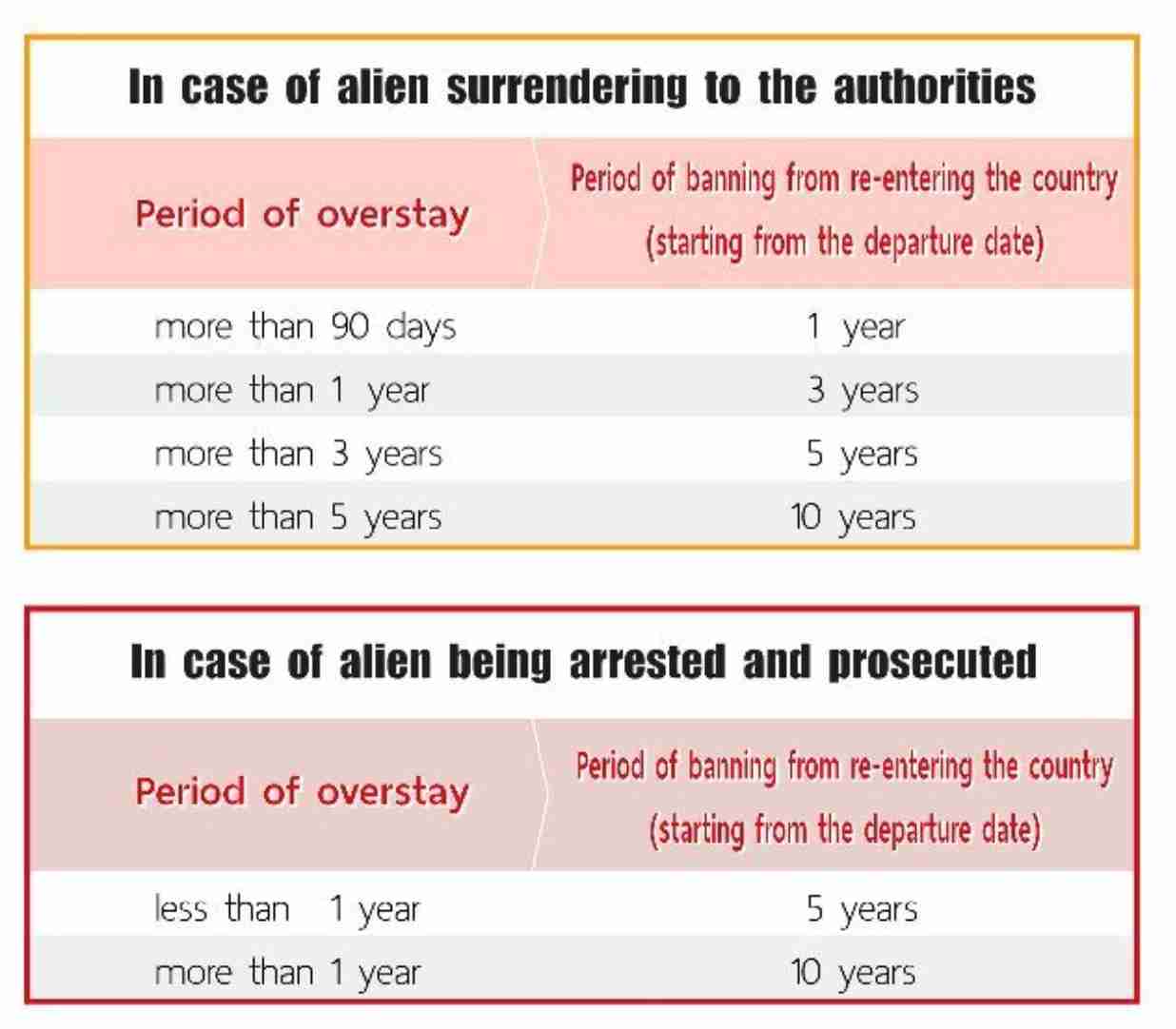
If someone overstays for more than 90 days but less than a year, they will face a one-year re-entry ban if they leave on their own. Overstays of one to three years incur three-year bans, while overstays of three to five years result in five-year exclusions. The most serious voluntary surrender cases, involving overstays exceeding five years, result in ten-year re-entry bans. Ten years is where Order 1/2558 stops. It sets no longer period and no permanent ban, so a permanent exclusion is not part of this ladder and would need a separate order of the Minister under section 16. These graduated penalties reflect Thai immigration policy balancing enforcement needs with recognition that voluntary compliance should be encouraged.
The voluntary surrender process requires people to go to immigration offices or departure points. They must pay any fines for overstaying and follow deportation procedures. Surrender must be truly voluntary. People who are already under arrest or investigation cannot use voluntary surrender benefits. Documentation proving the voluntary nature of surrender becomes important for future blacklist removal applications.
Harsher Penalties When Caught by Authorities
People who overstay their visas in Thailand face harsher penalties than those who come forward on their own. This shows the government’s policy of encouraging self-reporting. The penalty structure for apprehended overstayers creates strong incentives for voluntary compliance while imposing substantial consequences for attempted evasion. These enhanced penalties apply regardless of the circumstances leading to discovery.
If someone overstays their visa for less than one year and gets caught, they face a five-year ban from re-entering. If they leave on their own, the ban is only one year. If someone overstays their visa for more than one year, they face a ten-year ban on re-entry. That is more than three times the ban for surrendering voluntarily at the same point, which is three years, and below one year it is five against one. These enhanced penalties reflect the additional enforcement costs and policy concerns associated with non-compliance.
Being caught overstaying also typically involves immediate detention at immigration facilities, preventing individuals from making departure arrangements or settling personal affairs. The arrest and detention process creates additional legal complications, including potential criminal charges beyond immigration violations. Individuals caught overstaying also face enhanced scrutiny in any future visa applications, with their enforcement history creating presumptions against favorable consideration.
Persona Non Grata Status
The worst type of blacklisting in Thailand is called “persona non grata.” This means a person is permanently banned from the country. Do note that can be reviewed. This status typically applies to individuals involved in serious criminal activities, national security concerns, or repeated immigration violations. Unlike standard blacklist entries with specific expiration dates, persona non grata designations create indefinite exclusions requiring formal government review for removal.
Being labeled as persona non grata can happen for many reasons. It is not just about overstaying a visa. It can also include criminal convictions, illegal activities, or actions that go against Thai national interests. Immigration authorities maintain discretion in applying this designation, though it typically involves review by senior officials rather than routine immigration officers. The designation appears in international databases and affects travel to other countries beyond Thailand.
Removal from persona non grata status requires formal petitions supported by compelling evidence of changed circumstances and rehabilitation. The process involves extensive documentation, legal representation, and often takes months or years to complete. Success rates for removing persona non grata designations are low. This shows how important it is to avoid situations that could lead to these labels.
Immigration Detention Centers (IDC)
Conditions at Suan Plu IDC Bangkok
The Bangkok Immigration Detention Centre, located at Suan Plu in the Sathorn district, serves as Thailand’s primary facility for immigration violators awaiting deportation. The facility was running at 155% capacity, as reported by human rights groups in 2024. It holds overstayers, asylum seekers, refugees, and other immigration violators in very crowded conditions. Detainees report being housed in cells designed for far fewer occupants, with minimal personal space and inadequate sanitation facilities.
Living conditions at Suan Plu IDC show the problems of a crowded immigration system. It struggles to handle more violations. Former detainees say they shared cells with 200 to 250 other people. They had to sleep in shifts because of limited space. This overcrowding also raised the risk of spreading diseases. The facility provides basic medical care, though serious conditions may require hospitalization with detainees remaining shackled during treatment.
Food quality and availability represent ongoing concerns, with the facility operating a canteen selling additional food and beverages at marked-up prices. Detainees depend on visitors for supplemental nutrition and basic necessities, though visitation is restricted to specific hours and requires proper documentation. The outdoor exercise area provides limited relief from cell confinement, though access depends on facility capacity and security considerations.
Detention Process and Procedures
The immigration detention process begins when individuals are arrested for overstay violations or voluntarily surrender for overstays exceeding 90 days. Initial processing involves documentation, medical screening, and assignment to appropriate housing based on nationality, gender, and security classifications. The facility attempts to group detainees by nationality to reduce conflicts and communication barriers.
The legal basis is worth knowing, because it explains both the very long cases and the way out of them. Detention pending removal is section 54 paragraph 3, and that paragraph sets no maximum: once a removal order exists, the competent official may detain the alien at any place for as long as is necessary, and the alien bears the cost of the detention. That is why the detention of a stateless or undocumented person can run for years. The same paragraph, in the same sentence, provides the alternative: the official may instead permit the alien to stay at a place of their own and report on set days, on a bond, or on a bond with security. Asking for that has a statutory footing. It is an application, not a favour, and it is usually the most useful thing a lawyer can do early.
Before a removal order exists, while a case is still being investigated, the limits are tighter and they belong to a court. Section 54 applies sections 19 and 20 to that stage. Detention may not exceed 48 hours from the time the person reaches the official’s office; it may be extended where necessary to a maximum of seven days with the reason recorded; beyond that the official must apply to a court, which may authorise further detention of not more than twelve days at a time and may instead release the person on a bond or a bond with security. Those figures are checkable against what is actually happening to someone.
Detention duration varies significantly based on individual circumstances, availability of travel documents, and deportation arrangements. British embassy officials say that detention times can last from two weeks to three months for those who have overstayed their visa in Thailand. However, some cases with document problems or complex legal issues may take longer. For example, Stateless persons or those without passports can be detained indefinitely. I saw an African man in Bangkok. He had no passport and was blind. He also had mental problems. He was held in a visa detention center for over 8 years. Detainees need to book and pay for their own international flights. Friends, family, or embassy officials often help with travel plans.
The facility operates under strict rules governing detainee behavior, with violations subject to disciplinary action including extended detention or transfer to more restrictive housing. Detainees receive regular updates on their deportation processing, though language barriers and limited interpretation services can complicate communication. Legal representation remains available throughout detention, though detainees must arrange and fund their own legal counsel.
Rights and Visiting Procedures
Immigration detainees have certain rights under Thai law and international rules. These rights include access to a lawyer, contact with their embassy, and medical care. The facility maintains procedures for embassy visits, legal consultations, and family contact, though all interactions occur under supervision and during designated hours. Detainees may receive visitors during specified periods, with different schedules for regular visitors, embassy officials, and legal representatives.
Visitation happens Monday to Friday from 11:00 AM to 12:00 PM. You need to show proper ID and fill out application forms to verify your visa in Thailand. Embassy officials have visiting hours from 10:00 AM to 11:00 AM and 2:00 PM to 3:30 PM. This allows them to provide better assistance. Legal representatives and special detainees receive additional access from 1:00 PM to 3:30 PM, facilitating legal consultations and case preparation.
Visitors must show valid ID. They must fill out detainee visitation forms in Thai or English. They also need to go through security checks, including metal detectors, at the immigration checkpoint. Prohibited items include bags, mobile phones, and other electronic devices. These items must be given to facility officials. Visitors should bring necessary documents including detainee ID numbers, detention dates, and relationship verification to expedite the visitation process.
Legal Solutions and Defense Strategies
Voluntary Surrender vs Being Caught
The distinction between voluntary surrender and being caught by authorities represents perhaps the most critical strategic decision facing individuals with overstay violations. Voluntary surrender offers significantly reduced penalties, shorter blacklist periods, and greater control over departure timing and arrangements. This approach shows a good faith effort to follow Thai immigration law. It usually leads to better treatment during the deportation process.
Visa overstay lawyer Bangkok experts strongly suggest voluntary surrender for those who know they have overstayed. This is especially important if the overstay is close to or over 90 days. Voluntary surrender has many benefits. It can reduce penalties and help avoid arrest records. It also allows for a dignified departure. This option can help with future blacklist removal applications. Legal counsel can help choose the best time to surrender. This can reduce personal and professional disruption. You can book a consultation easily with ThaiLawOnline.
The voluntary surrender process requires careful planning to ensure proper documentation, financial arrangements, and legal compliance. Individuals should prepare all necessary travel documents, arrange flight bookings, and ensure adequate funds for fines and departure costs before initiating surrender procedures. Legal representation during surrender helps ensure proper processing and documentation of the voluntary nature of compliance.
Appeal Process Using TM11 Form
The TM11 form is called “Appeal against the order of the competent officer to leave the Kingdom.” It allows people to formally challenge immigration decisions, it is nornally for appealing deportation orders. This appeal process allows people to present evidence and reasons for staying in or returning to Thailand. This is possible even if they have immigration violations. However, the appeals process requires extensive documentation, legal expertise, and typically involves lengthy review periods.
The statutory appeals have a 48-hour deadline, and that is the fact to take from this section. The Act gives two, and they are different routes. Under section 22, where the competent official orders you out of the Kingdom because you fall within section 12, the appeal is to the Minister, lodged with the competent official within 48 hours of learning of the order, on the prescribed form and with the fee the Act’s own schedule sets at 2,000 baht. Removal is stayed while it is pending, and if the Minister does not decide within seven days he is deemed to have decided that you are not prohibited. Under section 36, where your permission to stay is revoked, the appeal lies to the Commission if the Director-General made the order, again within 48 hours and again 2,000 baht, and the Commission’s decision is final. If the Commission itself revoked the permission, there is no appeal at all.
Two limits decide most overstay cases long before anyone reaches a form. First, section 22 bars an appeal outright where the ground is section 12(1) or section 12(10), and 12(10) is the class the overstay blacklist runs through, so a re-entry refusal based on the ban ladder is not appealable under section 22. Second, where a revocation notice cannot be handed over, posting it at the address you gave immigration counts as notice once 48 hours have passed, so the clock can run while you are somewhere else. When the appeal route is shut, what is left is not an appeal. It is the ministerial exemption described in the next section.
To successfully complete TM11 appeals, you need thorough legal preparation. This includes gathering supporting documents, writing detailed statements, and showing strong evidence of changed circumstances or mitigating factors. The brevity of the form itself belies the extensive supporting documentation typically required for successful appeals. Legal representation proves essential given the complexity of immigration law and the high stakes involved in appeal outcomes.
Appeal success rates remain relatively low, particularly for straightforward overstay violations without compelling mitigating circumstances. However, cases involving medical emergencies, family crises, or other extraordinary circumstances may receive favorable consideration. The appeal process can extend blacklist periods if unsuccessful, making careful evaluation of prospects essential before proceeding.
Blacklist Removal Applications
Where the statutory hook is. Section 12(11) ends with the words that make early release from the list possible at all: the exclusion applies unless the Minister considers granting an exemption in a special individual case. And because the ban ladder operates through section 16, the order that created it is the Minister’s own, so shortening a ban is a request to the Minister to vary his own order rather than an appeal against an officer’s decision. That is why these applications are slow, why they are decided at a level no immigration counter can reach, and why they are argued on the public interest in readmitting you rather than on whether the overstay happened.
Blacklist removal applications provide opportunities for individuals to seek early termination of re-entry bans based on changed circumstances, rehabilitation, or other compelling factors. The process usually includes formal requests backed by detailed documents. These documents show why removal helps Thai interests and has no ongoing risks. Professional legal assistance proves essential given the complexity of these applications and their importance for future immigration status.
To remove a blacklist, you must show clear positive changes since the original overstay. This includes having stable employment, family connections, community involvement, or other reasons that support your return. Applications must address the original circumstances leading to overstay while showing concrete steps taken to prevent future violations. Letters of support from Thai citizens, employers, or community organizations can strengthen applications significantly.
The process to remove a blacklist usually takes 15 to 90 days for the first review. However, complex cases may take longer. Success rates vary significantly based on case circumstances, with minor overstays having better prospects than serious violations. Even successful blacklist removal does not guarantee visa approval, as immigration officers retain discretion in evaluating individual applications.
The Role of Immigration Lawyers
When to Engage Legal Counsel
Thai immigration law is complex. The consequences of overstaying can be serious. This is why professional legal help is important for cases with long violations or complicated situations. Visa overstay lawyer Bangkok services are very important when overstays go over 90 days. They are also needed for cases with possible criminal charges or when dealing with immigration detention centers. Early legal intervention can significantly improve outcomes and preserve options that might otherwise be foreclosed.
Legal counsel is very important for people found during routine enforcement actions. Quick decisions about cooperation, surrender terms, and rights can have long-term effects. Lawyers who know Thai immigration law understand enforcement patterns and officer discretion. They also know how to negotiate to reduce penalties and keep future options open. The investment in legal representation often proves cost-effective compared to the long-term consequences of unrepresented proceedings.
Expatriates with complex circumstances such as pending business matters, family obligations, or medical conditions should engage legal counsel before overstay situations develop. Preventive legal consultation can identify potential issues and establish contingency plans that avoid overstay violations entirely. The relatively modest cost of preventive legal advice pales in comparison to the expense and disruption of overstay resolution.
Services Provided by Visa Overstay Lawyers
Professional immigration lawyers provide comprehensive services addressing all aspects of overstay violations from initial consultation through final resolution. Primary services include case evaluation, strategy development, negotiation with immigration authorities, and representation during surrender or enforcement proceedings. Experienced lawyers can often identify defenses or mitigating factors that significantly improve outcomes for their clients.
Documentation preparation represents a crucial service area, as proper presentation of evidence and arguments can influence officer discretion and court decisions. Lawyers assist with gathering medical records, employment documentation, family certificates, and other evidence supporting client cases. Professional legal writing ensures that appeals and applications meet technical requirements while presenting compelling arguments for favorable consideration.
Ongoing case management includes coordination with embassies, family members, and other stakeholders throughout the resolution process. Lawyers can facilitate communication with detention facilities, arrange for necessary documentation, and coordinate travel arrangements for voluntary departure. Post-resolution services include assistance with blacklist removal applications and future visa planning.
Fee Structures and Costs
Immigration lawyer fees in Thailand can vary a lot. This depends on how complex the case is, the size of the firm, and the services needed. Most lawyers charge flat fees for standard services. For more complex cases, they often charge by the hour. Hourly rates for immigration lawyers usually range from $75 to $150 USD. Larger firms in Bangkok often add VAT charges. Flat fee arrangements are common for routine overstay resolution, visa applications, and standard immigration procedures.
Consultation fees usually range from 2,000 to 2,500 THB per hour. Some firms may offer shorter consultations at lower rates. Emergency consultations and detention facility visits may incur additional charges for travel time and facility access. Many firms require retainer payments before commencing work, particularly for cases involving potential detention or court proceedings.
The total cost to resolve an overstay can vary widely. It includes legal fees, fines, travel costs, and other expenses. This can range from tens of thousands to hundreds of thousands of Thai Baht, depending on how complex the case is. However, professional legal representation often proves cost-effective by minimizing penalties, reducing blacklist periods, and preserving future immigration options. Expatriates should consider legal fees as insurance against the potentially devastating long-term consequences of unrepresented overstay proceedings.
Practical Steps for Resolution
Immediate Actions for Short Overstays
Expatriates discovering short-term overstay situations should take immediate action to minimize consequences and preserve future immigration options. For overstays under 90 days, the best way to handle it is to go to an international airport. Bring enough money (up to 20,000 THB) to pay the fine. Also, have valid travel documents ready for your immediate departure. Preparation should include gathering any documentation supporting the overstay circumstances, such as medical certificates or flight delay confirmations.
Airport immigration officers can choose to waive fines for very short overstays due to real emergencies. However, people should not assume they will get this treatment at the immigration checkpoint. They should always be ready to pay the full penalties. Professional demeanor, honest explanations, and appropriate documentation can influence officer discretion favorably. Individuals should avoid attempting to leave Thailand during peak travel periods when immigration processing may be delayed.
If you are close to a 90-day stay but have not yet gone over, you should leave right away. This will help you avoid serious violations. Every extra day of overstaying raises fines and gets people closer to being blacklisted. Professional immigration advice can help assess individual situations and create suitable departure plans.
Long-term Overstay Strategy
Individuals with overstays exceeding 90 days face fundamentally different legal circumstances requiring comprehensive strategic planning rather than simple departure procedures. These cases typically require professional legal representation to navigate court proceedings, deportation processes, and blacklist implications. The voluntary surrender option remains available and strongly recommended to minimize penalties, though it cannot eliminate the mandatory blacklist consequences.
Strategic planning for long-term overstays should address several key areas: legal representation, financial preparation, travel document verification, and personal affairs arrangement. Legal counsel can coordinate surrender timing, prepare necessary documentation, and represent clients throughout the deportation process. Financial preparation should include funds for maximum fines (20,000 THB), legal fees, travel costs, and potential detention expenses.
Arranging personal affairs is important. This is due to the chance of leaving quickly after surrender. There will also be long re-entry bans. Individuals should address business obligations, property matters, banking arrangements, and family concerns before initiating surrender procedures. Proper planning can minimize the disruption caused by forced departure and extended exclusion from Thailand.
FAQS about OVERSTAY IN THAILAND
What happens if I overstay my visa in Thailand?
If you have overstayed your visa in Thailand, you may face a fine of 500 baht per day. It’s important to deal with your overstay quickly. Overstaying your visa is illegal. It can cause problems, like being deported from Thailand. You must pay the overstay fine at the immigration office or checkpoint. In some cases, the fine may be waived if you meet certain conditions. ThaiLawOnline might be able to help you.
How can I resolve my Thailand visa overstay situation?
To resolve a Thailand visa overstay situation, you must visit the immigration office and explain your circumstances. You will need to pay a fee if you overstay your visa. This fee is usually 500 baht for each day you overstay. Once the fine is paid, you may receive a stamp in your passport indicating that you have settled your overstay. It is crucial to do this before trying to leave Thailand to avoid any legal issues.
Can I get a blacklist stamp if I overstay my visa in Thailand?
Yes, if you overstay your visa in Thailand, you may receive a blacklist stamp upon leaving the country. This stamp will mark you as someone who broke immigration laws. This could cause issues when you try to return to Thailand later. To minimize the consequences, it is advised to address any overstay issues promptly and pay any fines owed.
Are there any exceptions for visa overstay in Thailand?
In some cases, the fine for overstaying may be waived. This is true if you can show proof that your overstay was due to special circumstances. However, this is not guaranteed, and each case is evaluated individually. It is a good idea to talk to the Thai immigration office. They can help you with your situation and any possible exceptions for your overstay.
What should I do if I need to stay in Thailand for longer than my visa allows?
What should I do if I need to stay in Thailand for longer than my visa allows?
If you need to stay in Thailand longer than your current visa allows, apply for a visa extension or a new visa. Do this before your current visa or entry stamp expires. This can often be done at the local immigration office. If you have overstayed, it’s important to fix that issue first. Pay the overstay fine and deal with any legal problems before applying for an extension or a new visa
Prevention and Compliance
The most effective approach to overstay issues involves prevention through careful visa management, calendar tracking, and proactive extension applications. Expatriates should establish systems for monitoring visa expiration dates, including calendar reminders set well before expiration dates to allow adequate time for extension applications. Professional visa management services can provide systematic oversight for individuals with complex immigration requirements.
Understanding the distinction between visa validity and authorized stay periods prevents common mistakes that lead to inadvertent overstays. Expatriates should carefully examine immigration stamps upon each entry to Thailand, ensuring they understand their specific authorized stay period regardless of visa validity dates. When in doubt, immigration office consultations can clarify stay periods and extension requirements.
Contingency planning should address potential complications such as medical emergencies, flight cancellations, or processing delays that could prevent timely departure or visa renewal. Emergency fund maintenance, document backup systems, and alternative travel arrangements can prevent overstay situations when unexpected circumstances arise. Regular legal check-ups with qualified immigration lawyers can identify potential issues before they develop into violations.
This detailed look at Thailand’s visa overstay rules shows the serious consequences for expatriates who break immigration laws. It also highlights the importance of getting professional legal help to handle these challenges. The graduated penalty system, blacklist, and criminal consequences create rules that make prevention the best strategy. However, when violations happen, quick professional help can greatly improve long-term results. Understanding these regulations and maintaining compliance protects not only individual immigration status but also the broader expatriate community’s relationship with Thai authorities.
Recent Updates and COVID-19 Legacy
The main overstay rules have not changed since 2016. However, the COVID-19 pandemic caused temporary amnesties, like automatic extensions in 2020 and 2021. As of 2025, no such amnesties exist, but immigration has increased digital tracking via the TM30 system. We’ve successfully advocated for clients affected by these changes, including TM30 relaxations in 2019-2020. Stay ahead by monitoring official announcements, our firm provides free email updates to clients on evolving regulations.
Why Choose ThaiLawOnline for Overstay Assistance?
As expats in Thailand, you need a team that understands both the law and your unique challenges. Founded by Sebastien H. Brousseau, a Canadian lawyer with 20 years of experience, ThaiLawOnline specializes in overstay resolutions. Our multilingual team (English, French, Thai, and more) offers end-to-end support: from preventive advice to blacklist removals. We have a history of important cases, like usufruct agreements and surrogacy issues. We are dedicated to finding ethical and efficient solutions. Book a consultation today at ThaiLawOnline.com/consultation, your first step toward compliance and peace of mind.
Last reviewed: 15 September 2026. The Immigration Act B.E. 2522 was read in Thai from the consolidated text: section 81 for the overstay offence and its two-year and twenty-thousand-baht maxima; section 54 for removal, for detention pending removal with no maximum and at the alien’s own cost, and for the alternative of release on a bond; sections 19 and 20 for the 48-hour, seven-day and court-supervised twelve-day limits that apply while a case is investigated; section 12 for the eleven classes of inadmissible alien, none of which is overstay, and for 12(10) and 12(11); section 16 for the Minister’s power; sections 22 and 36 for the two appeals, their 48-hour deadlines and the bar on appeal for section 12(1) and 12(10); section 84 for settlement and for the exclusion of section 82 paragraph 2; and the Act’s own fee schedule for the 2,000 baht appeal fee. Ministry of Interior Order 1/2558 was read in full from the Government Gazette text, volume 132, special part 335 Ngor, page 42, of 21 December 2015: both ban ladders, the ban running from the date of departure, the exemption for anyone leaving before eighteen, and the ninety-day commencement giving 20 March 2016. Not verified in this review: the 500-baht-a-day rate itself, which is a settlement criterion set under section 84 rather than a published figure; the practice of not fining children under 14, which is in neither the Act nor the order; the TM11 form number and its official title; conditions, capacity, detention durations and visiting hours at the Immigration Detention Centre; blacklist removal timescales and success rates; and the lawyer fee ranges. No amending or superseding order was found in our corpus, and absence from that store is not proof that none exists.
Thai Law Updates, free by email
Plain-English updates on Thai law changes that affect foreigners: property, visas, marriage, business and wills. One short email a month from a firm practicing since 2006. No spam, unsubscribe anytime.