


Reviewed by ThaiLawOnline, a licensed Thai law firm practising in Thailand since 2006. Thai lawyer of record: Wichuda Atthamethakon, LL.M., Thai Bar Licence 3149/2556.
Last updated on
Deportation and a criminal case: the 2026 procedure
The 2026 deportation regulation was published on 27 August and took effect on 28 August 2026. Deportation is a separate decision from the criminal sentence. Clause 5 includes immigration offences, unlawful work and Foreign Business Act offences; its separate five-year category concerns an offence’s statutory imprisonment threshold, not a requirement for every foreign defendant to receive a five-year sentence. Prison authorities must give at least 15 days’ notice before the relevant release. Suspended sentences and fine-only outcomes are also referred for consideration. Referral does not itself mean an automatic deportation order.
A lawyer handling bail or sentencing should also check the immigration position and any proposed deportation or re-entry order. Serving a sentence, paying a fine or obtaining a suspended sentence does not by itself resolve permission to stay.
A foreign judgment does not settle Thai exposure
Supreme Court Decision No. 889/2569 distinguishes a bar to prosecution from protection against a second punishment. A foreign judgment does not trigger Section 39(4) of Thailand’s Criminal Procedure Code. Thai jurisdiction still needs a statutory basis. For offences within Section 10 of the Penal Code, a final foreign acquittal or a sentence fully served abroad may prevent punishment again in Thailand; a suspended foreign prison sentence is not a sentence served. Do not describe every foreign judgment as either a complete shield or legally irrelevant. Read our double-jeopardy explanation.
When facing arrest in a foreign country, panic and confusion are natural reactions. However, understanding your rights and knowing the correct steps to take can significantly impact the outcome of your case. This guide gives important information for expatriates and foreign visitors who get arrested in Thailand. It offers practical advice based on years of experience helping foreigners understand the Thai legal system.
Thailand’s criminal justice system works differently from Western legal systems. What you do right after an arrest is important. It can determine if you stay in detention for weeks or if you get released while preparing your defense. I have worked with Thai lawyers since 2006. I have helped many expatriates through legal problems from drugs, murder charges, sexual assault, defamation and more. I have seen how good knowledge and quick action can change a legal situation. It can turn a serious problem into a manageable issue.
Disclaimer: This guide is for general information only and not a substitute for professional legal advice. Laws can change; consult a qualified lawyer
TL;DR
If you are a foreigner arrested in Thailand, stay calm. Know your rights and take clear steps. Ask for a lawyer and an interpreter. Getting good legal help and contacting your embassy can make a big difference. This can protect your rights and help you navigate the Thai legal system and find a Thai lawyer to help you out.
Key Takeaways if you are Arrested in Thailand
- Stay composed and assert your rights
Panic is common but unhelpful. You have the right to remain silent, to request legal counsel, and to insist on an interpreter if you don’t understand Thai. - Know about detention periods and bail
Police may hold you for up to 48 hours before bringing you before a judge. Bail is a legal option for foreigners too. However, approval depends on the judge’s view of the crime’s seriousness and your risk of fleeing. - Understand pre-trial detention rules
After those initial 48 hours, additional detention requires court approval. For more serious crimes, pre-trial detention can last several weeks. You may appeal bail denials or submit new requests later. - Access consular support and legal help
Contact your embassy as soon as possible, they can assist with legal referrals and ensure your rights are respected. Even if your case gets a court-appointed attorney, think about hiring a private lawyer. Choose one who knows how to defend foreigners in Thailand. - Prepare for court and what comes next
Thailand has no jury system, judges decide guilt and sentencing. Legal proceedings are in Thai, so interpreters are critical, and not knowing the law won’t excuse violations. Early legal help improves your chance to prepare a strong defense.
Table of Contents
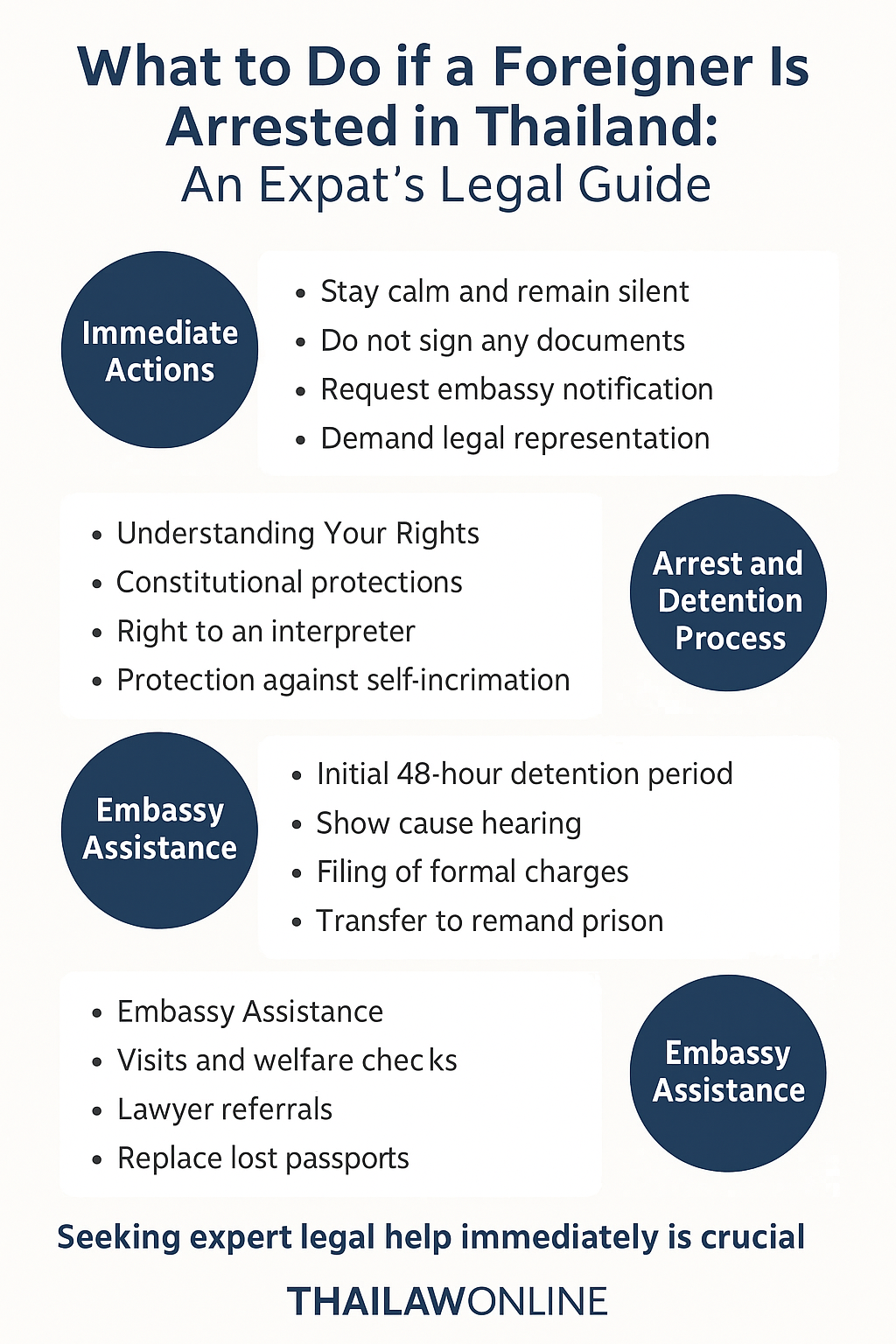
Your Immediate Actions After Arrest
Stay Calm and Do Not Resist
The first and most crucial step is maintaining your composure. Thai police can use physical force if you resist arrest. Any aggressive behavior will make your situation worse. Take deep breaths, keep your hands visible, and comply with basic instructions while asserting your rights calmly and respectfully.
Exercise Your Right to Remain Silent
Under Thai law, you cannot be compelled to give evidence against yourself (Constitution section 29). This right must be explained to you when you are arrested. This is very important in the Thai criminal justice system. When a police officer arrests you, section 83 of the Criminal Procedure Code requires the officer to tell you the charge, that you may choose to give a statement or not, that what you say may be used as evidence at trial, and that you may meet and consult a lawyer.
Thai law requires police to inform arrestees of their rights, including the right not to incriminate themselves. The wording is not identical to U.S. Miranda rights, but the effect is similar: you do not have to make a statement, and any statement you make can be used as evidence.
Critical Point: Do not attempt to explain your situation or engage in informal conversation about your case. Politely state that you wish to remain silent until you have spoken with a lawyer. Your silence will be noted in the police file, but this cannot be used against you in court.
Do Not Sign Any Documents
You will likely be presented with documents in Thai that you cannot read or understand. Never sign anything until your lawyer has reviewed and explained every document. Signing a document you don’t comprehend could constitute an admission of guilt or waive important rights. If pressured to sign, repeatedly state that you need a lawyer present and refuse politely but firmly.
Immediately Request Embassy Notification
As a foreigner, you have the right to contact your embassy or consulate. This is guaranteed under Article 36 of the Vienna Convention on Consular Relations. Inform the police immediately that you wish to notify your embassy. While your embassy cannot secure your release, they provide crucial support including:
- Notifying your family of your situation
- Providing lists of qualified English-speaking criminal lawyers
- Ensuring you receive humane treatment under Thai law
- Offering guidance on Thai legal procedures
- Facilitating communication with family members
Demand Legal Representation
You have the absolute right to legal counsel under Thai law. The police must inform you of this right and allow you to contact a lawyer. Do not make any statements or participate in interrogations until your lawyer is present. If you have no lawyer, the court must appoint one where the charge carries the death penalty or you were 18 or under on the day you were charged in court, and for any offence punishable by imprisonment it will appoint one if you ask (Criminal Procedure Code section 173). However, court-appointed lawyers may not have much experience or strong English skills.
Handling Mistaken Identity or Wrongful Arrest
If you think the arrest is a mistake, stay calm. Do not argue with the police about the facts. This could be seen as resistance. Instead, politely state your belief in the error and immediately request legal counsel and embassy notification. Your lawyer can investigate quickly, potentially leading to release within the initial 48 hours. Document details such as the names of the arresting officers, the time, and the location. This information will help with future claims for compensation. It is based on Thai tort law, specifically Section 420 of the Civil and Commercial Code.
Understanding Your Legal Rights in Thailand if Arrested in Thailand
Constitutional Protections
The Thai Constitution provides several fundamental protections for arrested individuals. Under section 29, you are presumed innocent until a final judgment convicts you, and detention before trial is allowed only as far as needed to prevent escape. The Thai legal system supports your right to a fair trial. You have the right to present evidence and witnesses. Guilt must be proven “beyond reasonable doubt.”
Right to Legal Counsel and Private Meetings
Thai law guarantees your right to hire a criminal defense lawyer and meet with them privately. This right extends throughout all stages of the criminal process, from initial arrest through trial and appeals. Your lawyer can be with you during questioning. The police must stop asking questions if you want to wait for your lawyer.
Right to an Interpreter
If you cannot understand Thai, you have the right to a court-appointed interpreter during all legal proceedings. This right is essential for understanding charges against you and participating meaningfully in your defense. Quality varies. The Criminal Procedure Code sets no minimum qualification for an interpreter; the Office of the Judiciary keeps a register of certified court interpreters, but nothing obliges the police to use one at the inquiry stage, and certified interpreters are scarcer outside the major courts. This right is based on section 13 of the Criminal Procedure Code, which requires the police, the prosecutor or the court to provide an interpreter without delay.
Protection Against Self-Incrimination
Thai law protects you from being compelled to testify against yourself. You do not have to answer questions that could make you look guilty. If you refuse to answer, it cannot be used against you. This protection applies during police questioning, court proceedings, and throughout the entire legal process.
Rights for Vulnerable Groups
Special protections apply to vulnerable individuals. Children under 18 are dealt with under the Juvenile and Family Court and Juvenile and Family Case Procedure Act B.E. 2553, which includes parental/guardian notification and separate detention facilities. A woman may be searched only by another woman (Criminal Procedure Code section 85). Disabled persons have rights to accommodations under the Persons with Disabilities Empowerment Act (2007). If you fall into these categories, highlight this during arrest to ensure compliance.
Health and Medical Rights During Detention
If you have medical needs or health issues upon arrest, Thai law entitles you to prompt medical attention. Under Section 7/1 of the Criminal Procedure Code and international rules, police must let you see a doctor. This applies if you ask for it or if your health needs it. This includes treatment for injuries sustained during arrest, chronic conditions, or mental health concerns like anxiety from detention.
| Timeline | What Happens | Your Rights | Smart Actions |
|---|---|---|---|
| Arrest 0-48 hrs | Police hold you for questioning. No court order needed. | Remain silent; contact lawyer; contact embassy; interpreter on request. | Do not resist; do not sign anything; insist on legal counsel and embassy call. |
| Show-cause hearing Day 2 | Judge decides if police may keep you. | Lawyer may argue for bail or release. | Have bail plan ready; bring surety or cash if possible. |
| Investigative detention Up to 84 days | Court orders of up to 12 days each: 48 days in total for mid-range offences, 84 days where the maximum penalty is 10 years or more (section 87). | Court reviews detention every 12 days. | Challenge each extension; gather evidence; apply for bail again if facts change. |
| Formal charges Within the detention period (84 days at most) | Prosecutor files charge sheet; case moves to trial list. | Right to see charges, right to defence disclosure. | Confirm translation; plan plea strategy; review bail terms. |
| Remand prison Post-charge | If bail denied, transfer from police cells to prison. | Embassy visits; lawyer visits; limited family visits. | Maintain contact list; follow prison rules; keep case notes. |
| Trial and appeal | No jury; judges decide. Appeal must be filed within statutory deadline. | Right to interpreter, right to present evidence, right to appeal. | Prepare witnesses early; track deadlines; discuss plea discounts. |
The Thai Arrest and Detention Process
Initial 48-Hour Detention Period
Upon arrest, Thai police can detain you for up to 48 hours without a court order. During this period, you may be questioned about the alleged offense, but you are not required to answer. After 48 hours, police must either release you or bring you before a judge for a “show cause” hearing.
Show Cause Hearing and Investigative Detention
At the show cause hearing, a judge determines whether there are reasonable grounds to continue your detention. If detention is authorized, the court may order detention for up to 12 days at a time while the investigation continues. The total depends on the offence (Criminal Procedure Code section 87): one order of up to 7 days where the maximum penalty is six months or a 500 baht fine; up to 48 days where it is more than six months but less than ten years; and up to 84 days where it is ten years or more.
Court Reauthorization Requirements
Every 12 days during investigative detention, a judge must reauthorize your continued imprisonment. This provides regular opportunities for your lawyer to argue for your release or improved conditions. Your legal team should prepare for each hearing and present compelling reasons why continued detention is unnecessary.
Filing of Formal Charges
The case must be filed in court within the court-ordered detention. There is no additional seven-day period for the prosecutor: 84 days is the ceiling, reached only for the most serious offences. If the case is not filed within the detention period, you must be released. Once charges are filed and accepted by the court, your case moves to the pre-trial phase.
Transfer to Remand Prison
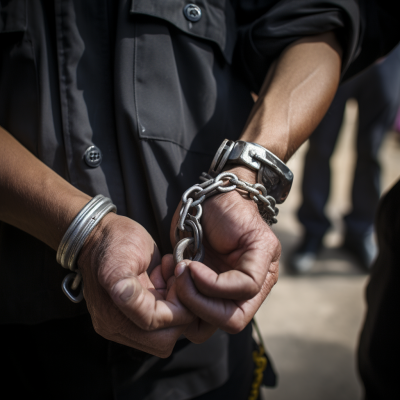
If bail is denied or cannot be arranged, you will be transferred from police holding cells to a remand prison. Remand prisoners are typically held separately from convicted prisoners and have different classification rules. Foreign prisoners often face additional challenges due to language barriers and cultural differences.
Embassy and Consular Services: What They Can and Cannot Do
Services Embassies Provide
Your embassy or consulate offers several important services when you’re arrested:
Immediate Assistance:
- Visit you in detention (subject to local restrictions)
- Ensure you’re receiving humane treatment
- Provide emergency contact information to family
- Explain Thai legal procedures and your rights
Ongoing Support:
- Provide lists of qualified English-speaking lawyers
- Help arrange legal representation
- Monitor your case for discrimination under local law
- Facilitate communication with family members
- Assist with emergency financial transfers from family
Documentation Services:
- Help replace lost or confiscated passports
- Provide temporary travel documents when appropriate
- Assist with visa issues affecting your case
Critical Limitations of Embassy Services
Understanding what embassies cannot do is equally important:
- Cannot secure your release or post bail on your behalf
- Cannot interfere in Thai judicial proceedings
- Cannot provide legal advice or represent you in court
- Cannot guarantee the same protections available under your home country’s law
- Cannot override Thai legal procedures or court decisions
Your embassy helps you and provides support, but they cannot replace a qualified lawyer or get involved in court matters. ThaiLawOnline is listed on several embassies sites.
Emergency Embassy Contacts
Keep these numbers saved in your phone and memorized:
US Citizens:
- US Embassy Bangkok: +66-2-205-4000 (24-hour emergency)
- US Consulate Chiang Mai: +66-53-107-700
British Citizens:
- British Embassy Bangkok: +66-2-305-8333 (24-hour emergency)
Australian Citizens:
- Australian Embassy Bangkok: +66-2-344-6300
- Consular Emergency Centre (24 hours): +61-2-6261-3305
Canadian Citizens:
- Embassy of Canada Bangkok: +66-2-646-4300
- Emergency Watch and Response Centre, Ottawa (24 hours, collect where available): +1-613-996-8885
Selecting and Working with Legal Representation
Why Private Legal Representation is Essential
While Thailand provides court-appointed lawyers for serious charges, private representation offers significant advantages:
Quality and Experience: Private lawyers typically have more experience, better English skills, and deeper knowledge of criminal defense strategies.
Communication: English-speaking private lawyers can explain complex legal concepts and keep you informed throughout the process.
Availability: Private lawyers can dedicate more time to your case and are available for consultation beyond court appearances.
Strategic Defense: Experienced private lawyers understand how to navigate the Thai legal system effectively and build compelling defense strategies.
Criteria for Selecting a Criminal Defense Lawyer
When choosing legal representation, consider these essential factors:
Language Proficiency: Your lawyer must be fluent in both Thai and English. Court proceedings are conducted in Thai, making bilingual representation essential.
Criminal Law Experience: Choose a lawyer with specific experience in Thai criminal defense, particularly with foreign clients.
Reputation and Track Record: Look for lawyers with proven success in criminal cases and positive testimonials from previous clients.
Availability and Communication with legal representatives is vital to navigate the Thai legal process effectively. Your lawyer should be accessible and committed to keeping you informed about case developments.ThaiLawOnline has experienced criminal defense lawyers speaking English.
Fee Structure under Thailand Law: Know the fee arrangement from the start. Make sure it is fair for how complex your case is.
Legal Fees and Payment Methods when Arrested in Thailand
Criminal defense fees in Thailand vary significantly based on case complexity. Below are estimations and can vary:
Bail Applications: Typically 50,000-65,000 THB, depending on location
Full Criminal Defense: Costs can range from 100,000 THB to over 1 million THB. This depends on how serious the charge is and how complex the case is
Payment Requirements: Legal fees must typically be paid in cash, as credit card chargebacks pose risks for law firms. Ensure you’re working with a licensed lawyer by verifying their credentials with the Lawyers Council of Thailand.
Bail and Provisional Release Procedures
Understanding Bail in Thailand
Bail in Thailand helps make sure you show up for your trial. It also lets you prepare your defense outside of jail. The decision to grant bail looks at several factors. These include the seriousness of the charge, flight risk, chance of tampering with evidence, and your connections to Thailand.
Types of Bail Available
Cash Bail: The most common form, requiring deposit of a predetermined amount with the court. The courts use standard bail schedules for common offences, and judges retain discretion to adjust amounts based on individual circumstances.
Property Bond may be accepted under certain circumstances in the Thai legal process. Instead of cash, you can offer valuable assets such as real estate as collateral. The property must be free of liens and located in Thailand.
Surety Bond: A Thai citizen can guarantee your appearance in court, potentially backing their guarantee with cash or property.
Special Requirements for Foreigners Arrested in Thailand and Bangkok
Foreign defendants face additional considerations:
Thai Guarantor is Usually Needed:Foreigners who want bail often need a Thai citizen to help. This person will file the petition and may also need to transfer funds. It is often true in practice because of flight risk perceptions. However, it is not a strict legal requirement. Judges have discretion according to the Criminal Procedure Code, Section 108.
Higher Bail Amounts: Courts often set higher bail amounts for foreigners due to perceived flight risk.
Passport Surrender: Your passport will typically be confiscated and held by the court as a condition of bail.
Residence Verification is essential for understanding your rights under Thailand law. You may need to provide proof of fixed residence in Thailand and surrender to authorities as required.
Bail Application Process
Timing: Bail applications can be submitted at different stages:
- At the police station for minor offenses
- At the court after formal charges are filed
- At appellate courts during appeals
Documentation Required: Applications must include proposed security (cash, property, or guarantor), defendant background information, and compelling arguments for release.
Judicial Discretion: Even after meeting bail requirements, a judge must approve your release. Success depends on the quality of legal arguments presented.
Thai Court Procedures and What to Expect
Court System Structure
Thailand operates a three-tier court system:
Courts of First Instance play a crucial role in the Thai criminal justice system. Where criminal trials begin, including Bangkok’s Criminal Court on Ratchadaphisek Road
Courts of Appeal: Review first instance decisions and conduct limited appeals
Supreme Court: Final appeal level for the most serious cases
Criminal Trial Process
No Jury System: Thai criminal trials are decided by judges, sitting as a panel of at least two judges in the Court of First Instance and three on appeal (Act on the Organization of the Courts of Justice, sections 26 and 27). Judges have significant discretion in their rulings.
Limited Discovery: There is no Western-style discovery. Where you plead not guilty, the court may hold an evidence-examination day before trial at which each side files its list of witnesses and evidence (Criminal Procedure Code section 173/1), which is often the first full view of the prosecution case.
Language Barriers: All proceedings are conducted in Thai. While interpreters are available, quality varies significantly and may impact your ability to understand proceedings.
Evidence Presentation: The prosecution presents its case first, followed by the defense. Both sides can call witnesses and present evidence, but procedures differ from Western courtrooms.
Sentencing and Appeals
If convicted, sentences can include imprisonment, fines, or both. Important timing: An appeal must be filed within one month of the reading of the judgment (Criminal Procedure Code section 198). New evidence is usually not accepted at the appellate level.
Emergency Contacts and Essential Resources
Critical Emergency Numbers
General Emergencies:
- Police: 191
- Fire: 199
- Ambulance and medical emergencies: 1669
- Tourist Police: 1155 (English-speaking, 24/7)
Legal Aid and Professional Services
Thai Justice Fund: Offers some legal aid for foreign nationals who qualify. However, the help is often not enough for complex criminal cases
Law School Clinics: Some universities provide free legal consultation services, though these are primarily for civil matters
Professional Legal Services: Private criminal defense lawyers remain the most reliable option for serious criminal charges
Key Takeaways and Preventive Measures
Essential Actions Summary
- Remain calm and do not resist arrest
- Exercise your right to silence until you have legal representation
- Refuse to sign any documents without legal review
- Immediately request embassy notification
- Demand legal representation before any questioning
- Document everything you can remember about the arrest
- Contact qualified English-speaking criminal lawyers as soon as possible
Preventive Measures for Expatriates
Legal Compliance:
- Maintain valid visa status and avoid overstays
- Understand Thai laws that differ significantly from your home country
- Be cautious with social media posts and online activities
- Ensure business activities comply with Thai law
Emergency Preparedness:
- Keep embassy emergency numbers in your phone
- Maintain contact information for qualified criminal lawyers
- Keep important documents (passport, visa) secure but accessible
- Inform trusted contacts of your whereabouts when traveling
Risk Awareness:
- Avoid any involvement with drugs or illegal substances
- Be cautious about business partnerships and financial dealings
- Understand cultural sensitivities, particularly regarding the monarchy
- Keep detailed records of business and financial transactions
Last reviewed: 27 September 2026. The rights, detention, counsel, interpreter, bail and appeal statements were read in Thai against the Constitution (section 29), the Criminal Procedure Code (sections 7/1, 13, 83, 85, 87, 106, 173, 173/1 and 198) and the Act on the Organization of the Courts of Justice (sections 26 and 27), and the embassy numbers against the Australian and Canadian governments’ own pages. Not re-checked in this review: the 2026 deportation regulation and Supreme Court Decision 889/2569 (added in an earlier review), the UK and US numbers, the Justice Fund’s eligibility rules, and the fee estimates. Re-checked on 6 October 2026: Criminal Procedure Code sections 87 and 173 re-read in Thai; the FAQ on court-appointed lawyers now states the section 173 test (the charge and your request, not your means), and the interpreter paragraph now says what the Office of the Judiciary’s register does and does not do; the items listed above as not re-checked remain so. Re-checked on 11 October 2026: the Prime Minister’s Office Regulation on Deportation B.E. 2569 read in its Royal Gazette text (volume 143, special part 205 Ngor, 27 August 2026; clauses 2 and 5: in force the next day; immigration, unlawful work, Foreign Business Act, forgery of official documents, offences punishable by five years or more, and their accomplices; at least 15 days’ notice before release; suspended sentences and fines referred by the Office of Justice Affairs), and Supreme Court Decision 889/2569 read in Thai; both match the page, and nothing changed. The UK and US numbers, the Justice Fund’s eligibility rules and the fee estimates remain unverified.
FACTS ABOUT FOREIGNER BEING ARRESTED IN THAILAND
What happens if you are arrested in Thailand as a foreigner?
If you are arrested in Thailand as a foreigner, the police may detain you for questioning. You have the right to access legal counsel, and it is advisable to inform your family about your situation. The police may keep your passport based on the charge. Your detention could last up to 84 days during the investigation.
Can you be deported after serving time in Thailand?
Yes, if you are convicted of a crime, you may be deported after serving your sentence. The authorities will review your case. If you need a visa to stay in Thailand, you might be denied re-entry after deportation.
How long can detention last if arrested in Thailand?
Detention in Thailand can last for a maximum of 84 days during the investigation phase. After this period, if no charges are filed, you must be released unless other legal proceedings are in place.
What is the process for obtaining bail as a foreigner in Thailand?
If you are arrested, you may be eligible for bail depending on the charges against you. The court will usually have a hearing to decide if you can get bail. If bail is paid, you will be released until your next court date.
Will the court appoint you an attorney if you cannot afford one?
It depends on the charge, not on your means. Before trial the court must appoint a lawyer if the offence carries the death penalty or you were 18 or under when charged, and for any offence punishable by imprisonment it will appoint one if you have none and ask for one (Criminal Procedure Code section 173). The court pays that lawyer. It is important to have legal counsel, especially regarding criminal penalties, to navigate the Thai legal system effectively.
How does the prosecutorial review work after an arrest?
After an arrest, the prosecutor must file charges within a certain time frame. The prosecutorial review process involves evaluating the evidence against you and deciding whether to proceed with the case. This review is crucial, as it can determine the direction of your legal situation.
What should you do immediately after being arrested in Thailand?
Immediately after being arrested, it is important to request legal counsel and inform your family. You should wait to admit guilt or make any statements until your attorney is there. This can affect your case.
What are the potential penalties for foreigners arrested in Thailand?
The charges against you will dictate the penalties you face. Some charges carry a maximum penalty of years of imprisonment, while others may result in a suspended sentence. It is vital to understand the severity of your charge and the implications it has on your future.
The Importance of Professional Legal Assistance
Thailand’s criminal justice system is complex and significantly different from Western legal systems. What may seem like a minor issue can quickly escalate into serious criminal charges with life-changing consequences. Having a lawyer is not just a good idea; it is necessary. They help protect your rights and get the best results.
If you find yourself arrested in Thailand, remember that time is critical. The decisions you make right after an arrest are important. They can determine if you stay in jail for weeks or if you get released to work on your defense. Don’t attempt to handle the situation alone. Contact qualified legal counsel immediately and exercise your rights carefully and strategically.
Knowing your rights and how to protect them can change a tough legal situation into a manageable one. This can help you and your family avoid a long-lasting struggle with the prison authorities. Stay informed and prepared. If you have doubts, seek help from lawyers who know Thai criminal law. They understand the special challenges foreigners face in the Thai legal system.
Emergency Legal Help:If you or someone you know has been arrested in Thailand, contact a qualified lawyer immediately. Do not delay, your freedom and future may depend on the actions taken in these critical first hours. ThaiLawOnline has a team of skilled criminal defense lawyers. This includes Garn, a barrister, and JJ, a Thai lawyer who specializes in this area. We can help you nationwide.
Useful Links and Official Resources
- Lawyers Council of Thailand: For verifying lawyer credentials
- Ministry of Justice: For prisoner transfers and statistics (e.g., foreign prisoner data).
- Courts of Justice: for court procedures (an English portal is available).
- Immigration Bureau: For overstay/deportation info.
- Thai Justice Fund: legal aid for those who cannot afford representation.
- Criminal Law in Thailand
- Tourist Police in Thailand
Thai Law Updates, free by email
Plain-English updates on Thai law changes that affect foreigners: property, visas, marriage, business and wills. One short email a month from a firm practicing since 2006. No spam, unsubscribe anytime.