


Reviewed by ThaiLawOnline, a licensed Thai law firm practising in Thailand since 2006. Thai lawyer of record: Wichuda Atthamethakon, LL.M., Thai Bar Licence 3149/2556.
Last updated on
Update, current position, read against the amending Act itself on 3 September 2026. The Alcoholic Beverage Control Act (No. 2) B.E. 2568 was given on 6 September 2025 and published in the Government Gazette on 9 September 2025, volume 142 part 57 Kor, page 8. Four provisions of it decide everything on this page.
Section 2, commencement. The Act comes into force when sixty days from publication have elapsed, which puts it in early November 2025. That alone disposes of the September 2025 date that circulated in the press, and it explains the report that the afternoon ban was still being enforced weeks after the Act passed: it was not yet in force. Section 3 (1), the repeal. Revolutionary Council Announcement No. 253 of 16 November 1972 is repealed outright, and section 3 (2) repeals NCPO Head Order No. 22/2558 with it. Section 20, the power. It replaces section 28 of the 2008 Act, so prohibited selling days and times are now fixed by announcement of the Control Committee; before, they were fixed by the Prime Minister on the National Committee’s recommendation. Section 43, the transitional. Every regulation and announcement made under the 2008 Act stays in force, so far as it is not contrary to the amended Act, until an announcement made under the amended Act replaces it, and those replacements must be made within one year.
⚠️ Section 43 is why repealing the 1972 Announcement did not, by itself, end the afternoon gap. The same 11:00 to 14:00 and 17:00 to 24:00 hours are imposed a second time, independently, by the Prime Minister’s Office Announcement on prohibited times for selling alcoholic beverages, B.E. 2558, made under section 28 and published on 22 January 2015. That announcement was not repealed by the new Act, and section 43 keeps it alive until a Control Committee announcement takes its place. The National Alcohol Policy Committee approved lifting the afternoon ban on 13 November 2025 and the lift was reported in early December, which is consistent with such an announcement having been published, but an approval is not an instrument and we cannot produce the announcement.
So: the 1972 source of the afternoon ban is certainly gone. Whether the ban itself is gone depends on whether the 2015 announcement has been replaced, and that is the one thing to check before you sell at 3 pm. Ask your provincial public health office or look for a Control Committee announcement in the Gazette. The historical account below is kept for context; treat any specific 2023 rule in it as superseded.
Thailand’s alcohol regulations effect spark debates on impact and effectiveness. Discover the rationale and consequences of these restrictions on society and tourism. It worths analyzing Thailands alcohol regulations, their effect and the alcohol consumption in Thailand.
In November 2023, Anutin, then Minister of the Interior, announced a trial allowing some nightspots to serve alcohol until 4 am. When you study alcohol sales in Thailand, you can see the illogical alcohol restrictions in place in the country.
The trial covered Chonburi (Pattaya), Phuket, Chiang Mai and Bangkok, and was announced to run until 15 December 2023. That date has long passed and this page does not track what replaced it, so check the rule in force in your province before relying on this paragraph. The wider regime remains inconsistent and, in places, counterproductive.
Last reviewed: 3 September 2026, on its statements of law only. This page is partly an opinion piece and its argument is the author’s; the review did not touch it. Revolutionary Council Announcement No. 253 of 1972 was read in full from the consolidated Thai text, and clause 2 is the source of the 11:00 to 14:00 and 17:00 to 24:00 selling hours, of the permission route through the Director-General of Police or the provincial governor, and of the after-midnight carve-out for entertainment venues, which is narrower than this page previously described. The Alcoholic Beverage Control Act B.E. 2551 was read for the age of 20 and the prohibited-place rules the page cites. A second pass on 3 September 2026 added the amending Act, read from its Gazette text: section 2 (commencement, sixty days from publication), section 3 (the repeals), section 20 (the new section 28 and the transfer of the power to the Control Committee), section 21 (the new section 29), section 26 (the new section 32, which bans drinking at a selling venue during prohibited hours), section 27 with Chapter 4/1 on advertising, and the transitional sections 42 and 43. The two 2015 Prime Minister’s Office announcements made under section 28, on prohibited times and on prohibited days, were read in full from the Gazette text.
Updated 3 September 2026, second pass. The earlier note here said this review could not read the Alcoholic Beverage Control Act (No. 2) B.E. 2568 because it is not in our law library. That was true of our library and not of the sources available: the Act’s full Government Gazette text has since been read in the original Thai, and the sections cited above, 2, 3, 20, 21, 26, 27 with Chapter 4/1, 42 and 43, are quoted from it. What is still not certified is narrower and more specific: we cannot produce the Control Committee announcement that would replace the 2015 selling-hours announcement, and under section 43 that announcement, not the repeal of the 1972 Announcement, is what ends the afternoon restriction. Anyone relying on being able to sell between 14:00 and 17:00 should confirm that it has been published.
1. Can You Buy Alcohol in Thailand Today? The Hours the Law Sets
Yes, on most days, and the times are fixed by law: retail sale is allowed from 11:00 to 14:00 and again from 17:00 to 24:00. Those hours come from clause 2 of the 1972 announcement, and the same two windows are imposed a second time, independently, by the Prime Minister’s Office Announcement. Outside them a shop may not sell to you whatever is on the shelf. The days when sale stops altogether, and the exceptions, are set out below.
Retail sales are still restricted by time of day, but the afternoon window is no longer one of the restrictions. Until the 2568 Act, clause 2 of Revolutionary Council Announcement No. 253 of 1972 confined holders of a type 3 to type 6 liquor licence to selling between 11:00 and 14:00 and between 17:00 and 24:00, unless the Director-General of Police (for Bangkok) or the provincial governor had permitted otherwise. That Announcement has been repealed. ⚠️ But the same afternoon gap is imposed a second time by the Prime Minister’s Office Announcement of 2015, made under section 28 of the 2008 Act, whose clause 1 allows selling only from 11:00 to 14:00 and from 17:00 to 24:00 with two exceptions: inside an international airport terminal building, and in a licensed entertainment venue during the hours it may open under the Entertainment Places law. Section 43 of the 2025 Act keeps that announcement in force until an announcement under the amended Act replaces it, so the repeal of the 1972 Announcement removes the older source of the gap and not necessarily the gap. The night restriction, from midnight to 11:00, is the part readers still run into at a convenience store. ⚠️ One correction to what is widely repeated, including in earlier versions of this page: it was never true that bars, restaurants and nightclubs could simply sell “according to their operating hours”. Clause 2 paragraph 3 let an entertainment venue licensed to open past midnight sell outside the fixed hours only after 24:00, until closing. It did not open the afternoon to them. How does Thailand’s Alcohol Regulations Effect works in reality? What are Thailand’s Alcohol Regulations Effects?
Exceptions to these rules include important Buddhist holidays and election days. On important Buddhist holidays, alcohol sales are not allowed all day. Some of these holidays include Makha Bucha Day, Visakha Bucha Day, and Asahna Bucha Day. This also includes the start and end of Buddhist Lent. During national and local elections, alcohol sales are banned. This ban lasts from 6:00 PM the day before the election until 6:00 PM on election day. Airports and some hotels can also have additional hours.
2. Why Alcohol Sales Were Prohibited Between 2pm and 5pm
Thailand’s alcohol sales restriction between 2pm and 5pm has been a subject of debate and discussion for several years. The government created this policy to reduce heavy drinking. It aims to lower the health and social problems linked to alcohol use. However, there have been growing concerns about the effectiveness of this restriction and its impact on businesses and consumers. There have also been exceptions, such as in hotels and airports.
I was traveling abroad between October and May 2022 in neighboring countries, and NO OTHER COUNTRY has this rule. What are we saying? Thai people can’t drink responsibly? Or that they should buy more before 2pm so they can be drunk until 5pm and continue later? We can understand why illegal drugs are forbidden by the government. Alcohol is more complex.
I personally do not understand why Thailand has so many rules. Here, you can drink until 4am, but only in 4 provinces. But you can’t between 2pm and 5pm? These 4 provinces can behave responsively but not the other provinces? It is strange.
3. What is the legal drinking age in Thailand and does it have in Thailand’s Alcohol Regulations Effect?
In Thailand, the legal age for selling alcohol is 20 years old. This is governed by the Alcoholic Beverage Control Act B.E. 2551 (2008). According to Section 29 of this law you may not sell alcohol to anyone under 20 complete years of age, or to an intoxicated person. Two corrections to how that second limb is usually described. The 2008 wording was never about unconsciousness: it was a person intoxicated to the point of being unable to control themselves. And section 21 of the Act (No. 2) B.E. 2568 replaced it with a person who shows signs of intoxication, and added duties on the seller including checking identification where age is in doubt. The seller’s margin is narrower than it was: visibly drunk is now enough. Section 30 lists the prohibited ways of selling, which are wider than usually quoted: vending machines and hawking, but also discounting as a sales promotion, offering prizes or event access as an inducement, and free samples or tie-ins. However, these article do not clearly address the drinking age in Thailand as it is more about “selling” alcohol.
When it comes to entering bars, the legal age is 20 years old. This matches the minimum age for drinking alcohol
These measures are part of a broader set of Thailand’s Alcohol Regulations Effect designed to prevent underage drinking. They also want to limit the social impacts of alcohol consumption. Additionally, several establishments often impose their own more restrictive rules regarding entry or alcohol sales. Enforcement can vary by region and local law enforcement policies. There are even places that are forbidden to drink alcohol like temples, or education institutions. You will find them at clause 31 of the Alcoholic Beverage Control Act.
The Rationale Behind Thailand’s Alcohol Regulations Effect
Thailand, renowned for its vibrant nightlife and culinary scene, has been grappling with alcohol-related issues for years. The government recognized the need to regulate alcohol consumption due to numerous incidents of excessive drinking. It also leads to impair driving, and associated health problems. With the aim of reducing alcohol-related harm, the alcohol sales restriction between 2pm and 5pm was introduced. However, until December 15th 2023, you can drink in 4 provinces until 4am!
Studies show that drinking alcohol after midnight raises the risk of drunk driving accidents. And DUI in Thailand is still a problem as there are way to much accident and deaths on the road. So, if the afternoon break is for health reasons, why is consumption at night until 4am allowed for tourism reasons? Can you see that this does not make any sense?
4. The Intended Benefits of Alcohol Sales Restriction
Supporters of the alcohol sales restriction say it offers many benefits for individuals and society. The key anticipated advantages include:
- Promoting responsible drinking habits: The goal is to reduce heavy drinking by limiting access to alcohol at certain times. By stopping alcohol sales for a while, people may think more about how much they drink. This can help reduce excessive drinking.
- Reducing alcohol-related accidents and incidents: Studies have shown a correlation between alcohol consumption and accidents, violence, and other incidents. By restricting alcohol sales during specific hours, the government aims to reduce the likelihood of these events occurring.
- Improving public health: Excessive alcohol consumption has detrimental effects on one’s health, including liver damage, cardiovascular problems, and an increased risk of various diseases. The alcohol sales restriction seeks to mitigate these health risks by encouraging moderation and limiting access to alcohol.
- Supporting law enforcement: By limiting alcohol sales, police can use their resources on more important issues during those hours. This may lead to improved public safety and more efficient crime prevention.
5. Prohibition to advertise alcohol in Thailand
Advertising was rewritten from scratch in 2025, so most of what is written elsewhere about it is out of date. The old section 32 is gone. Section 27 of the Act (No. 2) B.E. 2568 inserts a new Chapter 4/1, sections 32/1 to 32/5. Section 32/1 prohibits advertising alcohol at all, except giving information, knowledge or public relations within criteria the Minister announces on the Control Committee’s recommendation. Section 32/2 is the influencer provision: you may not use your own fame to put a brand name or mark before the public with the aim of inducing others to drink, except academic communication to a limited membership. Section 32/3 answers the Chang and Singha question directly, and it is the reason this page’s old observation was right: it prohibits advertising any product carrying an alcohol brand’s name or mark, including one that has been cut, added to or altered so that it still reads as a reference to the alcohol. Drinking water sold under a beer brand is squarely within it. Sections 32/4 and 32/5 ban sponsorship of social or public-interest activities in a way that promotes drinking, and ban publicising such sponsorship; for a producer, importer or seller the penalty runs to six months’ imprisonment or a fine of up to 500,000 baht or both, plus up to 50,000 baht a day for as long as the breach continues.
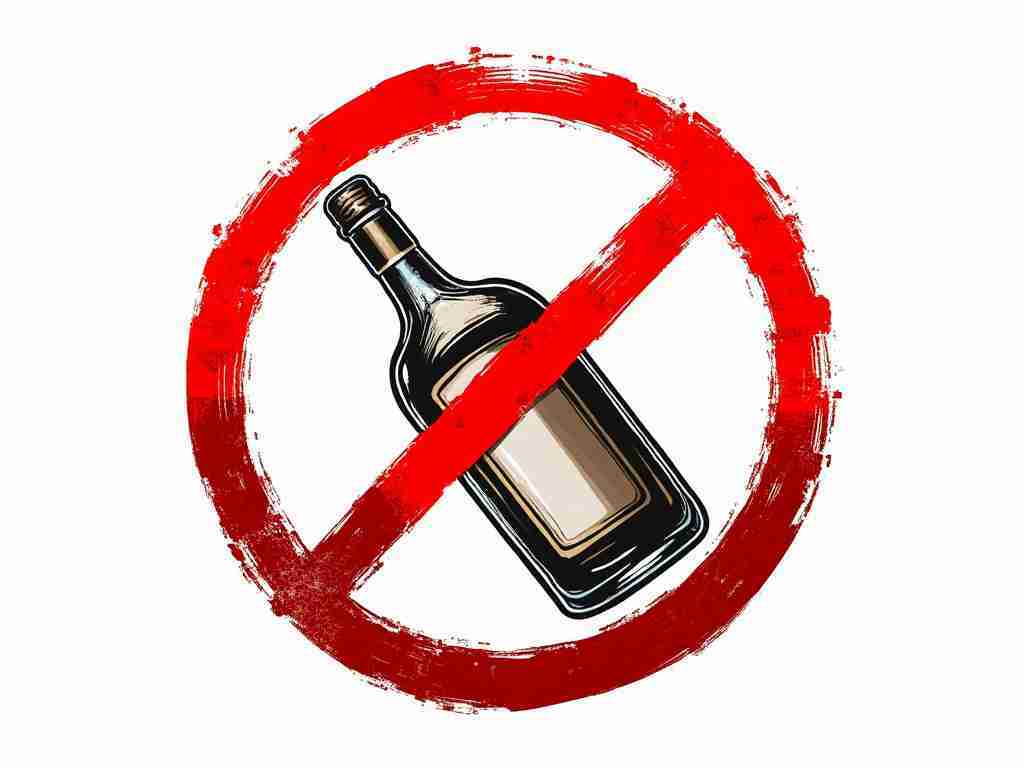
Advertising alcohol in Thailand is strictly regulated
This violates the law as it indirectly encourages alcohol consumption. This was evidenced in a picture taken at BTS in 2023.
The law also limits how alcohol manufacturers can promote their products. They can only provide information or social knowledge without showing the alcohol or its packaging. They can display a symbol of the alcohol or manufacturer, but it must follow the rules set by the government. However, some companies, like Chang or Singha, have found ways to promote their products by selling water or coffee.
This goes against the law because they are indirectly encouraging people to drink alcohol. This is shown in the picture taken at BTS in 2023.
6. The Effectiveness of Thailand’s Alcohol Sales Restriction
Thailand’s alcohol sales restriction aims to reduce alcohol consumption, but some critics question its effectiveness. Here are some reasons why the policy may not work well:
- Inconsistent enforcement: One of the major challenges is the inconsistent enforcement of the alcohol sales restriction. It makes the irrationality of the alcohol restrictions in Thailand even worse. Some establishments may ignore the policy, while others comply strictly. This inconsistency undermines the intended purpose of the restriction and raises questions about its efficacy. If you live in Thailand, you know.
- Change in drinking habits: The restriction may cause a change in drinking habits instead of reducing overall alcohol use. Some people might buy alcohol before 2 PM. Others may find different ways to get drinks during the restricted hours. This practice can potentially lead to more uncontrolled and excessive drinking.
- Economic impact: The alcohol industry is important to Thailand’s economy. The restrictions have hurt businesses like bars, clubs, and restaurants. Many establishments have reported a decline in revenue during the restricted hours, impacting their sustainability and ability to generate employment opportunities.
- Unintended consequences: It is important to consider potential unintended consequences of the alcohol sales restriction. For instance, the restriction may create a rush to consume alcohol before 2pm, leading to binge drinking. Additionally, it may contribute to illegal activities such as bootlegging and illicit sale of alcohol during the restricted hours.
Did you know that alcohol sales count for 5% of the government incomes?
I think it gives you an answer to maybe, just maybe, they are now extending hours in 4 provinces until the 15th of December.
Improving Alcohol Restrictions in Thailand: Time for Change?
Thailand needs to improve how it enforces its rules on selling alcohol. This can be done by keeping a close eye on things, giving strict punishments, and working together with authorities. It’s also important to educate people about drinking responsibly and the risks of drinking too much. Providing support and guidance to young adults and heavy drinkers can help them make better choices.
Thailand needs to improve how it enforces its rules on selling alcohol. This can be achieved by closely monitoring the situation, imposing strict penalties, and collaborating with authorities. Educating the public on responsible drinking and the dangers of excessive alcohol consumption is also essential. Providing assistance and guidance to young adults and heavy drinkers can help them make better decisions. Decision-makers should use data to determine Thailand’s alcohol regulations effect and consider implementing uniform rules nationwide.
It is important to assess the current Thailand’s alcohol regulations effect on businesses and consumers. Ensuring fair and consistent enforcement of these rules is crucial.
It’s crucial to review the current alcohol rules in Thailand and think about how they impact businesses and customers. Making sure these rules are applied fairly and equally is key.
Links:
- Announcement by Anutin (Bangkok Post- 7 November 2023)
- https://southeastasiaglobe.com/beyond-the-bottle-thai-alcohol-laws-still-harm-microbreweries/
- DUI in Thailand
Frequently Asked Questions
What are the legal hours to sell alcohol in Thailand?
The 1972 Announcement that created the 14:00 to 17:00 afternoon gap was repealed by the Alcoholic Beverage Control Act (No. 2) B.E. 2568, in force sixty days after its publication on 9 September 2025. But the same hours, 11:00 to 14:00 and 17:00 to 24:00, are imposed independently by a Prime Minister’s Office announcement of 2015, and section 43 of the new Act keeps that announcement in force until a Control Committee announcement replaces it. So the afternoon ban ends when that replacement is published, not on the repeal alone. Retail sales remain closed from midnight to 11:00 either way. Confirm the current announcement before relying on selling in the afternoon.
What is the legal drinking age in Thailand?
It is 20 years old, and selling alcohol to anyone under 20 is prohibited.
Are there days when alcohol sales are banned in Thailand?
Yes, five Buddhist days all day: Makha Bucha, Visakha Bucha, Asahna Bucha, Khao Phansa and Ok Phansa. The 2015 announcement that set this list revoked the two 2009 announcements, and the only exception it kept is a duty-free shop inside an international airport terminal, so the hotel exemption that existed before 2015 is gone. Sales are also banned from 6:00 pm the day before an election until 6:00 pm on polling day.
Where is it restricted to sell or drink alcohol in Thailand?
Section 27 bans selling in temples, state health facilities, hospitals and pharmacies, government premises, dormitories, educational institutions, petrol stations and public parks. Section 31 bans drinking in the same places apart from dormitories, with exceptions for private accommodation, clubs and traditional functions. A separate 2015 announcement also bans selling in the area around an educational institution, which is where the phrase about not selling near a school comes from.
Can businesses advertise alcohol in Thailand?
Alcohol advertising is heavily restricted, including limits on showing brands and products, with significant penalties for breaches.
Thai Law Updates, free by email
Plain-English updates on Thai law changes that affect foreigners: property, visas, marriage, business and wills. One short email a month from a firm practicing since 2006. No spam, unsubscribe anytime.