


Reviewed by Wichuda Atthamethakon, LL.M., Thai Bar Licence 3149/2556, for ThaiLawOnline, a Thai law firm acting for foreigners since 2006.
Update log
- 4 November 2026: Added the statute box with Thai, English and French text and checked the page against the official text
Last reviewed: 26 September 2026. Read in Thai against the Civil and Commercial Code, sections 1299, 1402 to 1409 and the tenant duties that section 1409 applies (sections 552 and 553). The registration fee follows the Department of Lands fee schedule for a registration with no capital value. Not verified in this review: the lease column of the comparison table, and practice at individual Land Offices. Re-checked on 6 October 2026: sections 1299 and 1402 to 1405 re-read in Thai; corrected the lease inheritance cell (an ordinary lease ends on the tenant’s death, Supreme Court 3254/2545) and two FAQ answers (registration makes the right a real right rather than valid; family members may live with the holder under section 1405); Land Office practice still not verified. Re-checked on 10 October 2026: the section on how courts treat the right claimed court rulings without naming any and was restated on sections 1299, 1402, 1404 and 1405, read in Thai.
The right of habitation (สิทธิอาศัย or arsai in Thai) is a lesser-known but useful legal tool under the Thai Civil and Commercial Code. Often used for family arrangements, elder care, or Thai inheritance law, this right allows someone to live in a building rent-free. While it’s not as flexible as a lease or usufruct, it can offer unique advantages when used in the right context.

Table of Contents
What is the Right of Habitation?
Section 1402 of the Thai Civil and Commercial Code defines the right of habitation. This right allows a person to live in a building as their home. They do not have to pay rent for this. This legal concept exists only for residential use and cannot be transferred or inherited. In simple terms, it means that the right holder, often a family member or dependent, can live in a house. This house is registered under someone else’s name, and they do not have to pay rent.
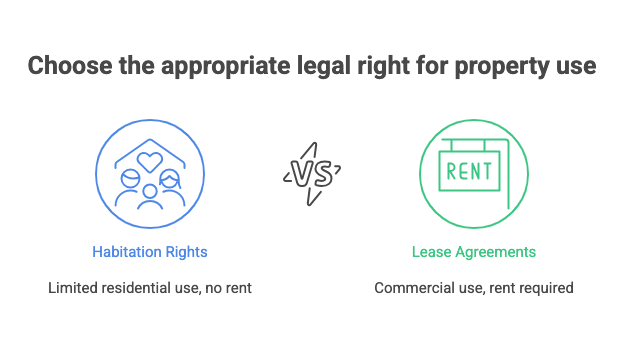
Habitation rights are different from lease agreements and usufructs. A lease is a commercial agreement that always involves rent. A usufruct gives broader rights over land and buildings. In contrast, habitation rights are limited in both scope and purpose.
Legal Framework
The laws governing habitation in Thailand are found in Sections 1402 through 1409 of the Civil and Commercial Code (Book IV, Title V). These sections explain how the right is made. They also describe how long it lasts. Additionally, they outline the responsibilities of both the property owner (grantor) and the right holder (grantee).
For example, Section 1406 lets the holder take the natural fruits of the land as far as the household needs them, unless the grantor has expressly forbidden it. Section 1407 relieves the grantor of any duty to keep the property in repair and bars the holder from claiming the cost of improvements. The holder carries a tenant’s duties instead, applied by section 1409: to use the building only for its ordinary or agreed purpose, to look after it as a careful person looks after their own property, and to do minor repairs (sections 552 and 553).
Registration is Key
To make the right of habitation a real right, it must be made in writing and registered (section 1299) at the local Land Office. Without this step, the right has no legal effect against third parties, even if both sides agree informally. The registration fee is low, typically around 50 Baht per plot, with a few additional charges.
The law behind this page
English
Section 1402
A right of habitation allows its holder to live in a building without paying rent. The grant’s duration and scope, and the registration needed to complete a real right, require separate examination.
Full text
A person who has been granted a right of habitation in a building is entitled to live in that building without paying rent.
ThaiLawOnline translation
Section 1403
Habitation may be granted for the holder’s lifetime or a fixed period of up to thirty years. A renewal is limited to thirty years from renewal. With no fixed period, termination requires reasonable advance notice.
Full text
A right of habitation may be created for a fixed period or for the lifetime of the holder. If no period is fixed, the right may be terminated at any time, but the holder must be given reasonable notice. If a right of habitation is granted for a fixed period, that period may not exceed thirty years; if a longer period is fixed, it shall be reduced to thirty years. The grant of a right of habitation may be renewed, but for a period not exceeding thirty years from the date of renewal.
ThaiLawOnline translation
Section 1404
Habitation is personal to the holder and cannot be transferred, even by inheritance. A separate damages award is not the same right as continued occupation.
Full text
A right of habitation is not transferable, even by inheritance.
ThaiLawOnline translation
Section 1405
Family and household members may live with the habitation holder unless the grant expressly limits the right to the holder’s personal benefit.
Full text
Unless a right of habitation is expressly limited to the personal benefit of the holder, members of the holder's family and household may live there with him.
ThaiLawOnline translation
Section 1299
Subject to other applicable statutory provisions, acquisition by juristic act requires writing and registration to be complete. Acquisition by another route follows a separate rule: an unregistered right cannot alter the register or defeat a third party who acquired for value and in good faith and registered in good faith.
Full text
Subject to the provisions of this Code or of other laws, an acquisition by juristic act of immovable property, or of a real right appertaining to immovable property, is not complete unless the juristic act is made in writing and the acquisition is registered with the competent official. Where a person acquires immovable property, or a real right appertaining to immovable property, otherwise than by juristic act, the acquirer's right, so long as it has not been registered, cannot be the subject of any change in the register, and that unregistered right may not be set up against a third person who has acquired a right for value and in good faith and has registered that right in good faith.
ThaiLawOnline translation
Section 1409
The tenant duties and liabilities in sections 552–555, 558, 562 and 563 apply to habitation with the necessary adaptations. The provision does not turn habitation into a rent-paying lease.
Full text
The provisions of this Code concerning the duties and liabilities of the hirer set out in Sections 552 to 555, Section 558, Section 562 and Section 563 apply mutatis mutandis.
ThaiLawOnline translation
Section 1407
The grantor has no duty under this section to keep the property in good repair. The holder has no right under this section to reimbursement for improvements.
Full text
The grantor of a right of habitation is not bound to keep the property in good repair. The holder of a right of habitation cannot claim reimbursement of expenses incurred in improving the property.
ThaiLawOnline translation
ไทย
มาตรา 1402
ข้อความเต็ม
บุคคลใดได้รับสิทธิอาศัยในโรงเรือน บุคคลนั้นย่อมมีสิทธิอยู่ในโรงเรือนนั้นโดยไม่ต้องเสียค่าเช่า
ตรงตามข้อความในราชกิจจานุเบกษา / สำนักงานคณะกรรมการกฤษฎีกา (Verbatim from the Royal Gazette / Office of the Council of State)
มาตรา 1403
ข้อความเต็ม
สิทธิอาศัยนั้น ท่านว่าจะก่อให้เกิดโดยมีกำหนดเวลา หรือตลอดชีวิตของผู้อาศัยก็ได้ถ้าไม่มีกำหนดเวลา ท่านว่าสิทธินั้นจะเลิกเสียในเวลาใด ๆ ก็ได้ แต่ต้องบอกล่วงหน้าแก่ผู้อาศัยตามสมควรถ้าให้สิทธิอาศัยโดยมีกำหนดเวลา กำหนดนั้นท่านมิให้เกินสามสิบปี ถ้ากำหนดไว้นานกว่านั้น ให้ลดลงมาเป็นสามสิบปี การให้สิทธิอาศัยจะต่ออายุก็ได้ แต่ต้องกำหนดเวลาไม่เกินสามสิบปีนับแต่วันทำต่อ
ตรงตามข้อความในราชกิจจานุเบกษา / สำนักงานคณะกรรมการกฤษฎีกา (Verbatim from the Royal Gazette / Office of the Council of State)
มาตรา 1404
ข้อความเต็ม
สิทธิอาศัยนั้นจะโอนกันไม่ได้แม้โดยทางมรดก
ตรงตามข้อความในราชกิจจานุเบกษา / สำนักงานคณะกรรมการกฤษฎีกา (Verbatim from the Royal Gazette / Office of the Council of State)
มาตรา 1405
ข้อความเต็ม
สิทธิอาศัยนั้นถ้ามิได้จำกัดไว้ชัดแจ้งว่าให้เพื่อประโยชน์แก่ผู้อาศัยเฉพาะตัวไซร้ บุคคลในครอบครัวและในครัวเรือนของผู้อาศัยจะอยู่ด้วยก็ได้
ตรงตามข้อความในราชกิจจานุเบกษา / สำนักงานคณะกรรมการกฤษฎีกา (Verbatim from the Royal Gazette / Office of the Council of State)
มาตรา 1299
ข้อความเต็ม
ภายในบังคับแห่งบทบัญญัติในประมวลกฎหมายนี้หรือกฎหมายอื่น ท่านว่าการได้มาโดยนิติกรรมซึ่งอสังหาริมทรัพย์หรือทรัพยสิทธิอันเกี่ยวกับอสังหาริมทรัพย์นั้นไม่บริบูรณ์ เว้นแต่นิติกรรมจะได้ทำเป็นหนังสือและได้จดทะเบียนการได้มากับพนักงานเจ้าหน้าที่ ถ้ามีผู้ได้มาซึ่งอสังหาริมทรัพย์หรือทรัพยสิทธิอันเกี่ยวกับอสังหาริมทรัพย์โดยทางอื่นนอกจากนิติกรรม สิทธิของผู้ได้มานั้น ถ้ายังมิได้จดทะเบียนไซร้ ท่านว่าจะมีการเปลี่ยนแปลงทางทะเบียนไม่ได้ และสิทธิอันยังมิได้จดทะเบียนนั้น มิให้ยกขึ้นเป็นข้อต่อสู้บุคคลภายนอกผู้ได้สิทธิมาโดยเสียค่าตอบแทนและโดยสุจริต และได้จดทะเบียนสิทธิโดยสุจริตแล้ว
ตรงตามข้อความในราชกิจจานุเบกษา / สำนักงานคณะกรรมการกฤษฎีกา (Verbatim from the Royal Gazette / Office of the Council of State)
มาตรา 1409
ข้อความเต็ม
ท่านให้นำบทบัญญัติแห่งประมวลกฎหมายนี้ว่าด้วยหน้าที่และความรับผิดของผู้เช่าอันกล่าวไว้ในมาตรา ๕๕๒ ถึง ๕๕๕ มาตรา ๕๕๘ ๕๖๒ และ ๕๖๓ มาใช้บังคับโดยอนุโลม
ข้อความจากฐานข้อมูลประมวลกฎหมายของเรา โปรดตรวจสอบกับข้อความทางการ (Thai text from our annotated code. Check it against the official text.)
มาตรา 1407
ข้อความเต็ม
ผู้ให้อาศัยไม่จำต้องบำรุงรักษาทรัพย์สินให้อยู่ในความซ่อมแซมอันดีผู้อาศัยจะเรียกให้ชดใช้ค่าใช้จ่าย ซึ่งได้ออกไปในการทำให้ทรัพย์สินดีขึ้นหาได้ไม่
ตรงตามข้อความในราชกิจจานุเบกษา / สำนักงานคณะกรรมการกฤษฎีกา (Verbatim from the Royal Gazette / Office of the Council of State)
Français
Article 1402
Toute personne à qui a été conféré un droit d'habitation dans un bâtiment a le droit d'y demeurer sans payer de loyer.
résumé non officiel
Article 1403
Le droit d'habitation est constitué à terme ou à vie. Sans terme, il peut prendre fin à tout moment moyennant un préavis raisonnable. Le terme ne peut excéder 30 ans, tout terme plus long y étant réduit; il est renouvelable pour 30 ans au plus.
résumé non officiel
Article 1404
Le droit d'habitation est incessible, même par succession.
résumé non officiel
Article 1405
Sauf s'il est expressément limité à l'usage personnel du bénéficiaire, le droit d'habitation permet aux membres de la famille et du ménage du bénéficiaire de demeurer avec lui.
résumé non officiel
Article 1299
Sous réserve des dispositions du présent Code ou d'autres lois, l'acquisition par acte juridique d'un immeuble ou d'un droit réel immobilier n'est parfaite que si l'acte juridique est fait par écrit et si l'acquisition est enregistrée auprès du fonctionnaire compétent. Lorsqu'une personne acquiert un immeuble ou un droit réel immobilier autrement que par un acte juridique, le droit de l'acquéreur, tant qu'il n'a pas été enregistré, ne peut donner lieu à aucune modification du registre, et ce droit non enregistré ne peut être opposé au tiers qui a acquis un droit à titre onéreux et de bonne foi et qui a fait enregistrer ce droit de bonne foi.
résumé non officiel
Article 1409
Les dispositions du présent Code relatives aux obligations et à la responsabilité du locataire, prévues aux articles 552 à 555, 558, 562 et 563, s'appliquent par analogie au droit d'habitation.
résumé non officiel
Article 1407
Le constituant du droit d'habitation n'est pas tenu d'entretenir le bien en bon état de réparation. Le bénéficiaire ne peut réclamer le remboursement des dépenses qu'il a engagées pour améliorer le bien.
résumé non officiel
Supreme Court decisions
Sources
- Civil and Commercial Code, Office of the Council of State, retrieved 31 October 2026
- deka.supremecourt.or.th, Supreme Court of Thailand decisions database (copy held in our library), retrieved 19 February 2026
Core Characteristics and Obligations
Once registered, the right of habitation in Thailand carries several important features:
- It applies only to buildings, not the land itself.
- It is strictly personal, which means it ends with the death of the right holder.
- It is non-transferable and cannot be leased or passed to someone else, as habitation is not transferable.
- The grantee is not required to pay rent but must maintain the property in a livable condition.
Family members may live with the right holder unless the grant expressly limits the right to the holder personally (section 1405). This makes the right especially suitable for a Thai spouse or elderly parent.
Duration and Termination
Habitation rights can be granted for a fixed term (up to 30 years), for life, or with no specific duration under thailand law. If no end date is stated, the grantor can terminate the agreement with reasonable notice. Whatever the term, the grantor may also end the right if the holder misuses the building or breaks the grant’s terms and ignores a warning to put it right (sections 1409 and 554).
Termination occurs when:
- The agreed period expires
- The right holder dies
- The grantor gives proper notice in indefinite arrangements
When the agreement ends, the building must be returned in good shape. The grantee cannot ask for money back for any improvements unless both sides expressly agree.
Habitation vs. Usufruct vs. Lease: A Comparison
To understand the right of habitation in Thai property law, let’s compare it to usufructs and leases
| Feature | Habitation | Usufruct | Lease |
|---|---|---|---|
| Duration | Up to 30 years or lifetime | Up to 30 years or lifetime | Up to 30 years |
| Rent or Payment | None | Optional | Required |
| Use | Residential only | Residential and commercial | Residential or commercial |
| Transferability | Non-transferable | Transferable in some cases | Transferable with consent |
| Scope | Buildings only | Land and buildings | Land and/or buildings |
| Inheritance Possible | No | No | As a rule no: an ordinary lease ends on the tenant’s death (Supreme Court 3254/2545) |
Common Uses in Thailand
This legal tool is used when a Thai citizen wants to let a foreign spouse, relative, or dependent live in their home for free. It helps avoid ownership risks or lease obligations. It is also useful for charitable housing, elder care, or family Thai inheritance law when no rent is expected.
In some cases, people use the right of habitation to plan for long-term use of property. This allows them to use the property without transferring ownership. It is helpful when a lease or usufruct is not suitable or needed.
Limitations and Practical Realities
While this right has clear advantages, it’s important to be aware of its limits. For instance:
- It cannot be used to rent out the property or run a business.
- It does not apply to the land itself, only the building.
- It terminates upon the holder’s death and cannot be inherited.
- The registration process must be followed precisely: registration is what makes the right a real right that binds a later owner (section 1299).
The law is the same across the country. However, Land Offices in different provinces may interpret or apply the rules in slightly different ways. This is something we see regularly when assisting clients throughout Thailand.
How Thai Courts Interpret Habitation Rights
The Civil and Commercial Code itself keeps this personal servitude narrow, and these are the limits a court applies when a dispute over the property rights reaches it:
- The right cannot be transferred, not even by inheritance (section 1404), and the holder lives in the building without paying rent (section 1402)
- Registration is what makes it a real right that binds a later owner of the property (section 1299)
- Family and household members may live with the holder unless the grant expressly limits the right to the holder personally (section 1405)
These principles are similar to laws in other civil law countries. For example, they are like the French droit d’habitation or Germany’s Wohnrecht. It also bears some resemblance to the life estate known in common law systems, but with more rigid limitations.
FAQS about Right of Habitation in Thailand
What is the right of habitation in Thailand?
In Thailand, the right of habitation is a legal right. It lets a person, called the grantee, live in a place without paying rent. This right is usually given for a set time. It can be created through a habitation contract. It must be made in writing and registered to take effect as a real right that binds later owners of the house (section 1299).
Can the right of habitation be terminated?
Only a right granted without a fixed period may be ended at any time, and then only on reasonable notice to the holder (section 1403). A right granted for a fixed period or for life runs its course, unless the holder misuses the building or breaks the grant’s terms and ignores a warning to put it right; the grantor may then end it (sections 1409 and 554). This ensures that the grantee has time to vacate the premises and seek alternative housing arrangements.
What duration can the right of habitation be granted for?
The right of habitation is typically granted for a period not exceeding thirty years. A longer period is cut down to thirty years. The right may be renewed, for no more than thirty years from the renewal (section 1403). A right may also be granted for the lifetime of the holder.
What happens if the right of habitation is not registered?
If the right of habitation is not registered, it may not be enforceable against third parties. Registration is important because it gives legal recognition to the grantee’s rights. It also protects against claims on the property by others.
Can a grantee sublet the property they occupy?
Generally, the right of habitation is personal and cannot be transferred to another party, including subletting the property. Family and household members may live there unless the grant expressly limits the right to the holder personally (section 1405), but the grantee cannot let anyone else occupy the home without clear permission from the title deed holder.
What are the implications of Thai law on the right of habitation?
Thai law regulates the right of habitation, ensuring that it is treated as a personal real right. This means that the rights and duties of both the grantor and the grantee are clear. Any disputes can be settled through the legal system.
Can the right of habitation be inherited?
No. The right of habitation is personal to the holder. Section 1404 of the Civil and Commercial Code provides that it cannot be transferred, either by an act of the holder or by inheritance. It ends on the holder’s death, and the heirs take nothing.
Need Help with Registration or Legal Advice?
At ThaiLawOnline, we have helped many clients, both Thai and foreign, secure their living rights. We do this through the proper use of a habitation agreement. If you are planning for your family, need elder care, or want to explore lease options, we can help. We make the process simple and legally secure.
Let us guide you through drafting, registering, or terminating habitation rights with confidence.
Links:
Thai Law Updates, free by email
Plain-English updates on Thai law changes that affect foreigners: property, visas, marriage, business and wills. One short email a month from a firm practicing since 2006. No spam, unsubscribe anytime.