


Reviewed by Wichuda Atthamethakon, LL.M., Thai Bar Licence 3149/2556, for ThaiLawOnline, a Thai law firm acting for foreigners since 2006.
Update log
- 2 November 2026: Added the statute box with Thai, English and French text and checked the page against the official text
If you live in Thailand long term, getting your driver’s license in Thailand is a must. An international driver’s license gives temporary freedom, but a Thai driving license offers many benefits and avoids problems. This guide helps you easily get a Thai license, whether you’re an experienced driver or new to Thailand. Explore the country’s beautiful scenery with confidence with your own driver’s license in Thailand.
Table of Contents
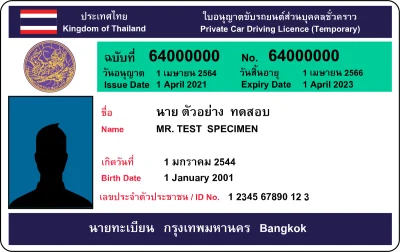
Getting a driving license in Thailand is important for anyone who wants to drive there. This applies to both residents and foreigners. To get a Thai driving license, you need to know the requirements. You must prepare the right documents and pass the tests. This guide will help you with each step. You will know what to expect and how to prepare for getting a driving license in Thailand.
Eligibility and Requirements for Driver’s License in Thailand.
To be eligible for a driver’s license in Thailand, you must:
- Be at least 18 years old, or 15 for a temporary personal motorcycle license within the engine size fixed by ministerial regulation, and hold a valid passport.
- Possess a visa that allows for long-term stays in Thailand. Technically, you can get a driver’s license in Thailand with a tourist visa. But the authorities might refuse and will ask you a longer visa, like non-o, non-b, LTR, DTV, Smart Visa or Thailand Privilege (formerly Elite).
It is not difficult to get a thai driving license and its renewals.
Why a Thai Driver’s License Matters
Your home country’s license is not a general substitute here. Section 42 paragraph two of the Motor Vehicle Act B.E. 2522 lets a foreigner drive on a foreign license only while admitted to Thailand temporarily under the immigration law, and section 42 bis confines that to a license from a country Thailand has a mutual recognition agreement with, which includes the ASEAN states, or to an international driving permit. A Thai license removes the question, and it carries other advantages:
- Full Insurance Coverage: Peace of mind is priceless. Some Thai insurance companies might restrict coverage or deny it altogether without a Thai license.
- Less Police Intervention: Getting a driver’s license in Thailand can help you avoid police stops. If you drive responsibly, it can lower your chances of being stopped. This includes wearing a helmet and following traffic laws.
- Unparalleled Freedom: Imagine exploring hidden beaches, majestic temples, and charming local markets, all at your own pace. A Thai driving licence grants the ultimate freedom to discover Thailand’s hidden gems.
What Are the Required Documents for a Thai Driving License?
Before you can apply for a Thai driving license, you need to gather several important documents. You need your passport, visa, and a copy of your current address in Thailand. You can verify your address with a utility bill or a letter from your landlord. A proof of address can be a “yellow tabian baan” or a document from immigration called “Certificate of Residence.” You can find more information in our article under the “immigration” section.
If you are a foreigner, it is helpful to have a valid international driving permit. A license from your home country can also be useful. These documents demonstrate your driving history and may sometimes simplify the process of obtaining a local Thai driving license.
For your driver’s license in Thailand, ensure you have:
- Passport: Your original passport with a valid Non-Immigrant visa.
- Proof of Residency: You can use your work permit or a residency confirmation letter from your embassy. Please include a copy. Most of the time, foreigners use their work permit. They may also use a yellow house book or a certificate of residence from local Thai immigration.
- Visa and Entry Information: Make photocopies of the passport information page, current visa, entry stamps, and your TDAC confirmation. The Thailand Digital Arrival Card replaced the paper TM.6 departure card on 1 May 2025.
- Medical Certificate: Go to a local clinic or hospital for a check-up. Get a certificate signed by a doctor. This usually costs between 100-800 baht. It varies a lot depending if they take a blood sample or not).
- Foreign Driver’s License (Optional):You can use a valid driver’s license from your home country or an international license. This can help make the process faster. Bring photocopies if applicable. If not in English, you will have to translate into Thai.
- Do note that there is a driver’s license for cars and one for motorcycles. Yes, they would save lots of plastic and time by writing it on only one document.
A medical certificate is a crucial part of the documentation required to apply for a driving license in Thailand. This certificate ensures that the applicant is physically and mentally fit to drive. You can easily obtain a medical certificate from any hospital or clinic in Thailand. The exam is usually simple. It looks at your overall health. It checks for any problems that could affect your driving. This includes issues like depth perception or color blindness.
Unless you hold a Thai license or a license from a country Thailand has a mutual recognition agreement with, you need an international driving permit to drive in Thailand. If you have a valid international driving permit, it shows your driving experience. This can help you get a Thai driving license faster. For long-term residents or those staying in Thailand for a while, getting a local driving license is a good idea. It is more accepted and recognized by local authorities.
You should submit your application for a Thai driving license at the Department of Land Transport office for the area where you live. These offices are scattered throughout Thailand and are responsible for both the issuance and renewal of driving licenses. It’s a good idea to check the requirements and office hours of your local land transport office. These can change. Be prepared to spend some time at the office, as the process can be time-consuming, especially for first-time applicants.
The law behind this page
English
Section 42 Motor Vehicle Act B.E. 2522
Full text
A driver shall have received a driving licence and shall have the driving licence and a photocopy of the vehicle registration book while driving or supervising a learner driver, so as to show them to an official immediately, except for a learner driver of a motor vehicle under section 57. Where the driver is an alien permitted to stay in the Kingdom temporarily under the law on immigration, that alien driver may use a driving licence under section 42 bis to drive in the Kingdom, and in that case shall have that driving licence together with the documents specified in the convention and/or agreement in force between the Thai Government and the government of the country concerned, so as to show them to an official immediately. [The word “motor vehicle” was amended by section 3 of the Motor Vehicle Act (No. 12) B.E. 2546.]
ThaiLawOnline translation
Section 42 bis Motor Vehicle Act B.E. 2522
Full text
Where there is an agreement between the Thai Government and a foreign government on the mutual recognition of domestic driving licences, an alien permitted to stay in the Kingdom temporarily under the law on immigration who holds a driving licence issued by a competent official or by an automobile association authorised by the government of the country having that agreement with the Thai Government may use the driving licence of that country to drive in the Kingdom according to the category and type of vehicle specified in that driving licence, but shall comply with the convention and/or agreement in force between the Thai Government and the government of that country and with the provisions concerning the duties of drivers under this Act.
ThaiLawOnline translation
Section 44 Motor Vehicle Act B.E. 2522
Full text
A temporary driving licence under section 43 (1) is valid for 2 years from the date of issue of the driving licence. A driving licence under section 43 (2), (3), (6), (7), (8) and (9) is valid for 5 years from the date of issue of the driving licence. A driving licence under section 43 (4), (5) and (6/1) is valid for 3 years from the date of issue of the driving licence. The driving licence may be renewed for further periods of 5 years or 3 years each, as the case may be, and the applicant for renewal shall pass a physical fitness test in accordance with the rules, procedures and conditions prescribed in a ministerial regulation. Where the expiry date of a licence under paragraph two does not fall on the birthday anniversary of the licence holder, the validity of the licence shall be extended to the birthday anniversary of the licence holder in that year or in the following year, as the case may be, and that date shall be deemed the expiry date of the driving licence. Where the licence holder was born on 29 February and the year in which the driving licence expires under paragraph two has no 29 February, 28 February shall be taken as the birthday anniversary. The application for renewal of a driving licence and its grant shall be in accordance with the rules, procedures and conditions prescribed in a ministerial regulation.
ThaiLawOnline translation
Section 46 Motor Vehicle Act B.E. 2522
Full text
An applicant for a driving licence under section 43 (1) shall have the following qualifications and not have the following prohibited characteristics: (1) being not less than 18 full years of age, but an applicant for a temporary private motorcycle driving licence for a motorcycle whose total cylinder capacity does not exceed that prescribed in a ministerial regulation shall be not less than 15 full years of age; (2) having knowledge of and ability in driving; (3) having knowledge of the traffic rules under this Act and under the law on land traffic; (4) not having a physical disability such that it is apparent the person cannot drive; (5) not having a chronic disease that a medical practitioner considers may be dangerous while driving; (6) not being a person of unsound mind or mental infirmity; (7) not already holding a driving licence of the same type; (8) not being a person whose driving licence is under seizure or suspension; (9) never having had a driving licence revoked, other than for lack of the age qualification of the applicant, unless 3 years have passed from the date of revocation of the driving licence, and the Director-General shall prescribe conditions for considering the issue of the driving licence.
ThaiLawOnline translation
Section 47 Motor Vehicle Act B.E. 2522
Full text
An applicant for a driving licence under section 43 (2), (3), (4), (5), (6) or (6/1) shall: (1) have held a driving licence under section 43 (1) for not less than 1 year; (2) have the qualifications and not have the prohibited characteristics under section 46; and (3) never have been sentenced by a final judgment or fined by an official's settlement 2 or more times for any of the following driving offences, unless not less than 6 months have passed since completing the last punishment: (a) contravening a traffic signal or traffic sign; (b) while drunk from liquor or another intoxicant; (c) in a manner obstructing traffic; (d) exceeding the speed limit prescribed by law; (e) negligently or recklessly so as to be liable to cause danger to a person or property; (f) without regard to the safety or inconvenience of others.
ThaiLawOnline translation
Section 45 Motor Vehicle Act B.E. 2522
Full text
A person who wishes to apply for a driving licence shall have the qualifications and not have the prohibited characteristics under this Act, and shall file an application with the registrar of the locality in which that person is domiciled or has a place of residence. The application for a driving licence and the issue of the driving licence shall be in accordance with the rules, procedures and conditions prescribed in a ministerial regulation.
ThaiLawOnline translation
Section 43 Motor Vehicle Act B.E. 2522
Full text
Driving licences are as follows: (1) temporary private car, private three-wheeled motor vehicle or private motorcycle driving licence; (2) private car driving licence; (3) private three-wheeled motor vehicle driving licence; (4) public motor vehicle driving licence; (5) public three-wheeled motor vehicle driving licence; (6) private motorcycle driving licence; (6/1) public motorcycle driving licence; (7) road roller driving licence; (8) tractor driving licence; (9) driving licence for a type of vehicle other than those in (1) to (8); (10) driving licence under an international agreement to which Thailand is a party. A driving licence under (1) may also be used to drive a rental service car, only where the driver is the hirer. A driving licence under (2) may also be used to drive a rental service car. A driving licence under (4) may also be used to drive a service car and in place of a driving licence under (2). A driving licence under (5) may also be used in place of a driving licence under (3). A driving licence under (6/1) may also be used in place of a driving licence under (6). Otherwise they may not be used in place of one another.
ThaiLawOnline translation
ไทย
มาตรา 42 พระราชบัญญัติรถยนต์ พ.ศ. 2522
ข้อความเต็ม
ผู้ขับรถต้องได้รับใบอนุญาตขับรถและต้องมีใบอนุญาตขับรถและสำเนาภาพถ่ายใบคู่มือจดทะเบียนรถในขณะขับหรือควบคุมผู้ฝึกหัดขับรถเพื่อแสดงต่อเจ้าพนักงานได้ทันที เว้นแต่ผู้ฝึกหัดขับรถยนต์ตามมาตรา ๕๗ ในกรณีที่ผู้ขับรถเป็นคนต่างด้าวซึ่งได้รับอนุญาตให้อยู่ในราชอาณาจักรเป็นการชั่วคราวตามกฎหมายว่าด้วยคนเข้าเมือง ผู้ขับรถซึ่งเป็นคนต่างด้าวนั้นจะใช้ใบอนุญาตขับรถตามมาตรา ๔๒ ทวิ ขับรถในราชอาณาจักรก็ได้ และในกรณีนี้จะต้องมีใบอนุญาตขับรถดังกล่าวพร้อมด้วยเอกสารตามที่ระบุไว้ในอนุสัญญาและหรือความตกลงที่มีอยู่ระหว่างรัฐบาลไทยกับรัฐบาลของประเทศนั้น ๆ เพื่อแสดงต่อเจ้าพนักงานได้ทันที [คำว่า “รถยนต์” แก้ไขเพิ่มเติมโดยมาตรา ๓ แห่งพระราชบัญญัติรถยนต์ (ฉบับที่ ๑๒) พ.ศ. ๒๕๔๖]
ตรงตามข้อความในราชกิจจานุเบกษา / สำนักงานคณะกรรมการกฤษฎีกา (Verbatim from the Royal Gazette / Office of the Council of State)
มาตรา 42 ทวิ พระราชบัญญัติรถยนต์ พ.ศ. 2522
ข้อความเต็ม
ในกรณีที่มีความตกลงระหว่างรัฐบาลไทยและรัฐบาลต่างประเทศว่าด้วยการยอมรับใบอนุญาตขับรถภายในประเทศซึ่งกันและกัน คนต่างด้าวซึ่งได้รับอนุญาตให้อยู่ในราชอาณาจักรเป็นการชั่วคราวตามกฎหมายว่าด้วยคนเข้าเมือง และมีใบอนุญาตขับรถที่ออกโดยพนักงานเจ้าหน้าที่หรือสมาคมยานยนต์ที่ได้รับอนุญาตจากรัฐบาลของประเทศที่มีความตกลงดังกล่าวกับรัฐบาลไทย อาจใช้ใบอนุญาตขับรถของประเทศนั้นขับรถในราชอาณาจักรได้ตามประเภทและชนิดของรถที่ระบุไว้ในใบอนุญาตขับรถนั้น แต่ต้องปฏิบัติตามอนุสัญญาและหรือความตกลงที่มีอยู่ระหว่างรัฐบาลไทยกับรัฐบาลของประเทศนั้น ๆ และตามบทบัญญัติทั้งหลายในส่วนที่เกี่ยวกับหน้าที่ของผู้ขับรถตามพระราชบัญญัตินี้
ตรงตามข้อความในราชกิจจานุเบกษา / สำนักงานคณะกรรมการกฤษฎีกา (Verbatim from the Royal Gazette / Office of the Council of State)
มาตรา 44 พระราชบัญญัติรถยนต์ พ.ศ. 2522
ข้อความเต็ม
ใบอนุญาตขับรถชั่วคราวตามมาตรา ๔๓ (๑) มีอายุสองปีนับแต่วันออกใบอนุญาตขับรถ ใบอนุญาตขับรถตามมาตรา ๔๓ (๒) (๓) (๖) (๗) (๘) และ (๙) มีอายุห้าปีนับแต่วันออกใบอนุญาตขับรถ ใบอนุญาตขับรถตามมาตรา ๔๓ (๔) (๕) และ (๖/๑) มีอายุสามปีนับแต่วันออกใบอนุญาตขับรถ และอาจขอต่ออายุใบอนุญาตขับรถได้อีกคราวละห้าปีหรือสามปี แล้วแต่กรณี โดยผู้ขอต่ออายุใบอนุญาตต้องผ่านการทดสอบสมรรถภาพของร่างกายตามหลักเกณฑ์ วิธีการ และเงื่อนไขที่กำหนดในกฎกระทรวง ในกรณีที่วันครบกำหนดอายุใบอนุญาตตามวรรคสองไม่ตรงกับวันครบรอบวันเกิดของผู้ได้รับใบอนุญาตขับรถ ให้ขยายอายุใบอนุญาตต่อไปจนถึงวันครบรอบวันเกิดของผู้ได้รับใบอนุญาตขับรถในปีนั้นหรือในปีถัดไป แล้วแต่กรณี โดยให้ถือว่าวันดังกล่าวเป็นวันที่ใบอนุญาตขับรถครบกำหนดอายุ ในกรณีที่ผู้ได้รับใบอนุญาตขับรถเกิดในวันที่ ๒๙ กุมภาพันธ์ และในปีที่ใบอนุญาตขับรถครบกำหนดอายุตามวรรคสองนั้นไม่มีวันที่ ๒๙ กุมภาพันธ์ ให้ถือเอาวันที่ ๒๘ กุมภาพันธ์ เป็นวันครบรอบวันเกิด การขอต่ออายุใบอนุญาตขับรถ และการอนุญาต ให้เป็นไปตามหลักเกณฑ์ วิธีการ และเงื่อนไขที่กำหนดในกฎกระทรวง
ตรงตามข้อความในราชกิจจานุเบกษา / สำนักงานคณะกรรมการกฤษฎีกา (Verbatim from the Royal Gazette / Office of the Council of State)
มาตรา 46 พระราชบัญญัติรถยนต์ พ.ศ. 2522
ข้อความเต็ม
ผู้ขอใบอนุญาตขับรถตามมาตรา ๔๓ (๑) ต้องมีคุณสมบัติและไม่มีลักษณะต้องห้าม ดังต่อไปนี้ (๑) มีอายุไม่ต่ำกว่าสิบแปดปีบริบูรณ์ แต่ถ้าเป็นผู้ขอใบอนุญาตขับรถจักรยานยนต์ส่วนบุคคลชั่วคราว สำหรับรถจักรยานยนต์ที่มีขนาดความจุของกระบอกสูบรวมกันไม่เกินที่กำหนดในกฎกระทรวงต้องมีอายุไม่ต่ำกว่าสิบห้าปีบริบูรณ์ (๒) มีความรู้และความสามารถในการขับรถ (๓) มีความรู้ในข้อบังคับการเดินรถตามพระราชบัญญัตินี้และตามกฎหมายว่าด้วยการจราจรทางบก (๔) ไม่เป็นผู้มีร่างกายพิการจนเป็นที่เห็นได้ว่าไม่สามารถขับรถได้ (๕) ไม่มีโรคประจำตัวที่ผู้ประกอบวิชาชีพเวชกรรมเห็นว่าอาจเป็นอันตรายขณะขับรถ (๖) ไม่เป็นบุคคลวิกลจริตหรือจิตฟั่นเฟือน (๗) ไม่มีใบอนุญาตขับรถชนิดเดียวกันอยู่แล้ว (๘) ไม่เป็นผู้อยู่ในระหว่างถูกยึดหรือพักใช้ใบอนุญาตขับรถ (๙) ไม่เคยถูกเพิกถอนใบอนุญาตขับรถ ซึ่งมิใช่จากเหตุขาดคุณสมบัติเรื่องอายุของผู้ขอใบอนุญาตขับรถ เว้นแต่ได้พ้นกำหนดสามปีไปแล้วนับแต่วันที่ถูกเพิกถอนใบอนุญาตขับรถ โดยให้อธิบดีกำหนดเงื่อนไขในการพิจารณาการออกใบอนุญาตขับรถไว้ด้วย
ตรงตามข้อความในราชกิจจานุเบกษา / สำนักงานคณะกรรมการกฤษฎีกา (Verbatim from the Royal Gazette / Office of the Council of State)
มาตรา 47 พระราชบัญญัติรถยนต์ พ.ศ. 2522
ข้อความเต็ม
ผู้ขอใบอนุญาตขับรถตามมาตรา ๔๓ (๒) (๓) (๔) (๕) (๖) หรือ (๖/๑) ต้อง (๑) ได้รับใบอนุญาตขับรถตามมาตรา ๔๓ (๑) มาแล้วไม่น้อยกว่าหนึ่งปี (๒) มีคุณสมบัติและไม่มีลักษณะต้องห้ามตามมาตรา ๔๖ และ (๓) ไม่เคยต้องคำพิพากษาถึงที่สุดให้ลงโทษหรือถูกเจ้าพนักงานเปรียบเทียบปรับตั้งแต่สองครั้งขึ้นไป สำหรับความผิดเกี่ยวกับการขับรถอย่างใดอย่างหนึ่งดังต่อไปนี้ เว้นแต่จะพ้นโทษครั้งสุดท้ายไม่น้อยกว่าหกเดือนแล้ว (ก) ฝ่าฝืนสัญญาณจราจรหรือเครื่องหมายจราจร (ข) ในขณะเมาสุราหรือของเมาอย่างอื่น (ค) ในลักษณะกีดขวางการจราจร (ง) ใช้ความเร็วเกินอัตราที่กฎหมายกำหนด (จ) โดยประมาทหรือน่าหวาดเสียวอันอาจเกิดอันตรายแก่บุคคลหรือทรัพย์สิน (ฉ) โดยไม่คำนึงถึงความปลอดภัยหรือความเดือดร้อนของผู้อื่น
ตรงตามข้อความในราชกิจจานุเบกษา / สำนักงานคณะกรรมการกฤษฎีกา (Verbatim from the Royal Gazette / Office of the Council of State)
มาตรา 45 พระราชบัญญัติรถยนต์ พ.ศ. 2522
ข้อความเต็ม
ผู้ใดประสงค์จะขอใบอนุญาตขับรถ ต้องเป็นผู้มีคุณสมบัติและไม่มีลักษณะต้องห้ามตามพระราชบัญญัตินี้ และยื่นคำขอต่อนายทะเบียนแห่งท้องที่ที่ตนมีภูมิลำเนาหรือมีถิ่นที่อยู่ การขอใบอนุญาตขับรถและการออกใบอนุญาตขับรถ ให้เป็นไปตามหลักเกณฑ์ วิธีการและเงื่อนไขที่กำหนดในกฎกระทรวง
ตรงตามข้อความในราชกิจจานุเบกษา / สำนักงานคณะกรรมการกฤษฎีกา (Verbatim from the Royal Gazette / Office of the Council of State)
มาตรา 43 พระราชบัญญัติรถยนต์ พ.ศ. 2522
ข้อความเต็ม
ใบอนุญาตขับรถมีดังนี้ (๑) ใบอนุญาตขับรถยนต์ส่วนบุคคล รถยนต์สามล้อส่วนบุคคล หรือรถจักรยานยนต์ส่วนบุคคลชั่วคราว (๒) ใบอนุญาตขับรถยนต์ส่วนบุคคล (๓) ใบอนุญาตขับรถยนต์สามล้อส่วนบุคคล (๔) ใบอนุญาตขับรถยนต์สาธารณะ (๕) ใบอนุญาตขับรถยนต์สามล้อสาธารณะ (๖) ใบอนุญาตขับรถจักรยานยนต์ส่วนบุคคล (๖/๑) ใบอนุญาตขับรถจักรยานยนต์สาธารณะ (๗) ใบอนุญาตขับรถบดถนน (๘) ใบอนุญาตขับรถแทรกเตอร์ (๙) ใบอนุญาตขับรถชนิดอื่นนอกจาก (๑) ถึง (๘) (๑๐) ใบอนุญาตขับรถตามความตกลงระหว่างประเทศที่ประเทศไทยเป็นภาคี ใบอนุญาตขับรถตาม (๑) ใช้สำหรับขับรถยนต์บริการให้เช่า เฉพาะในกรณีที่ผู้ขับรถเป็นผู้เช่าได้ด้วย ใบอนุญาตขับรถตาม (๒) ใช้สำหรับขับรถยนต์บริการให้เช่าได้ด้วย ใบอนุญาตขับรถตาม (๔) ใช้สำหรับขับรถยนต์บริการและใช้แทนใบอนุญาตขับรถตาม (๒) ได้ด้วย ใบอนุญาตขับรถตาม (๕) ใช้แทนใบอนุญาตขับรถตาม (๓) ได้ด้วย และใบอนุญาตขับรถตาม (๖/๑) ใช้แทนใบอนุญาตขับรถตาม (๖) ได้ด้วย นอกนั้นใช้แทนกันไม่ได้
ตรงตามข้อความในราชกิจจานุเบกษา / สำนักงานคณะกรรมการกฤษฎีกา (Verbatim from the Royal Gazette / Office of the Council of State)
Français
Article 42 Motor Vehicle Act B.E. 2522
Le conducteur doit détenir son permis et une photocopie du livret d'immatriculation, à présenter immédiatement. L'étranger en séjour temporaire peut utiliser un permis selon l'article 42 bis, avec les documents prévus par la convention ou l'accord applicable.
résumé non officiel
Article 42 bis Motor Vehicle Act B.E. 2522
Si la Thaïlande a un accord de reconnaissance mutuelle des permis avec un État, l'étranger en séjour temporaire titulaire d'un permis de cet État peut conduire selon les catégories qui y figurent, en respectant la convention ou l'accord et les obligations des conducteurs prévues par la loi.
résumé non officiel
Article 44 Motor Vehicle Act B.E. 2522
Permis temporaire: deux ans; article 43 (2), (3), (6), (7), (8), (9): cinq ans; (4), (5), (6/1): trois ans. Hors permis temporaire, renouvellement de même durée après test d'aptitude physique et expiration reportée à l'anniversaire du titulaire.
résumé non officiel
Article 46 Motor Vehicle Act B.E. 2522
Le permis temporaire exige notamment 18 ans (15 ans pour une petite motocyclette), aptitude et connaissance du code, absence de handicap ou maladie dangereuse, de trouble mental, de permis identique, de suspension, et de révocation depuis moins de trois ans, sauf révocation liée à l'âge.
résumé non officiel
Article 47 Motor Vehicle Act B.E. 2522
Permis de l'article 43 (2) à (6/1): permis temporaire depuis un an au moins, conditions de l'article 46, et pas deux condamnations ou amendes transactionnelles pour certaines infractions de conduite, notamment ivresse et vitesse, sauf six mois écoulés depuis la dernière peine.
résumé non officiel
Article 45 Motor Vehicle Act B.E. 2522
Le demandeur d'un permis doit remplir les conditions légales, sans cause d'interdiction, et s'adresser au registrateur de son domicile ou de sa résidence, selon le règlement ministériel.
résumé non officiel
Article 43 Motor Vehicle Act B.E. 2522
Énumère les permis, notamment temporaire, voiture privée, véhicule public, trois-roues, motocyclette, rouleau compresseur, tracteur et permis selon accord international. Certains remplacent d'autres ou servent aux voitures de location; sinon, aucun ne remplace un autre.
résumé non officiel
Sources
- Motor Vehicle Act B.E. 2522, retrieved 2 November 2026
How Can I Apply for a Thai Driving License?
You apply in person at a Department of Land Transport office, and a first Thai licence is issued after a document check, an eyesight and colour-blindness test, a theory test and a practical driving test. Bring your passport with a valid visa and a medical certificate from a local clinic or hospital. Proof of your address is also required, either a yellow tabian baan or a certificate of residence from immigration. The first licence is a temporary two-year one under section 44 of the Motor Vehicle Act, and it becomes a five-year licence, renewed five years at a time, after that. What each step involves, and what the tests actually ask, is set out below.
The first step is to submit your application along with the required documents at the land transport office. Once your application is accepted, you will need to take a theory test and a practical driving test. If you are new to driving in Thailand, going to a driving school can help. It will teach you local traffic laws and driving conditions. Passing these tests is crucial to obtaining your new license.
Scheduling a driving test in Thailand requires visiting the land transport office and booking an appointment. It’s important to prepare for both the theory and practical tests. These tests check your knowledge of Thai traffic laws and your driving skills. The theory test can be taken in English or Thai, depending on your language preference. Ensure you study the road signs and rules thoroughly before attempting the test.
For expatriates, the embassy of your home country can help you get a Thai driving license. They can help verify your documents and offer advice on any additional requirements you may need to fulfill. The embassy does not issue driving licenses directly. However, they can help you and make sure you have the right paperwork.
What is Included in the Thai Driving Test?
The Thai driving test is comprehensive, designed to ensure that drivers are well-equipped to handle the roads safely. It includes both a theory test and a practical test.
If you do not have a valid foreign or international driver’s license, you must pass a written test. This test covers Thai traffic signs and rules. The good news? This test is available in English, eliminating any language barrier concerns. There is a theory test and additionally a physical test. They will verify if you are color blind and if you have any problem with your depth perception. Be ready for your thai driving license test.
The theory test focuses on your understanding of Thai traffic laws and road signs. It is a written test that can be taken in either English or Thai, depending on your preference. To prepare, study the material from the Department of Land Transport. It covers all the important topics. Passing this test is essential before you can proceed to the practical driving test.
The practical test assesses your ability to drive safely and competently on Thai roads. It involves demonstrating various driving maneuvers, such as parking, reversing, and navigating intersections. The test is usually conducted at a designated driving area within the land transport office premises. Practicing these skills beforehand, possibly with the help of a driving school, can significantly improve your chances of passing.
As part of the application process, you may be tested for depth perception and color blindness. These tests ensure that you are physically capable of driving safely. The depth perception test checks how well you judge distances. The color blindness test makes sure you can tell traffic lights and road signs apart. Passing these tests is a prerequisite for obtaining a Thai driving license.
How to Obtain a Motorcycle License in Thailand?
Getting a motorcycle license in Thailand is like getting a car license. However, there are some key differences because of how motorbikes are driven.
Differences Between Car and Motorbike Licenses
When comparing car licenses and motorcycle licenses in Thailand, the primary difference lies in the training and testing. Motorbike licenses require proficiency in handling a two-wheeled vehicle, which includes balancing and maneuvering in traffic. The tests are designed to meet the special challenges of riding motorcycles. Because of this, you need a separate license to legally ride a motorbike in Thailand. The age rule differs too: section 46(1) of the Motor Vehicle Act B.E. 2522 requires 18 for a car license but allows 15 for a temporary personal motorcycle license, provided the motorcycle is within the engine size fixed by ministerial regulation.
To get a motorbike license, you first need to prepare the required documents. This is like applying for a car license. You will need to pass both a theory and a practical test designed specifically for motorbike riders. The practical test involves showing you can control the bike, balance, and navigate a course set by the land transport office. Attending a training session at a driving school can be beneficial in preparing for these tests.
The required documents for a motorbike license include your passport, visa, proof of residency, and a medical certificate. If you have a driving license from your home country that allows you to ride a motorcycle, it may make things easier. However, you will still need to pass the local tests to ensure compliance with Thai regulations. Once you meet all the requirements, you can submit your application at the Department of Land Transport. This will help you get your motorcycle license.
How to Renew a Thai Driving License
Your first Thai driving license is a temporary license and is valid for two years from the date it is issued, under section 44 of the Motor Vehicle Act B.E. 2522. You then move to the full license, which runs for five years and is renewed five years at a time. Since 2019, renewals might involve watching educational videos about road safety. Do not forget to renew when your driving license expired.
Bonus Tip: Consider bringing a translator if you can’t speak Thai. Especially in areas without many tourists or expats.
Other Advice:
- Go to the Department of Land Transport office (sam nak ngan khon song), not the bus station.
- Be 18 years of age or older for a car license, or 15 for a small motorcycle.
- Get to the office early to avoid line-ups.
- Sign all of your photocopies.
- Bring someone with you who can translate for you.
- Once you have a Thai driving license, you can ask the Department of Land Transport for an international driving license. The cost is 505 baht and it is valid for one year. For instance, this will be required if you rent a car in Japan.
FAQs about Driver’s license in Thailand
How can I get a Thai car driving license if I already have an international license?
If you have an international license, you can apply for a Thai driving license. You need to show your international license, passport, visa, and a proof of your address in Thailand. Go to the Department of Land Transport to complete your application. The process might require you to undergo a vision and color blindness test. Your new Thai driving license will be a temporary license, valid for two years from the date it is issued.
What are the requirements to obtain a Thai car driving license?
To get a Thai car driving license, you must be at least 18 years old. You also need a valid visa, like a non-immigrant visa or work permit. Finally, you must show a resident address in Thailand. You must also pass a medical examination and the required tests at a test center.
Do I need to take driving lessons from a private driving school?
You do not have to take driving lessons from a private school to get a Thai driving license. However, it can help you learn Thai road rules and driving conditions. Some schools offer courses in both English or Thai language.
Is it necessary to have a non-immigrant visa to apply for a Thai driving license?
A non-immigrant visa or a work permit is typically required to apply for a Thai driving license. Other types of visas might be accepted based on your situation. It is best to check with the local Department of Land Transport.
How long is a Thai driving license valid for?
A first Thai driving license is a temporary license and is valid for two years from the date it is issued, under section 44 of the Motor Vehicle Act B.E. 2522. You then move to the full license, which is valid for five years and can be renewed five years at a time.
Can I drive in Thailand with a foreign license?
Only in limited circumstances. Section 42 paragraph two of the Motor Vehicle Act B.E. 2522 lets a foreigner drive on a foreign license while admitted to Thailand temporarily under the immigration law, and section 42 bis confines that to a license issued by a country Thailand has a mutual recognition agreement with, such as the ASEAN states, or to an international driving permit carried together with the license itself. If you are staying in Thailand long term, apply for a Thai license.
What tests do I need to pass to get a Thai driving license?
To get a Thai driving license, you must pass a physical test. This includes vision and color blindness checks. You also need to take a written test on traffic rules. Finally, you must pass a practical driving test at a test center. These tests can be taken in English or Thai language.
How can I certify my resident address in Thailand?
To prove your address in Thailand, get a letter from the immigration bureau or your local embassy. Alternatively, a rental contract or utility bill with your name and address may also be acceptable.
What should I do if my temporary license is about to expire?
If your temporary license is about to expire, you should apply for a renewal at least a month in advance. You need to provide a new medical certificate and your current license. You may also have to take a vision test again. This is to get a full Thai driving license that is valid for 5 years.
Can I apply for a Thai driving license if I do not speak Thai?
Yes, you can apply for a Thai driving license even if you do not speak Thai. The written test is available in English or Thai. You can ask for help or bring a translator if you need one during the application process.
Links: Transportation Department in Thailand about New Thai Driving License
Once you hold a licence, our guide to buying a car in Thailand covers registration, transfer and the paperwork involved.
Last reviewed: 5 September 2026 against the Motor Vehicle Act B.E. 2522 in its consolidated form. Four corrections were made. The page answered its own question about how long a first licence lasts in two different ways, and the two FAQ answers were the wrong ones: section 44 gives the temporary licence under section 43(1) a life of two years from the date of issue, and the five-year term belongs to the full licence under section 43(2), (3) and (6) to (9). Both the visible FAQ and its structured-data twin were corrected. The claim that a home-country licence carries a foreigner for a fixed period after arrival has no basis in the Act: section 42 paragraph two permits driving on a foreign licence only while the driver is admitted to Thailand temporarily under the immigration law, and section 42 bis confines that to a licence issued by a country Thailand has a mutual recognition agreement with, or to an international driving permit carried with it. Section 46(1) sets the minimum age at 18 for a car licence but at 15 for a temporary personal motorcycle licence within the engine size fixed by ministerial regulation, which the page had not mentioned while devoting a section to motorcycle licences. The office to visit is the Department of Land Transport, which the page had named after a United States agency that does not exist in Thailand.
Checked and deliberately left alone: the fee quoted for an international driving permit. Section 5(17) empowers the Minister to prescribe fees not exceeding the rates annexed to the Act, so the annexed figure is a ceiling rather than a price, and the fee actually charged is fixed by ministerial regulation below it. Correcting a page against the annexed rate would replace a correct figure with a wrong one. Flagged rather than blessed: the one-year validity this page gives for an international driving permit obtained in Thailand could not be confirmed from the Act. The Act’s own fee schedule lists two distinct international permits, one under the Convention on Road Traffic done at Geneva in 1949, which Thailand acceded to on 15 August 1962, and one under an international agreement to which Thailand is a party; section 44 fixes a term for neither. Ask the Department of Land Transport which of the two you are being issued.
Thai Law Updates, free by email
Plain-English updates on Thai law changes that affect foreigners: property, visas, marriage, business and wills. One short email a month from a firm practicing since 2006. No spam, unsubscribe anytime.