


Reviewed by Wichuda Atthamethakon, LL.M., Thai Bar Licence 3149/2556, for ThaiLawOnline, a Thai law firm acting for foreigners since 2006.
Update log
- 4 November 2026: Added the statute box with Thai, English and French text and checked the page against the official text
Learn about the contested divorce in Thailand. This knowledge will help you protect your rights and assets. If you are a Western expat husband in Bangkok, you may be going through a contested divorce with your Thai spouse. It’s important to understand this process. To get a divorce from the court, you must prove one of the legal reasons listed in the Civil and Commercial Code.
LAWYER-DRAFTED TEMPLATE · ฿990
Divorce Settlement Agreement (Bilingual English & Thai): Same-Day Amphur Divorce, Made Safe
Property division with transfer deadlines, custody, child support, debts and the full-and-final clause, prepared before you reach the registrar’s counter. Includes the land rule for foreign spouses, three ready-to-fill schedules and recognition-abroad guidance. Word + PDF, updated August 2026. บันทึกข้อตกลงท้ายทะเบียนการหย่า ฉบับสองภาษา
For how a contested case sits alongside the other family remedies, see our overview of family law in Thailand.
You will need to handle Thai-language documents and evidence. Before the trial begins, the court must appoint a family-case conciliator to try to settle the dispute (Juvenile and Family Court Act section 148). You will present your case at trial. The divorce takes effect when the judgment becomes final (CCC s.1531). You then register it at the district office: until you do, it cannot be raised against a third party acting in good faith, and the civil records still show you as married. The courts’ own target for a contested first-instance case is one year from filing.

Table of Contents
The Thai Legal Framework You Must Prove and Follow
Grounds for a Contested Divorce (Section 1516 CCC)
A contested divorce in Thailand is based on fault. The person filing must prove at least one reason from Section 1516 of the Civil and Commercial Code. These reasons include :
- adultery;
- serious misconduct, or causing severe shame;
- serious physical or mental harm;
- desertion for one year;
- separation for more than three years, by agreement or under a court order;
- a spouse declared missing by the court, or gone from home for more than three years without news;
- Imprisonment for over one year;
- failure to provide support;
- insanity lasting more than three years that is unlikely to be cured and makes living together intolerable;
- Breaking a good-behavior bond;
- Having an incurable communicable disease;
- a permanent physical condition that makes sexual relations impossible (section 1516(10)).
Proof is needed, not just allegations. (If you both agree, you do not need a ground at all: see uncontested divorce.) If the plaintiff agreed to adultery or misconduct, it can stop the claim. This is according to Section 1517 of the Thai civil and commercial code. Also, if the plaintiff forgives, it can end the right to sue under Section 1518. Thai courts look at evidence based on civil standards.
They expect clear proof and support. For example, claims of adultery need more than just hearsay or single messages. These claims are stronger with witness testimony, photos, financial records, hotel receipts, or other supporting documents. Even if one reason is too late to use, those facts can still help other reasons. Successful divorce cases can also lead to compensation under Sections 1523 to 1526 when appropriate.
Court vs. Amphur Divorce: When You Must Litigate
Thailand has two main ways to get a divorce. The first is an administrative “Amphur” divorce. This happens at the district office when both spouses agree on everything. The second is a contested court divorce. This takes place in the Juvenile and Family Court when there is disagreement or when legal reasons must be shown to end the marriage.
If both spouses agree on all terms (assets division, custody of children, support), they can register an administrative divorce. This can be done at the Amphur where the marriage was recorded or at another authorized office. Both parties must be present to sign. This option is only available when there is full agreement and proper documentation. If there are disputes over terms, or if a foreign marriage needs to end under Thai law, a court case is needed. In Bangkok, the Bangkok Family Court is the right place for this. They often offer mediation services to help resolve family cases.
Property Division: Sin Somros Must Be Split Equally (Section 1533 CCC)
When a couple divorces, Sin Somros (property gained during marriage) is split equally (50/50) by default under Section 1533. Sin Suan Tua (personal property) stays with the original owner. The spouse claiming personal status must provide proof. Title name alone does not break the marital presumption for property gained during marriage. Community debts tied to household needs or the upkeep of marital assets follow the property in the same way. Therefore, documentation and tracing are important for high-value assets and debts.
The timing for liquidation varies based on whether the divorce is by agreement or judgment. If there are bad-faith transfers, they can be reversed. This is done by treating the property as still existing under Section 1534. This protects your equal share in Sin Somros under the divorce law.
The law behind this page
English
Section 1516Amended on 23 January 2025
Section 1516 sets out twelve grounds for a divorce action; most turn on the other spouse's conduct, but some, such as separation, disappearance, unsoundness of mind, disease and physical incapacity, do not: (1) keeping or honouring another person as a spouse, adultery, or habitual sexual acts with another; (2) misconduct, whether or not a criminal offence, that causes the other spouse serious shame, contempt or hatred, or excessive injury or trouble; (3) serious physical or mental harm, torture, or grave insult to the spouse or the spouse's ascendants; (4) wilful desertion for more than one year; (4/1) final imprisonment served for more than one year for an offence in which the other spouse had no part, where continuing the marriage would cause the other spouse excessive injury or trouble; (4/2) voluntary separation for more than three years, or separation by court order for more than three years; (5) being declared a missing person, or absence for more than three years with no news; (6) failure to give proper support and maintenance, or acting seriously adversely to the marriage, to the point that the other spouse suffers excessive trouble; (7) insanity continuing more than three years and unlikely to be cured; (8) breach of a written bond as to conduct; (9) a serious, chronic and incurable communicable disease dangerous to the other spouse; (10) a physical condition making sexual intercourse permanently impossible. Spouses of any gender rely on the same grounds under the Marriage Equality Act B.E. 2567.
Full text
The grounds for a divorce action are as follows: (1) one spouse has maintained or honoured another person as a spouse, has committed adultery or has a lover, has habitually had sexual intercourse with another person, or has habitually done an act with another person, or accepted an act of another person, to gratify the sexual desire of that spouse or of the other person; the other spouse may bring a divorce action; (2) one spouse is guilty of misconduct, whether or not that misconduct is a criminal offence, if it causes the other spouse: (a) to be seriously ashamed and humiliated; (b) to be insulted or hated on account of continuing to be the spouse of the spouse guilty of the misconduct; (c) to suffer excessive injury or trouble, regard being had to their condition, position and manner of living together as spouses; that other spouse may bring a divorce action; (3) one spouse has caused serious harm or torture to the body or mind of, or has seriously defamed or insulted, the other spouse or the ascendants of the other spouse; if it is serious, that other spouse may bring a divorce action; (4) one spouse has wilfully deserted the other for more than one year; that other spouse may bring a divorce action; (4/1) one spouse has been sentenced by a final judgment to imprisonment and has been imprisoned for more than one year for an offence in which the other spouse took no part and to which that other spouse did not consent or connive, and continuing to be spouses would cause that other spouse excessive injury or trouble; that other spouse may bring a divorce action; (4/2) the spouses have voluntarily lived apart, because they could not live together as spouses in normal happiness, continuously for more than three years, or have lived apart by order of the court for more than three years; either spouse may bring a divorce action; (5) one spouse has been adjudged to have disappeared, or has left the domicile or residence for more than three years and it is uncertain whether that spouse is alive or dead; the other spouse may bring a divorce action; (6) one spouse has failed to give proper help and maintenance to the other, or has acted seriously adversely to the relationship of being spouses, to such an extent that the other spouse suffers excessive trouble, regard being had to their condition, position and manner of living together as spouses; that other spouse may bring a divorce action; (7) one spouse has been of unsound mind continuously for more than three years, the unsoundness of mind being of a kind that is unlikely to be cured and so severe that living together as spouses can no longer be endured; the other spouse may bring a divorce action; (8) one spouse has broken a bond of good behaviour given in writing; the other spouse may bring a divorce action; (9) one spouse is suffering from a serious communicable disease which may be dangerous to the other spouse and which is chronic and incurable; that other spouse may bring a divorce action; (10) one spouse has a physical condition making that spouse permanently unable to have sexual intercourse, or permanently unable to do or to accept an act to gratify the sexual desire of the other; the other spouse may bring a divorce action.
ThaiLawOnline translation
Section 1518
A spouse who has a ground for divorce loses the right to sue on it if he or she does anything showing forgiveness of the other's conduct. What matters is conduct evidencing forgiveness, not a formal statement.
Full text
The right to institute an action for divorce is extinguished when the spouse entitled thereto has committed any act showing his or her forgiveness of the act done by the other spouse which gave rise to the right to institute the action for divorce.
ThaiLawOnline translation
Section 1529
A right of action based on Section 1516 (1), (2), (3) or (6), or on Section 1523, is extinguished one year after the claimant knew or ought to have known the facts relied on. The period runs from knowledge, actual or constructive, not from the conduct itself. A ground that can no longer found a divorce claim in its own right may still be proved in support of a divorce claim brought on some other ground.
Full text
Rights of action based upon any of the grounds provided in Section 1516 (1), (2), (3) or (6), or Section 1523 are extinguished upon the lapse of one year from the day on which the claimant knew or should have known of the fact which he or she can allege. Grounds upon which a claim for divorce can no longer be based may still be proved in support of another claim for divorce based upon other grounds.
ThaiLawOnline translation
Section 1531
For a marriage registered under the law, a divorce by mutual consent takes effect from the time the divorce is registered, not from the date the parties signed their agreement. A divorce by judgment takes effect when the judgment becomes final. But a judgment of divorce cannot be set up against third persons who acted in good faith unless the divorce has been registered, so registration remains important even after a court decision.
Full text
In case where a marriage has been registered according to law, divorce by mutual consent takes effect from the time of registration. Divorce by judgment of the Court takes effect on and from the time when the judgment becomes final; however, such divorce may not be set up to the prejudice of the rights of third persons acting in good faith unless the divorce has been registered.
ThaiLawOnline translation
Section 1523Amended on 23 January 2025
Where the court grants a divorce on the ground in Section 1516(1), the wronged spouse may claim compensation from the other spouse and from the person who was maintained or honoured, or who was the cause of the divorce. A spouse may also claim compensation from a person who has taken liberties with their spouse in an adulterous manner, or who has openly held out that they have such a relationship. No claim lies if that spouse consented to or connived at the conduct.
Full text
When the court gives judgment for divorce on the ground under Section 1516 (1), a spouse is entitled to compensation from the other spouse and from the person who was maintained or honoured, or who was the cause of the divorce. A spouse may also claim compensation from a person who has taken liberties with the other spouse in an adulterous manner, or from a person who has openly held out that they have a relationship with the other spouse in an adulterous manner. If a spouse has consented to or connived at the other spouse doing an act under Section 1516 (1), or at another person doing an act under paragraph two, that spouse cannot claim compensation.
ThaiLawOnline translation
Section 1526
After a divorce granted on a ground that arose from the fault of one spouse only, the other may claim a living allowance if the divorce leaves them destitute with insufficient income from the property or the business they carried on during the marriage. The court decides whether to grant it, weighing the payer's ability and the recipient's condition in life, and Sections 1598/39 to 1598/41 apply. The right is lost entirely unless it is raised in the plaint or the counter-claim in the divorce action itself.
Full text
In a divorce case, if the ground for divorce is the fault of one spouse alone, and the divorce will cause the other spouse to become impoverished because he or she has insufficient income from his or her property or from the work carried on during the marriage, the latter may claim a living allowance from the spouse at fault. The Court may grant the living allowance in such amount as it thinks fit, or may refuse it, having regard to the ability of the giver and the condition in life of the recipient, and the provisions of Section 1598/39, Section 1598/40 and Section 1598/41 shall apply mutatis mutandis. The right to claim a living allowance is extinguished if it is not raised in the plaint or counterclaim in the divorce case.
ThaiLawOnline translation
Section 1533Amended on 23 January 2025
On divorce, the Sin Somros is divided equally between the spouses.
Full text
On divorce, the marital property shall be divided equally between the spouses.
ThaiLawOnline translation
Section 148 Juvenile and Family Court Act B.E. 2553
Full text
In a contested family case, before the trial begins, the court shall appoint a family case conciliator to mediate so that the parties to the family case may reach a compromise. The rules, the mediation procedure and the reporting of results shall be as prescribed by regulations of the President of the Supreme Court. For the purpose of mediating a compromise between the parties in a family case, the court may assign the father, mother, guardian or relatives of the parties, the parties' lawyers, a social worker, a psychologist, or any person or agency the court considers appropriate, to advise or assist the family case conciliator appointed by the court under paragraph one; and in a family case involving a minor who needs welfare assistance or protection of welfare, the court may summon a competent official under the law on child protection to take part in the mediation. When the family case conciliator under paragraph one has acted in accordance with the court's order, the conciliator shall report the result of the mediation and conciliation to the court. Where the mediation and conciliation succeed, the family case conciliator shall arrange for a compromise agreement to be made and then report to the court, or may make an appointment with the parties, or request the court to summon them, to make the compromise agreement before the court. When the court considers that the compromise agreement does not violate the law and is not contrary to public order or good morals, the court shall give judgment in accordance with the compromise agreement, or the court may withhold judgment and instead set conditions or a time limit for the parties first to comply with the compromise agreement on a trial basis, in particular as regards the exercise of parental power or the maintenance of a minor or an incompetent person. In any event, if a minor has an interest or stake in the family case, the court shall give paramount consideration to the best interests of the minor. Where the court considers that the compromise agreement violates the law or is contrary to public order or good morals, or the case is one in which a minor has an interest or stake and the agreement does not take into account the best interests of the minor, the court shall refuse to give judgment in accordance with the compromise agreement. The provisions of section 146 shall apply mutatis mutandis to the mediation of family cases.
ThaiLawOnline translation
ไทย
มาตรา 1516แก้ไขเมื่อ 23 มกราคม 2568
ข้อความเต็ม
เหตุฟ้องหย่ามีดังต่อไปนี้ (๑) คู่สมรสฝ่ายใดฝ่ายหนึ่งอุปการะเลี้ยงดูหรือยกย่องผู้อื่นฉันคู่สมรส เป็นชู้หรือมีชู้ ร่วมประเวณีกับผู้อื่นเป็นอาจิณ หรือกระทำกับผู้อื่นหรือยอมรับการกระทำของผู้อื่นเพื่อสนองความใคร่ของตนหรือผู้อื่นเป็นอาจิณ อีกฝ่ายหนึ่งฟ้องหย่าได้ (๒) คู่สมรสฝ่ายใดฝ่ายหนึ่งประพฤติชั่ว ไม่ว่าความประพฤติชั่วนั้นจะเป็นความผิดอาญาหรือไม่ ถ้าเป็นเหตุให้อีกฝ่ายหนึ่ง (ก) ได้รับความอับอายขายหน้าอย่างร้ายแรง (ข) ได้รับความดูถูกเกลียดชังเพราะเหตุที่คงเป็นคู่สมรสของฝ่ายที่ประพฤติชั่วอยู่ต่อไป หรือ (ค) ได้รับความเสียหายหรือเดือดร้อนเกินควร ในเมื่อเอาสภาพ ฐานะ และความเป็นอยู่ร่วมกันฉันคู่สมรสมาคำนึงประกอบ อีกฝ่ายหนึ่งนั้นฟ้องหย่าได้ (๓) คู่สมรสฝ่ายใดฝ่ายหนึ่งทำร้าย หรือทรมานร่างกายหรือจิตใจ หรือหมิ่นประมาทหรือเหยียดหยามอีกฝ่ายหนึ่งหรือบุพการีของอีกฝ่ายหนึ่ง ทั้งนี้ ถ้าเป็นการร้ายแรง อีกฝ่ายหนึ่งนั้นฟ้องหย่าได้ (๔) คู่สมรสฝ่ายใดฝ่ายหนึ่งจงใจละทิ้งร้างอีกฝ่ายหนึ่งไปเกินหนึ่งปี อีกฝ่ายหนึ่งนั้นฟ้องหย่าได้ (๔/๑) คู่สมรสฝ่ายใดฝ่ายหนึ่งต้องคำพิพากษาถึงที่สุดให้จำคุก และได้ถูกจำคุกเกินหนึ่งปีในความผิดที่อีกฝ่ายหนึ่งมิได้มีส่วนก่อให้เกิดการกระทำความผิดหรือยินยอมหรือรู้เห็นเป็นใจในการกระทำความผิดนั้นด้วย และการเป็นคู่สมรสกันต่อไปจะเป็นเหตุให้อีกฝ่ายหนึ่งได้รับความเสียหายหรือเดือดร้อนเกินควร อีกฝ่ายหนึ่งนั้นฟ้องหย่าได้ (๔/๒) คู่สมรสสมัครใจแยกกันอยู่เพราะเหตุที่ไม่อาจอยู่ร่วมกันฉันคู่สมรสได้โดยปกติสุขตลอดมาเกินสามปีหรือแยกกันอยู่ตามคำสั่งของศาลเป็นเวลาเกินสามปี ฝ่ายใดฝ่ายหนึ่งฟ้องหย่าได้ (๕) คู่สมรสฝ่ายใดฝ่ายหนึ่งถูกศาลสั่งให้เป็นคนสาบสูญ หรือไปจากภูมิลำเนาหรือถิ่นที่อยู่เป็นเวลาเกินสามปีโดยไม่มีใครทราบแน่ว่าเป็นตายร้ายดีอย่างไร อีกฝ่ายหนึ่งฟ้องหย่าได้ (๖) คู่สมรสฝ่ายใดฝ่ายหนึ่งไม่ให้ความช่วยเหลืออุปการะเลี้ยงดูอีกฝ่ายหนึ่งตามสมควร หรือทำการเป็นปฏิปักษ์ต่อการที่เป็นคู่สมรสอย่างร้ายแรง ทั้งนี้ ถ้าการกระทำนั้นถึงขนาดที่อีกฝ่ายหนึ่งเดือดร้อนเกินควรในเมื่อเอาสภาพ ฐานะ และความเป็นอยู่ร่วมกันฉันคู่สมรสมาคำนึงประกอบ อีกฝ่ายหนึ่งนั้นฟ้องหย่าได้ (๗) คู่สมรสฝ่ายใดฝ่ายหนึ่งวิกลจริตตลอดมาเกินสามปี และความวิกลจริตนั้นมีลักษณะยากจะหายได้ กับทั้งความวิกลจริตถึงขนาดที่จะทนอยู่ร่วมกันฉันคู่สมรสต่อไปไม่ได้ อีกฝ่ายหนึ่งฟ้องหย่าได้ (๘) คู่สมรสฝ่ายใดฝ่ายหนึ่งผิดทัณฑ์บนที่ทำให้ไว้เป็นหนังสือในเรื่องความประพฤติ อีกฝ่ายหนึ่งฟ้องหย่าได้ (๙) คู่สมรสฝ่ายใดฝ่ายหนึ่งเป็นโรคติดต่ออย่างร้ายแรงอันอาจเป็นภัยแก่อีกฝ่ายหนึ่ง และโรคมีลักษณะเรื้อรังไม่มีทางที่จะหายได้ อีกฝ่ายหนึ่งนั้นฟ้องหย่าได้ (๑๐) คู่สมรสฝ่ายใดฝ่ายหนึ่งมีสภาพแห่งกายทำให้ไม่อาจร่วมประเวณีหรือไม่อาจกระทำการหรือยอมรับการกระทำเพื่อสนองความใคร่ของอีกฝ่ายได้ตลอดกาล อีกฝ่ายหนึ่งฟ้องหย่าได้
ตรงตามข้อความในราชกิจจานุเบกษา / สำนักงานคณะกรรมการกฤษฎีกา (Verbatim from the Royal Gazette / Office of the Council of State)
มาตรา 1518
ข้อความเต็ม
สิทธิฟ้องหย่าย่อมหมดไปในเมื่อฝ่ายที่มีสิทธิฟ้องหย่าได้กระทำการอันแสดงให้เห็นว่าได้ให้อภัยในการกระทำของอีกฝ่ายหนึ่งซึ่งเป็นเหตุให้เกิดสิทธิฟ้องหย่านั้นแล้ว
ตรงตามข้อความในราชกิจจานุเบกษา / สำนักงานคณะกรรมการกฤษฎีกา (Verbatim from the Royal Gazette / Office of the Council of State)
มาตรา 1529
ข้อความเต็ม
สิทธิฟ้องร้องโดยอาศัยเหตุในมาตรา ๑๕๑๖ (๑) (๒) (๓) หรือ (๖) หรือมาตรา ๑๕๒๓ ย่อมระงับไปเมื่อพ้นกำหนดหนึ่งปีนับแต่วันผู้กล่าวอ้างรู้หรือควรรู้ความจริงซึ่งตนอาจยกขึ้นกล่าวอ้าง เหตุอันจะยกขึ้นฟ้องหย่าไม่ได้แล้วนั้น อาจนำสืบสนับสนุนคดีฟ้องหย่าซึ่งอาศัยเหตุอย่างอื่น
ตรงตามข้อความในราชกิจจานุเบกษา / สำนักงานคณะกรรมการกฤษฎีกา (Verbatim from the Royal Gazette / Office of the Council of State)
มาตรา 1531
ข้อความเต็ม
การสมรสที่จดทะเบียนตามกฎหมายนั้น การหย่าโดยความยินยอมของคู่สมรสทั้งสองฝ่ายมีผลนับแต่เวลาจดทะเบียนการหย่าเป็นต้นไป การหย่าโดยคำพิพากษามีผลแต่เวลาที่คำพิพากษาถึงที่สุด แต่จะอ้างเป็นเหตุเสื่อมสิทธิของบุคคลภายนอกผู้ทำการโดยสุจริตไม่ได้ เว้นแต่จะได้จดทะเบียนการหย่านั้นแล้ว
ตรงตามข้อความในราชกิจจานุเบกษา / สำนักงานคณะกรรมการกฤษฎีกา (Verbatim from the Royal Gazette / Office of the Council of State)
มาตรา 1523แก้ไขเมื่อ 23 มกราคม 2568
ข้อความเต็ม
เมื่อศาลพิพากษาให้หย่ากันเพราะเหตุตามมาตรา ๑๕๑๖ (๑) คู่สมรสฝ่ายใดฝ่ายหนึ่งมีสิทธิได้รับค่าทดแทนจากคู่สมรสอีกฝ่ายหนึ่ง และจากผู้ซึ่งได้รับการอุปการะเลี้ยงดูหรือยกย่อง หรือผู้ซึ่งเป็นเหตุแห่งการหย่านั้น คู่สมรสฝ่ายใดฝ่ายหนึ่งจะเรียกค่าทดแทนจากผู้ซึ่งล่วงเกินคู่สมรสอีกฝ่ายหนึ่งไปในทำนองชู้ หรือจากผู้ซึ่งแสดงตนโดยเปิดเผยเพื่อแสดงว่าตนมีความสัมพันธ์กับคู่สมรสอีกฝ่ายหนึ่งในทำนองชู้ก็ได้ ถ้าคู่สมรสฝ่ายใดฝ่ายหนึ่งยินยอมหรือรู้เห็นเป็นใจให้อีกฝ่ายหนึ่งกระทำการตามมาตรา ๑๕๑๖ (๑) หรือให้ผู้อื่นกระทำการตามวรรคสอง คู่สมรสฝ่ายใดฝ่ายหนึ่งนั้นจะเรียกค่าทดแทนไม่ได้
ตรงตามข้อความในราชกิจจานุเบกษา / สำนักงานคณะกรรมการกฤษฎีกา (Verbatim from the Royal Gazette / Office of the Council of State)
มาตรา 1526
ข้อความเต็ม
ในคดีหย่า ถ้าเหตุแห่งการหย่าเป็นความผิดของคู่สมรสฝ่ายใดฝ่ายหนึ่งแต่ฝ่ายเดียว และการหย่านั้นจะทำให้อีกฝ่ายหนึ่งยากจนลง เพราะไม่มีรายได้พอจากทรัพย์สินหรือจากการงานตามที่เคยทำอยู่ระหว่างสมรส อีกฝ่ายหนึ่งนั้นจะขอให้ฝ่ายที่ต้องรับผิดจ่ายค่าเลี้ยงชีพให้ได้ ค่าเลี้ยงชีพนี้ศาลอาจให้เพียงใดหรือไม่ให้ก็ได้ โดยคำนึงถึงความสามารถของผู้ให้และฐานะของผู้รับและให้นำบทบัญญัติมาตรา ๑๕๙๘/๓๙ มาตรา ๑๕๙๘/๔๐ และมาตรา ๑๕๙๘/๔๑ มาใช้บังคับโดยอนุโลม สิทธิเรียกร้องค่าเลี้ยงชีพเป็นอันสิ้นสุด ถ้ามิได้ฟ้องหรือฟ้องแย้งในคดีหย่านั้น
ตรงตามข้อความในราชกิจจานุเบกษา / สำนักงานคณะกรรมการกฤษฎีกา (Verbatim from the Royal Gazette / Office of the Council of State)
มาตรา 1533แก้ไขเมื่อ 23 มกราคม 2568
ข้อความเต็ม
เมื่อหย่ากัน ให้แบ่งสินสมรสให้คู่สมรสแต่ละฝ่ายได้ส่วนเท่ากัน
ตรงตามข้อความในราชกิจจานุเบกษา / สำนักงานคณะกรรมการกฤษฎีกา (Verbatim from the Royal Gazette / Office of the Council of State)
มาตรา 148 พระราชบัญญัติศาลเยาวชนและครอบครัวและวิธีพิจารณาคดีเยาวชนและครอบครัว พ.ศ. 2553
ข้อความเต็ม
คดีครอบครัวที่มีข้อพิพาท ก่อนเริ่มพิจารณาให้ศาลตั้งผู้ประนีประนอมคดีครอบครัว เพื่อไกล่เกลี่ยให้คู่ความในคดีครอบครัวได้ประนีประนอมกัน ทั้งนี้ หลักเกณฑ์ วิธีการไกล่เกลี่ย และการรายงานผล ให้เป็นไปตามข้อบังคับของประธานศาลฎีกา เพื่อประโยชน์ในการไกล่เกลี่ยให้คู่ความได้ประนีประนอมกันในคดีครอบครัวศาลอาจมอบหมายให้บิดา มารดา ผู้ปกครอง ญาติของคู่ความ ทนายความของคู่ความ นักสังคมสงเคราะห์ นักจิตวิทยา หรือบุคคลหรือหน่วยงานที่ศาลเห็นสมควร ให้คำปรึกษาหรือช่วยเหลือผู้ประนีประนอมคดีครอบครัวที่ศาลตั้งตามวรรคหนึ่งก็ได้ และในคดีครอบครัวที่มีผู้เยาว์เข้ามาเกี่ยวข้องและจำเป็นต้องได้รับการสงเคราะห์หรือคุ้มครองสวัสดิภาพ ศาลจะเรียกพนักงานเจ้าหน้าที่ตามกฎหมายว่าด้วยการคุ้มครองเด็กมาร่วมในการไกล่เกลี่ยด้วยก็ได้ เมื่อผู้ประนีประนอมคดีครอบครัวตามวรรคหนึ่งได้ดำเนินการตามคำสั่งศาลแล้วให้รายงานผลการไกล่เกลี่ยประนีประนอมต่อศาล ในกรณีการไกล่เกลี่ยประนีประนอมเป็นผลสำเร็จ ให้ผู้ประนีประนอมคดีครอบครัวจัดให้มีการทำสัญญาประนีประนอมยอมความขึ้นแล้วรายงานศาล หรือจะนัดหรือขอให้ศาลเรียกคู่ความมาทำสัญญาประนีประนอมยอมความกันต่อหน้าศาลก็ได้ เมื่อศาลเห็นว่าสัญญาประนีประนอมยอมความไม่ฝ่าฝืนต่อกฎหมายหรือไม่ขัดต่อความสงบเรียบร้อยหรือศีลธรรมอันดีของประชาชน ให้ศาลพิพากษาไปตามสัญญาประนีประนอมยอมความนั้นหรือศาลจะยังไม่พิพากษาแต่กำหนดเงื่อนไขหรือเงื่อนเวลาให้คู่ความทดลองปฏิบัติตามสัญญาประนีประนอมยอมความก่อนก็ได้ โดยเฉพาะการใช้อำนาจปกครองหรือการอุปการะเลี้ยงดูผู้เยาว์หรือคนไร้ความสามารถ ไม่ว่ากรณีจะเป็นประการใด ถ้าคดีครอบครัวนั้นผู้เยาว์มีผลประโยชน์หรือส่วนได้เสียให้ศาลคำนึงถึงประโยชน์สูงสุดของผู้เยาว์เป็นสำคัญ ในกรณีที่ศาลเห็นว่าสัญญาประนีประนอมยอมความฝ่าฝืนต่อกฎหมายหรือขัดต่อความสงบเรียบร้อยหรือศีลธรรมอันดีของประชาชน หรือเป็นคดีที่ผู้เยาว์มีผลประโยชน์หรือส่วนได้เสียและมิได้คำนึงถึงประโยชน์สูงสุดของผู้เยาว์ ให้ศาลปฏิเสธการพิพากษาตามสัญญาประนีประนอมยอมความนั้น การไกล่เกลี่ยคดีครอบครัว ให้นำบทบัญญัติมาตรา ๑๔๖ มาใช้บังคับโดยอนุโลม
ตรงตามข้อความในราชกิจจานุเบกษา / สำนักงานคณะกรรมการกฤษฎีกา (Verbatim from the Royal Gazette / Office of the Council of State)
Français
Article 1516Modifié le 23 janvier 2025
Causes de divorce, sous conditions légales: entretien d'un tiers comme conjoint, adultère ou relations habituelles, inconduite, sévices ou injures graves, abandon ou emprisonnement de plus d'un an, séparation, disparition ou démence incurable de plus de trois ans, défaut d'entretien, engagement écrit violé, maladie contagieuse incurable, incapacité sexuelle permanente.
résumé non officiel
Article 1518
Le droit de demander le divorce s'éteint lorsque l'époux qui en est titulaire a accompli un acte montrant qu'il a pardonné à l'autre époux le comportement ayant fait naître ce droit.
résumé non officiel
Article 1529
L'action fondée sur l'article 1516 (1), (2), (3) ou (6) ou l'article 1523 s'éteint un an après que le demandeur a connu ou aurait dû connaître les faits. Une cause éteinte peut encore étayer une action fondée sur une autre cause.
résumé non officiel
Article 1531
Pour un mariage enregistré, le divorce par consentement mutuel prend effet dès son enregistrement. Le divorce judiciaire prend effet dès que le jugement est définitif, mais n'est opposable aux tiers de bonne foi qu'une fois enregistré.
résumé non officiel
Article 1523Modifié le 23 janvier 2025
Le divorce selon l'article 1516 (1) ouvre droit à indemnité contre l'autre époux et la personne entretenue, honorée ou cause du divorce. Un époux peut aussi réclamer indemnité à qui a eu ou affiché publiquement une relation adultère avec son conjoint ; l'époux consentant ou complice n'a aucun droit.
résumé non officiel
Article 1526
Dans une instance en divorce, si la cause du divorce est imputable à la faute d'un seul époux et que le divorce appauvrirait l'autre, faute de revenus suffisants tirés de ses biens ou du travail qu'il exerçait pendant le mariage, ce dernier peut demander une pension alimentaire à l'époux fautif. Le tribunal peut l'accorder dans la mesure qu'il juge appropriée ou la refuser, compte tenu des capacités du débiteur et de la situation du créancier ; les articles 1598/39, 1598/40 et 1598/41 s'appliquent par analogie. Le droit à pension s'éteint s'il n'est pas invoqué par demande principale ou reconventionnelle dans l'instance en divorce.
résumé non officiel
Article 1533Modifié le 23 janvier 2025
Au divorce, les biens communs sont partagés à parts égales entre les époux.
résumé non officiel
Article 148 Juvenile and Family Court Act B.E. 2553
Dans une affaire familiale contentieuse, avant l'audience, le tribunal nomme un conciliateur familial, selon les règles du Président de la Cour suprême. Il peut le faire assister par les parents, le tuteur, des proches ou les avocats des parties, un travailleur social, un psychologue ou toute personne ou organisme approprié et, si un mineur a besoin d'assistance ou de protection, appeler l'agent de la protection de l'enfance. Le conciliateur rend compte ; en cas de succès, il fait établir une transaction ou la fait conclure devant le tribunal. Si elle est licite et conforme à l'ordre public et aux bonnes mœurs, le tribunal juge en conséquence ou peut d'abord fixer une période d'essai, notamment pour l'autorité parentale ou l'entretien d'un mineur ou d'un incapable, l'intérêt supérieur du mineur primant toujours. Il refuse la transaction illicite, contraire à l'ordre public ou aux bonnes mœurs, ou négligeant l'intérêt supérieur d'un mineur concerné. L'article 146 s'applique par analogie.
résumé non officiel
Supreme Court decisions
- 451/2567 (2024): Three-Year Separation Divorce Ground Fails If Only One Spouse Wanted It
- 4104/2564 (2021): Expelling the Wife From the Home Is Serious Hostility; Later Family Trips Are Not Forgiveness
- 7534/2560 (2017): Leaving a Sick Spouse for Over a Year Is Desertion; the Other Woman Cannot Appeal the Divorce
- 157/2561 (2018): A Wife Locked Out After Complaining of Her Husband's Affair Has Not Deserted Him
- 4969/2565 (2022): Divorce by Consent Judgment Gives No Right to Compensation From the Spouse Under Section 1523
- 8151/2560 (2017): At-Fault Spouse Cannot Claim Alimony but May Get Maintenance Until the Divorce Is Final
- 875/2561 (2018): No Post-Divorce Alimony After a Consent Settlement Because No Spouse Is Found at Fault
- 1869/2566 (2023): No Thai Divorce From a Foreign Spouse Unless Their National Law Is Proved to Allow Divorce
Sources
- Civil and Commercial Code, Office of the Council of State, retrieved 31 October 2026
- Juvenile and Family Court Act B.E. 2553, retrieved 4 November 2026
- deka.supremecourt.or.th, Supreme Court of Thailand decisions database (copy held in our library), retrieved 19 February 2026
The Court Process: From Filing to Registration and Appeal
Step-by-Step Flow: What To Expect in Bangkok Family Court
- Confirm Grounds (Section 1516): Find and record a valid reason (like adultery or one-year desertion). Gather supporting evidence and consider any defenses, such as consent or forgiveness, that might block the claim.
- File the Complaint (Thai-language): Your lawyer writes and files a Thai-language complaint at the right Juvenile and Family Court. For cases in Bangkok, this is the Bangkok Family Court. The complaint will mention Section 1516 and ask for help with child custody and property division.
- Thai courts really support mediation. Pre-filing mediation under Section 20 ter CPC has no court fee. It can lead to a same-day consent judgment. Post-filing mediation is also common in family courts.
- If there is no settlement, the case goes to trial. Witnesses will be examined, and documents will be proven. Foreign documents need certified Thai translations. A party who cannot speak Thai must get an interpreter. It is best to arrange this in advance when preparing for a divorce agreement.
- The court issues a judgment that ends the marriage. It also addresses custody, maintenance, and the division of Sin Somros. This is done under Section 1533. Compensation is provided where needed under Sections 1523 to 1526.
- The divorce takes effect when the judgment is final (CCC s.1531). Then register it at the district office: until it is registered it cannot be raised against a third party acting in good faith, and registration is what updates the civil records and gives you civil-status documents that match the court order.
- Appeal Window: Either party can appeal within one month of the decision. For Supreme Court appeals after the Court of Appeal, the Court of Appeal’s judgment is final (Civil Procedure Code section 244/1) and a further appeal needs the Supreme Court’s permission under section 247. Stays of execution during the appeal are at the court’s discretion.
Timelines and Scheduling: Realistic Expectations
Under the Act on Time Periods for Operations in the Justice Process B.E. 2565 (2022), the President of the Supreme Court issued a Judicial Regulation on case timeframes that took effect on 24 January 2023 (Royal Gazette vol. 140, part 5 Kor). It sets targets, not deadlines you can enforce. At first instance, a contested divorce is an ordinary case with a target of one year from filing; a case where the defendant defaults is in the fast class, with a target of six months. The appeal court and the Supreme Court each aim to decide a civil case within one year of receiving the file, and the Supreme Court aims to rule on a petition for leave to appeal within six months.
Many well-prepared, low-conflict divorces can finish in four to eight months. However, highly contested cases may take longer. This is especially true for cases with complex evidence or international issues. If an appeal is filed within one month, the process can take even more time. Efficient document preparation, readiness for mediation, and timely translation and interpreter arrangements can materially shorten timelines and reduce risk of postponements.
Evidence Strategy and Common Pitfalls for Expat Husbands
Building Persuasive Proof for Section 1516 Grounds
Thai judges depend on clear and supported documents and witness statements. For cases of adultery or misconduct, text messages alone may not be enough. They need context and proof, like hotel receipts, money transfers, photos, and witness testimony. This is especially true if the defense claims consent or questions the credibility of the evidence. Keep the original documents safe. Make sure to have certified Thai translations of foreign documents. Organize exhibits in a clear way. This helps them hold up during cross-examination and court review. Remember, the plaintiff must prove their case in a civil action.
If you seek compensation for adultery or other faults, you must plead and prove the required elements. This is under Sections 1523 to 1526 and should be done alongside the divorce. Remember to keep in mind time limits, like the one-year period for some claims. Always check if your actions could hurt your claim under Sections 1517 to 1518. Do this before choosing your main and backup reasons to plead.
A contested divorce assumes a valid marriage. If the marriage was void or voidable from the start, the case is a different one: see our guide to annulment in Thailand.
Avoid These Mistakes That Lose Cases
- Assuming a divorce from another country will fix issues in Thailand can be risky. Foreign court orders may not be accepted in Thailand. This is especially true for registering and enforcing rights in Thai systems.
- Missing the language and translation requirements: all court filings and evidence must be in Thai. Foreign documents need to be translated and certified. You must get an interpreter if you cannot testify in Thai.
- Skipping mediation readiness is not a good idea. Courts expect real efforts to settle disputes. Pre-filing mediation under CPC Section 20 ter has no court fee. It can lead to a consent judgment, which is often sought in uncontested divorce scenarios. This process often saves time and money.
- If you miss a hearing, it can lead to dismissal or a bad judgment. Make sure to plan your travel. Arrange for a lawyer and request a postponement if needed.
- Misunderstanding Sin Somros rules: the title name does not decide who owns assets gained during marriage. Equal division is the starting point. This can change if there is proof of personal property or bad-faith dissipation.
Costs, Fees, and What “Hiring a Divorce Lawyer Thailand” Means.
Court Fees, Translations, and Legal Fees
For claims up to THB 50 million, the court filing fee is 2% of the claim amount capped at THB 200,000. There are different schedules for non-capital claims and other costs based on the current fee schedules. Certified translations usually cost between THB 700 to 1,500 per page depending on language. MFA legalization processing often costs THB 2,000 to 3,000. Therefore, it is realistic to budget THB 3,000 to 5,000 for important divorce papers in an uncontested divorce. This important documents include foreign marriage certificates, foreign birth certificate and others.
For contested divorce representation, prices of lawyers usually range from THB 100,000 to THB 300,000. The cost depends on factors like complexity, number of hearings, transport, interpreter and translation needs. If appeals are involved, some firms may charge over THB 300,000 for more complex cases. Appeals come with extra costs and deposits. If you win, some advanced court costs can be recovered. Planning for all costs, including execution and registration, helps you avoid cash-flow surprises.
Local Procedures in Bangkok: Venues, Mediation, Interpreters, and Registration
Venue and Filing
Contested family cases are filed in the right Juvenile and Family Court for the area. For example, the Bangkok Family Court handles cases in Bangkok. The case is filed where the defendant is domiciled or where the cause of action arose (CPC s.4). All these family courts offer mediation services. Mediation is often scheduled early to help find a settlement. The complaint must be filed in Thai. Any document in another language will need to be translated and certified. This follows the language rules in the Civil Procedure Code.
Mediation On-Site and Pre-Filing
The Bangkok Family Court and other family courts often have mediation programs. You can also ask for court-supervised mediation before filing a case under Section 20 ter CPC. This option has no court fee and can lead to a consent judgment if both sides agree. If a mediator was appointed and the mediation fails, a limitation period that ran out after you applied, or would run out within 60 days of the mediation ending, is extended to 60 days from that end (section 20 ter, last paragraph). This extra time can be important for keeping your claims safe while you prepare a strong complaint.
Trial Language and Interpreter
All documents and filings related to the divorce agreement are in Thai. Foreign documents need certified Thai translations. If you do not understand Thai, you must get an interpreter. Request approval for the interpreter and plan ahead to avoid delays. This will help ensure accurate testimony. Coordinating interpreter support and making bilingual term glossaries for your lawyer can help in court. This can improve clarity and efficiency during questioning. CPC section 46 puts the duty to provide the interpreter on the party who needs one.
District Office Registration After Judgment
The divorce already has effect once the judgment is final (CCC s.1531), but either spouse should register it at the district office (Amphur): until then it cannot be raised against a third party acting in good faith, and the civil records still show you as married. Bring the judgment, the court’s certificate that it is final, and your ID. In Bangkok, offices like Bang Rak are well-known for marriage and divorce registrations. Proper registration helps with recognition for administrative and consular processes. If you will use documents abroad, follow the translation and legalization steps. Work with the MFA and relevant embassies to meet divorce law requirements.
Practical Checklist: Your Roadmap to Win and Finalize
- Confirm grounds: Find valid reasons under Section 1516, like adultery or one-year desertion. Plan your evidence and check for any consent or forgiveness defenses under Sections 1517 to 1518.
- File a complaint: Write a complaint in Thai. Include reasons and additional requests, like custody and Sin Somros division. Then, file it in the Juvenile and Family Court with translated evidence.
- Mediation hearing: Go to court-annexed mediation. Use pre-filing mediation (Section 20 ter) when needed to get a consent judgment and speed up timelines.
- Trial: Present witnesses and documents. Make sure all foreign documents are translated and certified. Arrange for an interpreter early if you do not speak Thai.
- Judgment: Expect the court to address divorce status, parental power, maintenance, and equal division of Sin Somros under Section 1533 (with compensation where applicable).
- Registration: If the court grants a divorce, register it at the Amphur. Bring the court order and IDs. This will update civil records and help you get necessary certificates for use in Thailand and abroad.
- Timeline: Plan for about 4 to 12 months at first, depending on how complex it is and how well we work together. An appeal must be filed within one month of the judgment being read (CPC s.229).
Documents Needed
- Marriage certificate (translated if from another country) is essential for divorce proceedings.
- Identification (passport for foreigners and Thai ID and Ta bian baan for Thai people). Passport often have to be translated and legalized.
- Proof of reasons (such as photos, financial records, hotel receipts, and witness statements)
- Any prenuptial agreement
- Parenting and asset schedules for mediation
Pitfalls to Avoid (and How to Neutralize Them)
- To support claims of adultery or misconduct, use strong proof. This means having more than just chat logs. Include receipts, photos, and witness statements. Make sure translations are accurate and meet court standards to avoid being thrown out.
- Plaintiff’s own actions: Remember to consider consent or forgiveness defenses. Also, note the one-year limit for some claims. Structure your pleadings carefully to avoid losing under Sections 1517 to 1518 and 1529.
- · Forum shopping abroad: An overseas divorce might not solve Thai registration, enforcement, or parenting issues. Make sure to align your strategy with Thai procedures and register the results correctly.
- Ignoring property assumptions: The title name does not determine assets gained during marriage. Prepare tracing for Sin Suan Tua claims. Gather evidence for dissipation remedies under Section 1534.
- If you get a bad outcome, you have one month to appeal. You need permission for a Supreme Court review. Talk to your lawyer right away about your appeal options and any stays.
Bilingual Terms You’ll See in Court Papers (This could be helpfun for you)
- เร่งรัดคดี (reng-rat-kadi): expedited case scheduling/request, used to ask the court to move faster where justified.
- การฟ้องหย่า (kan fong-ya): filing a divorce complaint, the Thai term you’ll see on the plaint caption.
- คำพิพากษา (kam pipaksa): judgment, the written decision dissolving the marriage and deciding custody and property.
- สินสมรส (sin somros): marital property, subject to equal division under Section 1533.
- อำนาจปกครองบุตร (amnat pokkhrong but): parental power/child custody decided by agreement or judgment in the child’s best interests.
Supreme Court Rulings Every Contested Divorce in Thailand Turns On
A contested divorce is decided on Section 1516 as the Supreme Court has interpreted it, so your evidence has to be built against the precedents, not just the statute. These are the decisions we plead most often. Each number opens our bilingual summary with the full Thai judgment in the Family Law decisions hub.
| Decision | Provision | What it decides |
|---|---|---|
| Decision 451/2567 | 1516 (4/2) separation | Living apart for more than three years is not enough. The separation must be voluntary on both sides; where it was caused by the husband’s own affair, the divorce was refused. |
| Decision 1519-1520/2566 | 1516 (4/2), 1529, 1526 | A dismissed earlier divorce suit closes the grounds then decided, but the same facts can prove a new ground. Where the husband’s conduct drove the wife out, the separation counted as mutual and was his fault; alimony of 2,000,000 THB awarded. |
| Decision 7795/2560 | 1516 (4/2), pleadings | A reason for living apart that was never raised at trial cannot be raised in the Supreme Court. The divorce stood. |
| Decision 4104/2564 | 1516 (6), 1518 | Ordering the wife out of the home is serious hostility to the marriage. Two later overnight family trips with the children were not forgiveness. |
| Decision 7534/2560 | 1516 (4) desertion | A husband who moved in with another woman after his wife’s stroke and stayed away more than a year had wilfully deserted her. The other woman could not appeal the divorce. |
| Decision 2109/2567 | 1516 (2), (3), (6) | The spouse at fault cannot rely on the other’s reaction. The wife’s police complaints and letter to his employer were legitimate; every ground the husband pleaded failed. |
| Decision 157/2561 | 1516 (3), (4) | A wife locked out of the home has not deserted her husband, and her complaint to his superior about his affair is her right, not a ground. A single poke to the mother-in-law’s chest was not serious harm to an ascendant. |
| Decision 3247-3248/2568 | 1516 (1), 1523, 1526 | Every allegation denied in the answer stays in issue. Messages and photographs from the husband’s phone were admitted. 500,000 THB compensation and alimony of 15,000 THB a month for up to 15 years. |
| Decision 5259-5260/2561 | 1518, 1523, 1529 | A secret recording is admissible when the person who made it testifies. The one-year limit is personal to the spouses, and forgiveness must be pleaded at first instance. |
| Decision 8151/2560 | 1516 (6), 1526, 1598/38 | American husband, Thai wife. Her bad-faith letters opposing his naturalisation and accusing him to the embassy were serious hostility. The spouse at fault gets no alimony but may get maintenance up to the final judgment. |
| Decision 1869/2566 | Conflict of Laws Act s. 27 | With a foreign spouse the plaintiff must prove that the foreign national law permits divorce. No proof, no divorce, and the appeal court may raise the point itself. |
How the Precedents Shape Your Evidence
Three lessons follow. First, plead everything at the start: Decision 7795/2560, Decision 5259-5260/2561 and Decision 3247-3248/2568 all turn on what was or was not in the plaint and the answer, and a ground, a defence of forgiveness under Section 1518 or an explanation for a separation that appears for the first time on appeal is simply not heard. Second, the court looks at who caused the breakdown. Decision 451/2567, Decision 2109/2567 and Decision 157/2561 all refused a divorce to the spouse whose own conduct produced the facts relied on, while Decision 1519-1520/2566 and Decision 4104/2564 granted it to the spouse on the receiving end. Third, modern evidence is admissible: recordings made by a witness who testifies, and chat messages and photographs the other spouse does not deny, were all accepted, subject to the stricter weighing that Decision 748/2568 requires when a third party is accused of adultery.
What a Court Divorce Can Award Beyond the Decree
Unlike an amphur divorce, a judgment on a fault ground opens three money claims. Compensation under Section 1523 from the spouse and from the third party. Decision 4969/2565 confirms that the claim against the spouse is lost if you settle by consent judgment instead of taking the adultery ground to a decision; the award against the third party stood. A living allowance under Section 1526 for the innocent spouse left poorer, as in Decision 1242/2567 (50,000 THB a month for ten years) and Decision 875/2561 (three conditions, and no alimony after a consent settlement). And the equal division of sin somros under Section 1533, with the burden rules in Decision 3615/2568 and the pension ruling in Decision 8321/2568; see our guide to property division in a Thai divorce.
Why Hire Our Divorce Lawyer Thailand Team Now
As an expat husband, you need a Thai-English legal team for effective legal representation in Thailand divorce cases. They should draft clear Thai pleadings. They must check your evidence against Section 1516 standards. They should also help settle cases in court mediation when it benefits you. Finally, they must fight for custody and property outcomes. ThaiLawOnline can help you.
These outcomes should consider Thai laws and your contributions. We regularly prepare accepted translations, arrange trusted interpreters, and help with registration at offices in Bangkok, like Bang Rak. This ensures your final judgment is recognized and can be used for your next legal and personal steps, both in Thailand and abroad. The first strategy call helps us find your strongest points. We will identify the evidence we need and create a mediation plan that fits your goals. This way, you can act confidently within a realistic timeline and budget.
More detail on a court divorce
In contested divorces, the process begins by filing a petition at family court. The petition asks the court to end the marriage. The petitioner (the spouse who starts the case) must state the legal grounds for divorce. They must submit evidence, and hearings will happen. The court then rules on the divorce and any related issues such as custody, property division, and alimony.
In custody cases, both parties should collect important documents. They must also understand their rights and duties during the process.
You need a judicial divorce when you cannot agree, usually on property or on the children. That means a Thai lawyer and a family court case, and it takes longer and costs more, the more the two of you fight. A contested divorce is simply one where a spouse disagrees with the divorce itself or with its terms. Expect several hearings, especially where living arrangements or custody plans after the divorce are in dispute, and expect it to be stressful.
A divorce agreement is an important document. It explains the terms of the divorce. This includes how to divide assets for a Thai divorce, child custody, and alimony. Whether the divorce is contested or not, it is wise to create a clear divorce settlement agreement. This agreement should cover all important issues to prevent future problems. In an uncontested divorce, both parties should sign the agreement. Then, they must register the divorce at the Amphoe, and it takes effect only on registration. In contested divorces, the divorce agreement can be negotiated in court. The judge must approve it for it to be legally binding. This process helps protect both parties under Thai law.
If you are filing a contested divorce, you’ll need to show the court that legal grounds exist. Documentation matters significantly in a court divorce in Thailand. This can include:
- Police reports
- Medical records
- Email or chat transcripts
- Witness testimony
Judges will assess whether the evidence meets the legal criteria under section 1516 of the civil code. It’s not enough to claim misconduct, you must prove it. The burden of proof lies with the person requesting the divorce. This means providing solid evidence such as photos, documents, or witness statements. In Thailand, the legal process is very document-based, especially in contested cases.
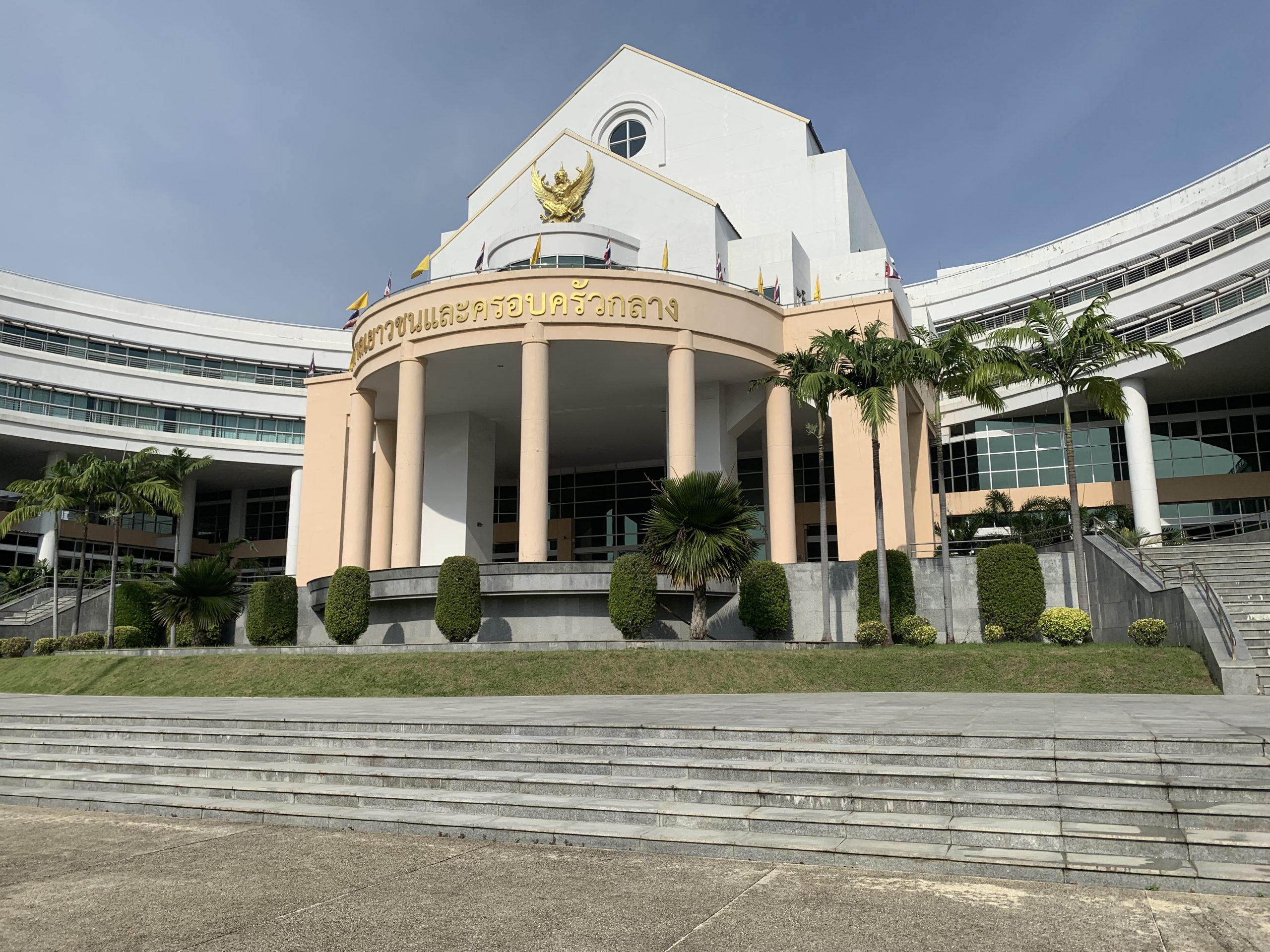
Picture of the Family and Juvenile Court in Bangkok.
The court is next to Bang Sue Grand Station, which underwent significant redevelopment and was completed in 2021.
Before filing for divorce in Thailand, expats must ensure the Thai court has jurisdiction. If your marriage is registered in Thailand, the Thai family court can handle your case. This is true if one spouse is Thai or if both partners lived together in Thailand. This applies whether you’re divorcing a Thai spouse or another foreigner. For uncontested cases, expats in Thailand can often get a divorce at the district office. This is true if both parties agree and the marriage was registered locally.
When a divorce is contested in Thailand, the process starts by filing a petition. This is done at the Juvenile and Family Court for the area where the defendant spouse lives or where the cause of the divorce arose (Civil Procedure Code section 4); the plaintiff’s own court is available only in the cases section 4 ter allows. After the petition is submitted, the court sends a summons to the other spouse. This gives them a chance to respond or file a counterclaim if they want.
The court will then schedule what is called a preliminary hearing. This first hearing is important because it often focuses on negotiation. Judges in Thailand usually encourage both sides to reach a settlement if possible. If you can agree on some or all issues at this stage, it can save a lot of time, stress, and money. However, if no settlement is reached, the case will move forward.
Both sides must then prepare to present their evidence. This may include financial documents, witness statements, or anything else that backs their stance on important issues. These issues can be property division, child custody, or spousal support. It may take several hearings to review all the evidence, depending on how complex the case is.
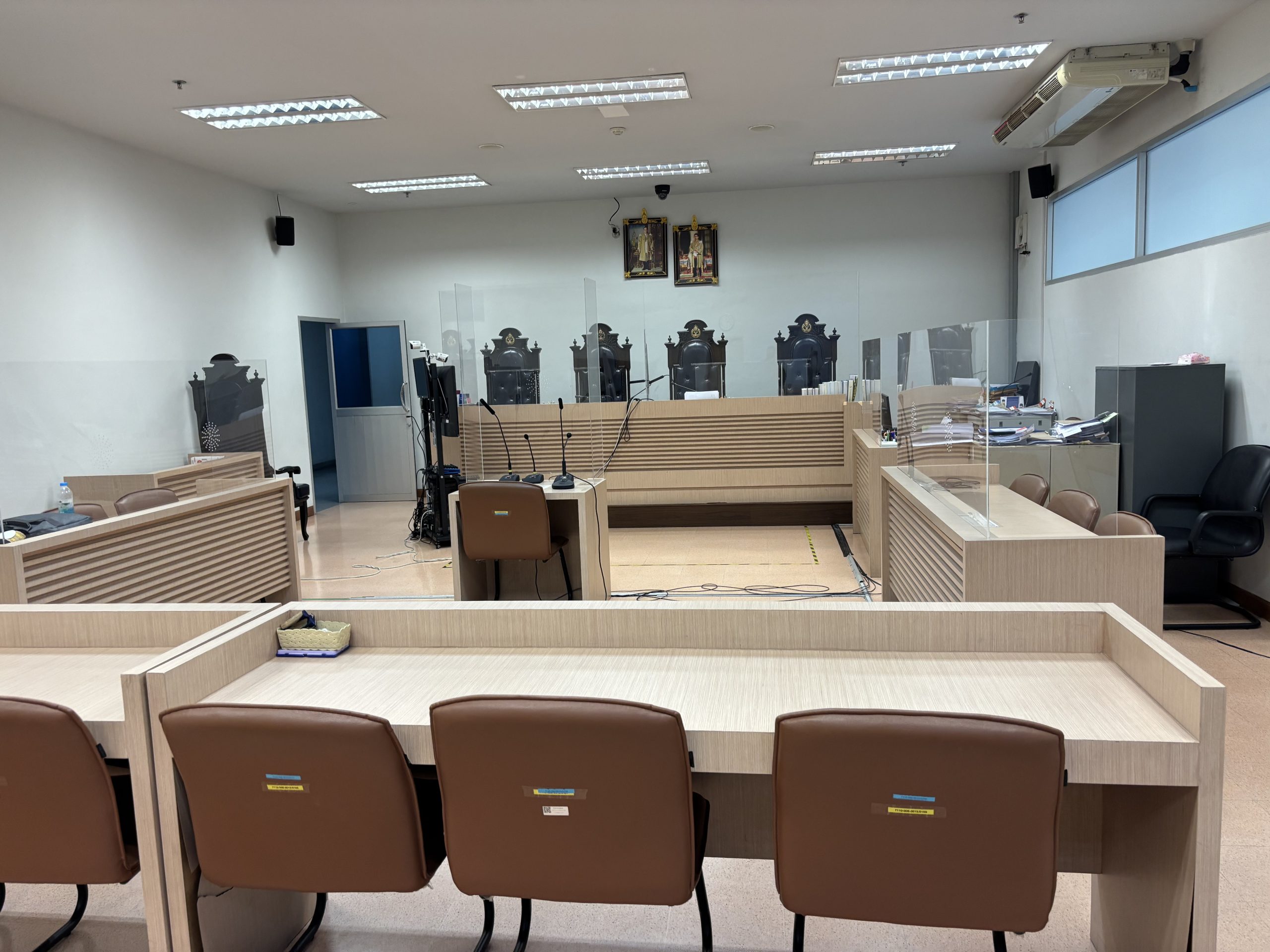
If the case cannot be settled during negotiations or hearings, it proceeds to a full trial. The judge will listen to both parties, review the evidence, and eventually issue a final decision. This judgment will decide everything about the divorce. It will determine who gets custody of the children. It will also outline how to divide marital property. Lastly, it will state if any financial support needs to be paid.
Micheal and Araya
Michael, an American living abroad, and Araya, a Thai citizen, built a life together in Thailand. They bought a condo in Bangkok, a family home in Chiang Mai, and opened several joint bank accounts.
When reconciliation did not work, Araya filed for a contested divorce in Chiang Mai. She used Section 1516 of the Thai Civil and Commercial Code. She claimed Michael was unfaithful and did not meet his marital duties. Michael denied the claims, and the court had to intervene to resolve asset division and child custody.
A major point of disagreement was how to divide their property. Thai law usually requires that marital assets gained during the marriage be split equally when a couple divorces. This rule can change if there is a valid prenuptial agreement that says otherwise.
Araya argued to keep the family home in Chiang Mai. She said she had helped a lot with its upkeep and payments.
Michael, conversely, claimed the Bangkok condominium, highlighting his role as the primary financial provider during their marriage.
Child custody was another point of conflict. Both parents wanted primary custody of their two children. The court, focusing on the children’s best interests, evaluated living conditions, parental involvement, and stability. In the end, they decided on joint custody. The children would mostly live with Araya. However, Michael kept important decision-making rights and visitation.
The contested divorce took nearly a year to complete. Araya received the family home and some joint assets. Michael kept the condo in Bangkok and the other accounts. Though the process was long and stressful, both parties accepted the court’s ruling as fair.
This case highlights how complex contested divorces in Thailand can be, especially when major assets and children are involved. It shows the critical role of documentation, strong legal representation, and a clear understanding of Thai family law. Consulting a Thai lawyer early can help protect your rights and make the transition smoother. Hiring a lawyer is not required, but it can help.
Professional advice makes sure that divorce agreements about property, custody, and support are properly registered and legally binding.
FAQs about Contested Divorce in Thailand
What are the grounds for a contested divorce in Thailand?
Section 1516 lists twelve grounds. These include adultery, desertion, abuse, long-term separation, and imprisonment. At least one of these must be proven in court for a contested divorce.
How long does a divorce court case take in Thailand?
First-instance timelines usually take about 4 to 12 months. This depends on how complex the case is. Appeals can add more months to the divorce process, complicating the legal representation needed. The courts’ own target is one year from filing for a contested case, and six months where the defendant does not appear (Judicial Regulation B.E. 2566).
Do I need to appear in person for a Thai divorce hearing?
Yes, contested cases need party testimony. If you cannot speak Thai, get an interpreter. Also, translate all foreign documents into Thai according to the Civil Procedure Code.
Is living apart for three years an automatic ground for divorce in Thailand?
No. Supreme Court Decision 451/2567 refused a divorce to a husband who had lived apart from his wife for well over three years, because Section 1516 (4/2) requires the separation to be voluntary on both sides and his own affair had caused it. Decision 1519-1520/2566 granted the divorce where the husband’s conduct drove the wife out, because he was then taken to have agreed to live apart.
Can I use recordings or chat messages as evidence of adultery in a Thai court?
Yes. In Decision 5259-5260/2561 the Supreme Court admitted a secretly recorded conversation because the person who recorded it gave evidence, and in Decision 3247-3248/2568 it relied on messages and photographs copied from the husband’s phone which he did not deny. Accusations against a third party are weighed strictly, as Decision 748/2568 requires, so the evidence must be specific.
Can my spouse block the divorce by saying I forgave them?
Forgiveness under Section 1518 ends the right to sue, but it must be proved and it must be pleaded at first instance. In Decision 4104/2564 two overnight family trips with the children were not forgiveness, and in Decision 5259-5260/2561 the point could not be raised on appeal because it had never been pleaded.
What are the legal grounds for divorce in Thailand?
The Thai Civil and Commercial Code Section 1516 lists reasons for divorce. These include adultery, three years of separation, one year of desertion, severe misconduct, and incurable insanity. An uncontested divorce does not need a reason. A contested divorce must have at least one legal reason.
What is the difference between uncontested and contested divorce in Thailand?
An uncontested divorce at the Amphur is based on mutual agreement. It does not require a court appearance and is usually finished in one day. A contested divorce means going to court. It involves witness testimony and a judge’s decision on property and custody. This process takes longer and costs more money.
Do you need a lawyer for a divorce in Thailand?
While you don’t need a lawyer for an uncontested divorce, it is a good idea to have one for contested cases. This helps protect your rights regarding property, custody, and support. ThaiLawOnline can assist with either route.
What does the process of filing a petition for divorce involve?
It involves getting the right documents ready. You need to state the reasons for the divorce. Then, submit them to the district office or Family Court, based on if it’s contested.
Does ‘fault’ (like adultery) affect how property is divided?
Generally, under Thai law, marital property (Sin Somros) is divided equally regardless of fault. However, extreme misconduct causing financial damage might be considered in specific claims.
Conclusion
The quickest way to get a good divorce in Thailand is to have a clear plan. This plan should use Thai language and focus on Section 1516 grounds. You need strong evidence and be ready for court mediation. It is also important to manage the division of Sin Somros and custody carefully. After that, register your divorce quickly. If necessary, you can file an appeal within one month to protect your legal grounds.
As a Western expat husband in Bangkok, you will gain a lot from a local, bilingual team. They can translate your facts into acceptable Thai evidence. They will help you navigate mediation and trial effectively. They will also assist in finalizing your status at the Amphur. They manage costs, timelines, and cross-border documents. This way, you can move on with confidence. When you are ready, we will check your grounds and exhibits. We will plan your settlement and trial strategy, focusing on the best interests of both husband and wife. Then, we will file right away to get interim protections and the final judgment you need.
Links : Juvenile and Family Court in Thailand
Last reviewed: 27 September 2026. Read in Thai: Civil and Commercial Code ss.1516, 1529 and 1531; Civil Procedure Code ss.4, 20 ter, 46, 229, 231 and 244/1; the Judicial Regulation on case timeframes B.E. 2566 (Royal Gazette vol. 140, part 5 Kor). The court fee, translation, legalisation and lawyer fee figures, and the interpreter practice notes, are practice guidance and were not checked against a primary source.
What will it cost? Contested divorces start at around 70,000 THB depending on complexity. See the full divorce cost breakdown (2026) and our published legal fees.
Thai Law Updates, free by email
Plain-English updates on Thai law changes that affect foreigners: property, visas, marriage, business and wills. One short email a month from a firm practicing since 2006. No spam, unsubscribe anytime.