


Reviewed by ThaiLawOnline, a licensed Thai law firm practising in Thailand since 2006. Thai lawyer of record: Wichuda Atthamethakon, LL.M., Thai Bar Licence 3149/2556.
Last updated on
🎧 Listen: Child Custody in Thailand Explained
Thinking about child custody in Thailand? Before you read the full details, you can listen to this short audio guide. It covers the basics of how custody works in Thailand, especially for foreigners and mixed-nationality families.
Custody interacts with legitimation, divorce and inheritance, all covered in our overview of family law in Thailand.
Last reviewed: 31 August 2026. Sections 1520, 1521, 1522, 1526, 1547, 1564, 1566, 1567, 1568, 1571, 1574, 1582, 1598/38, 1598/39 and 1598/41 of the Civil and Commercial Code were each read against the Thai text in our own annotated Code. Supreme Court Decision 1694/2569 was read in full in Thai, to its final disposition. The court procedure and district-office practice described below are practice rather than Code provisions and were not verified against a statute. On 3 October 2026 every other Supreme Court decision cited on this page (303/2488, 2076/2497, 1637/2520, 2593/2533, 3035/2533, 1002/2537, 4990/2537, 4323/2540, 8087/2543, 2563/2544, 819/2546 and 116/2547) was read in Thai to its disposition, together with Sections 1547, 1548 and 1585; the descriptions of 116/2547, 2563/2544, 2076/2497 and 4990/2537 were corrected.
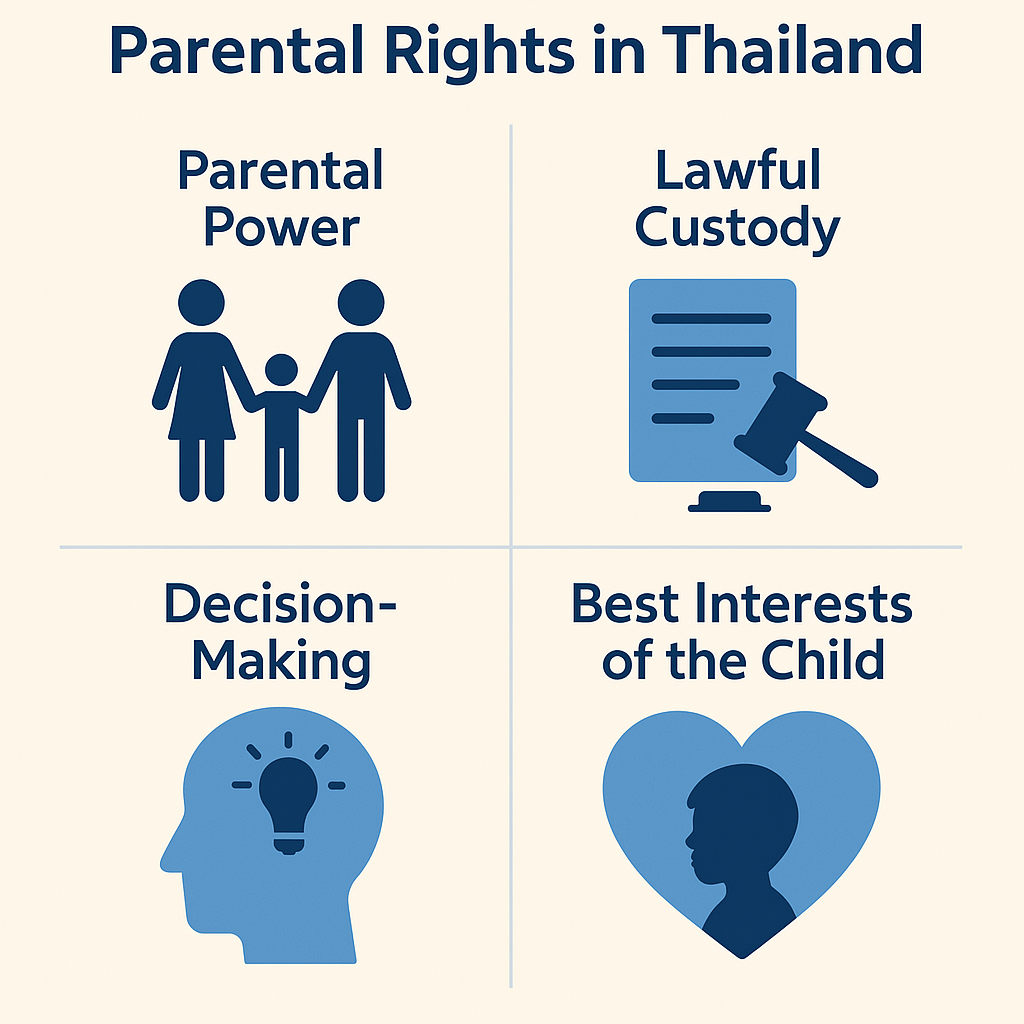
Whether you’re a foreigner living in Thailand or a parent married to a Thai national, understanding child custody in Thailand is essential, especially if you’re facing Thai divorce, separation, or legal questions about your parental rights. Thai custody laws are rooted in the Civil and Commercial Code, and court decisions are based on the best interests of the child, not just the wishes of the parents.
The following article is co-written by Mr. Sébastien Brousseau (LL.B., B.Sc. Managing Thai Law firms since 2006) and Khun Wichuda Atthamethakon (LL.M., Thai lawyer and Notarial Services Attorney).
Table of Contents
How Child Custody Is Decided in Thailand
Child custody in Thailand can be established in two ways: by mutual agreement or through a court order. When both parents agree on custody, they can register this agreement at the local district office (Amphur). This usually happens during a mutual consent divorce. This is the easiest and most cost-effective option.
If no agreement is reached, custody will be decided by the Family Court. The court will look at several factors to decide what is best for the child. These factors include the child’s age, physical and emotional needs, and living environment. They also consider each parent’s financial and moral ability. Any history of abuse, neglect, or instability is important too.
To prepare for a custody case, it’s essential to gather evidence such as:
- Financial records showing your ability to provide for the child
- Character references or witness testimony
- Proof of your ongoing involvement in the child’s life (school reports, photos, correspondence)
- Any relevant court documents or legal filings
→ If you’re dealing with custody issues in Thailand, the decisions you make now can have long-term effects. Keep reading to understand how parental powers, visitation rights, and court rulings are applied in practice.
Explaining Thai Child Custody and Parental Rights in Thailand
Let’s start this article by explaining Thai Child Custody and the terms used. The most common are “parental powers’“, “custody” and “visitation rights“. People often confuse them. Not all jurisdictions use the same terms in the same way. Therefore, we must use terms as they are found in Thai Civil law or in judgments from the Thai Courts.
In Common Law (Australia, UK, USA, etc.), the term “custody” could be confused with “parental powers”. But under Thai law, there are other terms, like “guardian” or “controller of property“, that could apply.
Child custody in Thailand includes a parent’s rights to make various decisions regarding the child’s welfare.
Definitions for Child Custody in Thailand : Learn about Your Rights
“Parental powers” is the correct legal term child custody in Thailand. It refers to the rights and duties that parents have to raise their child. A parent or both parents having parental powers will have the right to make all the decisions concerning a child. This includes choices regarding religion, education or the child’s residence.
In discussions about child custody in Thailand, it is important to know that parental rights can vary. This difference often depends on whether the parents are married.
In return, parents have an obligation to provide physical, moral and emotional health to the child. Parental powers in Civil Law are WIDER than terms like ‘child custody in Thailand’. We will see later that under Civil Law’s custody’; can apply when the parents are physically present. Under Civil Law, the parents can be away from a child and still have ‘parental powers” (or ‘parental authority’).
Definitions for Thailand Child Custody: Learn About Your Rights
“Parental powers” (in Thai, อำนาจปกครองบุตร) is the legal term used in Thailand for what is commonly called “child custody.” It refers to the rights and duties that a parent (or both parents) has to raise a child. This includes making decisions related to the child’s education, religion, health care, and place of residence.
Legal Framework for Child Custody in Thailand
Child custody in Thailand is mainly governed by the Thai Civil and Commercial Code. Other laws help protect children’s rights. One of these is the Child Protection Act of 2003. Another is the Domestic Violence Victim Protection Act of 2007.
Under Thai law, custody is not only about who the child lives with. It includes broader legal responsibilities, known as parental powers (อำนาจปกครอง). These powers cover decisions about a child’s education, medical care, religious upbringing, and overall well-being.
The rules differ depending on the parents’ marital status:
- If the parents are married, they usually share joint parental powers.
- If the parents divorce in Thailand, they can agree who will have custody and parental powers, or the court will decide.
- If the parents were never married, only the mother has parental rights. The father must go through a legal process to legitimize the child under Thai law.
Thai courts always consider the best interests and welfare of the child (ประโยชน์และสวัสดิภาพของเด็ก) when making decisions. This principle is central to both the Civil Code and Section 22 of the Child Protection Act B.E. 2546 (2003). Even if a parent has legal custody, authorities can step in under this Act. This happens if the child faces neglect, abuse, or other dangers.
Another important point is that legal custody (parental powers) can exist. This can happen even if a parent does not live with the child. Physical custody (day-to-day care) and legal custody (decision-making authority) are not always the same.
In some cases, especially those involving domestic violence, the Domestic Violence Victim Protection Act can be used. This law lets courts provide protective measures for the child and the non-abusive parent.
Foreigners with children in Thailand should know that custody rights from other countries may not be recognized here. A Thai court must approve these rights for them to be valid. Thai law remains focused on the child’s well-being within the local legal framework.
Parental Powers in Thailand Explained
Under Section 1567 of the Thai Civil and Commercial Code (CCCT), parental powers include:
- Determining the child’s place of residence
- Punishing the child to teach or correct behaviour, but never by cruelty, physical or mental violence, or other wrongful means
- Assigning suitable work to the child based on their ability and condition in life
- Demanding the return of the child from anyone unlawfully detaining them
Section 1571 adds that parental powers also include the management of the child’s property. However, Section 1574 limits this power. It requires court approval for important legal actions involving the child’s property. This includes selling or mortgaging immovable property, creating a usufruct or superficies, and leasing immovable property for more than three years.
Types of Child Custody in Thailand
| Type of Custody | Legal Rights Holder | Common Situations |
|---|---|---|
| Full Parental Powers (Sole) | One parent only | Other parent is absent, unfit, or removed by court order |
| Joint Parental Powers | Both parents | Married or divorced with agreement or court decision |
| Custody to a Third Party | Relative or guardian | Abuse, neglect, or death of both parents |
A single parent can get full parental powers under Section 1566 CCC. This happens if the other parent is dead, declared incompetent, or removed by a court order. Section 1568 states that if a parent remarries, parental powers remain with the biological parent, not the new spouse.
Responsibilities of Parents and Children
Parents in Thailand must provide physical, emotional, and financial support to their children while they are minors. According to Section 1563, children must also support their parents. Section 1564 states that parents must give proper education and care until their child turns 20 years old (Section 19).
Civil Law vs. Common Law Terminology
In civil law, “custody” in its common law sense includes both physical guardianship and legal authority. In Thailand, this is more accurately captured by “parental powers.” For example, under common law, custody can include managing the child’s property. It also covers decisions about education and religion. Additionally, it can prevent the issuance of a passport. Thai law divides physical custody from decision-making authority. This means a parent can keep full parental rights even if the child lives somewhere else.
Example of Legal vs. Physical Custody
Consider this example: Parents X and Y are married and have a child Z. They send Z to study in the U.S. with an uncle. Although the uncle has physical custody, X and Y retain full parental powers and are legally responsible for decisions. The uncle does not have legal custody under Thai law unless ordered by a court.
Visitation Rights in Thailand
Visitation rights are part of child custody in Thailand and should be clearly defined, especially after a Thailand divorce. A parent who does not have physical custody is usually granted visitation rights. These should specify how often visits occur, where, for how long, and under what conditions.
Guardians and Property Managers
A guardian (ผู้ปกครอง) may be appointed if both parents have lost their rights or passed away. Guardians can be granted full parental powers by the court. In addition, a Last Will and Testament can appoint a property manager to oversee a child’s assets until they reach majority.
The Best Interests of the Child
The guiding principle in all matters involving children is the “best interests of the child.” Thai courts consider this above all else, especially when parents disagree on issues like education, religion, or living arrangements. The court will consider the child’s wellbeing and emotional stability, not just parental preferences.
Custody Decisions After Divorce
If parents divorce by mutual consent, they must agree on who holds parental powers. If they cannot agree, the court will decide under Section 1520 CCCT and the divorce judgement will be render. Once a custody decision is made, it can only be changed if new evidence or circumstances show it is best for the child. Section 1521 lets the court change parental rights. This can happen if the current guardian acts badly or if there is a big change.
Understanding parental powers is essential to understanding child custody in Thailand. Knowing your rights is important, whether you are planning for the future or dealing with a dispute. Understanding what custody means can make a big difference.
How to legitimate Father’s rights in Thailand to get child custody in Thailand
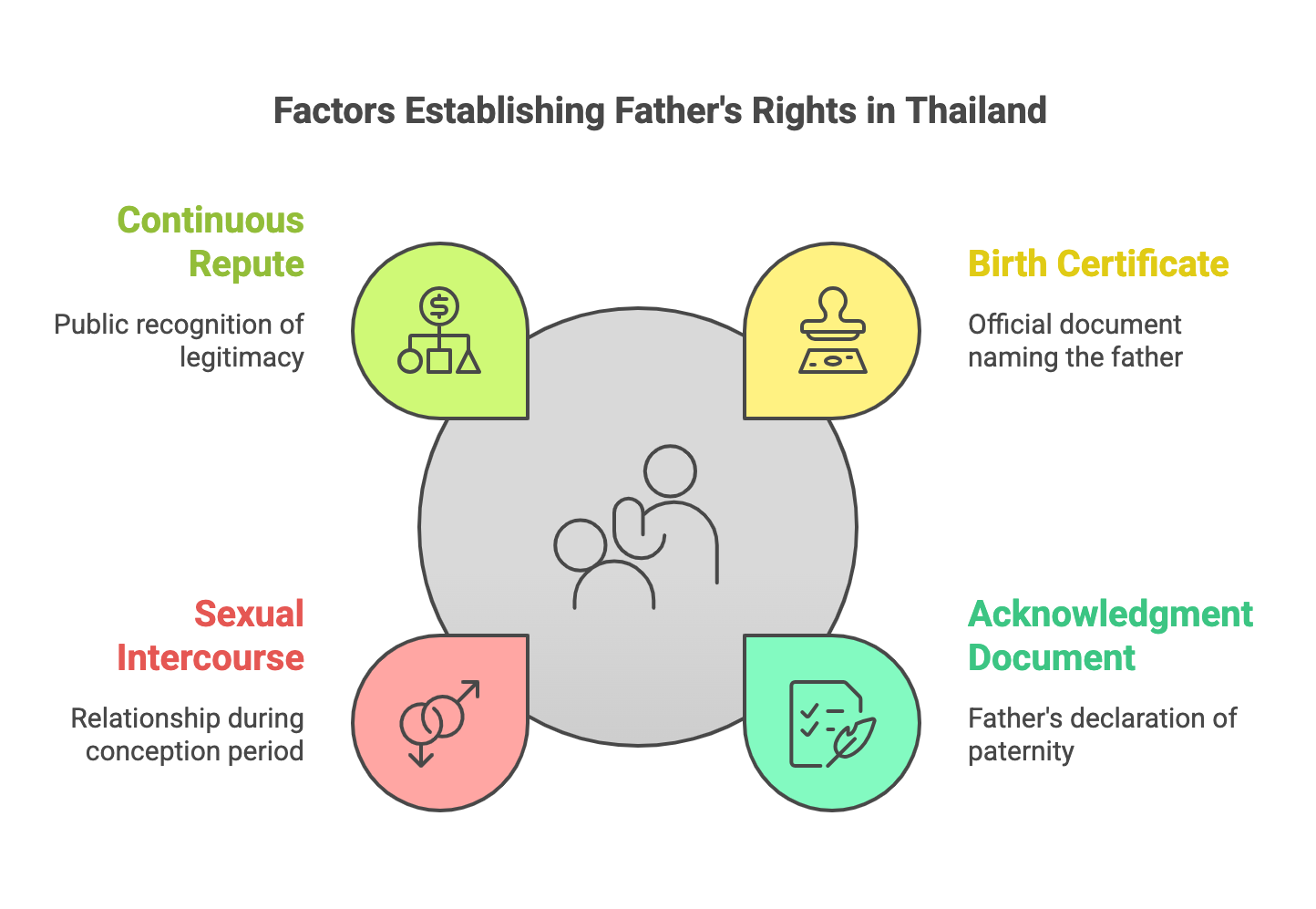
If a father is not married to the mother, he needs to follow section 1547 of the Thai Commercial and Civil Code. This is necessary for him to have legal rights over the child. We always suggest non-married father to legitimate their rights for the purpose of child custody in Thailand. Under Section 1547 the child becomes the father’s legitimate child if the parents later marry, if the father registers the child as his at the district office, or by a court judgment. Registration needs the consent of the mother and of the child (Section 1548); if either objects, does not consent within 60 days of being notified (180 days if abroad), or cannot consent, for example because the child is too young, the father must go to court, and the court will usually order a social worker’s report. If you want to establish your fatherly rights or need help with Thai child custody, ThaiLawOnline can help you. We wrote an article about how to legalize your rights in Thailand as the father here.
Moving the Child Abroad After a Separation
This is decided by a single provision, and it is not the one most parents expect. Section 1567(1) of the Civil and Commercial Code gives the person exercising parental power the right to determine the child’s place of residence. The test is therefore not who does the school run or whose house the child sleeps in. It is who holds parental power, and whether they hold it alone.
Where both parents still hold parental power, neither of them can lawfully decide on their own that the child now lives in another country. There are three lawful routes, and all three should be arranged before anyone books a flight.
- Written consent from the other holder of parental power, certified at the amphur. Certification is the point: the document has to be provable to a Thai official, to an airline, or to a court months later.
- A custody agreement recorded on divorce that already permits it. Where relocation is foreseeable, deal with it in the agreement at the time instead of renegotiating under pressure afterwards.
- A court order granting parental power to one parent under Section 1566(5), which lists an order of the court among the grounds on which one parent exercises parental power alone. Obtain the order before the move. A Thai court is far easier to approach while the child is still in Thailand.
A parent who moves the child without one of these has not merely started a custody dispute. The matter can become an international child abduction case, and the remedy then turns on treaty machinery rather than on the Thai family court alone. That machinery is narrower than most people assume, because Thailand acceded to the 1980 Hague Convention instead of signing it at the outset, so it operates only with countries that formally accepted the accession. We set out how that works, and how to check your own country, in our guide to child abduction in Thailand.
Real Life Examples and Case Studies:
Case Study 1: Joint Custody Agreement
Mr. A and Ms. B, though divorced, agreed amicably on joint custody of their daughter. They drafted a custody plan detailing shared responsibilities and schedules, which was then submitted to the district office for official recognition. This collaborative approach minimized conflict and prioritized their child’s well-being. It is very important to draft a complete and precise agreement to avoid potential problems in the future. ThaiLawOnline has the expertise and can help you to do that. It won’t be expensive and it is really important. The amphur doesn’t make long agreement and you should make your own agreement before divorcing by mutual consent.
Case Study 2: Sole Custody Decision
In another instance, Ms. C sought sole custody of her son due to Mr. D’s history of substance abuse and neglect. The Family Court looked at the evidence and the child’s best interests. They granted Ms. C sole custody. The court stressed the need for a safe and stable environment. Remember, you need strong evidence to get full and sole custody, but it is possible. The family court usually chooses joint parental rights in divorce cases in Thailand. This is unless strong evidence is shown.
Supreme Court Decisions on Child Custody in Thailand: What the Courts Really Consider
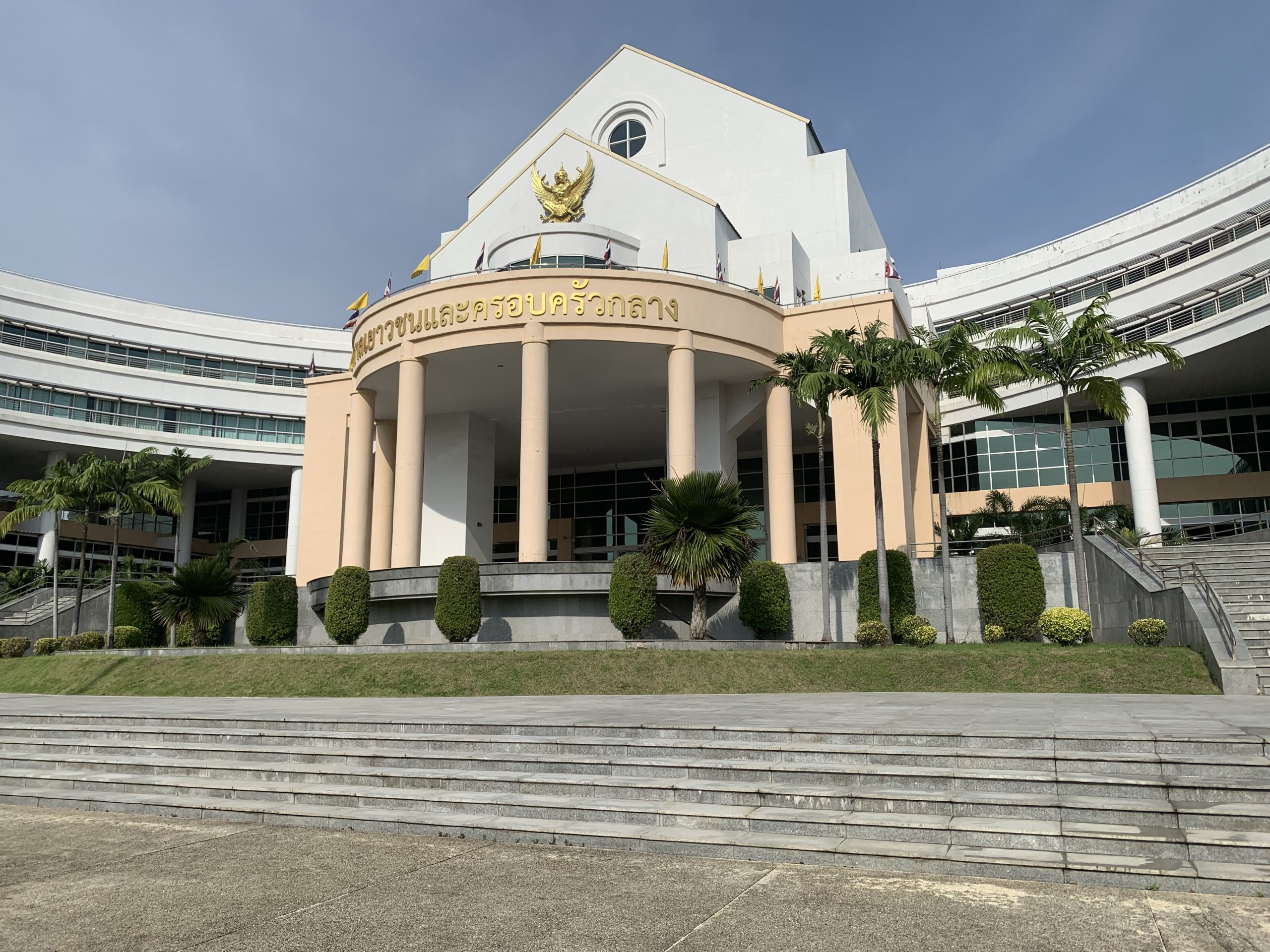
At ThaiLawOnline, we’ve handled numerous custody disputes over the years and understand what Thai courts truly prioritize. The main point of custody decisions is the child’s best interests and well-being. This is based on Supreme Court rulings and our experience. This focus is more important than the rights or wishes of the parents.
Under Sections 1520 and 1521 of the Thai Civil and Commercial Code, courts decide custody based on what helps the child most. They consider the child’s future, education, emotional stability, and overall well-being. This is consistent across all levels of the judiciary in Thailand.
Key factors the Supreme Court regularly considers include:
- Age and needs of the child: Younger children are often placed with their mother. This is especially true if she can provide better care (see decision 303/2488). If the mother acts inappropriately or the father is a better caregiver, custody may go to the father.
- Continuity and environment: Courts avoid disrupting a stable and positive living situation. If the child is doing well with one parent, judges are unlikely to order a change that might cause emotional harm (see 3035/2533, 8087/2543).
- Parental conduct and morality: A parent’s behavior matters. In cases involving addiction, violence, or immoral conduct, the court may deny custody (see 1637/2520).
- Ability to provide care: While income and job security are relevant, they aren’t the sole deciding factors. Courts look at a parent’s overall ability to provide education, housing, healthcare, and emotional support (1002/2537, 819/2546).
- Emotional bond: The love, attachment, and warmth shown to the child are critical considerations.
- Child’s opinion: The Civil and Commercial Code fixes no age at which a child must be heard. The court may take into account the views of a child old enough to express them, but they are one factor, not the decision.
- Keeping siblings together: Courts generally avoid separating siblings unless there’s a compelling reason.
- Parental availability: Judges will consider which parent has more time to devote to hands-on care (3035/2533).
In some important rulings:
- In 116/2547, the father was a civil servant posted from one district to another, while the 12-year-old son lived with his mother, who paid his school fees, and told the probation officer he wanted to stay with her. The court found nothing wrong with the father as a parent, but gave the mother sole parental power for the child’s welfare and his bond with her, and gave her the younger child as well so that the two siblings would grow up together. It did so even though the same judgment granted the father a divorce because of the mother’s criminal conviction.
- In Supreme Court case 2563/2544, the parents had agreed on divorce that the mother alone would hold parental power (sections 1520 and 1566 paragraph two (6)). When she died, the child’s aunt asked to be appointed guardian. The Court held that such an agreement does not take parental power away from the father, so on the mother’s death it passed back to him under Section 1566 paragraph two (1), and a guardian cannot be appointed while a parent still holds parental power (Section 1585). But it then used its own power under Section 1582 to withdraw the father’s parental power, because he was in prison for selling drugs and had left the child in the aunt’s care, and appointed the aunt as guardian.
- In the Supreme Court case 2076/2497, it is said that you cannot (normally) transfer parental powers. A child is not property that a parent can hand over. When the father died, the mother kept parental power, whether or not the child was the father’s legitimate child, and a person who, at the father’s request, had raised the child from three months old to the age of thirteen gained no right to be appointed guardian, however long the care and whatever it had cost, unless the mother’s parental power is first withdrawn.
- An example where the Court refused to interfere in an previous agreement can be found in Supreme Court judgment 4990/2537. In that case the parents had agreed on divorce that the mother would hold sole parental power (sections 1520 paragraph one and 1566 (6)). The father later asked the court to appoint him guardian jointly with her. The Court refused: a guardian can be appointed only where a child has no parent holding parental power (Section 1585), and the mother’s had not been withdrawn.
- Under Thai Law, physical custody of a child can be done alternatively. For example, a child can spend one semester with one parent and then another semester, with the other one. An example of that is found in the Supreme Court judgment 2593/2533.
Thai courts may look at joint custody if it is best for the child. This is true if the parents can work together. Custody arrangements can also be changed later if circumstances shift and doing so would benefit the child (Section 1521).
Finally, custody rights can be removed. This can happen if a parent cannot take care of themselves. It can also happen if a parent misuses their power or behaves very badly. This is mentioned in Section 1582 (see 4323/2540).
Supreme Court Decision 1694/2569 (Juvenile and Family Division): when child maintenance ends, even where the agreement says otherwise
This 2026 ruling of the Juvenile and Family Division is the most practically useful decision on child maintenance to come out of the Supreme Court in years, because it answers the two questions our clients ask most often: can we agree to support a child past the age of 20, and if we do, are we locked in for good?
The facts
The parents divorced and settled their dispute by a compromise agreement dated 25 January 2559 (2016), which the court approved and entered as a judgment. Under that compromise the father undertook to pay:
- maintenance for the daughter and for the son, in each case until the child completed a “bachelor’s degree or the highest level of education”; and
- maintenance to the mother herself, expressly running until the son’s graduation.
Years later the position on the ground had moved on. Both children had completed their university studies and were earning: the daughter was 25 and in employment, and the son had taken his bachelor’s degree. The father, for his part, had retired and was without a stable income. He applied to the court to be released from the payments.
What the Supreme Court held
- An agreement to maintain a child beyond majority is valid and enforceable. Section 1564 of the Civil and Commercial Code binds parents to maintain and educate a child during minority, and to maintain a child of full age only where that child is disabled and unable to earn a living. That is a statutory floor, not a ceiling. Parents are free to promise more, and the Thai courts will hold them to the promise. The validity of the clause was challenged as contrary to public order and the Court rejected the challenge, describing the undertaking as an extension of the duty of maintenance past the child’s majority, made out of the goodwill of the father.
- Maintenance never hardens into a fixed debt. Even though the figures here were set by a compromise which the court approved and entered as a judgment, Section 1598/39 allows the court, at any time and on the application of any interested person, to revoke, reduce, increase or restore maintenance once there has been a change in circumstances, in means, or in the condition in life of the parties. The Court described maintenance as being of a temporary character, open to alteration whether it was fixed by judgment, by agreement, or by compromise agreement. Converting an agreement into a judgment does not freeze it.
- “Bachelor’s degree or the highest level of education” means whichever comes first. The court gave the word “or” its plain disjunctive sense: the first of the two milestones to arrive brought the obligation to an end. The clause was not read as an open-ended commitment to fund postgraduate study.
- Maintenance for both children was revoked. The daughter, at 25 and employed, was supporting herself. The son had taken his bachelor’s degree and was also in work. The court rested this on the compromise itself: its terms released the father once each child completed a bachelor’s degree or the highest level of education, whichever came first, and Section 1598/39 confirms that maintenance fixed by a compromise can always be varied later.
- The mother’s own maintenance fell away with the son’s degree. Because her spousal maintenance had been drafted to run until the son graduated, it terminated on that same event. The father was released from all future payments, maintenance, education and medical alike, with effect from 9 June 2566.
- A history of paying extras created no obligation to continue. Over the years the father had paid for a number of things that the agreement did not require, including holiday travel, an iPhone and skincare. The Court held that a pattern of voluntary generosity does not enlarge the agreement or convert those items into enforceable maintenance.
- Only one breach was proved. A single hospital bill of THB 4,750, which had been forwarded to the father with a receipt, remained unpaid, and he was ordered to pay it. On everything else he was found to have substantially complied.
Citation: Supreme Court Decision No. 1694/2569, ศาลฎีกาแผนกคดีเยาวชนและครอบครัว (Juvenile and Family Division). The provisions applied were CCC Section 1564 paragraph 1, Section 1598/38 and Section 1598/39 paragraph 1, together with Section 142(5) of the Civil Procedure Code read with Sections 246 and 252, and Section 6 of the Juvenile and Family Court and Its Procedure Act B.E. 2553. Section 1598/41 and Section 1526 are mentioned in this note for context and were not among the provisions applied.
What this means in practice
If you are the paying parent. A court-approved divorce agreement is not necessarily a life sentence. Where the child has finished the degree, has started work, or is otherwise standing on their own feet, the route is not to stop paying but to apply to the Juvenile and Family Court under Section 1598/39 to revoke or reduce the order. Stopping unilaterally leaves the existing judgment in force and open to enforcement, with arrears. Whether an application succeeds depends on the wording of your agreement and on your own facts, but 1694/2569 shows that on the right facts the court will release the payer entirely.
If you are the receiving parent. The same section cuts both ways. If the paying parent’s income has risen sharply, or the child’s needs have grown (medical treatment, special educational needs), you can apply to increase maintenance that once looked settled. Equally, a figure agreed years ago at a low level is not a permanent ceiling.
Drafting warning: the word “or”. The phrase “until the child completes a bachelor’s degree or the highest level of education” looks generous to the recipient and reads, to most foreign clients, as “for as long as the child keeps studying”. The Supreme Court read it the other way: whichever event arrives first ends the obligation. If the intention is to fund study beyond a first degree, say so in terms, name the qualification, and set a longstop age (for example, “until the child attains the age of 25 or ceases full-time education, whichever is the later”). Ambiguity in a maintenance clause is resolved by a judge, not by the parent who drafted it.
Generosity is not a promise. The father in this case had for years paid for things the agreement never mentioned, from family holidays to a phone. None of it created an obligation. That cuts both ways: a payer who gives extra is not building a liability, and a recipient who receives extra should not treat it as a term of the settlement. If something matters, it belongs in the agreement.
Conditional payment clauses decide who wins the argument later. Maintenance agreements routinely make certain payments conditional, typically on prior consent before an expense is incurred, or on a receipt before reimbursement. Those conditions are where disputes are actually won and lost. In 1694/2569 the single breach the mother could prove was a hospital bill of THB 4,750 that had been forwarded with a receipt. The receipt is what made it provable. Keep the paperwork, and draft the condition so both sides know exactly what triggers payment.
Never peg your own maintenance to your child’s milestone. The mother in this case lost her personal maintenance not because she had ceased to need it, but because the clause had tied it to her son’s graduation. Where a spouse’s maintenance is agreed in a divorce settlement, give it its own start, its own duration and its own review trigger, drafted separately from anything concerning the children. Note that this is different from the statutory living allowance under Section 1526, which is available only where the divorce is granted on the sole fault of the other spouse, the divorce leaves the claimant poorer for lack of the income from property or work they had during the marriage, and the claim is raised in the divorce pleadings themselves. In a divorce by mutual consent, spousal maintenance exists because the parties agreed it, which makes the drafting the only protection you have.
Do not expect a “no variation” clause to hold. Section 1598/41 provides that the right to maintenance cannot be renounced, attached or transferred, and Decision 1694/2569 shows the Section 1598/39 power to revisit maintenance operating on figures fixed by a compromise that the court had approved. The safer assumption is that a clause declaring maintenance “final and not subject to variation” adds little. Draft towards a clear, foreseeable end point instead.
This section is general information on Thai law, not advice on any particular case. Maintenance outcomes turn closely on the wording of the agreement and the parties’ circumstances, so take advice on your own facts before acting.
These rulings affirm that Thai courts focus on what is best for the child, not what is easiest or most convenient for the parents. We know how judges think and what documents they need. We also know how to build a strong case that focuses on the child’s well-being. If you need help with child custody in Thailand, our team is ready to assist you. We offer experience, compassion, and a clear legal plan.
Faqs about Child Custody in Thailand
How is child support in Thailand determined?
Child support in Thailand is set by reference to the needs of the child and the financial capacity of the parent, under Section 1598/38 of the Civil and Commercial Code. The Juvenile and Family Court weighs the ability of the parent who pays, the condition of the child who receives, and the station in life of both.
The figure is never permanently fixed. Under Section 1598/39 either parent may return to court at any time and ask for the maintenance to be revoked, reduced, increased or restored once circumstances, income or condition in life have changed. Supreme Court Decision 1694/2569 confirms that this applies even where the amount was agreed by the parents in a compromise and entered as a court judgment.
What role do family lawyers play in custody disputes?
Family lawyers in Thailand help with custody disputes. They give legal advice, represent clients in court, and assist in negotiating settlements. They ensure that the legal rights of their clients are protected throughout the process.
How does child legitimation affect custody rights in Thailand?
Child legitimation can change custody rights. It legally recognizes the father of a child, which may affect custody choices. It is crucial to address legitimation issues to establish parental rights over a child in custody disputes.
Can a non-parent obtain custody of a child in Thailand?
In certain situations, a non-parent may obtain custody of a child in Thailand if it is in the child’s best interests. The family court considers the ability of the non-parent to provide a stable and nurturing environment. We have done cases where grandparents, for example, got custody rights.
What are the legal rights of parents to raise a child after a divorce in Thailand?
After a divorce in Thailand, legal rights to raise a child are typically determined by the family court. Custody of their child may be granted to one or both parents, depending on what arrangement serves the child’s best interests.
Does child support in Thailand stop when the child turns 20?
As a matter of statute, largely yes. Section 1564 of the Civil and Commercial Code obliges parents to maintain and educate a child during minority, which in Thailand ends at 20, and to maintain an adult child only where that child is disabled and unable to earn a living.
The practical answer is more nuanced, because most divorcing parents sign an agreement that goes further. Where they do, the agreement governs, and Supreme Court Decision 1694/2569 confirms that a promise to support a child past majority is valid and enforceable in Thailand.
Can we agree to pay child support beyond the age of 20 in Thailand?
Yes. Section 1564 sets the minimum obligation, not the maximum. Parents may agree to support a child through university or to any later point they choose, and the Thai courts will enforce that agreement, including where it has been incorporated into a divorce settlement approved by the court. Supreme Court Decision 1694/2569 confirms it.
The point to understand before signing is that enforceable does not mean unchangeable. See the next question.
Can a Thai court change child support that was fixed in a court-approved divorce agreement?
Yes. This is the central holding of Supreme Court Decision 1694/2569. Maintenance remains variable at any time under Section 1598/39, even where the amount was fixed by a compromise agreement that the court approved and entered as a judgment. Any interested person may apply, and the court may revoke, reduce, increase or restore the payments where circumstances, means or condition in life have changed.
In that case the father was released from all future payments with effect from 9 June 2566. Both children had graduated and were working, which met the release condition in the compromise itself.
What does “until the child completes a bachelor’s degree or the highest level of education” actually mean?
It means whichever of the two comes first. In Supreme Court Decision 1694/2569 the court read the word “or” disjunctively, so the son’s bachelor’s degree ended the obligation. It was not a commitment to fund a master’s degree or any further study.
If you intend maintenance to continue through postgraduate study, the clause has to say so, name the qualification and add a longstop age. Do not rely on wording of this kind to protect a child through further study.
Does my spousal maintenance end when my child graduates?
It does if that is how the clause was drafted, and this is a trap worth naming. In Supreme Court Decision 1694/2569 the mother’s own maintenance had been pegged to her son’s graduation. When the son completed his bachelor’s degree, her maintenance ended with it, regardless of her own circumstances.
Spousal maintenance agreed in a settlement should be drafted with its own start, its own duration and its own review trigger, entirely separate from the children’s arrangements. The statutory living allowance under Section 1526 is a different and narrower remedy, available only where the divorce is granted on the sole fault of the other spouse, the divorce leaves the claimant poorer for lack of the income from property or work they had during the marriage, and the claim is made in the divorce pleadings.
My ex-spouse stopped paying because our child finished university. Was that lawful?
Not by itself. The obligation ends when the court says it ends, not when the paying parent decides the trigger has occurred. The correct step is an application under Section 1598/39 to revoke or reduce the order. Until that application succeeds, the existing judgment stands and can be enforced, with arrears.
If you are on the receiving end of a unilateral stoppage, or you are the payer and want to stop lawfully, speak to a Thai family lawyer before the arrears build up.
Testimonials of clients:
I wouldn’t consider using anyone else.
I’ve been living in Issan for over 10 years now, and I’ve had reason to use Sebestian on several occasions. The first time I can remember was for an usufruct, the second was for a separation agreement, the third was for a divorce and child custody and the fourth was for a Last Will and Testament. On every occasion, Sebestian didn’t limit himself to the bare bones of what was needed. He took the time to understand the issue thoroughly, and together with his partner, made contentious issues as painless as they could possibly be. I’ve been impressed with the countless hours he works, I’ve had replies at 2.00 am, and I have lost count of how many times he’s given me advice on what and what isn’t possible in Thai Law. This is a man who genuinely cares about the standard of the work he does. I wouldn’t consider using anyone else.

fully recommend them. Sebastian and his team are A+
I used them “for my child custody here in Thailand. I was less to believe that I had 50/50 custody but it turned out I had 0% They build a case in thai court that got me awarded 100% parental power of my son. This is Rare in Thailand especially for a foreigner. If you have child custody issues I fully recommend them. Sebastian and his team are A+.
diligence and perfection
Sebastian and his team handled our complicated international child custody case with diligence and perfection. They left no stone un-turned and simply out classed the other attorneys making them look un-prepared. We successfully kept our boys with their mother here in Thailand and blocked them from being sent to Europe. I simply do not think we would have won the case with a different team. Reuniting a mother with children that had been wrongly taken away from her is a gift that words cannot express. Thank you!
fantastically knowledgeable in all that they do
This law firm is truly a fantastic international law firm. They will work for you, be honest with you and they are fantastically knowledgeable in all that they do.
👨👩👧 Need Help with Child Custody in Thailand?
Child custody disputes can be overwhelming, especially when you’re navigating them in a foreign country. Whether you’re separated, going through a divorce, or just want to protect your parental rights, you don’t have to face this alone.
At ThaiLawOnline, we help foreigners and mixed-nationality families understand and assert their rights under Thai law. We will listen to your situation and help you find a solution that protects your child. We will keep you informed at every step.
✅ Legal advice in clear English
✅ Representation in court when needed
✅ Drafting of custody agreements or modifications
✅ Help with sole custody, joint custody, or parental powers
✅ Experience with both civil and criminal matters
📩 Contact our legal team today at info@thailawonline.com or click the Messenger icon below for a confidential consultation.
Because when it comes to your child, every step matters.
And you can communicate with us on 💬 Messenger📱 WhatsApp📸 Instagram📧 Email
Additional Links:
How custody work is priced
| Service | Fixed fee | What is included | Timeline |
|---|---|---|---|
| Child custody and parental rights | Quoted after consultation | Consultation first at 2,000 per hour. A fixed fee for the court or district-office work is quoted after that. | Depends on route: district office or Juvenile and Family Court |
Government disbursements are charged at cost unless the service says they are included.
Book a consultation Answer within 24 to 48 hours EN · FR · TH
These fees come from one source and are the same everywhere on this site. See all our fees.
Try it yourself first, free
You do not have to book anything to get started. These run in your browser, and you only pay us if you decide you want a lawyer involved.
Ask our AI assistant Free
Trained on Thai law and 77,000+ Supreme Court decisions. Ask anything, free.
Expat Legal Health Check Free
Ten minutes on your property, family, visa and will. You get a written report naming the exact gaps and what each one costs to fix.
Take the Legal Health CheckThai Law Updates, free by email
Plain-English updates on Thai law changes that affect foreigners: property, visas, marriage, business and wills. One short email a month from a firm practicing since 2006. No spam, unsubscribe anytime.