


Last updated on
Reviewed by ThaiLawOnline’s immigration team, licensed Thai lawyers practising in Thailand since 2006.
The short answer, checked on 3 September 2026: an Indian passport holder enters Thailand visa-free for 30 days (entries from 15 September 2026; entries before that date got 60 days). No consular visa, no visa on arrival, no visa fee. India is on the final 30-day exemption list published in the Royal Gazette on 31 August 2026. You do have to file the free Thailand Digital Arrival Card before you travel.
You may have read that this ended in May 2026. It did not. The Cabinet approved a new framework on 19 May 2026 that would have taken India off the visa-exemption list and put it on a 15-day visa on arrival, and it was widely reported as though it had already happened. It had not. On 14 July 2026 the Cabinet revised its own decision and put India back on the exemption list, in the group receiving a 30-day visa exemption, with India’s visa on arrival removed so the two do not overlap.
It is now law. The Ministry of Interior announcements were published in the Royal Gazette on 31 August 2026 (Volume 143, Special Part 207 Ngor) and name no date: each closes by coming into force when fifteen days from publication have elapsed. The Ministry of Foreign Affairs, in the Department of Consular Affairs summary it published on 1 September 2026, states in Thai and in English that the measures are effective from 15 September 2026, and the Tourism Authority of Thailand says the same. Plan on 15 September. So the 60-day exemption applies to entries up to 14 September 2026, and the 30-day exemption applies to entries from 15 September 2026. India is item 23 on the final list of 60 countries and territories.
Here is how the Thailand visa for Indians works now, how long you can stay, and what you need at the border.
Table of Contents
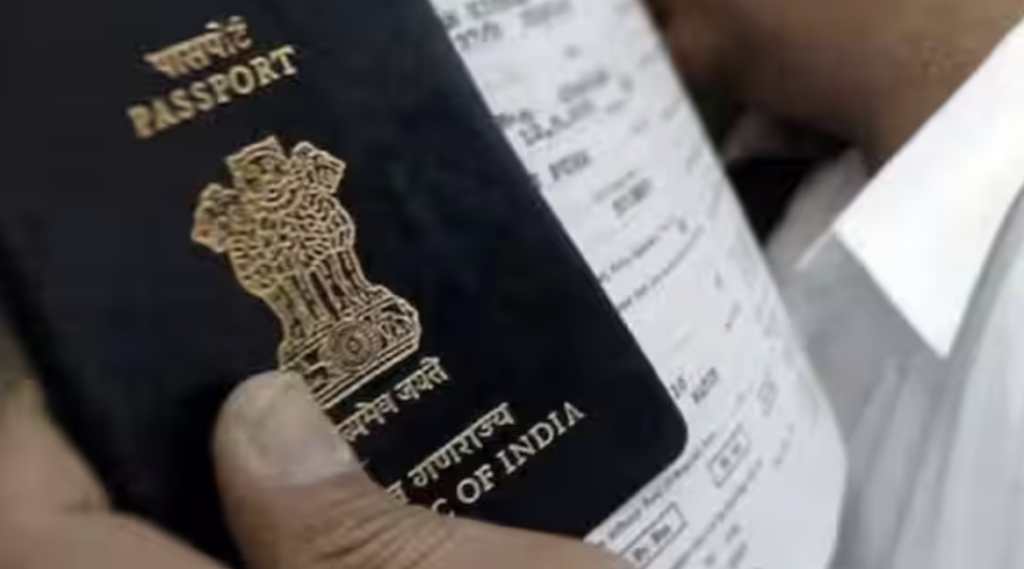
2026 is a transition year. Rules and fees are changing fast. Always confirm the current requirement on the official Thai e-Visa and ETA portals before you book. This guide explains the system so you know what to check.
Do Indians need a visa for Thailand in 2026?
Make sure to understand the Thailand Visa for Indians requirements to ensure a smooth entry into the country.
For tourism, Indian passport holders do not need a traditional consular visa. India is on Thailand’s visa-exemption list, which gives up to 60 days for entries before 15 September 2026 and 30 days for entries from that date, with no visa fee. But “visa-free” no longer means “just show up”: pre-arrival steps apply.
- TDAC, mandatory now. The Thailand Digital Arrival Card. You complete it online within 72 hours before arrival. It is free.
- ETA, announced but not in force. The Electronic Travel Authorization was announced in 2024 as an online approval you would obtain before flying. It has been postponed ever since and no launch date has been set. There is nothing to apply for today, so a website offering to sell you a Thailand ETA is selling something that does not exist. Check the position again before you travel.
- Arrival fee, proposed. Thailand has approved in principle a 300 THB entry fee for air arrivals. It has been delayed more than once. Check whether it applies on your travel date.
The practical message for 2026 is simple. You may not need a visa, but you do need the TDAC, and a fee or an ETA approval may be added later. Do not assume you can board without the TDAC. This article was first written on 15 June 2026 and updated on 3 September 2026, after the final rules were published in the Royal Gazette on 31 August 2026.
How long can Indians stay in Thailand?
Up to 60 days on the tourist exemption for entries up to 14 September 2026, and 30 days for entries from 15 September 2026. Either way you can usually extend once at a local immigration office, by up to 30 more days, and the extension fee is 1,900 THB.
There was a lot of confusion about this, because the May 2026 Cabinet decision was reported as though it had already taken effect. It had not, and it was then revised in July. The final framework was published in the Royal Gazette on 31 August 2026: from 15 September 2026 the exemption becomes 30 days, India stays on the exemption list, and India’s visa on arrival is withdrawn. The 60-day exemption applied to entries up to 14 September 2026.
Visa exemption vs ETA vs e-Visa: which is which?
- Visa exemption lets Indian tourists enter without a consular visa: 60 days for entries up to 14 September 2026, and 30 days for entries from 15 September 2026 under the announcements published in the Royal Gazette on 31 August 2026.
- ETA is not a visa. It would be a pre-travel approval tied to the exemption, obtained online before boarding, but it is not in force and there is nothing to apply for yet.
- e-Visa is the online visa you apply for when you need something the exemption does not cover, such as a longer stay, work, study, or business.
Entry requirements for Indian travellers
- A passport valid for at least 6 months with blank pages
- Proof of onward or return travel
- Proof of accommodation for your stay
- Evidence of sufficient funds if requested
- A submitted Thailand Digital Arrival Card (TDAC). The ETA is not in force, so there is nothing else to obtain before you fly
Staying longer: visa options for Indians
If a short tourist stay is not enough, Indian nationals can choose from Thailand’s longer-stay visas:
- Tourist visa (TR) for a longer holiday than the exemption allows.
- Destination Thailand Visa (DTV), a multi-year option for remote workers and digital nomads.
- Non-Immigrant visas for business, work, study, marriage, or retirement.
Not sure which fits? Try our Thai Visa Finder or book a consultation with our immigration team.
Common mistakes Indian travellers make
- Skipping the TDAC. It is required for everyone, every entry.
- Assuming “visa-free” means no paperwork. You still file the TDAC online before you arrive.
- No proof of onward travel. Airlines and immigration can ask for it.
- Overstaying your permitted stay, which is 60 days for entries up to 14 September 2026 and 30 days from 15 September 2026. Overstays are fined per day and recorded against you.
- Using the exemption for business. From 15 September 2026 the exemption is granted for tourism. The 2024 scheme it replaces expressly covered short-term business and work as well, and that wording is gone. For meetings, negotiations or a board seat, the clean route is a Non-B business visa.
- Repeated land-border entries. From 15 September 2026, visa-exempt entry through a land checkpoint is limited to twice per calendar year. Nationals of Malaysia, Brunei, Indonesia and Singapore are exempt from that cap and Indian nationals are not. Arrivals by air are not capped. See our guide to border run limits in Thailand.
Frequently asked questions
Is Thailand visa free for Indians in 2026?
Yes, for tourism. Indians enter without a consular visa and pay no visa fee: 60 days for entries before 15 September 2026, 30 days from that date under the rules published in the Royal Gazette on 31 August 2026. The 30-day exemption is granted for tourism only, so a business trip needs a different category. You must complete the TDAC, and a small arrival fee may be added later.
Do Indians need approval before flying to Thailand?
No approval, but you must file the TDAC. The Thailand Digital Arrival Card is mandatory and free and you file it online in the 72 hours before you arrive. The Electronic Travel Authorization has been announced since 2024 and is still not in force, so there is no ETA to apply for and nobody can sell you one.
How many days can Indians stay in Thailand?
Up to 60 days on the tourist exemption for entries before 15 September 2026, and 30 days for entries from that date, usually extendable once by up to 30 more days for 1,900 THB.
Is there an entry fee for Thailand?
A 300 THB arrival fee for air travellers has been approved in principle but repeatedly delayed. Check whether it is in force on your travel date.
Do Indians need to fill out the TDAC?
Yes. The Thailand Digital Arrival Card is mandatory for all foreign arrivals and is submitted online within 72 hours before arrival.
Can Indians get a long-term visa for Thailand?
Yes. Options include a longer tourist visa, the multi-year DTV for remote workers, and Non-Immigrant visas for business, work, study, marriage, or retirement.
Last reviewed: 3 September 2026. The visa statements on this page were read against the instruments themselves rather than against press reports. The four Ministry of Interior announcements of 31 August 2026 (Royal Gazette, Volume 143, Special Part 207 Ngor, pages 28 to 34) were read from the Gazette pages: India is item 23 of the 60 countries and territories on the 30-day tourism exemption list, it is not on the Visa on Arrival list (which is now Azerbaijan, Belarus and Serbia alone), the exemption is granted for tourism where the 2024 scheme it repeals also covered short-term business and work, and entry through a land checkpoint is capped at twice per calendar year with no exemption for Indian nationals. The announcements name no commencement date; 15 September 2026 is the date the Ministry of Foreign Affairs publishes through its Department of Consular Affairs and the date the Tourism Authority of Thailand publishes, and it is given here as the operative date because those are the bodies whose officers apply it. Counted strictly under section 193/3 of the Civil and Commercial Code the fifteen days end on 15 September and the instruments would bind from the 16th; the agencies have answered that question and the strict count is noted only as a caveat. The Electronic Travel Authorization statements were corrected: it was announced in 2024, has never launched, and there is nothing to apply for, so this page no longer presents an ETA approval as a step before boarding. Not verified from a primary source, and stated as reported: the content of the May 2026 Cabinet framework, the 300 THB arrival fee, and any future ETA start date.
General information only, and visa policy is changing quickly in 2026. Verify current rules on the official Thai e-Visa and ETA portals, and contact us for tailored advice.
Thai Law Updates, free by email
Plain-English updates on Thai law changes that affect foreigners: property, visas, marriage, business and wills. One short email a month from a firm practicing since 2006. No spam, unsubscribe anytime.