


ตรวจสอบโดย ThaiLawOnline สำนักงานกฎหมายไทยที่ได้รับใบอนุญาตและดำเนินกิจการในประเทศไทยตั้งแต่ปี พ.ศ. 2549 ทนายความผู้รับผิดชอบสำนวน: Wichuda Atthamethakon, น.ม., ใบอนุญาตให้เป็นทนายความ เลขที่ 3149/2556.
ปรับปรุงล่าสุดเมื่อ
ระยะเวลาในการยื่นอุทธรณ์คดีอาญาในประเทศไทยมีระยะเวลาหนึ่งเดือน นับตั้งแต่วันที่คำตัดสินถูกอ่านให้คุณฟัง หรือถือว่าได้รับการอ่านให้ฟัง และจะเริ่มนับใหม่ในแต่ละชั้นย่อยถัดไป คุณต้องยื่นอุทธรณ์ที่ศาลที่ตัดสินคุณ ไม่ใช่ที่ศาลที่จะพิจารณาคดีนั้น หากคุณถูกตัดสินจำคุกและได้รับการปล่อยตัวชั่วคราว คุณต้องไปพบเจ้าหน้าที่ศาลด้วยเมื่อยื่นอุทธรณ์ หากคุณพลาดการดำเนินการใดๆ ทั้งหมดเหล่านี้ คำตัดสินจะถือเป็นที่สิ้นสุด.
กฎข้อหนึ่ง: หนึ่งเดือนนับแต่วันอ่านคำพิพากษา โดยยื่นต่อศาลชั้นต้น (ประมวลกฎหมายวิธีพิจารณาความอาญา มาตรา 198) กฎหนึ่งเดือนเดียวกันนี้ใช้กับการฎีกาต่อศาลฎีกาภายหลังศาลอุทธรณ์มีคำพิพากษา (มาตรา 216).
มาตรา 193 ไม่ใช่มาตราที่กำหนดเวลา. มีผู้คนจำนวนมากค้นหาคำว่า “อุทธรณ์ มาตรา 193 ภายในหนึ่งเดือน” และสองเรื่องนี้ถูกนำมาปนกัน มาตรา 193 ให้สิทธิอุทธรณ์คำพิพากษาของศาลชั้นต้นทั้งในปัญหาข้อเท็จจริงและข้อกฎหมาย มาตรานี้ไม่ได้กำหนดระยะเวลาไว้ กำหนดเวลาอยู่ในมาตรา 198 สำหรับการอุทธรณ์ และมาตรา 216 สำหรับการฎีกา หน้าที่มีคำอธิบายของเราสำหรับ มาตรา 193 และ มาตรา 198 ระบุข้อความทั้งหมดให้ครบถ้วน.
ทำความเข้าใจโครงสร้างศาลไทย
คดีอาญาในประเทศไทยจะถูกพิจารณาในระดับสามระดับ โดยศาลชั้นต้นจะพิจารณาคดีและอ่านคำตัดสิน ส่วนศาลอุทธรณ์จะพิจารณาตามข้อเท็จจริงและกฎหมาย และศาลฎีกา (Dika) จะพิจารณาคำตัดสินของศาลอุทธรณ์ และอำนาจในการตรวจสอบข้อเท็จจริงอีกครั้งของศาลฎีกานั้นมีขอบเขตที่จำกัด คู่มือของเราเกี่ยวกับ กระบวนการพิจารณาคดีอาญาในประเทศไทย ครอบคลุมชั้นแรก และรายการคำศัพท์ใน ศาลอุทธรณ์ อธิบายถึงข้อที่สอง.
กฎการยื่นฟ้องทำให้จำเลยหลายคนประหลาดใจ ซึ่งไม่ว่าศาลใดจะรับฟังคำอุทธรณ์ของคุณ คุณก็ต้องยื่นคำอุทธรณ์ที่ศาลชั้นต้นนั้น ศาลดังกล่าวจะตรวจสอบคำอุทธรณ์และส่งต่อไปยังศาลชั้นสูง หรือปฏิเสธที่จะรับคำอุทธรณ์นั้น การยื่นคำอุทธรณ์ที่ศาลผิดพลาดไม่ทำให้เวลาหยุดนิ่ง.
กรอบกฎหมายหลัก: บทบัญญัติใดที่ทำหน้าที่ใด
พระราชบัญญัติว่าด้วยวิธีพิจารณาคดีอาญา พ.ศ. 2477 แบ่งกฎเกณฑ์การอุทธรณ์ออกเป็นหลายบท โดยรวมกันแล้วจะทำงานดังนี้:
- มาตรา 193 คุณสามารถยื่นอุทธรณ์คำตัดสินหรือคำสั่งของศาลชั้นต้นไปยังศาลอุทธรณ์ได้ในเรื่องข้อเท็จจริงและกฎหมาย เว้นแต่กฎหมายหรือกฎหมายอื่นจะห้ามไว้ การอุทธรณ์ต้องระบุข้อโต้แย้งอย่างชัดเจน ไม่มีกำหนดเวลาในส่วนนี้.
- มาตรา 193 ทวิ: ในกรณีที่เบาบาง การอุทธรณ์ในเรื่องข้อเท็จจริงจะถูกจำกัด โดยมีข้อยกเว้น หากคุณต้องการอุทธรณ์โดยอ้างอิงข้อเท็จจริง โปรดสอบถามทนายความก่อนว่าคำตัดสินของคุณอยู่ในขอบเขตของการจำกัดหรือไม่.
- มาตรา 198 คุณต้องยื่นอุทธรณ์ต่อศาลชั้นต้นภายในหนึ่งเดือนนับจากวันที่คำตัดสินหรือคำสั่งถูกอ่านต่อให้ฝ่ายที่อุทธรณ์ได้ทราบ หรือถือว่าถูกอ่านต่อให้ทราบ.
- มาตรา 198 วรรค 3: จำเลยที่ถูกตัดสินจำคุกแต่ยังไม่ถูกควบคุมตัวอาจยื่นอุทธรณ์ได้เฉพาะเมื่อมาพบเจ้าหน้าที่ศาลในการยื่นคำร้อง โดยมิฉะนั้นศาลจะสั่งให้ไม่รับคำอุทธรณ์ดังกล่าว ไม่สามารถใช้บังคับได้เมื่อการจำคุกนั้นถูกระงับหรือได้ครบกำหนดการจำคุกแล้ว.
- มาตรา 198 ทวิ: หากศาลชั้นต้นไม่ยอมรับคำอุทธรณ์ของคุณ คุณสามารถยื่นคำร้องคัดค้านการปฏิเสธดังกล่าวได้ภายใน 15 วันนับจากคำสั่ง.
- มาตรา 199: ผู้ถูกฟ้องคดีที่ถูกคุมขังในเรือนจำสามารถยื่นอุทธรณ์ต่อเจ้าหน้าที่เรือนจำได้ภายในระยะเวลาอุทธรณ์ หากเจ้าหน้าที่ส่งต่ออุทธรณ์ล่าช้าโดยไม่เป็นความผิดของจำเลย อุทธรณ์ดังกล่าวก็ยังถือว่าส่งทันเวลา.
- มาตรา 216: การอุทธรณ์ของ Dika จะยื่นต่อศาลชั้นต้นภายในหนึ่งเดือนนับจากคำตัดสินของศาลอุทธรณ์ถูกอ่านหรือถือว่าถูกอ่านแล้ว.
- มาตรา 224 หากศาลปฏิเสธที่จะรับคำอุทธรณ์ของ Dika คุณสามารถยื่นคำร้องคัดค้านการปฏิเสธได้ภายใน 15 วัน นับจากวันที่คำสั่งถูกอ่าน ดังนั้นจึงต้องนับเวลา 15 วันนับจากวันที่คำสั่งถูกอ่านก่อน โดยให้เลือกวันที่ใดที่ใกล้เคียงกับวันเริ่มต้นที่คาดไว้ เพื่อให้คุณไม่ส่งคำร้องล่าช้าเกินไป.
ในชั้นศาลฎีกามีข้อจำกัดสองประการที่สำคัญ การฎีกาในปัญหาข้อเท็จจริงถูกจำกัดในกรณีที่ศาลอุทธรณ์พิพากษายืน หรือแก้ไขเพียงเล็กน้อย และให้ลงโทษจำคุกไม่เกินห้าปี (มาตรา 218; หากโทษจำคุกเกินห้าปี มีเพียงโจทก์เท่านั้นที่ถูกห้าม จำเลยจึงยังฎีกาโต้แย้งข้อเท็จจริงได้) มาตรา 219 ห้ามฎีกาในปัญหาข้อเท็จจริงในคดีที่มีโทษต่ำ (จำคุกไม่เกินสองปีหรือปรับไม่เกิน 40,000 บาท) เว้นแต่ศาลอุทธรณ์จะแก้ไขคำพิพากษามากและเพิ่มโทษจำเลย มาตรา 220 ห้ามฎีกาในกรณีที่ศาลล่างทั้งสองศาลพิพากษายกฟ้องโจทก์ และในคดีใดก็ตามที่ต้องห้ามตามมาตรา 218 ถึง 220 ผู้พิพากษาซึ่งนั่งพิจารณาคดีนั้น ลงลายมือชื่อในคำพิพากษา หรือทำความเห็นแย้ง ยังอาจอนุญาตให้ฎีกาได้หากเห็นว่าข้อที่ตัดสินนั้นเป็นปัญหาสำคัญอันควรสู่ศาลฎีกา หรืออธิบดีกรมอัยการอาจรับรองว่ามีเหตุอันควรให้ศาลฎีกาวินิจฉัย (มาตรา 221) คู่มือของเราเกี่ยวกับ การให้อภัยในประเทศไทย ครอบคลุมถึงสิ่งที่ยังเหลืออยู่เมื่อการอุทธรณ์ทุกครั้งสิ้นสุดลงแล้ว.
สิ่งที่ต้องทำในช่วง 30 วันแรกหลังได้รับการตัดสินว่ามีความผิด
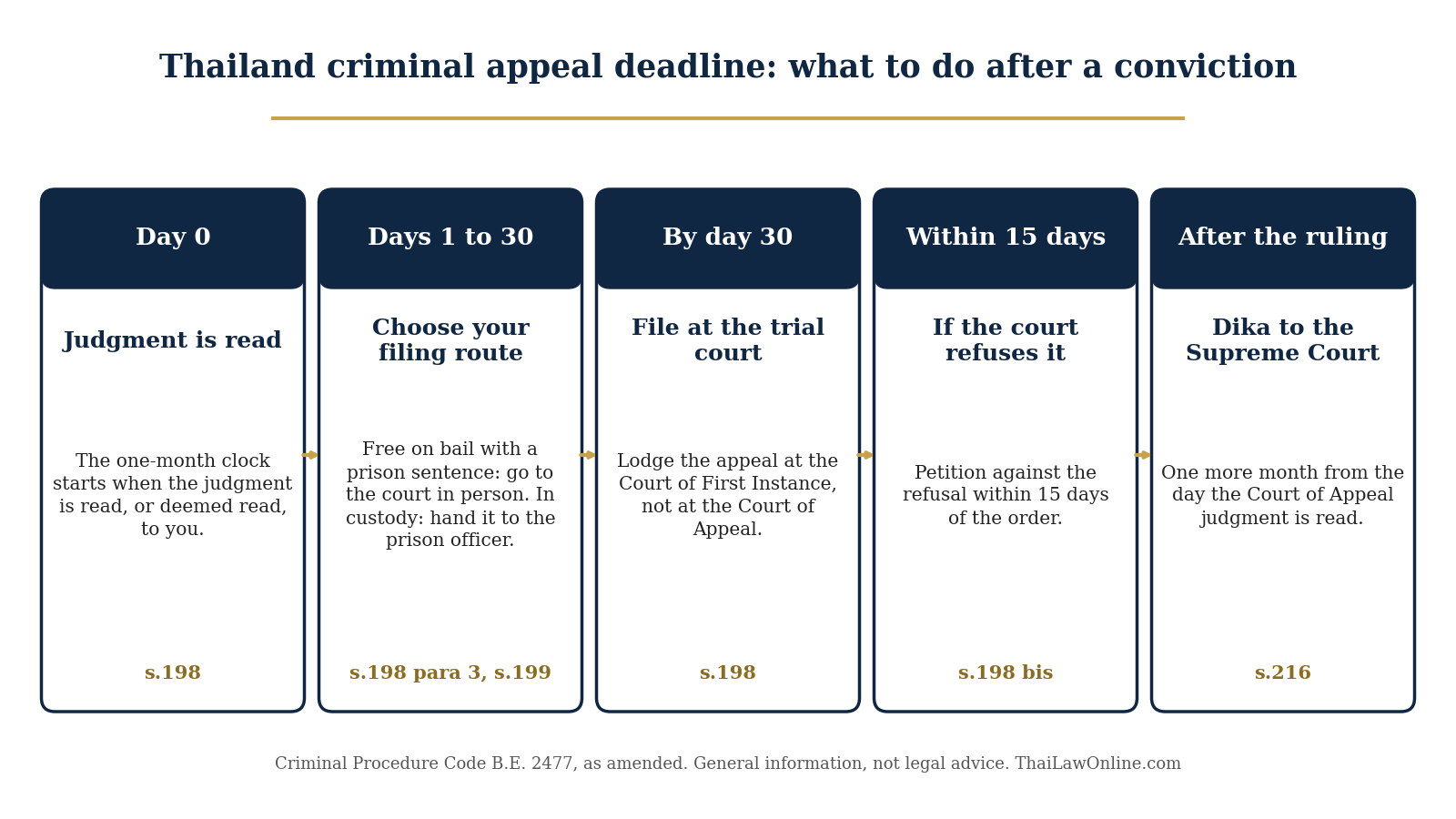
- จดวันที่อ่านหนังสือไว้. เดือนนั้นจะเริ่มนับตั้งแต่วันที่คำตัดสินถูกอ่านให้คุณฟัง หากศาลรับคำตัดสินดังกล่าวว่าถูกอ่านให้คุณฟังในวันอื่น เช่น เนื่องจากคุณไม่อยู่ที่ศาล ตัวแทนของท่านต้องยืนยันว่าวันใดเป็นวันที่ถูกต้อง เมื่อเกิดข้อสงสัย ให้นับจากวันแรก.
- ตัดสินใจว่าจะยื่นแบบฟอร์มอย่างไร. หากคุณอยู่ในเรือนจำ การอุทธรณ์สามารถดำเนินการผ่านเจ้าหน้าที่เรือนจำ (มาตรา 199) หากคุณได้รับการปล่อยตัวชั่วคราวและคำพิพากษากำหนดโทษจำคุก ให้วางแผนที่จะเข้าร่วมการไต่สวนในศาลด้วยตนเอง โดยตัวแทนทนายความเพียงคนเดียวไม่เพียงพอตามมาตรา 198 วรรค 3.
- เตรียมพื้นที่ให้พร้อมก่อนล่วงหน้า. มาตรา 193 กำหนดให้คำอุทธรณ์ต้องระบุเหตุผลของคำอุทธรณ์ โดยการอุทธรณ์ที่ไม่มีความชัดเจนและไม่ระบุเหตุผลที่ทำให้คำพิพากษาผิดพลาดจะทำให้คำอุทธรณ์ถูกปฏิเสธ จงมอบคำพิพากษาให้แก่ทนายความของคุณ และให้เวลาทนายความชาวไทยและชาวต่างชาติในการแปลคำพิพากษา.
- ยื่นฟ้องต่อศาลชั้นต้น. ยื่นอุทธรณ์ต่อศาลชั้นต้นก่อนถึงวันที่ 30 ไม่ช้าเกินไป เก็บสำเนาใบรับเงินจากศาลไว้.
- กำหนดวันที่สำรองไว้ในปฏิทิน. หากศาลปฏิเสธคำอุทธรณ์ คุณมีเวลา 15 วันในการยื่นคำร้องคัดค้านคำตัดสินนั้น หากในภายหลังคุณชนะหรือแพ้ที่ศาลอุทธรณ์ ก็จะเริ่มนับหนึ่งเดือนใหม่นับจากวันที่คำตัดสินถูกอ่าน.
- จัดการเรื่องค่าประกันในเวลาเดียวกัน. สอบถามศาลเกี่ยวกับหลักประกันระหว่างที่อุทธรณ์อยู่ การตัดสินใจเป็นของศาล และไม่ถือเป็นเรื่องอัตโนมัติ โปรดดูคู่มือของเรา การประกันตัวในประเทศไทย และรายการคำศัพท์ใน การประกันตัว.
ถ้าคุณพลาดกำหนดการส่ง
ควรรับมือกับกรณีที่ล่าช้าโดยมองว่าเป็นสถานการณ์ฉุกเฉิน ไม่ใช่เรื่องที่สามารถแก้ไขได้ในภายหลัง เมื่อสิ้นสุดระยะเวลาอุทธรณ์แล้ว หากไม่มีการอุทธรณ์ที่ถูกต้องตามกฎหมาย คำตัดสินจึงถือเป็นที่สิ้นสุด และการลงโทษก็สามารถบังคับใช้ได้ ไม่ควรคาดหวังว่าศาลจะขยายระยะเวลาดังกล่าว หากการยื่นอุทธรณ์ล่าช้าใดๆ สามารถยอมรับได้นั้น ขึ้นอยู่กับข้อเท็จจริง เหตุผลของการล่าช้า และหลักฐานที่คุณสามารถแสดงได้ พูดคุยกับทนายความในวันเดียวกันที่รู้ตัวว่าล่าช้า และนำเอกสารทุกอย่างที่แสดงให้เห็นว่าคำตัดสินถูกอ่านเมื่อใด สถานที่ที่ถูกนำไปอ่าน และเหตุผลที่ทำให้คุณไม่สามารถยื่นอุทธรณ์ได้.
ใครอีกบ้างที่สามารถยื่นอุทธรณ์ได้
มาตรา 198 กล่าวถึง “ฝ่ายที่ยื่นอุทธรณ์” ดังนั้นกฎเกณฑ์หนึ่งเดือนจึงไม่จำกัดเฉพาะจำเลย การอุทธรณ์ของอัยการก็สามารถทำได้เช่นกัน เช่น การยกฟ้องหรือการลงโทษที่ตนเห็นว่าเบาเกินไป และมาตรการนี้ใช้บังคับตามเดือนเดียวกันนี้ด้วย นี่เป็นเรื่องสำคัญสำหรับคุณในสองแง่ ประการแรก การพิสูจน์ความผิดที่ไม่ได้อุทธรณ์อาจยังคงถูกฝ่ายตรงข้ามคัดค้านได้ และการอุทธรณ์ของคุณเองก็ไม่ทำให้คุณเสียสิทธิ์ในการยื่นอุทธรณ์ได้ หากอัยการได้อุทธรณ์แล้ว โปรดแจ้งให้ทนายของคุณทราบทันที เพื่อให้แน่ใจว่าการยื่นอุทธรณ์ของคุณจะไม่ถูกมองข้าม.
ข้อผิดพลาดที่พบบ่อย
- นับจากวันที่ผิด. นาฬิกาจะเริ่มทำงานเมื่อคำพิพากษาถูกอ่านหรือถือว่าถูกอ่าน ไม่ใช่เมื่อคุณได้รับสำเนากับลายลักษณ์อักษร.
- การยื่นฟ้องที่ศาลที่ผิด. การอุทธรณ์จะส่งไปยังศาลชั้นต้น ไม่ว่าจะอยู่ในระดับใดก็ตาม.
- ให้ทนายความดำเนินการโดยลำพัง. ผู้ถูกฟ้องคดีที่มีการประกันตัวและต้องติดคุกจะต้องมาพบเจ้าหน้าที่ศาลด้วยตนเอง.
- เหตุผลที่ค่อนข้างสับสน. คำอุทธรณ์ที่ไม่ได้ระบุว่าสิ่งที่อยู่ในคำตัดสินนั้นผิดพลาดอย่างไรก็สามารถถูกปฏิเสธได้.
- รอคำตัดสินทางข้อความ. การแปลและการคัดลอกใช้เวลานาน ไฟล์ควรส่งภายในเดือนนั้นและได้รับการสนับสนุนหลังจากนั้น.
- ทำให้ส่วนต่างๆ ผิดเพี้ยนกัน. มาตรา 193 เป็นสิทธิในการอุทธรณ์ ส่วนมาตรา 198 และ 216 เป็นกฎเกณฑ์.
ต้นทุนและข้อพิจารณาทางการเงิน
คดีอุทธรณ์ทางอาญาไม่เรียกเก็บค่าธรรมเนียมการพิจารณาคดี: มาตรา 252 แห่งประมวลกฎหมายวิธีพิจารณาความอาญาห้ามศาลเรียกเก็บค่าธรรมเนียมใดๆ ในคดีอาญาเกินกว่าที่ระบุไว้ในประมวลกฎหมายดังกล่าว ค่าใช้จ่ายที่แท้จริงอยู่ที่อื่น: การให้การสนับสนุนทางกฎหมาย ซึ่งโดยปกติจะอยู่ที่ 50,000 ถึง 200,000 บาท ขึ้นอยู่กับกรณี และค่าประกันตัว การแปลเอกสาร และค่าปรับที่ศาลสั่งให้ชำระ นอกจากนี้ให้จัดสรรงบประมาณสำหรับค่าใช้จ่ายเหล่านี้ก่อนสิ้นเดือน เพราะการล่าช้าในการจัดหาเงินทุนไม่ถือเป็นเหตุผลที่ศาลจะยอมรับ.
คำถามที่พบบ่อย
มาตรา 193 เป็นกำหนดเวลาสำหรับการยื่นอุทธรณ์คดีอาญาในประเทศไทยหรือไม่?
ไม่ ไม่ มีข้อกำหนดในมาตรา 193 ที่ให้สิทธิในการอุทธรณ์ในเรื่องข้อเท็จจริงและกฎหมาย และกำหนดให้ต้องระบุเหตุผลในการอุทธรณ์ โดยตามมาตรา 198 ระยะเวลาในการอุทธรณ์ครั้งแรกคือหนึ่งเดือน และตามมาตรา 216 สำหรับการอุทธรณ์ Dika ระยะเวลาคือหนึ่งเดือน.
ฉันต้องยื่นอุทธรณ์คดีอาญาที่ถูกตัดสินลงโทษในประเทศไทยนานเท่าไร?
หนึ่งเดือนนับจากวันที่คำตัดสินถูกอ่านหรือถือว่าถูกอ่านให้คุณทราบ ระยะเวลาเดียวกันนี้ยังใช้ได้กับคำอุทธรณ์ของ Dika หลังจากคำตัดสินของศาลอุทธรณ์.
ฉันสามารถยื่นอุทธรณ์คดีอาญาที่ใดในประเทศไทยได้บ้าง
ที่ศาลชั้นต้นซึ่งพิพากษาลงโทษคุณ แม้ว่าศาลอุทธรณ์หรือศาลฎีกาจะเป็นผู้พิจารณาก็ตาม.
หากผมได้รับการปล่อยตัวชั่วคราวแล้ว ทนายของผมสามารถยื่นอุทธรณ์แทนผมได้หรือไม่?
ไม่ หากคุณถูกตัดสินจำคุก ตามมาตรา 198 วรรค 3 คุณต้องไปพบเจ้าหน้าที่ศาลเมื่อยื่นคำร้อง ยกเว้นกรณีที่การจำคุกนั้นยังไม่ถูกระงับหรือครบกำหนดการจำคุกทั้งหมด.
ถ้าฉันติดคุกและไม่สามารถไปศาลได้ล่ะ?
ตามมาตรา 199 คุณสามารถยื่นอุทธรณ์ต่อเจ้าหน้าที่เรือนจำได้ภายในระยะเวลาอุทธรณ์ หากเจ้าหน้าที่ส่งต่ออุทธรณ์ช้าโดยไม่มีความผิดของคุณ ก็ยังถือว่าครบกำหนดตามเวลา.
ถ้าศาลไม่ยอมรับคำอุทธรณ์ของฉันล่ะ?
คุณสามารถยื่นคำร้องคัดค้านคำสั่งปฏิเสธนั้นได้ภายใน 15 วันนับแต่วันมีคำสั่ง (มาตรา 198 ทวิ สำหรับการอุทธรณ์ และมาตรา 224 สำหรับการฎีกา) โดยนับจากวันที่อ่านคำสั่ง
ฉันสามารถยื่นขอประกันตัวได้หรือไม่ ขณะที่การอุทธรณ์ของฉันยังอยู่ระหว่างการพิจารณาอยู่
ใช่ คุณสามารถขอให้ศาลตัดสินได้ คำตัดสินเป็นของศาล และไม่สามารถตัดสินได้โดยอัตโนมัติ คุณควรขอให้ทนายความของคุณยื่นคำร้องขอปล่อยตัวชั่วคราวพร้อมกับคำร้องขออุทธรณ์ หรือในไม่ช้าหลังจากการอุทธรณ์นั้นเสร็จสิ้น.
ค่าทนายความในการยื่นฟ้องคดีของ Dika มีค่าใช้จ่ายหรือไม่
ไม่ ไม่มีการเรียกเก็บค่าธรรมเนียมศาลสำหรับคำร้องขออุทธรณ์ทางอาญา ค่าใช้จ่ายของคุณคือค่าทนายความ ค่าประกันตัว การแปลเอกสาร และค่าปรับใดๆ.
ข้อสรุป: ทำตามแผนภายในเดือนนี้
กำหนดระยะเวลาอุทธรณ์คดีอาญาในประเทศไทยทำให้มีเวลาเพียงน้อยนิดสำหรับความผิดพลาด โปรดระบุวันที่คำตัดสินถูกอ่านต่อที่ศาลชั้นต้น ดำเนินการตามขั้นตอนที่กำหนดไว้ หากได้รับการประกันตัวและต้องเข้าคุก และจดจำวันหยุดพักเบรกไว้ให้ดี ทุกขั้นตอนมีความสำคัญและอาจทำให้การอุทธรณ์ของคุณล้มเหลวได้หากคุณละเลย.
ThaiLawOnline ได้ให้คำปรึกษาแก่ลูกค้าในประเทศไทยมาตั้งแต่ปี 2006 หากคุณหรือสมาชิกในครอบครัวเพิ่งถูกตัดสินว่ามีความผิด โปรดติดต่อเราวันนี้เพื่อรับคำปรึกษาได้ที่ ThaiLawOnline.com หรืออีเมล info@thailawonline.com. โทรศัพท์: +66 87 225 1340 (ภาษาอังกฤษและภาษาฝรั่งเศส) หรือ +66 87 414 9288 (ภาษาไทย).
ข้อมูลทั่วไปเท่านั้น ไม่ใช่คำแนะนำด้านกฎหมาย. ทบทวนครั้งสุดท้ายเมื่อวันที่ 30 กันยายน 2026 ตามประมวลกฎหมายวิธีพิจารณาความอาญาฉบับที่ตีพิมพ์ในภาษาไทย: มาตรา 193 ทวิ, 198 (รวมถึงวรรค 3), 198 ทวิ, 199, 216, 218, 219, 220, 221, 224 และ 252.
ข่าวสารกฎหมายไทย ฟรีทางอีเมล
อัปเดตข่าวสารเป็นภาษาอังกฤษที่เข้าใจง่ายเกี่ยวกับการเปลี่ยนแปลงของกฎหมายไทยที่ส่งผลกระทบต่อชาวต่างชาติ: อสังหาริมทรัพย์, วีซ่า, การสมรส, ธุรกิจ และพินัยกรรม จดหมายข่าวสั้นเพียงฉบับเดียวต่อเดือน จากสำนักงานกฎหมายที่ดำเนินงานมาตั้งแต่ปี 2549 ไม่มีการส่งสแปม ยกเลิกรับได้ทุกเมื่อ.