


ตรวจสอบโดย ThaiLawOnline สำนักงานกฎหมายไทยที่ได้รับใบอนุญาตและดำเนินกิจการในประเทศไทยตั้งแต่ปี พ.ศ. 2549 ทนายความผู้รับผิดชอบสำนวน: Wichuda Atthamethakon, น.ม., ใบอนุญาตให้เป็นทนายความ เลขที่ 3149/2556.
ปรับปรุงล่าสุดเมื่อ
ประเทศไทยได้ถอดกัญชาออกจากรายการยาเสพติดให้โทษประเภท 5 ในปี พ.ศ. 2565 แต่ตลาดค้าปลีกในปัจจุบันถูกควบคุมอย่างเข้มงวด ตั้งแต่วันที่ 26 มิถุนายน พ.ศ. 2568 เป็นต้นมา ดอกกัญชา (ช่อดอก) ได้รับการควบคุมเป็นสมุนไพรควบคุมภายใต้พระราชบัญญัติคุ้มครองและส่งเสริมภูมิปัญญาการแพทย์แผนไทย โดยไม่ได้ถูกนำกลับไปเป็นยาเสพติดประเภท 5 ร้านค้าที่ได้รับใบอนุญาตไม่สามารถขายปลีกดอกกัญชาทั่วไปได้โดยไม่มีใบสั่งแพทย์หรือเงื่อนไขใบอนุญาตตามกฎระเบียบของสมุนไพรควบคุม การสูบหรือกลิ่นในที่สาธารณะ รวมถึงสารสกัดจากกัญชา อยู่ภายใต้กฎหมายแยกต่างหาก โดยมีข้อหาและบทลงโทษที่แตกต่างกัน โปรดอ่านกฎระเบียบที่เกี่ยวข้องกับการกระทำนั้น ๆ ก่อนที่จะด่วนสรุปว่าเป็นข้อหาเกี่ยวกับยาเสพติด.
สรุปแล้ว กัญชาถูกกฎหมายในประเทศไทยหรือไม่?
คู่มือนี้ครอบคลุมทุกสิ่งที่คุณจำเป็นต้องรู้เกี่ยวกับเรื่องนี้ กรอบกฎหมายอาญาของประเทศไทย. บทความนี้แสดงกฎหมายที่ใช้บังคับกับกัญชาในปี 2026 รวมถึงประวัติความเป็นมาทางกฎหมาย เรายังกล่าวถึงข้อบังคับในปัจจุบัน บทลงโทษ คำพิพากษาของ ศาลฎีกา และความหมายของกฎระเบียบเหล่านี้ที่มีต่อชาวต่างชาติ.
สารบัญ
ตรวจทานครั้งล่าสุด: 4 กันยายน 2026 เนื้อหาด้านกฎระเบียบปี 2026 ในหน้านี้ได้รับการตรวจสอบเทียบกับตัวบทต้นฉบับ ไม่ใช่เทียบกับบทสรุป ประกาศกระทรวงสาธารณสุข เรื่อง สมุนไพรควบคุม (กัญชา) พ.ศ. 2568 ได้รับการอ่านโดยตลอดจากราชกิจจานุเบกษา (เล่ม 142 ตอนพิเศษ 229 ง หน้า 8 ลงวันที่ 25 มิถุนายน 2568): ข้อ 1 (มีผลใช้บังคับในวันถัดจากวันประกาศ ซึ่งก็คือวันที่ 26 มิถุนายน 2568), ข้อ 2 (การยกเลิกประกาศ พ.ศ. 2565), ข้อ 3 (เฉพาะช่อดอกที่เป็นสมุนไพรควบคุม) และทุกอนุข้อของข้อ 4 ซึ่งกำหนดหน้าที่ในการบันทึกและรายงานของผู้รับใบอนุญาต, กฎการขายเฉพาะแก่ผู้รับใบอนุญาตและข้อยกเว้นใบสั่งยา, ข้อกำหนดแหล่งที่มา GACP, การห้ามขายเพื่อสูบในสถานที่, การห้ามขายผ่านตู้จำหน่ายสินค้าอัตโนมัติและช่องทางออนไลน์, การห้ามโฆษณา, รายชื่อสถานที่ห้ามขาย, และการจำกัดปริมาณตามใบสั่งยาไม่เกินสามสิบวัน กฎกระทรวงการขออนุญาตและการอนุญาตศึกษาวิจัย ส่งออก จำหน่าย หรือแปรรูปสมุนไพรควบคุมเพื่อการค้า พ.ศ. 2559 ซึ่งแก้ไขเพิ่มเติมโดยกฎกระทรวง (ฉบับที่ 2) พ.ศ. 2569 ได้รับการอ่านจากฉบับรวมแก้ไขของกรมการแพทย์แผนไทยและการแพทย์ทางเลือกเอง ได้แก่ รายชื่อผู้มีสิทธิ์ตามข้อ 8/1 ใหม่, ข้อ 4/1, ข้อ 10 วรรคสอง (การดูดกลิ่นและควัน), ข้อ 11 วรรคสองและวรรคสาม (การต่ออายุ และคำสั่งให้ปฏิเสธการต่ออายุ), ข้อ 14 (ใบอนุญาตช่อดอกที่มีอยู่เดิมให้มีผลจนถึงวันหมดอายุของตนเอง) และข้อ 15 ส่วน พระราชบัญญัติคุ้มครองและส่งเสริมภูมิปัญญาการแพทย์แผนไทย พ.ศ. 2542 ได้รับการอ่านทีละมาตราเพื่อจัดทำตารางบทกำหนดโทษ ได้แก่ มาตรา 45, 46, 49, 52, 54 และหมวดบทกำหนดโทษทั้งหมวด ตั้งแต่มาตรา 77 ถึง 82 ส่วน พระราชบัญญัติสาธารณสุข พ.ศ. 2535 ได้รับการอ่านสำหรับหลักเกณฑ์เรื่องการสูบในที่สาธารณะ ได้แก่ มาตรา 25, 26, 27, 28 และ 74 ส่วนเกณฑ์ปริมาณ THC ได้รับการตรวจสอบเทียบกับ ประกาศกระทรวงสาธารณสุข เรื่อง ระบุชื่อยาเสพติดให้โทษในประเภท 5 พ.ศ. 2565, ข้อ 1(3), และตัวเลขของกัญชงเทียบกับข้อ 3 ของกฎกระทรวงยาเสพติดให้โทษประเภท 5 เฉพาะกัญชง พ.ศ. 2559 และประกาศคณะกรรมการควบคุมยาเสพติดที่มีผลใช้บังคับตั้งแต่วันที่ 29 มกราคม พ.ศ. 2564 ส่วนคำพิพากษาศาลฎีกาทั้งสี่ฉบับที่อ้างถึงในหน้านี้ได้รับการอ่านจนถึงคำวินิจฉัยชี้ขาดเป็นภาษาไทยแยกต่างหากเมื่อวันที่ 3 กันยายน พ.ศ. 2569.
สิ่งที่การตรวจทานครั้งนี้ไม่ได้ครอบคลุม: กฎกระทรวงว่าด้วยสารสกัดจากกัญชาและกัญชง พ.ศ. 2569 ฉบับนั้นเอง ซึ่งไม่มีอยู่ในห้องสมุดกฎหมายใด ๆ ที่เรามี และราชกิจจานุเบกษาไม่สามารถค้นหาด้วยคำสำคัญได้ ดังนั้น วันที่ประกาศคือ 26 มีนาคม พ.ศ. 2569 การมีผลใช้บังคับเมื่อพ้นสามสิบวัน การยกเลิกกฎระเบียบ พ.ศ. 2563 และ พ.ศ. 2564 และการหมดอายุของใบอนุญาตที่ออกตามกฎระเบียบดังกล่าวในวันที่ 31 ธันวาคม พ.ศ. 2569 จึงนำมาจากรายงานข่าวของไทยเกี่ยวกับกฎหมายฉบับนี้และจากการคำนวณตามบทบัญญัติว่าด้วยการเริ่มใช้บังคับ ไม่ใช่จากตัวบทกฎหมายโดยตรง ให้ถือว่าประเด็นทั้งสี่ข้อนั้นน่าเชื่อถือแต่ยังไม่ได้ตรวจสอบจากต้นฉบับ และให้ยืนยันวันที่ท่านจะดำเนินการกับสำนักงานคณะกรรมการอาหารและยา.
ประวัติโดยย่อของกฎหมายเกี่ยวกับกัญชาในประเทศไทย
กัญชามีประวัติทางกฎหมายที่ยาวนานและซับซ้อนในประเทศไทย การทำความเข้าใจวิวัฒนาการของกฎหมายจะช่วยให้เข้าใจภาพรวมของกฎระเบียบในปัจจุบันได้ดียิ่งขึ้น
กัญชาถูกจัดเป็นยาเสพติดประเภทที่ 5 (ปี 1979-2022)
ภายใต้ พระราชบัญญัติยาเสพติด พ.ศ. 2522กัญชาถูกจัดประเภทเป็น ยาเสพติดประเภทที่ 5 เช่นเดียวกับฝิ่นและเห็ดหลินจือ การครอบครอง การผลิต การขาย และการบริโภคล้วนเป็นความผิดทางอาญาที่มีบทลงโทษรุนแรง รวมถึงโทษจำคุกสูงสุด 15 ปีสำหรับการครอบครองโดยมีเจตนาจำหน่าย
กฎหมายถูกบังคับใช้อย่างเคร่งครัด ใน คำพิพากษาศาลฎีกาที่ 979/2538 (1995), ศาลได้พิจารณาคดีเกี่ยวกับการมีกัญชาไว้ในครอบครองเพื่อจำหน่าย จำเลยถูกฟ้องตามมาตรา 26 และมาตรา 75 แห่งพระราชบัญญัติยาเสพติดให้โทษ พ.ศ. 2522 ในที่สุดศาลได้พิพากษายกฟ้องจำเลยเนื่องจากคำเบิกความของเจ้าหน้าที่ตำรวจขัดแย้งกันและพยานหลักฐานเป็นเพียงพยานแวดล้อม ซึ่งได้สร้างบรรทัดฐานสำคัญเกี่ยวกับมาตรฐานการพิสูจน์ในคดียาเสพติด และเป็นเครื่องเตือนใจว่าแม้ภายใต้กฎหมายต่อต้านกัญชาที่เข้มงวด ภาระการพิสูจน์ก็ยังคงอยู่กับฝ่ายโจทก์.
การออกกฎหมายเกี่ยวกับการแพทย์ (ปี 2018-2019)
ในเดือนธันวาคม 2018 ประเทศไทยได้กลายเป็น ประเทศแรกในเอเชียที่อนุญาตให้ใช้กัญชาทางการแพทย์ ผ่านทาง พระราชบัญญัติยาเสพติด (ฉบับที่ 7) พ.ศ. 2562 (2019)การแก้ไขเพิ่มเติมนี้อนุญาตให้แพทย์ผู้ได้รับใบอนุญาตสั่งจ่ายยาที่มีส่วนประกอบของกัญชาได้ และเปิดโอกาสให้สถาบันวิจัยที่ได้รับการอนุมัติสามารถเพาะปลูกกัญชาเพื่อวัตถุประสงค์ทางการแพทย์ได้
การยกเลิกการลงโทษทางอาญาอย่างสมบูรณ์ (9 มิถุนายน 2565)
เมื่อวันที่ 9 มิถุนายน 2565 กระทรวงสาธารณสุขได้ออกประกาศ ประกาศเรื่อง: การระบุชื่อยาเสพติดประเภทที่ 5 BE 2565ประกาศดังกล่าวออกภายใต้มาตรา 29 วรรค 2 แห่งประมวลกฎหมายยาเสพติด การประกาศนี้มีผลทำให้กัญชาถูกถอดออกจากบัญชียาเสพติดประเภทที่ 5 ส่งผลให้ประเทศไทยเป็นประเทศแรกในเอเชียที่ยกเลิกการลงโทษทางอาญาสำหรับกัญชาอย่างสมบูรณ์
การเปลี่ยนแปลงกฎระเบียบนี้ส่งผลทางกฎหมายอย่างลึกซึ้ง ใน คำพิพากษาศาลฎีกาที่ 1225/2567 (2024), ศาลได้วินิจฉัยคดีที่จำเลยถูกพิพากษาว่ามีความผิดฐานผลิตและมีไว้ในครอบครองซึ่งกัญชาโดยไม่ได้รับอนุญาตตามพระราชบัญญัติยาเสพติดให้โทษ พ.ศ. 2522 (มาตรา 26/2, 26/3, 75 และ 76) ศาลวินิจฉัยว่าเนื่องจากประกาศกระทรวงสาธารณสุข พ.ศ. 2565 ได้ถอดกัญชาออกจากรายชื่อยาเสพติดให้โทษในประเภท 5 การกระทำของจำเลยจึง ไม่ถือเป็นความผิดทางอาญาอีกต่อไป.
การสมัคร มาตรา 2 วรรค 2 แห่งประมวลกฎหมายอาญา (หลักการที่ว่ากฎหมายที่ออกในภายหลังซึ่งยกเลิกการลงโทษทางอาญาจะมีผลย้อนหลัง) ศาลอุทธรณ์เขต 6 ได้รับอนุญาตให้กลับคำพิพากษาด้วยตนเอง เนื่องจากถือเป็นประเด็นทางกฎหมายเกี่ยวกับความสงบเรียบร้อยของประชาชนภายใต้มาตรา 185(1) และ 195(2) ของประมวลกฎหมายวิธีพิจารณาความอาญา
ช่อดอกกัญชาเป็นสมุนไพรควบคุม (26 มิถุนายน 2568)
ช่วงเวลาแห่งการผ่อนปรนการควบคุมอย่างกว้างขวางนั้นมีอายุสั้น ความกังวลเกี่ยวกับการใช้เพื่อการสันทนาการที่ไร้การควบคุม โดยเฉพาะในกลุ่มเยาวชน นำไปสู่การกลับนโยบายอย่างกะทันหัน เครื่องมือในเรื่องนี้คือประกาศกระทรวงสาธารณสุข เรื่อง สมุนไพรควบคุม (กัญชา) พ.ศ. 2568 ซึ่งลงนามโดยรัฐมนตรีว่าการกระทรวงสาธารณสุขเมื่อวันที่ 23 มิถุนายน 2568 ประกาศในราชกิจจานุเบกษาเมื่อวันที่ 25 มิถุนายน 2568 และมีผลบังคับใช้ตั้งแต่วันที่ 26 มิถุนายน 2568 โดยได้จัดประเภทกัญชา ช่อดอก เป็นสมุนไพรควบคุมตามพระราชบัญญัติคุ้มครองและส่งเสริมภูมิปัญญาการแพทย์แผนไทย พ.ศ. 2542 การจำหน่ายในปัจจุบันจึงต้องมีใบสั่งจากผู้ประกอบวิชาชีพที่กฎหมายรับรอง และได้เพิ่มความเข้มงวดของกฎเกณฑ์เกี่ยวกับการจำหน่าย การแปรรูป และการโฆษณา. โปรดสังเกตสิ่งที่ไม่ได้ทำ: มันไม่ได้นำกัญชากลับเข้าบัญชียาเสพติดให้โทษประเภท 5 กัญชาถูกถอดออกจากบัญชีดังกล่าวในปี 2022 และยังคงอยู่นอกบัญชีนั้น ซึ่งเป็นสาเหตุว่าทำไมคำพิพากษาของศาลฎีกาเกี่ยวกับการยกเลิกความผิดย้อนหลังที่ระบุไว้ด้านล่างจึงยังมีผลอยู่ การเรียกสิ่งนี้ว่าเป็นการทำให้ผิดกฎหมายอีกครั้ง ตามที่สื่อภาษาอังกฤษส่วนใหญ่รายงาน ได้ให้ข้อมูลที่คลาดเคลื่อนเกี่ยวกับความเสี่ยงของคุณ: ความเสี่ยงอยู่ที่กฎระเบียบเรื่องใบอนุญาตและการจ่ายยา ไม่ใช่ในบัญชียาเสพติด ตัวเลขที่มีรายงานระบุว่า ร้านขายกัญชาในประเทศไทยประมาณ 7,300 แห่ง จากทั้งหมด 18,433 แห่ง ได้ปิดตัวลงภายใต้กฎระเบียบที่เข้มงวดขึ้น เหลือร้านที่ยังเปิดดำเนินการอยู่ประมาณ 11,100 แห่ง เราไม่สามารถตรวจสอบตัวเลขดังกล่าวจากประกาศอย่างเป็นทางการได้ ดังนั้นจึงควรพิจารณาตัวเลขเหล่านี้เป็นเพียงการประเมินขนาดคร่าวๆ มากกว่าจะเป็นจำนวนที่แน่นอน.
กฎกระทรวงสองฉบับในปี 2026 และพวกมันทำหน้าที่ต่างกัน
ปี 2026 นำมาซึ่งเครื่องมือทางกฎหมายสองฉบับที่แยกจากกัน ฉบับหนึ่งประกาศใช้เมื่อวันที่ 26 มีนาคม และมีผลบังคับใช้ตั้งแต่วันที่ 26 เมษายน ส่วนอีกฉบับประกาศใช้เมื่อวันที่ 30 เมษายน การนำเสนอข่าวสารเป็นภาษาอังกฤษมักจะนำฉบับทั้งสองมารวมเข้าด้วยกัน ซึ่งนี่คือสาเหตุที่ทำให้ผู้ประกอบการต้องไปยื่นเรื่องต่อหน่วยงานกำกับดูแลที่ผิด ฉบับหนึ่งควบคุมดูแล สารสกัด, ซึ่งเป็นยาเสพติด อีกฉบับหนึ่งควบคุม ช่อดอก, ซึ่งเป็นสมุนไพรควบคุม.
สารสกัด มีผลใช้บังคับวันที่ 26 เมษายน 2026. กฎกระทรวงกำหนดหลักเกณฑ์ วิธีการ และเงื่อนไขในการขออนุญาตและการอนุญาตผลิต นำเข้า ส่งออก จำหน่าย หรือมีไว้ในครอบครองซึ่งสารสกัดจากพืชกัญชาหรือกัญชง พ.ศ. 2569 ได้รับการประกาศในราชกิจจานุเบกษาเมื่อ 26 มีนาคม 2026 และมีผลใช้บังคับเมื่อพ้นกำหนดสามสิบวันนับแต่วันประกาศ ซึ่งได้แก่ 26 เมษายน พ.ศ. 2569. กฎกระทรวงฉบับนี้ได้ยกเลิกและแทนที่กฎระเบียบฉบับก่อนหน้าสองฉบับ ได้แก่ กฎระเบียบว่าด้วยกัญชง พ.ศ. 2563 และกฎระเบียบว่าด้วยกัญชา พ.ศ. 2564 ดังนั้น การอนุญาตเกี่ยวกับสารสกัดจึงมารวมอยู่ในกฎหมายฉบับเดียวที่บริหารจัดการโดยสำนักงานคณะกรรมการอาหารและยา (อย.) บทเฉพาะกาลคือบทบัญญัติที่คุณควรจดบันทึกไว้ในปฏิทิน: ใบอนุญาตที่ออกตามกฎระเบียบที่ถูกยกเลิกฉบับใดฉบับหนึ่งจะใช้ได้จนถึงวันที่ 31 ธันวาคม พ.ศ. 2569 เท่านั้น, และผู้ประกอบการที่ต้องการดำเนินกิจการต่อจะต้องยื่นขอตามกฎระเบียบใหม่ก่อนที่ใบอนุญาตเดิมจะหมดอายุ และจะต้อง ถือใบอนุญาตใหม่ ก่อนดำเนินการต่อ การสมัครไม่ได้หมายถึงการได้รับอนุญาต ใบอนุญาตที่ออกภายใต้กฎระเบียบใหม่จะมีผลจนถึง วันที่ 31 ธันวาคม ของปีที่สาม นับแต่ปีที่ออกใบอนุญาต.
ช่อดอก เผยแพร่ 30 เมษายน 2026. กฎกระทรวง (ฉบับที่ 2) พ.ศ. 2569 แก้ไขเพิ่มเติมกฎกระทรวง พ.ศ. 2559 ที่ออกตามความในพระราชบัญญัติคุ้มครองและส่งเสริมภูมิปัญญาการแพทย์แผนไทย พ.ศ. 2542 ซึ่งเป็นกฎหมายที่ควบคุมช่อดอกกัญชาในฐานะสมุนไพรควบคุม บทบัญญัติใหม่ของกฎกระทรวงนี้คือ ข้อ 8/1 เป็นการเปลี่ยนแปลงที่พลิกโฉมตลาดค้าปลีก เนื่องจากเป็นตัวกำหนดว่าใครบ้างที่สามารถถือใบอนุญาตขาย แปรรูป หรือส่งออกช่อดอกได้ นอกเหนือจากหลักเกณฑ์ทั่วไปแล้ว ผู้ขออนุญาตจะต้อง:
- เป็นเจ้าของสถานที่หรือมีสิทธิครอบครอง หรือแนบหนังสือยินยอมเป็นลายลักษณ์อักษรจากเจ้าของ;
- มีพื้นที่จัดเก็บขนาดเหมาะสมกับปริมาณที่จัดการ พร้อมอุปกรณ์ที่รักษาดอกให้อยู่ในสภาพดี จัดเก็บแยกต่างหาก ไม่ปะปนกับสิ่งอื่นใด และไม่สัมผัสกับพื้น;
- เป็นบุคคลประเภทใดประเภทหนึ่งดังต่อไปนี้: ผู้ถือใบอนุญาตให้ประกอบกิจการสถานพยาบาลตามกฎหมายว่าด้วยสถานพยาบาล ผู้รับอนุญาตผลิตหรือขายผลิตภัณฑ์สมุนไพร ผู้รับอนุญาตผลิตหรือขายยา ผู้ถือใบอนุญาตผลิตยาเสพติดให้โทษในประเภท 5 เฉพาะสารสกัดจากกัญชาหรือกัญชงตามประมวลกฎหมายยาเสพติด หรือหมอพื้นบ้านที่ได้รับการรับรองตามกฎหมายว่าด้วยวิชาชีพการแพทย์แผนไทย หรืออีกทางหนึ่ง ผู้ขอรับใบอนุญาตอาจเป็นผู้ปลูกซึ่งสถานที่ปลูกเป็นแหล่งวัตถุดิบให้แก่ผู้ได้รับใบอนุญาตตามมาตรา 46 ของพระราชบัญญัติ;
- มีพนักงานอย่างน้อยหนึ่งคนที่ได้รับการฝึกอบรมจากกรมการแพทย์แผนไทยและแพทย์ทางเลือกประจำอยู่ในสถานที่นั้นตลอดเวลาที่เปิดให้บริการ.
กฎระเบียบเดียวกันนี้ยังเพิ่มหน้าที่ในการติดตั้งระบบดูดกลิ่นและควันที่มีประสิทธิภาพ และ กำหนดให้ ผู้อนุญาตปฏิเสธการต่ออายุใบอนุญาต ในกรณีที่ผู้รับอนุญาตเคยถูกสั่งพักใช้ใบอนุญาตเพราะไม่ปฏิบัติตามประกาศกระทรวงสาธารณสุขเรื่องสมุนไพรควบคุมที่ออกตามมาตรา 44 และมาตรา 45 แห่งพระราชบัญญัติ นี่คือข้อ 11 วรรคสาม ซึ่งเขียนเป็นคำสั่งถึงผู้อนุญาต ไม่ใช่ดุลพินิจที่ผู้อนุญาตอาจเลือกไม่ใช้ ใบอนุญาตช่อดอกที่ออกตามกฎกระทรวง พ.ศ. 2559 ที่มีอยู่เดิมไม่ถูกยกเลิก: ข้อ 14 ให้ใบอนุญาตเหล่านั้นมีผลต่อไปจนถึงวันหมดอายุของตนเอง ซึ่งตาม มาตรา 46 วรรค 3 แห่งพระราชบัญญัติ คือวันที่ 31 ธันวาคมของปีที่สามนับแต่ปีที่ออกใบอนุญาต ผลในทางปฏิบัติสำหรับร้านจำหน่ายกัญชาทั่วไปจึงเป็นการกำหนดเส้นตายมากกว่าการห้าม และคำถามเมื่อต่ออายุคือร้านนั้นจะสามารถปฏิบัติตามข้อ 8/1 ได้หรือไม่เลย.
กฎหมายกัญชาฉบับปัจจุบันของประเทศไทย (ปี 2026)
ตั้งแต่ 26 มิถุนายน พ.ศ. 2568, กัญชา ช่อดอก ได้รับการควบคุมภายใต้ พระราชบัญญัติคุ้มครองและส่งเสริมภูมิปัญญาการแพทย์แผนไทย พ.ศ. 2542 (ค.ศ. 1999). โปรดระบุให้แม่นยำว่าสิ่งใดได้รับการกำหนด: ข้อ 3 ของประกาศกระทรวงสาธารณสุข เรื่อง สมุนไพรควบคุม (กัญชา) พ.ศ. 2568 กำหนดให้เฉพาะ ช่อดอก ของพืชในสกุล Cannabis เป็น “สมุนไพรควบคุม” (samunphrai khuapkhum). ดังนั้น ช่อดอกจึงเป็นสมุนไพรควบคุมและไม่ใช่ยาเสพติด ในขณะที่ สารสกัด ยังคงถือเป็นยาเสพติดประเภท 5 ตามประมวลกฎหมายยาเสพติดได้ นี่เป็นความแตกต่างทางกฎหมายที่สำคัญ และเป็นความแตกต่างที่มักถูกละเลยในเนื้อหาข่าวภาษาอังกฤษ.
การใช้ทางการแพทย์: ถูกกฎหมายเมื่อมีใบสั่งยา
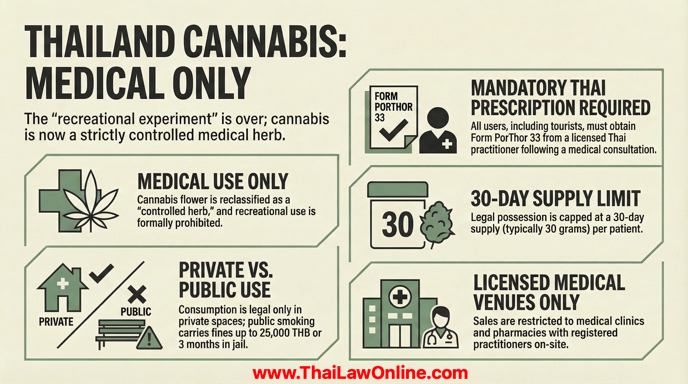
กัญชายังคงถูกกฎหมายสำหรับการใช้ทางการแพทย์ ในการซื้อและใช้กัญชาอย่างถูกกฎหมาย คุณต้องปฏิบัติตามเงื่อนไขดังนี้:
- ได้รับใบอนุญาตที่ถูกต้อง อายุความ (ใบสั่งใช้). ข้อ 4 วรรคสองของประกาศลงวันที่ 26 มิถุนายน 2025 ระบุว่าบุคคลใดบ้างที่ออกใบสั่งได้: แพทย์ ผู้ประกอบวิชาชีพการแพทย์แผนไทย ผู้ประกอบวิชาชีพการแพทย์แผนไทยประยุกต์ หมอพื้นบ้าน ผู้ประกอบโรคศิลปะสาขาการแพทย์แผนจีน เภสัชกร หรือทันตแพทย์ และต้องเป็นไปเพื่อวัตถุประสงค์ทางการแพทย์.
- ใบสั่งยาคือสิ่งที่ทำให้การขายชอบด้วยกฎหมาย หากไม่มีใบสั่งยา ข้อ 4(3) กำหนดให้ผู้ขายที่ได้รับอนุญาตขายช่อดอก ได้เฉพาะแก่ผู้รับอนุญาตรายอื่นเท่านั้น, ดังนั้น หากไม่มีใบสั่งยา ผู้ซื้อทั่วไปจึงไม่ใช่บุคคลที่ร้านจะขายให้ได้ตามกฎหมายเลย.
- ผู้สั่งจ่ายยาจะกำหนดปริมาณ และข้อ 4 วรรคสามกำหนดว่าต้องเป็นปริมาณที่จำเป็นสำหรับการรักษาเพื่อใช้โดยผู้ป่วยเอง และ ในปริมาณสำหรับใช้ไม่เกิน 30 วัน.
- มี ไม่มีการจำกัดน้ำหนักไว้ในประกาศ. ตัวเลขต่างๆ เช่น “30 กรัมต่อเดือน” มีการเผยแพร่กันอย่างแพร่หลายแต่ไม่ได้ระบุไว้ในประกาศดังกล่าว ปริมาณเป็นดุลพินิจทางคลินิกภายใต้ขอบเขตของหลักเกณฑ์ 30 วัน.
- นอกจากนี้ยัง ไม่มีเกณฑ์อายุในประกาศฉบับปัจจุบัน. หลักเกณฑ์เรื่องผู้มีอายุต่ำกว่า 20 ปีที่หลายคนจำได้นั้นอยู่ในประกาศ พ.ศ. 2565 ซึ่งข้อ 2 ของประกาศ พ.ศ. 2568 ได้ยกเลิกแล้ว ปัจจุบันด่านที่ต้องผ่านคือใบสั่งยา และการจะสั่งจ่ายให้แก่ผู้ที่มีอายุต่ำกว่า 20 ปีหรือไม่เป็นดุลพินิจทางคลินิกของผู้ประกอบวิชาชีพ.
- ร้าน ไม่ อาจขายช่อดอกเพื่อสูบในสถานที่ของร้านได้ นี่คือข้อ 4(5) และข้อยกเว้นเพียงข้อเดียวคือการขายโดยผู้ประกอบวิชาชีพตามรายชื่อเพื่อใช้ในการรักษาผู้ป่วยของตนเอง.
การค้าปลีกเพื่อสันทนาการ: ถูกจำกัด
กฎหมายไม่ได้กำหนดความผิดเฉพาะแยกต่างหากที่เรียกว่าการใช้ดอกกัญชาเพื่อสันทนาการ ข้อจำกัดในทางปฏิบัติตกอยู่กับผู้ขายที่ได้รับอนุญาตเป็นหลัก: ข้อ 4(3) ห้ามการขายปลีกดอกกัญชาแก่ลูกค้าทั่วไป เว้นแต่ผู้ซื้อจะเป็นผู้ได้รับอนุญาตอีกรายหนึ่งหรือมีใบสั่งยาที่เข้าเงื่อนไข โทษจำคุกหนึ่งปี/ปรับ 20,000 บาทตามพระราชบัญญัติ พ.ศ. 2542 ใช้กับความผิดเกี่ยวกับการอนุญาตที่กำหนดไว้เฉพาะ ในขณะที่ควันหรือกลิ่นในที่สาธารณะอยู่ภายใต้พระราชบัญญัติการสาธารณสุข และสารสกัดกัญชายังคงอยู่ภายใต้ประมวลกฎหมายยาเสพติดในกรณีที่เกี่ยวข้อง.
ขีดจำกัด THC
สารสกัดจากกัญชาหรือกัญชงถือเป็น ยาเสพติดประเภทที่ 5 เว้นแต่จะเข้าข้อยกเว้น สิ่งที่ทำให้เป็นยาเสพติดประเภท 5 คือประกาศกระทรวงสาธารณสุข เรื่อง ระบุชื่อยาเสพติดให้โทษในประเภท 5 พ.ศ. 2565 ซึ่งออกตามมาตรา 29 วรรคสอง แห่งประมวลกฎหมายยาเสพติด ข้อ 1(3) ของประกาศดังกล่าวกำหนดให้สารสกัดจากส่วนใดส่วนหนึ่งของพืชกัญชาหรือกัญชงเป็นยาเสพติดให้โทษประเภท 5 แล้วยกเว้นสารสกัดที่มี THC ไม่เกินร้อยละ 0.2 โดยน้ำหนัก โดยพืชนั้นปลูกในประเทศไทยและการสกัดได้รับอนุญาต และยังยกเว้นสารสกัดจากเมล็ดด้วย.
ต้องเตือนไว้สองข้อ เพราะนี่คือจุดที่ผู้ขาย CBD ประสบปัญหา ข้อแรก การไม่อยู่ในประเภท 5 ไม่ได้หมายความว่าไม่ถูกควบคุม: สารสกัดที่มี THC ต่ำตามเกณฑ์ก็ยังถือเป็นผลิตภัณฑ์สมุนไพร เครื่องสำอาง หรืออาหาร และต้องขึ้นทะเบียนตามที่กฎหมายเหล่านั้นกำหนด ข้อที่สอง ตัวเลขร้อยละ 0.2 เป็นเกณฑ์ที่ใช้กับ สารสกัด. ไม่ใช่คำจำกัดความของกัญชง กัญชงคือ Cannabis sativa L. subsp. sativa, ซึ่งเป็นชนิดย่อยหนึ่งของพืชกัญชาที่มี THC ไม่เกินร้อยละ 1.0 โดยน้ำหนักแห้ง: นั่นคือข้อ 3 ของกฎกระทรวงว่าด้วยยาเสพติดให้โทษประเภท 5 เฉพาะกัญชง พ.ศ. 2559 และประกาศคณะกรรมการควบคุมยาเสพติดที่มีผลใช้บังคับตั้งแต่วันที่ 29 มกราคม พ.ศ. 2564 กำหนดให้ต้องทำการทดสอบดังกล่าว ที่ยอดช่อดอก, ไม่ใช่ที่ใบ การระบุตัวเลขผิดตัวจากสองตัวเลขนี้ต่อเจ้าหน้าที่ศุลกากรหรือเจ้าหน้าที่ตรวจสอบเป็นความผิดพลาดที่พบบ่อยและมีค่าใช้จ่ายสูง.
ห้ามสูบบุหรี่ในที่สาธารณะ
การสูบกัญชาในที่สาธารณะถูกจัดการผ่านกลไกว่าด้วยเหตุรำคาญของ พระราชบัญญัติสาธารณสุข พ.ศ. 2535 (BE 2535), และควรทราบว่ากลไกนี้ทำงานจริงอย่างไรก่อนที่จะเชื่อตัวเลขที่ทุกคนอ้างถึง ประกาศกระทรวงสาธารณสุข พ.ศ. 2565 กำหนดให้การทำให้เกิดกลิ่นหรือควันจากกัญชาเป็น การก่อความเดือดร้อนรำคาญแก่สาธารณะ (เหตุรำคาญ) เพื่อวัตถุประสงค์ตามมาตรา 25 จากนั้นมาตรา 26 ถึง 28 ให้อำนาจเจ้าพนักงานท้องถิ่นสั่งให้ระงับเหตุรำคาญนั้น โทษ จำคุกสูงสุด 3 เดือน หรือ ปรับ ไม่เกิน 25,000 บาท หรือทั้งสองอย่าง, คือมาตรา 74 และมาตรา 74 มีบทลงโทษ การไม่ปฏิบัติตามคำสั่งดังกล่าว หรือการขัดขวางเจ้าพนักงาน ไม่ใช่ตัวการสูบเอง ในทางปฏิบัติก็ยังจบลงไม่ดี: คุณจะถูกสั่งให้หยุด และการเพิกเฉยต่อคำสั่งนั้นคือความผิด ร้านจำหน่ายต้องเผชิญกฎที่แยกต่างหากและเข้มงวดกว่า เพราะข้อ 4(5) ของประกาศสมุนไพรควบคุมห้ามขายช่อดอกเพื่อสูบในสถานที่ขายโดยเด็ดขาด.
บทลงโทษสำหรับความผิดเกี่ยวกับกัญชาในปี 2026
การเข้าใจบทลงโทษนั้นสำคัญมาก โดยเฉพาะอย่างยิ่งสำหรับ ชาวต่างชาติ ซึ่งอาจต้องเผชิญกับผลกระทบด้านการเข้าเมืองเพิ่มเติม บทลงโทษในปัจจุบันภายใต้กรอบการควบคุมสมุนไพรมีดังนี้:
| การกระทำผิด | การลงโทษ | พื้นฐานทางกฎหมาย |
|---|---|---|
| การขาย การแปรรูปเพื่อการค้า การศึกษาวิจัย หรือการส่งออกช่อดอกโดยไม่มีใบอนุญาต | จำคุกสูงสุด 1 ปี หรือปรับ 20,000 บาท หรือทั้งจำทั้งปรับ | พระราชบัญญัติคุ้มครองและส่งเสริมภูมิปัญญาการแพทย์แผนไทย พ.ศ. 2542, มาตรา 46 สำหรับข้อกำหนดในการขอใบอนุญาต และ มาตรา 78 สำหรับบทลงโทษ โปรดสังเกตสิ่งที่มาตรา 46 ไม่ ขอบเขต: การซื้อหรือบริโภคดอกกัญชาโดยไม่มีใบสั่งยาไม่เป็นความผิดตามพระราชบัญญัตินี้ ความเสี่ยงในกรณีนั้นตกอยู่กับผู้ขาย |
| เพิกเฉยต่อคำสั่งของเจ้าพนักงานท้องถิ่นให้ระงับควันหรือกลิ่นกัญชา หรือขัดขวางการปฏิบัติหน้าที่ของเจ้าพนักงาน | จำคุกสูงสุด 3 เดือน หรือปรับ 25,000 บาท หรือทั้งจำทั้งปรับ | พระราชบัญญัติการสาธารณสุข พ.ศ. 2535, มาตรา 74, อ่านประกอบกับมาตรา 25 และประกาศเรื่องเหตุรำคาญ พ.ศ. 2565 โทษผูกอยู่กับการฝ่าฝืนคำสั่ง ไม่ใช่ตัวการสูบ |
| ผู้รับอนุญาตฝ่าฝืนเงื่อนไขของประกาศสมุนไพรควบคุม เช่น การจำหน่ายโดยไม่มีใบสั่งยา | การพักใช้ใบอนุญาตครั้งละไม่เกิน 90 วัน หรือการเพิกถอนใบอนุญาตในกรณีฝ่าฝืนร้ายแรง การประกอบกิจการต่อหลังจากถูกพักใช้หรือเพิกถอนคือสิ่งที่มีโทษจำคุกไม่เกิน 1 ปี หรือปรับไม่เกิน 20,000 บาท หรือทั้งจำทั้งปรับ | พระราชบัญญัติ พ.ศ. 2542, การพักใช้ใบอนุญาต มาตรา 52, การเพิกถอน มาตรา 54, และ มาตรา 78 สำหรับการประกอบกิจการระหว่างถูกพักใช้ใบอนุญาตหรือหลังจากถูกเพิกถอนใบอนุญาต การต่ออายุใบอนุญาตต้องถูกปฏิเสธด้วย หากผู้รับอนุญาตเคยถูกพักใช้ใบอนุญาตเพราะฝ่าฝืนประกาศ |
| การจำหน่ายช่อดอกหรือผลิตภัณฑ์ที่แปรรูปจากช่อดอกผ่านเครื่องจำหน่ายสินค้าอัตโนมัติ ช่องทางอิเล็กทรอนิกส์ หรือเครือข่ายคอมพิวเตอร์ | การฝ่าฝืนเงื่อนไขใบอนุญาต: พักใช้หรือเพิกถอนใบอนุญาต แล้วจึงเป็นมาตรา 78 หากยังประกอบกิจการต่อ | ประกาศกระทรวงสาธารณสุข เรื่อง สมุนไพรควบคุม (กัญชา) พ.ศ. 2568, ข้อ 4(6) |
| การขายช่อดอกหรือผลิตภัณฑ์แปรรูปในวัดหรือสถานที่ประกอบพิธีกรรมทางศาสนา หอพัก สวนสาธารณะ สวนสัตว์ หรือสวนสนุก | การฝ่าฝืนเงื่อนไขใบอนุญาตตามที่ระบุไว้ข้างต้น | ประกาศ พ.ศ. 2568, ข้อ 4(8). นั่นคือรายการทั้งหมด และมีผลกับการขายที่กระทำ ใน สถานที่เหล่านั้น และไม่ได้กล่าวถึงระยะห่างจากโรงเรียนเลย |
| การโฆษณาสมุนไพรควบคุมผ่านช่องทางใดๆ เพื่อการค้า | การฝ่าฝืนเงื่อนไขใบอนุญาตตามที่ระบุไว้ข้างต้น | ประกาศ พ.ศ. 2568, ข้อ 4(7) |
| การผลิต นำเข้า ส่งออก จำหน่าย หรือครอบครองสารสกัดจากกัญชาหรือกัญชงซึ่งเป็นยาเสพติดประเภท 5 โดยไม่มีใบอนุญาต | จำคุกสูงสุด 5 ปี และ ปรับสูงสุด 500,000 บาท โดยมีโทษที่หนักขึ้นเมื่อการกระทำดังกล่าวเป็นการค้า เป็นการแพร่ยาเสพติดไปยังประชาชน หรือเป็นการขายให้กับบุคคลที่มีอายุต่ำกว่า 18 ปี หรือการขายในโรงเรียน ศาสนสถาน หรือสถานที่ราชการ | ประมวลกฎหมายยาเสพติด มาตรา 93 และ 148 |
| การมีสารสกัดดังกล่าวไว้ในครอบครองเพื่อเสพเอง | จำคุกสูงสุด 2 ปี หรือปรับสูงสุด 40,000 บาท หรือทั้งจำทั้งปรับ | ประมวลกฎหมายยาเสพติด มาตรา 107 และ 164 |
| การบริโภคสารสกัดดังกล่าว | จำคุกสูงสุด 1 ปี หรือปรับสูงสุด 20,000 บาท หรือทั้งจำทั้งปรับ | ประมวลกฎหมายยาเสพติด มาตรา 104 และ 162 |
ข้อมูลสำคัญสำหรับชาวต่างชาติ: การถูกตัดสินว่ามีความผิดทางอาญาที่เกี่ยวข้องกับกัญชาในประเทศไทยอาจส่งผลให้... การเนรเทศ การเพิกถอนวีซ่า และการห้ามกลับเข้าประเทศนอกจากนี้ยังอาจส่งผลต่อความสามารถในการได้รับของคุณได้อีกด้วย ใบรับรองประวัติอาชญากรรม ในอนาคต.
คำตัดสินของศาลฎีกาเกี่ยวกับกัญชา
คำตัดสินของศาลฎีกาไทย (ทวิภาคี) เป็นแนวทางสำคัญในการตีความและบังคับใช้กฎหมายเกี่ยวกับกัญชา ต่อไปนี้คือคำตัดสินสำคัญ 3 คดีที่กำหนดทิศทางกฎหมายในปัจจุบัน
คำพิพากษาที่ 1225/2567 (2024): การยกเลิกโทษทางอาญาแบบย้อนหลัง
คำตัดสินที่สำคัญนี้กล่าวถึงประเด็นว่า บุคคลที่ถูกตัดสินว่ามีความผิดฐานผลิตและครอบครองกัญชาภายใต้กฎหมายยาเสพติดฉบับเก่า จะสามารถถูกยกเลิกคำตัดสินได้หรือไม่ หลังจากการยกเลิกโทษทางอาญาในปี 2022 ศาลได้วินิจฉัยว่า ภายใต้กฎหมายดังกล่าว มาตรา 2 วรรค 2 แห่งประมวลกฎหมายอาญาเมื่อกฎหมายฉบับใหม่ประกาศว่าการกระทำนั้นไม่ถือเป็นความผิดทางอาญาอีกต่อไป บุคคลที่กระทำการนั้นก็จะ... ได้รับการยกเว้นจากความผิดศาลอุทธรณ์มีอำนาจที่จะยกเลิกคำพิพากษาที่เกี่ยวข้องกับกัญชาได้ด้วยตนเอง แม้ว่าจำเลยจะไม่ได้ยื่นอุทธรณ์ในข้อกล่าวหาเหล่านั้นก็ตาม
ความสำคัญทางปฏิบัติ และส่วนที่มักถูกรายงานผิดพลาด: หลักการนั้นเป็นจริง แต่ จำเลยรายนี้ไม่ได้รับการปล่อยตัว. เมื่ออ่านจนถึงคำวินิจฉัยชี้ขาด คำพิพากษาศาลฎีกาที่ 1225/2567 เป็น คดีเมทแอมเฟตามีนและอาวุธปืน ซึ่งข้อหาเกี่ยวกับกัญชาเป็นเพียงสองข้อหาจากหลายข้อหา โจทก์ขอให้ลงโทษตามประมวลกฎหมายอาญา มาตรา 32, 33, 80, 91, 138, 140, 289 และ 371 พระราชบัญญัติยาเสพติดให้โทษ มาตรา 4, 7, 8, 15, 26/2, 26/3, 66, 75, 76, 100/1 และ 102 และพระราชบัญญัติอาวุธปืน ศาลฎีกาพิพากษาแก้: 2 ปี สำหรับความผิดฐานต่อสู้ขัดขวางเจ้าพนักงานโดยมีอาวุธปืน (มาตรา 138 วรรคสอง ประกอบมาตรา 140 วรรคหนึ่งและวรรคสาม จำคุกสามปี ลดหนึ่งในสาม) ซึ่งเมื่อรวมกับความผิดฐานมีอาวุธปืน พาอาวุธปืนไปในที่สาธารณะ และ จำหน่ายเมทแอมเฟตามีนเพื่อการค้า รวมเป็นโทษจำคุก 7 ปี 6 เดือน และปรับเงิน 300,000 บาท. ข้อหาพยายามฆ่าให้ยกฟ้อง ดังนั้นคดีนี้แสดงให้เห็นว่าข้อหาเกี่ยวกับกัญชาถูกตัดออกโดยมีผลย้อนหลัง แม้อยู่ในคำพิพากษาลงโทษที่ส่วนอื่นยังคงมีผลอยู่. คดีนี้ไม่ได้แสดงว่ามีผู้ใดได้รับการปล่อยตัวเป็นอิสระ.
คำตัดสินเลขที่ 2591/2566 (2023): ไม่มีการคืนเงินค่าปรับที่ชำระไปแล้ว
แม้การยกเลิกความผิดจะทำให้บุคคลพ้นจากการถูกลงโทษที่ยังดำเนินอยู่ แต่ศาลฎีกาได้ขีดเส้นแบ่งไว้อย่างชัดเจนสำหรับโทษที่ได้รับไปเสร็จสิ้นแล้ว ในคดีนี้ จำเลยซึ่งถูกพิพากษาว่ามีความผิดฐานผลิตและมีไว้ในครอบครองซึ่งกัญชาตามพระราชบัญญัติยาเสพติดให้โทษ พ.ศ. 2522 (มาตรา 26/2, 26/3, 75 และ 76) ได้ชำระค่าปรับแล้ว และได้ขอเงินคืนเมื่อกัญชาไม่เป็นยาเสพติดอีกต่อไป ศาลวินิจฉัยว่า มาตรา 2 วรรค 2 แห่งประมวลกฎหมายอาญา แยกความผิดออกจากการบังคับตามคำพิพากษาถึงที่สุด: สิ่งใดที่ยังอยู่ระหว่างการบังคับให้หยุดลง แต่โทษที่ได้รับไปแล้วถือว่าเสร็จสิ้นและไม่อาจรื้อฟื้นได้ ดังนั้นศาล ยกฟ้องและสั่งคืนกัญชาของกลางที่ยึดไว้, และในขณะเดียวกันก็วินิจฉัยว่าเขา ไม่มีสิทธิ์ได้รับเงินคืน ของเงินปรับที่เขาได้ชำระไปแล้ว.
ความสำคัญในทางปฏิบัติ: การยกเลิกการลงโทษทางอาญาจะทำให้คุณพ้นจากโทษในอนาคต แต่จะไม่ชดเชยโทษที่ได้รับไปแล้ว
ตรวจสอบการอ้างอิงคดีเมื่อ: 17 กันยายน 2569. คำพิพากษาศาลฎีกาที่ 2591/2566 และ 2939/2565 ได้รับการอ่านเป็นภาษาไทยเทียบกับคำพิพากษาที่เผยแพร่แล้ว คำอธิบายคดี 2939/2565 ด้านล่างถูกต้องในทุกประเด็นที่ตรวจสอบ รวมถึงจำนวน 747 แท่ง น้ำหนัก 772.30 กิโลกรัม โทษจำคุก 15 ปีและปรับ 900,000 บาทที่แยกต่างหาก การคืนของกลางทั้ง 17 รายการ และการที่ศาลยกประเด็นขึ้นวินิจฉัยเอง สำหรับคดี 2591/2566 ได้นำตัวเลขค่าปรับที่ระบุไว้ออก เนื่องจากโทษดังกล่าวถูกแก้ไขสองครั้ง และคำพิพากษาไม่ได้บันทึกว่าได้ชำระจำนวนใด หลักที่ศาลวินิจฉัยไว้ยังคงเดิม และขณะนี้ได้ระบุผลแห่งคดีไว้แล้ว เนื้อหาด้านกฎระเบียบปี 2026 ในหน้านี้ได้รับการตรวจสอบแยกต่างหากเมื่อวันที่ 4 กันยายน 2026.
คำพิพากษาที่ 2939/2565 (2022): การยึดทรัพย์สินและกัญชา
นี่คือ ไม่ใช่คดีอุทธรณ์ในคดีอาญา แต่เป็นคดีร้องขอให้ริบทรัพย์สิน, ซึ่งทำให้คดีนี้มีประโยชน์ รัฐยื่นคำร้องขอให้ริบ ทรัพย์สิน 17 รายการ ให้ตกเป็นของกองทุนยาเสพติด หลังจากการตรวจยึดกัญชาแห้งอัดแท่งจำนวน 747 แท่ง น้ำหนักรวม 772.30 กิโลกรัม ผู้คัดค้านที่ 1 ถูกพิพากษาลงโทษในอีกคดีหนึ่งให้จำคุก 15 ปี และปรับ 900,000 บาท ในคดีอาญาของตนเอง ศาลได้เริ่มต้นจากคำจำกัดความใน มาตรา 3 แห่งพระราชบัญญัติมาตรการในการปราบปรามผู้กระทำความผิดเกี่ยวกับยาเสพติด พ.ศ. 2534: ทรัพย์สินจะถูกริบได้เฉพาะเมื่อเป็นทรัพย์สินที่เกี่ยวเนื่องกับ ความผิดเกี่ยวกับยาเสพติด. เมื่อประกาศปี 2022 ได้ถอนกัญชาออกจากบัญชียาเสพติดให้โทษประเภท 5 แล้ว, มาตรา 2 วรรคสอง แห่งประมวลกฎหมายอาญา ทำให้การกระทำนั้นไม่เป็นความผิดอีกต่อไป และสิทธินำคดีอาญามาฟ้องระงับไปตาม มาตรา 39 (5) แห่งประมวลกฎหมายวิธีพิจารณาความอาญา, ทรัพย์สินดังกล่าวจึงไม่เกี่ยวเนื่องกับความผิดเกี่ยวกับยาเสพติดใด ๆ อีกเลย.
ความสำคัญในทางปฏิบัติ: ศาลไม่ได้เพียงแต่ระบุว่าการเปลี่ยนแปลงดังกล่าว “มีผลกระทบ” ต่อการริบทรัพย์สินเท่านั้น แต่ยัง มีคำสั่งให้คืนทรัพย์สินทั้ง 17 รายการแก่เจ้าของ, โดยวินิจฉัยว่าไม่ใช่ทรัพย์สินที่เกี่ยวเนื่องกับการกระทำความผิดตามมาตรา 2, 27 และ 29 แห่งพระราชบัญญัติดังกล่าว ศาลยังได้ยกประเด็นนี้ขึ้นวินิจฉัย ด้วยอำนาจของตนเอง, เนื่องจากเป็นข้อกฎหมายที่เกี่ยวกับความสงบเรียบร้อยของประชาชน ตามมาตรา 195 วรรคสอง และมาตรา 225 แห่งประมวลกฎหมายวิธีพิจารณาความอาญา ปริมาณที่มากไม่เป็นอุปสรรค: 772 กิโลกรัมก็ยังคงเป็นกัญชา และกัญชาไม่ได้เป็นยาเสพติดอีกต่อไป.
กฎระเบียบเกี่ยวกับร้านจำหน่ายกัญชาในปี 2026
หากคุณกำลังพิจารณาจะเข้าใช้บริการหรือเปิดร้านจำหน่ายกัญชาในประเทศไทย กรอบกฎหมายคือประกาศกระทรวงสาธารณสุข เรื่อง สมุนไพรควบคุม พ.ศ. 2568 ซึ่งมีผลใช้บังคับตั้งแต่วันที่ 26 มิถุนายน 2568 และได้รับการเพิ่มความเข้มงวดโดย กฎกระทรวง (ฉบับที่ 2) พ.ศ. 2569 ลงวันที่ 30 เมษายน 2569. กฎหมายทั้งสองฉบับรวมกันกำหนดข้อบังคับดังนี้:
การออกใบอนุญาตและการปฏิบัติตามกฎระเบียบ
- การดูแลทางการแพทย์: การจำหน่ายช่อดอกกัญชาต้องมีใบสั่งยาเท่านั้น ดังนั้นจึงต้องมีผู้ประกอบวิชาชีพที่ได้รับอนุญาตเกี่ยวข้องในการจำหน่ายที่ชอบด้วยกฎหมายทุกครั้ง ส่วนประเด็นที่ว่าร้านต้องมีผู้ประกอบวิชาชีพดังกล่าว อยู่ในสถานที่จริงตลอดเวลาทำการ เป็นกฎเกณฑ์ด้านการจัดบุคลากรที่ใช้บังคับในทางบริหาร ไม่ใช่ข้อใดข้อหนึ่งของกฎหมายทั้งสองฉบับข้างต้น และมีการกล่าวซ้ำกันอย่างแพร่หลายทางออนไลน์โดยไม่มีการอ้างอิงแหล่งที่มา. ตรวจสอบข้อกำหนดด้านบุคลากรในปัจจุบันกับ DTAM ก่อนที่จะจ้างงานตามข้อกำหนดนั้น และก่อนที่คุณจะคิดว่าคุณสามารถประกอบกิจการได้โดยไม่มีบุคลากรดังกล่าว.
- ใบรับรอง GACP: ข้อนี้เป็นข้อกำหนดในกฎหมาย ไม่ใช่ธรรมเนียมปฏิบัติ. ข้อ 4(4) ของประกาศลงวันที่ 26 มิถุนายน 2025 กำหนดให้สมุนไพรควบคุมที่ผู้รับอนุญาตขายหรือส่งออกต้องมาจากแหล่ง ได้รับการรับรองจาก DTAM ตามมาตรฐานการเพาะปลูกและการเก็บเกี่ยวที่ดี. สิ่งที่ประกาศไม่ได้กำหนดไว้คือการบริหารจัดการรอบ ๆ เรื่องนี้ ได้แก่ ระยะเวลาดำเนินการ ระยะเวลาที่ใบรับรองมีผลใช้ได้ และหน่วยงานรับรองใดบ้างที่ได้รับการยอมรับ ซึ่งกำหนดในทางบริหารและมีการเปลี่ยนแปลงจริง ดังนั้นให้ยืนยันทั้งสามเรื่องนี้กับ DTAM ก่อนวางแผนตามนั้น.
- ใบอนุญาตการขาย: จำเป็นต้องมี “ใบอนุญาตขายหรือแปรรูปสมุนไพรควบคุมเพื่อการค้า”
- การรายงาน: ผู้ถือใบอนุญาตต้องรายงานการดำเนินงานของตนต่อหน่วยงานออกใบอนุญาต อย่างน้อยปีละครั้ง, โดยระบุปริมาณสมุนไพรควบคุมที่จำหน่าย ส่งออก หรือแปรรูป นี่คือข้อ 10(2) แห่งกฎกระทรวงการขออนุญาตและการอนุญาตศึกษาวิจัย ส่งออก จำหน่าย หรือแปรรูปสมุนไพรควบคุมเพื่อการค้า พ.ศ. 2559 และตามข้อ 11 คำขอต่ออายุให้ยื่น ภายใน 60 วันก่อนวันที่ใบอนุญาตสิ้นอายุ, ดังนั้นช่วงเวลายื่นคำขอจึงเปิดเมื่อเหลือ 60 วัน ไม่ใช่ปิดลงในตอนนั้น หน้าที่ประการที่สองอยู่ในตัวประกาศเอง: ข้อ 4(1) กำหนดให้ผู้รับอนุญาตต้องจัดทำบันทึกแหล่งที่มาของสมุนไพร การใช้ และปริมาณที่มีไว้ในสถานที่ และรายงานต่อนายทะเบียนตามแบบที่อธิบดีกำหนด แบบใบอนุญาตและแบบคำขอในระบบ พ.ศ. 2559 คือแบบ Phor.Tor. 9 ถึง Phor.Tor. 13 ชุดที่กำหนดโดยประกาศ DTAM ลงวันที่ 7 กุมภาพันธ์ พ.ศ. 2560 ส่วนแบบรายงาน แบบแจ้งการส่งออกแต่ละครั้ง และแบบใบสั่งยา กำหนดแยกต่างหากตามข้อ 6 ของประกาศ พ.ศ. 2568 บางครั้งผู้ประกอบการได้รับแจ้งให้ยื่นรายงานทุกเดือน ให้ถือว่ากำหนดการรายเดือนใด ๆ เป็นข้อกำหนดทางบริหารที่ต้องยืนยันกับ DTAM ไม่ใช่สิ่งที่กฎกระทรวงกำหนดไว้เอง.
กิจกรรมต้องห้าม
- การขายผ่านช่องทางอิเล็กทรอนิกส์หรือเครือข่ายคอมพิวเตอร์ หรือผ่านเครื่องขายสินค้าอัตโนมัติ (ข้อ 4(6))
- การขายในวัดหรือสถานที่ประกอบพิธีกรรมทางศาสนา หอพัก สวนสาธารณะ สวนสัตว์ หรือสวนสนุก (ข้อ 4(8)) นั่นคือรายการทั้งหมด และเป็นเรื่องของการขาย ใน สถานที่เหล่านั้น; ประกาศดังกล่าวไม่ได้ระบุระยะห่างจากโรงเรียน
- การโฆษณาสมุนไพรควบคุมผ่านช่องทางใด ๆ เพื่อการค้า (ข้อ 4(7))
- การขายช่อดอกเพื่อสูบในสถานที่ขาย เว้นแต่ผู้ขายเป็นผู้ประกอบวิชาชีพตามรายชื่อที่รักษาผู้ป่วยของตนเอง (ข้อ 4(5))
- การขายให้แก่บุคคลที่ไม่ใช่ทั้งผู้รับอนุญาตรายอื่นและผู้ถือใบสั่งยา (ข้อ 4(3))
สิ่งนี้หมายความอย่างไรสำหรับนักท่องเที่ยวและชาวต่างชาติที่อาศัยอยู่ในประเทศนี้
หากคุณเป็นนักท่องเที่ยวหรือ ชาวต่างชาติที่อาศัยอยู่ในประเทศไทยนี่คือสิ่งที่คุณควรรู้:
สำหรับนักท่องเที่ยว
- ห้ามซื้อสินค้าโดยไม่ได้รับอนุญาต: คุณไม่สามารถเดินเข้าไปในร้านขายยาและซื้อกัญชาได้โดยไม่มีใบสั่งยาจากแพทย์ชาวไทยที่ได้รับอนุญาต
- มีบริการให้คำปรึกษาทางการแพทย์: คลินิกและสถานพยาบาลบางแห่งให้บริการให้คำปรึกษาโดยแพทย์ผู้มีใบอนุญาต ซึ่งสามารถออกใบสั่งยาได้หากเหมาะสมทางการแพทย์
- อย่าก่อเหตุรำคาญต่อสาธารณะ: ควันหรือกลิ่นของกัญชาอาจเป็นเหตุให้มีการออกคำสั่งตามพระราชบัญญัติการสาธารณสุขได้ หากเจ้าพนักงานออกคำสั่งให้ระงับเหตุรำคาญ การเพิกเฉยต่อคำสั่งดังกล่าวอาจนำไปสู่บทลงโทษตามมาตรา 74 ดังที่อธิบายไว้ข้างต้น.
- เก็บใบสั่งยาของคุณไว้: หากคุณได้รับกัญชาที่ถูกกฎหมาย โปรดพกใบสั่งยาติดตัวไว้ตลอดเวลาเพื่อเป็นหลักฐานการใช้ที่ถูกต้องตามกฎหมาย
สำหรับชาวต่างชาติและผู้พำนักระยะยาว
- กฎการสั่งจ่ายยาทางการแพทย์เดียวกันนี้ใช้ได้ไม่ว่าคุณจะเป็นใครก็ตาม ประเภทวีซ่า
- การถูกตัดสินว่ามีความผิดในคดีเกี่ยวกับกัญชาอาจส่งผลเสียต่ออนาคตของคุณ การรายงานตัว 90 วันการต่ออายุวีซ่า และแผนการพำนักระยะยาว
- CBD ที่มี THC ต่ำกว่า 0.2% อยู่นอกยาเสพติดประเภท 5 ตามประมวลกฎหมายยาเสพติด ซึ่งไม่ได้หมายความว่าไม่ถูกควบคุม: ผลิตภัณฑ์ดังกล่าวยังต้องปฏิบัติตามกฎเกณฑ์ด้านผลิตภัณฑ์สมุนไพร เครื่องสำอาง หรืออาหาร แล้วแต่ว่าจำหน่ายในฐานะสินค้าประเภทใด
สำหรับเจ้าของธุรกิจ
หากคุณกำลังดำเนินธุรกิจหรือวางแผนที่จะเปิดธุรกิจที่เกี่ยวข้องกับกัญชา โปรดปรึกษาผู้เชี่ยวชาญ ทนายความชาวไทย ก่อนดำเนินการต่อ กฎระเบียบกำลังเปลี่ยนแปลงอย่างรวดเร็ว การบังคับใช้กฎหมายเกิดขึ้นจริง และการลดจำนวนร้านส่วนใหญ่เกิดจากร้านที่ไม่ได้ต่ออายุใบอนุญาตมากกว่าการถูกดำเนินคดี ตัวเลขการปิดกิจการที่มีการรายงาน และหมายเหตุว่าเราสามารถยืนยันตัวเลขเหล่านั้นได้มากน้อยเพียงใด อยู่ในคำถามที่พบบ่อยด้านล่าง ธุรกิจที่ต้องการอยู่รอดต้องปฏิบัติตามมาตรฐาน GACP สำหรับสิ่งที่ตนปลูก จ้างผู้ประกอบวิชาชีพตามที่กฎเกณฑ์เรื่องใบสั่งยากำหนด และดูแลให้ใบอนุญาตและหน้าที่ในการรายงานเป็นปัจจุบันอยู่เสมอ.
สำหรับ การจดทะเบียนบริษัท สำหรับธุรกิจที่เกี่ยวข้องกับกัญชา จะต้องได้รับการอนุมัติเพิ่มเติมจากกรมการแพทย์แผนไทย นอกเหนือจากข้อกำหนดมาตรฐานทั่วไป การจดทะเบียนธุรกิจ.
กับดักเรื่องการถือหุ้น ซึ่งเป็นจุดที่ผู้ประกอบการต่างชาติได้รับความเสียหายจริง. ใบอนุญาตการค้ากัญชาจะออกให้กับบุคคลหรือบริษัท และกฎระเบียบทั้ง 2 ฉบับปี 2026 ก็กำหนดให้ต้องระบุว่าผู้ขอใบอนุญาตเป็นใคร ไม่ใช่ว่าใครเป็นผู้สนับสนุนอยู่เบื้องหลัง การค้าปลีกเป็นธุรกิจบริการ ดังนั้นบริษัทที่มีการถือหุ้นส่วนใหญ่เป็นของต่างชาติจึงต้องมี ใบอนุญาตประกอบธุรกิจของคนต่างด้าว หรือเส้นทางตามสนธิสัญญา ก่อนที่จะประกอบธุรกิจนั้นได้เลย วิธีเลี่ยงที่ใช้กันทั่วไปคือการใส่ชื่อคนไทยถือหุ้น 51 เปอร์เซ็นต์ ในขณะที่ชาวต่างชาติเป็นผู้ออกเงินทุนและควบคุมบริษัท ซึ่งเป็นความผิดตาม มาตรา 36 ของ พระราชบัญญัติการประกอบธุรกิจของคนต่างด้าว: จำคุกไม่เกินสามปี หรือปรับตั้งแต่ 100,000 ถึง 1,000,000 บาท หรือทั้งจำทั้งปรับ สำหรับ นอมินี ชาวไทย และสำหรับชาวต่างชาติที่ให้ความยินยอม รวมทั้งคำสั่งศาลให้เลิกการถือหุ้นดังกล่าว และค่าปรับเพิ่มอีกวันละ 10,000 ถึง 50,000 บาทหากไม่ปฏิบัติตามคำสั่งนั้น ศาลฎีกาวินิจฉัยคดีเหล่านี้โดยดูจากแหล่งที่มาของเงินทุน มิใช่จากทะเบียนผู้ถือหุ้น ดังนั้นการแบ่งหุ้น 49/51 ที่ดูเหมือนถูกต้องตามกฎหมายจึงไม่ได้พิสูจน์อะไรเลย เราได้อธิบายวิธีที่ศาลใช้ตรวจสอบ และลักษณะของการปรับโครงสร้างที่แท้จริงไว้ในคู่มือของเราเรื่อง ผู้ถือหุ้นนอมินีชาวไทย และ มาตรการปราบปรามนอมินีปี 2026.
ประเด็นทางกฎหมายที่มักถูกมองข้าม
คู่มือเกี่ยวกับกัญชาในประเทศไทยส่วนใหญ่มักเน้นเฉพาะกฎหลักๆ เท่านั้น แต่สิ่งที่พวกเขามักมองข้ามไปมีดังนี้:
- กัญชาไม่ได้ถูกจัดประเภทใหม่เป็นยาเสพติด เป็น “สมุนไพรควบคุม” ตามพระราชบัญญัติคุ้มครองและส่งเสริมภูมิปัญญาการแพทย์แผนไทย ซึ่งเป็นประเภทที่แยกต่างหากในทางกฎหมาย มีบทลงโทษและกลไกการบังคับใช้ที่แตกต่างจากยาเสพติด
- ไม่ต้องมีใบอนุญาตปลูกพืช การปลูกเพื่อใช้ส่วนตัวยังคงได้รับอนุญาตในทางเทคนิค แต่กัญชาที่ผลิตได้ทั้งหมดต้องเป็นไปตามมาตรฐาน GACP หากนำไปจำหน่ายในเชิงพาณิชย์
- ผลย้อนหลังของการเปลี่ยนแปลงกฎหมาย ตามที่วางหลักไว้ในคำพิพากษาศาลฎีกาที่ 1225/2567 การเปลี่ยนแปลงการจำแนกประเภทกัญชามีผลย้อนหลังเต็มที่ตามมาตรา 2 แห่งประมวลกฎหมายอาญา ซึ่งหมายความว่าคำพิพากษาลงโทษในอดีตถูกลบล้างไป
- ข้อจำกัดในการควบคุมตัวของตำรวจ หากถูกควบคุมตัวในข้อหาเกี่ยวกับกัญชา ตำรวจสามารถควบคุมตัวคุณไว้สอบสวนได้สูงสุด 48 ชั่วโมง และการควบคุมตัวเพื่อรอการตัดสินของศาลต้องไม่เกิน 84 วัน
- เกณฑ์ THC 0.2% ใช้กับสารสกัดและผลิตภัณฑ์ ส่วนพืชกัญชาเอง (ช่อดอก ใบ) อยู่ภายใต้กฎเกณฑ์ว่าด้วยสมุนไพรควบคุม ไม่ว่าจะมีปริมาณ THC เท่าใดก็ตาม
คำถามที่พบบ่อย
กัญชาจะถูกกฎหมายในประเทศไทยในปี 2026 หรือไม่?
กัญชาถูกกฎหมายในประเทศไทยสำหรับการแพทย์โดยต้องมีใบสั่งยาจากแพทย์ผู้ประกอบวิชาชีพไทยที่ได้รับใบอนุญาต กัญชาไม่ได้ถูกทำให้ผิดกฎหมายอีกครั้ง ประกาศกระทรวงสาธารณสุขว่าด้วยสมุนไพรควบคุม ซึ่งมีผลบังคับใช้ในวันที่ 26 มิถุนายน 2568 ได้กำหนดให้ช่อดอกเป็นสมุนไพรควบคุมและจำกัดให้การขายต้องอยู่ภายใต้ใบสั่งยา โดยไม่ได้นำกัญชากลับเข้าสู่บัญชียาเสพติดให้โทษประเภทที่ 5 แต่อย่างใด การดำเนินกิจกรรมเกี่ยวกับสมุนไพรควบคุมโดยไม่ได้รับใบอนุญาต รวมถึงการค้าในระหว่างถูกพักใช้หรือหลังถูกเพิกถอนใบอนุญาต อาจมีโทษจำคุกไม่เกิน 1 ปี หรือปรับไม่เกิน 20,000 บาท หรือทั้งจำทั้งปรับ ตามมาตรา 46 และมาตรา 78 แห่งพระราชบัญญัติคุ้มครองและส่งเสริมภูมิปัญญาการแพทย์แผนไทย พ.ศ. 2542 สำหรับสารสกัดอยู่ภายใต้กฎระเบียบที่แตกต่างออกไปและมีบทลงโทษเกี่ยวกับยาเสพติดที่รุนแรงกว่ามาก.
นักท่องเที่ยวสามารถซื้อกัญชาในประเทศไทยได้หรือไม่?
ร้านค้าที่ได้รับใบอนุญาตอาจขายดอกกัญชาให้กับลูกค้าทั่วไปได้ภายใต้ข้อยกเว้นเรื่องใบสั่งยาตามข้อ 4(3) เท่านั้น ดังนั้น นักท่องเที่ยวจึงจำเป็นต้องมีใบสั่งยาที่เข้าเงื่อนไขจึงจะซื้อปลีกได้อย่างถูกกฎหมาย กฎดังกล่าวมุ่งบังคับกับผู้ขายที่ได้รับใบอนุญาต การซื้อหรือบริโภคดอกกัญชาเพียงอย่างเดียวไม่ใช่ความผิดตามมาตรา 46 ซึ่งมีโทษจำคุกหนึ่งปี/ปรับ 20,000 บาท.
การสูบกัญชาในประเทศไทยมีโทษอย่างไร?
มีเรื่องที่แตกต่างกันสองเรื่องมารวมกันอยู่ที่นี่ การขายหรือจำหน่ายช่อดอกโดยไม่มีใบอนุญาตคือความผิดที่มีโทษจำคุกไม่เกิน 1 ปี หรือปรับไม่เกิน 20,000 บาท หรือทั้งจำทั้งปรับ ตามมาตรา 46 และมาตรา 78 แห่งพระราชบัญญัติคุ้มครองและส่งเสริมภูมิปัญญาการแพทย์แผนไทย ส่วนการซื้อหรือสูบเพื่อเสพเองนั้นไม่ใช่ความผิดตามพระราชบัญญัติดังกล่าว การสูบในที่สาธารณะจะใช้พระราชบัญญัติการสาธารณสุข พ.ศ. 2535 แทน โดยควันและกลิ่นกัญชาถือเป็นเหตุรำคาญตามกฎหมาย เจ้าพนักงานท้องถิ่นสามารถสั่งให้ระงับได้ และมาตรา 74 กำหนดโทษสำหรับผู้ที่ไม่ปฏิบัติตามคำสั่งดังกล่าวว่าต้องระวางโทษจำคุกไม่เกิน 3 เดือน หรือปรับไม่เกิน 25,000 บาท หรือทั้งจำทั้งปรับ สำหรับสารสกัดอยู่ภายใต้กฎหมายยาเสพติดอีกชุดหนึ่งต่างหากและมีบทลงโทษที่หนักกว่ามาก.
ผลิตภัณฑ์ CBD ถูกกฎหมายในประเทศไทยหรือไม่?
ส่วนใหญ่จะใช่ แต่การเรียกว่าเสรีทั้งหมดก็ถือว่าพูดเกินจริง สารสกัดที่มี THC ไม่เกินร้อยละ 0.2 โดยน้ำหนัก ซึ่งมาจากพืชที่ปลูกในประเทศไทยและสกัดอย่างถูกกฎหมาย จะไม่ถือเป็นยาเสพติดให้โทษประเภท 5 ตามประกาศกระทรวงสาธารณสุข พ.ศ. 2565 จึงไม่ต้องมีใบอนุญาตยาเสพติดและไม่ต้องมีใบสั่งแพทย์ แต่มันก็ยังคงเป็นผลิตภัณฑ์สมุนไพร เครื่องสำอาง หรืออาหาร และต้องเป็นไปตามกฎเกณฑ์การขึ้นทะเบียนและการติดฉลากของกฎหมายประเภทใดก็ตามที่เกี่ยวข้อง ส่วนสารสกัดที่มีปริมาณเกินกว่าเกณฑ์ดังกล่าวจะถือเป็นยาเสพติดให้โทษประเภท 5 ไม่ว่าจะระบุชื่อว่าอะไรบนฉลากก็ตาม.
ฉันสามารถปลูกกัญชาที่บ้านในประเทศไทยได้หรือไม่?
การปลูกเพื่อใช้ส่วนตัวไม่ได้ถูกห้ามอย่างชัดเจน แต่กัญชาที่ปลูกจะต้องเป็นไปตามระเบียบควบคุมสมุนไพร การจำหน่ายกัญชาที่ปลูกเองที่บ้านเพื่อการค้าต้องมีใบรับรอง GACP และใบอนุญาตจำหน่ายจากกรมการแพทย์แผนไทยและการแพทย์ทางเลือก
เกิดอะไรขึ้นกับผู้ที่ถูกตัดสินว่ามีความผิดในคดีเกี่ยวกับกัญชาก่อนปี 2022?
คำพิพากษาศาลฎีกาที่ 1225/2567 วินิจฉัยยืนยันว่าการถอดกัญชาจากการเป็นยาเสพติดในปี พ.ศ. 2565 มีผลย้อนหลังตามประมวลกฎหมายอาญา มาตรา 2 ดังนั้น ข้อหาเกี่ยวกับกัญชาจึงถูกยกออก แม้จะอยู่ในคำพิพากษาลงโทษในความผิดฐานอื่นที่ยังคงอยู่ก็ตาม เมื่อดูจากผลคดีแล้ว คดีดังกล่าวเป็นการดำเนินคดีฐานมีเมทแอมเฟตามีนและอาวุธปืน ซึ่งจำเลยยังคงต้องรับโทษจำคุก 7 ปี 6 เดือน และปรับ 300,000 บาท ดังนั้น จึงไม่ใช่บรรทัดฐานว่าผู้ที่ถูกพิพากษาว่ามีความผิดเกี่ยวกับกัญชาทุกคนจะได้รับการปล่อยตัวเป็นอิสระ คำพิพากษาศาลฎีกาที่ 2591/2566 เพิ่มเติมว่า ค่าปรับที่ชำระไปแล้วจะไม่ได้รับคืน.
ปัจจุบันมีร้านจำหน่ายกัญชาเปิดให้บริการในประเทศไทยกี่แห่ง?
ตัวเลขที่มีการรายงานระบุว่า ยังมีร้านจำหน่ายกัญชาเปิดทำการอยู่ประมาณ 11,100 แห่ง จากเดิมที่มีอยู่ 18,433 แห่ง โดยปิดตัวไปแล้วประมาณ 7,300 แห่ง เราจัดให้ตัวเลขเหล่านี้เป็นตัวเลขที่มีการรายงาน ไม่ใช่ตัวเลขอย่างเป็นทางการ เนื่องจากมีการเผยแพร่อย่างกว้างขวางในสื่อไทยและสื่อวงการค้า แต่เราไม่สามารถสืบย้อนไปยังประกาศของกรมการแพทย์แผนไทยและการแพทย์ทางเลือก (DTAM) หรือกระทรวงสาธารณสุขได้ สิ่งที่ร้านค้าที่ปิดตัวลงไม่สามารถปฏิบัติตามได้นั้นมาจากประกาศสมุนไพรควบคุม ณ วันที่ 26 มิถุนายน 2568 ซึ่งกำหนดให้การขายต้องมีใบสั่งยา เพื่อให้ผู้ประกอบวิชาชีพที่ได้รับใบอนุญาตต้องเข้ามามีส่วนร่วมในการขายทุกครั้ง และแรงกดดันก็เพิ่มขึ้นตั้งแต่นั้นเป็นต้นมา เนื่องจากกฎกระทรวง (ฉบับที่ 2) พ.ศ. 2569 ณ วันที่ 30 เมษายน 2569 ได้จำกัดการออกใบอนุญาตจำหน่ายช่อดอกใหม่ให้เหลือเพียงสถานพยาบาล ร้านขายยา ผู้ขายผลิตภัณฑ์สมุนไพร ผู้ผลิตสารสกัดที่ได้รับใบอนุญาต และหมอพื้นบ้านที่ได้รับการรับรองเท่านั้น.
ต้องการคำปรึกษาด้านกฎหมายเกี่ยวกับกฎหมายกัญชาในประเทศไทยหรือไม่?
กฎระเบียบด้านกัญชาในประเทศไทยกำลังเปลี่ยนแปลงอย่างรวดเร็ว และผลของการไม่ปฏิบัติตามอาจร้ายแรง ตั้งแต่โทษทางอาญาไปจนถึง การเนรเทศ สำหรับคนต่างชาติ ไม่ว่าคุณจะเป็นนักท่องเที่ยวที่สงสัยเกี่ยวกับกฎระเบียบปัจจุบัน ชาวต่างชาติที่พำนักในไทยซึ่งกังวลเรื่องความเสี่ยงทางกฎหมาย หรือเจ้าของธุรกิจที่ต้องดำเนินการตามข้อกำหนดการขอใบอนุญาตร้านจำหน่ายกัญชา การได้รับคำแนะนำทางกฎหมายจากผู้เชี่ยวชาญจะช่วยปกป้องผลประโยชน์ของคุณได้.
ที่ ThaiLawOnline.com, ทีมงานของเราให้บริการคำปรึกษาด้านกฎหมายที่โปร่งใสและราคาไม่แพงในอัตรา 2,000 บาทต่อชั่วโมงเราให้บริการค้นคว้าข้อมูลทางกฎหมายโดยใช้ AI ช่วยเหลือ โดยได้รับการสนับสนุนจากทนายความผู้เชี่ยวชาญ เพื่อให้มั่นใจได้ทั้งความรวดเร็วและความถูกต้อง
เริ่มดำเนินการเรื่องของคุณวันนี้เลย หรือ จองคิวปรึกษา ร่วมกับทีมของเรา
ลิงก์ : ตำรวจไทย
อุตสาหกรรมกัญชา: โอกาสและความเสี่ยงทางกฎหมาย
ประวัติศาสตร์ของกฎหมายเกี่ยวกับกัญชาในประเทศไทยได้สร้างโอกาสใหม่ๆ สำหรับการเติบโตทางเศรษฐกิจ โดยเฉพาะอย่างยิ่งในอุตสาหกรรมการแพทย์และกัญชง ณ เดือนสิงหาคม 2568 มีโอกาสมากมายสำหรับธุรกิจที่ได้รับใบอนุญาตในการปลูก การพัฒนาผลิตภัณฑ์ และการส่งออก คาดว่าอุตสาหกรรมนี้จะเติบโตถึง 50,000 ล้านบาทภายในปี 2569 อย่างไรก็ตาม ความเสี่ยงต่างๆ ได้แก่ ข้อกำหนดด้านใบอนุญาตที่เข้มงวด การปฏิบัติตามกฎระเบียบเกี่ยวกับ THC และการเปลี่ยนแปลงที่อาจเกิดขึ้นจากร่างพระราชบัญญัติควบคุมกัญชาที่อยู่ระหว่างการพิจารณา
ชาวต่างชาติที่ต้องการเริ่มต้นธุรกิจกัญชาในประเทศไทยจะต้องมีคนไทยเป็นเจ้าของส่วนใหญ่ ซึ่งหมายความว่าการเป็นหุ้นส่วนมีความสำคัญมาก การดำเนินงานที่ไม่ได้รับอนุญาตอาจถูกปิดและปรับ การเข้าใจกลไกเหล่านี้จะช่วยให้สามารถบูรณาการธุรกิจกัญชากับเรื่องอื่นๆ ที่ชาวต่างชาติต้องเผชิญ เช่น การเป็นเจ้าของอสังหาริมทรัพย์ หรือเรื่องอื่นๆ ที่เกี่ยวข้องกับบริษัทได้ เรียนรู้เพิ่มเติมเกี่ยวกับบริการด้านกฎหมายธุรกิจสำหรับชาวต่างชาติของเรา เพื่อสำรวจโอกาสที่ปลอดภัย การตระหนักถึงประวัติศาสตร์ที่เปลี่ยนแปลงไปของกฎหมายเกี่ยวกับกัญชาในประเทศไทยจะช่วยให้ตัดสินใจได้อย่างชาญฉลาด หากต้องการความช่วยเหลือเกี่ยวกับผลกระทบของกฎหมายเหล่านี้ต่อคุณในฐานะชาวต่างชาติ โปรดเยี่ยมชม ThaiLawOnline.com หรือติดต่อเราเพื่อขอคำปรึกษา
- ประมวลกฎหมายอาญาของไทย, สำหรับบทบัญญัติความผิดที่ใช้ควบคู่กับบทลงโทษตามกฎหมายยาเสพติดข้างต้น
- ความผิดเกี่ยวกับยาเสพติดในประเทศไทย: การจับกุม การประกันตัว และการต่อสู้คดี, หากประเด็นไม่ใช่เรื่องกฎระเบียบอีกต่อไปแล้ว
ข่าวสารกฎหมายไทย ฟรีทางอีเมล
อัปเดตข่าวสารเป็นภาษาอังกฤษที่เข้าใจง่ายเกี่ยวกับการเปลี่ยนแปลงของกฎหมายไทยที่ส่งผลกระทบต่อชาวต่างชาติ: อสังหาริมทรัพย์, วีซ่า, การสมรส, ธุรกิจ และพินัยกรรม จดหมายข่าวสั้นเพียงฉบับเดียวต่อเดือน จากสำนักงานกฎหมายที่ดำเนินงานมาตั้งแต่ปี 2549 ไม่มีการส่งสแปม ยกเลิกรับได้ทุกเมื่อ.