


ตรวจสอบโดย ThaiLawOnline สำนักงานกฎหมายไทยที่ได้รับใบอนุญาตและดำเนินกิจการในประเทศไทยตั้งแต่ปี พ.ศ. 2549 ทนายความผู้รับผิดชอบสำนวน: Wichuda Atthamethakon, น.ม., ใบอนุญาตให้เป็นทนายความ เลขที่ 3149/2556.
ปรับปรุงล่าสุดเมื่อ
ชาวต่างชาติจ่ายเงินเพื่อซื้อบ้านบนที่ดินของภรรยาชาวไทยของเขา เขาจดทะเบียนสิทธิไว้ที่ สำนักงานที่ดิน, นอนหลับสบายมาสิบห้าปี แล้วก็เสียชีวิต ลูกๆ ของเขาจะได้รับบ้านหลังนั้นหรือไม่ขึ้นอยู่กับคำเพียงคำเดียวในทะเบียน หากจดทะเบียน สิทธิเหนือพื้นดิน ลูกๆ ก็จะได้รับเป็นมรดก หากจดทะเบียนสิทธิเก็บกินหรือ สิทธิอาศัย และพวกเขาจะไม่ได้รับอะไรเลย เพราะสิทธิทั้งสองสิ้นไปเมื่อเขาตาย.
สารบัญ
คู่มือภาษาอังกฤษส่วนใหญ่ที่กล่าวถึงเรื่องนี้มักให้คำตอบในทิศทางตรงกันข้าม หน้าเว็บที่กำลังติดอันดับหนึ่งในผลการเปรียบเทียบสามทางในขณะนี้บอกผู้อ่านว่าสิทธิ์ทั้งสามนั้นสิ้นสุดลงเมื่อเจ้าของสิทธิ์เสียชีวิต มาตรา 1411 แห่ง ประมวลกฎหมายแพ่งและพาณิชย์ กล่าวถึงสิทธิเหนือพื้นดินไว้ในทางตรงกันข้ามด้วยประโยคเดียว โดยไม่มีความสับสนใดๆ.
หน้านี้เปรียบเทียบสิทธิที่สามารถจดทะเบียนได้ห้าประเภท ไม่ใช่สามประเภท และระบุมาตราที่รองรับข้อความแต่ละข้อ โดย ThaiLawOnline ได้จัดทำและจดทะเบียนเอกสารเหล่านี้สำหรับลูกค้าต่างชาติมาตั้งแต่ปี 2006.
เปรียบเทียบสิทธิทั้งห้าแบบเคียงข้างกัน
กฎหมายไทยให้คุณมีวิธีถือสิทธิที่จดทะเบียนในที่ดินซึ่งคุณไม่สามารถเป็นเจ้าของได้ห้าวิธี ให้อ่านตารางโดยดูสองคอลัมน์ที่ชี้ขาดกรณีจริงส่วนใหญ่: โอนได้หรือไม่ และตกทอดเป็นมรดกได้หรือไม่.
| ขวา | คำศัพท์ภาษาไทย | มาตรา | ระยะเวลาสูงสุด | โอนได้ | ตกทอดทางมรดกได้ | สิทธิในรายได้ |
|---|---|---|---|---|---|---|
| สัญญาเช่าที่จดทะเบียน | สัญญาเช่า | CCC มาตรา 537-571 | 30 ปี | เฉพาะกรณีที่สัญญาเช่าระบุไว้เท่านั้น | ไม่ ยกเว้นกรณีที่ระบุไว้ | ใช่ ให้เช่าช่วงได้หากได้รับอนุญาต |
| สิทธิเก็บกิน | สิทธิเก็บกิน | CCC มาตรา 1417-1428 | 30 ปี, สามารถต่ออายุได้ หรือตลอดชีวิต | โอนได้เฉพาะการใช้สิทธิ มาตรา 1422 | ไม่ สิ้นสุดลงเมื่อผู้ทรงสิทธิตาย มาตรา 1418 | ใช่ จัดการได้เต็มที่ มาตรา 1417 |
| สิทธิเหนือพื้นดิน | สิทธิเหนือพื้นดิน | CCC มาตรา 1410-1416 | 30 ปี ต่ออายุได้ หรือตลอดชีวิตของฝ่ายใดฝ่ายหนึ่ง | ใช่ เว้นแต่ตกลงไว้เป็นอย่างอื่น มาตรา 1411 | ใช่ เว้นแต่ตกลงไว้เป็นอย่างอื่น มาตรา 1411 | เป็นเจ้าของอาคารนี้ ดังนั้นใช่ |
| ที่อยู่อาศัย | สิทธิอาศัย | CCC มาตรา 1402-1409 | 30 ปี, สามารถต่ออายุได้ หรือตลอดชีวิต | ไม่ มาตรา 1404 | ไม่ มาตรา 1404 | ไม่ ใช้ได้เฉพาะเพื่ออยู่อาศัยเท่านั้น มาตรา 1402 |
| ทรัพยอิงสิทธิ | ทรัพยอิงสิทธิ | พ.ร.บ. พ.ศ. 2562 | 30 ปี | ใช่ | ใช่ | ใช่ และสามารถจำนองได้ |
ทรัพยสิทธิทั้งสี่ประเภท (สิทธิเก็บกิน สิทธิเหนือพื้นดิน สิทธิอาศัย และทรัพยอิงสิทธิ) จะบริบูรณ์ก็ต่อเมื่อทำเป็นหนังสือและจดทะเบียนที่สำนักงานที่ดิน (ประมวลกฎหมายแพ่งและพาณิชย์ มาตรา 1299; พระราชบัญญัติทรัพยอิงสิทธิ มาตรา 4 และ 12) การเช่าเกินสามปีต้องทำเป็นหนังสือและจดทะเบียนด้วย มิฉะนั้นฟ้องร้องบังคับคดีได้เพียงสามปี (มาตรา 538) หากคุณลงนามในสัญญาสิทธิเก็บกินแล้วเก็บไว้ในลิ้นชัก สัญญานั้นผูกพันเฉพาะผู้ที่ลงนาม ไม่ผูกพันบุคคลอื่น ผู้ซื้อที่ดินจะได้ที่ดินไปโดยปลอดจากสิทธินั้น การจดทะเบียนคือหัวใจของเรื่องทั้งหมด.
สิทธิเก็บกิน: การครอบครอง การจัดการ และรายได้ตลอดชีวิตของคุณ
มาตรา 1417 ให้ผู้ทรงสิทธิเก็บกินมีสิทธิครอบครอง ใช้ และถือเอาประโยชน์แห่งทรัพย์สิน พร้อมทั้งสิทธิในการจัดการทรัพย์สิน นั่นคือชุดสิทธิที่กว้างที่สุดในบรรดาสิทธิทั้งสามตามประมวลกฎหมาย คุณอาศัยอยู่ที่นั่น คุณเก็บค่าเช่า คุณตัดสินใจว่าใครจะดูแลซ่อมแซมหลังคา.
มาตรา 1418 กำหนดระยะเวลาไว้ คุณจะได้สิทธินั้นโดยมีกำหนดเวลาหรือตลอดชีวิตของคุณก็ได้ และหากนิติกรรมไม่ได้กำหนดระยะเวลาไว้ กฎหมายไทยให้ถือว่าสิทธิเก็บกินมีอยู่ตลอดชีวิตของผู้ทรงสิทธิ กำหนดเวลาแน่นอนจะเกิน 30 ปีไม่ได้ ท้ายมาตรามีข้อความที่สำคัญที่สุดว่า ไม่ว่ากรณีใด สิทธิเก็บกินย่อมสิ้นไปเมื่อผู้ทรงสิทธิตาย ทายาทของคุณจะไม่ได้รับอะไรเลย ไม่มีเทคนิคการร่างสัญญาใดเปลี่ยนแปลงเรื่องนี้ได้.
คุณยังต้องรับภาระค่าใช้จ่ายระหว่างใช้สิทธิด้วย มาตรา 1426 กำหนดให้คุณรับภาระค่าใช้จ่ายในการจัดการ ภาษีอากร และดอกเบี้ยของหนี้สินที่ติดพันทรัพย์สินนั้น มาตรา 1424 ให้คุณรับผิดชอบการบำรุงรักษาตามปกติและการซ่อมแซมเล็กน้อย ส่วนมาตรา 1425 ให้ค่าใช้จ่ายพิเศษตกเป็นภาระของเจ้าของ มาตรา 1421 กำหนดให้คุณใช้ความระมัดระวังเช่นวิญญูชนจะพึงรักษาทรัพย์สินของตนเอง และมาตรา 1420 ให้คุณต้องรับผิดในความสูญหายหรือเสื่อมราคาของทรัพย์สิน เว้นแต่คุณพิสูจน์ได้ว่าไม่ได้เกิดจากความผิดของคุณ.
ความเข้าใจผิดหนึ่งปรากฏอยู่ในหน้าเว็บของคู่แข่งแทบทุกหน้า คือข้ออ้างที่ว่าผู้ทรงสิทธิเก็บกินโอนอะไรไม่ได้เลย มาตรา 1422 บัญญัติว่า เว้นแต่นิติกรรมก่อตั้งสิทธิจะกำหนดไว้เป็นอย่างอื่น ผู้ทรงสิทธิเก็บกินจะโอนการใช้สิทธินั้นให้บุคคลภายนอกได้ และเจ้าของทรัพย์สินจะฟ้องบุคคลนั้นโดยตรงก็ได้ ตัวสิทธิไม่ได้โอนไป แต่การใช้สิทธิโอนไปได้ หากคุณเป็นเจ้าของที่ดินผู้ให้สิทธิเก็บกิน คุณสามารถตัดหลักทั่วไปนี้ออกได้ในการร่างนิติกรรม แทบไม่มีใครบอกเรื่องนี้แก่ผู้ให้สิทธิ.
ในทางปฏิบัติยังมีข้อจำกัดเหนือกว่าตัวบทกฎหมาย ตามตัวบทของประมวลกฎหมาย ผู้ทรงสิทธิเก็บกินที่มีอำนาจจัดการอาจให้เช่าโดยจดทะเบียนเกินสามปีได้ แต่สำนักงานที่ดินปฏิเสธที่จะจดทะเบียนให้คนต่างชาติเป็นผู้ให้เช่า โดยให้เหตุผลว่าคนต่างชาติไม่อาจควบคุมหรือจัดการที่ดินได้ ดังนั้นในทางปฏิบัติ ผู้ทรงสิทธิเก็บกินชาวต่างชาติจึงให้เช่าโดยมีกำหนดสามปีหรือน้อยกว่าโดยไม่จดทะเบียนตามมาตรา 538 ข้อจำกัดนี้มาจากแนวปฏิบัติทางปกครอง ไม่ได้มาจากประมวลกฎหมาย คู่แข่งระบุว่าเป็นกฎตายตัวโดยไม่อ้างอิงสิ่งใดเลย.
ระวังกำหนดเวลาเมื่อสิทธิสิ้นสุด มาตรา 1428 ห้ามฟ้องคดีระหว่างเจ้าของกับผู้ทรงสิทธิเก็บกินหรือผู้รับโอนการใช้สิทธิ เมื่อพ้นหนึ่งปีนับแต่สิทธิเก็บกินสิ้นสุดลง เจ้าของที่ไม่อาจรู้ถึงการสิ้นสุดนั้นได้จะมีระยะเวลาหนึ่งปีนับแต่วันที่รู้หรือควรได้รู้ หากพ้นกำหนดนี้ สิทธิเรียกร้องก็สิ้นไป.
อ่านเพิ่มเติมได้ที่ สัญญาสิทธิเก็บกินในประเทศไทย และเรื่อง สิทธิเก็บกินสำหรับชาวต่างชาติ.
สิทธิเหนือพื้นดิน: คุณเป็นเจ้าของสิ่งปลูกสร้าง
มาตรา 1410 ให้เจ้าของที่ดินก่อตั้งสิทธิให้บุคคลอื่นเป็นเจ้าของโรงเรือน สิ่งปลูกสร้าง หรือสิ่งเพาะปลูกบนดินหรือใต้ดินได้ ที่ดินยังคงเป็นของเธอ ส่วนบ้านเป็นทรัพย์สินของคุณ ซึ่งบันทึกแยกต่างหากผ่านทะเบียนของตัวอาคารเอง ไม่ได้มีโฉนดเป็นของตัวเอง.
จากนั้นมาตรา 1411 ทำหน้าที่สำคัญ: เว้นแต่นิติกรรมก่อตั้งสิทธิจะกำหนดไว้เป็นอย่างอื่น สิทธิเหนือพื้นดินย่อมโอนได้และตกทอดไปยังทายาทได้ ลูกของคุณจะได้รับบ้านเป็นมรดก คุณขายสิทธินั้นได้ หลักทั่วไปเป็นคุณแก่คุณ และคู่สัญญาอาจตกลงยกเว้นหลักนี้ได้ ซึ่งหมายความว่าคุณต้องอ่านข้อสัญญานั้นก่อนลงนามในเอกสารใดๆ ที่ผู้พัฒนาโครงการยื่นให้.
มาตรา 1412 กำหนดรูปแบบไว้สามแบบเท่านั้น ไม่มีแบบอื่น คือ มีกำหนดเวลาแน่นอนไม่เกิน 30 ปี ตลอดชีวิตของเจ้าของที่ดิน หรือตลอดชีวิตของ ผู้ทรงสิทธิเหนือพื้นดิน. คู่มือที่อธิบายว่าสิทธิเหนือพื้นดินแบบ “ตลอดไป” เป็นไปได้ในทางเทคนิค ไม่มีมาตราใดให้อ้างอิงได้ หากไม่ได้กำหนดเวลาไว้ มาตรา 1413 ให้คู่กรณีฝ่ายใดฝ่ายหนึ่งบอกเลิกได้โดยบอกกล่าวล่วงหน้าตามสมควร และหากมีค่าตอบแทน ต้องบอกกล่าวล่วงหน้าหนึ่งปีหรือชำระค่าตอบแทนหนึ่งปี.
มาตรา 1416 กำหนดเรื่องการสิ้นสุดสิทธิ และผู้ซื้อควรเจรจาเรื่องนี้ตั้งแต่เริ่มต้น คุณอาจรื้อถอนโรงเรือนของคุณไปและทำให้ที่ดินกลับคืนสู่สภาพเดิมได้ แต่หากเจ้าของที่ดินแจ้งความประสงค์จะซื้อโรงเรือนนั้นตามราคาตลาด คุณจะปฏิเสธไม่ได้ เว้นแต่มีเหตุอันสมควร นั่นทำให้คำถามว่า “ฉันจะเสียบ้านไปหรือไม่” กลายเป็นคำถามเรื่องการประเมินราคา หากกำหนดวิธีประเมินราคาไว้ในนิติกรรม คุณก็ตัดข้อพิพาทที่ร้ายแรงที่สุดออกไปได้ก่อนที่จะเกิดขึ้น.
รายละเอียดเพิ่มเติมเกี่ยวกับ สิทธิเหนือพื้นดินในประเทศไทย.
สิทธิอาศัย: สถานที่สำหรับอยู่ แค่นั้นเอง
มาตรา 1402 ให้ผู้ทรงสิทธิอาศัยอยู่ในโรงเรือนได้โดยไม่ต้องเสียค่าเช่า หากเรียกเก็บค่าเช่า สิ่งที่คุณก่อขึ้นก็คือสัญญาเช่า ไม่ว่าเอกสารจะเขียนไว้อย่างไร มาตรา 1404 ปิดทางออกทั้งหมด: สิทธิอาศัยโอนกันไม่ได้ แม้โดยทางมรดก.
มาตรา 1405 อนุญาตให้ครอบครัวและสมาชิกในครัวเรือนของคุณอาศัยอยู่กับคุณได้ เว้นแต่การให้สิทธิจะจำกัดสิทธินั้นไว้เฉพาะตัวคุณเท่านั้น มาตรา 1406 อนุญาตให้คุณเก็บดอกผลธรรมดาหรือผลิตผลแห่งที่ดินได้ แต่เพียงเท่าที่จำเป็นแก่ความต้องการของครัวเรือนของคุณ คุณไม่สามารถใช้ทรัพย์สินนั้นประกอบธุรกิจได้.
สิทธิอาศัยยังแสดงหลักเรื่องการต่ออายุได้ชัดเจนที่สุด มาตรา 1403 กำหนดระยะเวลาแน่นอนไว้ไม่เกิน 30 ปี และอนุญาตให้ต่ออายุได้อีกไม่เกิน 30 ปีนับแต่วันต่ออายุ และมาตรา 1412 และ 1418 นำวรรคเดียวกันนี้ไปใช้กับสิทธิเหนือพื้นดินและสิทธิเก็บกินที่มีกำหนดเวลา เปรียบเทียบกับปัญหาการต่ออายุสัญญาเช่า ซึ่ง ศาลฎีกา ในคำพิพากษาที่ 4655/2566 ได้เพิกถอนข้อกำหนดการต่ออายุอัตโนมัติล่วงเกินขีดจำกัด 30 ปี การต่ออายุสิทธิที่มาจากมาตรา 1403 มีความชัดเจนทางข้อความมากกว่า สิทธิอาศัยยังคงไร้ประโยชน์สำหรับผู้ที่ต้องการรายได้หรือทายาท.
สองสิทธิที่หน้าเปรียบเทียบอื่นๆ มักละไว้
สัญญาเช่าที่จดทะเบียนยังคงเป็นเครื่องมือหลักในตลาด มีระยะเวลา 30 ปี มาตรา 538 กำหนดให้ต้องจดทะเบียนเมื่อเช่าเกินสามปี และหลังคำพิพากษาศาลฎีกาที่ 4655/2566 คุณควรถือว่าโครงสร้างแบบ 30+30+30 ที่ชำระเงินล่วงหน้าไม่ปลอดภัย หน้าของเราเกี่ยวกับ ตัวเลือกการต่อสัญญาเช่า 30 ปี และ คำพิพากษาศาลฎีกาเกี่ยวกับการเช่าของเรา แสดงให้เห็นว่าเส้นแบ่งดังกล่าวอยู่ตรงไหนในปัจจุบัน.
ทรัพยอิงสิทธิ อยู่นอกประมวลกฎหมายแพ่งและพาณิชย์ โดยเป็นพระราชบัญญัติเฉพาะของตนเอง พ.ศ. 2562 (ค.ศ. 2019) ซึ่งก่อให้เกิดสิทธิที่จดทะเบียนได้ในการใช้และถือเอาประโยชน์จากอสังหาริมทรัพย์เป็นระยะเวลาไม่เกิน 30 ปี เหนือที่ดินที่มีโฉนดที่ดิน อาคารบนที่ดินที่มีโฉนด และห้องชุดตาม พระราชบัญญัติอาคารชุด. สิทธิ์นั้นสามารถโอนสิทธิได้ ทายาทสามารถรับสิทธิ์ได้ และสามารถจำนองได้ กฎหมายไม่มีข้อกำหนดเรื่องการต่ออายุ ดังนั้นการต่ออายุหลังจากปีที่ 30 ต้องมีการทำข้อตกลงใหม่และต้องมีการจดทะเบียนใหม่กับผู้ที่เป็นเจ้าของที่ดินในขณะนั้น โปรดอ่าน ทรัพยอิงสิทธิในประเทศไทย และ ตัวพระราชบัญญัติทรัพยอิงสิทธิ.
สิทธิหนึ่งที่ผู้คนมักเลือกโดยเข้าใจผิด คือ ภาระจำยอม ก่อภาระแก่ที่ดินข้างเคียงเพื่อประโยชน์ของที่ดินของคุณ ตามมาตรา 1387 เป็นต้นไป ให้ทางเข้าออกและเส้นทางสาธารณูปโภค ไม่ใช่ที่อยู่อาศัย หากคุณซื้อที่ดินตาบอดที่ไม่มีทางออก สิ่งที่คุณต้องการคือ ภาระจำยอม, ไม่ใช่สิทธิเก็บกิน.
หากคู่สมรสชาวไทยของคุณเป็นเจ้าของที่ดิน โปรดอ่านมาตรา 1469 ก่อน
รูปแบบที่พบได้บ่อยที่สุดในตลาดคือภรรยาชาวไทยให้สิทธิเก็บกินตลอดชีวิตแก่สามีชาวต่างชาติในที่ดินที่เธอครอบครอง คำแนะนำของคู่มือชี้ให้เห็นว่าควรทำเช่นนี้อยู่เสมอ ส่วนใหญ่ไม่มีใครกล่าวถึงมาตรา 1469 เลย.
มาตรา 1469 อนุญาตให้คู่สมรสคนใดคนหนึ่งบอกล้างสัญญาใดๆ เกี่ยวกับทรัพย์สินที่ทั้งสองฝ่ายได้ทำขึ้นระหว่างการสมรสได้ทุกเมื่อในช่วงเวลาใดก็ตามของชีวิตคู่ หรือภายในหนึ่งปีนับแต่วันที่ การยุบ, โดยไม่พิสูจน์อะไรเลย สิทธิของบุคคลที่สามที่กระทำด้วยความสุจริตยังคงอยู่ สิทธิเก็บกินที่ภรรยาให้แก่สามีในช่วงที่ทั้งคู่ยังอยู่ร่วมกันในฐานะคู่สมรสก็เป็นข้อตกลงเช่นนั้นเช่นกัน.
เวอร์ชั่นที่ถูกต้องมีส่วนประกอบทั้งหมด 5 ส่วน และทำให้อุ่นใจได้มากกว่าเวอร์ชั่นที่ตื่นตระหนก:
- ภรรยาของคุณไม่สามารถเดินเข้าไปที่สำนักงานที่ดินแล้วเพิกถอนสิทธิเก็บกินที่จดทะเบียนไว้ได้ เพราะเป็นทรัพยสิทธิที่จดแจ้งไว้ในโฉนด.
- เธอสามารถบอกล้างสัญญาที่เป็นมูลเหตุตามมาตรา 1469 และขอให้ศาลสั่งเพิกถอนรายการจดทะเบียนนั้นได้ ซึ่งต้องฟ้องคดี ใช้เวลา และต้องมีคำพิพากษา.
- สิทธิของบุคคลภายนอกผู้กระทำการโดยสุจริตไม่เสียไป นี่คือเหตุผลที่สิทธิเก็บกินที่จดทะเบียนแล้วยังดีกว่าคำมั่นที่ไม่ได้จดทะเบียนอย่างมาก.
- ช่วงเวลาที่มีความเสี่ยงนี้จะสิ้นสุดลงเมื่อพ้นหนึ่งปีนับแต่การสมรสสิ้นสุดลง.
- สิทธิที่ได้รับ ก่อน การสมรส หรือที่ผู้ซึ่งไม่ใช่คู่สมรสของคุณเป็นผู้ให้ จะอยู่นอกขอบเขตของมาตรา 1469 โดยสิ้นเชิง.
ข้อที่ห้าคือทางแก้ในทางปฏิบัติ และไม่มีคู่แข่งรายใดกล่าวถึง ให้จดทะเบียนสิทธิเก็บกินหรือสิทธิเหนือพื้นดินก่อนแต่งงาน หรือรับการให้สิทธิจากผู้ขายในขณะซื้อ แทนที่จะรับจากคู่สมรสของคุณในภายหลัง ได้รับความคุ้มครองเท่าเดิม โดยไม่มีความเสี่ยงตามมาตรา 1469 ดูเพิ่มเติมที่ ทรัพย์สินระหว่างสามีภริยาตามกฎหมายไทย.
ค่าใช้จ่ายเท่าไหร่ และใครเป็นผู้จ่ายหลังจากนั้น
ในกรณีที่ไม่มีค่าตอบแทนระหว่างคู่กรณี ค่าธรรมเนียมจดทะเบียนคือแปลงละ 50 บาท (กฎกระทรวง ฉบับที่ 47 ข้อ 2(7)(ฑ)) ในกรณีที่ให้สิทธิเก็บกิน สิทธิเหนือพื้นดิน หรือสิทธิอาศัยโดยมีค่าตอบแทน ค่าธรรมเนียมคือ 1% (ข้อ 2(7)(ฏ)) และการเช่าก็ 1% เช่นกัน (ข้อ 2(7)(ฐ)) การก่อตั้งสิทธิเหนือที่ดินโดยมีค่าตอบแทนยังต้องเสียอากรแสตมป์ในฐานะใบรับตามลักษณะแห่งตราสาร 28(b) ของบัญชีอัตราอากรแสตมป์ ในอัตรา 1 บาทต่อทุก 200 บาท (0.5%) ตามคู่มือค่าธรรมเนียมของกรมที่ดินเอง ส่วนการเช่าเสียอากรแสตมป์การเช่า 0.1% แทน.
สิทธิแต่ละประเภทต้องยื่นคำขอแยกกันและเสียค่าธรรมเนียมของตนเอง การจดทะเบียนการเช่า สิทธิเหนือพื้นดิน และสิทธิเก็บกินเหนือวิลล่าหลังเดียวกัน หมายถึงการยื่นคำขอสามรายการ ไม่ใช่รายการเดียว.
ค่าใช้จ่ายระหว่างใช้สิทธิเป็นไปตามประเภทของนิติกรรม ผู้ทรงสิทธิเก็บกินต้องเสียค่าใช้จ่ายในการจัดการ ภาษีอากรตามมาตรา 1426 และรับผิดชอบการซ่อมแซมตามปกติตามมาตรา 1424 ส่วนเจ้าของรับภาระค่าใช้จ่ายพิเศษตามมาตรา 1425 สิทธิอาศัยมีการแบ่งภาระของตนเอง: ผู้ให้สิทธิไม่จำต้องซ่อมแซมทรัพย์สิน (มาตรา 1407) และมาตรา 1409 นำหน้าที่ของผู้เช่าในการสงวนรักษา ซ่อมแซม และส่งคืนทรัพย์สิน (มาตรา 552 ถึง 555, 558, 562 และ 563) มาใช้กับผู้อาศัย ผู้ซื้อที่คำนวณต้นทุนของโครงสร้างแทบไม่เคยเห็นเรื่องนี้จนกระทั่งได้รับใบแจ้งภาษีฉบับแรก.
มีพัฒนาการหนึ่งในปี 2026 ที่ควรนำมาวางแผนด้วย กรมที่ดินออกหนังสือเวียนด่วน มท 0515.2/ว 10722 เมื่อวันที่ 15 พฤษภาคม 2026 ตามด้วยหนังสือสั่งการด่วนที่สุดเพิ่มเติม กำหนดให้พนักงานเจ้าหน้าที่ตรวจสอบแหล่งที่มาของเงินเมื่อบุคคลสัญชาติไทยหรือบริษัทที่คนไทยถือหุ้นซื้อที่ดินโดยชำระเป็นเงินสดตั้งแต่ 2 ล้านบาทขึ้นไป หรือที่ดินมีราคาประเมินตั้งแต่ 5 ล้านบาทขึ้นไป (ข้อ 1) เหตุที่ทำให้หนังสือเวียนนี้ใช้บังคับคือการซื้อที่ดิน ไม่ใช่การให้สิทธิเก็บกินหรือสิทธิเหนือพื้นดิน แต่อำนาจพื้นฐานของพนักงานเจ้าหน้าที่ในการสอบสวนคู่กรณีและเรียกเอกสาร ตามประมวลกฎหมายที่ดินมาตรา 74 ใช้กับการจดทะเบียนทุกประเภท ดังนั้นคำขอจดทะเบียนสิทธิเก็บกินหรือสิทธิเหนือพื้นดินก็ยังอาจถูกตรวจสอบได้ บันทึกของเราเกี่ยวกับ การปราบปรามนอมินีครั้งล่าสุด ครอบคลุมบริบทของการบังคับใช้กฎหมาย.
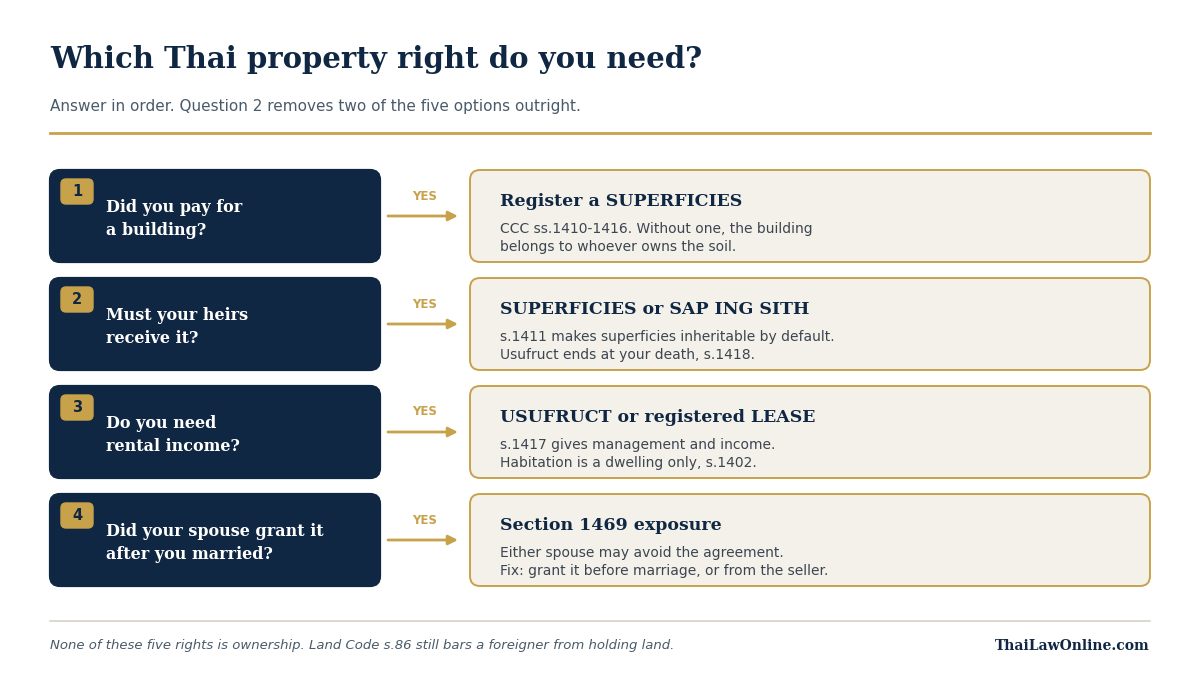
คุณต้องการอันไหน? สี่คำถาม
- คุณจ่ายเงินเพื่อสร้างอาคารหรือไม่ หากใช่ ให้จดทะเบียนสิทธิเหนือพื้นดินเหนืออาคารนั้น หากไม่มี อาคารจะตกเป็นของผู้ที่เป็นเจ้าของที่ดิน ตามหลักทั่วไปที่ว่าสิ่งปลูกสร้างย่อมเป็นส่วนควบของที่ดิน.
- ทายาทของคุณจำเป็นต้องได้รับสิทธินี้หรือไม่? หากใช่ ให้เลือกสิทธิเหนือพื้นดินหรือทรัพยอิงสิทธิ สิทธิเก็บกินสิ้นสุดลงเมื่อคุณเสียชีวิตตามมาตรา 1418 สิทธิอาศัยตกทอดไม่ได้ตามมาตรา 1404.
- คุณต้องการรายได้จากค่าเช่าหรือไม่? หากใช่ ให้เลือกสิทธิเก็บกินหรือการเช่าที่จดทะเบียน สิทธิอาศัยให้คุณเพียงที่อยู่อาศัย ไม่มีอะไรมากกว่านั้น.
- ผู้มอบสิทธิคือคู่สมรสของคุณหรือไม่ และคุณเคยแต่งงานกันอยู่แล้วเมื่อเธอมอบสิทธินั้นให้หรือไม่ หากใช่ ให้นำความเสี่ยงตามมาตรา 1469 มาคำนวณด้วย และพิจารณาว่าการให้สิทธิก่อนแต่งงาน หรือการรับสิทธิจากผู้ขาย จะได้ผลเดียวกันโดยมีความเสี่ยงน้อยกว่าหรือไม่.
การสะสมสิทธิ์ และจุดที่การสะสมสิทธิ์ใช้ไม่ได้ผล
ลูกค้ามักจดทะเบียนสิทธิมากกว่าหนึ่งประเภทเหนือทรัพย์สินเดียวกัน สัญญาเช่า 30 ปีให้สิทธิครอบครองและสิทธิเรียกร้องตามสัญญาเช่า สิทธิเหนือพื้นดินทำให้อาคารเป็นของคุณและตกทอดถึงลูกของคุณ สิทธิเก็บกินเพิ่มอำนาจจัดการและรายได้ ทั้งสามสิทธิอยู่ร่วมกันได้เพราะตอบคำถามที่ต่างกัน และกฎหมายไทยให้จดทะเบียนแยกกัน.
การจดทะเบียนหลายสิทธิซ้อนกันต้องเสียค่าธรรมเนียมสามชุดและค่าร่างเอกสารสามชุด และยังมีขีดจำกัดด้วย ไม่มีสิทธิใดในจำนวนนี้เป็นกรรมสิทธิ์ มาตรา 86 แห่งประมวลกฎหมายที่ดินให้คนต่างชาติได้มาซึ่งที่ดินเฉพาะเมื่อมีสนธิสัญญาให้สิทธิไว้ และมาตรา 94 ให้คนต่างชาติที่ได้มาซึ่งที่ดินโดยมิชอบหรือโดยไม่ได้รับอนุญาตจำหน่ายที่ดินนั้นภายในระยะเวลาที่อธิบดีกำหนด ซึ่งไม่น้อยกว่า 180 วันและไม่เกินหนึ่งปี ก่อนที่อธิบดีจะจำหน่ายที่ดินนั้นเอง จะจดทะเบียนซ้อนกันมากเพียงใดก็ได้ ที่ดินก็ยังเป็นของเธอ.
มีการตรวจสอบล่าสุดเมื่อวันที่ 26 กันยายน ค.ศ. 2026. มาตรา 538, 544, 1299, 1402 ถึง 1413, 1416 ถึง 1418, 1420 ถึง 1422, 1424 ถึง 1426, 1428 และ 1469 แห่งประมวลกฎหมายแพ่งและพาณิชย์ มาตรา 3, 4 และ 12 แห่งพระราชบัญญัติทรัพยอิงสิทธิ พ.ศ. 2562 มาตรา 74, 86, 93 และ 94 แห่งประมวลกฎหมายที่ดิน หนังสือเวียนกรมที่ดิน ที่ มท 0515.2/ว 10722 ข้อ 1 และคู่มือการให้บริการประชาชนของกรมที่ดินเรื่องค่าธรรมเนียมการจดทะเบียน (กฎกระทรวงฉบับที่ 47 ข้อ 2(7)) และอากรแสตมป์ (ตราสาร 28(b)) ได้รับการอ่านจากตัวบทภาษาไทย ตรวจสอบอีกครั้งเมื่อวันที่ 5 ตุลาคม 2569: อ่านมาตรา 4 และ 12 แห่งพระราชบัญญัติทรัพยอิงสิทธิซ้ำจากตัวบทภาษาไทย และขยายการอ้างอิงเรื่องการจดทะเบียนให้ครอบคลุมทั้งสองมาตรา นอกจากนั้นไม่มีการเปลี่ยนแปลง.
คำถามที่พบบ่อย
ภรรยาไทยของฉันสามารถยกเลิกสิทธิเก็บกินของฉันได้หรือไม่
ไม่ใช่ที่เคาน์เตอร์สำนักงานที่ดิน สิทธิเก็บกินที่จดทะเบียนแล้วเป็นทรัพยสิทธิเหนือโฉนดที่ดิน เธอสามารถร้องขอให้ศาลเพิกถอนสัญญาที่เป็นมูลเหตุตามมาตรา 1469 ได้ เนื่องจากพวกคุณทำสัญญาขึ้นในระหว่างสมรส และศาลก็สามารถมีคำสั่งให้เพิกถอนการจดทะเบียนนั้นได้ เธอจะเสียสิทธิทางเลือกนั้นไปเมื่อพ้นกำหนดหนึ่งปีนับแต่วันที่การสมรสสิ้นสุดลง และเธอจะไม่เคยมีสิทธินั้นเลยหากคุณจดทะเบียนสิทธิดังกล่าวตั้งแต่ก่อนสมรส.
สิทธิเหนือพื้นดินในประเทศไทยสามารถตกทอดเป็นมรดกได้หรือไม่
ใช่ มาตรา 1411 กำหนดให้สิทธิโอนกันได้และตกทอดทางมรดกได้ เว้นแต่เอกสารที่ก่อตั้งสิทธินั้นจะกำหนดไว้เป็นอย่างอื่น โปรดอ่านข้อสัญญานั้นก่อนลงลายมือชื่อ เนื่องจากคู่สัญญาอาจตกลงกันเป็นอย่างอื่นได้.
ชาวต่างชาติสามารถจดทะเบียนสิทธิเก็บกินบนห้องชุดได้หรือไม่
ใช่ แต่ขึ้นอยู่กับพนักงานเจ้าหน้าที่ ไม่มีกฎหมายใดห้ามชาวต่างชาติเป็นผู้ทรงสิทธิเก็บกิน และสำนักงานที่ดินก็จดทะเบียนสิทธิเก็บกินเหนือห้องชุด เจ้าหน้าที่ที่รับผิดชอบเรื่องของคุณมีดุลยพินิจที่จะกำหนดเงื่อนไขหรือปฏิเสธคำขอ ผู้ซื้อชาวต่างชาติส่วนใหญ่ที่อยู่ในโควตาชาวต่างชาติ 49% มักเลือกถือกรรมสิทธิ์ในห้องชุดแทน ดังนั้น การใช้สิทธิเก็บกินจึงมักเกิดขึ้นเมื่อห้องชุดนั้นอยู่ในโควตาของคนไทย.
ค่าใช้จ่ายในการจดทะเบียนสิทธิเก็บกินราคาเท่าไหร่
ค่าธรรมเนียมการจดทะเบียน 50 บาทต่อแปลงในกรณีที่ไม่มีการชำระเงิน ส่วนกรณีที่ให้สิทธิเก็บกินโดยมีค่าตอบแทน ค่าธรรมเนียมคือ 1% บวกอากรแสตมป์ 0.5% ในฐานะใบรับ สำหรับห้องชุดคอนโดมิเนียม จะใช้ระเบียบค่าธรรมเนียมอาคารชุดแทน คือ 100 บาทต่อห้องชุดหากไม่มีค่าตอบแทน และ 2% หากมีค่าตอบแทน หน้าของเราเกี่ยวกับ ค่าใช้จ่ายในการจดสิทธิเก็บกินสำหรับชาวต่างชาติ แจกแจงตัวอย่างการคำนวณ.
ฉันสามารถปล่อยเช่าอสังหาริมทรัพย์ที่ถือครองด้วยสิทธิเก็บกินได้หรือไม่
มาตรา 1417 ให้สิทธิคุณในการจัดการ และมาตรา 1422 ให้คุณโอนการใช้สิทธิของคุณได้ ดังนั้นประมวลกฎหมายจึงอนุญาตเว้นแต่ตราสารของคุณจะห้ามไว้ ในทางปฏิบัติสำนักงานที่ดินปฏิเสธที่จะจดทะเบียนให้ชาวต่างชาติเป็นผู้ให้เช่า ดังนั้นผู้ทรงสิทธิเก็บกินชาวต่างชาติจึงให้เช่ามีกำหนดเวลาสามปีหรือน้อยกว่านั้นโดยไม่มีการจดทะเบียน.
บ้านของฉันจะเกิดอะไรขึ้นเมื่อสิทธิเหนือพื้นดินสิ้นสุดลง
มาตรา 1416 ให้สิทธิแก่ท่านในการรื้อถอนอาคารและปรับปรุงที่ดินให้กลับสู่สภาพเดิม หากเจ้าของที่ดินแจ้งความประสงค์ที่จะซื้ออาคารดังกล่าวในราคาตลาด ท่านจะปฏิเสธได้ก็ต่อเมื่อมีเหตุผลอันสมควร ให้ตกลงวิธีการประเมินราคาไว้ในนิติกรรมเดิม.
สิทธิเก็บกินหรือสิทธิเหนือพื้นดิน อย่างไหนดีกว่ากัน?
ทั้งสองตอบคำถามที่แตกต่างกัน สิทธิเหนือพื้นดินทำให้ทายาทของคุณได้รับตัวอาคาร สิทธิเก็บกินให้คุณมีสิทธิจัดการและรับรายได้จากทรัพย์สินทั้งหมดตลอดชีวิตของคุณ และสิ้นสุดลงเมื่อคุณเสียชีวิต ลูกค้าที่สร้างบ้านและต้องการส่งต่อให้ทายาทจะจดทะเบียนทั้งสองสิทธิ.
สิทธิเก็บกินยังคงอยู่หรือไม่เมื่อมีการขายที่ดิน?
สิทธิเก็บกินที่จดทะเบียนแล้วเป็นทรัพยสิทธิที่ติดอยู่กับทรัพย์สิน ผู้ซื้อจึงรับโอนที่ดินไปโดยมีสิทธินั้นติดไปด้วย: การจดทะเบียนคือสิ่งที่ทำให้สิทธิบริบูรณ์ตามมาตรา 1299 สัญญาที่ไม่จดทะเบียนใช้ยันผู้ซื้อไม่ได้เลย.
จะเริ่มต้นที่ไหนดี
นำเอกสารสิทธิ์ที่ดิน เอกสารแสดงตนของเจ้าของที่ดิน และคำตอบของคำถามที่ 2 มาให้เรา เราจะบอกคุณว่าเอกสารใดเหมาะสม และจะร่างเอกสารเป็นสองภาษาและเข้าร่วมการลงทะเบียนที่สำนักงานที่ดินกับคุณ ThaiLawOnline ได้ดูแลเรื่องสิทธิ์ในที่ดินของชาวต่างชาติในประเทศไทยมาตั้งแต่ปี 2006.
ข่าวสารกฎหมายไทย ฟรีทางอีเมล
อัปเดตข่าวสารเป็นภาษาอังกฤษที่เข้าใจง่ายเกี่ยวกับการเปลี่ยนแปลงของกฎหมายไทยที่ส่งผลกระทบต่อชาวต่างชาติ: อสังหาริมทรัพย์, วีซ่า, การสมรส, ธุรกิจ และพินัยกรรม จดหมายข่าวสั้นเพียงฉบับเดียวต่อเดือน จากสำนักงานกฎหมายที่ดำเนินงานมาตั้งแต่ปี 2549 ไม่มีการส่งสแปม ยกเลิกรับได้ทุกเมื่อ.