


ตรวจสอบโดย ThaiLawOnline สำนักงานกฎหมายไทยที่ได้รับใบอนุญาตและดำเนินกิจการในประเทศไทยตั้งแต่ปี พ.ศ. 2549 ทนายความผู้รับผิดชอบสำนวน: Wichuda Atthamethakon, น.ม., ใบอนุญาตให้เป็นทนายความ เลขที่ 3149/2556.
ปรับปรุงล่าสุดเมื่อ
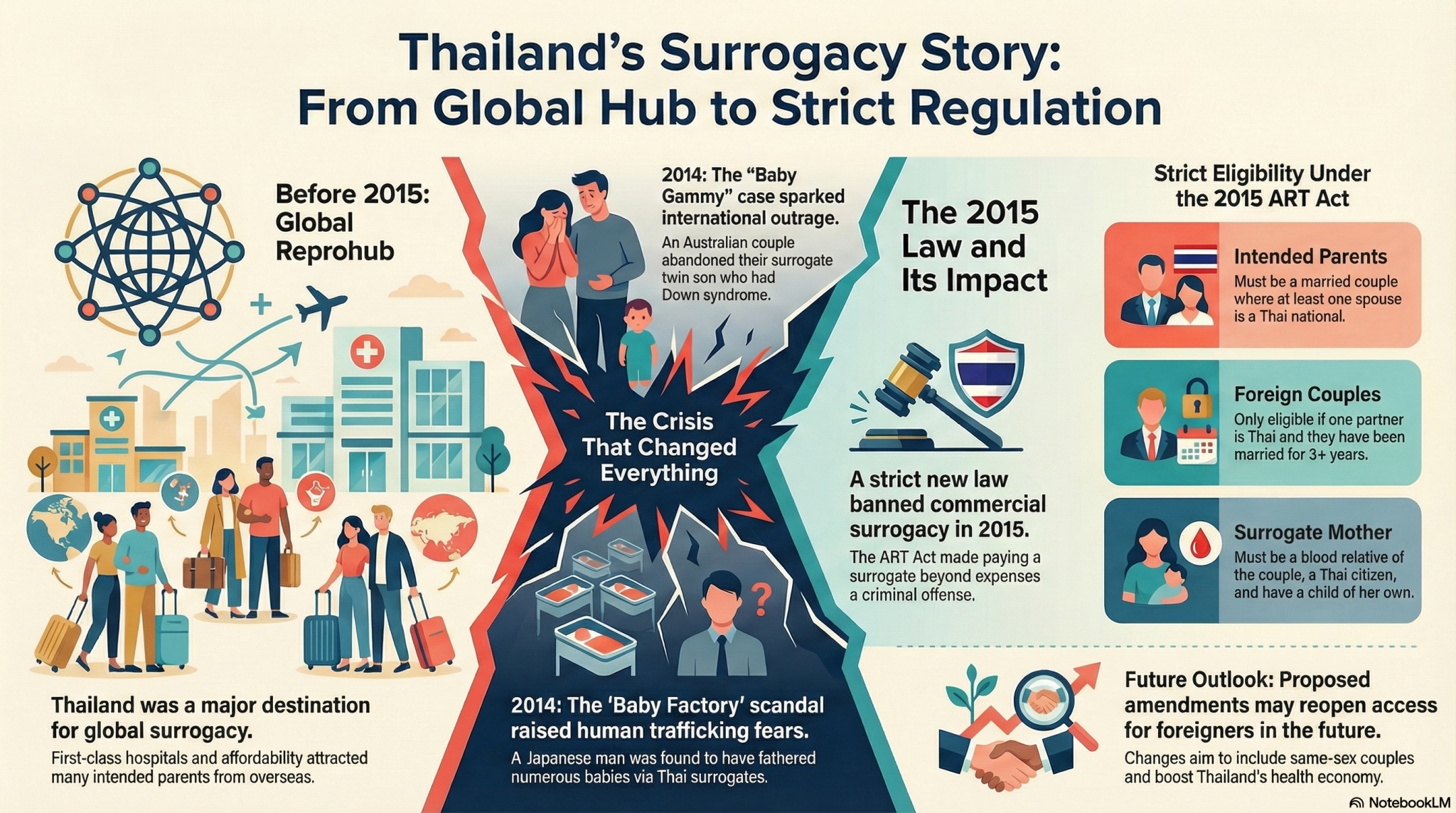
การอุ้มบุญคือการที่ผู้หญิงตั้งครรภ์และคลอดบุตรให้กับพ่อแม่ที่ต้องการมีบุตร ประเด็นนี้ได้ก่อให้เกิดการถกเถียงทางกฎหมายและจริยธรรมที่สำคัญในประเทศไทย ThaiLawOnline ได้ทำการศึกษาอย่างเข้มข้นในช่วงวิกฤตการอุ้มบุญในประเทศไทยราวปี 2014-2015 รัฐบาลได้แก้ไขกฎหมายในช่วงหลายปีที่ผ่านมา. กรณีเช่น “เบบี้แกมมี่”และ“โรงงานเด็ก”สร้างข่าวไปทั่วโลก.
ดาวน์โหลดฟรี
หนังสือยินยอมให้เด็กเดินทาง (ฟรี): คู่มือ + หนังสือยินยอมสองภาษา
หนังสือยินยอมพร้อมลงนามทั้งภาษาอังกฤษและภาษาไทย สำหรับเด็กที่เดินทางไปต่างประเทศ พร้อมคู่มือปฏิบัติ: การตรวจของสำนักงานตรวจคนเข้าเมืองสำหรับเด็กไทยอายุต่ำกว่า 18 ปี ตั้งแต่วันที่ 3 สิงหาคม 2569 ใครต้องลงนาม และวิธีขอให้รับรองหนังสือดังกล่าวที่ อำเภอ หรือสถานทูตไทย จำเป็นอย่างยิ่งหลังการหย่า สำหรับพ่อหรือแม่เลี้ยงเดี่ยว และในกรณีการอุ้มบุญและ การเป็นผู้ปกครองดูแล สถานการณ์. ฟรี, อัปเดตเมื่อวันที่ 30 กันยายน 2026. หนังสือยินยอมให้บุตรเดินทางฟรี
ความเป็นพ่อแม่ที่เกิดขึ้นผ่านการเจริญพันธุ์โดยอาศัยเทคโนโลยีช่วยการเจริญพันธุ์มีความเกี่ยวข้องกับกฎเกณฑ์ในคู่มือของเราเพื่อ กฎหมายครอบครัวไทย.
หากคุณต้องการทนายความด้านการอุ้มบุญ เราอาจเป็นหนึ่งในทนายความที่ดีที่สุดในประเทศไทย คุณ Wichuda หุ้นส่วนของ ThaiLawOnline มีปริญญาโทเกี่ยวกับเรื่องการตั้งครรภ์แทนในประเทศไทย การปฏิรูปถูกหารือมานานหลายปีและยังไม่เกิดขึ้น กรมสนับสนุนบริการสุขภาพได้ร่างพระราชบัญญัติฉบับปรับปรุงเพื่อรับฟังความคิดเห็นของประชาชนตั้งแต่วันที่ 2 ถึง 31 กรกฎาคม 2026 (พ.ศ. 2569) แต่ยังไม่ได้เสนอต่อคณะรัฐมนตรี และยังไม่มีการประกาศใดๆ ในราชกิจจานุเบกษา ดังนั้น พระราชบัญญัติปี 2015 (พ.ศ. 2558) จึงยังคงบังคับใช้ในปัจจุบัน บันทึกนี้ตรวจสอบกฎหมาย ณ เดือนกันยายน 2026 เพื่อให้ชาวต่างชาติและชาวต่างชาติที่อาศัยอยู่สามารถเห็นสิ่งที่ได้รับอนุญาตจริงๆ ในปัจจุบัน มากกว่าสิ่งที่ถูกเสนอขึ้นมา.
สารบัญ
ทำความเข้าใจเกี่ยวกับการอุ้มบุญ: คำจำกัดความและประเภทต่างๆ
การอุ้มบุญคือการที่แม่ผู้รับอุ้มบุญตั้งครรภ์แทนพ่อแม่ที่ต้องการมีบุตร โดยมีสองประเภทหลักๆ คือ:
- การอุ้มบุญแบบดั้งเดิม: หญิงอุ้มบุญใช้ไข่ของตนเอง ทำให้เธอเป็นแม่ทางชีววิทยา
- การตั้งครรภ์แทนโดยใช้ไข่ผู้อื่น: ตัวอ่อนสร้างขึ้นโดยใช้ไข่และอสุจิจากพ่อแม่ผู้ประสงค์จะมีบุตรหรือจากผู้บริจาค หญิงตั้งครรภ์แทนไม่มีความเกี่ยวข้องทางพันธุกรรมกับเด็ก.
ความแตกต่างนี้เป็นตัวตัดสินว่าข้อตกลงดังกล่าวชอบด้วยกฎหมายในที่นี้หรือไม่. มาตรา 22 ของพระราชบัญญัติ พ.ศ. 2558 อนุญาตให้ใช้วิธีการเพียงสองวิธีเท่านั้นตัวอ่อนจากอสุจิของสามีและไข่ของภรรยา หรือตัวอ่อนจากอสุจิของสามีหรือไข่ของภรรยา ร่วมกับไข่หรืออสุจิจากผู้บริจาค ส่วนนี้จบลงด้วย ห้ามอย่างชัดเจนไม่ให้ใช้ไข่ของหญิงตั้งครรภ์แทนตนเอง. ดังนั้น การตั้งครรภ์แทนแบบดั้งเดิมจึงไม่สามารถทำได้ในประเทศไทย, ไม่ว่าคู่กรณีจะเป็นใครและตกลงกันอย่างไร.
กรอบกฎหมาย: พระราชบัญญัติเทคโนโลยีช่วยการเจริญพันธุ์ พ.ศ. 2558
Thailand’s surrogacy laws are set by the Protection for Children Born through Assisted Reproductive Technologies Act. The Act was given on 28 April 2015 and published in the Royal Gazette on 1 May 2015 (vol. 132, part 38 Kor). Under section 2 it came into force 90 days after publication, on 30 July 2015. The law was introduced after famous scandals, like the “baby Gammy” case. This case showed problems with child abandonment and human trafficking related to commercial surrogacy.
บทบัญญัติสำคัญ ดังรายละเอียดที่ระบุไว้ใน เอกสารทางการของกฎหมายที่คุณสามารถค้นหาได้ที่นี่. ลองระบุเงื่อนไขบางประการดูก่อน:
- ภายใต้มาตรา 21 (1) คู่สมรสที่ตั้งใจจะต้องสมรสกันโดยชอบด้วยกฎหมายและ ของ สัญชาติไทย; โดยที่ฝ่ายใดฝ่ายหนึ่งไม่ใช่คนไทย การสมรสจะต้องได้รับการจดทะเบียนมาแล้วเป็นเวลา อย่างน้อยสามปี. ดังนั้นคู่สามีภรรยาที่ไม่มีคู่สมรสเป็นคนไทยจึงถูกยกเว้น ไม่ว่าจะแต่งงานกันมานานเท่าใดก็ตาม ห้ามมิให้ผู้ตั้งครรภ์แทนเป็นบุพการีหรือผู้สืบสันดานของคู่สมรสฝ่ายใดฝ่ายหนึ่ง (มาตรา 21 (2)) และต้องมีบุตรของตนเองมาก่อนแล้ว (มาตรา 21 (4)),
- ไม่มีผลประโยชน์ทางการค้า (มาตรา 24)
- ห้ามโฆษณา (มาตรา 28)
- เด็กที่เกิดผ่านเทคโนโลยีคือ ถูกต้องตามกฎหมาย child of the intended parents. Donors have no rights or duties (Section 29). If both intended parents die before the birth, the surrogate is the child’s guardian until the court appoints a new guardian (Section 30)
สิ่งเหล่านี้คือข้อห้ามทางอาญา ไม่ใช่คำแนะนำ. ตาม มาตรา 48 ผู้ใดที่ฝ่าฝืนคำสั่งห้ามตามมาตรา 24 เกี่ยวกับการจัดให้มีตัวแทนตั้งครรภ์เพื่อวัตถุประสงค์ทางการค้า ย่อมต้องรับผิดชอบต่อ จำคุกไม่เกินสิบปีและปรับ ปรับ ไม่เกิน 200,000 บาท; พระราชบัญญัติใช้ และ, ดังนั้นจึงมีการกำหนดไว้ทั้งสองอย่าง ภายใต้ มาตรา 49 โทษของการฝ่าฝืนคำสั่งห้ามโฆษณาตามมาตรา 28 มีระบุไว้ดังนี้ จำคุกไม่เกินห้าปี หรือปรับไม่เกิน 100,000 บาท หรือทั้งจำทั้งปรับ, และมาตรา 28 ให้นำมาใช้บังคับ ไม่ว่าโฆษณานั้นจะมีวัตถุประสงค์เพื่อการค้าหรือไม่ก็ตาม, ดังนั้น การเพียงแค่ประกาศว่าผู้หญิงคนหนึ่งเต็มใจที่จะตั้งครรภ์แทน หรือคู่รักกำลังมองหาใครสักคนที่จะทำเช่นนั้น จึงถือเป็นความผิด ภายใต้ มาตรา 47 แพทย์ที่ให้บริการตั้งครรภ์แทนโดยไม่ได้รับอนุมัติจากคณะกรรมการตามที่กำหนดไว้ในมาตรา 23 ต้องระวางโทษจำคุกไม่เกินหกเดือน หรือปรับไม่เกิน 10,000 บาท หรือทั้งจำทั้งปรับ กฎหมายห้ามการตั้งครรภ์แทนเพื่อประโยชน์ทางการค้า ซึ่งหมายความว่าจะไม่มีการให้ค่าตอบแทนทางการเงินนอกเหนือจากค่าใช้จ่ายที่จำเป็น กฎหมายจำกัดการตั้งครรภ์แทนไว้สำหรับสามีและภรรยาที่ชอบด้วยกฎหมาย ภายใต้มาตรา 21 หญิงตั้งครรภ์แทนจะต้องเป็นญาติสืบสายโลหิตของฝ่ายใดฝ่ายหนึ่ง และเฉพาะในกรณีที่ไม่มีญาติสืบสายโลหิตเท่านั้น หญิงอื่นจึงจะสามารถตั้งครรภ์แทนได้ตามหลักเกณฑ์ที่รัฐมนตรีว่าการกระทรวงสาธารณสุขกำหนด โดยเธอต้องมีบุตรของตนเองมาแล้ว ไม่เป็นบุพการีหรือผู้สืบสันดานของคู่สมรสฝ่ายใดฝ่ายหนึ่ง และหากเธอมีสามีหรือคู่ชีวิตที่อยู่กินร่วมกันฉันสามีภรรยา จะต้องได้รับความยินยอมจากสามีหรือคู่ชีวิตนั้นด้วย ในทางปฏิบัติ สิ่งนี้ทำให้คนโสดและคู่รักเพศเดียวกันไม่สามารถทำได้ รวมถึงคู่สมรสที่ไม่มีฝ่ายใดเป็นคนไทย แต่ไม่ตัดสิทธิ์ชาวต่างชาติที่สมรสกับคนไทยมาแล้วเป็นเวลาอย่างน้อยสามปี.
บริบททางประวัติศาสตร์และข้อกังวลด้านจริยธรรม
กฎหมายการตั้งครรภ์แทนของไทยมีการเปลี่ยนแปลงอย่างมากในช่วงไม่กี่ปีที่ผ่านมาเพื่อควบคุมการปฏิบัติให้เข้มงวดขึ้น พระราชบัญญัติคุ้มครองเด็กที่เกิดโดยอาศัยเทคโนโลยีช่วยการเจริญพันธุ์ทางการแพทย์ หรือที่เรียกว่ากฎหมายการตั้งครรภ์แทน ได้ถูกตราขึ้นเพื่อให้การตั้งครรภ์แทนเป็นไปตามมาตรฐานทางจริยธรรมและกฎหมาย การเปลี่ยนแปลงสำคัญประการหนึ่งคือการห้ามการตั้งครรภ์แทนเชิงพาณิชย์ ซึ่งหมายความว่าหญิงที่ตั้งครรภ์แทนจะได้รับเงินเกินกว่าค่าใช้จ่ายที่สมควรไม่ได้ ปัจจุบันกฎหมายกำหนดให้ทำได้เฉพาะการตั้งครรภ์แทนโดยไม่มีค่าตอบแทนเท่านั้น จึงเป็นการจำกัดธุรกรรมทางการเงินที่เกี่ยวข้องกับกระบวนการตั้งครรภ์แทน การเปลี่ยนแปลงนี้มุ่งคุ้มครองสิทธิของหญิงที่ตั้งครรภ์แทนและป้องกันการแสวงประโยชน์
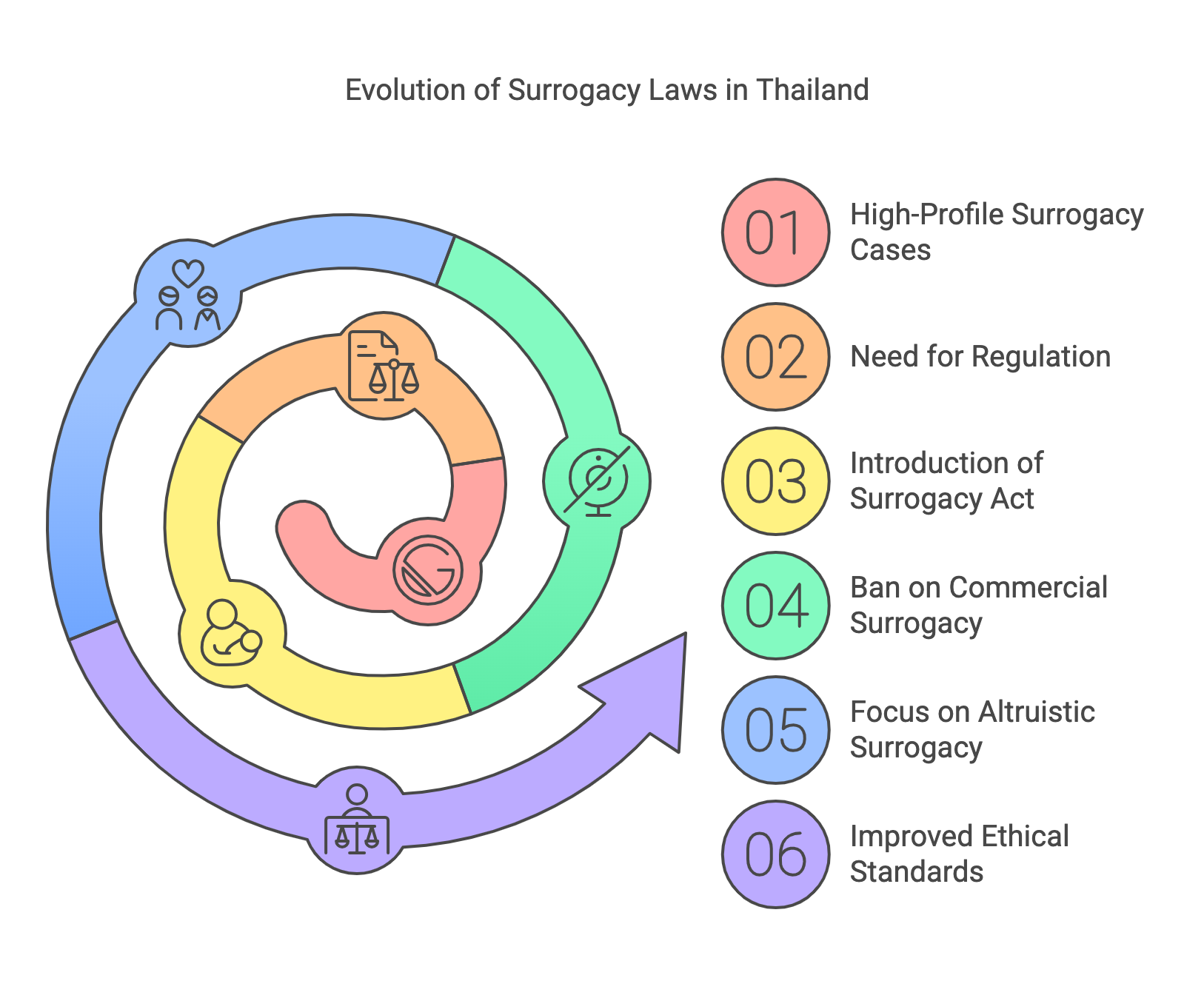
กฎหมายอุ้มบุญฉบับใหม่ในประเทศไทยเกิดขึ้นเนื่องมาจากคดีดังหลายคดี คดีของ “น้องแกมมี” ได้รับความสนใจในปี 2557 เหตุการณ์นี้ตีแผ่ปัญหาในอุตสาหกรรมอุ้มบุญของไทย คู่สามีภรรยาชาวออสเตรเลียเผชิญข้อกล่าวหาว่าทิ้งลูกชายที่เป็นกลุ่มอาการดาวน์ไว้ที่ประเทศไทย และพาพี่สาวฝาแฝดที่มีสุขภาพแข็งแรงกลับออสเตรเลีย เหตุการณ์นี้แสดงให้เห็นถึงปัญหาทางกฎหมายที่เกี่ยวข้องกับการอุ้มบุญในประเทศไทย ซึ่งเกิดขึ้นไม่นานหลังการรัฐประหารในปี 2557 ในเวลาเดียวกัน มีเรื่องอื้อฉาวอีกกรณีหนึ่งเกี่ยวกับพ่อชาวญี่ปุ่นที่เรียกว่า “โรงงานผลิตเด็ก” ประเทศไทยจึงได้ดำเนินการจัดการกับการอุ้มบุญเพื่อการค้าด้วยการบังคับใช้กฎหมายใหม่.
นอกจากนี้ การให้บริการอุ้มบุญในประเทศไทยยังได้รับการยอมรับมากขึ้นเรื่อยๆ ในด้านจริยธรรม โดยมุ่งมั่นที่จะสร้างสภาพแวดล้อมที่เอื้ออำนวยต่อทั้งแม่ผู้รับอุ้มบุญและพ่อแม่ผู้ประสงค์จะมีบุตร ชื่อเสียงที่กำลังเติบโตนี้มีความสำคัญสำหรับผู้ที่กำลังพิจารณาการให้บริการอุ้มบุญในประเทศไทย
การทำความเข้าใจความซับซ้อนของการตั้งครรภ์แทนในประเทศไทยเป็นสิ่งสำคัญสำหรับผู้ที่ต้องการมีบุตรซึ่งกำลังดำเนินการในกระบวนการนี้และแสวงหาการตั้งครรภ์แทนแบบรับประกัน กฎหมายที่เปลี่ยนแปลงของประเทศนำมาทั้งความท้าทายและประโยชน์ เป็นสิ่งสำคัญที่คู่รักควรติดต่อเราเพื่อประกอบการตัดสินใจที่มีข้อมูลรอบด้าน.
คดีเหล่านี้แสดงให้เห็นถึงความจำเป็นในการควบคุม คดีเหล่านี้มักเกี่ยวข้องกับคู่สมรสจากต่างประเทศ และก่อให้เกิดคำถามทางจริยธรรมและกฎหมายเกี่ยวกับสิทธิของเด็กที่เกิดโดยอาศัยเทคโนโลยีช่วยการเจริญพันธุ์ รัฐบาลไทยต้องการคุ้มครองทุกฝ่ายที่เกี่ยวข้อง ซึ่งรวมถึงหญิงที่ตั้งครรภ์แทนและผู้ที่ประสงค์จะมีบุตร โดยการสร้างกรอบกฎหมายที่ชัดเจน กฎหมายใหม่มุ่งยกระดับชื่อเสียงของประเทศไทยในด้านการตั้งครรภ์แทนอย่างมีจริยธรรม และทำให้ข้อตกลงการตั้งครรภ์แทนทั้งหมดชัดเจนและเป็นธรรม
กฎหมายที่เกี่ยวข้องกับการอุ้มบุญในประเทศไทยได้รับการประกาศใช้ในปี 2558
รัฐบาลไทยอนุมัติกฎหมายฉบับใหม่หลังจากเผชิญกับอื้อฉาวเกี่ยวกับการตั้งครรภ์แทน กฎหมายนี้เรียกว่า “พระราชบัญญัติคุ้มครองเด็กที่เกิดโดยอาศัยเทคโนโลยีช่วยการเจริญพันธุ์ทางการแพทย์ พ.ศ. 2558” กฎหมายนี้ได้เปลี่ยนแปลง The practice ของการตั้งครรภ์แทนในประเทศไทย ด้านที่สำคัญบางประการของกฎหมายปี 2558 ประกอบด้วย;
กฎหมายฉบับใหม่ที่ออกมาในปี 2015 มีเป้าหมายเพื่อห้ามการอุ้มบุญ ทำให้การอุ้มบุญถูกจำกัดอย่างมาก จนมีคนจำนวนน้อยที่ต้องการใช้บริการอุ้มบุญในประเทศไทยหลังจากปีนั้น
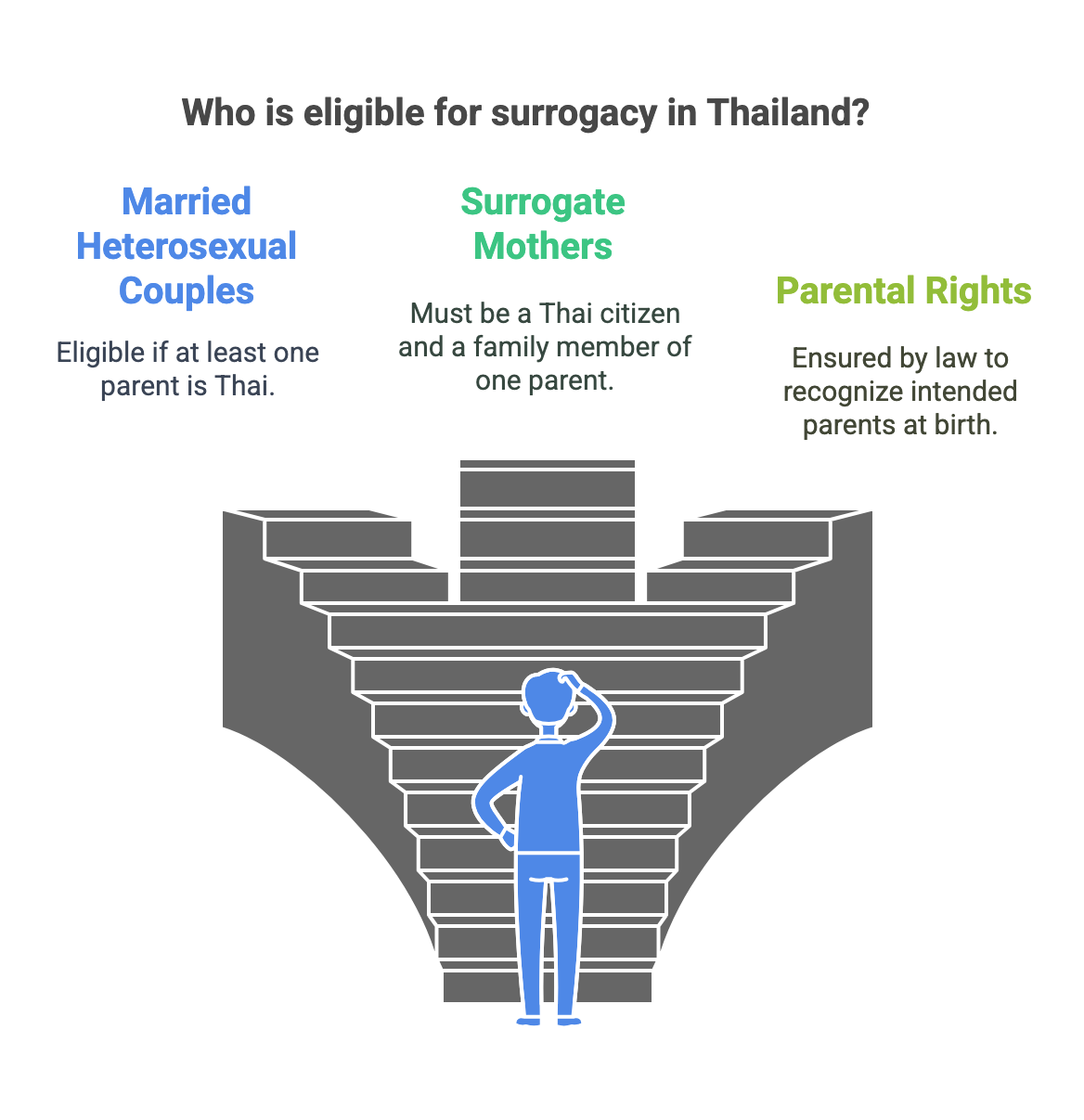
ข้อจำกัดด้านคุณสมบัติมีดังนี้:
- A lawfully married husband and wife, where the wife cannot carry a pregnancy, can be intended parents if both are Thai or, where one spouse is not Thai, if the marriage has been registered for at least three years (section 21(1)).
- หญิงที่รับตั้งครรภ์แทนต้องเคยมีบุตรของตนเองมาแล้ว และต้องไม่เป็นบุพการีหรือผู้สืบสันดานของสามีหรือภริยา (มาตรา 21(2) และ (4)) หญิงนั้นต้องเป็นญาติสืบสายโลหิตของสามีหรือภริยาฝ่ายใดฝ่ายหนึ่ง เฉพาะกรณีที่ไม่มีญาติดังกล่าวเท่านั้น หญิงอื่นจึงอาจตั้งครรภ์แทนได้โดยได้รับอนุญาตจากคณะกรรมการ และหญิงนั้นต้องมีสัญชาติเดียวกับสามีหรือภริยาฝ่ายใดฝ่ายหนึ่ง
- อำนาจปกครอง กำหนดไว้ตามกฎหมาย เรื่องนี้ทำให้มั่นใจได้ว่าพ่อแม่ที่วางแผนจะเลี้ยงดูบุตรได้รับการยอมรับว่าเป็นพ่อแม่ของเด็ก การยอมรับนี้เริ่มต้นตั้งแต่แรกเกิดเพื่อหลีกเลี่ยงความสับสนใดๆ เกี่ยวกับบทบาทความเป็นพ่อแม่.
การฝ่าฝืนกฎอาจนำไปสู่การปรับและจำคุก ทั้งสำหรับผู้รับจ้างอุ้มบุญและพ่อแม่ที่เกี่ยวข้องในกระบวนการนี้ ควรทราบว่าประเทศไทยได้เปิดให้คู่รักเพศเดียวกันสมรสกันได้เมื่อวันที่ 23 มกราคม 2025 ซึ่งเป็นประเทศแรกในเอเชียตะวันออกเฉียงใต้และเป็นประเทศที่สามในเอเชียที่ทำเช่นนั้น ต่อจากไต้หวันในปี 2019 และเนปาลในปี 2023 การเปลี่ยนแปลงนี้ไม่ได้เปิดทางให้การอุ้มบุญ มาตรา 21(1) ของพระราชบัญญัติปี 2015 ยังคงกำหนดให้ต้องเป็นสามีและภริยาที่ชอบด้วยกฎหมาย และมาตรา 67 วรรคสอง ของพระราชบัญญัติความเท่าเทียมทางสมรสคงบทบัญญัติที่ปฏิบัติต่อสามีและภริยาแตกต่างกันไว้ตามเดิม การรับเลี้ยงบุตรบุญธรรม และการอุ้มบุญอยู่ภายใต้กฎหมายแยกฉบับกัน และแต่ละฉบับต้องได้รับการแก้ไขแยกกัน
ภาพรวมของกฎหมายและกระบวนการอุ้มบุญในปัจจุบันของประเทศไทย
| หัวข้อ | รายละเอียด | ใช้ได้กับชาวต่างชาติหรือไม่? | หมายเหตุ |
|---|---|---|---|
| การอุ้มบุญถูกกฎหมายหรือไม่? | ใช่ แต่เฉพาะสำหรับคู่รักชาวไทยหรือคู่สมรสชาวไทย-ต่างชาติเท่านั้น | บางส่วน (หากแต่งงานกับคนไทย) | ต้องสมรสถูกต้องตามกฎหมายมาแล้วอย่างน้อย 3 ปี |
| การอุ้มบุญเชิงพาณิชย์ | ต้องห้ามตามกฎหมาย | ไม่ | ไม่อนุญาตให้จ่ายเงินใดๆ นอกเหนือจากค่ารักษาพยาบาลและค่าใช้จ่ายที่เกี่ยวข้อง |
| ใครสามารถเป็นแม่อุ้มบุญได้บ้าง? | หญิงที่เคยมีบุตรมาก่อน; บุคคลที่ไม่ใช่ญาติต้องมีอายุระหว่าง 20 ถึง 40 ปี | ไม่ | ญาติสายเลือดของคู่สมรสคนหนึ่งเท่านั้น; ผู้หญิงอีกคนหนึ่งเท่านั้น หากไม่มีญาติสายเลือดของคู่สมรสคนใดก็ตาม โดยได้รับอนุญาตจากคณะกรรมการ |
| สิทธิของผู้ปกครอง | เด็กเป็นบุตรชอบด้วยกฎหมายของสามีและภริยาที่ประสงค์จะมีบุตรตั้งแต่เกิด (มาตรา 29) | ใช่ (หากเป็นไปตามเงื่อนไขทางกฎหมาย) | ไม่จำเป็นต้องมีคำสั่งศาล: พระราชบัญญัติเองเป็นผู้กำหนดความเป็นบิดามารดา |
ความคืบหน้าล่าสุด: ข้อเสนอแก้ไขเพิ่มเติม
ความริเริ่มล่าสุดของรัฐบาลบ่งชี้ถึงความเป็นไปได้ในการผ่อนคลายกฎหมายอุ้มบุญ ในเดือนมีนาคม 2024 กรมสนับสนุนบริการสุขภาพได้ประกาศแผนแก้ไขพระราชบัญญัติ ART การแก้ไขนี้จะอนุญาตให้คู่สมรสชาวต่างชาติใช้บริการอุ้มบุญได้ โดยนำหญิงที่รับตั้งครรภ์แทนของตนเองมา หรือใช้หญิงไทยที่รับตั้งครรภ์แทน การดำเนินการนี้มุ่งกระตุ้นเศรษฐกิจด้านสุขภาพและแก้ปัญหาอัตราการเกิดที่ลดลงของประเทศไทย
- การแทนที่คำว่า “สามี” และ “ภรรยา” ด้วย “คู่สมรส” เพื่อให้สอดคล้องกับพระราชบัญญัติสมรสเท่าเทียม.
- การอนุญาตให้คู่รักเพศเดียวกันเข้าถึงบริการอุ้มบุญได้
- ยินดีต้อนรับคู่รักชาวต่างชาติ โดยผ่านการตรวจสอบจากคณะกรรมการของรัฐบาล
ในปี 2024 ประเทศไทยได้ริเริ่มการเปลี่ยนแปลงครั้งสำคัญในกฎหมายเกี่ยวกับการอุ้มบุญ โดยมีเป้าหมายที่จะเปิดให้บริการแก่คู่รักชาวต่างชาติ รวมถึงคู่รักเพศเดียวกัน ซึ่งถือเป็นการเปลี่ยนแปลงจากกฎหมายปี 2015 ที่จำกัดการอุ้มบุญเฉพาะคู่รักต่างเพศชาวไทยเท่านั้น การแก้ไขเพิ่มเติมที่เสนอมานี้มีจุดประสงค์เพื่อส่งเสริมการท่องเที่ยวเชิงการแพทย์และแก้ไขปัญหาด้านประชากรศาสตร์ที่เกิดจากอัตราการเกิดที่ลดลง
ร่างกฎหมายระบุว่าผู้ที่ประสงค์จะเป็นพ่อแม่ต้องสมรสกันโดยชอบด้วยกฎหมาย และต้องแสดงหลักฐานว่าเด็กจะได้รับความคุ้มครองและมีสิทธิในประเทศบ้านเกิดของตน การสมรสระหว่างบุคคลเพศเดียวกันไม่ได้อยู่ระหว่างรอดำเนินการอีกต่อไป โดยเริ่มจดทะเบียนได้ตั้งแต่วันที่ 23 มกราคม ค.ศ. 2025 แต่การสมรสดังกล่าวไม่ได้เปิดทางให้การอุ้มบุญในตัวเอง เนื่องจากมาตรา 21(1) ของพระราชบัญญัติปี 2015 เขียนไว้สำหรับสามีและภริยาที่ชอบด้วยกฎหมาย และ มาตรา 67 แห่งพระราชบัญญัติความเท่าเทียมทางสมรส ไม่รวมถึงบทบัญญัติที่ปฏิบัติกับสามีและภรรยาแตกต่างกัน โดยการพัฒนาเหล่านี้ชี้ให้เห็นถึงความมุ่งมั่นของไทยในการปรับปรุงกรอบกฎหมายให้สอดคล้องกับความต้องการทางสังคมและการมองโลกในระดับสากลที่เปลี่ยนแปลงไป.
สำหรับข้อมูลเพิ่มเติมโดยละเอียด ท่านสามารถดูได้จากแหล่งข้อมูลต่อไปนี้:
- ประเทศไทยดำเนินการเพื่อยกเลิกการห้ามบริการอุ้มบุญสำหรับคู่รักเพศเดียวกันชาวต่างชาติ
- กระทรวงสาธารณสุขร่างกฎหมายอนุญาตให้ชาวต่างชาติใช้บริการอุ้มบุญในประเทศไทย
การแก้ไขเพิ่มเติมเหล่านั้นไม่ได้มีผล 1 กฎหมาย กรมสนับสนุนบริการสุขภาพได้เปิดรับฟังความคิดเห็นของประชาชนเกี่ยวกับร่างพระราชบัญญัติที่ร่างขึ้นใหม่ตั้งแต่วันที่ 2 ถึง 31 กรกฎาคม พ.ศ. 2569 และยังต้องเสนอต่อคณะรัฐมนตรีและผ่านฝ่ายนิติบัญญัติต่อไป ณ เดือนกันยายน พ.ศ. 2569 ยังไม่มีการตรากฎหมายใด ๆ และข้อจำกัดในปี พ.ศ. 2558 ยังคงมีผลบังคับใช้อย่างเต็มที่.
ผลกระทบต่อชาวต่างชาติและชาวต่างชาติที่อาศัยอยู่ในต่างประเทศ
สำหรับชาวต่างชาติและชาวต่างชาติที่อาศัยอยู่ กรอบกฎหมายนี้มีข้อจำกัด แต่ก็ไม่ใช่การห้ามเด็ดขาด และนี่คือประเด็นที่มีการรายงานผิดบ่อยที่สุด ชาวต่างชาติที่สมรสกับชาวไทยมีคุณสมบัติภายใต้มาตรา 21(1) โดยมีเงื่อนไขว่าการสมรสได้รับการจดทะเบียนมาแล้วอย่างน้อยสามปีและเป็นไปตามเงื่อนไขอื่นๆ ของมาตรา 21 สิ่งที่ปิดกั้นคือการตั้งครรภ์แทนสำหรับคู่สมรสที่ไม่มีฝ่ายใดเป็นคนไทยเลย และข้อตกลงเชิงพาณิชย์ใดๆ สถานเอกอัครราชทูตสหรัฐอเมริกาประจำประเทศไทยแนะนำให้หลีกเลี่ยงข้อตกลงการตั้งครรภ์แทนเชิงพาณิชย์ โดยอ้างถึงความเสี่ยงทางกฎหมายที่อาจเกิดขึ้น.
อย่างไรก็ตาม การเปลี่ยนแปลงที่เสนออาจเปิดโอกาสในอนาคต คู่รักชาวต่างชาติควรติดตามการเปลี่ยนแปลงทางกฎหมาย และอาจพิจารณาประเทศอื่น เช่น สหรัฐอเมริกา ซึ่งกฎหมายอุ้มบุญมีความยืดหยุ่นมากกว่า คุณสามารถอ่านข้อมูลเพิ่มเติมได้ที่นี่ ค่าใช้จ่ายในประเทศไทยเคยอยู่ที่ประมาณ $60,000 ซึ่งรวมค่าธรรมเนียมคลินิกและค่าใช้จ่ายของหญิงที่รับตั้งครรภ์แทน อย่างไรก็ตาม ตามกฎหมายปัจจุบัน ทางเลือกนี้ไม่มีอีกต่อไปสำหรับคู่ที่ไม่มีคู่สมรสเป็นคนไทย
ค่าใช้จ่ายในการอุ้มบุญในประเทศไทยเป็นเท่าไหร่?
เนื่องจากกฎหมายเกี่ยวกับการอุ้มบุญในประเทศไทยมีการเปลี่ยนแปลงอยู่เสมอ ผู้ที่ต้องการเป็นพ่อแม่ควรติดตามข่าวสารและคำชี้แจงเกี่ยวกับกฎหมายอย่างต่อเนื่อง
ค่าใช้จ่ายในการอุ้มบุญในประเทศไทยนั้นแตกต่างกันอย่างมาก คู่รักควรทำความเข้าใจด้านการเงินก่อนที่จะตัดสินใจใช้วิธีการอุ้มบุญ ค่าใช้จ่ายขึ้นอยู่กับหลายปัจจัย เช่น คลินิกและขั้นตอนทางการแพทย์ที่จำเป็น โดยส่วนใหญ่แล้วค่าใช้จ่ายจะได้รับอิทธิพลจากสามปัจจัยหลัก ได้แก่ ค่ารักษาพยาบาล ค่าธรรมเนียมทางกฎหมาย และค่าเดินทางและที่พักสำหรับพ่อแม่ผู้ประสงค์จะมีบุตร แม้ว่าการอุ้มบุญเชิงพาณิชย์จะไม่ได้รับอนุญาต แต่พ่อแม่ผู้ประสงค์จะมีบุตรก็ต้องจ่ายค่าใช้จ่ายที่สมเหตุสมผลให้กับแม่ผู้รับอุ้มบุญ ค่าใช้จ่ายเหล่านี้อาจรวมถึงค่ารักษาพยาบาลและค่าธรรมเนียมอื่นๆ ที่เกี่ยวข้อง ค่าใช้จ่ายอาจได้รับผลกระทบจากการเลือกผู้บริจาคไข่ การเลือกนี้อาจเพิ่มภาระผูกพันทางการเงินโดยรวมที่จำเป็นสำหรับการอุ้มบุญ
ปัจจัยหลายประการสามารถส่งผลต่อค่าใช้จ่ายในการตั้งครรภ์แทนในประเทศไทย ปัจจัยเหล่านี้รวมถึงความซับซ้อนของขั้นตอนทางการแพทย์ ทำเลที่ตั้งของคลินิก และความต้องการของผู้ที่ตั้งใจจะเป็นพ่อแม่ คลินิกในกรุงเทพฯ อาจมีราคาที่แตกต่างจากคลินิกในส่วนอื่น ๆ ของประเทศที่อนุญาตให้มีการตั้งครรภ์แทน ทางเลือกและคุณภาพของผู้ให้บริการตั้งครรภ์แทนมีความสำคัญ คลินิกที่ดีกว่ามักให้บริการมากกว่า แต่อาจคิดราคาสูงกว่า ต้นทุนทางกฎหมายสำหรับการร่างสัญญาและจัดการกับข้อบังคับสามารถเพิ่มค่าใช้จ่ายโดยรวมได้ เป็นสิ่งสำคัญสำหรับผู้ที่ตั้งใจจะเป็นพ่อแม่ที่จะต้องจัดทำงบประมาณอย่างรอบคอบและขอคำแนะนำจากผู้เชี่ยวชาญที่มีประสบการณ์.
ค่าใช้จ่ายในการอุ้มบุญในประเทศไทยอาจแตกต่างกันไปตามปัจจัยต่างๆ เช่น ค่ารักษาพยาบาลและค่าธรรมเนียมทางกฎหมาย ซึ่งแสดงให้เห็นว่าการวางแผนอย่างรอบคอบนั้นสำคัญมาก
ในช่วงไม่กี่ปีที่ผ่านมา อุ้มบุญในประเทศไทย กฎหมายเกี่ยวกับการอุ้มบุญได้มีการเปลี่ยนแปลงครั้งสำคัญ กฎหมายอุ้มบุญฉบับใหม่ห้ามการทำข้อตกลงเชิงพาณิชย์ หมายความว่าแม่อุ้มบุญไม่สามารถรับเงินนอกเหนือจากค่าใช้จ่ายทางการแพทย์และค่าใช้จ่ายอื่นๆ ที่เกี่ยวข้อง การเปลี่ยนแปลงนี้มีจุดมุ่งหมายเพื่อหยุดยั้งการเอารัดเอาเปรียบและสร้างความมั่นใจในหลักจริยธรรม อย่างไรก็ตาม มันยังส่งผลกระทบต่อค่าใช้จ่ายด้วย พ่อแม่ที่ต้องการมีบุตรสามารถครอบคลุมได้เฉพาะค่าใช้จ่ายที่จำเป็นเท่านั้น การเปลี่ยนแปลงนี้หมายความว่าพ่อแม่ที่ต้องการมีบุตรต้องทำงานอย่างใกล้ชิดกับที่ปรึกษาด้านกฎหมาย พวกเขาต้องปฏิบัติตามกฎหมายและประเมินค่าใช้จ่ายในการอุ้มบุญอย่างแม่นยำ
หากคุณกำลังคิดเกี่ยวกับการอุ้มบุญในประเทศไทย คุณควรทราบว่ามีกฎหมายใหม่ที่ต้องปฏิบัติตามข้อตกลงการอุ้มบุญทุกฉบับ กฎหมายเหล่านี้มีจุดประสงค์เพื่อสนับสนุนการปฏิบัติอย่างมีจริยธรรม
ตามกฎหมายปี 2015 ของประเทศไทย ใครบ้างที่สามารถเป็นแม่รับจ้างอุ้มท้องได้?
การจะเป็นหญิงที่รับตั้งครรภ์แทนในประเทศไทย บุคคลต้องมีคุณสมบัติตามที่กฎหมายว่าด้วยการอุ้มบุญกำหนด หญิงนั้นต้องเคยมีบุตรของตนเองมาแล้ว ต้องไม่เป็นบุพการีหรือผู้สืบสันดานของสามีหรือภริยา และต้องได้รับความยินยอมจากสามีหรือชายที่อยู่กินกับตนฉันสามีภริยา หากมี (มาตรา 21) หญิงที่ไม่ใช่ญาติสืบสายโลหิตของสามีหรือภริยาต้องได้รับอนุญาตจากคณะกรรมการด้วย ต้องมีอายุระหว่าง 20 ถึง 40 ปี ต้องมีสัญชาติเดียวกับสามีหรือภริยาฝ่ายใดฝ่ายหนึ่ง และรับตั้งครรภ์แทนผู้อื่นได้ไม่เกินสองครั้ง (หลักเกณฑ์ของกระทรวงสาธารณสุข ลงวันที่ 25 พฤศจิกายน 2015) นอกจากนี้ ผู้ที่จะเป็นหญิงที่รับตั้งครรภ์แทนต้องผ่านการประเมินทางการแพทย์และจิตวิทยาอย่างครบถ้วน เพื่อให้มั่นใจว่าเหมาะสมกับบทบาทนี้ กฎหมายมุ่งคุ้มครองทั้งหญิงที่รับตั้งครรภ์แทนและผู้ที่ประสงค์จะเป็นพ่อแม่ โดยทำให้มั่นใจว่ามีเพียงผู้ที่มีคุณสมบัติเหมาะสมเท่านั้นที่เข้าร่วมการอุ้มบุญได้ ซึ่งช่วยลดความเสี่ยงของปัญหาในระหว่างกระบวนการอุ้มบุญ
ใช่ กฎหมายอุ้มบุญของประเทศไทยมีข้อกำหนดเฉพาะเพื่อคุ้มครองแม่อุ้มบุญ ข้อกำหนดเหล่านี้ช่วยให้มั่นใจว่าแม่อุ้มบุญได้รับข้อมูลที่ครบถ้วนเกี่ยวกับกระบวนการและสิทธิของตน แม่อุ้มบุญจะต้องให้ความยินยอมโดยได้รับการบอกกล่าว และมีสิทธิที่จะได้รับการดูแลรักษาพยาบาลที่เหมาะสมตลอดการตั้งครรภ์ นอกจากนี้ กฎหมายยังกำหนดด้วยว่าแม่อุ้มบุญจะต้องไม่มีภาระผูกพันทางกฎหมายนอกเหนือจากความรับผิดชอบที่ได้ตกลงกันไว้ กฎระเบียบเหล่านี้จัดทำขึ้นเพื่อคุ้มครองแม่อุ้มบุญ ซึ่งช่วยให้มั่นใจได้ว่าผู้หญิงเหล่านี้จะได้รับการปฏิบัติอย่างยุติธรรมและด้วยความเคารพในระหว่างกระบวนการอุ้มบุญ.
กระบวนการคัดเลือกหญิงที่รับตั้งครรภ์แทนในประเทศไทยมีความละเอียดรอบคอบ มีหลายขั้นตอนเพื่อให้มั่นใจว่าผู้ที่ได้รับเลือกมีความเหมาะสมและเป็นไปตามกฎหมาย หญิงที่รับตั้งครรภ์แทนต้องหาจากภายในครอบครัวก่อน (มาตรา 21(3)) และห้ามมิให้ผู้ใดทำหน้าที่เป็นคนกลางโดยได้รับค่าตอบแทน: การเป็นธุระจัดหาหรือชี้ช่องให้ได้หญิงที่รับตั้งครรภ์แทนเพื่อเงินหรือประโยชน์อื่นใดเป็นความผิดตามมาตรา 27 ซึ่งมีโทษตามมาตรา 49 จำคุกไม่เกินห้าปี ปรับไม่เกิน 100,000 บาท หรือทั้งจำทั้งปรับ คลินิกที่ได้รับอนุญาตจะตรวจสอบประวัติอย่างละเอียด ตรวจสุขภาพ และประเมินด้านจิตวิทยาของผู้ที่อาจเป็นหญิงที่รับตั้งครรภ์แทน กระบวนการคัดเลือกรวมถึงการพูดคุยเพื่อให้ความคาดหวังและความรับผิดชอบตรงกัน ซึ่งช่วยให้หญิงที่รับตั้งครรภ์แทนและผู้ที่ประสงค์จะเป็นพ่อแม่เข้าใจซึ่งกันและกันและผูกพันต่อข้อตกลงการอุ้มบุญ แนวทางที่รอบคอบนี้ช่วยให้มั่นใจว่าทุกฝ่ายพร้อมสำหรับเส้นทางข้างหน้า ช่วยลดความขัดแย้งและทำให้กระบวนการดำเนินไปอย่างราบรื่น
ขั้นตอนในการเข้าร่วมโครงการอุ้มบุญในประเทศไทย ณ ปัจจุบัน มีอะไรบ้าง?
ผู้ที่ประสงค์จะเป็นพ่อแม่ซึ่งต้องการเข้าร่วมโครงการอุ้มบุญในประเทศไทยควรเริ่มต้นด้วยการหาข้อมูล ต้องมีผู้ประกอบวิชาชีพเวชกรรมที่ได้รับอนุญาตให้ให้บริการเทคโนโลยีช่วยการเจริญพันธุ์ทางการแพทย์ ซึ่งต้องได้รับอนุญาตจากคณะกรรมการสำหรับการอุ้มบุญแต่ละครั้ง (มาตรา 23) ขั้นตอนแรกนี้มีความสำคัญอย่างยิ่ง เพราะเป็นรากฐานของกระบวนการทั้งหมด เมื่อเลือกผู้ให้บริการที่เหมาะสมได้แล้ว ผู้ที่ประสงค์จะเป็นพ่อแม่จะเข้ารับการปรึกษาเพื่อทำความเข้าใจด้านกฎหมาย การแพทย์ และการเงินของการอุ้มบุญในประเทศไทย และต้องตรวจสอบให้แน่ใจว่าตนมีคุณสมบัติตามเกณฑ์ที่กฎหมายไทยกำหนด หลังจากขั้นตอนเบื้องต้นเหล่านี้ ขั้นต่อไปคือการจัดทำข้อตกลงการอุ้มบุญ จากนั้นจึงเลือกหญิงที่รับตั้งครรภ์แทน และสุดท้ายจึงประสานงานขั้นตอนทางการแพทย์ เช่น การย้ายฝากตัวอ่อน ขั้นตอนเหล่านี้เป็นช่วงสำคัญในเส้นทางการอุ้มบุญ
ผู้บริจาคไข่มีบทบาทสำคัญในการอุ้มบุญ โดยเฉพาะเมื่อผู้ที่ประสงค์จะเป็นแม่ไม่สามารถให้ไข่ที่สมบูรณ์ได้ ในกรณีเช่นนี้ ผู้บริจาคไข่จะให้สารพันธุกรรมที่จำเป็นต่อการปฏิสนธิ การเลือกผู้บริจาคไข่เป็นกระบวนการสำคัญสำหรับคู่ที่ต้องการใช้การอุ้มบุญ ซึ่งต้องมีการตรวจทางการแพทย์และพันธุกรรม การตรวจเหล่านี้ช่วยยืนยันสุขภาพและความเข้ากันได้ของผู้บริจาค การใช้ผู้บริจาคไข่อาจทำให้ค่าใช้จ่ายในการอุ้มบุญสูงขึ้น เนื่องจากต้องมีขั้นตอนทางการแพทย์และการจัดการทางกฎหมายเพิ่มเติม ในประเทศไทย เฉพาะผู้ประกอบวิชาชีพเวชกรรมเท่านั้นที่รับและใช้ไข่ที่บริจาคได้ (มาตรา 35) และผู้บริจาคไม่มีสิทธิหรือหน้าที่ใดๆ ต่อเด็ก (มาตรา 29) โดยต้องดูแลให้สิทธิและความเป็นอยู่ที่ดีของผู้บริจาคได้รับการคุ้มครองตลอดกระบวนการ
คำถามที่พบบ่อยเกี่ยวกับการอุ้มบุญในประเทศไทย
ปัจจุบันกฎหมายเกี่ยวกับการอุ้มบุญในประเทศไทยมีอะไรบ้าง?
ประเทศไทยควบคุมดูแลการตั้งครรภ์แทนอย่างเข้มงวดภายใต้พระราชบัญญัติคุ้มครองเด็กที่เกิดโดยอาศัยเทคโนโลยีช่วยการเจริญพันธุ์ทางการแพทย์ พ.ศ. 2558 โดยเปิดให้เฉพาะสามีและภรรยาที่ชอบด้วยกฎหมายซึ่งภรรยาไม่สามารถตั้งครรภ์ได้เท่านั้น มาตรา 21(1) กำหนดให้บุคคลทั้งสองต้องมีสัญชาติไทย ยกเว้นในกรณีที่คู่สมรสฝ่ายใดฝ่ายหนึ่งไม่ใช่คนไทย คู่สมรสจะต้องจดทะเบียนสมรสมาแล้วไม่น้อยกว่าสามปี ชาวต่างชาติที่สมรสกับคนไทยจึงอาจมีคุณสมบัติผ่านเกณฑ์นี้ได้ ส่วนคู่สมรสที่ไม่มีฝ่ายใดมีสัญชาติไทยเลยจะไม่สามารถทำได้ การตั้งครรภ์แทนเพื่อการค้าถูกห้ามไว้โดยมาตรา 24.
ในประเทศไทยมีบริการอุ้มบุญระหว่างประเทศและอุ้มบุญสำหรับคู่รักเพศเดียวกันหรือไม่?
ตามกฎหมายปัจจุบัน คู่ที่ไม่มีคู่สมรสเป็นคนไทย หรือคู่รักเพศเดียวกัน ไม่สามารถใช้การอุ้มบุญได้ เฉพาะสามีและภริยาที่สมรสกันโดยชอบด้วยกฎหมายเท่านั้นที่ใช้ได้ โดยทั้งคู่ต้องมีสัญชาติไทย หรือหากฝ่ายหนึ่งไม่มีสัญชาติไทย การสมรสต้องจดทะเบียนมาแล้วไม่น้อยกว่าสามปี (มาตรา 21(1))
การอุ้มบุญในประเทศไทยมีค่าใช้จ่ายเท่าไหร่?
ค่าใช้จ่ายในการอุ้มบุญในประเทศไทยนั้นแตกต่างกันมาก ขึ้นอยู่กับหลายปัจจัย เช่น ขั้นตอนทางการแพทย์ ค่าธรรมเนียมทางกฎหมาย และค่าบริการของเอเจนซี่ อย่างไรก็ตาม กฎระเบียบที่เข้มงวดเกี่ยวกับการอุ้มบุญทำให้คู่รักชาวต่างชาติใช้บริการอุ้มบุญในประเทศได้ยาก
ประเทศไทยอนุญาตให้ใช้ไข่จากผู้บริจาคในกรณีอุ้มบุญหรือไม่?
ใช่ ประเทศไทยอนุญาตให้ใช้ผู้บริจาคไข่ในการอุ้มบุญได้ อย่างไรก็ตาม ตัวอ่อนต้องมาจากอสุจิของสามีหรือไข่ของภริยา (มาตรา 22(2)) และจะใช้ไข่ของหญิงที่รับตั้งครรภ์แทนไม่ได้เลย
ในประเทศประเทศไทยมีมาตรการคุ้มครองอะไรบ้างสำหรับเด็กที่เกิดจากการอุ้มบุญ?
กฎหมายฉบับนี้มีบทบัญญัติคุ้มครองเฉพาะสำหรับเด็กที่เกิดจากการอุ้มบุญ เพื่อให้มั่นใจในความเป็นอยู่ที่ดีและสิทธิของเด็ก สิทธิความเป็นพ่อแม่จะตกเป็นของผู้ที่ประสงค์จะมีบุตรโดยอัตโนมัติ หากปฏิบัติตามข้อกำหนดทางกฎหมายครบถ้วน
คู่รักชาวต่างชาติสามารถรับบริการอุ้มบุญในประเทศไทยได้หรือไม่?
No, the current law for surrogacy does not allow foreign couples to receive surrogacy services in Thailand. The process is restricted to legally married Thai couples, including a foreigner married to a Thai person if the marriage has been registered for at least three years.
กฎหมายว่าด้วยการอุ้มบุญของประเทศไทยอนุญาตให้มีการอุ้มบุญประเภทใดบ้าง?
การอุ้มบุญโดยการตั้งครรภ์แทนเป็นวิธีเดียวที่กฎหมายการอุ้มบุญของประเทศไทยอนุญาต และใช้ได้เฉพาะกับคู่รักชาวไทยที่ตรงตามข้อกำหนดทางกฎหมายเท่านั้น การอุ้มบุญแบบดั้งเดิมและการอุ้มบุญเชิงพาณิชย์ไม่ได้รับอนุญาต.
เหตุใดประเทศไทยจึงออกกฎระเบียบที่เข้มงวดเพื่อควบคุมการอุ้มบุญ?
มีการกำหนดกฎระเบียบที่เข้มงวดเพื่อปกป้องสิทธิและสวัสดิภาพของผู้เกี่ยวข้องทุกคน โดยเฉพาะอย่างยิ่งสำหรับเด็กที่เกิดจากการอุ้มบุญ เป้าหมายคือการหยุดยั้งการเอารัดเอาเปรียบและการนำการอุ้มบุญไปใช้ในเชิงพาณิชย์
คู่รักชาวไทยสามารถเริ่มต้นกระบวนการอุ้มบุญได้อย่างไร?
คู่รักชาวไทยที่สนใจการอุ้มบุญต้องปฏิบัติตามเกณฑ์ทางกฎหมายที่กำหนดและดำเนินการผ่านคลินิกอุ้มบุญที่ได้รับการอนุมัติ คู่รักควรติดต่อเราหรือผู้เชี่ยวชาญด้านกฎหมายเพื่อขอความช่วยเหลือเกี่ยวกับกระบวนการอุ้มบุญในประเทศไทย
สรุปและข้อเสนอแนะ
โดยสรุป การตั้งครรภ์แทนในประเทศไทยเปิดให้เฉพาะสามีและภรรยาที่ชอบด้วยกฎหมาย ซึ่งภรรยาไม่สามารถตั้งครรภ์ได้ มาตรา 21(1) แห่งพระราชบัญญัติคุ้มครองเด็กที่เกิดโดยอาศัยเทคโนโลยีช่วยการเจริญพันธุ์ทางการแพทย์ พ.ศ. 2558 กำหนดให้ทั้งคู่ต้องมีสัญชาติไทย และในกรณีที่คู่สมรสฝ่ายใดฝ่ายหนึ่งไม่ได้มีสัญชาติไทย จะต้องจดทะเบียนสมรสมาแล้วเป็นเวลาอย่างน้อยสามปี การตั้งครรภ์แทนเพื่อการค้าถูกห้ามอย่างเด็ดขาดตามมาตรา 24 รัฐบาลได้ร่างการแก้ไขกฎหมายเพื่อให้ชาวต่างชาติและคู่รักเพศเดียวกันสามารถเข้าถึงได้ แต่ ณ เดือนกันยายน พ.ศ. 2569 การเปลี่ยนแปลงดังกล่าวยังอยู่ในขั้นตอนการรับฟังความคิดเห็นและยังไม่มีผลบังคับใช้เป็นกฎหมาย ชาวต่างชาติและชาวต่างชาติที่อาศัยอยู่ในไทยควรติดตามการเปลี่ยนแปลงทางกฎหมายอย่างใกล้ชิด และควรปรึกษาผู้เชี่ยวชาญด้านกฎหมายเพื่อขอคำแนะนำ เนื่องจากกฎหมายอาจมีการเปลี่ยนแปลงได้ในอนาคต.
การวิเคราะห์นี้เน้นย้ำถึงความจำเป็นในการทำความเข้าใจกฎหมายท้องถิ่น และยังแสดงให้เห็นว่ากฎระเบียบเกี่ยวกับการตั้งครรภ์แทนในประเทศไทยสามารถเปลี่ยนแปลงได้ ซึ่งมีความสำคัญอย่างยิ่งสำหรับผู้ที่กำลังสำรวจทางเลือกในการสร้างครอบครัวระหว่างประเทศ แม้ว่าสถานการณ์ปัจจุบันจะไม่ชัดเจน หากคุณต้องการทนายความด้านการตั้งครรภ์แทนในประเทศไทย โปรดติดต่อเราที่ info@thailawonline.com
ตรวจทานครั้งล่าสุด: 5 กันยายน ค.ศ. 2026 ในการตรวจทานครั้งนี้ได้อ่านพระราชบัญญัติคุ้มครองเด็กที่เกิดโดยอาศัยเทคโนโลยีช่วยการเจริญพันธุ์ทางการแพทย์ พ.ศ. 2558 เป็นภาษาไทยจากสำเนาฉบับเต็มของพระราชบัญญัติในคลังข้อมูล ได้แก่ มาตรา 2, 21, 22, 23, 24, 25, 28, 30 และหมวดบทกำหนดโทษ มาตรา 46 ถึง 53 มีการเพิ่มเติมสามเรื่องและแก้ไขหนึ่งเรื่อง หน้านี้เคยระบุว่าการอุ้มบุญเชิงพาณิชย์และการโฆษณาการอุ้มบุญเป็นสิ่งต้องห้าม โดยไม่เคยระบุว่าทั้งสองกรณีเป็นความผิดทางอาญา: มาตรา 48 ลงโทษการอุ้มบุญเชิงพาณิชย์ด้วยโทษจำคุกไม่เกินสิบปีและปรับไม่เกิน 200,000 บาท และมาตรา 49 ลงโทษการโฆษณาด้วยโทษจำคุกไม่เกินห้าปี ปรับไม่เกิน 100,000 บาท หรือทั้งจำทั้งปรับ ไม่ว่าการโฆษณานั้นจะเป็นไปเพื่อการค้าหรือไม่ก็ตาม หน้านี้ยังให้คำนิยามการอุ้มบุญแบบดั้งเดิมเป็นหนึ่งในสองประเภท โดยไม่ได้ระบุว่ามาตรา 22 ห้ามใช้ไข่ของหญิงที่รับตั้งครรภ์แทน ดังนั้นรูปแบบดังกล่าวจึงไม่ชอบด้วยกฎหมายในประเทศไทยเลย และหน้านี้ได้ย่อมาตรา 21 (1) ให้เป็นแบบอย่างใดอย่างหนึ่ง ในขณะที่พระราชบัญญัติกำหนดให้คู่สามีภริยาที่ประสงค์จะมีบุตรต้องมีสัญชาติไทย และกำหนดเงื่อนไขการจดทะเบียนสมรสมาแล้วสามปีเฉพาะในกรณีที่คู่สมรสฝ่ายหนึ่งไม่มีสัญชาติไทย สิ่งที่การตรวจทานนี้ไม่ครอบคลุม ซึ่งระบุไว้อย่างชัดแจ้งแทนที่จะปล่อยให้เข้าใจเอาเอง. ประวัติในปี 2014 และ 2015 เรื่องราวกรณี Baby Gammy และข้อมูลเกี่ยวกับคลินิกและค่าใช้จ่ายไม่ได้รับการตรวจสอบ ข้อความที่ว่าร่างกฎหมายที่ปรับปรุงใหม่ได้เปิดรับฟังความคิดเห็นจากประชาชนระหว่างวันที่ 2 ถึง 31 กรกฎาคม 2026 และยังไม่ได้เสนอถึงคณะรัฐมนตรี เป็นข้อกล่าวอ้างเกี่ยวกับร่างกฎหมายที่ยังไม่ได้ประกาศ และไม่สามารถตรวจสอบเทียบกับราชกิจจานุเบกษาได้ จึงคงไว้ตามที่เขียน ประกาศของกระทรวงและของแพทยสภาที่ออกตามพระราชบัญญัตินี้ รวมถึงหลักเกณฑ์สำหรับหญิงที่รับตั้งครรภ์แทนซึ่งไม่ใช่ญาติตามมาตรา 21 (3) มีอยู่ในแหล่งข้อมูลของเรา แต่ไม่ได้อ่านในการตรวจทานครั้งนี้ เมื่อวันที่ 4 ตุลาคม 2026 ได้อ่านมาตรา 21 ถึง 23, 27, 29, 30, 35, 48 และ 49 และหลักเกณฑ์ของกระทรวงสาธารณสุขสำหรับหญิงที่รับตั้งครรภ์แทนซึ่งไม่ใช่ญาติ (25 พฤศจิกายน 2015) เป็นภาษาไทย และได้ปรับครึ่งล่างที่เก่ากว่าของหน้านี้ ซึ่งยังคงอธิบายถึงการจับคู่โดยเอเจนซีที่ได้รับค่าตอบแทน ขั้นตอนทางศาลเพื่อการเป็นบิดามารดา และหญิงที่รับตั้งครรภ์แทนซึ่งไม่อาจเป็นมารดาได้ ให้สอดคล้องกับบทบัญญัติเหล่านั้น
ข่าวสารกฎหมายไทย ฟรีทางอีเมล
อัปเดตข่าวสารเป็นภาษาอังกฤษที่เข้าใจง่ายเกี่ยวกับการเปลี่ยนแปลงของกฎหมายไทยที่ส่งผลกระทบต่อชาวต่างชาติ: อสังหาริมทรัพย์, วีซ่า, การสมรส, ธุรกิจ และพินัยกรรม จดหมายข่าวสั้นเพียงฉบับเดียวต่อเดือน จากสำนักงานกฎหมายที่ดำเนินงานมาตั้งแต่ปี 2549 ไม่มีการส่งสแปม ยกเลิกรับได้ทุกเมื่อ.