


ตรวจสอบโดย ThaiLawOnline สำนักงานกฎหมายไทยที่ได้รับใบอนุญาตและดำเนินกิจการในประเทศไทยตั้งแต่ปี พ.ศ. 2549 ทนายความผู้รับผิดชอบสำนวน: Wichuda Atthamethakon, น.ม., ใบอนุญาตให้เป็นทนายความ เลขที่ 3149/2556.
ปรับปรุงล่าสุดเมื่อ
ลองนึกภาพดู: คุณกำลังออกไปเที่ยวกับเพื่อนๆ ในกรุงเทพฯ ขณะที่ตำรวจกำลังมาตรวจตราตามปกติ พวกเขาขอให้คุณเข้ารับการตรวจสารเสพติด คุณรู้หรือไม่ว่าภายใต้กฎหมายยาเสพติดของไทยจะเกิดอะไรขึ้นต่อไป? วินาทีเดียวของการลังเลอาจเปลี่ยนทิศทางชีวิตของคุณได้ทั้งหมด กรอบการจัดการยาเสพติดของไทยแตกต่างอย่างสิ้นเชิงจากประเทศตะวันตก และผลที่ตามมาอาจเป็นเรื่องร้ายแรงอย่างยิ่ง การเข้าใจกฎหมายยาเสพติดของไทยไม่ใช่เรื่องที่ควรละเลยสำหรับผู้ที่อาศัย ทำงาน หรือเดินทางอยู่ในราชอาณาจักร นี่เป็นสิ่งที่จำเป็นอย่างยิ่ง.
ประมวลกฎหมายยาเสพติด พ.ศ. 2564 (ปี 2021) ของประเทศไทยกำหนดบทลงโทษที่รุนแรงที่สุดแห่งหนึ่งในเอเชียตะวันออกเฉียงใต้ นับตั้งแต่เดือนมิถุนายน 2024 ปริมาณเมทแอมเฟตามีนที่สันนิษฐานว่ามีไว้เพื่อเสพเองคือหนึ่งเม็ดแทนที่จะเป็นห้าเม็ด ดังนั้นผู้ที่พกหลายเม็ดจึงไม่อยู่ในข้อสันนิษฐานนั้นอีกต่อไป กัญชาซึ่งเคยถูกปลดล็อกจากความผิดอาญาในช่วงสั้นๆ ได้ถูกจัดประเภทใหม่เป็นสารที่ควบคุมอย่างเข้มงวด ชาวต่างชาติต้องเผชิญกับ การเนรเทศ, การห้ามกลับเข้าประเทศตลอดชีวิต และการยึดทรัพย์สิน นอกเหนือจากโทษทางอาญา โทษประหารชีวิตยังคงเป็นความเป็นไปได้จริงสำหรับผู้ค้ายาเสพติดรายใหญ่ คู่มือฉบับสมบูรณ์นี้อธิบายทุกสิ่งที่คุณจำเป็นต้องรู้เกี่ยวกับกฎหมายยาเสพติดของไทย การเปลี่ยนแปลงล่าสุด ขั้นตอนการจับกุม และทางเลือกทางกฎหมายของคุณ.
สารบัญ
ทำความเข้าใจระบบการจัดประเภทยาเสพติดของประเทศไทย
กรอบการกำกับดูแลยาเสพติดของไทยถูกกำหนดโดยประมวลกฎหมายยาเสพติด พ.ศ. 2564 (ปี 2021) ซึ่งแบ่งสารเสพติดออกเป็น 5 ประเภท โดยแต่ละประเภทมีบทลงโทษ ข้อจำกัดการผลิต และข้อยกเว้นด้านการแพทย์ที่แตกต่างกัน ระบบการจำแนกประเภทนี้มีความซับซ้อน เนื่องจากพยายามหาทางรักษาความสมดุลระหว่างความกังวลด้านสุขภาพของประชาชนกับการใช้ประโยชน์ทางการแพทย์และการวิจัยที่จำกัด การเข้าใจประเภทของสารว่าอยู่ในประเภทใดเป็นสิ่งสำคัญ เพราะจะกำหนดว่าคุณจะต้องถูกปรับเงิน โทษจำคุก หรือประหารชีวิตหรือไม่.
สารประเภทที่ 1 ยาเสพติดประเภทที่ 1 ถือเป็นยาเสพติดอันตรายที่สุดและไม่มีประโยชน์ทางการแพทย์ในประเทศไทย ได้แก่ เฮโรอีน (ไดอะซิทิลมอร์ฟีน), เมทแอมเฟตามีน (ทั้งแบบผลึกและแบบเม็ด), MDMA (เอ็กซ์ตาซี) และ LSD การครอบครอง การจำหน่าย หรือการผลิตยาเสพติดประเภทที่ 1 มีโทษรุนแรงที่สุดภายใต้กฎหมายยาเสพติดของไทย รวมถึงโทษประหารชีวิตสำหรับปริมาณมาก
สารประเภทที่ 2 มีคุณค่าทางการแพทย์จำกัด แต่มีการควบคุมอย่างเข้มงวด ประเภทนี้รวมถึงโคเคน, มอร์ฟีน, โคเดอีน, เมทาโดน และฝิ่น สารเหล่านี้อาจถูกใช้ในโรงพยาบาลหรือสถานวิจัยภายใต้การอนุญาตอย่างเคร่งครัด การค้าสารเหล่านี้โดยไม่ได้รับอนุญาตเป็นความผิดตามมาตรา 91 และมาตรา 146 กำหนดโทษจำคุกไม่เกินสิบปีและ ปรับ ไม่เกิน 1,000,000 บาท เพิ่มเป็นหนึ่งถึงสิบห้าปี และ 100,000 ถึง 1,500,000 บาท หากมีเหตุปัจจัยทำให้เกิดการลงโทษที่รุนแรงขึ้น.
หมวดที่ 3 ครอบคลุมถึงยาเตรียมทางการแพทย์ที่มีสารประเภทที่ 2 แต่ผลิตขึ้นเพื่อการจำหน่ายทางการแพทย์อย่างถูกต้องตามกฎหมาย ผลิตภัณฑ์ยาเหล่านี้ ได้แก่ ยาน้ำแก้ไอที่มีส่วนผสมของโคเดอีน หรือยาแก้ปวดที่มีส่วนผสมของมอร์ฟีน การจำหน่ายโดยไม่ได้รับอนุญาต หรือการครอบครองโดยมีเจตนาจำหน่าย จะนำไปสู่ความผิดทางอาญา แต่การครอบครองเพื่อใช้ส่วนตัวตามใบสั่งยาอย่างถูกต้องตามกฎหมายนั้นเป็นเรื่องถูกกฎหมาย
สารเคมีตั้งต้นประเภทที่ 4 สารเคมีตั้งต้นเหล่านี้เป็นวัตถุดิบที่ใช้ในการผลิตยาเสพติดผิดกฎหมาย ซึ่งรวมถึงอะซิติกแอนไฮไดรด์ (ที่ใช้ในการผลิตเฮโรอีน) อะซิทิลคลอไรด์ และสารตั้งต้นอื่นๆ กฎหมายยาเสพติดของไทยกำหนดให้การครอบครอง การจำหน่าย หรือการนำเข้าสารเคมีตั้งต้นโดยไม่ได้รับอนุญาตเป็นความผิดทางอาญา นี่เป็นสิ่งสำคัญสำหรับการทำความเข้าใจห่วงโซ่อุปทานทั้งหมดที่ทางการตั้งเป้าหมายไว้
หมวดหมู่ที่ 5 ก่อนหน้านี้เคยรวมถึงกัญชาด้วย แต่สถานะทางกฎหมายได้เปลี่ยนแปลงไปอย่างมากในปี 2024-2025 ปัจจุบัน เห็ดไซโลไซบิน (เห็ดวิเศษ) และสารสกัด THC เดลต้า-8/เดลต้า-10 ถูกจัดอยู่ในหมวดหมู่นี้ ส่วนกัญชาเองถูกถอดออกจากระบบการจัดหมวดหมู่และถูกจัดให้อยู่ภายใต้การอนุญาตใช้ทางการแพทย์เท่านั้น การเปลี่ยนแปลงล่าสุดนี้แสดงให้เห็นถึงการเปลี่ยนแปลงที่สำคัญในวิธีการบังคับใช้กฎหมายยาเสพติดของประเทศไทย
| ประเภทของยา | สารสำคัญ | การใช้ทางการแพทย์ในประเทศไทย | ความรุนแรงของบทลงโทษ |
|---|---|---|---|
| หมวดที่ 1 | เฮโรอีน เมทแอมเฟตามีน เอ็มดีเอ็มเอ แอลเอสดี | ไม่มี | มาตรา 145: สูงสุด 15 ปี / 1.5 ล้านบาท; กรณีเหตุฉกรรจ์ 2-20 ปี / 0.2-2 ล้านบาท; ผู้สั่งการเครือข่ายหรือกระทบต่อความมั่นคงของรัฐ 5 ปีถึงจำคุกตลอดชีวิต / 0.5-5 ล้านบาท หรือประหารชีวิต |
| หมวดที่ 2 | โคเคน มอร์ฟีน โคเดอีน เมทาโดน ฝิ่น | จำกัดเฉพาะ (โรงพยาบาลเท่านั้น) | มาตรา 146: สูงสุด 10 ปี / 1 ล้านบาท; กรณีหนักขึ้น 1-15 ปี / 0.1-1.5 ล้านบาท |
| หมวดที่ 3 | ยาเตรียมที่มีสารประเภทที่ 2 | ใช่ (อยู่ภายใต้การกำกับดูแล) | มาตรา 147: สูงสุด 3 ปี / 300,000 บาท ไม่มีอัตราโทษกรณีเหตุฉกรรจ์ |
| หมวดที่ 4 | สารตั้งต้นทางเคมี (เช่น อะซิติกแอนไฮไดรด์) | เฉพาะภาคอุตสาหกรรมเท่านั้น | มาตรา 146: สูงสุด 10 ปี / 1 ล้านบาท อัตราโทษ 1-15 ปี ใช้เฉพาะยาเสพติดให้โทษประเภท 2 |
| หมวดหมู่ที่ 5 | เห็ดไซโลไซบิน สารสกัด THC ที่ผิดกฎหมาย | ไม่มี | มาตรา 148: สูงสุด 5 ปี / 500,000 บาท; กรณีหนักขึ้น 1-15 ปี / 0.1-1.5 ล้านบาท |
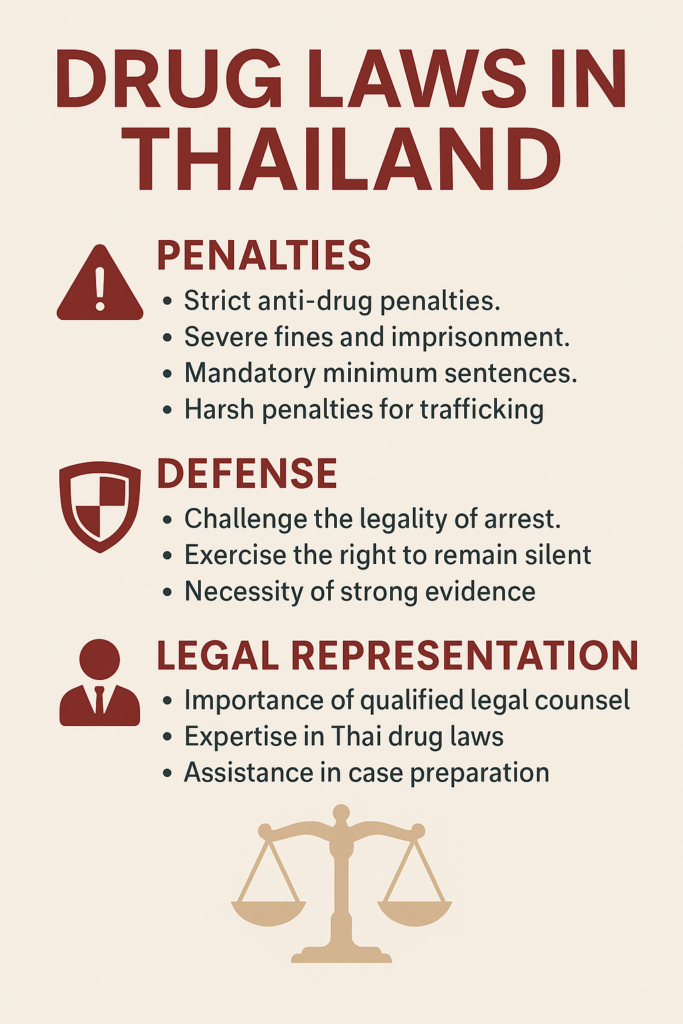
[อินโฟกราฟิก: thailand-drug-laws-infographic-thailawonline.png]
บทลงโทษสำหรับการครอบครองยาเสพติดในประเทศไทย
บทลงโทษสำหรับการครอบครองยาเสพติดภายใต้กฎหมายยาเสพติดของไทยนั้นแตกต่างกันอย่างมาก ขึ้นอยู่กับประเภทของสารและปริมาณ ศาลไทยสันนิษฐานว่าปริมาณที่มากขึ้นบ่งชี้ถึงเจตนาที่จะจำหน่าย ซึ่งจะทำให้บทลงโทษเพิ่มขึ้นอย่างมาก แม้แต่ปริมาณเล็กน้อยก็อาจถูกดำเนินคดีอย่างเข้มงวดหากตำรวจเชื่อว่าคุณมีเจตนาที่จะขาย
การครอบครองประเภทที่ 1 อยู่ภายใต้ประมวลกฎหมายยาเสพติด มาตรา 107 ไม่ใช่บทกำหนดโทษ: เป็นมาตราที่ให้รัฐมนตรีว่าการกระทรวงสาธารณสุขกำหนดปริมาณที่ก่อให้เกิดข้อสันนิษฐานเกี่ยวกับวัตถุประสงค์ของการมียาเสพติดไว้ในครอบครอง สำหรับปริมาณเล็กน้อยที่บ่งชี้ว่าเป็นการใช้ส่วนบุคคล โทษคือจำคุกไม่เกิน 2 ปีและปรับ 40,000 บาท (ประมาณ 1,100 ดอลลาร์สหรัฐ) กฎที่เรียกกันทั่วไปว่า “กฎยาเม็ดเดียว” ทำงานในทางตรงกันข้ามกับที่มักอธิบายกัน กฎกระทรวงกำหนดปริมาณยาเสพติดให้โทษและวัตถุออกฤทธิ์ต่อจิตและประสาทที่สันนิษฐานว่ามีไว้ในครอบครองเพื่อเสพ (ฉบับที่ 2) พ.ศ. 2567 ซึ่งประกาศในราชกิจจานุเบกษา เล่ม 141 ตอนที่ 38 ก เมื่อวันที่ 17 มิถุนายน 2024 กำหนดว่าเมทแอมเฟตามีนปริมาณ “ไม่เกินหนึ่งหน่วยการใช้ หรือน้ำหนักสุทธิไม่เกินหนึ่งร้อยมิลลิกรัม หรือในกรณีเกล็ด ผง หรือผลึก น้ำหนักสุทธิไม่เกินยี่สิบมิลลิกรัม” ให้สันนิษฐานว่ามีไว้ในครอบครองเพื่อเสพ ดังนั้นยาหนึ่งเม็ดจึงอยู่ภายในข้อสันนิษฐานว่าใช้เอง ไม่ใช่อยู่นอกข้อสันนิษฐานนั้น และข้อสันนิษฐานดังกล่าวเป็นประตูสู่แนวทางการบำบัดรักษา ไม่ใช่สิ่งที่กีดกันการบำบัดรักษา สิ่งที่เปลี่ยนไปในปี 2024 คือความกว้างของเกณฑ์: กฎกระทรวงฉบับเดิมลงวันที่ 9 กุมภาพันธ์ 2024 กำหนดไว้ที่ 5 หน่วยการใช้ และการแก้ไขในเดือนมิถุนายนได้ลดลงเหลือ 1 หน่วย ดังนั้นผู้ที่พกยาสามเม็ดซึ่งครั้งหนึ่งเคยได้รับข้อสันนิษฐานนี้จึงไม่ได้รับอีกต่อไป การไม่ได้รับข้อสันนิษฐานไม่ได้หมายความว่าจะถูกสันนิษฐานว่าเป็นผู้ขาย แต่หมายความว่าฝ่ายโจทก์ต้องพิสูจน์วัตถุประสงค์ และตามมาตรา 145 ของประมวลกฎหมาย การแบ่งระดับโทษขึ้นอยู่กับพฤติการณ์และบทบาท ไม่ใช่ปริมาณ.
การครอบครองประเภทที่ 2 แบ่งออกในลักษณะเดียวกัน การครอบครอง เพื่อเสพ อยู่ในมาตรา 107 และโทษอยู่ในมาตรา 164 คือจำคุกไม่เกินสองปี หรือปรับไม่เกิน 40,000 บาท หรือทั้งจำทั้งปรับ เช่นเดียวกัน การครอบครองในกรณีอื่นใดอยู่ในมาตรา 91 และมาตรา 146 กำหนดโทษไว้ที่ จำคุกไม่เกิน 10 ปี และปรับไม่เกิน 1,000,000 บาท. ในกรณีที่การกระทำนั้นเป็นไปเพื่อการค้า ก่อให้เกิดการแพร่กระจายในหมู่ประชาชน เป็นการจำหน่ายแก่บุคคลอายุต่ำกว่าสิบแปดปี หรือกระทำในสถานศึกษา ศาสนสถาน หรือสถานที่ราชการ หรือมีการใช้กำลังหรืออาวุธ มาตรา 146 วรรคสองเพิ่มโทษเป็น จำคุกตั้งแต่หนึ่งปีถึงสิบห้าปี และปรับตั้งแต่ 100,000 บาทถึง 1,500,000 บาท, และวรรคที่สองนี้ใช้เฉพาะกับยาเสพติดให้โทษประเภท 2 เท่านั้น. กฎหมายดังกล่าวไม่ได้กำหนดเกณฑ์ขั้นต่ำที่ 100 กรัม และไม่ได้กำหนดโทษเฉพาะสำหรับโคเคนหรือสิ่งใดๆ อีก: มันไม่ได้ระบุชื่อสารเลย ซึ่งเป็นเหตุผลว่าทำไมตัวเลขที่เคยถูกเผยแพร่เกี่ยวกับยาบางชนิดจึงไม่มีมาตราใดรองรับ.
หมวดที่ 3 เป็นกรณีพิเศษ และความแตกต่างนั้นอาจมองไม่เห็นได้ง่าย มาตรา 92 ห้ามผลิต นำเข้า ส่งออก หรือ จำหน่าย ยาเสพติดให้โทษประเภท 3 โดยไม่ได้รับอนุญาต และมาตรานี้ ไม่ ห้ามการครอบครองเพียงอย่างเดียว ซึ่งเป็นเหตุผลที่ผู้ป่วยที่ถือครองยาโคเดอีนตามใบสั่งแพทย์จะไม่ต้องรับผิดในข้อหาดังกล่าว ในกรณีที่มีการฝ่าฝืนมาตรา 92 มาตรา 147 กำหนดโทษไว้ที่ จำคุกไม่เกินสามปี และปรับไม่เกิน 300,000 บาท, ไม่มีระดับที่เพิ่มความรุนแรง.
สารเคมีตั้งต้นประเภทที่ 4 ถูกจัดรวมกับยาเสพติดให้โทษประเภท 2 ในมาตรา 91 และมีอัตราโทษเดียวกันตามมาตรา 146 วรรคหนึ่ง: จำคุกไม่เกิน 10 ปี และปรับไม่เกิน 1,000,000 บาท. นี่คือตัวเลขที่มักถูกประเมินต่ำเกินไปในคู่มือ โดยมีผลต่างของโทษจำคุกสองเท่าและปรับเงินสิบเท่า ส่วนชั้นความร้ายแรงตามมาตรา 146 วรรคสองนั้นถูกจำกัดเฉพาะประเภท II เท่านั้น ดังนั้นจึงไม่สามารถใช้กับความผิดประเภท IV ได้.
หมวดหมู่ที่ 5 คือมาตรา 93 และโทษคือมาตรา 148: จำคุกไม่เกิน 5 ปี และปรับไม่เกิน 500,000 บาท, และเพิ่มขึ้นเป็น จำคุกตั้งแต่หนึ่งปีถึงสิบห้าปี และปรับตั้งแต่ 100,000 บาทถึง 1,500,000 บาท ในกรณีที่เข้าเหตุเพิ่มโทษข้อใดข้อหนึ่งในหกข้อ. การเพิ่มโทษไม่ได้ขึ้นอยู่กับน้ำหนัก. ประมวลกฎหมายไม่มีเกณฑ์น้ำหนักสิบกิโลกรัม; เพดานค่าปรับ 1,500,000 บาทเป็นอัตราโทษกรณีเหตุฉกรรจ์ ซึ่งเกิดขึ้นจากการกระทำเพื่อการค้า การแพร่กระจายยาเสพติดในหมู่ประชาชน การจำหน่ายแก่ผู้เยาว์ การจำหน่ายใกล้สถานศึกษา ศาสนสถาน หรือสถานที่ราชการ หรือการใช้กำลังหรืออาวุธ การครอบครองเพื่อเสพก็อยู่ในมาตรา 107 และ 164 เช่นกัน.
| หมวดหมู่ | การครอบครองเพื่อเสพ | โทษสำหรับเรื่องนั้น | การครอบครองในลักษณะอื่นใด |
|---|---|---|---|
| หมวดที่ 1 | มาตรา 107 และมาตรา 164 | นานสูงสุด 2 ปี หรือ สูงสุด 40,000 บาท หรือทั้งสองอย่าง | มาตรา 90 และมาตรา 145: ไม่เกิน 15 ปี และไม่เกิน 1,500,000 บาท |
| หมวดที่ 2 | มาตรา 107 และมาตรา 164 | นานสูงสุด 2 ปี หรือ สูงสุด 40,000 บาท หรือทั้งสองอย่าง | มาตรา 91 และมาตรา 146: สูงสุด 10 ปี และสูงสุด 1,000,000 บาท |
| หมวดที่ 3 | ไม่ใช่ความผิด: มาตรา 92 ไม่ห้ามมิให้ครอบครอง | ไม่มีในฐานความผิดนี้ | มาตรา 92 และมาตรา 147 สำหรับการผลิต นำเข้า ส่งออก หรือจำหน่าย: สูงสุด 3 ปี และสูงสุด 300,000 บาท |
| หมวดที่ 4 | ไม่ครอบคลุมตามมาตรา 107 | ไม่มีในฐานความผิดนี้ | มาตรา 91 และมาตรา 146: สูงสุด 10 ปี และสูงสุด 1,000,000 บาท |
| หมวดหมู่ที่ 5 | มาตรา 107 และมาตรา 164 | นานสูงสุด 2 ปี หรือ สูงสุด 40,000 บาท หรือทั้งสองอย่าง | มาตรา 93 และมาตรา 148: สูงสุด 5 ปี และสูงสุด 500,000 บาท |
บทลงโทษสำหรับการค้ายาเสพติดและการผลิตยาเสพติด
กฎหมายยาเสพติดของไทยกำหนดบทลงโทษที่รุนแรงที่สุดสำหรับกิจกรรมการค้าและการผลิตยาเสพติด การกระทำเหล่านี้อาจส่งผลให้ต้องโทษจำคุกนานหลายทศวรรษ และอาจถึงขั้นประหารชีวิตด้วย การแตกต่างที่สำคัญในประเทศไทยคือ “การค้ายาเสพติด” ไม่เพียงแต่หมายถึงการจำหน่ายยาเสพติดเท่านั้น แต่ยังรวมถึงการส่งมอบยาเสพติดไปยังบุคคลอื่นด้วย การแบ่งปันยาเสพติดร่วมกับเพื่อน การแจกจ่ายยาเสพติดในงานปาร์ตี้ หรือการขายให้กับเจ้าหน้าที่นอกเครื่องแบบที่แฝงตัว ล้วนถือเป็นการค้ายาเสพติดตามกฎหมาย.
การค้ายาเสพติดประเภทที่ 1 ถูกห้ามโดย มาตรา 90 ของประมวลกฎหมายยาเสพติด แต่โทษนั้นอยู่ใน มาตรา 145, และความแตกต่างนั้นสำคัญ เพราะมาตรา 145 เป็นบทที่กำหนดการแบ่งระดับโทษ. กฎหมายฉบับนี้ได้เปลี่ยนพื้นฐานของการกำหนดโทษดังกล่าว และนี่เป็นสิ่งสำคัญที่สุดที่ต้องเข้าใจเกี่ยวกับการกำหนดโทษคดียาเสพติดในประเทศไทยในปัจจุบัน. ศาลฎีกา, ซึ่งวินิจฉัยโดยที่ประชุมใหญ่ในคำพิพากษาฎีกาที่ 272/2565 ได้ระบุไว้ชัดเจนว่า พระราชบัญญัติยาเสพติดให้โทษ พ.ศ. 2522 เดิมเพิ่มโทษโดยถือเอาปริมาณยาเสพติดเพียงอย่างเดียวเป็นเกณฑ์ ส่วนมาตรา 145 ของประมวลกฎหมายเพิ่มโทษโดยพิจารณาจากพฤติการณ์ในการกระทำความผิดและบทบาทของผู้กระทำความผิด และ ไม่ใช้ปริมาณเป็นเกณฑ์อีกต่อไป, แม้ว่าปริมาณที่มากกว่าอาจยังเป็นพยานหลักฐานของพฤติการณ์และบทบาทดังกล่าวได้ พระราชบัญญัติให้ใช้ประมวลกฎหมายยาเสพติดได้ยกเลิกพระราชบัญญัติฉบับปี 1979 โดยมาตรา 4 ดังนั้นตัวเลขปริมาณที่ระบุข้างล่างจึงควรอ่านว่าเป็นพยานหลักฐานที่ศาลอาจชั่งน้ำหนัก ไม่ใช่เกณฑ์ที่ชี้ขาดว่าเป็นความผิดฐานใด อย่างไรก็ตาม เหตุเพิ่มโทษอาจทำให้โทษเหล่านี้สูงขึ้นอย่างมาก ตามมาตรา 145 หากคุณขายให้กับผู้เยาว์ จำหน่ายใกล้โรงเรียนหรือวัด ใช้อาวุธ หรือดำเนินการเป็นผู้จำหน่ายเชิงพาณิชย์ โทษอาจสูงถึงจำคุกตลอดชีวิตหรือประหารชีวิต สำหรับการค้ายาเสพติดให้โทษประเภท 1 ในปริมาณมาก (ปริมาณที่บ่งชี้ถึงการดำเนินการจำหน่ายขนาดใหญ่) ศาลมักลงโทษจำคุกตลอดชีวิตหรือประหารชีวิต ตามด้วยการริบทรัพย์สินมูลค่า 5 ล้านบาทขึ้นไป.
การค้ายาเสพติดประเภทที่ 2 คือมาตรา 91 และมาตรา 146 บทลงโทษพื้นฐานคือ จำคุกไม่เกิน 10 ปี และปรับไม่เกิน 1,000,000 บาท; ในกรณีที่เข้าเหตุเพิ่มโทษข้อใดข้อหนึ่งในหกข้อตามวรรคสอง โทษจะเป็น จำคุกตั้งแต่หนึ่งปีถึงสิบห้าปี และปรับตั้งแต่ 100,000 บาทถึง 1,500,000 บาท. การนำเข้าไม่ได้แยกระดับโทษไว้ต่างหาก. มาตรา 91 กำหนดให้การผลิต นำเข้า ส่งออก จำหน่าย และครอบครองร่วมกันเป็นความผิด ดังนั้น การนำเข้าจึงถูกลงโทษตามบทบัญญัติเดียวกันกับกรณีอื่นๆ โดยมีบทลงโทษที่รุนแรงยิ่งขึ้นสำหรับผู้กระทำความผิด หากพฤติกรรมนั้นสอดคล้องกับข้อกำหนดดังกล่าว ไม่มีการแบ่งระดับสำหรับโคเคน มอร์ฟีน หรือฝิ่นโดยเฉพาะ เนื่องจากกฎหมายไม่ได้ระบุชื่อของสารดังกล่าว.
การค้ายาเสพติดประเภทที่ 3 เป็นการผลิต นำเข้า ส่งออก หรือจำหน่ายตำรับยาโดยไม่มีใบอนุญาตตามมาตรา 92 มาตรา 147 กำหนดบทลงโทษไว้ดังนี้ จำคุกไม่เกินสามปี และปรับไม่เกิน 300,000 บาท. นั่นคือทั้งหมด: ไม่มีระดับที่รุนแรงและ ไม่มีทางสู่โทษจำคุกตลอดชีวิต ในฐานความผิดนี้.
สารเคมีตั้งต้นประเภทที่ 4 ถูกควบคุมดูแลโดยมาตรา 91 ร่วมกับยาเสพติดให้โทษประเภท 2 ดังนั้นบทลงโทษจึงเป็นมาตรา 146 วรรคหนึ่ง: จำคุกไม่เกิน 10 ปี และปรับไม่เกิน 1,000,000 บาท. ระดับความร้ายแรงตั้งแต่ 1 ถึง 15 ปี มีผลเฉพาะกับประเภทที่ 2 เท่านั้น ดังนั้นจึงไม่สามารถใช้กับความผิดประเภทที่ 4 ได้ ไม่ว่าการดำเนินการจะมีขนาดใหญ่เพียงใดก็ตาม.
การค้ายาเสพติดประเภทที่ 5 (ไซโลไซบินและสารสกัด THC ที่ผิดกฎหมาย) อยู่ในมาตรา 93 และมาตรา 148: จำคุกไม่เกิน 5 ปี และปรับไม่เกิน 500,000 บาท, และ จำคุกหนึ่งถึงสิบห้าปี และปรับตั้งแต่ 100,000 ถึง 1,500,000 บาท ในกรณีที่เข้าเหตุเพิ่มโทษ อีกครั้งหนึ่งที่การเพิ่มโทษขึ้นอยู่กับพฤติการณ์ ไม่ใช่น้ำหนัก และประมวลกฎหมายไม่มีเกณฑ์น้ำหนักสิบกิโลกรัม.
การผลิตและการเพาะปลูกยา โดยส่วนใหญ่แล้ว การปลูกฝิ่น การผลิตเมทแอมเฟตามีน หรือการดำเนินงานห้องปฏิบัติการผลิตยาเสพติดลับ ถือเป็นความผิดเกี่ยวกับการค้ายาเสพติด จะได้รับโทษรุนแรงเช่นเดียวกับการค้าผลิตภัณฑ์สำเร็จรูป ในบางกรณีอาจถึงขั้นจำคุกตลอดชีวิตหรือประหารชีวิต หากพิจารณาว่าเป็นคดีการค้ายาเสพติดขนาดใหญ่
| หมวดหมู่ | โทษเบื้องต้น | ระดับที่รุนแรงยิ่งขึ้น หากกฎหมายกำหนดไว้ | ระดับสูงสุดและเหตุที่ทำให้ถึงระดับนั้น |
|---|---|---|---|
| หมวดที่ 1 (มาตรา 90, มาตรา 145) | จำคุกไม่เกิน 15 ปี และปรับไม่เกิน 1,500,000 บาท | จำคุก 2-20 ปี และปรับ 200,000-2,000,000 บาท | จำคุกตั้งแต่ 5 ปีถึงตลอดชีวิต และปรับตั้งแต่ 500,000-5,000,000 บาท, หรือประหารชีวิต: ผู้เป็นผู้นำเครือข่าย ผู้จัดการ หรือผู้บริหาร หรือมีผลต่อความมั่นคงแห่งรัฐหรือความปลอดภัยสาธารณะ |
| หมวดที่ 2 (มาตรา 91, มาตรา 146) | สูงสุด 10 ปี และสูงสุด 1,000,000 บาท | จำคุก 1-15 ปี และปรับ 100,000-1,500,000 บาท | ไม่มี มาตรา 146 ไม่มีอัตราโทษประหารชีวิต |
| หมวดที่ 3 (มาตรา 92, มาตรา 147) | จำคุกไม่เกิน 3 ปี และปรับไม่เกิน 300,000 บาท | ไม่มี มาตรา 147 ไม่มีอัตราโทษกรณีเหตุฉกรรจ์ | ไม่มี |
| หมวดที่ 4 (มาตรา 91, มาตรา 146) | สูงสุด 10 ปี และสูงสุด 1,000,000 บาท | ไม่มี อัตราโทษกรณีเหตุฉกรรจ์ตามมาตรา 146 วรรค 2 ใช้เฉพาะยาเสพติดให้โทษประเภท 2 เท่านั้น | ไม่มี |
| หมวดหมู่ที่ 5 (มาตรา 93, มาตรา 148) | จำคุกไม่เกิน 5 ปี และปรับไม่เกิน 500,000 บาท | จำคุก 1-15 ปี และปรับ 100,000-1,500,000 บาท | ไม่มี มาตรา 148 ไม่มีอัตราโทษประหารชีวิต |
จะเกิดอะไรขึ้นเมื่อชาวต่างชาติถูกจับกุมในข้อหาเกี่ยวกับยาเสพติดในประเทศไทย
กระบวนการจับกุมและดำเนินคดีในกรณีความผิดเกี่ยวกับยาเสพติดในประเทศไทยนั้นแตกต่างอย่างสิ้นเชิงจากระบบยุติธรรมทางอาญาในตะวันตก สถานะความเป็นชาวต่างชาติก่อให้เกิดความยุ่งยากเพิ่มเติม รวมถึงข้อจำกัดด้านภาษา ขั้นตอนการดำเนินคดีที่ยังไม่คุ้นเคย และความเป็นไปได้ของ ส่งผู้ร้ายข้ามแดน. การเข้าใจแต่ละขั้นตอน คือ การควบคุมตัวของตำรวจ การสอบสวน การฝากขัง, การประกันตัว, และการพิจารณาคดี เป็นสิ่งสำคัญในการปกป้องสิทธิของคุณ.
ขั้นตอนการดำเนินการของตำรวจ (0-48 ชั่วโมง)
ตำรวจไทยมีอำนาจกว้างขวางในการตรวจค้นตัวบุคคล ยานพาหนะ และที่อยู่อาศัย หากมี “เหตุอันควรสงสัย” ว่ามีการกระทำความผิดเกี่ยวกับยาเสพติด ต่างจากหลายประเทศตะวันตก กฎหมายไทยอนุญาตให้ตรวจค้นโดยไม่มีหมายค้นระหว่างการสืบสวนคดียาเสพติด หากตำรวจอ้างว่ามีเหตุฉุกเฉิน การตรวจปัสสาวะ ณ จุดตรวจเป็นเรื่องปกติ หากผลตรวจของคุณเป็นบวก ตำรวจจะจับกุมคุณ ณ ที่เกิดเหตุ ในช่วงการควบคุมตัว 48 ชั่วโมงแรก คุณจะถูกควบคุมตัวไว้ที่สถานีตำรวจ ตำรวจอาจสอบปากคำคุณโดยไม่มีทนายความอยู่ด้วย และการคุ้มครอง “สิทธิที่จะไม่ให้การ” แบบที่มีในหลายประเทศตะวันตกนั้นอ่อนกว่าในประเทศไทย คุณมีสิทธิขอพบทนายความและติดต่อสถานทูตของคุณ แต่ตำรวจไม่จำเป็นต้องดำเนินการตามคำขอเหล่านี้ทันที สถานทูตของคุณสามารถแจ้งครอบครัวของคุณและให้รายชื่อทนายความที่พูดภาษาอังกฤษได้ แต่ไม่สามารถแทรกแซงกระบวนการทางอาญาหรือทำให้คุณได้รับการปล่อยตัวได้ อย่าลงนามในเอกสารใดๆ โดยไม่มีทนายความและล่ามอยู่ด้วย คำรับสารภาพจำนวนมากที่ได้มาในช่วงนี้ไม่สามารถรับฟังเป็นพยานหลักฐานในศาลได้เนื่องจากข้อผิดพลาดทางกระบวนการ ดังนั้นอย่าให้ถ้อยคำใดๆ แก่ตำรวจโดยสมัครใจ.
การสอบสวนและการควบคุมตัว (วันที่ 3 ถึงวันที่ 84)
หลังจากผ่านไป 48 ชั่วโมง ตำรวจจะต้องนำตัวคุณไปขึ้นศาล หากอัยการเชื่อว่ามีเหตุผลเพียงพอ ผู้พิพากษาจะอนุมัติคำสั่งฝากขังเพื่อการสอบสวนต่อ โดยตามกฎหมายยาเสพติดของไทย ผู้พิพากษาสามารถอนุมัติการขยายระยะเวลาการกักขังได้ครั้งละไม่เกิน 12 วัน รวมแล้วไม่เกิน 84 วัน ในช่วงระยะเวลาการกักขังนี้ ทีมทนายความของคุณสามารถดำเนินการทดสอบทางนิติวิทยาศาสตร์อิสระกับตัวอย่างยาเสพติด สอบปากคำพยาน และตรวจสอบหลักฐานได้ ในช่วงเวลานี้เป็นเรื่องสำคัญ เนื่องจากผลการทดสอบทางห้องปฏิบัติการอิสระมักจะขัดแย้งกับข้อสรุปของตำรวจเกี่ยวกับความบริสุทธิ์ น้ำหนัก และองค์ประกอบทางเคมีของยาเสพติด ตัวอย่างที่ตำรวจอ้างว่ามีน้ำหนัก 1 กิโลกรัมอาจมีน้ำหนักน้อยกว่าอย่างมากเมื่อมีการทดสอบทางนิติวิทยาศาสตร์ ซึ่งอาจทำให้ข้อหาลดลงจากความผิดฐานค้ายาเสพติดเป็นความผิดฐานครอบครอง ข้อจำกัดด้านภาษาเป็นเรื่องที่รุนแรงในช่วงนี้ โปรดให้ทนายความของคุณจัดเตรียมล่ามสองภาษาสำหรับทุกการสัมภาษณ์ของตำรวจและกระบวนการพิจารณาคดี.
การประกันตัวและปัญหาความเสี่ยงในการหลบหนี
สำหรับความผิดเกี่ยวกับยาเสพติดเล็กน้อย (การครอบครองยาเสพติดประเภท 3, 4 หรือ 5) อาจขอปล่อยชั่วคราว (เรียกว่า “ประกันตัวชั้นตำรวจ”) ได้โดยตรงที่สถานีตำรวจ สำหรับข้อหาร้ายแรงที่เกี่ยวกับยาเสพติดประเภท 1 หรือ 2 หรือข้อหาค้ายาเสพติดใดๆ ศาลอาญาจะเป็นผู้พิจารณาคำร้องขอปล่อยชั่วคราว ผู้พิพากษาไทยมองชาวต่างชาติว่ามีความเสี่ยงที่จะหลบหนีโดยอัตโนมัติ เพื่อให้ได้รับการปล่อยชั่วคราว โดยทั่วไปคุณต้องวางหลักประกันจำนวนมาก เช่น โฉนดที่ดินหรือหนังสือกรรมสิทธิ์ห้องชุดในประเทศไทย เงินสด ผู้ค้ำประกัน จำนวน 500,000 ถึง 2 ล้านบาท หรือหลักฐานแสดงถึงการมีงานประจำและครอบครัวที่มั่นคงในประเทศไทย ชาวต่างชาติจำนวนมากไม่สามารถปฏิบัติตามเงื่อนไขเหล่านี้ได้ และต้องถูกคุมขังอยู่ในเรือนจำเป็นเวลาหลายสัปดาห์หรือหลายเดือน จนกว่าจะถึงวันพิจารณาคดี ทนายของคุณสามารถเจรจาเรื่องจำนวนเงินประกันตัว นำเสนอคำรับรองจากบุคคลที่รู้จักกันดี และอ้างถึงเงื่อนไขการประกันตัวที่ไม่ต้องมีข้อผูกพันทางการเงินที่เกินความสามารถของตนได้.
การพิจารณาคดีและการตัดสินลงโทษ
คดีอาญาในประเทศไทยพิจารณาโดยผู้พิพากษาอาชีพ ไม่ใช่คณะลูกขุน การพิจารณาคดีดำเนินเป็นภาษาไทย และเอกสารทุกฉบับของศาลออกเป็นภาษาไทย ตามมาตรา 227 วรรคสองแห่งประมวลกฎหมายวิธีพิจารณาความอาญา โจทก์ต้องพิสูจน์ความผิดจนปราศจากข้อสงสัยตามสมควร อย่างไรก็ตาม ศาลไทยมีเกณฑ์สำหรับพยานแวดล้อมกรณีต่ำกว่าศาลตะวันตก การครอบครองอุปกรณ์เสพยาเสพติด คำให้การของพยาน และรายงานของตำรวจมักถือว่าเป็นพยานสนับสนุนที่เพียงพอแม้ไม่มีพยานหลักฐานทางนิติวิทยาศาสตร์ คำรับสารภาพยังคงต้องมีพยานหลักฐานสนับสนุนตามกฎหมายยาเสพติดของไทย หากโทษเกิน 5 ปี แนวทางการต่อสู้คดีควรรวมถึงการโต้แย้งความชอบด้วยกฎหมายของการตรวจค้น การตั้งข้อสงสัยต่อห่วงโซ่ อำนาจปกครองบุตร ของพยานหลักฐานยาเสพติด การโต้แย้งผลการวิเคราะห์ความบริสุทธิ์ และการนำเสนอเหตุบรรเทาโทษ เช่น การบำบัดการติดยาเสพติด ความยากลำบากของครอบครัว หรือการเป็นผู้กระทำความผิดครั้งแรก ต้องยื่นอุทธรณ์ภายใน 30 วัน กระบวนการอุทธรณ์ใช้เวลา 12-24 เดือน และมีอัตราการกลับคำพิพากษาต่ำ (ประมาณ 5-10% ของคำพิพากษาลงโทษถูกกลับ).
การเปลี่ยนแปลงล่าสุดเกี่ยวกับกฎหมายยาเสพติดของประเทศไทย (พ.ศ. 2567-2569)
การจัดประเภทกัญชาใหม่
เมื่อวันที่ 26 มิถุนายน 2568 ประกาศกระทรวงสาธารณสุขเรื่องสมุนไพรควบคุม พ.ศ. 2568 กำหนดให้การจำหน่ายช่อดอกกัญชาต้องมีใบสั่งยา กัญชาไม่ได้ถูกนำกลับเข้าสู่บัญชียาเสพติดให้โทษประเภท 5 โดยได้ถูกนำออกจากบัญชีดังกล่าวเมื่อเดือนมิถุนายน 2565 กัญชาทางการแพทย์มีให้ใช้ได้เฉพาะในสถานพยาบาลที่ได้รับอนุญาตและมีใบสั่งยาจากแพทย์เท่านั้น และเฉพาะสำหรับบางภาวะโรคเท่านั้น (ได้แก่ ปวดเรื้อรัง โรคลมชัก ผลข้างเคียงจากการรักษาด้วยเคมีบำบัด และอีกบางภาวะ) ทุกผลิตภัณฑ์ที่มีปริมาณ THC สูงกว่า 0.2% ถือเป็นยาเสพติดควบคุม และการสูบในที่สาธารณะเป็นสิ่งต้องห้ามและอาจถูกปรับสูงสุด 25,000 บาท กระทรวงสาธารณสุขได้เพิกถอนการจัดประเภทกัญชาให้เป็นยาเสพติดประเภท 5 ตามประกาศของกระทรวงเมื่อวันที่ 9 มิถุนายน 2565 โดยอ้างอิงตามมาตรา 29 วรรคสอง แห่งประมวลกฎหมายยาเสพติด ดังนั้น บทลงโทษสำหรับยาเสพติดให้โทษประเภท 5 ที่ระบุไว้ข้างต้นไม่ใช้บังคับกับกัญชา. ปัจจุบันถูกควบคุมเป็นสมุนไพรแทนที่จะเป็นยาเสพติดภายใต้ประกาศของกระทรวงสาธารณสุขเรื่องสมุนไพรควบคุมพ.ศ. 2568 และ คู่มือกฎหมายกัญชา ของเราอธิบายประกาศดังกล่าวทีละข้อ การส่งออกกัญชาเป็นสิ่งต้องห้ามโดยเด็ดขาด แม้แต่ผลิตภัณฑ์เกรดการแพทย์ และจะนำไปสู่ข้อหาค้ายาเสพติด ห้ามจำหน่ายให้แก่บุคคลอายุต่ำกว่า 20 ปี หญิงตั้งครรภ์ หรือหญิงที่ให้นมบุตร นี่เป็นหนึ่งในการเปลี่ยนแปลงที่สำคัญที่สุดของกฎหมายยาเสพติดไทยในช่วงไม่กี่ปีที่ผ่านมา และทำให้ผู้พำนักระยะยาวและดิจิทัลโนแมดจำนวนมากไม่ทันตั้งตัว.
กฎการใช้ยาเม็ดเดียวสำหรับเมทแอมเฟตามีน
ในปี 2024 ประเทศไทยได้ลดปริมาณเมทแอมเฟตามีนที่สันนิษฐานว่ามีไว้เพื่อเสพเอง และชื่อเรียกยอดนิยมของการเปลี่ยนแปลงนี้อธิบายไว้กลับด้าน กฎกระทรวงลงวันที่ 9 กุมภาพันธ์ 2024 กำหนดไว้ที่ห้าหน่วยการใช้ กฎกระทรวงกำหนดปริมาณยาเสพติดให้โทษและวัตถุออกฤทธิ์ต่อจิตและประสาทที่สันนิษฐานว่ามีไว้ในครอบครองเพื่อเสพ (ฉบับที่ 2) พ.ศ. 2567 ซึ่งประกาศในราชกิจจานุเบกษา เล่ม 141 ตอนที่ 38 ก เมื่อวันที่ 17 มิถุนายน 2024 ได้เปลี่ยนเป็นหนึ่งหน่วย: เมทแอมเฟตามีน “ไม่เกินหนึ่งหน่วยการใช้ หรือน้ำหนักสุทธิไม่เกินหนึ่งร้อยมิลลิกรัม หรือในกรณีเกล็ด ผง หรือผลึก น้ำหนักสุทธิไม่เกินยี่สิบมิลลิกรัม” ให้สันนิษฐานว่ามีไว้ในครอบครองเพื่อเสพ ดังนั้นยาหนึ่งเม็ดยังคงได้รับข้อสันนิษฐานและแนวทางการบำบัดรักษาที่ตามมา สิ่งที่หายไปคือข้อสันนิษฐานสำหรับผู้ที่พกสอง สาม หรือสี่เม็ด บุคคลที่มีปริมาณเกินเกณฑ์ไม่ได้ถูกสันนิษฐานว่าเป็นผู้ขายเพียงเพราะเหตุนั้น และประมวลกฎหมายแบ่งระดับความผิดตามพฤติการณ์และบทบาท ไม่ใช่ตามปริมาณ นโยบายนี้มุ่งยับยั้งการใช้เป็นครั้งคราวและการจำหน่ายรายย่อย แต่ได้สร้างความไม่เป็นธรรมอย่างร้ายแรงต่อผู้ติดยาเสพติด ซึ่งปัจจุบันกลายเป็นผู้กระทำความผิดอาญาแทนที่จะเป็นผู้ที่ควรได้รับการบำบัดรักษา.
การบังคับใช้กฎหมายทางดิจิทัลและการบุกตรวจสถานบันเทิงยามค่ำคืน
การบังคับใช้กฎหมายยาเสพติดของไทยในปัจจุบันพึ่งพาการเฝ้าระวังทางดิจิทัลมากขึ้น ตำรวจตรวจสอบแอปพลิเคชันแชทเข้ารหัส ตรวจสอบธุรกรรมสกุลเงินดิจิทัล และติดตามการโอนเงินระหว่างประเทศเพื่อหาหลักฐานการค้ายาเสพติด แอปพลิเคชันส่งของ (Grab, Line, บริการส่งอาหาร) ถูกวิเคราะห์หารูปแบบที่น่าสงสัย การบุกตรวจค้นสถานบันเทิงยามค่ำคืนมีความเข้มงวดและบ่อยขึ้น โดยมีการตรวจปัสสาวะจำนวนมากในคลับ บาร์ และงานปาร์ตี้ตามบ้าน ตำรวจใช้โดรนในการเฝ้าระวังในพื้นที่ที่ทราบกันว่าเป็นแหล่งค้ายาเสพติด วิธีการบังคับใช้กฎหมายที่ใช้เทคโนโลยีและระบบดิจิทัลเหล่านี้ทำให้การหลีกเลี่ยงการตรวจจับทำได้ยากขึ้น และหลักฐานบนระบบคลาวด์ (ข้อความ WhatsApp โพสต์ในโซเชียลมีเดีย บันทึกการโอนเงิน) สามารถนำมาใช้เป็นหลักฐานในศาลไทยได้แล้ว
การแก้ต่างทางกฎหมายสำหรับข้อหาเกี่ยวกับยาเสพติดในประเทศไทย
แม้กฎหมายยาเสพติดของไทยจะรุนแรง แต่ก็มีข้อต่อสู้ทางกฎหมายที่ได้ผล ศาลไทยรับรองการคุ้มครองตามรัฐธรรมนูญจากการตรวจค้นและการยึดโดยมิชอบ การล่อให้กระทำความผิด ข้อผิดพลาดทางกระบวนการ และพยานหลักฐานที่ไม่เพียงพอ การสร้างข้อต่อสู้ที่แข็งแกร่งต้องอาศัยทนายความสองภาษาที่มีทักษะ ซึ่งเข้าใจทั้งกฎหมายไทยและมาตรฐานวิธีพิจารณาความอาญาระหว่างประเทศ.
การคัดค้านการตรวจค้นที่ผิดกฎหมาย
การตรวจค้นโดยไม่มีหมายค้นในประเทศไทยต้องมี “เหตุฉุกเฉิน” หรือหมายค้นที่ออกโดยผู้พิพากษา หากตำรวจไม่มีทั้งสองอย่าง ศาลอาจไม่รับฟังพยานหลักฐานนั้น ศาลไทยเคยพิพากษายกฟ้องจำเลยในข้อหาจำหน่ายกัญชา ในกรณีที่การตรวจค้นครั้งแรกที่พบยาเสพติดกระทำโดยไม่มีหมายค้นและไม่มีเหตุฉุกเฉินเพียงพอ การที่ตำรวจอ้างว่าได้กลิ่นยาเสพติดจากนอกบ้านถือว่าไม่เพียงพอที่จะเป็นเหตุให้พังประตูเข้าไป หากการจับกุมของคุณเป็นผลจากการตรวจค้นที่ผิดกฎหมาย ทนายความของคุณควรยื่นคำร้องขอให้ศาลไม่รับฟังพยานหลักฐานทั้งหมดที่ได้มาจากการตรวจค้นนั้น.
การต่อสู้คดีโดยการล่อลวง
ศาลไทยรับรองว่าการล่อให้กระทำความผิดเป็นข้อต่อสู้ที่ใช้ได้ในคดียาเสพติด การล่อซื้อทางออนไลน์ ซึ่งเจ้าหน้าที่นอกเครื่องแบบแฝงตัวเป็นผู้ซื้อในสื่อสังคมออนไลน์หรือแอปหาคู่ เกิดขึ้นบ่อยขึ้นเรื่อยๆ หากตำรวจชักจูงให้คุณกระทำความผิดที่คุณจะไม่ได้กระทำหากไม่ถูกชักจูง ศาลอาจยกฟ้อง เคยมีการพิพากษายกฟ้องในข้อหาค้ายาเสพติดในกรณีที่เจ้าหน้าที่ตำรวจ “กดดันอย่างต่อเนื่อง” ให้จำเลยหายาเสพติดมาให้หลังจากที่เขาปฏิเสธในตอนแรก การสร้างข้อต่อสู้เรื่องการล่อให้กระทำความผิดต้องมีหลักฐานการสื่อสารที่เกิดขึ้นก่อนการกระทำที่ถูกกล่าวหา.
ห่วงโซ่การควบคุมและการผิดพลาดทางขั้นตอน
หลักฐานยาเสพติดต้องได้รับการบันทึกอย่างถูกต้องตั้งแต่การยึดจนถึงการวิเคราะห์ในห้องปฏิบัติการ หากตำรวจไม่รักษาบันทึกการควบคุมดูแลหลักฐานอย่างถูกต้อง หากถุงหลักฐานขาดการปิดผนึกหรือลายเซ็นที่ถูกต้อง หรือหากไม่มีล่ามในระหว่างขั้นตอนสำคัญ หลักฐานนั้นอาจไม่สามารถนำมาใช้ได้ ความผิดพลาดทางขั้นตอนเป็นเรื่องปกติในคดีเกี่ยวกับยาเสพติดในประเทศไทย และบางครั้งอาจส่งผลให้จำเลยพ้นผิดได้หากความผิดพลาดนั้นร้ายแรงมากพอ
ข้อพิพาทเรื่องปริมาณและความบริสุทธิ์
การตรวจหาสารเสพติดของตำรวจมักไม่น่าเชื่อถือ ในระหว่างช่วงเวลาควบคุมตัว 84 วัน ทนายความของคุณสามารถจัดการให้มีการตรวจวิเคราะห์ทางนิติวิทยาศาสตร์อย่างอิสระสำหรับยาเสพติดที่ยึดได้ การวิเคราะห์ความบริสุทธิ์สามารถลดโทษได้อย่างมาก ตัวอย่างเช่น ตัวอย่างที่ตำรวจอ้างว่ามีเฮโรอีนบริสุทธิ์ 1 กิโลกรัม อาจมีเฮโรอีนเพียง 500 กรัมผสมกับสารเจือปนอื่นๆ ข้อหาการค้ายาเสพติดที่อิงตามเกณฑ์น้ำหนักขึ้นอยู่กับการคำนวณความบริสุทธิ์ ตัวอย่างที่มีน้ำหนัก 200 กรัมที่ความบริสุทธิ์ 50% (100 กรัมเป็นเฮโรอีนบริสุทธิ์) อาจไม่เข้าเกณฑ์ขั้นต่ำสำหรับการลงโทษประหารชีวิต ในขณะที่ตัวอย่างเดียวกันที่มีความบริสุทธิ์ 95% จะเกินเกณฑ์ การตรวจวิเคราะห์อย่างอิสระเป็นหนึ่งในข้อแก้ต่างที่แข็งแกร่งที่สุดของคุณ
เส้นทางสู่การฟื้นฟู
ประมวลกฎหมายยาเสพติดฉบับปี 2021 มีทางเลือกในการบำบัดฟื้นฟูสำหรับผู้กระทำความผิดบางราย ผู้กระทำความผิดครั้งแรกที่ถูกจับพร้อมยาเสพติดปริมาณเล็กน้อยเพื่อใช้เองอาจยื่นคำร้องขอเข้ารับการบำบัดรักษาแบบบังคับแทนการถูกดำเนินคดี ในทางปฏิบัติ เราเคยเห็นโทษสำหรับการครอบครองเมทแอมเฟตามีนเพื่อใช้เองถูกลดลงและรอการลงโทษ เมื่อจำเลยยินยอมเข้ารับการบำบัดรักษา ใบสั่งยาจากแพทย์ที่ถูกต้องยังเป็นข้อต่อสู้ในข้อหาครอบครองยาที่อยู่ในบัญชีควบคุมได้ด้วย แนวทางบำบัดฟื้นฟูไม่อาจใช้ได้กับผู้ที่ถูกตั้งข้อหาครอบครองเพื่อจำหน่าย แต่เมทแอมเฟตามีนเพียงเม็ดเดียวไม่ได้ทำให้บุคคลนั้นอยู่ในกลุ่มดังกล่าว: หนึ่งหน่วยการเสพอยู่ภายในปริมาณที่สันนิษฐานว่ามีไว้ในครอบครองเพื่อเสพ ซึ่งเป็นข้อเท็จจริงที่แนวทางการบำบัดรักษาต้องอาศัย อย่างไรก็ตาม สำหรับประเภทและสถานการณ์อื่นๆ แนวทางนี้ยังคงเป็นทางเลือกที่ใช้ได้.
การพระราชทานอภัยโทษ
ระบบการขอพระราชทานอภัยโทษของไทยเปิดให้ผู้ต้องโทษยื่นเรื่องขอลดโทษหรือเปลี่ยนโทษได้ โดยปกติจะมีการพระราชทานในช่วงวันสำคัญของพระมหากษัตริย์ (วันเฉลิมพระชนมพรรษา วันฉัตรมงคล) หรือตามพระราชอัธยาศัย การพระราชทานอภัยโทษสามารถเปลี่ยนโทษประหารชีวิตเป็นจำคุกตลอดชีวิต ลดโทษจำคุก 20 ปีเหลือ 10 ปี หรือทำให้ได้รับการปล่อยตัวก่อนกำหนดได้ แม้จะไม่ใช่กลยุทธ์การต่อสู้คดีที่รับประกันผลได้ แต่การประพฤติตนดีระหว่างการพิจารณาคดีและการถูกจำคุกจะทำให้คุณมีโอกาสได้รับพระราชทานอภัยโทษมากขึ้น.
ความเสี่ยงพิเศษสำหรับชาวต่างชาติ
ชาวต่างชาติที่ถูกตัดสินว่ามีความผิดตามกฎหมายยาเสพติดของไทยต้องเผชิญกับผลกระทบที่นอกเหนือไปจากการลงโทษทางอาญา การเนรเทศแทบจะเป็นไปโดยอัตโนมัติเมื่อถูกตัดสินว่ามีความผิด หลังจากถูกเนรเทศแล้ว ประเทศไทยมักจะห้ามเข้าประเทศตลอดชีวิต ทำให้การเดินทางมาประเทศไทยในอนาคตเป็นไปไม่ได้ แม้แต่นักท่องเที่ยวที่ถูกตัดสินว่ามีความผิดในข้อหาครอบครองยาเสพติดเล็กน้อยก็ถูกห้ามเข้าประเทศตลอดชีวิต การถูกตัดสินว่ามีความผิดทางอาญาจะกลายเป็นส่วนหนึ่งของประวัติอาชญากรรมระหว่างประเทศของคุณ และอาจทำให้การเดินทาง การจ้างงาน หรือการเข้าเมืองไปยังประเทศอื่น ๆ ยุ่งยากขึ้น การยึดทรัพย์สินจะดำเนินการอย่างเข้มงวด ตำรวจสามารถยึดคอนโดมิเนียม รถยนต์ สกุลเงินดิจิทัล และบัญชีธนาคารในต่างประเทศของคุณที่ต้องสงสัยว่าเกี่ยวข้องกับการค้ายาเสพติด ธนาคารต่าง ๆ ให้ความร่วมมือกับทางการไทยมากขึ้นในการอายัดบัญชีต่างประเทศ ชาวต่างชาติจำนวนมากสูญเสียทรัพย์สินไปหลายแสนดอลลาร์ในระหว่างรอการพิจารณาคดีอาญา
การโอนตัวนักโทษทำได้หากคุณประสงค์จะรับโทษในประเทศบ้านเกิดของคุณ อย่างไรก็ตาม คุณต้องรับโทษในประเทศไทยอย่างน้อยหนึ่งในสามของโทษ (หรือ 4 ปี แล้วแต่จำนวนใดมากกว่า) ก่อนจึงจะมีสิทธิได้รับการโอนตัว ประเทศไทยแทบไม่เคยส่งคนสัญชาติไทยเป็นผู้ร้ายข้ามแดนไปดำเนินคดีในต่างประเทศ แต่เกือบทุกครั้งจะส่งชาวต่างชาติเป็นผู้ร้ายข้ามแดนไปยังประเทศบ้านเกิดหากได้รับคำร้องขอตามสนธิสัญญาทวิภาคี โทษประหารชีวิต: แม้การประหารชีวิตจะเกิดขึ้นน้อย (การประหารชีวิตครั้งล่าสุดในประเทศไทยเกิดขึ้นในปี 2018) แต่ศาลยังคงพิพากษาประหารชีวิต ผู้ค้ายาเสพติดชาวมาเลเซียถูกพิพากษาประหารชีวิตในเดือนมีนาคม 2025 ในข้อหาค้าเฮโรอีน แสดงให้เห็นว่าโทษประหารชีวิตยังคงถูกใช้จริงตามกฎหมายยาเสพติดของไทย ไม่มีบริการล่ามที่ศาลจัดให้โดยอัตโนมัติ คุณต้องจ่ายค่าล่ามเอง ซึ่งอาจมีค่าใช้จ่าย 1,000-2,000 บาทต่อชั่วโมง และอาจสะสมเป็นหลายหมื่นบาทในการพิจารณาคดีที่ยาวนาน.
ยาตามใบสั่งแพทย์: สิ่งที่ชาวต่างชาติควรรู้
หนึ่งในข้อผิดพลาดที่อันตรายที่สุดภายใต้กฎหมายยาเสพติดของไทยเกี่ยวข้องกับยาตามใบสั่งแพทย์ที่ถูกต้องตามกฎหมาย หลายชนิดของยา ADHD โดยเฉพาะยาที่ประกอบด้วยเกลืออะมเฟตามีน (Adderall, Dexedrine, Desoxyn) ถูกจัดเป็นยาเสพติดให้โทษประเภท 1 ในประเทศไทย ซึ่งหมายความว่าพวกมันถูกห้ามอย่างเคร่งครัดโดยสิ้นเชิง การมีใบสั่งยาจากประเทศบ้านเกิดจะไม่มีการคุ้มครองทางกฎหมายใดๆ ทั้งสิ้น การนำ Adderall มายังประเทศไทยในทางกฎหมายก็เหมือนกับการนำเฮโรอีนมาเช่นกัน การครอบครองอาจส่งผลให้ถูกลงโทษจำคุก 4-15 ปีในฐานความผิดค้ายาเสพติด แม้ว่าคุณจะมีใบสั่งยาจาก DEA ของสหรัฐฯก็ตาม เมทิลเฟนิเดต (Ritalin, Concerta) บางครั้งได้รับอนุญาตหากได้รับความเห็นชอบจาก อย. ของไทย แต่การได้รับการอนุญาตนั้นไม่ได้เป็นไปโดยอัตโนมัติ.
ยาอื่นๆ ที่อาจก่อให้เกิดปัญหา ได้แก่ ยาเบนโซไดอะเซปินที่ต้องสั่งโดยแพทย์ (เช่น วาเลียม, แซแน็กซ์), ยานอนหลับบางชนิด (เช่น แอมเบียน) และยาแก้ปวดบางชนิดที่มีส่วนผสมของโอปิออยด์ ก่อนเดินทางไปประเทศไทยพร้อมยาที่ต้องสั่งโดยแพทย์ใดๆ คุณต้องตรวจสอบให้แน่ใจว่ายาเหล่านั้นถูกต้องตามกฎหมาย อย่าเชื่อข้อมูลทางออนไลน์ ควรปรึกษาโดยตรงกับสำนักงานคณะกรรมการอาหารและยาของไทยหรือทนายความของคุณ
รายการยาที่ควรรับประทานระหว่างเดินทาง:
- โปรดตรวจสอบประมวลกฎหมายยาเสพติดของประเทศไทยหรือเว็บไซต์สำนักงานคณะกรรมการอาหารและยาของไทยก่อนบรรจุยาใดๆ
- ขอจดหมายรายละเอียดจากแพทย์ผู้สั่งยาที่ระบุถึงการวินิจฉัยโรค ยา ปริมาณยา และระยะเวลาการรักษา
- สำหรับยาควบคุมพิเศษ ให้ยื่นขออนุญาตนำเข้าจากสำนักงานคณะกรรมการอาหารและยา (อย.) กรุงเทพฯ (ใช้เวลา 2-4 สัปดาห์)
- เก็บยาไว้ในขวดบรรจุเดิมที่มีฉลากระบุชื่อและปริมาณยาอย่างชัดเจน
- แจ้งข้อมูลยาเมื่อนำเข้าสู่การตรวจคัดกรองที่ศุลกากร และพกหนังสือจากแพทย์และใบอนุญาตจากสำนักงานคณะกรรมการอาหารและยา (อย.)ไว้ตลอดเวลา
- ห้ามถ่ายโอนยาไปยังภาชนะที่ไม่มีเครื่องหมาย หรือแบ่งปันยาให้ผู้อื่น
- ควรพิจารณาจัดเตรียมใบสั่งยาจากประเทศไทยเมื่อเดินทางมาถึงประเทศไทย เนื่องจากมีหลายโรคที่สามารถรักษาได้ด้วยยาที่ได้รับการรับรองจากประเทศไทย
ไทยกับประเทศเพื่อนบ้าน: การเปรียบเทียบบทลงโทษเกี่ยวกับยาเสพติด
มาตรการลงโทษในเรื่องยาเสพติดของไทยถือเป็นหนึ่งในมาตรการที่เข้มงวดที่สุดในเอเชียตะวันออกเฉียงใต้ แต่ประเทศเพื่อนบ้านมีรูปแบบการเสี่ยงที่แตกต่างกัน การเข้าใจถึงมาตรการลงโทษที่เทียบเคียงกันสามารถช่วยให้คุณตัดสินใจในการเดินทางได้ดีขึ้น.
| ประเทศ | ทรัพย์สินส่วนตัว | บทลงโทษสำหรับการค้ายาเสพติด | โทษประหารชีวิต | สถานะของกัญชา | ทางเลือกในการฟื้นฟู |
|---|---|---|---|---|---|
| ประเทศไทย | จำคุกไม่เกิน 2 ปี สำหรับการครอบครองเพื่อเสพ (มาตรา 164) | โทษพื้นฐานสูงสุด 15 ปี สำหรับประเภท 1 และสูงสุดถึงจำคุกตลอดชีวิตหรือประหารชีวิตในระดับสูงสุด (มาตรา 145) | ใช่ (การดำเนินการที่เกิดขึ้นไม่บ่อยนัก) | เฉพาะด้านการแพทย์เท่านั้น (ตั้งแต่ปี 2025) | ใช่ และประมวลกฎหมายกำหนดให้ศาลคำนึงถึงการบำบัดรักษาเป็นลำดับแรก (มาตรา 165) |
| มาเลเซีย | 2-6 เดือน หรือปรับเงิน | 15-40 ปี หรือตลอดชีวิต | ใช่ (การดำเนินการทั่วไป) | ผิดกฎหมาย | ไม่ |
| สิงคโปร์ | สูงสุด 10 ปี | จำคุก 20 ปีถึงตลอดชีวิต | ใช่ (เป็นโทษบังคับสำหรับเฮโรอีน ≥15 กรัม) | ผิดกฎหมาย | ไม่ |
| กัมพูชา | 2-10 ปี | 5-20 ปี | ไม่ | ผิดกฎหมาย (ไม่ค่อยมีการบังคับใช้) | ไม่ |
| เวียดนาม | ไม่เกิน 5 ปี | 3-20 ปี หรือตลอดชีวิต | ใช่ (สำหรับปริมาณมาก) | ผิดกฎหมาย | ไม่ |
คำถามที่พบบ่อยเกี่ยวกับกฎหมายยาเสพติดของประเทศไทย
ชาวต่างชาติสามารถถูกประหารชีวิตในข้อหาเกี่ยวกับยาเสพติดในประเทศไทยได้หรือไม่?
ใช่ ในขณะที่การประหารชีวิตเป็นเรื่องที่พบได้ยาก (การประหารชีวิตครั้งสุดท้ายในประเทศไทยเกิดขึ้นในปี 2018) โทษประหารก็ยังคงถูกใช้บังคับ รวมถึงผู้ที่ถือสัญชาติต่างชาติ ผู้ค้ายาเสพติดชาวมาเลเซียได้รับโทษประหารในเดือนมีนาคมปี 2025 ฐานการค้าเฮโรอีน การลงโทษประหารในกฎหมายยาเสพติดของไทยมักถูกใช้กับกรณีการค้าที่เกี่ยวข้องกับยาเสพติดประเภท I ซึ่งมีปริมาณมาก (ในทางปฏิบัติคือการดำเนินการขนาดใหญ่ แม้ว่าประมวลกฎหมายจะกำหนดอัตราโทษระดับประหารชีวิตตามบทบาทของผู้กระทำผิด ไม่ใช่ตามน้ำหนัก) หรือการค้ายาเสพติดที่มีปัจจัยที่ทำให้การลงโทษหนักขึ้น เช่น การขายให้แก่ผู้เยาว์ การลงโทษประหารมักจะได้รับการลดโทษให้เป็นโทษจำคุกตลอดชีวิตผ่านการพระราชทานอภัยโทษ แต่การลดโทษนั้นไม่สามารถทำได้โดยอัตโนมัติ การมีอยู่ของโทษประหารชีวิตสำหรับคดีเกี่ยวกับยาเสพติดยังคงเป็นปัจจัยเสี่ยงที่สำคัญที่ไม่ควรมองข้าม.
กัญชาจะถูกกฎหมายในประเทศไทยในปี 2026 หรือไม่?
ใช้เฉพาะเพื่อวัตถุประสงค์ทางการแพทย์เท่านั้น โดยต้องมีใบสั่งยาจากคลินิกที่ได้รับอนุญาต การขายเพื่อความบันเทิงถูกห้ามอย่างเด็ดขาดตั้งแต่กลางปี 2025 สารสกัด THC ที่มีระดับ THC เหนือ 0.2% ถูกจัดเป็นสารควบคุมตามกฎหมายยาเสพติดของไทย และอาจถูกลงโทษทางอาญา การสูบในที่สาธารณะอาจถูกปรับสูงสุด 25,000 บาทไทย กัญชาไม่ได้จัดอยู่ในกลุ่มยาเสพติดประเภท 5 อีกต่อไป ดังนั้นบทลงโทษตามประมวลกฎหมายยาเสพติดที่ระบุในหน้านี้จึงไม่ใช้บังคับกับกัญชา: กระทรวงสาธารณสุขได้ถอดพืชชนิดนี้ออกจากรายชื่อกลุ่มยาเสพติดประเภท 5 ในเดือนมิถุนายน 2565 และปัจจุบันถูกควบคุมในฐานะสมุนไพรที่อยู่ในความควบคุม คู่มือเกี่ยวกับกัญชาของเราอธิบายกฎระเบียบปัจจุบัน การนำกัญชาออกจากประเทศไทยเป็นสิ่งผิดกฎหมายอย่างเคร่งครัด และจะนำไปสู่ข้อหาค้ายาเสพติด กัญชาทางการแพทย์มีให้ใช้เฉพาะสำหรับโรคหรืออาการเฉพาะ (ความเจ็บปวดเรื้อรัง โรคลมชัก ผลข้างเคียงจากการรักษาด้วยเคมีบำบัด) ผ่านคลินิกที่จดทะเบียนเท่านั้น อย่าเข้าใจผิดว่ากัญชายังคงถูกยกเลิกการลงโทษทางอาญา การจัดประเภทใหม่ในปี 2568 เป็นการเปลี่ยนแปลงที่รุนแรงและถาวร.
จะเกิดอะไรขึ้นถ้าตรวจพบสารเสพติดในร่างกายฉันระหว่างการตรวจค้นไนท์คลับแห่งหนึ่งในประเทศไทย?
ผลตรวจปัสสาวะเป็นบวกอาจนำไปสู่การดำเนินคดีทันทีภายใต้กฎหมายยาเสพติดของไทย ตำรวจมีอำนาจในการตรวจสารเสพติด ณ จุดเกิดเหตุ หากมีเหตุอันควรสงสัยว่ามีการใช้ยาเสพติด คุณมีสิทธิ์ที่จะปฏิเสธการตรวจ แต่การปฏิเสธอาจถูกใช้เป็นหลักฐานแสดงความผิดในศาล หากผลตรวจเป็นบวก ตำรวจจะจับกุมคุณ ณ จุดเกิดเหตุและนำตัวไปที่สถานีตำรวจ คุณอาจถูกควบคุมตัวเป็นเวลา 48 ชั่วโมงในระหว่างขั้นตอนการดำเนินการเบื้องต้น อย่าให้ความยินยอมในการสอบสวนโดยไม่มีทนายความอยู่ด้วย ติดต่อสถานทูตของคุณและขอรายชื่อทนายความที่พูดภาษาอังกฤษได้ทันที การตรวจสารเสพติดในสถานบันเทิงหลายแห่งไม่น่าเชื่อถือและสามารถโต้แย้งได้โดยการตรวจซ้ำโดยอิสระในระหว่างช่วงเวลาควบคุมตัว แต่ต้องมีทนายความมาช่วยเหลือทันที
ฉันสามารถนำยาสำหรับรักษาโรคสมาธิสั้น (ADHD) ที่แพทย์สั่งจ่ายไปใช้ในประเทศไทยได้หรือไม่?
ยาสมาธิสั้นส่วนใหญ่ที่มีส่วนผสมของแอมเฟตามีน (Adderall, Dexedrine) จัดอยู่ในประเภทยาเสพติดให้โทษประเภท 1 ในประเทศไทย และเป็นสิ่งต้องห้ามเด็ดขาดโดยไม่คำนึงถึงใบสั่งยาจากประเทศบ้านเกิดของคุณ ความผิดขึ้นอยู่กับจุดประสงค์ในการครอบครอง: การมีไว้ในครอบครองเพื่อเสพตามมาตรา 164 ระวางโทษจำคุกไม่เกินสองปี หรือปรับไม่เกิน 40,000 บาท หรือทั้งจำทั้งปรับ ในขณะที่การครอบครองในกรณีอื่นๆ ตามมาตรา 145 ต้องระวางโทษจำคุกไม่เกินสิบห้าปี และปรับไม่เกิน 1,500,000 บาท เมทิลเฟนิเดต (Ritalin, Concerta) อาจได้รับอนุญาตหากมีใบอนุญาตและเอกสารที่ถูกต้องจากสำนักงานคณะกรรมการอาหารและยา (อย.) ของไทย แต่การอนุมัติไม่ได้เกิดขึ้นโดยอัตโนมัติ ก่อนเดินทางมาประเทศไทยพร้อมยาสำหรับโรคสมาธิสั้นใดๆ โปรดติดต่อ อย. ไทย หรือทนายความผู้เชี่ยวชาญเพื่อยืนยัน อย่าสันนิษฐานว่าใบสั่งยาจากประเทศบ้านเกิดของคุณจะให้ความคุ้มครองทางกฎหมาย พิจารณาหยุดใช้ยาสมาธิสั้นระหว่างที่คุณพำนักในประเทศไทย หรือจัดการหาใบสั่งยาจากจิตแพทย์ไทยเมื่อคุณมาถึง ชาวต่างชาติจำนวนมากสามารถจัดการตนเองได้โดยไม่ต้องใช้ยาสมาธิสั้นในระหว่างที่พำนักระยะยาวในประเทศไทย.
ตำรวจไทยสามารถควบคุมตัวฉันได้นานแค่ไหนโดยไม่ตั้งข้อหา?
การควบคุมตัวเบื้องต้นโดยไม่มีการตั้งข้อหาจำกัดเวลาไว้ที่ 48 ชั่วโมง หลังจาก 48 ชั่วโมง ตำรวจจะต้องนำตัวคุณไปพบผู้พิพากษา หากผู้พิพากษาอนุมัติคำสั่งควบคุมตัวเพื่อสอบสวนต่อ คุณอาจถูกควบคุมตัวเป็นช่วงๆ ละ 12 วัน สูงสุดไม่เกิน 84 วัน ในระหว่างนี้ คุณมีสิทธิ์ในการติดต่อสื่อสารอย่างจำกัด แต่คุณสามารถขอติดต่อทนายความและสถานทูตของคุณได้ หลังจาก 84 วัน จะต้องมีการตั้งข้อหาหรือปล่อยตัวคุณ ในทางปฏิบัติ คดีเกี่ยวกับยาเสพติดหลายคดีถูกตั้งข้อหาก่อนที่ระยะเวลา 84 วันจะหมดลง ทนายความของคุณสามารถยื่นคำร้องขอประกันตัวได้ในการพิจารณาคดีควบคุมตัวใดๆ และเจรจาขอปล่อยตัวโดยการประกันตัวหรือการรับรองส่วนบุคคล
ศาลคดีอาญาของไทยมีการเสนอข้อตกลงลดหย่อนโทษหรือไม่?
ไม่ อัยการไทยไม่มีอำนาจต่อรองแบบเดียวกับในสหรัฐฯ ภายใต้กฎหมายยาเสพติดของไทย ไม่มีกลไกอย่างเป็นทางการที่จะลดข้อกล่าวหาแลกกับการรับสารภาพ อย่างไรก็ตาม การเจรจาต่อรองเพื่อลดข้อกล่าวหาอาจเกิดขึ้นกับตำรวจในระหว่างขั้นตอนการสอบสวน (ก่อนที่จะมีการยื่นฟ้อง) การรับสารภาพและหลักฐานการให้ความร่วมมือเป็นปัจจัยสำคัญในการลดโทษ และผู้พิพากษาอาจลดโทษตามความร่วมมือและการยอมรับความรับผิดชอบ การทำงานร่วมกับทนายความของคุณเพื่อเจรจาต่อรองกับตำรวจในระหว่างขั้นตอนการสอบสวนอาจส่งผลให้ข้อกล่าวหาลดลงหรือได้รับการแนะนำให้เข้ารับการบำบัดแทนการดำเนินคดี
กระบวนการฟื้นฟูผู้กระทำผิดเกี่ยวกับยาเสพติดในประเทศไทยเป็นอย่างไร?
ภายใต้ประมวลกฎหมายยาเสพติด พ.ศ. 2564 ผู้กระทำความผิดครั้งแรกที่ถูกจับกุมพร้อมยาเสพติดปริมาณเล็กน้อยเพื่อเสพเอง สามารถยื่นคำร้องขอเข้ารับการบำบัดรักษาแบบบังคับแทนการดำเนินคดีได้ แนวทางฟื้นฟูนี้มุ่งเน้นการให้คำปรึกษาและการบำบัดรักษาอาการติดยาเสพติดแทนการลงโทษทางอาญา อย่างไรก็ตาม แนวทางนี้จะไม่สามารถใช้ได้หากถูกตั้งข้อหามีไว้ในครอบครองเพื่อจำหน่าย การพกพายาบ้ามากกว่าหนึ่งเม็ดไม่ได้ทำให้เข้าข่ายข้อหานั้นโดยอัตโนมัติ แต่จะทำให้ข้อสันนิษฐานว่ามีไว้เพื่อเสพหมดไป และฝ่ายโจทก์จะต้องพิสูจน์เจตนาในภายหลัง การจะมีคุณสมบัติเข้ารับการฟื้นฟู คุณต้องแสดงให้เห็นว่าเป็นผู้เสพปริมาณน้อย กระทำความผิดเป็นครั้งแรก และมีความเต็มใจที่จะเข้ารับการบำบัดในโครงการที่รัฐบาลรับรอง แม้จะเข้ารับการฟื้นฟูแล้ว คุณก็ยังอาจเผชิญกับผลกระทบทางแพ่ง เช่น การถูกบังคับตรวจสารเสพติดเป็นเวลาหลายปี การฟื้นฟูเป็นช่องทางหนึ่งในการหลีกเลี่ยงการมีประวัติอาชญากรรมถาวร ซึ่งเป็นประโยชน์อย่างมากต่อการจ้างงานและการดำเนินการด้านการตรวจคนเข้าเมือง.
ThaiLawOnline สามารถช่วยเหลือคุณได้อย่างไร
ThaiLawOnline ได้ให้บริการด้านกฎหมายอย่างมืออาชีพแก่ชาวต่างชาติและชาวไทยในประเทศไทยมาเป็นเวลา 20 ปี กฎหมายอาญาในประเทศไทย ทีมประกอบด้วยทนายความที่มีประสบการณ์หลายสิบปีโดยเฉพาะในการจัดการคดีประเภทนี้ ทนายความแก้ต่างคดียาเสพติดในประเทศไทย เรามีความเข้าใจอย่างลึกซึ้งในกฎหมายยาเสพติดของไทย และเรารู้ว่าจะจัดการกับความซับซ้อนของกระบวนการทางอาญาของไทยและกฎหมายระหว่างประเทศที่ส่งผลกระทบต่อชาวต่างชาติได้อย่างไร
เมื่อถูกจับกุมในข้อหาเกี่ยวกับยาเสพติด เวลาเป็นสิ่งสำคัญมาก ทนายความของเราสามารถให้การช่วยเหลือทันทีที่สถานีตำรวจ เพื่อให้แน่ใจว่าคุณจะไม่ลงนามในคำรับสารภาพโดยไม่ได้รับการตรวจสอบทางกฎหมาย ว่าสิทธิที่จะไม่ให้การและสิทธิที่จะมีทนายความของคุณได้รับการคุ้มครอง และข้อผิดพลาดในการดำเนินการทางคดีจะได้รับการบันทึกไว้เพื่อใช้เป็นหลักฐานในภายหลัง ในระหว่างช่วงการสอบสวนและการควบคุมตัว เราดำเนินการวิเคราะห์ทางนิติวิทยาศาสตร์อย่างอิสระ สัมภาษณ์พยาน และสร้างกลยุทธ์การป้องกันที่ครอบคลุม เราเข้าใจกระบวนการฟื้นฟูและสามารถประเมินว่าคุณมีสิทธิ์ได้รับการบำบัดรักษาแทนการถูกดำเนินคดีหรือไม่ เราเจรจากับอัยการและผู้พิพากษา เสนอหลักฐานลดโทษ และอ้างสิทธิ์ของท่านอย่างแข็งขันในศาลไทย.
เราจัดการการสื่อสารทั้งหมดเป็นภาษาอังกฤษ ฝรั่งเศส และไทย เพื่อขจัดอุปสรรคทางภาษา เราทำงานร่วมกับสำนักงานกฎหมายระหว่างประเทศและผู้เชี่ยวชาญด้านการส่งผู้ร้ายข้ามแดน หากจำเป็นต้องมีการเนรเทศหรือการโอนตัวระหว่างประเทศ เราจัดการปัญหาเกี่ยวกับการยึดทรัพย์สินและทำงานเพื่อปกป้องทรัพย์สินของคุณจากการถูกริบ ไม่ว่าคุณจะเผชิญกับข้อหาครอบครองยาเสพติดเพื่อใช้เองหรือข้อกล่าวหาค้ายาเสพติดที่ร้ายแรง เป้าหมายของเราคือการลดโทษ ค้นหาทางเลือกในการฟื้นฟู และปกป้องผลประโยชน์ระยะยาวของคุณทั้งในประเทศไทยและต่างประเทศ.
ตรวจสอบครั้งล่าสุด: 5 กันยายน 2026. ตัวเลขการลงโทษทุกตัวในหน้านี้ถูกอ่านเทียบกับ ประมวลกฎหมายยาเสพติด พ.ศ. 2564 ฉบับจริง จากราชกิจจานุเบกษาที่ประกาศเมื่อวันที่ 8 พฤศจิกายน 2021 (เล่ม 138 ตอนที่ 73 ก หน้า 1) ซึ่งมีพระราชบัญญัติให้ใช้ประมวลกฎหมายยาเสพติดและประมวลกฎหมายที่แนบท้าย มาตราที่อ่านครบถ้วนได้แก่ บทห้าม, มาตรา 90 ถึง 93 (ประเภท 1, ประเภท 2 และ 4, ประเภท 3 และประเภท 5), มาตรา 104 (การเสพ) และ มาตรา 107 (การครอบครองเพื่อเสพและข้อสันนิษฐานเรื่องปริมาณ) และบทลงโทษ, มาตรา 145 ถึง 148, มาตรา 162, มาตรา 164 และ มาตรา 165, ซึ่งกำหนดให้ศาลต้องให้ความสำคัญกับการบำบัดรักษามากกว่าการลงโทษ และต้องลงโทษผู้ต้องหาแต่ละคนตามความเหมาะสม. ตัวเลขทุกตัวในตารางการลงโทษทั้งสามและในเก้าย่อหน้านั้นผิดเมื่อเทียบกับมาตราเหล่านั้น และพวกมันทั้งหมดก็ถูกแทนที่แล้ว. ข้อผิดพลาดเกิดขึ้นทั้งสองทิศทาง: ประเภท 4 เคยเผยแพร่ไว้ที่ 5 ปีและ 100,000 บาท ในขณะที่มาตรา 146 กำหนดไว้ 10 ปีและ 1,000,000 บาท และการค้ายาเสพติดประเภท 3 เคยเผยแพร่ว่าสูงถึงจำคุกตลอดชีวิต ในขณะที่มาตรา 147 จำกัดไว้ที่สามปีและ 300,000 บาท มีสองเรื่องที่หน้านี้ถูกต้องอยู่แล้วและไม่ได้แก้ไข ซึ่งควรกล่าวถึง: คำอธิบายเรื่อง มาตรา 145 และคำพิพากษาศาลฎีกา (ประชุมใหญ่) 272/2565, ว่าประมวลกฎหมายแบ่งระดับโทษตามพฤติการณ์และบทบาทของผู้กระทำผิด ไม่ใช่ตามปริมาณ และคำอธิบายเรื่องข้อสันนิษฐานหนึ่งหน่วยการเสพตามกฎกระทรวงลงวันที่ 17 มิถุนายน 2024.
สิ่งที่การตรวจทานครั้งนี้ไม่ได้ครอบคลุม ขอกล่าวไว้อย่างตรงไปตรงมา. กฎหมายไม่ได้ระบุชื่อสาร โดยยาชนิดใดอยู่ในหมวดใดนั้นถูกกำหนดโดยกฎกระทรวงและประกาศที่ออกตามกฎหมายดังกล่าว ซึ่งเป็นสิ่งที่ ไม่ อ่านในที่นี้ ดังนั้นรายการสารในตารางการจัดประเภทจึงยังไม่ได้รับการยืนยัน ทั้งกฎกระทรวงว่าด้วยข้อสันนิษฐานเรื่องปริมาณลงวันที่ 17 มิถุนายน 2024 และประกาศเรื่องสมุนไพรควบคุม (กัญชา) ไม่ได้ถูกอ่านซ้ำในการตรวจสอบรอบนี้; สถานะของกัญชาระบุตามข้อมูลใน คู่มือกฎหมายกัญชา, ซึ่งได้รับการตรวจสอบเทียบกับประกาศดังกล่าวเมื่อวันที่ 4 กันยายน 2026 ข้อมูลในหน้านี้เกี่ยวกับระยะเวลาการจับกุมและการฝากขัง แนวปฏิบัติเรื่องการปล่อยชั่วคราว อัตราการอุทธรณ์ การเนรเทศและการห้ามกลับเข้าประเทศ ขั้นตอนการนำเข้ายาตามใบสั่งแพทย์ หรือบทลงโทษของมาเลเซีย สิงคโปร์ กัมพูชา และเวียดนาม ไม่ได้รับการตรวจสอบ และการเปรียบเทียบกับต่างประเทศโดยเฉพาะเป็นเพียงข้อมูลพื้นฐาน ไม่ใช่กฎหมายที่เรารับรองได้.
ประเด็นสำคัญเกี่ยวกับกฎหมายยาเสพติดของประเทศไทย
- ประเทศไทยแบ่งประเภทของยาเสพติดออกเป็น 5 ประเภท โดยมีบทลงโทษตั้งแต่ปรับไปจนถึงโทษประหารชีวิต การทำความเข้าใจว่าสารใดจัดอยู่ในประเภทใดนั้นเป็นขั้นตอนแรกในการประเมินความเสี่ยงทางกฎหมาย
- กฎ “ยาเม็ดเดียว” (One-Pill Rule) สำหรับเมทแอมเฟตามีน ทำงานกลับกันกับชื่อเรียกของมัน: หนึ่งหน่วยการเสพ น้ำหนัก 100 มิลลิกรัม หรือผลึก 20 มิลลิกรัม คือปริมาณที่สันนิษฐานว่ามีไว้เพื่อเสพ และในเดือนมิถุนายน 2024 เกณฑ์ดังกล่าวถูกลดจาก 5 หน่วยการเสพเหลือ 1 หน่วย.
- กัญชาจะถูกกำหนดให้ใช้เพื่อการแพทย์เท่านั้นตั้งแต่ปี 2025 ภายใต้กฎหมายยาเสพติดของประเทศไทย การใช้เพื่อสันทนาการไม่เป็นที่ยอมรับอีกต่อไป และมีโทษจำคุก 2-10 ปี
- ชาวต่างชาติอาจถูกเนรเทศ ห้ามเข้าประเทศตลอดชีวิต และถูกยึดทรัพย์สิน นอกเหนือจากโทษทางอาญาแล้ว คอนโด รถยนต์ และบัญชีธนาคารในต่างประเทศของคุณอาจถูกยึดได้
- ยาที่ใช้รักษา ADHD ทั่วไป (เช่น Adderall) จัดเป็นยาเสพติดประเภทที่ 1 ในประเทศไทย ใบสั่งยาจากประเทศของคุณไม่มีผลทางกฎหมายใดๆ ทั้งสิ้น
- มีวิธีการป้องกันที่มีประสิทธิภาพอยู่: การคัดค้านการค้นโดยมิชอบ การล่อลวง การโต้แย้งเรื่องความบริสุทธิ์ และเส้นทางการฟื้นฟู สามารถลดโทษได้อย่างมากหากคุณดำเนินการอย่างรวดเร็ว
- เส้นทางการฟื้นฟูสภาพจิตใจช่วยขจัดโทษจำคุก สำหรับผู้กระทำความผิดที่ผ่านเกณฑ์ แต่ไม่สามารถใช้ได้กับคดี “ครอบครองเพื่อจำหน่าย”.
- การเข้าถึงทนายความที่พูดได้สองภาษาโดยทันทีคือการคุ้มครองที่สำคัญที่สุดของคุณ หลังถูกจับกุม ห้ามเซ็นเอกสารหรือให้การใดๆ โดยไม่มีทนายความอยู่ด้วย
ข่าวสารกฎหมายไทย ฟรีทางอีเมล
อัปเดตข่าวสารเป็นภาษาอังกฤษที่เข้าใจง่ายเกี่ยวกับการเปลี่ยนแปลงของกฎหมายไทยที่ส่งผลกระทบต่อชาวต่างชาติ: อสังหาริมทรัพย์, วีซ่า, การสมรส, ธุรกิจ และพินัยกรรม จดหมายข่าวสั้นเพียงฉบับเดียวต่อเดือน จากสำนักงานกฎหมายที่ดำเนินงานมาตั้งแต่ปี 2549 ไม่มีการส่งสแปม ยกเลิกรับได้ทุกเมื่อ.