


ตรวจสอบโดย ThaiLawOnline สำนักงานกฎหมายไทยที่ได้รับใบอนุญาตและดำเนินกิจการในประเทศไทยตั้งแต่ปี พ.ศ. 2549 ทนายความผู้รับผิดชอบสำนวน: Wichuda Atthamethakon, น.ม., ใบอนุญาตให้เป็นทนายความ เลขที่ 3149/2556.
ปรับปรุงล่าสุดเมื่อ
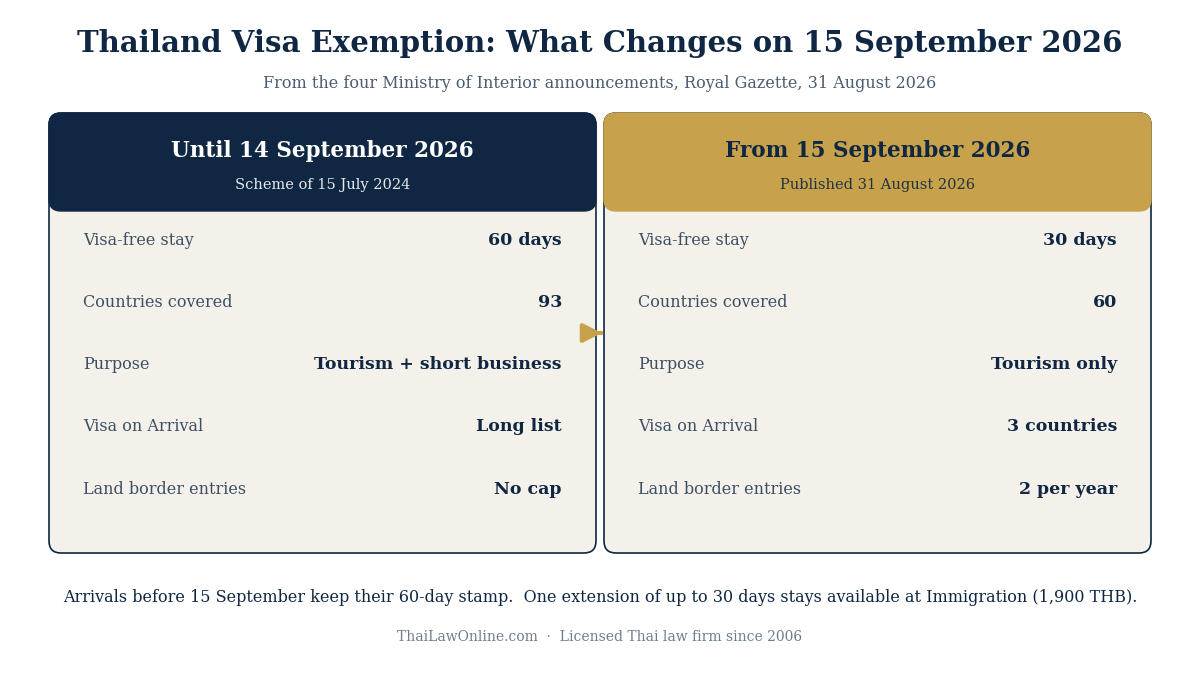
Thailand 30 วัน การยกเว้นวีซ่า เป็นกฎหมายแล้ว ในวันที่ 31 สิงหาคม 2026 ราชกิจจานุเบกษาได้เผยแพร่ประกาศของกระทรวงมหาดไทย 4 ฉบับที่ยกเลิกการยกเว้นวีซ่า 60 วันสำหรับประเทศ 93 ประเทศ และแทนที่ด้วยการยกเว้น 30 วันสำหรับ 60 ประเทศและดินแดน โดยคำแนะนำการเดินทางอย่างเป็นทางการของไทยระบุว่ากฎระเบียบการเข้าประเทศใหม่นี้มีผลบังคับใช้ตั้งแต่วันที่ 15 กันยายน พ.ศ. 2569. ผู้เดินทางที่ได้รับอนุญาตให้เข้าประเทศก่อนวันดังกล่าวยังคงได้รับระยะเวลาพำนัก 60 วันตามตราประทับในหนังสือเดินทางของตน หน้าดังกล่าวอธิบายถึงเอกสารที่ประกาศใช้แล้วเอง แก้ไขจำนวนประเทศที่เคยประกาศไว้ตลอดทั้งปี และอธิบายถึงสิ่งที่ผู้เดินทางเพื่อธุรกิจสูญเสียไป ซึ่งไม่มีเว็บไซต์ท่องเที่ยวใดกล่าวถึง.
สารบัญ
สิ่งที่ราชกิจจานุเบกษาเผยแพร่เมื่อวันที่ 31 สิงหาคม 2026
ประกาศของกระทรวงมหาดไทยสี่ฉบับปรากฏพร้อมกันในราชกิจจานุเบกษา (เล่ม 143 ตอนพิเศษ 207 ง) โดยแต่ละฉบับลงวันที่ 26 สิงหาคม 2026 และมีลายเซ็นของนายกรัฐมนตรีและรัฐมนตรีว่าการกระทรวงมหาดไทย นายอนุทิน ชาญวีรกูล โดยคุณสามารถอ่านได้ด้วยตนเอง ไม่มีการสรุปข้อมูลใดมาแทนที่แหล่งที่มา
- ประกาศยกเลิกยกเลิกมาตรการยกเว้นวีซ่า 60 วันที่ออกเมื่อวันที่ 15 กรกฎาคม 2024 ซึ่งครอบคลุมประเทศและดินแดน 93 ประเทศและดินแดน.
- รายชื่อประเทศที่ได้รับการยกเว้นการตรวจลงตรา 30 วัน: 60 ประเทศและดินแดน, การท่องเที่ยวเท่านั้น, 30 วันต่อครั้ง. นอกจากนี้ยังยกเลิกประกาศก่อนหน้านี้ที่กำหนดไว้ 30 วันในวันที่ 4 มีนาคม 2019 และ 21 มิถุนายน 2022 (เลขที่ 2).
- ประกาศว่าด้วยการตรวจลงตราเมื่อเดินทางมาถึง (VOA): ลดรายการวีซ่าเมื่อเดินทางถึงลงเหลืออาเซอร์ไบจาน เบลารุส และเซอร์เบีย.
- การยกเว้นการตรวจลงตรา 15 วัน: การอยู่โดยไม่ต้องมีวีซ่าที่สั้นลงสำหรับมอริเชียสและเซเชลส์.
มาตรา 12 (1) แห่งพระราชบัญญัติคนเข้าเมือง พ.ศ. 2522 (1979) กำหนดให้ต้องมีวีซ่าสำหรับการเข้าประเทศ ยกเว้นกรณีที่กำหนดไว้ วัตถุประสงค์ในการยกเลิกดังกล่าวมีขึ้นตามมาตรา 17 ของพระราชบัญญัตินี้ รายชื่อ 30 วันและ 15 วันได้กำหนดไว้ตามมาตรา 13 และรายชื่อวีซ่าเมื่อเดินทางถึง (Visa on Arrival) ได้กำหนดไว้ตามมาตรา 6 วรรคสองของกฎกระทรวงการตรวจรับรองวีซ่า การยกเว้นวีซ่า และการเปลี่ยนประเภทวีซ่า พ.ศ. 2545 ซึ่งเป็นกรอบแนวทางเดียวกันกับโครงการในปี 2024.
การประกาศครั้งสุดท้าย: 27 กันยายน 2026 ภาพจากหน้าราชกิจจานุเบกษา การประกาศทั้งสี่นี้มีผลบังคับใช้เมื่อผ่านไป 15 วันนับจากวันเผยแพร่; กระทรวงการต่างประเทศและสำนักงานสถานทูตของไทยกำหนดวันดังกล่าวเป็นวันที่ 15 กันยายน 2026 และหน้าดังกล่าวจึงยึดตามกำหนดดังกล่าว คำแถลงของสถานทูตเป็นตามที่เผยแพร่เมื่อวันที่ 14 กันยายน 2026 และข้อตกลงระหว่างประเทศที่ระบุไว้เป็นข้อมูลทางปฏิบัติ ไม่มีการอ่านข้อความดังกล่าวอีกครั้งในบทความนี้.
กฎ 30 วันเริ่มเมื่อใด? คำอธิบายเกี่ยวกับการนับเวลา 15 วัน
ประกาศของกระทรวงมหาดไทยได้รับการเผยแพร่ในราชกิจจานุเบกษาเมื่อวันที่ 31 สิงหาคม 2026 คำแนะนำการเดินทางอย่างเป็นทางการของไทยระบุว่า 15 กันยายน พ.ศ. 2569 เป็นจุดเริ่มต้นของมาตรการยกเว้นวีซ่าใหม่ สำหรับการวางแผนการเดินทาง ให้ใช้ข้อมูลวันเข้าประเทศในประเทศไทยเป็นหลัก ไม่ใช่ข้อมูลวันจองหรือวันออกเดินทางของเที่ยวบิน. อ่านประกาศอย่างเป็นทางการ.
บทเฉพาะกาลคุ้มครองผู้ที่เดินทางเข้ามาแล้ว และหลักการก็ง่าย: ตราประทับกำหนดสิทธิ์ ณ วันที่เดินทางเข้า ผู้เดินทางที่ได้รับอนุญาตให้เข้าเมืองเมื่อวันที่ 14 กันยายน 2026 จะได้รับ 60 วันและคงได้รับครบทั้งหมด ประกาศยกเลิกไม่มีบทบัญญัติใดที่ทำให้ระยะเวลาพำนักที่ได้รับอนุญาตแล้วสั้นลง โดยมีเพียงสองข้อ คือ การยกเลิกและวันเริ่มใช้บังคับ ผู้เดินทางที่เดินทางมาถึงในวันที่ 15 กันยายน 2026 จะได้รับ 30 วัน สิ่งที่สำคัญคือวันที่ได้รับอนุญาตให้เข้าเมือง ไม่ใช่วันจองหรือวันออกเดินทาง.
รายชื่อทั้งหมดของประเทศที่ได้รับการยกเว้นการตรวจลงตรา 30 วัน: 60 ประเทศและดินแดน
ตัวเลขระหว่าง 54 ถึง 93 มีการเผยแพร่ตลอดทั้งปี เนื่องจากข้อมูลในแถลงการณ์จะมีการเปลี่ยนแปลงระหว่างเดือนพฤษภาคมถึงกรกฎาคม รายชื่อที่ประกาศอย่างเป็นทางการยุติประเด็นนี้ที่ 60 ประเทศพอดี ต่อไปนี้คือรายชื่อฉบับสุดท้ายตามตัวบทในราชกิจจานุเบกษา เรียงตามลำดับทางการ:
| 1. ออสเตรเลีย | 21. ไอซ์แลนด์ | 41. โอมาน |
| 2. ออสเตรีย | 22. อินโดนีเซีย | 42. ฟิลิปปินส์ |
| 3. บาห์เรน | 23. อินเดีย | 43. โปแลนด์ |
| 4. เบลเยียม | 24. ไอร์แลนด์ | 44. โปรตุเกส |
| 5. บัลแกเรีย | 25. อิสราเอล | 45. คาตาร์ |
| 6. ภูฏาน | 26. อิตาลี | 46. โรมาเนีย |
| 7. บรูไนดารุสซาลาม | 27. ญี่ปุ่น | 47. ซาอุดิอาระเบีย |
| 8. แคนาดา | 28. จอร์แดน | 48. สิงคโปร์ |
| 9. โครเอเชีย | 29. คูเวต | 49. สโลวาเกีย |
| 10. ไซปรัส | 30. คีร์กีซสถาน | 50. สโลวีเนีย |
| 11. สาธารณรัฐเช็ก | 31. ลัตเวีย | 51. แอฟริกาใต้ |
| 12. เดนมาร์ก | 32. ลิกเตนสไตน์ | 52. สเปน |
| 13. เอสโตเนีย | 33. ลิทัวเนีย | 53. สวีเดน |
| 14. ฟิจิ | 34. ลักเซมเบิร์ก | 54. สวิตเซอร์แลนด์ |
| 15. ฟินแลนด์ | 35. มอลตา | 55. ไต้หวัน |
| 16. ฝรั่งเศส | 36. มาเลเซีย | 56. ตุรกี |
| 17. จอร์เจีย | 37. มัลดีฟส์ | 57. ยูเครน |
| 18. เยอรมนี | 38. เนเธอร์แลนด์ | 58. สหรัฐอาหรับเอมิเรตส์ |
| 19. กรีซ | 39. นิวซีแลนด์ | 59. สหราชอาณาจักร |
| 20. ฮังการี | 40. นอร์เวย์ | 60. สหรัฐอเมริกา |
รายชื่อนี้ครอบคลุมทั้ง 27 ประเทศสมาชิกของสหภาพยุโรป รวมทั้งสหราชอาณาจักร สหรัฐอเมริกา แคนาดา ออสเตรเลีย นิวซีแลนด์ และญี่ปุ่น เมื่อเทียบกับร่างฉบับก่อนหน้านี้ มีการเพิ่มโครเอเชีย บัลแกเรีย ไซปรัส มอลตา และมัลดีฟส์ เข้ามาในรายชื่อนี้.
อินเดียขยับขึ้น ไม่ใช่ลง
ตำแหน่งของอินเดียเปลี่ยนไปสามครั้งในช่วงระยะเวลาการร่างกฎเกณฑ์ และคำตอบสุดท้ายก็ทำให้ผู้จัดทำรายงานเซอร์ไพรส์ไปอย่างสิ้นเชิง การแถลงข่าวในเบื้องต้นเสนอให้เปลี่ยนผู้ถือหนังสือเดินทางอินเดียให้เป็นวีซ่าเมื่อเดินทางถึงเท่านั้น เครื่องมือที่เผยแพร่ในภายหลังกลับทำตรงกันข้าม: อินเดียอยู่ในรายชื่อผู้ที่ได้รับอนุญาตให้เดินทางโดยไม่ต้องมีวีซ่า 30 วัน ซึ่งไม่ได้อยู่ในรายการวีซ่าเมื่อเดินทางถึงเลย นักท่องเที่ยวชาวอินเดียตั้งแต่ 15 กันยายน 2026 สามารถเดินทางโดยไม่ต้องมีวีซ่าได้นาน 30 วัน โดยขอขยายระยะเวลาพำนักได้หนึ่งครั้งที่สำนักงานตรวจคนเข้าเมือง ชาวอินเดียที่วางแผนพำนักนานกว่านั้นหรือเดินทางเพื่อวัตถุประสงค์อื่นที่ไม่ใช่การท่องเที่ยว ควรศึกษารายละเอียดในคู่มือของเรา ข้อกำหนดวีซ่าประเทศไทยสำหรับชาวอินเดีย.
ใครที่เสียสิทธิ์การเข้าออกโดยไม่ต้องมีวีซ่า และควรทำอย่างไรแทน
ประมาณหนึ่งในสามของรายชื่อเดิม 93 ประเทศไม่ได้อยู่ในรายชื่อใหม่ รวมถึงประเทศจีน รัสเซีย กัมพูชา ลาว เวียดนาม ฮ่องกง มาเก๊า มองโกเลีย คาซัคสถาน เม็กซิโก กัวเตมาลา คิวบา และประเทศในทวีปอเมริกาใต้ที่ได้ถูกเพิ่มเข้ามาในปี 2024 การที่รายชื่อดังกล่าวถูกตัดออกไปไม่ได้หมายความว่าต้องมีวีซ่าโดยอัตโนมัติ เพราะ ข้อตกลงระหว่างประเทศยังไม่ได้รับการเปลี่ยนแปลง จากการปฏิรูปครั้งนี้ เกาหลีใต้ บราซิล อาร์เจนตินา ชิลี และเปรูอนุญาตให้เข้าพักได้ 90 วันตามข้อตกลงของทั้งสองประเทศ ส่วนจีนและรัสเซียอนุญาตให้เข้าพักได้ 30 วันตามข้อตกลงของทั้งสองประเทศ เช่นเดียวกับฮ่องกง มาเก๊า ลาว เวียดนาม และมองโกเลีย และกัมพูชาและเมียนมาอนุญาตให้เข้าพักได้ 14 วัน (เมียนมาอนุญาตให้เข้าพักได้เฉพาะทางอากาศ) หลักการคือ หนึ่งประเทศ หนึ่งสิทธิ์ ควรตรวจสอบรายการยกเว้นก่อน จากนั้นจึงตรวจสอบข้อตกลง และยื่นขอวีซ่า.
ผู้ที่ถือสัญชาติของประเทศที่ถูกตัดสิทธิ์ โดยไม่มีข้อตกลงทางทวิภาคี ต้องยื่นขอผ่านระบบ e-Visa ของไทย โดยปกติจะต้องขอวีซ่าท่องเที่ยว 60 วัน (TR) ค้นหาวีซ่าไทย ตอบคำถามเกี่ยวกับสัญชาติของคุณในวันเดินทางของคุณ ส่วน คู่มือวีซ่าท่องเที่ยวไทย อธิบายขั้นตอนการยื่นขอวีซ่า TR ทีละขั้นตอน.
วีซ่าเมื่อเดินทางมาถึง (Visa on Arrival) ปัจจุบันใช้ได้เฉพาะผู้ถือสัญชาติ 3 ประเทศเท่านั้น
รายการวีซ่าเมื่อเดินทางมาถึงลดลงจากรายชื่อที่ยาวเหยียดเหลือเพียงสามชาติเท่านั้น ได้แก่ อาเซอร์ไบจาน เบลารุส และเซอร์เบีย ทุกคนอื่นที่ใช้บริการเคาน์เตอร์วีซ่าเมื่อเดินทางมาถึง รวมถึง 17 สัญชาติที่เพิ่มเข้ามาในปี 2024 ต้องมีสิทธิ์ตามความตกลงทวิภาคีหรือมีวีซ่าอิเล็กทรอนิกส์ (e-Visa)ก่อนที่จะขึ้นเครื่องบิน.
การยกเว้นการตรวจลงตรา 15 วัน: มอริเชียส และเซเชลส์
ประกาศแยกต่างหากระบุว่า มอริเชียส และเซเชลส์ มีสิทธิ์เข้าออกประเทศโดยไม่ต้องขอวีซ่าได้นาน 15 วัน ซึ่งเป็นระดับที่ต่ำกว่ากลุ่มประเทศ 60 ประเทศ ทั้งสองประเทศเคยอยู่ในกลุ่มที่ได้รับยกเว้นตามปกติก่อนการปฏิรูป.
เขตแดนทางบก: การกลับมาของเพดานปีปฏิทินละสองครั้ง
จำนวนผู้เข้าประเทศโดยไม่ต้องขอวีซ่าผ่านด่านชายแดนทางบกจะจำกัดไว้ที่สองครั้งต่อปีปฏิทิน และจำนวนดังกล่าวจะถูกนับใหม่ในวันที่ 1 มกราคม สำหรับพลเมืองของมาเลเซีย บรูไนดารุสซาลาม อินโดนีเซีย และสิงคโปร์ จะได้รับการยกเว้นจากข้อจำกัดนี้ และรัฐมนตรีว่าการกระทรวงมหาดไทยอาจกำหนดประเทศอื่น ๆ เพิ่มในภายหลัง การเข้าเมืองที่สนามบินระหว่างประเทศไม่ถูกจำกัดตามกฎข้อนี้ โดยข้อจำกัดดังกล่าวจะคืนสู่สถานะเดิมก่อนปี 2024 และจะยุติ การเดินทางออกนอกประเทศแล้วกลับเข้ามาใหม่ (border run) ในฐานะกลยุทธ์การอยู่อาศัยสำหรับคนอื่นๆ เราได้กล่าวถึงผลกระทบทางปฏิบัติในบทความของเรา ข้อจำกัดการทำวีซ่ารันในประเทศไทย. จำไว้ว่า อยู่เกินกำหนดวีซ่า มีโทษปรับ, การควบคุมตัว และ ขึ้นบัญชีดำ, อธิบายไว้ในคู่มือของเรา การอยู่เกินกำหนดวีซ่าในประเทศไทย.
การท่องเที่ยวเท่านั้น: ทำไมผู้มาเยือนทางธุรกิจจึงไม่สามารถใช้สิทธิประโยชน์นี้ได้อีกต่อไป
นี่คือการเปลี่ยนแปลงที่เว็บไซต์ท่องเที่ยวละเลยไว้ โดยโครงการในปี 2024 ได้ครอบคลุมการท่องเที่ยวอย่างชัดเจน พร้อมทั้งกิจกรรมทางธุรกิจที่เร่งด่วนและงานระยะสั้นบางประเภท ส่วนการยกเว้น 30 วันใหม่ระบุถึงวัตถุประสงค์ว่าเป็นเพื่อการท่องเที่ยว ที่ปรึกษาที่บินมาเพื่อประชุมกับลูกค้า กรรมการ ที่เข้าร่วมประชุมคณะกรรมการ ผู้ซื้อที่มาตรวจโรงงาน: ทุกคนล้วนอาศัยถ้อยคำเดิม และถ้อยคำนั้นได้ถูกตัดออกไปแล้ว.
ผลกระทบทางปฏิบัติตั้งแต่วันที่ 15 กันยายน 2026: ผู้มาเยือนเพื่อธุรกิจจากประเทศที่ได้รับยกเว้นยังคงสามารถเดินทางเข้ามาโดยไม่มีวีซ่าได้ แต่การเดินทางเข้ามานั้นเป็นเพื่อการท่องเที่ยว และการดำเนินกิจกรรมทางธุรกิจบนพื้นฐานดังกล่าวนั้นไม่สอดคล้องกับวัตถุประสงค์ของการมาเยือนตามที่ระบุไว้ ทางเลือกที่ถูกต้องคือ วีซ่าธุรกิจประเภท Non-B สำหรับการทำงานและกิจกรรมทางธุรกิจที่ต่อเนื่อง หรือการเข้าประเทศด้วยวีซ่าท่องเที่ยวเพื่อการพักผ่อนอย่างแท้จริง โดยการประชุมที่เกิดขึ้นประกอบต้องอยู่ในขอบเขตที่แนวปฏิบัติของตรวจคนเข้าเมืองยอมรับ บริษัทที่นำพนักงานหรือผู้มาเยือนบ่อยครั้งเข้ามาควรถือว่าวันที่ 15 กันยายนเป็นวันที่ต้องปฏิบัติตามกฎหมาย ไม่ใช่เพียงข่าวการท่องเที่ยว สำนักงานของเราให้คำแนะนำเรื่องประเภทวีซ่าที่ถูกต้องก่อนการเดินทาง ซึ่งเสียค่าใช้จ่ายน้อยกว่าการโต้แย้งที่สนามบิน.
สิ่งที่สถานทูตไทยเผยแพร่หลังจากประกาศราชกิจจานุเบกษา: การขยายเวลา, เงินทุน และประเด็นทางธุรกิจ
ระหว่างวันที่ 2 ถึง 10 กันยายน 2026 หน่วยงานการทูตของไทยในต่างประเทศได้เขียนใหม่หน้าข้อมูลการยกเว้นวีซ่า และไม่ใช่ทุกหน้าที่เขียนเหมือนกัน เราได้อ่านหน้าข้อมูลการยกเว้นวีซ่าในกรุงวอชิงตัน ลอนดอน และโคเปนเฮเกน เมื่อวันที่ 14 กันยายน 2026 พร้อมกับแถลงข่าวของกระทรวงการต่างประเทศเมื่อวันที่ 3 กันยายน 2026 และประกาศของสำนักงานการท่องเที่ยวแห่งประเทศไทยเมื่อวันที่ 1 กันยายน 2026 โดยมีประเด็นสำคัญสำหรับผู้เดินทางสี่ประเด็น.
การขยายเวลาเป็นเรื่องจริง และขึ้นอยู่กับดุลพินิจ. สถานทูตไทยในกรุงวอชิงตัน (หน้าได้รับการอัปเดตเมื่อวันที่ 10 กันยายน 2026) ระบุว่าระยะเวลาการพำนักที่ได้รับยกเว้นวีซ่าสามารถขยายได้อีกไม่เกิน 30 วัน และการขยายระยะเวลาดังกล่าวเป็นดุลพินิจของเจ้าหน้าที่ตรวจคนเข้าเมืองเท่านั้น สถานทูตไทยประจำลอนดอน ระบุว่าผู้เดินทางอาจขอขยายระยะเวลาการเข้าพักได้สูงสุด 30 วัน ดังนั้นคำอธิบายที่ถูกต้องคือ ได้รับ 30 วันเมื่อเดินทางเข้า และอาจขอขยายได้อีกไม่เกิน 30 วันตามดุลพินิจของเจ้าหน้าที่ โดยยื่นที่ สำนักงานตรวจคนเข้าเมือง โดยเสียค่าธรรมเนียม 1,900 บาท ไม่มีใครมีสิทธิ์ได้ 60 วันโดยอัตโนมัติ.
นำหลักฐานแสดงเงินทุนที่จำเป็น หลักฐานที่พัก และหลักฐานการเดินทางออกต่อ. วอชิงตันกำหนดเงินสดหรือเทียบเท่า 20,000 บาทต่อคน หรือ 40,000 บาทต่อครอบครัวเป็นอย่างน้อย ลอนดอนกำหนดหลักฐานการมีเงินเพียงพอ 20,000 บาทต่อคน หลักฐานการพักอาศัย และการเดินทางต่อไปภายใน 30 วัน การตรวจสอบเหล่านี้ใช้กับผู้มาเยือนประจำมากกว่านักท่องเที่ยวหน้าใหม่ ดังนั้นผู้ที่เดินทางบ่อยควรเตรียมเอกสารทั้งสามอย่างไว้ที่เคาน์เตอร์ สถานทูตระบุจำนวนเงินดังกล่าวสูงกว่ากฎหมายที่อยู่เบื้องหลัง โดยประกาศของกระทรวงมหาดไทยเมื่อวันที่ 8 พฤษภาคม 2543 (ปี 2000) กำหนด 10,000 บาทต่อคน หรือ 20,000 บาทต่อครอบครัวสำหรับผู้ที่ได้รับอนุญาตเข้าโดยไม่ต้องขอวีซ่า และไม่บังคับใช้กับเด็กอายุต่ำกว่า 12 ปี ทั้งสองแหล่งข้อมูลไม่ตรงกัน และสำนักงานตรวจคนเข้าเมืองยังไม่ได้เผยแพร่หลักเกณฑ์ฉบับเดียวนับตั้งแต่มีการปฏิรูป ดังนั้นควรพกเงินตามจำนวนที่สถานทูตระบุซึ่งสูงกว่า.
วัตถุประสงค์ที่ได้รับอนุญาตนั้นถูกอธิบายไม่สอดคล้องกัน. แถลงข่าวของ MFA, ในประกาศของ TAT และในรายงานของลอนดอน ระบุว่าการยกเว้นนี้เป็นเพื่อการท่องเที่ยว ส่วนลอนดอนระบุเพิ่มเติมว่าเป็นการยกเว้นเพื่อการท่องเที่ยวเท่านั้น วอชิงตันระบุว่าเป็นการยกเว้นเพื่อการท่องเที่ยว การติดต่อธุรกิจ หรือการทำงานฉุกเฉินหรืองานแบบเฉพาะเจาะจง และ โคเปนเฮเกน (อัปเดต 2 กันยายน 2026) ระบุว่าเกี่ยวข้องกับด้านการท่องเที่ยวและการทำธุรกิจระยะสั้น ซึ่งเป็นความไม่สอดคล้องกันระหว่างแหล่งข้อมูลทางการ ไม่ใช่ระหว่างผู้เขียนบทความ จนกว่าสำนักงานตรวจคนเข้าเมืองจะเผยแพร่ข้อมูลอย่างเป็นทางการ หน้าเว็บของสถานทูตจึงไม่สามารถเป็นเครื่องป้องกันได้จากมุมมองที่ตรงกันข้ามที่สนามบิน สำนักงานตรวจคนเข้าเมืองในระดับจังหวัด หรือระหว่างการตรวจสอบในที่ทำงาน หากใครเข้าร่วมประชุมหรือต้องทำงานด่วน ควรใช้ วีซ่าธุรกิจประเภท Non-B หรือใบอนุญาตทำงานที่ถูกต้อง.
ข้อจำกัดการเข้าออกสองครั้งระบุไว้ในสองรูปแบบ. ประกาศของ TAT และประกาศของกระทรวงมหาดไทยจำกัดเพดานปีปฏิทินละสองครั้งไว้เฉพาะด่านตรวจทางบก ลอนดอนระบุโดยไม่มีเงื่อนไขว่าผู้ถือหนังสือเดินทางที่มีสิทธิ์จะเข้าประเทศภายใต้มาตรการนี้ได้เพียงสองครั้งภายในหนึ่งปีปฏิทิน อย่าถือว่ากฎจำกัดสองครั้งทั่วประเทศเป็นข้อยุติแล้ว แต่ควรคาดว่าการเข้าประเทศโดยได้รับยกเว้นการตรวจลงตราเป็นครั้งที่สามในปีเดียวกันจะถูกสอบถามที่ด่านใดก็ได้ และควรมีวีซ่าหากแผนการเดินทางต้องเข้าออกซ้ำหลายครั้ง.
รายการตรวจสอบที่จำเป็นสำหรับผู้ที่ได้รับอนุญาตให้เข้าประเทศโดยไม่ต้องมีวีซ่าทุกราย ตั้งแต่วันที่ 15 กันยายน 2026: หนังสือเดินทางต้องมีอายุเหลืออีก 6 เดือน และกรอก บัตรเข้าเมืองดิจิทัลของประเทศไทย, บัตรโดยสารไปต่อที่ยังไม่หมดอายุเกิน 30 วัน การจองที่พัก และเงินสด 20,000 บาทต่อคน (ตัวเลขดังกล่าวเป็นตัวเลขที่สถานทูตเผยแพร่ ส่วนประกาศของกระทรวงการต่างประเทศระบุว่า 10,000 บาทต่อคน) ค้นหาวีซ่าไทย ใช้กฎเหล่านี้กับสัญชาติและวันที่เดินทางของคุณ.
วิธีอยู่นานกว่า 30 วัน
การขยายระยะเวลาการเข้าออกเพียงครั้งเดียวยังคงอยู่ภายใต้การปฏิรูป การเข้าออกโดยไม่ต้องขอวีซ่าสามารถขยายได้เพียงครั้งเดียวเป็นเวลาสูงสุด 30 วันเพิ่มเติม ณ สำนักงานตรวจคนเข้าเมือง ราคา 1,900 บาท การต่ออายุขึ้นอยู่กับกรอบการต่ออายุตามมาตรา 35 ของพระราชบัญญัติคนเข้าเมือง และยังคงเป็นดุลยพินิจของเจ้าหน้าที่ หากคิดตามหลักการก็คือ 30 วันนับจากวันเข้าเมือง บวกกับ 30 วันที่ต่ออายุ เท่ากับประมาณ 60 วันตามเดิม ซึ่งเป็นค่าใช้จ่ายที่เท่ากัน โดยมีค่าใช้จ่าย 1,900 บาท และเสียเวลาที่สถานีตรวจคนเข้าเมืองหนึ่งชั่วโมง นักท่องเที่ยวที่ใจเย็นจะเสียเวลาไปน้อยกว่า.
สำหรับระยะเวลาที่ยาวนานกว่านั้น เส้นทางที่กำหนดไว้ยังคงไม่เปลี่ยนแปลง คือ วีซ่าท่องเที่ยวแบบ 60 วัน (TR) สามารถต่ออายุได้อีก 30 วัน วีซ่า DTV สำหรับพนักงานที่ทำงานจากระยะไกลและกิจกรรมด้านอำนาจอ่อน วีซ่าประเภทคนอยู่ชั่วคราว (Non-Immigrant) แล้วตามด้วย การขยายระยะเวลาตามเกณฑ์การเกษียณอายุ หรือการแต่งงาน และ วีซ่า LTR สำหรับผู้ที่อาศัยอยู่ในระยะยาว ค้นหาวีซ่าไทย จะนำสถานการณ์ของคุณไปสู่เส้นทางที่เหมาะสม และหน้าของเราเกี่ยวกับ การเปลี่ยนแปลงวีซ่าปี 2026 ติดตามว่า ดีทีวี เข้ากับสภาพแวดล้อมใหม่.
ประวัติ: โครงการ 60 วัน (ระหว่างวันที่ 15 กรกฎาคม 2024 ถึง 14 กันยายน 2026)
สำหรับข้อมูลอ้างอิง นี่คือโครงการที่ระเบียบ 30 วันจะเข้ามาแทนที่ จากวันที่ 15 กรกฎาคม 2024 ประเทศไทยอนุญาตให้พลเมืองของ 93 ประเทศและดินแดนเข้าประเทศโดยไม่ต้องขอวีซ่าเป็นเวลา 60 วัน ซึ่งเพิ่มขึ้นจากเดิม 30 วันสำหรับ 57 สัญชาติ โดยมีเป้าหมายเพื่อกระตุ้นการฟื้นตัวของอุตสาหกรรมท่องเที่ยว มีการประกาศระบบอนุญาตการเดินทางทางอิเล็กทรอนิกส์ (ETA) ควบคู่กันโดยกำหนดเริ่มในเดือนธันวาคม 2024 แต่ถูกเลื่อนออกไปหลายครั้งและไม่เคยเปิดใช้งาน การปฏิบัติการเข้าประเทศที่ใช้ในปัจจุบันคือ บัตรเข้าประเทศแบบดิจิทัลของประเทศไทย (TDAC), ซึ่งเป็นข้อบังคับตั้งแต่วันที่ 1 พฤษภาคม 2025 ส่วนโครงการ 60 วันสิ้นสุดลงในวันที่ 14 กันยายน 2026 ทั้งนี้ หน้าข้อมูลอัปเดตการย้ายถิ่นฐาน บันทึกการเปลี่ยนแปลงทุกครั้งที่เกิดขึ้น และ ภาพรวมของการปฏิรูปวีซ่า วางการปฏิรูปครั้งนี้ไว้ในบริบทที่ยาวนานกว่านั้น.
คำถามที่พบบ่อย
ตราประทับ 60 วันของฉันจะถูกตัดสั้นลงเมื่อวันที่ 15 กันยายน 2026 หรือไม่?
ไม่ ตราประทับกำหนดสิทธิ์ของคุณ ณ วันที่เดินทางเข้า หากเจ้าหน้าที่ตรวจคนเข้าเมืองอนุญาตให้คุณเข้าประเทศก่อนวันที่ 15 กันยายน 2026 โดยให้พำนักได้ 60 วัน คุณยังคงพำนักได้ครบทุกวัน ประกาศยกเลิกมีผลยกเลิกมาตรการนี้สำหรับผู้ที่จะเดินทางเข้ามาในอนาคตเท่านั้น และไม่ทำให้ระยะเวลาพำนักที่ได้รับอนุญาตแล้วสั้นลง.
ขณะนี้ผู้ถือหนังสือเดินทางอินเดียได้รับการยกเว้นการตรวจลงตราเข้าประเทศไทยแล้วหรือไม่?
ใช่ ตั้งแต่วันที่ 15 กันยายน 2026 ผู้ถือหนังสือเดินทางอินเดียเดินทางเข้าประเทศได้โดยไม่ต้องมีวีซ่าเป็นเวลา 30 วัน ตามรายชื่อประเทศที่ได้รับการยกเว้นการตรวจลงตราที่ประกาศไว้ ข้อเสนอก่อนหน้านี้ที่จะย้ายอินเดียไปใช้การตรวจลงตราเมื่อเดินทางมาถึง (VOA) ไม่ปรากฏอยู่ในประกาศฉบับสุดท้าย.
ฉันสามารถเข้าประเทศไทยโดยไม่ต้องขอวีซ่าได้กี่ครั้งผ่านด่านพรมแดนทางบก?
ปีปฏิทินละสองครั้ง นับจากวันที่ 1 มกราคม ข้อจำกัดนี้ใช้เฉพาะด่านตรวจทางบกเท่านั้น การเดินทางเข้าทางท่าอากาศยานไม่ถูกจำกัดจำนวนครั้ง ผู้มีสัญชาติมาเลเซีย บรูไน อินโดนีเซีย และสิงคโปร์ได้รับยกเว้นจากข้อจำกัดนี้.
ฉันสามารถเข้าร่วมการประชุมทางธุรกิจได้ตามการยกเว้น 30 วันหรือไม่
ประกาศในราชกิจจานุเบกษา, briefing ของ MFA และสถานทูตลอนดอนระบุว่าการยกเว้นนี้เป็นเพื่อการท่องเที่ยว และถ้อยคำเรื่องธุรกิจระยะสั้นของโครงการเดิมไม่ได้ถูกนำมาใช้ต่อ โดยหน้าสถานทูตวอชิงตัน (10 กันยายน 2026) ก็ยังระบุถึงการเข้าพบธุรกิจและการทำงานฉุกเฉินหรือตามคำร้องขอ และโคเปนเฮเกนกล่าวว่าเป็นการเข้าพบธุรกิจในระยะสั้น เนื่องจากแหล่งข้อมูลทางการขัดแย้งกัน ทางออกที่ปลอดภัยสำหรับการประชุม การเจรจา หรือการเข้าร่วมประชุมของคณะกรรมการจึงคือวีซ่าประเภท Non-B หรือคำแนะนำเกี่ยวกับกิจกรรมเฉพาะของคุณก่อนการเดินทาง.
ฉันยังสามารถใช้สิทธิ์ 60 วันในประเทศไทยได้อีกไหม
ใช่ มีสองวิธี คือ 1. ยื่นขอขยายระยะเวลาพำนักของการเข้าประเทศโดยได้รับยกเว้นการตรวจลงตรา 30 วันได้หนึ่งครั้ง ไม่เกิน 30 วัน โดยต้องไปแจ้งความประสงค์ที่สำนักงานตรวจคนเข้าเมือง โดยเสียค่าธรรมเนียม 1,900 บาท หรือ 2. ยื่นขอวีซ่าท่องเที่ยว 60 วัน (TR) ผ่านระบบ e-Visa ซึ่งวีซ่าดังกล่าวขยายได้อีก 30 วัน ระยะเวลาที่ยาวกว่านี้จำเป็นต้องมีประเภทวีซ่าที่ตรงกับสถานการณ์ของคุณ.
ฉันต้องมีเงินเท่าไรจึงจะได้รับยกเว้นวีซ่า 30 วัน?
สถานทูตไทยในกรุงวอชิงตันและกรุงลอนดอนต่างระบุจำนวนเงิน 20,000 บาทต่อคน และสถานทูตในกรุงวอชิงตันระบุเพิ่มเติม 40,000 บาทต่อครอบครัว เป็นเงินสดหรือเทียบเท่า สถานทูตในกรุงลอนดอนยังระบุหลักฐานที่พักและการเดินทางต่อภายใน 30 วันด้วย ประกาศกระทรวงมหาดไทยปี พ.ศ. 2543 กำหนดจำนวนเงินที่ต่ำกว่าสำหรับการเข้าเมืองโดยได้รับการยกเว้นการตรวจลงตรา คือ 10,000 บาทต่อคน หรือ 20,000 บาทต่อครอบครัว ดังนั้นควรพกเงินตามจำนวนที่สูงกว่าซึ่งสถานทูตระบุไว้ จนกว่าสำนักงานตรวจคนเข้าเมืองจะประกาศหลักเกณฑ์เดียว เจ้าหน้าที่ไม่ได้ขอตรวจนักท่องเที่ยวทุกคน แต่มีอำนาจขอตรวจได้ และผู้ที่เดินทางเข้ามาซ้ำจะถูกขอตรวจบ่อยกว่า.
ระยะเวลาการเข้าพักที่ได้รับยกเว้นวีซ่า 30 วันสามารถต่อได้หรือไม่
ใช่ ได้หนึ่งครั้ง โดยสามารถขอต่ออายุได้สูงสุด 30 วัน ที่สำนักงานตรวจคนเข้าเมือง โดยต้องเสียค่าธรรมเนียม 1,900 บาท ทั้งสำนักงานสถานทูตวอชิงตันและลอนดอนต่างยืนยันการต่ออายุ และสำนักงานสถานทูตวอชิงตันระบุว่าขึ้นอยู่กับดุลพินิจของเจ้าหน้าที่ตรวจคนเข้าเมืองเท่านั้น ควรวางแผนโดยถือว่ามีเวลาพำนัก 30 วัน และถือว่าการขยายเวลาเป็นการยื่นคำขอ ไม่ใช่สิทธิ์ที่ได้รับโดยอัตโนมัติ.
บทสรุป
การยกเว้นการตรวจลงตรา 30 วันเป็นกฎหมายที่ประกาศใช้แล้ว โดยมีวันเริ่มต้นที่แน่นอน นักท่องเที่ยวจาก 60 ประเทศที่อยู่ในรายชื่อเสียประโยชน์เพียงเล็กน้อยนอกจากความสะดวก กล่าวคือ ระยะเวลาพำนักเมื่อเดินทางเข้าลดลงครึ่งหนึ่ง ซึ่งชดเชยได้ด้วยการขยายระยะเวลาหนึ่งครั้ง การเปลี่ยนแปลงที่แท้จริงซ่อนอยู่ในรายละเอียดที่เว็บไซต์รวบรวมข่าวมองข้าม ได้แก่ วัตถุประสงค์เพื่อการท่องเที่ยวเท่านั้นซึ่งทำให้ผู้มาเยือนเพื่อธุรกิจไม่อยู่ในขอบเขตของการยกเว้น เพดานการเข้าทางด่านพรมแดนทางบกซึ่งยุติการทำวีซ่ารันต่อเนื่อง และรายชื่อการตรวจลงตราเมื่อเดินทางมาถึงที่เหลือเพียงสามประเทศ หากการเดินทาง การพำนัก หรือธุรกิจของคุณในประเทศไทยเกี่ยวข้องกับประเด็นใดเหล่านี้, จองคิวปรึกษา และเลือกประเภทวีซ่าให้ถูกต้องก่อนวันที่ 15 กันยายน.
ข่าวสารกฎหมายไทย ฟรีทางอีเมล
อัปเดตข่าวสารกฎหมายไทยในภาษาเข้าใจง่าย ที่ส่งผลกระทบต่อชาวต่างชาติ: อสังหาริมทรัพย์, วีซ่า, การสมรส, ธุรกิจ และพินัยกรรม จดหมายข่าวสั้นเพียงฉบับเดียวต่อเดือน จากสำนักงานกฎหมายที่ดำเนินงานมาตั้งแต่ปี 2549 ไม่มีการส่งสแปม ยกเลิกรับได้ทุกเมื่อ.