


ตรวจสอบโดย ThaiLawOnline สำนักงานกฎหมายไทยที่ได้รับใบอนุญาตและดำเนินกิจการในประเทศไทยตั้งแต่ปี พ.ศ. 2549 ทนายความผู้รับผิดชอบสำนวน: Wichuda Atthamethakon, น.ม., ใบอนุญาตให้เป็นทนายความ เลขที่ 3149/2556.
ปรับปรุงล่าสุดเมื่อ
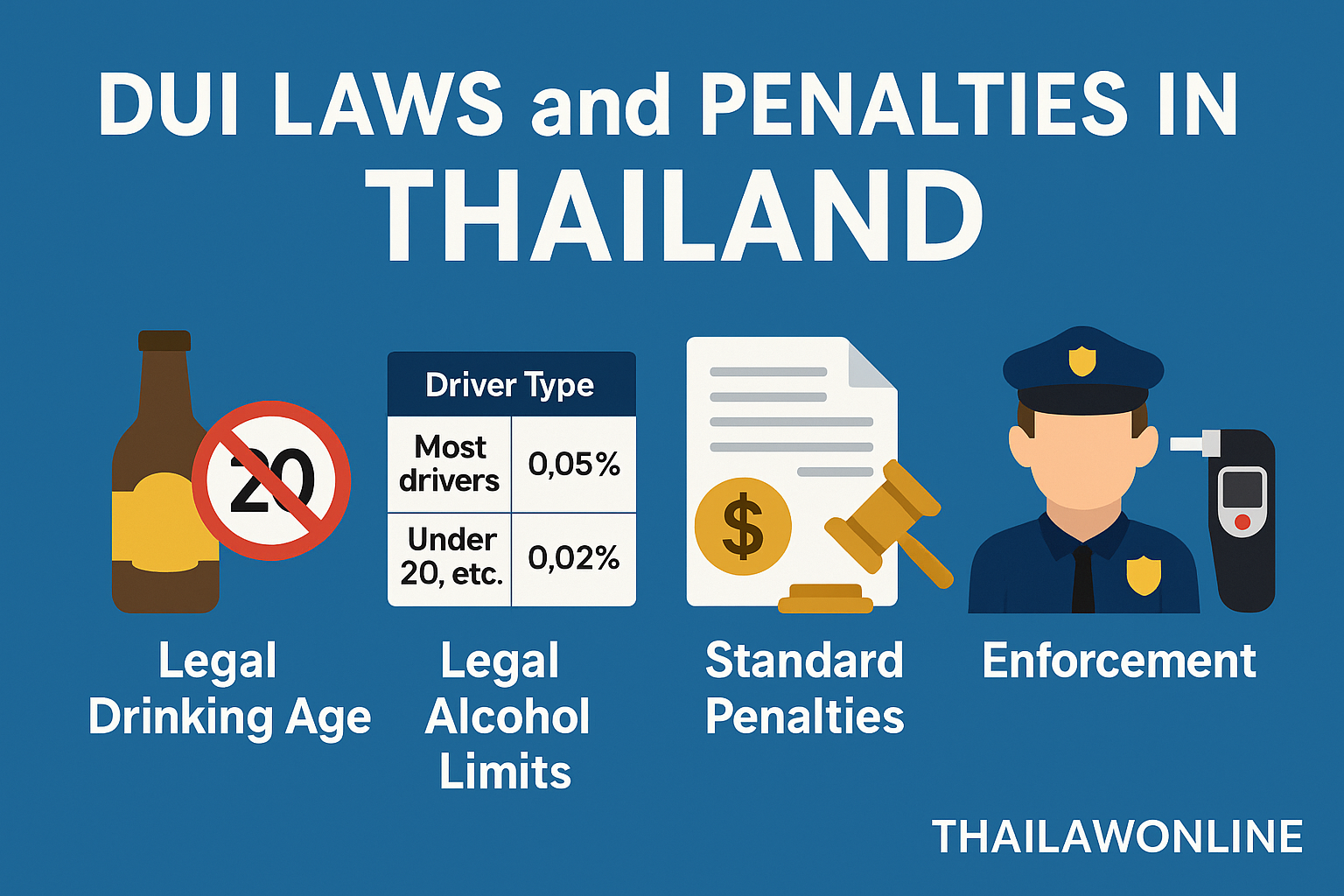
คำตอบสั้น ๆ: การเมาแล้วขับถือเป็นความผิดทางอาญาในประเทศไทย และปริมาณแอลกอฮอล์ในเลือดที่กฎหมายกำหนดคือ 50 มก. % (0.05%) สำหรับผู้ขับขี่ส่วนใหญ่ หรือ 20 มก. % (0.02%) หากคุณมีอายุต่ำกว่ายี่สิบปี มีใบขับขี่ทดลองขับ ขับรถโดยไม่มีใบขับขี่ที่ถูกต้องสำหรับรถคันนั้น หรือขับรถในระหว่างถูกพักใช้ใบขับขี่. ข้อจำกัดดังกล่าวมาจากกฎกระทรวง ฉบับที่ 21 (พ.ศ. 2560) ออกตามความในพระราชบัญญัติจราจรทางบก ซึ่งห้ามขับรถในขณะเมาสุราตามมาตรา 43(2) การกระทำความผิดครั้งแรกมีโทษจำคุกไม่เกินหนึ่งปี ปรับตั้งแต่ 5,000 ถึง 20,000 บาท หรือทั้งจำทั้งปรับ และศาลต้องสั่งพักใช้ใบอนุญาตขับขี่มีกำหนดไม่น้อยกว่าหกเดือนหรือเพิกถอนใบอนุญาต (มาตรา 160 ตรี) การกระทำความผิดซ้ำภายในสองปี หรือการก่อให้เกิดอันตรายแก่ร่างกายหรือชีวิต จะได้รับโทษที่หนักขึ้นมากตามที่ระบุไว้ด้านล่างนี้.
จับกุม, การประกันตัว และการพิจารณาคดี ล้วนเป็นไปตามขั้นตอนเดียวกัน ซึ่งระบุไว้ในภาพรวมของเราเกี่ยวกับ กฎหมายอาญาในประเทศไทย.
สารบัญ
ตรวจสอบครั้งล่าสุด: 3 กันยายน 2569. ตัวเลขและเลขมาตราทุกตัวในหน้านี้ได้รับการอ่านเป็นภาษาไทยจากตัวบทต้นฉบับ. มาตรา 160 ตรี แห่งพระราชบัญญัติจราจรทางบก พ.ศ. 2522 ได้รับการอ่านในฉบับรวมแก้ไข ณ ปี พ.ศ. 2560 ทีละวรรค และเป็นที่มาของช่วงโทษสำหรับความผิดครั้งแรก ระดับความเสียหายสามระดับ และคำสั่งเกี่ยวกับใบอนุญาตขับขี่ที่กฎหมายบังคับ. มาตรา 160 ตรี/1 มาตรา 160 ตรี/2 และมาตรา 160 ตรี/3, และวรรคห้าของมาตรา 160 ตรี ได้ถูกอ่านจากข้อความในราชกิจจานุเบกษาของ พระราชบัญญัติจราจรทางบก (ฉบับที่ 13) พ.ศ. 2565 ตัวมันเอง ซึ่งได้กำหนดบทบัญญัติว่าด้วยการเริ่มใช้บังคับของตนเองไว้ด้วย (ซึ่งมีผลใช้บังคับเมื่อพ้นกำหนดหนึ่งร้อยยี่สิบวันนับแต่วันประกาศในราชกิจจานุเบกษา) รวมถึงบทบัญญัติคุ้มครองสำหรับกฎระเบียบที่มีอยู่เดิม. มาตรา 142 ได้รับการอ่านเพื่อพิจารณาอำนาจในการควบคุมตัว ข้อสันนิษฐานเมื่อปฏิเสธ และการมอบอำนาจให้ออกกฎกระทรวง ทั้งในข้อความฉบับก่อนปี 2565 และฉบับปี 2565 ปริมาณแอลกอฮอล์ในเลือดมาจาก กฎกระทรวง ฉบับที่ 21 (พ.ศ. 2560) และกฎกระทรวงที่ฉบับดังกล่าวแก้ไข, ฉบับที่ 16 (พ.ศ. 2537), อ่านให้ละเอียดทั้งหมด รวมถึงลำดับการทดสอบและสัมประสิทธิ์การแปลง. ศาลฎีกา คำพิพากษาที่ 8990/2568 ถูกอ่านจนจบเป็นภาษาไทยจนถึงบทสรุป และรายละเอียดทุกประการที่ระบุไว้ ณ ที่นี้ปรากฏอยู่ในคำพิพากษา ส่วนของข้อกำหนดเรื่องอายุการดื่มถูกตรวจสอบเทียบกับ มาตรา 29 และมาตรา 40 แห่งพระราชบัญญัติควบคุมเครื่องดื่มแอลกอฮอล์ พ.ศ. 2551.
สิ่งที่การทบทวนนี้ไม่ครอบคลุม ซึ่งระบุไว้อย่างชัดเจน ไม่ใช่เพียงการบอกเป็นนัย ไม่มีการเผยแพร่ตัวเลขโทษสำหรับความผิดฐานขายเครื่องดื่มแอลกอฮอล์ เนื่องจากพระราชบัญญัติควบคุมเครื่องดื่มแอลกอฮอล์ (ฉบับที่ 2) พ.ศ. 2568 ได้แก้ไขทั้งสองมาตรา และเรายังไม่ได้อ่านพระราชบัญญัติแก้ไขเพิ่มเติมดังกล่าวจากราชกิจจานุเบกษาโดยตรง อ่านเพียงฉบับคัดลอกเท่านั้น; โครงสร้างที่อธิบายไว้ที่นี่ คือข้อห้ามและโทษตกอยู่กับผู้ขาย เป็นสิ่งที่ทั้งสองฉบับระบุไว้ แนวปฏิบัติเกี่ยวกับจุดตรวจและการบังคับใช้กฎหมายตลอดทั้งหน้านี้ รวมถึงสิ่งที่เจ้าหน้าที่ทำกับใบอนุญาตขับขี่ที่ข้างถนน และวิธีที่ศาลพิจารณาการโต้แย้งผลการวัดแอลกอฮอล์ในลมหายใจ เป็นเรื่องทางปฏิบัติ ไม่ใช่บทบัญญัติของกฎหมาย และการทบทวนนี้ยืนยันว่ากฎกระทรวง ฉบับที่ 21 ยังคงมีผลใช้บังคับตามบทเฉพาะกาลของพระราชบัญญัติปี 2565 แต่ไม่ได้ยืนยันว่าไม่มีกฎกระทรวงที่ออกภายหลัง: ฉบับนี้เป็นฉบับล่าสุดที่เราหาได้ และการไม่ปรากฏในฐานข้อมูลไม่ได้เป็นหลักฐานว่าไม่มีอยู่.
กฎหมายและบทลงโทษเกี่ยวกับการเมาแล้วขับในประเทศไทย: ทำความเข้าใจเกี่ยวกับอายุที่กฎหมายกำหนดสำหรับการดื่มแอลกอฮอล์
กฎเรื่องอายุเกี่ยวกับเครื่องดื่มแอลกอฮอล์ของประเทศไทยเป็นกฎเกี่ยวกับ การขาย, และควรระบุให้ชัดเจนว่าใครเป็นผู้กระทำความผิด. มาตรา 29 แห่งพระราชบัญญัติควบคุมเครื่องดื่มแอลกอฮอล์ พ.ศ. 2551 ห้ามมิให้ผู้ใดขายเครื่องดื่มแอลกอฮอล์แก่ผู้มีอายุต่ำกว่ายี่สิบปีบริบูรณ์ หรือแก่ผู้ที่มีอาการมึนเมาจนครองตนไม่ได้ และ มาตรา 40 ลงโทษผู้ขาย บังคับใช้ทุกที่ที่มีการขายเครื่องดื่มแอลกอฮอล์ ทั้งบาร์ ร้านอาหาร ร้านสะดวกซื้อ และสถานบันเทิง. ไม่มีความผิดฐานดื่มสุราก่อนอายุยี่สิบปี. ผู้ที่มีอายุต่ำกว่ายี่สิบปีที่ดื่มสุราจะไม่ถูกปรับภายใต้พระราชบัญญัตินั้น แต่ร้านค้า บาร์ หรือพนักงานที่ขายหรือให้บริการต่างหากคือผู้ที่มีความเสี่ยง มาตราทั้งสองได้รับการแก้ไขเพิ่มเติมโดยพระราชบัญญัติควบคุมเครื่องดื่มแอลกอฮอล์ (ฉบับที่ 2) พ.ศ. 2568 ซึ่งยังคงกำหนดอายุ 20 ปี และความรับผิดของผู้ขายไว้เช่นเดิม จึงไม่มีการระบุตัวเลขไว้ ณ ที่นี้.
การทำความเข้าใจกฎหมายและบทลงโทษเกี่ยวกับการเมาแล้วขับในประเทศไทยเป็นสิ่งสำคัญสำหรับทุกคนที่ตั้งใจจะขับรถในประเทศที่มีชีวิตชีวาแห่งนี้.
ขีดจำกัดปริมาณแอลกอฮอล์ในเลือดที่อนุญาตให้ขับรถในประเทศไทย
ระดับแอลกอฮอล์ในเลือด (BAC) ที่กฎหมายกำหนดนั้นขึ้นอยู่กับว่าคุณเป็นใคร:
| คนขับรถ | ปริมาณแอลกอฮอล์ในเลือด |
|---|---|
| ผู้ขับขี่ทุกคน เว้นแต่จะเข้าข่ายหมวดหมู่ใดหมวดหมู่หนึ่งด้านล่างนี้ | มากกว่า 50 มก. % (0.05%) |
| (ก) ผู้ขับขี่อายุต่ำกว่ายี่สิบปี | มากกว่า 20 มก.% (0.02%) |
| (ข) ผู้ถือใบอนุญาต ใบอนุญาตขับรถชั่วคราว ภายใต้กฎหมายว่าด้วยรถยนต์ | มากกว่า 20 มก.% |
| (ค) ผู้ถือใบอนุญาต สำหรับรถยนต์ประเภทอื่น ที่ไม่สามารถนำไปใช้กับคันที่ถูกขับได้ | มากกว่า 20 มก.% |
| (ง) ผู้ขับขี่ที่ ไม่มีใบอนุญาต, หรือผู้ที่ใบอนุญาต ถูกพักใช้หรือถูกเพิกถอน | มากกว่า 20 มก.% |
ข้อจำกัดเหล่านี้ไม่ได้ระบุไว้ในตัวพระราชบัญญัติเอง มาตรา 142 วรรคห้า มอบหมายให้เกณฑ์การทดสอบเป็นเรื่องของกฎกระทรวง และกฎกระทรวงที่ใช้บังคับอยู่คือ กฎกระทรวง ฉบับที่ 21 (พ.ศ. 2560) ออกตามพระราชบัญญัติจราจรทางบก ซึ่งแทนที่ข้อ 3(1) ของกฎกระทรวงฉบับที่ 16 (พ.ศ. 2537) กฎนี้ได้รับการออกเมื่อวันที่ 4 พฤษภาคม 2560 และเผยแพร่ในราชกิจจานุเบกษา เล่มที่ 134 ส่วนที่ 59 โคร หน้า 1 เมื่อวันที่ 31 พฤษภาคม 2560 กฎระเบียบนี้ยังคงมีผลบังคับใช้หลังการปรับปรุงกฎหมายในปี พ.ศ. 2565: มาตรา 39 ของพระราชบัญญัติจราจรทางบก (ฉบับที่ 13) พ.ศ. 2565 กำหนดให้กฎระเบียบทุกฉบับที่ออกตามพระราชบัญญัติ พ.ศ. 2522 ยังคงมีผลบังคับใช้ ตราบเท่าที่ไม่ขัดแย้งกับพระราชบัญญัติที่แก้ไขแล้ว จนกว่าจะมีการออกกฎระเบียบใหม่มาแทนที่.
ตัวเลขเหล่านั้นเป็นค่าแอลกอฮอล์ในเลือด และการตรวจริมถนนไม่ใช่การตรวจเลือด. กฎกระทรวง ฉบับที่ 16 (พ.ศ. 2537) ซึ่งฉบับที่ 21 แก้ไขเพิ่มเติม ได้กำหนดลำดับขั้นตอนไว้ คือ ให้ตรวจลมหายใจก่อน จะตรวจปัสสาวะหรือเลือดได้เฉพาะในกรณีที่ไม่สามารถตรวจลมหายใจได้เท่านั้น และการเก็บตัวอย่างเลือดต้องทำ ณ โรงพยาบาลที่ใกล้ที่สุดภายใต้การควบคุมดูแลของแพทย์ผู้ได้รับใบอนุญาต กฎกระทรวงฉบับเดียวกันนี้ยังได้กำหนดอัตราการแปลงค่าด้วย, 2,000 สำหรับค่าการตรวจลมหายใจ และหนึ่งส่วน 1.3 สำหรับปัสสาวะ นั่นคือเหตุผลว่าทำไมเครื่องวัดแอลกอฮอล์ที่ด่านตรวจจึงแสดงผลเป็น mg% เลยทีเดียว เพราะตัวเลขที่แสดงให้คุณเห็นนั้นคือค่าเทียบเท่าปริมาณแอลกอฮอล์ในเลือดที่นำไปเทียบกับค่า 50 และ 20 อยู่แล้ว.
สองหมวดหมู่ที่แพร่หลายอย่างกว้างขวางในภาษาอังกฤษคือ ไม่ ในกฎกระทรวง: ไม่มีเกณฑ์แยกต่างหากสำหรับ “ผู้ขับขี่เชิงพาณิชย์หรือมืออาชีพ” แต่อย่างใด และเกณฑ์ที่ต่ำลงนั้นไม่ได้ขึ้นอยู่กับการ ถือใบอนุญาตมาไม่ถึงห้าปี. สิ่งที่ทำให้ต้องใช้เกณฑ์ 20 mg% คือใบอนุญาตขับขี่ ชั่วคราว , ใบอนุญาตขับขี่ผิดประเภท, ไม่มีใบอนุญาตขับขี่เลย, หรือใบอนุญาตขับขี่ที่ถูกพักใช้หรือถูกเพิกถอน ผู้ขับรถมืออาชีพที่มีใบอนุญาตขับขี่ที่สมบูรณ์ มีผลบังคับใช้ และประเภทถูกต้อง จะอยู่ภายใต้เกณฑ์ปกติ 50 mg% เช่นเดียวกับทุกคน.
ตำรวจมีสิทธิ์ที่จะหยุดรถขับขี่ใด ๆ และขอตรวจวัดปริมาณแอลกอฮอล์ คุณไม่ต้องขับรถส่ายไปมาหรือก่อปัญหา ด่านตรวจมักจะเป็นการสุ่ม โดยเฉพาะอย่างยิ่งในช่วงเทศกาล เช่น สงกรานต์ หรือปีใหม่ การปฏิเสธการตรวจไม่ใช่ทางออก และกลไกการทำงานของมันก็คุ้มค่าที่จะรู้ให้แน่ชัด ภายใต้ มาตรา 142 วรรคสาม, เจ้าหน้าที่อาจ ควบคุมตัวคุณ เท่าที่จำเป็นตามพฤติการณ์เพื่อทำการทดสอบ ภายใต้ วรรคสี่, เมื่อมีเหตุผลอันสมควรให้เชื่อว่าคุณขับรถในขณะมึนเมาและคุณยังคงปฏิเสธ ปราศจากเหตุอันสมควร, ให้ สันนิษฐานว่าคุณฝ่าฝืนมาตรา 43(2). ข้อสันนิษฐานดังกล่าวถูกเพิ่มเข้ามาโดยพระราชบัญญัติจราจรทางบก (ฉบับที่ 10) พ.ศ. 2557 หากคุณเข้ารับการตรวจและผลเป็นลบ วรรคสามกำหนดให้คุณต้องได้รับการปล่อยตัวทันที.
การหมดสติก็ไม่ใช่ทางออกเช่นกัน และนี่คือกฎหมายใหม่ที่มีมาก่อนบทความภาษาอังกฤษส่วนใหญ่. พระราชบัญญัติจราจรทางบก (ฉบับที่ 13) พ.ศ. 2565 ได้เพิ่ม วรรคหกในมาตรา 142 สำหรับกรณีที่เกิดอุบัติเหตุขึ้น มีเหตุอันควรเชื่อได้ว่าผู้ขับขี่ หรือบุคคลที่อาจจะเป็นผู้ขับขี่ ได้ฝ่าฝืนมาตรา 43(2) และบุคคลนั้นหมดสติหรือได้รับบาดเจ็บสาหัสเกินกว่าจะให้ความยินยอมในการตรวจทดสอบ กรณีนี้ย่อมบังคับใช้ มาตรา 43 ทวิ/1, ดังนั้น พนักงานสอบสวน อาจขอให้แพทย์ทำการตรวจร่างกายและเก็บตัวอย่างเลือด ปัสสาวะ หรือตัวอย่างอื่น ๆ ด้วยวิธีการทางการแพทย์ เท่าที่จำเป็นและสมเหตุสมผล โดยใช้วิธีการที่มีความเจ็บปวดน้อยที่สุดเท่าที่จะทำได้ และให้ใช้งบประมาณของตำรวจแทนที่จะเป็นภาระค่าใช้จ่ายของผู้ป่วย.
การขับรถภายใต้ฤทธิ์ของยาเสพติดถูกห้ามไว้อย่างต่างหาก โดย มาตรา 43 ทวิ, ซึ่งครอบคลุมถึงการขับรถหลังจากเสพยาเสพติดให้โทษตามกฎหมายว่าด้วยยาเสพติดให้โทษ หรือวัตถุออกฤทธิ์ตามกฎหมายว่าด้วยวัตถุออกฤทธิ์ ซึ่งเป็นการห้ามคนละกรณีกับมาตรา 43(2) และไม่ใช่รูปแบบย่อยของมาตราดังกล่าว ดังนั้นจึงอย่าสันนิษฐานว่าตัวเลขการขับรถขณะเมาสุราข้างต้นจะนำมาใช้กับกรณีนี้ได้.
จะเกิดอะไรขึ้นถ้าคุณถูกจับข้อหาเมาแล้วขับในประเทศไทย?
บทลงโทษจะแตกต่างกันไปตามสิ่งที่เกิดขึ้น ไม่ใช่ตามสิ่งที่คุณกำลังขับอยู่. มาตรา 160 ตรี ไม่ได้มีความแตกต่างระหว่างรถยนต์และรถจักรยานยนต์, และการเพิ่มโทษที่อิงกับประเภทยานพาหนะเพียงจุดเดียวในมาตรานี้คือวรรคห้า ซึ่งเพิ่มโทษทุกประการขึ้นอีกหนึ่งในสามในกรณีที่ผู้ขับขี่รถในขณะมึนเมาเป็นผู้ขับขี่รถยนต์สาธารณะ รถจักรยานยนต์สาธารณะ หรือรถที่รับจ้างบรรทุกผู้โดยสาร สิ่งที่ทำให้ตัวเลขบทลงโทษเปลี่ยนแปลงคืออันตรายที่เกิดขึ้นและการกระทำความผิดซ้ำหรือไม่ คดีของศาลฎีกาที่ระบุไว้ด้านล่างนี้เป็นกรณีของรถจักรยานยนต์ และถูกลงโทษอย่างเต็มที่ในฐานะผู้กระทำความผิดซ้ำ.
ข้อกำหนดสองข้อที่ทำหน้าที่นั้น. การขับขี่ในขณะมึนเมาเป็นสิ่งต้องห้ามโดย มาตรา 43 (2) แห่งพระราชบัญญัติจราจรทางบก พ.ศ. 2522, และบทลงโทษคือ มาตรา 160 ตรี. ตัวเลขด้านล่างคือมาตราดังกล่าว ทีละวรรค.
ความผิดครั้งแรก
- ค่าปรับ ตั้งแต่ 5,000 ถึง 20,000 บาท
- จำคุกไม่เกินหนึ่งปี หรือปรับ หรือทั้งจำทั้งปรับ
- การพักใช้ใบอนุญาตไม่ใช่ดุลพินิจ. มาตรา 160 ตรี วรรคหนึ่ง กำหนดให้ศาลสั่งพักใช้ใบอนุญาตสำหรับ ไม่น้อยกว่าหกเดือน, หรือเพิกถอนใบอนุญาต เป็นคำสั่งศาลที่กฎหมายบังคับไว้ ไม่ใช่สิ่งที่เจ้าหน้าที่ตำรวจจะตัดสินใจเองข้างถนน.
การกระทำความผิดซ้ำภายในสองปี
การกระทำความผิดซ้ำได้รับการจัดการโดย บทบัญญัติแยกต่างหาก, และคุ้มค่าที่จะระบุให้ชัดเจนว่ามาตราใดทำหน้าที่อะไร มาตรา 160 ตรี/1, 160 ตรี/2 และ 160 ตรี/3 ถูกเพิ่มเข้ามาโดยมาตรา 33 แห่ง พระราชบัญญัติจราจรทางบก (ฉบับที่ 13) พ.ศ. 2565, ซึ่งประกาศในราชกิจจานุเบกษาเมื่อวันที่ 7 พฤษภาคม 2565 (เล่ม 139 ตอนที่ 28 ก หน้า 5) และมีผลใช้บังคับตั้งแต่วันที่ 5 กันยายน 2565.
- มาตรา 160 ตรี/1 กำหนดบทลงโทษ. ในกรณีที่บุคคลใดกระทำความผิดตามมาตรา 160 ตรี วรรคหนึ่ง และกระทำความผิดอีกภายในกำหนดสองปีนับแต่วันที่กระทำความผิดครั้งแรก ต้องระวางโทษจำคุก นานถึงสองปี และค่าปรับ 50,000 ถึง 100,000 บาท, และศาลต้องสั่งพักใช้ใบอนุญาตเป็นเวลา ไม่น้อยกว่าหนึ่งปี หรือเพิกถอนเสีย อ่านข้อความให้ถี่ถ้วน: ในระดับนี้ ค่าปรับจะไม่คงอยู่เป็นทางเลือกแทนโทษจำคุกอีกต่อไป.
- มาตรา 160 ตรี/3 ตัดอำนาจใช้ดุลพินิจของศาล. ในกรณีที่ผู้กระทำความผิดกระทำซ้ำอีกภายในกำหนดสองปี ศาลต้องวางโทษจำคุก และ ค่าปรับ เสมอ มันไม่ใช้กับผู้กระทำความผิดซึ่ง อายุสิบแปดปีหรือน้อยกว่า ในวันที่กระทำความผิดครั้งหลังสุด.
- มาตรา 160 ตรี/2 เพิ่มโทษขึ้นอีกหากคุณไม่มีใบอนุญาต. หากผู้ขับขี่เมาแล้วขับไม่มีใบขับขี่ หรือขับรถในขณะที่ถูกพักใช้หรือเพิกถอนใบอนุญาต โทษจะเพิ่มขึ้นอีก หนึ่งในสาม. ในกรณีที่การกระทำเดียวกันนั้นทำให้มีผู้ได้รับบาดเจ็บหรือเสียชีวิต ศาลจะเพิ่ม หนึ่งส่วนสอง ของโทษที่ศาลจะลงแก่ผู้นั้นหากไม่มีเหตุดังกล่าว.
คำพิพากษาศาลฎีกาที่ 8990/2568 แสดงให้เห็นการบังคับใช้มาตรา 160 ตรี/3 อย่างจริงจัง ศาลอุทธรณ์ ภาค 6 พิพากษาลงโทษจำคุกจำเลยซึ่งกระทำความผิดฐานเมาแล้วขับซ้ำโดยไม่ปรับ ศาลฎีกาวินิจฉัยว่าไม่ถูกต้องและหยิบยกขึ้นวินิจฉัยได้เองเนื่องจากเป็นปัญหาเกี่ยวกับความสงบเรียบร้อยของประชาชน แต่ศาลฎีกาไม่สามารถเพิ่มโทษปรับเองได้ เนื่องจากโจทก์ไม่ได้อุทธรณ์ในประเด็นดังกล่าว และการเพิ่มโทษจำเลยในพฤติการณ์เช่นนี้ต้องห้าม บทเรียนสำหรับจำเลยจึงไม่ใช่เรื่องที่น่าไว้วางใจ เพราะศาลในชั้นถัดไปจะพิพากษาลงโทษทั้งจำและปรับ.
ถ้าคุณเป็นต้นเหตุของอุบัติเหตุ
- การบาดเจ็บต่อร่างกายหรือจิตใจ (มาตรา 160 ตรี วรรคสอง): 1 ถึง 5 ปี และ ปรับตั้งแต่ 20,000 ถึง 100,000 บาท และให้ศาลสั่งพักใช้ใบอนุญาตมีกำหนดไม่น้อยกว่าหนึ่งปี หรือเพิกถอนใบอนุญาต.
- การบาดเจ็บสาหัสต่อร่างกาย (มาตรา 160 ตรี วรรคสาม): จำคุกตั้งแต่ 2 ถึง 6 ปี และ ปรับตั้งแต่ 40,000 ถึง 120,000 บาท และพักใช้ใบอนุญาตเป็นเวลาอย่างน้อยสองปี หรือเพิกถอนใบอนุญาต.
- ความตาย (มาตรา 160 ตรี วรรคสี่): 3 ถึง 10 ปี และ ปรับตั้งแต่ 60,000 ถึง 200,000 บาท และ ศาลต้องเพิกถอนใบอนุญาต. ไม่มีตัวเลือกการระงับในระดับนี้.
- การขับขี่รถยนต์สาธารณะ (มาตรา 160 ตรี วรรคห้า แก้ไขเพิ่มเติมโดยพระราชบัญญัติแก้ไขเพิ่มเติม พ.ศ. 2565): หากผู้ขับขี่รถขณะเมาสุราขับรถยนต์สาธารณะ รถจักรยานยนต์สาธารณะ หรือรถที่บรรทุกผู้โดยสารเพื่อจ้าง โทษปรับและโทษจำคุกทั้งหมดข้างต้นจะเพิ่มขึ้น หนึ่งในสาม.
หากถูกตัดสินว่ามีความผิด คุณอาจต้องจ่ายค่าชดเชยให้แก่ผู้เสียหายหรือครอบครัวของพวกเขาด้วย บริษัทประกันภัยของคุณอาจปฏิเสธการคุ้มครองหากมีการดื่มแอลกอฮอล์หรือใช้ยาเสพติดในอุบัติเหตุ.
จุดตรวจของตำรวจและการบังคับใช้กฎหมาย
ตำรวจตั้งจุดตรวจทั่วประเทศเป็นประจำ พวกเขาใช้เครื่องตรวจวัดปริมาณแอลกอฮอล์ในลมหายใจ และผลการทดสอบเหล่านี้สามารถใช้เป็นหลักฐานในศาลได้ ใบอนุญาตขับขี่ของคุณอาจถูกยึดทันที และคุณอาจต้องไปขึ้นศาลภายในไม่กี่วัน ผู้ขับขี่ส่วนใหญ่จะถูกปรับ และบางคนถูกบังคับให้เข้าร่วมโครงการอบรมการขับขี่.
ภายใต้กฎหมายไทย การพยายามโต้แย้งผลการตรวจวัดแอลกอฮอล์ในลมหายใจที่ไม่ผ่านเกณฑ์นั้นทำได้ยากมาก ทางที่ดีกว่าคือการไม่ดื่มแอลกอฮอล์หากคุณวางแผนที่จะขับรถ.
เคล็ดลับความปลอดภัยฉบับย่อ
- วางแผนล่วงหน้า ใช้แท็กซี่หรือแอปเรียกรถหากคุณจะออกไปดื่ม.
- อย่าคาดเดาขีดจำกัดของตัวเอง เพราะแค่แก้วเดียวก็อาจทำให้เกินเกณฑ์ที่กฎหมายกำหนดได้.
- ควรพกสำเนาใบขับขี่และเอกสารประกันภัยติดตัวไว้เสมอขณะขับรถ.
- โปรดสุภาพและให้ความร่วมมือ ณ จุดตรวจ.
ข้อคิดส่งท้าย
กฎหมายเมาแล้วขับในประเทศไทยมีความเข้มงวดด้วยเหตุผล การขับรถขณะมึนเมาทำให้เกิดการบาดเจ็บและเสียชีวิตมากเกินไป ไม่ว่าคุณจะมาเยือนระยะสั้นหรืออาศัยอยู่ในประเทศไทย การเสี่ยงนั้นไม่คุ้มค่าเลย.
ต้องการความช่วยเหลือเกี่ยวกับคดีเมาแล้วขับใช่ไหม?
หากคุณถูกตั้งข้อหาหรือมีข้อสงสัยเกี่ยวกับกฎหมายเมาแล้วขับในประเทศไทย เราสามารถช่วยเหลือคุณได้ ที่ ไทยลอว์ออนไลน์, เราให้บริการคำปรึกษาทางกฎหมายและการเป็นตัวแทนอย่างตรงไปตรงมาทั่วประเทศ. ติดต่อเราวันนี้ เพื่อพูดคุยกับทนายความที่เข้าใจทั้งกฎหมายและวิธีการนำไปใช้ในทางปฏิบัติ.
- กระทรวงสาธารณสุขของประเทศไทย
- คณะประเมินร่วมเพื่อทบทวนนโยบายและยุทธศาสตร์ด้านแอลกอฮอล์ในประเทศไทย (2020)
ข่าวสารกฎหมายไทย ฟรีทางอีเมล
อัปเดตข่าวสารเป็นภาษาอังกฤษที่เข้าใจง่ายเกี่ยวกับการเปลี่ยนแปลงของกฎหมายไทยที่ส่งผลกระทบต่อชาวต่างชาติ: อสังหาริมทรัพย์, วีซ่า, การสมรส, ธุรกิจ และพินัยกรรม จดหมายข่าวสั้นเพียงฉบับเดียวต่อเดือน จากสำนักงานกฎหมายที่ดำเนินงานมาตั้งแต่ปี 2549 ไม่มีการส่งสแปม ยกเลิกรับได้ทุกเมื่อ.