


ตรวจสอบโดย ThaiLawOnline สำนักงานกฎหมายไทยที่ได้รับใบอนุญาตและดำเนินกิจการในประเทศไทยตั้งแต่ปี พ.ศ. 2549 ทนายความผู้รับผิดชอบสำนวน: Wichuda Atthamethakon, น.ม., ใบอนุญาตให้เป็นทนายความ เลขที่ 3149/2556.
ปรับปรุงล่าสุดเมื่อ
หนังสือแสดงเจตนาฯ (Living Will) แยกต่างหากจากพินัยกรรมทั่วไป และเอกสารทั้งสองฉบับนี้ได้รับการอธิบายไว้ในบริบทของคู่มือของเราเกี่ยวกับ กฎหมายมรดกไทย.
หนังสือแสดงเจตนาฯ (Living Will) ในประเทศไทยเป็นเอกสารทางกฎหมายที่สำคัญ ซึ่งช่วยให้บุคคลสามารถแสดงความจำนงเกี่ยวกับวิธีการรักษาเพื่อยืดชีวิต ภายใต้มาตรา 12 แห่งพระราชบัญญัติสุขภาพแห่งชาติ พ.ศ. 2550 กฎระเบียบเหล่านี้มีผลผูกพันทางกฎหมาย เพื่อให้มั่นใจว่าความต้องการของคุณจะได้รับการปฏิบัติหากคุณอยู่ในภาวะระยะสุดท้ายของชีวิตหรือภาวะที่ไม่อาจรักษาให้หายได้ เอกสารนี้ช่วยในเรื่องที่เรียกว่า “ การุณยฆาตแบบ passive” ซึ่งหมายถึงการยุติหรือการไม่เริ่มการรักษา สิ่งนี้ช่วยให้ผู้ป่วยและครอบครัวรู้สึกสบายใจ คู่มือนี้ให้ข้อมูลเชิงลึกที่ครอบคลุมเกี่ยวกับข้อกฎหมายและขั้นตอนทางปฏิบัติในการจัดทำหนังสือแสดงเจตนาฯ (Living Will) ในประเทศไทย.
🎧 ฟังพอดแคสต์ของเราเกี่ยวกับหนังสือแสดงเจตนาล่วงหน้าในประเทศไทย
ต้องการเข้าใจวิธีการทำงานของหนังสือแสดงเจตนาล่วงหน้าในประเทศไทยให้ดียิ่งขึ้นหรือไม่? คลิกด้านล่างเพื่อฟังพอดแคสต์สั้นๆ ของเราที่อธิบายประเด็นสำคัญ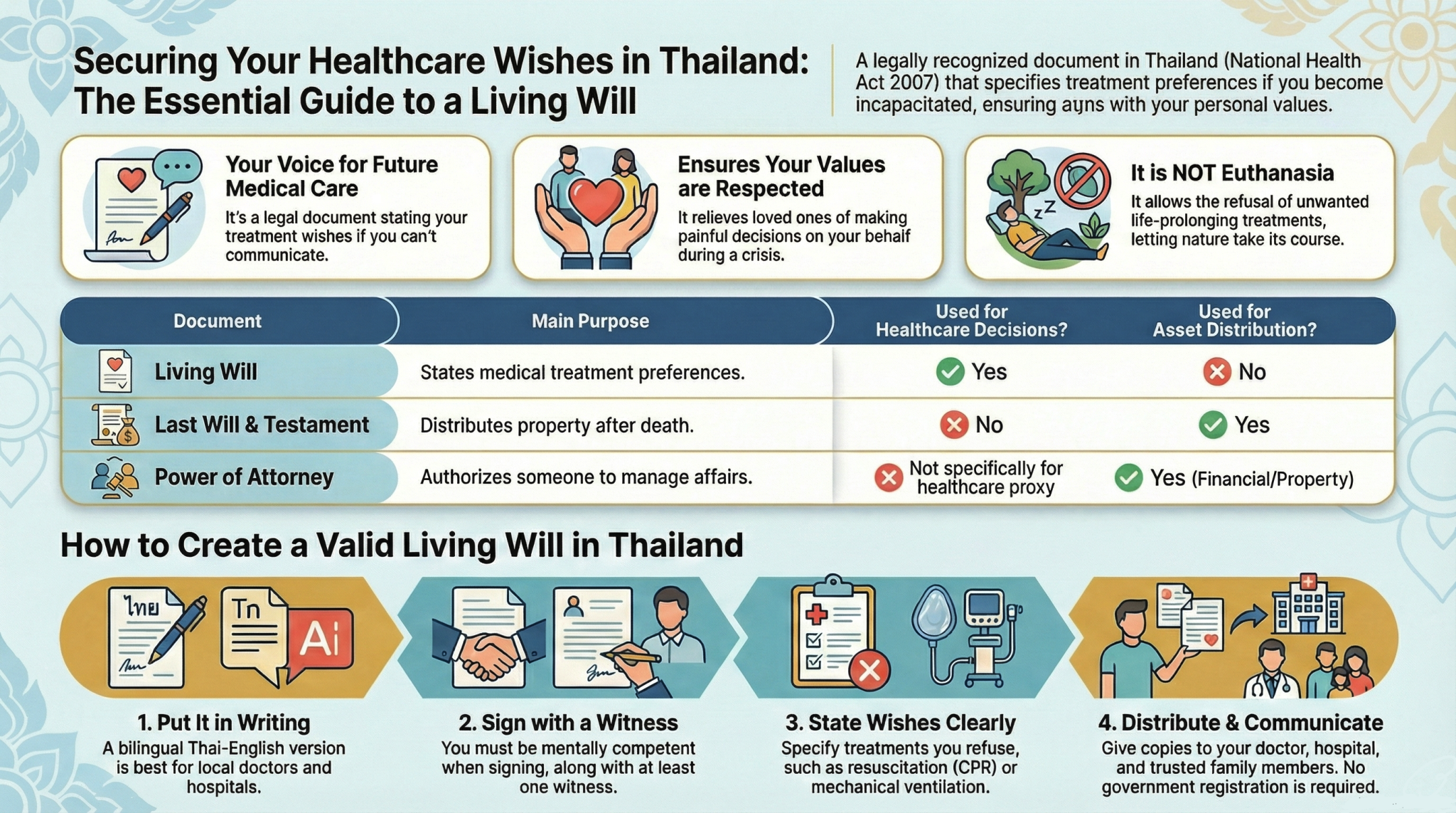
📋 ผู้เขียนผู้เชี่ยวชาญ คู่มือนี้เขียนร่วมโดย:
- Sébastien Brousseau, LL.B., วท.บ., French-Canadian lawyer by training, 20+ years managing Thai law firms.
- คุณ Wichuda Atthamethakon นิติศาสตรมหาบัณฑิต, ทนายความไทยที่ได้รับใบอนุญาต (ใบอนุญาตให้เป็นทนายความเลขที่ 3149/2556) และเป็นทนายความผู้ทำคำรับรองลายมือชื่อและเอกสาร (Notarial Services Attorney) (ทะเบียนเลขที่ 576/2566).
ประเด็นสำคัญ เกี่ยวกับหนังสือแสดงเจตนาล่วงหน้าในประเทศไทย
- คำแนะนำสำหรับชาวต่างชาติ: โรงพยาบาลเอกชนรายใหญ่ยอมรับหนังสือแสดงเจตนาล่วงหน้า รวมถึงโรงพยาบาลบำรุงราษฎร์และโรงพยาบาลกรุงเทพในกรุงเทพฯ และโรงพยาบาลกรุงเทพสิริโรจน์ในภูเก็ต โรงพยาบาลเหล่านี้รวมเรื่องนี้ไว้ในนโยบายสิทธิและหน้าที่ของผู้ป่วย ผู้ป่วยต้องจัดเตรียมสำเนาหนังสือแสดงเจตนาล่วงหน้า หนังสือแสดงเจตนาฯ (Living Will) และทางเลือกในการรักษาที่เขียนเป็นลายลักษณ์อักษร การขอความช่วยเหลือจากทนายความชาวไทยที่พูดได้สองภาษาถือเป็นสิ่งสำคัญ ซึ่งช่วยลดความเสี่ยงที่เอกสารจะถูกมองข้ามในกรณีฉุกเฉิน.
- พื้นฐานทางกฎหมาย: มาตรา 12 ของพระราชบัญญัติสุขภาพแห่งชาติให้สิทธิ์แก่ทุกคน รวมถึงชาวต่างชาติ ในการปฏิเสธการรักษา สิทธิ์นี้ใช้ได้เฉพาะกรณีที่การรักษาเพียงแต่ยืดเวลาการตายหรือความทุกข์ทรมานอย่างรุนแรงเท่านั้น การปฏิเสธจะต้องทำเป็นลายลักษณ์อักษรในหนังสือแสดงเจตนาล่วงหน้า
- เอกสารต้องครบถ้วนตามเกณฑ์ขั้นต่ำ: เขียนเป็นภาษาไทย หรือทั้งภาษาไทยและภาษาอังกฤษ เพราะแพทย์ชาวไทยอาศัยข้อความภาษาไทย คุณควรเซ็นชื่อเมื่อมีสติปัญญาเพียงพอ ให้มีพยานอย่างน้อยหนึ่งคนซึ่งไม่มีส่วนได้เสียใน กองมรดก. ไม่จำเป็นต้องรับรองเอกสารโดยโนตารี.
- ขอบเขตและข้อจำกัด: หนังสือแสดงเจตนาไม่ประสงค์จะรับบริการสาธารณสุข (Living Will) ที่สมบูรณ์ช่วยให้คุณปฏิเสธการรักษาเพื่อยืดชีวิตได้ เช่น เครื่องช่วยหายใจหรือสายให้อาหาร แต่ไม่อนุญาตให้ใช้วิธีการเชิงรุก เช่น การฉีดยาให้ถึงแก่ความตาย ซึ่งยังคงผิดกฎหมาย.
- เพิ่มผู้แทน: การทำหนังสือแสดงเจตนาฯ (Living Will) ควบคู่กับ หนังสือมอบอำนาจ ด้านการแพทย์ หรือการแต่งตั้งตัวแทนด้านการดูแลสุขภาพ จะช่วยได้ สิ่งนี้ทำให้มั่นใจได้ว่าโรงพยาบาลและครอบครัวจะรู้ว่าใครสามารถพูดแทนคุณได้หากมีคำถามเกิดขึ้น ThaiLawOnline สามารถช่วยเหลือคุณได้ทั้งสองเรื่องในราคาย่อมเยา.
สารบัญ
ความเข้าใจเกี่ยวกับหนังสือแสดงเจตนาล่วงหน้าในประเทศไทย
หนังสือแสดงเจตนาล่วงหน้าคืออะไร?
หนังสือแสดงเจตนาไม่ประสงค์จะรับบริการสาธารณสุขที่เป็นไปเพียงเพื่อยืดการตายในวาระสุดท้ายของชีวิต (Living Will) ในประเทศไทยเป็นเอกสารทางกฎหมาย ซึ่งเป็นส่วนหนึ่งของพระราชบัญญัติสุขภาพแห่งชาติ พ.ศ. 2550 (2007) มาตรา 12 เอกสารนี้ช่วยให้คุณสามารถปฏิเสธการรักษาทางการแพทย์บางประเภทได้ ซึ่งรวมถึงการรักษาเพื่อรักษาชีวิตหรือการกู้ชีพ คุณสามารถปฏิเสธการรักษาดังกล่าวได้หากคุณอยู่ใน ระยะสุดท้ายของชีวิต หรืออยู่ในภาวะหมดสติอย่างถาวร โรงพยาบาลในประเทศไทยต้องปฏิบัติตามความประสงค์ที่ท่านได้เขียนไว้ เมื่อท่านไม่สามารถสื่อสารได้.
คุณสมบัติหลัก:
• ถูกกฎหมายตั้งแต่ปี 2007 • ใช้เฉพาะกับการดูแลในวาระสุดท้ายของชีวิตเท่านั้น • ไม่อนุญาตให้ทำการุณยฆาตเชิงรุก • ต้องลงลายมือชื่อ และแนะนำอย่างยิ่งให้มีพยาน การเข้าใจความสำคัญของหนังสือแสดงเจตนาไม่ประสงค์จะรับบริการสาธารณสุข (Living Will) ในประเทศไทยช่วยให้มั่นใจได้ว่าความประสงค์ด้านการรักษาพยาบาลของคุณจะได้รับการปฏิบัติตาม • มีผลผูกพันผู้ให้บริการสาธารณสุขตามมาตรา 12
หนังสือแสดงเจตนาล่วงหน้าเทียบกับคำสั่งล่วงหน้าในประเทศไทย
คำว่า “หนังสือแสดงเจตนาฯ” (living will) “คำสั่งล่วงหน้า” (advance directive) และ “คำสั่งการดูแลสุขภาพ” (health care directive) มักถูกใช้แทนกัน อย่างไรก็ตาม หนังสือแสดงเจตนาฯ ในประเทศไทยมีความแตกต่าง โดยจะมุ่งเน้นไปที่คำสั่งเป็นลายลักษณ์อักษรของคุณเกี่ยวกับการรักษาพยาบาล หากคุณไม่สามารถตัดสินใจได้ ซึ่งเป็นองค์ประกอบหลักของการวางแผนดูแลล่วงหน้าที่มีความกว้างกว่า การทำความเข้าใจความแตกต่างระหว่างคำสั่งล่วงหน้าและหนังสือแสดงเจตนาฯ จึงเป็นสิ่งสำคัญ ในประเทศไทย หนังสือแสดงเจตนาฯ คือเอกสารทางกฎหมายสำหรับการตัดสินใจทางการแพทย์ในช่วงท้ายของชีวิต ตามที่ระบุไว้ในพระราชบัญญัติสุขภาพแห่งชาติ หนังสือแสดงเจตนาฯ ในประเทศไทยมีความสำคัญอย่างยิ่งในการรับประกันว่าความต้องการด้านการดูแลสุขภาพของคุณจะได้รับการปฏิบัติตาม โดยจะระบุความต้องการเกี่ยวกับการดูแลทางการแพทย์ของคุณไว้อย่างชัดเจนในกรณีที่คุณไม่สามารถตัดสินใจได้เนื่องจาก ภาวะที่ไม่สามารถขัดขืนได้. เอกสารคำสั่งล่วงหน้าทางการแพทย์ในประเทศไทยช่วยให้คุณสามารถปฏิเสธการรักษาทางการแพทย์บางประเภทได้ล่วงหน้า ซึ่งช่วยให้ผู้ให้บริการทางการแพทย์ทราบถึงตัวเลือกของคุณ สิ่งนี้มีความสำคัญเป็นพิเศษสำหรับชาวต่างชาติที่อาศัยอยู่ในประเทศไทย ซึ่งอาจต้องเผชิญกับสถานการณ์ทางการแพทย์ที่เฉพาะตัว การจัดทำเอกสารคำสั่งล่วงหน้าทางการแพทย์ในประเทศไทยจะช่วยให้คุณและครอบครัวรู้สึกสบายใจ.
เอกสารสำคัญฉบับนี้ช่วยให้คุณตัดสินใจเกี่ยวกับการดูแลในช่วงสุดท้ายของชีวิตหรือการดูแลผู้ป่วยวิกฤตได้ในตอนนี้ ด้วยวิธีนี้ คุณจะได้รับการดูแลตามเงื่อนไขของคุณในอนาคต หนังสือแสดงเจตนาฯ (Living Will) ไม่ได้สนับสนุนการุณยฆาตหรือการฆ่าตัวตายโดยได้รับความช่วยเหลือ แต่ช่วยให้คุณปฏิเสธการรักษาที่ยืดอายุอย่างสุดโต่งและมุ่งเน้นที่ความสะดวกสบายของคุณ เป็นส่วนสำคัญของการวางแผนการดูแลทางการแพทย์ ช่วยให้คุณตัดสินใจเกี่ยวกับการดูแลในช่วงสุดท้ายของชีวิตหรือการดูแลผู้ป่วยวิกฤตได้ในตอนนี้ ด้วยวิธีนี้ คุณจะได้รับการดูแลตามเงื่อนไขของคุณในอนาคต หนังสือแสดงเจตนาฯ ไม่ได้มีไว้เพื่อสนับสนุนการุณยฆาตหรือการฆ่าตัวตายโดยได้รับความช่วยเหลือ แต่กฎหมายไทยอนุญาตให้คุณปฏิเสธมาตรการสุดโต่งเพื่อยืดอายุ และยังอนุญาตให้คุณหยุดการรักษาที่ก่อให้เกิดความทุกข์ทรมานมากขึ้น ต่อไปนี้เป็นตารางเกี่ยวกับเครื่องมือต่างๆ ที่สามารถใช้ในการวางแผนมรดก.
| เครื่องมือ | วัตถุประสงค์หลัก | ใช้ได้เมื่อ | การใช้งานอย่างถูกกฎหมายในประเทศไทย | ต้องลงทะเบียนก่อน | สามารถนำไปใช้ในการตัดสินใจด้านการดูแลสุขภาพได้ | สามารถใช้สำหรับการกระจายสินทรัพย์ได้ |
|---|---|---|---|---|---|---|
| หนังสือแสดงเจตนาล่วงหน้า | ระบุความต้องการด้านการรักษาพยาบาลของคุณ หากคุณป่วยหนักหรือหมดสติ | เมื่อคุณยังมีชีวิตอยู่แต่ไม่สามารถสื่อสารได้ | ใช่ ได้รับการรับรองภายใต้พระราชบัญญัติสุขภาพแห่งชาติ พ.ศ. 2550 | ไม่ (แต่ควรมีการลงนามและมีพยานรับรองอย่างถูกต้อง) | ✅ ใช่ | ❌ ไม่ |
| พินัยกรรม | การแบ่งทรัพย์สินของคุณหลังเสียชีวิต | หลังจากที่คุณเสียชีวิต | ใช่ อยู่ภายใต้ประมวลกฎหมายแพ่งและพาณิชย์ มาตรา 1646-1710 | ไม่ แต่ควรดำเนินการอย่างถูกต้องและเก็บรักษาไว้อย่างปลอดภัย | ❌ ไม่ | ✅ ใช่ |
| หนังสือมอบอำนาจ (ทั่วไป) | อนุญาตให้บุคคลอื่นกระทำการแทนคุณ | ในขณะที่คุณยังมีชีวิตอยู่และมีความสามารถ (หรือจนกว่าจะถูกเพิกถอน) | ใช่แล้ว มีการใช้กันอย่างแพร่หลายในด้านอสังหาริมทรัพย์ การธนาคาร และเรื่องทางกฎหมาย | ❌ ไม่ใช่ข้อบังคับ แต่โดยทั่วไปมักต้องมีการรับรองโดยทนายความหรือผู้รับรองเอกสาร | ❌ โดยปกติแล้วจะไม่เป็นเช่นนั้น | ✅ อาจเป็นไปได้ (สำหรับเรื่องทรัพย์สินหรือการเงิน) แต่ทรัพย์สินสำคัญส่วนใหญ่จะต้องผ่านกระบวนการทางศาลหลังจากเสียชีวิตแล้ว |
การทำหนังสือแสดงเจตจำนงล่วงหน้าในประเทศไทยเป็นสิ่งจำเป็นสำหรับผู้ใหญ่ทุกคน เพราะจะช่วยให้ความต้องการทางการแพทย์ของคุณเป็นที่รับรู้และเคารพ โดยเฉพาะอย่างยิ่งในสถานการณ์วิกฤต เอกสารฉบับนี้เปรียบเสมือนเสียงของคุณในยามที่คุณไม่สามารถสื่อสารได้ และสามารถช่วยลดภาระให้กับคนที่คุณรักได้อย่างมาก การเข้าใจวิธีการทำและใช้หนังสือแสดงเจตจำนงล่วงหน้าในประเทศไทยจึงมีความสำคัญอย่างยิ่งสำหรับชาวต่างชาติและผู้ที่อาศัยอยู่ในประเทศไทยทุกคน
หนังสือแสดงเจตจำนงในการดำรงชีวิตที่ถูกต้องตามกฎหมายในประเทศไทย
- เอกสารต้องทำเป็นลายลักษณ์อักษร โปรดระวังสิ่งที่สำนักงานกฎหมายอื่นๆ อาจกล่าวอ้าง เพราะมีข้อมูลที่ไม่ถูกต้องมากมายบนอินเทอร์เน็ต เอกสารฉบับสองภาษา ไทย-อังกฤษ จะดีที่สุด เพราะแพทย์และโรงพยาบาลจะพิจารณาจากฉบับภาษาไทยเป็นหลัก ซึ่งเราได้จัดเตรียมไว้ให้คุณแล้ว
- คุณผู้ให้คำมั่น ต้องลงนามในขณะที่ยังมีสติสัมปชัญญะครบถ้วน
- กฎกระทรวงกำหนดให้ต้องระบุชื่อพยาน และเลขประจำตัว และระบุความสัมพันธ์กับคุณ รวมถึงต้องลงลายมือชื่อ แต่ไม่ได้กำหนดจำนวนพยาน และคำแนะนำของสำนักงานคณะกรรมการสุขภาพแห่งชาติระบุว่าเอกสารที่ไม่มีพยานไม่ได้เป็นโมฆะเพราะเหตุนั้น เรายังคงแนะนำอย่างยิ่งให้มีพยานสองคนที่ไม่ได้รับประโยชน์ใดๆ จากการเสียชีวิตของคุณ เพราะพวกเขาจะเป็นหลักฐานหากเอกสารนั้นถูกโต้แย้งภายหลัง.
- ระบุให้ชัดเจนว่าคุณยอมรับหรือปฏิเสธการรักษาใดบ้าง ซึ่งรวมถึงการช่วยชีวิต การใช้เครื่องช่วยหายใจ และการให้อาหารทางสายยาง ทำเช่นนี้หากคุณอยู่ในระยะสุดท้ายของชีวิตหรืออยู่ในภาวะโคม่าที่ไม่สามารถฟื้นคืนได้
- คุณสามารถระบุชื่อบุคคลที่เชื่อถือได้ในเอกสารเพื่ออธิบายความต้องการที่แท้จริงของคุณได้ หากเอกสารนั้นไม่ชัดเจน (กฎกระทรวงปี 2010 ข้อ 3 วรรค 3: ผู้ทำหน้าที่อธิบายความประสงค์ที่แท้จริง). บุคคลนั้นลงนามในเอกสารและระบุหมายเลขบัตรประจำตัวประชาชนของตน หากคุณไม่สามารถสื่อสารได้แล้ว แพทย์ผู้รักษาต้องอธิบายสถานการณ์ของคุณให้แก่บุคคลนั้นหรือญาติของคุณก่อนที่จะดำเนินการตามเอกสาร และปรึกษาหารือกับพวกเขาหากมีปัญหาเกิดขึ้น (ข้อ 6) พวกเขาจะอธิบายถึงความประสงค์ของคุณ ไม่ได้ตัดสินใจแทนคุณ สำหรับ การดูแลแบบประคับประคอง และการตัดสินใจอื่นๆ ที่เอกสารฉบับนี้ไม่ได้ครอบคลุม เราขอแนะนำให้ทำหนังสือมอบอำนาจแยกต่างหาก.
เราได้รวมสิ่งนี้ไว้ในชุดเอกสารแสดงเจตจำนงในการดำรงชีวิตของเราแล้ว
เหตุใดจึงควรทำหนังสือแสดงเจตนาล่วงหน้า?
ลองพิจารณาตัวอย่างของคู่สามีภรรยาชาวต่างชาติสูงอายุในประเทศไทยที่กำลังพูดคุยกันเรื่องการดูแลสุขภาพในอนาคต และ...
ข้อบังคับทางกฎหมายของกฎกระทรวงการเขียนความประสงค์ของตนลงบนกระดาษ จะช่วยลดภาระให้แก่คนที่รักในการตัดสินใจที่ยากลำบากแทนพวกเขา แทนที่จะปล่อยให้ครอบครัวต้องสงสัยว่า “คุณพ่อคุณแม่ต้องการอะไร?” ในกรณีฉุกเฉินทางการแพทย์ หนังสือแสดงเจตนาฯ (Living Will) จะให้คำแนะนำที่ชัดเจน เป็นการเลือกที่แสดงถึงความเมตตา ช่วยให้ครอบครัวไม่รู้สึกผิดหรือเกิดความขัดแย้ง นอกจากนี้ยังช่วยให้มั่นใจได้ว่าคุณค่าของคุณจะได้รับการเคารพ ซึ่งรวมถึงว่าคุณให้ความสำคัญกับคุณภาพชีวิต การหลีกเลี่ยงหัตถการที่รุกล้ำร่างกาย หรือการได้รับการรักษาทุกอย่างที่เป็นไปได้มากกว่ากัน การคิดถึงความเจ็บป่วยหรือการไร้ความสามารถไม่ใช่เรื่องง่าย อย่างไรก็ตาม การทำหนังสือแสดงเจตนาฯ เป็นขั้นตอนที่แสดงถึงความห่วงใย ช่วยทั้งคุณและครอบครัวของคุณ ในประเทศไทย กฎหมายและรูปแบบหนังสือแสดงเจตนาฯ เหมือนกันทุกพื้นที่ อย่างไรก็ตาม ความตระหนักและแนวปฏิบัติของโรงพยาบาลอาจแตกต่างกันไปในแต่ละเขต ทำให้การสื่อสารและการจัดทำเอกสารที่ถูกต้องมีความสำคัญเป็นอย่างยิ่ง ดังที่เราจะกล่าวถึงต่อไป โปรดจำไว้ว่า:
- แพทย์ไทยไม่ชอบพูดถึงความเป็นไปได้ของการเสียชีวิต
- อุบัติเหตุหรือภาวะป่วยฉับพลันอาจทำให้คุณหมดสติ หรือไม่สามารถควบคุมการรักษาได้เป็นเวลานานโดยไม่แจ้งให้ทราบล่วงหน้า
- ลักษณะของ วัฒนธรรมไทย คือการรักษาต่อเนื่องไปจนกว่าบุคคลนั้นจะเสียชีวิตจริง
- ควรจัดทำหนังสือแสดงเจตนาฯ (Living Will) ให้เสร็จสิ้นโดยเร็วที่สุดเท่าที่จะเป็นไปได้ เพื่อให้เป็นไปตามกฎกระทรวง ตามกฎหมายไทย คุณไม่สามารถให้ความยินยอมในหนังสือแสดงเจตนาฯ ได้หากคุณถูกพิจารณาว่าไร้ความสามารถ ดังนั้นอย่ารอช้า รีบทำโดยเร็ว!
กรอบกฎหมายสำหรับการจัดทำเอกสารหนังสือแสดงเจตนาล่วงหน้าในประเทศไทย:
พระราชบัญญัติสุขภาพแห่งชาติ พ.ศ. 2550 (พระราชบัญญัติสุขภาพแห่งชาติ
ประเทศไทยให้การรับรองหนังสือแสดงเจตนาล่วงหน้าอย่างเป็นทางการแล้ว
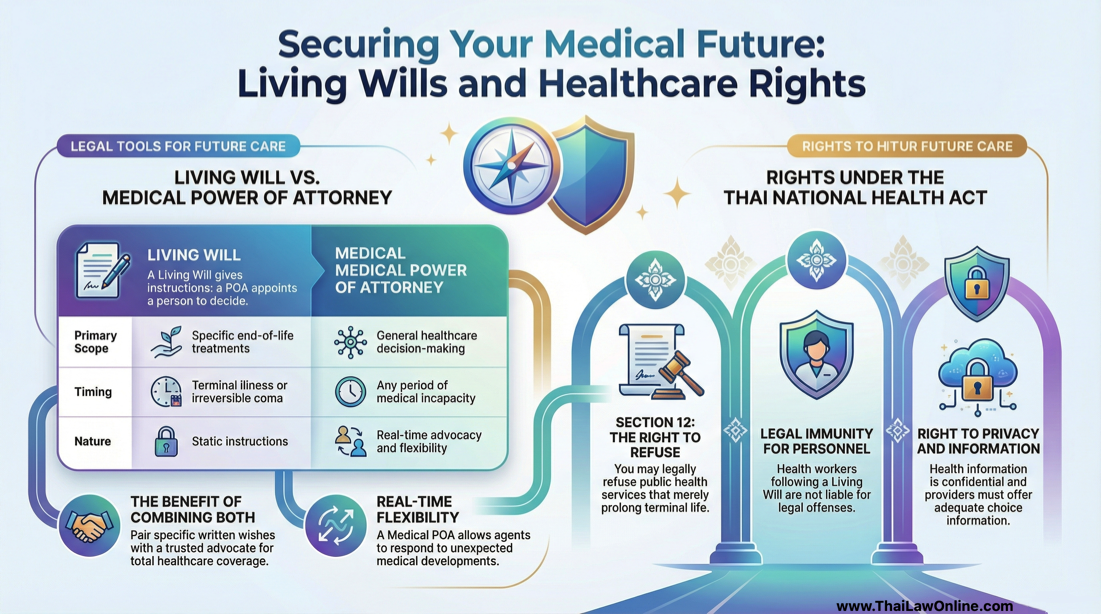
มาตรา 12 แห่งพระราชบัญญัติสุขภาพแห่งชาติ พ.ศ. 2550 (2007). กฎหมายฉบับนี้ให้สิทธิแก่ทุกคนในการทำหนังสือแสดงเจตนาไม่ประสงค์จะรับบริการสาธารณสุขที่เป็นไปเพียงเพื่อยืดการตายในวาระสุดท้ายของชีวิต (Living Will) เป็นลายลักษณ์อักษร ซึ่งจะปฏิเสธการรักษาทางการแพทย์ที่เพียงแต่ยืดระยะเวลาสุดท้ายของชีวิตหรือเพิ่มความทุกข์ทรมาน หากคุณป่วยในระยะสุดท้ายหรืออยู่ในสภาพที่ไม่มีทางรักษาให้หายได้ คุณสามารถบอกแพทย์ไม่ให้ใช้การรักษาที่รุนแรง ซึ่งรวมถึงการช่วยชีวิตด้วยการปั๊มหัวใจ การใช้เครื่องช่วยหายใจ หรือการให้อาหารทางสายยางเพื่อยืดชีวิตคุณ มาตรา 12 ยังคุ้มครองผู้ให้บริการด้านการดูแลสุขภาพที่ปฏิบัติตามหนังสือแสดงเจตนาฯ ที่ถูกต้อง พวกเขาจะไม่ต้องรับผิดทางอาญาหรือทางแพ่งสำหรับการเคารพความประสงค์ของคุณ การรับประกันนี้มีความสำคัญในการช่วยให้แพทย์และโรงพยาบาลในประเทศไทยปฏิบัติตามคำสั่งล่วงหน้าโดยไม่ต้องกังวลเกี่ยวกับปัญหาทางกฎหมาย ในประเทศไทย หนังสือแสดงเจตนาฯ มุ่งเน้นเฉพาะการปฏิเสธการรักษาบางอย่างเท่านั้น ไม่ได้อนุญาตให้ขอให้ยุติชีวิตโดยตรง กฎหมายไทยห้ามการุณยฆาต ผู้เชี่ยวชาญทางการแพทย์ไม่สามารถกระทำการใดๆ ที่มีเจตนาทำให้เสียชีวิตได้ อย่างไรก็ตาม พวกเขามีหน้าที่ต้องให้
การดูแลแบบประคับประคองเพื่อความสบาย หนังสือแสดงเจตนาฯ (Living Will) ช่วยให้ผู้ป่วยสามารถปฏิเสธการรักษาที่ไร้ประโยชน์หรือไม่ต้องการเพื่อยืดชีวิตได้ หากคุณอยู่ในอาการโคม่าถาวรและไม่สามารถฟื้นตัวได้ คุณอาจไม่ต้องการให้รักษาชีวิตไว้ นั่นหมายความว่าคุณไม่ต้องการใช้เครื่องช่วยหายใจหรือสายให้อาหาร หากตรงตามเงื่อนไขดังกล่าว แพทย์จะปล่อยให้คุณจากไปตามธรรมชาติ โดยเน้นเฉพาะการดูแลเพื่อความสบาย เช่น การบรรเทาความเจ็บปวด ผู้ป่วยมีสิทธิที่จะปฏิเสธการรักษา สิทธินี้มีพื้นฐานมาจากศักดิ์ศรีและความเป็นอิสระของพวกเขา ซึ่งเป็นหลักการเดียวกันทั่วทั้งระบบการดูแลสุขภาพของประเทศไทย แต่บางโรงพยาบาลอาจมีแบบฟอร์มหรือกระบวนการของตนเอง.
ข้อกำหนดสำหรับการทำหนังสือแสดงเจตนาล่วงหน้าที่ถูกต้องตามกฎหมายของไทย:
ในปี 2010
มีการออกกฎกระทรวงเกี่ยวกับการทำหนังสือแสดงเจตนาล่วงหน้าในประเทศไทยเพื่อกำหนดวิธีการทำหนังสือแสดงเจตนาฯ (Living Will) กฎกระทรวงนี้มีผลใช้บังคับเมื่อวันที่ 20 พฤษภาคม 2011 และนับแต่นั้นก็เป็นส่วนสำคัญของการให้คำปรึกษาทางกฎหมายด้านการดูแลสุขภาพ ทั้งมาตรา 12 และกฎกระทรวงไม่ได้กำหนดอายุไว้ สำนักงานคณะกรรมการสุขภาพแห่งชาติแนะนำอายุ 18 ปีตามคำประกาศสิทธิผู้ป่วย และหากอายุต่ำกว่านั้นให้ได้รับความยินยอมจากผู้ปกครอง ด้านล่างนี้คือองค์ประกอบสำคัญที่หนังสือแสดงเจตนาฯ ของคุณควรมีเพื่อให้ถูกต้องตามกฎหมาย:
| ส่วนประกอบ | รายละเอียด |
|---|---|
| ข้อมูลของผู้แจ้ง | โปรดระบุชื่อเต็ม วันเดือนปีเกิดหรืออายุ และหมายเลขประจำตัวประชาชน ซึ่งอาจเป็นหมายเลขบัตรประชาชนไทย หรือหมายเลขหนังสือเดินทางหากท่านเป็นชาวต่างชาติ นอกจากนี้ โปรดระบุที่อยู่ปัจจุบันหรือข้อมูลติดต่อของท่านด้วย |
| วันที่ประกาศ | วันที่ทำหนังสือแสดงเจตนาล่วงหน้า ซึ่งเป็นการยืนยันว่าคุณได้ทำคำสั่งนี้ ณ จุดเวลาใดเวลาหนึ่ง ในขณะที่ยังมีสติสัมปชัญญะสมบูรณ์ |
| ข้อมูลพยาน | ชื่อเต็ม เลขประจำตัว และความสัมพันธ์กับคุณของพยานแต่ละคน (ข้อ 3(3)); กฎระเบียบไม่ได้กำหนดจำนวน แต่เราแนะนำให้มีสองคน การเลือกผู้ใหญ่ที่ไม่ได้สืบทอดมรดกจากคุณจะช่วยหลีกเลี่ยงความขัดแย้งทางผลประโยชน์ได้ พยานต้องลงนามในเอกสาร. |
| คำแนะนำด้านการดูแลสุขภาพ | คำอธิบายที่ชัดเจนเกี่ยวกับการรักษาทางการแพทย์หรือ มาตรการยืดอายุขัย คุณ อย่า คุณสามารถแสดงความต้องการได้ ตัวอย่างเช่น คุณสามารถปฏิเสธการช่วยชีวิต (CPR) การใช้เครื่องช่วยหายใจ การให้อาหารทางสายยาง การฟอกไต หรือการรักษาอื่นๆ ในสถานการณ์ที่กำหนด คุณอาจพูดว่า “ฉันปฏิเสธการรักษาใดๆ ก็ตามเพื่อยืดอายุของฉันเมื่อฉันไม่สามารถฟื้นตัวได้” คุณยังสามารถเพิ่มรายละเอียดได้ เช่น “ไม่ใส่ท่อช่วยหายใจหากฉันหายใจเองไม่ได้” |
| เป็นทางเลือก: บุคคลที่จะอธิบายความต้องการของคุณ | คุณสามารถระบุชื่อบุคคลเพื่ออธิบายความต้องการที่แท้จริงของคุณได้ หากเอกสารไม่ชัดเจน (ข้อ 3 วรรค 3) บุคคลนั้นต้องลงลายมือชื่อและระบุเลขประจำตัวของตน และแพทย์ต้องอธิบายถึงภาวะของคุณให้เขาฟังและปรึกษาหารือกับเขาก่อนที่จะดำเนินการ (ข้อ 6) บุคคลนั้นจะอธิบายให้ฟัง ไม่ได้ตัดสินใจแทนคุณ เรายังแนะนำให้ทำหนังสือมอบอำนาจแยกต่างหากสำหรับการตัดสินใจอื่นๆ. |
| ลายเซ็น | ลายเซ็นของคุณ (หรือลายพิมพ์นิ้วมือ หากไม่สามารถลงลายมือชื่อได้ ให้ได้รับการรับรองจากพยานสองคนตามคำแนะนำของสำนักงานคณะกรรมการสุขภาพแห่งชาติ) และ ลายเซ็นของพยาน หากมีบุคคลใดช่วยเขียนหรือพิมพ์เอกสารให้คุณ บุคคลนั้นต้องลงนามด้วยและระบุชื่อ/หมายเลขประจำตัว ควรลงนามต่อหน้าพยานทั้งสองฝ่ายจะดีที่สุด |
หนังสือแสดงเจตนาฯ (Living Will) ควรเขียนเป็นภาษาไทยหรือทั้งภาษาไทยและภาษาอังกฤษ เพื่อให้เจ้าหน้าที่ทางการแพทย์ในท้องถิ่นเข้าใจได้ง่าย ชาวต่างชาติหลายคนเขียนเอกสารเป็นภาษาอังกฤษก่อนเพื่อให้เจตนาของตนชัดเจน จากนั้นจึงทำงานร่วมกับทนายความเพื่อจัดทำฉบับที่เป็นทางการในภาษาไทย กฎหมายในประเทศไทยไม่ได้กำหนดให้ต้องจดทะเบียนหนังสือแสดงเจตนาฯ อย่างไรก็ตาม เป็นความคิดที่ดีที่จะแจ้งให้แพทย์และสมาชิกในครอบครัวทราบว่าคุณมีเอกสารดังกล่าว ควรส่งสำเนาให้แพทย์ประจำตัวหรือโรงพยาบาล และเก็บสำเนาไว้กับเอกสารสำคัญของคุณ ในบางกรณี คุณอาจขอให้เพิ่มบันทึกในแฟ้มประวัติทางการแพทย์ของคุณ หรือแม้กระทั่งพกบัตรที่ระบุว่าคุณมีหนังสือแสดงเจตนาฯ การดำเนินการอาจแตกต่างกันไป โรงพยาบาลบางแห่งอาจมีความรู้เกี่ยวกับหนังสือแสดงเจตนาฯ เป็นอย่างดี ในขณะที่โรงพยาบาลขนาดเล็กอาจไม่คุ้นเคย การดำเนินการเหล่านี้จะช่วยให้มั่นใจได้ว่าคำสั่งของคุณเป็นที่รู้จักและเข้าถึงได้ง่ายเมื่อจำเป็น ข่าวดีก็คือ ผู้คนจำนวนมากขึ้นตระหนักถึงความสำคัญของหนังสือแสดงเจตนาฯ ศาลไทยและหน่วยงานด้านสุขภาพสนับสนุนการเปลี่ยนแปลงนี้ ส่งผลให้หนังสือแสดงเจตนาฯ ได้รับการเคารพมากขึ้นทั่วประเทศ.
การจดทะเบียนหนังสือแสดงเจตนาล่วงหน้าในประเทศไทย
ฉันสามารถจดทะเบียนหนังสือแสดงเจตนาล่วงหน้าออนไลน์ในประเทศไทยได้หรือไม่?(e-Living Will) ประเทศไทยไม่มีระบบทะเบียนกลางที่บังคับใช้ อย่างไรก็ตาม สำนักงานคณะกรรมการสุขภาพแห่งชาติ (สช.) ได้สร้างระบบ e-Living Will ขึ้นมา แพลตฟอร์มดิจิทัลนี้ช่วยให้ประชาชนและผู้พำนักอาศัยในประเทศไทยสามารถบันทึกคำสั่งล่วงหน้าเกี่ยวกับการรักษาพยาบาลของตนเองลงในระบบคลาวด์ส่วนกลางของรัฐบาล (GDCC) ทำให้โรงพยาบาลที่เข้าร่วมโครงการสามารถเข้าถึงข้อมูลได้ง่าย •
สถานที่ลงทะเบียน:เว็บไซต์ NHCO e-Living Will •
ข้อจำกัดสำหรับชาวต่างชาติ:ปัจจุบันระบบนี้อาศัยการตรวจสอบบัตรประจำตัวประชาชนไทยเป็นหลัก ชาวต่างชาติที่พำนักอยู่ในประเทศไทยควรเก็บเอกสารฉบับจริงสองภาษาไว้ที่แผนกเวชระเบียนของโรงพยาบาลหลักของตน เราแนะนำให้ลูกค้าทุกท่านจัดทำต้นฉบับอย่างน้อย 2 ฉบับ และทำใหม่ทุกสามปี.
วิธีตรวจสอบให้แน่ใจว่าหนังสือแสดงเจตนาล่วงหน้าของคุณได้รับการปฏิบัติตาม
รายการตรวจสอบสำหรับชาวต่างชาติที่มาอาศัยอยู่ในต่างแดนการลงนามในเอกสารเพียงอย่างเดียวไม่เพียงพอ ต้องปฏิบัติตามขั้นตอนเหล่านี้เพื่อให้เอกสารมีผลบังคับใช้:
ดาวน์โหลดฟรี: คู่มือการลงนามแบบสองภาษาของเราจะแนะนำคุณตลอดเซสชันการลงนามทั้งหมด กฎเกณฑ์เกี่ยวกับพยาน และสิ่งที่คุณต้องทำกับเอกสารหลังจากนั้น ทั้งในภาษาอังกฤษและภาษาไทย. ดาวน์โหลดคู่มือการลงนามพินัยกรรมและหนังสือแสดงเจตนาฯ (Living Will) (PDF, ภาษาอังกฤษแล้วตามด้วยภาษาไทย). พินัยกรรมและหนังสือแสดงเจตนาฯ (Living Will) ทุกฉบับที่เราจัดทำขึ้นมาพร้อมกับคู่มือฉบับนี้.
ที่พักพร้อมเวชระเบียน
นำเอกสารสองภาษาของคุณไปที่โรงพยาบาลหลัก เช่น โรงพยาบาลบำรุงราษฎร์ โรงพยาบาลศิริราช หรือโรงพยาบาลกรุงเทพ ขอให้พวกเขาสแกนเอกสารลงในเวชระเบียนอิเล็กทรอนิกส์ของคุณ ตามระเบียบของโรงพยาบาล (เช่น โรงพยาบาลบำรุงราษฎร์) แพทย์ไม่สามารถดำเนินการตามหนังสือแสดงเจตนาฯ (Living Will) ของคุณได้ด้วยตนเอง พวกเขาจำเป็นต้องได้รับความเห็นที่สองจากผู้เชี่ยวชาญ เพื่อยืนยันว่าอาการของคุณอยู่ในระยะสุดท้าย การป้องกันนี้จะช่วยป้องกันการยุติการรักษาเร็วเกินไป
กฎ “3 ปี”
โรงพยาบาลไทยหลายแห่งต้องการให้มีการอัปเดตเอกสารทุก 3 ปี เพื่อให้แน่ใจว่าเอกสารนั้นแสดงถึงเจตนาปัจจุบันของคุณ แม้ว่าจะไม่ได้ระบุไว้ในกฎหมาย แต่ก็เป็นสิ่งที่แนะนำเพื่อหลีกเลี่ยงปัญหาในอนาคต
ตัวบ่งชี้ภาพ
ติดสติ๊กเกอร์บนบัตรสมาชิกโรงพยาบาลหรือพกบัตรขนาดเล็กที่มีข้อความว่า “มีหนังสือแสดงเจตนาฯ (Living Will) เก็บไว้”.
การสำรองข้อมูลดิจิทัล
เก็บไฟล์ PDF ที่สแกนแล้วไว้ในสมาร์ทโฟนของคุณ เพื่อแสดงให้เจ้าหน้าที่ห้องฉุกเฉินดูได้ทันที
การรับรองโดยศาลและการบังคับใช้หนังสือแสดงเจตนาฯ (Living Will) ประเทศไทย
ศาลไทยได้ยืนยันความชอบด้วยกฎหมายของหนังสือแสดงเจตนาฯ (Living Will) คดีที่มักกล่าวถึงนั้นตัดสินโดยศาลปกครองสูงสุด ในคดีที่มีผู้ฟ้องขอให้เพิกถอนกฎกระทรวงที่ออกตามมาตรา 12 มิใช่คดีของศาลฎีกาเกี่ยวกับหนังสือแสดงเจตนาฯ ฉบับใดฉบับหนึ่ง ผู้ฟ้องคดีอ้างว่าการปฏิบัติตามการปฏิเสธการรักษาเพื่อยืดชีวิตของผู้ป่วยเท่ากับเป็นการุณยฆาต การปฏิบัติตามหนังสือแสดงเจตนาที่ถูกต้องตามมาตรา 12 ไม่ใช่การุณยฆาต และกฎกระทรวงยังคงมีผลใช้บังคับ (ดูคำพิพากษาด้านล่าง) คำพิพากษานี้ยืนยันว่าหนังสือแสดงเจตนาฯ ที่ทำตามพระราชบัญญัติสุขภาพแห่งชาติต้องได้รับการปฏิบัติตาม และแสดงถึงสิทธิของผู้ป่วย คำพิพากษาของศาลทำให้เกิดความชัดเจนและความมั่นใจ แพทย์ที่ปฏิบัติตามหนังสือแสดงเจตนาฯ ที่ถูกต้องได้รับความคุ้มครองตามกฎหมาย ครอบครัวไม่ควรตำหนิแพทย์ที่เคารพความประสงค์ของผู้ป่วย สิ่งสำคัญคือต้องมอบสำเนาหนังสือแสดงเจตนาฯ ให้แพทย์หรือโรงพยาบาลของคุณ และเก็บสำเนาไว้กับเอกสารสำคัญของคุณด้วย ในบางกรณี คุณสามารถขอให้เพิ่มบันทึกในแฟ้มของโรงพยาบาล และยังสามารถพกบัตรที่ระบุว่าคุณมีหนังสือแสดงเจตนาฯ การปฏิบัติอาจแตกต่างกันไป โรงพยาบาลบางแห่งเข้าใจเรื่องนี้ดี ขณะที่โรงพยาบาลขนาดเล็กบางแห่งอาจไม่เข้าใจ การดำเนินการเหล่านี้ช่วยให้คำสั่งของคุณเป็นที่รับรู้และเข้าถึงได้ง่ายเมื่อจำเป็น โดยสรุป เมื่อวันที่ 18 มิถุนายน 2015 ศาลปกครองสูงสุดได้มี
มติแดง เลขที่ ฟ.11/2558 (ดำ เลขที่ ฟ.147/2554)แพทย์สามคนขอให้ศาลยกเลิกคำสั่งดังกล่าว
กฎกระทรวง พ.ศ. 2553ผู้ฟ้องคดีอ้างว่ากฎกระทรวงดังกล่าวเปิดทางให้มีการุณยฆาตและขัดต่อจริยธรรมทางการแพทย์ ศาลพิพากษายกฟ้องและยืนยันความชอบด้วยกฎหมายของกฎกระทรวงทั้งฉบับ หน่วยงานของรัฐยังสนับสนุนการใช้หนังสือแสดงเจตนาฯ ผ่านนโยบายสาธารณะ กระทรวงสาธารณสุขและสำนักงานคณะกรรมการสุขภาพแห่งชาติได้เผยแพร่แนวทางและสื่อต่างๆ เพื่อช่วยให้ประชาชนเข้าใจคำสั่งล่วงหน้าเกี่ยวกับการรักษาพยาบาล ตัวอย่างเช่น คณะกรรมการสุขภาพแห่งชาติได้เผยแพร่แบบฟอร์มตัวอย่างของหนังสือแสดงเจตนาฯ และรายการการรักษาที่ผู้ป่วยมักปฏิเสธ เช่น การกู้ชีพ (CPR) การใช้เครื่องช่วยหายใจ และการให้อาหารทางสายยางในวาระสุดท้ายของชีวิต ความพยายามเหล่านี้มุ่งขจัดความเชื่อผิดๆ ในหมู่บุคลากรทางการแพทย์และประชาชน ด้วยการเผยแพร่ความรู้ดังกล่าวและคำพิพากษาของศาลปกครองสูงสุด ปัจจุบันหนังสือแสดงเจตนาฯ จึงถือเป็นเครื่องมือสำคัญในระบบการดูแลสุขภาพของไทย และโรงพยาบาลมีความคุ้นเคยกับการดำเนินการตามเอกสารนี้มากขึ้น โดยเฉพาะในเมืองใหญ่อย่างกรุงเทพฯ.
การุณยฆาตแบบกระทำโดยตรงเทียบกับการุณยฆาตแบบไม่กระทำโดยตรงในประเทศไทย
การเข้าใจความแตกต่างระหว่างการการุณยฆาตเชิงรุกและการการุณยฆาตเชิงรับเป็นสิ่งสำคัญสำหรับทุกคนที่กำลังพิจารณาทำหนังสือแสดงเจตนาไม่ประสงค์จะรับบริการสาธารณสุข (Living Will) ในประเทศไทย มาตรา 12 แห่งพระราชบัญญัติสุขภาพแห่งชาติ พ.ศ. 2550 (2007) ให้สิทธิตามกฎหมายแก่ผู้ป่วยในการปฏิเสธการรักษาเพื่อยืดชีวิต ซึ่งบางครั้งเรียกกันอย่างหลวมๆ ว่าการการุณยฆาตเชิงรับ ศาลปกครองสูงสุดวินิจฉัยว่าการปฏิบัติตามหนังสือแสดงเจตนาดังกล่าวไม่ใช่การการุณยฆาต ผู้ป่วยมีสิทธิตามกฎหมายที่จะปฏิเสธการรักษาเพื่อพยุงชีวิต ซึ่งรวมถึงเครื่องช่วยหายใจ สายให้อาหาร การฟอกไต หรือการกู้ชีพ ทั้งนี้ใช้เมื่อผู้ป่วยอยู่ในวาระสุดท้ายหรืออยู่ในภาวะที่ไม่อาจฟื้นคืนได้ การการุณยฆาตเชิงรับคือการปล่อยให้เสียชีวิตตามธรรมชาติโดยการไม่ให้หรือยุติการรักษา แทนที่จะเป็นการกระทำให้ถึงแก่ความตาย การการุณยฆาตเชิงรุกหมายถึงการลงมือกระทำเพื่อยุติชีวิตของบุคคล ซึ่งอาจรวมถึงการฉีดยาให้ถึงแก่ความตาย การการุณยฆาตเชิงรุกและการฆ่าด้วยความเมตตายังคงเป็นความผิดอาญาตามกฎหมายไทย ไม่ว่าผู้ป่วยจะประสงค์อย่างไรก็ตาม หนังสือแสดงเจตนาไม่ประสงค์จะรับบริการสาธารณสุข (Living Will) ที่สมบูรณ์ในประเทศไทยอนุญาตเฉพาะมาตรการเชิงรับเท่านั้น คือหยุดการรักษาที่เพียงแต่ยืดการตายออกไป และมุ่งเน้นการดูแลแบบประคับประคอง โดยไม่อนุญาตให้กระทำการใดๆ ที่มุ่งเร่งให้ถึงแก่ความตาย ความแตกต่างทางกฎหมายที่สำคัญนี้ทำให้แนวทางของประเทศไทยคล้ายกับหลายประเทศ ซึ่งอนุญาตให้ปฏิเสธการรักษาได้ แต่ไม่อนุญาตให้ช่วยฆ่าตัวตาย.
ความเข้าใจผิดทั่วไปเกี่ยวกับหนังสือแสดงเจตนาล่วงหน้าในประเทศไทย
เพื่อให้เกิดความชัดเจนและขจัดความเข้าใจผิดที่พบบ่อยเกี่ยวกับหนังสือแสดงเจตนาฯ (Living Will) ในประเทศไทย เรามาพูดถึงความเข้าใจผิดที่เกิดขึ้นบ่อยๆ กัน:
1. ความเข้าใจผิด: หนังสือแสดงเจตนาล่วงหน้าอนุญาตให้ทำการุณยฆาตหรือการฆ่าเพื่อความเมตตาได้โดยสรุปแล้ว หนังสือแสดงเจตนาฯ (Living Will) ในประเทศไทยนั้นมีความหมายมากกว่าแค่เอกสาร มันแสดงถึงค่านิยมและทางเลือกของคุณเกี่ยวกับการรักษาพยาบาล จึงเป็นสิ่งจำเป็นสำหรับทุกคนที่อาศัยอยู่ในประเทศไทยที่จะต้องจัดทำหนังสือแสดงเจตนาฯ เพื่อปกป้องความต้องการด้านการดูแลสุขภาพของตนเอง.
- เอกสารแสดงเจตจำนงในการดำรงชีวิตอนุญาตให้ทำการุณยฆาตได้
- ความเป็นจริง: ข้อมูลนี้ไม่ถูกต้อง ในประเทศไทย หนังสือแสดงเจตจำนงในการดำรงชีวิตอนุญาตให้บุคคลปฏิเสธการรักษาทางการแพทย์บางอย่างได้ โดยอิงตามพระราชบัญญัติสุขภาพแห่งชาติ พ.ศ. 2550 (2550) การรักษาเหล่านั้นเพียงแต่ยืดระยะเวลาในระยะสุดท้ายของชีวิตหรือเพิ่มความทุกข์ทรมานเท่านั้น ไม่ กฎหมายไทยห้ามการุณยฆาตอย่างเด็ดขาด โดยมุ่งเน้นการปล่อยให้ความตายเกิดขึ้นตามธรรมชาติ เราหลีกเลี่ยงมาตรการที่รุนแรง แต่ยังคงให้ความสะดวกสบายผ่านการดูแลแบบประคับประคอง
2.
ความเข้าใจผิด: ครอบครัวของฉันสามารถลบล้างหนังสือแสดงเจตนาล่วงหน้าของฉันได้หรือไม่?- ความเป็นจริง: หากมีการทำหนังสือแสดงเจตนาล่วงหน้าอย่างถูกต้องตามกฎหมายไทย บุคลากรทางการแพทย์ต้องปฏิบัติตามคำสั่งในพินัยกรรมนั้น พินัยกรรมต้องทำเป็นลายลักษณ์อักษร ระบุเจตนาอย่างชัดเจน ลงนามโดยบุคคลที่มีสติสัมปชัญญะสมบูรณ์ และมีพยานที่ถูกต้อง การมีส่วนร่วมของครอบครัวมักมีคุณค่าในการหารือเกี่ยวกับการดูแลรักษา อย่างไรก็ตาม หนังสือแสดงเจตนาล่วงหน้าที่ชัดเจนแสดงถึงความปรารถนาของคุณ โดยปกติแล้วจะมีความสำคัญเหนือกว่าความคิดเห็นของครอบครัวเกี่ยวกับการรักษาที่คุณต้องการปฏิเสธ
3.
ความเข้าใจผิด: หนังสือแสดงเจตนาล่วงหน้ามีไว้สำหรับผู้สูงอายุหรือผู้ป่วยระยะสุดท้ายเท่านั้น- ความจริง: หลายคนคิดว่าหนังสือแสดงเจตนาล่วงหน้ามีไว้สำหรับผู้สูงอายุหรือผู้ป่วยหนักเท่านั้น แต่ที่จริงแล้ว หนังสือแสดงเจตนาล่วงหน้าเป็นเครื่องมือวางแผนที่มีประโยชน์สำหรับผู้ใหญ่ทุกคนที่มีอายุ 18 ปีขึ้นไปในประเทศไทย อุบัติเหตุที่ไม่คาดฝันหรือการเจ็บป่วยกะทันหันสามารถเกิดขึ้นได้ทุกวัย เหตุการณ์เหล่านี้อาจทำให้คุณไม่สามารถบอกความประสงค์ด้านการดูแลสุขภาพของคุณได้ การทำหนังสือแสดงเจตนาล่วงหน้าล่วงหน้าจะช่วยให้มั่นใจได้ว่าความต้องการของคุณเป็นที่รับรู้ ไม่ว่าสถานะสุขภาพของคุณจะเป็นอย่างไรก็ตาม
4.
ความเข้าใจผิด: เมื่อฉันทำหนังสือแสดงเจตนาล่วงหน้าแล้ว มันจะถือเป็นที่สิ้นสุดและเปลี่ยนแปลงไม่ได้- ความเป็นจริง: นี่ไม่เป็นความจริง คุณสามารถเปลี่ยนแปลงหรือยกเลิกหนังสือแสดงเจตนาฯ (Living Will) ของคุณได้ตลอดเวลา นี่เป็นความจริงตราบใดที่คุณยังสามารถตัดสินใจและแบ่งปันการตัดสินใจของคุณเองได้ หากความปรารถนาของคุณเปลี่ยนแปลงไป หรือหากการรักษาทางการแพทย์ใหม่ๆ เปลี่ยนมุมมองของคุณ คุณสามารถทำหนังสือแสดงเจตนาฯ ฉบับใหม่ได้ สิ่งสำคัญคือต้องทำลายสำเนาเอกสารฉบับเก่าทั้งหมด นอกจากนี้ โปรดแจ้งให้แพทย์และบุคคลที่เกี่ยวข้องทราบเกี่ยวกับเอกสารที่แก้ไขหรือยกเลิกแล้วด้วย.
5.
ความเข้าใจผิด: หนังสือแสดงเจตนาล่วงหน้าต้องจดทะเบียนกับหน่วยงานราชการจึงจะมีผลบังคับใช้ได้- ความเป็นจริง: การลงทะเบียนไม่ใช่เงื่อนไขความสมบูรณ์ของหนังสือแสดงเจตนาล่วงหน้า (Living Will) ในประเทศไทย แม้สำนักงานคณะกรรมการสุขภาพแห่งชาติจะมีบริการออนไลน์ให้ใช้ก็ตาม ความสมบูรณ์ของหนังสือมาจากการปฏิบัติตามหลักเกณฑ์ของพระราชบัญญัติสุขภาพแห่งชาติและ กฎกระทรวงซึ่งรวมถึงการมีเจตนาที่ชัดเจนเป็นลายลักษณ์อักษร ลงนาม และมีพยานรับรอง สิ่งสำคัญที่สุดหลังจากจัดทำเอกสารแล้วคือการเผยแพร่ อย่าลืมมอบสำเนาให้แก่ผู้ให้บริการด้านการดูแลสุขภาพและบุคคลที่คุณไว้วางใจด้วย
6.
ความเข้าใจผิด: หนังสือแสดงเจตนาล่วงหน้ายังช่วยจัดการการเงินหรือแบ่งปันทรัพย์สินของฉันด้วย- ความเป็นจริง: หนังสือแสดงเจตจำนงในการดำรงชีวิตนั้นใช้สำหรับตัดสินใจเรื่องการดูแลสุขภาพเท่านั้น ไม่เกี่ยวข้องกับเรื่องการเงินหรือการแบ่งทรัพย์สินหลังเสียชีวิต หากต้องการจัดการเรื่องเหล่านั้น คุณต้องมีเอกสารแยกต่างหาก คุณจะต้องมีหนังสือมอบอำนาจสำหรับเรื่องการเงิน และพินัยกรรมฉบับสุดท้าย
ชาวต่างชาติจำนวนมากสับสนระหว่าง "คำสั่งไม่ให้ทำการช่วยชีวิต" (DNR) กับ "หนังสือแสดงเจตนาฯ (Living Will)"
หนังสือแสดงเจตนาล่วงหน้าเป็นเอกสารทางกฎหมายที่มีขอบเขตครอบคลุมกว้าง อย่างไรก็ตาม เมื่อคุณไปโรงพยาบาลในประเทศไทยเพื่อเข้ารับการผ่าตัดหรือการดูแลผู้ป่วยวิกฤต แพทย์อาจขอให้คุณลงนามในแบบฟอร์ม ซึ่งแบบฟอร์มนี้เรียกว่า คำสั่ง "ห้ามทำการช่วยชีวิต" (DNR) หนังสือแสดงเจตนาล่วงหน้าของคุณใช้เป็นหลักฐานสนับสนุนการลงนามในเอกสารปฏิเสธการช่วยชีวิต (DNR)
หนังสือมอบอำนาจ (nǎngsěu mâwp am-nâat))และหนังสือแสดงเจตนาล่วงหน้า ประเทศไทย
คำถามที่พบบ่อยอย่างหนึ่งคือ ในประเทศไทย คุณสามารถเลือกบุคคลที่จะทำหน้าที่ตัดสินใจเรื่องการดูแลสุขภาพแทนคุณได้หรือไม่ นี่คล้ายกับการเลือกแพทย์
หนังสือมอบอำนาจหรือหนังสือมอบอำนาจด้านการดูแลสุขภาพในประเทศอื่นๆ ภายใต้กฎหมายไทยปัจจุบัน หนังสือแสดงเจตนาฯ (Living Will) ตามมาตรา 12
ไม่ระบบจะกำหนดตัวแทนด้านการดูแลสุขภาพให้เอง แนวคิดในประเทศไทยคือ คุณให้ตัวแทนด้านการดูแลสุขภาพแก่ผู้อื่น
คำแนะนำไว้ล่วงหน้า แทนที่จะแต่งตั้งตัวแทนให้ตัดสินใจแทนคุณ นี่เป็นจุดสำคัญ: หากคุณทำหนังสือแสดงเจตนาฯ (Living Will) แบบไทยแล้วภายหลังไม่สามารถตัดสินใจได้ แพทย์จะปฏิบัติตามความประสงค์ที่คุณเขียนไว้ พวกเขาจะพูดคุยกับครอบครัวของคุณเพื่อยืนยันสิ่งที่คุณต้องการ แทนที่จะพึ่งพาตัวแทนทางกฎหมายเพียงคนเดียว อย่างไรก็ตาม คุณยังสามารถใช้
หนังสือมอบอำนาจ (POA)ควบคู่ไปกับหนังสือแสดงเจตนาฯ (Living Will) ของคุณในประเทศไทย คุณสามารถจัดทำเอกสารที่ระบุชื่อคู่สมรส บุตรที่บรรลุนิติภาวะ หรือเพื่อนสนิทของคุณ เอกสารนี้จะอนุญาตให้บุคคลเหล่านั้นตัดสินใจเรื่องทางการแพทย์และเรื่องส่วนตัวแทนคุณได้ หากคุณไม่สามารถทำได้ด้วยตนเอง กฎหมายของประเทศไทยไม่มีแบบฟอร์ม "หนังสือมอบอำนาจทางการแพทย์" โดยเฉพาะสำหรับด้านการดูแลสุขภาพ อย่างไรก็ตาม หนังสือมอบอำนาจที่เขียนอย่างดีสามารถมอบอำนาจให้บุคคลอื่นตัดสินใจเรื่องการดูแลสุขภาพได้ ในระหว่างกระบวนการนี้ โปรดจำไว้ว่าการมีหนังสือแสดงเจตนาฯ ในประเทศไทยจะช่วยปกป้องความปรารถนาด้านการดูแลสุขภาพของคุณ เอกสารนี้จะช่วยให้มั่นใจได้ว่าความต้องการของคุณจะได้รับการเคารพ ทำให้คุณสบายใจเกี่ยวกับการตัดสินใจทางการแพทย์ในอนาคต โรงพยาบาลมักจะรับฟังความคิดเห็นของสมาชิกในครอบครัวที่ใกล้ชิดเกี่ยวกับการดูแลผู้ป่วยที่ไม่สามารถตัดสินใจได้ด้วยตนเอง หากคุณได้เลือกบุคคลใดบุคคลหนึ่งไว้ในหนังสือมอบอำนาจอย่างเป็นทางการและแจ้งให้แพทย์ของคุณทราบแล้ว พวกเขามักจะปฏิบัติตามคำแนะนำของบุคคลนั้น ตราบใดที่คำแนะนำนั้นไม่ขัดแย้งกับหนังสือแสดงเจตนาฯ ที่คุณเขียนไว้ ตัวอย่างเช่น หากหนังสือแสดงเจตนาฯ ของคุณระบุว่า “ไม่ใช้เครื่องช่วยหายใจในกรณีที่โคม่าถาวร” และคุณได้มอบอำนาจให้คู่สมรสของคุณเป็นผู้รับมอบอำนาจ แพทย์จะไม่ใส่ท่อช่วยหายใจให้คุณ และคู่สมรสของคุณจะมีส่วนร่วมในการพูดคุยเกี่ยวกับการดูแลอื่นๆ (เช่น การจัดการความเจ็บปวดหรือการจัดการดูแลผู้ป่วยระยะสุดท้าย) ที่คุณไม่ได้ระบุไว้เป็นลายลักษณ์อักษร โปรดจำไว้ว่ากฎหมายไม่ได้ให้การรับรองตัวแทนด้านการดูแลสุขภาพอย่างชัดเจน ซึ่งหมายความว่าหนังสือมอบอำนาจ (POA) ในสถานการณ์ทางการแพทย์นั้นขึ้นอยู่กับกฎเกณฑ์ทั่วไปของตัวแทน และยังขึ้นอยู่กับว่าเจ้าหน้าที่ทางการแพทย์ตกลงที่จะปฏิบัติตามหรือไม่ การมีทั้งหนังสือแสดงเจตนาฯ และบุคคลที่ไว้วางใจได้นั้นเป็นสิ่งสำคัญ หนังสือแสดงเจตนาฯ ระบุทางเลือกในการรักษาของคุณ บุคคลที่ไว้วางใจได้สามารถเลือกได้โดยไม่เป็นทางการหรือผ่านหนังสือมอบอำนาจ พวกเขาจะช่วยให้แน่ใจว่าความปรารถนาของคุณได้รับการปฏิบัติตามและสามารถตัดสินใจอื่นๆ ได้หากจำเป็น ตรวจสอบให้แน่ใจว่าครอบครัวหรือตัวแทนที่คุณเลือกทราบเกี่ยวกับหนังสือแสดงเจตนาฯ ของคุณในประเทศไทยและมีสำเนา การสื่อสารอย่างเปิดเผยเป็นกุญแจสำคัญ หนังสือแสดงเจตนาฯ ของไทยทำหน้าที่คล้าย
หนังสือมอบอำนาจแบบจำกัด. หนังสือแสดงเจตนาฯ (Living Will) เปรียบเสมือนเสียงของคุณบนกระดาษในช่วงเวลาสำคัญ เว็บไซต์ Thailand Law Online นิยามหนังสือแสดงเจตนาฯ ว่าเป็นคำสั่งล่วงหน้าประเภทหนึ่ง คล้ายกับหนังสือมอบอำนาจด้านการดูแลสุขภาพ หนังสือแสดงเจตนาฯ จะให้คำแนะนำเมื่อคุณไม่สามารถตัดสินใจด้วยตนเองได้อีกต่อไป โปรดจำไว้ว่าคำสั่งที่เป็นลายลักษณ์อักษรนั้นสำคัญที่สุด ในประเทศไทย แพทย์หรือสมาชิกในครอบครัวไม่สามารถเปลี่ยนแปลงสิ่งที่คุณปฏิเสธอย่างชัดเจนในหนังสือแสดงเจตนาฯ ที่ถูกต้องได้ พวกเขาทำได้เพียงเติมเต็มช่องว่างในสถานการณ์ที่คุณไม่ได้ระบุไว้เท่านั้น สรุปแล้ว คุณไม่สามารถแต่งตั้ง “ตัวแทนด้านการดูแลสุขภาพ” ที่มีผลผูกพันอย่างเป็นทางการในหนังสือแสดงเจตนาฯ ของไทยได้ อย่างไรก็ตาม คุณสามารถและควรที่จะรวมบุคคลที่คุณไว้วางใจไว้ในกระบวนการนี้ ชาวต่างชาติหลายคนจะพูดคุยกับคู่สมรสหรือเพื่อนสนิทและมอบอำนาจให้พวกเขาในการตัดสินใจด้านสุขภาพ แม้ว่าจะไม่ใช่การรับประกันทางกฎหมายที่แน่นอน แต่สิ่งนี้มีประโยชน์มากในทางปฏิบัติ มันช่วยให้มั่นใจได้ว่ามีผู้สนับสนุนอยู่เคียงข้างคุณที่เข้าใจคุณค่าของคุณ เมื่อรวมกับหนังสือแสดงเจตนาฯ ที่ดีในประเทศไทย คุณก็จะมีแผนการที่แข็งแกร่ง คุณมีคำแนะนำของคุณเองและตัวแทนที่จะช่วยดำเนินการตามคำแนะนำเหล่านั้น หากคุณต้องการความช่วยเหลือในการจัดเตรียมเอกสารเหล่านี้ให้อยู่ในรูปแบบที่ถูกต้องและเป็นทั้งสองภาษา ทนายความชาวไทยสามารถให้ความช่วยเหลือคุณได้ พวกเขาจะตรวจสอบให้แน่ใจว่าหนังสือแสดงเจตนาฯ และหนังสือมอบอำนาจใด ๆ ก็ตามนั้นใช้งานร่วมกันได้อย่างราบรื่น.
การแปลและการรับรองเอกสารหนังสือแสดงเจตนาล่วงหน้าในประเทศไทย
โรงพยาบาลในประเทศไทยมักยอมรับเอกสารคำสั่งล่วงหน้าเกี่ยวกับการรักษาสุขภาพที่เขียนด้วยสองภาษา คือภาษาไทยและภาษาอังกฤษ อย่างไรก็ตาม บางครั้งอาจจำเป็นต้องมี การรับรองนิติกรณ์ อาจจำเป็นต้องใช้ ตามมาตรา 46 แห่งประมวลกฎหมายวิธีพิจารณาความแพ่ง เอกสารที่ยื่นต่อศาลไทยต้องเป็นภาษาไทย หากไม่ใช่ จะต้องมีคำแปลภาษาไทยที่มีการรับรอง หากคุณต้องใช้หนังสือแสดงเจตนาของคุณในเรื่องทางกฎหมาย คุณอาจต้องนำไปรับรองนิติกรณ์ ซึ่งทำได้ผ่านกระทรวงการต่างประเทศ (MFA) หรือให้ทนายความผู้ทำคำรับรองลายมือชื่อและเอกสาร (Notarial Services Attorney) รับรอง ในกรณีทางการแพทย์ส่วนใหญ่ที่โรงพยาบาลในประเทศไทย หนังสือแสดงเจตนาสองภาษาที่จัดทำอย่างดีมักเพียงพอแล้ว เอกสารนี้ควรจัดทำโดยทนายความไทย หากคุณต้องการให้หนังสือแสดงเจตนาล่วงหน้าของคุณมีผลทางกฎหมายสำหรับใช้ในศาลหรือหน่วยงานของรัฐ ควรพิจารณาให้มีการรับรองเอกสาร ประเทศไทยไม่มีโนตารีพับลิกแบบระบบซีวิลลอว์ ลายมือชื่อจะได้รับการรับรองโดยทนายความผู้ทำคำรับรองลายมือชื่อและเอกสาร (Notarial Services Attorney) หรือเอกสารจะได้รับการรับรองนิติกรณ์ผ่านช่องทางที่ถูกต้อง ThaiLawOnline จัดทำเอกสารสองภาษาที่โรงพยาบาลในประเทศไทยยอมรับ และเราสามารถให้คำแนะนำเรื่องการรับรองนิติกรณ์เพิ่มเติมได้หากสถานการณ์เฉพาะของคุณจำเป็นต้องใช้.
วิธีสร้างหนังสือแสดงเจตนาฯ (Living Will) ในประเทศไทย คำแนะนำทีละขั้นตอน
การทำหนังสือแสดงเจตนาล่วงหน้าในประเทศไทยค่อนข้างง่าย อย่างไรก็ตาม คุณควรทำอย่างระมัดระวัง เพื่อให้แน่ใจว่าตรงตามข้อกำหนดทางกฎหมายทั้งหมดและแสดงถึงความประสงค์ของคุณอย่างแท้จริง ด้านล่างนี้คือขั้นตอนทีละขั้นเพื่อช่วยคุณในกระบวนการนี้:
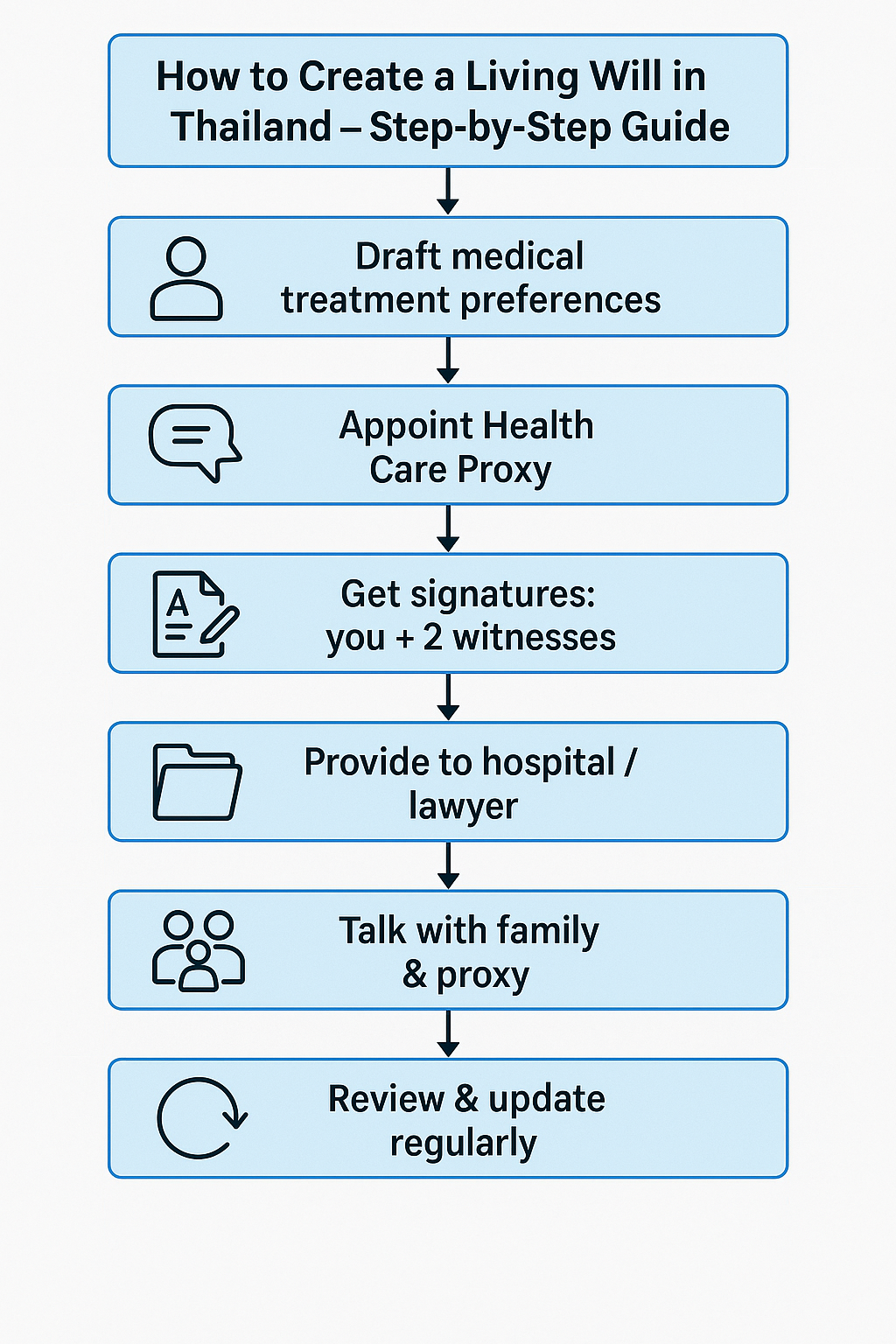
- ไตร่ตรองถึงความปรารถนาของคุณและปรึกษาผู้เชี่ยวชาญ: เริ่มจากการคิดถึงสถานการณ์ทางการแพทย์และการรักษาที่คุณกังวล คุณต้องการอะไร การช่วยชีวิตขั้นพื้นฐาน (CPR) หากหัวใจของคุณหยุดเต้น? การใช้เครื่องช่วยหายใจหากคุณไม่สามารถหายใจได้ด้วยตัวเอง? การให้อาหารทางท่อหากคุณไม่สามารถรับประทานอาหารได้อีกต่อไป? พิจารณาหลักการและค่านิยมของคุณ และปรึกษาแพทย์หากจำเป็น แพทย์สามารถอธิบายได้ว่าการรักษาเหล่านี้มีอะไรบ้าง นอกจากนี้ยังควร ปรึกษาทนายความ มีประสบการณ์ด้านสุขภาพของไทย หรือ กฎหมายครอบครัวทนายความสามารถช่วยร่างเอกสารให้ถูกต้องตามกฎหมายไทยได้ พวกเขาจะตรวจสอบให้แน่ใจว่าเอกสารแสดงเจตจำนงในการดำรงชีวิตของคุณนั้นชัดเจนและไม่ถูกตีความผิด คุณอาจระบุว่า “ไม่รับการรักษาเพื่อยืดชีวิตหากฉันป่วยหนักระยะสุดท้าย” ทนายความสามารถช่วยอธิบายคำศัพท์ต่างๆ เช่น “ป่วยหนักระยะสุดท้าย” ตามแนวทางของไทยได้ ขั้นตอนการวางแผนขั้นแรกนี้มีความสำคัญมาก ใช้เวลาศึกษาหาข้อมูลเพิ่มเติม
- ร่างเอกสารหนังสือแสดงเจตนาล่วงหน้า: เมื่อคุณพร้อมแล้ว ให้ร่างเอกสารหนังสือแสดงเจตนาฯ (Living Will) ของคุณเป็นลายลักษณ์อักษร คุณสามารถเริ่มต้นด้วยแบบฟอร์มหรือแม่แบบหนังสือแสดงเจตนาฯ ได้ อย่างไรก็ตาม สิ่งสำคัญคือต้องปรับแต่งให้ตรงกับความต้องการของคุณ ตรวจสอบให้แน่ใจว่าเป็นไปตามมาตรฐานทางกฎหมายของไทย เช่น ที่ระบุไว้ในกฎกระทรวง ตรวจสอบให้แน่ใจว่าเอกสารมีชื่อของคุณ หมายเลขบัตรประชาชนหรือหนังสือเดินทาง และที่อยู่ของคุณ ควรตั้งชื่อเอกสารว่า หนังสือแสดงเจตนาฯ ในประเทศไทย หรือ คำสั่งล่วงหน้า ในเนื้อหา ให้เขียนเงื่อนไขที่คุณต้องการปฏิเสธการรักษา และระบุรายการต่างๆ การรักษาเฉพาะบางอย่างจะถูกระงับอธิบายให้ชัดเจนที่สุดเท่าที่จะเป็นไปได้ ตัวอย่างเช่น: “หากแพทย์สองคนเห็นพ้องกันว่าผมอยู่ในภาวะเจ้าหญิงนิทราถาวรโดยไม่มีโอกาสฟื้นตัว ผมขอสั่งว่าห้ามทำการช่วยชีวิต ห้ามใช้เครื่องช่วยหายใจ หรือฟอกไต และให้ดูแลผมเพียงเพื่อบรรเทาอาการเท่านั้น” คุณยังสามารถแสดงความปรารถนาในเชิงบวกได้ (เช่น “ถ้าเป็นไปได้ ฉันอยากอยู่บ้านมากกว่าอยู่โรงพยาบาลในช่วงสุดท้ายของชีวิต”) ร่างเอกสารควรเป็นภาษาไทยหรือสองภาษา ทนายความสามารถแปลร่างภาษาอังกฤษของคุณเป็นภาษาไทยที่เป็นทางการได้ ตรวจสอบให้แน่ใจว่าเป็นไปตามหลักเกณฑ์ที่กำหนด รูปแบบของกฎกระทรวง (ดูตารางด้านบน) นอกจากนี้ ให้เพิ่มส่วนสำหรับพยานและลายเซ็นด้วย
- ลงนามในเอกสารพร้อมพยาน: หลังจากสรุปเนื้อหาแล้ว ให้พิมพ์เอกสารหนังสือแสดงเจตนาฯ (Living Will) ลงนามต่อหน้าพยานอย่างน้อย 1 คน แต่ควรมี 2 คน พยานควรลงนามและระบุชื่อ บัตรประจำตัว และความสัมพันธ์กับคุณ ควรเลือกบุคคลที่ไม่ได้รับมรดกของคุณเป็นพยาน ควรเลือกเพื่อน เพื่อนบ้าน หรือผู้เชี่ยวชาญแทนสมาชิกในครอบครัว หากเป็นไปได้ การลงนามของพยานเป็นการยืนยันว่าคุณมีสติสัมปชัญญะสมบูรณ์และลงนามโดยสมัครใจ คุณไม่จำเป็นต้องให้โนตารีรับรองหรือจดทะเบียนอย่างเป็นทางการ หนังสือแสดงเจตนาฯ ในประเทศไทยมีผลบังคับใช้ได้หากลงนามและมีพยานรับรองอย่างถูกต้อง อย่างไรก็ตาม คุณอาจเลือกที่จะให้ทนายความรับรองหรือทำสำเนาเพิ่มเติมเพื่อแจกจ่าย บางคนทำสำเนาต้นฉบับหลายฉบับ (ลงนามด้วยหมึกจริง) แต่ละฉบับสามารถมอบให้แก่บุคคลต่างๆ เช่น แพทย์หรือสมาชิกในครอบครัว หลังจากลงนามแล้ว พยานแต่ละคนควรเพิ่มวันที่และข้อมูลติดต่อของตนด้วย ตอนนี้หนังสือแสดงเจตนาฯ ของคุณได้รับการดำเนินการอย่างเป็นทางการแล้ว.
- เผยแพร่ สื่อสาร และอัปเดตข้อมูลอย่างสม่ำเสมอ: หนังสือแสดงเจตนาฯ (Living Will) จะไม่เป็นประโยชน์ต่อใครทั้งสิ้น หากถูกเก็บไว้อย่างลับๆ โดยไม่มีใครรู้ แจ้งให้ครอบครัวและแพทย์ทราบว่าคุณได้จัดทำหนังสือแสดงเจตนาฯ ในประเทศไทยแล้ว ส่งสำเนาให้กับแพทย์ประจำตัวหรือโรงพยาบาล และคุณสามารถขอให้เก็บสำเนานั้นไว้ในบันทึกทางการแพทย์ของคุณได้ นอกจากนี้ ควรส่งสำเนาให้กับญาติหรือเพื่อนที่ใกล้ชิดที่สุดในประเทศไทยด้วย คุณควรแจ้งให้ผู้ตัดสินใจแทนคุณทราบด้วย หากมีผู้ตัดสินใจแทนผ่านหนังสือมอบอำนาจ เพื่อความสะดวกในการเข้ารับการรักษาที่โรงพยาบาลในประเทศไทย ให้ทำตามขั้นตอนต่อไปนี้: ขอให้โรงพยาบาลติดสติ๊กเกอร์บนบัตรสมาชิกของคุณ สติ๊กเกอร์นี้ควรแสดงว่าคุณมีเอกสารคำสั่งล่วงหน้าเก็บไว้ในระบบ เก็บสำเนาดิจิทัลของเอกสารคำสั่งล่วงหน้าไว้ในสมาร์ทโฟนของคุณ เพื่อความสะดวกในการเข้าถึงในกรณีฉุกเฉิน โปรดทราบว่าโรงพยาบาลบางแห่ง เช่น โรงพยาบาลศิริราช และโรงพยาบาลบำรุงราษฎร์ อาจต้องการแบบฟอร์มคำสั่งล่วงหน้าของตนเอง นอกจากนี้ พวกเขายังอาจเพิ่มหมายเหตุลงในบันทึกการรักษาของคุณด้วย ดังนั้น ควรติดต่อโรงพยาบาลที่คุณเลือกโดยตรง เพื่อเรียนรู้เกี่ยวกับขั้นตอนการดำเนินการของโรงพยาบาล และตรวจสอบให้แน่ใจว่าความประสงค์ของคุณได้รับการบันทึกอย่างถูกต้อง.
- ในประเทศไทย คุณไม่จำเป็นต้องจดทะเบียนหนังสือแสดงเจตนาล่วงหน้า อย่างไรก็ตาม สำนักงานคณะกรรมการสุขภาพแห่งชาติ (กสท.) มีบริการจดทะเบียนหนังสือแสดงเจตนาล่วงหน้าออนไลน์ (e-Living Will Portal) ซึ่งเป็นบริการแบบสมัครใจ โดยสามารถเข้าถึงได้ผ่านระบบคลาวด์การบริหารราชการดิจิทัล (GDCC) บริการแสดงเจตจำนงล่วงหน้าแบบดิจิทัลนี้ ช่วยให้คุณสามารถจดทะเบียนหนังสือแสดงเจตนาล่วงหน้าของคุณทางอิเล็กทรอนิกส์ได้ แม้ว่าจะเป็นทางเลือกก็ตาม แต่การจัดทำคำสั่งล่วงหน้าของคุณนั้น... มองเห็นได้และเป็นที่รู้จัก เป็นสิ่งสำคัญ นอกจากนี้ ควรทบทวนหนังสือแสดงเจตนาฯ (Living Will) ของคุณเป็นระยะ หากความรู้สึกของคุณเกี่ยวกับการรักษาเปลี่ยนไปหรือมีความก้าวหน้าทางการแพทย์ คุณสามารถปรับปรุงเอกสารได้ หากต้องการยกเลิกหรือเปลี่ยนแปลง ให้ทำเอกสารฉบับใหม่ ทำลายสำเนาฉบับเก่า และแจ้งทุกคนให้ทราบถึงฉบับใหม่ หากมีหลายฉบับ ฉบับล่าสุดที่ยื่นต่อแพทย์ผู้รักษาเป็นฉบับที่มีผลใช้บังคับ (กฎกระทรวง ข้อ 5) หากคุณตั้งครรภ์อยู่ในเวลานั้น จะดำเนินการตามเอกสารได้ต่อเมื่อการตั้งครรภ์สิ้นสุดลงแล้ว (ข้อ 6(4)) กฎหมายไทยอนุญาตให้คุณแก้ไขความประสงค์ได้ตลอดเวลาตราบที่คุณยังมีความสามารถในการตัดสินใจ การพูดคุยกับคนที่คุณรักและแพทย์เกี่ยวกับแผนการดูแลล่วงหน้าอยู่เสมอจะช่วยหลีกเลี่ยงความประหลาดใจเมื่อถึงเวลาที่ต้องใช้เอกสาร.
คุณจะจัดทำหนังสือแสดงเจตนาฯ (Living Will) ที่ถูกต้องและได้รับการยอมรับในประเทศไทย ควรเก็บสำเนาแปลมาตรา 12 แห่งพระราชบัญญัติสุขภาพแห่งชาติไว้ด้วย นอกจากนี้ คุณอาจแนบจดหมายจากทนายความของคุณไปพร้อมกับเอกสารด้วย สิ่งนี้จะช่วยให้ผู้ให้บริการด้านการดูแลสุขภาพที่อาจไม่รู้จักหนังสือแสดงเจตนาฯ ได้รับความรู้ เมื่อผู้คนรู้จักเรื่องนี้มากขึ้น โรงพยาบาลในประเทศไทยหลายแห่งจะยอมรับและบันทึกคำสั่งล่วงหน้าของคุณโดยไม่มีปัญหา การทำหนังสือแสดงเจตนาฯ ในประเทศไทยเป็นขั้นตอนที่เป็นประโยชน์สำหรับคุณและครอบครัว ช่วยให้มั่นใจได้ว่าการตัดสินใจด้านการดูแลสุขภาพตรงกับความประสงค์ของคุณและลดความเครียดให้กับทุกคน.
✅ รายการตรวจสอบการจัดทำหนังสือแสดงเจตนาล่วงหน้า
□ คุณเป็นผู้ใหญ่ (สำนักงานคณะกรรมการสุขภาพแห่งชาติแนะนำอายุ 18 ปีขึ้นไป) □ คุณมีความสามารถทางจิตในการตัดสินใจ □ คุณได้กำหนดพยานที่เป็นผู้ใหญ่อย่างน้อย 1 คน (แนะนำ 2 คน) (ต้องไม่ใช่ผู้รับประโยชน์) □ คุณได้ตัดสินใจแล้วว่าจะปฏิเสธการรักษาทางการแพทย์ใดบ้าง □ คุณได้แจ้งความประสงค์ของคุณให้สมาชิกในครอบครัวทราบแล้ว □ คุณได้เก็บสำเนาไว้กับแพทย์ โรงพยาบาล และครอบครัวแล้ว
กรณีศึกษา: ประสบการณ์ของคุณสมิธกับการทำหนังสือแสดงเจตนาล่วงหน้าในประเทศไทย
ที่มา: ความสำคัญของเอกสารแสดงเจตจำนงล่วงหน้าในการรับประกันว่าความปรารถนาของผู้ป่วยจะได้รับการเคารพนายสมิธ ชาวต่างชาติวัย 65 ปีที่อาศัยอยู่ในกรุงเทพฯ ต้องการให้แน่ใจว่าการดูแลทางการแพทย์ของเขาเป็นไปตามค่านิยมของเขา และต้องการปฏิเสธการรักษาหากเขาไม่สามารถสื่อสารได้ เขากังวลเป็นอย่างยิ่งเกี่ยวกับการใช้เครื่องช่วยชีวิตในกรณีที่อาการหนัก ดังนั้นเขาจึงเลือกทำหนังสือแสดงเจตนาล่วงหน้าในประเทศไทยและแต่งตั้งผู้รับมอบอำนาจ
กระบวนการ:คุณสมิธได้ปรึกษาเรา เราได้จัดทำหนังสือแสดงเจตนาฯ (Living Will) ที่ระบุความประสงค์ของเขาที่จะยุติการรักษาเพื่อยืดชีวิตในบางสถานการณ์ เอกสารได้ลงนามต่อหน้าพยานสองคน จากนั้นเขาได้แจ้งให้แพทย์ประจำตัวและครอบครัวทราบถึงหนังสือแสดงเจตนาฯ ที่ทำไว้ และได้เลือกผู้รับมอบอำนาจ การจดทะเบียนไม่ใช่สิ่งบังคับ ดังนั้นคนรอบข้างจึงควรพร้อมที่จะแจ้งแพทย์ถึงเอกสารนี้ในกรณีที่เขาไม่สามารถทำได้เอง.
ผลลัพธ์:เมื่อคุณสมิธประสบเหตุฉุกเฉินทางการแพทย์ เขารู้ว่ามันจะต้องเกิดขึ้น หนังสือแสดงเจตนาล่วงหน้าของเขาช่วยทีมแพทย์ได้มาก มันระบุถึงการดูแลแบบประคับประคองตามความประสงค์ของเขา หลีกเลี่ยงการรักษาที่ไม่จำเป็น และรักษาศักดิ์ศรีของเขาไว้
ข้อสรุป:เอกสารแสดงเจตจำนงในการดำรงชีวิตที่ดีจะช่วยให้มั่นใจได้ว่าการดูแลทางการแพทย์ของคุณเป็นไปตามความประสงค์ของคุณ ซึ่งจะทำให้คุณและคนที่คุณรักสบายใจ
🆕 แพลตฟอร์มวิลอิเล็กทรอนิกส์ของรัฐบาล
สำนักงานคณะกรรมการสุขภาพแห่งชาติของไทยมีระบบลงทะเบียนหนังสือแสดงเจตนาฯ (Living Will) ออนไลน์ (e-livingwill.nationalhealth.or.th) ซึ่งเป็นแพลตฟอร์มฟรีที่ช่วยให้เข้าถึงได้ง่ายขึ้น แต่มีเพียงแบบฟอร์มตัวอย่างเท่านั้น ไม่รวมถึงการตรวจสอบทางกฎหมาย การแปล หรือการตรวจสอบว่าความประสงค์ของคุณเป็นไปตามข้อกำหนดทางการแพทย์และกฎหมาย หนังสือแสดงเจตนาฯ ที่ร่างโดยทนายความของ ThaiLawOnline ช่วยให้มั่นใจได้ถึงความถูกต้องตามกฎหมาย การปฏิบัติตามข้อกำหนดของโรงพยาบาล และความชัดเจนทั้งสองภาษา ซึ่งระบบแบบฟอร์มสำเร็จรูปให้ไม่ได้”
มีการตรวจสอบล่าสุดเมื่อวันที่ 27 กันยายน 2026. พระราชบัญญัติสุขภาพแห่งชาติ พ.ศ. 2550 มาตรา 12 กฎกระทรวงกำหนดหลักเกณฑ์และวิธีการดำเนินการตามหนังสือแสดงเจตนาตามมาตรา 12 (พ.ศ. 2553 มีผลใช้บังคับวันที่ 20 พฤษภาคม 2011 ข้อ 1 ถึง 7) และคู่มือแนวทางสำหรับบุคลากรด้านสาธารณสุขของสำนักงานคณะกรรมการสุขภาพแห่งชาติ ได้อ่านจากต้นฉบับภาษาไทย เช่นเดียวกับประมวลกฎหมายวิธีพิจารณาความแพ่ง มาตรา 46 และ 94 คำพิพากษาศาลปกครองสูงสุด คดีหมายเลขแดงที่ ฟ.11/2558 อ่านจากรายงานของสำนักงานคณะกรรมการสุขภาพแห่งชาติ แนวปฏิบัติของโรงพยาบาลที่กล่าวถึงในหน้านี้ยังไม่ได้ตรวจสอบกับโรงพยาบาลเหล่านั้น.
คำถามที่พบบ่อยเกี่ยวกับหนังสือแสดงเจตนาล่วงหน้าในประเทศไทย
หนังสือแสดงเจตจำนงในการดำรงชีวิต (Living Will) มีผลผูกพันทางกฎหมายในประเทศไทยหรือไม่ และสามารถใช้เพื่อปฏิเสธการรักษาในระยะสุดท้ายของชีวิตได้หรือไม่?
ใช่แล้ว หนังสือแสดงเจตจำนงในการดำรงชีวิต (Living Will) ได้รับการยอมรับภายใต้พระราชบัญญัติสุขภาพแห่งชาติปี 2550 หนังสือแสดงเจตจำนงเหล่านี้ให้สิทธิ์ทางกฎหมายในการกำหนดความต้องการด้านการดูแลสุขภาพของคุณ ตราบใดที่สอดคล้องกับกฎหมาย
ชาวต่างชาติสามารถทำหนังสือแสดงเจตนาล่วงหน้าในประเทศไทยเพื่อให้มั่นใจว่าความประสงค์ของตนจะได้รับการปฏิบัติตามขณะยังมีชีวิตอยู่ได้หรือไม่?
ได้อย่างแน่นอน ชาวต่างชาติที่พำนักอยู่ในประเทศไทยสามารถร่างหนังสือแสดงเจตนาฯ (Living Will) ได้ หากเป็นไปตามข้อกำหนดทางกฎหมายของไทย อย่าพึ่งพาเอกสารที่ทำในประเทศบ้านเกิดของคุณ หนังสือแสดงเจตนาฯ จากสหราชอาณาจักร สหรัฐอเมริกา หรือสวิตเซอร์แลนด์ มักไม่ถูกต้องตามกฎหมายในประเทศไทย เนื่องจากไม่ได้กล่าวถึงมาตรา 12 แห่งพระราชบัญญัติสุขภาพแห่งชาติของไทย
แพทย์ไทยจะได้รับการคุ้มครองทางกฎหมายก็ต่อเมื่อปฏิบัติตามกฎหมายไทยเท่านั้น ดังนั้นพวกเขาจึงมักจะเพิกเฉยต่อเอกสารจากต่างประเทศ
ฉันสามารถระบุการรักษาอะไรได้บ้างในเอกสารแสดงเจตจำนงในการรักษา (Living Will) ในประเทศไทย?
คุณสามารถระบุการรักษา เช่น การพยุงชีวิต การช่วยชีวิต การดูแลแบบประคับประคอง และขั้นตอนใดๆ ที่คุณต้องการปฏิเสธได้
ฉันจะแก้ไขหรือยกเลิกเอกสารหนังสือแสดงเจตนาล่วงหน้าของฉันได้อย่างไร?
คุณสามารถแก้ไขหรือยกเลิกหนังสือแสดงเจตนาล่วงหน้าของคุณได้ตลอดเวลา โปรดแจ้งผู้ให้บริการด้านการดูแลสุขภาพและสมาชิกในครอบครัวของคุณเกี่ยวกับการเปลี่ยนแปลงใดๆ ในเอกสารหนังสือแสดงเจตนาล่วงหน้าของคุณ
จะเกิดอะไรขึ้นถ้าฉันไม่มีหนังสือแสดงเจตนาล่วงหน้า?
หากไม่มีการทำหนังสือแสดงเจตนาล่วงหน้า สมาชิกในครอบครัวหรือแพทย์จะเป็นผู้ตัดสินใจเรื่องการดูแลสุขภาพของคุณ ซึ่งอาจไม่ตรงกับสิ่งที่คุณต้องการ
ฉันจะทำหนังสือแสดงเจตนาล่วงหน้าในประเทศไทยได้อย่างไร?
ในการทำหนังสือแสดงเจตนาล่วงหน้า (Living Will) ในประเทศไทย คุณต้องทำเป็นหนังสือ ระบุทางเลือกของคุณเกี่ยวกับการรักษาพยาบาล และระบุว่าคุณต้องการหรือไม่ต้องการให้ยื้อชีวิตไว้ในภาวะทางการแพทย์บางอย่าง คุณลงลายมือชื่อ และควรมีพยาน: กฎกระทรวงกำหนดให้ระบุรายละเอียดและลายมือชื่อของพยาน แต่สำนักงานคณะกรรมการสุขภาพแห่งชาติระบุว่า การไม่มีพยานเพียงอย่างเดียวไม่ทำให้หนังสือนั้นเสียไป
ในประเทศไทย พินัยกรรมที่มีผลบังคับใช้ก่อนเสียชีวิตอนุญาตให้ทำการุณยฆาตหรือการตัดอวัยวะเพื่อความเมตตาได้หรือไม่?
ไม่ หนังสือแสดงเจตจำนงในการดำรงชีวิตในประเทศไทยไม่ได้อนุญาตให้ทำการุณยฆาตหรือการุณยฆาต แต่ช่วยให้บุคคลสามารถปฏิเสธการรักษาทางการแพทย์บางอย่างได้ภายใต้พระราชบัญญัติสุขภาพแห่งชาติของประเทศไทย อย่างไรก็ตาม หนังสือแสดงเจตจำนงในการดำรงชีวิตไม่ได้สนับสนุนการกระทำใดๆ เพื่อยุติชีวิต นี่คือความแตกต่างที่สำคัญระหว่างหนังสือแสดงเจตจำนงล่วงหน้าเกี่ยวกับการดูแลสุขภาพกับหนังสือแสดงเจตจำนงล่วงหน้าด้านการดูแลสุขภาพ
ฉันสามารถแต่งตั้งบุคคลใดบุคคลหนึ่งให้ตัดสินใจแทนฉันในหนังสือแสดงเจตนาล่วงหน้าของฉันได้หรือไม่?
ไม่ใช่ในฐานะผู้ตัดสินใจ หนังสือแสดงเจตนาฯ (Living Will) ของไทยระบุทางเลือกของคุณเอง คุณอาจระบุชื่อบุคคลหนึ่งให้เป็นผู้อธิบายความประสงค์ที่แท้จริงของคุณในกรณีที่เอกสารไม่ชัดเจน และแพทย์ต้องอธิบายภาวะของคุณให้บุคคลนั้นทราบและปรึกษาหารือกับเขา (กฎกระทรวงปี 2010 ข้อ 3 และ 6) แต่บุคคลนั้นไม่ได้ตัดสินใจแทนคุณ หนังสือมอบอำนาจแยกต่างหากสามารถครอบคลุมเรื่องอื่นๆ ได้.
ในประเทศไทย จำเป็นต้องมีเอกสารแสดงเจตจำนงล่วงหน้าสำหรับการรักษาพยาบาลหรือไม่?
ไม่ หนังสือแสดงเจตนาล่วงหน้าไม่ใช่ข้อบังคับ แต่เป็นเครื่องมือที่มีประโยชน์เพื่อให้แน่ใจว่าความประสงค์ในการรักษาพยาบาลของคุณจะได้รับการปฏิบัติตามหากคุณไม่สามารถพูดได้ด้วยตนเอง คุณมีสิทธิ์ที่จะทำหนังสือแสดงเจตนาล่วงหน้า แต่ไม่ใช่ข้อบังคับ
เอกสารแสดงเจตจำนงในการดำรงชีวิต (Living Will) ถูกนำมาใช้ในสถานการณ์ทางการแพทย์ได้อย่างไร?
ในกรณีทางการแพทย์ที่คุณไม่สามารถพูดหรือตัดสินใจได้ แพทย์จะพิจารณาเอกสารแสดงเจตจำนงในการดำรงชีวิตของคุณ เอกสารนี้จะช่วยให้พวกเขาทราบถึงความต้องการในการรักษาของคุณ ช่วยให้พวกเขาเข้าใจว่าคุณต้องการมีชีวิตอยู่ต่อไปในสถานการณ์ใดบ้าง และยังแสดงให้เห็นว่าคุณต้องการปฏิเสธบริการสาธารณสุขหรือไม่
ในประเทศไทย หนังสือแสดงเจตจำนงล่วงหน้าและหนังสือแสดงเจตนาล่วงหน้าแตกต่างกันอย่างไร?
ในประเทศไทย หนังสือแสดงเจตนาไม่ประสงค์จะรับบริการสาธารณสุขที่เป็นไปเพียงเพื่อยืดการตายในวาระสุดท้ายของชีวิต (Living Will) เป็นเอกสารแสดงความปรารถนาล่วงหน้าประเภทหนึ่ง ซึ่งช่วยให้คุณแสดงความประสงค์เกี่ยวกับการรักษาพยาบาลได้ โดยเฉพาะอย่างยิ่งหากคุณอยู่ในภาวะระยะสุดท้ายหรืออยู่ในอาการโคม่าที่ไม่สามารถฟื้นคืนชีพได้ ทั้งนี้เป็นไปตามพระราชบัญญัติสุขภาพแห่งชาติ พ.ศ. 2550 คำว่า “คำสั่งล่วงหน้า” (Advance Directive) เป็นคำทั่วไปที่ใช้เรียกคำแนะนำใดๆ เกี่ยวกับการดูแลสุขภาพในอนาคต ส่วน “หนังสือแสดงเจตนาฯ” (Living Will) เป็นเอกสารเฉพาะที่ระบุอย่างเป็นทางการถึงความประสงค์ของบุคคลที่จะปฏิเสธการรักษาเพื่อยืดชีวิต.
เอกสารแสดงเจตจำนงในการดำรงชีวิต (Living Will) หมดอายุในประเทศไทยหรือไม่?
ไม่ หนังสือแสดงเจตจำนงในการดำรงชีวิตในประเทศไทยไม่มีวันหมดอายุตามกฎหมาย โรงพยาบาลและผู้ให้บริการด้านการดูแลสุขภาพหลายแห่งต้องการเอกสารที่ได้รับการปรับปรุงภายใน 3 ปีที่ผ่านมา เพื่อให้แน่ใจว่าเอกสารนั้นแสดงถึงความประสงค์ปัจจุบันของคุณ สถานการณ์ทางการแพทย์ การรักษา และความต้องการของคุณอาจเปลี่ยนแปลงไปตามกาลเวลา ดังนั้นจึงควรทบทวนและปรับปรุงหนังสือแสดงเจตจำนงในการดำรงชีวิตของคุณเป็นระยะ หากความประสงค์ของคุณยังคงเหมือนเดิม ก็เพียงแค่ลงนามและลงวันที่ใหม่ในเอกสารนั้น ก็จะแสดงให้เห็นว่าเอกสารนั้นยังคงสะท้อนถึงเจตนารมณ์ปัจจุบันของคุณ.
ฉันสามารถเลือกที่จะเสียชีวิตที่บ้านในหนังสือแสดงเจตนาล่วงหน้าของฉันได้หรือไม่?
ใช่ คุณสามารถระบุความต้องการที่จะเสียชีวิตที่บ้านในเอกสารแสดงเจตจำนงล่วงหน้าได้ในประเทศไทย หลายคนปรารถนาที่จะใช้ช่วงเวลาสุดท้ายในสภาพแวดล้อมที่คุ้นเคยกับคนที่รักมากกว่าในโรงพยาบาล คุณสามารถเพิ่มความต้องการนี้ลงในคำสั่งล่วงหน้าของคุณได้ ระบุว่าคุณต้องการได้รับการดูแลแบบประคับประคองที่บ้านหากเป็นไปได้ สิ่งสำคัญคือต้องทราบว่าภาวะทางการแพทย์บางอย่างต้องการอุปกรณ์หรือการดูแลพิเศษจากโรงพยาบาล ซึ่งไม่สามารถให้ได้ที่บ้าน การพูดคุยเกี่ยวกับความต้องการนี้กับแพทย์และครอบครัวของคุณล่วงหน้าจะช่วยให้ทุกคนเข้าใจความปรารถนาของคุณ และพยายามปฏิบัติตามความปรารถนานั้นเมื่อเป็นไปได้.
หนังสือแสดงเจตนาล่วงหน้า (Living Will) กับพินัยกรรมสุดท้าย (Last Will) แตกต่างกันอย่างไร?
หนังสือแสดงเจตนาฯ (Living Will) และพินัยกรรม (Last Will and Testament) มีวัตถุประสงค์ที่แตกต่างกันโดยสิ้นเชิง หนังสือแสดงเจตนาฯ ใช้ในขณะที่คุณยังมีชีวิตอยู่แต่ไม่สามารถสื่อสารได้ โดยระบุความต้องการของคุณเกี่ยวกับการรักษาพยาบาลและการดูแลในวาระสุดท้ายของชีวิต ในทางกลับกัน พินัยกรรมมีผลหลังจากที่คุณถึงแก่ความตายแล้วเท่านั้น และกำหนดการแบ่งปันทรัพย์สินของคุณ ลองคิดในแง่นี้: หนังสือแสดงเจตนาฯ = การตัดสินใจทางการแพทย์ขณะยังมีชีวิต; พินัยกรรม = การแบ่งทรัพย์สินหลังถึงแก่ความตาย เอกสารทั้งสองฉบับมีความสำคัญสำหรับการวางแผนมรดกอย่างครอบคลุมในประเทศไทย แต่ใช้ในช่วงเวลาที่ต่างกันของชีวิตและสำหรับการตัดสินใจคนละประเภท.
-
ขอขอบคุณสำหรับการเอาใจใส่ที่รวดเร็วและบริการที่เป็นเลิศของคุณ
ฉันได้รับสำเนาหนังสือแสดงเจตนาล่วงหน้าที่ลงนามแล้วทางไปรษณีย์ ขอบคุณสำหรับการดำเนินการที่รวดเร็วและบริการที่ยอดเยี่ยมของคุณ

-
ชัดเจนและไร้ความเครียด
ThaiLawOnline ทำให้กระบวนการจัดทำหนังสือแสดงเจตนาล่วงหน้าในประเทศไทยเป็นเรื่องง่ายและไม่ยุ่งยาก ทีมงานอธิบายทุกอย่างด้วยภาษาที่เข้าใจง่าย และช่วยให้ฉันเขียนความประสงค์ของฉันลงไปได้ ฉันรู้สึกสบายใจมากขึ้นเมื่อรู้ว่าการตัดสินใจของฉันจะได้รับการเคารพ ขอแนะนำเป็นอย่างยิ่ง (มิถุนายน 2568)
-
ชัดเจนมากและตรงกับสิ่งที่ฉันต้องการเป๊ะเลย…
ดิฉันขอขอบคุณอย่างจริงใจสำหรับการจัดทำร่างพินัยกรรมและหนังสือแสดงเจตนาฯ (Living Will) ฉบับสุดท้ายให้ดิฉัน เอกสารมีความชัดเจนและตรงตามที่ดิฉันต้องการเพื่อดูแลจัดการเรื่องต่างๆ ของดิฉันในประเทศไทย ดิฉันชื่นชมความละเอียดรอบคอบในการทำงานและคำแนะนำที่ท่านให้ไว้ตลอดกระบวนการนี้ ดิฉันจะติดต่อท่านอีกครั้งหากต้องการความช่วยเหลือทางกฎหมายเพิ่มเติมในอนาคต (กุมภาพันธ์ 2569)
ชื่อ
ข้อแตกต่างที่สำคัญ: พระราชบัญญัติสุขภาพแห่งชาติของประเทศไทยไม่อนุญาตให้มีการมอบอำนาจตัดสินใจด้านการดูแลสุขภาพในหนังสือแสดงเจตนาฯ (Living Will) โดยตรง ซึ่งแตกต่างจากประเทศที่ใช้ระบบกฎหมายคอมมอนลอว์ อย่างไรก็ตาม คุณสามารถจัดทำเอกสารมอบอำนาจทั่วไปแยกต่างหากเพื่อมอบอำนาจในการตัดสินใจทางการแพทย์ได้ ThaiLawOnline รวมเอกสารมอบอำนาจนี้ไว้ในแพ็กเกจบริการของเรา (5,000 บาท).
สรุป: สร้างความอุ่นใจให้คุณ
หนังสือแสดงเจตนาฯ (Living Will) ของไทยเป็นเอกสารสำคัญ เป็นคำสั่งล่วงหน้าเกี่ยวกับการรักษาพยาบาลประเภทหนึ่ง เอกสารนี้ช่วยให้คุณควบคุมการรักษาพยาบาลของคุณในประเทศไทยได้ แม้ในเวลาที่คุณไม่สามารถพูดแทนตัวเองได้ เอกสารนี้คุ้มครองสิทธิของคุณที่จะได้รับการดูแลอย่างมีศักดิ์ศรี และช่วยให้คนที่คุณรักไม่ต้องคาดเดาด้วยความทุกข์ใจ หากคุณเป็นชาวต่างชาติหรือผู้เกษียณอายุชาวต่างชาติในประเทศไทย คุณควรทำหนังสือแสดงเจตนาฯ และควรอยู่ในรายการเอกสารที่ต้องจัดทำร่วมกับพินัยกรรมตามกฎหมายไทยและเอกสารทางกฎหมายอื่นๆ แม้จะร่างขึ้นเองได้ แต่ผลที่ตามมาสำคัญมาก เพราะเอกสารนี้พูดแทนชีวิตของคุณในเวลาที่คุณพูดเองไม่ได้ จึงคุ้มค่าที่จะขอความช่วยเหลือจากผู้เชี่ยวชาญเพื่อให้ทุกอย่างถูกต้องและสอดคล้องกับกฎหมายไทย.
ไทยลอว์ออนไลน์พร้อมช่วยเหลือคุณในกระบวนการนี้ ทีมงานของเราสามารถช่วยคุณเขียนหนังสือแสดงเจตนาฯ (Living Will) ที่ชัดเจนและมีผลทางกฎหมาย ซึ่งสอดคล้องกับความต้องการของคุณ นอกจากนี้ เรายังสามารถตอบคำถามใดๆ ที่คุณมีเกี่ยวกับการวางแผนการดูแลทางการแพทย์ในประเทศไทย เราให้บริการร่างหนังสือแสดงเจตนาฯ อย่างครบวงจร ด้วยค่าบริการคงที่ 1,900 บาท ซึ่งรวมถึงเอกสารสองภาษา ที่จัดทำโดย ทนายความที่จดทะเบียนในประเทศไทย. รวมถึงคำแนะนำและช่วยเหลือในการลงนาม ชอบตัวเลือกแบบบริการตนเองใช่ไหม สร้างและดูตัวอย่างหนังสือแสดงเจตนาฯ (Living Will) สองภาษาของคุณได้ฟรี การดาวน์โหลดฉบับสมบูรณ์พร้อมคำแนะนำในการลงนามราคา 590 บาท การตรวจสอบโดยทนายความส่วนบุคคลเป็นบริการแยกต่างหาก.
จัดทำหนังสือแสดงเจตนาฯ (Living Will) ของคุณทางออนไลน์. หากคุณต้องการการป้องกันที่ดีกว่า เราทำ
บริการทำพินัยกรรมฉบับสุดท้ายและพินัยกรรมขณะยังมีชีวิต ในราคาคงที่ 5,000 บาทเหตุใด THAILAWONLINE จึงมีราคาถูกกว่า (โดยไม่ลดทอนคุณภาพ)
❌ ไม่มีค่าใช้จ่ายสำนักงานในกรุงเทพฯ ที่แพงเกินไป เราดำเนินงานอย่างมีประสิทธิภาพทางออนไลน์ ส่งผลให้ลูกค้าประหยัดค่าใช้จ่าย ✅ รูปแบบค่าธรรมเนียมคงที่ ไม่มีการคิดค่าบริการรายชั่วโมงที่คาดไม่ถึง คุณทราบค่าใช้จ่ายที่แน่นอนล่วงหน้า บริการปริมาณมาก เรามุ่งเน้นเฉพาะความต้องการทางกฎหมายของชาวต่างชาติ ทำให้สามารถกำหนดราคาที่แข่งขันได้ผ่านความเชี่ยวชาญเฉพาะด้าน กระบวนการดิจิทัลเป็นหลัก การให้คำปรึกษาออนไลน์ + การส่งเอกสารช่วยลดค่าใช้จ่าย ในขณะที่ยังคงควบคุมดูแลโดยทนายความ.
ความลังเลของแพทย์และความสำคัญของความชัดเจนโปรดจำไว้ว่าการจัดทำเอกสารสองภาษาที่ชัดเจนนั้นมีความสำคัญอย่างยิ่ง เนื่องจากความสับสนยังคงมีอยู่ภายในวงการแพทย์ จากการศึกษาในเดือนเมษายน 2567 ในกลุ่มแพทย์ไทย พบว่า...
41% ของพวกเขายังคงเข้าใจผิดเกี่ยวกับความแตกต่างระหว่างการดูแลแบบประคับประคองและการุณยฆาต. หนังสือแสดงเจตนาฯ (Living Will) ที่เขียนอย่างดีจะช่วยปกป้องแพทย์จากปัญหาทางกฎหมาย ทำให้พวกเขามีแนวโน้มที่จะปฏิบัติตามความประสงค์ของคุณโดยไม่ล่าช้า เอกสารทั้งหมดร่างโดยทนายความไทยที่ได้รับอนุญาต (ตรวจสอบใบอนุญาตจากสภาทนายความแล้ว) บริการทั้งหมดรวมถึงเอกสารสองภาษา ไทย-อังกฤษ.
- คำแปลภาษาอังกฤษของระเบียบว่าด้วยหนังสือแสดงเจตนาล่วงหน้าในประเทศไทย
- กรมอนามัย กระทรวงสาธารณสุข ประเทศไทย
หนังสือแสดงเจตนาฯ (Living Will) ควบคุมการรักษาพยาบาลของคุณในขณะที่คุณยังมีชีวิตอยู่ มันไม่ได้กล่าวถึงทรัพย์สินของคุณเลย ลูกค้าส่วนใหญ่ลงนามทั้งสองฉบับพร้อมกัน: ดู คู่มือการทำพินัยกรรม (ราคาคงที่ 3,900 บาท หรือ 5,000 บาท สำหรับเอกสารทั้งสองฉบับ).
อยากเขียนร่างหนึ่งตอนนี้ไหม? ใช้ของเรา โปรแกรมสร้างหนังสือแสดงเจตนาฯ (Living Will) สำหรับประเทศไทย. สร้างและดูตัวอย่างได้ฟรี ชำระเงิน 590 บาท เพื่อดาวน์โหลดเอกสารและคำแนะนำในการลงนาม.
ลองด้วยตัวคุณเองก่อน ฟรี
สำรวจเครื่องมือด้านล่างนี้ก่อนเลือกใช้บริการ แบบสอบถามและตัวอย่างหนังสือแสดงเจตนาฯ (Living Will) ไม่มีค่าใช้จ่าย การดาวน์โหลดเอกสารที่กรอกเสร็จแล้วมีค่าใช้จ่าย 590 บาท การให้ทนายความจัดเตรียมให้เป็นอีกทางเลือกหนึ่งที่แยกต่างหาก.
โปรแกรมสร้างหนังสือแสดงเจตนาฯ (Living Will): ดูตัวอย่างฟรี, ดาวน์โหลด 590 บาท
เครื่องมือสร้างเอกสารกฎหมาย สมาชิก Gold
เอกสารสองภาษาสิบฉบับ จากแบบสอบถามแบบมีคำแนะนำ ด้วยถ้อยคำของสำนักงานเราเอง
เปิดเครื่องมือถามผู้ช่วย AI ของเรา ฟรี
เรียนรู้จากกฎหมายไทยและคำพิพากษาศาลฎีกากว่า 77,000 คดี ถามได้ทุกเรื่อง ฟรี
ข่าวสารกฎหมายไทย ฟรีทางอีเมล
อัปเดตข่าวสารเป็นภาษาอังกฤษที่เข้าใจง่ายเกี่ยวกับการเปลี่ยนแปลงของกฎหมายไทยที่ส่งผลกระทบต่อชาวต่างชาติ: อสังหาริมทรัพย์, วีซ่า, การสมรส, ธุรกิจ และพินัยกรรม จดหมายข่าวสั้นเพียงฉบับเดียวต่อเดือน จากสำนักงานกฎหมายที่ดำเนินงานมาตั้งแต่ปี 2549 ไม่มีการส่งสแปม ยกเลิกรับได้ทุกเมื่อ.