


ปรับปรุงล่าสุดเมื่อ
ตรวจสอบโดย ThaiLawOnline สำนักงานกฎหมายไทยที่ได้รับใบอนุญาตและดำเนินกิจการในประเทศไทยตั้งแต่ปี พ.ศ. 2549 ทนายความผู้รับผิดชอบสำนวน: Wichuda Atthamethakon, น.ม., ใบอนุญาตให้เป็นทนายความ เลขที่ 3149/2556.
คำตอบโดยย่อ: ประเทศไทยไม่มีศาลพินัยกรรมและมรดกแยกต่างหาก และไม่มีผู้จัดการมรดกที่ปฏิบัติหน้าที่ได้เองโดยอัตโนมัติ ศาลจังหวัดทั่วไปแต่งตั้ง ผู้จัดการมรดก (ผู้จัดการมรดก) และจนกว่าจะมีคำสั่งดังกล่าว จะไม่มีใครสามารถแตะต้องบัญชีธนาคารในประเทศไทย โอนกรรมสิทธิ์คอนโดมิเนียม หรือจดทะเบียนรถยนต์ใหม่ได้ แม้ว่าจะมีพินัยกรรมระบุชื่อผู้จัดการมรดกไว้ก็ตาม การแต่งตั้งที่ไม่ยุ่งยากและไม่มีข้อโต้แย้งโดยทั่วไปจะใช้เวลา สามถึงหกเดือน ตั้งแต่การยื่นคำร้องไปจนถึงคำสั่งศาลที่นำไปใช้ได้ มรดกที่มีข้อพิพาท ทายาทที่สูญหาย หรือเอกสารที่ต้องได้รับการรับรองนิติกรณ์ในต่างประเทศจะใช้เวลานานกว่ามากอย่างเห็นได้ชัด.
กำหนดเส้นตายที่ไม่มีใครพูดถึง: ผู้จัดการมรดกต้องเริ่มทำบัญชีทรัพย์มรดกภายใน 15 วัน, เสร็จสิ้นการบริหารและบัญชีภายใน หนึ่งปี, และสิทธิของทายาทในการเรียกร้องกองมรดกนั้นถูกระงับไป หนึ่งปี หลังจากที่พวกเขารู้เรื่องการเสียชีวิต. ไปยังตารางกำหนดเวลา.
หากเพิ่งเสียชีวิต ให้เริ่มต้นด้วย ควรทำอย่างไรเมื่อชาวต่างชาติเสียชีวิตในประเทศไทย. หากพินัยกรรมถูกจัดทำขึ้นในต่างประเทศ ให้ดู การจัดการมรดกตามพินัยกรรมต่างประเทศในประเทศไทย. หน้านี้คือกระบวนการทางศาลไทยเอง.
กระบวนการรับรองมรดกในประเทศไทยนั้นไม่เหมือนที่คุณรู้จัก
คำว่า “probate” สร้างความคาดหวังที่กฎหมายไทยไม่สามารถตอบสนองได้ และความไม่พอใจส่วนใหญ่ที่ครอบครัวรู้สึกมาจากการไม่สอดคล้องกันนี้.
ไม่มีสำนักงานทะเบียนมรดกและไม่มีศาลมรดก เรื่องมรดกจะถูกส่งไปยังศาลจังหวัดทั่วไปที่มีอำนาจพิจารณาคดี และสิ่งที่ศาลทำนั้นไม่ใช่การ “พิสูจน์พินัยกรรม” ตามความหมายในภาษาอังกฤษ แต่เป็นการแต่งตั้งบุคคลหนึ่งขึ้นเป็นผู้จัดการมรดก การแต่งตั้งนี้คือสิ่งที่ธนาคารทุกแห่ง สำนักงานที่ดิน และสำนักงานขนส่งต่างรอคอย.
ที่สำคัญที่สุดคือ, ศาลต้องแต่งตั้งผู้จัดการมรดก แม้จะมีพินัยกรรมที่ถูกต้องซึ่งระบุชื่อผู้ดำเนินการพินัยกรรมไว้แล้วก็ตาม. มาตรา 1712 ของ ประมวลกฎหมายแพ่งและพาณิชย์ พินัยกรรมอนุญาตให้ระบุผู้จัดการมรดกได้ โดยตัวผู้ทำพินัยกรรมเองหรือโดยบุคคลที่พินัยกรรมมอบหมายให้เป็นผู้เลือก แต่การระบุชื่อนั้นยังไม่ใช่การแต่งตั้ง บุคคลที่มีชื่อยังคงต้องยื่นคำร้อง และศาลยังคงต้องมีคำสั่ง สิ่งที่คุณได้รับจากพินัยกรรมคือการไต่สวนแบบสั้นๆ ที่ไม่มีการโต้แย้ง แทนที่จะเป็นการโต้เถียงกันยาวนานว่าใครควรทำหน้าที่ดังกล่าว.
ศาลไหนกันแน่
เกือบทุกหน้าภาษาอังกฤษเกี่ยวกับการจัดการมรดกในประเทศไทย รวมถึงเวอร์ชันก่อนหน้าของหน้านี้ด้วย บอกให้คุณยื่นคำร้อง “ที่ภูมิลำเนาของผู้ตาย หรือที่ตั้งของทรัพย์สิน” คำว่า “หรือ” นั้นไม่ใช่กฎหมาย และมันทำให้ครอบครัวต่างๆ ไปยื่นศาลผิดที่.
มาตรา 4 จัตวา ของ ประมวลกฎหมายวิธีพิจารณาความแพ่ง กำหนดลำดับชั้นที่มีสองขั้นตอน:
- ศาลซึ่งเจ้ามรดกมีภูมิลำเนาอยู่ในเขตศาลในเวลาที่ถึงแก่ความตาย. นี่คือกฎ และมันมีผลบังคับใช้แม้ว่าทรัพย์สินทุกชิ้นในกองมรดกจะตั้งอยู่ในคนละจังหวัดก็ตาม.
- ศาลซึ่งทรัพย์มรดกตั้งอยู่, แต่เฉพาะในกรณีที่ผู้ตายมี ไม่ ภูมิลำเนาในราชอาณาจักร.
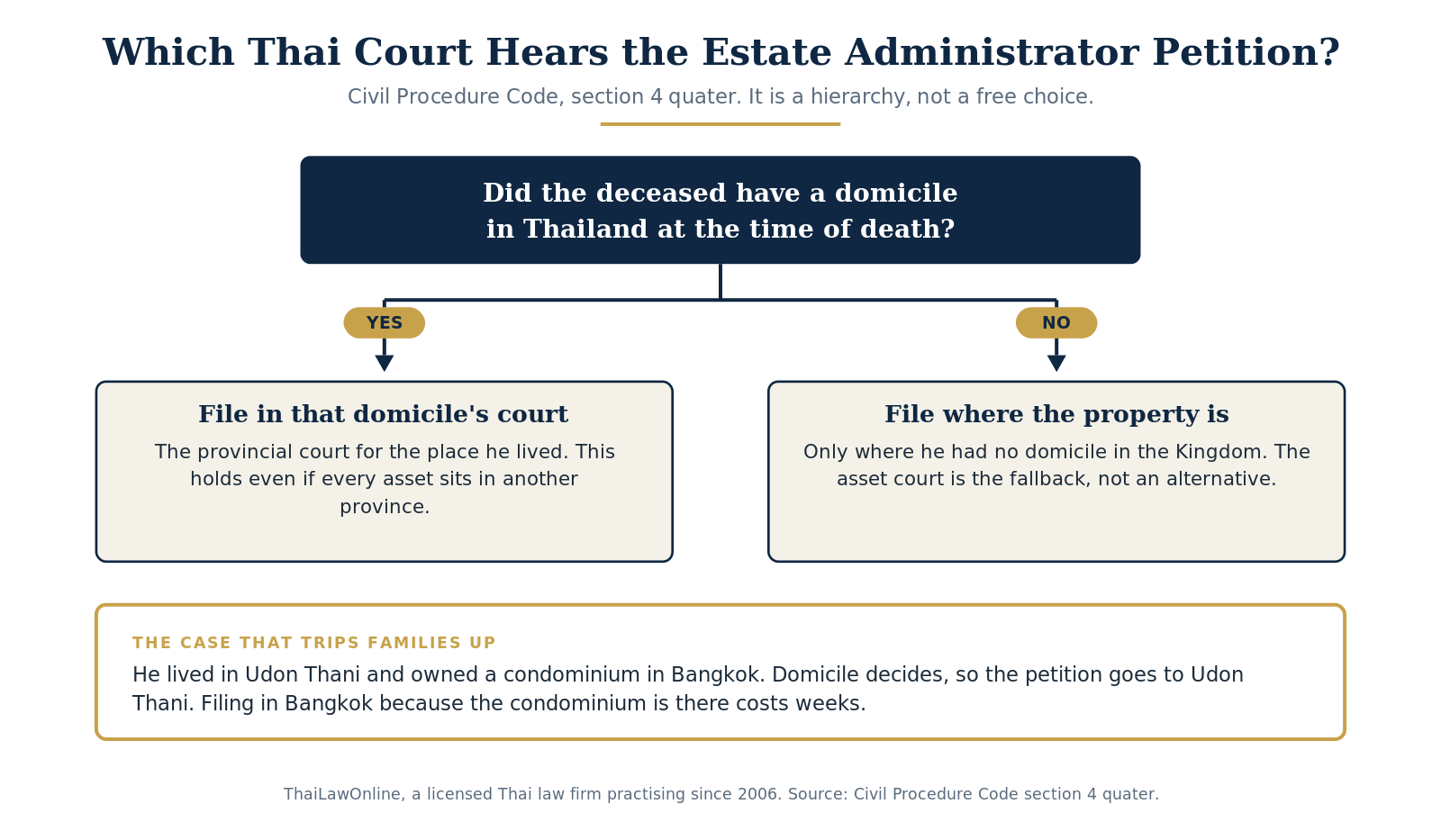
สมมุติกรณีที่เกิดขึ้นบ่อยที่สุดในทางปฏิบัติของเรา ชาวต่างชาติผู้เกษียณอายุรายหนึ่งอาศัยอยู่ที่อุดรธานีเป็นเวลาสิบห้าปีและเป็นเจ้าของห้องชุดหนึ่งห้องในกรุงเทพมหานคร ครอบครัวสันนิษฐานว่าเป็นกรุงเทพมหานคร เนื่องจากทรัพย์สินนั้นตั้งอยู่ที่นั่น มาตรา 4 จัตวา ระบุว่าอุดรธานี เพราะนั่นคือภูมิลำเนาของเขา การยื่นฟ้องในกรุงเทพฯ โดยทั่วไปไม่ได้ทำให้คดีเสียไป แต่ศาลอาจปฏิเสธได้ และครอบครัวต้องเสียเวลาหลายสัปดาห์ในการถอนฟ้องและยื่นฟ้องใหม่ในจังหวัดที่ถูกต้อง.
บทบัญญัติส่วนที่สองครอบคลุมสถานการณ์ตรงกันข้าม นั่นคือ ชาวต่างชาติที่เป็นเจ้าของห้องชุดในประเทศไทยแต่ใช้ชีวิตอยู่ต่างประเทศอย่างแท้จริงและไม่มีภูมิลำเนาในไทย ในกรณีนั้น ศาลที่ตั้งทรัพย์สินนั้นถูกต้อง และถูกต้องแล้ว เพราะ ไม่มีภูมิประเทศหลักแหล่งให้ชี้ไป ไม่ใช่เพราะครอบครัวต้องการเช่นนั้น.
คำเตือนในทางปฏิบัติข้อหนึ่ง ภูมิลำเนาเป็นเรื่องของข้อเท็จจริง และศาลไทยจะพิจารณาจากสถานที่ที่บุคคลนั้นอยู่อาศัยจริง ไม่ใช่จากสิ่งที่ระบุไว้ในวีซ่าหรือสัญญาเช่า ในกรณีที่ชาวต่างชาติแบ่งเวลาในหนึ่งปีอาศัยอยู่ระหว่างสองจังหวัด หรือระหว่างประเทศไทยและประเทศบ้านเกิด ให้คาดหวังว่าศาลต้องการพยานหลักฐาน ได้แก่ ทะเบียนบ้าน บันทึกของสำนักงานตรวจคนเข้าเมือง บิลค่าสาธารณูปโภค และที่อยู่ที่บุคคลนั้นใช้กับธนาคารและโรงพยาบาล รวบรวมสิ่งเหล่านี้ให้เรียบร้อยก่อนยื่นฟ้องดีกว่ามาทำทีหลัง.
เมื่อใดคุณจึงจำเป็นต้องมีคำสั่งศาลจริงๆ?
เมื่อใดก็ตามที่สินทรัพย์ถูกบันทึกไว้ในทะเบียนที่เจ้าหน้าที่รัฐควบคุม ในทางปฏิบัติ นั่นหมายความว่าเกือบทุกสิ่งที่มีค่า.
| สินทรัพย์ | จำเป็นต้องมีคำสั่งศาลหรือไม่? | ทำไม |
|---|---|---|
| ที่ดิน, บ้าน, คอนโดมิเนียม | โดยปกติ | มาตรา 81 แห่งประมวลกฎหมายที่ดินให้ทายาทขอจดทะเบียนโอนมรดกที่ดินที่สำนักงานที่ดินได้โดยไม่ต้องมีคำสั่งดังกล่าว หลังจากประกาศให้ทราบเป็นเวลา 30 วันแล้วไม่มีทายาทคนอื่นคัดค้าน ในกรณีที่มีทายาทหรือเอกสารต่างประเทศ มีทายาทอยู่ต่างประเทศ หรือมีข้อพิพาท สำนักงานที่ดินมักขอคำสั่งดังกล่าว |
| บัญชีธนาคารไทย | ใช่ | ถูกระงับการดำเนินการเมื่อได้รับแจ้งการเสียชีวิต; จะถูกปลดปล่อยให้เฉพาะผู้รับมอบหมายเท่านั้น |
| ยานพาหนะที่จดทะเบียน | ใช่ | กรมการขนส่งทางบกต้องการคำสั่งนี้ |
| หุ้นบริษัท | ใช่ | ต้องดำเนินการก่อนที่จะสามารถแก้ไขทะเบียนผู้ถือหุ้นและเอกสารที่ยื่นต่อ DBD ได้ |
| พันธบัตรและหลักทรัพย์ของรัฐบาล | ใช่ | สำนักงานทะเบียนต้องการคำสั่ง |
| ของใช้ในบ้าน เงินสดที่ถืออยู่ ของใช้ส่วนตัว | โดยทั่วไปแล้วไม่ | ไม่มีการจดทะเบียน ทายาทจึงต้องจัดการกันเอง |
| ประกันชีวิตที่มีผู้รับประโยชน์ที่ระบุชื่อ | ไม่ | Paid to the named beneficiary and falls outside the estate, except that the premiums the deceased paid count as estate assets the deceased’s creditors can claim (section 897 paragraph 2). Where the policy names nobody and is payable simply to “my heirs”, section 897 puts the sum into the estate, which also means the deceased’s creditors can reach it |
ใครสามารถเป็นผู้จัดการมรดกได้?
มาตรา 1713 กำหนดว่าใครมีสิทธิยื่นคำร้อง ได้แก่ ผู้รับมรดก ผู้มีผลประโยชน์เกี่ยวข้อง หรืออัยการ ในกรณีที่ระบุไว้ ซึ่งรวมถึงกรณีที่ผู้รับมรดกไม่อยู่ในประเทศ อยู่ต่างประเทศ หรือเป็นผู้เยาว์ ผู้จัดการมรดกหรือผู้รับมรดกไม่สามารถหรือไม่ประสงค์จะดำเนินการ หรือการแต่งตั้งตามพินัยกรรมไม่สำเร็จด้วยเหตุผลใดก็ตาม.
มาตรา 1718 ระบุไว้ว่าใคร ไม่สามารถ ได้รับการแต่งตั้ง และถ้อยคำนั้นแคบกว่าที่บทสรุปทั่วไปแนะนำ:
- บุคคลที่ยังไม่ถึงวัยบรรลุนิติภาวะ (โปรดหมายเหตุว่านี่คือวัยบรรลุนิติภาวะ ไม่ใช่เพียงอายุ 20 ปีเท่านั้น เนื่องจากสามารถบรรลุนิติภาวะได้ผ่านการแต่งงานด้วย);
- บุคคลวิกลจริต หรือบุคคลที่ศาลสั่งให้เป็นคนไร้ความสามารถ กึ่ง-ไม่มีความสามารถ;
- บุคคลที่ศาลได้ประกาศให้ล้มละลายแล้ว.
ไม่มีสิ่งใดในนั้นที่ห้ามชาวต่างชาติ. คู่สมรส บุตรที่บรรลุนิติภาวะ หรือพี่น้องชาวต่างชาติสามารถได้รับการแต่งตั้งและมักจะได้รับการแต่งตั้งเป็นประจำ คุณจะอ่านพบในเว็บไซต์คู่แข่งหลายแห่งว่าผู้ยื่นคำขอ “ต้องมีอายุอย่างน้อยยี่สิบปี” นั่นเป็นการถอดความ ไม่ใช่บทบัญญัติ และตัดส่วนที่เกี่ยวกับความไร้ความสามารถกึ่งหนึ่งออกไปโดยสิ้นเชิง.
และผู้จัดการมรดกก็ไม่จำเป็นต้องเป็นทายาทเสมอไป และการที่ทั้งสองบทบาทรวมอยู่ในบุคคลเดียวกันนั้นถือเป็นเรื่องปกติอย่างยิ่งในประเทศไทย โดยบ่อยครั้งที่คู่สมทบที่ยังมีชีวิตอยู่จะเป็นทั้งสองอย่าง ศาลฎีกาได้วินิจฉัยซ้ำแล้วซ้ำเล่าถึงสิ่งที่บทบาทคู่ขนานนั้นอนุญาตให้ทำได้ ใน คำพิพากษาศาลฎีกาที่ 44/2568 ศาลวินิจฉัยว่าการที่ผู้จัดการมรดกโอนทรัพย์มรดกให้แก่ตนเองในฐานะทายาทนั้น ไม่ตกเป็นโมฆะด้วยเหตุผลดังกล่าวเพียงอย่างเดียว และใน คำพิพากษาศาลฎีกาที่ 4746/2568 ยอมรับว่าการให้ความยินยอมโดยปริยายของทายาทสามารถสนับสนุนการได้มาซึ่งทรัพย์สินของผู้จัดการมรดกได้.
เมื่อได้รับการแต่งตั้งแล้ว มาตรา 1719 ให้สิทธิและหน้าที่แก่ผู้จัดการมรดกในการดำเนินการใดๆ ที่จำเป็นเพื่อให้เป็นไปตามเจตนาที่แสดงออกหรือโดยปริยายของพินัยกรรม ในการจัดการกองมรดกโดยทั่วไป และในการแบ่งปันกองมรดก นั่นคือตำแหน่งหน้าที่ตามไว้วางใจที่แท้จริง ไม่ใช่แค่พิธีการ และนั่นคือเหตุผลว่าทำไมกำหนดเวลาด้านล่างจึงมีความสำคัญ ตำแหน่งดังกล่าวยังมาพร้อมกับอำนาจที่แท้จริงเหนือทรัพย์สินด้วย ได้แก่ คำพิพากษาศาลฎีกาที่ 5902/2567 ศาลได้วินิจฉัยกรณีผู้จัดการมรดกนำทรัพย์มรดกไปจำนอง ซึ่งถือเป็นการเตือนใจว่า ทายาทที่เพิกเฉยไม่สนใจผู้จัดการมรดกเป็นเวลาหนึ่งปี อาจพบว่าสภาพของกองมรดกได้เปลี่ยนแปลงไปแล้ว.
การเลือกผู้ดูแลระบบ ไม่ใช่แค่การมีคุณสมบัติที่เหมาะสมเท่านั้น
การมีสิทธิเป็นแค่ครึ่งแรกที่ง่าย ครอบครัวมักจะถามคำถามที่ยากกว่าว่า ใครในพวกเราควรทำสิ่งนี้จริงๆ สี่กฎเป็นตัวตัดสินส่วนใหญ่ และไม่มีกฎข้อไหนปรากฏอยู่บนหน้าเว็บที่แข่งขันกันเลย.
พวกท่านตั้งแต่สองคนขึ้นไปสามารถปฏิบัติหน้าที่ร่วมกันได้ และให้ถือเสียงข้างมากเป็นข้อยุติ. ศาลไทยมักแต่งตั้งผู้จัดการมรดกร่วม โดยเฉพาะอย่างยิ่งในครอบครัวรวม ซึ่งคู่สมรสชาวไทยและบุตรที่บรรลุนิติภาวะจากการสมรสครั้งก่อนต่างต้องการเข้ามามีส่วนร่วมในการจัดการกองมรดก มาตรา 1726 บัญญัติถึงสิ่งที่เกิดขึ้นในลำดับถัดไปว่า เมื่อมีผู้จัดการมรดกหลายคน การปฏิบัติหน้าที่ของพวกเขานั้นกระทำโดย เสียงข้างมาก, เว้นแต่พินัยกรรมจะกำหนดไว้เป็นอย่างอื่น หากคะแนนเท่ากัน ผู้มีส่วนได้เสียคนใดคนหนึ่งอาจร้องขอต่อศาล และศาลจะเป็นผู้ชี้ขาด ดังนั้น ผู้จัดการมรดก่วมสองคนที่ขัดแย้งกันจึงทำให้เกิดทางตันโดยรูปแบบ และทุกการตัดสินใจที่มีข้อพิพาทจะกลายเป็นการยื่นคำร้องต่อศาล หากคุณคาดว่าจะมี วามขัดแย้ง ให้แต่งตั้งสามคน หรือแต่งตั้งคนเดียวและให้สิทธิในการรับข้อมูลแก่คนอื่นแทน.
ผู้ดูแลระบบไม่ได้รับค่าจ้าง. มาตรา 1721 บัญญัติไว้อย่างตรงไปตรงมาว่า ผู้จัดการมรดกคือ ไม่ มีสิทธิได้รับค่าตอบแทนจากกองมรดก เว้นแต่พินัยกรรมจะอนุญาต หรือทายาทส่วนใหญ่อนุญาต ครอบครัวมักจะอนุอนุญาตโดยปริยายว่าพี่น้องที่ทำงานเป็นผู้มีสิทธิได้รับสิ่งตอบแทนจากงานนั้น แต่เขาไม่มีสิทธิ เว้นแต่จะมีใครกล่าวไว้ และสถานที่ที่ชัดเจนที่สุดในการกล่าวไว้คือในพินัยกรรม.
สินค้าคงคลังที่บกพร่องอาจทำให้ผู้จัดการต้องตกงานได้. มาตรา 1731 ให้อำนาจศาลในการปลดผู้จัดการมรดกได้ ในกรณีที่ไม่มีการทำบัญชีทรัพย์มรดกภายในกำหนดเวลาและแบบพิมพ์ที่ถูกต้อง หรือในกรณีที่ศาลเห็นว่าบัญชีทรัพย์มรดกนั้นไม่เป็นที่น่าพอใจอันเนื่องมาจากความประมาทเลินเล่ออย่างร้ายแรง ความไม่สุจริต หรือความไร้ความสามารถอย่างชัดแจ้ง นี่คือสิ่งที่ทำให้กำหนดเวลา 15 วันและหนึ่งเดือนข้างล่างนี้มีสภาพบังคับ การแต่งตั้งญาติที่ทำงานด้านเอกสารได้ไม่ดีนั้นถือเป็นความเสี่ยงที่แท้จริง ไม่ใช่แค่เรื่องทางสังคม.
การอยู่ในประเทศไทยมีความสำคัญมากกว่าสัญชาติ. ไม่มีข้อกำหนดใดในประมวลกฎหมายที่กำหนดให้ต้องมีถิ่นพำนัก แต่ผู้จัดการมรดกคือบุคคลที่ต้องไปปรากฏตัวต่อหน้าเจ้าหน้าที่ธนาคาร สำนักงานที่ดิน และสำนักงานขนส่ง ซึ่งมักจะต้องไปหลายครั้ง ผู้จัดการมรดกที่อาศัยอยู่ต่างประเทศก็สามารถทำงานได้ และเราก็จัดการกรณีเช่นนี้อยู่หลายราย แต่ต้องจัดสรรงบประมาณสำหรับหนังสือมอบอำนาจ ค่าจัดส่งเอกสาร และการเดินทางอย่างน้อยหนึ่งเที่ยว.
กำหนดเวลาตามกฎหมาย
นี่คือส่วนที่ไม่ค่อยมีใครเขียนเป็นภาษาอังกฤษ และเป็นส่วนที่มักจะทำให้เกิดปัญหาบ่อยที่สุดในอีกหลายปีต่อมา.
| กำหนดเวลา | สิ่งที่ต้องใช้ | ส่วน |
|---|---|---|
| 15 วัน | ผู้ดูแลระบบต้อง เริ่มต้น บัญชีทรัพย์มรดก กำหนดเวลานี้เริ่มนับตั้งแต่วันที่ถึงแก่ความตาย หากเขารู้ถึงการแต่งตั้งของตนตามพินัยกรรมอยู่ก่อนแล้ว ตั้งแต่วันที่เข้าดำรงตำแหน่งในกรณีที่ศาลเป็นผู้แต่งตั้ง และในกรณีอื่นให้เริ่มนับตั้งแต่วันที่เขายอมรับตำแหน่ง. | 1728 |
| หนึ่งเดือน | สินค้าคงคลังต้อง เสร็จแล้ว. จะต้องทำต่อหน้า พยานอย่างน้อยสองคนที่ตนเองมีส่วนได้เสียในกองมรดกนั้นด้วย, และผู้ใดก็ตามที่ขาดคุณสมบัติในการเป็นพยานทำพินัยกรรมตามมาตรา 1670 ย่อมไม่สามารถเป็นพยานได้ ศาลอาจขยายกำหนดเวลาหนึ่งเดือนนั้นได้ แต่ต้องกระทำต่อเมื่อมีการยื่นคำขอมาก่อนที่กำหนดเวลาหนึ่งเดือนดังกล่าวจะสิ้นสุดลง. | 1729 |
| จำหน่ายออก | หากไม่มีการทำบัญชีทรัพย์มรดกภายในกำหนดเวลาและตามแบบที่ถูกต้อง หรือศาลเห็นว่าบัญชีดังกล่าวไม่น่าพอใจเนื่องจากความประมาทเลินเล่ออย่างร้ายแรง ความไม่สุจริต หรือความไร้ความสามารถอย่างชัดแจ้ง ศาลอาจสั่งปลดผู้จัดการมรดกนั้นได้. | 1731 |
| หนึ่งปี | ผู้จัดการมรดกต้องทำการจัดการและจัดทำบัญชีการจัดการและการจำหน่ายทรัพย์มรดก ซึ่งมีกำหนดระยะเวลาตั้งแต่วันที่ระบุไว้ในมาตรา 1728 เว้นแต่ผู้ทำพินัยกรรม ทายาทส่วนใหญ่ หรือศาลจะได้กำหนดระยะเวลาไว้เป็นอย่างอื่น. | 1732 |
| 10 วัน | การอนุมัติบัญชีหรือการปลดเปลื้องความรับผิดใดๆ จะสมบูรณ์ก็ต่อเมื่อได้ส่งมอบบัญชีพร้อมด้วยเอกสารประกอบให้แก่ทายาทล่วงหน้าอย่างน้อยสิบวัน. | 1733 |
| หนึ่งปี | สิทธิเรียกร้องในกองมรดกของทายาทจะขาดอายุความเมื่อพ้นกำหนดหนึ่งปีนับแต่วันที่ทายาทรู้หรือควรจะได้รู้ถึงความตาย สิทธิเรียกร้องของผู้รับพินัยกรรมมีกำหนดอายุความหนึ่งปีนับแต่วันที่ทราบสิทธิของตน. | 1754 |
| หนึ่งปี | เจ้าหนี้ของเจ้ามรดกต้องฟ้องกองมรดกภายในหนึ่งปีนับแต่เมื่อรู้ หรือนับแต่เมื่อเจ้าหนี้ควรได้รู้ถึงความตายของเจ้ามรดก แม้หนี้นั้นจะยังมีอายุความเหลืออยู่นานกว่านั้นก็ตาม ทั้งนี้ ภายใต้บังคับมาตรา 193/27 อายุความปกติของหนี้นั้นจะถูกย่นลงเหลือหนึ่งปีดังกล่าว | มาตรา 1754 วรรค 3 |
| ก่อนการแจกจ่ายจะเสร็จสมบูรณ์ | ผู้ที่สนใจสามารถสมัครได้ที่ เอาออก ผู้จัดการมรดกเพื่อความประมาทเลินเล่อในการปฏิบัติหน้าที่หรือเหตุอันสมควรประการอื่น แต่ต้องกระทำก่อนการแบ่งปันเสร็จสิ้นเท่านั้น ผู้จัดการมรดกอาจลาออกได้เช่นกัน โดยได้รับอนุญาตจากศาลและเพื่อเหตุอันสมควร. | 1727 |
| ห้าปี | ระยะเวลาจำกัดสิทธิขั้นเด็ดขาด: ทายาทไม่สามารถฟ้องร้องดำเนินคดีเกี่ยวกับการจัดการมรดกได้เกินกว่าห้าปีหลังจากที่การจัดการมรดกสิ้นสุดลง. | 1733 |
| สิบปี | Outer limit for claims under section 1754, ten years after the death. It does not bar an heir’s claim to divide estate property that is still undivided and held by that heir, or by an administrator or co-heir on the heirs’ behalf (section 1748; Dika 284/2569). | มาตรา 1754 วรรคสี่ |
Two practical consequences. First, the 15-day inventory is routinely missed, because families are still arranging a funeral and the appointment has not even been made. The realistic reading is that the clock runs from when the administrator takes office, which is why the appointment date matters. Second, the one-year bar in section 1754 is the one that actually destroys claims: a family abroad assumes there is no hurry, and there is. We have written up a recent decision where the heirs’ claim survived the year because the administrator still held undivided estate property for them: การเรียกร้องมรดกไทยหลังจากหนึ่งปี คำพิพากษาศาลฎีกาที่ 284/2569.
จะเป็นอย่างไรหากปีนั้นผ่านไปแล้ว
หน้าเว็บส่วนใหญ่ระบุเพียงอายุความหนึ่งปีแล้วจบแค่นั้น ซึ่งเป็นครึ่งที่เข้มงวดที่สุดของหลักเกณฑ์นี้ และทำให้ครอบครัวที่ยังมีสิทธิเรียกร้องอยู่ต้องถอยออกไป มีบทบัญญัติสามมาตราที่จำกัดหลักนี้ไว้ และคุณควรตรวจสอบทั้งสามมาตราก่อนยอมรับว่าสิทธิเรียกร้องสิ้นสุดลงแล้ว
มาตรา 1755: ไม่ใช่ทุกคนที่จะยกอายุความขึ้นต่อสู้ได้ อายุความหนึ่งปีนั้น จะยกขึ้นต่อสู้ได้เฉพาะทายาท ผู้มีสิทธิใช้สิทธิของทายาท หรือผู้จัดการมรดกเท่านั้น บุคคลภายนอกที่ครอบครองทรัพย์มรดกอยู่จะอ้างอายุความนี้ไม่ได้ หากผู้ที่คุณกำลังพิพาทด้วยเป็นเพื่อนบ้าน ผู้เช่า หุ้นส่วนทางธุรกิจ หรือบุคคลอื่นใดนอกรายชื่อดังกล่าว อายุความหนึ่งปีก็ไม่ใช่ข้อต่อสู้ที่เขาจะยกขึ้นได้
มาตรา 1748: การครอบครองจะเปลี่ยนคำตอบ. ทายาทที่ครอบครองทรัพย์มรดกที่ยังไม่ได้แบ่งกัน มีสิทธิเรียกร้องให้แบ่งทรัพย์มรดกนั้นได้ แม้ว่า ระยะเวลาตามมาตรา 1754 จะสิ้นสุดลงแล้วก็ตาม มาตราเดียวกันยังบัญญัติด้วยว่า สิทธิเรียกร้องให้แบ่งมรดกนั้นจะตัดโดยนิติกรรมเกินคราวละสิบปีไม่ได้ เรื่องนี้สำคัญที่สุดสำหรับครอบครัวที่อาศัยอยู่ในบ้าน: การครอบครองทรัพย์สินไม่ใช่เหตุที่ทำให้สิทธิเรียกร้องสิ้นไป แต่เป็นเหตุที่ทำให้สิทธิเรียกร้องยังคงอยู่
มาตรา 1754 วรรคสี่: สิบปีคือกำแพงชั้นนอกที่แท้จริง. No succession action may be brought more than ten years after the death, whatever the heir knew and when. So the honest position is a two-tier one. Inside one year of knowledge, you are safe. Between one and ten years, you need section 1755 or section 1748 or an argument about when you knew. After ten years, only section 1748 remains.
ประเด็นเรื่องการรู้ควรแยกไว้เป็นอีกบรรทัดหนึ่ง เพราะเป็นประเด็นที่ทำให้ชนะคดีได้ ระยะเวลาหนึ่งปีเริ่มนับตั้งแต่เมื่อทายาทได้รู้หรือควรได้รู้ถึงความตายของเจ้ามรดก ไม่ใช่นับตั้งแต่วันตาย บุตรที่เพิ่งทราบถึงความตายของบิดาหรือมารดาในอีกสองปีต่อมา จะเริ่มนับเวลาในวันที่ได้ทราบ หากไม่มีเหตุใดที่ทำให้ควรได้รู้ก่อนหน้านั้น ควรเก็บหลักฐานเกี่ยวกับวันที่ดังกล่าวไว้เป็นลายลักษณ์อักษรแต่เนิ่นๆ เพราะจะถูกโต้แย้งอย่างแน่นอน.
ยังมีอายุความอีกนับหนึ่งที่ใช้ยันผู้จัดการมรดก ซึ่งมีกำหนด 5 ปี มาตรา 1733 วรรค 2 ห้ามผู้สืบทอดมรดกฟ้องร้องเรื่อง การจัดการมรดก more than five years after the administration ends. Three points decide how that bar actually works, and the Supreme Court has settled all three. In Dika 2715/2562 the court held that only heirs and the administrator can raise this five-year bar; a third party, such as someone who bought estate property from the administrator, cannot. In Dika 2160/2562 it fixed the starting point: the administration ends when the last estate asset is disposed of or registered, so the five years runs from that day and not from the day the heir discovered the problem. And in Dika 2239/2559 it held that the five year bar is written for an administration carried out normally, and does not apply at all where the administrator administered the estate unlawfully or improperly, or embezzled, misappropriated or concealed it without the heirs knowing. Put together: an heir who was kept in the dark may be in a better position under section 1733 than the calendar suggests.
กับดักที่เกี่ยวข้องกันสองประการ ผู้ปกครองไม่อาจสละมรดกแทนทายาทที่ยังไม่บรรลุนิติภาวะได้โดยไม่ได้รับอนุญาตจากศาล ซึ่งศาลฎีกาได้ยืนยันไว้ใน คำพิพากษาศาลฎีกาที่ 1649/2567, ดังนั้นการสละมรดกที่ทำอย่างไม่เป็นทางการเมื่อหลายปีก่อนอาจไม่มีผลเลย และพี่น้องร่วมบิดาหรือร่วมมารดาเดียวกันเป็นทายาทโดยธรรมในลำดับของตนเอง ดังที่ คำพิพากษาศาลฎีกาที่ 2742/2545 ยืนยันไว้ ดังนั้นรายชื่อทายาทที่จัดทำจากความทรงจำของคนในครัวเรือนเดียวมักจะไม่ครบ
ขั้นตอนทีละขั้นตอน
| ขั้นตอน | สิ่งที่ต้องดำเนินการ | ระยะเวลาโดยทั่วไป |
|---|---|---|
| 1. เขตอำนาจศาล | ระบุศาลจังหวัดที่ถูกต้องตามประมวลกฎหมายวิธีพิจารณาความแพ่ง มาตรา 4 จัตวา: ศาลที่เจ้ามรดกมีภูมิลำเนาอยู่ในขณะถึงแก่ความตาย และเฉพาะกรณีที่ไม่มีภูมิลำเนาในประเทศไทยเท่านั้น จึงเป็นศาลที่ทรัพย์มรดกตั้งอยู่ | ทันที |
| 2. เอกสาร | มรณบัตร พินัยกรรม (ถ้ามี) หลักฐานแสดงความสัมพันธ์ของทายาทแต่ละคน ทะเบียนบ้านและบัตรประจำตัวประชาชนหรือหนังสือเดินทาง รายการทรัพย์สินพร้อมเอกสารสิทธิ์ที่เกี่ยวข้อง เอกสารต่างประเทศต้องได้รับการแปลรับรองและนิติกรณ์. | เสาอันยาว. 2 ถึง 12 สัปดาห์ ซึ่งอยู่ในช่วงสูงสุดเมื่อเอกสารมาจากต่างประเทศ |
| 3. คำร้อง | ร่างคำร้องแล้ว และได้รับความยินยอมจากทายาทเท่าที่จะทำได้ ความยินยอมจากทายาททุกคนคือสิ่งที่ทำให้การไต่สวนใช้เวลาสั้นลง. | 1 ถึง 2 สัปดาห์ |
| 4. การจัดเก็บและการกำหนดเวลา | ยื่นต่อศาล ซึ่งกำหนดวันนัดไต่สวน. | 4 ถึง 8 สัปดาห์ก่อนวันนัดไต่สวน โดยขึ้นอยู่กับแต่ละจังหวัด |
| 5. ประกาศสาธารณะ | ศาลต้องการประกาศแจ้งเพื่อให้ผู้ที่มีข้อร้องสิทธิที่ขัดแย้งกันสามารถมาปรากฏตัวได้. | ดำเนินไปพร้อมกันภายในระยะเวลาของขั้นตอนที่ 4 |
| 6. การได้ยิน | มักจะใช้เวลาสั้นและไม่มีข้อโต้แย้ง ในกรณีที่มีพินัยกรรมและทายาทเห็นพ้องต้องกัน โดยทั่วไปผู้ยื่นคำร้องจะต้องมาปรากฏตัวด้วย. | การปรากฏตัวครั้งเดียว |
| 7. คำสั่งซื้อ | ศาลเป็นผู้แต่งตั้งผู้จัดการมรดก. | ภายในวันเดียวกันจนถึงสองสามสัปดาห์สำหรับคำสั่งที่เป็นลายลักษณ์อักษร |
| 8. ระยะเวลาในการอุทธรณ์และใบรับรอง | พ้นกำหนดระยะเวลายื่นอุทธรณ์แล้ว ศาลจึงออกใบรับรองว่าไม่มีการยื่นอุทธรณ์. ธนาคารและสำนักงานที่ดินโดยทั่วไปต้องการหนังสือรับรองฉบับนี้ ไม่ใช่แค่คำสั่งศาลเท่านั้น. | ประมาณ 30 วันบวกกับเวลาในการออกเอกสาร |
| 9. สินค้าคงคลังและการบริหารจัดการ | การทำบัญชีทรัพย์สินภายใน 15 วันนับแต่วันเข้ารับตำแหน่ง จากนั้นจึงรวบรวมทรัพย์สิน ชำระหนี้ และดำเนินการกับธนาคารและนายทะเบียน. | หลายสัปดาห์ถึงหลายเดือน |
| 10. การจำหน่ายและการระบายออก | การจำหน่ายจ่ายโอนตามมาตรา 1750 จากนั้นทำบัญชีให้แก่ทายาทและปล่อยพ้นจากหน้าที่. | ภายในระยะเวลาหนึ่งปีตามมาตรา 1732 บัญชีที่อยู่ภายใต้มาตรา 1733 |
ขั้นตอนที่ 8 เป็นขั้นตอนที่ทำให้คนประหลาดใจ การได้รับคำสั่งศาลไม่ใช่จุดสิ้นสุด: สถาบันส่วนใหญ่ต้องการใบรับรองคดีถึงที่สุดก่อนที่จะดำเนินการ ดังนั้นจึงต้องเผื่องบเวลาไว้อีกหนึ่งเดือนหลังจากการไต่สวน ก่อนที่ธนาคารจะจ่ายเงินจริง.
ในการแบ่งมรดก มาตรา 1750 เป็นมาตราที่ควรรู้ การแบ่งมรดกอาจทำได้โดยทายาทต่างเข้าครอบครองทรัพย์มรดกส่วนของตน หรือโดยการขายกองมรดกและแบ่งเงินที่ได้ หากทายาทตกลงกันแบ่งมรดกโดยสัญญา, ข้อตกลงดังกล่าวจะไม่สามารถบังคับใช้ได้เว้นแต่จะมีหลักฐานเป็นลายลักษณ์อักษรที่ลงลายมือชื่อโดยคู่สัญญาฝ่ายที่ต้องรับผิด, หรือตัวแทนของพวกเขา ศาลฎีกาได้พิจารณาความแตกต่างระหว่างการทำเป็นหนังสือกับการเข้าครอบครองไว้ใน คำพิพากษาศาลฎีกาที่ 4273/2568. ข้อตกลงระหว่างครอบครัวว่าใครจะได้รับอะไรควรถูกเขียนและลงนาม ไม่ใช่ถูกตัดสินกันระหว่างรับประทานอาหาร.
กระบวนการจัดการมรดกในประเทศไทยใช้เวลานานเท่าใด
3 ถึง 6 เดือน นับตั้งแต่ยื่นคำร้องจนถึงการออกคำสั่งศาลที่ใช้งานได้จริง ในกรณีที่มีพินัยกรรมไทย ทายาทเห็นพ้องกัน และมีเอกสารพร้อมอยู่แล้ว กรณีไม่มีพินัยกรรมใช้เวลา 4 ถึง 8 เดือน ให้บวกเพิ่มอีกหนึ่งถึงสามเดือนในช่วงต้นหากต้องแปลและรับรองเอกสารต่างประเทศก่อนจึงจะยื่นคำร้องได้ และบวกเพิ่มอีกหนึ่งปีหรือมากกว่านั้นหากมีผู้คัดค้านการแต่งตั้ง จากนั้นให้บวกเพิ่มอีกประมาณหนึ่งเดือนหลังการไต่สวนสำหรับหนังสือรับรองคดีถึงที่สุด ซึ่งธนาคารส่วนใหญ่ต้องการก่อนจะจ่ายเงิน
นี่เป็นตัวเลขที่บริษัทได้จัดทำขึ้นเอง และมีการแก้ไขเมื่อวันที่ 7 สิงหาคม 2026. พวกมันแทนที่การประมาณการก่อนหน้านี้ในหน้านี้.
| คุณสมบัติ | คดีที่ง่ายต่อการพิจารณา | คดีที่ซับซ้อน |
|---|---|---|
| ระยะเวลาที่คาดการณ์โดยรวม | 3 ถึง 6 เดือน | 8 ถึง 24 เดือน |
| ขั้นตอนในศาล | 2 ถึง 4 เดือน | 6 ถึง 18 เดือน |
| การโอนสินทรัพย์ | 1 ถึง 2 เดือน | 2 ถึง 6 เดือน |
| ค่าธรรมเนียมทางกฎหมายที่ประมาณการ | 50,000 ถึง 150,000 บาท | 200,000 บาทขึ้นไป |
| คุณสมบัติหลัก | ไม่มีข้อพิพาทระหว่างทายาท มีพินัยกรรมที่ชัดเจน (หากมี) และมีเอกสารทั้งหมดพร้อมใช้ | พินัยกรรมที่มีข้อโต้แย้ง ทายาทที่ติดตามตัวไม่พบ การเรียกร้องของเจ้าหนี้ หรือทรัพย์สินที่อยู่ในหลายเขตอำนาจศาล |
| ค่าธรรมเนียมศาล | ค่าธรรมเนียมศาลอัตราคงที่ในจำนวนเล็กน้อย (200 บาทสำหรับคำร้อง บวกค่านำส่งและค่าประกาศอีกเล็กน้อย) ซึ่งเราชำระแทนคุณเป็นส่วนหนึ่งของบริการ | หากมีการโต้แย้งเกี่ยวกับมรดกและมีการฟ้องร้องเรียกร้องเงินค่าสินสมรส ค่าธรรมเนียมศาลตามมูลค่าทรัพย์สินจะถูกคิดจากจำนวนเงินที่ถูกโต้แย้ง (2%, ตามที่กฎหมายกำหนดไว้); ส่วนคำร้องขอแต่งตั้งผู้ดูแลมรดกยังคงมีค่าธรรมเนียมคงที่ในอัตราต่ำ |
มีสองปัจจัยที่ทำให้ตัวเลขนั้นเปลี่ยนไป และไม่มีปัจจัยใดเลยที่เป็นตัวศาล ปัจจัยแรกคือ เอกสารที่พิสูจน์ว่าใครเป็นทายาทนั้นมีอยู่หรือไม่ ในรูปแบบที่ถูกต้อง ได้รับการแปลและรับรองแล้ว นั่นคือจุดที่ใช้เวลาหลายเดือน และเป็นงานที่ทำล่วงหน้าได้ทั้งหมดในขณะที่ครอบครัวยังจัดงานศพอยู่ ปัจจัยที่สองคือตารางนัดความของศาลเอง ซึ่งแตกต่างกันไปตามจังหวัด: คดีในกรุงเทพฯ และคดีในต่างจังหวัดไม่ได้เดินด้วยความเร็วเท่ากัน และไม่มีใครย่นระยะเวลาของทั้งสองแห่งได้
เอกสาร การรับรองเอกสาร และการเปลี่ยนแปลงเรื่อง Apostille ปี 2027
เอกสารต่างประเทศเป็นส่วนที่ใช้เวลานานที่สุดในทุกกำหนดเวลาการจัดการมรดกในหน้านี้ ดังนั้นการเปลี่ยนแปลงวิธีรับรองเอกสารจึงเป็นการเปลี่ยนแปลงกำหนดเวลาของคุณด้วย
ประเทศไทยกำลังจะเข้าเป็นภาคีอนุสัญญา Apostille โดยมีผลในวันที่ 28 กุมภาพันธ์ 2027 ไทยได้ยื่นเอกสารเข้าร่วมอนุสัญญาเฮก 1961 เมื่อวันที่ 30 มิถุนายน 2026 และอนุสัญญาจะเริ่มมีผลบังคับใช้สำหรับไทยในวันที่ 28 กุมภาพันธ์ 2027 คุณจะยังคงพบหน้าเว็บที่แข่งขันกันระบุอย่างชัดเจนว่าไทยไม่ใช่สมาชิก และการรับรองตามกฎหมายอย่างเต็มรูปแบบจึงเป็นสิ่งจำเป็น ซึ่งก็เป็นเช่นนั้นเมื่อมีการเขียนไว้ และในวันที่ดังกล่าวแล้วมันก็ไม่เป็นเช่นนั้นอีกต่อไป.
สิ่งนี้หมายความว่าอย่างไรในทางปฏิบัติ:
- ยื่นก่อนวันที่ 28 กุมภาพันธ์ 2027: ไม่มีอะไรเปลี่ยนแปลง ใบมรณบัตร สูติบัตร และทะเบียนสมรสที่ออกในต่างประเทศยังคงต้องผ่านขั้นตอนการรับรองตามลำดับของประเทศที่ออกเอกสาร แล้วจึงรับรองโดยสถานเอกอัครราชทูตหรือสถานกงสุลไทย และคำแปลภาษาไทยยังคงต้องส่งไปที่กระทรวงการต่างประเทศ คู่มือการรับรองนิติกรณ์เอกสาร ของเราระบุขั้นตอนและระยะเวลารอในปัจจุบันไว้
- การยื่นคำร้องหลังจากวันดังกล่าว: การรับรอง Apostille เพียงครั้งเดียวจากหน่วยงานที่มีอำนาจของประเทศที่ออกเอกสาร น่าจะใช้แทนขั้นตอนการรับรองทางกงสุลได้ สำหรับเอกสารจากรัฐภาคีอื่น ซึ่งจะช่วยลดระยะเวลาในขั้นที่ 2 ของตารางข้างต้นลงได้หลายสัปดาห์
- หากเพิ่งมีการเสียชีวิตไม่นานและเรื่องมรดกยังไม่เร่งด่วน, เรื่องนี้ควรพูดคุยกันมากกว่าจะคาดเดาเอาเอง การรอแทบจะไม่ใช่คำตอบที่ถูกต้อง เพราะระยะเวลาหนึ่งปีตามมาตรา 1754 กำลังนับอยู่ แต่ครอบครัวที่ใช้เวลารวบรวมเอกสารจากสามประเทศมาแล้วสิบสองเดือน อาจกำหนดจังหวะการดำเนินการขั้นสุดท้ายให้สอดคล้องกับการเปลี่ยนแปลงนี้ได้อย่างสมเหตุสมผล.
เอกสารฝั่งไทยไม่ได้รับผลกระทบ ข้อกำหนดเรื่องคำแปลภาษาไทยที่ได้รับการรับรองก็เช่นกัน ซึ่ง Apostille ไม่ได้ยกเลิกข้อกำหนดนี้ หากคุณต้องการให้รับรองเอกสารแบบโนตารีภายในประเทศไทย โปรดดูที่ บริการรับรองลายมือชื่อและเอกสาร (โนตารี) ในประเทศไทย.
ราคาเท่าไหร่
เป็นเรื่องที่แยกกันอยู่สามเรื่อง และมักจะถูกอ้างถึงเป็นเรื่องเดียวกัน ซึ่งเป็นเหตุผลที่ผลการประมาณการบนอินเทอร์เน็ตจะแตกต่างกันอย่างมาก.
| ส่วนประกอบ | ช่วงปกติ | หมายเหตุ |
|---|---|---|
| ค่าธรรมเนียมศาลและค่าใช้จ่ายในการดำเนินคดี | ค่าธรรมเนียมคำร้อง 200 บาท บวกค่าประกาศ ค่านำส่งหมาย และค่าจัดส่ง | คำร้องขอตั้งผู้จัดการมรดกเสียค่าธรรมเนียมอัตราคงที่จำนวนเล็กน้อย ค่าธรรมเนียมตามทุนทรัพย์ (2% มีเพดานตามกฎหมาย) ใช้เฉพาะกรณีที่มีการฟ้องร้องเรียกเงินกันเท่านั้น |
| การแปลและการรับรองเอกสารทางกฎหมาย | คิดเป็นรายฉบับ และเป็นรายการค่าใช้จ่ายที่ครอบครัวข้ามชาติคาดไม่ถึงมากที่สุด | ขึ้นอยู่กับว่าคุณต้องใช้เอกสารต่างประเทศกี่ฉบับและจากกี่ประเทศ คาดว่าจะลดลงสำหรับเอกสารจากประเทศภาคีอนุสัญญา Apostille หลังวันที่ 28 กุมภาพันธ์ 2027 |
| ค่าทนายความ กรณีไม่มีข้อพิพาท | 50,000 ถึง 150,000 บาท | ผู้สืบทอดที่ชัดเจน เอกสารพร้อมใช้งาน ไม่มีข้อขัดแย้งใดๆ. |
| ค่าทนายความที่เกี่ยวข้องกับการฟ้องร้องหรือกรณีที่ซับซ้อน | 200,000 บาทขึ้นไป | พินัยกรรมที่มีข้อโต้แย้ง ทายาทที่ติดตามตัวไม่พบ การเรียกร้องของเจ้าหนี้ หรือทรัพย์สินที่กระจายอยู่หลายเขตอำนาจศาล |
เราเสนอราคางานจัดการมรดกเป็นรายกรณี ไม่ใช่ราคาเหมาคงที่ เพราะมรดกที่ไม่มีข้อพิพาทและมีบัญชีเดียว กับมรดกที่มีข้อพิพาทและมีที่ดินในสามจังหวัด ไม่ใช่งานเดียวกัน สิ่งที่เรารับประกันได้คือลำดับขั้นตอน: การปรึกษาครั้งแรกในอัตรา 2,000 บาทต่อชั่วโมง, และหลังจากนั้นจะมีใบเสนอราคาเป็นลายลักษณ์อักษรสำหรับงานทั้งหมดก่อนเริ่มงานใดๆ ทั้งนี้ ข้อมูลที่เราเผยแพร่ไว้เรื่อง ค่าธรรมเนียมทางกฎหมาย และ อัตราค่าบริการ มีอยู่ในเว็บไซต์.
เพื่อการเปรียบเทียบ พินัยกรรมไทยมีค่าใช้จ่าย 3,900 บาท. พินัยกรรมไม่ได้ทำให้ไม่ต้องไปศาล แต่จะเปลี่ยนการไต่สวนข้อเท็จจริงที่มีการโต้แย้งให้กลายเป็นการไต่สวนสั้นๆ ตามขั้นตอน และเป็นสิ่งที่ถูกที่สุดในกระบวนการทั้งหมดนี้ โดยถูกกว่าถึงร้อยเท่า ดู ค่าใช้จ่ายในการทำพินัยกรรมในประเทศไทย.
ประเด็นที่ส่งผลกระทบต่อครอบครัวชาวต่างชาติเท่านั้น
- พินัยกรรมต่างประเทศไม่ได้ข้ามขั้นตอนศาลไทย. สามารถรับรองได้ แต่ผู้จัดการมรดกที่ระบุไว้ไม่มีอำนาจเหนือทรัพย์สินในประเทศไทย จนกว่าศาลไทยจะแต่งตั้ง ดู การจัดการมรดกตามพินัยกรรมต่างประเทศ และ พินัยกรรมไทยและพินัยกรรมต่างประเทศใช้ร่วมกันอย่างไร.
- การพิสูจน์สิทธิการเป็นทายาทข้ามพรมแดนเป็นเรื่องของพยานหลักฐาน ไม่ใช่เรื่องของกฎหมาย. ใบสำคัญการสมรสและสูติบัตรที่ออกในต่างประเทศใช้ได้ โดยหน่วยงานที่ออกเอกสารต้องรับรองและมีผู้แปลแปลเอกสารนั้น ควรดำเนินการแต่เนิ่นๆ เพราะการรับรองเอกสารใช้เวลาหลายสัปดาห์ อย่างน้อยจนถึงเดือนกุมภาพันธ์ 2027
- ทายาทชาวต่างชาติไม่สามารถถือครองที่ดินได้. ต้องขายที่ดินภายในระยะเวลาที่หน่วยงานที่เกี่ยวข้องกำหนด แม้ว่าชาวต่างชาติจะไม่ถูกห้ามเป็นเจ้าของอาคารก็ตาม สามารถถือครองคอนโดมิเนียมได้หากโควตาชาวต่างชาติของอาคาร 49% อนุญาต ดู ชาวต่างชาติสามารถรับมรดกที่ดินในประเทศไทยได้หรือไม่ และ การรับมรดกในฐานะทายาทต่างชาติ.
- การเจรจาเรื่องธนาคารเป็นเรื่องที่แยกกัน. ผู้จัดการมรดกที่มีคำสั่งศาลและหนังสือรับรองแล้ว ยังต้องทำให้สาขาธนาคารพอใจ ดู บัญชีธนาคารไทย เกี่ยวกับวิธีที่ธนาคารจัดการกับข้อมูลประจำตัวและอำนาจ.
- คุณไม่จำเป็นต้องอยู่ที่นี่ก็ได้. การเตรียมการส่วนใหญ่ดำเนินการภายใต้หนังสือมอบอำนาจ แต่ผู้ยื่นคำร้องมักจะเข้าร่วมการไต่สวนด้วยตนเอง หากคุณไม่เคยเข้าสู่ห้องพิจารณาคดีในประเทศไทย โปรดอ่าน สิ่งที่ควรรู้ก่อนขึ้นศาลในประเทศไทย ก่อน.
- ภาษีมรดกเป็นประเด็นที่แยกต่างหากจากการจัดการมรดกผ่านศาล ภาษีนี้ใช้กับส่วนที่เกินเกณฑ์ที่กำหนดและกับทรัพย์สินบางประเภทที่ระบุไว้ ดูที่ ภาษีมรดกในประเทศไทย.
ถ้าไม่มีพินัยกรรมล่ะ
กองมรดกยังคงตกทอดแก่ทายาทในขณะที่ถึงแก่ความตายตามมาตรา 1599 แต่ว่าทายาทเหล่านั้นคือใครกลับกลายเป็นปัญหาของศาลแทนที่จะเป็นการตัดสินใจของผู้ทำพินัยกรรม มาตรา 1629 กำหนดลำดับทายาทโดยธรรมไว้หกชั้น และมาตรา 1635 ให้คู่สมรสที่ยังมีชีวิตอยู่มีส่วนแบ่งร่วมกับทายาทเหล่านั้น ซึ่งสัดส่วนจะแตกต่างกันไปตามว่ามีทายาทในชั้นใดอยู่บ้าง.
นั่นคือจุดที่กองมรดกที่ไม่มีพินัยกรรมต้องเสียเวลาไปหลายเดือน: ศาลจะต้องตรวจสอบให้แน่ใจเกี่ยวกับองค์ประกอบของครอบครัว และในครอบครัวที่มีการผสมผสานหรือข้ามพรมแดน นั่นอาจหมายถึงการตามหาบุตรจากการสมรสครั้งก่อนในต่างประเทศ รายละเอียดสิ่งที่เกิดขึ้นระบุไว้ใน การเสียชีวิตโดยไม่ทำพินัยกรรมในประเทศไทย และในของเรา คู่มือกฎหมายมรดก.
การเปรียบเทียบนี้ชัดเจนมากพอที่ควรพูดตรงๆ: พินัยกรรมไทยไม่ได้ทำให้ไม่ต้องไปศาล แต่จะเปลี่ยนการไต่สวนข้อเท็จจริงที่มีการโต้แย้งให้กลายเป็นการไต่สวนสั้นๆ ตามขั้นตอน ดู การทำพินัยกรรมไทย, หรือเริ่มต้นได้ฟรีด้วย แบบฟอร์มพินัยกรรมไทย.
คำถามที่พบบ่อย
กระบวนการจัดการมรดกในประเทศไทยใช้เวลานานแค่ไหน?
3 ถึง 6 เดือนสำหรับคำสั่งศาลที่ใช้งานได้จริงในกรณีที่มีพินัยกรรมไทย ทายาทตกลงกัน และมีเอกสารครบถ้วน 4 ถึง 8 เดือนในกรณีที่ไม่มีพินัยกรรม เพิ่มอีก 1 ถึง 3 เดือนหากต้องแปลและรับรองเอกสารในต่างประเทศก่อนยื่นคำร้อง และหนึ่งปีหรือมากกว่านั้นหากมีการคัดค้านการแต่งตั้งผู้จัดการมรดก ให้เผื่องบประมาณไว้อีกประมาณหนึ่งเดือนหลังการไต่สวนเพื่อขอใบสำคัญคดีถึงที่สุด ซึ่งธนาคารส่วนใหญ่ต้องการก่อนที่จะ ปล่อยเงินในบัญชี.
ฉันต้องยื่นคำร้องขอตั้งผู้จัดการมรดกในประเทศไทยต่อศาลใด
ศาลจังหวัดที่เจ้ามรดกมีภูมิลำเนาอยู่ในขณะถึงแก่ความตาย ประมวลกฎหมายวิธีพิจารณาความแพ่ง มาตรา 4 จัตวา กำหนดเป็นลำดับชั้น ไม่ใช่ทางเลือก: เฉพาะกรณีที่เจ้ามรดกไม่มีภูมิลำเนาในราชอาณาจักรเท่านั้น จึงจะยื่นคำร้องต่อศาลที่ทรัพย์มรดกตั้งอยู่ ชายผู้หนึ่งที่อาศัยอยู่ในอุดรธานีและเป็นเจ้าของคอนโดมิเนียมในกรุงเทพฯ ต้องยื่นคำร้องที่อุดรธานี ไม่ใช่ที่กรุงเทพฯ
คนสองคนสามารถเป็นผู้จัดการมรดกได้พร้อมกันหรือไม่
ได้ และศาลไทยแต่งตั้งผู้จัดการมรดกร่วมกันเป็นประจำ โดยเฉพาะในครอบครัวที่มีบุตรจากการสมรสครั้งก่อน จากนั้นมาตรา 1726 กำหนดวิธีการกระทำของผู้จัดการมรดกร่วม คือ ถือเสียงข้างมาก เว้นแต่พินัยกรรมจะกำหนดไว้เป็นอย่างอื่น หากเสียงเท่ากัน ผู้มีส่วนได้เสียคนใดก็ได้อาจร้องขอต่อศาลและศาลจะเป็นผู้ชี้ขาด ผู้จัดการมรดกร่วมสองคนที่เห็นไม่ตรงกันจึงเกิดทางตัน ดังนั้นควรพิจารณาแต่งตั้งสามคน หรือแต่งตั้งคนเดียวโดยให้ผู้อื่นมีสิทธิได้รับข้อมูล
ผู้จัดการมรดกได้รับค่าจ้างหรือไม่
ไม่ได้โดยอัตโนมัติ มาตรา 1721 บัญญัติว่าผู้จัดการมรดกไม่มีสิทธิได้รับบำเหน็จจากกองมรดก เว้นแต่พินัยกรรมจะอนุญาตไว้ หรือทายาทโดยเสียงข้างมากอนุญาตให้ หากคุณต้องการให้สมาชิกในครอบครัวที่ทำหน้าที่นี้ได้รับค่าตอบแทน ให้ระบุไว้ในพินัยกรรม หรือขอความยินยอมจากทายาทเป็นลายลักษณ์อักษร
ผ่านไปหนึ่งปีแล้ว สิทธิเรียกร้องมรดกของฉันสิ้นสุดลงแล้วหรือไม่
Not necessarily. Three provisions qualify the section 1754 bar. Section 1755 means only an heir, a person entitled to exercise an heir’s rights, or an estate administrator can raise the one-year prescription at all. Section 1748 lets an heir who is in possession of undivided estate property demand partition even after the year has run. And the year runs from when you knew or ought to have known of the death, not from the death itself. The outer limit is ten years from the death under section 1754 paragraph 4, except where the estate is still undivided and held for the heirs (section 1748).
ฉันมีเวลาฟ้องผู้จัดการมรดกได้นานเท่าใด
ห้าปีนับแต่การจัดการมรดกสิ้นสุดลง ตามมาตรา 1733 วรรคสอง ซึ่งเป็นอายุความที่แยกต่างหากจากอายุความหนึ่งปีตามมาตรา 1754 ศาลฎีกาวินิจฉัยว่าการจัดการมรดกสิ้นสุดลงเมื่อได้จำหน่ายหรือจดทะเบียนทรัพย์มรดกชิ้นสุดท้าย (คำพิพากษาศาลฎีกาที่ 2160/2562) ว่าเฉพาะทายาทและผู้จัดการมรดกเท่านั้นที่ยกอายุความนี้ขึ้นอ้างได้ บุคคลภายนอกที่ซื้อทรัพย์มรดกยกขึ้นอ้างไม่ได้ (คำพิพากษาศาลฎีกาที่ 2715/2562) และว่าอายุความห้าปีไม่ใช้บังคับเลยในกรณีที่ผู้จัดการมรดกจัดการมรดกโดยไม่ชอบด้วยกฎหมาย หรือยักยอก เบียดบัง หรือปกปิดทรัพย์มรดกโดยทายาทไม่รู้ (คำพิพากษาศาลฎีกาที่ 2239/2559).
การรับรองเอกสารแบบ Apostille จะเปลี่ยนแปลงอะไรในคดีขอจัดการมรดกของฉันหรือไม่
ใช่ ตั้งแต่วันที่ 28 กุมภาพันธ์ 2027 ประเทศไทยได้ยื่นภาคยานุวัติสารเข้าเป็นภาคีอนุสัญญา Apostille ปี 1961 เมื่อวันที่ 30 มิถุนายน 2026 และอนุสัญญาจะมีผลใช้บังคับสำหรับประเทศไทยในอีกแปดเดือนต่อมา คือวันที่ 28 กุมภาพันธ์ 2027 ก่อนถึงวันนั้น เอกสารต่างประเทศยังคงต้องผ่านขั้นตอนการรับรองเอกสารครบทุกทอด หลังจากวันนั้น การรับรอง Apostille เพียงครั้งเดียวจากประเทศที่ออกเอกสารน่าจะใช้แทนขั้นตอนการรับรองทางกงสุลได้ ซึ่งจะช่วยลดเวลาในขั้นตอนเอกสารลงหลายสัปดาห์ ทั้งนี้ ยังคงต้องมีคำแปลภาษาไทยที่ได้รับการรับรองไม่ว่ากรณีใด
มีศาลจัดการมรดกในประเทศไทยหรือไม่
ไม่มี ไม่มีศาลมรดกแยกต่างหาก และไม่มีหน่วยงานทะเบียนมรดกแยกต่างหาก ศาลจังหวัดทั่วไปที่มีเขตอำนาจตามประมวลกฎหมายวิธีพิจารณาความแพ่ง มาตรา 4 จัตวา รับฟังคำร้องขอและแต่งตั้งผู้จัดการมรดก.
ฉันต้องมีคำสั่งศาลไหมถ้ามีพินัยกรรม
ใช่ พินัยกรรมอาจระบุผู้จัดการมรดกภายใต้มาตรา 1712 แต่การระบุนั้นไม่ใช่การแต่งตั้ง บุคคลที่ถูกระบุชื่อยังคงต้องยื่นคำร้องและศาลยังคงต้องมีคำสั่ง สิ่งที่พินัยกรรมทำคือทำให้การพิจารณาคดีสั้นลงและไม่มีการโต้แย้ง.
ชาวต่างชาติสามารถเป็นผู้จัดการมรดกในประเทศไทยได้หรือไม่
ได้ มาตรา 1718 ตัดสิทธิเฉพาะผู้ที่ยังไม่บรรลุนิติภาวะ บุคคลวิกลจริตหรือผู้ที่ศาลสั่งให้เป็นคนเสมือนไร้ความสามารถ และบุคคลที่ศาลสั่งให้เป็นบุคคลล้มละลาย สัญชาติไม่ใช่เหตุต้องห้าม และคู่สมรสและบุตรที่เป็นชาวต่างชาติได้รับการแต่งตั้งเป็นประจำ ผู้จัดการมรดกไม่จำเป็นต้องเป็นทายาท และจะเป็นทายาทด้วยก็ได้: ในประเทศไทย คู่สมรสที่ยังมีชีวิตอยู่มักเป็นทั้งสองอย่าง
กำหนดเวลาของผู้จัดการมรดกคืออะไร
การทำบัญชีทรัพย์มรดกต้องเริ่มภายใน 15 วัน (มาตรา 1728) โดยนับแต่วันที่ได้รับแต่งตั้งสำหรับผู้จัดการมรดกที่ศาลตั้ง หรือนับแต่วันที่เจ้ามรดกตายสำหรับผู้ที่รู้อยู่แล้วว่าตนได้รับแต่งตั้งตามพินัยกรรม และต้องทำให้เสร็จภายในหนึ่งเดือน ต่อหน้าพยานอย่างน้อยสองคนซึ่งเป็นผู้มีส่วนได้เสียในกองมรดก โดยหากต้องการขยายเวลา ต้องร้องขอก่อนสิ้นระยะเวลาหนึ่งเดือนนั้น (มาตรา 1729) การจัดการมรดกและการทำบัญชีต้องเสร็จภายในหนึ่งปี (มาตรา 1732) และบัญชีต้องส่งถึงทายาทพร้อมเอกสารประกอบอย่างน้อยสิบวันก่อนที่จะมีการรับรองบัญชี (มาตรา 1733) มาตรา 1731 ให้ศาลถอนผู้จัดการมรดกที่บกพร่องในการทำบัญชีทรัพย์มรดกได้
ผู้จัดการมรดกสามารถถูกถอดถอนได้หรือไม่
ได้ โดยมีสองช่องทาง ตามมาตรา 1727 ผู้มีส่วนได้เสียคนใดคนหนึ่งอาจร้องขอต่อศาลให้ถอนผู้จัดการมรดกได้ เพราะเหตุละเลยไม่ทำการตามหน้าที่หรือเพราะเหตุอื่นที่สมควร แต่ต้องร้องขอก่อนการแบ่งปันมรดกเสร็จสิ้นลง นอกจากนี้ มาตรา 1731 ยังให้ศาลถอนผู้จัดการมรดกได้ในกรณีที่ไม่ได้ทำบัญชีทรัพย์มรดกภายในเวลาหรือตามแบบที่กำหนด หรือบัญชีนั้นไม่เป็นที่พอใจเพราะความประมาทเลินเล่ออย่างร้ายแรง ความไม่สุจริต หรือความไม่สามารถอันเห็นได้ชัด ผู้จัดการมรดกยังอาจลาออกได้เมื่อมีเหตุอันสมควรโดยได้รับอนุญาตจากศาล
ทรัพย์สินใดบ้างที่สามารถโอนได้โดยไม่ต้องมีคำสั่งศาล
Only assets that sit in no official register: household goods, personal effects and cash in hand. Land, condominiums, bank accounts, registered vehicles, company shares and government securities all require the order. Life insurance paid to a named beneficiary is outside the estate and needs no order, though the premiums paid remain available to the deceased’s creditors (section 897); a policy payable simply to “my heirs” falls into the estate under section 897.
ทายาทสามารถตกลงกันเองได้หรือไม่ว่าจะแบ่งทรัพย์สินกันอย่างไร
พวกเขาอาจแบ่งทรัพย์สินกันโดยการต่างคนต่างเข้าครอบครองส่วนของตน หรือโดยการขายแล้วนำเงินรายได้มาแบ่งกัน ตามมาตรา 1750 แต่หากพวกเขาตกลงแบ่งปันกันด้วยสัญญาแทน การตกลงกันนั้นจะไม่สามารถฟ้องร้องบังคับคดีได้ เว้นแต่จะมีหลักฐานเป็นหนังสือลงลายมือชื่อฝ่ายที่ต้องรับผิดหรือตัวแทนของฝ่ายนั้น จงทำสัญญาครอบครัวให้เป็นลายลักษณ์อักษรและลงลายมือชื่อเสีย.
ค่าใช้จ่ายในการจัดการมรดกในประเทศไทยมีราคาเท่าไหร่
ค่าธรรมเนียมศาลไม่สูง: 200 บาทสำหรับคำร้องขอตั้งผู้จัดการมรดก บวกค่าประกาศและค่านำส่งหมาย ค่าแปลและค่ารับรองเอกสารคิดเป็นรายฉบับ และมักเป็นค่าใช้จ่ายที่ครอบครัวข้ามประเทศคาดไม่ถึงมากที่สุด ค่าทนายความอยู่ที่ 50,000 ถึง 150,000 บาทสำหรับมรดกที่ไม่มีข้อพิพาท และ 200,000 บาทขึ้นไปในกรณีที่มีข้อพิพาทเรื่องพินัยกรรม มีทายาทที่ติดตามตัวไม่พบ หรือมีทรัพย์สินอยู่ในหลายเขตอำนาจศาล การปรึกษาครั้งแรกคิดค่าบริการ 2,000 บาทต่อชั่วโมง และจะได้รับใบเสนอราคาเป็นลายลักษณ์อักษรสำหรับงานทั้งหมดก่อนเริ่มดำเนินการใดๆ
ลองใช้ก่อนได้ฟรี
คุณไม่ต้องจองอะไรเพื่อเริ่มต้นใช้งาน สิ่งเหล่านี้ทำงานในเบราว์เซอร์ของคุณ และคุณจะจ่ายเงินให้เราก็ต่อเมื่อคุณตัดสินใจว่าต้องการให้มีทนายความเข้ามาเกี่ยวข้องเท่านั้น.
- การตรวจสุขภาพทางกฎหมายสำหรับชาวต่างชาติ, ซึ่งระบุถึงเอกสารที่ครอบครัวในประเทศไทยมักจะขาดหายไป.
- แบบฟอร์มพินัยกรรมไทยฟรี, หากผู้ตายไม่ใช่คนเดียวในครอบครัวที่ไม่มีพินัยกรรม
- ห้องสมุดคำตัดสินของศาลฎีกาของเรา, ตรวจสอบกับคำตัดสินกว่า 77,000 ฉบับ.
เราช่วยอย่างไร
เราดำเนินการเรื่องการจัดการมรดกผ่านศาลในประเทศไทยให้แก่ครอบครัวที่ส่วนใหญ่ไม่ได้อยู่ในประเทศไทย: การระบุศาลที่ถูกต้องตามมาตรา 4 จัตวา, การรวบรวมเอกสารและดำเนินการรับรองเอกสาร การร่างคำร้องและหนังสือให้ความยินยอมของทายาท การไปศาลในวันไต่สวน การขอหนังสือรับรองคดีถึงที่สุด และจากนั้นคือส่วนที่สำคัญจริงๆ สำหรับครอบครัว ได้แก่ การติดต่อธนาคาร สำนักงานที่ดิน กรมการขนส่งทางบก และหุ้นบริษัทใดๆ หากทรัพย์สินต้องมีการโอนในภายหลัง โปรดดูที่ การโอนกรรมสิทธิ์ทรัพย์สินในประเทศไทย.
หากการเสียชีวิตเพิ่งเกิดขึ้น ขั้นตอนแรกที่มีประโยชน์คือการปรึกษาที่ 2,000 บาทต่อชั่วโมง เพื่อให้มีคนบอกคุณว่าควรเริ่มรวบรวมเอกสารใดตั้งแต่ตอนนี้ เพราะนั่นคือสิ่งที่จะกำหนดกรอบเวลา. ติดต่อเรา ในภาษาอังกฤษ ฝรั่งเศส หรือภาษาไทย หรือ จองคิวปรึกษา.
อีเมล: info@thailawonline.com | โทรศัพท์: +66 87 225 1340 (ภาษาอังกฤษและภาษาฝรั่งเศส), +66 87 414 9288 (ภาษาไทยและภาษาอังกฤษ).
หน้านี้แสดงสถานะทางกฎหมาย ณ เดือนกันยายน 2026 และเป็นข้อมูลทั่วไป ไม่ใช่คำแนะนำเกี่ยวกับมรดกของคุณ การอ้างอิงมาตราหมายถึงประมวลกฎหมายแพ่งและพาณิชย์ของไทย เว้นแต่ข้อความจะระบุว่าเป็นประมวลกฎหมายวิธีพิจารณาความแพ่ง ระยะเวลาที่ระบุมาจากประสบการณ์ในทางปฏิบัติของเรา ไม่ใช่การรับประกัน ตารางนัดของศาลแตกต่างกันไปตามจังหวัด
คู่มือที่เกี่ยวข้อง
- สิ่งที่ต้องทำเมื่อชาวต่างชาติเสียชีวิตในประเทศไทย, รายการตรวจสอบสัปดาห์แรก
- กฎหมายมรดกในประเทศไทย คู่มือฉบับสมบูรณ์
- การเสียชีวิตโดยไม่ทำพินัยกรรมในประเทศไทย
- บริการร่างพินัยกรรมของเรา
- สิ่งที่ควรรู้ก่อนไปศาลในประเทศไทย
- บัญชีธนาคารไทย, ซึ่งผู้ดูแลระบบต้องจัดการก่อนที่จะมีการปล่อยยอดเงินคงเหลือใดๆ
- การรับรองเอกสารในประเทศไทย
- ภาษีมรดกในประเทศไทย
มีการตรวจสอบล่าสุดเมื่อวันที่ 27 กันยายน 2026. ประมวลกฎหมายแพ่งและพาณิชย์ มาตรา 897, 1599, 1629, 1635, 1670, 1712, 1713, 1718, 1719, 1721, 1726 ถึง 1729, 1731 ถึง 1733, 1748, 1750, 1754 และ 1755 และคำพิพากษาศาลฎีกาที่ 2742/2545, 2239/2559, 2160/2562, 2715/2562, 1649/2567, 5902/2567, 44/2568, 4273/2568, 4746/2568 และ 284/2569 ได้อ่านจากตัวบทภาษาไทย ตรวจสอบอีกครั้งเมื่อวันที่ 5 ตุลาคม 2026: อ่านมาตรา 1728 และ 1729 เป็นภาษาไทยอีกครั้งเทียบกับตารางกำหนดเวลา ซึ่งถูกต้อง ไม่มีการเปลี่ยนแปลง ตรวจสอบอีกครั้งเมื่อวันที่ 10 ตุลาคม 2026: อ่านประมวลกฎหมายที่ดิน มาตรา 81 เป็นภาษาไทย ตารางทรัพย์สินเคยระบุว่าสำนักงานที่ดินไม่จดทะเบียนมรดกโดยไม่มีคำสั่งศาลเลย ปัจจุบันระบุช่องทางตามมาตรา 81 แล้ว.
ข่าวสารกฎหมายไทย ฟรีทางอีเมล
อัปเดตข่าวสารเป็นภาษาอังกฤษที่เข้าใจง่ายเกี่ยวกับการเปลี่ยนแปลงของกฎหมายไทยที่ส่งผลกระทบต่อชาวต่างชาติ: อสังหาริมทรัพย์, วีซ่า, การสมรส, ธุรกิจ และพินัยกรรม จดหมายข่าวสั้นเพียงฉบับเดียวต่อเดือน จากสำนักงานกฎหมายที่ดำเนินงานมาตั้งแต่ปี 2549 ไม่มีการส่งสแปม ยกเลิกรับได้ทุกเมื่อ.