


ตรวจสอบโดย ThaiLawOnline สำนักงานกฎหมายไทยที่ได้รับใบอนุญาตและดำเนินกิจการในประเทศไทยตั้งแต่ปี พ.ศ. 2549 ทนายความผู้รับผิดชอบสำนวน: Wichuda Atthamethakon, น.ม., ใบอนุญาตให้เป็นทนายความ เลขที่ 3149/2556.
ปรับปรุงล่าสุดเมื่อ
อัปเดตเมื่อวันที่ 14 สิงหาคม 2026. คุณชนะคดีในต่างประเทศ แต่เงิน บริษัท หรือที่ดินนั้นอยู่ในประเทศไทย สิ่งที่จะเกิดขึ้นต่อไปขึ้นอยู่กับว่าคุณถือเอกสารประเภทใดอยู่โดยสิ้นเชิง คำพิพากษาของศาลต่างประเทศไม่สามารถบังคับใช้ในประเทศไทยได้ และจะทำให้คุณต้องกลับไปเริ่มกระบวนการพิจารณาคดีใหม่ตั้งแต่ต้น คำชี้ขาดของอนุญาโตตุลาการต่างประเทศสามารถบังคับใช้ได้ผ่านการยื่นคำร้องต่อศาลภายในกำหนดเวลาสามปี คู่มือนี้ครอบคลุมเส้นทางทั้งสองแบบ ค่าใช้จ่าย ระยะเวลา และข้อสัญญาที่คุณควรจะร่างไว้ก่อนที่เรื่องทั้งหมดนี้จะเกิดขึ้น.
สารบัญ
คำตอบสั้นๆ
กฎหมายไทยขีดเส้นแบ่งไว้อย่างชัดเจนระหว่างคำพิพากษาที่ออกโดยศาลต่างประเทศและคำชี้ขาดที่ออกโดยคณะอนุญาโตตุลาการ เส้นแบ่งนี้เป็นตัวกำหนดทุกสิ่งที่จะตามมาทั้งหมด.
| คำพิพากษาของศาลต่างประเทศ | คำชี้ขาดของอนุญาโตตุลาการต่างประเทศ | |
|---|---|---|
| บังคับใช้ได้โดยตรงในประเทศไทย | ไม่ | ใช่ แต่มีเงื่อนไข |
| คุณยื่นเรื่องอะไร | การฟ้องคดีแพ่งใหม่ตามมูลคดีเดิม | คำร้องขอให้บังคับตามคำชี้ขาด |
| กฎหมายที่ใช้บังคับ | ไม่มีตัวบทกฎหมาย เป็นแนวปฏิบัติของศาลฎีกาเท่านั้น | พระราชบัญญัติอนุญาโตตุลาการ พ.ศ. 2545 มาตรา 41 ถึง 45 |
| กำหนดเส้นตายในการเริ่มต้น | อายุความตามกฎหมายไทยสำหรับมูลหนี้เดิม | สามปีนับแต่วันที่คำชี้ขาดมีผลบังคับตามกฎหมาย |
| ศาลไทยสามารถพิจารณาเนื้อหาคดีใหม่ได้หรือไม่ | ใช่ ได้ทั้งหมด | ไม่ มันตรวจสอบขั้นตอนและนโยบายสาธารณะ |
| ไทม์ไลน์ที่สมจริง | 12 ถึง 24 เดือนในชั้นต้น และนานขึ้นในชั้นอุทธรณ์ | หลายเดือนหากไม่มีการคัดค้าน นานกว่านั้นหากลูกหนี้ขัดขืน |
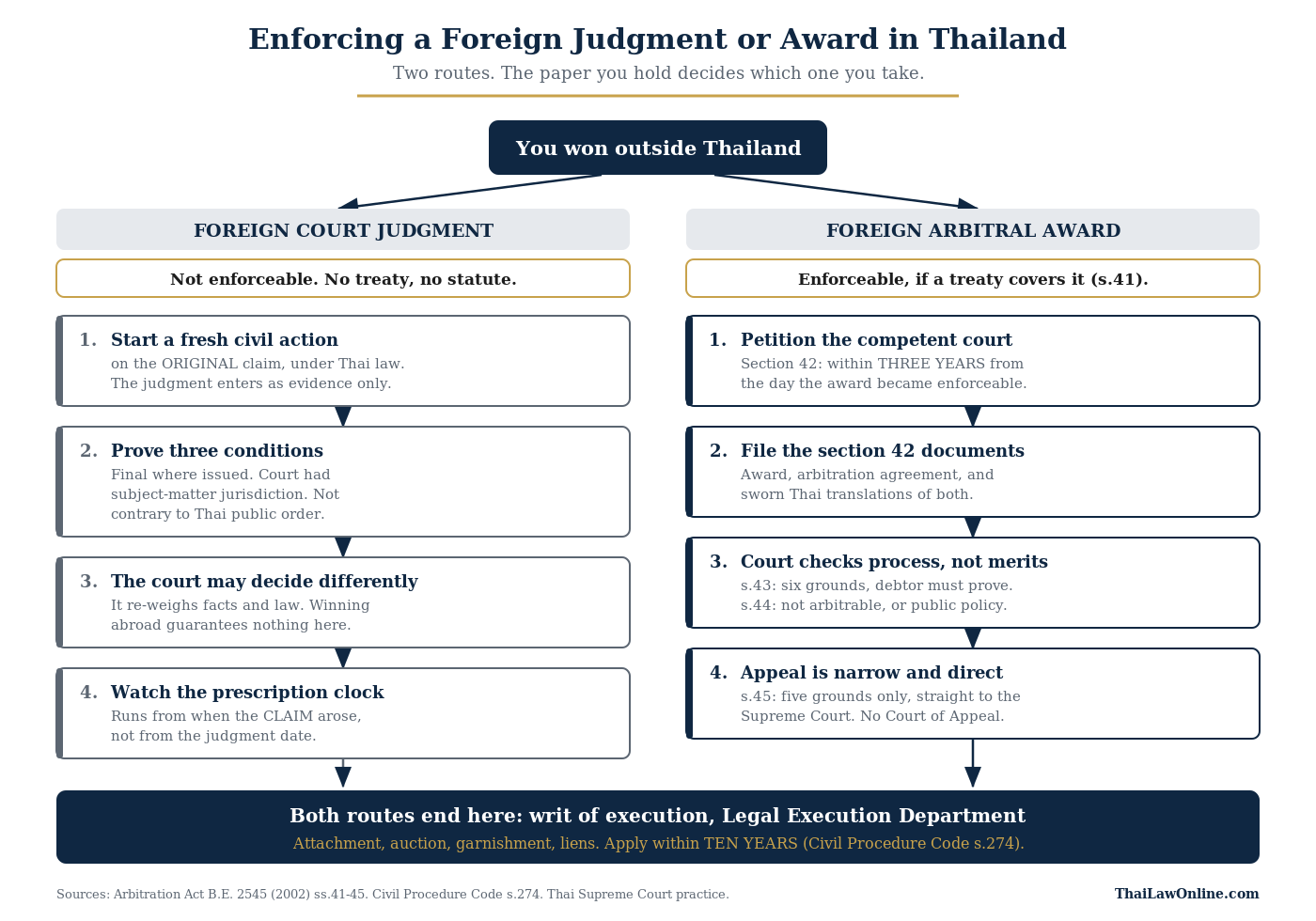
ทำไมประเทศไทยถึงไม่บังคับตามคำพิพากษาของศาลต่างประเทศ
ไม่มีกฎหมายไทยฉบับใดกำหนดให้มีการรับรองหรือบังคับตามคำพิพากษาของศาลต่างประเทศ ประเทศไทยไม่ได้ลงนามในสนธิสัญญาว่าด้วยการบังคับตามคำพิพากษาแบบทวิภาคีใดๆ และไม่ได้เป็นรัฐภาคีของอนุสัญญาว่าด้วยคำพิพากษาแห่งกรุงเฮก ค.ศ. 2019 ซึ่ง ณ ปี 2026 มีผลผูกพันสหภาพยุโรป สหราชอาณาจักร ยูเครน อุรุกวัย แอลเบเนีย อันดอร์รา และมอนเตเนโกร.
ไม่มีอะไรมาเติมเต็มช่องว่างนั้น ผลลัพธ์ที่ได้นั้นตรงไปตรงมา ภายในประเทศไทย คำพิพากษาต่างประเทศของคุณไม่ใช่คำพิพากษาเลย แต่มันคือเอกสารฉบับหนึ่งเท่านั้น.
เกิดอะไรขึ้นจริงๆ เมื่อคุณนำคำพิพากษาต่างประเทศมายังประเทศไทย
คุณยื่นฟ้องคดีใหม่ตามมูลคดีเดิม
เพื่อให้เข้าถึงทรัพย์สินของลูกหนี้ชาวไทย เจ้าหนี้จะต้องเริ่มต้นคดีแพ่งคดีใหม่ในศาลไทยโดยอาศัยมูลหนี้เดิม ได้แก่ ใบแจ้งหนี้ที่ยังไม่ได้ชำระ สัญญาที่ผิดนัด หรือเงินกู้ที่ไม่ได้ชำระคืน คุณต้องฟ้องร้องตามกฎหมายไทยและพิสูจน์ใหม่อีกครั้งตั้งแต่ต้น คำพิพากษาของต่างประเทศจะถูกนำเข้าสำนวนในฐานะพยานหลักฐานว่าเกิดอะไรขึ้น ไม่ใช่ในฐานะคำสั่งที่ศาลไทยต้องปฏิบัติตาม.
เงื่อนไขสามประการก่อนที่คำพิพากษาจะถือเป็นพยานหลักฐาน
แบบไทย ศาลฎีกา แนวปฏิบัติกำหนดเงื่อนไขสามประการก่อนที่คำพิพากษาต่างประเทศจะสามารถรับฟังเป็นพยานหลักฐานในกระบวนพิจารณาของไทย:
- คำพิพากษานั้น เป็นที่สุด ในประเทศที่ออกคำพิพากษานั้น หมายถึงไม่มีการยื่นอุทธรณ์ค้างอยู่และไม่สามารถยื่นอุทธรณ์ได้อีกต่อไป;
- มันมาจากศาลที่มี เขตอำนาจศาลตามเนื้อหาแห่งคดี;
- มันไม่ขัดต่อ ความสงบเรียบร้อยหรือ ศีลธรรมอันดีของประชาชน ของคนไทย.
คำพิพากษาในเนื้อหาแห่งคดี หลังจากที่ได้มีการบอกกล่าวโดยชอบและมีโอกาสอย่างแท้จริงในการต่อสู้คดี ย่อมมีน้ำหนัก คำพิพากษาโดยขาดนัดและคำวินิจฉัยที่ตัดสินบนพื้นฐานของระเบียบวิธีพิจารณาความทางเทคนิคมีน้ำหนักน้อยกว่ามาก เนื่องจากการที่ศาลไทยมองเห็นว่าไม่มีการพิสูจน์ข้อเท็จจริงจากฝ่ายใดฝ่ายหนึ่ง.
พยานหลักฐานไม่ใช่สิ่งที่มีผลผูกพันศาล
ปฏิบัติตามเงื่อนไขทั้งสามข้อครบถ้วนแล้ว ศาลไทยก็ยังไม่ต้องให้อะไรคุณเลย ศาลจะชั่งน้ำหนักคำพิพากษาต่างประเทศร่วมกับพยานหลักฐานอื่น ๆ นำกฎหมายไทยมาปรับใช้กับข้อเรียกร้อง และอาจได้ผลลัพธ์ที่แตกต่างออกไปจากข้อเท็จจริงเดียวกัน ทนายความต่างชาติมักประเมินจุดนี้ต่ำไปเป็นประจำ การชนะคดีในลอนดอนไม่ได้แปลว่าจะชนะคดีในกรุงเทพฯ แต่มันหมายถึงการมาถึงกรุงเทพฯ พร้อมกับพยานหลักฐานที่ดีต่างหาก.
กับดักเรื่องอายุความ
นี่คือความเสี่ยงที่ทำให้ผู้คนสูญเสียสิทธิเรียกร้องทั้งหมด และไม่มีหน้าเว็บภาษาอังกฤษของคู่แข่งรายใดกล่าวถึงเรื่องนี้เลย.
เนื่องจากคดีในประเทศไทยดำเนินไปตาม สิทธิเรียกร้องที่เป็นมูลเดิม, ตามกฎหมายไทย อายุความ ที่ใช้คืออายุความของสิทธิเรียกร้องนั้น ภายใต้ ประมวลกฎหมายแพ่งและพาณิชย์ หลักทั่วไปคือสิบปีนับแต่วันที่สิทธิเรียกร้องเกิดขึ้น (มาตรา 193/30) แต่สิทธิเรียกร้องทางพาณิชย์และการค้าจำนวนมากมีอายุความที่สั้นกว่ามาก เจ้าหนี้ที่ใช้เวลาสี่ปีในการดำเนินคดีที่นิวยอร์กอาจมาถึงประเทศไทยพร้อมกับคำพิพากษาใหม่ในสิทธิเรียกร้องที่ขาดอายุความไปแล้วในประเทศไทยในระหว่างที่คดีในต่างประเทศกำลังดำเนินอยู่.
มาตรา 193/32 กำหนดอายุความสิบปีแก่สิทธิเรียกร้องที่ได้มีคำพิพากษาถึงที่สุดแล้ว และเจ้าหนี้ก็อาศัยบทบัญญัติดังกล่าว ส่วนประเด็นว่าศาลไทยจะนำมาตรานี้ไปปรับใช้กับคำพิพากษา ต่างประเทศ หรือไม่ ในเมื่อกฎหมายไทยไม่ถือว่าคำพิพากษาต่างประเทศได้ยืนยันสิ่งใดไว้เลยนั้น ยังไม่มีข้อยุติในแหล่งข้อมูลที่มีการตีพิมพ์ อย่าวางแผนการติดตามหนี้โดยอาศัยเรื่องนี้ ควรขอคำปรึกษาด้านกฎหมายไทยเกี่ยวกับสถานะของอายุความก่อนที่คดีในต่างประเทศจะสิ้นสุดลง ไม่ใช่หลังจากนั้น.
คำชี้ขาดอนุญาโตตุลาการต่างประเทศ: แนวทางที่ใช้ได้ผล
อนุญาโตตุลาการ เป็นคนละโลก ประเทศไทยได้เข้าเป็นภาคีอนุสัญญานิวยอร์กเมื่อวันที่ 21 ธันวาคม พ.ศ. 2502 และมีผลใช้บังคับในประเทศไทยเมื่อวันที่ 20 มีนาคม พ.ศ. 2503 พระราชบัญญัติอนุญาโตตุลาการ พ.ศ. 2545 (2002), ซึ่งแก้ไขเพิ่มเติมโดยพระราชบัญญัติอนุญาโตตุลาการ (ฉบับที่ 2) พ.ศ. 2562 (2019) เป็นไปตามกฎหมายแม่แบบของ UNCITRAL.
มาตรา 41: ประตูสนธิสัญญา
มาตรา 41 ทำให้คำชี้ขาดมีผลผูกพันคู่พิพาทไม่ว่าจะทำขึ้นในประเทศใด วรรคสองเป็นประโยคที่สำคัญที่สุดสำหรับเจ้าหนี้ต่างชาติ คือ คำชี้ขาดที่ทำขึ้นในต่างประเทศจะบังคับได้โดยศาลไทย เฉพาะเมื่อ คำชี้ขาดนั้นอยู่ภายใต้บังคับแห่งอนุสัญญา สนธิสัญญา หรือความตกลงระหว่างประเทศที่ประเทศไทยเป็นภาคี และเฉพาะเท่าที่ประเทศไทยยอมตนผูกพัน การบังคับจึงมีเงื่อนไข ไม่ใช่อัตโนมัติ ในทางปฏิบัติ อนุสัญญานิวยอร์กคือประตูที่คำชี้ขาดต่างประเทศเกือบทุกฉบับต้องผ่าน.
มาตรา 42: สามปี และสิ่งที่ต้องยื่น
มาตรา 42 ครอบคลุมทั้งสองส่วนของขั้นตอนการยื่น ฝ่ายที่ประสงค์จะบังคับตามคำชี้ขาดต้องยื่นคำร้องต่อศาลที่มีเขตอำนาจ ภายในสามปีนับแต่วันที่คำชี้ขาดมีผลใช้บังคับ. มาตราเดียวกันนี้ยังระบุเอกสารไว้ดังนี้:
- ต้นฉบับคำชี้ขาด หรือสำเนาที่รับรองถูกต้อง;
- ต้นฉบับสัญญาอนุญาโตตุลาการ หรือสำเนาที่รับรองถูกต้อง;
- คำแปลเป็นภาษาไทยของเอกสารทั้งสอง โดยผู้แปลที่ได้สาบานตนต่อหน้าศาลหรือต่อหน้าเจ้าพนักงานหรือบุคคลที่มีอำนาจให้ทำการสาบาน หรือได้รับการรับรองโดยเจ้าพนักงานผู้มีอำนาจรับรองคำแปล หรือโดยพนักงานทูตหรือกงสุลไทยในประเทศที่ได้ทำคำชี้ขาดหรือสัญญาอนุญาโตตุลาการนั้น.
ข้อกำหนดเรื่องคำแปลทำให้กำหนดเวลาล่าช้าออกไปโดยไม่ทันสังเกต การแปลที่มีคำรับรองของคำชี้ขาดฉบับยาวต้องใช้เวลาหลายสัปดาห์ และคำแปลที่ศาลไม่รับจะทำให้คุณต้องกลับไปเริ่มต้นใหม่ ควรตั้งงบประมาณสำหรับเรื่องนี้ไว้แต่เนิ่นๆ บทความของเราเรื่อง ล่ามทางกฎหมายในห้องพิจารณาคดีของศาลไทย และเรื่อง การรับรองโดยโนตารีพับลิกและการรับรองนิติกรณ์ ระบุถึงสิ่งที่ศาลไทยยอมรับ.
มาตรา 43 และ 44: เมื่อศาลสามารถปฏิเสธได้
มาตรา 43 กำหนดเหตุไว้หกประการ และภาระการพิสูจน์ตกอยู่กับฝ่ายที่คัดค้านการบังคับตามคำชี้ขาด ซึ่งต้องพิสูจน์เหตุเหล่านั้น: ภาวะที่ไม่สามารถขัดขืนได้ ของคู่พิพาท; สัญญาอนุญาโตตุลาการไม่มีผลผูกพันตามกฎหมายที่คู่สัญญาเลือกใช้ หรือหากไม่มีการเลือก ตามกฎหมายของประเทศที่มีการทำคำชี้ขาด; ไม่ได้รับแจ้งล่วงหน้าโดยชอบถึงการแต่งตั้งอนุญาโตตุลาการหรือการพิจารณาของอนุญาโตตุลาการ; คำชี้ขาดวินิจฉัยเกินขอบเขตของสัญญาอนุญาโตตุลาการ; องค์ประกอบของคณะอนุญาโตตุลาการหรือกระบวนพิจารณาไม่เป็นไปตามที่คู่พิพาทตกลงกัน; และคำชี้ขาดยังไม่มีผลผูกพัน หรือถูกเพิกถอนหรือระงับใช้ในประเทศที่ทำคำชี้ขาดนั้น.
มาตรา 44 ให้ศาลยกคำร้องได้ตามการพิจารณาของศาลเอง โดยมีเหตุสองประการ คือ ข้อพิพาทนั้นไม่อาจระงับโดยการอนุญาโตตุลาการได้ตามกฎหมายไทย หรือการบังคับตามคำชี้ขาดจะขัดต่อความสงบเรียบร้อยหรือศีลธรรมอันดีของประชาชน.
เมื่ออ่านประกอบกัน สองมาตรานี้สอดคล้องกับข้อ V ของอนุสัญญานิวยอร์ก ศาลตรวจสอบกระบวนการ ไม่ใช่เหตุผลในคำชี้ขาด ฝ่ายที่แพ้ซึ่งเพียงแต่ไม่เห็นด้วยกับคณะอนุญาโตตุลาการย่อมไม่มีข้อใดจะโต้แย้งได้.
มาตรา 45: การอุทธรณ์จะส่งตรงไปยังศาลฎีกา
มาตรา 45 ห้ามอุทธรณ์คำสั่งหรือคำพิพากษาของศาลตามพระราชบัญญัตินี้ เว้นแต่ในห้ากรณี คือ การยอมรับหรือการบังคับตามคำชี้ขาดนั้นขัดต่อความสงบเรียบร้อยหรือศีลธรรมอันดีของประชาชน; คำสั่งหรือคำพิพากษานั้นขัดต่อบทกฎหมายอันเกี่ยวด้วยความสงบเรียบร้อยของประชาชน; คำสั่งหรือคำพิพากษานั้นไม่ตรงกับคำชี้ขาด; ผู้พิพากษาทำความเห็นแย้ง; หรือเป็นคำสั่งเกี่ยวกับวิธีการคุ้มครองชั่วคราวตามมาตรา 16 การอุทธรณ์ให้ยื่นต่อศาลฎีกา หรือต่อศาลปกครองสูงสุดในกรณีที่คดีเริ่มต้นที่ศาลปกครอง โดยข้าม ศาลอุทธรณ์ ไปโดยสิ้นเชิง ซึ่งเป็นเรื่องที่ไม่ปกติ และควรทราบไว้ก่อนวางแผนกรอบเวลา เปรียบเทียบกับเส้นทางปกติในคู่มือของเราเรื่อง การอุทธรณ์ต่อศาลฎีกาในประเทศไทย.
การเพิกถอนและการปฏิเสธการบังคับคดีไม่ใช่สิ่งเดียวกัน
ผู้อ่านสับสนสองเรื่องนี้อยู่ตลอดเวลา และหน้าเว็บของคู่แข่งทุกหน้าก็ปล่อยให้เป็นเช่นนั้น.
การเพิกถอนคำชี้ขาด ดำเนินการตามมาตรา 40 คู่พิพาทฝ่ายหนึ่งขอให้ศาลเพิกถอนคำชี้ขาดภายใน 90 วันนับแต่วันที่ได้รับคำชี้ขาด หากสำเร็จ คำชี้ขาดนั้นจะสิ้นผลสำหรับทุกคน.
การปฏิเสธการบังคับตามคำชี้ขาด ดำเนินการตามมาตรา 43 และ 44 ศาลปฏิเสธที่จะให้ใช้กลไกของศาลแก่ความพยายามบังคับคดีครั้ง นี่ คำชี้ขาดยังคงมีผลอยู่ และเจ้าหนี้ยังสามารถพยายามบังคับตามคำชี้ขาดนั้นในประเทศอื่นที่ลูกหนี้มีทรัพย์สินอยู่ได้.
คำร้องที่แตกต่างกัน มาตราที่แตกต่างกัน ระยะเวลาที่ต่างกัน และผลลัพธ์ที่แตกต่างกัน การระบุประเภทคำร้องผิดจะทำให้คุณเสียเวลาที่คุณอาจไม่มีเหลือแล้ว.
นโยบายสาธารณะในทางปฏิบัติของไทย และบทเรียนเตือนใจจากโฮปเวลล์
นี่คือส่วนที่หน้าอื่นๆ ไม่ได้กล่าวถึง.
ศาลไทยได้ตีความคำว่า “นโยบายสาธารณะ” ตามมาตรา 40 และ 44 อย่างกว้างขวางกว่าที่ศาลในเขตอำนาจที่เทียบเคียงกันภายใต้อนุสัญญานิวยอร์กตีความข้อ V(2)(b) และความแตกต่างดังกล่าวจะยิ่งกว้างขึ้นเมื่อคำชี้ขาดเป็นผลร้ายต่อหน่วยงานของรัฐ งานเขียนทางวิชาการของไทยได้วิจารณ์แนวทางนี้ว่าเป็นการแทรกแซงของศาลที่มากเกินไป หากคู่สัญญาของคุณเป็นกระทรวงของไทย รัฐวิสาหกิจ หรือผู้ให้สัมปทาน คุณควรคำนวณความเสี่ยงดังกล่าวไว้ในราคาด้วย.
คดีโฮปเวลล์ (Hopewell) แสดงให้เห็นถึงขอบเขตดังกล่าว คณะอนุญาโตตุลาการของสถาบันอนุญาโตตุลาการได้มีคำชี้ขาดเมื่อปี 2551 ให้กระทรวงคมนาคมและการรถไฟแห่งประเทศไทยชำระเงินแก่โฮปเวลล์ประมาณ 11,800 ล้านบาท กรณีการบอกเลิกสัมปทานโครงการระบบทางยกระดับและรถไฟในกรุงเทพฯ ศาลปกครองกลางเพิกถอนคำชี้ขาดดังกล่าวเมื่อเดือนมีนาคม 2557 ด้วยเหตุเรื่องอายุความ โดยถือว่าอายุความเป็นเรื่องเกี่ยวกับความสงบเรียบร้อยของประชาชน ศาลปกครองสูงสุดกลับให้คำชี้ขาดมีผลบังคับอีกครั้งเมื่อวันที่ 22 เมษายน 2562 โดยไม่นำระยะเวลาอายุความที่กำหนดขึ้นในปี 2542 มาใช้ย้อนหลังกับการบอกเลิกสัญญาในปี 2541 ต่อมาคำวินิจฉัยศาลรัฐธรรมนูญที่ 5/2564 ลงวันที่ 17 มีนาคม 2564 ได้ทำให้ประเด็นดังกล่าวถูกหยิบยกขึ้นพิจารณาใหม่ ศาลอนุญาตให้พิจารณาคดีใหม่ และเมื่อวันที่ 18 กันยายน 2566 ศาลปกครองกลางวินิจฉัยว่าคำร้องขาดอายุความตามมาตรา 51 แห่งพระราชบัญญัติจัดตั้งศาลปกครองและวิธีพิจารณาคดีปกครอง รายงานข่าวนับแต่นั้นระบุว่ายังไม่มีการจ่ายเงินใดๆ และมีการอุทธรณ์ต่อไปแล้ว.
สามสิบปีนับจากการให้สัมปทานจนถึงสภาพที่เป็นอยู่ในขณะนี้ บทเรียนไม่ได้อยู่ที่ว่าการบังคับตามคำชี้ขาดในประเทศไทยล้มเหลว คำชี้ขาดทางพาณิชย์ระหว่างเอกชนได้รับการบังคับตามเป็นปกติ บทเรียนคือ ความสงบเรียบร้อยของประชาชนในประเทศไทยเป็นช่องทางที่ยังเปิดใช้ได้จริง และเปิดกว้างที่สุดเมื่อคดีนั้นเป็นคดีต่อรัฐ.
สิ่งที่ศาลฎีกาได้ทำกับประตูนั้นจริงๆ
คำพิพากษาศาลฎีกาที่ 5560 ถึง 5563/2562 เป็นคำพิพากษาที่ควรอ่านเป็นฉบับแรก เพราะวางมาตรฐานไว้ว่าคืออะไร ศาลวินิจฉัยว่าทั้งพระราชบัญญัติอนุญาโตตุลาการและกฎหมายอื่นใดไม่ได้นิยามความสงบเรียบร้อยหรือศีลธรรมอันดีของประชาชน ดังนั้นศาลจึงต้องใช้ดุลพินิจเป็นรายกรณี โดยพิจารณาจากพฤติการณ์แห่งข้อพิพาทและค่านิยมของยุคสมัย สิ่งที่ต้องชั่งน้ำหนักคือการคุ้มครองประโยชน์สาธารณะ บริการสาธารณะ และประโยชน์โดยตรงของประชาชนโดยรวม ไม่ใช่ประโยชน์ส่วนตัวของฝ่ายที่แพ้ หากข้อคัดค้านของคุณแท้จริงแล้วคือการที่คำชี้ขาดไม่เป็นคุณแก่คุณ คำพิพากษานี้ก็บอกไว้ชัดแล้ว.
คำพิพากษาศาลฎีกาที่ 6292/2561 แสดงให้เห็นว่าประตูเปิดเพียงบางส่วน ซึ่งเป็นผลที่เจ้าหนี้ส่วนใหญ่ควรคาดหมายไว้ คู่สัญญาได้เลือกใช้กฎหมายไทยในสัญญาซื้อขายหุ้น และคณะอนุญาโตตุลาการได้ชี้ขาดให้คิดดอกเบี้ยทบต้น คือดอกเบี้ยซ้อนดอกเบี้ย ศาลวินิจฉัยว่าการนี้ขัดต่อมาตรา 224 วรรคสอง แห่ง ประมวลกฎหมายแพ่งและพาณิชย์ จึงเข้าเกณฑ์ขัดต่อความสงบเรียบร้อยของประชาชน และศาลปฏิเสธการบังคับ เฉพาะส่วนนั้นของคำชี้ขาดเท่านั้น. ส่วนที่เหลือยังคงมีผล และลูกหนี้ยังคงต้องรับผิดในดอกเบี้ยธรรมดา การคัดค้านด้วยเหตุขัดต่อความสงบเรียบร้อยของประชาชนไม่จำเป็นต้องทำลายคำชี้ขาดทั้งฉบับจึงจะคุ้มค่าที่จะยกขึ้น และการคัดค้านที่สำเร็จก็ไม่ได้ทำลายคำชี้ขาดทั้งฉบับเพียงเพราะคัดค้านสำเร็จ.
คำพิพากษาศาลฎีกาที่ 13570/2556 และ 7635/2562 ทั้งสองคดีเกี่ยวกับอายุความ และเป็นเหตุผลที่รูปแบบของคดีโฮปเวลล์ไม่ใช่กรณีที่เกิดขึ้นเพียงครั้งเดียว ในคำพิพากษาศาลฎีกาที่ 13570/2556 คณะอนุญาโตตุลาการคำนวณอายุความผิดพลาด เพราะผู้เรียกร้องพิมพ์ปีผิดในแบบคำเสนอข้อพิพาทของตนเอง และศาลเพิกถอนคำชี้ขาด: การบังคับตามคำชี้ขาดที่วินิจฉัยเรื่องอายุความผิดพลาดย่อมขัดต่อความสงบเรียบร้อยของประชาชนในตัวเอง ในคำพิพากษาศาลฎีกาที่ 7635/2562 ศาลเห็นว่าศาลล่างตอบคำถามผิดประเด็น โดยพิจารณาว่าคำชี้ขาดขัดต่อกฎหมายหรือไม่ แทนที่จะพิจารณาว่าการบังคับตามคำชี้ขาดจะขัดต่อความสงบเรียบร้อยของประชาชนหรือไม่ ศาลจึงวินิจฉัยประเด็นนั้นเอง โดยกำหนดวันที่เกิดความเสียหายของรถที่ถูกขโมยเป็นวันที่ได้แจ้งความเรื่อง การลักทรัพย์ แทนที่จะเป็นวันที่ส่งมอบรถ และเพิกถอนคำชี้ขาด ศาลไทยจะตรวจสอบว่าคณะอนุญาโตตุลาการกำหนดวันเริ่มนับอายุความอย่างไร โดยผ่านช่องทางของหลักความสงบเรียบร้อยของประชาชน.
คำพิพากษาศาลฎีกาที่ 840/2561 เป็นคำเตือนสำหรับผู้ที่บังคับคดีเกี่ยวกับอสังหาริมทรัพย์ในประเทศไทย ผู้ร้องเป็น บริษัทจำกัด จดทะเบียนในหมู่เกาะบริติชเวอร์จิน จึงเป็น นิติบุคคล และเป็นคนต่างด้าวตามข้อ 3 ของประกาศของคณะปฏิวัติ ฉบับที่ 281 ลงวันที่ 24 พฤศจิกายน 2515 (1972) นิติบุคคลที่อยู่ในฐานะดังกล่าวจะถือกรรมสิทธิ์ในห้องชุดได้ก็ต่อเมื่อเข้าประเภทใดประเภทหนึ่งตามมาตรา 19 แห่งพระราชบัญญัติอาคารชุด พ.ศ. 2522 และประเภทที่ศาลนำมาปรับใช้กับนิติบุคคลนั้น คือมาตรา 19(4) กำหนดให้ต้องมีบัตรส่งเสริมการลงทุนจาก BOI นิติบุคคลนั้นไม่มีบัตรดังกล่าว และทั้งสองฝ่ายต่างก็รู้ ศาลจึงวินิจฉัยว่าสัญญาซื้อขายเป็นโมฆะตามมาตรา 150 แห่งประมวลกฎหมายแพ่งและพาณิชย์ คำชี้ขาดที่ให้ผู้พัฒนาโครงการคืนเงินค่าซื้อจึงขัดต่อมาตรา 411 ซึ่งห้ามมิให้เรียกคืนสิ่งที่ได้ชำระไปเพื่อกระทำการอันกฎหมายห้าม และศาลได้ปฏิเสธการบังคับตามคำชี้ขาดนั้นตามมาตรา 44 คำชี้ขาดของผู้ซื้อจึงไม่ได้ผลใดๆ เลย ควรตรวจสอบว่าทรัพย์สินนั้นสามารถถือครองโดยชอบด้วยกฎหมายโดยนิติบุคคลที่คุณดำเนินการบังคับแทนได้หรือไม่.
หลังคำสั่ง: หมายบังคับคดี
คำสั่งให้บังคับตามคำชี้ขาดเป็นเพียงการอนุญาต ไม่ใช่การชำระเงิน หากลูกหนี้ยังไม่ชำระ คุณต้องนำคำพิพากษาไปยัง กรมบังคับคดี (กรมบังคับคดี) ของกระทรวงยุติธรรม ซึ่งมีสำนักงานทั่วประเทศ สามารถยึดและขายทอดตลาดสังหาริมทรัพย์และอสังหาริมทรัพย์ อายัดเงินในบัญชีธนาคาร เงินเดือน และสิทธิเรียกร้อง และจดทะเบียนภาระผูกพันเหนือที่ดินได้.
มาตรา 274 แห่งประมวลวิธีพิจารณาความแพ่งกำหนดว่าต้องยื่นคำร้องขอการบังคับคดี ภายในสิบปี นับแต่วันมีคำพิพากษาหรือคำสั่ง (กรณีที่คดีมีการอุทธรณ์ ในทางปฏิบัติคือคำพิพากษาของศาลสุดท้ายที่วินิจฉัยเกี่ยวกับลูกหนี้รายนั้น) คำร้องที่ยื่นหลังจากนั้นจะถูกยกโดยไม่มีการพิจารณาเนื้อหาแห่งคดี แหล่งข้อมูลที่เก่ากว่าอ้างมาตรา 271 ซึ่งเป็นเลขมาตราก่อนปี 2017 ดังนั้นควรตรวจสอบว่าคุณกำลังอ่านฉบับใด.
ดังนั้น ผู้ถือคำชี้ขาดจากต่างประเทศจึงต้องนับระยะเวลาสองช่วงต่อเนื่องกันตามลำดับ: สามปี ในการยื่นคำร้องขอให้บังคับตามคำชี้ขาด จากนั้น สิบปี ในการบังคับคดี หากพลาดช่วงใดช่วงหนึ่ง คำชี้ขาดก็จะกลายเป็นเพียงของที่ระลึก.
ค่าใช้จ่ายเท่าไหร่และใช้เวลานานแค่ไหน
ค่าธรรมเนียมการยื่นฟ้องในศาลของไทยเป็นที่เปิดเผยและสามารถคำนวณได้ สำหรับคดีที่เรียกร้องเป็นเงิน ค่าธรรมเนียมจะเท่ากับ 2% ในจำนวนที่เรียกร้อง ซึ่งจำกัดไว้ที่ 200,000 บาท สำหรับทุนทรัพย์ไม่เกิน 50 ล้านบาท โดยมีค่าธรรมเนียมเพิ่มเติมอีก 0.1% สำหรับส่วนที่เกิน 50 ล้านบาท รวมทั้งค่านำส่งหมายของศาลประมาณ 1,000 บาท ค่าธรรมเนียมชำระเมื่อยื่นฟ้อง.
ตัวอย่างการคำนวณ คุณถือคำพิพากษาของศาลสหรัฐฯ ให้บริษัทไทยชำระเงิน 30 ล้านบาท ไม่มีทางลัด: คุณต้องยื่นฟ้องใหม่ในประเทศไทย ค่าธรรมเนียมศาลในอัตราร้อยละ 2 เท่ากับ 600,000 บาท แต่ถูกจำกัดเพดานลงเหลือ 200,000 บาท บวกค่าแปลคำพิพากษาต่างประเทศและเอกสารสัญญาโดยผู้แปลที่สาบานตน ค่าทนายความไทย และระยะเวลา 12 ถึง 24 เดือนจนกว่าศาลชั้นต้นจะมีคำพิพากษา และนานกว่านั้นหากจำเลยอุทธรณ์ จากนั้นเมื่อชนะคดีแล้ว ยังมีเวลาบังคับคดีได้ไม่เกินสิบปี.
เงิน 30 ล้านบาทจำนวนเดียวกันนี้ หากเป็นคำชี้ขาดของอนุญาโตตุลาการ จะเป็นเพียงคำร้องตามมาตรา 42 ซึ่งศาลวินิจฉัยจากเอกสาร โดยปกติแล้วเสร็จภายในหนึ่งปี เว้นแต่ลูกหนี้จะคัดค้านตามมาตรา 43 ความแตกต่างนี้คือเหตุผลทั้งหมดของหัวข้อถัดไป หากปัญหาอยู่ที่ตัวหนี้เองมากกว่าเวทีพิจารณาคดี บริการเรียกเก็บหนี้ในประเทศไทย ของเรามักเป็นก้าวแรกที่รวดเร็วกว่า และ สิ่งที่ควรรู้ก่อนขึ้นศาลในประเทศไทย อธิบายว่าการดำเนินคดีที่นี่แท้จริงแล้วเกี่ยวข้องกับอะไรบ้าง.
ข้อยกเว้น: การหย่าร้างในต่างประเทศและสถานะครอบครัว
สถานะครอบครัวไม่อยู่ภายใต้หลักเกณฑ์ทั้งหมดนี้ และความสับสนที่เกิดขึ้นในเรื่องนี้ก็ไม่จำเป็นเลย.
คำพิพากษาหย่าของต่างประเทศไม่ได้บังคับผ่านศาล แต่บันทึกทางทะเบียน โดยต้องแปลเป็นภาษาไทย นำไปรับรองที่กรมการกงสุล กระทรวงการต่างประเทศ จากนั้นนำไปยื่นต่อสำนักงานเขตหรือที่ว่าการอำเภอ ซึ่งสามารถบันทึกการเปลี่ยนแปลงในทะเบียนฐานะแห่งครอบครัวได้ตามแบบ คร. 22. การบันทึกไม่ได้เกิดขึ้นโดยอัตโนมัติ และนายทะเบียนมีดุลพินิจ แต่ไม่ต้องฟ้องร้องคดีหย่าของคุณใหม่ ผู้ที่เคยอ่านว่า “ประเทศไทยไม่ยอมรับคำพิพากษาของต่างประเทศ” มักเข้าใจว่าการหย่าของตนเป็นโมฆะในประเทศไทย ซึ่งไม่ใช่ ดูเพิ่มเติมที่ การหย่าในประเทศไทยกรณีสมรสในต่างประเทศ.
เขียนข้อสัญญาที่ป้องกันเรื่องทั้งหมดนี้
ทุกอย่างข้างต้นเป็นการชันสูตรหลังเกิดเหตุ ทางแก้มีต้นทุนเพียงสิบบรรทัดในสัญญาตอนลงนาม.
หากคุณทำสัญญากับคู่สัญญาชาวไทย และวันหนึ่งคุณอาจต้องเรียกเก็บหนี้ ให้เลือก การอนุญาโตตุลาการ แทนศาลต่างประเทศ คำพิพากษาของศาลต่างประเทศทำให้คุณได้เพียงการพิจารณาคดีใหม่ในประเทศไทย ส่วนคำชี้ขาดของอนุญาโตตุลาการทำให้คุณได้เพียงการยื่นคำร้อง จากนั้นให้ระบุไว้ในตัวข้อสัญญาเองว่า:
- สถาบัน, โดยชื่อเต็มคือ สถาบันอนุญาโตตุลาการแห่งประเทศไทย (TAI), ศูนย์อนุญาโตตุลาการแห่งประเทศไทย (THAC), SIAC, HKIAC หรือ ICC;
- สถานที่ของการอนุญาโตตุลาการ, ซึ่งระบุว่าศาลใดจะควบคุมการพิจารณาอนุญาโตตุลาการ;
- ภาษา, เนื่องจากกระบวนการพิจารณาคดีในภาษาไทยจะเปลี่ยนพื้นฐานค่าใช้จ่ายของคุณอย่างสิ้นเชิง;
- กฎหมายที่ใช้บังคับ. การแก้ไขเพิ่มเติมในปี 2019 (มาตรา 23/1 ถึง 23/6 ของพระราชบัญญัติอนุญาโตตุลาการ) อนุญาตให้คู่พิพาทแต่งตั้งอนุญาโตตุลาการและผู้แทนที่เป็นชาวต่างชาติในการอนุญาโตตุลาการที่ดำเนินการในประเทศไทยได้ โดยมีหนังสือรับรองจากสถาบันอนุญาโตตุลาการเพื่อประกอบการขอวีซ่าและใบอนุญาตทำงาน ดังนั้นกฎหมายที่ใช้บังคับจึงไม่เป็นตัวกำหนดอีกต่อไปว่าที่ปรึกษาต่างชาติของคุณสามารถดำเนินการได้หรือไม่;
- จำนวนอนุญาโตตุลาการ, หนึ่งคนสำหรับข้อพิพาทขนาดเล็ก และสามคนเมื่อจำนวนเงินคุ้มค่าพอ;
- ขั้นตอนระงับข้อพิพาทแบบเป็นลำดับขั้น, ซึ่งกำหนดให้ต้องมีการเจรจาหรือการไกล่เกลี่ยก่อนที่ฝ่ายใดฝ่ายหนึ่งจะยื่นฟ้อง.
ใส่ข้อสัญญานี้ไว้ในสัญญาที่มีเงินจำนวนมากเกี่ยวข้อง: สัญญาเงินกู้, ตั๋วสัญญาใช้เงิน, ข้อตกลงรักษาความลับ และ ข้อตกลงการจ้างงาน. หากคุณยังอยู่ในขั้นตอนการวางโครงสร้าง, การจัดตั้งธุรกิจในประเทศไทย และ พระราชบัญญัติการประกอบธุรกิจของคนต่างด้าว ระบุว่าคุณจะเข้าทำสัญญาในฐานะใด.
คำถามที่พบบ่อย
คำพิพากษาของศาลสหรัฐอเมริกาจะสามารถบังคับคดีในประเทศไทยได้หรือไม่
ไม่ ไม่มีทั้งสนธิสัญญาและกฎหมาย คุณยื่นฟ้องคดีแพ่งครั้งใหม่ต่อศาลไทยด้วยข้อเรียกร้องเดิม และคำพิพากษาของสหรัฐฯ จะถูกนำมาใช้เป็นพยานหลักฐาน โดยมีเงื่อนไขว่าต้องเป็นคำพิพากษาถึงที่สุด ออกจากศาลที่มีเขตอำนาจเหนือคดี และไม่ขัดต่อความสงบเรียบร้อยหรือศีลธรรมอันดีของประชาชนไทย.
คำชี้ขาดอนุญาโตตุลาการจากสิงคโปร์หรือลอนดอนสามารถบังคับคดีได้ในประเทศไทยหรือไม่
ใช่ ทั้งสองแห่งเป็นสถานที่อนุญาโตตุลาการภายใต้อนุสัญญานิวยอร์ก ดังนั้น จึงเป็นไปตามมาตรา 41 วรรค 2 แล้ว คุณยื่นคำร้องต่อศาลไทยที่มีเขตอำนาจตามมาตรา 42 โดยแนบคำชี้ขาด สัญญาอนุญาโตตุลาการ และคำแปลภาษาไทยที่รับรองแล้ว.
คุณมีเวลาเท่าใดในการบังคับตามคำชี้ขาดของอนุญาโตตุลาการในประเทศไทย
สามปีนับแต่วันที่คำชี้ขาดมีผลบังคับตามมาตรา 42 หลังจากที่คุณได้รับคำสั่งบังคับตามคำชี้ขาดแล้ว ระยะเวลาช่วงที่สองจะเริ่มนับ: สิบปีในการยื่นคำขอออกหมายบังคับคดีตามมาตรา 274 แห่งประมวลกฎหมายวิธีพิจารณาความแพ่ง.
เอกสารอะไรบ้างที่ฉันต้องยื่นเพื่อบังคับตามคำชี้ขาดของอนุญาโตตุลาการต่างประเทศ
คำชี้ขาดฉบับจริงหรือสำเนาที่รับรองสำเนาถูกต้อง สัญญาอนุญาโตตุลาการฉบับจริงหรือสำเนาที่รับรองสำเนาถูกต้อง และคำแปลเป็นภาษาไทยของเอกสารทั้งสองฉบับ ซึ่งผู้แปลได้สาบานตนต่อศาล หรือได้รับการรับรองโดยเจ้าหน้าที่ผู้มีอำนาจ หรือสถานทูตหรือสถานกงสุลไทยในประเทศที่ออกคำชี้ขาดนั้น.
ศาลไทยสามารถปฏิเสธการบังคับตามคำชี้ขาดได้หรือไม่ และด้วยเหตุผลใดบ้าง
ใช่ มาตรา 43 ระบุเหตุผลหกประการที่ฝ่ายที่คัดค้านต้องพิสูจน์ ซึ่งรวมถึงความไร้ความสามารถ สัญญาอนุญาโตตุลาการที่ไม่สมบูรณ์ การขาดการบอกกล่าวที่ถูกต้อง คำชี้ขาดที่เกินขอบเขตของสัญญา คณะอนุญาโตตุลาการหรือกระบวนการที่ไม่ถูกต้อง และคำชี้ขาดที่ถูกเพิกถอนแล้ว ณ สถานที่ที่ออกคำชี้ขาดนั้น มาตรา 44 เพิ่มเติมอีกสองประการที่ศาลใช้พิจารณาเอง ได้แก่ ข้อพิพาทไม่สามารถระงับได้ด้วยอนุญาโตตุลาการตามกฎหมายไทย หรือการบังคับตามคำชี้ขาดจะขัดต่อความสงบเรียบร้อยหรือศีลธรรมอันดีของประชาชน.
คุณสามารถอุทธรณ์ได้หรือไม่หากศาลไทยปฏิเสธการบังคับคดี
เฉพาะบนพื้นฐานห้าประการในมาตรา 45 และการอุทธรณ์จะไปที่ศาลฎีกาหรือศาลปกครองสูงสุดโดยตรง แทนที่จะผ่านศาลอุทธรณ์.
ค่าใช้จ่ายในการฟ้องร้องบังคับคดีตามคำพิพากษาของศาลต่างประเทศในประเทศไทยมีเท่าไหร่
ค่าธรรมเนียมศาลคือ 2% ของทุนทรัพย์ที่เรียกร้อง โดยมีเพดานสูงสุด 200,000 บาท สำหรับทุนทรัพย์ไม่เกิน 50 ล้านบาท ส่วนที่เกินกว่านั้นคิดอัตรา 0.1% พร้อมด้วยค่าใช้จ่ายในการส่งเอกสารประมาณ 1,000 บาท ค่าแปลเอกสารและค่าทนายความต้องจ่ายเพิ่มต่างหาก และกระบวนการพิจารณาคดีในศาลชั้นต้นมักใช้เวลา 12 ถึง 24 เดือน.
ประเทศไทยรับรองการหย่าจากต่างประเทศของฉันหรือไม่
ทำได้ในทางปกครอง แปลและรับรองนิติกรณ์คำพิพากษาหย่า จากนั้นไปยื่นคำขอให้นายทะเบียนบันทึกทะเบียนครอบครัวที่สำนักงานเขตตามแบบ ค.ร. 22 นายทะเบียนมีดุลพินิจแต่ไม่ต้องฟ้องศาล.
การเลือกใช้อนุญาโตตุลาการหรือเขตอำนาจศาลไทยในสัญญาที่มีคู่สัญญาเป็นบริษัทไทยนั้น ขึ้นอยู่กับปัจจัยหลายประการ โดยแต่ละวิธีมีข้อดีและข้อเสียที่แตกต่างกัน ดังนี้: ### 1. การใช้อนุญาโตตุลาการ (Arbitration) เหมาะสำหรับสัญญาที่มีมูลค่าสูง, มีความเป็นนานาชาติ (คู่สัญญาต่างชาติ), หรือต้องการความรวดเร็วและความเป็นมืออาชีพของผู้เชี่ยวชาญเฉพาะด้าน **ข้อดี:** * **ความเป็นกลาง:** คู่สัญญาต่างชาติมักกังวลเรื่องความลำเอียงของศาลท้องถิ่น อนุญาโตตุลาการช่วยสร้างความมั่นใจได้มากกว่า * **ความเป็นส่วนตัว:** กระบวนการพิจารณาคดีและการตัดสินไม่เปิดเผยต่อสาธารณะ ต่างจากศาลไทยที่โดยทั่วไปเป็นการพิจารณาเปิดเผย * **ความเชี่ยวชาญ:** สามารถเลือกผู้ชี้ขาดที่มีความรู้ความเข้าใจเฉพาะทางในเรื่องนั้นๆ ได้ (เช่น ด้านก่อสร้าง พลังงาน หรือไอที) * **การบังคับคดีระหว่างประเทศ:** คำชี้ขาดของอนุญาโตตุลาการสามารถบังคับใช้ในต่างประเทศได้ง่ายกว่าคำพิพากษาศาลไทย เนื่องจากประเทศไทยเป็นภาคีสมาชิกของอนุสัญญาว่าด้วยการยอมรับและบังคับตามคำชี้ขาดอนุญาโตตุลาการต่างประเทศ (New York Convention) **ข้อเสีย:** * **ค่าใช้จ่ายสูง:** มีค่าใช้จ่ายสูงมาก ทั้งค่าธรรมเนียมสถาบันอนุญาโตตุลาการ และค่าตอบแทนของคณะอนุญาโตตุลาการ * **กระบวนการ:** หากคู่สัญญาไม่ให้ความร่วมมือ กระบวนการอาจยืดเยื้อได้เช่นกัน --- ### 2. การใช้เขตอำนาจศาลไทย (Thai Court Jurisdiction) เหมาะสำหรับสัญญาที่มีมูลค่าไม่สูงมาก, คู่สัญญาอยู่ในประเทศไทยทั้งคู่, หรือต้องการประหยัดค่าใช้จ่าย **ข้อดี:** * **ค่าใช้จ่ายต่ำกว่า:** ค่าธรรมเนียมศาลในประเทศไทยคิดตามทุนทรัพย์แต่มีเพดานจำกัด และไม่มีค่าใช้จ่ายสำหรับผู้พิพากษาเหมือนกรณีอนุญาโตตุลาการ * **กระบวนการชัดเจน:** มีขั้นตอนตามกฎหมายและวิธีพิจารณาความที่ตายตัว บังคับใช้คำพิพากษาผ่านเจ้าพนักงานบังคับคดีของศาลได้ทันทีหากทรัพย์สินของลูกหนี้อยู่ในประเทศไทย **ข้อเสีย:** * **ระยะเวลา:** กระบวนการพิจารณาคดีในศาลไทยอาจใช้เวลานาน เนื่องจากมีระบบอุทธรณ์และฎีกา * **อุปสรรคด้านภาษา:** กระบวนการพิจารณาและเอกสารทั้งหมดในศาลไทยต้องเป็นภาษาไทย ซึ่งอาจสร้างความยุ่งยากหากคู่สัญญาฝ่ายหนึ่งเป็นชาวต่างชาติที่ไม่เข้าใจภาษาไทย * **การบังคับคดีในต่างประเทศ:** หากคู่สัญญาไทยต้องไปบังคับคดีกับทรัพย์สินในต่างประเทศ จะทำได้ยากกว่าคำชี้ขาดของอนุญาโตตุลาการ --- ### สรุปคำแนะนำ: * **เลือก "อนุญาโตตุลาการ"** หากคุณเป็นชาวต่างชาติ, สัญญาเกี่ยวข้องกับเงินจำนวนมาก, หรือต้องการความเป็นส่วนตัวและความเป็นกลาง * **เลือก "ศาลไทย"** หากสัญญาเน้นทำธุรกิจในประเทศไทย, มูลค่าไม่สูงมาก, และต้องการประหยัดต้นทุนค่าใช้จ่ายในการดำเนินคดี
สำหรับคู่สัญญาต่างชาติที่คาดหวังว่าจะบังคับคดีกับทรัพย์สินในประเทศไทย การอนุญาโตตุลาการ ณ สถานที่อนุญาโตตุลาการที่เป็นภาคีอนุสัญญานิวยอร์กมักจะมีความมั่นคงกว่า เนื่องจากคำชี้ขาดสามารถบังคับได้โดยการยื่นคำร้อง ในขณะที่ไม่สามารถบังคับตามคำพิพากษาของศาลต่างประเทศได้เลย ข้อสัญญาที่ให้ศาลไทยมีเขตอำนาจอาจมีเหตุผลในกรณีที่คู่สัญญาและทรัพย์สินทุกอย่างเป็นไทยและมีมูลค่าไม่สูงนัก.
คำพิพากษาต่างประเทศของฉันอายุห้าปีแล้ว มันสายเกินไปไหม
อาจจะเป็นไปได้ และคำตอบขึ้นอยู่กับข้อเรียกร้องเดิมมากกว่าคำพิพากษา เนื่องจากคดีของไทยดำเนินไปตามมูลคดี ระยะเวลาอายุความของไทยจึงนับจากเวลาที่ข้อเรียกร้องนั้นเกิดขึ้น ให้ทนายความไทยตรวจสอบสถานะดังกล่าวก่อนที่คุณจะใช้จ่ายเงินเพิ่มขึ้นอีก.
ThaiLawOnline สามารถช่วยเหลือคุณได้อย่างไร
เราให้คำปรึกษาด้านกฎหมายไทยแก่ลูกค้าต่างชาติมาตั้งแต่ปี 2006 หากคุณถือคำพิพากษาหรือคำชี้ขาด และทรัพย์สินอยู่ในประเทศไทย เราจะบอกคุณตรง ๆ ว่าคุ้มค่าที่จะดำเนินการหรือไม่ ก่อนที่คุณจะตกลงชำระค่าบริการ ได้แก่ ใช้เส้นทางใด สถานะเรื่องอายุความเป็นอย่างไร การบังคับคดีจะมีค่าใช้จ่ายเท่าใด และลูกหนี้น่าจะโต้แย้งอย่างไร หากคุณยังอยู่ในขั้นตอนการทำสัญญา ข้อสัญญาอนุญาโตตุลาการเป็นเพียงการพูดคุยสั้น ๆ ที่อาจช่วยให้คุณไม่ต้องดำเนินคดีซ้ำเป็นครั้งที่สอง. เริ่มต้นด้วยบทความสรุปเกี่ยวกับกระบวนการยุติข้อพิพาทในประเทศไทย, แล้วติดต่อเราได้เลย.
ตรวจสอบครั้งล่าสุดเมื่อวันที่ 28 กันยายน 2569 อ่านเป็นภาษาไทย: พระราชบัญญัติอนุญาโตตุลาการ พ.ศ. 2545 ตามที่แก้ไขเพิ่มเติมถึง พ.ศ. 2562 มาตรา 23/1 ถึง 23/6 และมาตรา 40 ถึง 45; คำพิพากษาศาลฎีกาที่ 5560-5563/2562, 6292/2561, 13570/2556, 7635/2562 และ 840/2561 โดยอ่านแต่ละฉบับจนจบผลแห่งคำพิพากษา วันที่ต่างๆ ในกรณีโฮปเวลล์ได้ตรวจสอบเทียบกับรายงานข่าวภาษาไทยและภาษาอังกฤษ และคำวินิจฉัยศาลรัฐธรรมนูญที่ 5/2564 ส่วนเงื่อนไขสามประการในการรับคำพิพากษาของศาลต่างประเทศ ตัวเลขค่าธรรมเนียมศาล ระยะเวลา และรายชื่อภาคีอนุสัญญากรุงเฮกว่าด้วยคำพิพากษา เป็นประเด็นทางปฏิบัติที่ไม่ได้ตรวจสอบซ้ำในการทบทวนครั้งนี้.
ข่าวสารกฎหมายไทย ฟรีทางอีเมล
อัปเดตข่าวสารเป็นภาษาอังกฤษที่เข้าใจง่ายเกี่ยวกับการเปลี่ยนแปลงของกฎหมายไทยที่ส่งผลกระทบต่อชาวต่างชาติ: อสังหาริมทรัพย์, วีซ่า, การสมรส, ธุรกิจ และพินัยกรรม จดหมายข่าวสั้นเพียงฉบับเดียวต่อเดือน จากสำนักงานกฎหมายที่ดำเนินงานมาตั้งแต่ปี 2549 ไม่มีการส่งสแปม ยกเลิกรับได้ทุกเมื่อ.