


ตรวจสอบโดย ThaiLawOnline สำนักงานกฎหมายไทยที่ได้รับใบอนุญาตและดำเนินกิจการในประเทศไทยตั้งแต่ปี พ.ศ. 2549 ทนายความผู้รับผิดชอบสำนวน: Wichuda Atthamethakon, น.ม., ใบอนุญาตให้เป็นทนายความ เลขที่ 3149/2556.
ปรับปรุงล่าสุดเมื่อ
ประกันสังคมไทยให้สิทธิรักษาพยาบาลและประโยชน์ทดแทนที่เป็นตัวเงินตามสถานะผู้ประกันตนและประวัติการส่งเงินสมทบ ลูกจ้าง อดีตลูกจ้าง และผู้ประกอบอาชีพอิสระที่มีคุณสมบัติ อยู่ภายใต้ระบบที่แตกต่างกัน ควรตรวจสอบว่าตนอยู่ในระบบใดก่อนคาดหวังสิทธิประโยชน์
ผู้ดูแลคือ สำนักงานประกันสังคม (SSO) (สำนักงานประกันสังคม), สังกัดกระทรวงแรงงาน ชื่ออธิบายภาษาฝรั่งเศส: Bureau de la sécurité sociale. ใช้บริการของ SSO ผ่าน ระบบ e-Self Service หรือติดต่อสำนักงาน SSO ที่รับผิดชอบเพื่อตรวจสอบสถานะการประกันและประวัติการชำระเงินสมทบของคุณ ก่อนที่จะสอบถามเกี่ยวกับสิทธิประโยชน์ใดๆ ให้ระบุแผนการประกันและช่วงเวลาที่จ่ายเงินสมทบของคุณ; คำตอบจะขึ้นอยู่กับประวัติการประกันของคุณเอง สิทธิด้านการจ้างงานและการยื่นขอรับสิทธิประโยชน์จาก SSO เป็นเรื่องที่แยกต่างหาก และจะถูกกล่าวถึงร่วมกันในบทความของเรา คู่มือกฎหมายแรงงานไทย.
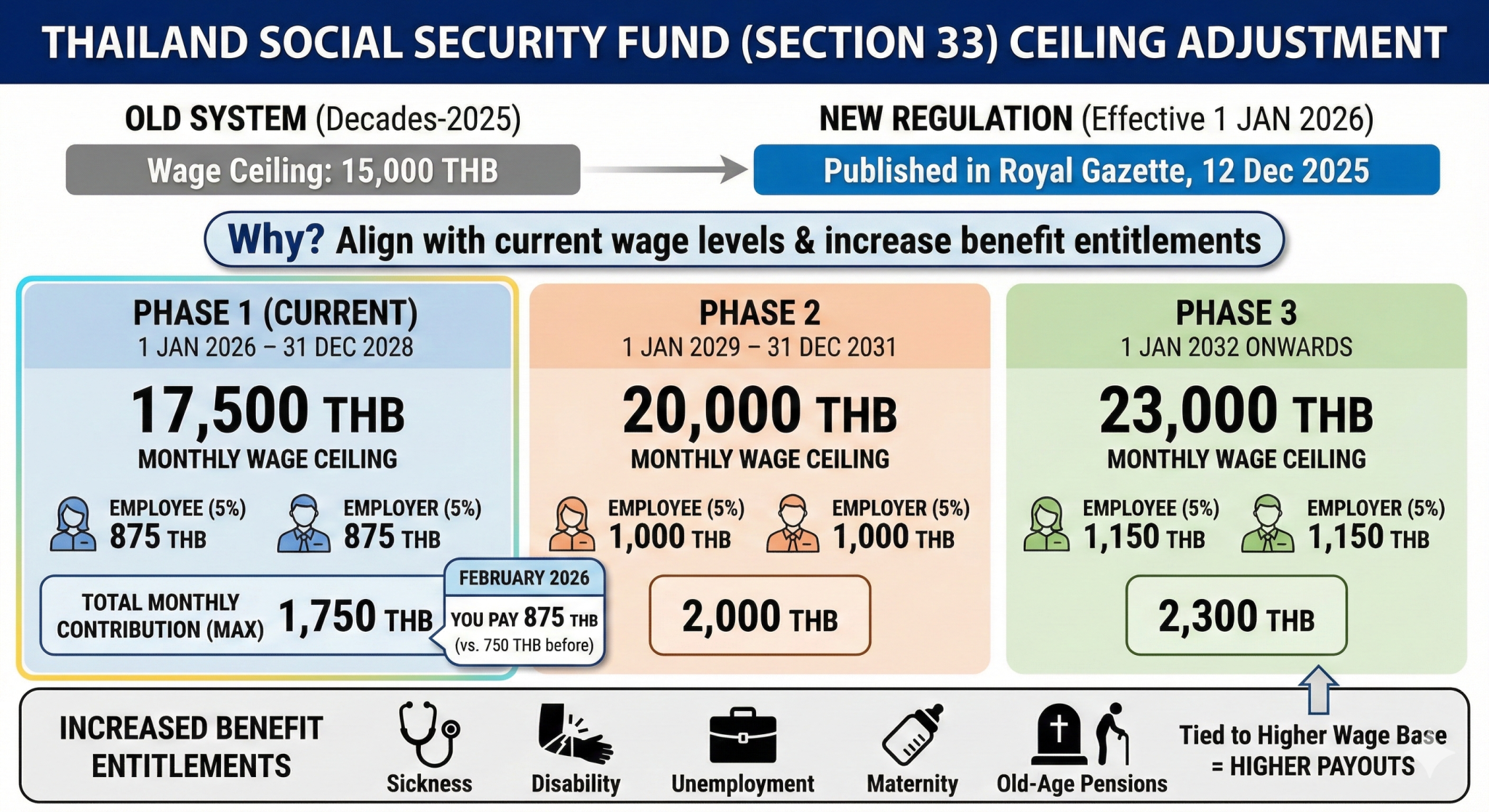
เพดานค่าจ้างสำหรับคำนวณเงินสมทบตามมาตรา 33 เพิ่มเป็นเดือนละ 17,500 บาท ตั้งแต่วันที่ 1 มกราคม 2569 เพดานเงินสมทบกับการคำนวณประโยชน์ทดแทนเป็นคนละเรื่อง การเพิ่มเพดานไม่ได้ทำให้เงินประโยชน์ทดแทนทุกประเภทเพิ่มขึ้นทันที
ตรวจสอบเฉพาะประเด็น: 21 กันยายน 2569 การปรับปรุงครั้งนี้ครอบคลุมทางเลือกตามมาตรา 40 ความแตกต่างของสิทธิกรณีชราภาพ การนำเงินได้จากต่างประเทศเข้าไทย และคำถามที่เกี่ยวข้อง รายละเอียดการตรวจสอบตัวบทและคำพิพากษาครั้งก่อนอยู่ด้านล่าง
สารบัญ
ระบบประกันสังคมในประเทศไทยทำงานอย่างไร?
ระบบประกันสังคมของประเทศไทยบริหารจัดการโดยสำนักงานประกันสังคม (สปส.) ซึ่งอยู่ภายใต้สังกัดกระทรวงแรงงาน ระบบนี้ทำหน้าที่เป็นตาข่ายรองรับความปลอดภัยภาคบังคับ โดยมีการจัดเก็บเงินสมทบจากลูกจ้าง นายจ้าง และรัฐบาล แล้วนำมารวมกันไว้ในกองทุนประกันสังคม กองทุนนี้จะจ่ายสิทธิประโยชน์ครอบคลุมถึงการรักษาพยาบาล การทดแทนรายได้ระหว่างเจ็บป่วยหรือว่างงาน การคลอดบุตร ทุพพลภาพ บำเหน็จบำนาญชราภาพ และกรณีเสียชีวิต.
กฎหมายที่ใช้บังคับคือพระราชบัญญัติประกันสังคม พ.ศ. 2533 (พระราชบัญญัติประกันสังคม พ.ศ. 2533) ซึ่งมีการแก้ไขเพิ่มเติมหลายครั้งนับตั้งแต่ประกาศใช้ในปี พ.ศ. 2533 ระบบนี้ครอบคลุมพนักงานภาคเอกชนเกือบทั้งหมดในประเทศไทย โดยไม่คำนึงถึงสัญชาติ หากถือถูกต้อง ใบอนุญาตทำงาน และหากคุณทำงานให้กับบริษัทไทย คุณก็อยู่ในระบบแล้ว
ประกันสังคมดำเนินงานแยกต่างหากจากกองทุนเงินทดแทน ซึ่งคุ้มครองการบาดเจ็บจากการทำงาน เราจะอธิบายความแตกต่างเพิ่มเติมด้านล่างนี้.
ใครบ้างที่ต้องลงทะเบียนและจ่ายเงินสมทบ?
มาตรา 33, พนักงาน (ภาคบังคับ)
พนักงานทุกคนที่มีอายุไม่ต่ำกว่าสิบห้าปีและไม่เกินหกสิบปี และทำงานให้กับนายจ้างที่มีลูกจ้างอย่างน้อยหนึ่งคนขึ้นไป ถือเป็นผู้ประกันตนตามมาตรา 33 แห่งพระราชบัญญัติประกันสังคม โดยอัตโนมัติ ผู้ที่เคยเป็นผู้ประกันตนแล้วและอายุครบ 60 ปีจะยังคงเป็นผู้ประกันตนต่อไปจนกว่าจะลาออกจากงานกับนายจ้างใดๆ ที่เป็นไปตามพระราชบัญญัตินี้ (มาตรา 33 วรรคสอง) แต่การเริ่มงานครั้งแรกหลังจากอายุครบ 60 ปีจะไม่ทำให้คุณเข้าสู่มาตรา 33 ได้ ซึ่งรวมถึงชาวต่างชาติที่ถือ วีซ่าประเภทไม่ใช่อิมมิแกรนต์ B และ ใบอนุญาตทำงาน. นายจ้างต้องขึ้นทะเบียนลูกจ้างกับประกันสังคมภายใน 30 วันนับแต่วันที่จ้างงาน.
เงินสมทบแบ่งออกเป็นสามส่วน คือ ลูกจ้างจ่าย 5% ของเงินเดือนรายเดือน นายจ้างจ่าย 5% และรัฐบาลจ่ายเพิ่มอีกส่วนหนึ่ง สำหรับปี 2026 ฐานเงินสมทบได้ปรับเพิ่มขึ้นเป็นสูงสุด 17,500 บาทต่อเดือน (จากเดิม 15,000 บาท) หมายความว่าเงินสมทบสูงสุดรายเดือนสำหรับลูกจ้างและนายจ้างคือ 875 บาทเท่ากัน
เงินสมทบคำนวณจาก “ค่าจ้าง” ตามความหมายในมาตรา 5 แห่งพระราชบัญญัติ ซึ่งหมายถึงเงินที่จ่ายเป็นค่าตอบแทนการทำงานในเวลาทำงานปกติ รวมถึงเงินที่จ่ายในวันหยุดและวันลา ศาลฎีกา ได้ชี้แจงชัดเจนแล้วว่าอะไรที่นับและไม่นับว่าเป็น “ค่าจ้าง” สำหรับวัตถุประสงค์นี้ (โปรดดูส่วนศาลฎีกาของเราด้านล่าง).
ระบบประกันสังคมของประเทศไทยสำหรับชาวต่างชาติและแรงงานต่างชาติ
ประกันสังคมสำหรับชาวต่างชาติและชาวต่างชาติในประเทศไทย ชาวต่างชาติที่ทำงานในประเทศไทยต้องเข้าร่วมระบบประกันสังคมตามมาตรา 33 หากมีงานทำ. วีซ่าเกษียณอายุ เช่น O-A มักไม่รวมใบอนุญาตทำงาน ซึ่งจำกัดสิทธิ์ในการเข้าร่วมระบบ ไม่มีข้อตกลงรวมยอดประกันสังคมระหว่างสหรัฐฯ และไทย ดังนั้นเครดิตประกันสังคมของสหรัฐฯ และเงินสมทบของไทยจึงไม่สามารถนำมารวมกันได้ ทั้งนี้ มีความตกลงระหว่างสหรัฐฯ-ไทยแยกต่างหากอีกฉบับ คือ อนุสัญญาเว้นการเก็บภาษีซ้ำซ้อน กำหนดการเก็บภาษีเงินบำนาญ การส่งเงินสมทบต่อมาตรา 39 ขึ้นอยู่กับคุณสมบัติ การยื่นคำขอภายในกำหนด และการคงสถานะผู้ประกันตน ไม่ใช่สิทธิตลอดชีวิตโดยไม่มีเงื่อนไข ชาวต่างชาติหลายคนใช้ประกันสังคมไทยเป็นความคุ้มครองสุขภาพที่มีค่าใช้จ่ายต่ำ ควรตรวจสอบความเกี่ยวข้องกับสถานะวีซ่าเพื่อป้องกันช่วงขาดความคุ้มครอง
มาตรา 39 การสมัครใจเป็นผู้ประกันตนต่อหลังจากลาออกจากงาน
หากคุณลาออกจากงานแต่ยังคงอยู่ในประเทศไทย คุณไม่จำเป็นต้องสูญเสียสิทธิประกันสังคม มาตรา 39 เปิดโอกาสให้สมาชิกมาตรา 33 เดิมสามารถสมัครใจทำประกันต่อได้ แต่มีเงื่อนไขสองข้อที่มักไม่มีการกล่าวถึงเกี่ยวกับระยะเวลา 6 เดือน: คุณต้องมี จ่ายเงินสมทบมาแล้วไม่น้อยกว่าสิบสองเดือน, และสถานะผู้ประกันตนของคุณต้องสิ้นสุดลงตามมาตรา 38 (2) กล่าวคือ การสิ้นสภาพจากการเป็นลูกจ้าง หากเป็นไปตามเงื่อนไขทั้งสองข้อนี้ คุณต้องแสดงความจำนงต่อสำนักงานประกันสังคมภายในหกเดือนนับตั้งแต่วันที่สถานะผู้ประกันตนของคุณสิ้นสุดลง.
เงินสมทบตามมาตรา 39 อัตราปกติคือ 432 บาทต่อเดือน คิดเป็น 9% ของฐาน 4,800 บาท ทั้งนี้อาจมีมาตรการลดอัตราชั่วคราวที่ใช้กับกรณีนั้น ความคุ้มครองรวมเจ็บป่วยหรือประสบอันตราย คลอดบุตร ทุพพลภาพ เสียชีวิต สงเคราะห์บุตร และชราภาพ แต่ไม่รวมว่างงาน สิทธิแต่ละประเภทมีเงื่อนไขเฉพาะ
การประกันตนต่อเนื่องตามมาตรา 39 ต้องยื่นคำขอภายในกำหนดและมีประวัติส่งเงินสมทบครบเงื่อนไข การพ้นกำหนดยื่นคำขอปกติหกเดือนไม่ได้หมายความว่าจะหมดสิทธิตลอดไปในทุกกรณี ควรสอบถามสำนักงานประกันสังคมถึงบทบัญญัติการขยายเวลาที่เกี่ยวข้อง และการกลับเข้าทำงานเป็นผู้ประกันตนตามมาตรา 33 ซึ่งอาจทำให้มีคุณสมบัติในภายหลัง
มาตรา 40 อาชีพอิสระและฟรีแลนซ์
Section 40 is voluntary and has separate eligibility rules. Applicants must be outside Sections 33 and 39 and meet the age and other conditions, including the nationality or qualifying non-national identity-card requirement. Thai nationality is not the only qualifying category: specified holders of Thai-issued non-national identity cards also qualify. An ordinary foreign passport or LTR visa alone does not establish eligibility. Check eligibility with the Social Security Office (hotline 1506) before applying.
- ทางเลือกที่ 1 (70 บาท/เดือน): ประโยชน์ทดแทนที่เป็นตัวเงินกรณีประสบอันตรายหรือเจ็บป่วย ทุพพลภาพ และเสียชีวิต
- ทางเลือกที่ 2 (100 บาท/เดือน): คุ้มครองประเภทเดียวกับทางเลือกที่ 1 และเพิ่มบำเหน็จชราภาพ
- ทางเลือกที่ 3 (300 บาท/เดือน): คุ้มครองกรณีประสบอันตรายหรือเจ็บป่วย ทุพพลภาพ เสียชีวิต บำเหน็จชราภาพ และสงเคราะห์บุตร ตามเงื่อนไขของทางเลือกนี้ ไม่ใช่บำนาญรายเดือนตามมาตรา 33 และ 39
ประโยชน์ทดแทนที่เป็นตัวเงินตามมาตรา 40 ไม่ได้ทดแทนสิทธิรักษาพยาบาล ก่อนออกจากมาตรา 39 ควรเปรียบเทียบสิทธิประโยชน์ คุณสมบัติ และผลต่อสิทธิชราภาพที่สะสมไว้ เงินสมทบที่ถูกที่สุดไม่จำเป็นต้องเป็นทางเลือกที่ดีที่สุด
ประเภทวีซ่าเพียงอย่างเดียวไม่ได้กำหนดสิทธิประกันสังคม มาตรา 33 เกี่ยวกับการจ้างงานที่อยู่ในความคุ้มครอง มาตรา 39 เกี่ยวกับอดีตลูกจ้างที่มีคุณสมบัติ ส่วนมาตรา 40 มีคุณสมบัติผู้สมัครของตนเอง ควรตรวจสอบระบบที่เกี่ยวข้องแยกจากเงื่อนไขตรวจคนเข้าเมืองและการอนุญาตทำงาน
ใครบ้างที่ได้รับการยกเว้น?
มาตรา 4 ระบุผู้ที่พระราชบัญญัติประกันสังคมไม่บังคับใช้ด้วย ได้แก่ ข้าราชการและลูกจ้างประจำของราชการส่วนกลาง ส่วนภูมิภาค และส่วนท้องถิ่น นักเรียน และนักศึกษาพยาบาลที่จ้างโดยโรงเรียน สถานพยาบาล วิทยาลัย หรือมหาวิทยาลัยที่ตนศึกษาอยู่; พนักงานของรัฐบาลต่างชาติและขององค์การระหว่างประเทศ; และบุคคลอื่นใดที่ตราเป็นพระราชกฤษฎีกา เรื่องที่สามในบรรดาเรื่องเหล่านั้นมีความสำคัญที่สุดสำหรับผู้อ่านเพจนี้: หากคุณทำงานให้สถานทูตหรือองค์กรระหว่างรัฐบาลในประเทศไทย คุณจะอยู่นอกเหนือระบบประกันสังคมโดยบทบัญญัติของกฎหมาย อย่างไรก็ตาม ศาลฎีกาได้วินิจฉัยไว้ในคำพิพากษาศาลฎีกาที่ 875/2548 ว่า พยาบาลราชการที่ทำงานนอกเวลางานให้กับโรงพยาบาลเอกชนถือเป็นลูกจ้างของโรงพยาบาลเอกชนแห่งนั้นเพื่อวัตถุประสงค์ตามกฎหมายประกันสังคม ข้อยกเว้นตามมาตรา 4 จะใช้บังคับเฉพาะในระหว่างที่ปฏิบัติหน้าที่ราชการอย่างเป็นทางการเท่านั้น ไม่ใช่เมื่อทำงานเสริมส่วนตัวนอกเวลา.
ระบบประกันสังคมให้ประโยชน์อะไรบ้าง?
1. ประโยชน์ทดแทนกรณีเจ็บป่วยและประสบอันตราย (มาตรา 62-64)
กรณีเจ็บป่วยหรือประสบอันตรายที่ไม่เกี่ยวกับงานและเข้าเกณฑ์ การรักษาพยาบาลเป็นไปตามหลักเกณฑ์โรงพยาบาลและการรักษาของประกันสังคม ส่วนเงินทดแทนการขาดรายได้เป็นอีกสิทธิหนึ่ง โดยจ่ายร้อยละ 50 ของฐานค่าจ้างที่กำหนด ปกติไม่เกิน 90 วันต่อครั้ง และไม่เกิน 180 วันต่อปีปฏิทิน ไม่จ่ายซ้ำในช่วงที่ยังมีสิทธิได้รับค่าจ้างลาป่วยจากนายจ้าง ต้องส่งเงินสมทบอย่างน้อย 3 เดือนภายใน 15 เดือนก่อนหน้า
การเจ็บป่วยด้วยโรคเรื้อรังที่เข้าเกณฑ์มีระยะเวลาสูงสุดแยกต่างหาก 365 วันตามหลักเกณฑ์ที่ใช้บังคับ ต้องมีหลักฐานทางการแพทย์และการพิจารณาของสำนักงานประกันสังคม การครบ 180 วันไม่ได้ทำให้ทุกโรคได้รับการขยายระยะเวลาโดยอัตโนมัติ
2. สิทธิประโยชน์กรณีคลอดบุตร (มาตรา 65-68) ในระบบประกันสังคมแห่งประเทศไทย
ผู้ประกันตนตามมาตรา 33 และ 39 ที่ครบเงื่อนไขได้รับค่าคลอดบุตร 15,000 บาทต่อครั้ง โดยไม่จำกัดจำนวนครั้ง ต้องส่งเงินสมทบอย่างน้อยห้าเดือนภายในสิบห้าเดือนก่อนหน้า ค่าตรวจและฝากครรภ์เป็นสิทธิแยกต่างหาก สูงสุด 1,500 บาทตามช่วงที่กำหนด เงินสงเคราะห์การหยุดงานเพื่อคลอดบุตรของมารดาผู้ประกันตนเป็นอีกสิทธิหนึ่งและมีข้อจำกัดเฉพาะ อย่านำข้อจำกัดสองครั้งของเงินสงเคราะห์นั้นมาใช้กับค่าคลอดบุตร ข้อมูลทางการเรื่องสิทธิคลอดบุตรและเงินสงเคราะห์บุตร.
3. สิทธิประโยชน์กรณีทุพพลภาพ (มาตรา 69-72)
กรณีทุพพลภาพที่ไม่เกี่ยวกับการทำงาน มาตรา 71 แยกประเภทตามผลการประเมิน กรณีที่ไม่ถึงระดับรุนแรง อัตราและระยะเวลาจ่ายเป็นไปตามหลักเกณฑ์ของคณะกรรมการการแพทย์ โดยไม่เกินร้อยละ 50 ของฐานค่าจ้างตามมาตรา 57 ส่วนทุพพลภาพระดับรุนแรงที่เข้าเกณฑ์กฎหมายมีสิทธิได้รับร้อยละ 50 ของฐานดังกล่าวตลอดชีวิต อย่าสันนิษฐานว่าทุพพลภาพไม่รุนแรงทุกกรณีจะได้รับร้อยละ 50 โดยไม่จำกัดเวลา สิทธิรักษาพยาบาล ฟื้นฟูสมรรถภาพ และเงื่อนไขเงินสมทบต้องตรวจแยกต่างหาก
4. ผลประโยชน์กรณีเสียชีวิต (มาตรา 73 และ 73/1)
เมื่อผู้เอาประกันเสียชีวิต สำนักงานประกันสังคมจะจ่ายค่าทำศพ 50,000 บาท พร้อมเงินสงเคราะห์เป็นเงินก้อนตามประวัติการจ่ายเงินสมทบ โดยต้องมีประวัติการจ่ายเงินสมทบอย่างน้อยหนึ่งเดือนภายในหกเดือนก่อนเสียชีวิต
ศาลฎีกาวางหลักสำคัญเกี่ยวกับคุณสมบัติรับประโยชน์ทดแทนกรณีตาย ในคำพิพากษาที่ 8889/2547 ลูกจ้างซึ่งลาป่วยเป็นเวลานานและนายจ้างหยุดหักเงินสมทบเสียชีวิตโดยไม่มีการส่งเงินสมทบอย่างน้อยหนึ่งเดือนภายในหกเดือนก่อนตาย คู่สมรสที่ยังมีชีวิตจึงไม่ได้รับประโยชน์ทดแทนตามมาตรา 73 การขาดส่งเงินสมทบ แม้ระหว่างลาป่วยโดยชอบ ก็อาจทำให้ผู้ที่อยู่ในอุปการะเสียสิทธิรับเงินได้
ประโยชน์ทดแทนแต่ละประเภทของประกันสังคมมีผู้รับสิทธิต่างกัน อย่าสันนิษฐานว่าผู้รับค่าทำศพต้องเป็นผู้รับเงินบำเหน็จชราภาพด้วย การอ่านคำพิพากษาเก่าที่ตีความคำว่า “บุคคล” และ “ทายาท” ต้องเทียบกับบทกฎหมายที่ใช้เมื่อเกิดสิทธิ รวมถึงการแก้ไขมาตรา 77 จัตวาในภายหลัง
ค่าใช้จ่ายในการฌาปนกิจศพและเงินช่วยเหลือกรณีเสียชีวิตแยกต่างหากเป็นสิทธิประโยชน์ที่แตกต่างกัน และตามกฎหมายก็สามารถจ่ายให้คนละคนได้ ส่วนมาตรา 73(1) กำหนดเพียงว่าค่าทำศพต้องไม่น้อยกว่า 100 เท่าของอัตราค่าจ้างขั้นต่ำรายวันสูงสุด โดยเงินที่จ่ายนั้นเป็นจำนวน 50,000 บาทตามที่กำหนดในกฎกระทรวง ไม่ใช่จำนวนที่ท่านคำนวณขึ้นมาเอง ต้องตรวจสอบเงื่อนไขผู้รับและเงื่อนไขการจ่ายเงินสมทบกับ SSO.
5. สิทธิประโยชน์สำหรับเด็ก (มาตรา 74 ถึง 75 จัตวา)
ผู้ประกันตนตามมาตรา 33 และ 39 ที่ครบเงื่อนไขได้รับเงินสงเคราะห์บุตรเดือนละ 1,000 บาทต่อคน สำหรับบุตรที่มีสิทธิไม่เกินสามคน ตั้งแต่แรกเกิดจนถึงอายุหกปี ต้องส่งเงินสมทบอย่างน้อยสิบสองเดือนภายในสามสิบหกเดือนก่อนหน้า และตรวจสอบสถานะทางกฎหมายของบุตรกับเงื่อนไขสิทธิอื่นด้วย
6. Old-Age Benefits (Sections 76 to 77 quater) for Social Security in Thailand
การรับบำนาญตามหลักทั่วไปของมาตรา 33/39 ต้องมีอายุอย่างน้อย 55 ปี ส่งเงินสมทบอย่างน้อย 180 เดือน และสิ้นสุดความเป็นผู้ประกันตน การออกจากงานไม่ได้ทำให้สถานะมาตรา 39 สิ้นสุดหากยังส่งเงินสมทบต่อในระบบนี้ สูตรเดิมใช้อัตราร้อยละ 20 ของค่าจ้างเฉลี่ยที่ใช้คำนวณเงินสมทบ 60 เดือนสุดท้าย และเพิ่มอีก 1.5 จุดร้อยละต่อระยะเวลาส่งเงินสมทบครบทุก 12 เดือนที่เกิน 180 เดือน สำหรับบำเหน็จชราภาพตามหลักทั่วไป การส่งเงินสมทบต่ำกว่า 12 เดือนกับตั้งแต่ 12 ถึง 179 เดือนมีหลักต่างกัน กรณีแรกใช้เงินสมทบส่วนชราภาพของผู้ประกันตน ส่วนกรณีหลังรวมส่วนชราภาพของนายจ้างและผลประโยชน์ตอบแทนตามที่กำหนด ไม่ใช่การคืนเงินสมทบประกันสังคมทุกประเภท ดู คู่มือสิทธิประโยชน์ของกระทรวงแรงงานส่วนช่องทางเฉพาะสำหรับแรงงานต่างชาติที่เดินทางออกจากไทยอธิบายไว้ด้านล่าง
คำพิพากษาศาลฎีกาที่ 9484/2559 วินิจฉัยว่าสิทธิรับเงินกรณีชราภาพเกิดในเดือนที่ความเป็นผู้ประกันตนสิ้นสุด ไม่ใช่เดือนที่ยื่นคำขอ และวันเกิดสิทธินี้กำหนดอัตราผลประโยชน์ตอบแทนของบำเหน็จ ผู้เรียกร้องออกจากงานในเดือนธันวาคม 2551 ขณะที่อัตราประกาศอยู่ที่ร้อยละ 6.30 ต่อปี สำนักงานประกันสังคมออกประกาศใหม่ในเดือนมกราคม 2552 ลดเหลือร้อยละ 0.10 และผู้เรียกร้องยื่นคำขอในเดือนกุมภาพันธ์ภายหลัง ศาลเห็นว่าสิทธิในอัตราเดิมเกิดแล้ว จึงสั่งจ่ายส่วนต่าง 5,526.31 บาทพร้อมดอกเบี้ย หากหยุดทำงานใกล้สิ้นปี ควรเก็บหลักฐานวันที่ความเป็นผู้ประกันตนสิ้นสุด
มาตรา 77 จัตวาในปัจจุบันมีขอบเขตกว้างกว่าหลักเดิมที่จำกัดผู้รับสิทธิไว้สามประเภท โดยรวมบุคคลที่ผู้ประกันตนทำหนังสือระบุให้รับเงินบำเหน็จชราภาพร่วมกับกลุ่มครอบครัวตามกฎหมาย หากไม่มีผู้มีสิทธิกลุ่มหลักเหล่านั้น กฎหมายกำหนดผู้รับลำดับถัดไป ได้แก่ พี่น้องร่วมบิดามารดา พี่น้องร่วมบิดาหรือร่วมมารดา ปู่ย่าตายาย และลุงป้าน้าอา ตามลำดับ โดยยังต้องใช้เงื่อนไข ข้อยกเว้น และสัดส่วนตามกฎหมาย อย่าใช้คำพิพากษาฎีกาที่ 7328/2551 เป็นบัญชีผู้มีสิทธิทั้งหมดในปัจจุบัน ควรทำหนังสือระบุผู้รับประโยชน์ต่อประกันสังคมและเอกสารสถานะครอบครัวให้เป็นปัจจุบัน คำชี้แจงทางราชการเกี่ยวกับสิทธิเมื่อผู้ประกันตนเสียชีวิต.
7. สิทธิประโยชน์การว่างงาน (มาตรา 78 ถึง 79/1)
สำหรับการเลิกจ้างที่เข้าเกณฑ์ ประโยชน์ทดแทนกรณีว่างงานคือร้อยละ 60 ของค่าจ้างที่ใช้เป็นฐาน เป็นเวลาไม่เกิน 180 วันต่อปีปฏิทิน ตามกฎกระทรวงว่าด้วยประโยชน์ทดแทนกรณีว่างงาน (ฉบับที่ 2) พ.ศ. 2568 ซึ่งมีผลใช้บังคับตั้งแต่วันที่ 28 มิถุนายน 2025 กรณีลาออกหรือสัญญาจ้างที่มีกำหนดระยะเวลาสิ้นสุดลงจะใช้อัตราแยกต่างหากร้อยละ 30 เป็นเวลาไม่เกิน 90 วัน มาตรา 78 กำหนดให้ต้องจ่ายเงินสมทบมาแล้วไม่น้อยกว่าหกเดือนภายในระยะเวลาสิบห้าเดือนก่อนการว่างงาน ต้องขึ้นทะเบียนไว้กับสำนักงานจัดหางานของรัฐและรายงานตัวไม่น้อยกว่าเดือนละครั้ง และไม่ใช้กับผู้ที่ถูกเลิกจ้างเพราะทุจริตต่อหน้าที่ จงใจกระทำความผิดอาญาต่อนายจ้าง ฝ่าฝืนข้อบังคับเกี่ยวกับการทำงานอย่างร้ายแรง หรือละทิ้งหน้าที่เป็นเวลาเจ็ดวันทำงานติดต่อกันโดยไม่มีเหตุอันสมควร ประโยชน์ทดแทนเริ่มตั้งแต่วันที่แปดของการว่างงาน (มาตรา 79). Ministerial Regulation (No. 2) B.E. 2568, Royal Gazette vol. 142 part 44 Kor, 27 June 2025.
ตารางการปรับเพิ่มเพดานค่าจ้างตามระยะ:
| ปี | เพดานค่าจ้าง (THB) | เงินสมทบสูงสุด (THB) |
|---|---|---|
| 2026 | 17,500 | 875 |
| 2029 | 20,000 | 1,000 |
| 2032 | 23,000 | 1,150 |
ตัวอย่างการคำนวณสิทธิประโยชน์ประกันสังคมของประเทศไทย ปี 2026
การคำนวณและตัวอย่างผลประโยชน์ประกันสังคมของประเทศไทย ปี 2026 โดยมีเพดานเงินเดือนใหม่ที่ 17,500 บาท เริ่มตั้งแต่เดือนมกราคม 2026 เงินสมทบสูงสุดคือ 875 บาท จากทั้งลูกจ้างและนายจ้าง
- เงินทดแทนการว่างงาน: กรณีเลิกจ้างที่ครบเงื่อนไขใช้อัตรา 60% ของฐานค่าจ้างที่สำนักงานประกันสังคมประเมินตามหลักเกณฑ์ สูงสุด 180 วันต่อปีปฏิทิน ควรให้สำนักงานประกันสังคมคำนวณจากประวัติเงินสมทบ ไม่ใช่ถือว่าเงินเดือนล่าสุดเป็นฐานคำนวณสิทธิโดยอัตโนมัติ
- ตัวอย่างเงินช่วยเหลือกรณีเจ็บป่วย: ค่าจ้าง 50% สูงสุด 90 วันต่อการเจ็บป่วยหนึ่งครั้ง ใช้เครื่องมือออนไลน์ของ SSO เพื่อประเมินผลประโยชน์ส่วนบุคคล การเพิ่มขึ้นเป็นระยะ: 20,000 บาทในปี 2029 และ 23,000 บาทในปี 2032 คำนวณผลประโยชน์ของคุณผ่านเว็บไซต์ของ SSO
ฉันสามารถใช้บริการโรงพยาบาลเอกชนในประเทศไทยโดยใช้ประกันสังคมได้หรือไม่?
การรักษาทั่วไปตามสิทธิประกันสังคมใช้โรงพยาบาลตามสิทธิหรือเครือข่ายส่งต่อ ซึ่งรวมโรงพยาบาลเอกชนที่เข้าร่วม คำแนะนำบริการอิเล็กทรอนิกส์ของสำนักงานประกันสังคมระบุให้เปลี่ยนโรงพยาบาลตามรอบประจำปีระหว่างวันที่ 16 ธันวาคมถึง 31 มีนาคม และมีช่องทางแยกสำหรับเปลี่ยนระหว่างปีกรณีย้ายที่พักอาศัยหรือที่ทำงานข้ามจังหวัดตามเงื่อนไข ควรตรวจสอบโรงพยาบาลที่รับได้และเงื่อนไขก่อนยื่นคำขอ ดู ระบบบริการอิเล็กทรอนิกส์ของสำนักงานประกันสังคม.
ศาลฎีกาได้วินิจฉัยเรื่องการรักษาฉุกเฉินด้วย ในคำพิพากษาที่ 6934/2546 ศาลเห็นว่าเมื่อผู้ป่วยมีอาการอันตรายถึงชีวิตและโรงพยาบาลตามสิทธิไม่สามารถรักษาได้เพียงพอ การย้ายไปโรงพยาบาลนอกสิทธิเป็นความจำเป็นอันสมควรตามมาตรา 59 การไปรักษาฉุกเฉินที่อื่นไม่ได้ทำให้เสียสิทธิประกันสังคม และสำนักงานประกันสังคมต้องจ่ายคืนค่าใช้จ่ายที่เข้าเกณฑ์ แต่การเบิกคืนมีขอบเขต ไม่ใช่ไม่จำกัด ผู้ป่วยรายนั้นได้รับ 231,268 บาท เป็นค่าใช้จ่ายจริงและจำเป็นภายใน 72 ชั่วโมงนับจากเริ่มรักษา ตามเพดานในประกาศที่ใช้ขณะนั้น จึงควรตรวจประกาศปัจจุบันก่อนคาดว่าค่ารักษาโรงพยาบาลเอกชนจำนวนสูงจะเบิกคืนได้ทั้งหมด
แต่มีขีดจำกัด ในคำพิพากษาที่ 8094/2560 ศาลวินิจฉัยว่าการเลือกโรงพยาบาลที่ไม่ได้ระบุไว้เพียงเพราะคุณชอบโรงพยาบาลนั้นหรือคุ้นเคยกับแพทย์ที่นั่น ในขณะที่โรงพยาบาลตามสิทธิของคุณอยู่ใกล้กว่าและพร้อมให้บริการ ไม่ถือเป็น “ความจำเป็นอันสมควร” ผู้ป่วยรายนั้นจึงถูกปฏิเสธการเบิกจ่าย หลักปฏิบัติคือ ในกรณีฉุกเฉินที่แท้จริง ให้ไปโรงพยาบาลที่ใกล้ที่สุด แล้วสิทธิของคุณจะได้รับการคุ้มครอง สำหรับสถานการณ์ที่ไม่ใช่กรณีฉุกเฉิน ให้ใช้บริการโรงพยาบาลตามสิทธิของคุณเสมอหรือขอใบส่งตัวอย่างเป็นทางการ.
ระบบประกันสังคมของประเทศไทยครอบคลุมค่ารักษาทางทันตกรรมหรือไม่?
สิทธิทันตกรรมเปลี่ยนตั้งแต่ 1 พฤษภาคม 2569 การถอนฟัน อุดฟัน และขูดหินปูนพื้นฐานในโรงพยาบาลหรือคลินิกเอกชนยังมีวงเงินปีละ 900 บาท การผ่าฟันคุดมีวงเงินแยก สูงสุดซี่ละ 1,500 บาทสำหรับกรณีไม่ซับซ้อน หรือ 2,500 บาทสำหรับกรณีซับซ้อน ฟันเทียมและการรักษาด้วยรากฟันเทียมที่เข้าเกณฑ์มีเงื่อนไขและวงเงินเฉพาะ ส่วนโรงพยาบาลรัฐที่ทำความตกลงมีหลักเกณฑ์ต่างกัน ควรยืนยันสถานพยาบาลและสิทธิก่อนรักษา ข้อมูลทางการเรื่องสิทธิทันตกรรมที่ปรับปรุง.
แล้วการปรับขึ้นเพดานค่าจ้างในปี 2026 ล่ะ?
ตั้งแต่วันที่ 1 มกราคม 2026 เป็นต้นไป เพดานค่าจ้างตามกฎหมายสำหรับเงินสมทบ SSO เพิ่มขึ้นจาก 15,000 บาทเป็น 17,500 บาทต่อเดือน ดังนั้นเงินสมทบรายเดือนสูงสุดจึงเพิ่มขึ้นจาก 750 บาทเป็น 875 บาทสำหรับทั้งลูกจ้างและนายจ้าง ตราสารที่ใช้คือ กฎกระทรวงกำหนดค่าจ้างขั้นต่ำและค่าจ้างขั้นสูงที่ใช้เป็นฐานในการคำนวณเงินสมทบของผู้ประกันตนตามมาตรา 33 พ.ศ. 2568 ซึ่งรัฐมนตรีว่าการกระทรวงแรงงานลงนามเมื่อวันที่ 11 ธันวาคม 2025 และประกาศในราชกิจจานุเบกษาเมื่อวันที่ 12 ธันวาคม 2025 เล่ม 142 ตอนที่ 81 ก หน้า 5 ออกตามความในมาตรา 7 และมาตรา 46 แห่งพระราชบัญญัติประกันสังคม พ.ศ. 2533 และได้ยกเลิกกฎกระทรวง ฉบับที่ 7 (พ.ศ. 2538) ซึ่งกำหนดเพดานไว้ที่ 15,000 บาทมาตั้งแต่ปี 1995.
กฎกระทรวงฉบับเดียวกันนี้ยังกำหนด ขั้นต่ำ ฐานค่าจ้าง 1,650 บาทต่อเดือน ดังนั้นลูกจ้างที่มีรายได้น้อยกว่านั้นก็ยังต้องจ่ายเงินสมทบ 5 เปอร์เซ็นต์ของ 1,650 ซึ่งประมาณ 83 บาท.
นายจ้างต้องปรับปรุงระบบบัญชีรายจ่ายของตนให้คำนวณจากเพดานใหม่ โดยขั้นตอนสองขั้นถัดมาไม่ใช่ข้อเสนอแนะ: กฎกระทรวงฉบับเดียวกันนี้ได้กำหนดไว้แล้วในขณะนี้ที่ 20,000 บาท ตั้งแต่วันที่ 1 มกราคม 2029 จนถึงวันที่ 31 ธันวาคม 2031 และ 23,000 บาท ตั้งแต่วันที่ 1 มกราคม 2032 โดยมีฐานขั้นต่ำเท่าเดิมที่ 1,650 บาท ไม่มีข้อบังคับใดๆ ที่ต้องผ่านการอนุมัติเพิ่มเติมเพื่อให้มีผลบังคับใช้.
กองทุนสงเคราะห์ลูกจ้าง โครงการภาคบังคับใหม่ในปี 2026
นอกเหนือจากการปรับเพิ่มเพดานค่าจ้างแล้ว ขณะนี้นายจ้างยังต้องจ่ายเงินสมทบเข้ากองทุนสงเคราะห์ลูกจ้างด้วย เดิมกำหนดไว้ว่าจะเริ่มในเดือนตุลาคม 2568 แต่ได้เลื่อนออกไป และเริ่มเก็บเงินเมื่อวันที่ 1 ตุลาคม 2569 กองทุนสงเคราะห์ลูกจ้างอยู่ภายใต้พระราชบัญญัติคุ้มครองแรงงาน ไม่ใช่พระราชบัญญัติประกันสังคม ตามมาตรา 130 ลูกจ้างของกิจการที่มีลูกจ้างตั้งแต่สิบคนขึ้นไปจะเป็นสมาชิกกองทุน เว้นแต่นายจ้างได้จัดให้มีกองทุนสำรองเลี้ยงชีพตามพระราชบัญญัติกองทุนสำรองเลี้ยงชีพ หรือมีโครงการสวัสดิการที่ได้รับความเห็นชอบ ตามมาตรา 131 นายจ้างหักเงินสะสมของลูกจ้างจากค่าจ้าง และจ่ายเงินสมทบของนายจ้างในจำนวนเท่ากัน โดยพระราชบัญญัติกำหนดเพดานไว้ไม่เกิน 5 เปอร์เซ็นต์ของค่าจ้าง อัตราที่ประกาศคือฝ่ายละ 0.25 เปอร์เซ็นต์ตั้งแต่วันที่ 1 ตุลาคม 2569 และฝ่ายละ 0.5 เปอร์เซ็นต์ตั้งแต่วันที่ 1 ตุลาคม 2574 เมื่อรวมกับการปรับเพิ่มเพดานค่าจ้างของสำนักงานประกันสังคม ธุรกิจจึงต้องเผชิญกับต้นทุนตามกฎหมายที่เพิ่มขึ้นสองรายการในปี 2569.
ถ้าคุณเป็น การจัดตั้งบริษัทในประเทศไทย หรือการบริหารจัดการเงินเดือนสำหรับธุรกิจที่มีอยู่แล้ว ให้ปรับปรุงประมาณการต้นทุนแรงงานของคุณสำหรับปี 2026-2027 เพื่อคำนึงถึงการเพิ่มขึ้นทั้งสองส่วน สำหรับคำแนะนำเกี่ยวกับภาระภาษีในฐานะนายจ้างที่เกี่ยวข้องกับการสมทบเหล่านี้ โปรดดูคู่มือของเราเกี่ยวกับ ภาษีเงินได้บุคคลธรรมดาในประเทศไทย และ การลงทะเบียนหมายเลขประจำตัวผู้เสียภาษี.
ฉันสามารถเลือกที่จะไม่เข้าร่วมระบบประกันสังคมในประเทศไทยได้หรือไม่?
ไม่ได้ การจ่ายเงินสมทบเป็นภาคบังคับสำหรับลูกจ้างทุกคนที่อยู่ภายใต้มาตรา 33 การมีความคุ้มครองของเอกชน ประกันภัย ไม่ได้ยกเว้นคุณหรือนายจ้างของคุณจากการจ่ายเงินสมทบประกันสังคม ระบบทั้งสองทำงานคู่ขนานกัน ประกันเอกชนเป็นส่วนเสริม ไม่ใช่สิ่งทดแทนระบบตามกฎหมาย.
ความแตกต่างระหว่างกองทุนประกันสังคมและกองทุนเงินทดแทนคืออะไร
ชาวต่างชาติและนายจ้างจำนวนมากมักสับสนระหว่างสองระบบที่แยกจากกันแต่ดำเนินไปพร้อมกัน กองทุนประกันสังคม ซึ่งอยู่ภายใต้การกำกับดูแลของพระราชบัญญัติประกันสังคม พ.ศ. 2533 ครอบคลุมการบาดเจ็บที่ไม่เกี่ยวข้องกับการทำงาน การเจ็บป่วย การคลอดบุตร การเสียชีวิต วัยชรา และการว่างงาน โดยเงินสมทบจะแบ่งกันระหว่างลูกจ้าง (5%) นายจ้าง (5%) และรัฐบาล
กองทุนเงินทดแทน ซึ่งอยู่ภายใต้พระราชบัญญัติเงินทดแทน พ.ศ. 2537 (และที่แก้ไขเพิ่มเติมในปี พ.ศ. 2561) ให้ความคุ้มครองเฉพาะการบาดเจ็บ เจ็บป่วย ความทุพพลภาพ และการเสียชีวิตเนื่องจากการทำงานเท่านั้น นายจ้างเป็นผู้จ่ายเงินสมทบกองทุนเงินทดแทนทั้งหมด 100% โดยมีอัตราตั้งแต่ 0.2% ถึง 1.0% ของค่าจ้าง ขึ้นอยู่กับความเสี่ยงของประเภทกิจการ ลูกจ้างไม่ต้องจ่ายเงินเข้ากองทุนเงินทดแทนแต่อย่างใด.
ในทางปฏิบัติ หากพนักงานขาหักที่บ้านในช่วงวันหยุดสุดสัปดาห์ ประกันสังคมจะคุ้มครองการรักษาพยาบาล หากพนักงานคนเดียวกันขาหักที่โรงงานในระหว่างเวลาทำงาน กองทุนเงินทดแทนจะเป็นผู้รับผิดชอบ ระบบทั้งสองทำงานไปพร้อมกัน และนายจ้างต้องขึ้นทะเบียนและจ่ายเงินสมทบให้กับทั้งสองระบบ หากคุณเกี่ยวข้องกับ อุบัติเหตุในที่ทำงานกรอบกฎหมายที่ใช้บังคับนั้นขึ้นอยู่กับว่าการบาดเจ็บเกิดขึ้นในระหว่างการทำงานหรือนอกเวลาทำงาน
ฉันสามารถเรียกร้องสิทธิ์ประกันสังคมและฟ้องร้องบุคคลที่ทำร้ายฉันได้หรือไม่?
ใช่ ศาลฎีกาได้วินิจฉัยเรื่องนี้ไว้อย่างชัดเจนในคำพิพากษาศาลฎีกาที่ 963/2539 ซึ่งเป็นบรรทัดฐานสำคัญ หากคุณได้รับความเสียหายจากบุคคลภายนอก เช่น ในอุบัติเหตุทางจราจร คุณมีสิทธิแยกออกจากกันเป็นสองทาง คือ คุณสามารถเบิกสิทธิประโยชน์จากกองทุนประกันสังคมได้ และคุณยังสามารถฟ้องร้องเรียกค่าเสียหายจากผู้ที่ทำให้คุณบาดเจ็บได้ตาม ความรับผิดทางแพ่ง ที่เกี่ยวข้อง สิทธิทั้งสองเป็นสิทธิตามกฎหมายที่แยกจากกัน โดยศาลระบุฐานสิทธิไว้สองแห่ง คือมาตรา 54 แห่งพระราชบัญญัติและมาตรา 420 แห่งประมวลกฎหมายแพ่งและพาณิชย์ อย่างไรก็ดี ผู้เรียกร้องในคดีนั้นไม่ได้รับเงินจากกองทุน เขาและมารดาลงนามในแบบฟอร์มของโรงพยาบาลเอกชนเลือกไม่ใช้สิทธิประกันสังคม เพื่อให้คนขับรถที่ชนเป็นผู้จ่ายค่ารักษาระดับสูงขึ้น ศาลเห็นว่าเป็นการเลือกที่ทำได้ ไม่ขัดต่อความสงบเรียบร้อย และผูกพันผู้เลือก เมื่อได้รับเงิน 140,000 บาทจากคนขับไปชำระค่ารักษาแล้ว จึงเรียกค่ารักษาจำนวนเดียวกันซ้ำจากกองทุนไม่ได้ ศาลยกคำขอ
ต้องอ่านคำพิพากษาฎีกาที่ 963/2539 ตามบริบทของคดีในเวลานั้นและประกอบกฎหมายที่แก้ไขภายหลัง มาตรา 54/1 ซึ่งเพิ่มในปี 2558 กำหนดว่าการขอรับสิทธิประโยชน์ตามพระราชบัญญัติไม่ตัดสิทธิตามกฎหมายอื่น อย่านำสรุปคดีเก่ามาใช้เป็นหลักทั่วไปว่าการสละสิทธิประกันสังคมทุกกรณีในปัจจุบันมีผลผูกพัน ก่อนลงนามควรตรวจข้อตกลงและสิทธิตามกฎหมาย
ฉันควรทำอย่างไรหากสำนักงานประกันสังคมปฏิเสธคำขอรับเงินช่วยเหลือของฉัน?
กฎหมายไทยมีกระบวนการอุทธรณ์ที่มีโครงสร้างชัดเจนตามมาตรา 85-87 แห่งพระราชบัญญัติประกันสังคม.
ขั้นแรก คุณต้องยื่นอุทธรณ์เป็นลายลักษณ์อักษรต่อคณะกรรมการอุทธรณ์ภายใน 30 วันนับแต่วันที่ได้รับคำวินิจฉัยของสำนักงานประกันสังคม (มาตรา 85) คณะกรรมการจะพิจารณาคดีและออกคำวินิจฉัยของตนเอง หากคุณไม่เห็นด้วยกับคำวินิจฉัยของคณะกรรมการ คุณอาจยื่นฟ้องต่อศาลแรงงานได้ภายใน 30 วันนับแต่วันที่ได้รับคำวินิจฉัยที่เป็นลายลักษณ์อักษร (มาตรา 87) หากคุณพลาดกำหนดเวลานี้ คำวินิจฉัยของคณะกรรมการจะถือเป็นที่สุด.
กำหนดยื่นคำขอรับประโยชน์ทดแทนครั้งแรกตามมาตรา 56 คือสองปีนับแต่วันที่เกิดสิทธิ โดยเปลี่ยนเป็นสองปีตามพระราชบัญญัติประกันสังคม (ฉบับที่ 4) พ.ศ. 2558 ซึ่งประกาศในราชกิจจานุเบกษา เล่ม 132 ตอนที่ 53 ก วันที่ 22 มิถุนายน 2558 เดิมกำหนดไว้หนึ่งปี การพ้นกำหนดยังไม่ใช่เหตุให้หมดสิทธิโดยเด็ดขาด มาตรา 56 วรรคสองเปิดให้ผู้ยื่นล่าช้าชี้แจงเหตุผลและความจำเป็น และเลขาธิการต้องรับคำขอหากเหตุผลเพียงพอ หลักคุ้มครองนี้สอดคล้องกับคำพิพากษาศาลฎีกาที่ 895/2547 ซึ่งมองกำหนดเวลาเป็นขั้นตอนดำเนินการแทนการตัดสิทธิโดยเคร่งครัด และปัจจุบันบัญญัติไว้ในกฎหมายแล้ว คำพิพากษาที่ 8630/2550 ไปไกลกว่านั้น ลูกจ้างออกจากงานเมื่ออายุ 60 ปีและยื่นขอบำเหน็จชราภาพเกินหนึ่งปีจนถูกปฏิเสธ ศาลฎีกาเห็นว่ากำหนดหนึ่งปีตามมาตรา 56 วรรคหนึ่งมีไว้เร่งรัดให้ยื่นโดยเร็ว ไม่ใช่บทตัดสิทธิ จึงยังได้รับเงิน สำนักงานประกันสังคมอ้างว่ามาตรา 84 ทวิเดิม ซึ่งให้ผู้ที่อยู่ต่างประเทศหรือมีเหตุจำเป็นขอขยายกำหนดได้ เป็นทางแก้เพียงช่องทางเดียว ศาลไม่รับข้ออ้างนี้ โดยเห็นว่ามาตรา 84 ทวิก็ไม่ใช่บทตัดสิทธิลูกจ้างเช่นกัน ปัจจุบันช่องทางขยายกำหนดเปลี่ยนไปแล้ว กฎหมายแก้ไขฉบับเดียวกันยกเลิกมาตรา 84 ทวิและแทนด้วยมาตรา 84/1 ซึ่งครอบคลุมเฉพาะมาตรา 39, 45, 47 และ 47 ทวิ มาตรา 56 จึงไม่อยู่ในช่องทางนั้น และการอยู่ต่างประเทศไม่ใช่เหตุที่ระบุไว้โดยเฉพาะอีกต่อไป ต้องใช้มาตรา 56 วรรคสอง
สำหรับชาวต่างชาติที่ต้องดำเนินการเรื่องนี้: หากประกันสังคมส่งคำวินิจฉัยของคณะกรรมการอุทธรณ์ทางไปรษณีย์ลงทะเบียนไปยังหลายที่อยู่ ศาลฎีกาได้วินิจฉัยไว้ (คำพิพากษาศาลฎีกาที่ 6925/2557) ว่ากำหนดเวลา 30 วันจะเริ่มนับจากวันที่ได้รับหลังสุด ในกรณีที่กำหนดเวลานับเป็นวัน ประมวลกฎหมายแพ่งและพาณิชย์ มาตรา 193/3 ไม่ให้นับวันแรกแห่งระยะเวลานั้นรวมเข้าด้วย ดังนั้น ระยะเวลาจึงเริ่มนับในวันถัดจากวันที่ได้รับ หากคุณไม่แน่ใจเกี่ยวกับกรอบเวลา, ปรึกษาทนายความ ก่อนหมดเขตกำหนดเส้นตาย
อะไรนับเป็น “ค่าจ้าง” สำหรับการคำนวณเงินสมทบ?
มาตรา 5 แห่งพระราชบัญญัติประกันสังคม ให้คำจำกัดความคำว่า “ค่าจ้าง” ว่าหมายถึง เงินที่นายจ้างจ่ายให้แก่ลูกจ้างเป็นค่าจ้างทำงานในเวลาทำงานปกติ รวมถึงเงินที่จ่ายให้ในวันหยุดและวันลาด้วย อย่างไรก็ตาม ไม่ใช่ทุกการจ่ายเงินให้แก่ลูกจ้างที่จะเข้าข่ายเป็นค่าจ้าง.
ศาลฎีกาได้ให้ความกระจ่างที่สำคัญ ในคำพิพากษาศาลฎีกาที่ 8245/2560 ศาลวินิจฉัยว่า ค่าบริการและเงินทิปที่รวบรวมจากลูกค้าโรงแรมและร้านอาหารและนำมาแจกจ่ายให้แก่พนักงาน ไม่ใช่ “ค่าจ้าง” ตามมาตรา 5 นายจ้างทำหน้าที่เป็นเพียงคนกลาง เงินเหล่านี้ไม่ใช่ค่าตอบแทนสำหรับการทำงานตามเวลาปกติ นายจ้างไม่ควรนำเงินค่าบริการที่มีการรวบรวมนี้มารวมในการคำนวณเงินสมทบกองทุนประกันสังคม.
ในทำนองเดียวกัน ตามคำพิพากษาศาลฎีกาที่ 8093/2560 “เงินค่านั่งเครื่อง” ที่จ่ายให้แก่พนักงานเก็บเงิน ซึ่งอาจถูกลดจำนวนลงได้หากมีความประพฤติไม่ดี ได้รับการวินิจฉัยว่าเป็นเงินรางวัลจูงใจ ไม่ใช่ค่าจ้าง และไม่เข้าข่ายความหมายตามมาตรา 5.
สำหรับนายจ้าง: การจำแนกประเภทการชำระเงินที่ไม่ถูกต้องอาจทำให้เกิดบทลงโทษระหว่างการตรวจสอบ SSO หากคุณดำเนินธุรกิจใน... ภาคธุรกิจบริการหรือค้าปลีกโปรดตรวจสอบหมวดหมู่เงินเดือนของคุณอย่างละเอียดถี่ถ้วนโดยเทียบกับข้อกำหนดเหล่านี้
ฉันจะขอรับสวัสดิการเมื่อเดินทางออกจากประเทศไทยได้อย่างไร?
หากคุณเดินทางออกจากประเทศไทยอย่างถาวรและสถานะการเป็นผู้ประกันตนของคุณสิ้นสุดลง คุณอาจมีสิทธิ์ได้รับเงินบำเหน็จชราภาพตามมาตรา 77 ทวิ ซึ่งวรรคสามของมาตรานี้ถูกเขียนขึ้นมาสำหรับสถานการณ์นี้โดยเฉพาะ ซึ่งก็คือกรณีที่สถานะการเป็นผู้ประกันตนของบุคคลใดบุคคลหนึ่ง ผู้ที่ไม่มีสัญชาติไทย สิ้นสุดลงและบุคคลนั้นไม่ประสงค์ที่จะอยู่ในประเทศไทย จะมีสิทธิได้รับเงินบำเหน็จชราภาพ ไม่ว่าจะครบกำหนดเงินสมทบ 180 เดือนแล้วหรือไม่ก็ตาม. เกณฑ์ 180 เดือนในมาตรา 76 เป็นตัวกำหนดบำนาญรายเดือน ไม่ใช่เงินก้อนนี้ จำนวนเงินที่คุณได้รับจะขึ้นอยู่กับระยะเวลาที่คุณจ่ายเงินสมทบ ซึ่งกำหนดโดยกฎกระทรวง มิใช่โดยพระราชบัญญัติ.
ก่อนเดินทางออกจากประเทศไทย ให้สำนักงานประกันสังคมที่ดูแลประวัติของท่านยืนยันช่องทางขอรับเงินเนื่องจากการเดินทางออก หลักฐาน และวิธีรับเงิน เตรียมหนังสือเดินทาง ประวัติเงินสมทบ เอกสารสิ้นสุดการจ้าง และข้อมูลบัญชีเพื่อใช้ตรวจสอบ ขอรายการเอกสารฉบับปัจจุบันและเก็บหลักฐานการยื่นคำขอ อย่ายึดถือระยะเวลาดำเนินการตายตัว หรือสันนิษฐานว่าทุกกรณีต้องไปยื่นด้วยตนเองก่อนเดินทางออก
อย่าละทิ้งการขอรับสิทธิเพียงเพราะทำงานเป็นระยะเวลาสั้น และการส่งเงินสมทบครบ 180 เดือนก็ไม่ได้ตัดสิทธิรับบำเหน็จตามช่องทางเฉพาะโดยอัตโนมัติ สำหรับผู้ประกันตนที่ไม่มีสัญชาติไทยซึ่งสิ้นสุดสถานะและไม่ประสงค์พำนักในประเทศไทย มาตรา 77 ทวิ วรรคสามบัญญัติถึงกรณีนี้โดยตรง ภายใต้หลักเกณฑ์ในกฎกระทรวง ควรขอผลการประเมินเป็นหนังสือก่อนเลือกระหว่างการคงความคุ้มครองกับการยื่นขอรับเงินเนื่องจากเดินทางออก ดู พระราชบัญญัติแก้ไขเพิ่มเติม พ.ศ. 2558 มาตรา 36.
ฉันสามารถรับบำนาญจากประเทศบ้านเกิดในประเทศไทยได้หรือไม่
เรื่องนี้แยกจากประกันสังคมไทย หากท่านเป็นพลเมืองสหรัฐฯ ที่รับสิทธิประกันสังคมสหรัฐฯ โดยทั่วไปยังรับเงินต่อได้ขณะพำนักในไทย ผู้เกษียณส่วนมากเก็บบัญชีธนาคารสหรัฐฯ ไว้และใช้เงินผ่านการโอนระหว่างประเทศหรือถอนจากเครื่องเอทีเอ็ม อย่างไรก็ดี Medicare ของสหรัฐฯ ไม่คุ้มครองการรักษาในไทย จึงต้องมีประกันสุขภาพแยกต่างหากหรือชำระค่ารักษาเอง การเลื่อนนำเงินเข้าไทยไปปีหลังไม่ได้ทำให้เงินได้ต่างประเทศที่เกิดตั้งแต่วันที่ 1 มกราคม 2567 ในปีที่เป็นผู้อยู่ในประเทศไทยทางภาษีได้รับยกเว้นโดยอัตโนมัติ ตามคำสั่งกรมสรรพากรที่ ป.161/2566 และ ป.162/2566 เงินได้พึงประเมินที่เข้าเกณฑ์ต้องนำมาพิจารณาในปีที่นำเข้าไทย โดยคำนึงถึงข้อยกเว้นและสิทธิตามอนุสัญญาภาษีซ้อน เงินได้ที่เกิดก่อนปี 2567 อยู่นอกการตีความที่ปรับใหม่นี้ ต้องตรวจประเภทเงินบำนาญและอนุสัญญาภาษีที่เกี่ยวข้องแยกต่างหาก ดู คำชี้แจงกรมสรรพากร และ คู่มือภาษีเงินได้บุคคลธรรมดาของเรา.
อย่าสันนิษฐานว่าระยะเวลาส่งเงินสมทบในไทยจะนับรวมเพื่อรับบำนาญในประเทศอื่นได้ ควรยืนยันความตกลงที่มีผลใช้บังคับกับหน่วยงานของทั้งสองประเทศ สหรัฐอเมริกาไม่มีความตกลงรวมระยะเวลาประกันสังคมกับไทยตาม รายชื่อประเทศคู่ความตกลงฉบับปัจจุบันของ SSAอนุสัญญาภาษีซ้อนไม่ได้รวมประวัติการส่งเงินสมทบเพื่อบำนาญ
คำตัดสินของศาลฎีกาเกี่ยวกับระบบประกันสังคมในประเทศไทย
ThaiLawOnline มีฐานข้อมูลทางกฎหมายที่ครอบคลุมกว่า 77,000 คำตัดสินของศาลฎีกา ข้อมูลในฐานข้อมูลของเราประกอบด้วยคำตัดสิน 94 ฉบับที่อ้างถึงพระราชบัญญัติประกันสังคม พ.ศ. 2533 โดยตรง และอีกกว่า 200 ฉบับที่กล่าวถึงประเด็นด้านประกันสังคมในบริบทที่กว้างขึ้น ด้านล่างนี้เป็นสรุปของคำวินิจฉัยสำคัญที่จัดหมวดหมู่ตามหัวข้อ โดยไม่มีคู่มือทางกฎหมายสำหรับชาวต่างชาติในประเทศไทยรายใดที่ให้การวิเคราะห์คำวินิจฉัยในระดับนี้.
ว่าด้วยนิยามของค่าจ้าง (มาตรา 5)
คำพิพากษาที่ 8245/2560 วินิจฉัยว่าเงินเซอร์วิสชาร์จรวมในธุรกิจโรงแรมไม่ใช่ค่าจ้างสำหรับการคำนวณเงินสมทบกองทุนประกันสังคม คำพิพากษาที่ 8093/2560 วินิจฉัยในทำนองเดียวกันสำหรับ “ค่านั่งเครื่อง” ที่ผูกกับผลงาน ที่จ่ายให้แก่พนักงานแคชเชียร์ คำพิพากษาทั้งสองฉบับยืนยันว่านิยามตามมาตรา 5 แคบกว่าความหมายทั่วไปของคำว่า “ค่าจ้าง” โดยนับเฉพาะค่าตอบแทนการทำงานในเวลาปกติเท่านั้น.
เกี่ยวกับการเรียกร้องค่าเสียหายจากการละเมิดเทียบกับสิทธิประโยชน์ของ SSO
คำพิพากษาฎีกาที่ 963/2539 เป็นคดีในอดีตเกี่ยวกับประกันสังคมและการเรียกร้องจากบุคคลภายนอกกรณีบาดเจ็บ ต้องอ่านประกอบพระราชบัญญัติฉบับปัจจุบัน รวมทั้งมาตรา 54/1 ที่เพิ่มในปี 2558 ไม่ควรนำมาอ้างเหมารวมว่าการลงนามสละสิทธิใดก็ตามในปัจจุบันทำให้สิทธิประกันสังคมตามกฎหมายสิ้นไป
เกี่ยวกับการส่งต่อผู้ป่วยฉุกเฉินไปยังโรงพยาบาล (มาตรา 59)
คำพิพากษาศาลฎีกาที่ 6934/2546 วินิจฉัยว่ากรณีฉุกเฉินวิกฤตถึงแก่ชีวิตเป็นเหตุผลอันสมควรให้เข้ารับการรักษาพยาบาลในสถานพยาบาลอื่นที่มิได้ระบุไว้ และสำนักงานประกันสังคมต้องจ่ายเงินทดแทน คำพิพากษาศาลฎีกาที่ 8094/2560 จำกัดกรณีนี้ไว้เฉพาะเหตุฉุกเฉินที่แท้จริงเท่านั้น ความชอบส่วนบุคคลไม่ถือเป็นเหตุผลดังกล่าว.
เกี่ยวกับกำหนดเวลาการยื่นแบบ (มาตรา 56 และ 84/1)
คำพิพากษาศาลฎีกาที่ 895/2547, 783/2550 และ 8630/2550 วางหลักว่ากำหนดยื่นคำขอเป็นขั้นตอนดำเนินการ ไม่ใช่บทตัดสิทธิโดยเคร่งครัด คำพิพากษาที่ 895/2547 พิจารณาเรื่องเหตุอันสมควรและส่งกลับให้ศาลแรงงานวินิจฉัยว่าความล่าช้ามีเหตุยอมรับได้หรือไม่ ส่วนคำพิพากษาที่ 783/2550 และ 8630/2550 เห็นว่ากำหนดเวลามีไว้เร่งให้ดำเนินการโดยเร็ว ไม่ได้ตัดสิทธิ และผู้ยื่นล่าช้าทั้งสองคดียังได้รับบำเหน็จชราภาพ ทั้งสามคดีไม่ได้ตั้งอยู่บนมาตรา 84 ทวิเดิม ในคดีที่ 8630/2550 สำนักงานประกันสังคมเป็นฝ่ายอ้างว่ามาตรานั้นเป็นทางแก้เดียวสำหรับผู้ยื่นช้า แต่ศาลปฏิเสธข้ออ้างดังกล่าว คำพิพากษาทั้งสามฉบับมีขึ้นก่อนการแก้ไขเพิ่มเติมในปี พ.ศ. 2558 (2015) และต้องอ่านประกอบกับการแก้ไขเพิ่มเติมนั้น. กำหนดเวลาที่ศาลตีความในคดีเหล่านั้นคือหนึ่งปี ปัจจุบันเป็นสองปี และมาตรา 84 ทวิถูกยกเลิกแทนด้วยมาตรา 84/1 ซึ่งครอบคลุมเฉพาะมาตรา 39, 45, 47 และ 47 ทวิ การอยู่ต่างประเทศจึงไม่ใช่เหตุที่ระบุไว้สำหรับขยายกำหนดคำขอรับประโยชน์ทดแทนอีกต่อไป หลักคุ้มครองที่ยังอยู่และปัจจุบันบัญญัติในมาตรา 56 วรรคสอง คือผู้ยื่นล่าช้าที่แสดงเหตุผลและความจำเป็นเพียงพอต้องได้รับการรับคำขอไว้พิจารณา
เกี่ยวกับการกระบวนการอุทธรณ์ (มาตรา 85 และ 87)
คำพิพากษาศาลฎีกาที่ 6925/2557 วางหลักว่า เมื่อสำนักงานประกันสังคมส่งคำวินิจฉัยคณะกรรมการอุทธรณ์ฉบับเดียวกันไปสองที่อยู่ คือที่อยู่ตามทะเบียนบ้านและสถานที่ทำงานที่แจ้งไว้เป็นที่ติดต่อ กำหนด 30 วันนับจากการรับครั้งหลัง เพราะกำหนดเวลาที่ทำให้เสียสิทธิต้องตีความเป็นคุณแก่ผู้เสี่ยงเสียสิทธิตามมาตรา 11 แห่งประมวลกฎหมายแพ่งและพาณิชย์ คำพิพากษาศาลฎีกาที่ 8787/2550 แสดงความเสี่ยงอีกด้านหนึ่ง และไม่ใช่คดีที่มีการรับเอกสารสองครั้ง ในคดีนั้น สำนักงานประกันสังคมส่งคำวินิจฉัยครั้งเดียวไปยังที่อยู่ตามทะเบียนบ้านและหลานชายลงนามรับ ถือเป็นการรับของผู้ประกันตน กำหนด 30 วันจึงเริ่มจากวันดังกล่าว เมื่อฟ้องล่าช้า คำวินิจฉัยคณะกรรมการอุทธรณ์เป็นที่สุดตามมาตรา 87 วรรคสาม เงิน 36,000 บาทที่เคยพิพากษาให้จึงถูกเพิกถอน และคำอธิบายว่าไม่ได้รับจดหมายต่อจากหลานก็ไม่ช่วยให้พ้นผลนั้น คำพิพากษาที่ 7366/2558 วินิจฉัยเรื่องผู้ถูกฟ้องว่า ผู้ถูกยกเลิกสถานะผู้ประกันตนฟ้องสำนักงานประกันสังคมได้โดยตรง เพราะคำวินิจฉัยคณะกรรมการอุทธรณ์เป็นคำสั่งภายในสำนักงาน ผู้เรียกร้องรายนี้ยังแพ้ในข้อเท็จจริง เขาทำงานให้บริษัทครอบครัวโดยไม่มีการกำกับดูแล ข้อบังคับการทำงาน หรือบันทึกเวลา และมีอำนาจดำเนินการเองเต็มที่ จึงไม่มีความสัมพันธ์นายจ้างลูกจ้างหรือสถานะมาตรา 33 ที่จะให้คืน แม้ส่งและรับเงินสมทบกันมาหลายปีแล้ว ต้องพิจารณาอำนาจบังคับบัญชาที่มีอยู่จริง
เรื่องผลประโยชน์กรณีเสียชีวิตและคำจำกัดความของทายาท (มาตรา 73 และ 77 จัตวา)
ประเด็นผู้รับสิทธิในคำพิพากษาฎีกาที่ 7328/2551 และ 776/2553 เกิดก่อนการแก้ไขกฎหมายปี 2558 จึงไม่ควรใช้คำพิพากษาเหล่านี้ตัดสิทธิของผู้ที่ระบุไว้เป็นหนังสือหรือญาติในลำดับถัดไปในปัจจุบัน โดยไม่พิจารณามาตรา 77 จัตวาฉบับแก้ไข เงื่อนไขการส่งเงินสมทบเป็นคนละประเด็นกับตัวผู้รับประโยชน์ โปรดอ่าน คำแปลพระราชบัญญัติแก้ไขเพิ่มเติมปี 2558 ที่กระทรวงแรงงานเผยแพร่ ประกอบคำชี้แจงปัจจุบันของสำนักงานประกันสังคม
เกี่ยวกับขอบเขตความคุ้มครอง (มาตรา 4)
คำตัดสินเลขที่ 875/2548 ระบุว่า พนักงานของรัฐที่ทำงานส่วนตัวนอกเวลาทำการไม่ได้ได้รับการยกเว้นจากความคุ้มครองของระบบประกันสังคม (SSO) สำหรับงานส่วนตัวนั้น นายจ้างต้องลงทะเบียนและจ่ายเงินสมทบให้พนักงานเหล่านั้น
🚨 ข่าวสารสำคัญ: การเพิ่มเพดานเงินสมทบประจำปี 2026 สำหรับระบบประกันสังคมในประเทศไทย
เป็นเวลากว่า 30 ปีแล้วที่เพดานเงินเดือนสำหรับการคำนวณเงินสมทบถูกกำหนดไว้ที่ 15,000 บาทวิธีนี้ช่วยให้เบี้ยประกันต่ำ แต่ก็จำกัดการจ่ายเงินบำนาญและเงินช่วยเหลือการว่างงานด้วย
มีผลบังคับใช้ตั้งแต่วันที่ 1 มกราคม 2569ระบบประกันสังคมของประเทศไทยได้ปรับเพิ่มเพดานค่าจ้างเพื่อให้สอดคล้องกับสภาพเศรษฐกิจในปัจจุบันมากขึ้น โดยการปรับเพิ่มนี้จะทยอยดำเนินการเป็น 3 ระยะ:
| เฟส | ปีที่มีผลบังคับใช้ | เพดานเงินเดือนใหม่ | วงเงินสมทบสูงสุดรายเดือน (พนักงาน) | เงินสมทบรายเดือนสูงสุด (จากนายจ้าง) |
| ระยะที่ 1 | 2026-2028 | 17,500 บาท | 875 บาท | 875 บาท |
| ระยะที่ 2 | 2029-2031 | 20,000 บาท | 1,000 บาท | 1,000 บาท |
| ระยะที่ 3 | ตั้งแต่ปี 2032 เป็นต้นไป | 23,000 บาท | 1,150 บาท | 1,150 บาท |
บุคคลที่ประกอบอาชีพอิสระยังมีช่องทางในการเข้าร่วมระบบประกันสังคมในประเทศไทยภายใต้มาตรา 40 อีกด้วย
การปฏิบัติตามกฎระเบียบและการขึ้นทะเบียนนายจ้าง
สำหรับผู้จัดการฝ่ายทรัพยากรบุคคลและเจ้าของธุรกิจ ปี 2026 จะนำมาซึ่งกฎระเบียบที่เข้มงวดมากขึ้นและตารางการคำนวณใหม่
กำหนดเวลาลงทะเบียน
• พนักงานใหม่: ต้องลงทะเบียนกับ SSO (แบบฟอร์ม Sor Por Sor 1-03, สปส. 1-03) ภายใน 30 วัน นับแต่วันเริ่มทำงาน
• การลาออก: ต้องรายงานภายในวันที่ 15 ของเดือนถัดไป
การชำระเงินและค่าปรับ
• กำหนดส่ง: เงินสมทบ (ทั้ง SSO และ EWF) ต้องชำระโดย วันที่ 15 ของเดือนถัดไป.
• เงินเพิ่มกรณีชำระล่าช้า:
◦ ประกันสังคม: คิดค่าปรับเพิ่ม 2% ต่อเดือน สำหรับเงินสมทบที่ค้างชำระ
◦ กองทุนสวัสดิการพนักงาน: คิดค่าธรรมเนียมเพิ่มเติม 5% ต่อเดือน นี่คือบทลงโทษที่รุนแรงซึ่งออกแบบมาเพื่อบังคับให้ปฏิบัติตาม
สถานการณ์ปัจจุบันของนายจ้าง (ตุลาคม 2026)
การเปลี่ยนแปลงทั้งสองรายการในปี 2026 มีผลบังคับใช้แล้ว เพดานค่าจ้างตามมาตรา 33 ที่ 17,500 บาท ใช้บังคับตั้งแต่วันที่ 1 มกราคม 2026 (สูงสุดฝ่ายละ 875 บาท ทั้งจากลูกจ้างและนายจ้าง) การเก็บเงินเข้ากองทุนสงเคราะห์ลูกจ้างเริ่มตั้งแต่วันที่ 1 ตุลาคม 2026 ในอัตรา 0.25 เปอร์เซ็นต์ของค่าจ้างจากลูกจ้าง และ 0.25 เปอร์เซ็นต์จากนายจ้าง ซึ่งเป็นอัตราที่ใช้ไปจนถึงวันที่ 30 กันยายน 2031.
เดือนตุลาคม 2026 เป็นเดือนแรกของกองทุนสงเคราะห์ลูกจ้าง เงินที่หักจากค่าจ้างของลูกจ้างและเงินสมทบของนายจ้างสำหรับค่าจ้างเดือนตุลาคมต้องนำส่งภายในวันที่ 15 พฤศจิกายน 2026 เนื่องจากวันที่ 15 ตรงกับวันอาทิตย์ จึงควรวางแผนชำระภายในวันศุกร์ที่ 13 พฤศจิกายน 2026 เป็นกำหนดเวลาภายใน การชำระล่าช้าหรือไม่ครบถ้วนต้องเสียเงินเพิ่มร้อยละ 5 ต่อเดือน.
สำหรับการลงทะเบียน การยกเว้น (กองทุนสำรองเลี้ยงชีพหรือโครงการสวัสดิการที่ได้รับอนุมัติ) และขั้นตอนการนำส่งเงิน โปรดใช้ รายการตรวจสอบสำหรับนายจ้างเกี่ยวกับกองทุนสงเคราะห์ลูกจ้าง.
สิ่งนี้หมายความว่าอย่างไรสำหรับคุณ:
- หากคุณมีรายได้น้อยกว่า 15,000 บาท: ไม่มีการเปลี่ยนแปลง คุณยังคงจ่ายเงินสมทบ 5% ของเงินเดือนเหมือนเดิม
- หากคุณมีรายได้ 17,500 บาทขึ้นไป: ยอดเงินที่ถูกหักรายเดือนของคุณจะเพิ่มขึ้นจาก 750 บาท ถึง 875 บาทในทางกลับกัน สวัสดิการทางการเงินของคุณ (เช่น เงินช่วยเหลือการคลอดบุตร เงินช่วยเหลือการว่างงาน และเงินบำนาญ) จะเพิ่มขึ้น
ผลกระทบต่อสวัสดิการ
การเพิ่มขึ้นของเงินสมทบนี้มีความสัมพันธ์โดยตรงกับการเพิ่มขึ้นของสิทธิประโยชน์ เนื่องจาก “เงินเดือนเฉลี่ย” สำหรับการจ่ายผลประโยชน์สูงขึ้น เงินประโยชน์ทดแทนกรณีเจ็บป่วย คลอดบุตร และว่างงานก็จะเพิ่มขึ้นด้วยเช่นกัน.
กรณีเจ็บป่วยและว่างงานใช้อัตราและเงื่อนไขต่างกัน การถูกเลิกจ้างที่เข้าเกณฑ์ใช้อัตราร้อยละ 60 ส่วนการลาออกหรือสิ้นสุดสัญญาจ้างตามกำหนดใช้อัตราร้อยละ 30 และเงินทดแทนการขาดรายได้กรณีเจ็บป่วยใช้อัตราร้อยละ 50 อย่าใช้เพดาน 8,750 บาทร่วมกันทั้งกรณีเจ็บป่วยและว่างงาน จำนวนเงินที่จ่ายขึ้นอยู่กับฐานค่าจ้างและประวัติเงินสมทบตามหลักเกณฑ์ของสิทธิแต่ละประเภท
การปฏิรูปบำนาญ: คณะรัฐมนตรีอนุมัติหลักการร่างสูตร CARE เมื่อวันที่ 14 กรกฎาคม 2569 ข่าวกระทรวงแรงงานวันที่ 11 กันยายนยังระบุว่าอยู่ระหว่างขั้นตอนทางกฎหมาย สูตรใหม่และการเปลี่ยนแปลงบำเหน็จที่เสนอต้องถือว่ายังอยู่ระหว่างดำเนินการ จนกว่าจะยืนยันตัวบทที่ประกาศใช้และวันเริ่มมีผลได้ การอนุมัติของคณะรัฐมนตรีเพียงอย่างเดียวไม่ได้เปลี่ยนสิทธิของผู้ประกันตน ดู คำอธิบายร่างกฎหมายของรัฐบาล.
แอปพลิเคชัน SSO และเครื่องมือดิจิทัลสำหรับระบบประกันสังคมของประเทศไทย
ใช้เครื่องมือดิจิทัลของ SSO สำหรับการจัดการประกันสังคมในประเทศไทย คุณสามารถจัดการเรื่องประกันสังคมในประเทศไทยได้ด้วยแพลตฟอร์ม SSO e-Service และแอปพลิเคชันมือถือของคุณ ตรวจสอบยอดเงินสมทบ เปลี่ยนโรงพยาบาล หรือยื่นคำร้องออนไลน์ กระบวนการอุทธรณ์: ยื่นคำร้องภายใน 30 วันต่อคณะกรรมการ SSO หากได้รับการปฏิเสธ ให้ยื่นอุทธรณ์ต่อศาลแรงงาน ดาวน์โหลดแบบฟอร์มต่างๆ เช่น Sor Por Sor 1-03 (สปส. 1-03) ได้ที่ sso.go.th.
คำถามที่พบบ่อยเกี่ยวกับระบบประกันสังคมในประเทศไทย
ระบบประกันสังคมในประเทศไทยทำงานอย่างไร และสำนักงานประกันสังคม (SSO) ทำอะไรบ้าง?
สำนักงานประกันสังคมบริหารประโยชน์ทดแทนที่มาจากเงินสมทบ มาตรา 33 คุ้มครองลูกจ้างที่เข้าเกณฑ์ 7 กรณี มาตรา 39 คงความคุ้มครอง 6 กรณีสำหรับอดีตลูกจ้างที่มีคุณสมบัติ โดยไม่รวมว่างงาน มาตรา 40 มีทางเลือกประโยชน์ทดแทนที่เป็นตัวเงินแยกต่างหากและไม่ได้ให้สิทธิค่ารักษาพยาบาลในตัวเอง เงื่อนไขเงินสมทบและสิทธิประโยชน์แตกต่างกันในแต่ละระบบ
ฉันจะลงทะเบียน ตรวจสอบเงินสมทบ เปลี่ยนโรงพยาบาล หรือยื่นคำร้องขอรับค่าสินไหมทดแทนกับ SSO ได้อย่างไร?
นายจ้างต้องลงทะเบียนลูกจ้างกับสำนักงานประกันสังคม (SSO) ภายใน 30 วันนับจากวันที่จ้างงาน ลูกจ้างสามารถตรวจสอบเงินสมทบ อัปเดตข้อมูลส่วนตัว และยื่นคำขอรับประโยชน์ทดแทนได้โดยใช้บริการออนไลน์และแอปพลิเคชันมือถือของ SSO สมาชิกจะมีโรงพยาบาลหลักที่กำหนดไว้ให้ พวกเขาสามารถเปลี่ยนโรงพยาบาลนี้ได้ในช่วงเวลาที่กำหนด โดยต้องยื่นคำขอออนไลน์หรือไปที่สำนักงาน SSO ในจังหวัด คำขอรับประโยชน์ทดแทนส่วนใหญ่ต้องการเอกสารพื้นฐานบางอย่าง ซึ่งรวมถึงบัตรประชาชนหรือใบอนุญาตทำงานของผู้ประกันตน คุณยังต้องมีใบรับรองแพทย์ หนังสือรับรองการเลิกจ้าง และรายละเอียดบัญชีธนาคาร หากนายจ้างของคุณไม่ลงทะเบียนหรือจ่ายเงินสมทบ ให้รายงานไปยัง SSO คุณอาจต้องการขอคำแนะนำจาก ThaiLawOnline สำหรับกรณีเฉพาะของคุณด้วย.
ชาวต่างชาติที่มาทำงานในประเทศไทยต้องเข้าร่วมระบบประกันสังคมหรือไม่?
การมีสัญชาติอื่นเพียงอย่างเดียวไม่ได้ยกเว้นลูกจ้างจากมาตรา 33 การขึ้นทะเบียนขึ้นอยู่กับการจ้างงานที่อยู่ในความคุ้มครอง อายุ และข้อยกเว้นตามกฎหมาย ไม่ได้ดูเพียงชื่อประเภทวีซ่า อดีตลูกจ้างควรตรวจมาตรา 39 แยกต่างหาก มาตรา 40 มีเงื่อนไขสัญชาติและบัตรประจำตัวผู้ไม่มีสัญชาติไทยบางประเภท หนังสือเดินทางต่างชาติทั่วไปเพียงอย่างเดียวจึงไม่เพียงพอ
ฉันสามารถใช้หมายเลขประกันสังคมที่โรงพยาบาลเอกชนได้หรือไม่?
การรักษาทั่วไปควรใช้โรงพยาบาลตามสิทธิประกันสังคมหรือระบบส่งต่อ ซึ่งรวมถึงโรงพยาบาลเอกชนที่เข้าร่วม ส่วนการรักษาฉุกเฉินมีเงื่อนไขและวงเงินเบิกจ่ายแยกต่างหาก การเลือกโรงพยาบาลเอกชนอื่นเพื่อความสะดวกไม่ได้ทำให้มีสิทธิเบิกคืน
ประกันสังคมครอบคลุมการรักษาทางทันตกรรมหรือไม่?
ครอบคลุม ตั้งแต่ 1 พฤษภาคม 2569 วงเงินการถอนฟัน อุดฟัน และขูดหินปูนพื้นฐานในสถานพยาบาลเอกชนยังเป็นปีละ 900 บาท แต่การผ่าฟันคุดมีวงเงินแยกสูงสุดซี่ละ 1,500 หรือ 2,500 บาทตามความซับซ้อน ฟันเทียม รากฟันเทียมที่เข้าเกณฑ์ และการรักษาในโรงพยาบาลรัฐที่ทำความตกลงมีกฎเฉพาะ ควรยืนยันคุณสมบัติและวิธีชำระเงินก่อนรักษา
ผู้ประกอบอาชีพอิสระมีทางเลือกประกันสังคมใดบ้าง?
ควรตรวจคุณสมบัติก่อนเลือกทางเลือกตามราคาเพียงอย่างเดียว มาตรา 40 เป็นการสมัครใจ เปิดรับผู้มีสัญชาติไทยและผู้ถือบัตรประจำตัวผู้ไม่มีสัญชาติไทยบางประเภทที่มีคุณสมบัติอื่นครบถ้วน ทางเลือกที่ 1 คุ้มครองกรณีประสบอันตรายหรือเจ็บป่วย ทุพพลภาพ และเสียชีวิต ทางเลือกที่ 2 เพิ่มบำเหน็จชราภาพ ส่วนทางเลือกที่ 3 เพิ่มสงเคราะห์บุตรด้วย มาตรา 40 ไม่ได้จ่ายค่ารักษาพยาบาลในตัวเอง
การปรับขึ้นเพดานค่าจ้างในปี 2026 เป็นสิ่งที่จำเป็นหรือไม่?
ใช่ เป็นการเปลี่ยนแปลงทางกฎหมาย นายจ้างต้องระมัดระวังเรื่องการหักภาษี ตั้งแต่วันที่ 1 มกราคม 2569 เป็นต้นไป ควรหักภาษี 5% จาก 17,500 บาท สำหรับผู้ที่มีรายได้สูง หากยังคงหักภาษี 5% จาก 15,000 บาท จะถือว่าหักภาษีน้อยเกินไป และจะต้องรับผิดชอบส่วนต่าง รวมถึงอาจถูกปรับได้
ฉันสามารถเลือกที่จะไม่รับเงินประกันสังคมได้หรือไม่ หากฉันมีประกันสุขภาพส่วนตัวอยู่แล้ว?
ไม่ หากคุณเป็นลูกจ้างอย่างเป็นทางการภายใต้มาตรา 33 การจ่ายเงินสมทบเป็นข้อบังคับตามกฎหมาย ประกันภัยส่วนตัวถือเป็นสวัสดิการเสริม ไม่ใช่สิ่งทดแทน
ข้อคิดสุดท้ายเกี่ยวกับระบบประกันสังคมในประเทศไทย
ระบบประกันสังคมในประเทศไทย กำลังอยู่ระหว่างการปรับปรุงครั้งสำคัญที่สุดในรอบหลายทศวรรษ การปฏิรูปในปี 2026 รวมถึงการปรับขึ้นเพดานค่าจ้างและการจัดตั้งกองทุนสวัสดิการพนักงาน การเปลี่ยนแปลงเหล่านี้มีเป้าหมายเพื่อให้ความมั่นคงทางการเงินที่ดีขึ้นแก่แรงงานสูงอายุ
สำหรับชาวต่างชาติ การคงสถานะผู้ประกันตน (แม้จะเป็นแบบสมัครใจตามมาตรา 39) ช่วยให้เข้าถึงบริการรักษาพยาบาลได้ในราคาถูกและสะสมสิทธิบำนาญ สำหรับนายจ้าง สิ่งสำคัญคือต้องปรับปรุงระบบเงินเดือน ซึ่งจะช่วยหลีกเลี่ยงเงินเพิ่มในอัตราสูงร้อยละ 5 ต่อเดือนตามกองทุนสงเคราะห์ลูกจ้างที่เริ่มใหม่ การเปลี่ยนแปลงทั้งสองเรื่องมีผลใช้บังคับแล้ว: เพดานค่าจ้าง 17,500 บาทตั้งแต่วันที่ 1 มกราคม 2026 และการจัดเก็บเงินเข้ากองทุนสงเคราะห์ลูกจ้างตั้งแต่วันที่ 1 ตุลาคม 2026 โดยการนำส่งครั้งแรกสำหรับค่าจ้างเดือนตุลาคมต้องทำภายในวันที่ 15 พฤศจิกายน 2026 รายการตรวจสอบสำหรับนายจ้าง ของเราระบุแต่ละขั้นตอนไว้.
ตรวจทานครั้งล่าสุด: 30 กันยายน 2569 ตัวบทที่อ่านเป็นภาษาไทย: พระราชบัญญัติประกันสังคม พ.ศ. 2533 ฉบับรวมแก้ไขถึงพระราชบัญญัติ (ฉบับที่ 4) พ.ศ. 2558 (มาตรา 4, 5, 33, 34, 38, 39, 44, 46, 47, 49, 54, 54/1, 56, 57, 59, 62 ถึง 79/1, 84/1, 85, 87) มาตรา 36 แห่งพระราชบัญญัติ (ฉบับที่ 4) ระเบียบว่าด้วยฐานค่าจ้างปี 2568 และพระราชบัญญัติคุ้มครองแรงงาน มาตรา 130 และ 131 จำนวนเงินประโยชน์ทดแทนที่กำหนดโดยกฎกระทรวงหรือประกาศ (กรณีคลอดบุตร เงินสงเคราะห์บุตร ค่าทำศพ อัตรากรณีว่างงาน ทันตกรรม และช่วงเวลาเปลี่ยนสถานพยาบาล) นำมาจากประกาศของทางราชการ ไม่ได้นำมาจากตัวกฎหมายลำดับรองนั้นเอง; ร่างบำนาญ CARE เป็นข้อมูลตามที่มีการรายงาน ไม่ได้อ่านจากแหล่งข้อมูลปฐมภูมิ วันเริ่มต้น อัตราเงินสะสมและเงินสมทบ และกำหนดเวลานำส่งเงินของกองทุนสงเคราะห์ลูกจ้าง (EWF) เป็นไปตามพระราชกฤษฎีกากำหนดวันเริ่มเก็บเงิน พ.ศ. 2568 กฎกระทรวงว่าด้วยอัตราเงินสะสมและเงินสมทบ พ.ศ. 2568 และระเบียบคณะกรรมการกองทุนว่าด้วยการนำส่งเงิน พ.ศ. 2567 ซึ่งอ่านเป็นภาษาไทยจากราชกิจจานุเบกษาเพื่อจัดทำรายการตรวจสอบสำหรับนายจ้างของเรา ปรับปรุงเมื่อวันที่ 13 ตุลาคม 2026: แผนการเตรียมการปี 2026 ที่ล้าสมัยได้ถูกแทนที่ด้วยสถานะที่มีผลใช้บังคับในปัจจุบัน.
ประวัติการตรวจสอบ: บันทึกการตรวจเลขมาตรากฎหมายวันที่ 3 กันยายน 2569 และการตรวจคำพิพากษาที่อ้างวันที่ 20 กันยายน 2569 ส่วนการแก้ไขสิทธิประโยชน์และคำถามที่พบบ่อยวันที่ 21 กันยายนระบุไว้ตอนต้นของคู่มือนี้
คำพิพากษาใช้กฎหมายและอัตราตามประกาศที่เกี่ยวข้องกับข้อเท็จจริงของคดี ก่อนใช้ตัวเลขเงินจากคดีเก่ากับคำขอใหม่ ควรอ่านคำพิพากษาควบคู่กับกฎหมายแก้ไขเพิ่มเติมและหลักเกณฑ์สิทธิประโยชน์ปัจจุบัน
ข่าวสารกฎหมายไทย ฟรีทางอีเมล
อัปเดตข่าวสารเป็นภาษาอังกฤษที่เข้าใจง่ายเกี่ยวกับการเปลี่ยนแปลงของกฎหมายไทยที่ส่งผลกระทบต่อชาวต่างชาติ: อสังหาริมทรัพย์, วีซ่า, การสมรส, ธุรกิจ และพินัยกรรม จดหมายข่าวสั้นเพียงฉบับเดียวต่อเดือน จากสำนักงานกฎหมายที่ดำเนินงานมาตั้งแต่ปี 2549 ไม่มีการส่งสแปม ยกเลิกรับได้ทุกเมื่อ.