



ตรวจสอบโดย ThaiLawOnline สำนักงานกฎหมายไทยที่ได้รับใบอนุญาตและดำเนินกิจการในประเทศไทยตั้งแต่ปี พ.ศ. 2549 ทนายความผู้รับผิดชอบสำนวน: Wichuda Atthamethakon, น.ม., ใบอนุญาตให้เป็นทนายความ เลขที่ 3149/2556.
ปรับปรุงล่าสุดเมื่อ
อัปเดตเมื่อวันที่ 2 กันยายน 2026. สหรัฐฯ-ไทย สนธิสัญญาไมตรี และความสัมพันธ์ทางเศรษฐกิจเป็นข้อได้เปรียบที่สำคัญที่สุดสำหรับนักลงทุนชาวอเมริกันในประเทศไทย โดยได้รับการลงนามเมื่อวันที่ 29 พฤษภาคม 1966 และมีผลบังคับใช้ตั้งแต่วันที่ 8 มิถุนายน 1968 ซึ่งอนุญาตให้พลเมืองสหรัฐฯ และบริษัทที่ถือหุ้นส่วนใหญ่เป็นของสหรัฐฯ สามารถถือหุ้นในบริษัทไทยได้สูงสุด 100% และได้รับการปฏิบัติในเรื่องธุรกิจส่วนใหญ่เหมือนกับว่าตนเป็นชาวไทย โดยมีกฎหมายแยกต่างหากสี่ฉบับ กรมพัฒนาธุรกิจการค้า การเปลี่ยนแปลงกฎระเบียบเกิดขึ้นระหว่างเดือนมกราคมถึงเดือนสิงหาคมปี 2026 และทุกข้อการเปลี่ยนแปลงล้วนทำให้โครงสร้างปกติ 49/51 มีความยากต่อการสร้างขึ้นไปอีก นี่เป็นคำแนะนำที่ครอบคลุมถึงสิ่งที่สนธิสัญญาให้คุณได้ ผู้ที่ไม่สามารถเป็นสมาชิกได้ วิธีการลงทะเบียนในปัจจุบัน และสิ่งที่ทำให้ใบรับรองของคุณสูญหายไปอย่างเงียบๆ ในภายหลัง.
สารบัญ
ได้รับการตรวจสอบล่าสุดเมื่อ: 2 กันยายน 2026, ในคดีต่อต้านสนธิสัญญาว่าด้วยมิตรภาพและความสัมพันธ์ทางเศรษฐกิจ (United Nations Treaty Series No. 9345, ฉบับภาษาอังกฤษอย่างเป็นทางการ และสำเนากรมการเจรจาการค้าของไทย) พระราชบัญญัติการประกอบธุรกิจของคนต่างด้าว ปี 2542 ในภาษาไทย ประกาศคณะกรรมการกำหนดทุนจดทะเบียนขั้นต่ำปี 2562 และประกาศค่าธรรมเนียมปี 2544 คำสั่งเจ้าพนักงานการทะเบียนกลางที่ 2/2569 จากเอกสาร PDF หลัก ประมวลกฎหมายที่ดิน, ประมวลกฎหมายแพ่งและพาณิชย์, พระราชบัญญัติบัญชีปี 2543 และพระราชบัญญัติสามฉบับ ศาลฎีกา คำตัดสินที่ระบุไว้ด้านล่าง รายชื่อทั้งหมด และสิ่งที่เกิดขึ้น ไม่ ได้รับการยืนยันอยู่ด้านล่างของหน้า.
เส้นทาง Treaty เป็นหนึ่งในหลายโครงสร้างที่เทียบเคียงกันในคู่มือของเรา
การจัดตั้งธุรกิจในประเทศไทย.
อะไรที่เปลี่ยนไปในปี 2026 และทำไมเรื่องนี้จึงสำคัญสำหรับชาวอเมริกัน
เมื่อวันที่ 1 สิงหาคม 2569 กรมพัฒนาธุรกิจการค้าได้บังคับใช้คำสั่งคู่ค้าหลักและผู้จดทะเบียนบริษัท ฉบับที่ 2/2569 หากชาวต่างชาติถือหุ้นในบริษัทไทยไม่ถึง 50% หรือไม่มีหุ้นแต่ลงนามเป็นผู้มีอำนาจ กรรมการ, โดยที่เจ้าหน้าที่ทะเบียนจะขอเอกสารสามรายการจากผู้สมัคร
สองอันเป็นของใหม่. รายงานบัญชีธนาคารของธนาคารต่างๆ ในประเทศไทย 3 เดือน ผู้ถือหุ้น การครอบคลุมช่วงเวลาที่ก่อนที่พวกเขาจะจ่ายเงินสำหรับหุ้นของตนแล้วนั้นก็เป็นสิ่งที่จำเป็นอยู่แล้ว คำสั่งเพิ่มเติมคือรายงานบัญชีธนาคารจากบัญชีของกรรมการที่ได้รับเงินดังกล่าว และข้อกำหนดที่กำหนดไว้
หนังสือชี้แจงการลงทุนการบันทึกการโอนทุกรายการ หากเอกสารไม่ตรงกับข้อมูลการสมัครที่แจ้งไว้ จะถูกปฏิเสธการรับเข้าสู่ทะเบียน โดยที่นี่เป็นเพียงการปฏิบัติของสำนักงานทะเบียนเท่านั้น ไม่ใช่ตามคำสั่ง: ข้อกำหนดที่ 1 ถึง 6 กำหนดให้ต้องมีเอกสารและไม่ถือว่าการไม่ตรงกันนั้นมีผลตามมาด้วย
ที่มีอยู่ความร่วมมือและบริษัทที่ผู้มีสัญชาติต่างชาติได้รับการแต่งตั้งให้เป็นผู้ลงทุนรายน้อยหรือผู้มีอำนาจลงนาม โดยตามมาตราแก้ไขข้อ 4 จะกำหนดให้มีมาตรการลงทุน
การยืนยันจดหมายฉบับนี้เป็นเอกสารที่แตกต่างจากจดหมายชี้แจงที่ต้องยื่นเมื่อก่อตั้งบริษัท และมาตรา 5 เพิ่มว่าบริษัทที่ยื่นแก้ไขดังกล่าวภายในหนึ่งปีนับจากวันก่อตั้งต้องแสดงสำเนาบัญชีธนาคารที่แสดงว่าบริษัทได้รับเงินทุนที่ลงทะเบียนครบถ้วน บริษัทไทยที่ก่อตั้งแล้วแต่ภายหลังแต่งตั้งกรรมการต่างชาติเข้ามาร่วมงานจะอยู่ในขอบเขตของระเบียบนี้ คำสั่งดังกล่าวเป็นส่วนหนึ่งของมาตรการที่ดำเนินการก่อนหน้านี้ในอีกสามครั้งในช่วงปีเดียวกัน คำสั่งที่ 2/2568 เริ่มบังคับใช้มาตรการการแสดงงบการเงินเมื่อวันที่ 1 มกราคม ในวันที่ 1 เมษายน DBD เพิ่มมาตรการการตรวจสอบตัวตนด้วยตนเองสำหรับรายการแก้ไขที่เกี่ยวข้องกับผู้มีส่วนร่วมจากต่างประเทศ ในวันที่ 1 กรกฎาคมได้ปิดให้บริการที่จุดบริการใหม่สำหรับบุคคลธรรมดาใหม่ บริษัทจำกัด ได้จัดตั้งบริษัทและยื่นคำขอลงทะเบียนกับ DBD Biz Regist ทั้งหมด โดย DBD ได้ดำเนินคดีกับบริษัทจำนวน 852 แห่ง ส่งผลให้เกิดความเสียหายทางเศรษฐกิจจำนวน 15.1 พันล้านบาท และประเมินว่าบริษัทไทยประมาณ 94,000 แห่งต้องเผชิญกับปัญหาดังกล่าว นอมินี ผู้ถือหุ้น แต่ละมาตรการเหล่านี้มุ่งเป้าไปที่โครงสร้าง 49/51 บริษัทในกลุ่ม Amity ไม่ใช้มาตรการดังกล่าว คุณถือหุ้น 100% หุ้นในชื่อของคุณเอง ดังนั้นข้อกำหนดผู้ถือหุ้นชาวไทยจึงหมดไป และการตรวจสอบเอกสารที่ DBD สร้างขึ้นเพื่อทดสอบมาตรการดังกล่าวก็หมดไปเช่นกัน ไม่มีใครในกระทรวงพาณิชย์ต้องพิสูจน์ว่าคู่ค้าชาวไทยของคุณเป็นผู้ระดมทุนเพื่อซื้อหุ้นเหล่านั้น เพราะคุณไม่มีคู่ค้าชาวไทย.
สิ่งที่สนธิสัญญาในความเป็นจริงมอบให้คุณ
ภายใต้
พระราชบัญญัติการประกอบธุรกิจของคนต่างด้าว พ.ศ. 2542 (BE 2542 (1999)), บริษัทจะถือเป็นคนต่างด้าวหากหุ้นตั้งแต่ร้อยละ 50 ขึ้นไปถือโดยบุคคลที่ไม่ใช่คนไทย และการที่คนต่างด้าวถือหุ้นข้างมากในธุรกิจบริการและธุรกิจการค้าส่วนใหญ่ถูกจำกัดไว้ สนธิสัญญาทางไมตรี (Treaty of Amity) ยกเว้นข้อจำกัดนี้ให้แก่ชาวอเมริกัน บริษัทสหรัฐที่มีคุณสมบัติครบถ้วนจะได้รับการปฏิบัติเยี่ยงคนชาติ โดยอาจมีชาวอเมริกันถือหุ้นได้สูงสุดร้อยละ 100 และอาจประกอบธุรกิจได้ในสาขาส่วนใหญ่โดยไม่ต้องมีใบอนุญาตประกอบธุรกิจของคนต่างด้าว สิทธินี้มีที่อยู่ที่ชัดเจน นั่นคือ
มาตราที่ 4 วรรค 1ตามสนธิสัญญาว่าด้วยมิตรภาพและความสัมพันธ์ทางเศรษฐกิจปี 1966 ซึ่งให้สิทธิประโยชน์ทางกฎหมายแก่พลเมืองและบริษัทของทั้งสองประเทศในการก่อตั้งและเข้าถือหุ้นในกิจการทุกประเภทเพื่อประกอบการค้า อุตสาหกรรม การเงิน และกิจกรรมทางธุรกิจอื่นๆ.
มาตราที่ 4 วรรค 5เพิ่มสิทธิในการควบคุมและจัดการกิจการที่ตนได้จัดตั้งขึ้น ซึ่งเป็นบทบัญญัติที่ทำให้คณะกรรมการที่ชาวอเมริกันควบคุมชอบด้วยกฎหมายในประเทศที่หลักทั่วไปกำหนดให้คนไทยถือหุ้นข้างมาก มาตรา 10 และ 11 ของพระราชบัญญัตินี้กำหนดช่องทางตามสนธิสัญญาไว้ คนต่างด้าวที่ประกอบธุรกิจตามสนธิสัญญาที่ประเทศไทยเป็นภาคีจะแจ้งต่ออธิบดีตามกฎกระทรวงที่กำหนด และได้รับหนังสือรับรองการประกอบธุรกิจของคนต่างด้าว มาตรา 11 กำหนดให้อธิบดีออกหนังสือรับรองภายใน 30 วันนับแต่วันที่ได้รับแจ้งเป็นหนังสือ คำว่า “หนังสือรับรอง” มีน้ำหนักมากกว่าที่คู่มือส่วนใหญ่ยอมรับ ใบอนุญาตประกอบธุรกิจของคนต่างด้าวตามมาตรา 17 เป็นการอนุมัติตามดุลพินิจ คณะกรรมการจะพิจารณาคำขอของคุณ พิจารณาว่าคนไทยพร้อมที่จะแข่งขันในสาขาธุรกิจของคุณหรือไม่ และอาจปฏิเสธได้ ส่วนหนังสือรับรองตามมาตรา 11 เป็นการรับรองสิทธิที่สนธิสัญญาได้ให้ไว้แล้ว นายทะเบียนจะตรวจสอบว่าคุณมีคุณสมบัติครบถ้วน แล้วจึงออกหนังสือรับรอง ลูกค้ามักคาดหวังเกินไปในจุดนี้ สนธิสัญญาครอบคลุมเฉพาะการเป็นเจ้าของธุรกิจ ไม่ครอบคลุมถึงที่ดิน ใบอนุญาตทำงาน วีซ่า หรือภาษี ภาระภาษีเงินได้นิติบุคคลของคุณเท่ากับของบริษัทไทย ผู้ใดที่ขาย Amity ว่าเป็นทางลัดข้ามทั้งสี่เรื่องนี้ กำลังขายสิ่งที่สนธิสัญญาไม่เคยมีให้.
ใครมีสิทธิ์ และใครคิดว่าตนมีสิทธิ์ แต่กลับไม่เป็นเช่นนั้น
กฎ 51% และห่วงโซ่ความเป็นเจ้าของ
พลเมืองสหรัฐฯ หรือนิติบุคคลที่จดทะเบียนในสหรัฐฯ ต้องถือหุ้นอย่างน้อย 51 เปอร์เซ็นต์ และบุคคลสหรัฐฯ ต้องดำรงตำแหน่งกรรมการส่วนใหญ่ บริษัทที่ถือหุ้นผ่านเครือข่ายของบริษัทอื่นก็ยังสามารถผ่านเกณฑ์ได้ แต่ทุกระดับต้องมีผู้ถือหุ้นเป็นพลเมืองสหรัฐฯ หรือนิติบุคคลที่จดทะเบียนในสหรัฐฯ บริษัทในรัฐเดลาแวร์ที่มีผู้ถือหุ้น 60 เปอร์เซ็นต์เป็นกลุ่มบริษัทชาวญี่ปุ่นก็ไม่ผ่านเกณฑ์ แม้ว่าผู้ถือหุ้นรายแรกของบริษัทในไทยจะเป็นชาวอเมริกันอย่างชัดเจนตามเอกสาร แต่ในความเป็นจริงแล้วนั่นไม่ใช่เพียงแค่การปฏิบัติในการรับรองเท่านั้น
มาตราที่ 12 วรรค 1 (f)ให้ทั้งสองประเทศปฏิเสธสิทธิประโยชน์ที่ได้รับจากสนธิสัญญาแก่บริษัทใดๆ ที่เจ้าของหรือผู้บริหารบริษัทนั้นเป็นพลเมืองของประเทศที่สามซึ่งมีสัดส่วนการถือหุ้นควบคุมโดยตรงหรือโดยอ้อม.
กฎของกรรมการส่วนใหญ่
คุณสามารถแต่งตั้งกรรมการจากประเทศอื่นได้ แต่ควรวางแผนให้มีผู้มีอำนาจลงนามจากประเทศนั้นๆ ด้วย ในหลายบริษัทกำหนดให้กรรมการจากประเทศสหรัฐอเมริกาลงนามร่วมทุกครั้งที่กรรมการจากประเทศอื่นลงนาม ดังนั้นการควบคุมการดำเนินงานจึงยังคงอยู่กับที่ที่ตกลงไว้ในสนธิสัญญาของเรา
การแต่งตั้งและถอดถอนกรรมการครอบคลุมเรื่องกลไกการทำงาน.
กับดักการโหวตเพื่อผลประโยชน์ส่วนตัว
การนับใบหุ้นไม่เพียงพอ หากหุ้นแบบ Preferred Shares มีสิทธิออกเสียงที่พิจารณาแล้วว่ามีผลต่อการควบคุมบริษัทอย่างมีประสิทธิภาพ นั่นหมายความว่าการคำนวณที่ทำให้คุณพอใจนั้นไม่ผ่านเกณฑ์การพิจารณาในแง่ของสาระสำคัญ ตรวจสอบสิทธิออกเสียงต่อหุ้นแต่ละประเภทก่อนยื่นฟ้อง ไม่ใช่หลังจากที่ผู้จัดการทะเบียนสอบถามแล้ว.
พลเมือง ผู้ถือ Green Card องค์กร LLC และบริษัท
สนธิสัญญาครอบคลุมถึงพลเมืองสหรัฐฯ และนิติบุคคลที่จดทะเบียนในสหรัฐฯ ผู้ถือใบรับรองการเป็นพลเมืองสหรัฐฯ ที่ยังไม่ได้เป็นพลเมืองโดยสมบูรณ์ไม่ถือเป็นพลเมืองสหรัฐฯ ตามข้อตกลงดังกล่าว ไม่ว่าจะตามที่ระบุในเอกสารการยื่นภาษีก็ตาม ทั้งบริษัทและ LLC ที่จัดตั้งขึ้นในรัฐสหรัฐฯ ก็มีสิทธิ์ได้รับสิทธิประโยชน์ตามข้อตกลงนี้ แต่ LLC ต้องผ่านการตรวจสอบอย่างละเอียดเกี่ยวกับทะเบียนสมาชิก เนื่องจากกรรมสิทธิ์อยู่ภายใต้ข้อตกลงการดำเนินงานมากกว่าใบสำคัญแสดงสิทธิ ซึ่งผู้ถือหุ้นต้องเป็นบุคคลที่ลงทะเบียนในทะเบียนสมาชิกดังกล่าวด้วย.
สิ่งที่สนธิสัญญาไม่ครอบคลุม: กลุ่มยักษ์ใหญ่
สนธิสัญญานี้มีขอบเขตกว้างขวางแต่ไม่ได้ไร้ขีดจำกัด มีหกหมวดหมู่ที่ถูกยกเว้น และบริษัทอเมริกันจะไม่ได้รับสิทธิประโยชน์ใดๆ ในหมวดหมู่เหล่านั้น:
- การสื่อสาร
- การขนส่ง: สัญญาได้ระบุคำว่า “การขนส่ง” โดยไม่ได้จำกัดเฉพาะการขนส่งทางบกหรือภายในประเทศ ดังนั้นจึงควรตีความตามความหมายที่กว้างกว่าที่รายการย่อแสดง
- หน้าที่การค้ำประกัน ซึ่งครอบคลุมการจัดการเงินหรือทรัพย์สินของผู้อื่น
- การธนาคารที่เกี่ยวข้องกับหน้าที่รับฝากเงิน
- การใช้ประโยชน์จากที่ดินหรือทรัพยากรธรรมชาติอื่นๆ
- การค้าภายในในผลิตภัณฑ์เกษตรพื้นเมือง แม้ว่าการส่งออกจะยังเปิดอยู่
หกคนนี้มาจาก
มาตราที่ 4 วรรค 2, ซึ่งในนั้นแต่ละประเทศได้ให้สิทธิ์ในการห้ามหรือจำกัดการเข้าลงทุนของกลุ่มทุนต่างชาติในกิจการที่ดำเนินงานในด้านดังกล่าว แม้ว่าในข้อตกลงดังกล่าวจะกำหนดข้อบังคับขั้นต่ำไว้ว่า บริษัทของสหรัฐฯ ก็ยังต้องได้รับการปฏิบัติไม่ต่างจากบริษัทของประเทศอื่นใด.
มีข้อจำกัดที่เจ็ด และมันไม่ได้อยู่ในรายการนั้น. มาตราที่ 4 วรรค 3ระบุว่าวรรคการปฏิบัติเหมือนกับชาวประเทศนั้นๆ ไม่รวมถึงการประกอบอาชีพหรือการเรียกตามที่เฉพาะสำหรับพลเมืองของแต่ละประเทศ ดังนั้นจึงไม่เปิดโอกาสให้ผู้ประกอบการชาวอเมริกันสามารถประกอบอาชีพดังกล่าวได้ ไม่ว่าบริษัทนั้นจะถือหุ้นในบริษัทใดก็ตาม ผู้ที่ตรวจสอบธุรกิจของตนโดยเปรียบเทียบกับบริษัทในกลุ่ม Big Six จะพบว่าไม่มีการระบุไว้ และจึงสรุปว่าผู้ที่ไม่ได้ปฏิบัติตามข้อกำหนดนั้นได้ข้ามขั้นไปแล้ว หากสิ่งที่คุณขายเป็นอาชีพที่ต้องได้รับอนุญาตเฉพาะตามวรรค 3 คุณก็ถูกปฏิเสธไปแล้วก่อนที่กลุ่ม Big Six จะได้ข้อสรุป ธุรกิจส่วนใหญ่ของชาวอเมริกันในประเทศไทยอยู่เหนือสิ่งเหล่านี้ทั้งหมด การให้คำปรึกษา ซอฟต์แวร์ การตลาด การผลิต การนำเข้าและส่งออก ร้านอาหาร และการค้าปลีกล้วนอยู่ในขอบเขตของสนธิสัญญา คุณควรตรวจสอบรายการรายได้ของคุณกับรายการนี้ก่อนยื่นฟ้อง เพราะเจ้าหน้าที่กรมทะเบียนทรัพย์สินจะตรวจสอบข้อกำหนดในสัญญาของคุณ ไม่ใช่ในแผนการนำเสนอของคุณ.
การลงทะเบียนบริษัท Amity ในปี 2026 โดยขั้นตอนตามลำดับ
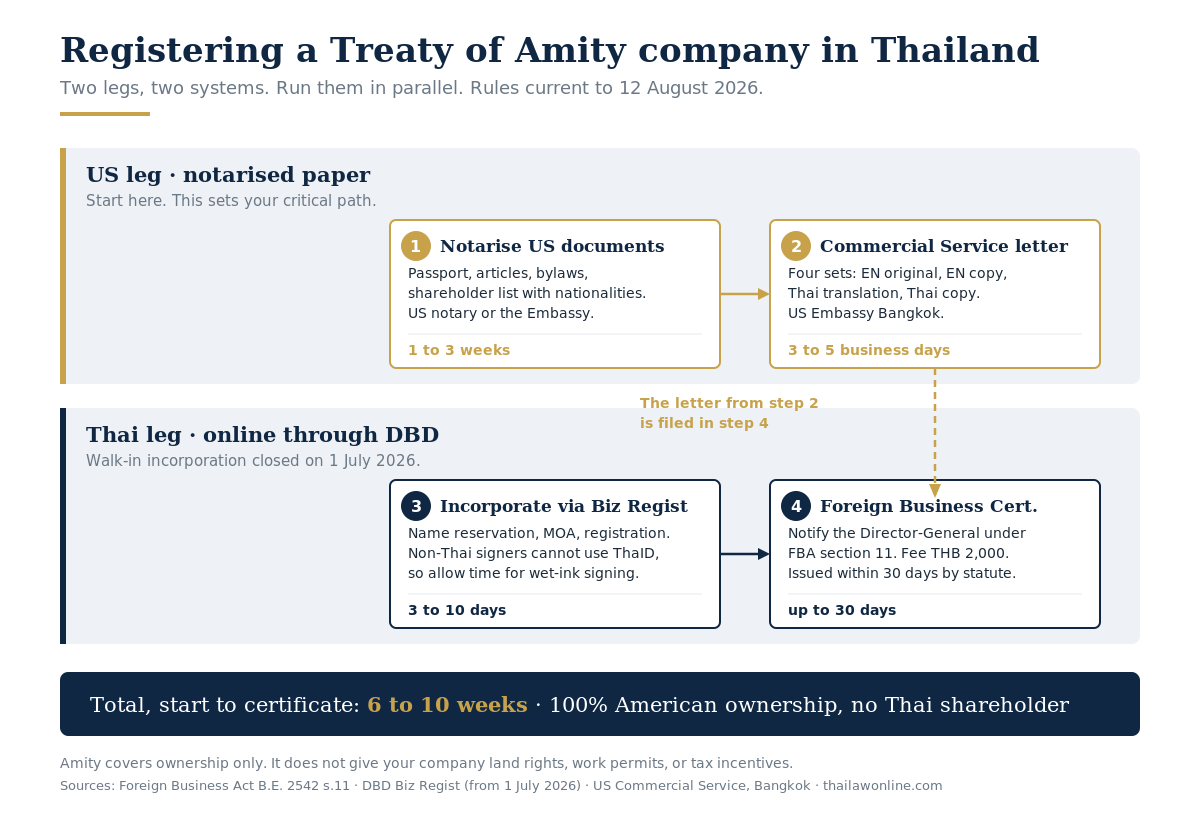
การลงทะเบียนแบ่งออกเป็นสองขั้นตอน โดยดำเนินการผ่านทางระบบออนไลน์และรวดเร็ว ส่วนขั้นตอนที่สองในสหรัฐอเมริกาต้องผ่านการลงนามเอกสารที่สถานทูต ซึ่งควรเริ่มดำเนินการขั้นตอนนี้ก่อน เพราะจะช่วยกำหนดเส้นทางสำคัญของคุณ.
ขั้นตอนที่ 1: รวบรวมและลงนามในเอกสารทางธุรกิจของสหรัฐฯ
บุคคลชาวสหรัฐฯ ที่สมัครเป็นผู้ถือหุ้นรายเดียวจำเป็นต้องมีสำเนาหนังสือเดินทางหรือสำเนาทะเบียนการเกิดที่ออกโดยทนายความ โดยผู้ถือหุ้นของบริษัทสหรัฐฯ จำเป็นต้องมีเอกสารการก่อตั้งบริษัท ข้อบังคับของบริษัท รายชื่อผู้ถือหุ้นที่ระบุถึงสัญชาติของแต่ละบุคคล และสำเนาหนังสือเดินทางของผู้ถือหุ้นและกรรมการชาวสหรัฐฯ ที่ออกโดยทนายความเอกชนในสหรัฐฯ โดยผู้รับรองเอกสารดังกล่าวต้องเป็นทนายความเอกชนในสหรัฐฯ หรือเจ้าหน้าที่สถานทูตสหรัฐฯ ในกรุงเทพฯ หรือสถานกงสุลสหรัฐฯ ในเชียงใหม่ โดยผู้ที่อาศัยอยู่ในประเทศไทยสามารถจองการรับรองเอกสารดังกล่าวได้ผ่านทาง American Citizen Services.
ขั้นตอนที่ 2: การรับรองจากสำนักงานการค้าสหรัฐฯ
ส่งชุดเอกสารที่ลงนามโดยทนายความไปยังฝ่ายบริการการพาณิชย์ที่สถานทูตสหรัฐฯ ในกรุงเทพฯ เตรียมเอกสารชุดละ 4 ชุด ได้แก่ ต้นฉบับภาษาอังกฤษ สำเนาภาษาอังกฤษ การแปลเป็นภาษาไทย และสำเนาภาษาไทย จดหมายรับรองจะส่งตามมาภายใน 3 ถึง 5 วันทำการ หลังจากเอกสารของคุณเสร็จสมบูรณ์ ความล่าช้าส่วนใหญ่เกิดจากเอกสารลงนามโดยทนายความหายไปหรือการแปลที่แตกต่างจากต้นฉบับ.
ขั้นตอนที่ 3: จดทะเบียนบริษัทจำกัดในรูปแบบ DBD Biz Regist
ตั้งแต่วันที่ 1 กรกฎาคม 2026 DBD จะรับการจดทะเบียนบริษัทจำกัดใหม่ได้เพียงทาง Biz Regist เท่านั้น. ขอชื่อบริษัท, ยื่นจดทะเบียนสมัชชาผู้ถือหุ้น, จดทะเบียนบริษัท. ผู้ก่อตั้งและกรรมการที่ได้รับอนุญาตยังคงต้องเซ็นเอกสารบางอย่างด้วยตนเอง ไม่ว่าจะเป็นแบบน้ำหมึกหรือผ่าน DBD e-Service หรือ ThaID. ผู้ที่ไม่ใช่ชาวไทยไม่สามารถใช้ ThaID ได้ ดังนั้นจึงต้องใช้เวลาในการเซ็นด้วยบริการไปรษณีย์ถึง 1 วัน การจดทะเบียนในวันเดียวเหมาะสำหรับกลุ่มผู้ก่อตั้งที่มาจากชาวไทยทั้งหมด ไม่ใช่สำหรับกลุ่มของคุณ. ดู
การจดทะเบียนบริษัทในประเทศไทยสำหรับกระบวนการทั่วไป.
ขั้นตอนที่ 4: ยื่นขอหนังสือรับรองการประกอบธุรกิจของคนต่างด้าวกับ DBD
ยื่นจดหมายแจ้งบริการพาณิชย์และแจ้งตามมาตรา 11 กับ DBD มีค่าธรรมเนียมสองประเภทตามประกาศคณะรัฐมนตรีว่าด้วยค่าธรรมเนียมการดำเนินธุรกิจของชาวต่างชาติ พ.ศ. 2544 ดังนี้
2,000 บาท เมื่อสมัครสำหรับใบรับรองภายใต้มาตรา 11 และ
20,000 บาท สำหรับใบรับรองตัวจริงเมื่อออกให้แล้ว ผู้จัดการทั่วไปมีเวลาออกให้ภายใน 30 วัน เมื่อใบรับรองออกแล้ว บริษัทของคุณจะดำเนินการในกิจกรรมที่อยู่ในรายการห้ามเข้าใช้บริการ โดยมีเจ้าของเป็นชาวอเมริกันจำนวน 100% คน.
ตารางเวลาและค่าใช้จ่ายที่สมจริง
| ขา | เวลาทำงาน | สิ่งที่ทำให้มันทำงาน |
|---|---|---|
| การจัดทำเอกสารและทำบันทึกนิติบุคคลในสหรัฐอเมริกา | 1 ถึง 3 สัปดาห์ | ที่ที่ผู้ถือหุ้นของคุณอาศัยอยู่ และความเร็วในการเซ็นชื่อของพวกเขา |
| การรับรองจาก US Commercial Service | 3 ถึง 5 วันทำการ | ความสมบูรณ์ของไฟล์ |
| การจัดตั้งบริษัทในประเทศไทยผ่าน Biz Regist | 3 ถึง 10 วัน | บริการโลจิสติกส์สำหรับผู้บริหารที่ไม่ใช่ชาวไทย |
| หนังสือรับรองการประกอบธุรกิจของคนต่างด้าว DBD | สูงสุด 30 วันตามกฎหมาย | กำหนดการส่งรายงานตามมาตรา 11 |
| รวมทั้งสิ้น เริ่มตั้งแต่ใบรับรอง | 6 ถึง 10 สัปดาห์ | วิ่งรอบที่สหรัฐฯควบคู่ไปกับรอบที่สอง เพื่อให้เข้าถึงจุดสิ้นสุดที่สั้นกว่า |
ค่าธรรมเนียมราชการกำหนดไว้แน่นอนตามกฎระเบียบ: รวม 22,000 บาทสำหรับหนังสือรับรองการประกอบธุรกิจของคนต่างด้าว โดยชำระ 2,000 บาทเมื่อยื่นคำขอ และ 20,000 บาทเมื่อออกหนังสือรับรอง บวกกับค่าธรรมเนียมจดทะเบียนบริษัท 5,000 บาทตามที่ DBD ประกาศไว้ ค่าบริการแบบคงที่ของเราสำหรับการจดทะเบียนบริษัทไทยคือ 45,000 บาท และค่าบริการขอหนังสือรับรองตามสนธิสัญญา Amity จะเสนอราคาเพิ่มเติมต่างหาก ขึ้นอยู่กับลำดับชั้นการถือหุ้น ดูรายละเอียดได้ที่
ค่าธรรมเนียมทางกฎหมายหน้าหนังสือ.
สนธิสัญญาอามิตี้ การส่งเสริมการลงทุนจาก BOI ใบอนุญาตประกอบธุรกิจของคนต่างด้าว หรือบริษัทไทย 49%
| สนธิสัญญาไมตรี | การส่งเสริมการลงทุนจาก BOI | ใบอนุญาตประกอบธุรกิจของคนต่างด้าว | 49% บริษัทจากไทย | |
|---|---|---|---|---|
| การถือครองโดยชาวต่างชาติ | 100% ดอลลาร์ สหรัฐฯ เท่านั้น | สูงสุด 100% | สูงสุด 100% | สูงสุด 49% |
| ประเภทของคำตัดสิน | ใบรับรองที่ขึ้นอยู่กับสิทธิ์ | เป็นอิสระในการตัดสินใจ | เป็นอิสระในการตัดสินใจ | ลงทะเบียนเพียงอย่างเดียว |
| ไทม์ไลน์ทั่วไป | 6 ถึง 10 สัปดาห์ | 3 ถึง 6 เดือน | 3 ถึง 6 เดือน | 2 ถึง 4 สัปดาห์ |
| ขอบเขตของภาคส่วน | บริษัทกลุ่มยักษ์ใหญ่ยังปิดให้บริการ | กิจกรรมที่ได้รับการส่งเสริมเท่านั้น | ขึ้นอยู่กับแต่ละกรณี | ไม่มีอะไรนอกเหนือจาก FBA |
| มาตรการจูงใจทางภาษี | ไม่มี | มีโปรแกรมการลดภาษีสำหรับบริษัท | ไม่มี | ไม่มี |
| กรรมสิทธิ์ที่ดิน | ไม่ | สามารถใช้ได้กับโครงการที่ได้รับการเลื่อนระดับ | ไม่ | เป็นไปได้ และ DBD กำลังตรวจสอบเรื่องนี้อย่างละเอียด |
| การเปิดเผยข้อมูลผู้สมัครปี 2026 | ไม่มี | ไม่มี | ไม่มี | สูง |
ชาวอเมริกันมักจะถามว่าควรใช้สนธิสัญญาแห่งมิตรภาพหรือไม่ หรือควรยื่นขอรับรอง
คณะกรรมการส่งเสริมการลงทุน (BOI)การส่งเสริมการลงทุน พวกมันเป็นเครื่องมือที่แตกต่างกัน Amity เป็นวิธีที่เร็วที่สุดในการให้บริษัทต่าง 100% ชาติเข้าถือหุ้นในธุรกิจบริการหรือธุรกิจการค้าทั่วไป และไม่ได้รับสิทธิประโยชน์ทางภาษีใดๆ การส่งเสริมการลงทุนของ BOI มีความเฉพาะเจาะจงต่อกิจกรรมและมีความล่าช้ามากกว่า แต่จะเพิ่มระยะเวลาพักภาษีสำหรับบริษัท การออกใบอนุญาตทำงานที่ง่ายขึ้น และในบางกรณีก็รวมถึงสิทธิ์ในการครอบครองที่ดินสำหรับโครงการที่ได้รับการส่งเสริม การให้คำปรึกษา การซื้อขาย หรือการให้บริการทั่วไป Amity มักจะเป็นทางเลือกที่เหมาะสมสำหรับบริษัทประเภทนี้ สำหรับธุรกิจที่เกี่ยวข้องกับการผลิตหรือกิจกรรมที่กำหนดโดย BOI BOI มักจะประสบความสำเร็จมากกว่า บางบริษัทจึงใช้ทั้งสองวิธี
BOI กับใบอนุญาตประกอบธุรกิจของคนต่างด้าว.
ทำไม Amity ถึงเอาชนะโครงสร้างผู้สมัครได้ในปี 2026
กฎหมายไทยมีบทลงโทษทั้งสองฝ่ายในกรณีการจัดตั้งบริษัทร่วมกัน โดยตามมาตรา 36 ของกฎหมาย FBA บุคคลชาวไทยที่ถือหุ้นในนามของชาวต่างชาติมีโทษจำคุกสูงสุดสามปี หรือปรับไม่เกิน 100,000 บาท หรือทั้งจำทั้งปรับ และมาตราเดียวกันนี้ยังกำหนดบทลงโทษสำหรับชาวต่างชาติที่อนุญาตให้การจัดตั้งดังกล่าวเกิดขึ้นด้วย โดยตามมาตรา 37 เป็นความผิดแยกต่างหากของชาวต่างชาติที่ดำเนินธุรกิจที่ต้องห้ามโดยไม่ได้รับใบอนุญาตหรือใบรับรอง โดยมีบทลงโทษเช่นเดียวกัน ในทั้งสองกรณี กฎหมายกำหนดให้ศาลสั่งให้มีการยุติการจัดตั้งหรือธุรกิจดังกล่าว และฝ่ายใดที่ละเลยต่อคำสั่งดังกล่าวจะต้องชำระเงิน 10,000 ถึง 50,000 บาทต่อวันที่การละเมิดยังคงดำเนินต่อไป,
หรือการปิดกิจการของบริษัท, หรือการสิ้นสุดของสัดส่วนการถือหุ้นหรือการเป็นหุ้นส่วน ตามความเหมาะสม
เลิกกิจการ, และสิ่งที่ต้องวางแผนคือการปิดกิจการ ไม่ใช่การปรับโครงสร้างเพียงอย่างเดียว ศาลในประเทศไทยมองข้ามทะเบียนหุ้น และคำตัดสินสามารถระบุชื่อได้โดยตรง ไม่ต้องใช้การแสดงออกใดๆ
คำพิพากษาศาลฎีกาที่ 2252/2560บริษัทที่จดทะเบียนในหมู่เกาะบริติชเวอร์จินปรากฏในทะเบียนบริษัทของไทย
น้อยกว่าครึ่งหุ้นดังกล่าวถูกต้องตามโครงสร้างที่ควรจะเป็น แต่หลักฐานแสดงให้เห็นว่าเงินทุนจริงในบริษัทนั้นมากกว่าครึ่งเป็นเงินของชาวต่างชาติ ศาลจึงพิจารณาว่าทั้งสองเป็นธุรกิจการค้าที่เกี่ยวกับการซื้อขายที่ดิน ซึ่งเป็นธุรกิจที่ห้ามชาวต่างชาติเข้าถึง และผลที่ตามมาก็ตกอยู่กับชาวต่างชาติ เพราะธุรกิจของตนเองเป็นธุรกิจที่ผิดกฎหมายจึงไม่ถือเป็นผู้เสียหายที่ถูกกฎหมาย และทำให้เขาสูญเสียสิทธิ์ในการดำเนินคดีกับกรรมการที่เขาได้ตั้งขึ้นมา
คำพิพากษาศาลฎีกาที่ 17923/2557เอกสารที่มีชื่อว่าสัญญาเช่าถูกตีความว่าเป็นสัญญาซื้อขาย และเนื่องจากผู้ซื้อชาวต่างชาติจะถือครองที่ดินผ่านนิติบุคคลไทย สัญญาดังกล่าวจึงขัดต่อมาตรา 86 แห่งประมวลกฎหมายที่ดินและตกเป็นโมฆะ คำขอให้โอนที่ดินของผู้ซื้อจึงถูกยกฟ้อง ใน
คำพิพากษาศาลฎีกาที่ 5457/2560สัญญากู้ยืมเงินถูกวินิจฉัยว่าเป็นนิติกรรมอำพรางที่ปกปิดการซื้อขายกิจการ ซึ่งจัดโครงสร้างให้คนไทยถือหุ้นแต่เพียงในนามเพื่อหลีกเลี่ยงพระราชบัญญัติการประกอบธุรกิจของคนต่างด้าว และนิติกรรมที่ถูกอำพรางนั้นตกเป็นโมฆะตามมาตรา 150 แห่งประมวลกฎหมายแพ่งและพาณิชย์ ผู้ซื้อยังสูญเงินที่จ่ายไปด้วย เพราะศาลวินิจฉัยว่าเงินที่เขาชำระไปเป็นการชำระหนี้เพื่อวัตถุประสงค์อันมิชอบด้วยกฎหมาย จึงเรียกคืนไม่ได้ตามมาตรา 411 หุ้นส่วนชาวไทยของคุณมีความเสี่ยงต้องรับผิดทางอาญาไปพร้อมกับคุณ ลูกค้ามักประเมินเรื่องนี้ต่ำเกินไป และนี่คือสิ่งที่ทำให้โครงสร้างแบบนอมินีเปราะบางทันทีที่ความสัมพันธ์ร้าวฉาน Amity ทำให้ปัญหานี้หมดไป อ่านรายละเอียดการบังคับใช้กฎหมายได้ที่
ผู้ถือหุ้นนอมินีชาวไทยและการวิเคราะห์กรณีที่
การปราบปรามนอมินีและการดำเนินคดีในศาล.
และการเปิดเผยข้อมูลไม่ได้หยุดอยู่เพียงแค่วิศวกรของบริษัทเท่านั้น. มาตรา 41 แห่งพระราชบัญญัติการประกอบธุรกิจของคนต่างด้าวบัญญัติว่า ในกรณีที่นิติบุคคลกระทำความผิดตามมาตรา 34, 35, 36 หรือ 37 กรรมการ หุ้นส่วน หรือบุคคลซึ่งมีอำนาจกระทำการแทนนิติบุคคลนั้นที่รู้เห็นเป็นใจในการกระทำความผิด, หรือไม่ดำเนินการอย่างเหมาะสมเพื่อป้องกันเหตุการณ์ดังกล่าว, ผู้ที่รับผิดชอบต่อการละเมิดดังกล่าวอาจถูกลงโทษด้วยโทษจำคุกสูงสุดสามปี หรือปรับไม่เกิน 100,000 บาท ถึง 1,000,000 บาท หรือทั้งจำทั้งปรับ ซึ่งเป็นสิ่งที่ควรอ่านสองครั้งข้างๆ กับคำสั่งที่ 2/2569 ในขณะนี้ผู้รับรองการจดทะเบียนต้องให้กรรมการที่ระบุชื่อลงนามในจดหมายชี้แจงการลงทุน ซึ่งระบุว่าเงินของผู้ถือหุ้นแต่ละรายมาจากที่ใด และการลงนามในจดหมายดังกล่าวถือเป็นสิ่งที่ทำให้การไม่ตรวจสอบอย่างละเอียดถี่ถ้วนเพื่อป้องกันการผิดนัดชำระหนี้เป็นเรื่องที่น่าอาย.
เงินทุน แรงงานและเจ้าหน้าที่ชาวไทย
สำหรับทุนขั้นต่ำ ให้ใช้เกณฑ์ปกติตามพระราชบัญญัติการประกอบธุรกิจของคนต่างด้าว: อย่างน้อย 2 ล้านบาทสำหรับธุรกิจที่ไม่ได้ถูกจำกัดในทางอื่น และอย่างน้อย 3 ล้านบาทสำหรับแต่ละกิจกรรมที่ต้องขอใบอนุญาตประกอบธุรกิจของคนต่างด้าวหากผู้ประกอบการไม่ใช่ชาวอเมริกัน.
มาตรา 14ของพระราชบัญญัตินี้กำหนดเกณฑ์ขั้นต่ำดังกล่าวไว้ และกฎกระทรวงว่าด้วยทุนขั้นต่ำและระยะเวลาการนำหรือส่งทุนขั้นต่ำเข้ามาในประเทศไทยฉบับปัจจุบัน,
พ.ศ. 2562, ซึ่งระบุรายละเอียดไว้ โดยให้สังเกตว่าตัวเลข 3 ล้านบาทนั้นเป็นจริงหรือไม่: ข้อ 3 ระบุว่า 25% ของค่าใช้จ่ายเฉลี่ยประจำปีที่คาดการณ์ไว้ในช่วงสามปี โดยมี 3 ล้านบาทเป็นค่าใช้จ่ายขั้นต่ำสำหรับแต่ละธุรกิจ ดังนั้นแผนที่ต้องการเงินทุนจำนวนมากจึงต้องมีมากกว่าตัวเลขที่ระบุไว้ในหัวข้อนี้.
ตารางเวลาการโอนเงินเป็นสิ่งที่ทำให้เส้นทางตามสนธิสัญญาแตกต่างกัน และเป็นกำหนดเวลาที่ต้องปฏิบัติตาม ไม่ใช่ช่วงเวลาผ่อนผัน.ตามข้อ 4 บุคคลต่างชาติหรือบริษัทที่จดทะเบียนนอกประเทศไทยต้องนำเงินทุนขั้นต่ำมาภายในสามปี โดยต้องนำเงินอย่างน้อย 25% มาภายในสามเดือนแรก และครึ่งหนึ่งภายในปีแรก และส่วนที่เหลือไม่น้อยกว่า 25% ต่อปี บุคคลต่างชาติที่ดำเนินธุรกิจภายใต้สนธิสัญญาที่ไทยเป็นภาคีจะได้รับการปฏิบัติแตกต่างกัน และความแตกต่างนั้นมีกำหนดวันเวลาที่แน่นอนคือ
ข้อ 5ต้องนำเงินทุนขั้นต่ำมาลงทุนทั้งหมด
ณ วันที่ 29 สิงหาคม 2029, ข้อกำหนดที่ 7 กำหนดให้มีวันเดียวกันสำหรับผู้ประกอบการที่ทำธุรกิจอยู่ก่อนที่กฎระเบียบจะบังคับใช้ ดังนั้นบริษัท Amity ที่จดทะเบียนในปี 2026 จึงมีเวลาจนถึงวันนั้น ไม่ใช่ 15 ปีนับจากวันจดทะเบียนของตนเอง ไม่ว่าตารางเวลาใดจะใช้บังคับก็ตาม,
ข้อ 6ต้องมีหลักฐานว่าการโอนเงินแต่ละครั้งต้องยื่นต่อ DBD โดยแปลงเป็นอัตราแลกเปลี่ยนในวันที่ระบุ,
ภายในสิบห้าวันของเงินที่เข้ามา นั่นคือขั้นตอนที่ผู้ประกอบการลืมไป และนั่นคือขั้นตอนที่ทำให้เกิดช่องโหว่ทางเอกสารเมื่อมีการสอบถามใบรับรองในภายหลัง คำแนะนำที่ให้บริษัทที่ทำสัญญากับรัฐบาลมีระยะเวลา 15 ปีนั้นเป็นการตีความกฎระเบียบที่ไม่มีอยู่แล้ว กฎระเบียบ B.E. 2545 และข้อ 3/1 และ 3/2 ของกฎระเบียบนั้นได้ถูกยกเลิกไปแล้วตามกฎระเบียบ B.E. 2562 ที่ประกาศในราชกิจจานุเบกษาเมื่อวันที่ 28 สิงหาคม 2019 (ฉบับที่ 136 ตอนที่ 93 Kor หน้า 1) งานนี้ดำเนินการตั้งแต่ปี 2029 ใบอนุญาตทำงานมีหลักเกณฑ์การคำนวณที่แตกต่างกัน ซึ่งไม่ถูกเปลี่ยนแปลงโดยสนธิสัญญา คุณต้องมีเงินทุนจดทะเบียนและชำระเต็มจำนวน 2 ล้านบาทต่อใบอนุญาตทำงานต่างชาติ ซึ่งจำกัดไว้ที่สิบคน และกรมการเข้าเมืองคาดว่าจะมีพนักงานไทยสี่คนต่อชาวต่างชาติสำหรับระยะเวลาการขยายระยะเวลาการพำนักที่ต้องใช้ใบอนุญาตแต่ละใบ โดยเงินทุนที่ต้องชำระเกิน 3 ล้านบาทจะทำให้การขอใบอนุญาตเป็นเรื่องยาก ไม่ว่าใบรับรองของคุณจะระบุไว้ว่าอย่างไรก็ตาม แผนการลงทุนควรคำนึงถึงจำนวนพนักงานที่คุณต้องการ ดู
วีซ่าธุรกิจที่ไม่ใช่ประเภท Bสำหรับด้านวีซ่า และ
ภาษีเงินได้นิติบุคคลในประเทศไทยสำหรับด้านภาษี.
บริษัทอามิตี้ของคุณยังไม่สามารถเป็นเจ้าของที่ดินได้
นี่คือข้อจำกัดที่ทำให้ผู้คนต้องตกใจ ข้อบังคับที่ 86 ของกฎหมายที่ดินอนุญาตให้ชาวต่างชาติสามารถครอบครองที่ดินได้เพียงตามข้อตกลงที่กำหนดให้มีกรรมสิทธิ์ในทรัพย์สินอสังหาริมทรัพย์เท่านั้น และสนธิสัญญาแห่งมิตรภาพก็ไม่ใช่ข้อตกลงดังกล่าว: มาตรา IV วรรค 2 ระบุว่าการใช้ประโยชน์จากที่ดินเป็นของแต่ละประเทศเท่านั้น ส่วนข้อบังคับที่ 97 ก็ให้สิทธิแก่บริษัทที่มีหุ้นส่วนต่างชาติมากกว่า 49 เปอร์เซ็นต์ หรือมากกว่าครึ่งหนึ่งของผู้ถือหุ้นที่เป็นชาวต่างชาติ ในกรณีนี้บริษัท Amity จึงถูกออกแบบมาให้เป็นบริษัทที่ถือหุ้นต่างชาติได้ โดยบริษัท Amity สามารถเป็นเจ้าของอาคารที่อยู่บนที่ดินได้ แต่ไม่สามารถเป็นเจ้าของที่ดินได้ด้วยตนเอง สิ่งที่เกิดขึ้นแทนคือ
- เอ สัญญาเช่าที่จดทะเบียน อายุการใช้งานสูงสุด 30 ปี ซึ่งเป็นทางเลือกทางธุรกิจมาตรฐาน
- หน่วยคอนโดมิเนียมภายในสัดส่วนการถือครองของชาวต่างชาติ 49% ของอาคาร
- เอ สิทธิเก็บกิน หรือพื้นที่ที่โครงสร้างเหมาะสมกับการใช้งานของพื้นที่นั้น
ใครก็ตามที่เสนอให้บริษัทของคุณ Amity ถือกรรมสิทธิ์ในที่ดินผ่านผู้ถือหุ้นชาวไทย ก็กำลังเสนอแนวทางที่ DBD ใช้เวลา 2026 ในการทำลายล้าง.
การรักษาใบรับรอง: อะไรคือสิ่งที่ทำลายการคุ้มครองของ Amity
สถานะ Amity ไม่ใช่การอนุมัติแบบครั้งเดียว ใบรับรองนี้แสดงถึงโครงสร้างและจะสูญหายไปพร้อมกับมัน ดูเหตุการณ์สี่ประการ:
- หุ้นของสหรัฐฯ ลดลงต่ำกว่า 51 เปอร์เซ็นต์. ใบรับรองจะสูญหายไป และข้อจำกัดของ FBA ก็จะกลับมาใช้ได้ตามเดิม.
- กรรมการของสหรัฐฯหยุดถือครองสัดส่วนเสียงข้างมากในคณะกรรมการ. ผลลัพธ์ก็เหมือนเดิม.
- การโอนหุ้นจะทำให้การควบคุมกิจการตกไปอยู่ในมือของบุคคลที่ไม่ใช่ชาวอเมริกัน, รวมถึงผ่านห่วงโซ่การถือหุ้นที่ครอบคลุมผู้ถือหุ้นรายเดิมของคุณ.
- การปรับโครงสร้างหุ้นแบบเลือกใช้สิทธิ การเปลี่ยนสิทธิ์การลงคะแนนเสียงให้กับผู้ถือที่ไม่ได้เป็นชาวอเมริกัน ในขณะที่จำนวนใบรับรองยังคงเป็นไปตามข้อกำหนด.
ก่อนที่จะออกหุ้นใหม่, รับนักลงทุนเข้าจดทะเบียน หรือปรับโครงสร้างบริษัทแม่ในสหรัฐอเมริกา ให้ดำเนินการตามหลักการทดสอบ Amity โปรดแจ้ง DBD เมื่อมีการเปลี่ยนแปลงในเรื่องการถือหุ้นหรือการดำรงตำแหน่งกรรมการ และอัปเดตการรับรองจากสถานทูตเมื่อมีการเปลี่ยนแปลงในเรื่องโครงสร้างผู้ถือหุ้น โดยการตรวจสอบล่วงหน้าจะทำให้เกิดการพูดคุยกันได้ แต่หากพบว่ามีการเปลี่ยนแปลงในภายหลังจะทำให้การรับรองนั้นสูญเสียไป.
ตารางการปฏิบัติตามข้อกำหนดที่กำลังดำเนินอยู่
- ภายใน 4 เดือนนับจากสิ้นปีภาษี: จัดการประชุมสามัญผู้ถือหุ้นและอนุมัติงบการเงินที่ได้รับการตรวจสอบแล้ว ตามมาตรา 1197 แห่งประมวลกฎหมายแพ่งและพาณิชย์ บัญชีงบดุลที่ได้รับการตรวจสอบโดยผู้สอบบัญชีต้องส่งมอบให้แก่ที่ประชุมสามัญภายใน 4 เดือนนับจากวันที่บัญชีงบดุลดังกล่าวถูกส่งมอบ.
- ภายใน 1 เดือนนับจากวันประชุมผู้ถือหุ้น file the approved financial statements and the meeting minutes with the DBD, electronically through the e-filing system. Two provisions sit behind that date and they are worth keeping apart: section 1199 of the Civil and Commercial Code makes it the directors’ duty to send a copy of every balance sheet to the Registrar not later than one month after the general meeting adopted it, and section 11 of the Accounting Act B.E. 2543 imposes the filing duty itself. The Accounting Act splits the deadline by entity: a Thai limited company files within one month of the AGM approval, while a registered partnership, a branch of a foreign company or a joint venture files within five months of the closing date, with no AGM in the calculation. If you chose a branch rather than an Amity company, that is your date.
- Within 14 days of the AGM: file the updated list of shareholders. Section 1139 of the Civil and Commercial Code makes it the directors’ duty to send the Registrar a copy of that list not later than the fourteenth day after the ordinary meeting.
- Monthly and annually: corporate income tax, withholding tax and VAT filings on the ordinary Thai schedule.
ThaiLawOnline สามารถช่วยเหลือคุณได้อย่างไร
We handle the whole Amity process: forming the Thai company, preparing the ownership evidence, obtaining the US Commercial Service certification, and filing for the Foreign Business Certificate at the DBD. We also advise on the sensible structure where an American holds the business and land needs are met through a lease or usufruct rather than ownership. Our fixed fee to register a Thai company is 45,000 THB; the Amity certification is quoted on top depending on the ownership chain. One practical warning from experience: the treaty protects genuine American ownership, not an American name on paper over a non-American business. If the real capital and control are not US, the certification will not hold up, and the exposure is the same as any other misrepresentation to the DBD. If you are American, use the treaty properly and it is one of the best deals in Thai corporate law.
ติดต่อเราเพื่อเริ่มต้น.
คำถามที่พบบ่อย
ชาวอเมริกันสามารถเป็นเจ้าของหุ้น 100% ของบริษัทในประเทศไทยได้หรือไม่
ได้ โดยผ่านสนธิสัญญาทางไมตรี (Treaty of Amity) โดยมีเงื่อนไขว่าธุรกิจนั้นต้องอยู่นอกกลุ่มธุรกิจสงวนหกกลุ่ม และคุณต้องได้รับหนังสือรับรองการประกอบธุรกิจของคนต่างด้าว ช่องทางนี้ไม่ได้มีเฉพาะสนธิสัญญานี้: มาตรา 10 แห่งพระราชบัญญัติการประกอบธุรกิจของคนต่างด้าวร่างขึ้นให้ใช้กับสนธิสัญญาใดๆ ที่ประเทศไทยเป็นภาคี และชาวออสเตรเลียก็ได้รับหนังสือรับรองการประกอบธุรกิจของคนต่างด้าวด้วยวิธีเดียวกันภายใต้ TAFTA สิ่งที่ไม่มีสัญชาติอื่นใดได้รับคือการปฏิบัติเยี่ยงคนชาติที่กว้างขวางถึงเพียงนี้ TAFTA ให้ชาวออสเตรเลียถือหุ้นได้ร้อยละ 100 เพียงในไม่กี่สาขาธุรกิจ และจำกัดสัดส่วนการถือหุ้นในสาขาส่วนใหญ่ที่เหลือ ขณะที่สนธิสัญญาทางไมตรีครอบคลุมเกือบทุกธุรกิจที่อยู่นอกกลุ่มธุรกิจสงวนหกกลุ่ม.
สนธิสัญญาไมตรีและเศรษฐกิจยังมีผลบังคับใช้ในปี พ.ศ. 2569 (ค.ศ. 2026) หรือไม่
Yes. It entered into force on 8 June 1968, and under Article XIV it ran for an initial ten years and continues in force after that until one country gives the other a year’s written notice to terminate. The 2026 US tariff round runs on a separate track.
การจดทะเบียนสนธิสัญญาไมตรีใช้เวลานานเท่าไหร่
หกถึงสัปดาห์ที่สิบตั้งแต่เริ่มเตรียมเอกสารสหรัฐฯ จนกระทั่งถือใบรับรอง บริการเชิงพาณิชย์ใช้เวลาสามถึงห้าวันทำการเมื่อแฟ้มของคุณสมบูรณ์ และมาตรา 11 ให้เวลาอธิบดีกรมพัฒนาธุรกิจการค้า 30 วันในการออกใบรับรอง.
ราคาเท่าไหร่?
ใบรับรองการประกอบธุรกิจของคนต่างด้าวมีค่าธรรมเนียมภาครัฐสองรายการตามกฎกระทรวงกำหนดค่าธรรมเนียม พ.ศ. 2544 ได้แก่ 2,000 บาท เมื่อยื่นคำขอ และ 20,000 บาท เมื่อออกใบรับรอง การจดทะเบียนจัดตั้งบริษัทเรียกเก็บแยกต่างหากโดยกรมพัฒนาธุรกิจการค้า ค่าบริการวิชาชีพแบบเหมาจ่ายของเราในการจดทะเบียนบริษัทไทยคือ 45,000 บาท ส่วนค่ารับรองของสนธิสัญญาไมตรีจะเสนอราคาแยกต่างหากตามสายโซ่การถือหุ้น.
บริษัทตามสนธิสัญญาไมตรีสามารถถือครองที่ดินในประเทศไทยได้หรือไม่
ไม่ มาตรา 86 แห่งประมวลกฎหมายที่ดินอนุญาตให้คนต่างด้าวได้มาซึ่งที่ดินได้เฉพาะภายใต้สนธิสัญญาที่บัญญัติให้มีกรรมสิทธิ์ในอสังหาริมทรัพย์ได้เท่านั้น และสนธิสัญญาไมตรีก็ไม่ใช่หนึ่งในนั้น โดยมาตรา IV วรรค 2 สงวนสิทธิ์การแสวงหาประโยชน์จากที่ดิน มาตรา 97 จัดให้บริษัทไทยที่มีผู้ถือหุ้นส่วนใหญ่เป็นชาวต่างชาติอยู่ภายใต้ข้อจำกัดเดียวกันนี้ ให้ใช้การจดทะเบียนการเช่าที่มีกำหนดเวลาไม่เกิน 30 ปี ห้องชุดภายในโควต้าชาวต่างชาติ หรือสิทธิเก็บกิน.
ฉันยังต้องมีใบอนุญาตทำงานอยู่อีกไหม
ใช่ Amity รับผิดชอบเรื่องการถือครองที่ดิน ไม่ใช่เรื่องการย้ายถิ่นฐาน คุณต้องมีเงินทุนจดทะเบียน 2 ล้านบาทต่อใบอนุญาตทำงาน และ Immigration คาดว่าจะมีพนักงานไทย 4 คนต่อชาวต่างชาติสำหรับการต่ออายุการอยู่เกินหนึ่งปี.
จะเกิดอะไรขึ้นถ้าฉันขายหุ้นให้กับชาวต่างชาติที่ไม่ใช่ชาวอเมริกัน
หากสัดส่วนการถือหุ้นของสหรัฐฯ ลดลงต่ำกว่า 51% หรือกรรมการชาวสหรัฐฯ สูญเสียเสียงข้างมากในคณะกรรมการบริหาร หนังสือรับรองการประกอบธุรกิจของคนต่างด้าว (Foreign Business Certificate) จะถูกยกเลิก และข้อจำกัดตามกฎหมาย FBA จะมีผลบังคับใช้อีกครั้ง โปรดตรวจสอบการโอนสิทธิ์ทุกครั้งก่อนดำเนินการ.
ผู้ถือกรีนการ์ดมีสิทธิ์ได้รับด้วยหรือไม่
ไม่ อนุสัญญาดังกล่าวมีผลบังคับใช้กับพลเมืองสหรัฐฯ การมีถิ่นที่อยู่ถาวรไม่ใช่สัญชาติเพื่อวัตถุประสงค์นี้.
สนธิสัญญาแห่งมิตรภาพ หรือการส่งเสริม BOI?
BOI ชนะในกรณีที่คุณมีสิทธิ์ได้รับสิทธิการยกเว้นภาษี และสามารถรอได้ 3 ถึง 6 เดือน Amity ชนะในด้านความรวดเร็วและความมั่นคงสำหรับธุรกิจบริการ และไม่มีสิทธิประโยชน์ทางภาษีใดๆ เลย.
บริษัท Amity สามารถดำเนินธุรกิจอีคอมเมิร์ซ บริการด้านการให้คำปรึกษา หรือธุรกิจร้านอาหารได้หรือไม่
ใช่ ทุกสามรายการตั้งอยู่ภายนอกเขตที่กำหนดไว้ 6 แห่ง คุณควรตรวจสอบให้แน่ใจว่ารายการที่ลงทะเบียนของคุณตรงกับสินค้าที่คุณขายจริงก่อนยื่นคำขอ.
What the 2 September 2026 review read. The Treaty of Amity and Economic Relations of 29 May 1966, official English text, from the United Nations Treaty Series (No. 9345, volume 652) and from the Thai Department of Trade Negotiations, with Articles IV, XII and XIV read in full. The Foreign Business Act B.E. 2542 in Thai, sections 5, 7, 8, 10, 11, 14, 16, 17, 34 to 37 and 41. The Ministerial Regulation on Minimum Capital and the Period for Bringing In or Remitting It B.E. 2562, Royal Gazette volume 136, part 93 Kor, page 1, 28 August 2019, together with the B.E. 2545 regulation and its 2547 and 2552 amendments that it repealed. The Ministerial Regulation on Fees for the Business Operations of Aliens B.E. 2544. Central Partnership and Company Registrar Order No. 2/2569, from the Department of Business Development’s own PDF. Land Code sections 86, 94, 96 and 97. Civil and Commercial Code sections 1096, 1139, 1197 and 1199. Accounting Act B.E. 2543 section 11. Supreme Court Decisions 2252/2560, 17923/2557 and 5457/2560, each read in Thai to its disposition.
What this review did not verify. The DBD enforcement figures quoted above are the department’s own published numbers and were not checked against a departmental primary. The closure of walk-in incorporation on 1 July 2026 is DBD operational policy announced by the department, not a statutory instrument. The work permit figures have since been traced to their sources: THB 2 million of paid-up capital per permit to the Department of Employment regulation of B.E. 2547, and four Thai employees per foreigner to item 2.1(5) of the criteria annexed to Immigration Bureau Order 12/2568. Neither appears in any provision of the Foreign Business Act. The US Commercial Service document list and its three to five day turnaround come from the Embassy’s own published guidance. Corporate tax and VAT deadlines are Revenue Code matters and were not read here. Re-checked on 6 October 2026: Foreign Business Act sections 10 to 12, 14, 36 and 37 re-read in Thai, and the nominee penalties, the daily fine for ignoring a cessation order and the winding-up wording all match; nothing changed.
ข่าวสารกฎหมายไทย ฟรีทางอีเมล
อัปเดตข่าวสารเป็นภาษาอังกฤษที่เข้าใจง่ายเกี่ยวกับการเปลี่ยนแปลงของกฎหมายไทยที่ส่งผลกระทบต่อชาวต่างชาติ: อสังหาริมทรัพย์, วีซ่า, การสมรส, ธุรกิจ และพินัยกรรม จดหมายข่าวสั้นเพียงฉบับเดียวต่อเดือน จากสำนักงานกฎหมายที่ดำเนินงานมาตั้งแต่ปี 2549 ไม่มีการส่งสแปม ยกเลิกรับได้ทุกเมื่อ.