


ตรวจสอบโดย ThaiLawOnline สำนักงานกฎหมายไทยที่ได้รับใบอนุญาตและดำเนินกิจการในประเทศไทยตั้งแต่ปี พ.ศ. 2549 ทนายความผู้รับผิดชอบสำนวน: Wichuda Atthamethakon, น.ม., ใบอนุญาตให้เป็นทนายความ เลขที่ 3149/2556.
ปรับปรุงล่าสุดเมื่อ
ครอบครัวต่างๆ ถามคำถามเดียวกันกับเราทุกเดือน: “พ่อของฉันมีพินัยกรรมแบบอเมริกันที่ถูกต้อง ทำไมธนาคารในกรุงเทพฯ จึงไม่ยอมปล่อยเงินในบัญชีของเขา?” คำตอบนี้จะกำหนดหลายเดือนในชีวิตของพวกเขา. การจัดการมรดก ตามพินัยกรรมต่างประเทศในประเทศไทย โดยเฉพาะอย่างยิ่ง การจัดการมรดกตามพินัยกรรมต่างประเทศในประเทศไทย กระบวนการนี้เป็นไปได้ และในกรณีส่วนใหญ่ กฎหมายไทยยอมรับว่าพินัยกรรมของคุณที่ทำในสหรัฐอเมริกา สหราชอาณาจักร แคนาดา หรือออสเตรเลียมีแบบที่ถูกต้อง.
แต่ไม่มีธนาคารไทยใด ไม่มี สำนักงานที่ดิน, และไม่มีหน่วยงานทะเบียนรถยนต์ใดที่จะดำเนินการตามพินัยกรรมนั้น หรือตามคำสั่งศาลมรดกต่างประเทศใดๆ จนกว่าศาลไทยจะแต่งตั้งผู้จัดการ กองมรดก เสียก่อน ThaiLawOnline ได้ให้คำแนะนำแก่ครอบครัวชาวต่างชาติตลอดกระบวนการ การจัดการมรดกและตั้งผู้จัดการมรดกในประเทศไทย ตั้งแต่ปี 2006 คู่มือฉบับนี้จะอธิบายบทบัญญัติของกฎหมายที่ทำให้กระบวนการนี้เป็นไปได้ ขั้นตอนการพิจารณาของศาลทีละขั้นตอน และตัวเลขที่ตรงไปตรงมาเกี่ยวกับระยะเวลาและค่าใช้จ่าย.
สารบัญ
คำตอบสั้นๆ: ใช้ได้ในหลักการ แต่ไร้ประโยชน์หากไม่มีคำสั่งศาลไทย
คำถามที่แยกจากกันสองข้อซ่อนอยู่ในคำถามว่า “พินัยกรรมของฉันใช้ได้ในประเทศไทยหรือไม่?”
ประการแรกคือความสมบูรณ์ พระราชบัญญัติว่าด้วยการขัดกันแห่งกฎหมาย พ.ศ. 2481 (1938) เป็นผู้ตอบคำถามนี้ และคำตอบโดยปกติคือใช่ พินัยกรรมที่ลงนามในลอนดอนตามแบบของกฎหมายอังกฤษ หรือในเท็กซัสตามแบบของกฎหมายเท็กซัส ถือว่าเป็นไปตามข้อกำหนดเรื่องแบบของกฎหมายไทยโดยอาศัยมาตรา 40 แห่งพระราชบัญญัตินั้น.
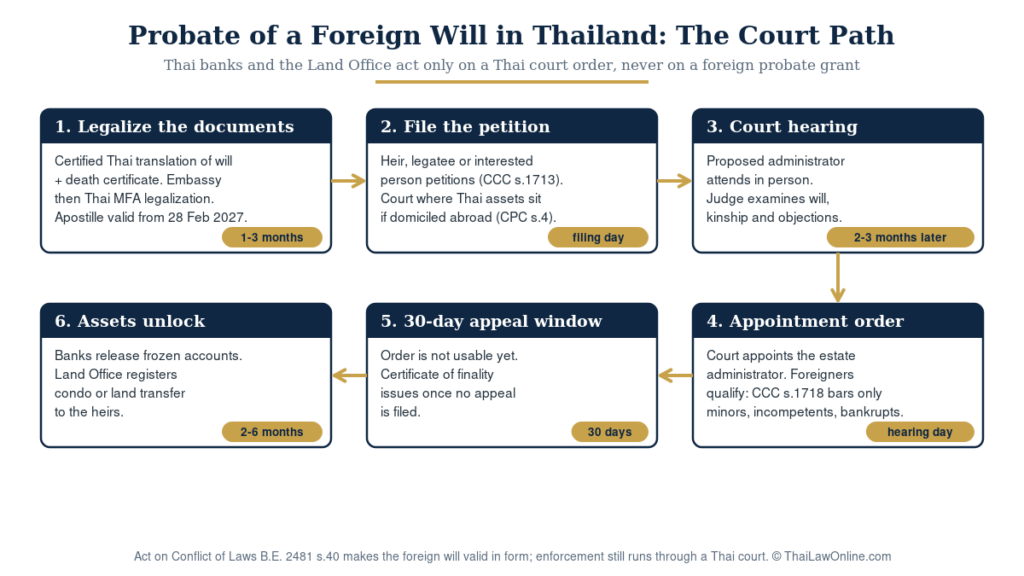
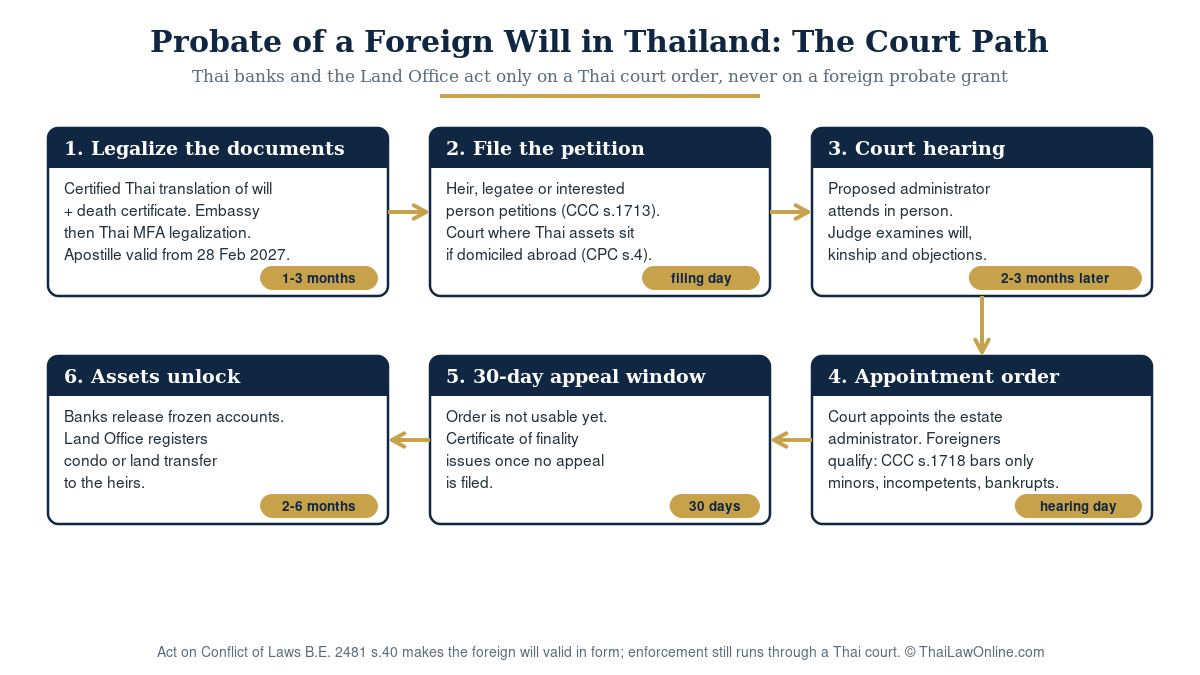
ประการที่สอง คือการบังคับให้เป็นไปตามสิทธิ ธนาคารไทยจะดำเนินการตามคำสั่งศาลไทยที่แต่งตั้งผู้จัดการมรดก (ผู้จัดการมรดก) เท่านั้น ตามด้วยหนังสือรับรองที่ยืนยันว่าไม่มีการยื่นอุทธรณ์ มาตรา 81 ของประมวลกฎหมายที่ดินให้ทายาทยื่นคำขอจดทะเบียนที่ดินที่ได้รับมรดกได้โดยตรงก็จริง แต่หากเป็นพินัยกรรมต่างประเทศและเอกสารจากต่างประเทศ ในทางปฏิบัติสำนักงานที่ดินจะขอคำสั่งศาลเช่นเดียวกัน คำสั่งรับรองพินัยกรรม (Grant of Probate) ของสหราชอาณาจักร หรือ Letters Testamentary ของสหรัฐอเมริกา ไม่มีผลบังคับในประเทศไทย เจ้าหน้าที่ของไทยไม่บังคับตามคำสั่งศาลต่างประเทศในเรื่องมรดก ครอบครัวของคุณต้องยื่นคำร้องต่อศาลไทย ยื่นพินัยกรรมต่างประเทศพร้อมคำแปลที่รับรองแล้ว และรอการแต่งตั้ง.
ช่องว่างระหว่างความสมบูรณ์ของพินัยกรรมกับการบังคับให้เป็นไปตามพินัยกรรมนี้เองคือที่มาของความล่าช้า บัญชีที่ถูกระงับ และค่าใช้จ่ายทางกฎหมาย ช่องว่างนี้เริ่มขึ้นทันทีที่มีการเปิดมรดก: ตาม มาตรา 1599 แห่งประมวลกฎหมายแพ่งและพาณิชย์, กองมรดกตกทอดแก่ทายาททันทีที่ผู้ตายถึงแก่ความตาย และ มาตรา 1600 กำหนดให้กองมรดกนั้นได้แก่ทรัพย์สิน สิทธิ หน้าที่ และความรับผิดทั้งหมดของผู้ตาย สิทธิเหล่านั้นเกิดขึ้นทันที แต่การเข้าถึงสิทธิเหล่านั้นไม่ได้เกิดขึ้นทันที.
กฎหมาย: พระราชบัญญัติว่าด้วยการขัดกันแห่งกฎหมาย มาตรา 37 ถึง 42 อธิบาย
พระราชบัญญัติว่าด้วยการขัดกันแห่งกฎหมาย พ.ศ. 2481 (1938) มีหกมาตราที่ใช้ตัดสินคดีพินัยกรรมต่างประเทศทุกคดี คู่มือของผู้ให้บริการรายอื่นย่อเรื่องเหล่านี้เหลือเพียง “แปลและรับรองเอกสาร” แต่พระราชบัญญัตินี้ทำหน้าที่มากกว่านั้น คุณสามารถอ่านประมวลกฎหมายที่กฎเหล่านี้เกี่ยวข้องด้วยได้ฟรีใน ห้องสมุดกฎหมายไทย.
รูปแบบของพินัยกรรม (มาตรา 40): กฎหมายสัญชาติหรือสถานที่ทำพินัยกรรม
มาตรา 40 ให้พินัยกรรมสมบูรณ์ในเรื่องแบบ หากพินัยกรรมนั้นเป็นไปตามกฎหมายแห่งสัญชาติของ ผู้ทำพินัยกรรมหรือกฎหมายแห่งประเทศที่ทำพินัยกรรม พลเมืองอังกฤษที่ลงนามในพินัยกรรมในประเทศอังกฤษตามแบบของพระราชบัญญัติพินัยกรรม ค.ศ. 1837 (Wills Act 1837) ผ่านการทดสอบนี้ได้ทั้งสองทาง ชาวอเมริกันที่ลงนามในพินัยกรรมในประเทศไทยผ่านการทดสอบหากพินัยกรรมเป็นไปตามแบบของกฎหมายมลรัฐในสหรัฐฯ (สัญชาติ) หรือแบบของกฎหมายไทย.
แบบพินัยกรรมของไทยอยู่ใน บรรพ 6 แห่งประมวลกฎหมายแพ่งและพาณิชย์: พินัยกรรมแบบธรรมดาทำเป็นหนังสือโดยมีพยานสองคนตาม มาตรา 1656, เขียนด้วยลายมือ พินัยกรรมแบบเขียนเองทั้งฉบับ ตาม มาตรา 1657, และพินัยกรรมแบบเอกสารฝ่ายเมืองที่ทำ ณ ที่ว่าการอำเภอหรือสำนักงานเขตตาม มาตรา 1658. ช่องทางสองทางนี้คือเหตุผลที่ศาลไทยไม่ค่อยปฏิเสธพินัยกรรมต่างประเทศด้วยเหตุเรื่องแบบ.
การผ่านเกณฑ์ด้านแบบยังไม่ใช่ทั้งหมด คำถามว่าเมื่อใดที่ศาลไทยยังคงไม่ใช้บังคับข้อกำหนดข้อหนึ่งได้ จะเกิดอะไรขึ้นหากครอบครัวของคุณไม่สามารถพิสูจน์กฎหมายต่างประเทศได้ และเหตุใดผู้มีสองสัญชาติที่ถือสัญชาติไทยจึงได้รับการปฏิบัติแตกต่างออกไป มีคำตอบอยู่ใน พินัยกรรมภาษาอังกฤษของฉันใช้ได้ในประเทศไทยหรือไม่?
หากคุณกำลังพิจารณาทำพินัยกรรมตามมาตรา 1658 ที่อำเภอ ขั้นตอนได้เปลี่ยนไปแล้ว กฎกระทรวงว่าด้วยการทำพินัยกรรม พ.ศ. 2569 มีผลใช้บังคับตั้งแต่ 24 มีนาคม 2569 และใช้แทนระเบียบปี 1960 ปัจจุบันคุณสามารถไปยังที่ว่าการแห่งใดก็ได้ ไม่ว่าจะเป็น อำเภอ หรือกรุงเทพฯ เขต สำนักงาน แทนที่จะเป็นเฉพาะแห่งที่มีชื่อในทะเบียนบ้านของคุณ ค่าธรรมเนียมคือ 250 บาท (เดิม 50 บาท) และคู่ฉบับของพินัยกรรมมีค่าธรรมเนียม 50 บาท (เดิมคือ 10) และพยานสองคนของคุณต้องอยู่และลงลายมือชื่อต่อหน้าเจ้าหน้าที่ ซึ่งเมื่อมีเหตุอันควรสงสัยว่าคุณมีอายุครบสิบห้าปีหรือมีสติสมบูรณ์หรือไม่ เจ้าหน้าที่จะตรวจสอบและบันทึกเหตุและผลการตรวจสอบไว้ในทะเบียน (ข้อ 7) กฎกระทรวงนี้ไม่ได้ให้อำนาจเจ้าหน้าที่ปฏิเสธพินัยกรรม และไม่ได้กล่าวถึงการข่มขู่บังคับเลย การปฏิรูปนี้เป็นเรื่องวิธีปฏิบัติ ไม่กระทบกฎว่าด้วยการขัดกันแห่งกฎหมายที่กล่าวถึงในที่นี้ และไม่เปลี่ยนแปลงว่าใครเป็นผู้รับมรดก ข้อดีในทางปฏิบัติสำหรับชาวต่างชาติคือ พินัยกรรมภาษาไทยฉบับสั้นที่ทำด้วยวิธีนี้จะทำให้ทรัพย์สินในประเทศไทยของคุณไม่ต้องผ่านกระบวนการพินัยกรรมต่างประเทศที่อธิบายไว้ในหน้านี้เลย
มีกับดักหนึ่งที่ยังคงอยู่แม้ผ่านช่องทางนี้แล้ว. มาตรา 1653 ห้ามมิให้ผู้เขียนพินัยกรรมและผู้ที่ลงลายมือชื่อเป็นพยาน รวมทั้งคู่สมรสของบุคคลดังกล่าว เป็นผู้รับทรัพย์ตามพินัยกรรมนั้น และ มาตรา 1705 ทำให้การยกทรัพย์ให้เช่นนั้นเป็นโมฆะ หากกฎหมายในประเทศของคุณยอมให้มีพยานที่มีส่วนได้เสียได้ ศาลไทยจะไม่ยอม.
ความหมายและผล (มาตรา 41): กฎหมายภูมิลำเนาของคุณเป็นผู้ตัดสิน
แบบเป็นเรื่องหนึ่ง ความหมายของพินัยกรรมเป็นอีกเรื่องหนึ่ง มาตรา 41 ให้ผลและการตีความพินัยกรรม รวมทั้งความเสียเปล่าของพินัยกรรม (หรือข้อกำหนดใดในพินัยกรรม) เป็นไปตามกฎหมายแห่งภูมิลำเนาของผู้ทำพินัยกรรมในขณะที่ถึงแก่ความตาย หากบิดาของคุณใช้ชีวิตช่วงบั้นปลายที่เมืองแมนเชสเตอร์ กฎหมายอังกฤษจะกำหนดว่า “ทรัพย์มรดกส่วนที่เหลือของฉัน” ครอบคลุมสิ่งใด และข้อกำหนดในพินัยกรรมนั้น การยกทรัพย์สินให้ ตกไป มาตรา 42 ให้ใช้กฎหมายภูมิลำเนาของผู้ทำพินัยกรรมในขณะเพิกถอนบังคับแก่การเพิกถอน และให้ใช้กฎหมายภูมิลำเนาในขณะถึงแก่ความตายบังคับแก่การตกไป ส่วนมาตรา 39 ให้ใช้กฎหมายสัญชาติของผู้ทำพินัยกรรมในขณะทำพินัยกรรมบังคับแก่ความสามารถในการทำพินัยกรรม ซึ่งกฎหมายไทยกล่าวถึงไว้ต่างหากใน มาตรา 1693. นี่คือการวิเคราะห์แบบสองทิศทางที่ผู้เขียนส่วนใหญ่ไม่กล่าวถึง: มาตรา 40 เกี่ยวกับรูปแบบ มาตรา 41 เกี่ยวกับเนื้อหา และทั้งสองส่วนสามารถอ้างอิงไปยังประเทศที่แตกต่างกันได้.
ให้ระวังข้อกำหนดประเภทหนึ่งเป็นพิเศษ. มาตรา 1686 ทำให้ทรัสต์ใดๆ ที่ก่อตั้งขึ้นโดยพินัยกรรมไม่มีผลในประเทศไทย พินัยกรรมแบบแองโกล-อเมริกันมักโอนทรัพย์สินเข้าสู่ทรัสต์ตามพินัยกรรมเป็นปกติ และกลไกดังกล่าวไม่มีผลใดๆ ต่อส่วนของกองมรดกที่อยู่ในประเทศไทย เราอธิบายทางแก้ไว้ในบันทึกของเราเรื่อง ทรัสต์และเขตอำนาจศาลต่างประเทศ.
ที่ดินและคอนโดมิเนียมในประเทศไทย (มาตรา 37): กฎหมายไทย ไม่มีข้อยกเว้น
มาตรา 37 กำหนดให้การสืบมรดกอสังหาริมทรัพย์เป็นไปตามกฎหมายแห่งถิ่นที่ทรัพย์นั้นตั้งอยู่ คอนโดมิเนียมในกรุงเทพฯ จึงตกทอดตามกฎหมายไทย ไม่ว่าพินัยกรรมหรือกฎหมายต่างประเทศใดจะระบุไว้อย่างไร มาตรา 38 ให้สังหาริมทรัพย์ (บัญชีธนาคาร ยานพาหนะ หุ้น) เป็นไปตามกฎหมายแห่งภูมิลำเนาของเจ้ามรดกในขณะถึงแก่ความตาย ในทางปฏิบัติ: พินัยกรรมต่างประเทศสามารถระบุตัวผู้รับประโยชน์ได้ แต่ ประมวลกฎหมายที่ดินของไทย ควบคุมวิธีการโอนกรรมสิทธิ์อสังหาริมทรัพย์ในประเทศไทย รวมถึงข้อจำกัดการถือครองที่ดินของชาวต่างชาติที่ยังคงมีผลบังคับใช้หลังจากเสียชีวิต ทายาทชาวต่างชาติที่ได้รับมรดกที่ดินในประเทศไทยยังคงต้องเผชิญข้อจำกัดที่อธิบายไว้ในคู่มือของเราเรื่อง การรับมรดกในประเทศไทยในฐานะผู้รับมรดกชาวต่างชาติ, และการรับมรดกคอนโดมิเนียมจะติดเงื่อนไขของอาคารเรื่อง โควตาชาวต่างชาติ, ซึ่งอธิบายไว้ใน การซื้อคอนโดมิเนียมในประเทศไทย.
ขั้นตอนทีละขั้นตอน: การขอรับรองพินัยกรรมต่างประเทศต่อศาลไทย
เอกสาร: มรณบัตร, พินัยกรรม, คำแปล, การรับรองนิติกรณ์เอกสาร
แฟ้มคดีในศาลเริ่มต้นจากเอกสาร และการเตรียมเอกสารใช้เวลานานกว่าที่ครอบครัวส่วนใหญ่คาดคิด คุณต้องมีพินัยกรรมต่างประเทศฉบับต้นฉบับ (หรือสำเนาที่รับรองโดยสำนักทะเบียนมรดกของต่างประเทศ), มรณบัตร, หลักฐานความเป็นญาติหรือสิทธิในมรดก และบัญชีทรัพย์สินในไทย: โฉนดที่ดิน, สมุดบัญชีธนาคาร, ใบหุ้น, ใบทะเบียนรถยนต์.
เอกสารต่างประเทศทุกฉบับต้องแปลเป็นภาษาไทยโดยผู้แปลที่ได้รับการรับรอง ในเรื่อง การรับรองนิติกรณ์, กฎเกณฑ์กำลังเปลี่ยนแปลง: ประเทศไทยได้ยื่นภาคยานุวัติสารเข้าเป็นภาคีอนุสัญญากรุงเฮกว่าด้วยการยกเว้นการรับรองนิติกรณ์เอกสารมหาชนต่างประเทศ (อนุสัญญาอะพอสติล) เมื่อวันที่ 30 มิถุนายน 2026, และสนธิสัญญาจะมีผลใช้บังคับสำหรับประเทศไทยในวันที่ 28 กุมภาพันธ์ 2027 จนถึงวันนั้น การรับรองเอกสารด้วยระบบแอปอสทิล เพียงอย่างเดียวยังไม่มีผลใดๆ ในประเทศไทย.
เอกสารต่างประเทศจะผ่านกระบวนการตามปกติที่กล่าวถึงในคู่มือของเรา การรับรองนิติกรณ์เอกสารในประเทศไทย: การรับรองในประเทศต้นทาง การรับรองโดยสถานเอกอัครราชทูตหรือสถานกงสุลไทยในประเทศนั้น จากนั้นการรับรองนิติกรณ์โดยกรมการกงสุล กระทรวงการต่างประเทศของไทย ตั้งแต่วันที่ 28 กุมภาพันธ์ 2027 การรับรองแบบอะพอสติลเพียงครั้งเดียวจากประเทศภาคีน่าจะใช้แทนขั้นตอนดังกล่าวได้สำหรับเอกสารมหาชน ไม่ว่าจะเป็นทางใด ควรเผื่อเวลาไว้หลายสัปดาห์ และเริ่มเตรียมเอกสารก่อนยื่นคำร้องใดๆ.
ใครเป็นผู้ยื่นคำร้อง และยื่นที่ไหน (ป.พ.พ. มาตรา 1713, ป.วิ.แพ่ง มาตรา 4 จัตวา)
มาตรา 1713 แห่งประมวลกฎหมายแพ่งและพาณิชย์ กำหนดว่าผู้ใดอาจร้องขอให้ศาลตั้งผู้จัดการมรดก ได้แก่ ทายาท, ผู้รับพินัยกรรม ตามพินัยกรรม ผู้มีส่วนได้เสีย หรือพนักงานอัยการ ในกรณีที่มาตรานั้นระบุไว้ รวมถึงกรณีที่ทายาทอยู่นอกประเทศไทยหรือเป็นผู้เยาว์ หรือกรณีที่การจัดการหรือการแบ่งปันมรดกมีเหตุขัดข้อง ส่วนเขตอำนาจศาลนั้นมาจากประมวลกฎหมายอีกฉบับหนึ่ง มาตรา 4 จัตวา แห่งประมวลกฎหมายวิธีพิจารณาความแพ่ง กำหนดศาลที่มีเขตอำนาจตามภูมิลำเนาของเจ้ามรดกในขณะถึงแก่ความตาย และในกรณีที่เจ้ามรดกไม่มีภูมิลำเนาในประเทศไทย ให้พิจารณาตามที่ตั้งของทรัพย์มรดก ผู้เกษียณอายุที่เสียชีวิตในฟลอริดาโดยเป็นเจ้าของคอนโดในภูเก็ตจึงอยู่ในเขตอำนาจของศาลจังหวัดภูเก็ต ศาลฎีกาได้ใช้หลักนี้อย่างเคร่งครัด กล่าวคือ มรดกของญาติที่มีภูมิลำเนาอยู่ที่อื่นไม่อาจรวมไว้ในคำร้องฉบับเดียวกันได้เพียงเพราะมีทายาทซ้ำกัน.
การไต่สวน ระยะเวลาอุทธรณ์หนึ่งเดือน และหนังสือรับรองคดีถึงที่สุด
ศาลจะนัดไต่สวน โดยปกติประมาณสองถึงสามเดือนนับจากวันยื่นคำร้อง ผู้ที่ขอเป็นผู้จัดการมรดกควรไปศาลด้วยตนเอง ศาลต้องการเห็นตัวบุคคลที่ศาลจะแต่งตั้ง สอบถามเกี่ยวกับกองมรดก และยืนยันว่าไม่มีทายาทคนใดคัดค้าน หากคุณไม่เคยเห็นห้องพิจารณาคดีของไทยมาก่อน โปรดอ่าน สิ่งที่ควรรู้ก่อนขึ้นศาลในประเทศไทย ก่อน หากผู้พิพากษามีคำสั่งอนุญาตตามคำร้อง คำสั่งแต่งตั้งจะยังนำไปใช้ไม่ได้ทันที ต้องรอให้ระยะเวลาอุทธรณ์ผ่านพ้นไปก่อน ซึ่งมีกำหนด หนึ่งเดือน นับจากวันที่อ่านคำสั่ง ไม่ใช่สามสิบวัน (ประมวลกฎหมายวิธีพิจารณาความแพ่ง มาตรา 229) เมื่อพ้นระยะเวลาดังกล่าวโดยไม่มีการอุทธรณ์ ศาลจะออกหนังสือรับรองคดีถึงที่สุด (มักเรียกว่า Certificate of No Appeal) ซึ่งเป็นเอกสารที่ธนาคารและสำนักงานที่ดินยอมรับจริง.
ใครสามารถเป็นผู้จัดการมรดกได้บ้าง รวมถึงชาวต่างชาติ
มาตรา 1711 เป็นต้นไปว่าด้วยผู้จัดการมรดก: การแต่งตั้ง อำนาจ หน้าที่ และการถอดถอน. มาตรา 1718 ห้ามบุคคลสามกลุ่มเป็นผู้จัดการมรดก ได้แก่ ผู้ที่ยังไม่บรรลุนิติภาวะ (ผู้เยาว์) บุคคลวิกลจริตหรือบุคคลที่ศาลสั่งให้เป็นคนเสมือนไร้ความสามารถ และบุคคลที่ศาลสั่งให้เป็นบุคคลล้มละลาย.
ชาวต่างชาติไม่ได้อยู่ในรายชื่อดังกล่าวเลย ศาลไทยแต่งตั้งผู้จัดการมรดกที่เป็นชาวต่างชาติเป็นประจำ รวมถึงผู้จัดการมรดกที่ระบุชื่อไว้ในพินัยกรรมต่างประเทศ อุปสรรคในทางปฏิบัติคือเรื่องภาษาและการต้องอยู่ในประเทศไทย: กระบวนพิจารณาดำเนินเป็นภาษาไทย และผู้จัดการมรดกต้องลงนามในเอกสารที่ธนาคารและสำนักงานที่ดินหลังได้รับแต่งตั้ง ผู้จัดการมรดกชาวต่างชาติจำนวนมากจึงทำ หนังสือมอบอำนาจ ให้ทนายความชาวไทยดำเนินการเอกสารต่างๆ ในขณะที่ตนเองเข้าร่วมการไต่สวนด้วย.
งานนี้มีหน้าที่ที่ต้องปฏิบัติจริง ตาม มาตรา 1719 ผู้จัดการมรดกต้องปฏิบัติตามพินัยกรรมและจัดการกองมรดก และ มาตรา 1728 ต้องเริ่มจัดทำบัญชีทรัพย์มรดกภายในสิบห้าวันนับแต่เข้ารับหน้าที่ และ มาตรา 1729 ต้องดำเนินการให้แล้วเสร็จภายในหนึ่งเดือน ซึ่งศาลอาจขยายเวลาให้ได้ ต่อหน้าพยานสองคนซึ่งเป็นผู้มีส่วนได้เสียในกองมรดก ผู้จัดการมรดกที่จัดการกองมรดกโดยมิชอบอาจถูกถอนได้ตามคำร้องขอตาม มาตรา 1727.
ค่าใช้จ่ายเท่าไหร่และใช้เวลานานแค่ไหน
กระบวนการขอตั้งผู้จัดการมรดกในไทยที่ไม่ซับซ้อน ซึ่งมีพินัยกรรมไทยและไม่มีข้อพิพาท ใช้เวลาสี่ถึงหกเดือนนับจากการยื่นคำร้องจนถึงการได้รับคำสั่งศาล พินัยกรรมต่างประเทศจะเพิ่มขั้นตอนการแปลและการรับรองเอกสารเป็นทอด ๆ และมักต้องมีคำให้การเป็นหนังสือเกี่ยวกับกฎหมายต่างประเทศ ซึ่งเมื่อรวมกันแล้วจะเพิ่มระยะเวลาอีกหกถึงสิบสองเดือนในกรณีทั่วไป กองมรดกที่มีข้อพิพาทใช้เวลาหลายปี หลังจากได้รับคำสั่งศาลแล้ว การโอนทรัพย์สินเอง (การจดทะเบียนที่สำนักงานที่ดิน การขอรับเงินจากธนาคาร การโอนหุ้น) ใช้เวลาอีกสองถึงหกเดือน และ ภาษีและค่าธรรมเนียมการโอน จะถึงกำหนดชำระเงินในจุดนั้น.
เวลาหมดไปกับอะไร: การรับรองนิติกรณ์เอกสารก่อนยื่นคำร้อง (1-3 เดือน), การรอวันนัดไต่สวน (2-3 เดือน), ระยะเวลาอุทธรณ์หนึ่งเดือน, จากนั้นงานโอนทรัพย์สินทีละรายการ ค่าธรรมเนียมศาลสำหรับคำร้องที่ไม่มีผู้คัดค้านอยู่ที่เพียงไม่กี่ร้อยบาท โดยค่าใช้จ่ายอื่นที่เกี่ยวกับศาลแทบไม่เกินไม่กี่พันบาท ค่าแปลที่รับรอง ค่ารับรองนิติกรณ์ และค่าทนายความคือค่าใช้จ่ายที่แท้จริง และจะเพิ่มขึ้นตามจำนวนเอกสารต่างประเทศ เปรียบเทียบกับค่าใช้จ่ายของการเพียงแค่ การทำพินัยกรรมไทย, ซึ่งเริ่มต้นไม่ถึง 4,000 บาท.
กำหนดเวลาหนึ่งที่ครอบครัวของคุณจะพลาดไม่ได้: มาตรา 1754 ตัดสิทธิทายาทในการฟ้องเรียกมรดกเมื่อพ้นหนึ่งปีนับแต่เจ้ามรดกตาย หรือนับแต่ทายาทโดยธรรมได้รู้หรือควรได้รู้ถึงความตายนั้น และตัดสิทธิการเรียกร้องตามพินัยกรรมเมื่อพ้นหนึ่งปีนับแต่ผู้รับพินัยกรรมได้รู้หรือควรได้รู้ถึงสิทธิตามพินัยกรรม และไม่มีสิทธิเรียกร้องใดเหลืออยู่เมื่อพ้นสิบปีนับแต่เจ้ามรดกตาย การรอให้กระบวนการพิสูจน์พินัยกรรมในต่างประเทศเสร็จสิ้นก่อนเริ่มดำเนินการในประเทศไทยจึงทำให้เวลาที่มีอยู่หมดไป.
คำให้การว่าด้วยกฎหมายต่างประเทศ: เมื่อศาลไทยต้องการหลักฐานเกี่ยวกับกฎหมายในประเทศของคุณ
ผู้พิพากษาไทยใช้กฎหมายไทยได้เอง ส่วนกฎหมายต่างประเทศนั้นศาลถือว่าเป็นข้อเท็จจริง และข้อเท็จจริงต้องมีพยานหลักฐาน เมื่อมาตรา 41 กำหนดให้กฎหมายอังกฤษหรือกฎหมายแคลิฟอร์เนียเป็นกฎหมายที่ใช้ในการตีความพินัยกรรม ผู้ร้องต้องพิสูจน์กฎหมายนั้น โดยปกติทำผ่านคำให้การยืนยันข้อกฎหมายต่างประเทศ (affidavit of foreign law): คำแถลงที่สาบานตนโดยนักกฎหมายที่มีคุณสมบัติในเขตอำนาจของประเทศต้นทางซึ่งอธิบายหลักกฎหมายที่เกี่ยวข้อง.
หากไม่มีคำให้การดังกล่าว ศาลไม่สามารถใช้กฎหมายต่างประเทศได้ และกฎหมายไทยจะเข้ามาใช้แทนโดยปริยาย คุณจำเป็นต้องมีคำให้การนี้เมื่อความหมายของพินัยกรรม อำนาจของผู้จัดการมรดกตามพินัยกรรม หรือสิทธิของผู้รับประโยชน์ขึ้นอยู่กับกฎหมายของประเทศต้นทาง คุณข้ามขั้นตอนนี้ได้เมื่อพินัยกรรมไม่ซับซ้อน ทายาทเห็นพ้องกัน และกองมรดกประกอบด้วยบัญชีธนาคารกับคอนโดมิเนียมซึ่งตกทอดตามกฎหมายไทยอยู่แล้ว.
ทำไมการทำพินัยกรรมแยกต่างหากสำหรับประเทศไทยจึงยังคงเป็นทางเลือกที่ดีกว่า (และในกรณีใดที่ไม่ควรทำ)
บทบัญญัติของกฎหมายอธิบายเหตุผลของคำแนะนำที่ทนายความไทยทุกคนให้ พินัยกรรมต่างประเทศใช้ได้โดยอาศัยมาตรา 40 แต่จะทำให้กองมรดกต้องผ่านการแปล การรับรองนิติกรณ์ และการพิสูจน์กฎหมายต่างประเทศ พินัยกรรมไทยที่ครอบคลุมเฉพาะทรัพย์สินในไทยและทำตามแบบของกฎหมายไทยจะข้ามทั้งสามขั้นตอนนี้ไปได้ ศาลอ่านพินัยกรรมได้โดยตรง การจัดการมรดกจะสั้นลงหลายเดือน และงบประมาณสำหรับการรับรองนิติกรณ์ก็ไม่จำเป็นอีกต่อไป.
เก็บพินัยกรรมทั้งสองฉบับไว้ โดยกำหนดขอบเขตให้ฉบับหนึ่งไม่เพิกถอนอีกฉบับหนึ่ง: พินัยกรรมไทยสำหรับทรัพย์สินในไทย และพินัยกรรมในประเทศของคุณสำหรับทรัพย์สินอื่นทั้งหมด ข้อยกเว้นคือ หากทรัพย์สินในไทยของคุณมีเพียงเล็กน้อยหรือคุณกำลังอยู่ระหว่างย้ายถิ่นฐาน พินัยกรรมฉบับเดียวที่ครอบคลุมทรัพย์สินทั่วโลกอาจง่ายกว่า และมาตรา 40 จะรองรับพินัยกรรมนั้นได้ บริการ พินัยกรรมสุดท้ายในประเทศไทย ของเราจัดทำพินัยกรรมฝั่งไทยเป็นสองภาษา เพื่อให้ครอบครัวของคุณและศาลอ่านเอกสารฉบับเดียวกัน และคุณสามารถ สั่งซื้อออนไลน์ได้ในเวลาเพียงไม่กี่นาที. หากคุณกำลังวางแผนภาพรวมทั้งหมด ไม่ใช่เพียงเอกสารเดียว ให้เริ่มต้นด้วย กฎหมายมรดกไทย.
สิ่งที่ศาลฎีกาได้วินิจฉัย
ศาลฎีกาได้วินิจฉัยปัญหาเกี่ยวกับพินัยกรรมมาเกือบหนึ่งศตวรรษ และคำพิพากษาของศาลฎีกาผูกพันการวิเคราะห์ข้างต้น: สิ่งใดถือเป็นความสมบูรณ์ในเรื่องแบบ เมื่อใดศาลจะเห็นว่ามีความจำเป็นที่ต้องแต่งตั้งผู้จัดการมรดก และเอกสารต่างประเทศที่มีการโต้แย้งจะถูกชั่งน้ำหนักอย่างไร เราจัดทำบทวิเคราะห์มากกว่า 75 คำพิพากษาศาลฎีกาเกี่ยวกับพินัยกรรมในประเทศไทย ตั้งแต่ปี ค.ศ. 1936 ถึงปี ค.ศ. 2025 และคอลเลกชันที่กว้างขึ้น คำพิพากษาศาลฎีกาที่คัดสรรแยกตามหัวข้อ. สำหรับกรอบกฎหมายที่ใช้เมื่อพินัยกรรมไม่มีผล โปรดดู คู่มือมรดกสำหรับชาวต่างชาติ.
มีการตรวจสอบล่าสุดเมื่อวันที่ 27 กันยายน 2026. พระราชบัญญัติว่าด้วยการขัดกันแห่งกฎหมาย พ.ศ. 2481 มาตรา 37 ถึง 42, ประมวลกฎหมายแพ่งและพาณิชย์ มาตรา 1599, 1600, 1653, 1656 ถึง 1658, 1686, 1693, 1705, 1713, 1718, 1719, 1727 ถึง 1729 และ 1754 และประมวลกฎหมายวิธีพิจารณาความแพ่ง มาตรา 4 จัตวา และ 229 ได้รับการอ่านจากต้นฉบับภาษาไทย ประมาณการด้านเวลาและค่าใช้จ่ายเป็นตัวเลขจากการปฏิบัติงานจริง ตรวจสอบซ้ำเมื่อวันที่ 10 ตุลาคม 2569: อ่านประมวลกฎหมายที่ดิน มาตรา 81 จากต้นฉบับภาษาไทย และปรับย่อหน้าเรื่องการบังคับใช้ให้สอดคล้องกัน.
คำถามที่พบบ่อย
การจัดการมรดก (Grant of Probate) ของสหราชอาณาจักรสามารถนำมาใช้ในประเทศไทยได้หรือไม่
ไม่ได้ หน่วยงานของไทยไม่รับรองหรือบังคับตามคำสั่งศาลมรดกของต่างประเทศ Grant of Probate ช่วยได้ในฐานะพยานหลักฐาน (แสดงว่าพินัยกรรมได้รับการพิสูจน์แล้วในประเทศต้นทาง) แต่ครอบครัวของคุณยังคงต้องยื่นคำร้องต่อศาลไทยขอให้ตั้งผู้จัดการมรดกในประเทศไทยก่อนที่จะมีการโอนทรัพย์สินใดๆ ในประเทศไทย.
ฉันสามารถเป็นผู้จัดการมรดกจากต่างประเทศโดยไม่ต้องเดินทางได้หรือไม่
คุณสามารถเริ่มกระบวนการจากต่างประเทศได้ โดยทำหนังสือมอบอำนาจให้ทนายความไทยเป็นผู้จัดทำและยื่นคำร้อง ควรวางแผนไปศาลในวันไต่สวนด้วยตนเอง เนื่องจากผู้พิพากษาคาดหวังที่จะได้พบผู้ที่ขอเป็นผู้จัดการมรดก และศาลยกเว้นการมาศาลให้เพียงน้อยครั้งเท่านั้น หลังจากได้รับแต่งตั้งแล้ว หนังสือมอบอำนาจจะครอบคลุมงานส่วนใหญ่ที่ธนาคารและสำนักงานที่ดิน.
เมื่อฉันเสียชีวิตแล้วบัญชีธนาคารของฉันในประเทศไทยจะเกิดอะไรขึ้น?
ธนาคารจะระงับการใช้บัญชีเมื่อได้รับแจ้งการเสียชีวิต และจะปล่อยเงินเมื่อได้รับคำสั่งศาลไทยที่แต่งตั้งผู้จัดการมรดก พร้อมหนังสือรับรองว่าระยะเวลาอุทธรณ์หนึ่งเดือนสิ้นสุดลงแล้ว ไม่มีเอกสารต่างประเทศใดใช้แทนได้ และผู้มีอำนาจลงนามร่วมก็จะเข้าถึงบัญชีไม่ได้เช่นกัน คู่มือของเราเรื่อง การเสียชีวิตของชาวต่างชาติในประเทศไทย ครอบคลุมขั้นตอนการปฏิบัติที่สำคัญแรกๆ สำหรับครอบครัว.
ประเทศไทยมีภาษีมรดกสำหรับทรัพย์สินที่ผ่านกระบวนการจัดการมรดกทางศาลหรือไม่
ประเทศไทยเก็บภาษีจากมรดกที่ได้รับเกิน 100 ล้านบาทต่อทายาทหนึ่งคน ตามพระราชบัญญัติภาษีการรับมรดก พ.ศ. 2558 (2015): 5% สำหรับบุพการีและผู้สืบสันดาน, 10% สำหรับบุคคลอื่น, โดยคู่สมรสได้รับยกเว้น มรดกของชาวต่างชาติส่วนใหญ่มีมูลค่าต่ำกว่าเกณฑ์ดังกล่าว รายละเอียดเพิ่มเติมในบทความของเรา ภาษีมรดกในประเทศไทย คู่มือ.
ถ้าพินัยกรรมต่างประเทศทำเป็นภาษาอื่นที่ไม่ใช่ภาษาอังกฤษล่ะ?
กฎเกณฑ์สำหรับพินัยกรรมของชาวเยอรมัน ฝรั่งเศส หรือญี่ปุ่นก็เหมือนกัน คือ ต้องมีคำแปลภาษาไทยที่ได้รับการรับรองพร้อมกับการรับรองเอกสาร (ปัจจุบันคือขั้นตอนการรับรองผ่านสถานทูตและกระทรวงการต่างประเทศ; และจะเป็นการรับรองแบบ apostille เมื่ออนุสัญญามีผลใช้บังคับกับประเทศไทยในวันที่ 28 กุมภาพันธ์ 2570) มาตรา 40 ตรวจสอบความสมบูรณ์ของพินัยกรรมตามกฎหมายสัญชาติของผู้ทำพินัยกรรมหรือกฎหมายของสถานที่ที่ทำพินัยกรรม ดังนั้นภาษาของพินัยกรรมจึงไม่ทำให้พินัยกรรมเสียไป คุณภาพของคำแปลสำคัญกว่า เพราะศาลไทยอ่านเฉพาะข้อความภาษาไทยเท่านั้น.
ถ้าไม่มีพินัยกรรมเลยล่ะ?
มรดกจะตกทอดตามหลักการรับมรดกกรณีไม่มีพินัยกรรม. มาตรา 1620 ส่งมรดกไปยังทายาทโดยธรรม ซึ่งจัดลำดับไว้หกลำดับใน มาตรา 1629, เมื่อมีคู่สมรสที่ยังอยู่รอดอยู่ ก็จะได้รับสัดส่วนตาม มาตรา 1635. ศาลไทยยังคงต้องตั้งผู้จัดการมรดกตามคำร้องขอ ดู หากคุณเสียชีวิตโดยไม่มีพินัยกรรมในประเทศไทย จะเกิดอะไรขึ้น.
บทสรุป
การขอให้ศาลรับรองพินัยกรรมต่างประเทศในประเทศไทยมีขั้นตอนตามกฎหมายที่ชัดเจน: มาตรา 40 แห่งพระราชบัญญัติว่าด้วยการขัดกันแห่งกฎหมายพาพินัยกรรมของคุณผ่านเกณฑ์ความสมบูรณ์ มาตรา 37, 38 และ 41 กำหนดว่ากฎหมายของประเทศใดใช้บังคับกับทรัพย์สินแต่ละรายการและข้อกำหนดแต่ละข้อ และประมวลกฎหมายแพ่งและพาณิชย์มอบการดำเนินการให้แก่ผู้จัดการมรดกที่ศาลไทยแต่งตั้ง.
กระบวนการนี้ใช้ได้จริง เพียงแต่ใช้เวลานาน ดำเนินเป็นภาษาไทย และต้องผ่านศาลไทยเท่านั้น หากวันนี้คุณมีทรัพย์สินในไทย พินัยกรรมไทยแบบสองภาษามีค่าใช้จ่ายเพียงเศษเสี้ยวของค่าใช้จ่ายในการรับรองนิติกรณ์เอกสารที่ครอบครัวของคุณจะต้องจ่ายในภายหลัง หากคุณกำลังเผชิญการจัดการมรดกในไทยโดยมีพินัยกรรมต่างประเทศ ให้เริ่มรับรองนิติกรณ์เอกสารตั้งแต่ตอนนี้ และยื่นคำร้องต่อศาล ThaiLawOnline ดูแลทั้งสองฝั่งของเส้นเวลานี้มาเป็นเวลายี่สิบปี. จองคิวปรึกษา หรือ ติดต่อสำนักงาน เพื่อพูดคุยเกี่ยวกับกองมรดกหรือทรัพย์สินของคุณ หรือการจัดการมรดกที่กำลังดำเนินอยู่.
ข่าวสารกฎหมายไทย ฟรีทางอีเมล
อัปเดตข่าวสารเป็นภาษาอังกฤษที่เข้าใจง่ายเกี่ยวกับการเปลี่ยนแปลงของกฎหมายไทยที่ส่งผลกระทบต่อชาวต่างชาติ: อสังหาริมทรัพย์, วีซ่า, การสมรส, ธุรกิจ และพินัยกรรม จดหมายข่าวสั้นเพียงฉบับเดียวต่อเดือน จากสำนักงานกฎหมายที่ดำเนินงานมาตั้งแต่ปี 2549 ไม่มีการส่งสแปม ยกเลิกรับได้ทุกเมื่อ.