


ตรวจสอบโดย ThaiLawOnline สำนักงานกฎหมายไทยที่ได้รับใบอนุญาตและดำเนินกิจการในประเทศไทยตั้งแต่ปี พ.ศ. 2549 ทนายความผู้รับผิดชอบสำนวน: Wichuda Atthamethakon, น.ม., ใบอนุญาตให้เป็นทนายความ เลขที่ 3149/2556.
ปรับปรุงล่าสุดเมื่อ
ความผิดตามพระราชบัญญัติการประกอบธุรกิจของคนต่างด้าวและการเนรเทศ
กฎระเบียบการเนรเทศปี 2026 ได้รับการเผยแพร่เมื่อวันที่ 27 สิงหาคม และมีผลบังคับใช้เมื่อ 28 สิงหาคม 2569. การเนรเทศเป็นการตัดสินใจที่แยกต่างหากจากคำพิพากษาคดีอาญา ข้อ 5 ครอบคลุมถึงความผิดด้านการตรวจคนเข้าเมือง การทำงานผิดกฎหมาย และความผิดตามพระราชบัญญัติการประกอบธุรกิจของคนต่างด้าว โดยหมวดหมู่ระยะเวลา 5 ปีที่แยกต่างหากนั้นเกี่ยวข้องกับเกณฑ์โทษจำคุกตามกฎหมาย ไม่ใช่ข้อกำหนดให้จำเลยชาวต่างชาติทุกคนต้องได้รับโทษจำคุก 5 ปี เจ้าเรือนจำต้องแจ้งล่วงหน้าอย่างน้อย 15 วันก่อนการปล่อยตัวที่เกี่ยวข้อง นอกจากนี้ กรณีรอการลงโทษและกรณีที่มีโทษปรับเพียงอย่างเดียวก็ต้องส่งเรื่องเพื่อพิจารณาด้วย การส่งเรื่องดังกล่าวไม่ได้หมายความว่าจะต้องมีคำสั่งเนรเทศโดยอัตโนมัติ.
ดังนั้น การจัดการแบบนอมินีจึงสร้างความเสี่ยงด้านการตรวจคนเข้าเมือง นอกเหนือจากความเสี่ยงด้านองค์กรและคดีอาญา ข้อ 5(3) ครอบคลุมถึงความผิดตามกฎหมายว่าด้วยการประกอบธุรกิจของคนต่างด้าวอย่างชัดแจ้ง การยื่นจดทะเบียนบริษัทหรือการปรับโครงสร้างในภายหลังไม่ได้ลบล้างความผิดที่เกิดขึ้นก่อนหน้า หรือรับประกันว่าจะได้รับอนุญาตให้อยู่ต่อ.
อัปเดตเมื่อ 17 สิงหาคม 2569. คำสั่ง 2/2569 มีผลบังคับใช้เมื่อวันที่ 1 สิงหาคม: กรมพัฒนาธุรกิจการค้า ขณะนี้ติดตามเงินทุนของ ผู้ถือหุ้น ชาวไทยตั้งแต่ต้นทางจนถึงปลายทางก่อนการจดทะเบียนบริษัทที่มีคนต่างด้าวร่วมอยู่ด้วย โดยตรวจสอบรายการเดินบัญชีธนาคารของทั้งสองฝั่งของการโอน พร้อมหนังสือชี้แจงการลงทุนที่ลงนามแล้ว ที่เคาน์เตอร์ และคำสั่งที่ 2/2568 ถูกแทนที่แล้ว.
ระหว่างวันที่ 15 ถึง 25 พฤษภาคม 2026 กรมที่ดินได้ออกหนังสือเวียนสามฉบับติดต่อกัน ระบุชั้นความเร็ว “ด่วนที่สุด” ถึงทุกจังหวัด สำนักงานที่ดิน, ที่กล่าวถึงที่ดินที่ถือครองแทนชาวต่างชาติผ่านตัวแทนชาวไทย: MT 0515.2/W 10722 ลงวันที่ 15 พฤษภาคม 2026, W 11266 ลงวันที่ 21 พฤษภาคม และ W 11493 ลงวันที่ 25 พฤษภาคม. W 10722 และ W 11493 ลงนามโดยอธิบดี Phornphot Phenphas. หนังสือเหล่านี้เป็นหนังสือเวียนทางปกครอง ไม่ได้สร้างกฎหมายใหม่และไม่ได้กำหนดหน้าที่ในการรายงานใหม่แก่ประชาชน W 11493 ระบุไว้เช่นนั้นอย่างชัดแจ้ง โดยบันทึกว่าไม่ได้ยกเลิกหนังสือของกระทรวงมหาดไทยฉบับก่อน ๆ หรือแนวทางปฏิบัติที่ใช้อยู่ของกรมเอง แต่รวบรวมไว้เป็นลำดับเดียว ดังนั้นความเสี่ยงทางกฎหมายของการจัดการแบบ นอมินี ยังคงไม่เปลี่ยนแปลง ในขณะที่โอกาสที่จะถูกตรวจสอบเพิ่มขึ้นอย่างมาก.
เมื่อสำนักงานที่ดินขอจริงๆ. W 10722 กำหนดเงื่อนไขไว้สองประการ เจ้าหน้าที่จะสอบถามผู้ซื้อเพิ่มเติมในกรณีที่ชำระราคาเป็นเงินสดตั้งแต่ 2 ล้านบาทขึ้นไป หรือในกรณีที่ มูลค่าที่ประเมิน ของทรัพย์สินเพื่อการเรียกเก็บค่าธรรมเนียมจดทะเบียนมีมูลค่าตั้งแต่ 5 ล้านบาทขึ้นไป อ่านเงื่อนไขข้อที่สองให้ละเอียด เพราะเป็นราคาประเมินของทางราชการ ไม่ใช่ราคาที่คุณตกลงกัน เมื่อเกินตัวเลขใดตัวเลขหนึ่งนี้ เจ้าหน้าที่อาจสอบถามตามมาตรา 74 แห่ง กฎหมายที่ดิน เกี่ยวกับแหล่งที่มาของเงิน รายได้ของผู้ซื้อ ฐานะทางการเงิน และอาชีพ การโอนมรดกให้แก่ ทายาทโดยธรรม ได้รับการยกเว้น.
รายงานผลเดือนกรกฎาคม. W 11266 กำหนดให้ทุกสำนักงานที่ดินต้องตรวจสอบบริษัทที่ถือครองที่ดินในเขตของตน และยื่นแบบแสดงรายการภายในวันที่ 26 มิถุนายน 2026 ในวันที่ 7 กรกฎาคม กรมรายงานใน W 15220 ว่าสำนักงานได้ระบุบริษัทที่อยู่ในข่ายตามมาตรา 97 และ 98 ของประมวลกฎหมายที่ดิน ซึ่งเป็นการกระทำที่ต้องขายทิ้งโดยบังคับ และได้สั่งให้บริษัทที่ถูกสงสัยว่ามีผู้แทนในระดับสูงเข้าสู่คณะกรรมการระดับจังหวัด และหากมีความตั้งใจจริงให้ยื่นคำร้องต่อคณะกรรมการคดีอาญา.
ในเดือนสิงหาคมมีการดำเนินการไปอีกขั้น และนี่ไม่ใช่จดหมายของกรมที่ดิน. เมื่อวันที่ 25 สิงหาคม ค.ศ. 2026 กระทรวงมหาดไทยได้ออกหนังสือ MT 0515.2/W 19097 ลงนามโดยปลัดกระทรวงมหาดไทย ว่าด้วยกรณีที่มีเหตุอันควรสงสัย โดยขยายคณะกรรมการตรวจสอบข้อเท็จจริงระดับจังหวัดให้รวมหน่วยงานที่มีอำนาจสืบสวนสอบสวน โดยระบุผู้กำกับการสถานีตำรวจท้องที่ และนำข้อมูลภาษีและการเชื่อมโยงข้อมูลทางการเงินและทรัพย์สินเข้ามาใช้ หากคณะกรรมการดังกล่าวพบว่าบริษัทเป็นคนต่างด้าวตามกฎหมาย ผู้ว่าราชการจังหวัดจะกำหนดระยะเวลาที่บริษัทต้องจำหน่ายที่ดิน หากพบว่าบริษัทจัดตั้งขึ้นเพื่อถือที่ดินแทนคนต่างด้าว เจ้าพนักงานที่ดินจะร้องทุกข์กล่าวโทษดำเนินคดีอาญาและติดตามคดีจนถึงที่สุด.
ตรวจสอบครั้งล่าสุด: 29 สิงหาคม 2026 โดยตรวจสอบกับตัวหนังสือเวียนเอง ไม่ใช่กับรายงานข่าวเกี่ยวกับหนังสือเวียนเหล่านั้น.
การกวาดล้างบริษัทนอมินีในประเทศไทยปี 2026 ถือเป็นการบังคับใช้กฎหมายที่ดุดันที่สุดที่เราเคยเห็นในรอบ 20 ปีของการปฏิบัติงาน ในวันที่ 1 เมษายน 2026 กรมพัฒนาธุรกิจการค้า (DBD) ได้เริ่มบังคับใช้กระบวนการยืนยันตัวตนผู้ถือหุ้นด้วยตนเองสำหรับบริษัทใดๆ ที่มีการแก้ไขเพิ่มเติมที่มีชาวต่างชาติเข้ามาเกี่ยวข้อง ผู้ถือหุ้นไทยไม่สามารถหลบอยู่เบื้องหลังเอกสารได้อีกต่อไป พวกเขาต้องมาแสดงตัว ประกาศรายได้ และลงนามในแบบฟอร์มที่มีความรับผิดทางอาญา.
4 เดือนต่อมา DBD ทำการยกระดับไปอีกขั้น ตั้งแต่วันที่ 1 สิงหาคม 2026 เจ้าหน้าที่ผู้ควบคุมการจดทะเบียนจะตรวจสอบเงินทุนที่อยู่เบื้องหลังผู้ถือหุ้นชาวไทยของบริษัทที่มีการลงทุนจากต่างประเทศ ก่อนที่บริษัทจะได้รับการจดทะเบียนอย่างเป็นทางการ ส่วนเดือนสิงหาคมด้านล่าง ครอบคลุมคำสั่งใหม่ที่ 2/2569.
เราไม่ได้กำลังพูดถึงภัยคุกคามที่อยู่ไกลออกไป นี่กำลังเกิดขึ้นในขณะนี้ กรมพัฒนาธุรกิจการค้า (DBD) ประมาณการว่ามีบริษัทในประเทศไทยประมาณ 94,000 แห่งที่เกี่ยวข้องกับ ผู้ถือหุ้นนอมินีชาวไทย. That’s 80% of all companies with mixed Thai-foreign ownership. If you run a company with the old 49/51 split, ask yourself one question. Can your Thai partners prove they funded their shares? If not, you’ve got a serious problem.
สารบัญ
วันที่ 1 เมษายน 2569 มีการเปลี่ยนแปลงอะไรบ้าง
อ่านส่วนนี้ให้เป็นประวัติศาสตร์ ไม่ใช่เป็นกฎที่ใช้ในปัจจุบัน. คำสั่งที่อยู่เบื้องหลัง คือ คำสั่งนายทะเบียนกลาง ที่ 1/2569 ลงวันที่ 16 มีนาคม 2026 ถูกยกเลิกเมื่อวันที่ 1 สิงหาคม ค.ศ. 2026 ตามคำสั่งที่ 2/2569, ซึ่งมีการอธิบายเพิ่มเติมในส่วนล่างของหน้านี้ สิ่งที่ตามมาอธิบายสถานการณ์ระหว่างวันที่ 1 เมษายน ถึง 1 สิงหาคม 2026 และยังคงมีความสำคัญ เพราะเป็นช่วงเวลาที่ตัวเลขการบังคับใช้กฎหมายด้านล่างส่วนใหญ่มาจาก.
เวอร์ชั่นสั้น ก่อนเดือนเมษายนปี 2026 คุณสามารถปรับเปลี่ยนโครงสร้างบริษัทของคุณได้โดยใช้ หนังสือมอบอำนาจ, และผู้ถือหุ้นชาวไทยของคุณไม่จำเป็นต้องแสดงตัวตนออกมา จากวันที่ 1 เมษายน 2026 คำสั่งทางบริหารของ DBD กำหนดให้ผู้ถือหุ้นและกรรมการชาวไทยต้องมาพบตัวที่สำนักงานทะเบียนเพื่อดำเนินการแก้ไขบางประเภท.
กฎเกณฑ์นี้มุ่งเป้าไปที่การเปลี่ยนแปลงสองประเภท ประเภทแรกคือการแก้ไขของห้างหุ้นส่วนที่ทำให้สัดส่วนทุนต่างชาติลดลงต่ำกว่า 50 เปอร์เซ็นต์ ประเภทที่สองคือการแก้ไขของ บริษัทจำกัด การแก้ไขเพิ่มเติมที่เพิ่มผู้มีอำนาจลงนามชาวต่างชาติในกรณีที่เดิมมีแต่ผู้มีอำนาจลงนามชาวไทยเท่านั้น หากเข้าเงื่อนไขข้อใดข้อหนึ่ง กรรมการและหุ้นส่วนชาวไทยทุกคนต้องเดินทางมาที่สำนักงาน DBD ด้วยตนเอง โดยไม่มีข้อยกเว้น.
นี่เป็นการต่อยอดจากมาตรการในเดือนมกราคม 2026 ที่กำหนดให้ต้องยื่นรายการเดินบัญชีธนาคารย้อนหลัง 3 เดือนสำหรับการจดทะเบียนใหม่ กฎเกณฑ์เดือนเมษายนขยายการตรวจสอบไปถึงวงจรชีวิตของบริษัทที่มีอยู่แล้ว การโอนหุ้น การเปลี่ยนแปลงกรรมการ การเพิ่มทุน ทุกอย่างต้องผ่านมาตรฐานเดียวกันแล้ว คุณสามารถอ่านลำดับเหตุการณ์ด้านกฎระเบียบฉบับเต็มได้ใน การวิเคราะห์การปฏิรูปกฎระเบียบ.
รากฐานเดือนมกราคม 2026: กฎเกณฑ์เรื่องใบแจ้งยอดบัญชีธนาคาร
เพื่อให้เข้าใจกฎของเดือนเมษายน คุณต้องเข้าใจสิ่งที่เกิดขึ้นในวันที่ 1 มกราคม 2026 นั่นคือวันที่ DBD บังคับใช้คำสั่งบางอย่าง (คำสั่งเลขที่ 2/2568, 3/2568, 4/2568 และ 5/2568) ที่ออกเมื่อปลายปี 2568 และมีผลใช้บังคับวันที่ 1 มกราคม 2026 คำสั่งนี้กำหนดให้ผู้ถือหุ้นชาวไทยทุกคนในบริษัทที่มีต่างชาติเข้ามาเกี่ยวข้อง ต้องยื่นรายการเดินบัญชีธนาคารส่วนบุคคลย้อนหลังอย่างน้อยสามเดือนก่อนวันชำระค่าหุ้น หนังสือรับรองยอดเงินในบัญชีธนาคารแบบธรรมดาไม่เพียงพออีกต่อไป.
ใบแจ้งยอดจะต้องแสดงการถอนเงินหรือโอนเงินในจำนวนที่ตรงกับจำนวนเงินค่าหุ้นที่จองซื้อไว้พอดี นี่เป็นการตรวจสอบเนื้อหามากกว่ารูปแบบ นายทะเบียนไม่ได้ต้องการเพียงแค่เห็นว่าคุณมีเงิน แต่ต้องการเห็นว่าเงินนั้นมาจากไหนและเคลื่อนไหวเมื่อไร.
The impact was immediate and dramatic. The DBD reported that nominee registration attempts dropped by 65% in the first quarter. That single rule knocked out the easiest path for setting up a nominee company.
อัปเดต สิงหาคม 2026: คำสั่งที่ 2/2568 ไม่ได้ใช้อยังผลเดี่ยวๆ อีกต่อไป นายทะเบียนกลางได้ยกเลิกคำสั่งดังกล่าวโดยมีผลตั้งแต่วันที่ 1 สิงหาคม 2569 และแทนที่ด้วยคำสั่งที่ 2/2569 ซึ่งมีความเข้มงวดมากกว่า ซึ่งครอบคลุมอยู่ใน ส่วนเดือนสิงหาคมด้านล่างนี้. เราได้อ่านคำสั่งดังกล่าวแล้ว คำสั่งข้อ 1 ยกเลิกกฎเกณฑ์สองฉบับอย่างแม่นยำ คือ คำสั่งที่ 2/2568 และคำสั่งที่ 1/2569 และไม่ได้กระทบต่อคำสั่งที่ 3/2568, 4/2568 หรือ 5/2568 ดังนั้นกฎเกณฑ์การระบุที่อยู่และผู้ถือหุ้นที่มีความเสี่ยงจึงยังคงมีผลบังคับใช้.
คำสั่งเลขที่ 4/2568: “กฎห้าข้อ” สำหรับที่อยู่สำนักงาน
DBD ยังปราบปรามการใช้สำนักงานเสมือนในทางที่ผิดด้วย ตามคำสั่งที่ 4/2568 ที่อยู่ใดที่มีบริษัทตั้งแต่ 5 แห่งขึ้นไปจะถูกตั้งข้อสังเกต DBD เรียกสถานที่เหล่านี้ว่า “สถานที่ที่มีความหนาแน่นสูง” บริษัทที่จดทะเบียนที่นั่นต้องยื่นหนังสือยินยอมจากผู้มีสิทธิอนุญาตให้ใช้สถานที่ พร้อมสำเนาหลักฐานแสดงสิทธิในการใช้สถานที่นั้น คำสั่งที่ 4/2568 ไม่ได้กำหนดให้ต้องมีแผนผังหรือหลักฐานการเข้าครอบครองจริง.
นี่เป็นการมุ่งเป้าไปที่การจัดตั้งบริษัทเปลือกนอกแบบคลาสสิก เราเคยเห็นที่อยู่แห่งหนึ่งในกรุงเทพฯ ที่มีบริษัทจดทะเบียน 30 หรือ 40 บริษัทในห้องเดียว ยุคนั้นจบลงแล้ว หากคุณ การจดทะเบียนบริษัทในประเทศไทย ในปี 2026 คุณต้องการพื้นที่สำนักงานที่แท้จริง.
คำสั่งที่ 3/2568 และ 5/2568: การกลั่นกรองนอมินีที่เปราะบาง
คำสั่งเพิ่มเติมอีกสองฉบับมุ่งเป้าไปที่การจัดหาคนไทยรายได้น้อยมาเป็นผู้ถือหุ้นนอมินี ปัจจุบันกรมพัฒนาธุรกิจการค้าตรวจสอบข้อมูลผู้จดทะเบียนบริษัทโดยเทียบกับฐานข้อมูลบัตรสวัสดิการแห่งรัฐ หากผู้รับสวัสดิการที่มีรายได้ต่ำกว่า 100,000 บาท ปรากฏชื่อเป็นผู้ถือหุ้นในบริษัทที่มีมูลค่าหลายล้านบาท การจดทะเบียนนั้นจะถูกตั้งข้อสังเกตโดยอัตโนมัติ.
เราเคยดูแลคดีที่คนขับรถหรือแม่บ้านถูกระบุว่าเป็นผู้ถือหุ้นรายใหญ่ในบริษัทถือครองอสังหาริมทรัพย์ การจัดการแบบนั้นผิดกฎหมายมาโดยตลอด แต่ตอนนี้มีระบบอัตโนมัติที่ตรวจจับได้ตั้งแต่ขั้นตอนการจดทะเบียน นายทะเบียนจะไม่ดำเนินการตามคำขอนั้น.
เมษายน 2569: การปิดช่องโหว่การแก้ไข
กฎเกณฑ์เดือนมกราคมมีช่องโหว่ที่เห็นได้ชัด ผู้ที่ช่ำชองจะจดทะเบียนบริษัทที่คนไทยถือหุ้น 100% โดยไม่มีการตรวจสอบในส่วนที่เกี่ยวกับต่างชาติเลย จากนั้นจึงแก้ไขโครงสร้างผู้ถือหุ้นในภายหลังเพื่อนำนักลงทุนต่างชาติเข้ามา การหลีกเลี่ยงนี้ได้ผลเพราะการแก้ไขเพิ่มเติมไม่ได้รับการตรวจสอบในระดับเดียวกับการจดทะเบียนใหม่.
คำสั่งลงวันที่ 1 เมษายน 2569 ได้ปิดช่องโหว่นั้นอย่างสมบูรณ์แล้ว ต่อไปนี้ การแก้ไขใดๆ ที่นำหุ้นส่วนต่างชาติเข้ามาหรือให้อำนาจลงนามแก่ชาวต่างชาติ จะต้องผ่านการยืนยันตัวตนด้วยตนเองและการแสดงเอกสารทางการเงินแบบเดียวกัน กรมพัฒนาธุรกิจการค้า (DBD) ได้ปรึกษาหารือกับสำนักงานกฎหมายชั้นนำ 17 แห่ง เมื่อวันที่ 9 มีนาคม 2569 ก่อนที่จะสรุปขั้นตอนใหม่ นี่ไม่ใช่การกำหนดนโยบายอย่างเร่งรีบ แต่เป็นการดำเนินการอย่างรอบคอบและเตรียมการมาเป็นอย่างดี.
ข้อสังเกตจากการปฏิบัติงาน ฉบับปรับปรุง: กำหนดเส้นตายที่วรรคนี้เคยเร่งให้คุณดำเนินการให้ทันนั้นไม่มีอยู่อีกต่อไป คำสั่ง 1/2569 ถูกยกเลิกเมื่อวันที่ 1 สิงหาคม ค.ศ. 2026 และการปรับโครงสร้างก่อนหรือหลังวันที่ 1 เมษายน ค.ศ. 2026 ไม่มีความแตกต่างอีกต่อไป การแก้ไขเพิ่มเติมที่รับหุ้นส่วนต่างด้าวหรือผู้มีอำนาจลงนามที่เป็นคนต่างด้าวเข้ามา อยู่ภายใต้คำสั่ง 2/2569 แทน ซึ่งกำหนดให้ต้องมี จดหมายยืนยันการลงทุน ตามข้อกำหนดข้อ 4. อย่าคิดว่าการตรวจสอบตัวตนจะหมดไป: รายการช่องทางที่กรมเผยแพร่เองระบุว่าการยืนยันตัวตนไม่สามารถมอบหมายให้ผู้ใดดำเนินการแทนได้ และไม่มีตราสารใดที่เราอ่านได้ที่ระบุชัดว่าการยืนยันดังกล่าวยังทำที่เคาน์เตอร์หรือทำในแอป DBD e-Service แล้ว โปรดสอบถามสำนักงานที่รับเรื่องการยื่นเอกสารของคุณ.
การยืนยันตัวตนด้วยตนเอง: สิ่งที่เกิดขึ้นจริงที่ DBD
แล้วในทางปฏิบัติเป็นอย่างไร เราได้พาลูกค้าผ่านขั้นตอนนี้หลายครั้งระหว่างเดือนเมษายนถึงเดือนสิงหาคม 2026 ส่วนนี้บันทึกไว้เป็นประวัติ คำสั่งที่ 2/2569 ซึ่งมาแทนที่คำสั่งนี้ ไม่มีการแสดงรายได้ สิ่งที่คำสั่งนั้นกำหนดแทนระบุไว้ในส่วนเดือนสิงหาคมด้านล่าง.
การยื่นแสดงรายได้ตามคำสาบาน
ตามคำสั่งในเดือนเมษายน ผู้ถือหุ้นและกรรมการชาวไทยต้องกรอกแบบฟอร์ม “Statement Record Form” ที่ DBD โดยแบบฟอร์มนี้กำหนดให้ต้องระบุรายได้เฉลี่ยต่อเดือนของตนเอง เจ้าหน้าที่ของ DBD จะเปรียบเทียบจำนวนดังกล่าวกับเงินลงทุนที่บุคคลดังกล่าวอ้างว่าได้ลงทุนไว้.
ตรงนี้แหละที่อันตราย ถ้าคนไทยที่มีรายได้ 25,000 บาทต่อเดือนอ้างว่าลงทุน 5 ล้านบาทในบริษัทแห่งหนึ่ง ตัวเลขมันไม่ตรงกัน ความไม่สอดคล้องกันนี้ทำให้เจ้าหน้าที่ทะเบียนมีเหตุผลในการดำเนินคดีตามมาตรา 36 ของกฎหมาย พระราชบัญญัติการประกอบธุรกิจของคนต่างด้าว. นอกจากนี้ยังทำให้บุคคลนั้นเสี่ยงต่อการถูกดำเนินคดีในข้อหาแจ้งข้อความอันเป็นเท็จตามมาตรา 137 และ 267 แห่งประมวลกฎหมายอาญาไทย.
ข้อดีของแบบฟอร์มนี้ (จากมุมมองของการบังคับใช้กฎหมาย) คือการสร้างหลักฐานการยอมรับที่เป็นลายลักษณ์อักษรและลงนามแล้ว หุ้นส่วนชาวไทยอาจพูดความจริง (ซึ่งพิสูจน์ได้ว่าเป็นนักลงทุนตัวจริง) หรืออาจโกหกในแบบฟอร์มของทางราชการ (ซึ่งเป็นความผิดทางอาญาอีกข้อหนึ่ง) ไม่ว่ากรณีใด เกมนอมินีก็จะเล่นยากขึ้นมาก.
ไม่ต้องใช้หนังสือมอบอำนาจอีกต่อไป
สำหรับการแก้ไขเพิ่มเติมที่เข้าข่ายต้องมาแสดงตัวด้วยตนเองระหว่างเดือนเมษายนถึงเดือนสิงหาคม 2026 การมอบอำนาจถูกปฏิเสธ นับเป็นการเปลี่ยนแปลงครั้งสำคัญ ผู้ประกอบการหลายรายใช้ทนายความหรือตัวแทนจัดการการยื่นเรื่องต่อ DBD ทั้งหมด ซึ่งยังคงใช้ได้สำหรับการยื่นเรื่องตามปกติ แต่สำหรับเรื่องที่เกี่ยวข้องกับการมีส่วนร่วมของคนต่างด้าว หุ้นส่วนชาวไทยตัวจริงต้องมาด้วยตนเอง.
เราได้เห็นกรณีที่การแก้ไขข้อกำหนดถูกขัดขวางไปแล้ว เนื่องจากผู้ถือหุ้นชาวไทยเดินทางไปต่างประเทศและไม่สามารถเข้าร่วมประชุมได้ DBD จึงไม่สามารถดำเนินการตามขั้นตอนการยื่นขออนุญาตได้จนกว่าบุคคลที่เกี่ยวข้องทั้งหมดจะมาถึง.
1 สิงหาคม 2569: คำสั่งที่ 2/2569 และเส้นทางการเงินแบบต้นทางถึงปลายทาง
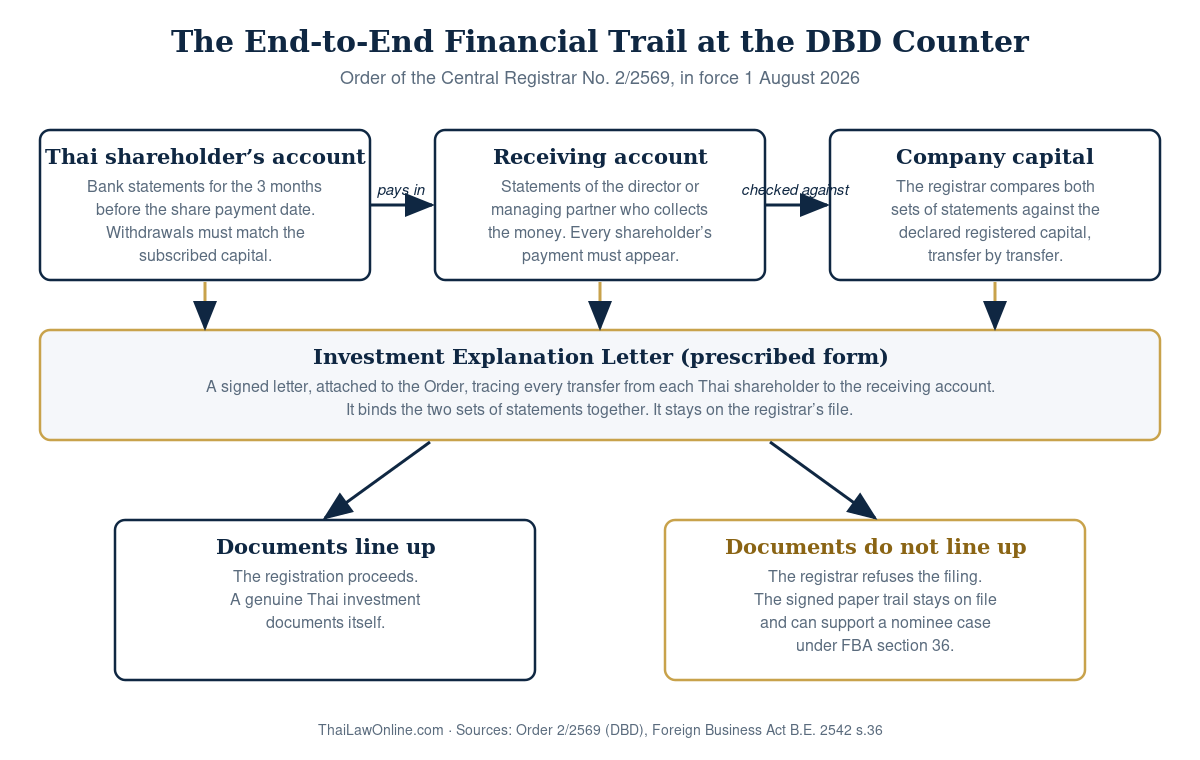
คำสั่งที่ 2/2569 ไม่ได้เพิ่มเติมจากระบบเดือนเมษายน แต่แทนที่ระบบนั้น คำสั่งที่ 2/2569 มีผลใช้บังคับเมื่อวันที่ 1 สิงหาคม ค.ศ. 2026 และลงนามเมื่อ 15 กรกฎาคม 2569 โดยพูนพงษ์ นัยนาภากรณ์ อธิบดีกรมพัฒนาธุรกิจการค้าและนายทะเบียนกลาง เราได้อ่านคำสั่งที่ลงนามแล้ว ซึ่ง DBD เผยแพร่เป็น ไฟล์ PDF ที่ถูกสแกน; วันที่ปรากฏอยู่เหนือลายมือชื่อบนหน้า 2 บทสรุปภาษาอังกฤษที่เผยแพร่ตั้งแต่เดือนกรกฎาคมระบุวันที่ 14 กรกฎาคม ซึ่งคลาดเคลื่อนไปหนึ่งวัน ข้อ 1 ของคำสั่งยกเลิกตราสารสองฉบับ คือคำสั่งที่ 2/2568 ซึ่งเป็นกฎเกณฑ์เรื่องรายการเดินบัญชีธนาคารเดือนมกราคม และคำสั่งที่ 1/2569 ลงวันที่ 16 มีนาคม 2026 และแทนที่ด้วยกฎเกณฑ์ที่เข้มงวดกว่าเดิม ขณะนี้นายทะเบียนติดตามเงินตั้งแต่บัญชีธนาคารของผู้ถือหุ้นชาวไทยไปจนถึงบริษัท.
คำสั่งนี้ครอบคลุมการยื่นคำขอสามประเภท ได้แก่ การจดทะเบียนจัดตั้งห้างหุ้นส่วนหรือบริษัทจำกัดที่คนต่างด้าวถือทุนน้อยกว่า 50% ของทุนจดทะเบียน การจดทะเบียนจัดตั้งบริษัทจำกัดที่ไม่มีผู้ถือหุ้นต่างด้าวเลยแต่มีคนต่างด้าวเป็นกรรมการผู้มีอำนาจ และการแก้ไขเพิ่มเติมสองประเภท (ข้อ 4): ห้างหุ้นส่วนที่หุ้นส่วนต่างด้าวมีทุนลดลงเหลือน้อยกว่า 50% โดยไม่มีหุ้นส่วนผู้จัดการที่เป็นคนต่างด้าว และบริษัทจำกัดที่กรรมการผู้มีอำนาจลงนามทั้งหมดเป็นคนไทยแล้วจดทะเบียนกรรมการผู้มีอำนาจลงนามที่เป็นคนต่างด้าว การแก้ไขเพิ่มเติมจะเข้าข่ายผ่านคณะกรรมการของบริษัท ไม่ใช่ผ่านทะเบียนผู้ถือหุ้น.
สิ่งที่คำสั่งที่ 2/2569 กำหนด
- รายการเดินบัญชีของผู้ถือหุ้นชาวไทย. ผู้ถือหุ้นหรือหุ้นส่วนชาวไทยแต่ละรายต้องส่งรายการเดินบัญชีธนาคารย้อนหลังสามเดือนก่อนวันชำระค่าหุ้น ซึ่งแสดงรายการถอนเงินหรือโอนเงินที่นำมาใช้ชำระค่าหุ้น โดยยังคงใช้หลักเกณฑ์เดียวกับกฎของเดือนมกราคม.
- ใบแจ้งยอดบัญชีผู้รับเงิน (ใหม่). บัญชีของกรรมการหรือหุ้นส่วนผู้จัดการที่รับเงินค่าหุ้นต้องแสดงการชำระเงินที่เข้ามาจากผู้ถือหุ้นทุกคน ในกรณีที่บัญชีเดียวกันนั้นเป็นบัญชีที่ใช้ชำระค่าหุ้นของบุคคลนั้นเองด้วย ต้องยื่นรายการเดินบัญชีย้อนหลังสามเดือนก่อนวันที่ได้รับเงินค่าหุ้นด้วย (ข้อ 3(2)).
- จดหมายชี้แจงการลงทุน (ฉบับใหม่). แบบฟอร์มที่กำหนดซึ่งแนบท้ายคำสั่ง โดยจะแสดงเส้นทางการไหลของเงินจากผู้ถือหุ้นชาวไทยแต่ละรายไปยังบัญชีผู้รับ แบบการโอนต่อการโอน และจะถูกเก็บไว้ในแฟ้มของนายทะเบียน.
กรรมการชาวต่างชาติที่ไม่มีหุ้นจะถูกตรวจสอบแล้ว
อ่านขอบเขตอีกครั้ง บริษัทที่ไม่มีผู้ถือหุ้นชาวต่างชาติเลยและมีกรรมการผู้มีอำนาจลงนามเป็นชาวต่างชาติหนึ่งคน ตอนนี้ต้องผ่านชุดเอกสารฉบับเต็มในการจดทะเบียนจัดตั้ง บริษัทที่ปรึกษาขายโครงสร้างแบบนั้นเป๊ะว่าเป็นคำตอบที่ “สะอาด” หลังจากกฎเดือนมกราคม: ไม่ต้องให้ชาวต่างชาติอยู่ในทะเบียนผู้ถือหุ้น แต่ให้ถือปากกาในฐานะกรรมการ DBD สังเกตเห็นแล้ว หากคุณเซ็นชื่อให้บริษัทของภรรยาชาวไทยของคุณ รายการเดินบัญชีย้อนหลังสามเดือนของเธอ, บัญชีที่รับเงินทุนของเธอ, และจดหมายชี้แจง ทั้งหมดจะไปอยู่บนโต๊ะของนายทะเบียนก่อนที่บริษัทจะถือกำเนิดขึ้น.
ยังมีคำสั่งอีกฉบับหนึ่งในปี 2026 ที่อยู่คู่กับคำสั่งนี้ และแทบไม่มีใครที่เขียนเป็นภาษาอังกฤษกล่าวถึงเลย. คำสั่งที่ 1/2569 ใช้บังคับในกรณีที่บริษัทมีแต่กรรมการผู้มีอำนาจลงนามที่เป็นคนไทย แล้วจดทะเบียนกรรมการผู้มีอำนาจลงนามที่เป็นคนต่างด้าว คำสั่งดังกล่าวถูกยกเลิกเมื่อวันที่ 1 สิงหาคม 2026 โดยคำสั่งที่ 2/2569 ซึ่งข้อ 4 มีหลักเกณฑ์เดียวกัน คือ ผู้ยื่นคำขอจดทะเบียนดังกล่าวต้องยื่น จดหมายยืนยันการลงทุน บนแบบที่แนบท้ายคำสั่ง ยืนยันว่าผู้ถือหุ้นชาวไทยทุกคนชำระค่าหุ้นด้วยเงินของตนเองและไม่ใช่นอมินี โปรดทราบว่าเอกสารนี้เป็นคนละฉบับกับหนังสือชี้แจงการลงทุนตามคำสั่ง 2/2569 และขณะนี้มีการสับสนระหว่างเอกสารทั้งสองทางออนไลน์แล้ว.
มีกับดักเรื่องจังหวะเวลาซ่อนอยู่ ซึ่งจับการปรับโครงสร้างตามปกติได้ หากแต่งตั้งกรรมการผู้มีอำนาจลงนามที่เป็นคนต่างด้าวตั้งแต่จดทะเบียนจัดตั้ง ข้อ 4 จะไม่ใช้บังคับในขณะนั้น แม้ว่าชุดเอกสารการจดทะเบียนจัดตั้งตามข้อ 2 และข้อ 3 จะใช้บังคับก็ตาม แต่หากต่อมากรรมการผู้นั้นลาออกและคณะกรรมการเหลือเพียงกรรมการผู้มีอำนาจลงนามที่เป็นคนไทย หนังสือยืนยันดังกล่าวจะต้องยื่นอีกครั้งในครั้งถัดไปที่มีการแต่งตั้งกรรมการผู้มีอำนาจลงนามที่เป็นคนต่างด้าว วางแผนลำดับการเปลี่ยนแปลงคณะกรรมการก่อนดำเนินการ ไม่ใช่ภายหลัง คำสั่งทั้งสองฉบับไม่มีบทลงโทษในตัวเอง ผลที่ตามมาคือการยื่นคำขอจะไม่ได้รับการดำเนินการ และกรรมการที่ลงนามในคำยืนยันอันเป็นเท็จจะมีความเสี่ยงต่อความผิดตามมาตรา 137 และ 267 แห่งประมวลกฎหมายอาญา ซึ่งระบุไว้ในตารางโทษด้านล่าง.
กฎบัญชีผู้รับปิดช่องโหว่เงินหมุนเวียนซ้ำ
ก่อนวันที่ 1 สิงหาคม นายทะเบียนตรวจสอบเฉพาะรายการเดินบัญชีของผู้ถือหุ้นชาวไทยเท่านั้น ซึ่งเปิดช่องให้มีการตกแต่งบัญชี: ชาวต่างชาติให้กู้ยืมเงิน ชาวไทยนำฝากเงิน รายการเดินบัญชีจึงดูเรียบร้อย ตอนนี้เงินจำนวนเดียวกันต้องปรากฏสามครั้งและบอกเรื่องราวเดียวกันในแต่ละครั้ง เงินออกจากบัญชีของผู้ถือหุ้น เข้าสู่บัญชีผู้รับ และมีจดหมายลงนามอธิบายเส้นทางการเดินทางแบบบรรทัดต่อบรรทัด สื่อไทยรายงานว่านายทะเบียนปฏิเสธคำขอจดทะเบียนที่เอกสารไม่ตรงกับทุนที่แจ้งไว้ ความเสี่ยงที่ลึกซึ้งกว่านั้นซ่อนอยู่เบื้องล่าง: ชุดเอกสารที่บริษัทลงนามกลายเป็นหลักฐาน หากการจัดโครงสร้างดังกล่าวเกิดปัญหาขึ้นภายหลัง พนักงานอัยการจะเปิดคดีตามพระราชบัญญัติการประกอบธุรกิจของคนต่างด้าว มาตรา 36 พร้อมด้วยหลักฐานเป็นลายลักษณ์อักษรที่เทียบเท่าคำสารภาพซึ่งบริษัทเป็นผู้เขียนขึ้นเอง.
หากคุณลงทะเบียนภายใต้กฎเดือนมกราคม
การลงทะเบียนที่ดำเนินการตามคำสั่งที่ 2/2568 ยังคงมีผลบังคับใช้ ไม่มีอะไรในคำสั่งใหม่ที่เปิดให้ยื่นฟ้องใหม่ได้ แต่ช่องโหว่ตามการแก้ไขในเดือนเมษายนนี้มีช่องโหว่ในเดือนสิงหาคมด้วย นั่นคือการยื่นฟ้องหลังวันที่ 1 สิงหาคม 2026 ที่ลงทะเบียนกรรมการลงนามต่างชาติในบริษัทที่มีกรรมการลงนามทั้งหมดเป็นชาวไทย (หรือการจัดตั้งบริษัทร่วมทุนภายใต้ทุนต่างชาติไม่เกิน 50%) ต้องมีหนังสือรับรองการลงทุนตามมาตรา 4 ของคำสั่งที่ 2/2569 และหากยื่นภายในหนึ่งปีนับจากวันก่อตั้งบริษัท ก็ต้องมีคำแถลงตามมาตรา 5 ด้วยเช่นกัน แผนการโอนหุ้นและการเปลี่ยนแปลงกรรมการจึงต้องดำเนินการตามนั้น และโปรดอ่านคู่มือของเรา การจัดตั้งบริษัทในประเทศไทยสำหรับชาวต่างชาติ และ ค่าใช้จ่ายในการจดทะเบียนบริษัท ก่อนที่คุณจะยื่นเอกสารใดๆ.
อีกเรื่องที่ไม่มีใครบอกคุณ: เคาน์เตอร์จดทะเบียนตอนนี้คือโต๊ะทำงานแห่งที่สามที่มีการตรวจสอบเงินจำนวนเดียวกัน สำนักงานที่ดินถามว่าเงินสำหรับซื้ออสังหาริมทรัพย์มาจากไหนตามหนังสือเวียนเดือนพฤษภาคม 2026 กรมสรรพากรสามารถถือว่าการโอนเงินเดียวกันนั้นเป็นเงินได้พึงประเมินเมื่อเข้ามาในประเทศไทย และกรมพัฒนาธุรกิจการค้าก็แกะรอยเงินนั้นเข้าไปในทุนของบริษัท การโอนเงินหนึ่งครั้ง สามแฟ้ม และหน่วยงานทั้งสามแห่งแลกเปลี่ยนข้อมูลการตรวจสอบกันภายใต้บันทึกความเข้าใจ (MOU) 21 หน่วยงานที่อธิบายไว้ด้านล่าง หากโครงสร้างของคุณขึ้นอยู่กับการที่โต๊ะทำงานทั้งสามแห่งไม่เคยเทียบข้อมูลกัน แสดงว่าโครงสร้างนั้นกำลังพึ่งพาสิ่งเลิกเป็นจริงไปแล้วในปี 2026 หน้าเว็บไซต์ของเราเกี่ยวกับ ผู้ถือหุ้นนอมินีชาวไทย และ พระราชบัญญัติการประกอบธุรกิจของคนต่างด้าว ครอบคลุมถึงกฎหมายที่เป็นพื้นฐาน.
16 จังหวัดเสี่ยงที่ DBD ตรวจสอบตั้งแต่วันที่ 1 สิงหาคม 2026
การตรวจสอบเส้นทางการเงินที่เริ่มดำเนินการตั้งแต่วันที่ 1 สิงหาคม 2026 ยังไม่ถูกนำไปใช้ในทุกพื้นที่ทั่วประเทศอย่างเท่าเทียมกัน กรมพัฒนาธุรกิจการค้าได้ระบุ 16 จังหวัดเสี่ยง ซึ่งเป็นที่ที่หน่วยงานกำลังตรวจสอบว่าการลงทุนที่ประกาศไว้สอดคล้องกับเงินที่ได้เคลื่อนย้ายไปจริงหรือไม่ ซึ่งได้รับการประกาศโดย พูนพงษ์ นัยนาภากรณ์ อธิบดีกรมพัฒนาธุรกิจการค้า, และรายงานเมื่อวันที่ 16 กรกฎาคม 2026.
10 จังหวัดเป้าหมาย: ชลบุรี สุราษฎร์ธานี ภูเก็ต กระบี่ พังงา ประจวบคีรีขันธ์ เชียงใหม่ เชียงราย แม่ฮ่องสอน และระยอง ในจังหวัดเหล่านี้รวมกัน DBD นับได้ 18,720 แห่งที่มีความเสี่ยงสูงมาก และ 14,118 แห่งที่มีความเสี่ยงสูง บริษัท.
6 จังหวัดในกรุงเทพมหานครและปริมณฑล: กรุงเทพมหานคร สมุทรปราการ สมุทรสาคร นครปฐม นนทบุรี และปทุมธานี โดยรวมแล้ว, 7,579 แห่งที่มีความเสี่ยงสูงมาก และ 1,752 แห่งที่มีความเสี่ยงสูง บริษัท.
นั่นก็คือประมาณ 42,000 บริษัท ได้ถูกจัดเข้าระดับความเสี่ยงแล้วใน 16 จังหวัด โดยประมาณ 26,300 แห่งอยู่ในกลุ่มความเสี่ยงที่สูงกว่า.
อย่ามองว่านี่เป็นปัญหาเฉพาะจังหวัดท่องเที่ยว. สื่อส่วนใหญ่ระบุเฉพาะจังหวัดตากอากาศ และบริษัทที่จดทะเบียนในกรุงเทพฯ สมุทรปราการ หรือนนทบุรี อาจสรุปได้โดยง่ายว่าตนไม่อยู่ในขอบเขต ซึ่งไม่ใช่เช่นนั้น กรุงเทพฯ และจังหวัดใกล้เคียงอีก 5 จังหวัดอยู่ในรายชื่อ และมีบริษัทที่มีความเสี่ยงสูงมากรวม 7,579 แห่งในกลุ่มนี้เพียงกลุ่มเดียว หากบริษัทของคุณจดทะเบียนอยู่ในจังหวัดใดจังหวัดหนึ่งใน 16 จังหวัดนี้และมีการถือหุ้นโดยต่างชาติไม่ว่าเท่าใด เส้นทางการเงินที่อยู่เบื้องหลังทุนชำระแล้วของคุณเป็นสิ่งที่นายทะเบียนสามารถสอบถามได้แล้วในขณะนี้.
แหล่งที่มา: กรมพัฒนาธุรกิจการค้า รายงานโดย The Nation เมื่อวันที่ 16 กรกฎาคม 2026 ตรวจสอบสถานะเมื่อวันที่ 22 สิงหาคม 2026.
การบุกตรวจที่พัทยาและปฏิบัติการ “Nominee Busters” ทั่วประเทศ
หน่วยงาน DBD ไม่ได้แค่กระชับเอกสารเท่านั้น แต่ยังลงมือปฏิบัติงานจริงด้วย และผลลัพธ์ที่ได้นั้นน่าทึ่งมาก.
ปฏิบัติการพัทยาเดือนมีนาคม 2026
ระหว่างวันที่ 18-20 มีนาคม 2569 กรมพัฒนาธุรกิจการค้า (DBD) ได้นำทีมปฏิบัติการร่วมในพัทยาเป็นเวลาสามวัน โดยมุ่งเป้าไปที่ธุรกิจท่องเที่ยวและอสังหาริมทรัพย์ เจ้าหน้าที่สืบสวนพบสิ่งที่พวกเราสงสัยมานานแล้ว นั่นคือ บริษัทหลายสิบแห่งจดทะเบียนที่อยู่เดียวกัน และผู้ถือหุ้นชาวไทยรายบุคคลถือหุ้นในบริษัทมากกว่า 100 แห่ง โดยผู้ถือหุ้นรายหนึ่งมีเงินลงทุนรวมกันมากกว่า 300 ล้านบาท.
บริษัทนำเที่ยว 4 แห่งถูกเพิกถอนใบอนุญาตทันที ได้แก่ Aletia Tours, Yor Indo-Thai Group, Y J H และ Di V-Ext ทั้งสี่บริษัทถูกสั่งให้ปิดกิจการ DBD ได้ตั้งข้อสังเกตนิติบุคคลต่างชาติ 146 แห่งในจังหวัดชลบุรีเพื่อสอบสวนเพิ่มเติม สำหรับข้อมูลเบื้องหลังเกี่ยวกับประวัติการบังคับใช้กฎหมาย โปรดดูรายงานของเราเกี่ยวกับ การปราบปรามนอมินีเข้าชิงตำแหน่งและการดำเนินคดีในศาลเมื่อเร็ว ๆ นี้.
“Nominee Busters” ขยายไปทั่วประเทศ
ภายในเดือนพฤษภาคม 2569 DBD ได้เปิดตัวปฏิบัติการขยายขอบเขตภายใต้ชื่อ “Nominee Busters” ซึ่งไม่ได้จำกัดเฉพาะพัทยาเท่านั้น การตรวจสอบอย่างครอบคลุมได้ขยายไปยังภูเก็ต เกาะสมุย เกาะพะงัน กระบี่ พังงา หัวหิน และปาย ทุกแหล่งท่องเที่ยวสำคัญอยู่ภายใต้การตรวจสอบอย่างเข้มงวด.
ปฏิบัติการนี้มุ่งเป้าไปที่ธุรกิจต่างชาติแบบ “บูรณาการอย่างสมบูรณ์” ลองนึกภาพชาวต่างชาติที่ควบคุมบริษัททัวร์ บริษัทขนส่ง ร้านอาหาร และร้านขายของที่ระลึกผ่านเครือข่ายบริษัทนอมินี DBD กำลังทำแผนผังเครือข่ายเหล่านี้โดยใช้การวิเคราะห์ข้อมูล การตรวจสอบบันทึกผู้ถือหุ้น การยื่นภาษี และบัญชีธนาคารเทียบกันเผยให้เห็นรูปแบบที่มองไม่เห็นมาก่อน.
เกาะพะงัน: จับกุม 22 ราย ยึดที่ดิน 200 ล้านบาท (พฤษภาคม 2569)
เมื่อวันที่ 23 พฤษภาคม 2569 ตำรวจกว่า 300 นายบุกเข้าเกาะพะงันก่อนรุ่งสาง นับเป็นการปราบปรามนอมินีครั้งใหญ่ที่สุดเท่าที่เคยเกิดขึ้นบนเกาะ พวกเขาจับกุมชาวต่างชาติ 22 คน และยึดที่ดินกว่า 40 ไร่ มูลค่ากว่า 200 ล้านบาท.
ปฏิบัติการนี้มุ่งเป้าไปที่ทนายความ นักบัญชี และบริษัทอสังหาริมทรัพย์ที่ถูกกล่าวหาว่าปกปิดความเป็นเจ้าของของชาวต่างชาติ หนึ่งในเป้าหมายสำคัญคือ FB Properties Co Ltd (หรือที่รู้จักกันในชื่อ Yoga House) เจ้าหน้าที่พบว่าพลเมืองชาวอิสราเอลเป็นเจ้าของที่แท้จริง โดยมีคนไทยถูกระบุชื่อเป็นนอมินีเพื่อปกปิดการควบคุมของเขา บริษัทดังกล่าวควบคุมที่ดิน 8 แปลง ครอบคลุมพื้นที่ 7.5 ไร่ มูลค่ากว่า 60 ล้านบาท.
เจ้าหน้าที่สืบสวนพบสำนักงานบัญชีแห่งหนึ่งบนเกาะ ซึ่งมีบุคคลเพียงคนเดียวจดทะเบียนเป็นผู้ถือหุ้นในบริษัทถึง 66 แห่ง และใช้ที่อยู่เดียวกันจดทะเบียนนิติบุคคล 89 แห่ง โดยส่วนใหญ่ไม่มีการดำเนินงานจริง ตำรวจยึดคอมพิวเตอร์ เอกสาร และเอกสารสิทธิที่ดิน.
The numbers on Koh Phangan are staggering. Out of 4,761 registered companies, 3,213 (67%) are foreign-run. Israeli investors form the largest group, followed by French and British nationals. Police say they’ve filed 29 cases since 2024. Courts have already ruled in two, involving 62 suspects: 32 Thais and 30 foreigners.
เกาะพะงันอีกครั้ง: มีบริษัท 112 แห่ง และที่ดิน 124 แปลงอยู่ระหว่างการตรวจสอบ (ระหว่างเดือนสิงหาคมถึงกันยายน 2026)
การบุกตรวจค้นในเดือนพฤษภาคมเป็นส่วนที่มองเห็นได้ การจับคู่ข้อมูลที่ตามมาคือส่วนที่เข้าถึงที่ดินที่บริษัทถือไว้อย่างเงียบๆ เมื่อวันที่ 25 สิงหาคม 2026 กระทรวงมหาดไทยได้รายงานผลการตรวจสอบเกาะพะงัน และ โฆษกรัฐบาลได้ย้ำผลดังกล่าวอีกครั้งเมื่อวันที่ 10 กันยายน 2026: นิติบุคคล 112 รายบนเกาะถูกตั้งข้อสังเกต เนื่องจากมีสัดส่วนการถือหุ้นต่างชาติเกินเกณฑ์ที่กฎหมายกำหนด โดยรวมกันถือที่ดิน 124 แปลง พื้นที่ประมาณ 86 ไร่ 3 งาน 42.4 ตารางวา จากจำนวน 112 รายนั้น 104 รายเพิ่งตรวจพบใหม่ และ 8 รายมีคำพิพากษาของศาลแล้ว ผู้ว่าราชการจังหวัดสุราษฎร์ธานีได้สั่งให้นิติบุคคล 8 รายจำหน่ายที่ดิน 9 แปลงไปแล้ว และผู้สืบสวนได้รับมอบหมายให้ติดตามโครงสร้างผู้ถือหุ้น เส้นทางการเงิน การถือครองที่ดิน และบุคคลที่เกี่ยวข้อง.
แถลงการณ์เดียวกันระบุว่า จำนวนการจดทะเบียนบริษัทในหมวดความเสี่ยงนอมินีของ DBD ลดลงจาก 894 รายในเดือนสิงหาคม 2025 เหลือ 163 รายในเดือนสิงหาคม 2026 ลดลงร้อยละ 81.77 อ่านตัวเลขนี้ให้ดี: ตัวเลขนี้นับการจดทะเบียนใหม่ที่เข้าเกณฑ์สัญญาณความเสี่ยง ไม่ใช่การถือครองแบบนอมินีที่มีอยู่เดิม ซึ่งตัวเลขของเกาะพะงันแสดงให้เห็นว่ายังคงถูกตรวจพบทีละแปลง คำสั่งให้จำหน่ายที่ดินเป็นมาตรการเยียวยาตามประมวลกฎหมายที่ดินสำหรับที่ดินที่คนต่างด้าวถือผ่านตัวแทนอำพรางชาวไทย: ที่ดินต้องถูกจำหน่ายภายในระยะเวลาที่กำหนดตามประมวลกฎหมายที่ดิน ระหว่าง 180 วันถึงหนึ่งปี หากไม่จำหน่าย อธิบดีกรมที่ดินจะเป็นผู้จำหน่ายที่ดินนั้น ของเรา ผู้ถือหุ้นนอมินีชาวไทย อธิบายกลไกดังกล่าว และ การจับคู่ข้อมูลทั่วประเทศที่ประกาศเมื่อวันที่ 4 กันยายน 2026 ซึ่งป้อนข้อมูลให้กลไกนั้น.
หากบริษัทของคุณถือที่ดินบนเกาะพะงันหรือเกาะสมุย อย่าเริ่มต้นด้วยการสับเปลี่ยนผู้ถือหุ้น การโอนอย่างเร่งรีบอาจเพิ่มหลักฐานการปกปิดโดยไม่ได้แก้ไขการจัดการเดิม ให้ตรวจสอบผู้ถือหุ้นในอดีตและปัจจุบันและการชำระค่าหุ้นของแต่ละคน แหล่งที่มาของเงินที่ใช้ซื้อทรัพย์สินและเงินกู้ยืมจากผู้ถือหุ้น การจัดการเรื่องการออกเสียงและการลงนาม บัญชีและแบบแสดงรายการภาษีที่แสดงว่ามีการประกอบธุรกิจจริง และหนังสือทุกฉบับที่ได้รับจาก DBD หรือสำนักงานที่ดิน ก่อนที่จะจดทะเบียนการโอนหุ้น การเปลี่ยนแปลงกรรมการ การจำนอง การเช่า สิทธิเก็บกิน หรือการขาย.
21 มิถุนายน 2026: การกวาดล้างอันดามัน (จับกุม 48 ราย ยึดทรัพย์ 1 พันล้านบาท)
ปฏิบัติการครั้งล่าสุดและใหญ่ที่สุดเกิดขึ้นเมื่อวันที่ 21 มิถุนายน 2569 เจ้าหน้าที่กว่า 500 นายบุกเข้าตรวจค้นภูเก็ต พังงา และกระบี่พร้อมกัน พวกเขาดำเนินการตามหมายจับ 55 ฉบับ และจับกุมผู้ต้องสงสัย 48 ราย ประกอบด้วยคนไทย 27 ราย และชาวต่างชาติ 21 ราย.
ชาวต่างชาติเหล่านั้นประกอบด้วยชาวอิสราเอล 5 คน ชาวฝรั่งเศส 2 คน ชาวเนเธอร์แลนด์ 1 คน และชาวรัสเซีย 1 คน ตำรวจระบุเครือข่ายสองเครือข่ายที่ควบคุมที่ดิน 56 แปลง ครอบคลุมพื้นที่ 15 ไร่ มูลค่า 231 ล้านบาท ในทั้งสามจังหวัดฝั่งอันดามัน เจ้าหน้าที่ได้ยึดหรือดำเนินคดีตามกฎหมายกับที่ดิน 46 ไร่ มูลค่ากว่า 1.053 พันล้านบาท.
กรมพัฒนาธุรกิจการค้า (DBD) ระบุว่า บริษัทกว่า 600 แห่งในภูเก็ตเพียงจังหวัดเดียว มีความเสี่ยงที่จะใช้การจัดการแบบนอมินี นี่เป็นเพียงแค่จังหวัดเดียวเท่านั้น การปราบปรามครั้งนี้กำลังครอบคลุมทุกพื้นที่ในภาคใต้ของประเทศไทยแล้ว.
อัปเดตเดือนมิถุนายน 2026: ประเทศไทยได้ยึดหรืออายัดทรัพย์สินมูลค่ากว่า 24 พันล้านบาททั่วประเทศ และจับกุมผู้ต้องสงสัยกว่า 29,000 รายในปฏิบัติการด้านการหลอกลวงและนอมินี การดำเนินการครั้งนี้มีขนาดใหญ่กว่าที่เราเคยเห็นมาตั้งแต่เริ่มปฏิบัติงานด้านกฎหมายไทยในปี 2549.
บันทึกความเข้าใจระหว่าง 21 หน่วยงาน
เมื่อวันที่ 29 เมษายน 2569 หน่วยงานรัฐ 21 แห่งได้ลงนามในบันทึกความเข้าใจ ณ ทำเนียบรัฐบาล บันทึกความเข้าใจดังกล่าวผูกพันให้หน่วยงานเหล่านี้แบ่งปันข้อมูลและประสานงานการบังคับใช้กฎหมาย หน่วยงานที่ลงนามได้แก่ กรมสรรพากร สำนักงานป้องกันและปราบปรามการฟอกเงิน (AMLO) กรมสอบสวนคดีพิเศษ (DSI) และกระทรวงการท่องเที่ยว.
นี่เป็นสิ่งที่ไม่เคยเกิดขึ้นมาก่อนในประสบการณ์ของเรา การปราบปรามครั้งก่อนๆ อาศัยเพียงหน่วยงาน DBD ทำงานเพียงลำพัง แต่ตอนนี้พวกเขาสามารถเข้าถึงบันทึกภาษี ข้อมูลทางการเงิน ฐานข้อมูลสวัสดิการ และข้อมูลการเข้าเมืองได้แล้ว เครือข่ายการปราบปรามจึงแน่นแฟ้นกว่าที่เราเคยเห็นมามาก.
สิ่งที่เราพบเห็นในการปฏิบัติงานของเรา
ฉันอยากจะเล่าเรื่องที่เกิดขึ้นเมื่อประมาณสามสัปดาห์ก่อน ลูกค้าคนหนึ่งโทรมาหาเราด้วยความตื่นตระหนก เขาถูกจับกุมในข้อหาที่เกี่ยวข้องกับบริษัทที่เขาปิดไปเมื่อสามปีก่อน บริษัทนั้นถูกยุบเลิก ปิดกิจการ เรียบร้อยแล้ว หรืออย่างน้อยเขาก็คิดอย่างนั้น.
นี่คือสิ่งที่เกิดขึ้น พนักงานสอบสวนได้ไปที่บริษัทบัญชีในเกาะสมุยซึ่งเคยดูแลบัญชีของบริษัทของเขา พวกเขาได้เอกสารเก่ามาตรวจสอบ โครงสร้างผู้ถือหุ้น กระแสเงินสด และการแต่งตั้งกรรมการ พวกเขาพบสิ่งที่กำลังมองหา นั่นคือหลักฐานการถือหุ้นในนามบุคคลอื่นเมื่อหลายปีก่อน การที่บริษัทถูกยุบเลิกไปแล้วไม่ได้ลบล้างความผิดทางอาญา อายุความเริ่มนับจากวันที่กระทำความผิด ไม่ใช่จากวันที่บริษัทปิดตัวลง.
นี่ไม่ใช่กรณีเดียว ทุกสัปดาห์ เราได้รับโทรศัพท์จากลูกค้าที่คิดว่าพวกเขาปลอดภัยเพราะบริษัทของพวกเขาไม่ได้ดำเนินงานแล้ว ถูกเลิก หรือถูกโอนไปแล้ว พวกเขาคิดผิด รัฐบาลกำลังตรวจสอบข้อมูลย้อนหลัง หากคุณเคยใช้นอมินีในช่วงเวลาใด คุณอาจมีความเสี่ยงไม่ว่าบริษัทนั้นจะยังคงอยู่หรือไม่ก็ตาม.
จากประสบการณ์การทำงานของเรา: ในช่วงครึ่งแรกของปี 2026 เราได้รับคำถามเกี่ยวกับนอมินีมากกว่าช่วงห้าปีที่ผ่านมาทั้งหมดรวมกัน รูปแบบนั้นชัดเจน ลูกค้าโทรมาหลังจากได้รับหมายเรียก การเยี่ยมเยียนโดยไม่แจ้งล่วงหน้าจากเจ้าหน้าที่สอบสวน หรือ (ในกรณีที่แย่ที่สุด) หลังจากถูกจับกุม อย่ารอจนกว่าจะถึงตอนนั้น หากคุณมีข้อสงสัยใด ๆ เกี่ยวกับโครงสร้างของคุณ ให้ขอรับการตรวจสอบทางกฎหมายในตอนนี้.
กรณีของภูเก็ตในปี 2024-2025 ควรจะเป็นสัญญาณเตือนแล้ว บริษัทกฎหมายและบัญชีแห่งหนึ่งได้อำนวยความสะดวกในการจัดการแบบนอมินีให้กับบริษัทประมาณ 60 แห่ง ศาลอาญาตัดสินจำคุกจำเลย 23 คน คนละ 10 ปี แต่เนื่องจากจำเลยให้ความร่วมมือและรับสารภาพ โทษจึงลดลงเหลือ 5 ปี (รอการลงโทษไว้ 2 ปี) และคุมความประพฤติ 1 ปี จำเลยแต่ละคนถูกปรับ 200,000 บาท และบริษัททั้งหมดถูกเลิก.
คดีนั้นพิสูจน์ให้เห็นถึงสิ่งสำคัญอย่างหนึ่ง คือ ผู้อำนวยความสะดวก (ทนายความและนักบัญชี) ก็ตกเป็นเป้าหมายด้วยเช่นกัน ไม่ใช่แค่นักลงทุนต่างชาติและนอมินีชาวไทยอีกต่อไป ผู้ช่วยเหลือทั้งห่วงโซ่ต่างก็เผชิญกับการดำเนินคดี.
บทลงโทษทางอาญาและความหมายที่แท้จริง
บทลงโทษสำหรับการจัดการแบบนอมินีไม่ใช่เรื่องใหม่ แต่การบังคับใช้กฎหมายเป็นเรื่องใหม่ ทั้งนอมินีชาวไทยและตัวการชาวต่างชาติต้องเผชิญกับการดำเนินคดีอาญา นี่คือโครงสร้างบทลงโทษ.
| การกระทำผิด | พื้นฐานทางกฎหมาย | การลงโทษ |
|---|---|---|
| บุคคลสัญชาติไทยที่เป็นผู้ถือหุ้นนอมินี | มาตรา 36 แห่งพระราชบัญญัติการประกอบธุรกิจของคนต่างด้าว | จำคุกสูงสุด 3 ปี และ/หรือ ปรับ 100,000 ถึง 1,000,000 บาท |
| ชาวต่างชาติที่ใช้นอมินี | มาตรา 36 แห่งพระราชบัญญัติการประกอบธุรกิจของคนต่างด้าว | จำคุกสูงสุด 3 ปี และ/หรือ ปรับ 100,000 ถึง 1,000,000 บาท |
| การดำเนินต่อไปหลังจากที่ศาลได้สั่งให้มีการยุติการจัดตั้งหรือการดำเนินธุรกิจ | วรรคสองของมาตราที่เป็นที่มาของคำสั่ง ซึ่งมาตรา 35, 36 และ 37 ต่างมีบทบัญญัตินี้ | ปรับเงินรายวัน 10,000 ถึง 50,000 บาท ตลอดระยะเวลาที่ฝ่าฝืนกฎหมาย |
| การให้ข้อมูลเท็จต่อเจ้าหน้าที่รัฐ | มาตรา 137 ประมวลกฎหมายอาญาไทย | จำคุกไม่เกิน 6 เดือน และ/หรือ ปรับไม่เกิน 10,000 บาท |
| ทำให้เจ้าหน้าที่บันทึกข้อมูลเท็จ | มาตรา 267 ประมวลกฎหมายอาญาไทย | จำคุกสูงสุด 3 ปี และ/หรือ ปรับสูงสุด 60,000 บาท |
| คนต่างด้าวที่ประกอบธุรกิจที่ถูกจำกัดโดยไม่มีใบอนุญาตหรือหนังสือรับรอง | มาตรา 37 แห่งพระราชบัญญัติการประกอบธุรกิจของคนต่างด้าว | จำคุกไม่เกิน 3 ปี และ/หรือ ปรับ 100,000 ถึง 1,000,000 บาท และศาลสั่งให้เลิกประกอบธุรกิจ |
| คนต่างด้าวที่ได้รับอนุญาตทำตัวเป็นนอมินีให้คนต่างด้าวที่ไม่ได้รับอนุญาต | มาตรา 35 แห่งพระราชบัญญัติการประกอบธุรกิจของคนต่างด้าว | จำคุกไม่เกิน 3 ปี และ/หรือ ปรับ 100,000 ถึง 1,000,000 บาท และศาลสั่งให้เลิกการเข้าร่วมดังกล่าว |
นอกเหนือจากบทลงโทษตามกฎหมายแล้ว ยังมีความเสี่ยงที่เพิ่มขึ้นในการถูกยึดทรัพย์สิน ปัจจุบัน AMLO (สำนักงานป้องกันและปราบปรามการฟอกเงิน) เข้ามาเกี่ยวข้องกับการสอบสวนคดีนอมินี หากรายได้จากธุรกิจที่มีโครงสร้างนอมินีถูกจัดว่าเกี่ยวข้องกับความผิดมูลฐาน รัฐบาลสามารถอายัดและยึดทรัพย์สินได้ เราเคยเห็นเหตุการณ์แบบนี้เกิดขึ้นแล้ว ไม่ใช่เรื่องสมมติ.
สำหรับชาวต่างชาติ ยังมีความเสี่ยงที่จะถูกเนรเทศด้วย การถูกตัดสินว่ามีความผิดทางอาญาที่เกี่ยวข้องกับการจัดการแบบนอมินีมักส่งผลให้ถูกขึ้นบัญชีดำและถูกส่งตัวออกจากประเทศไทย คุณจะไม่สามารถกลับเข้ามาได้ภายในระยะเวลาที่กำหนด (หรืออาจไม่ได้อีกเลยในกรณีร้ายแรง).
คำพิพากษาศาลฎีกาเกี่ยวกับนอมินี
ศาลไม่เชื่อข้อแก้ตัวแบบเดิมๆ อีกต่อไปแล้ว คำพิพากษาศาลฎีกา 3 คดีได้กำหนดกรอบกฎหมายในปัจจุบัน นักลงทุนต่างชาติทุกคนควรรู้จักคำพิพากษาเหล่านี้.
คำพิพากษาศาลฎีกาที่ 17923/2557: คดีที่ดินเกาะสมุย
นี่คือคดีที่ผู้คนมักยกมาอ้าง และควรกล่าวถึงให้แม่นยำ เพราะคดีนี้เป็นข้อพิพาททาง แพ่ง และไม่ใช่การดำเนินคดีอาญา ผู้ซื้อชาวต่างชาติสองรายทำสัญญากับเจ้าของที่ดินชาวไทยเกี่ยวกับที่ดินสองแปลงที่แม่น้ำ เกาะสมุย เอกสารนั้นใช้ชื่อว่าสัญญาเช่า ศาลพิจารณาจากสิ่งที่สัญญานั้นทำจริง.
สาระสำคัญของสัญญาคือการโอนกรรมสิทธิ์ ไม่ใช่สิทธิในการครอบครองเป็นระยะเวลาหนึ่ง ดังนั้นจึงเป็นสัญญาซื้อขายตามมาตรา 453 แห่งประมวลกฎหมายแพ่งและพาณิชย์ และไม่ใช่สัญญาเช่าตามมาตรา 537 ผู้ซื้อเป็นชาวต่างชาติ และที่ดินจะถือไว้ในชื่อของนิติบุคคลไทยในขณะที่ผู้ซื้อยังคงเป็นผู้ครอบครองที่แท้จริง ซึ่งทำให้วัตถุประสงค์ของสัญญาอยู่ในขอบเขตของข้อห้ามตาม มาตรา 86 แห่งประมวลกฎหมายที่ดิน, ซึ่งเป็นบทบัญญัติเกี่ยวกับความสงบเรียบร้อยของประชาชน ดังนั้นการซื้อขายดังกล่าวจึงเป็น โมฆะตามมาตรา 150 คำตัดสินของศาลว่าข้อเรียกร้องของผู้ซื้อที่ขอให้โอนที่ดินให้บริษัทของตนนั้นเป็นโมฆะนั้นถูกเพิกถอน ไม่มีใครถูกตัดสินลงโทษใดๆ และคำตัดสินดังกล่าวก็ไม่ได้กล่าวถึงมาตรา 36 ของพระราชบัญญัติการประกอบธุรกิจของคนต่างด้าวเลยแม้แต่น้อย.
The reasoning matters. The court looked past the label to what the parties meant: the buyers paid the whole price, the Thai company was to take title, and nothing showed the buyers received anything from that company in return, so it would have held the land in name only for them. That is the same substance-over-form question the DBD now asks at registration: who paid, and for whom is the holder really holding?
คำพิพากษาศาลฎีกาที่ 5457/2560 (2017): การกู้ยืมเงินแบบจอมปลอมใช้ไม่ได้ผล
Loan paperwork is a common way to dress up a purchase that a foreigner is not allowed to make openly. In this case a Japanese buyer agreed to buy the whole of a Thai company’s business. Because, as his own side put it in an email, a Japanese buyer could not hold 100% of a Thai company, the price of 19.5 million baht was documented as a loan from him to the company, guaranteed by its director. On the register he and his son then held 49% and six Thai nationals the other 51%.
The Supreme Court saw through it. The buyer sued to get the 19.5 million baht back under the loan. The company and the director admitted signing it but argued that it concealed the sale of the business. The court agreed: the real transaction was the purchase of the business, the six Thai shareholders held their shares in name only for the buyer, and the purpose was to evade the Foreign Business Act.
The concealed sale was therefore void under section 150 of the Civil and Commercial Code. And because the buyer had knowingly set out to break the law, the money he had paid was performance of an unlawful obligation that cannot be recovered under section 411. The Court of Appeal had ordered repayment with interest; the Supreme Court reversed it and dismissed the claim. He could not use the Thai courts to get his money back from an arrangement he had built to evade the Act.
คำพิพากษาศาลฎีกาที่ 2252/2560 (2017): ทะเบียนไม่ใช่เกณฑ์ชี้ขาด เงินทุนต่างหากที่เป็นเกณฑ์
นักลงทุนบางคนคิดว่าการมีสัดส่วนการถือหุ้นในทะเบียนผู้ถือหุ้นเพียงเล็กน้อยจะทำให้พวกเขาปลอดภัย นี่เป็นคำตอบ แต่ไม่ใช่ในรูปแบบที่มักจะเล่าต่อกัน โดยบริษัทดังกล่าวเป็นบริษัทที่จดทะเบียนในหมู่เกาะบริติชเวอร์จิน และด้วยเหตุนี้จึงเป็นชาวต่างชาติภายใต้มาตรา 4 แห่งพระราชบัญญัติการประกอบธุรกิจของคนต่างด้าว ซึ่งปรากฏอยู่ในทะเบียนผู้ถือหุ้นของบริษัทไทยเจ้าของ น้อยกว่าครึ่ง ของหุ้นทั้งหมด คำพิพากษาไม่ได้ระบุสัดส่วนร้อยละไว้ และแหล่งข้อมูลใดที่ให้ตัวเลขร้อยละแก่คุณ ไม่ได้อ่านคำพิพากษานั้น.
สิ่งที่หลักฐานแสดงให้เห็นคือว่าเงินทุนจริงในบริษัทของไทยกว่าครึ่งเป็นเงินของชาวต่างชาติ ซึ่งไม่ตรงกับเงินทุนที่จดทะเบียนไว้ โดยอาศัยหลักฐานดังกล่าวศาลจึงพิจารณาว่าบริษัทของไทยและชาวต่างชาติเป็นหนึ่งเดียวที่ดำเนินธุรกิจ ธุรกิจการค้าที่ดิน, ซึ่งอยู่ในบัญชีหนึ่งท้ายพระราชบัญญัติและปิดสำหรับคนต่างด้าว จากนั้นก็มาถึงส่วนที่ควรรู้ เนื่องจากธุรกิจของบริษัทเองไม่ชอบด้วยกฎหมาย ศาลจึงวินิจฉัยว่าบริษัทต่างด้าวนั้น ไม่ใช่ผู้เสียหายโดยนิตินัย และไม่สามารถดำเนินคดีกับกรรมการชาวไทยที่ตนได้กล่าวหาได้ บริษัทไม่ได้แพ้เพราะข้อโต้แย้ง แต่สูญเสียอำนาจฟ้องคดีไปตั้งแต่ต้น.
ข้อสังเกตจากการปฏิบัติงาน: คำพิพากษาทั้งสามนี้แสดงให้เห็นทุกอย่างเกี่ยวกับวิธีที่ศาลไทยพิจารณาคดีนอมินี ศาลพิจารณาจากเนื้อหาสาระ ใครเป็นผู้จ่ายเงินซื้อหุ้น? ใครเป็นผู้ควบคุมบริษัท? ใครเป็นผู้ได้รับผลกำไร? หากคำตอบชี้ไปที่ชาวต่างชาติ โครงสร้างนั้นก็จะล้มเหลว สัดส่วนการถือหุ้นไม่สำคัญ.
กรณีการบังคับใช้กฎหมายล่าสุด: บุคคลจริง ผลที่ตามมาจริง
กรณีศึกษาด้านล่างนี้ไม่ใช่เรื่องสมมติ นี่คือคดีความที่เกิดขึ้นจริง มีจำเลยที่ระบุชื่อ และผลลัพธ์ที่บันทึกไว้.
| กรณี | เกิดอะไรขึ้น | ผลลัพธ์ |
|---|---|---|
| เครือข่ายสำนักงานกฎหมายภูเก็ต (2024-2025) | บริษัทกฎหมายและบัญชีแห่งหนึ่งอำนวยความสะดวกในการจัดหานอมินีให้กับบริษัทประมาณ 60 แห่ง | จำเลย 23 คนถูกตัดสินว่ามีความผิด โทษจำคุก 10 ปีในตอนแรกถูกลดเหลือ 5 ปี (รอลงอาญา) ปรับคนละ 200,000 บาท บริษัททั้งหมดถูกยุบเลิก. |
| China Railway No. 10 (2025) | ชาวไทย 3 คนถูกใช้เป็นตัวแทนให้กับรัฐวิสาหกิจของจีน อดีตแรงงานรับจ้างทั่วไปมีชื่ออยู่ในรายชื่อผู้ถือหุ้นของบริษัทมูลค่าหลายพันล้านบาท. | ออกหมายจับบุคคล 4 คน แฟ้มคดี: เอกสาร 17,620 ฉบับ ใน 46 แฟ้ม ธุรกรรมที่เกี่ยวข้องมูลค่า 2 พันล้านบาท. |
| บริษัทเปลือกนอกของจีน (2025) | บริษัทบัญชีแห่งหนึ่งใช้พนักงานและครอบครัวของพวกเขาเป็นผู้ถือหุ้นในบริษัทนอมินี 15 แห่งสำหรับนักลงทุนชาวจีน. | จับกุมชาวจีน 21 คน และชาวไทย 51 คน กองบัญชาการตำรวจสอบสวนกลาง (CIB) ยึดบัญชีธนาคาร 225 บัญชี และตราประทับบริษัท 1,601 อัน มูลค่าทรัพย์สิน 1.5 พันล้านบาท. |
| บริษัทบัญชีเกาะพะงัน (2025) | บุคคลคนหนึ่งมีรายชื่อเป็นผู้ถือหุ้นใน 66 บริษัท โดยใช้ที่อยู่เดียวกันสำหรับ 89 บริษัท. | เจ้าหน้าที่ยึดคอมพิวเตอร์และเอกสารต่างๆ บริษัทถูกสั่งให้ส่งเอกสารเพิ่มเติม การสอบสวนยังคงดำเนินต่อไป. |
| ปฏิบัติการสายฟ้าแลบในจังหวัดฝั่งอันดามัน (มิถุนายน 2026) | เจ้าหน้าที่กว่า 500 นายบุกเข้าตรวจค้นภูเก็ต พังงา และกระบี่ โดยมีเป้าหมายที่เครือข่ายการถือที่ดินที่ชาวต่างชาติควบคุม. | จับกุม 48 ราย (คนไทย 27 ราย ชาวต่างชาติ 21 ราย) ยึดที่ดิน 46 ไร่ มูลค่า 1.053 พันล้านบาท บริษัทกว่า 600 แห่งในภูเก็ตจังหวัดเดียวถูกตั้งข้อสังเกต. |
ตัวเลข: ขอบเขตของการปราบปราม
ข้อมูลบอกเล่าเรื่องราวได้ดีกว่าการวิเคราะห์ใดๆ นี่คือตัวเลขที่ขับเคลื่อนการปราบปรามบริษัทนอมินีในประเทศไทยปี 2026.
| ตัวชี้วัด | ตัวเลข | แหล่งที่มา / บริบท |
|---|---|---|
| จำนวนบริษัทที่ดำเนินงานทั้งหมดในประเทศไทย | ~782,000 | ฐานข้อมูลการลงทะเบียน DBD, 2026 |
| บริษัทที่มีการลงทุนจากต่างประเทศ (0.01%-49.99%) | ~118,000 | การวิเคราะห์รูปแบบการถือหุ้นโดย DBD |
| บริษัทที่คาดว่ามีการจัดการแบบนอมินี | ~94,000 (80%) | ผู้อำนวยการใหญ่ DBD ประเมิน |
| ความพยายามจดทะเบียนแบบนอมินีลดลง (มกราคม-มีนาคม 2569) | 65% | หลังจากที่ข้อกำหนดเรื่องเอกสารแสดงบัญชีธนาคารมีผลบังคับใช้แล้ว |
| จำนวนบริษัทที่มีความเสี่ยงสูงลดลง (1-23 เมษายน 2569) | 75% (จาก 658 เหลือ 175) | เมื่อเทียบกับช่วงเวลาเดียวกันในปี 2025 |
| บริษัทที่ถูกดำเนินคดีตามกฎหมายเกี่ยวกับนอมินี | 852 | ข้อมูลการบังคับใช้กฎหมายสะสม ณ กลางปี 2026 |
| ความเสียหายทางเศรษฐกิจที่ระบุได้ | 15.1 พันล้านบาท | จากคดีนอมินีที่ถูกดำเนินคดี |
| หน่วยงานภาครัฐภายใต้บันทึกความเข้าใจว่าด้วยการบังคับใช้กฎหมาย | 21 | ลงนามบันทึกความเข้าใจเมื่อวันที่ 29 เมษายน 2569 |
| นิติบุคคลที่ถูกตั้งข้อสังเกตในจังหวัดชลบุรี (พัทยา) เพียงจังหวัดเดียว | 146 | ปฏิบัติการร่วมเดือนมีนาคม 2026 |
| บริษัทที่ถูกตั้งข้อสังเกตในจังหวัดภูเก็ต | 600+ | การวิเคราะห์ DBD เดือนมิถุนายน 2026 |
| การจับกุมในปฏิบัติการกวาดล้างจังหวัดฝั่งอันดามัน (21 มิถุนายน 2569) | 48 คน (ไทย 27 คน ต่างชาติ 21 คน) | ปฏิบัติการรวมภูเก็ต พังงา กระบี่ |
| ที่ดินที่ถูกยึดในจังหวัดฝั่งอันดามัน | 46 ไร่ (1.053 พันล้านบาท) | มูลค่าการบังคับใช้รวม ณ เดือนมิถุนายน 2569 |
| ยอดรวมทรัพย์สินที่ถูกยึด/อายัดทั่วประเทศ | กว่า 24,000 ล้านบาท | การบังคับใช้กฎหมายเกี่ยวกับการหลอกลวงและนอมินีรวมกัน ปี 2026 |
| บริษัทต่างชาติที่ดำเนินงานบนเกาะพะงัน | 3,213 จาก 4,761 (67%) | การวิเคราะห์การลงทะเบียน DBD |
| บริษัทบนเกาะพะงันที่ถูกตั้งข้อสังเกตว่ามีการถือหุ้นต่างชาติเกินเกณฑ์ | 112 ราย (ตรวจพบใหม่ 104 ราย มีคำพิพากษาแล้ว 8 ราย) ถือที่ดิน 124 แปลง (86-3-42.4 ไร่) | กระทรวงมหาดไทย 25 ส.ค. 2026; โฆษกรัฐบาล 10 ก.ย. 2026 |
| คำสั่งให้จำหน่ายที่ดินบนเกาะพะงันที่ออกแล้ว | 8 ราย 9 แปลง | ผู้ว่าราชการจังหวัดสุราษฎร์ธานี รายงานเมื่อวันที่ 25 สิงหาคม 2026 |
| การจดทะเบียนบริษัทที่มีความเสี่ยงนอมินี เดือนสิงหาคม 2025 ถึงเดือนสิงหาคม 2026 | จาก 894 เหลือ 163 (ลดลง 81.77%) | ตัวเลข DBD ที่โฆษกรัฐบาลอ้างถึง เมื่อวันที่ 10 กันยายน 2026 (การจดทะเบียนใหม่ที่ถูกตั้งข้อสังเกต ไม่ใช่การถือครองที่มีอยู่เดิม) |
การลดลง 75% ของบริษัทที่มีความเสี่ยงสูงระหว่างวันที่ 1 ถึง 23 เมษายนนั้นน่าสังเกตเป็นอย่างยิ่ง เหตุการณ์นี้เกิดขึ้นภายในเวลาเพียงสามสัปดาห์ แสดงให้เห็นถึงผลในการยับยั้งของกฎเกณฑ์ใหม่ บริษัทที่เดิมจะยื่นแก้ไขตามปกติกำลังชะลอการดำเนินการเนื่องจากไม่สามารถปฏิบัติตามข้อกำหนดการยืนยันตัวตนได้.
ใครบ้างที่มีความเสี่ยงมากที่สุดในปี 2026
การท่องเที่ยวและการบริการ
บริษัททัวร์ ร้านดำน้ำ ร้านอาหาร และผู้ประกอบการโรงแรมในพื้นที่ท่องเที่ยวเผชิญกับความเสี่ยงสูงสุด ปฏิบัติการในพัทยาและภูเก็ตมุ่งเป้าไปที่ธุรกิจเหล่านี้โดยเฉพาะ ขณะนี้กระทรวงการท่องเที่ยวกำลังตรวจสอบใบอนุญาตประกอบธุรกิจนำเที่ยวเทียบกับการตั้งข้อสังเกตเรื่องนอมินีของ DBD เราพบว่ามีการเพิกถอนใบอนุญาตภายในไม่กี่วันหลังจากมีการตรวจพบ.
บริษัทอสังหาริมทรัพย์และบริษัทถือครองที่ดิน
บริษัทที่จัดตั้งขึ้นเพื่อถือครองที่ดินหรือวิลล่าแทนนักลงทุนต่างชาติกำลังถูกตรวจสอบอย่างเข้มงวด DBD กำลังสอบสวนบริษัทกว่า 21,000 แห่งที่ต้องสงสัยว่าใช้นอมินีเพื่อหลีกเลี่ยงข้อห้ามของประมวลกฎหมายที่ดินเกี่ยวกับการถือกรรมสิทธิ์ที่ดินโดยชาวต่างชาติ โดยภูเก็ต เกาะสมุย และเกาะพะงันเป็นพื้นที่หลักในการบังคับใช้กฎหมาย.
หากบริษัทของคุณเป็นเจ้าของที่ดิน และคุณเป็นผู้ถือหุ้นส่วนน้อยชาวต่างชาติที่จ่ายเงินซื้อที่ดินทั้งหมด คุณคือบุคคลที่ DBD กำลังมองหาอยู่ ศาลมีแนวโน้มที่จะสั่งให้ขายที่ดินและลงโทษจำคุกมากขึ้นเรื่อยๆ.
ธุรกิจกัญชา
ภาคธุรกิจกัญชาได้รับเงินลงทุนจากต่างประเทศจำนวนมหาศาลหลังจากมีการยกเลิกการลงโทษทางกฎหมาย แต่การลงทุนเหล่านั้นจำนวนมากใช้โครงสร้างแบบนอมินี การบุกจับครั้งใหญ่ในจังหวัดกระบีเมื่อต้นปี 2026 ได้เปิดโปงฟาร์มกัญชาแห่งหนึ่ง บริษัทดังกล่าวจดทะเบียนครั้งแรกในชื่อ 100% ไทย ต่อมาชาวต่างชาติได้เข้ามาเป็นกรรมการและผู้ถือหุ้น คดีดังกล่าวส่งผลให้มีการออกหมายจับผู้ประกอบการและทนายความที่อำนวยความสะดวก.
ธุรกิจบริการในภาคส่วนที่ถูกจำกัด
บริษัทที่ปรึกษา บริษัทด้านการตลาด และบริษัทบริการด้านเทคโนโลยีที่ดำเนินงานในภาคส่วนที่ถูกจำกัดภายใต้รายการที่ 3 ของ พระราชบัญญัติการประกอบธุรกิจของคนต่างด้าว บริษัทเหล่านี้ก็มีความเสี่ยงเช่นกัน หลายบริษัทจัดตั้งขึ้นโดยใช้โครงสร้างแบบ 49/51 ทั่วไปโดยไม่ได้รับใบอนุญาตประกอบธุรกิจของคนต่างด้าว หากผู้ถือหุ้นชาวไทยของคุณไม่สามารถแสดงหลักฐานการมีส่วนร่วมทางการเงินที่แท้จริงได้ โครงสร้างดังกล่าวจะไม่สามารถผ่านการตรวจสอบตามระบอบใหม่ได้.
วิธีปฏิบัติตามกฎระเบียบก่อนที่จะสายเกินไป
ขั้นตอนที่ 1: ตรวจสอบโครงสร้างผู้ถือหุ้นของคุณ
เริ่มต้นด้วยการถามคำถามง่ายๆ ผู้ถือหุ้นชาวไทยทุกคนในบริษัทของคุณสามารถพิสูจน์ได้หรือไม่ (ด้วยรายการเดินบัญชีธนาคาร) ว่าพวกเขาใช้เงินของตนเองซื้อหุ้น? ถ้าคำตอบคือไม่ แสดงว่าคุณมีการจัดการแบบนอมินี จบ DBD ไม่สนใจว่าทนายความของคุณบอกอะไรคุณเมื่อสิบปีที่แล้ว พวกเขาสนใจที่เนื้อหาสาระ.
ขั้นตอนที่ 2: ตรวจสอบแผนการแก้ไขของคุณ
หากคุณวางแผนเปลี่ยนแปลงโครงสร้างบริษัท (การแต่งตั้งกรรมการใหม่ การโอนหุ้น การเพิ่มทุน) โปรดตรวจสอบก่อนว่าการเปลี่ยนแปลงดังกล่าวเข้าข่ายข้อ 4 ของคำสั่งที่ 2/2569 หรือไม่ (กรรมการผู้มีอำนาจลงนามที่เป็นคนต่างด้าว หรือห้างหุ้นส่วนที่ทุนต่างด้าวลดลงต่ำกว่า 50%) และเตรียมหนังสือยืนยันการลงทุน การยืนยันตัวตนไม่สามารถมอบหมายให้ผู้อื่นดำเนินการได้ ดังนั้นโปรดตรวจสอบให้แน่ใจว่ากรรมการและผู้ถือหุ้นชาวไทยทุกคนที่ต้องยืนยันตัวตนพร้อมดำเนินการ.
ขั้นตอนที่ 3: ประเมินความเสี่ยงของคุณ
ควรปรึกษาทนายความผู้เชี่ยวชาญเพื่อประเมินความเสี่ยงของคุณ คำถามสำคัญได้แก่: ที่อยู่สำนักงานของคุณใช้ร่วมกับบริษัทอื่นมากกว่าสี่แห่งหรือไม่? ผู้ถือหุ้นชาวไทยของคุณถือหุ้นในบริษัทอื่นหลายแห่งหรือไม่? กรรมการชาวไทยของคุณสามารถชี้แจงที่มาของเงินทุนที่นำมาลงทุนภายใต้คำสาบานได้หรือไม่? หากไม่สามารถตอบคำถามข้อใดข้อหนึ่งได้ ถือเป็นสัญญาณเตือนภัย.
ขั้นตอนที่ 4: พิจารณาการปรับโครงสร้างองค์กร
หากโครงสร้างปัจจุบันของคุณไม่ผ่านการตรวจสอบ ลองพิจารณาทางเลือกทางกฎหมายที่เราจะกล่าวถึงด้านล่าง ค่าใช้จ่ายในการปรับโครงสร้างนั้นสูง แต่ก็เป็นเพียงเศษเสี้ยวของค่าใช้จ่ายในการดำเนินคดี ยึดทรัพย์สิน และเนรเทศ.
ในกรณีที่บริษัทถูกตั้งขึ้นเพื่อให้ชาวต่างชาติสามารถถือ ที่ดิน, ในกรณีนี้ เส้นทางออกมีเฉพาะทางเดียว และมีเพียงไม่กี่ทางเท่านั้น เราได้กำหนดเส้นทางแต่ละเส้นไว้แล้ว โดยมีผลตามกฎหมายที่เกี่ยวข้องและคำวินิจฉัยของศาลฎีกาเป็นข้ออ้าง วิธีปรับโครงสร้างบริษัทอสังหาริมทรัพย์แบบ 51/49 ให้ถูกต้องตามกฎหมาย.
ทางเลือกที่ชอบด้วยกฎหมายแทนโครงสร้างนอมินี
รัฐบาลไม่ได้แค่ปราบปรามเท่านั้น แต่ยังเปิดโอกาสใหม่ๆ ด้วย นักลงทุนต่างชาติที่ปรับโครงสร้างผ่านช่องทางที่ถูกต้องตามกฎหมาย สามารถเข้าถือครองหุ้นส่วนใหญ่หรือทั้งหมดได้ในหลายกรณี.
| เส้นทาง | อนุญาตให้เป็นเจ้าของได้ | ข้อกำหนดสำคัญ | ไทม์ไลน์ |
|---|---|---|---|
| โปรโมชั่น BOI | สูงสุด 100% | กิจการที่ได้รับการส่งเสริม การลงทุนขั้นต่ำ การรายงาน | 2-4 เดือน |
| ใบอนุญาตประกอบธุรกิจของคนต่างด้าว (FBL) | สูงสุด 100% | ทุนจดทะเบียนขั้นต่ำ 3 ล้านบาท ต้องได้รับการอนุมัติจากกระทรวงพาณิชย์ | 4-8 เดือน |
| สนธิสัญญาไมตรีระหว่างสหรัฐอเมริกาและไทย | สูงสุด 100% | สัญชาติอเมริกัน ภาคบริการส่วนใหญ่ | 1-3 เดือน |
| ข้อยกเว้นบัญชีสามตาม FBA (กฎกระทรวงฉบับที่ 5 ปี 2026) | 100% | ธุรกิจอยู่ในกลุ่มที่ได้รับยกเว้นจากกฎหมายแปดกลุ่มหลักๆ หนึ่ง ซึ่งหลายกลุ่มมีผลบังคับใช้เฉพาะระหว่างบริษัทในเครือ | เผยแพร่เมื่อวันที่ 28 สิงหาคม 2026 |
| การร่วมทุนกับหุ้นส่วนชาวไทยอย่างแท้จริง | 49% ต่างประเทศ | หุ้นส่วนชาวไทยแท้ที่มีเงินทุนที่ตรวจสอบได้และมีบทบาทอย่างแข็งขัน | การลงทะเบียนมาตรฐาน |
ข้อยกเว้นบัญชีสามตาม FBA เดือนสิงหาคม 2026
นี่ไม่ใช่ข้อเสนออีกต่อไป พระราชกฤษฎีกาฉบับที่ 5 ปี 2569 ที่ลงนามเมื่อวันที่ 18 สิงหาคม 2026 และเผยแพร่ในราชกิจจานุเบกษาเมื่อวันที่ 28 สิงหาคม 2026 เพิ่มธุรกิจบริการอีกแปดประเภทที่บริษัทต่างชาติสามารถดำเนินกิจการได้โดยไม่ต้องมีใบอนุญาตประกอบธุรกิจของคนต่างด้าว ได้แก่ การให้ยืมเพื่อซื้อหลักทรัพย์ การทำธุรกรรม Reverse Repurchase การให้บริการโทรคมนาคมประเภท 1 ที่ผ่านเกณฑ์ การบริหารจัดการภายในกลุ่มบริษัท การให้บริการด้านทรัพยากรบุคคลและไอที การรับประกันหนี้ภายในกลุ่มบริษัทในประเทศ การให้เช่าพื้นที่สำหรับเครื่องมือการบริการพนักงาน และการขุดเจาะน้ำมันภายในกลุ่มบริษัท คู่มือพระราชบัญญัติการประกอบธุรกิจของคนต่างด้าว ระบุเงื่อนไขของแต่ละข้อ.
ควรอ่านหมวดหมู่อย่างแคบก่อนจะอาศัยข้อยกเว้น รายการใหม่หลายรายการครอบคลุมเฉพาะบริการระหว่างบริษัทในเครือเท่านั้น ดังนั้นธุรกิจที่ให้บริการแก่ลูกค้าภายนอกยังต้องมีใบอนุญาต และบริษัทที่มีโครงสร้างโดยใช้นอมินีชาวไทยอยู่แล้วจะไม่ได้รับการแก้ไขให้ถูกต้องด้วยข้อยกเว้นนี้ เราอธิบายรายละเอียดไว้ใน หน้าการปฏิรูปกฎระเบียบ.
BOI: ยังคงเป็นมาตรฐานระดับทองคำ
สำหรับธุรกิจที่เข้าเกณฑ์ การส่งเสริมการลงทุนจากคณะกรรมการส่งเสริมการลงทุนยังคงเป็นเส้นทางที่ปลอดภัยที่สุดสู่การถือหุ้นโดยต่างชาติในสัดส่วนข้างมากหรือทั้งหมด บริษัทที่ได้รับการส่งเสริมจาก BOI ยังได้รับสิทธิประโยชน์ทางภาษีและการอำนวยความสะดวกเรื่องใบอนุญาตทำงาน และเนื่องจากการถือหุ้นของต่างชาติชอบด้วยกฎหมายในชื่อของตนเอง จึงไม่มีนอมินีชาวไทยให้ใครต้องสอบสวน กระบวนการยื่นขอใช้เวลาสองถึงสี่เดือน ซึ่งเป็นเวลาที่คุ้มค่าเมื่อทางเลือกอื่นคือการติดคุก.
คำถามที่พบบ่อย
อะไรเปลี่ยนแปลงไปบ้างสำหรับบริษัทนอมินีในประเทศไทยในวันที่ 1 เมษายน 2569?
ตั้งแต่วันที่ 1 เมษายน 2026 DBD กำหนดให้มีการตรวจสอบบุคคลจริงสำหรับการแก้ไขข้อมูลบริษัทที่เกี่ยวข้องกับผู้ถือหุ้นชาวต่างชาติ: ผู้ถือหุ้นชาวไทยต้องเดินทางมาที่สำนักงาน DBD ประกาศรายได้รายเดือนและลงนามในแบบที่ระบุถึงความผิดทางอาญา คำสั่งดังกล่าวคือคำสั่งที่ 1/2569 ซึ่งถูกยกเลิกเมื่อวันที่ 1 สิงหาคม 2026 โดยคำสั่งที่ 2/2569 ซึ่งกำหนดให้ต้องมีหนังสือรับรองการลงทุนสำหรับแก้ไขข้อมูลดังกล่าว การตรวจสอบตัวตนยังคงไม่สามารถมอบหมายให้ผู้อื่นดำเนินการได้ ดังนั้นจึงไม่ควรมองการยกเลิกคำสั่งนี้ว่าเป็นการยกเลิกการตรวจสอบ.
การใช้ผู้ถือหุ้นนอมินีชาวไทยในปี 2026 มีบทลงโทษอะไรบ้าง?
บทลงโทษรวมถึงโทษจำคุกสูงสุด 3 ปี และปรับสูงสุด 100,000 ถึง 1,000,000 บาท นอกจากนี้ศาลยังสั่งให้นอมินียุติการช่วยเหลือร่วมกัน หรือการถือหุ้น และปรับสูงสุด 10,000 ถึง 50,000 บาทสำหรับทุกวันที่คำสั่งดังกล่าวไม่ได้รับการปฏิบัติตาม (มาตรา 36 ของพระราชบัญญัติการประกอบธุรกิจของคนต่างด้าว) พระราชบัญญัตินี้ไม่ได้มอบอำนาจให้ศาลยุบบริษัทได้; ที่ดินที่ถือครองภายใต้โครงสร้างดังกล่าวสามารถถูกบังคับขายแยกต่างหากตามประมวลกฎหมายที่ดิน ทั้งผู้เสนอชื่อชาวไทยและผู้หลักทรัพย์ชาวต่างชาติจะต้องถูกดำเนินคดี.
มาตรการปราบปรามนอมินีเป็นตัวแทนรัฐบาลของไทยในปี 2026 ส่งผลกระทบต่อบริษัทที่มีอยู่แล้วหรือไม่?
ใช่ กฎเกณฑ์เดือนเมษายนซึ่งถูกยกเลิกเมื่อวันที่ 1 สิงหาคม 2026 มุ่งเป้าไปที่การแก้ไขเพิ่มเติมของบริษัทที่มีอยู่แล้วซึ่งมีคนต่างด้าวร่วมอยู่ด้วย DBD ยังตรวจสอบบริษัทที่มีอยู่แล้วซึ่งมีการถือหุ้นผสมประมาณ 118,000 แห่ง ตั้งแต่วันที่ 1 สิงหาคม 2026 การแก้ไขเพิ่มเติมใดที่รับหุ้นส่วนต่างด้าวหรือกรรมการผู้มีอำนาจที่เป็นคนต่างด้าวเข้ามา ต้องมีหนังสือยืนยันการลงทุนตามข้อ 4 ของคำสั่งที่ 2/2569 ซึ่งเป็นเอกสารคนละฉบับกับหนังสือชี้แจงการลงทุนที่ยื่นเมื่อจดทะเบียนจัดตั้ง รายการเดินบัญชีธนาคารจะต้องยื่นเพิ่มเฉพาะเมื่อบริษัทยื่นแก้ไขดังกล่าวภายในหนึ่งปีนับจากวันที่จดทะเบียน (ข้อ 5).
ในประเทศไทยมีบริษัทกี่แห่งที่ใช้ผู้ถือหุ้นนอมินี?
DBD ประมาณการว่า จากบริษัท 118,000 แห่งที่มีการลงทุนจากต่างประเทศระหว่าง 0.01% ถึง 49.99% นั้น ประมาณ 80% (ประมาณ 94,000 บริษัท) เกี่ยวข้องกับการจัดการแบบนอมินี จากบริษัทที่ดำเนินงานอยู่ทั้งหมดประมาณ 782,000 แห่ง.
คู่สมรสชาวไทยของฉันยังสามารถเป็นผู้ถือหุ้นในบริษัทของฉันได้หรือไม่?
ใช่ แต่ตั้งแต่วันที่ 1 สิงหาคม ค.ศ. 2026 เอกสารที่ต้องใช้เพิ่มขึ้นตามคำสั่งที่ 2/2569 คู่สมรสของคุณต้องยื่นรายการเดินบัญชีธนาคารย้อนหลังสามเดือนก่อนชำระค่าหุ้นของเธอ บัญชีที่รับเงินทุนต้องแสดงว่าเงินที่เธอชำระเข้ามาแล้ว และหนังสือชี้แจงการลงทุนที่ลงนามแล้วต้องแสดงเส้นทางการโอนเงินดังกล่าว คำสั่งเดือนเมษายน ค.ศ. 2026 ที่กำหนดให้เธอต้องมาแสดงตัวและแจ้งรายได้ถูกยกเลิกเมื่อวันที่ 1 สิงหาคม การยืนยันตัวตนยังคงไม่สามารถมอบหมายให้ผู้อื่นดำเนินการได้ ดังนั้นโปรดสอบถามสำนักงานที่รับเรื่องการยื่นเอกสารว่าดำเนินการอย่างไร DBD ไม่มีข้อยกเว้นสำหรับคู่สมรส.
ในประเทศไทยมีทางเลือกที่ชอบด้วยกฎหมายใดบ้างแทนโครงสร้างนอมินี?
การส่งเสริมการลงทุนของ BOI (อนุญาตให้มีสัดส่วนการถือหุ้นจากต่างชาติได้ 100% %) ใบอนุญาตประกอบธุรกิจของคนต่างด้าว (สำหรับชาวอเมริกัน) และสนธิสัญญาความร่วมมือระหว่างสหรัฐอเมริกาและไทย (สำหรับชาวอเมริกัน) และรายการยกเว้น 3 รายการที่เพิ่มเข้ามาตามประกาศคณะกรรมการการส่งเสริมการลงทุน ฉบับที่ 5 ปี 2026 มีข้อกำหนดและระยะเวลาการดำเนินการที่แตกต่างกันไป สำหรับที่ดิน เส้นทางที่ถูกต้องตามกฎหมายคือกรรมสิทธิ์ที่จดทะเบียน เช่น Usufruct, Superficies และ Sap ing sith.
ฉันจะถูกดำเนินคดีสำหรับบริษัทนอมินีที่ฉันปิดหรือเลิกไปแล้วได้หรือไม่?
ใช่ การเลิกบริษัทไม่ได้ลบล้างความผิดทางอาญา อายุความเริ่มนับจากวันที่กระทำความผิด ไม่ใช่วันที่บริษัทปิดตัวลง เราเคยเห็นลูกค้าถูกจับกุมในปี 2026 สำหรับบริษัทที่เลิกไปหลายปีก่อนแล้ว พนักงานสอบสวนจะขอเอกสารเก่าจากบริษัทบัญชีและสืบย้อนการจัดการแบบนอมินีกลับไป.
อะไรเป็นสาเหตุที่ทำให้เกิดการกวาดล้างนอมินีเข้าเมืองพัทยาในเดือนมีนาคม 2569?
ปฏิบัติการร่วมของกรมพัฒนาธุรกิจการค้า (DBD) เป็นเวลาสามวัน ตั้งแต่วันที่ 18-20 มีนาคม ได้เปิดโปงความผิดปกติครั้งใหญ่ เจ้าหน้าที่สืบสวนพบว่าผู้ถือหุ้นชาวไทยรายเดียวถือหุ้นในบริษัทมากกว่า 100 แห่ง โดยมีมูลค่าการลงทุนรวมกันกว่า 300 ล้านบาท บริษัทนำเที่ยว 4 แห่งถูกเพิกถอนใบอนุญาต DBD ได้ตั้งข้อสังเกตนิติบุคคล 146 แห่งในจังหวัดชลบุรี.
จดหมายชี้แจงการลงทุนที่กรมพัฒนาธุรกิจการค้า (DBD) กำหนดคืออะไร
แบบฟอร์มที่กำหนดตามคำสั่งที่ 2/2569 ซึ่งมีผลบังคับใช้ตั้งแต่วันที่ 1 สิงหาคม 2569 โดยจะติดตามเส้นทางการไหลของเงินค่าหุ้นจากผู้ถือหุ้นไทยแต่ละรายไปยังบัญชีที่รับเงินทุน หนังสือฉบับนี้ได้รับการลงนาม ยื่นต่อนายทะเบียน และเก็บรักษาไว้เป็นหลักฐาน หากมีการตรวจสอบนอมินีในภายหลัง หนังสือฉบับนี้จะเป็นหลักฐาน.
เหตุใดการจดทะเบียนบริษัทของฉันจึงถูกปฏิเสธในปี 2026
เหตุผลใหม่ที่พบบ่อยที่สุด: เส้นทางการเงินไม่ตรงกับทุนจดทะเบียนที่แจ้งไว้ ภายใต้คำสั่งที่ 2/2569 นายทะเบียนจะเปรียบเทียบรายการเดินบัญชีธนาคารของผู้ถือหุ้นชาวไทยแต่ละราย, รายการเดินบัญชีของบัญชีผู้รับเงิน, และจดหมายชี้แจงการลงทุน รายการเดินบัญชีที่ไม่แสดงการชำระค่าหุ้นตามที่ได้แจ้งไว้จะทำให้การยื่นคำขอต้องหยุดชะงัก แก้ไขเอกสารแล้วยื่นใหม่ หรือปรับโครงสร้างให้ถูกต้องตามกฎหมายก่อนที่จะลองใหม่อีกครั้ง.
ได้รับการตรวจสอบล่าสุดเมื่อ: 25 กันยายน 2569. กฎหมายที่เกี่ยวข้องในหน้านี้ถูกนำมาพิจารณาเทียบกับหลักการเบื้องต้น: คำสั่งผู้ว่าราชการกลางฉบับที่ 2/2569 ทั้งหมด (ข้อ 1 ถึง 6 จากการสแกนเอกสารที่ลงนามแล้ว) และมาตรา 4 และ 36 แห่งพระราชบัญญัติการประกอบธุรกิจของคนต่างด้าว ส่วนที่เกี่ยวข้องกับสำนักงานที่ดินได้รับการตรวจสอบเทียบกับคำสั่งเมื่อวันที่ 29 สิงหาคม 2026 ตามที่ระบุไว้ และไม่ได้มีการอ่านต่อที่นี่ การตรวจสอบครั้งนี้ได้แก้ไขขอบเขตของมาตรา 4 ของคำสั่งที่ 2/2569 ปิดบังข้อความที่อธิบายว่าระบอบการปกครองที่ถูกยกเลิกเมื่อเดือนเมษายน 2026 เป็นระบอบที่ยังคงมีผลบังคับใช้ และระบุว่าการยกเว้นตามรายการที่ 3 ได้ถูกประกาศใช้แล้ว ไม่ได้รับการตรวจสอบในครั้งนี้: ตัวเลขการบังคับใช้ การลาดตระเวน และสถิติ ซึ่งมาจากรายงานสื่อและแถลงการณ์อย่างเป็นทางการที่ระบุไว้ และข้อความของคำสั่งคณะรัฐมนตรีฉบับที่ 5 ปี 2026 เอง.
ThaiLawOnline สามารถช่วยเหลือคุณได้อย่างไร
เราให้คำปรึกษาแก่นักลงทุนต่างชาติเกี่ยวกับโครงสร้างบริษัทไทยมาตั้งแต่ปี 2549 ทีมงานของเราได้ดูแลเรื่องของลูกค้ามาแล้วกว่า 5,000 เรื่อง เราเข้าใจวิธีการทำงานของ DBD เป็นอย่างดี เพราะเราติดต่อกับพวกเขาอยู่ทุกสัปดาห์.
หากคุณกังวลเกี่ยวกับความเสี่ยงด้านนอมินีของบริษัทคุณ เราสามารถตรวจสอบการปฏิบัติตามกฎหมายแบบเป็นความลับได้ เราจะตรวจสอบโครงสร้างผู้ถือหุ้นของคุณ ประเมินระดับความเสี่ยง และแนะนำแนวทางการปรับโครงสร้างหากจำเป็น นี่ไม่ใช่เรื่องที่ควรผัดผ่อน กลไกการบังคับใช้กฎหมายกำลังทำงานอยู่ และกำลังเร่งตัวขึ้น.
ติดต่อเราเพื่อขอรับคำปรึกษา. เราให้บริการประเมินเบื้องต้นทางโทรศัพท์ การสนทนาทางวิดีโอ หรือพบปะพูดคุยโดยตรงที่สำนักงานของเรา.
ประเด็นสำคัญ
- 1 สิงหาคม 2569: คำสั่ง 2/2569 มาแทนกฎเรื่องรายการเดินบัญชีธนาคารเดือนมกราคม รายการเดินบัญชีของผู้ถือหุ้นชาวไทย รายการเดินบัญชีของบัญชีผู้รับเงิน และหนังสือชี้แจงการลงทุนที่ลงนามแล้ว จะต้องได้รับการตรวจสอบก่อนการจดทะเบียนบริษัทที่มีคนต่างด้าวร่วมอยู่ด้วย ส่วนการแก้ไขเพิ่มเติมที่เพิ่มกรรมการผู้มีอำนาจลงนามที่เป็นคนต่างด้าว ต้องใช้หนังสือยืนยันการลงทุนแทน.
- ระหว่างวันที่ 1 เมษายน ถึง 31 กรกฎาคม 2569: คำสั่ง 1/2569 ต้องมีการตรวจสอบผู้ถือหุ้นด้วยตนเองที่ DBD สำหรับการแก้ไขที่เกี่ยวข้องกับการมีส่วนร่วมของบุคคลต่างชาติ โดยไม่มีอำนาจผู้รับมอบอำนาจ ถูกยกเลิกเมื่อวันที่ 1 สิงหาคม 2569.
- การให้ข้อมูลเท็จในเอกสารใดๆ ของการยื่นฟ้องใดๆ จะถือเป็นการกระทำผิดตามมาตรา 137 และ 267 แห่งประมวลกฎหมายอาญา และการจัดตั้งผู้รับมอบอำนาจตามมาตรา 36 แห่งพระราชบัญญัติการประกอบธุรกิจของคนต่างด้าว.
- กฎเกณฑ์เรื่องใบแจ้งยอดบัญชีธนาคารเดือนมกราคม 2026 ลดจำนวนความพยายามจดทะเบียนแบบนอมินีลง 65% กฎเกณฑ์เดือนเมษายนปิดช่องโหว่การแก้ไขเพิ่มเติมที่ใช้หลีกเลี่ยงกฎเหล่านั้น.
- High-risk companies dropped 75% in the first three weeks of April 2026 (from 658 to 175 compared to the same period in 2025).
- บริษัท 852 แห่งถูกดำเนินคดี มูลค่าความเสียหายทางเศรษฐกิจ 15.1 พันล้านบาท ปัจจุบันมีหน่วยงานภาครัฐ 21 แห่งที่ประสานงานการบังคับใช้กฎหมาย.
- Penalties under Foreign Business Act section 36: up to 3 years prison or 100K-1M THB fines or both, plus a court order to end the nominee shareholding (10K-50K THB a day while ignored). Land held through the structure can be ordered sold under the Land Code, and a convicted foreigner can face deportation. Both nominees and foreign principals face prosecution.
- การบุกตรวจค้นในพัทยาทำให้ใบอนุญาตประกอบธุรกิจนำเที่ยว 4 แห่งถูกเพิกถอน นิติบุคคล 146 แห่งในจังหวัดชลบุรีถูกตั้งข้อสังเกต ปฏิบัติการ “Nominee Busters” ขยายไปยังภูเก็ต เกาะสมุย กระบี่ หัวหิน และปาย.
- มีทางเลือกทางกฎหมายอื่น ๆ ได้แก่ โครงการส่งเสริมการลงทุนของ BOI, ใบอนุญาตประกอบธุรกิจของคนต่างด้าว, สัญญาความร่วมมือทางเศรษฐกิจ และรายการยกเว้นตามกฎหมาย 3 ฉบับที่กำหนดไว้ในเดือนสิงหาคม ปี 2026.
- หากผู้ถือหุ้นชาวไทยของคุณไม่สามารถพิสูจน์ได้ว่าพวกเขาใช้เงินส่วนตัวในการซื้อหุ้น บริษัทของคุณอาจตกอยู่ในความเสี่ยง รีบทำการตรวจสอบการปฏิบัติตามกฎระเบียบโดยเร็วที่สุด.
ข่าวสารกฎหมายไทย ฟรีทางอีเมล
อัปเดตข่าวสารกฎหมายไทยในภาษาเข้าใจง่าย ที่ส่งผลกระทบต่อชาวต่างชาติ: อสังหาริมทรัพย์, วีซ่า, การสมรส, ธุรกิจ และพินัยกรรม จดหมายข่าวสั้นเพียงฉบับเดียวต่อเดือน จากสำนักงานกฎหมายที่ดำเนินงานมาตั้งแต่ปี 2549 ไม่มีการส่งสแปม ยกเลิกรับได้ทุกเมื่อ.