


ตรวจสอบโดย ThaiLawOnline สำนักงานกฎหมายไทยที่ได้รับใบอนุญาตและดำเนินกิจการในประเทศไทยตั้งแต่ปี พ.ศ. 2549 ทนายความผู้รับผิดชอบสำนวน: Wichuda Atthamethakon, น.ม., ใบอนุญาตให้เป็นทนายความ เลขที่ 3149/2556.
ปรับปรุงล่าสุดเมื่อ
อัปเดต 13 กันยายน 2026. ให้ใช้รายการตรวจสอบปัจจุบันของสถานเอกอัครราชทูตหรือสถานกงสุลไทยที่รับผิดชอบคำร้องของคุณ หลักฐานการพำนัก ประวัติธนาคาร ใบรับรองความประพฤติ และค่าธรรมเนียมที่ต้องชำระจะแตกต่างกันไปตามแต่ละแห่ง โปรดดู รายการตรวจสอบลอนดอน และ รายการตรวจสอบวอชิงตัน.
นี่คือคู่มือการยื่นขอวีซ่า DTV. ใช้สำหรับเตรียมเอกสาร ขั้นตอนการขอ e-Visa และวิธีการรวบรวมชุดใบสมัคร สำหรับกฎเกณฑ์การมีสิทธิ์ปัจจุบัน เกณฑ์การพิสูจน์สถานะทางการเงิน 500,000 บาท ขีดจำกัดระยะเวลาการพำนัก และการเปลี่ยนแปลงกฎในปี 2026 โปรดอ่านของเรา คู่มือข้อกำหนดหลัก DTV.
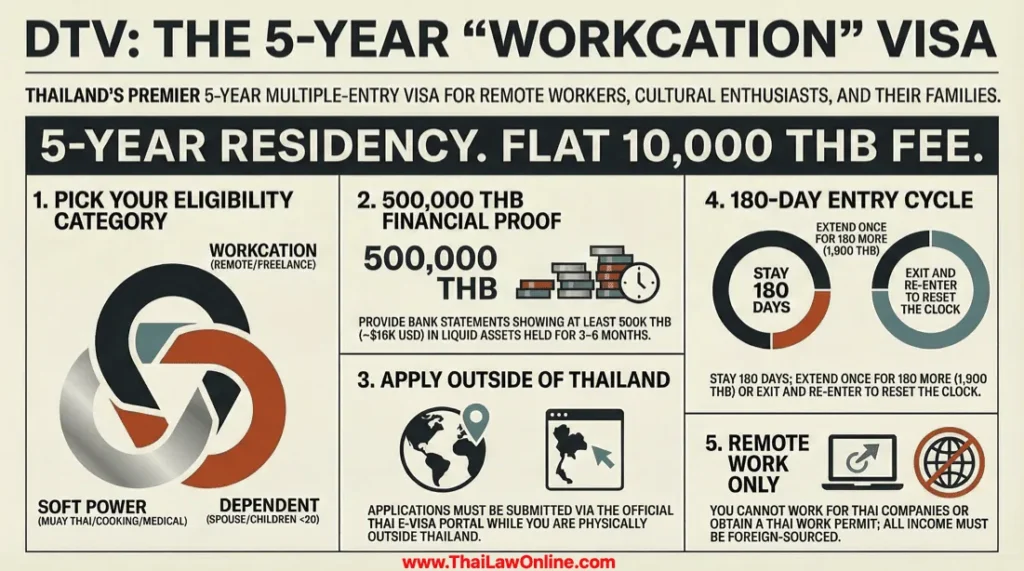
วีซ่าปลายทางประเทศไทย (DTV), ใบอนุญาตเข้าออกหลายครั้งแบบ 5 ปี ซึ่งออกในเดือนกรกฎาคมปี 2024 มีระยะเวลาการเข้าออกสูงสุด 180 วัน โดยสามารถต่ออายุได้อีก 180 วัน ไม่ใช่ใบอนุญาตทำงาน.
DTV ได้พลิกโฉมวงการสำหรับผู้ทำงานทางไกล ฟรีแลนซ์ และผู้ที่ต้องการทำงานแบบ DTV อาศัยอยู่ในประเทศไทยในระยะยาว. โดยปกติจะเรียกว่าวีซ่านักท่องเที่ยวดิจิทัลในประเทศไทย แม้ว่าชื่อนี้จะไม่ใช่ชื่ออย่างเป็นทางการก็ตาม แต่ก็เป็นวีซ่าที่ถูกต้องตามกฎหมาย มีราคาไม่แพง และมาพร้อมกับมาตรการคุ้มครองที่แท้จริงตามกฎหมายของไทย ในบทความนี้ คุณจะได้เรียนรู้ขั้นตอนการยื่นขอ DTV และทุกสิ่งที่คุณควรรู้เกี่ยวกับวีซ่า Destination Thailand.
ที่ ThaiLawOnline เราทำงานเกี่ยวกับกฎหมายไทยมาเป็นเวลา 20 ปี เราได้ช่วยเหลือชาวต่างชาติผู้เชี่ยวชาญหลายพันคนให้เข้าใจเรื่องวีซ่า กฎระเบียบการพำนัก และผลกระทบทางภาษี เราได้เห็นระบบวีซ่าเปลี่ยนแปลง กฎระเบียบด้านคนเข้าเมืองเข้มงวดขึ้น และนโยบายต่างๆ เปลี่ยนแปลงไปอย่างคาดไม่ถึง เรารู้ว่าอะไรใช้ได้ผลและอะไรใช้ไม่ได้ผล.
คู่มือฉบับนี้ครอบคลุมทุกสิ่งที่คุณจำเป็นต้องรู้เกี่ยวกับวีซ่า DTV ในปี 2026 เราจะอธิบายถึงพื้นฐานทางกฎหมาย แนะนำขั้นตอนการสมัคร แจกแจงรายละเอียดค่าใช้จ่าย และพูดถึงกฎระเบียบด้านภาษีที่มีผลกับคุณ นอกจากนี้เรายังจะแสดงให้เห็นว่า DTV แตกต่างจากตัวเลือกวีซ่าอื่นๆ อย่างไร เนื่องจากวีซ่านี้อาจไม่ใช่ตัวเลือกที่ดีที่สุดสำหรับทุกคนเสมอไป.
ไม่ว่าคุณกำลังคิดที่จะสมัครตอนนี้หรือกำลังพิจารณาตัวเลือกของคุณ ใช้ ค้นหาวีซ่าไทย เพื่อเปรียบเทียบทางเลือกต่างๆ หรืออ่านต่อเพื่อดูรายละเอียดทั้งหมดของ DTV.
สารบัญ
วีซ่าปลายทางประเทศไทย (DTV) คืออะไร?
วีซ่าปลายทางประเทศไทยเป็นวีซ่าประเภทใหม่ที่รัฐบาลไทยสร้างขึ้นโดยเฉพาะสำหรับผู้ที่ทำงานแบบดิจิทัลโนแมด ผู้ทำงานทางไกล และผู้ที่เดินทางเพื่อทำงานหรือเพื่อเสริมสร้างอิทธิพลทางวัฒนธรรม รัฐบาลอนุมัติวีซ่านี้ผ่านมติคณะรัฐมนตรีเมื่อวันที่ 28 พฤษภาคม 2567 และมีผลบังคับใช้เมื่อวันที่ 15 กรกฎาคม 2567.
พื้นฐานทางกฎหมายอยู่ในพระราชบัญญัติคนเข้าเมือง พ.ศ. 2522 (ค.ศ. 1979) มาตรา 35 อนุญาตให้ สำนักงานตรวจคนเข้าเมือง อนุญาตให้อยู่ในราชอาณาจักรเป็นการชั่วคราวโดยมีเงื่อนไข ภายในระยะเวลาสูงสุดที่มาตรานั้นกำหนดไว้สำหรับการเข้ามาแต่ละประเภท และขยายระยะเวลาการอยู่ได้คราวละหนึ่งปี DTV เกิดขึ้นได้เพราะรัฐบาลใช้อำนาจนี้สร้างสิ่งใหม่ขึ้นมา.
หลักเกณฑ์ทางกฎหมายที่สำคัญ
มีการประกาศแจ้งอย่างเป็นทางการจากรัฐมนตรีจำนวน 4 ฉบับในราชกิจจานุเบกษาเมื่อวันที่ 15 กรกฎาคม 2567 โดยกำหนดให้ DTV เป็นประเภทวีซ่าอย่างเป็นทางการภายใต้พระราชบัญญัติคนเข้าเมือง.
นี่คือสิ่งที่ทำให้ DTV มีความพิเศษ: มันคือวีซ่าแบบเข้า-ออกได้หลายครั้งที่มีอายุ 5 ปี แต่ละครั้งที่คุณเดินทางเข้าประเทศ คุณจะได้รับอนุญาตให้อยู่ได้ 180 วัน หลังจากครบ 180 วันแล้ว คุณสามารถขอขยายเวลาได้อีก 1 ครั้ง เป็นเวลาอีก 180 วัน นั่นหมายถึงการอยู่ได้นานสูงสุดถึง 360 วันต่อการเข้าพักหนึ่งครั้ง ทั้งนี้ขึ้นอยู่กับการอนุมัติการขยายเวลาหากคุณใช้สิทธิขยายเวลาดังกล่าว.
ค่าธรรมเนียมพื้นฐานของวีดีโอ (DTV) คือ 10,000 บาท ให้ชำระตามจำนวนและสกุลเงินที่สถานเอกอัครราชทูตหรือสถานกงสุลใหญ่ที่พิจารณาเป็นผู้กำหนด ค่าธรรมเนียมท้องถิ่นกำหนดโดยสถานทูตแต่ละแห่ง และไม่ควรคำนวณเพียงแค่อัตราแลกเปลี่ยนในปัจจุบัน: ลอนดอนกำหนดไว้ที่ 300 ปอนด์ วอชิงตันกำหนดไว้ที่ 400 ดอลลาร์สหรัฐ และเวียงจันทน์กำหนดไว้ที่ 10,000 บาท (เงินสด) เฮลซิงกิประกาศ 350 ยูโร และโฮจิมินห์ซิตี้ 340 ดอลลาร์สหรัฐ หลักฐานถิ่นที่อยู่ ระยะเวลาของรายการเดินบัญชี และอายุของหนังสือรับรองความประพฤติก็มีความแตกต่างกันไปตามแต่ละสถานที่เช่นกัน โปรดดูที่ การเปรียบเทียบทีละภารกิจ ในคู่มือข้อกำหนดของเราก่อนที่คุณจะสั่งซื้อเอกสาร ให้ยื่นคำขอจากนอกประเทศไทย ณ สถานเอกอัครราชทูตหรือสถานกงสุลที่รับผิดชอบประเทศที่คุณเป็น ผู้มีสัญชาติหรือมีถิ่นพำนักถาวร พร้อมด้วยหลักฐานการมีถิ่นพำนักที่สถานเอกอัครราชทูตหรือสถานกงสุลนั้นๆ ยอมรับ.
วีซ่า DTV อนุญาตให้เดินทางเข้าประเทศได้หลายครั้งในระยะเวลาที่มีผล 5 ปี การเข้าเมืองแต่ละครั้งยังคงอยู่ภายใต้การควบคุมของตรวจคนเข้าเมือง ขีดจำกัดการยกเว้นวีซ่าบริเวณชายแดนทางบกเป็นกฎเกณฑ์แยกต่างหาก และไม่ใช่โควตาการเข้าเมืองด้วยวีซ่า DTV.
ประเด็นสำคัญหนึ่งประเด็น: DTV ไม่รวมถึง ใบอนุญาตทำงาน. เราจะอธิบายความหมายนั้นและผลกระทบที่มีต่อคุณในส่วนใบอนุญาตทำงานด้านล่างนี้.
ใครบ้างที่สามารถยื่นขอวีซ่าดิจิทัลโนแมดของประเทศไทยได้?
การสมัคร DTV แบ่งออกเป็นสามกลุ่ม: เวิร์คเคชัน (workcation); กิจกรรมซอฟต์พาวเวอร์ของไทย รวมถึงการรักษาพยาบาล; และคู่สมรสและบุตรอายุต่ำกว่า 20 ปีของผู้ถือวีซ่า DTV ให้เลือกหมวดหมู่ที่แสดงอยู่ในรายการตรวจสอบของสถานเอกอัครราชทูตหรือสถานกงสุลที่รับผิดชอบ ผู้สมัครเพื่อการรักษาพยาบาลต้องแสดงหลักฐานจากโรงพยาบาลหรือศูนย์การแพทย์ภายในกลุ่มกิจกรรมดังกล่าว ดูข้อมูลเพิ่มเติมของเรา คู่มือข้อกำหนดวีซ่า DTV.
หัวข้อที่ 1: การทำงานระหว่างพักผ่อนและการทำงานทางไกล
นี่คือเส้นทางสำหรับ นักเดินทางดิจิทัล และพนักงานที่ทำงานทางไกล คุณจะมีคุณสมบัติเหมาะสมหากคุณเป็นฟรีแลนซ์ ทำงานระยะไกลให้กับบริษัทต่างชาติ หรือเป็นเจ้าของธุรกิจที่มีลูกค้าอยู่นอกประเทศไทย รัฐบาลเรียกสิ่งนี้ว่าเส้นทาง “เวิร์คเคชัน” หรือการทำงานทางไกล.
คุณต้องมีอายุอย่างน้อย 20 ปี และมีหนังสือเดินทางที่ยังเหลืออายุใช้งานอย่างน้อย 6 เดือน คุณต้องมีเงินออมจำนวน 500,000 บาท (ประมาณ $14,500 ดอลลาร์สหรัฐ) คุณสามารถใช้บัญชีธนาคารต่างประเทศได้ โดยเงินต้องอยู่ในชื่อของคุณ และรายงานบัญชีธนาคารของคุณต้องแสดงว่ายอดเงินนั้นอยู่ในบัญชีนั้นอย่างสม่ำเสมอ ผู้สมัครที่มีอายุต่ำกว่า 20 ปีสามารถสมัครได้เพียงในฐานะบุตรบุญธรรมของผู้ปกครองที่ถือหรือกำลังสมัครเป็น DTV เท่านั้น.
ประวัติของคุณมีความสำคัญ คุณต้องไม่มีประวัติการอยู่เกินวีซ่าเป็นเวลานาน ระบบตรวจคนเข้าเมืองจะตรวจสอบประวัติของคุณ หากคุณเคย อยู่เกินกำหนดวีซ่า วีซ่าในอดีต ใบสมัคร DTV ของคุณมีแนวโน้มที่จะถูกปฏิเสธ.
หัวข้อที่ 2: กิจกรรมด้านอำนาจละมุน
กลุ่มซอฟต์พาวเวอร์สำหรับผู้ที่เดินทางมาประเทศไทยเพื่อทำกิจกรรมที่ไม่เกี่ยวข้องกับการทำงาน ซึ่งรวมถึงการฝึกมวยไทย คลาสเรียนทำอาหาร เทศกาลดนตรี การฝึกซ้อมกีฬา การสัมมนา หรือคลาสเรียนศิลปะ รัฐบาลสร้างกลุ่มนี้ขึ้นมาเพื่อดึงดูดผู้ที่ต้องการพำนักระยะยาวสำหรับวัตถุประสงค์เฉพาะเหล่านี้ การรักษาพยาบาลถูกรวมอยู่ในกลุ่มกิจกรรม DTV2 และต้องมีหลักฐานจากโรงพยาบาลหรือศูนย์การแพทย์.
เลือกโปรแกรมที่แท้จริงและขอหนังสือยืนยันที่ระบุผู้ให้บริการ กิจกรรม ระยะเวลา และตารางเวลา ความยาวของหลักสูตรอย่างเดียวไม่ได้รับประกันการอนุมัติ ยืนยันข้อกำหนดกิจกรรมปัจจุบันของคณะผู้แทนผู้ตัดสินใจก่อนชำระเงินให้กับผู้ให้บริการ.
คุณมีคุณสมบัติตรงตามข้อกำหนดด้านอายุ (20 ปีขึ้นไป) และหนังสือเดินทาง (มีอายุใช้งานเหลืออย่างน้อย 6 เดือน) เช่นเดียวกับผู้สมัครรายอื่น ข้อกำหนดด้านการเงินก็คือ 500,000 บาท และมีการตรวจสอบประวัติเช่นกัน.
กฎเกณฑ์สำคัญเกี่ยวกับคุณสมบัติผู้สมัคร
โรงเรียนสอนภาษาไม่ได้ทำงานให้กับ DTV อีกต่อไปในทางปฏิบัติ ไม่มีรายการตรวจสอบภารกิจใดที่ระบุการเรียนภาษาไทยเป็นหนึ่งในกิจกรรมด้านอำนาจอ่อน และการสมัครที่ใช้หลักเกณฑ์ดังกล่าวจะถูกปฏิเสธ แม้ว่ากฎที่เผยแพร่แล้วจะไม่ได้ระบุไว้เช่นนั้นก็ตาม หากคุณวางแผนจะเรียนภาษาไทย คุณจะต้องมีประเภทวีซ่าที่แตกต่างออกไป เช่น วีซ่า ED.
คุณไม่สามารถทำงานให้แก่นายจ้างหรือบริษัทไทยได้ด้วยวีซ่า DTV เราจะอธิบายกฎการทำงานโดยละเอียดในภายหลัง แต่นี่คือข้อห้ามเด็ดขาด วีซ่า DTV สำหรับการทำงานทางไกลให้กับลูกค้าต่างประเทศเท่านั้น.
ผู้สมัครหลัก (การทำงานระยะสั้นหรืออำนาจอ่อน) ต้องมีอายุอย่างน้อย 20 ปี หากคุณอายุ 19 ปี คุณจะต้องรอหรือเลือกใช้ตัวเลือกวีซ่าอื่น ๆ เด็กที่มีอายุต่ำกว่า 20 ปีสามารถสมัครได้เพียงในฐานะผู้รับผลประโยชน์ของบิดามารดาที่ถือวีซ่า DTV หรือกำลังยื่นขอวีซ่าดังกล่าว โดยต้องมีหลักฐานแสดงถึงความสัมพันธ์ระหว่างคู่สมรสและบุตรหลานตามที่หน่วยงานที่เกี่ยวข้องกำหนด.
ข้อกำหนดวีทูดี: เอกสารที่คุณจะต้องใช้
เอกสารที่คุณต้องใช้จะขึ้นอยู่กับว่าคุณสมัครในช่องทางใด ด้านล่างนี้คือรายละเอียดที่ครบถ้วนสำหรับแต่ละช่องทาง.
| ประเภทเอกสาร | เส้นทางทำงานพร้อมพักผ่อน/ทำงานทางไกล | เส้นทางพลังอ่อน |
|---|---|---|
| สำเนาหนังสือเดินทางที่ยังไม่หมดอายุ | จำเป็นต้องมี (อายุการใช้งาน 6 เดือนขึ้นไป) | จำเป็นต้องมี (อายุการใช้งาน 6 เดือนขึ้นไป) |
| รายการบัญชีธนาคาร | ต้องมีเงินออม (500,000 บาท) | ต้องมีเงินออม (500,000 บาท) |
| สัญญาจ้างงานหรือหนังสือเสนอจ้างงาน | เอกสารที่จำเป็น (จากนายจ้างต่างประเทศ) | ไม่จำเป็น |
| หลักฐานแสดงความเป็นเจ้าของธุรกิจ | จำเป็นสำหรับผู้ที่ประกอบอาชีพอิสระ | ไม่จำเป็น |
| การลงทะเบียน/สมัครเข้าร่วมกิจกรรม | ไม่จำเป็น | จำเป็นต้องมี (หลักฐานการดำเนินกิจกรรม) |
| จดหมายรับรองจากผู้จัดกิจกรรม | ไม่จำเป็น | จำเป็นต้องมี (จากโรงยิม โรงเรียน คลินิก ฯลฯ) |
| ประกันสุขภาพ | ไม่ใช่ข้อกำหนดสำหรับเอกสาร DTV: รายการตรวจสอบอย่างเป็นทางการของสถานทูตไทยในกรุงวอชิงตัน กรุงลอนดอน และกรุงเฮลซิงกิ ไม่ได้ระบุประกันสุขภาพสำหรับ DTV เมื่อตรวจสอบอีกครั้งในวันที่ 4 ตุลาคม 2026 โปรดสอบถามกับหน่วยงานที่รับผิดชอบในการพิจารณาคำขอของคุณ เพื่อความปลอดภัยของคุณอย่างยิ่ง และเจ้าหน้าที่สถานทูตสามารถขอเอกสารเพิ่มเติมได้ตามกรณีโดยเฉพาะ. | ไม่ใช่ข้อกำหนดสำหรับเอกสาร DTV: รายการตรวจสอบอย่างเป็นทางการของสถานทูตไทยในกรุงวอชิงตัน กรุงลอนดอน และกรุงเฮลซิงกิ ไม่ได้ระบุประกันสุขภาพสำหรับ DTV เมื่อตรวจสอบอีกครั้งในวันที่ 4 ตุลาคม 2026 โปรดสอบถามกับหน่วยงานที่รับผิดชอบในการพิจารณาคำขอของคุณ เพื่อความปลอดภัยของคุณอย่างยิ่ง และเจ้าหน้าที่สถานทูตสามารถขอเอกสารเพิ่มเติมได้ตามกรณีโดยเฉพาะ. |
| การตรวจสอบประวัติอาชญากรรม | จำเป็นต้องใช้ในทุกภารกิจตั้งแต่วันที่ 31 สิงหาคม 2026 เป็นต้นไป ผู้ออกเอกสารที่ได้รับการยอมรับและอายุสูงสุดจะถูกกำหนดโดยแต่ละภารกิจ | จำเป็นต้องใช้ในทุกภารกิจตั้งแต่วันที่ 31 สิงหาคม 2026 เป็นต้นไป ผู้ออกเอกสารที่ได้รับการยอมรับและอายุสูงสุดจะถูกกำหนดโดยแต่ละภารกิจ |
| หลักฐานแสดงสัญชาติหรือถิ่นที่อยู่ถาวร | ต้องมีผลตั้งแต่วันที่ 31 สิงหาคม 2026 การมีที่อยู่ in the country นั้นไม่เพียงพออีกต่อไป: คุณต้องเป็น 31 สัญชาติหรือผู้มีถิ่นพำนักถาวรของประเทศที่คุณสมัคร และสถานเอกอัครราชทูตหรือสถานกงสุลจะเป็นผู้กำหนดเอกสารที่ยอมรับ | ต้องมีผลตั้งแต่วันที่ 31 สิงหาคม 2026 การมีที่อยู่ in the country นั้นไม่เพียงพออีกต่อไป: คุณต้องเป็น 31 สัญชาติหรือผู้มีถิ่นพำนักถาวรของประเทศที่คุณสมัคร และสถานเอกอัครราชทูตหรือสถานกงสุลจะเป็นผู้กำหนดเอกสารที่ยอมรับ |
มาแยกแยะเอกสารที่สำคัญที่สุดกัน.
รายการเดินบัญชีธนาคารและหลักฐานทางการเงิน
ข้อกำหนดเงิน 500,000 บาทเป็นเหตุผลที่พบบ่อยที่สุดที่คำขอถูกปฏิเสธ คุณต้องแสดงหลักฐานยอดเงินที่เทียบเท่ากับ 500,000 บาทในบัญชีธนาคารที่เป็นชื่อของคุณ ซึ่งอาจเป็นบัญชีธนาคารต่างประเทศก็ได้ คุณไม่จำเป็นต้องมีบัญชีธนาคารไทยในการสมัคร อันที่จริง การเปิดบัญชีธนาคารไทยด้วยวีซ่า DTV นั้นทำได้ยาก (ธนาคารส่วนใหญ่ยังคงต้องใช้ใบอนุญาตทำงาน).
แสดงหลักฐานทางการเงินที่ตรงตามข้อกำหนดเทียบเท่า 500,000 บาทของสถานทูตที่พิจารณา เตรียมประวัติที่มาของเงินให้ชัดเจนและชี้แจงยอดเงินฝากที่ผิดปกติ ระยะเวลาของรายการเดินบัญชีที่กำหนดและการยอมรับบัญชีร่วม บัญชีผู้สนับสนุน หรือบัญชีครอบครัวนั้นขึ้นอยู่กับแต่ละสถานทูต การฝากเงินเข้ามาเมื่อเร็ว ๆ นี้ไม่ใช่เหตุผลที่เป็นสากลตามประกาศที่จะทำให้ถูกปฏิเสธโดยอัตโนมัติ.
ผู้ติดตามไม่มีข้อยกเว้นสำหรับกฎเรื่องเงิน: รายการตรวจสอบอย่างเป็นทางการกำหนดให้แฟ้มของคู่สมรสหรือบุตรแต่ละคนต้องมีรายการเดินบัญชีธนาคารที่มีมียอดเงินคงเหลือ ณ วันสิ้นงวดไม่น้อยกว่า 500,000 บาท. บางโพสต์ยอมรับแถลงการณ์ครอบครัวฉบับเดียวที่ครอบคลุมยอดเงินรวมพร้อมหลักฐานความสัมพันธ์ และการบวกเพิ่มอีก 500,000 บาทต่อผู้ติดตามนั้นไม่ใช่กฎเกณฑ์ทั่วประเทศที่ประกาศใช้อย่างเป็นทางการ สำหรับครอบครัวสามคน ให้เตรียมเงินไว้ประมาณ 1,500,000 บาทในบัญชีของคุณ และใช้รายการตรวจสอบของสถานทูตที่จะเป็นผู้พิจารณาคำร้องของคุณ.
เอกสารประกอบการทำงานสำหรับโครงการฝึกงาน
หากคุณสมัครภายใต้ประเภทการทำงานทางไกล คุณต้องมีหลักฐานว่าคุณทำงานให้กับบริษัทต่างประเทศจริงๆ เอกสารนี้อาจเป็นสัญญาจ้างงาน จดหมายเสนอ(รับเข้า)งาน หรือเอกสารเกี่ยวกับลูกค้าฟรีแลนซ์ของคุณ เอกสารดังกล่าวต้องแสดงให้เห็นว่าบริษัทหรือลูกค้านั้นอยู่ต่างประเทศ ไม่ใช่ในประเทศไทย.
หากคุณประกอบอาชีพอิสระ คุณจะต้องมีหลักฐานยืนยันธุรกิจของคุณ ซึ่งอาจเป็นหนังสือรับรองการจดทะเบียนธุรกิจ แบบแสดงรายการภาษี หรือสำเนาใบแจ้งหนี้จากลูกค้าต่างประเทศ.
เอกสารประกอบกิจกรรมสำหรับหลักสูตรอำนาจละมุน (Soft Power Track)
หากคุณสมัครภายใต้ช่องทางซอฟต์พาวเวอร์ คุณต้องพิสูจน์การสมัครหรือการลงทะเบียนในกิจกรรมของคุณ หากคุณกำลังฝึกมวยไทย ให้ขอหนังสือจากค่ายมวยที่ยืนยันการสมัครของคุณ หากคุณกำลังเรียนทำอาหาร ให้ขอเอกสารจากโรงเรียน หากคุณกำลังรับการรักษาพยาบาล ให้ขอจดหมายจากคลินิก.
หลักฐานที่อยู่
มีคำถามเกี่ยวกับที่อยู่สองแบบที่แตกต่างกันปรากฏขึ้น และผู้สมัครมักจะสับสนบ่อยๆ.
1. สถานที่ที่คุณอยู่ตอนที่สมัคร. ตั้งแต่วันที่ 31 สิงหาคม 2026 เป็นต้นไป เรื่องนี้ไม่ใช่เกี่ยวกับว่าคุณอยู่ที่ไหน แต่เกี่ยวกับว่าคุณสังกัดที่ไหน: ภารกิจการตัดสินใจต้องครอบคลุมประเทศที่คุณเป็น Sสชาติหรือผู้มีถิ่นที่อยู่ถาวร และการเยือนประเทศเพื่อนบ้านระยะสั้นจะไม่ถือว่ามีสิทธิ์อีกต่อไป เอกสารที่พิสูจน์เรื่องนี้กำหนดโดยสถานเอกอัครราชทูตหรือสถานกงสุล และแต่ละแห่งก็แตกต่างกัน: ลอสแอนเจลิสระบุใบขับขี่ที่ยังไม่หมดอายุ วีซ่าสหรัฐฯ ที่ยังไม่หมดอายุ หรือบัตรประจำตัวผู้มีถิ่นที่อยู่ถาวร ในขณะที่โฮจิมินห์ซิตี้รับเฉพาะบัตรประจำตัวผู้มีถิ่นที่อยู่ชั่วคราวหรือถาวรของเวียดนามเท่านั้น.
2. ที่อยู่ของคุณในประเทศไทยหลังจากเดินทางมาถึง. นี่ไม่ใช่ส่วนหนึ่งของการยื่นขอวีซ่า คุณระบุที่อยู่ของประเทศไทยในใบขาเข้าทีดีเอซี), เจ้าของบ้านของคุณ, ผู้จัดการบ้าน หรือทางโรงแรมจะยื่นเอกสาร ทีเอ็ม30 ต้องแจ้งภายใน 24 ชั่วโมงหลังย้ายเข้ามา (มาตรา 38 แห่งพระราชบัญญัติคนเข้าเมือง) และในภายหลังคุณจะต้องมีสัญญาเช่าที่อยู่อาศัย ใบแจ้งยอดค่าสาธารณูปโภค หรือสัญญาการซื้อคอนโดในชื่อของคุณ เมื่อคุณยื่นขอต่ออายุ 180 วันหรือยื่นคำร้องขอ รายงานตัว 90 วัน. เก็บเอกสารเหล่านั้นตั้งแต่วันแรกไว้.
วิธีการสมัครวีซ่าดิจิทัลโนแมดของประเทศไทย (ทีละขั้นตอน)
ตั้งแต่เดือนมกราคม 2568 เป็นต้นมา ขั้นตอนการสมัครขอวีซ่า DTV ดำเนินการทางออนไลน์ผ่านระบบ Thai e-visa อย่างเต็มรูปแบบแล้ว คุณไม่สามารถยื่นใบสมัครแบบกระดาษที่สถานเอกอัครราชทูตได้อีกต่อไป ทุกอย่างดำเนินการผ่านเว็บไซต์ thaievisa.go.th.
สถานที่ที่คุณสามารถสมัครได้: การเปลี่ยนแปลงกฎวันที่ 31 สิงหาคม 2026
ตั้งแต่วันที่ 31 สิงหาคม 2026 เป็นต้นไป สถานเอกอัครราชทูตหรือสถานกงสุลไทยจะรับคำขอรับการตรวจตราประเภติดีทีวี (DTV) เฉพาะจาก เป็นพลอยเมืองหรือผู้มีถิ่นที่อยู่ถาวรของประเทศที่ยื่นคำขอ, และไฟล์จะต้องรวมถึง หนังสือรับรองความประพฤติ ออกโดยหน่วยงานของประเทศสัญชาติของคุณหรือของประเทศที่คุณยื่นขอ สถานเอกอัครราชทูต ณ กรุงเวียงจันทน์ ได้ประกาศการเปลี่ยนแปลงดังกล่าวบน หน้าสมัครวีซ่า เมื่อวันที่ 28 สิงหาคม 2026 และสถานกงสุลใหญ่ไทย ณ ลอสแอนเจลิส ประกาศใช้วันที่มีผลบังคับใช้เดียวกัน นี่คือประกาศภารกิจ ไม่ใช่ประกาศราชกิจจานุเบกษา. ใบสมัครที่ยื่นและชำระเงินครบถ้วนภายในวันที่ 31 สิงหาคม 2026 จะได้รับการพิจารณาตามกฎระเบียบเดิม, และการชำระเงินแทนที่จะเป็นการส่งงานคือจุดตัด.
เอกสารหลักฐานถิ่นที่อยู่ที่แต่ละสถานุรักษ์ยอมรับนั้นแตกต่างกัน และบางอย่างก็ยังไม่ถึงขั้นเป็นถิ่นที่อยู่ถาวร โดยลอสแอนเจลิสระบุใบขับขี่ที่ยังไม่หมดอายุ วีซ่าสหรัฐอเมริกาที่ยังไม่หมดอายุ หรือบัตรประจำตัวผู้มีถิ่นที่อยู่ถาวร, ลอนดอนต้องใช้หลักฐานการมีถิ่นที่อยู่ถาวรในสหราชอาณาจักร ไอร์แลนด์ หรือดินแดนโพ้นทะเลของอังกฤษ เช่น การอนุญาตให้อยู่ได้โดยไม่มีกำหนด, นครโฮจิมินห์ยอมรับเฉพาะบัตรประจำตัวผู้มีถิ่นที่อยู่ชั่วคราวหรือถาวรของเวียดนามเท่านั้น และปฏิเสธใบแจ้งการมีถิ่นที่อยู่ชั่วคราวในทางปฏิบัติ ส่วนหนังสือรับรองประวัติอาชญากรรมนั้นมีกฎระเบียบเฉพาะของแต่ละสถานุรักษ์ โดยลอนดอนระบุฉบับที่ออกภายในหกเดือน เช่น ใบรับรองจาก ACRO, วอชิงตันและลอสแอนเจลิสระบุใบรับรองจาก FBI ภายในสามเดือน และนครโฮจิมินห์ระบุหนังสือรับรองประวัติอาชญากรรมเวียดนาม ฉบับที่ 2. อ่านรายการตรวจสอบของภารกิจที่จะเป็นตัวตัดสินแฟ้มของคุณ.
ขั้นตอนที่ 1: ตรวจสอบคุณสมบัติของคุณ
ก่อนที่คุณจะเริ่มต้น โปรดตรวจสอบว่าคุณมีคุณสมบัติครบถ้วนตามข้อกำหนดทั้งหมด คุณมีอายุ 20 ปีขึ้นไป หนังสือเดินทางของคุณมีอายุเหลือมากกว่า 6 เดือน คุณมีหรือสามารถเข้าถึงเงินจำนวน 500,000 บาทได้ คุณไม่มีประวัติการอยู่เกินกำหนดวีซ่าเป็นเวลานาน คุณได้ระบุเส้นทางที่คุณจะสมัครแล้ว (Workcation หรือ Soft Power).
ขั้นตอนที่ 2: รวบรวมเอกสารที่จำเป็นทั้งหมด
รวบรวมเอกสารทั้งหมดที่ระบุไว้ในตารางด้านบนที่เกี่ยวข้องกับหัวข้อของคุณ ทำสำเนาเอกสารทั้งหมดในรูปแบบดิจิทัล ระบบต้องการไฟล์ PDF, ภาพ JPG หรือภาพ PNG การสแกนคุณภาพต่ำจะทำให้เอกสารถูกปฏิเสธ ตรวจสอบให้แน่ใจว่าเอกสารมีความชัดเจนและอ่านได้.
ขั้นตอนที่ 3: สร้างบัญชีของคุณบน thaievisa.go.th
เยี่ยมชมเว็บไซต์ขอวีซ่าอิเล็กทรอนิกส์อย่างเป็นทางการของประเทศไทย สร้างบัญชีโดยใช้อีเมลของคุณ คุณจะได้รับอีเมลยืนยัน คลิกที่ลิงก์เพื่อเปิดใช้งานบัญชีของคุณ บันทึกข้อมูลเข้าสู่ระบบของคุณไว้ในที่ปลอดภัย.
ขั้นตอนที่ 4: กรอกแบบฟอร์มใบสมัครออนไลน์ให้ครบถ้วน
เข้าสู่ระบบและเลือก “วีซ่าไปยังประเทศไทย (DTV)” เป็นประเภทวีซ่าของคุณ เลือกเส้นทาง (Workcation หรือ Soft Power) กรอกข้อมูลที่จำเป็นทั้งหมดให้ถูกต้อง ชื่อของคุณต้องตรงกับในหนังสือเดินทางของคุณ อีเมลและเบอร์โทรศัพท์ของคุณต้องเป็นปัจจุบัน คุณจะใช้ข้อมูลเหล่านี้เพื่ออัปเดตสถานะและยืนยันการชำระเงิน.
ขั้นตอนที่ 5: อัปโหลดเอกสารของคุณ
อัปโหลดเอกสารแต่ละฉบับตามข้อกำหนดของระบบ ระบบจะติดป้ายกำกับไว้อย่างชัดเจนว่าต้องใส่อะไรที่ไหน ห้ามข้ามเอกสารใดๆ ที่ระบุว่าจำเป็น หากเอกสารของคุณเป็นภาษาอื่นที่ไม่ใช่ภาษาอังกฤษหรือภาษาไทย คุณอาจต้องจัดเตรียมคำแปลที่ได้รับการรับรอง.
ขั้นตอนที่ 6: ชำระค่าธรรมเนียมการสมัคร
ค่าธรรมเนียมพื้นฐานของวีซ่า DTV คือ 10,000 บาท ให้ชำระตามจำนวนเงินและสกุลเงินที่ประกาศโดยสถานทูตหรือสถานกงสุลที่เป็นผู้พิจารณา ค่าธรรมเนียมท้องถิ่นถูกกำหนดโดยสถานทูตหรือสถานกงสุล และไม่ควรคำนวณง่ายๆ จากอัตราแลกเปลี่ยนของวันนี้ ให้ปฏิบัติตามวิธีการชำระเงินที่แสดงโดยสถานทูตหรือสถานกงสุลหรือช่องทาง e-Visa และเก็บใบเสร็จไว้.
ขั้นตอนที่ 7: รอการประมวลผล
โดยปกติแล้วการดำเนินการจะใช้เวลา 5 ถึง 15 วันทำการ ในช่วงเวลานี้ หน่วยงานตรวจคนเข้าเมืองอาจขอเอกสารหรือข้อมูลเพิ่มเติม โปรดตรวจสอบอีเมลของคุณบ่อยครั้ง หากพวกเขาขอข้อมูลใดๆ ให้รีบตอบกลับอย่างรวดเร็ว ความล่าช้ามักเกิดขึ้นเนื่องจากผู้สมัครไม่ตอบกลับคำขอภายในเวลาที่กำหนด.
ขั้นตอนที่ 8: การตรวจสอบตำแหน่งที่ตั้ง
ในปี 2026 ระบบการตรวจคนเข้าเมืองได้นำการตรวจสอบสถานที่มาใช้ที่สถานทูตและสถานกงสุลไทยสำหรับผู้สมัครบางราย หากคุณได้รับเลือก คุณจะได้รับอีเมลพร้อมคำแนะนำ คุณจะต้องไปปรากฏตัวที่สถานทูตในเขตอำนาจศาลของคุณเพื่อรับการสัมภาษณ์สั้น ๆ หรือการตรวจสอบเอกสาร ขั้นตอนนี้นไม่จำเป็นสำหรับผู้สมัครทุกคน แต่กำลังกลายเป็นเรื่องปกติมากขึ้น.
ขั้นตอนที่ 9: รับการอนุมัติวีซ่าอิเล็กทรอนิกส์ของคุณ
เมื่อได้รับการอนุมัติแล้ว คุณจะได้รับอีเมลพร้อมเอกสาร e-visa ของคุณ ดาวน์โหลดและพิมพ์เอกสารนี้ ซึ่งเป็นไฟล์ PDF ที่แสดงหมายเลขวีซ่า วันที่ใช้งานได้ และเงื่อนไขการเข้าเมือง คุณยังสามารถบันทึกสำเนาดิจิทัลลงในโทรศัพท์ของคุณได้อีกด้วย.
ขั้นตอนที่ 10: เดินทางเข้าประเทศไทยภายในระยะเวลาที่วีซ่ายังไม่หมดอายุ
คุณต้องเข้าประเทศไทยภายในวันหมดอายุที่ระบุไว้ในวีซ่าอิเล็กทรอนิกส์ของคุณ เมื่อคุณมาถึงด่านตรวจคนเข้าเมืองที่สนามบินหรือด่านชายแดนทางบก โปรดแสดงวีซ่าอิเล็กทรอนิกส์ที่พิมพ์ออกมาพร้อมกับหนังสือเดินทางของคุณ เจ้าหน้าที่ตรวจคนเข้าเมืองจะประทับตราเข้าประเทศของคุณ คุณอาจต้องแสดงเอกสารอื่นๆ เพิ่มเติมDAC (บัตรเข้าประเทศแบบดิจิทัลของประเทศไทย), ซึ่งจะแทนที่แบบฟอร์ม TM6 แบบกระดาษตั้งแต่วันที่ 1 พฤษภาคม 2025).
สิ่งหนึ่งที่สิ่งนี้ไม่ได้เปลี่ยนแปลงคือ: DTV จะต้องได้รับการออกในต่างประเทศ คุณไม่สามารถขอรับหรือเปลี่ยนประเภทวีซ่านี้ภายในประเทศไทยได้ และตั้งแต่วันที่ 31 สิงหาคม 2026 เป็นต้นไป สถานทูตหรือสถานกงสุลที่พิจารณาคำขอของคุณจะต้องเป็นแห่งที่รับผิดชอบประเทศที่คุณถือสัญชาติหรือมีถิ่นพำนักถาวรเท่านั้น.
วีซ่า DTV เทียบกับ ไทยแลนด์ พริวิเลจ (Thailand Privilege) เทียบกับ ตัวเลือกอื่นๆ
DTV ไม่ใช่ทางเลือกเดียวสำหรับการพำนักระยะยาวในประเทศไทย ลองมาดูกว่าตัวเลือกหลักอื่นๆ ว่าเทียบกันแล้วเป็นอย่างไร.
| คุณสมบัติ | ดีทีวี | ไทยแลนด์ พริวิเลจ | วีซ่าท่องเที่ยว | Non-Immigrant B |
|---|---|---|---|---|
| วัตถุประสงค์ | เวิร์คเคชัน (Workcation) กิจกรรมที่มีคุณสมบัติเหมาะสม หรือผู้อยู่ในความอุปการะที่มีคุณสมบัติเหมาะสม | การเข้าพักระยะยาวแบบสมาชิก | การท่องเที่ยว | เพื่อวัตถุประสงค์ทางธุรกิจหรือการจ้างงาน |
| การพำนัก | 180 วันต่อการเข้าหนึ่งครั้ง; การขยายเวลาได้หนึ่งครั้งสูงสุด 180 วัน ขึ้นอยู่กับการอนุมัติ | ปกติหนึ่งปีต่อการเข้าพักหนึ่งครั้ง; ปฏิบัติตามเงื่อนไขวีซ่าและสมาชิก | ปกติ 60 วัน อาจขยายได้อีก 30 วัน | โดยปกติแล้วจะได้รับ 90 วันในตอนแรก; เงื่อนไขการขยายเวลาขึ้นอยู่กับวัตถุประสงค์ |
| ใบอนุญาตทำงาน | ไม่ได้รับอนุญาตให้ทำงานในประเทศไทยจากวีซ่าเพียงอย่างเดียว | ไม่มีสิทธิ์ทำงานจากการเป็นสมาชิกเพียงอย่างเดียว | ไม่ใช่การอนุญาตทำงานธรรมดา | ใบอนุญาตทำงานหรือข้อยกเว้นที่ใช้บังคับนั้นแยกต่างหาก |
| หลักฐานทางการเงินและค่าธรรมเนียม | หลักฐานเทียบเท่าวงเงิน 500,000 บาท; ตรวจสอบรายการภารกิจและค่าธรรมเนียมวีซ่าท้องถิ่นตามที่กำหนด | ราคาแพ็กเกจปัจจุบันและเงื่อนไขการเป็นสมาชิกมีผลบังคับใช้ | ค่าธรรมเนียมวีซ่าเฉพาะภารกิจและหลักฐานทางการเงิน | ข้อกำหนดตามภารกิจและหมวดหมู่การขออยู่ต่อ ไม่มีการใช้กฎเงินฝาก 800,000 บาทแบบสากล |
| ถิ่นที่อยู่ถาวร | ไม่มีสิทธิ์ได้รับโดยอัตโนมัติ | ไม่มีสิทธิ์ได้รับโดยอัตโนมัติ | ไม่มีสิทธิ์ได้รับโดยอัตโนมัติ | แยกคุณสมบัติและการสมัครออกจากกัน การอนุมัติไม่ได้เกิดขึ้นโดยอัตโนมัติหลังจากผ่านไปห้าปี |
DTV กับ Thailand Privilege
ไทยแลนด์ พริวิเลจ คือโครงการพำนักระยะยาวแบบมีค่าสมาชิก ซึ่งมาพร้อมกับค่าธรรมเนียมและสิทธิประโยชน์เฉพาะตามแพ็กเกจ โปรดตรวจสอบ คู่มือสิทธิประโยชน์ปัจจุบัน ก่อนเปรียบเทียบต้นทุน ความช่วยเหลือด้านสมาชิกไม่ได้ทำให้การต่อวีซ่าคนเข้าเมืองกลายเป็นเรื่องอัตโนมัติ.
เปรียบเทียบค่าธรรมเนียมวีซ่า DTV ของภารกิจตัดสินใจกับแพ็กเกจสมาชิก Privilege ปัจจุบัน โปรแกรมเหล่านี้มีวัตถุประสงค์ กฎเกณฑ์การมีคุณสมบัติ และสิทธิประโยชน์ที่แตกต่างกัน และไม่มีโปรแกรมใดรับประกันการตัดสินใจด้านการเข้าเมืองในภายหลังทั้งหมด.
วีซ่า DTV เหมาะกว่าสำหรับดิจิทัลโนแมดที่มีงบจำกัด ส่วนวีซ่า Privilege เหมาะกว่าถ้าคุณต้องการความสะดวกสบายสูงสุดและไม่เกี่ยงเรื่องค่าใช้จ่าย.
DTV เทียบกับวีซ่าท่องเที่ยว
วีซ่านักท่องเที่ยวแบบเข้าครั้งเดียวโดยปกติอนุญาตให้อยู่ได้ 60 วัน และอาจขยายเวลาได้อีก 30 วันขึ้นอยู่กับการอนุมัติ ความอายุใช้งานของวีซ่า การอนุญาตให้อยู่ต่อ และการยกเว้นวีซ่าเป็นแนวคิดที่แตกต่างกัน ข้อจำกัดเกี่ยวกับการเข้าเมืองทางบกแบบได้รับการยกเว้นวีซ่าไม่ใช่ข้อจำกัดทั่วไปสำหรับวีซ่านักท่องเที่ยวหรือวีซ่า DTV.
วีซ่า DTV ให้คุณอยู่ได้ 180 วันต่อการเข้าพักหนึ่งครั้ง และคุณสามารถขอขยายเวลาได้อีก 180 วัน นั่นคือสูงสุดถึง 360 วันโดยไม่ต้องออกจากประเทศไทย ทั้งนี้ขึ้นอยู่กับการอนุมัติการขยายเวลา คุณไม่ต้องเดินทางเพื่อต่อวีซ่า (วีซ่ารัน) มีความมั่นคงมากกว่าและมีค่าใช้จ่ายถูกกว่าในระยะยาว.
DTV เทียบกับ Non-Immigrant B (วีซ่าทำงาน)
วีซ่าประเภท Non-Imm B ต้องมีนายจ้างชาวไทย คุณต้องมีหนังสือเสนอจ้างงานจากบริษัทไทย และบริษัทนั้นต้องเป็นผู้ดำเนินการยื่นขอวีซ่าให้คุณ ใบอนุญาตทำงาน. มันซับซ้อนกว่า DTV มาก.
วีซ่า Non-Immigrant B ไม่ได้อนุญาตให้ทำงานในตัวเอง ใบอนุญาตทำงานหรือการยกเว้นที่เกี่ยวข้องถือเป็นข้อกำหนดแยกต่างหาก โปรดตรวจสอบทั้งสถานะการตรวจคนเข้าเมืองและการอนุญาตทำงานก่อนเริ่มทำงานให้กับนายจ้างไทย.
สำหรับนักท่องเที่ยวที่ทำงานแบบดิจิทัลให้กับบริษัทต่างประเทศ การขอวีซ่าแบบ DTV นั้นง่ายและรวดเร็วกว่า ส่วนสำหรับคนที่วางแผนจะทำงานในประเทศไทยให้กับนายจ้างชาวไทย การขอวีซ่าแบบ Non-Imm Imm B นั้นเหมาะสมกว่า.
รายละเอียดค่าใช้จ่ายวีซ่าสำหรับนักทำงานอิสระดิจิทัลในประเทศไทย
นี่คือค่าใช้จ่ายที่แท้จริงของ DTV ในแต่ละปี เราได้รวมค่าธรรมเนียมและค่าใช้จ่ายทั้งหมดที่คุณอาจต้องเผชิญ.
| รายการค่าใช้จ่าย | ค่าธรรมเนียม (บาท) | ค่าธรรมเนียม (ดอลลาร์สหรัฐ) | ความถี่ |
|---|---|---|---|
| แอปพลิเคชัน DTV | 10,000 | ~$275 | ลงชื่อย่อเท่านั้น |
| การขออยู่ต่อ (ครั้งเดียวต่อการเข้าประเทศ) | 1,900 | ~$52 | ต่อรายการ (ไม่บังคับ) |
| การรายงานตัว 90 วัน | 0 | ฟรี | ทุกๆ 90 วัน |
| ประกันสุขภาพ (รายปี) | 20,000 ถึง 100,000 | ~$550 ถึง $2,700 | ที่แนะนำ |
ค่าใช้จ่ายรวมในปีแรก
ในปีแรกของคุณจะต้องจ่ายค่าธรรมเนียมการสมัคร (10,000 บาท) บวกค่าใช้จ่ายเพิ่มเติม หากคุณขยายระยะเวลาการเข้าพักในปีแรกและซื้อประกันสุขภาพ คุณจะต้องจ่ายประมาณ 32,000 ถึง 112,000 บาท (ประมาณ $875 ถึง $3,050 บาท) โดยจำนวนเงินที่แน่นอนขึ้นอยู่กับแผนประกันสุขภาพที่คุณเลือก.
ปีต่อๆ มา
วีซ่าแบบ DTV ยังคงมีผลใช้ได้หลายครั้งตลอดระยะเวลาการใช้งาน 5 ปี โดยการเข้าประเทศใหม่ด้วยวีซ่าแบบ DTV ที่ยังใช้งานได้นั้นไม่จำเป็นต้องซื้อใบอนุญาตกลับเข้าประเทศแยกต่างหาก การต่ออายุในประเทศมีค่าธรรมเนียมเป็นของตัวเอง ควรแยกค่าใช้จ่ายสำหรับประกันภัย การเดินทาง และค่าใช้จ่ายอื่นๆ ออกมาเป็นรายจ่าย.
การรายงานตัว 90 วัน
ทุก 90 วัน คุณต้องไปรายงานตัวที่กรมการตรวจคนเข้าเมือง ซึ่งเป็นบริการฟรี ผู้คนจำนวนมากทำแบบออนไลน์ในปัจจุบัน คุณเพียงแค่แจ้งที่อยู่ของคุณกับกรมการตรวจคนเข้าเมืองและยืนยันว่าคุณยังอยู่ในประเทศไทยเท่านั้น โดยใช้เวลาออนไลน์เพียง 10 นาที.
ข้อควรพิจารณาเกี่ยวกับการประกันสุขภาพ
กฎหมายยังไม่ได้กำหนดให้ต้องมีประกันสุขภาพอย่างเป็นทางการ แต่ก็เป็นที่แนะนำอย่างยิ่ง ประเทศไทยมีบริการทางการแพทย์ที่ยอดเยี่ยม แต่ไม่ฟรีสำหรับชาวต่างชาติ ประกันสุขภาพสำหรับชาวต่างชาติที่เหมาะสมจะอยู่ที่ 20,000 ถึง 100,000 บาทต่อปี ขึ้นอยู่กับความคุ้มครองและอายุ.
บริษัทประกันสุขภาพบางแห่งจะคุ้มครองเฉพาะผู้ถือวีซ่า DTV ส่วนบริษัทประกันอื่นๆ ไม่ได้คุ้มครอง คุณควรสอบถามก่อนซื้อ.
ขอชี้แจงความเชื่อผิดๆ ที่พบบ่อย: ไม่มีรายการเอกสาร DTV อย่างเป็นทางการฉบับใดที่กำหนดให้ต้องมีประกันสุขภาพ เราได้ตรวจสอบหน้าเว็บไซต์สถานทูตในกรุงวอชิงตัน กรุงลอนดอน และกรุงเฮลซิงกิอีกครั้งเมื่อวันที่ 4 ตุลาคม 2026 (รายการเอกสาร e-visa ของกระทรวงการต่างประเทศตรวจสอบล่าสุดเมื่อเดือนสิงหาคม 2026): ไม่มีแห่งใดระบุประกันเป็นเอกสารสำหรับ DTV ตัวเลขประกันที่คุณอาจเห็นจากที่อื่นเป็นของ วีซ่าเกษียณอายุ (สำหรับ O-A ต้องมีความคุ้มครองอย่างน้อย 100,000 ดอลลาร์สหรัฐ หรือ 3,000,000 บาท ตามคำสั่งสำนักงานตรวจคนเข้าเมือง ที่ 12/2568) ไม่ใช่ DTV อย่างไรก็ดียังขอแนะนำอย่างยิ่งให้ทำประกัน และสถานกงสุลใดๆ ก็อาจขอเอกสารเพิ่มเติมได้ ดังนั้นโปรดตรวจสอบรายการเอกสารของสถานเอกอัครราชทูตหรือสถานกงสุลที่คุณยื่นขอ.
คำอธิบายเกี่ยวกับใบอนุญาตกลับเข้าประเทศ
สำหรับกรณีเข้าประเทศใหม่เมื่อกลับมายังประเทศไทย จะใช้บัตร DTV แบบเข้าออกได้หลายครั้งที่มีอายุการใช้งานถูกต้อง โดยปกติแล้วไม่จำเป็นต้องขอใบอนุญาตเข้าออกใหม่เพื่อวัตถุประสงค์ดังกล่าว ตรวจสอบอายุการใช้งานของวีซ่าและลายเซ็นรับเข้าประเทศก่อนเดินทาง.
ห้ามรวมค่าธรรมเนียมใบอนุญาตกลับเข้าประเทศที่เป็นทางเลือกไว้ในค่าธรรมเนียม DTV แบบปกติ หากต้องการคำแนะนำเฉพาะกรณี โปรดตรวจสอบข้อมูลการเดินทางก่อนการหมดอายุของวีซ่า หรือหากต้องมีสถานะการเข้าเมืองที่แตกต่างกัน.
ผลกระทบทางภาษีสำหรับผู้ถือวีซ่า DTV
นี่เป็นเรื่องสำคัญมาก. กฎระเบียบด้านภาษี มีการเปลี่ยนแปลงอย่างมากในปี 2024 และส่งผลกระทบโดยตรงต่อผู้ถือ DTV จำนวนมาก นักเดินทางดิจิทัลหลายคนเข้าใจกฎระเบียบผิดและประสบปัญหาใหญ่.
สถานะผู้มีถิ่นที่อยู่ทางภาษีในประเทศไทยและกฎ 180 วัน
ตามมาตรา 41 วรรคสาม แห่งประมวลรัษฎากรของไทย บุคคลที่อยู่ในประเทศไทยเป็นระยะเวลารวมกัน 180 วันขึ้นไปในแต่ละปีภาษี ถือเป็นผู้มีถิ่นที่อยู่ในประเทศไทยเพื่อการเสียภาษี สำหรับบุคคลธรรมดา ปีภาษีของไทยจะเริ่มตั้งแต่วันที่ 1 มกราคม ถึง 31 ธันวาคม ดังนั้นสิ่งที่นับเป็นจำนวนวันที่บุคคลนั้นอยู่ในประเทศไทยจริง ๆ ในช่วงปีภาษีนั้นจึงเป็นสิ่งที่สำคัญ โดยไม่สำคัญว่าบุคคลนั้นถือวีซ่าประเภทใด หรือว่าบุคคลนั้นเดินทางมาโดยมีวีซ่ายกเว้นภาษีหรือไม่ การทดสอบนี้เป็นไปตามหลักเดียวกันสำหรับทุกคน.
การเป็นผู้มีถิ่นที่อยู่ตามกฎหมายภาษี ไม่ได้หมายความว่าประเทศไทยจะเรียกเก็บภาษีจากรายได้ทั่วโลกของคุณ แต่อย่างใด ผู้มีถิ่นที่อยู่จะถูกเรียกเก็บภาษีจากรายได้ที่มาจากประเทศไทย และจากรายได้จากต่างประเทศเมื่อรายได้ดังกล่าวถูกนำเข้าสู่ประเทศไทยเท่านั้น คู่มือของเราเกี่ยวกับ ภาษีเงินได้บุคคลธรรมดาในประเทศไทย อธิบายอัตราค่าบริการและวิธีการยื่นคำขอ.
รายได้จากต่างประเทศต้องเสียภาษีแล้ว
นี่คือจุดที่เกิดความสับสนมากที่สุด และสิ่งหนึ่งที่ต้องทำอย่างถูกต้องคือ: พระราชบัญญัติภาษีไม่ได้มีการแก้ไขในปี 2024. มาตรา 41 วรรคสอง บัญญัติมาเป็นเวลานานแล้วว่า ผู้อยู่ในประเทศไทยที่มีเงินได้จากหน้าที่งานหรือจากกิจการที่ทำในต่างประเทศ หรือจากทรัพย์สินที่อยู่ในต่างประเทศ ต้องเสียภาษีเงินได้ในประเทศไทยเมื่อนำเงินได้นั้นเข้ามาในประเทศไทย และเงื่อนไขการนำเงินได้เข้ามานี้ยังคงเป็นกฎหมายที่ใช้บังคับอยู่ สิ่งที่เปลี่ยนแปลงไปเมื่อวันที่ 1 มกราคม 2024 คือการตีความของกรมสรรพากรเอง ซึ่งออกเป็นคำสั่งกรมสรรพากรที่ ป.161/2566 โดยคำสั่งที่ ป.162/2566 ยกเว้นเงินได้จากต่างประเทศที่เกิดขึ้นก่อนวันดังกล่าว ตามแนวปฏิบัติเดิม เงินได้จากต่างประเทศที่นำเข้ามาในปีภาษีที่หลังจากปีที่เกิดเงินได้นั้นไม่อยู่ในบังคับต้องเสียภาษี แต่ตามคำสั่งที่ ป.161/2566 เงินได้ดังกล่าวต้องนำมาคำนวณภาษีในปีที่นำเข้ามา แม้ว่าจะเป็นปีที่หลังจากปีที่เกิดเงินได้ก็ตาม โดยมีเงื่อนไขว่าเงินได้นั้นเกิดขึ้นในหรือหลังวันที่ 1 มกราคม 2024 ในปีที่ท่านเป็นผู้มีถิ่นที่อยู่ในประเทศไทยตามกฎหมายภาษี เงินได้จากต่างประเทศที่ท่านไม่ได้นำเข้ามาในประเทศไทยไม่ต้องนำมาคำนวณภาษีตามมาตรา 41.
ดังนั้นคำถามที่แท้จริงสำหรับผู้มีถิ่นที่อยู่ทางภาษีไม่ใช่ว่าคุณจะได้รับรายได้จากต่างประเทศหรือไม่ แต่คือว่าคุณจะนำรายได้นั้นเข้ามาในประเทศไทยหรือไม่ หากคุณทำเช่นนั้น ก็ต้องถือว่ามีภาระภาษี และต้องรายงานรายได้ดังกล่าว หากเป็นเช่นนั้น คำสั่งของกรมสรรพากรจึงเป็นคำอธิบายของกรมสรรพากร ไม่ใช่เป็นกฎหมายของรัฐสภา ดังนั้นจึงสามารถแก้ไขได้ตามที่ได้กำหนดไว้เดิม เราจะติดตามสถานการณ์ปัจจุบัน รวมถึงการยกเว้นภาษีที่เสนอไว้ในรายงานของเรา สถานะการยกเว้นภาษีเงินโอนระหว่างประเทศของประเทศไทย หน้าหนังสือ.
ผู้ถือ DTV ที่เข้าพักไม่เกิน 180 วัน
หากคุณใช้เวลาในประเทศไทยน้อยกว่า 180 วันในหนึ่งปีตามปฏิทิน คุณไม่ถือเป็นผู้มีถิ่นที่อยู่ตามกฎหมาย ไม่ได้หมายความว่าการไม่ถือถิ่นที่อยู่จะทำให้คุณต้องเสียภาษีเพิ่มขึ้น การคำนวณรายได้ที่สามารถเสียภาษีได้จากแหล่งที่มาในประเทศไทยยังคงมีผลบังคับใช้ โดยขึ้นอยู่กับเกณฑ์และข้อยกเว้นที่กำหนดไว้ โดยผลดังกล่าวมีขึ้นตามมาจากการกำหนดในมาตรา 41 เอง ซึ่งวรรคที่สองของมาตราดังกล่าวมีผลบังคับใช้เฉพาะกับผู้มีถิ่นที่อยู่ในประเทศไทยเท่านั้น. คำสั่งกรมสรรพากร ที่ ป. 161/2566 และ ป. 162/2566 ต้องเสียภาษีเมื่อเป็นผู้มีถิ่นที่อยู่ตามกฎหมาย: พวกเขาจะถือว่ารายได้จากต่างประเทศที่ได้รับตั้งแต่วันที่ 1 มกราคม 2024 เป็นต้นไปเป็นรายได้ที่ต้องเสียภาษีเมื่อผู้มีถิ่นที่อยู่ตามกฎหมายนำเงินดังกล่าวเข้ามาในประเทศไทย.
นักท่องเที่ยวอิสระที่ทำงานออนไลน์จำนวนมากวางแผนที่จะเดินทางออกจากประเทศไทยเป็นเวลาสองสามสัปดาห์หรือหลายเดือนในแต่ละปี โดยตั้งใจที่จะพำนักอยู่ไม่เกิน 180 วัน ซึ่งเป็นเรื่องถูกกฎหมาย คุณสามารถต่อวีซ่า เดินทางไปต่างประเทศ หรือทำงานจากประเทศอื่นในช่วงเวลาใดเวลาหนึ่งของปีได้.
ประเด็นสนธิสัญญาภาษีซ้ำซ้อน
ประเทศไทยมีสนธิสัญญาภาษีกับหลายประเทศเพื่อป้องกันการเก็บภาษีซ้ำซ้อน สนธิสัญญาภาษีระหว่างประเทศไทยและสหรัฐอเมริกา (หรือประเทศของคุณ) อาจอนุญาตให้คุณขอเครดิตภาษีที่จ่ายในประเทศไทยเพื่อหักล้างภาษีที่ต้องชำระในประเทศของคุณได้ แต่คุณต้องยื่นภาษีทั้งสองประเทศ.
เราขอแนะนำให้คุณปรึกษาผู้เชี่ยวชาญด้านภาษีที่คุ้นเคยทั้งระบบภาษีของไทยและประเทศของคุณ เพราะกฎเกณฑ์มีรายละเอียดที่ซับซ้อน และการทำผิดพลาดอาจทำให้คุณเสียเงินไปอย่างมหาศาลได้.
สิ่งที่คุณควรทำตอนนี้
หากคุณอยู่ในสถานะ DTV และมีรายได้จากต่างประเทศ คุณจำเป็นต้องติดตามวันที่อยู่ในประเทศไทยอย่างถูกต้อง บันทึกวันที่คุณเดินทางออกและวันที่กลับมา หากครบ 180 วันในปีภาษี คุณจะเข้าเกณฑ์ขอรับสิทธิ์อยู่ถิ่นที่อยู่อาศัยทางภาษีได้ หากครบ 180 วัน คุณจะถือว่าเป็นผู้มีถิ่นที่อยู่อาศัยทางภาษีและต้องยื่นภาษีในประเทศไทย.
ปรึกษาผู้เชี่ยวชาญด้านภาษีของไทย พวกเขาสามารถช่วยให้คุณเข้าใจสถานการณ์ส่วนตัวของคุณได้ นักท่องเที่ยวที่ทำงานออนไลน์บางคนปรับโครงสร้างปีของตนเพื่อให้พำนักอยู่ไม่เกิน 180 วัน ในขณะที่บางคนเลือกที่จะเสียภาษีในประเทศไทย ทางเลือกที่เหมาะสมขึ้นอยู่กับสถานการณ์ของคุณ.
อ้างอิงภายใน: สำหรับข้อมูลเพิ่มเติม โปรดดูคู่มือของเราเกี่ยวกับ ภาษีเงินได้บุคคลธรรมดาในประเทศไทย.
กฎระเบียบและขอบเขตทางกฎหมายเกี่ยวกับการขอใบอนุญาตทำงาน
นี่คือจุดที่ผู้ถือ DTV หลายคนเกิดความสับสนกัน เรามาทำความเข้าใจกันอย่างชัดเจนเลยดีกว่า: DTV ไม่ได้รวมถึงใบอนุญาตทำงาน.
สิ่งที่คุณสามารถทำได้โดยไม่ต้องมีใบอนุญาตทำงาน
ในระบบ DTV คุณสามารถทำงานจากระยะไกลให้กับนายจ้างในต่างประเทศได้ คุณสามารถทำงานให้กับลูกค้าในต่างประเทศได้หากคุณเป็นนักอิสระ คุณสามารถดำเนินธุรกิจในต่างประเทศได้ คำสำคัญคือ “ต่างประเทศ” งานดังกล่าวไม่ได้ดำเนินการในประเทศไทยให้กับนายจ้างหรือลูกค้าชาวไทย.
คุณไม่ได้ทำงานจริงในสำนักงานในประเทศไทย ลูกค้าของคุณอยู่นอกประเทศไทย เงินเดือนของคุณก็มาจากนอกประเทศไทย นี่ถือเป็นกฎหมายตาม DTV โดยไม่ต้องมีใบอนุญาตทำงาน.
สิ่งที่คุณทำไม่ได้
คุณไม่สามารถทำงานให้กับนายจ้างชาวไทยได้ คุณไม่สามารถทำงานให้กับบริษัทในไทยได้ คุณไม่สามารถให้บริการแก่ลูกค้าชาวไทยเพื่อรับเงินชำระได้ คุณไม่สามารถทำงานที่สถานที่ทำงานในประเทศไทยได้ ทั้งหมดนี้ต้องมีใบอนุญาตทำงาน และ DTV ไม่ได้มาพร้อมกับใบอนุญาตดังกล่าว.
เครื่องมือที่ควบคุมเรื่องนี้คือ พระราชกำหนดการบริหารจัดการการทำงานของคนต่างด้าว พ.ศ. 2560, ซึ่งแก้ไขเพิ่มเติมโดยพระราชกำหนด (ฉบับที่ 2) พ.ศ. 2561 (2018) ซึ่งเป็นสิ่งที่กำหนดให้มีใบอนุญาตทำงาน และในมาตรา 5 กำหนดงานใดที่ต้องมีใบอนุญาตทำงาน พระราชบัญญัติการประกอบธุรกิจของคนต่างด้าว พ.ศ. 2542 (BE 2542 (1999)) เป็นกฎหมายที่แตกต่างกัน โดยมีเนื้อหาที่แตกต่างกัน: มันควบคุมว่าอะไร ธุรกิจ ชาวต่างชาติสามารถดำเนินธุรกิจผ่านรายการที่แนบมาสามรายการและระเบียบการอนุญาตของตนได้ และไม่สามารถตัดสินใจว่าจะอนุญาตให้บุคคลใดรับงานได้หรือไม่ การละเมิดอาจส่งผลให้ถูกปรับเงิน ประทับตราข้อห้ามไม่ให้เข้าประเทศอีก และถูกแบล็คลิสต์ไม่ให้เข้าประเทศอีกด้วย.
พื้นที่สีเทา
บางกิจกรรมอยู่ในพื้นที่สีเทา หากคุณปรึกษากับลูกค้าชาวไทยทางออนไลน์เกี่ยวกับกลยุทธ์นั้น ถือว่าเป็นการ “ทำงานให้ลูกค้าชาวไทย” หรือไม่ หากคุณเข้าร่วมประชุมที่พื้นที่ทำงานร่วมกันในกรุงเทพฯ กับลูกค้าจากบริษัทในต่างประเทศนั้น ถือว่าเป็นการ “ทำงานในประเทศไทย” หรือไม่ กรณีที่แตกต่างจากกรอบกฎเกณฑ์เหล่านี้มีอยู่จริง แต่ก็ไม่ค่อยมีการบังคับใช้.
การบังคับใช้กฎหมายของรัฐบาลในการละเมิดใบอนุญาตทำงานนั้นไม่สอดคล้องกัน บางคนทำงานในพื้นที่สีเทามาเป็นเวลาหลายปีโดยไม่มีปัญหาใดๆ ส่วนอีกกลุ่มหนึ่งต้องเผชิญกับการดำเนินการบังคับใช้กฎหมายอย่างกะทันหัน วิธีที่ปลอดภัยที่สุดคือการยืนอยู่บนพื้นฐานกฎหมายอย่างชัดเจน: ทำงานให้กับลูกค้าต่างประเทศเท่านั้น ไม่รับงานกับบริษัทในไทย และไม่ทำงานจากสำนักงานในไทยเพื่อนายจ้างชาวไทย.
วิธีขอใบอนุญาตทำงานหากคุณต้องการ
หากคุณต้องการทำงานให้กับนายจ้างชาวไทยอย่างถูกกฎหมาย คุณจำเป็นต้องเปลี่ยนวีซ่า คุณจะต้องยื่นขอวีซ่าประเภท Non-Immigrant B (วีซ่าทำงาน) ในประเทศของคุณ ในขณะที่ยังอยู่ในประเทศของคุณ นายจ้างชาวไทยของคุณจะต้องยื่นขอใบอนุญาตทำงานแทนคุณเมื่อคุณเดินทางมาถึง หากคุณกำลังคิดจะ การจัดตั้งธุรกิจในประเทศไทย, นอกจากนี้ คุณยังต้องมีใบทะเบียนบริษัทที่ถูกต้องด้วย การทำเช่นนี้ต้องใช้เวลาและต้องยื่นเอกสารการย้ายถิ่นฐาน แต่เป็นวิธีที่ถูกต้องตามกฎหมาย.
การอ้างอิงภายใน: สำหรับข้อมูลเพิ่มเติม โปรดดูคำแนะนำของเราเกี่ยวกับ ใบอนุญาตทำงานในกรุงเทพฯ และ งานที่ชาวต่างชาติห้ามทำในประเทศไทย.
การอัปเดตด้านกฎระเบียบปี 2025-2026 ที่คุณควรรู้
ภูมิทัศน์ของตลาดทีวีดิจิทัล (DTV) เปลี่ยนแปลงไปอย่างรวดเร็ว นี่คือการอัปเดตด้านกฎระเบียบที่สำคัญซึ่งส่งผลกระทบต่อคุณในขณะนี้.
ข้อกำหนดบัตรเข้าเมืองดิจิทัลของประเทศไทย (TDAC)
ตั้งแต่วันที่ 1 พฤษภาคม 2025 เป็นต้นไป ผู้เดินทางทุกคนที่เดินทางมายังประเทศไทยจะต้องกรอก Thailand Digital Arrival Card (TDAC) ภายใน 72 ชั่วโมงก่อนเดินทางมาถึง นี่เป็นแบบฟอร์มออนไลน์ที่แทนที่แบบฟอร์มกระดาษ TM.6 คุณจะได้รับหมายเลขลงทะเบียน TDAC และต้องแสดงให้เจ้าหน้าที่ตรวจคนเข้าเมืองหรือตำรวจทราบ หากมีคำขอ คุณต้องส่งแบบฟอร์มนี้ ก่อนที่คุณจะมาถึง ไม่ใช่หลังจากนั้นคำถามที่พบบ่อยของสำนักงานตรวจคนเข้าเมืองระบุว่า การยื่นขอวีซ่าต้องดำเนินการภายใน 3 วันก่อนวันเดินทางมาถึงประเทศไทย นับจากวันที่เดินทางมาถึง และต้องมีผลใช้ได้ตั้งแต่เวลาที่ยื่นขอวีซ่าจนถึงเวลาเข้าประเทศ A DTV เป็นวีซ่าแบบเข้าออกได้หลายครั้ง ดังนั้นจึงต้องยื่นขอ TDAC ใหม่สำหรับทุกครั้งที่เดินทางเข้าประเทศ.
TDAC เป็นบริการฟรี การดำเนินการออนไลน์ใช้เวลาประมาณ 10 นาที คุณจะได้รับรหัส QR ทางอีเมล ซึ่งทำได้ง่ายมาก.
มาตรการปราบปรามการลักลอบเดินทางเข้าประเทศโดยไม่ได้รับอนุญาต (พฤศจิกายน 2568)
ข้อจำกัดการเข้าประเทศสองครั้งนี้เกี่ยวข้องกับการเข้าประเทศโดยไม่ต้องขอวีซ่าผ่านทางชายแดนทางบก โดยมีข้อยกเว้นตามโครงการที่บังคับใช้ โดยไม่ถือเป็นข้อจำกัดการออกวีซ่ารายปีแบบสากล หรือข้อจำกัดการเข้าประเทศรายปี หรือระยะเวลาการรอระหว่างการเข้าประเทศทั้งหมด คู่มือการเข้าสู่เขตแดน.
ใช้หลักฐานการเข้าประเทศที่ระบุในตราประทับการเข้าประเทศของคุณ โดยการเข้าประเทศด้วยวีซ่า DTV และวีซ่าที่ไม่อยู่ในข่ายการยกเว้นวีซ่ามีเงื่อนไขที่แตกต่างกัน ไม่ควรสันนิษฐานว่ากฎเกณฑ์การยกเว้นจะกำหนดระยะเวลาการเข้าประเทศที่ได้รับอนุญาตตาม DTV ที่ถูกต้อง.
การยกเว้นวีซ่า: ระยะเวลา 30 วันจะเริ่มนับตั้งแต่วันที่ 15 กันยายน 2026
ประกาศกระทรวงมหาดไทยเผยแพร่ในราชกิจจานุเบกษาเมื่อวันที่ 31 สิงหาคม 2569 ข้อมูลทางการของไทยสำหรับผู้เดินทางระบุให้เริ่มใช้หลักเกณฑ์ยกเว้นวีซ่าใหม่ตั้งแต่วันที่ 15 กันยายน 2569 การวางแผนเดินทางต้องพิจารณาวันที่ได้รับอนุญาตให้เข้าประเทศไทย ไม่ใช่วันที่จองหรือวันที่เที่ยวบินออกเดินทาง
การเข้าประเทศถึงวันที่ 14 กันยายน 2569 อยู่ภายใต้หลักเกณฑ์ยกเว้นวีซ่า 60 วันเดิม ตั้งแต่วันที่ 15 กันยายน 2569 หลักเกณฑ์ยกเว้นวีซ่าเพื่อการท่องเที่ยวใหม่อนุญาตให้พำนักได้ไม่เกิน 30 วัน สำหรับ 60 ประเทศและดินแดนตามรายชื่อ ซึ่งรวมถึงแคนาดา ฝรั่งเศส และอินเดีย ผู้ถือสัญชาติอื่นอยู่ภายใต้หลักเกณฑ์ที่เกี่ยวข้องกับสัญชาตินั้น โปรดตรวจสอบวันสิ้นสุดการอนุญาตให้อยู่ในราชอาณาจักรที่ประทับในหนังสือเดินทางและปฏิบัติตามเงื่อนไขการอนุญาต
อ่านประกาศทางการ และคู่มือฉบับปรับปรุง
สิ่งเหล่านี้ไม่เปลี่ยนแปลงรายการ DTV เอง ซึ่งมีกำหนดการออกใช้เป็นเวลา 180 วันตามเงื่อนไขของตนเอง หากคุณวางแผนจะใช้ช่องว่างระหว่างรายการ DTV บนตราประทับการยกเว้นวีซ่า ก็มีความสำคัญ เพราะตราประทับดังกล่าวมีอายุ 30 วันสำหรับรายการที่ออกตั้งแต่ 15 กันยายน 2026.
เส้นทางสู่โรงเรียนสอนภาษาปิดแล้ว
โรงเรียนสอนภาษาไม่ได้รับการยอมรับอีกต่อไปว่าเป็นเหตุผลในการขอวีซ่า DTV ในหมวดพลังอำนาจทางอารมณ์: หน่วยงานต่าง ๆ ได้หยุดการระบุชื่อของโรงเรียนเหล่านี้ในช่วงปี 2025 และรายงานว่าการขอวีซ่าดังกล่าวถูกปฏิเสธ แม้ว่าจะมีกฎเกณฑ์ที่เผยแพร่ไม่ได้ระบุไว้ก็ตาม หากคุณกำลังเรียนภาษาไทย คุณจำเป็นต้องมีวีซ่า ED แทน ซึ่งเป็นวีซ่าสำหรับนักเรียนเต็มเวลา.
การตรวจสอบตำแหน่งที่ตั้ง ณ สถานทูต
ในปี 2026 สถานทูตไทยได้เริ่มกำหนดให้ผู้ยื่นขอวีซ่า DTV บางรายต้องเข้ารับการยืนยันสถานที่ตั้ง เมื่อคุณยื่นขอวีซ่า คุณอาจถูกขอให้เข้ารับการยืนยันที่สถานทูตในเขตอำนาจของคุณ ซึ่งอาจเป็นการสัมภาษณ์สั้นๆ หรือเพียงแค่การยืนยันเอกสารเท่านั้น ซึ่งกลายเป็นมาตรฐานปฏิบัติที่เพิ่มมากขึ้น.
หากคุณได้รับการคัดเลือก ให้ตอบกลับอย่างรวดเร็ว การเลื่อนการนัดหมายเพื่อยืนยันตัวตนของคุณอาจทำให้การสมัครของคุณถูกปฏิเสธได้.
พาครอบครัวของคุณมาด้วยวีซ่า DTV
คุณสามารถนำสมาชิกในครอบครัวมาด้วยได้ แต่พวกเขาต้องมีวีซ่าของตนเอง DTV ไม่ใช่วีซ่าครอบครัวเหมือนที่ประเทศอื่น ๆ เสนอไว้ ทุกสมาชิกในครอบครัวต้องยื่นขอวีซ่าแยกกัน.
ใครบ้างที่ถือว่าเป็นครอบครัว
คู่สมรสของคุณสามารถยื่นขอ DTV ได้ เด็กอายุต่ำกว่า 20 ปีสามารถยื่นขอได้ บุตรที่อายุ 20 ปีขึ้นไปสามารถยื่นขอได้ หากพวกเขาสอดคล้องกับข้อกำหนดการรับรอง DTV สำหรับผู้ใหญ่ คู่สมรสและบุตรที่อายุต่ำกว่า 20 ปีสามารถยื่นขอภายใต้หมวด DTV สำหรับผู้รับผลประโยชน์ โดยเป็นสมาชิกในครอบครัวของผู้อยู่เบื้องหลัง DTV หรือผู้ถือ DTV โดยมีหลักฐานแสดงความสัมพันธ์ บุตรที่อายุ 20 ปีขึ้นไปมีสิทธิ์ตามคุณสมบัติของตนเองภายใต้หมวดของตนเอง.
ข้อกำหนดทางการเงินสำหรับสมาชิกในครอบครัว
คู่สมรสและบุตรที่อายุต่ำกว่า 20 ปียื่นคำขอแยกกันในฐานะผู้ติดตาม โดยแนบวีซ่า DTV ของผู้ถือวีซ่าหลักและหลักฐานแสดงความสัมพันธ์ ให้ปฏิบัติตามรายการตรวจสอบเอกสารทางการเงินและเอกสารประกอบของสถานทูตหรือสถานกงสุลสำหรับสมาชิกในครอบครัวแต่ละคน อย่าคิดว่าเด็กทุกคนจำเป็นต้องมีบัญชีส่วนบุคคลแยกต่างหากที่มีเงินทุนถึง 500,000 บาท.
จัดทำเอกสารการสมัครของครอบครัวร่วมกัน เพื่อให้ชื่อ บันทึกการมีสัมพันธ์ และหลักฐานทางการเงินมีความสอดคล้องกัน หากคู่สมรสหรือบุตรมีรายได้จากการทำงานของผูสมัครหลัก ให้ขอคำแนะนำเฉพาะเรื่องของโครงการนั้น.
เอกสารสำหรับคู่สมรส
คู่สมรสยื่นขอวีซ่าประเภทผู้รับผลประโยชน์ตามดุลยพินิจ โดยใช้เอกสารหลักฐานของคู่สมรสผู้เป็นผู้ถือบัตร DTV, บันทึกการสมรส และเอกสารอื่นๆ ที่กำหนดโดยหน่วยงานที่ออกวีซ่า โดยคู่สมรสผู้รับผลประโยชน์ไม่จำเป็นต้องมีคุณสมบัติเป็นผู้ทำงานจากระยะไกลด้วยตนเอง.
เอกสารสำหรับเด็ก
เด็กที่มีอายุต่ำกว่า 20 ปีของเจ้าของ DTV สามารถสมัครภายใต้หมวดหมู่ผู้รับผลประโยชน์ได้ โดยต้องมีบันทึกการเกิดหรือการรับบุตร หรือเอกสารอื่นๆ ที่หน่วยงานกำหนด โดยไม่จำเป็นต้องลงทะเบียนเด็กเพื่อเข้าเรียนในหลักสูตรนี้.
ความท้าทายเชิงปฏิบัติ
การดำเนินการขอสินเชื่อบ้านแบบ DTV สำหรับทั้งครอบครัวนั้นใช้เวลานาน แต่ละคนต้องยื่นขอแยกกัน แต่ละคนต้องมีเอกสารทางการเงิน และแต่ละคนต้องได้รับการอนุมัติ การประสานงานกับผู้สมัครสี่หรือห้าคนพร้อมกันนั้นซับซ้อนมาก.
ก่อนที่จะจัดทำวีซ่าเพื่อศึกษาต่อแยกต่างหาก ควรพิจารณาใช้เส้นทาง DTV ในฐานะผู้ติดตามสำหรับคู่สมรสและบุตรที่มีคุณสมบัติก่อน และให้เปรียบเทียบทางเลือกอื่นในกรณีที่สมาชิกในครอบครัวไม่เข้าเกณฑ์ผู้ติดตาม.
คำถามที่พบบ่อย
ฉันสามารถทำงานให้ลูกค้าคนไทยด้วยวีซ่า DTV ได้หรือไม่
ไม่ DTV โดยเฉพาะจะยกเว้นงานสำหรับนายจ้างไทยหรือลูกค้าชาวไทย คุณสามารถทำงานทางไกลให้กับบริษัทหรือลูกค้าต่างประเทศเท่านั้น การทำงานให้กับหน่วยงานของไทยนั้น จำเป็นต้องมีวีซ่า Non-Immigrant B และใบอนุญาตทำงาน หากสำนักงานตรวจคนเข้าเมืองพบว่าคุณทำงานให้กับลูกค้าชาวไทย วีซ่าของคุณอาจถูกยกเลิกและคุณอาจถูกเนรเทศได้ นี่เป็นกฎที่เข้มงวดในกฎหมายไทย.
คุณต้องใช้เงินเท่าไหร่สำหรับวีซ่าดิจิทัลโนแมดในประเทศไทย
คุณต้องแสดงเงินเทียบเท่า 500,000 บาท (ประมาณ 14,500 ดอลลาร์สหรัฐ) ในบัญชีธนาคารในชื่อของคุณ บัญชีต่างประเทศก็สามารถใช้ได้ และเป็นสิ่งที่ผู้สมัครส่วนใหญ่ใช้กัน ส่วนคุณไม่จำเป็นต้องมีบัญชีธนาคารในไทย และธนาคารในไทยส่วนใหญ่จะไม่เปิดบัญชีให้ผู้ถือ DTV คุณต้องมีประวัติการแสดงบัญชีธนาคารที่จำเป็นตามภารกิจที่กำหนด คุณต้องแสดงยอดบัญชีธนาคารที่จำเป็น 500,000 บาทด้วยเช่นกัน ส่วนบางสถานทูตจะยอมรับเอกสารแสดงความสัมพันธ์ของครอบครัวเพียงฉบับเดียว ดังนั้นคุณต้องปฏิบัติตามรายการตรวจสอบของสถานทูตที่กำหนด.
ฉันสามารถขยายระยะเวลาวีซ่า DTV ได้เกิน 180 วันหรือไม่
ใช่. การเข้าประเทศได้แต่ละครั้งที่ยาวนาน 180 วัน สามารถขยายได้อีกครั้งหนึ่งเป็นระยะเวลา 180 วัน โดยขึ้นอยู่กับการอนุมัติการขยายระยะเวลา โดยหลังจากสิ้นสุดระยะเวลาการขยายแล้ว คุณสามารถเดินทางออกจากประเทศไทยและเดินทางเข้าประเทศได้อีกครั้งด้วยวีซ่าประเภท DTV แบบเดิม เพื่อได้รับระยะเวลาการเข้าประเทศอีก 180 วัน DTV นั้นมีอายุการใช้งาน 5 ปี ดังนั้นคุณจึงสามารถทำเช่นนี้ได้หลายครั้ง.
ฉันสามารถเปิดบัญชีธนาคารไทยด้วยวีซ่า DTV ได้หรือไม่
สิ่งนี้เป็นเรื่องยาก และบางคนอาจถึงกับบอกว่าเป็นไปไม่ได้ ธนาคารส่วนใหญ่ในประเทศไทยต้องการใบอนุญาตทำงาน หรือวีซ่าระยะยาว (เช่น วีซ่า Non-Immigrant B หรือวีซ่าเกษียณอายุ) เพื่อเปิดบัญชี DTV ยังเป็นเรื่องใหม่ ในปี 2568 ธนาคารบางแห่งเริ่มปฏิเสธการเปิดบัญชีธนาคารสำหรับผู้ถือ DTV และเราหวังว่าสิ่งนี้จะเปลี่ยนแปลงไป แต่ก็ยังไม่มีใครรู้ว่าเมื่อใด กฎหมายไม่ได้ห้าม แต่ธนาคารก็ไม่ดำเนินการดังกล่าวตั้งแต่ปี 2568.
ถ้าอยู่เกินกำหนดวีซ่า DTV จะเกิดอะไรขึ้น
การอยู่เกินกำหนดใน DTV ถือเป็นเรื่องร้ายแรง มาตรา 81 ของพระราชบัญญัติคนเข้าเมืองกำหนดให้เป็นการกระทำผิดซึ่งมีโทษจำคุกสูงสุดสองปี หรือปรับสูงสุด 20,000 บาท หรือทั้งจำทั้งปรับ ในทางปฏิบัติ การเข้าเมืองจะยุติการอยู่เกินกำหนดโดยการปรับสูงสุด 500 บาทต่อวัน สูงสุดไม่เกิน 20,000 บาทตามกฎหมายสูงสุด คุณจะถูกระบุในระบบการเข้าเมือง และคุณอาจถูกส่งตัวออกนอกประเทศภายใต้มาตรา 54 และถูกห้ามไม่ให้เข้าประเทศอีกเป็นระยะเวลาที่เพิ่มขึ้นตามระยะเวลาที่เกินกำหนด การยื่นขอวีซ่าในอนาคตจะมีความยากลำบากยิ่งขึ้น แม้เพียงวันเดียวของการอยู่เกินกำหนดก็อาจทำให้เรื่องยุ่งยากได้ อย่าปล่อยให้การอยู่เกินกำหนดหมดอายุโดยไม่ได้ตั้งใจ ตั้งค่าการแจ้งเตือนและวางแผนล่วงหน้า.
ฉันสามารถเปลี่ยนจากวีซ่า DTV เป็นวีซ่าประเภทอื่นได้หรือไม่ ขณะที่ฉันอยู่ในประเทศไทย?
ไม่ วีซ่า DTV ไม่สามารถเปลี่ยนเป็นวีซ่าประเภทอื่นได้ในขณะที่คุณอยู่ในประเทศไทย หากคุณต้องการวีซ่าประเภทอื่น (เช่น วีซ่า Non-Immigrant B สำหรับทำงาน) คุณจะต้องเดินทางออกจากประเทศไทย ยื่นขอวีซ่าใหม่จากต่างประเทศ และเดินทางกลับเข้ามา วีซ่า DTV จะต้องคงอยู่ตามเดิม หรือปล่อยให้หมดอายุไปในขณะที่คุณพำนักอยู่ในประเทศไทยภายใต้วีซ่าประเภทอื่น.
วีซ่า DTV เป็นเหมือนกับวีซ่า Thailand Privilege (เดิมชื่อ Elite) หรือไม่?
ไม่ใช่ โปรแกรมเหล่านี้แตกต่างกันอย่างสิ้นเชิง DTV เป็นวีซ่าการเข้าเมืองของรัฐบาลที่มีค่าใช้จ่าย 10,000 บาท และต้องมีหลักฐานการทำงานหรือกิจกรรมที่เกิดขึ้นในต่างประเทศ โดย Thailand Privilege ซึ่งเคยเป็นชื่อเดิมว่า Thailand Elite Visa เป็นโปรแกรมสมาชิกส่วนตัวที่มีค่าใช้จ่ายตามแพ็คเกจปัจจุบัน และมอบสิทธิประโยชน์เฉพาะแพ็คเกจและบริการด้านการเข้าเมือง รวมถึง DTV เหมาะสำหรับพนักงานที่ทำงานจากระยะไกล ส่วน Thailand Privilege เหมาะสำหรับบุคคลที่มีฐานะร่ำรวยที่ต้องการบริการและความสะดวกสบายระดับพรีเมียม.
ThaiLawOnline สามารถช่วยเหลือคุณได้อย่างไร
การขอวีซ่า DTV เป็นการตัดสินใจที่สำคัญ คุณกำลังตกลงที่จะขอวีซ่าประเภทนี้ ซึ่งจะกำหนดสถานะทางกฎหมายของคุณในประเทศไทยเป็นเวลา 5 ปีถัดไป การทำเรื่องถูกต้องจึงมีความสำคัญอย่างยิ่ง.
ThaiLawOnline ได้ให้บริการด้านกฎหมายการเข้าเมืองของไทยมาตั้งแต่ปี 2006 เรารู้ดีว่าสถานทูตยอมรับหรือปฏิเสธเรื่องใด และเหตุผลที่เบื้องหลัง เพราะเราเห็นผลลัพธ์ทั้งสองอย่างนี้ทุกเดือน.
หากคุณกำลังพิจารณาการใช้ DTV เราสามารถช่วยคุณประเมินว่า DTV เหมาะสมกับสถานการณ์ของคุณหรือไม่ เราสามารถตรวจสอบคุณสมบัติของคุณ ชี้ให้เห็นถึงปัญหาที่อาจเกิดขึ้นในใบสมัครของคุณ และช่วยคุณรวบรวมเอกสารที่จำเป็นได้ เราสามารถอธิบายผลกระทบทางภาษีที่เกี่ยวข้องกับสถานการณ์ของคุณได้ เราสามารถตอบคำถามของคุณเกี่ยวกับข้อจำกัดในการทำงานและข้อจำกัดทางกฎหมายได้ เราได้ให้บริการด้านวีซ่าและเรื่องการเข้าเมืองให้กับลูกค้าชาวต่างชาติมาตั้งแต่ปี 2006 และทุกใบสมัคร DTV ที่เราจัดทำตั้งแต่การเปิดใช้วีซ่าในเดือนกรกฎาคมปี 2024 ก็ได้รับการอนุมัติ เราให้บริการ DTV ในราคา 10,000 บาท และมาพร้อมการรับประกันการคืนเงิน: หากใบสมัครที่เราจัดทำและตรวจสอบได้รับการปฏิเสธ เราจะคืนเงินค่าธรรมเนียมทั้งหมดของเรา ค่าธรรมเนียมวีซ่าของรัฐบาลนั้นเป็นไปตามอัตราที่ประกาศโดยหน่วยงานที่รับผิดชอบและแยกต่างหากจากค่าธรรมเนียมบริการและเงื่อนไขการคืนเงินของเรา.
นอกจากนี้ เรายังมีคู่มือเกี่ยวกับหัวข้อที่เกี่ยวข้องซึ่งส่งผลกระทบต่อผู้ถือ DTV อีกด้วย: คู่มือทางกฎหมายสำหรับผู้ทำงานอิสระทางดิจิทัลในประเทศไทย, เครื่องมือค้นหาวีซ่าไทย, ภาษีเงินได้บุคคลธรรมดาในประเทศไทย, และ คู่มือการย้ายไปอยู่ประเทศไทย.
หากต้องการความช่วยเหลือด้านกฎหมายอย่างครบวงจรเกี่ยวกับการยื่นขอ DTV หรือเรื่องกฎหมายใดๆ ในประเทศไทย โปรดเยี่ยมชมเว็บไซต์ของเรา หน้าบริการด้านกฎหมาย หรือติดต่อเราผ่านทางเว็บไซต์.
ประเด็นสำคัญ
- วีซ่า DTV เป็นวีซ่าเข้าออกหลายครั้งที่มีอายุ 5 ปี สำหรับผู้ทำงานอิสระทางดิจิทัลและผู้ทำงานระยะไกล ซึ่งเปิดตัวเมื่อวันที่ 15 กรกฎาคม 2567 ภายใต้พระราชบัญญัติคนเข้าเมือง พ.ศ. 2522.
- การเดินทางเข้าแต่ละครั้งให้สิทธิพำนักในประเทศไทย 180 วัน ขยายได้หนึ่งครั้งอีก 180 วัน โดยมีค่าใช้จ่ายเพียง 10,000 บาท (~$275)
- คุณต้องมีอายุ 20 ปีขึ้นไป มีหนังสือเดินทางที่ยังมีอายุการใช้งานเหลืออย่างน้อย 6 เดือน และแสดงเงินในบัญชีที่มีสภาพคล่องเทียบเท่า 500,000 บาท ซึ่งโดยทั่วไปต้องเป็นบัญชีธนาคารส่วนตัวในประเทศต้นทางของคุณ (ไม่จำเป็นต้องมีบัญชีธนาคารในประเทศไทย).
- สมัครออนไลน์ผ่าน thaievisa.go.th คุณไม่สามารถสมัครได้จากภายในประเทศไทย การดำเนินการโดยทั่วไปใช้เวลา 5-15 วันทำการ.
- วีซ่า DTV นี้ไม่รวมใบอนุญาตทำงาน คุณสามารถทำงานทางไกลได้เฉพาะกับนายจ้างต่างประเทศเท่านั้น ไม่สามารถทำงานให้กับบริษัทหรือลูกค้าในประเทศไทยได้.
- หากคุณพำนักอยู่ในประเทศไทยเกิน 180 วันภายในปีปฏิทิน คุณจะกลายเป็นผู้มีถิ่นที่อยู่ทางภาษีและต้องรายงานรายได้จากต่างประเทศตามมาตรา 41 แห่งประมวลรัษฎากร.
- เปรียบเทียบค่าธรรมเนียม DTV และข้อกำหนดในการใช้บริการกับแพ็คเกจ Privilege ของประเทศไทยในปัจจุบันและเงื่อนไขการขอวีซ่าท่องเที่ยว.
- ตรวจสอบที่อยู่ปัจจุบันของหน่วยงานที่รับผิดชอบภารกิจและเอกสารที่จำเป็น และดำเนินการตามข้อกำหนดของ TDAC เมื่อจำเป็น วงเงินการเข้าประเทศโดยไม่ต้องขอวีซ่าจะแตกต่างจากวงเงินการเข้าประเทศตาม DTV.
- สมาชิกในครอบครัวที่เหมาะสมต้องยื่นขอรับสิทธิ์แยกต่างหากในฐานะผู้รับผลประโยชน์จากผู้ที่อาศัยอยู่ด้วยกัน โดยจะต้องมีหลักฐานทางด้านความสัมพันธ์และทางด้านการเงินที่ได้รับการยอมรับจากหน่วยงานที่พิจารณาเรื่องดังกล่าว.
- ปรึกษานักบัญชีภาษีเพื่อทำความเข้าใจสถานการณ์ภาษีส่วนบุคคลของคุณ การอยู่เกินกำหนดวีซ่ามีผลเสียร้ายแรง ขอคำแนะนำจากผู้เชี่ยวชาญก่อนยื่นขอวีซ่า.
ตรวจสอบล่าสุด: 30 กันยายน 2569 อ่านจากตัวบทภาษาไทย: พระราชบัญญัติคนเข้าเมือง พ.ศ. 2522 มาตรา 35, 37, 38, 54, 81 และอัตราค่าธรรมเนียมท้ายพระราชบัญญัติ และมาตรา 41 แห่งประมวลรัษฎากร ค่าธรรมเนียมและรายการเอกสารของสถานเอกอัครราชทูตและสถานกงสุลไทย หลักเกณฑ์เรื่องถิ่นที่อยู่ลงวันที่ 31 สิงหาคม 2569 ระยะเวลาดำเนินการ แนวปฏิบัติเรื่องบัญชีธนาคาร และประกาศเมื่อเดือนกรกฎาคม 2567 ที่จัดตั้งวีซ่า DTV นำมาจากหน้าเว็บไซต์ของสถานเอกอัครราชทูตและสถานกงสุล และประกาศอย่างเป็นทางการ มิได้อ่านจากต้นฉบับในราชกิจจานุเบกษา.
คำแนะนำด้านเอกสารของ DTV ได้มีการปรับปรุงเมื่อวันที่ 13 กันยายน 2026 โดยยึดตามรายการตรวจสอบของคณะผู้แทนที่เชื่อมโยงจากลอนดอนและวอชิงตัน ข้อกำหนดอาจแตกต่างกันไปตามแต่ละคณะผู้แทน โปรดใช้รายการตรวจสอบที่เกี่ยวข้องกับใบสมัครของคุณ วันที่ดังกล่าวนี้ระบุถึงการแก้ไขที่กล่าวถึงข้างต้น ไม่ใช่การตรวจสอบอย่างละเอียดอีกครั้งของข้อเสนอทางกฎหมายและภาษีทุกประการที่ปรากฏในหน้านี้.
ข่าวสารกฎหมายไทย ฟรีทางอีเมล
อัปเดตข่าวสารเป็นภาษาอังกฤษที่เข้าใจง่ายเกี่ยวกับการเปลี่ยนแปลงของกฎหมายไทยที่ส่งผลกระทบต่อชาวต่างชาติ: อสังหาริมทรัพย์, วีซ่า, การสมรส, ธุรกิจ และพินัยกรรม จดหมายข่าวสั้นเพียงฉบับเดียวต่อเดือน จากสำนักงานกฎหมายที่ดำเนินงานมาตั้งแต่ปี 2549 ไม่มีการส่งสแปม ยกเลิกรับได้ทุกเมื่อ.