


Reviewed by Wichuda Atthamethakon, LL.M., Thai Bar Licence 3149/2556, for ThaiLawOnline, a Thai law firm acting for foreigners since 2006.
Update log
- 2 November 2026: Added the statute box with Thai, English and French text and checked the page against the official text
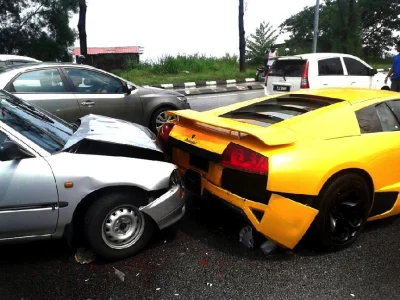
Thailand has a lot of cars and motorcycles on its roads, and it is one of the most dangerous places in the world to drive. Accidents are frequent. On 1 October 2024 a school bus crashed and caught fire on a highway just north of Bangkok, killing 20 children and three teachers.
If you are an expat or a tourist and you have been in a car or motorcycle accident here, two things can happen at once. Someone may owe you money, or you may owe it. And the police may treat the same accident as a crime. This page explains both, and the one deadline that can end a foreign claim before it starts.
Last reviewed: 8 September 2026. This page carried no statutory citation at all, and its one legal figure was wrong: it said the police investigate within 84 days, which is in fact the maximum detention before charge under the Criminal Procedure Code, within the limits on how long police can hold a suspect before a court must approve further detention, and only for offences carrying ten years or more. The civil and criminal law above was added and read against the Thai text in our own annotated Civil and Commercial Code and Criminal Code: the Civil and Commercial Code rules on liability for wrongful acts (the general rule that whoever wrongfully injures another must pay compensation; the rule that puts the burden on the person in control of a vehicle; the rule that the court fixes compensation by the circumstances and gravity of the wrong; the rule that compensation is reduced when the injured person was partly at fault; the rules on compensation for death and for bodily injury, including lost earnings; the rule allowing compensation for pain and suffering; the one year deadline to sue for a wrongful act), the Criminal Code offences of causing death or injury through careless driving, and the limits on how long police can hold a suspect before a court must approve further detention in the Criminal Procedure Code. What this review did NOT check, said rather than implied: the compulsory motor insurance scheme (Por Ror Bor) and any amount payable under it, the Land Traffic Act and its drink driving penalties, and the social security position, none of which is held in our research store; no figure from any of them is stated on this page. The firm’s service description and the linked external pages were not part of this review. Reread on 4 October 2026: the Criminal Code negligence offences and the Civil and Commercial Code rule on compensation for bodily injury rechecked in Thai and correct; the October 2024 bus fire is now located as the linked BBC report places it, outside Bangkok.
Table of Contents
Civil and criminal: two different cases from one accident
Civil liability is about who pays for the damage. Criminal liability is about whether the state prosecutes someone. They run separately and can end differently, so keep them apart in your head from day one.
The law behind this page
English
Section 437
Liability for vehicles and dangerous things.
Full text
A person is responsible for injury caused by any conveyance propelled by mechanism which is in his possession or control, unless he proves that the injury results from force majeure or fault of the injured person. The same applies to the person who has in his possession things which are dangerous by nature, or by their intended use, or on account of their mechanical action.
ThaiLawOnline translation
Section 420
Anyone who intentionally or negligently causes unlawful harm to another's life, body, health, liberty, property, or any other right must pay compensation. This is the foundational tort provision in Thai law.
Full text
A person who, wilfully or negligently, unlawfully injures the life, body, health, liberty, property or any right of another person, is said to commit a wrongful act and is bound to make compensation therefor.
ThaiLawOnline translation
Section 448
Tort claims must be brought within one year of discovering both the harm and the wrongdoer's identity, and in any event within ten years of the act itself. If the act is also a crime with a longer criminal prescription, the longer period applies.
Full text
A claim for damages arising from a wrongful act is barred by prescription after one year from the day when the wrongful act and the person bound to make compensation became known to the injured person, or ten years from the day when the wrongful act was committed. However, if the damages are claimed on account of an act punishable under the criminal law for which a longer prescription is provided, such longer prescription shall apply.
ThaiLawOnline translation
Section 442
Full text
If any fault of the injured party has contributed in causing the injury, the provisions of Section 223 shall apply mutatis mutandis.
ThaiLawOnline translation
Section 444
Damages for bodily injury.
Full text
In the case of an injury to the body or health, the injured person is entitled to receive reimbursement of his expenses and damages for total or partial disability to work, for the present as well as for the future. If at the time of giving judgment it is impossible to ascertain the actual consequences of the injury, the Court may reserve in the judgment the right to revise such judgment for a period not exceeding two years.
ThaiLawOnline translation
Section 291
This section punishes a person whose negligent act causes the death of another. The penalty is imprisonment not exceeding ten years and a fine not exceeding two hundred thousand baht.
Full text
Whoever acts negligently and that act causes the death of another person shall be liable to imprisonment not exceeding ten years and a fine not exceeding two hundred thousand baht.
ThaiLawOnline translation
Section 300
This section punishes negligent conduct that causes grievous bodily harm to another person. The penalty is imprisonment up to three years, a fine up to 60,000 baht, or both.
Full text
Whoever acts negligently and that act causes grievous bodily harm to another person shall be liable to imprisonment not exceeding three years, or a fine not exceeding sixty thousand baht, or both.
ThaiLawOnline translation
Section 390
This section punishes causing bodily or mental harm to another person through negligence, without intent. The penalty is imprisonment of up to one month, a fine of up to 10,000 baht, or both.
Full text
Whoever, by negligence, causes another person to receive injury to body or mind shall be liable to imprisonment not exceeding one month, or a fine not exceeding ten thousand baht, or both.
ThaiLawOnline translation
ไทย
มาตรา 437
ข้อความเต็ม
บุคคลใดครอบครองหรือควบคุมดูแลยานพาหนะอย่างใด ๆ อันเดินด้วยกำลังเครื่องจักรกล บุคคลนั้นจะต้องรับผิดชอบเพื่อการเสียหายอันเกิดแต่ยานพาหนะนั้น เว้นแต่จะพิสูจน์ได้ว่าการเสียหายนั้นเกิดแต่เหตุสุดวิสัย หรือเกิดเพราะความผิดของผู้ต้องเสียหายนั้นเองความข้อนี้ให้ใช้บังคับได้ตลอดถึงบุคคลผู้มีไว้ในครอบครองของตนซึ่งทรัพย์อันเป็นของเกิดอันตรายได้โดยสภาพ หรือโดยความมุ่งหมายที่จะใช้ หรือโดยอาการกลไกของทรัพย์นั้นด้วย
ตรงตามข้อความในราชกิจจานุเบกษา / สำนักงานคณะกรรมการกฤษฎีกา (Verbatim from the Royal Gazette / Office of the Council of State)
มาตรา 420
ข้อความเต็ม
ผู้ใดจงใจหรือประมาทเลินเล่อ ทำต่อบุคคลอื่นโดยผิดกฎหมายให้เขาเสียหายถึงแก่ชีวิตก็ดี แก่ร่างกายก็ดี อนามัยก็ดี เสรีภาพก็ดี ทรัพย์สินหรือสิทธิอย่างหนึ่งอย่างใดก็ดี ท่านว่าผู้นั้นทำละเมิด จำต้องใช้ค่าสินไหมทดแทนเพื่อการนั้น
ตรงตามข้อความในราชกิจจานุเบกษา / สำนักงานคณะกรรมการกฤษฎีกา (Verbatim from the Royal Gazette / Office of the Council of State)
มาตรา 448
ข้อความเต็ม
สิทธิเรียกร้องค่าเสียหายอันเกิดแต่มูลละเมิดนั้น ท่านว่าขาดอายุความเมื่อพ้นปีหนึ่งนับแต่วันที่ผู้ต้องเสียหายรู้ถึงการละเมิดและรู้ตัวผู้จะพึงต้องใช้ค่าสินไหมทดแทน หรือเมื่อพ้นสิบปีนับแต่วันทำละเมิด แต่ถ้าเรียกร้องค่าเสียหายในมูลอันเป็นความผิดมีโทษตามกฎหมายลักษณะอาญาและมีกำหนดอายุความทางอาญายาวกว่าที่กล่าวมานั้นไซร้ ท่านให้เอาอายุความที่ยาวกว่านั้นมาบังคับ
ตรงตามข้อความในราชกิจจานุเบกษา / สำนักงานคณะกรรมการกฤษฎีกา (Verbatim from the Royal Gazette / Office of the Council of State)
มาตรา 442
ข้อความเต็ม
ถ้าความเสียหายได้เกิดขึ้นเพราะความผิดอย่างหนึ่งอย่างใดของผู้ต้องเสียหายประกอบด้วยไซร้ ท่านให้นำบทบัญญัติแห่งมาตรา ๒๒๓ มาใช้บังคับ โดยอนุโลม
ตรงตามข้อความในราชกิจจานุเบกษา / สำนักงานคณะกรรมการกฤษฎีกา (Verbatim from the Royal Gazette / Office of the Council of State)
มาตรา 444
ข้อความเต็ม
ในกรณีทำให้เสียหายแก่ร่างกายหรืออนามัยนั้น ผู้ต้องเสียหายชอบที่จะได้ชดใช้ค่าใช้จ่ายอันตนต้องเสียไป และค่าเสียหายเพื่อการที่เสียความสามารถประกอบการงานสิ้นเชิงหรือแต่บางส่วน ทั้งในเวลาปัจจุบันนั้นและในเวลาอนาคตด้วยถ้าในเวลาที่พิพากษาคดี เป็นพ้นวิสัยจะหยั่งรู้ได้แน่ว่าความเสียหายนั้นได้มีแท้จริงเพียงใด ศาลจะกล่าวในคำพิพากษาว่ายังสงวนไว้ซึ่งสิทธิที่จะแก้ไขคำพิพากษานั้นอีกภายในระยะเวลาไม่เกินสองปีก็ได้
ตรงตามข้อความในราชกิจจานุเบกษา / สำนักงานคณะกรรมการกฤษฎีกา (Verbatim from the Royal Gazette / Office of the Council of State)
มาตรา 291
ข้อความเต็ม
ผู้ใดกระทำโดยประมาท และการกระทำนั้นเป็นเหตุให้ผู้อื่นถึงแก่ความตาย ต้องระวางโทษจำคุกไม่เกินสิบปี และปรับไม่เกินสองแสนบาท หมายเหตุ: [อัตราโทษ แก้ไขเพิ่มเติมโดยมาตรา ๔ แห่งพระราชบัญญัติแก้ไขเพิ่มเติมประมวลกฎหมายอาญา (ฉบับที่ ๒๖) พ.ศ. ๒๕๖๐]
ข้อความจากฐานข้อมูลประมวลกฎหมายของเรา โปรดตรวจสอบกับข้อความทางการ (Thai text from our annotated code. Check it against the official text.)
มาตรา 300
ข้อความเต็ม
ผู้ใดกระทำโดยประมาท และการกระทำนั้นเป็นเหตุให้ผู้อื่นรับอันตรายสาหัส ต้องระวางโทษจำคุกไม่เกินสามปี หรือปรับไม่เกินหกหมื่นบาท หรือทั้งจำทั้งปรับ หมายเหตุ: [อัตราโทษ แก้ไขเพิ่มเติมโดยมาตรา ๔ แห่งพระราชบัญญัติแก้ไขเพิ่มเติมประมวลกฎหมายอาญา (ฉบับที่ ๒๖) พ.ศ. ๒๕๖๐]
ข้อความจากฐานข้อมูลประมวลกฎหมายของเรา โปรดตรวจสอบกับข้อความทางการ (Thai text from our annotated code. Check it against the official text.)
มาตรา 390
ข้อความเต็ม
ผู้ใดกระทำโดยประมาท และการกระทำนั้นเป็นเหตุให้ผู้อื่นรับอันตรายแก่กายหรือจิตใจ ต้องระวางโทษจำคุกไม่เกินหนึ่งเดือน หรือปรับไม่เกินหนึ่งหมื่นบาท หรือทั้งจำทั้งปรับ หมายเหตุ: [อัตราโทษ แก้ไขเพิ่มเติมโดยมาตรา ๖ แห่งพระราชบัญญัติแก้ไขเพิ่มเติมประมวลกฎหมายอาญา (ฉบับที่ ๒๒) พ.ศ. ๒๕๕๘]
ข้อความจากฐานข้อมูลประมวลกฎหมายของเรา โปรดตรวจสอบกับข้อความทางการ (Thai text from our annotated code. Check it against the official text.)
Français
Article 437
Quiconque possède ou contrôle un véhicule à moteur répond du dommage qu'il cause, sauf à prouver une force majeure ou la faute de la victime. Il en va de même pour celui qui détient une chose dangereuse par nature, par sa destination ou par son mécanisme.
résumé non officiel
Article 420
Quiconque, intentionnellement ou par négligence, porte illicitement atteinte à la vie, au corps, à la santé, à la liberté, aux biens ou à un droit quelconque d'autrui commet un délit civil et doit réparer le dommage.
résumé non officiel
Article 448
L'action en réparation née d'un acte illicite se prescrit par un an à compter du jour où la victime a connu l'acte et la personne responsable, ou par dix ans à compter de l'acte; si l'acte est une infraction pénale à prescription plus longue, celle-ci s'applique.
résumé non officiel
Article 442
Si la faute de la victime a contribué au dommage, l'article 223 s'applique par analogie.
résumé non officiel
Article 444
En cas d'atteinte au corps ou à la santé, la victime obtient remboursement de ses frais et réparation de sa perte de capacité de travail, totale ou partielle, présente et future. Si le dommage réel reste incertain au jugement, le tribunal peut prévoir une révision sous deux ans.
résumé non officiel
Article 291
Causer la mort d'autrui par négligence est puni de 10 ans d'emprisonnement au plus et de 200 000 bahts d'amende au plus.
résumé non officiel
Article 300
Quiconque, par négligence, cause à autrui une blessure grave est puni d'un emprisonnement de trois ans au plus, d'une amende de 60 000 bahts au plus, ou des deux.
résumé non officiel
Article 390
Quiconque, par négligence, cause à autrui un préjudice physique ou psychique est puni d'un emprisonnement d'un mois au plus, d'une amende de 10 000 bahts au plus, ou des deux.
résumé non officiel
Supreme Court decisions
- 1326/2510 (1967): Each Driver's Own Negligence Was a Direct Cause, So Both Are Guilty Under Section 291
- 8155/2555 (2012): The Supreme Court upheld the acquittal of an ambulance driver who passed a red light on an emergency run
- 6683/2537 (1994): Borrower Lacks Standing to Claim Vehicle Damage
- 6010/2564 (2021): Civil Evidence Independent of Criminal Proceedings
Sources
- Civil and Commercial Code, Office of the Council of State, retrieved 31 October 2026
- Penal Code, Office of the Council of State, retrieved 31 October 2026
- deka.supremecourt.or.th, Supreme Court of Thailand decisions database (copy held in our library), retrieved 19 February 2026
Who pays: civil liability
The starting point is the general rule that whoever wrongfully injures another must pay compensation, in the Civil and Commercial Code. A person who wilfully or negligently and unlawfully injures the life, body, health, liberty, property or any right of another commits a wrongful act and must pay damages.
For a road accident, a second rule matters more, and it is easy to miss. Under the rule that puts the burden on the person in control of a vehicle, a person who has in his possession or control a conveyance propelled by mechanism is responsible for the injury it causes unless he proves that the injury resulted from force majeure or from the fault of the injured person. The burden sits on the person in control of the vehicle, not on the person it hit. An injured pedestrian, passenger or motorcyclist does not start by proving how the driver was careless. The driver starts by having to explain. The same rule applies to things that are dangerous by their nature, by their intended use, or through their mechanical action.
Years ago, near Pak Chong, we had a case where a motorcyclist was killed. The damages came to only about 100,000 baht. I was stunned at how low a value was put on a life.
That does not make a claim automatic. If the injured person was partly at fault, the rule that compensation is reduced when the injured person was partly at fault applies, and compensation depends on the circumstances, above all on how far the injury was caused chiefly by one side or the other. Riding without a helmet, crossing away from a crossing or riding without a licence are the kinds of facts a Thai court weighs here. This is where evidence and negotiation decide the number.
What you can claim, and the deadline that ends it
The court fixes the manner and extent of compensation according to the circumstances and the gravity of the wrongful act (the rule that the court fixes compensation by the circumstances and gravity of the wrong). Where a person is injured, the rule on compensation for bodily injury covers expenses and damages for total or partial inability to work, present and future. The court may also reserve the right to revise its judgment for up to two years where the consequences of the injury cannot yet be known, which matters in a head or spinal injury.
Under the rule allowing compensation for pain and suffering, you can claim for damage that is not financial loss, the nearest Thai equivalent to pain and suffering. That claim cannot be transferred and does not pass to heirs unless it has been acknowledged by contract or an action on it has already been started. Where the accident causes death, the same rules cover funeral and other necessary expenses, medical treatment and loss of earnings if death was not immediate, and compensation for anyone deprived of legal support they were entitled to.
Now the deadline. It is short, and it is an easy way for a foreign victim to lose a good claim. Under the one year deadline to sue for a wrongful act, a claim for damages from a wrongful act is barred one year from the day the injured person knew both of the wrongful act and of the person liable to pay, and in any event ten years from the day the act was committed. Where the act is also a criminal offence carrying a longer limitation period, that longer period applies instead.
One year passes quickly when you have gone home to recover. Talks with an insurer do not stop that clock on their own. Only a clear acknowledgment of your claim, such as a written admission or a part payment, restarts it, so do not let a negotiation run past the deadline without filing.
When the state prosecutes: criminal liability
Criminal liability means the state prosecutes someone believed to have broken traffic law and caused the accident. Charges can include reckless driving, driving under the influence of alcohol or drugs, or other traffic offences. Where the harm was caused by negligence rather than intention, the Criminal Code offences of causing death or injury through careless driving are graded by the injury done:
- causing injury to body or mind by negligence: up to one month or a fine of up to 10,000 baht, or both;
- causing grievous bodily harm by negligence: up to three years or a fine of up to 60,000 baht, or both;
- causing death by negligence: up to ten years and a fine of up to 200,000 baht.
Which of the three is in play tells you how serious your position is.

The 84 days people keep quoting
Eighty four days is not an investigation deadline. It is the longest a court may order a person held in custody before charge under the limits on how long police can hold a suspect before a court must approve further detention, in the Criminal Procedure Code, in periods of no more than twelve days at a time, and only where the offence carries a maximum penalty of ten years or more. For an offence above six months and below ten years the total is 48 days, and at six months or below it is seven days on a single order. It does not run at all against someone released on bail, and it says nothing about how long the police may take to complete a file.
A conviction can mean a fine, prison, or both. A defence lawyer can work to reduce charges, argue for a lower penalty, or in some cases get charges dismissed for procedural errors or insufficient evidence.
Frequently asked questions
Who has to prove fault after a road accident in Thailand?
The person in possession or control of the vehicle. Under the Civil and Commercial Code, that person is liable for the injury the vehicle causes unless they prove force majeure or the injured person’s own fault. An injured pedestrian, passenger or motorcyclist does not start by proving the driver was careless.
How long do I have to sue for damages after an accident in Thailand?
One year from the day you knew of the wrongful act and of the person liable, and in any event ten years from the act. If the act is also a criminal offence with a longer limitation period, that period applies. Talks with an insurer do not stop the clock.
What compensation can I claim for an injury?
Your expenses and damages for total or partial inability to work, now and in the future, plus damage that is not financial loss, the nearest Thai equivalent to pain and suffering. If the consequences of the injury cannot yet be known, the court may reserve the right to revise its judgment for up to two years.
What are the criminal penalties for causing an accident by negligence?
Causing injury by negligence: up to one month or a fine of up to 10,000 baht, or both. Grievous bodily harm: up to three years or a fine of up to 60,000 baht, or both. Death: up to ten years and a fine of up to 200,000 baht.
What to do now
Take photos and videos of the scene, the vehicles and your injuries. Keep every medical record and receipt. File your insurance claim. Be careful what you agree with the other side before you have advice. A simple accident always raises civil liability in Thailand, and depending on the facts it can also be a Thai criminal infraction.
Your claim can include medical costs now and later, lost wages, and loss of future earnings. We can collect the evidence, deal with the insurers and the other party, and push for a settlement that reflects what you actually lost. If it does not settle, our Thai lawyers can take it to court.
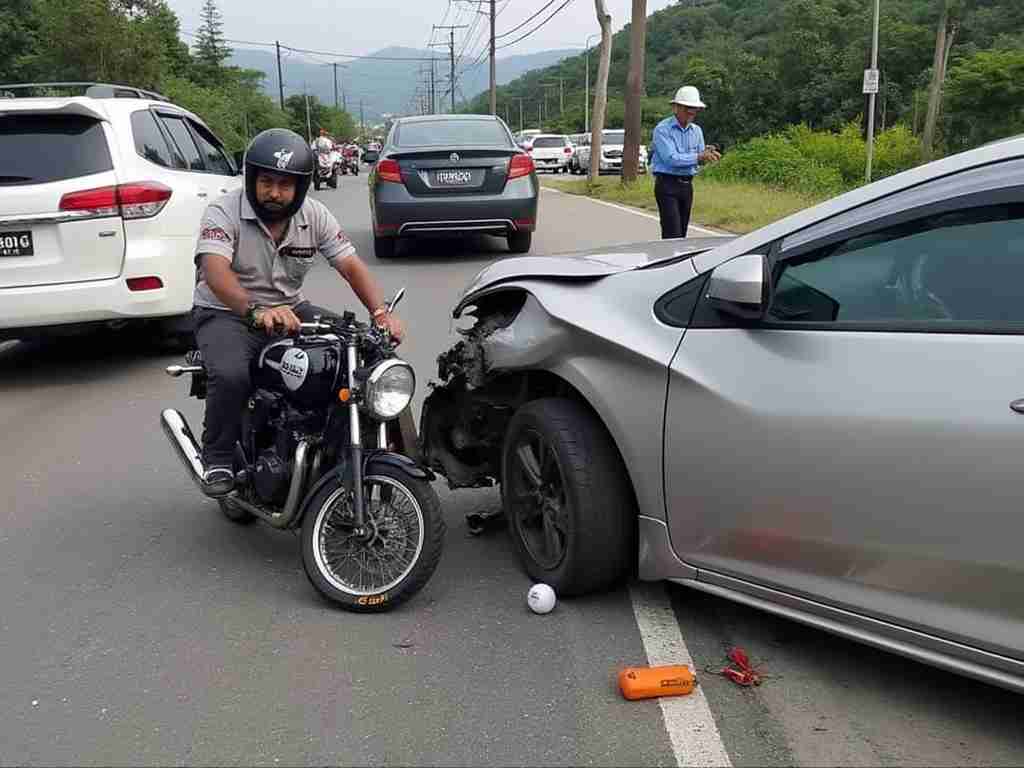
Thailand is harder when you do not read Thai and the system works differently from home. Every case needs to be looked at on its own facts, and the one year clock means you should not wait. Write to us at info@thailawonline.com or call.
Useful links:
- Compulsory Motor Vehicle Insurance in Thailand (Por Ror Bor)
- Social Security in Thailand (if you have social security in Thailand, some medical fees can be paid by it)
Thai Law Updates, free by email
Plain-English updates on Thai law changes that affect foreigners: property, visas, marriage, business and wills. One short email a month from a firm practicing since 2006. No spam, unsubscribe anytime.