


Reviewed by Wichuda Atthamethakon, LL.M., Thai Bar Licence 3149/2556, for ThaiLawOnline, a Thai law firm acting for foreigners since 2006.
Update log
- 2 November 2026: Added the statute box with Thai, English and French text and checked the page against the official text
Thailand’s volunteer visa system offers foreigners the opportunity to contribute meaningfully to Thai society through unpaid volunteer work with registered organizations. The Volunteer Visa in Thailand process is heavily regulated and requires strict legal compliance to avoid serious consequences including deportation and permanent blacklisting.
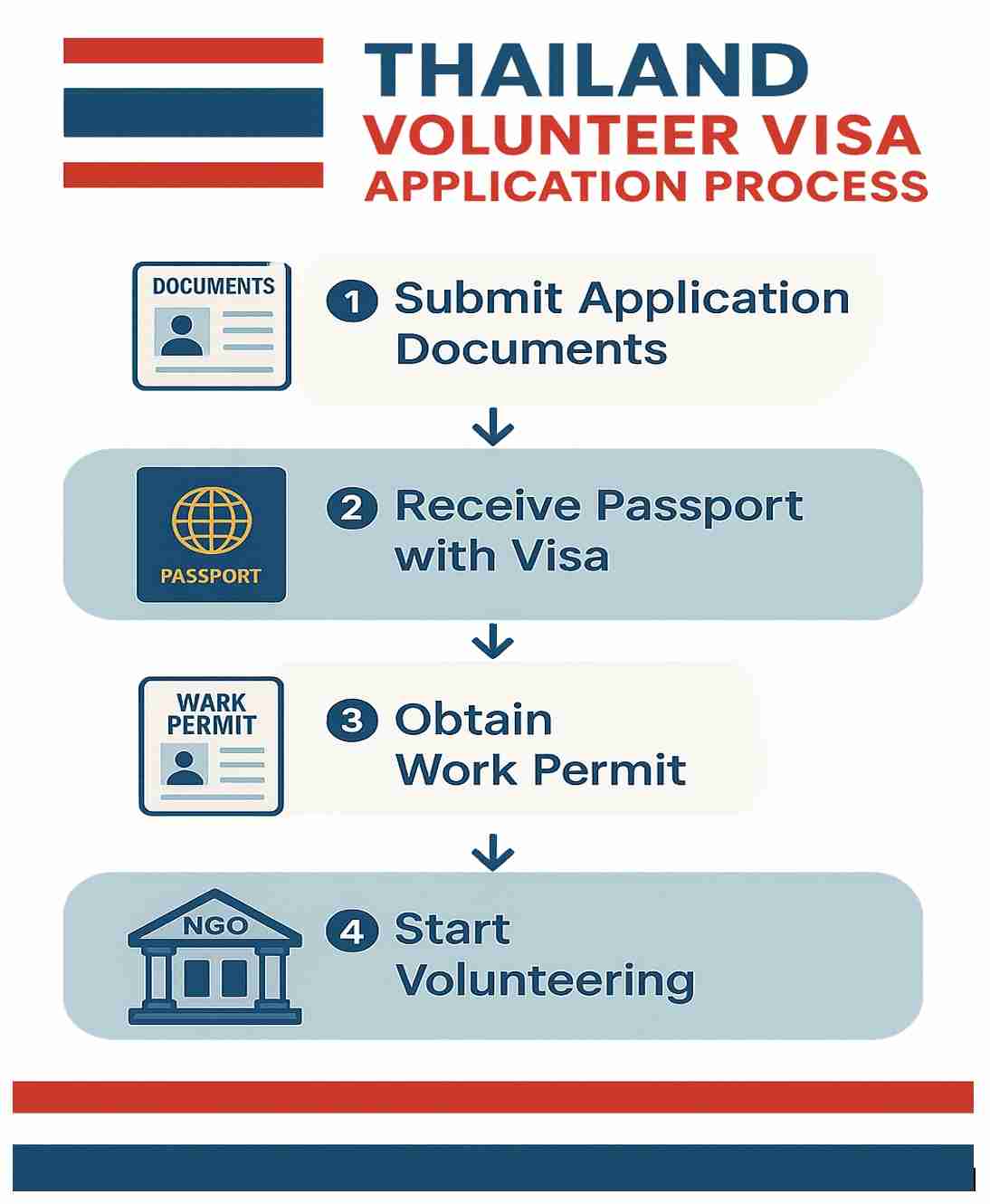
Table of Contents
Understanding Thailand’s Volunteer Visa Framework
What is a Volunteer Visa?
A volunteer visa in Thailand is a Non-Immigrant O visa. It is given for volunteer work with approved organizations. This visa system is for foreigners who want to do unpaid work with registered NGOs, charities, and social welfare groups. The visa lets you stay for up to 90 days. You can extend it for up to one year.
The Volunteer Visa in Thailand is for people who want to help others. It also lets them enjoy Thailand’s rich culture and beautiful scenery.
Critical Legal Requirements
Volunteering is governed by the Emergency Decree on Managing the Work of Aliens B.E. 2560, not by immigration law alone. Section 8 of that Decree forbids a foreigner to work without a work permit, or to work outside what the permit allows. The starting point for a volunteer is therefore a Non-Immigrant O visa and a work permit arranged by the host organisation.
The penalty on the volunteer is set by section 101 as replaced by the No. 2 Emergency Decree B.E. 2561: a fine of 5,000 to 50,000 baht, and once the fine is paid the foreigner is sent out of the Kingdom. There is no prison sentence. The five year prison term still quoted on many websites is the original 2017 wording of section 101, which was replaced in 2018 and is no longer the law.
The organisation carries the heavier exposure. Under section 102, taking on a foreigner who holds no work permit costs 10,000 to 100,000 baht for each foreigner taken on. A repeat offence carries up to one year in prison, or 50,000 to 200,000 baht per foreigner, or both, and a three year bar on employing foreigners at all.
Being unpaid does not put the activity outside the Decree. Section 5 defines work as engaging in any occupation, whether or not there is an employer. That wording replaced the 2017 definition, which turned expressly on whether wages or another benefit were intended. Neither version creates an exemption for unpaid help, so a volunteer who cannot show the activity falls outside the definition needs the permit.
The law behind this page
English
Section 8 Emergency Decree on Managing the Work of Foreigners B.E. 2560
Full text
An alien is prohibited from working without a work permit, or from doing work beyond what the alien has the right to do, in violation of this Emergency Decree.
ThaiLawOnline translation
Section 5 Emergency Decree on Managing the Work of Foreigners B.E. 2560
Full text
In this Emergency Decree: “bringing aliens in to work” means any act carried out to bring an alien into the Kingdom in order to work; “work” means engaging in any occupation, whether or not there is an employer, but does not include the conduct of business by a licensee under the law on foreign business; “alien” means a natural person who does not hold Thai nationality; “employer” means an employer under the law on labour protection, and includes a natural person or juristic person who wishes to bring an alien in to work with that person in the country; “employee” means a person who works for an employer in return for wages; “licence to bring aliens in to work” means a licence to conduct the business of bringing aliens in to work with employers in the country; “person licensed to bring aliens in to work” means a person conducting the business of bringing aliens in to work with employers in the country who has received a licence to bring aliens in to work; “work permit” means an alien's permit to work; “work permit holder” means an alien who has been permitted to work; “office” means the office of a person licensed to bring aliens in to work; “service fee” means money or any other benefit given in return for bringing aliens in to work; “expenses” means the expenses of bringing aliens in to work; “Fund” means the Fund for the Management of the Work of Aliens; “Fund Committee” means the Committee of the Fund for the Management of the Work of Aliens; “Committee” means the Policy Committee on the Management of the Work of Aliens; “competent official” means a person appointed by the Minister to act under this Emergency Decree; “registrar” means the Director-General and a competent official appointed by the Minister on the recommendation of the Director-General to issue work permits and perform other acts under this Emergency Decree; “Director-General” means the Director-General of the Department of Employment; “Minister” means the Minister in charge of this Emergency Decree.
ThaiLawOnline translation
Section 59 Emergency Decree on Managing the Work of Foreigners B.E. 2560
Full text
An alien who resides in the Kingdom, or who has been permitted to enter the Kingdom temporarily under the immigration law other than for tourism or transit through the Kingdom, may do only work not prohibited to aliens by notification under Section 7 paragraph one, and must obtain a work permit. Subject to Section 60, an alien wishing to obtain a work permit under paragraph one shall file an application with the Registrar and, where the alien already has an employer, shall also state the employer's name. The application and the grant of permission under paragraphs one and two shall be in accordance with the rules, procedures and conditions prescribed in ministerial regulations, which may provide for the use of electronic means. A work permit is valid for the period requested by the applicant, but not more than 2 years from the date of issue of the work permit. The ministerial regulations under paragraph three must also prescribe a completion period from the date of receipt of the application to the date of issue of the work permit, which must not exceed 15 working days. Where the Registrar cannot issue the work permit within that period, the Minister or the Director-General shall take action against the officials concerned as the case requires. Where the failure to issue the work permit was without reasonable cause, it is deemed a disciplinary offence and disciplinary action shall follow. Subject to the law, a person permitted to work under paragraph one has the right to do every kind of work not prohibited to aliens by notification under Section 7 paragraph one.
ThaiLawOnline translation
Section 101 Emergency Decree on Managing the Work of Foreigners B.E. 2560
Full text
An alien who violates Section 8 is liable to a fine of 5,000 to 50,000 baht and, once the fine has been paid, shall be sent out of the Kingdom without delay, unless the alien falls under Section 63 or Section 63/1. Paragraph one does not apply to an alien who is an injured person or a witness in a human trafficking offence case under the law on the prevention and suppression of human trafficking. Where an alien accused of an offence under paragraph one consents to travel back out of the Kingdom, the inquiry official shall settle the case by fine in accordance with the rules, procedures and conditions set by the Joint Committee and then notify the Department of Employment, and once the alien has been made to travel back out of the Kingdom, the case is deemed terminated under the Criminal Procedure Code. The Joint Committee under paragraph three consists of a representative of the Office of the Attorney General as chairperson, a representative of the Royal Thai Police as member, and a representative of the Department of Employment as member and secretary. The rules, procedures and conditions for settlement by fine set by the Joint Committee under paragraph three shall take into account the gravity of the offence, repeat offending and the prevention of repeat offending, and shall be published in the Government Gazette.
ThaiLawOnline translation
Section 102 Emergency Decree on Managing the Work of Foreigners B.E. 2560
Full text
A person who takes an alien into work in violation of Section 9 is liable to a fine of 10,000 to 100,000 baht per alien employed. If the offender under paragraph one repeats the offence, the offender is liable to imprisonment for not more than 1 year, or a fine of 50,000 to 200,000 baht per alien employed, or both, and is prohibited from employing aliens for 3 years from the date of the final court judgment imposing punishment. A person living in the same family as the person who took the alien into work under paragraph one shall not be deemed guilty as principal, instigator or supporter.
ThaiLawOnline translation
Section 61 Emergency Decree on Managing the Work of Foreigners B.E. 2560
Full text
An alien who enters the Kingdom temporarily under the law on immigration to perform work of an essential or urgent nature, or ad hoc work, with a working period to be completed within 15 days, may perform that work once the registrar has been notified in writing. Work of an essential or urgent nature or ad hoc work under paragraph one shall be as prescribed by notification of the Director-General. An alien performing work under paragraph one who does not finish within that period may request an extension not exceeding 15 days by notifying the registrar before that period expires. The notification under paragraphs one and three and the issue of the letter acknowledging the notification shall follow the rules and procedures prescribed in a Ministerial Regulation.
ThaiLawOnline translation
Section 37 Immigration Act B.E. 2522
Full text
An alien permitted to stay in the Kingdom temporarily must comply with the following: (1) not engage in an occupation or work for hire, unless permitted under the law on foreign business or the law on the management of alien employment; (2) reside at the place notified to the competent official, except that where there is reasonable cause preventing residence at the notified place, the alien shall notify the competent official of the change of residence within 24 hours from the time of taking up residence; (3) notify a police officer at the local police station where the alien resides within 24 hours from the time of moving, in case of a change of residence, and if the new residence is in a different locality from the original local police station, the alien must also notify a police officer at the local police station of the new residence within 24 hours from the time of arrival; (4) if travelling to any province and staying in that province for more than 24 hours, notify a police officer at the local police station within 48 hours from the time of arrival; (5) if staying in the Kingdom for more than 90 days, notify the competent official at the Immigration Division in writing of the alien's place of residence without delay upon completing the 90-day period, and do the same every 90 days thereafter. In a locality where an immigration office is located, the notification may be made to the competent official at that immigration office. Whether (3) and (4) shall not apply to any case under section 34, and on what conditions, shall be as the Director-General prescribes. A notification under this section may be made by the alien in person or in writing to the competent official, in accordance with rules prescribed by the Director-General.
ThaiLawOnline translation
Section 38 Immigration Act B.E. 2522
Full text
A house master, an owner or occupier of a dwelling, or a hotel manager who receives as a resident an alien permitted to stay in the Kingdom temporarily must notify the competent official at the immigration office located in the locality of the house, dwelling or hotel within 24 hours from the time the alien takes up residence. If no immigration office is located in that locality, the notification shall be made to a police officer at the local police station. Where the house, dwelling or hotel in which the alien resides under paragraph one is located in the Bangkok Metropolitan area, the notification shall be made to the competent official at the Immigration Division. Notification under paragraphs one and two shall be in accordance with rules prescribed by the Director-General.
ThaiLawOnline translation
ไทย
มาตรา 8 พระราชกำหนดการบริหารจัดการการทำงานของคนต่างด้าว พ.ศ. 2560
ข้อความเต็ม
ห้ามคนต่างด้าวทำงานโดยไม่มีใบอนุญาตทำงานหรือทำงานนอกเหนือจากที่มีสิทธิจะทำได้อันเป็นการฝ่าฝืนพระราชกำหนดนี้
ตรงตามข้อความในราชกิจจานุเบกษา / สำนักงานคณะกรรมการกฤษฎีกา (Verbatim from the Royal Gazette / Office of the Council of State)
มาตรา 5 พระราชกำหนดการบริหารจัดการการทำงานของคนต่างด้าว พ.ศ. 2560
ข้อความเต็ม
ในพระราชกำหนดนี้ “การนำคนต่างด้าวมาทำงาน" หมายความว่า การดำเนินการใด ๆ เพื่อนำคนต่างด้าวเข้ามาในราชอาณาจักรเพื่อทำงาน “ทำงาน” หมายความว่า การประกอบอาชีพใด ๆ ไม่ว่าจะมีนายจ้างหรือไม่ แต่ไม่รวมถึงการประกอบธุรกิจของผู้รับใบอนุญาตตามกฎหมายว่าด้วยการประกอบธุรกิจของคนต่างด้าว “คนต่างด้าว” หมายความว่า บุคคลธรรมดาซึ่งไม่มีสัญชาติไทย “นายจ้าง” หมายความว่า นายจ้างตามกฎหมายว่าด้วยการคุ้มครองแรงงาน และให้หมายความรวมถึงบุคคลธรรมดาหรือนิติบุคคลที่ประสงค์จะนำคนต่างด้าวมาทำงานในประเทศกับตนด้วย “ลูกจ้าง” หมายความว่า ผู้ซึ่งทำงานให้นายจ้างโดยรับค่าจ้าง “ใบอนุญาตนำคนต่างด้าวมาทำงาน" หมายความว่า ใบอนุญาตให้ประกอบธุรกิจการนำคนต่างด้าวมาทำงานกับนายจ้างในประเทศ “ผู้รับอนุญาตให้นำคนต่างด้าวมาทำงาน" หมายความว่า ผู้ประกอบธุรกิจการนำคนต่างด้าวมาทำงานกับนายจ้างในประเทศซึ่งได้รับใบอนุญาตนำคนต่างด้าวมาทำงาน “ใบอนุญาตทำงาน” หมายความว่า ใบอนุญาตทำงานของคนต่างด้าว “ผู้รับอนุญาตให้ทำงาน” หมายความว่า คนต่างด้าวซึ่งได้รับอนุญาตให้ทำงาน “สำนักงาน” หมายความว่า สำนักงานของผู้รับอนุญาตให้นำคนต่างด้าวมาทำงาน “ค่าบริการ” หมายความว่า เงินหรือประโยชน์อย่างอื่นที่ให้เป็นการตอบแทนการนำคนต่างด้าวมาทำงาน “ค่าใช้จ่าย” หมายความว่า ค่าใช้จ่ายในการนำคนต่างด้าวมาทำงาน “กองทุน” หมายความว่า กองทุนเพื่อการบริหารจัดการการทำงานของคนต่างด้าว “คณะกรรมการกองทุน” หมายความว่า คณะกรรมการกองทุนเพื่อการบริหารจัดการการทำงานของคนต่างด้าว “คณะกรรมการ” หมายความว่า คณะกรรมการนโยบายการบริหารจัดการการทำงานของคนต่างด้าว “พนักงานเจ้าหน้าที่” หมายความว่า ผู้ซึ่งรัฐมนตรีแต่งตั้งให้ปฏิบัติการตามพระราชกำหนดนี้ “นายทะเบียน” หมายความว่า อธิบดีและพนักงานเจ้าหน้าที่ซึ่งรัฐมนตรีแต่งตั้งตามข้อเสนอแนะของอธิบดี เพื่อออกใบอนุญาตทำงานและปฏิบัติการอื่นตามพระราชกำหนดนี้ “อธิบดี” หมายความว่า อธิบดีกรมการจัดหางาน “รัฐมนตรี” หมายความว่า รัฐมนตรีผู้รักษาการตามพระราชกำหนดนี้
ตรงตามข้อความในราชกิจจานุเบกษา / สำนักงานคณะกรรมการกฤษฎีกา (Verbatim from the Royal Gazette / Office of the Council of State)
มาตรา 59 พระราชกำหนดการบริหารจัดการการทำงานของคนต่างด้าว พ.ศ. 2560
ข้อความเต็ม
คนต่างด้าวซึ่งมีถิ่นที่อยู่ในราชอาณาจักรหรือได้รับอนุญาตให้เข้ามาในราชอาณาจักรเป็นการชั่วคราวตามกฎหมายว่าด้วยคนเข้าเมืองซึ่งมิใช่เพื่อการท่องเที่ยวหรือการเดินทางผ่านราชอาณาจักร จะทำงานได้ก็แต่เฉพาะงานที่มิได้มีประกาศห้ามคนต่างด้าวทำตามมาตรา ๗ วรรคหนึ่ง และต้องได้รับใบอนุญาตทำงาน ภายใต้บังคับมาตรา ๖๐ คนต่างด้าวซึ่งประสงค์จะขอรับใบอนุญาตทำงานตามวรรคหนึ่ง ให้ยื่นคำขออนุญาตต่อนายทะเบียน และในกรณีที่มีนายจ้างแล้วให้ระบุชื่อนายจ้างด้วย การขออนุญาตและการอนุญาตตามวรรคหนึ่งและวรรคสอง ให้เป็นไปตามหลักเกณฑ์ วิธีการ และเงื่อนไขที่กำหนดในกฎกระทรวง โดยจะกำหนดให้ใช้วิธีการทางอิเล็กทรอนิกส์ก็ได้ และใบอนุญาตทำงานให้มีอายุเท่าที่ผู้ขออนุญาตร้องขอ แต่ไม่เกินสองปีนับแต่วันที่ออกใบอนุญาตทำงาน ในกฎกระทรวงตามวรรคสามต้องกำหนดระยะเวลาแล้วเสร็จตั้งแต่วันที่ได้รับคำขออนุญาตจนถึงวันที่ออกใบอนุญาตทำงานไว้ด้วยซึ่งต้องไม่เกินสิบห้าวันทำการ ในกรณีที่นายทะเบียนไม่สามารถออกใบอนุญาตทำงานให้ได้ภายในกำหนดเวลา ให้รัฐมนตรีหรืออธิบดีดำเนินการกับเจ้าหน้าที่ที่เกี่ยวข้องตามควรแก่กรณี ในกรณีที่การไม่ออกใบอนุญาตทำงานนั้นเป็นไปโดยไม่มีเหตุอันสมควร ให้ถือว่าเป็นการกระทำผิดวินัย และให้มีการดำเนินการทางวินัยต่อไป ภายใต้บังคับแห่งกฎหมาย ผู้รับอนุญาตให้ทำงานตามวรรคหนึ่งมีสิทธิทำงานที่มิได้มีประกาศห้ามคนต่างด้าวทำตามมาตรา ๗ วรรคหนึ่งได้ทุกชนิด
ตรงตามข้อความในราชกิจจานุเบกษา / สำนักงานคณะกรรมการกฤษฎีกา (Verbatim from the Royal Gazette / Office of the Council of State)
มาตรา 101 พระราชกำหนดการบริหารจัดการการทำงานของคนต่างด้าว พ.ศ. 2560
ข้อความเต็ม
คนต่างด้าวผู้ใดฝ่าฝืนมาตรา ๘ ต้องระวางโทษปรับตั้งแต่ห้าพันบาทถึงห้าหมื่นบาท และเมื่อได้ชำระค่าปรับแล้ว ให้ส่งคนต่างด้าวผู้นั้นกลับออกไปนอกราชอาณาจักรโดยเร็ว เว้นแต่เป็นคนต่างด้าวตามมาตรา ๖๓ หรือมาตรา ๖๓/๑ ความในวรรคหนึ่งไม่ใช้บังคับแก่คนต่างด้าวซึ่งเป็นผู้เสียหายหรือพยานในคดีความผิดฐานค้ามนุษย์ ตามกฎหมายว่าด้วยการป้องกันและปราบปรามการค้ามนุษย์ ในกรณีที่คนต่างด้าวซึ่งถูกกล่าวหาว่ากระทำความผิดตามวรรคหนึ่ง ยินยอมเดินทางกลับออกไปนอกราชอาณาจักร ให้พนักงานสอบสวนดำเนินการเปรียบเทียบปรับตามหลักเกณฑ์ วิธีการ และเงื่อนไขที่คณะกรรมการร่วมกำหนดแล้วแจ้งให้กรมการจัดหางานทราบ และเมื่อได้ดำเนินการให้คนต่างด้าวนั้นเดินทางกลับออกไปนอกราชอาณาจักรแล้ว ให้ถือว่าคดีเลิกกันตามประมวลกฎหมายวิธีพิจารณาความอาญา คณะกรรมการร่วมตามวรรคสาม ประกอบด้วย ผู้แทนสำนักงานอัยการสูงสุดเป็นประธานกรรมการ ผู้แทนสำนักงานตำรวจแห่งชาติเป็นกรรมการ และผู้แทนกรมการจัดหางานเป็นกรรมการและเลขานุการ หลักเกณฑ์ วิธีการ และเงื่อนไขในการเปรียบเทียบปรับที่คณะกรรมการร่วมกำหนดตามวรรคสาม ให้คำนึงถึงสภาพความร้ายแรงของการกระทำความผิด การกระทำความผิดซ้ำ และการป้องกันมิให้ผู้กระทำความผิดกระทำความผิดซ้ำอีก และให้ประกาศในราชกิจจานุเบกษา
ตรงตามข้อความในราชกิจจานุเบกษา / สำนักงานคณะกรรมการกฤษฎีกา (Verbatim from the Royal Gazette / Office of the Council of State)
มาตรา 102 พระราชกำหนดการบริหารจัดการการทำงานของคนต่างด้าว พ.ศ. 2560
ข้อความเต็ม
ผู้ใดเป็นผู้รับคนต่างด้าวเข้าทำงานโดยฝ่าฝืนมาตรา ๙ ต้องระวางโทษปรับตั้งแต่หนึ่งหมื่นบาทถึงหนึ่งแสนบาทต่อคนต่างด้าวที่จ้างหนึ่งคน ถ้าผู้กระทำความผิดตามวรรคหนึ่งกระทำผิดซ้ำอีก ต้องระวางโทษจำคุกไม่เกินหนึ่งปี หรือปรับตั้งแต่ห้าหมื่นบาทถึงสองแสนบาทต่อคนต่างด้าวที่จ้างหนึ่งคน หรือทั้งจำทั้งปรับ และห้ามผู้นั้นจ้างคนต่างด้าวทำงานเป็นเวลาสามปีนับแต่วันที่ศาลมีคำพิพากษาถึงที่สุดให้ลงโทษ มิให้ถือว่าผู้ซึ่งอยู่อาศัยในครอบครัวเดียวกันกับผู้รับคนต่างด้าวเข้าทำงานตามวรรคหนึ่งมีความผิดในฐานะตัวการ ผู้ใช้ หรือผู้สนับสนุน
ตรงตามข้อความในราชกิจจานุเบกษา / สำนักงานคณะกรรมการกฤษฎีกา (Verbatim from the Royal Gazette / Office of the Council of State)
มาตรา 61 พระราชกำหนดการบริหารจัดการการทำงานของคนต่างด้าว พ.ศ. 2560
ข้อความเต็ม
คนต่างด้าวซึ่งเข้ามาในราชอาณาจักรเป็นการชั่วคราวตามกฎหมายว่าด้วยคนเข้าเมือง เพื่อทำงานอันมีลักษณะจำเป็นหรือเร่งด่วน หรือเป็นงานเฉพาะกิจ ที่มีระยะเวลาทำงานให้เสร็จสิ้นภายในสิบห้าวัน จะทำงานนั้นได้เมื่อได้มีหนังสือแจ้งให้นายทะเบียนทราบ งานอันมีลักษณะจำเป็นหรือเร่งด่วนหรืองานเฉพาะกิจตามวรรคหนึ่ง ให้เป็นไปตามที่อธิบดีประกาศกำหนด คนต่างด้าวที่ทำงานตามวรรคหนึ่ง หากไม่แล้วเสร็จภายในกำหนดดังกล่าว อาจขอขยายเวลาได้ไม่เกินสิบห้าวันโดยแจ้งให้นายทะเบียนทราบก่อนครบกำหนดดังกล่าว การแจ้งตามวรรคหนึ่งและวรรคสาม และการออกหนังสือรับแจ้ง ให้เป็นไปตามหลักเกณฑ์และวิธีการที่กำหนดในกฎกระทรวง
ตรงตามข้อความในราชกิจจานุเบกษา / สำนักงานคณะกรรมการกฤษฎีกา (Verbatim from the Royal Gazette / Office of the Council of State)
มาตรา 37 พระราชบัญญัติคนเข้าเมือง พ.ศ. 2522
ข้อความเต็ม
คนต่างด้าวซึ่งได้รับอนุญาตให้อยู่ในราชอาณาจักรเป็นการชั่วคราว ต้องปฏิบัติดังต่อไปนี้ (๑) ไม่ประกอบอาชีพหรือรับจ้างทำงาน เว้นแต่จะได้รับอนุญาตตามกฎหมายว่าด้วยการประกอบธุรกิจของคนต่างด้าวหรือกฎหมายว่าด้วยการบริหารจัดการการทำงานของคนต่างด้าว (๒) พักอาศัย ณ ที่ที่ได้แจ้งต่อพนักงานเจ้าหน้าที่ เว้นแต่ในกรณีที่มีเหตุผลสมควรไม่สามารถพักอาศัย ณ ที่ที่ได้แจ้งต่อพนักงานเจ้าหน้าที่ ให้แจ้งการเปลี่ยนที่พักอาศัยต่อพนักงานเจ้าหน้าที่ภายในยี่สิบสี่ชั่วโมงนับแต่เวลาที่เข้าพักอาศัย (๓) แจ้งต่อเจ้าพนักงานตำรวจ ณ สถานีตำรวจท้องที่ที่คนต่างด้าวผู้นั้นพักอาศัยภายในยี่สิบสี่ชั่วโมงนับแต่เวลาที่ย้ายไป ในกรณีเปลี่ยนที่พักอาศัย และถ้าที่พักอาศัยใหม่อยู่ต่างท้องที่กับสถานีตำรวจท้องที่เดิม คนต่างด้าวผู้นั้นต้องแจ้งต่อเจ้าพนักงานตำรวจ ณ สถานีตำรวจท้องที่ที่ไปพักอาศัยใหม่ภายในยี่สิบสี่ชั่วโมงนับแต่เวลาที่ไปถึงด้วย (๔) ถ้าเดินทางไปจังหวัดใดและอยู่ในจังหวัดนั้นเกินยี่สิบสี่ชั่วโมง ให้คนต่างด้าวผู้นั้นแจ้งต่อเจ้าพนักงานตำรวจ ณ สถานีตำรวจท้องที่ภายในสี่สิบแปดชั่วโมงนับแต่เวลาที่ไปถึง (๕) ถ้าอยู่ในราชอาณาจักรเกินเก้าสิบวัน คนต่างด้าวผู้นั้นต้องมีหนังสือแจ้งให้พนักงานเจ้าหน้าที่ ณ กองตรวจคนเข้าเมืองทราบถึงที่พักอาศัยของตนโดยมิชักช้าเมื่อครบระยะเก้าสิบวัน และต่อไปให้กระทำเช่นเดียวกันทุกระยะเก้าสิบวัน ถ้าท้องที่ใดมีที่ทำการตรวจคนเข้าเมืองตั้งอยู่ จะแจ้งต่อพนักงานเจ้าหน้าที่ ณ ที่ทำการตรวจคนเข้าเมืองแห่งนั้นก็ได้ ความใน (๓) และ (๔) จะมิให้ใช้บังคับแก่กรณีใดตามมาตรา ๓๔ โดยเงื่อนไขอย่างใด ให้เป็นไปตามที่อธิบดีกำหนด การแจ้งตามมาตรานี้ คนต่างด้าวอาจไปแจ้งด้วยตนเองหรือมีหนังสือแจ้งต่อพนักงานเจ้าหน้าที่ก็ได้ ทั้งนี้ ตามระเบียบที่อธิบดีกำหนด
ตรงตามข้อความในราชกิจจานุเบกษา / สำนักงานคณะกรรมการกฤษฎีกา (Verbatim from the Royal Gazette / Office of the Council of State)
มาตรา 38 พระราชบัญญัติคนเข้าเมือง พ.ศ. 2522
ข้อความเต็ม
เจ้าบ้าน เจ้าของหรือผู้ครอบครองเคหสถาน หรือผู้จัดการโรงแรมซึ่งรับคนต่างด้าวซึ่งได้รับอนุญาตให้อยู่ในราชอาณาจักรเป็นการชั่วคราวเข้าพักอาศัย จะต้องแจ้งต่อพนักงานเจ้าหน้าที่ ณ ที่ทำการตรวจคนเข้าเมืองซึ่งตั้งอยู่ในท้องที่ที่บ้าน เคหสถาน หรือโรงแรมนั้นตั้งอยู่ภายในยี่สิบสี่ชั่วโมงนับแต่เวลาที่คนต่างด้าวเข้าพักอาศัย ถ้าท้องที่ใดไม่มีที่ทำการตรวจคนเข้าเมืองตั้งอยู่ให้แจ้งต่อเจ้าพนักงานตำรวจ ณ สถานีตำรวจท้องที่นั้น ในกรณีที่บ้าน เคหสถาน หรือโรงแรมที่คนต่างด้าวเข้าพักอาศัยตามวรรคหนึ่งตั้งอยู่ในเขตท้องที่กรุงเทพมหานคร ให้แจ้งต่อพนักงานเจ้าหน้าที่ ณ กองตรวจคนเข้าเมือง การแจ้งตามวรรคหนึ่งและวรรคสองให้เป็นไปตามระเบียบที่อธิบดีกำหนด
ตรงตามข้อความในราชกิจจานุเบกษา / สำนักงานคณะกรรมการกฤษฎีกา (Verbatim from the Royal Gazette / Office of the Council of State)
Français
Article 8 Emergency Decree on Managing the Work of Foreigners B.E. 2560
Il est interdit à l'étranger de travailler sans permis de travail ou au-delà de ce qu'il a le droit de faire, en violation du présent décret.
résumé non officiel
Article 5 Emergency Decree on Managing the Work of Foreigners B.E. 2560
Définit les termes du décret, notamment « travailler » (exercer toute occupation, avec ou sans employeur, hors entreprise d'un titulaire de licence selon la loi sur les activités des étrangers), « étranger » (personne physique sans nationalité thaïlandaise), « employeur » et « permis de travail ».
résumé non officiel
Article 59 Emergency Decree on Managing the Work of Foreigners B.E. 2560
Le résident ou le séjournant temporaire, hors tourisme et transit, ne peut exercer qu'un travail non interdit (article 7) et muni d'un permis, valable au plus 2 ans. La demande se dépose auprès du Registrateur; le délai de délivrance ne peut excéder 15 jours ouvrables.
résumé non officiel
Article 101 Emergency Decree on Managing the Work of Foreigners B.E. 2560
L'étranger contrevenant à l'article 8 encourt 5 000 à 50 000 bahts d'amende puis, sauf articles 63 et 63/1, le renvoi rapide. Ce régime ne s'applique pas aux victimes ou témoins de traite. S'il accepte de repartir, l'amende est transigée et l'affaire est éteinte après son départ.
résumé non officiel
Article 102 Emergency Decree on Managing the Work of Foreigners B.E. 2560
Employer un étranger en violation de l'article 9: 10 000 à 100 000 bahts par étranger; en récidive, 1 an de prison au plus et/ou 50 000 à 200 000 bahts par étranger, et 3 ans d'interdiction d'en employer. La famille cohabitant avec l'employeur n'est pas réputée coupable.
résumé non officiel
Article 61 Emergency Decree on Managing the Work of Foreigners B.E. 2560
L'étranger entré temporairement pour un travail nécessaire, urgent ou ponctuel à achever en 15 jours peut l'exécuter après notification écrite au registrateur ; s'il n'est pas terminé, il peut demander une prolongation de 15 jours au plus en avisant le registrateur avant l'échéance.
résumé non officiel
Article 37 Immigration Act B.E. 2522
L'étranger en séjour temporaire ne peut travailler sans autorisation, doit résider à l'adresse déclarée, signaler tout changement sous 24 heures, tout séjour de plus de 24 heures dans une province sous 48 heures, et déclarer sa résidence tous les 90 jours, en personne ou par écrit.
résumé non officiel
Article 38 Immigration Act B.E. 2522
Le chef de maison, le propriétaire ou occupant du logement, ou le gérant d'hôtel qui héberge un étranger en séjour temporaire doit le déclarer sous 24 heures au bureau d'immigration local, à défaut à la police locale, et à Bangkok à la Division de l'immigration.
résumé non officiel
Sources
- Emergency Decree on Managing the Work of Foreigners B.E. 2560, retrieved 31 October 2026
- Immigration Act B.E. 2522, retrieved 31 October 2026
Visa Types and Validity Periods
Available Categories
The volunteer visa system offers single-entry visas valid for 90 days from the date of issue. Embassies usually issue the single-entry version for volunteering; check with the one you apply to before assuming a multiple-entry visa is available. When you enter, you get permission to stay for up to 90 days. After that, you can extend your stay with the right documents and by following the rules.
Duration Structure
The usual volunteer visa timeline has a first-year structure. It starts with a 3-month initial stay. Under clause 2.21 of Immigration Bureau Order 12/2568, an extension can then be granted for up to one year at a time only where the head of a government department (or of a state enterprise or other state agency connected with the organisation) certifies the organisation and asks for the stay; without that certification each extension is up to 90 days and the total may not exceed one year from the date of entry. Later years need the same certification and continued organisational support. Throughout the entire period, holders must comply with 90-day reporting requirements to immigration authorities.
Comprehensive Eligibility Requirements
Personal Qualifications
Applicants must have a valid passport. It should be valid for at least 6 months. The passport must also have at least two blank pages for visa stamps. The minimum age requirement is 18 years, though some programs may accept younger applicants with proper supervision. Clean criminal background checks are required for certain nationalities, particularly those from countries deemed higher risk by Thai authorities.
Financial Requirements
Thai immigration needs proof of financial ability. You must show bank statements with a minimum balance of 20,000 THB for each person or 40,000 THB for a family. These financial documents must be recent (within 30 days of application) and properly authenticated by banking institution. Some embassies require higher amounts, with certain locations requiring equivalent to 6,000 euros in deposits.
Educational and Professional Standards
Applicants must provide copies of educational degrees or certificates, professional resumes detailing relevant experience, and demonstrate basic English language proficiency. Formal qualifications in the volunteer field are preferred. However, they are not always required. This depends on the organization and the type of volunteer work.
Required Documentation Framework
Core Visa Application Documents
The application process needs original passports that are valid. You must also complete visa application forms and sign them. Additionally, provide two recent passport-size photos. The photos should be 3.5 x 4.5 cm and have a white background. Additionally, applicants must provide invitation letters from registered Thai organizations detailing volunteer roles and responsibilities.
Organizational Documentation
Important organizational documents include registration certificates for the NGO or charity. They also include copies of licenses from Thai authorities. Additionally, there are Thai government approval letters. These letters confirm the organization’s ability to sponsor volunteer visas. These documents must be certified true copies with proper authentication.
Supporting Documentation
Additional requirements include flight booking confirmations, accommodation proof for the entire stay duration, and medical certificates for work permit applications. Family members require marriage certificates for spouses and birth certificates for children. The TM.30 address notification must be filed within 24 hours of the volunteer taking up residence at the address, and under section 38 of the Immigration Act B.E. 2522 the duty is the house master’s, the owner’s or possessor’s, or the hotel manager’s, not the volunteer’s. Confirm the host organisation or landlord has actually filed it, because immigration will ask for the receipt.
Step-by-Step Application Process
Phase 1: Organization Verification and Selection
The critical first step involves researching and verifying legitimate NGOs and charitable organizations with proper Thai government registration. Prospective volunteers must confirm the organization’s legal status with Thai authorities and ensure they can legitimately sponsor volunteer visas. Organizations should provide clear scope definitions for volunteer work and expected duration commitments.
Phase 2: Documentation Preparation and Submission
Applicants must secure invitation letters from verified organizations, obtain all necessary registration documents, and acquire Thai government approval letters. You must submit the visa application at Thai Embassies or Consulates outside of Thailand. The visa regulation does let Immigration change a tourist visa to a Non-Immigrant visa inside Thailand, but whether an office will do so for volunteering is at its discretion. Processing times typically range from 3-10 working days depending on the specific embassy or consulate.
Phase 3: Work Permit Application Upon Arrival
After getting the volunteer visa and entering Thailand, applicants must start the work permit application process right away. They should do this through the Department of Employment, the Ministry of Labour department whose Director General is the registrar for work permits under section 5 of the Decree. This process typically requires 2-4 weeks for completion and must be finished before beginning any volunteer activities. The work permit application requires medical certificates, educational document translations, and detailed organization sponsorship paperwork.
Phase 4: Extension and Renewal Procedures
Apply for each extension before your current permission to stay expires. This requires new organizational documents and updated financial proof. The extension process requires maintaining continuous organizational sponsorship and demonstrating ongoing legitimate volunteer activities. Extensions cannot be processed for applicants who have overstayed their authorized period.
Financial Costs and Budget Planning
Official Government Fees
Visa application fees range from 2,000 to 5,000 THB depending on the specific embassy or consulate. The work permit fee is fixed by ministerial regulation under the Emergency Decree and scales with the period the permit covers, so confirm the current figure with the Department of Employment office handling the file rather than budgeting a single number. Visa extensions require payment of 1,900 THB, while 90-day reporting is free when completed on time.
Service and Processing Costs
Legitimate visa service providers charge between 35,000 to 55,000 THB for complete volunteer visa processing. Document processing and translation services usually cost between 2,000 and 5,000 THB. Professional translation and notarization services range from 1,000 to 5,000 THB. Additional costs include medical certificates (500-1,500 THB), passport photos (200-500 THB), and travel expenses to embassies or consulates.
Identifying Legitimate Organizations
Types of Approved Organizations
You can find real volunteer opportunities with registered NGOs that have Thai government approval. You can also volunteer with social welfare organizations overseen by the right ministries and educational institutions that offer specific volunteer programs. Religious organizations operate under separate visa categories, while government-supervised charitable foundations provide another avenue for legitimate volunteer work.
Verification and Due Diligence
Prospective volunteers should verify organization registration with Thai authorities, check a Thai foundation’s or association’s registration with the Department of Provincial Administration (Ministry of Interior) or, for a foreign NGO, its permission under the Ministry of Labour Regulation on the Operation of Foreign Private Organisations B.E. 2541, and request references from previous volunteers. Legitimate organizations maintain physical office addresses in Thailand, provide clear volunteer program descriptions, and offer direct communication with organizational leadership.
Warning Signs of Fraudulent Operations
Major red flags include promises of guaranteed visa approval for a fee. Other signs are few volunteer work requirements, high fees for “fast processing,” and agents asking to keep passports for a long time. Legitimate organizations never guarantee visa approval, as this decision rests solely with Thai immigration authorities.
Work Permit Requirements and Restrictions
Mandatory Work Authorization
The permit requirement comes from section 8 of the Emergency Decree, read with the section 5 definition of work as engaging in any occupation whether or not there is an employer. Being unpaid does not take volunteering outside it. The work permit must specify exact volunteer activities, designated work locations, and specific organizational affiliations. Permits are location-specific and employer-specific, meaning volunteers cannot work outside designated areas or change organizations without obtaining new authorization.
Application and Compliance Requirements
Work permit applications require valid Non-Immigrant O visas, medical certificates, organizational sponsorship, educational qualifications, and criminal background checks for certain nationalities. They cannot work in banned jobs or activities outside their permit.
Extension, Renewal, and Ongoing Compliance
Annual Extension Process
First-year extensions require an application before the current permission to stay expires, continued organizational sponsorship, updated medical certificates, and compliance with 90-day reporting requirements. Renewal beyond the first year depends on the government-agency certification described above, together with continued organisational support and updated documentation.
90-Day Reporting Obligations
Section 37(5) of the Immigration Act B.E. 2522 requires a foreigner who stays more than ninety days to notify Immigration of their address without delay at the end of each ninety day period, and to do the same every ninety days after that. The familiar window of fifteen days before to seven days after is set by Immigration Bureau regulation, not by the Act. The statutory penalty sits in section 76: a fine of up to 5,000 baht, plus a further fine of up to 200 baht a day until the report is made. In practice Immigration compounds a late report filed voluntarily at 2,000 baht and applies the higher figure when the failure surfaces in other proceedings. You can report in person at Immigration Offices, online on official websites, or by registered mail in some cases.
Avoiding Scams and Fraudulent Operations
Recent Immigration Crackdowns
Thai Immigration authorities have significantly increased scrutiny of volunteer visa operations, conducting regular investigations of fraudulent agents and organizations. Recent arrests have targeted corrupt immigration officers and fake volunteer visa operations, resulting in permanent blacklisting for individuals involved in fraudulent schemes. Enhanced verification procedures now include stricter background checks and regular audits of volunteer activities.
Consequences of Fraudulent Visas
Getting involved with fake volunteer visas can lead to immediate deportation. It can also result in permanent bans from Thailand. You may face arrest and detention, along with heavy fines and possible legal action. These consequences create criminal records affecting future international travel and can result in confiscation of travel documents.
Success Stories and Positive Experiences
Legitimate Volunteer Impact
Successful volunteer programs in Thailand have made a real difference. Organizations like the Karen Hilltribes Trust have led these efforts. Volunteers have helped with clean water projects and English education in northern Thailand. Other registered foundations run long-standing education programmes that host volunteers. Volunteers working with elephant care projects report transformative experiences despite challenging conditions, emphasizing the rewarding nature of ethical wildlife conservation work.
Long-term Volunteer Benefits
Experienced volunteers report significant personal and professional development through legitimate programs, gaining international experience while contributing to meaningful community development projects. Successful programs emphasize proper preparation, cultural sensitivity, and realistic expectations about the challenges and rewards of volunteer work in Thailand.
Alternative Options and Considerations
Short-Term Volunteer Alternatives
There is no exemption for short unpaid volunteering on a tourist visa, and treating one as available is how people end up paying a fine. Section 37(1) of the Immigration Act B.E. 2522 bars a foreigner admitted for a temporary stay from engaging in an occupation or taking employment unless authorised under the foreign business law or the law on managing the work of aliens, so a tourist entry adds nothing.
The one short route the Decree does provide is section 61, and it is narrow. A foreigner admitted temporarily may do work that is necessary or urgent, or a specific one off assignment, that can be finished within fifteen days, and only after giving written notice to the registrar. If it is not finished in time, a single extension of no more than a further fifteen days may be requested by notifying the registrar before the first period expires. Which work counts as necessary, urgent or specific is fixed by notification of the Director General of the Department of Employment. Regular volunteering with an organisation over weeks or months does not fit, and the written notice is compulsory even where the work does.
Long-Term Residency Options
Foreigners who want to stay long term in Thailand have other options, but none of them is a licence to work. Those aged 50 and over can apply for a retirement extension. A marriage based extension of stay does not authorise work by itself; a work permit is still required. Thailand Privilege membership, formerly the Elite visa, buys long stay and airport handling and carries no right to work at all, so volunteering on it needs exactly the same permit as volunteering on any other status. A student visa covers study, and community service forming part of a course is done under the institution rather than on the student’s own account. What these routes change is the stability of the stay, not the work permit requirement.
Critical Warnings and Final Recommendations
The volunteer visa process in Thailand requires extensive preparation, substantial financial investment (typically 40,000-60,000 THB minimum), and strict ongoing compliance with immigration requirements. The application and approval process typically spans 2-3 months, requiring careful planning and timeline management.
Most importantly, foreigners must understand that consequences for visa violations or fraud involvement are severe and permanent. Working with unverified organizations or attempting to circumvent legal requirements can result in life-altering penalties including permanent exclusion from Thailand.
For the latest information and legal requirements, potential volunteers should talk to Royal Thai Embassies in their home countries. They can also consult qualified Thai immigration lawyers before starting any application process. The investment in proper legal guidance and legitimate organizational partnerships is essential for successful volunteer experiences in Thailand.
Frequently Asked Questions
What is a volunteer visa for Thailand?
It is a Non-Immigrant O visa granted to foreigners doing volunteer work with a registered Thai foundation, NGO or charity.
Can I volunteer in Thailand on a tourist visa?
No. Genuine volunteer work generally requires the correct visa and, in most cases, a work permit, even when the work is unpaid.
Do I need a work permit to volunteer in Thailand?
In most cases yes. Volunteering is treated as work under Thai law, so a work permit arranged through the host organisation is usually required.
How long is a Thai volunteer visa valid?
The initial visa is usually 90 days and can often be extended to one year at immigration with supporting documents from the sponsoring organisation.
Which organisations can sponsor a volunteer visa in Thailand?
Registered Thai foundations, associations, NGOs and charities that are legally permitted to host volunteers can sponsor both the visa and the work permit.
A volunteer visa is one of several long stay routes into Thailand. Our Thai immigration overview compares it with the alternatives.
Last reviewed: 6 September 2026. The legal statements on this page were read against the primary instruments in Thai, not against secondary summaries. Specifically: the Emergency Decree on Managing the Work of Aliens B.E. 2560 as consolidated, sections 4, 5, 8, 9, 61, 101 and 102; and the Immigration Act B.E. 2522 as consolidated, sections 37, 38 and 76. Two statements were corrected because acting on them would have been unlawful or would have misled a reader about their own exposure. The page had put the volunteer at risk of five years in prison and a 100,000 baht fine, which is the original 2017 wording of section 101; that provision was replaced by the No. 2 Emergency Decree B.E. 2561 and the penalty is now a 5,000 to 50,000 baht fine and removal from the Kingdom, with the 10,000 to 100,000 baht per head exposure falling on the organisation under section 102. The page had also said that volunteering for under thirty days needs no work permit on a tourist visa; no such exemption exists, section 37(1) of the Immigration Act says the opposite, and the only short route is the fifteen day notified route in section 61. One figure was removed rather than replaced: the work permit fee is set by a ministerial regulation we could not read from a primary source at the time of review, so the page now describes how the fee is fixed instead of publishing a number we cannot show you. Re-read on 5 October 2026: the penalty, permit and reporting statements were re-read and stand; one unsourced line saying multiple-entry volunteer visas are never issued was softened to embassy practice.
Thai Law Updates, free by email
Plain-English updates on Thai law changes that affect foreigners: property, visas, marriage, business and wills. One short email a month from a firm practicing since 2006. No spam, unsubscribe anytime.