


ตรวจสอบโดย ThaiLawOnline สำนักงานกฎหมายไทยที่ได้รับใบอนุญาตและดำเนินกิจการในประเทศไทยตั้งแต่ปี พ.ศ. 2549 ทนายความผู้รับผิดชอบสำนวน: Wichuda Atthamethakon, น.ม., ใบอนุญาตให้เป็นทนายความ เลขที่ 3149/2556.
ปรับปรุงล่าสุดเมื่อ
ผู้สูงอายุที่เกษียณแล้วเดินเข้าไปที่สำนักงานตรวจคนเข้าเมืองจอมเทียนด้วย 800,000 บาท ในบัญชีของเขาและเดินออกไปพร้อมกับการถูกปฏิเสธ เงินมาถึงเมื่อหกสัปดาห์ก่อน ไม่ใช่แปดสัปดาห์ ผู้สมัครอีกรายมีบำนาญ 64,200 บาทต่อเดือน ซึ่งขาดจากเกณฑ์ไป 800 บาท เนื่องจากเงินบาทแข็งค่าขึ้นระหว่างวันที่เขาคำนวณกับวันที่เขาไปตามนัด ทั้งสองคนไม่ได้ทำผิดกฎที่เขารู้ ทั้งคู่เสียเวลาไปหนึ่งปี.
สารบัญ
ประเทศไทยไม่มี “วีซ่าเกษียณอายุ“ แต่มีสามเส้นทางที่แยกจากกัน โดยแต่ละเส้นทางมีเกณฑ์การพิสูจน์ทางการเงินของตัวเอง และความแตกต่างระหว่างเส้นทางเหล่านี้เป็นตัวกำหนดว่าเงินทุนของคุณจะต้องถูกแช่แข็งไว้ในธนาคารไทยเป็นจำนวนเท่าใดในช่วงทศวรรษหน้า หน้านี้อธิบายข้อกำหนดทางการเงินสำหรับทั้งสามเส้นทาง ระบุกฎหมายหรือคำสั่งที่เป็นที่มาของตัวเลขแต่ละตัว และตอบคำถามที่ไม่มีหน้าเว็บคู่แข่งรายใดแตะต้อง นั่นคือ การโอนเงินที่คุณทำเพื่อให้เป็นไปตามกฎเกณฑ์นั้นต้องเสียภาษีด้วยหรือไม่.
ThaiLawOnline ได้ให้คำปรึกษาและดำเนินการด้านการตรวจคนเข้าเมืองและการพำนักระยะยาวในประเทศไทยสำหรับลูกค้าชาวต่างชาติมาตั้งแต่ปี พ.ศ. 2549.
ตรวจทานครั้งล่าสุด: 30 สิงหาคม 2026. มาตรา 35, 37(5) และ 38 แห่งพระราชบัญญัติคนเข้าเมือง พ.ศ. 2522 ได้ถูกอ่านจากบทบัญญัติฉบับรวบรวมของไทย และมาตรา 137, 144 และ 267 แห่งประมวลกฎหมายอาญา เทียบกับบทบัญญัติภาษาไทยในประมวลกฎหมายที่มีการทำหมายเหตุประกอบของเรา ตามอัตราโทษที่ได้มีการแก้ไขเพิ่มเติมในปี พ.ศ. 2560 คำสั่งกรมสรรพากร ที่ ป. 161/2566 และ ป. 162/2566 ได้ถูกอ่านจากบทบัญญัติที่กรมสรรพากรตีพิมพ์เอง และได้มีการระบุรายการคำสั่ง พระราชกฤษฎีกา และกฎกระทรวงต่างๆ ของกรมสรรพากร เพื่อยืนยันว่าไม่มีบทบัญญัติใดมาเพิกถอนหรือเปลี่ยนแปลงสิ่งเหล่านี้ตั้งแต่นั้นเป็นต้นมา. มีสองสิ่งที่ยังไม่ได้ตรวจสอบและถูกทำเครื่องหมายไว้ในจุดที่ปรากฏ: เกณฑ์ตามคำสั่งสำนักงานตำรวจแห่งชาติที่ 327/2557. แก้ไขเมื่อ 15 กันยายน 2026: ข้อความนั้นสามารถหามาได้ และไม่ว่าในกรณีใด คำสั่งดังกล่าวก็ถูกยกเลิกไปแล้ว. คำสั่งที่ 327/2557 และที่แก้ไขเพิ่มเติมถูกยกเลิกเมื่อ 26 กันยายน 2566 โดยคำสั่งสำนักงานตำรวจแห่งชาติที่ 542/2566 และอำนาจกำหนดหลักเกณฑ์โอนไปเป็นของผู้บัญชาการสำนักงานตรวจคนเข้าเมือง: ในชั้นแรกคือคำสั่งสำนักงานตรวจคนเข้าเมืองที่ 242/2566 มีผลใช้บังคับวันที่ 30 กันยายน 2566 และต่อมา คำสั่งสำนักงานตรวจคนเข้าเมือง ที่ 12/2568 ลงวันที่ 23 มกราคม 2568, ซึ่งข้อ 2 มีเกณฑ์และตารางเอกสารประกอบที่ใช้บังคับในปัจจุบัน เราได้อ่านทั้งสองอย่างแล้ว. ตอนนี้เราได้อ่านข้อ 2.22 ของตารางปัจจุบันแล้ว และตัวเลขต่างๆ ยังคงไม่เปลี่ยนแปลง: อายุ 50 ปีขึ้นไป; รายได้เฉลี่ยไม่น้อยกว่า 65,000 บาทต่อเดือน; หรือเงินฝากไม่น้อยกว่า 800,000 บาท คงอยู่ในบัญชีเป็นเวลาไม่น้อยกว่า สองเดือนก่อนยื่นเรื่องและสามเดือนหลังได้รับอนุญาต, สามารถถอนได้หลังจากสามเดือนนั้นแต่ไม่ต่ำกว่า 400,000 บาท; หรือมีรายได้และเงินฝากรวมกันไม่น้อยกว่า 800,000 บาท ณ วันที่ยื่นคำขอ ผู้ถือวีซ่าประเภท O-A ยังต้องมีประกันสุขภาพวงเงินไม่น้อยกว่า 100,000 ดอลลาร์สหรัฐ หรือ 3,000,000 บาท. มีกฎข้อหนึ่งที่ไม่ใช่ตัวเลขซึ่งได้เปลี่ยนแปลงไป. ในเส้นทางรวมกัน ข้อกำหนด 2.22(5) ระบุว่าบัญชีต้องมีเงินฝากไม่น้อยกว่าครึ่งหนึ่งหลังจากสิ้นสุดระยะเวลาสามเดือน และไม่ใช่จำนวนเงิน 400,000 บาทตามที่ข้อกำหนด 2.22(4) กำหนดสำหรับเส้นทางแบบเงินฝากอย่างเดียว คำสั่งที่เพิกถอนไปแล้ว (คำสั่งสำนักงานตำรวจแห่งชาติที่ 654/2564 และคำสั่งสำนักงานตรวจคนเข้าเมืองที่ 242/2566) ได้นำกฎเกณฑ์การเบิกถอนเงินฝากมาใช้กับเส้นทางรวมกันโดยการอ้างถึง ดังนั้นขั้นต่ำจึงเป็น 400,000 บาท ส่วนตารางปัจจุบันแทนที่ด้วยกึ่งหนึ่งของเงินฝาก ให้อ้างอิงเป็นคำสั่งสำนักงานตรวจคนเข้าเมืองที่ 12/2568 ข้อ 2.22. ยังไม่ได้รับการยืนยัน: ตัวเลข O-A และ O-X ซึ่งนำมาจากสิ่งพิมพ์ของสถานกงสุล มากกว่าที่จะมาจากเอกสารที่เราได้อ่าน สำหรับคำสั่งสำนักงานตำรวจแห่งชาติที่ 654/2564 ซึ่งแก้ไขเกณฑ์การเกษียณอายุก่อนลำดับข้างต้นและถูกยกเลิกไปพร้อมกับคำสั่งแม่บท เราก็ได้อ่านในราชกิจจานุเบกษาเช่นกัน (เล่ม 139 ตอนพิเศษ 17 ง, 24 มกราคม 2565); เกณฑ์การฝากเงินในหน้านี้จึงถูกอ้างอิงถึงตารางปัจจุบันแทนที่จะเป็นคำสั่งดังกล่าว.
สรุปเส้นทางทั้งสามเส้นทาง
คู่มือส่วนใหญ่จะอธิบายเส้นทางเดียวและเรียกว่า “วีซ่าเกษียณอายุ” คำถามที่แท้จริงของผู้อ่านคือควรเลือกแบบไหนจากสามแบบนี้ ให้อ่านตารางในสองแถวที่เป็นตัวตัดสินใจในกรณีส่วนใหญ่ ได้แก่ ต้องใช้เงินเท่าไหร่ และต้องฝากค้างไว้นานแค่ไหน.
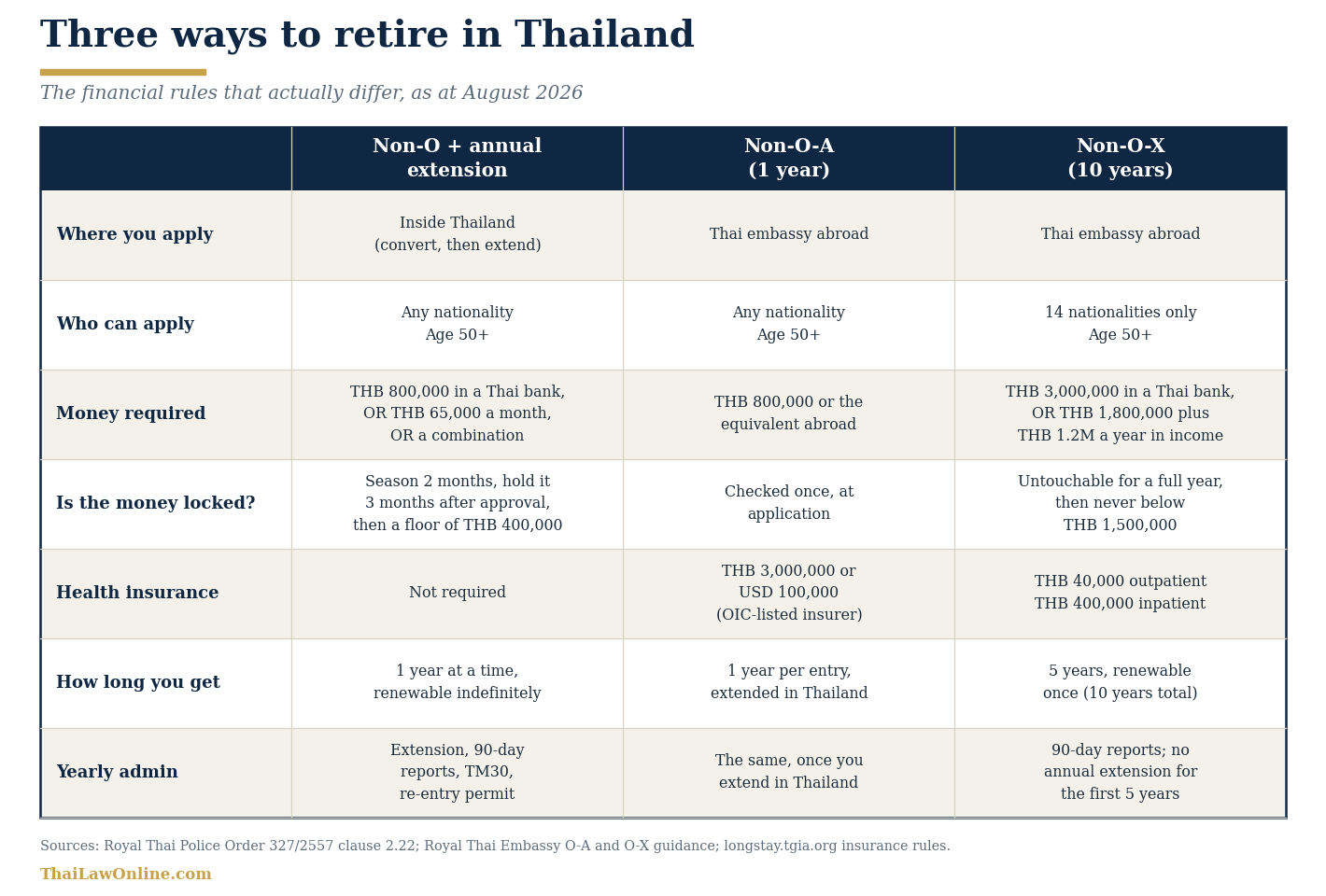
เส้นทางวีซ่า Non-O แบบต่ออายุรายปีคือสิ่งที่ชาวต่างชาติส่วนใหญ่ในประเทศไทยถืออยู่จริงๆ แม้ว่า “O-A” จะเป็นคำที่ผู้คนค้นหาก็ตาม คุณเดินทางเข้ามาด้วยวีซ่าประเภทอื่น เปลี่ยนเป็น Non-Immigrant O ภายในประเทศไทย จากนั้นจึงยื่นคำขอทุกปี ครั้งละหนึ่งปี สำหรับ การขออยู่ต่อในราชอาณาจักร ด้วยเหตุผลของการเกษียณอายุ ไม่มีข้อกำหนดเรื่องประกันภัย และคุณไม่ต้องติดต่อกับสถานทูตในต่างประเทศเลย กลไกของการต่ออายุประจำปีนั้น แบบฟอร์ม TM7 เอกสาร และขั้นตอนของสำนักงาน ได้ระบุไว้ในคู่มือของเราเกี่ยวกับ การขออยู่ต่อในราชอาณาจักรเป็นการชั่วคราวโดยใช้เหตุผลเกษียณอายุ. หน้านี้เกี่ยวกับการเลือกระหว่างสามเส้นทางตั้งแต่แรก.
ข้อกำหนดทางการเงินจากกฎระเบียบจริง
เกณฑ์การขออยู่ต่อเพื่อการเกษียณอายุถูกกำหนดโดย คำสั่งสำนักงานตำรวจแห่งชาติ ที่ 327/2557, ข้อ 2.22 ภายใต้อำนาจการขยายเวลาใน มาตรา 35 แห่งพระราชบัญญัติคนเข้าเมือง พ.ศ. 2522, ซึ่งแก้ไขเพิ่มเติมโดยคำสั่งที่ 654/2564. ทั้งคู่ถูกยกเลิกเมื่อวันที่ 26 กันยายน 2566 และขณะนี้เกณฑ์ดังกล่าวอยู่ในตารางที่แนบท้าย คำสั่งสำนักงานตรวจคนเข้าเมือง ที่ 12/2568 ลงวันที่ 23 มกราคม 2568, ซึ่งก็คือข้อ 2.22 ซึ่งเราได้อ่านแล้ว อำนาจตามมาตรา 35 ยังคงไม่เปลี่ยนแปลง เช่นเดียวกับตัวเลขด้านล่าง เจ้าหน้าที่ตรวจคนเข้าเมืองเป็นผู้ใช้ข้อนั้น ไม่ใช่เว็บไซต์ มันให้ทางเลือกแก่ผู้สมัครที่มีอายุ 50 ปีขึ้นไปสามวิธีในการพิสูจน์เรื่องเงิน.
วิธีการฝากเงิน: 800,000 บาท และต้องฝากไว้นานแค่ไหน
ฝากเงินไม่น้อยกว่า 800,000 บาท ในบัญชีธนาคารไทยในชื่อของคุณเอง บัญชีต้องเป็นบัญชีไทย ไม่ใช่บัญชีต่างประเทศ และเป็นบัญชีเดี่ยว ไม่ใช่บัญชีร่วม นอกเหนือจากตัวเลขหลักแล้ว มีกฎเรื่องเวลาสามข้อที่มักทำให้คนตกม้าตาย:
- ฝากเงินไว้ในบัญชีล่วงหน้าตามระยะเวลาที่กำหนดก่อนยื่นเรื่อง. เกณฑ์ที่มีผลบังคับใช้กำหนดไว้สองเดือน. หลักเกณฑ์ข้อ 2.22(4) ของตารางแนบท้ายคำสั่งสำนักงานตรวจคนเข้าเมืองที่ 12/2568 เมื่ออ่านเป็นภาษาไทย กำหนดให้เงินจำนวน 800,000 บาทต้องอยู่ในบัญชีเป็นเวลาไม่น้อยกว่า สองเดือนก่อนที่คุณจะยื่นเรื่อง และจากนั้นเป็นเวลาไม่น้อยกว่า สามเดือนหลังจากได้รับอนุญาต. สามเดือนก่อนยื่นเรื่อง ยังคงถูกอ้างถึงอย่างกว้างขวางมาจากคำสั่งสำนักงานตำรวจแห่งชาติที่เก่ากว่า คือ คำสั่งที่ 327/2557 ซึ่งถูกยกเลิกไปเมื่อวันที่ 26 กันยายน 2566 และไม่ใช่เกณฑ์ที่ระบุไว้อีกต่อไป อย่างไรก็ตาม การฝากเงินไว้เป็นเวลาสามเดือนก็เป็นไปตามข้อกำหนดทั้งสองแบบ และไม่มีสำนักงานตรวจคนเข้าเมืองแห่งใดปฏิเสธคำขอเพียงเพราะมีเงินอยู่ในบัญชีนานเกินกว่าที่กฎกำหนด.
- ถือเงินจำนวนเต็ม 800,000 ไว้เป็นเวลาสามเดือนหลังจากได้รับการอนุมัติ. ยอดเงินคงเหลือคงอยู่ที่ 800,000 เป็นเวลาสามเดือนนับจากวันที่ตรวจคนเข้าเมืองอนุมัติการขยายเวลา.
- หลังจากนั้นห้ามให้ยอดเงินลดลงต่ำกว่า 400,000 เด็ดขาด. เมื่อครบสามเดือนแล้ว คุณสามารถถอนเงินมาใช้ได้ แต่ยอดเงินในบัญชีต้องไม่ต่ำกว่า 400,000 บาทในเวลาใดก็ตามตลอดทั้งปี ก่อนการต่ออายุครั้งต่อไป ยอดเงินจะต้องกลับมาอยู่ที่ 800,000 บาท สำหรับช่วงเวลาก่อนยื่นเรื่องตามที่กล่าวไว้ข้างต้น.
กองตรวจคนเข้าเมืองตรวจสอบประวัติบัญชี ไม่ใช่แค่ยอดเงินคงเหลือล่าสุด การนำเงินมาพักไว้เพื่อให้ถึงเกณฑ์แล้วถอนออกในภายหลังคือสาเหตุที่พบบ่อยที่สุดที่ทำให้การต่ออายุวีซ่าไม่ผ่าน เนื่องจากสมุดบัญชีแสดงให้เห็นสิ่งที่เกิดขึ้นอย่างชัดเจน.
วิธีแสดงรายได้: 65,000 บาทต่อเดือน และปัญหาหนังสือรับรองจากสถานทูต
แสดงรายได้ต่อเดือนไม่น้อยกว่า 65,000 บาท เดิมเส้นทางนี้อาศัยเพียง คำให้การเป็นลายลักษณ์อักษรที่สาบานตน จากสถานทูตของคุณเอง ซึ่งปัจจุบันไม่ได้ทำเช่นนั้นแล้ว สถานเอกอัครราชทูตสหรัฐอเมริกา สหราชอาณาจักร และออสเตรเลียประจำประเทศไทยได้ยุติการออกหนังสือรับรองรายได้ในปี 2019 และยังไม่ได้กลับมาดำเนินการต่อ.
ผู้เกษียณอายุชาวอเมริกัน อังกฤษ และออสเตรเลียต้องพิสูจน์รายได้ด้วยวิธีที่ยากกว่า: รายการเดินบัญชีธนาคารไทยย้อนหลังสิบสองเดือนที่แสดงเงินเข้าจากต่างประเทศอย่างน้อย 65,000 บาททุกเดือน พร้อมใบแจ้งเครดิต (credit advice) จากธนาคารที่ยืนยันว่าเงินโอนแต่ละครั้งมาจากต่างประเทศ ซึ่งหมายความว่าต้องวางแผนล่วงหน้าหนึ่งปี ท่านไม่สามารถตัดสินใจในเดือนตุลาคมว่าจะใช้วิธีแสดงรายได้ในเดือนพฤศจิกายนได้
วิธีการผสมผสาน
นำเงินฝากจำนวนน้อยลงมารวมกับรายได้จำนวนน้อยลงจนกระทั่งยอดรวมสิบสองเดือนถึง 800,000 บาท ผู้เกษียณอายุที่มีเงินฝากในธนาคาร 300,000 บาท และมีบำนาญ 45,000 บาทต่อเดือน จะมียอดรวมถึง 840,000 บาทและมีคุณสมบัติผ่านเกณฑ์ สำนักงานตรวจคนเข้าเมืองแต่ละแห่งมีวิธีคำนวณส่วนของรายได้ที่แตกต่างกัน ดังนั้นโปรดเตรียมการคำนวณที่เขียนเป็นลายลักษณ์อักษรและรายการเดินบัญชีที่ใช้ยืนยันไปด้วย.
กับดักอัตราแลกเปลี่ยนในวิธีรายได้
เงินบำนาญของคุณมาเป็นดอลลาร์ ปอนด์ หรือยูโร ตม. นับเป็นเงินบาท ตามอัตราแลกเปลี่ยนในวันนั้น เงินบำนาญที่มีมูลค่า 68,000 บาท ตอนที่คุณวางแผนยื่นคำขอ อาจลดเหลือ 64,200 บาท เมื่อเงินบาทแข็งค่าขึ้น และ 64,200 บาทนั้นไม่ผ่านเกณฑ์ เกณฑ์ดังกล่าวไม่มีความยืดหยุ่นใด ๆ.
เผื่อส่วนต่างไว้อย่างน้อยร้อยละสิบในวิธีรายได้ หรือใช้วิธีเงินฝาก ซึ่งเป็นวิธีที่ตัวเลขจะไม่เปลี่ยนแปลงไปจากเดิม คำแนะนำนี้นับว่าคุ้มค่าที่สุดในหน้านี้.
ประกันสุขภาพ: ใครที่จำเป็นต้องมีและใครที่ไม่จำเป็นต้องมี
ประกันภัยเป็นข้อกำหนดที่มักระบุไว้อย่างไม่ถูกต้องบ่อยที่สุด เนื่องจากมันผูกติดอยู่กับประเภทวีซ่ามากกว่าตัวการเกษียณอายุเอง.
- การขอวีซ่า Non-O แบบต่ออายุรายปี: ไม่มีข้อกำหนดเรื่องประกันภัย. นี่คือข้อได้เปรียบเชิงปฏิบัติหลักของเส้นทางในประเทศ.
- O-A: ความคุ้มครอง 3,000,000 บาท หรือ 100,000 ดอลลาร์สหรัฐ รวมถึงการรักษาโรคโควิด-19. กฎเกณฑ์ปี 2019 กำหนดเกณฑ์ที่ต่ำกว่ามากคือ 40,000 บาทสำหรับการรักษาแบบผู้ป่วยนอก และ 400,000 บาทสำหรับการรักษาแบบผู้ป่วยใน โดยตัวเลขนี้เพิ่มขึ้นตามแนวทางที่แยกออกจากกันสองทาง ซึ่งเป็นสาเหตุที่ทำให้กฎเกณฑ์ดังกล่าวบ่อยครั้งมักถูกเข้าใจผิดว่าเป็นเพียงการคุมเข้มเพียงครั้งเดียว สถานกงศุลที่ออกวีซ่าในต่างประเทศได้ปรับไปใช้ตัวเลขที่สูงขึ้นตาม 1 ตุลาคม 2564. การขออยู่ต่อในประเทศไทยปรับไปใช้ตัวเลขที่สูงขึ้นในอีกหนึ่งปีต่อมา เมื่อ 1 ตุลาคม 2565, ภายใต้ คำสั่งสำนักงานตำรวจแห่งชาติ ที่ 654/2564, ซึ่งถูกยกเลิกไปพร้อมกับคำสั่งหลักเมื่อวันที่ 26 กันยายน 2566 เงื่อนไขดังกล่าวขณะนี้อยู่ในเกณฑ์ 2.22(6) ของตารางที่แนบท้าย คำสั่งสำนักงานตรวจคนเข้าเมือง ที่ 12/2568, ซึ่งเป็นสิ่งที่อนุญาตให้ผู้ถือวีซ่า O-A ที่ขยายเวลาอยู่ที่นี่สามารถใช้บริษัทประกันภัยที่ไม่ใช่ของไทยด้วยวงเงินไม่น้อยกว่า 100,000 ดอลลาร์สหรัฐ ข้อ 5.2 ของตารางเดียวกันกำหนดให้กรมธรรม์ต่างประเทศมี สอง ช่องทางการรับรองเอกสาร: การรับรองจากสถานเอกอัครราชทูตของประเทศนั้น ๆ ประจำประเทศไทย หรือใบรับรองลายมือชื่อในเอกสารที่ผ่านการรับรองโนตารี (notarized) ซึ่งออกผ่านกระทรวงการต่างประเทศของท่านเอง ในรูปแบบที่กระทรวงสาธารณสุขกำหนด สามารถดูหนังสือรับรองการประกันภัยต่างประเทศ (Foreign Insurance Certificate) ได้ที่ longstay.tgia.org, และตรวจคนเข้าเมืองจะตรวจสอบบริษัทประกันกับรายชื่อของ คปภ. โดยจะต้องซื้อกรมธรรม์ประกันภัยของไทยทางออนไลน์ผ่านเว็บไซต์เดียวกัน ภายใต้หลักเกณฑ์ 2.22(6.1).
- O-X: ผู้ป่วยนอก 40,000 บาท และผู้ป่วยใน 400,000 บาท ต่อปีกรมธรรม์เป็นข้อกำหนดพื้นฐาน โดยต้องเป็นกรมธรรม์จากบริษัทประกันภัยไทยที่ได้รับอนุญาตจากสำนักงานคณะกรรมการกำกับและส่งเสริมการประกอบธุรกิจประกันภัย (คปภ.) และต้องคงความคุ้มครองไว้ตลอดระยะเวลาที่พำนัก ตั้งแต่วันที่ 1 ตุลาคม 2021 สถานกงสุลบางแห่งได้นำเกณฑ์วงเงินคุ้มครอง 3,000,000 บาท หรือ 100,000 ดอลลาร์สหรัฐ มาใช้กับผู้ยื่นขอ O-X ด้วย และอย่างน้อยหนึ่งแห่งยอมรับบริษัทประกันภัยต่างประเทศที่มีหนังสือรับรองการประกันภัยต่างประเทศ (Foreign Insurance Certificate) แหล่งข้อมูลทางการยังไม่สอดคล้องกัน ดังนั้นโปรดยืนยันวงเงินกับสถานกงสุลที่รับเรื่องของคุณ และอย่าถือว่าเกณฑ์ของ O-X และ O-A เป็นเกณฑ์เดียวกัน.
การอธิบายวีซ่า O-X อย่างถูกต้อง
วีซ่า O-X ให้เวลาสิบปี และเกือบทุกหน้าเพจภาษาอังกฤษอธิบายไว้อย่างไม่ถูกต้อง นี่คือตัวเลขอย่างเป็นทางการจากหน้าเพจกงสุลของสถานเอกอัครราชทูตไทยและกระทรวงการต่างประเทศ.
คุณต้องมีอายุ 50 ปีขึ้นไปและถือครองหนึ่งใน 14 สัญชาติ: ญี่ปุ่น ออสเตรเลีย เดนมาร์ก ฟินแลนด์ ฝรั่งเศส เยอรมนี อิตาลี เนเธอร์แลนด์ นอร์เวย์ สวีเดน สวิตเซอร์แลนด์ สหราชอาณาจักร แคนาดา และสหรัฐอเมริกา สัญชาติอื่น ๆ นอกเหนือจากนี้ไม่รับ.
การทดสอบทางการเงินต้องใช้เงินฝากไม่น้อยกว่า 3,000,000 บาท ในธนาคารไทย หรือเงินฝาก 1,800,000 บาท บวกด้วยรายได้ประจำปีไม่น้อยกว่า 1,200,000 บาท. จากนั้นก็มาถึงส่วนที่ไม่มีใครอธิบายให้ฟัง:
จำนวนเงินเต็มจำนวนจะอยู่ในบัญชีโดยไม่มีการแตะต้องเป็นเวลาอย่างน้อยหนึ่งปี หลังจากปีนั้นยอดคงเหลือจะต้องไม่ลดลงต่ำกว่า 1,500,000 บาทเด็ดขาด.
ลองเทียบกับเส้นทางต่ออายุ ซึ่งยอดเงินขั้นต่ำจะลดลงเหลือ 400,000 บาทหลังผ่านไปสามเดือน สำหรับวีซ่า O-X คุณต้องยอมสละสิทธิ์การเข้าถึงเงิน 1.5 ล้านบาทอย่างถาวร ตลอดระยะเวลาที่คุณถือวีซ่า สำหรับผู้เกษียณอายุจำนวนมาก นั่นคือข้อเท็จจริงที่เป็นตัวตัดสิน และนั่นคือเหตุผลว่าทำไมวีซ่าสิบปีจึงไม่ใช่ข้อเสนอที่ดีกว่าโดยอัตโนมัติ.
การทำวีซ่ารัน มีอายุห้าปีและต่ออายุได้หนึ่งครั้ง รวมเป็นสิบปี คุณยังคงต้องรายงานที่อยู่ทุก ๆ 90 วัน.
การโอนเงิน 800,000 บาทของคุณต้องเสียภาษีหรือไม่
นี่คือคำถามที่หน้าเว็บวีซ่าเกษียณอายุต่าง ๆ มักจะมองข้าม และในปี 2026 มันสำคัญยิ่งกว่าข้อไหน ๆ ทั้งหมด.
เมื่ออยู่ในประเทศไทยตั้งแต่ 180 วันขึ้นไปในปีปฏิทิน คุณจะกลายเป็น ผู้มีเงินได้ที่เป็นผู้อยู่ในประเทศไทย. มาตรา 41 วรรคสอง แห่งประมวลรัษฎากร เก็บภาษีจากผู้มีถิ่นที่อยู่ในประเทศไทยสำหรับเงินได้พึงประเมินจากต่างประเทศที่นำเข้ามาในประเทศไทย คำสั่งกรมสรรพากร ป. 161/2566 และ ป. 162/2566, มีผลตั้งแต่วันที่ 1 มกราคม 2567 ได้ยกเลิกช่องว่างทางเวลาที่เคยอนุญาตให้ผู้คนรอเป็นเวลาหนึ่งปีและส่งเงินเข้ามาโดยไม่ต้องเสียภาษี รายได้ที่คุณได้รับในปีที่คุณเป็นผู้มีถิ่นที่อยู่ในประเทศไทยทางภาษี จะต้องเสียภาษีเมื่อใดก็ตามที่เงินนั้นเข้ามาถึงประเทศไทย ไม่ว่าจะเป็นปีนี้หรือในอีกสิบปีข้างหน้า.
ป. 162/2566 ยังคงรักษาการคุ้มครองประการหนึ่งที่มีความสำคัญอย่างยิ่งในที่นี้: รายได้ที่ได้รับก่อนวันที่ 1 มกราคม 2567 จะไม่รวมอยู่ภายใต้กฎเกณฑ์นี้. เงินออมจากก่อนปี 2024 สามารถโอนเข้ามาได้โดยไม่ต้องเสียภาษีของประเทศไทยเมื่อมีการโอนเงินเข้ามา.
ดังนั้น สถานการณ์ในทางปฏิบัติสำหรับผู้เกษียณอายุที่กำลังฝากเงินไว้ในบัญชีล่วงหน้า:
- การโอนเงินออมที่มีอยู่ก่อนปี 2024 มาให้ครบจำนวน 800,000 บาทนั้นไม่มี ภาษีจากการนำเงินได้เข้าประเทศ, โดยมีเงื่อนไขว่าคุณสามารถพิสูจน์ได้ว่าเงินดังกล่าวมีอยู่ก่อนปี 2024 ให้เก็บรายการเดินบัญชีที่แสดงยอดเงินคงเหลือ ณ วันที่ 31 ธันวาคม 2023 ไว้.
- การโอนรายได้หลังปี 2023 ซึ่งรวมถึงเงินบำนาญที่จ่ายเข้าบัญชีในประเทศของคุณในปีนี้ ถือเป็นการนำเงินได้พึงประเมินเข้ามาในประเทศ (remittance) หากคุณเป็นผู้มีถิ่นที่อยู่ในประเทศไทยทางภาษีในปีที่คุณมีรายได้นั้น.
- เงินบำนาญอาจยังคงได้รับการบรรเทาภาระภาษีภายใต้ อนุสัญญาภาษีซ้อน ระหว่างประเทศไทยและประเทศของคุณ สนธิสัญญาต่างกันอย่างมากเกี่ยวกับบำนาญภาครัฐเทียบกับภาคเอกชน โปรดตรวจสอบของคุณก่อนที่จะคาดเดาผลลัพธ์ใดผลลัพธ์หนึ่ง.
ทั้งการยกเว้นเรื่องระยะเวลาการนำเงินเข้าประเทศที่ถูกหยิบยกขึ้นมาพูดถึงในปี 2025 และข้อเสนอที่จะเก็บภาษีจากเงินได้ทั่วโลกโดยไม่คำนึงถึงการนำเข้าประเทศ ต่างก็ยังไม่ได้มีผลเป็นกฎหมาย ป. 161/2566 และ ป. 162/2566 ยังคงเป็นแนวทางปฏิบัติที่มีผลบังคับใช้ ทั้งสองฉบับเป็นคำสั่งกรมสรรพากร ซึ่งเป็นคำสั่งที่กำกับเจ้าหน้าที่สรรพากรมากกว่าที่จะเป็นการแก้ไขประมวลรัษฎากร และคำสั่งเหล่านี้ยังคงเป็นคำสั่งเพียงชุดเดียวที่ออกภายใต้มาตรา 41 วรรคสอง เมื่อครั้งที่เราตรวจสอบทะเบียนของกรมสรรพากรครั้งล่าสุด ส่วนของเรา คู่มือภาษีเงินได้บุคคลธรรมดาในประเทศไทย กำหนดหลักเกณฑ์การทดสอบความเป็นผู้อยู่อาศัยและขั้นตอนการยื่นแบบ.
ตัวแทน ยอดเงินในบัญชีที่ยืมมา และสิ่งที่ประมวลกฎหมายอาญาบัญญัติไว้
เอเจนต์โฆษณาบริการต่อวีซ่าสำหรับผู้ที่ไม่มีเงิน ข้อตกลงมักจะเกี่ยวข้องกับยอดเงินที่ปรากฏในบัญชีก่อนนัดหมายและหายไปหลังจากนั้น บางครั้งมาพร้อมกับการอำนวยความสะดวกที่ สำนักงานตรวจคนเข้าเมือง แนบมาด้วย.
คุณ ไม่ใช่ตัวแทน เป็นผู้ลงนามในคำขอ การให้ข้อมูลเท็จแก่เจ้าหน้าที่ถือเป็นความผิดตาม ประมวลกฎหมายอาญา มาตรา 137. การทำให้เกิดข้อความเท็จในเอกสารราชการมีความผิดตาม มาตรา 267. การเสนอเงินหรือประโยชน์อื่นใดแก่เจ้าหน้าที่เพื่อให้กระทำการอันมิชอบด้วยหน้าที่ เป็นความผิดตาม มาตรา 144, ซึ่งมีโทษจำคุกสูงสุดถึงห้าปี ปรับ สูงสุดถึง 100,000 บาท หรือทั้งจำทั้งปรับ พร้อมทั้งเพิกถอนการอนุญาตให้อยู่ในราชอาณาจักร เริ่มนับระยะเวลาการอยู่เกินกำหนดนับแต่วันที่ถูกเพิกถอน และขึ้นบัญชีดำ (แบล็กลิสต์).
การตรวจสอบเอกสารทางการเงินของฝ่ายตรวจคนเข้าเมืองได้เข้มงวดขึ้นตลอดปี 2025 และ 2026 ข้อตกลงที่เคยใช้ได้ผลอย่างเงียบ ๆ มาหลายปีกลายเป็นทางเลือกที่ไม่ดีนักเมื่อต้องเผชิญกับระบบที่กำลังตรวจสอบประวัติบัญชีทีละบรรทัดในปัจจุบัน.
การรักษาสถานะการอนุญาตให้อยู่ต่อ
การได้รับอนุญาตให้อยู่ต่อนั้นเป็นส่วนที่ง่ายที่สุด ข้อผูกพันสามประการดำเนินไปอย่างต่อเนื่อง และแต่ละข้อมีบทลงโทษของตัวเอง:
- การรายงานตัว 90 วัน. มาตรา 37(5) แห่งพระราชบัญญัติคนเข้าเมืองกำหนดให้คุณต้องแจ้งที่อยู่ทุก 90 วัน รายงานทางออนไลน์ ทางไปรษณีย์ หรือด้วยตนเอง ดูข้อมูลเพิ่มเติมที่ คู่มือการรายงานตัว 90 วัน.
- TM30. มาตรา 38 กำหนดให้เจ้าบ้าน เจ้าของบ้าน หรือโรงแรม มีหน้าที่ต้องแจ้งการเข้าพักของคุณภายใน 24 ชั่วโมงนับตั้งแต่ที่คุณเดินทางมาถึงสถานที่นั้น การบังคับใช้กฎหมายจะแตกต่างกันไปตามแต่ละจังหวัด และจะส่งผลกระทบเมื่อคุณติดต่อกับสำนักงานตรวจคนเข้าเมืองครั้งต่อไป ดู TM30 และวิวัฒนาการของกฎระเบียบนี้.
- การอนุญาตให้กลับเข้ามาในราชอาณาจักรอีก. ออกจากประเทศไทยโดยไม่มีสิ่งนี้ แล้วการอนุญาตให้อยู่ต่อของคุณจะสิ้นสุดลงที่ด่าน ไม่ว่าตราประทับจะว่าอย่างไรก็ตาม ซื้อใบอนุญาตแบบครั้งเดียวหรือหลายครั้งก่อนเดินทาง ดูข้อมูลเพิ่มเติมที่ คู่มือการขอใบอนุญาตกลับเข้ามาในราชอาณาจักร (Re-entry Permit).
หากคุณไม่เข้าข่ายทั้งสามกลุ่มนี้
หลายคนไม่สามารถแสดงเงิน 800,000 บาท หรือ 65,000 บาทต่อเดือนได้ หรือปฏิเสธที่จะแช่แข็งเงินทุนไว้ในธนาคารไทย ทางเลือกอื่น 4 ทาง:
- วีซ่า LTR, สิบปี, มุ่งเป้าไปที่ผู้เกษียณอายุที่มีฐานะร่ำรวย, พนักงานที่ทำงานทางไกล และผู้เชี่ยวชาญที่มีทักษะ, โดยมีเกณฑ์รายได้และทรัพย์สินเฉพาะของวีซ่าประเภทนี้.
- วีซ่า DTV, ห้าปี, สำหรับผู้ปฏิบัติงานทางไกลและกิจกรรมซอฟต์พาวเวอร์, พร้อมด้วยเกณฑ์ทางการเงินที่ต่ำกว่ามาก.
- วีซ่า Thailand Privilege, ซึ่งเปลี่ยนเงินให้เป็นปีได้โดยไม่ต้องตรวจยอดเงินในธนาคาร.
- การต่อวีซ่าติดตามภรรยา/สามีชาวไทย, ซึ่งขอเงินจำนวน 400,000 บาทแทนที่จะเป็น 800,000 บาท หากคุณสมรสกับคนไทย.
ของเรา เครื่องมือค้นหาวีซ่า จำกัดวงแคบลงในเวลาไม่กี่คำถาม.
คำถามที่พบบ่อย
ฉันสามารถทำงานระหว่างได้รับอนุญาตให้อยู่ต่อกรณีเกษียณอายุได้หรือไม่
ไม่ได้ การอนุญาตให้อยู่ต่อกรณีเกษียณอายุไม่มีสิทธิทำงาน และไม่สามารถออกใบอนุญาตทำงานให้ได้ การทำงาน ไม่ว่าจะได้รับค่าจ้างหรือไม่ก็ตาม ถือเป็นการละเมิดเงื่อนไขการอนุญาตให้อยู่ต่อ และทำให้คุณเสี่ยงต่อการถูกเพิกถอนวีซ่าและการดำเนินคดี หากคุณตั้งใจจะทำงาน แนวทางเรื่องการเกษียณอายุนั้นไม่ใช่แนวทางที่ถูกต้อง.
จะเกิดอะไรขึ้นหากยอดเงินคงเหลือของฉันลดลงต่ำกว่า 400,000 บาท
คุณทำผิดเงื่อนไขการคงเงินในบัญชี ตรวจคนเข้าเมืองมักจะไม่สังเกตเห็นในช่วงกลางปี แต่สมุดบัญชีและจดหมายจากธนาคารในการต่อวีซ่าครั้งต่อไปของคุณจะแสดงข้อมูลตลอดทั้งปี คาดว่าจะถูกปฏิเสธวีซ่า และคาดว่าจะต้องเริ่มนับระยะเวลาการฝากเงินใหม่ตั้งแต่ต้นก่อนที่คุณจะสามารถยื่นขอได้อีกครั้ง.
เงิน 800,000 บาทต้องอยู่ในธนาคารตลอดทั้งปีเลยหรือไม่
ไม่ใช่ ยอดเงินจะคงอยู่ที่ 800,000 เป็นเวลาสามเดือนหลังได้รับการอนุมัติ จากนั้นอาจลดลงเหลือขั้นต่ำที่ 400,000 และต้องกลับมาอยู่ที่ 800,000 สำหรับช่วงเวลาก่อนยื่นคำขอรอบถัดไป ระยะเวลาก่อนยื่นคำขอคือสองเดือน และยอดเงินจะต้องคงอยู่ที่ 800,000 เป็นเวลาสามเดือนหลังจากได้รับอนุญาต นั่นคือรอบประจำปี.
คู่สมรสของฉันสามารถใช้สิทธิ์พึ่งพาการได้รับอนุญาตให้อยู่ต่อกรณีเกษียณอายุของฉันได้หรือไม่
คู่สมรสของท่านสามารถยื่นขอขยายระยะเวลาพำนักในฐานะผู้ติดตามโดยอาศัยสถานะของท่าน แทนที่จะต้องมีคุณสมบัติแยกต่างหาก โปรดดู คู่มือวีซ่าคู่สมรสและผู้ติดตาม. ผู้ติดตามแต่ละคนทำให้ต้องใช้เอกสารประกอบเพิ่มขึ้น ดังนั้นให้เริ่มเร็วกว่าที่คุณคิดว่าจำเป็น.
วีซ่า O-A ยังคุ้มค่าอยู่ไหมในตอนนี้ที่ต้องใช้ประกันสุขภาพมูลค่า 100,000 ดอลลาร์สหรัฐฯ
สำหรับผู้เกษียณอายุส่วนใหญ่ที่อยู่ในประเทศไทยแล้ว ไม่คุ้ม การเปลี่ยนเป็นวีซ่า Non-O ภายในประเทศและการขอต่ออายุทุกปีจะได้การอนุญาตให้อยู่ได้หนึ่งปีเท่ากันโดยไม่มีข้อกำหนดเรื่องประกัน วีซ่า O-A จะมีประโยชน์เมื่อคุณต้องการให้มีการออกวีซ่าก่อนที่คุณจะย้ายมา หรือเมื่อคุณต้องการเข้า-ออกหลายครั้งในปีแรกโดยไม่ต้องมีรีเอ็นทรีเพอร์มิต.
การเกษียณอายุอยู่ที่นี่อย่างเดียวทำให้ฉันเป็นผู้มีถิ่นที่อยู่ในประเทศไทยทางภาษีหรือไม่
คุณจะเป็นผู้มีถิ่นที่อยู่ในประเทศไทยทางภาษีเมื่ออยู่ในประเทศครบ 180 วันในปีปฏิทิน ไม่ว่าคุณจะถือวีซ่าใดก็ตาม การเป็นผู้มีถิ่นที่อยู่ทำให้กฎเกณฑ์การนำเงินได้เข้าประเทศที่กล่าวไว้ข้างต้นมีผลบังคับใช้ ทั้งนี้ไม่ได้หมายความว่าจะต้องเสียภาษีโดยอัตโนมัติ เนื่องจากเงินออมก่อนปี 2024 และการบรรเทาตามอนุสัญญาภาษีซ้อนอาจครอบคลุมถึงคุณ แต่จะก่อให้เกิดประเด็นเรื่องการยื่นแบบภาษีที่คุณควรพิจารณาตอบอย่างตั้งใจแทนที่จะปล่อยให้เกิดขึ้นโดยบังเอิญ.
เรื่องนี้ทำให้คุณอยู่ในจุดไหน
เลือกเส้นทางด้วยจำนวนเงินที่คุณยินดีที่จะผูกไว้ ไม่ใช่ด้วยจำนวนปีที่พิมพ์อยู่บนวีซ่า ประเภท O-X ซื้อเวลาสิบปีและทำให้คุณต้องเข้าถึงเงิน 1.5 ล้านบาทไม่ได้อย่างถาวร การต่ออายุรายปีใช้เวลาหนึ่งบ่ายต่อปีและทำให้เงิน 400,000 บาทถูกล็อกไว้ ประเภท O-A อยู่ตรงกลางระหว่างสองแบบนั้นและเพิ่มเบี้ยประกันไปตลอดชีวิต.
จากนั้นวางแผนการโอนเงินก่อนที่คุณจะดำเนินการ การนับระยะเวลาที่เงินต้องอยู่ในบัญชีและกฎการโอนเงินต่างก็ใช้เกณฑ์วันที่ และต่างก็ไม่ปรานีต่อการตัดสินใจใดๆ ที่ทำขึ้นก่อนวันนัดหมายหนึ่งสัปดาห์.
หากคุณต้องการให้เลือกเส้นทางและเตรียมเอกสารไว้ให้คุณ, ติดต่อ ThaiLawOnline. เราดำเนินการคำขอพำนักระยะยาวในประเทศไทยสำหรับลูกค้าต่างชาติมาตั้งแต่ปี 2006.
ข่าวสารกฎหมายไทย ฟรีทางอีเมล
อัปเดตข่าวสารเป็นภาษาอังกฤษที่เข้าใจง่ายเกี่ยวกับการเปลี่ยนแปลงของกฎหมายไทยที่ส่งผลกระทบต่อชาวต่างชาติ: อสังหาริมทรัพย์, วีซ่า, การสมรส, ธุรกิจ และพินัยกรรม จดหมายข่าวสั้นเพียงฉบับเดียวต่อเดือน จากสำนักงานกฎหมายที่ดำเนินงานมาตั้งแต่ปี 2549 ไม่มีการส่งสแปม ยกเลิกรับได้ทุกเมื่อ.