


Révisé par ThaiLawOnline, un cabinet d'avocats thaïlandais agréé exerçant en Thaïlande depuis 2006. Avocate thaïlandaise en charge du dossier : Wichuda Atthamethakon, LL.M., licence du barreau thaïlandais 3149/2556.
Dernière mise à jour :
La loi sur l'avortement en Thaïlande a subi sa réforme la plus importante depuis des décennies. Pour les résidents étrangers, les voyageurs d'affaires et les touristes de longue durée, il est essentiel de comprendre les nouvelles règles. Ces connaissances permettent de faire des choix éclairés. Elles apportent également un soutien aux partenaires, amis ou employés confrontés à une grossesse non désirée et envisageant une interruption de grossesse. Cet article examine les changements législatifs. Il explique quand les nouvelles règles s'appliquent. Il décrit également les sanctions qui subsistent. Enfin, il présente les démarches pratiques à suivre pour accéder à l'avortement. services juridiques, y compris les aspects médicaux, financiers et administratifs.
L’infraction et ses exceptions font partie du cadre du Code pénal, résumé dans notre guide. droit pénal en Thaïlande.
Suite aux modifications de 2021-2022, l’avortement sur demande est désormais autorisé jusqu’à 12 semaines. Entre les 12 et les 20 semaines, il est autorisé après un conseil obligatoire. Après 20 semaines, il n’est autorisé que pour des raisons médicales ou juridiques déterminées. Ces modifications alignent la Thaïlande sur une tendance régionale vers des droits reproductifs plus étendus tout en conservant les sanctions applicables aux procédures illégales.
La loi ne fait aucune distinction en fonction de la nationalité et n’exige pas d’ultrasons. L’article 301 du Code pénal parle de “ toute femme ” et l’article 305 de “ femme ”, donc un résident étranger ou un visiteur se trouve dans exactement la même situation qu’une femme thaïlandaise : les mêmes limites de douze et vingt semaines, et la même protection contre toute poursuite judiciaire lorsque les conditions sont remplies. Ce qui diffère pour un étranger est pratique, et non juridique, et sera abordé ci-dessous : coût, assurance et langue parlée dans l’établissement. Le Code pénal ne prévoit pas non plus de test. Il fixe les limites en fonction de l’âge de la grossesse, donc une clinique doit établir cette âge avant de prendre des mesures, et l’échographie est la méthode habituelle pour le faire. L’échographie est une pratique clinique, et non une condition légale.
Table des matières
1. Contexte historique et juridique de la loi sur l'avortement en Thaïlande
1.1 De la criminalisation à la contestation constitutionnelle
Le Code pénal de 1957 de la Thaïlande (articles 301-305) rendait l’avortement illégal. Il prévoyait toutefois des exceptions pour raisons de santé de la femme ou en cas de viol. Les femmes pouvaient être condamnées à une peine allant jusqu’à trois ans de prison. Les prestataires de soins pouvaient être punis d’une peine allant jusqu’à cinq ans. Des années de plaidoyer auprès des citoyens, des scandales concernant des cliniques peu sûres et des données relatives à la mortalité maternelle ont maintenu cette question en vie. En 2005, Conseil médical Une règle a été établie. Cette règle stipulait que “ la santé ” inclut la santé mentale. Cette modification a légèrement élargi les raisons juridiques permettant d’interrompre une grossesse.
1.2 Décision de la Cour constitutionnelle en 2020
Sur Le 19 février 2020, la Cour constitutionnelle a rendu une décision Il s’agit de la loi sur l’avortement en Thaïlande. Elles ont statué que l’article 301 était contraire aux droits des femmes. Cela incluait le droit à la vie et le contrôle sur leur corps. Elles ont ordonné que des changements soient apportés dans un délai de 360 jours. Ce qui est crucial, la Cour a ordonné au Parlement d’adopter un système équilibré protégeant à la fois la vie du fœtus et la liberté des femmes.
1.3 Amendement n° 28 (2021) au Code pénal
Entrée en vigueur le 7 février 2021, la modification a réécrit Article 301:
- Avortement ≤12 semaines Il n'est pas inclus dans la section 301. Cette section s'applique uniquement à l'âge gestationnel, donc la femme ne commet aucune infraction en vertu de cette loi, que l'avortement ait été pratiqué par un médecin ou ailleurs. Un médecin est celui qui article 305 Il est nécessaire pour exonérer la personne qui effectue l’avortement des articles 301 et 302 ; il n’est pas une condition que la femme soit en dehors de l’article 301.
- Avortement >12 semaines sans motif légal, une peine réduite s’applique, allant jusqu’à six mois de prison et/ou une amende. amende de 10 000 bahts.
L’article 305 énumère cinq motifs pour lesquels un médecin exerçant sous la réglementation du Conseil médical ne commet pas d’infraction : un risque pour la santé physique ou mentale de la femme ; un risque substantiel ou des raisons médicales raisonnables de penser que l’enfant serait né avec une anomalie entrainant une invalidité grave ; une grossesse confirmée par la femme comme résultant d’une infraction sexuelle ; une grossesse d’une durée maximale de douze semaines si elle confirme son intention de l’interrompre ; et une grossesse de plus de douze semaines mais pas de plus de vingt semaines si elle confirme cette intention après examen et un conseil en matière de choix.
1.4 Règlement de santé publique (2022) relatif à la loi sur l'avortement en Thaïlande
Le 26 septembre 2022, le ministère de la Santé publique a publié une réglementation. Cette réglementation permet l’avortement entre 12 et 20 semaines après un conseil dispensé par une équipe qualifiée. Les femmes peuvent choisir n’importe quel établissement agréé pour recevoir des soins. Les médecins peuvent refuser de participer pour des raisons personnelles, mais doivent fournir une référence.
2. Aperçu du cadre juridique actuel
| âge gestationnel | Le statut légal de l'avortement en Thaïlande varie considérablement selon les circonstances décrites dans la code pénal. | Conditions et documents administratifs | Pénalités restantes |
| 0 à 12 semaines | Service juridique sur demande | Formulaire de consentement (article 305 (4)) ; carte d’identité nationale/passeport ; échographie de datation de la grossesse | Aucun si l'opération est effectuée par un prestataire agréé. |
| 12 à 20 semaines | Services juridiques après consultation | “Note de ” conseil sur les options », signature du médecin, rapport de l’établissement au ministère de la Santé | Aucun si les critères sont remplis |
| >20 semaines | Légal seulement si | Risque grave pour la santé physique ou mentale d’une femme. Anomalie fœtale grave. Grossesse suite à une agression sexuelle (aucun dépôt de plainte nécessaire) | L’avortement effectué en dehors de ces règles reste une infraction. Une femme peut être condamnée à une peine de prison allant jusqu’à six mois ou une amende allant jusqu’à 10 000 bahts. Le prestataire commet une infraction en vertu de l’article 302 et encourt une peine d’emprisonnement allant jusqu’à cinq ans, une amende allant jusqu’à 100 000 bahts ou les deux. Cette peine peut être portée à sept ans si la femme subit d’autres lésions corporelles graves et à dix ans avec une amende allant jusqu’à 200 000 bahts si elle décède. |
| Fournisseur non agréé ou fournisseur agissant en dehors des conditions prévues par l’article 305 | Incompatible avec la législation en vigueur | n / A | Le fournisseur est responsable en vertu de l’article 302. L’article 301 rend la femme elle-même responsable uniquement lorsque la grossesse dépasse douze semaines ; par conséquent, mettre fin à une grossesse de douze semaines ou moins, y compris par des pilules obtenues en ligne, n’est pas une infraction pour elle en vertu de l’article 301, quelle que soit la personne qui les a fournies. |
Sources : Code pénal, articles 301-305
3. Accès à des services sûrs et légaux
3.1 Installations autorisées
Le ministère de la Santé thaïlandais tient un registre actualisé des hôpitaux et cliniques pratiquant des avortements. Leur nombre est passé de 76 (2021) à 180 (2023), répartis dans 57 provinces.
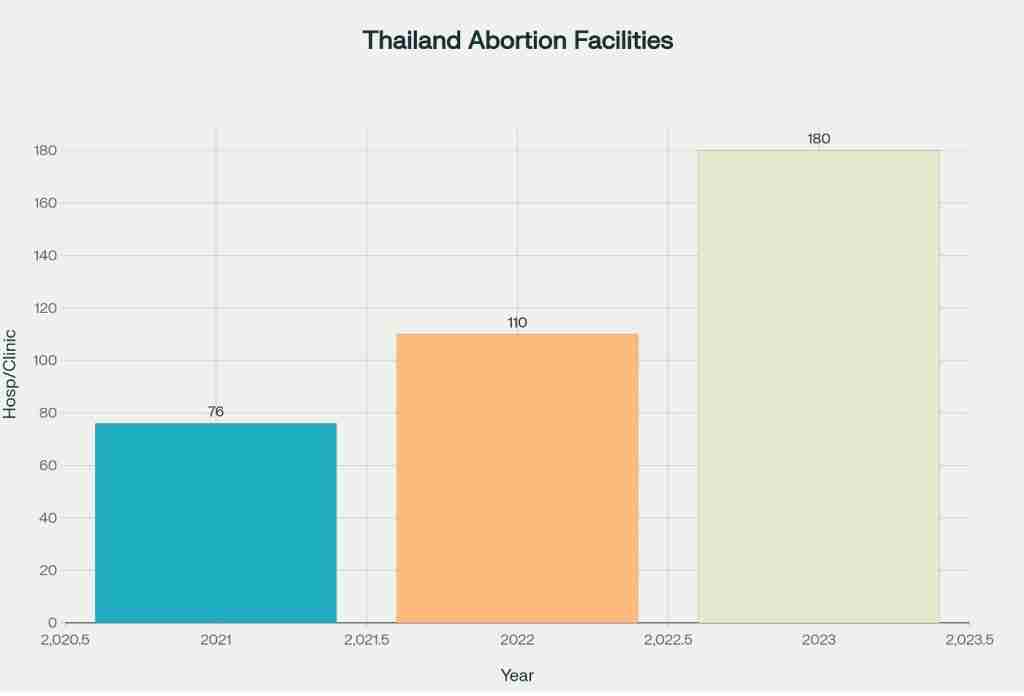
Figure 2 : Évolution du nombre de points de service autorisés pour l’avortement en Thaïlande (2021-2023)
3.2 Réseaux d'orientation et lignes d'assistance téléphonique
- Le RSA (Système d'orientation pour l'avortement sécurisé) vise à améliorer l'accès à l'avortement en Thaïlande.un réseau de médecins bénévoles. Il comprend l'auto-évaluation en ligne, la télémédecine (“ RSA Prompt ”) et l'orientation vers des services d'avortement légal en clinique.
- Ligne d'assistance 1663, Tous les jours de 9h à 21h, il propose des conseils multilingues et la réservation des salles.
3.3 Couverture d'assurance
- Programme de couverture universelle (carte or) ET NHSO payer pour un avortement médical ou chirurgical dans les limites légales, y compris les régimes de mifepristone-misoprostol.
- Bureau de la sécurité sociale (SSO) Il a été confirmé en 2025 que les travailleurs assurés pourront bénéficier d'avortements gratuits auprès de prestataires agréés. Les frais d'orientation vers un professionnel de santé seront également remboursés.
- Assurance privée pour expatriés : la plupart des polices excluent l’avortement volontaire ; vérifiez les clauses relatives à “ l’interruption de grossesse ” ou aux “ complications de grossesse ”.”
3.4 Parcours de soins typique (≤12 semaines)
- Appelez la ligne d'assistance 1663 ou inscrivez-vous via RSA Online.
- Échographie, test Rhésus, formulaire de consentement.
- Choix entre l'avortement médicamenteux (pilules, souvent à usage domestique) et l'aspiration par le vide.
- Appel ou visite de suivi une semaine plus tard ; conseils gratuits en matière de contraception.
4. Obligations et droits des médecins
- Doit être titulaire d'une licence en vertu de la loi de 1982 sur la profession médicale et se conformer aux critères du Conseil médical de 2005.
- Peut refuser en conscience, mais doit orienter vers un collègue ou un établissement disposé à le faire (circulaire du ministère de la Santé publique de 2022).
- Les données anonymisées relatives aux cas doivent être transmises au ministère de la Santé dans un délai de 30 jours ; aucune notification policière n’est requise.
- Le non-respect de cette obligation risque de mener à une sanction disciplinaire professionnelle et à des poursuites pénales en vertu des articles 302-303.
5. Les sanctions sont toujours en vigueur.
| Délinquant | Acte illégal | prison maximale | Amende maximale |
| Femme | Finir sa grossesse ou permettre à une autre personne de la mettre fin, lorsque la grossesse dépasse les douze semaines (article 301). La licence du prestataire et le site ne constituent pas des éléments de cette infraction. | 6 mois | 10 000 THB |
| Fournisseur avec consentement | Termine une grossesse avec le consentement de la femme, en dehors de l’article 305 (article 302) | 5 ans ; 7 ans si la victime subit d’autres lésions corporelles graves ; 10 ans si la femme décède | 100 000 THB ; 140 000 THB si la blessure corporelle est grave ; 200 000 THB si la femme décède |
| Fournisseur sans consentement | Finition d'une grossesse sans le consentement de la femme (article 303) | 7 ans ; de 1 à 10 ans si la victime a subi d'autres lésions corporelles graves ; de 5 à 20 ans si la femme décède | 140 000 THB ; de 20 000 à 200 000 THB si d’autres lésions corporelles graves sont constatées ; 100 000 à 400 000 THB si la femme décède |
| Tentative | Femme ou prestataire agissant avec son consentement | Pas punissable (article 304), à tout âge gestationnel | Aucun |
6. Conseils pratiques pour les expatriés
- Documentation: veuillez apporter votre passeport, une copie de votre visa et votre adresse locale ; les hôpitaux enregistrent la nationalité pour la facturation au NHS ou en espèces.
- LangueLes principaux établissements urbains disposent de personnel anglophone ; les hôpitaux provinciaux plus petits peuvent avoir besoin d’un interprète thaïlandais.
- Coûts (privés)8 000 à 18 000 THB pour un avortement médical ; 15 000 à 25 000 THB pour un avortement médical par injection ; ajoutez 2 000 à 3 000 THB pour l’échographie et les analyses.
- Soins d'urgence : En cas de saignements abondants, utilisez plus de deux protections hygiéniques par heure pendant deux heures. Si vous avez une fièvre supérieure à 38 °C, rendez-vous immédiatement aux urgences. Vous serez prise en charge dans un hôpital public.
- Confidentialité: Conformément à la loi de 2019 sur la protection des données personnelles, les hôpitaux sont tenus de garantir la confidentialité des dossiers médicaux. Les employeurs ne peuvent consulter les dossiers médicaux sans consentement écrit.
7. Paysage social et éthique
L'opinion publique reste partagée. Les enseignements bouddhistes insistent sur la non-violence, et certains médecins considèrent l'avortement comme une conséquence du karma négatif. Pourtant, les sondages montrent un soutien majoritaire à la réforme limitant l'avortement à 20 semaines, notamment parmi les femmes urbaines et les étudiantes en médecine. Des organisations de la société civile, telles que “ Abortion 4G ”, continuent de militer pour la dépénalisation totale de l'avortement en Thaïlande, en particulier pour les grossesses pratiquées après 20 semaines. Des manifestations étudiantes participent également à ce mouvement.
8. Foire aux questions à propos de la loi sur l'avortement en Thaïlande
Quelles sont les lois actuelles sur l'avortement en Thaïlande ?
La loi sur l’avortement en Thaïlande a été modifiée par la loi d’amendement du Code pénal (No 28), suite à une décision de la Cour constitutionnelle selon laquelle l’article 301 tel qu’il était alors était inconstitutionnel. Cette décision n’a pas elle-même légalisé quoi que ce soit ; c’est l’amendement qui l’a fait. Conformément à l’article 305, une grossesse d’une durée maximale de douze semaines peut être interrompue sur demande de la femme, par un médecin exerçant sous la réglementation du Conseil médical, et d’une durée maximale de plus de douze semaines mais pas de plus de vingt semaines après examen et consultation des options. L’article 301 ne rend la femme responsable que si la grossesse dépasse douze semaines.
Quelles sont les conditions pour un avortement volontaire en Thaïlande ?
Selon l’article 305, l’avortement sur demande n’est autorisé que si la grossesse n’a pas plus de douze semaines. Entre douze et vingt semaines, il est autorisé après examen et en présence d’un conseiller médical ou d’autres professionnels. Au-delà de vingt semaines, il n’est autorisé que dans l’un des autres cas prévus par l’article 305 : risque pour la santé physique ou mentale de la femme, risque substantiel que l’enfant soit né avec une grave incapacité ou grossesse résultant d’une infraction sexuelle. La loi a été modifiée afin de renforcer les droits en matière de santé reproductive et de garantir aux femmes l’accès à des procédures sûres.
Que dit le Conseil médical thaïlandais sur le droit à l'avortement ?
Le Conseil médical thaïlandais soutient l'accès à des services d'avortement sécurisés. Il insiste sur le fait que les professionnels de santé doivent être prêts à pratiquer des avortements en toute légalité. Ce soutien s'inscrit dans le cadre plus large du mouvement pro-choix en Thaïlande et promeut le droit des femmes à décider de leur grossesse.
Quelle est la procédure pour obtenir une recommandation pour un avortement sécurisé en Thaïlande ?
Pour obtenir une consultation en vue d'un avortement sécurisé en Thaïlande, il est indispensable de s'adresser au préalable à un médecin. Ce professionnel de santé expliquera la procédure à suivre et orientera les patientes vers des établissements agréés. Ainsi, la loi est respectée et la santé de la femme enceinte est protégée.
Quel rôle joue le Bureau national de la sécurité sanitaire dans les services d'avortement ?
Quel rôle joue le Bureau national de la sécurité sanitaire dans les services d'avortement ?
Le Bureau national de la sécurité sanitaire aide les personnes à accéder à des services d'avortement sûrs et légaux en Thaïlande. Il gère la mise en œuvre des politiques de santé et veille à ce que les professionnels de santé respectent la législation relative à l'avortement prévue par le code pénal thaïlandais.
Comment la culture thaïlandaise perçoit-elle l'avortement ?
En Thaïlande, les opinions sur l'avortement sont très diverses en raison de la diversité culturelle et religieuse du pays. Environ 95 % de la population se déclare bouddhiste, ce qui influence l'opinion publique sur la santé reproductive. Certaines personnes s'opposent à l'avortement pour des raisons religieuses. Cependant, un mouvement pro-choix croissant défend les droits des femmes et l'accès sécurisé à l'avortement.
Quelles sont les conséquences des modifications apportées à la loi sur l'avortement pour les femmes de moins de 15 ans ?
Les modifications apportées à la législation sur l'avortement en Thaïlande ont des conséquences importantes pour les mineures, notamment celles de moins de 15 ans. La loi autorise l'avortement lorsque la santé de la mère est en danger ou en cas de viol. Il est essentiel que les jeunes femmes dans ces situations consultent un professionnel de santé. Cela contribue à protéger leurs droits et leur santé.
9. Perspectives
La réforme de l'avortement en Thaïlande est progressive plutôt que révolutionnaire. Les sanctions persistent, notamment pour les avortements tardifs ou auto-gérés, et des disparités géographiques subsistent dans l'accès aux services. Le passage à un modèle de système de santé constitue un changement majeur. Il s'appuie sur l'assurance maladie publique, la télémédecine et des directives plus claires pour les professionnels. Cette évolution tranche radicalement avec la réglementation stricte du siècle dernier.
Pour les expatriées, l'information essentielle est qu'il est désormais possible d'avorter en toute sécurité et légalité jusqu'à 20 semaines de grossesse. Ceci est possible en suivant la procédure adéquate et en consultant des professionnels de santé agréés. Il est crucial de s'informer et d'agir rapidement, car la protection légale diminue considérablement après ce délai.
Conclusion
Les modifications de 2021-2022 font de l’avortement un service médical réglementé au lieu d’une infraction. Cela s’applique jusqu’à 20 semaines. L’État est désormais responsable de l’accès et de la sécurité. Alors que les débats moraux perdurent, l’impact pratique est clair. Les femmes, y compris les résidents étrangers, disposent désormais d’un moyen légal d’interrompre un grossesse non désirée à un stade précoce. Ce processus comprend des conseils et un soutien post-partum. Les futures actions de plaidoyer visent probablement à supprimer les pénalités restantes et à augmenter la participation des prestataires. Pour l’instant, le cadre thaïlandais constitue l’un des modèles les plus progressistes en matière de droits reproductifs en Asie du Sud-Est, même s’il n’est pas parfait.
La dernière révision : 5 septembre 2026. Les articles 301, 302, 303, 304 et 305 du Code pénal ont été lus en thaï et en anglais lors de cette révision, dans le texte tel que modifié, et toutes les figures de sanction et les références aux articles de cette page ont été vérifiées en fonction de ces textes. Neuf déclarations ont été corrigées. Les plus lourdes représailles étaient la pénalité de l’État, qui la page indiquait comme allant de dix ans aux articles 301 à 302 ; l’article 302 prévoit cinq ans et réserve dix pour le cas où la femme meurt ; la sanction pour l’interruption d’une grossesse sans consentement, qui était de 40 000 bahts lorsque l’article 303 prévoit de 140 000 bahts au premier niveau, de 20 000 à 200 000 lorsque la blessure corporelle grave suit et de 100 000 à 400 000 lorsque la femme meurt ; et les niveaux correspondants de 140 000 et 200 000 sous l’article 302 ; et l’affirmation selon laquelle un avortement sur demande est disponible jusqu’à vingt semaines, ce qui contredit l’introduction de cette page et l’article 305, selon lesquels une demande seule permet de prolonger la grossesse jusqu’à douze semaines et que cette période de douze à vingt semaines nécessite un examen et un conseil en options. Cette page a également traité l’avortement effectué par la femme à tout âge gestationnel comme une infraction ; l’article 301 ne la rend responsable que si la grossesse dépasse vingt semaines. Ce que cette critique ne couvre pas, dit plutôt qu'implicitement. La date de mise en vigueur de la loi d’amendement du Code pénal (n° 28), la date et les modalités de l’arrêt de la Cour constitutionnelle, la notification du ministère de la Santé publique de 2022 conformément à l’article 305 (5) et l’année de la réglementation du Conseil médical sont toutes indiquées sur cette page et aucune d’entre elles n’a pu être vérifiée par nos propres sources ; l’acte d’amendement et cette notification ne figurent pas dans notre corpus. Les chiffres relatifs aux points de service, au réseau et à la hotline de l’RSA, la position en matière d’assurance et les tarifs privés sont des données pratiques et programmatiques, et non légales, et n’ont pas été ré-vérifiées.
Actualités juridiques thaïlandaises, gratuites par courriel
Des informations claires et concises sur les changements législatifs thaïlandais concernant les étrangers : propriété, visas, mariage, affaires et testaments. Un court courriel par mois, envoyé par un cabinet d’avocats établi depuis 2006. Zéro spam, désabonnement possible à tout moment.