


ตรวจสอบโดย ThaiLawOnline สำนักงานกฎหมายไทยที่ได้รับใบอนุญาตและดำเนินกิจการในประเทศไทยตั้งแต่ปี พ.ศ. 2549 ทนายความผู้รับผิดชอบสำนวน: Wichuda Atthamethakon, น.ม., ใบอนุญาตให้เป็นทนายความ เลขที่ 3149/2556.
ปรับปรุงล่าสุดเมื่อ
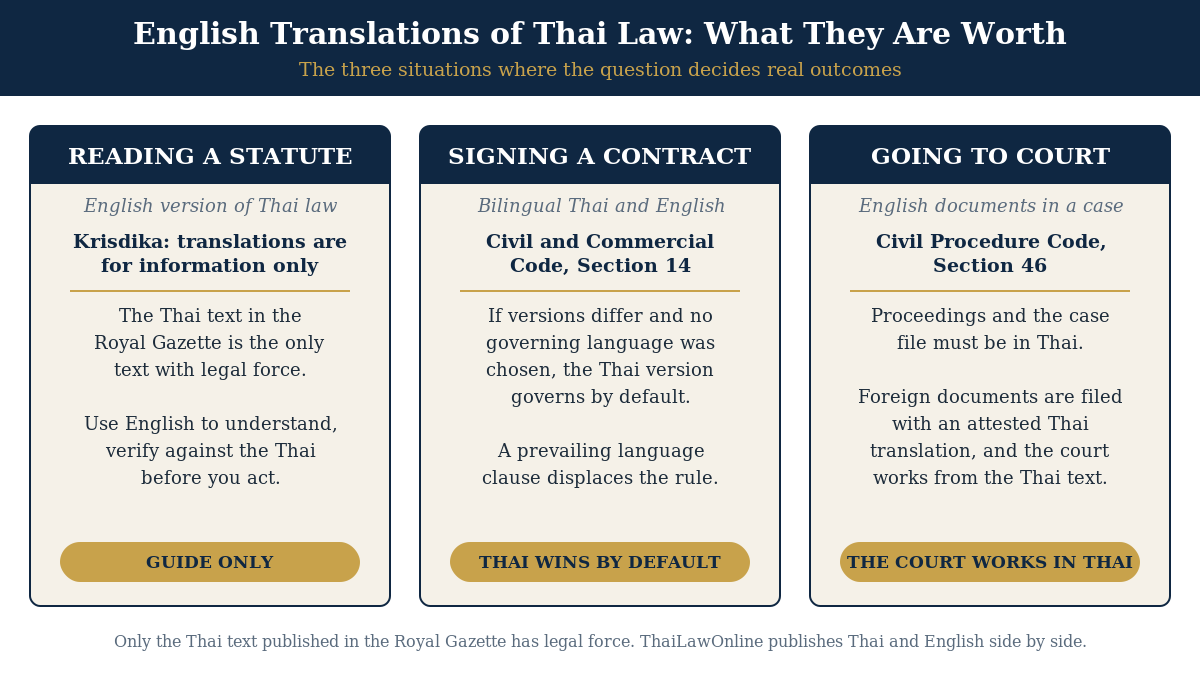
ค้นหามาตราใดก็ได้ของ ประมวลกฎหมายแพ่งและพาณิชย์ และคุณจะพบคำแปลภาษาอังกฤษของกฎหมายไทยบนเว็บไซต์ครึ่งโหล โดยส่วนใหญ่มีข้อจำกัดความรับผิดชอบบรรทัดเดียวที่ไม่มีใครอธิบาย ดังนั้นนี่คือคำถามที่ชาวต่างชาติทุกคนมักจะถามในท้ายที่สุด: มีคำแปลภาษาอังกฤษอย่างเป็นทางการของกฎหมายไทยหรือไม่ คำตอบสั้น ๆ คือไม่มี ข้อความภาษาไทยที่ตีพิมพ์ในราชกิจจานุเบกษาเป็นข้อความเดียวที่มีผลทางกฎหมาย เวอร์ชันภาษาอังกฤษทุกฉบับ รวมถึงฉบับที่หน่วยงานรัฐบาลเผยแพร่และฉบับที่เราเผยแพร่ เป็นเพียงเครื่องมือช่วยในการทำความเข้าใจ ไม่ใช่ตัวกฎหมายเอง สิ่งนั้นมีความหมายต่อคุณอย่างไรนั้นขึ้นอยู่กับว่าคุณอยู่ในสถานการณ์ใดจากสามสถานการณ์นี้: การอ่านพระราชบัญญัติ การลงนามในสัญญา หรือการติดต่อกับศาลหรือกระทรวง หน้านี้จะอธิบายทั้งสามสถานการณ์ อ้างอิงกฎระเบียบที่ควบคุมแต่ละสถานการณ์ และอธิบายว่า “คำแปลรับรอง” ในประเทศไทยหมายถึงอะไรกันแน่.
สารบัญ
ทำไมจึงไม่มีคำแปลภาษาอังกฤษอย่างเป็นทางการของกฎหมายไทย
กฎหมายไทยมีผลใช้บังคับผ่านการประกาศในราชกิจจานุเบกษา และราชกิจจานุเบกษาตีพิมพ์เป็นภาษาไทย ข้อเท็จจริงประการเดียวนี้เป็นเครื่องตัดสินปัญหาเรื่องสถานะ สำนักงานคณะกรรมการกฤษฎีกา ซึ่งเป็นหน่วยงานร่างกฎหมายของรัฐบาลเอง จัดทำคำแปลภาษาอังกฤษของกฎหมายสำคัญผ่านส่วนความเห็นทางกฎหมายและการแปล และระบุว่าจัดทำขึ้นเพื่อเป็นข้อมูลเท่านั้น บทบัญญัติภาษาไทยที่ตราขึ้นและประกาศในราชกิจจานุเบกษายังคงเป็นฉบับที่มีอำนาจเพียงผู้เดียว.
อุปทานของฉบับภาษาอังกฤษได้เติบโตขึ้นจริงๆ พระราชบัญญัติหลักเกณฑ์การจัดทำร่างกฎหมายและการประเมินผลสัมฤทธิ์ของกฎหมาย พ.ศ. 2562 ได้ผลักดันให้หน่วยงานของรัฐเผยแพร่กฎหมายที่ตนรับผิดชอบ และปัจจุบันสำนักงานคณะกรรมการกฤษฎีกาได้เผยแพร่อภิธานศัพท์และมาตรฐานการแปล เพื่อให้หน่วยงานต่างๆ แปลได้อย่างสอดคล้องกัน ผลลัพธ์ที่ได้คือมีข้อความภาษาอังกฤษจากแหล่งข้อมูลที่เป็นทางการมากกว่าที่เคยมีมา ซึ่งไม่มีฉบับใดที่มีผลผูกพันทางกฎหมาย ฉบับภาษาอังกฤษบนเว็บไซต์ของกระทรวงไม่มีผลทางกฎหมายมากกว่าฉบับที่อยู่บนบล็อกของสำนักงานกฎหมาย ทั้งสองอย่างเป็นเพียงความคิดเห็นเกี่ยวกับบทบัญญัติภาษาไทย.
นี่ไม่ใช่ลักษณะเฉพาะของประเทศไทย ประเทศในระบบซีวิลลอว์ส่วนใหญ่ถือว่าตัวบทกฎหมายที่ตราขึ้นในภาษาประจำชาติเป็นเวอร์ชันที่มีผลผูกพันเพียงเวอร์ชันเดียว สิ่งที่ทำให้เรื่องนี้ส่งผลกระทบอย่างรุนแรงยิ่งขึ้นในประเทศไทยคือขนาดของช่องว่างระหว่างประชาชนที่อยู่ภายใต้กฎหมายกับภาษาที่ใช้เขียนกฎหมายนั้น ชาวต่างชาติหลายแสนคนเป็นเจ้าของคอนโดมิเนียม ทำสัญญาเช่า แต่งงาน บริหารบริษัท และทำพินัยกรรมภายใต้กฎระเบียบที่พวกเขาสามารถอ่านได้ผ่านการแปลมือสองเท่านั้น.
คุณสามารถเชื่อถือคำแปลภาษาอังกฤษของกฎหมายไทยได้หรือไม่
คุณพึ่งพามันเพื่อทำความเข้าใจกฎหมายได้ แต่คุณจะอ้างอิงมันเป็นกฎหมายไม่ได้ หากข้อพิพาทขึ้นอยู่กับถ้อยคำที่แน่นอนของบทบัญญัติ ตัวบทภาษาไทยคือข้อยุติ และคำแปลที่ถอดความหรือย่อความอาจทำให้คุณเข้าใจผิดในวินาทีที่ความแม่นยำเป็นสิ่งสำคัญที่สุด.
คำแปลก็เก่าเก็บได้เช่นกัน กฎหมายไทยมีการเปลี่ยนแปลงผ่านพระราชบัญญัติแก้ไขเพิ่มเติม และฉบับภาษาอังกฤษที่มีอยู่ทางอินเทอร์เน็ตมักสะท้อนถึงบทบัญญัติในสภาพเมื่อหลายปีก่อน ตัวอย่างเช่น บทบัญญัติประมวลกฎหมายแพ่งและพาณิชย์ว่าด้วยการสมรสมีการเปลี่ยนแปลงอย่างมากเมื่อพระราชบัญญัติสมรสเท่าเทียมมีผลใช้บังคับในเดือนมกราคม พ.ศ. 2568 และฉบับภาษาอังกฤษที่มีมาก่อนหน้านั้นยังคงอธิบายกฎเกณฑ์ “สามีและภรรยา” ซึ่งไม่ตรงกับบทบัญญัติภาษาไทยอีกต่อไป ก่อนที่จะอ้างอิงมาตราที่ได้รับการแปลใด ๆ ให้ตรวจสอบว่าได้รับการแปลเมื่อใดและมีอะไรบ้างที่แก้ไขเพิ่มเติมต้นฉบับภาษาไทยนับแต่นั้นมา.
นี่คือเหตุผลที่เราเผยแพร่ ประมวลกฎหมายแพ่งและพาณิชย์ และ ประมวลกฎหมายอาญา พร้อมกับข้อความภาษาไทยข้างๆ ภาษาอังกฤษ ทีละมาตรา คุณไม่จำเป็นต้องเชื่อถือคำแปลเพียงอย่างเดียว รวมถึงของเราด้วย เมื่อข้อความทั้งสองคอลัมน์อยู่ด้วยกัน คุณหรือทนายความของคุณสามารถตรวจสอบคำที่ใช้บังคับจริงๆ ได้เสมอ ส่วนที่เหลือของพวกเรา ห้องสมุดกฎหมายไทย เป็นไปตามหลักการเดียวกัน.
ตัวอย่างประกอบ: สองแบบทดสอบที่แตกต่างกัน รวมเป็นหนึ่งวลี
มาตรา 53 แห่งพระราชบัญญัติคนเข้าเมือง พ.ศ. 2522 เป็นตัวกำหนดว่าคนต่างด้าวซึ่งมีถิ่นฐานอยู่ในราชอาณาจักรไทยแล้วสามารถสูญเสียสถานะดังกล่าวได้ในกรณีใดบ้าง ฉบับภาษาอังกฤษที่มีการเผยแพร่ออนไลน์ได้ระบุเหตุผลต่างๆ ไว้ดังนี้: “บุคคลซึ่งถูกห้ามมิให้เข้ามาในราชอาณาจักรตามพฤติการณ์ที่บัญญัติไว้ในมาตรา 12 (7) หรือ (8) หรือ (10) หรือมาตรา 43 วรรคสอง หรือมาตรา 44”. เมื่ออ่านด้วยวิธีนั้น เหตุผลทุกข้อก็คือสิ่งเดียวกัน นั่นคือ เงื่อนไขที่จะทำให้คุณถูกปฏิเสธการเข้าเมืองตั้งแต่ที่ชายแดน.
ข้อความภาษาไทยระบุไว้แตกต่างออกไปสำหรับสองอันสุดท้าย โดยเขียนว่า:
“หรือไม่ปฏิบัติตามระเบียบที่คณะกรรมการกำหนดตามมาตรา ๔๓ วรรคสอง หรือเป็นผู้มีลักษณะต้องห้ามตามมาตรา ๔๔”
มาตรา 53 พระราชบัญญัติคนเข้าเมือง พ.ศ. 2522
นั่นคือคนที่ ไม่ปฏิบัติตามระเบียบข้อบังคับ ที่คณะกรรมการตรวจคนเข้าเมืองกำหนดตามมาตรา 43 วรรคสอง หรือผู้ มีลักษณะต้องห้าม ตามมาตรา 44 ประการหนึ่งคือสิ่งที่คุณทำหรือละเว้นไม่ทำ แต่อีกประการหนึ่งคือสถานะที่คุณถือครอง ผู้แปลได้รวบรวมการทดสอบการปฏิบัติตามกฎระเบียบและการทดสอบสถานะเข้าไว้ด้วยกันในวลีเดียวว่า “ถูกห้ามมิให้เข้ามาในราชอาณาจักรเนื่องจากพฤติการณ์ใดๆ ตามที่กำหนดไว้ใน” และมาตราดังกล่าวได้นำหน้ารายการด้วยคนต่างด้าวที่มีถิ่นพำนักอยู่แล้ว ไม่ใช่ด้วยบุคคลที่ถูกปฏิเสธไม่ให้เข้าเมือง.
นี่ไม่ใช่เรื่องของนักแปลที่สะเพร่าในอนุประโยคย่อย นี่คือมาตราที่ตัดสินว่าผู้มีถิ่นที่อยู่ถาวรจะยังคงสถานะผู้มีถิ่นที่อยู่ถาวรไว้ได้หรือไม่ และที่ปรึกษาที่ทำงานโดยดูจากภาษาอังกฤษเพียงอย่างเดียวคงจะมองหาเหตุผลในการควบคุมชายแดน ในขณะที่ภาษาไทยถามว่าบุคคลนั้นปฏิบัติตามกฎของคณะกรรมการหรือไม่ โปรดตรวจสอบภาษาไทยก่อนที่คุณจะให้คำปรึกษาเกี่ยวกับบทบัญญัติใดๆ ที่อาจทำให้ใครบางคนต้องสูญเสียสถานะที่ตนถืออยู่แล้ว.
สัญญาแบบสองภาษา: ภาษาใดมีผลเหนือกว่าในประเทศไทย?
สัญญาคือจุดที่คำถามเรื่องการแปลไม่ใช่เรื่องวิชาการอีกต่อไป มาตรา 14 แห่งประมวลกฎหมายแพ่งและพาณิชย์กำหนดหลักทั่วไปไว้ว่า ในกรณีที่ทำเอกสารขึ้นเป็นสองภาษา คือภาษาไทยและภาษาอื่น และข้อความทั้งสองฝ่ายไม่ตรงกัน ตลอดจนไม่อาจพิสูจน์ได้ว่าคู่สัญญาประสงค์จะให้ใช้ภาษาใดเป็นหลัก ให้ใช้ภาษาไทยเป็นหลัก.
สามประเด็นภายในประโยคนั้นเป็นตัวตัดสินข้อพิพาทที่แท้จริง:
มันเป็นเพียงหลักทั่วไปเท่านั้น. คู่สัญญาเลือกได้ ข้อสัญญาเรื่องภาษาที่มีผลบังคับซึ่งระบุว่าให้ถือเอาฉบับภาษาอังกฤษเป็นหลักนั้นใช้ได้และมีผลแทนที่มาตรา 14 ทั้งหมด ศาลจะใช้หลักเกณฑ์เริ่มต้นที่ว่าฉบับภาษาไทยเป็นฝ่ายชนะก็ต่อเมื่อไม่สามารถระบุได้ว่าคู่สัญญาตั้งใจอย่างไร.
ใช้กับเอกสารที่ทำขึ้นในมากกว่าหนึ่งภาษา. มาตรานี้ครอบคลุมถึงเอกสารที่ทำขึ้นหลายภาษาโดยมีภาษาไทยรวมอยู่ด้วย ไม่ว่าภาษาเหล่านั้นจะอยู่บนหน้าเดียวกันหรือแยกเป็นฉบับต่างหาก ศาลฎีกานำมาปรับใช้ในคำพิพากษาศาลฎีกาที่ 1254/2546 กับหนังสือบอกเลิกสัญญาที่มีข้อความภาษาอังกฤษและภาษาไทยอยู่ในเอกสารฉบับเดียวกัน โดยไม่มีข้อสัญญาใดกำหนดว่าภาษาใดเป็นภาษาที่ใช้บังคับ ดังนั้น ข้อความภาษาไทยจึงเป็นตัวตัดสินว่านายจ้างได้กล่าวอะไรไว้ สัญญาที่ทำและลงนามเป็นภาษาอังกฤษเพียงภาษาเดียวและต่อมาได้รับการแปลเพื่อใช้สำหรับศาลหรือเจ้าพนักงานนั้นมีความแตกต่างกัน ต้นฉบับภาษาอังกฤษยังคงเป็นสัญญา มาตรา 14 ตอบคำถามที่แคบกว่า คือ เอกสารหนึ่งฉบับมีสองภาษา มีความขัดแย้งกันหนึ่งจุด และไม่มีการเลือกภาษาที่ใช้บังคับ.
ความเงียบคือกับดัก. สัญญาแบบสองภาษาในประเทศไทยมักจัดทำขึ้นโดยฝ่ายไทย และหากไม่มีข้อกำหนดใดระบุถึงภาษาที่ใช้บังคับ ฉบับภาษาไทยจะมีผลเหนือกว่าในกรณีที่มีข้อความไม่ตรงกัน ผู้ซื้อชาวต่างชาติที่เจรจาเป็นภาษาอังกฤษและลงนามทั้งสองฉบับอาจพบว่าคำสัญญาที่มีผลทางกฎหมายนั้นอยู่ในข้อความที่พวกเขาไม่เคยอ่าน ของเรา ข้อตกลงก่อนสมรส และ พินัยกรรมไทย ร่างขึ้นเป็นสองภาษาด้วยเหตุผลนี้โดยเฉพาะ: ข้อความทั้งสองฉบับถูกจัดทำขึ้นพร้อมกัน ตรวจสอบเทียบเคียงกัน และในเอกสารจะระบุว่าเวอร์ชันใดเป็นฉบับบังคับใช้.
เอกสารภาษาอังกฤษในศาลไทยจะเป็นอย่างไร
มาตรา 46 แห่งประมวลกฎหมายวิธีพิจารณาความแพ่ง บังคับให้กระบวนพิจารณาของศาลและเอกสารทุกฉบับในสำนวนคดีต้องเป็นภาษาไทย เอกสารที่เป็นภาษาต่างประเทศจะเข้าสู่สำนวนได้โดยต้องมีคำแปลภาษาไทยแนบมาด้วย และผู้แปลต้องรับรองความถูกต้อง จากนั้นศาลจึงจะดำเนินการพิจารณาโดยอิงจากคำแปลภาษาไทยนั้น.
ลองพิจารณาผลที่ตามมาให้ดี: หากคุณฟ้องร้องตามสัญญาภาษาอังกฤษของคุณในศาลไทย ฉบับที่ผู้พิพากษาอ่านคือคำแปลภาษาไทยที่จัดทำขึ้นสำหรับการดำเนินคดีนั้น ถ้อยคำภาษาอังกฤษที่คุณเจรจามาอย่างรอบคอบจะผ่านนักแปลก่อนที่จะไปถึงบัลลังก์ อีกฝ่ายสามารถโต้แย้งคำแปลนั้นได้ และคุณจะต้องยึดถือตามฉบับที่คุณยื่น: ในคำพิพากษาศาลฎีกาที่ 1663/2529 ศาลไม่อนุญาตให้คู่ความโต้แย้งว่าคำแปลภาษาไทยของข้อบังคับการทำงานภาษาอังกฤษของตนเองนั้นไม่ถูกต้อง และได้ตัดสินคดีโดยยึดตามคำแปลฉบับนั้น หลักการเดียวกันนี้ยังใช้กับกระทรวงและสำนักงานเขตต่างๆ ซึ่งทำงานเป็นภาษาไทยและกำหนดให้ต้องมีคำแปลเอกสารต่างประเทศสำหรับการจดทะเบียนส่วนใหญ่ การทำให้เกิดการต่อสู้เรื่องคำแปลจึงเป็นกลยุทธ์ในการดำเนินคดีในตัวของมันเอง และการจัดสรรงบประมาณสำหรับการแปลทางกฎหมายที่มีความเชี่ยวชาญจึงเป็นส่วนหนึ่งของการจัดงบประมาณสำหรับการระงับข้อพิพาทในประเทศไทย ดูคู่มือของเราเกี่ยวกับ การขึ้นศาลในประเทศไทย สำหรับขั้นตอนโดยรวม.
“คำแปลรับรอง” ในประเทศไทยหมายถึงอะไร
น้อยกว่าที่คนส่วนใหญ่เข้าใจ ประเทศไทยไม่มีระบบผู้แปลสาบานตน ไม่มีศาลหรือกระทรวงใดของไทยที่จัดทำทะเบียนกลางของผู้แปลกฎหมายที่ได้รับใบอนุญาต และไม่มีกฎหมายใดที่จัดตั้งตำแหน่งผู้แปลสาบานตนอย่างที่มีในฝรั่งเศส เยอรมนี หรือสเปน เมื่อหน่วยงานไทยขอ “คำแปลรับรอง” โดยปกติแล้วหมายถึงคำแปลที่มีคำรับรองความถูกต้องซึ่งลงลายมือชื่อโดยผู้แปลหรือสำนักงานแปล และบางครั้งอาจมี การรับรองนิติกรณ์ เพิ่มเติมอีกชั้นหนึ่ง.
สิ่งที่มีอยู่จริงแทนในทางปฏิบัติ:
การรับรองนิติกรณ์กระทรวงการต่างประเทศ. กรมการกงสุล กระทรวงการต่างประเทศ ทำการรับรองนิติกรณ์เอกสารและคำแปลภาษาไทยหรือภาษาอังกฤษเพื่อนำไปใช้ในทางราชการ การรับรองนิติกรณ์เป็นการตรวจสอบลายมือชื่อและดวงตราในสายโซ่เอกสาร โดยไม่ได้ตรวจสอบความสามารถของผู้แปล และไม่ได้ทำให้คำแปลนั้นมีผลตามกฎหมาย กระบวนการดังกล่าว รวมถึงการเปลี่ยนแปลงที่จะเกิดขึ้น มีระบุไว้ในคู่มือของเราเกี่ยวกับ การรับรองนิติกรณ์เอกสารในประเทศไทย.
ใบรับรองวิชาชีพ. สมาคมผู้ประกอบวิชาชีพนักแปลและล่ามแห่งเอเชียตะวันออกเฉียงใต้ (SEAProTI) รับรองนักแปลตามมาตรฐานของตนเอง และกรมการกงสุลได้ระบุชื่อนักแปลที่ได้รับการรับรองจาก SEAProTI ให้อยู่ในกลุ่มผู้ให้บริการที่แนะนำ ซึ่งนั่นคือการยอมรับในวิชาชีพและมีประโยชน์ แต่นั่นไม่ใช่ใบอนุญาตของรัฐ.
การฉ้อโกง เพื่อหลีกเลี่ยง. กระทรวงการต่างประเทศได้ออกประกาศเตือนสาธารณชนเกี่ยวกับบริษัทจัดหาล่ามและผู้แปลที่โฆษณาตนเองว่าเป็น “ผู้แปลที่ได้รับการรับรองจากกระทรวงการต่างประเทศ” กรมการกงสุลไม่ได้ให้การรับรองหรือออกใบอนุญาตให้แก่ผู้แปลรายใด ดังนั้นคำกล่าวอ้างดังกล่าวจึงเป็นเท็จไม่ว่าจะปรากฏอยู่ที่ใด บริษัทที่นำข้อความนี้มาแอบอ้างได้บอกบางสิ่งที่มีประโยชน์เกี่ยวกับความน่าเชื่อถือของตนให้คุณทราบแล้ว.
คุณจะปกป้องตัวเองได้อย่างไร? รายการตรวจสอบสั้นๆ
กฎข้างต้นสามารถสรุปย่อเป็น 5 นิสัย ได้แก่:
- ปฏิบัติต่อบทบัญญัติกฎหมายภาษาอังกฤษทุกฉบับเสมือนเป็นแผนที่ ไม่ใช่ตัวอาณาเขต. ใช้เพื่อทำความเข้าใจ จากนั้นให้ทนายความตรวจสอบข้อความภาษาไทยปัจจุบันก่อนที่คุณจะดำเนินการตามมาตราใดมาตราหนึ่งโดยเฉพาะ.
- ใส่ข้อสัญญาว่าด้วยภาษาที่มีผลเหนือกว่าไว้ในสัญญาสองภาษาทุกฉบับ. ตัดสินใจว่าฉบับใดจะมีผลบังคับ และระบุไว้ให้ชัดเจน การไม่ระบุไว้เท่ากับยกการตัดสินใจให้มาตรา 14.
- ให้มีการตรวจทานฉบับภาษาไทยก่อนที่คุณจะลงนาม. หากข้อความภาษาไทยมีผลบังคับใช้ หรืออาจมีผลบังคับใช้ ข้อความภาษาไทยจะเป็นสัญญา การลงนามในข้อความภาษาไทยที่ยังไม่ได้ตรวจสอบให้เรียบร้อยถือเป็นการลงนามโดยไม่รู้ตัว.
- ให้รักษาความสอดคล้องกันระหว่างเวอร์ชันทั้งสองผ่านการแก้ไขเพิ่มเติม. ฝ่ายต่างๆ มักจะแก้ไขเวอร์ชันภาษาอังกฤษแล้วลืมเวอร์ชันภาษาไทยไป ทุกความแตกต่างที่คุณสร้างขึ้นล้วนเป็นข้อพิพาทในอนาคต.
- เตรียมงบประมาณสำหรับการแปลในทุกข้อพิพาทหรือการจดทะเบียน. ศาลและกระทรวงทำงานในภาษาไทย การแปลทางกฎหมายที่ถูกต้องและดีเพียงครั้งเดียวจะถูกกว่าการต่อสู้กันเรื่องคำแปลในศาล.
ตรวจทานครั้งล่าสุด: 28 กันยายน 2569 ประมวลกฎหมายแพ่งและพาณิชย์ มาตรา 14 ประมวลกฎหมายวิธีพิจารณาความแพ่ง มาตรา 46 มาตรา 53 แห่งพระราชบัญญัติคนเข้าเมือง พ.ศ. 2522 และคำพิพากษาศาลฎีกาที่ 1254/2546 ได้อ่านจากตัวบทภาษาไทย คำอธิบายเกี่ยวกับการรับรองผู้แปลและการรับรองนิติกรณ์เอกสารเป็นแนวปฏิบัติ ไม่ใช่บทบัญญัติของกฎหมาย.
คำถามที่พบบ่อย
สัญญาที่ทำเป็นภาษาอังกฤษเพียงภาษาเดียวมีผลสมบูรณ์ตามกฎหมายในประเทศไทยหรือไม่
ใช่ กฎหมายไทยไม่ได้กำหนดให้สัญญาต้องทำเป็นภาษาไทย และศาลไทยก็บังคับใช้สัญญาที่เป็นภาษาอังกฤษ สำหรับการพิจารณาคดีในศาล สัญญาจะต้องถูกแปลเป็นภาษาไทยตามประมวลกฎหมายวิธีพิจารณาความแพ่ง มาตรา 46 และการจดทะเบียนบางประเภทจำเป็นต้องมีฉบับภาษาไทย แต่ความสมบูรณ์ของสัญญาไม่ได้ขึ้นอยู่กับภาษา.
หากสัญญาฉบับภาษาอังกฤษและภาษาไทยขัดแย้งกัน ฉบับใดจะมีผลบังคับใช้เหนือกว่า
ฉบับที่สัญญาระบุให้มีผลบังคับ หากสัญญาไม่ได้ระบุไว้และไม่อาจทราบเจตนาของคู่สัญญาได้ มาตรา 14 แห่งประมวลกฎหมายแพ่งและพาณิชย์กำหนดให้ถือตามฉบับภาษาไทย ควรใส่ข้อสัญญาว่าด้วยภาษาที่มีผลเหนือกว่าไว้เสมอ.
รัฐบาลไทยเผยแพร่คำแปลภาษาอังกฤษอย่างเป็นทางการของกฎหมายหรือไม่?
หน่วยงานของรัฐบาล โดยมีสำนักงานคณะกรรมการกฤษฎีกาเป็นผู้นำ ได้เผยแพร่คำแปลภาษาอังกฤษของกฎหมายหลายฉบับ และเว็บไซต์กฎหมายของรัฐบาลได้จัดทำคำแปลเหล่านี้ให้สามารถเข้าถึงได้ง่าย ทุกฉบับได้รับการเผยแพร่เพื่อเป็นข้อมูลเท่านั้น ข้อความภาษาไทยที่เผยแพร่ในราชกิจจานุเบกษาเป็นข้อความเพียงฉบับเดียวที่มีผลเป็นทางการ.
ศาลในประเทศไทยรับเอกสารภาษาอังกฤษหรือไม่
เฉพาะเมื่อมีคำแปลภาษาไทยแนบมาเท่านั้น มาตรา 46 ของประมวลกฎหมายวิธีพิจารณาความแพ่งกำหนดว่ากระบวนการและเอกสารของคดีต้องเป็นภาษาไทย และในกรณีที่เอกสารเป็นภาษาต่างประเทศ ศาลจะสั่งให้ฝ่ายที่ยื่นเอกสารนั้นจัดทำคำแปลเป็นภาษาไทยที่รับรองว่าถูกต้องของเอกสารทั้งฉบับหรือส่วนที่สำคัญของเอกสารนั้น โดยแนบมากับต้นฉบับ.
คำแปลที่ผ่านการรับรองนิติกรณ์จากกระทรวงการต่างประเทศ (MFA) คืออะไร?
คำแปลที่ผ่านกระบวนการรับรองนิติกรณ์ของกรมการกงสุล กระทรวงการต่างประเทศ การรับรองนิติกรณ์เป็นการรับรองลายมือชื่อและตราประทับ เพื่อให้หน่วยงานอื่นยอมรับเอกสารดังกล่าว แต่ไม่ได้รับรองความสามารถของผู้แปลหรือทำให้คำแปลมีผลเป็นทางการตามกฎหมาย.
ในประเทศไทยมีสิ่งที่เรียกว่าผู้แปลสาบานตนหรือไม่?
ไม่มี ประเทศไทยไม่มีระบบผู้แปลสาบานตนหรือผู้แปลที่ศาลแต่งตั้ง และไม่มีทะเบียนผู้แปลที่ได้รับอนุญาตระดับประเทศ การรับรองมาจากคำรับรองของผู้แปลเอง องค์กรวิชาชีพ เช่น SEAProTI และสำหรับการใช้ในทางราชการ คือการรับรองนิติกรณ์เอกสารโดยกระทรวงการต่างประเทศ (MFA).
สรุปสาระสำคัญ
ไม่มีคำแปลภาษาอังกฤษของกฎหมายไทยฉบับใดเป็นทางการ และจะไม่มีตราบใดที่ราชกิจจานุเบกษายังคงเผยแพร่เป็นภาษาไทย นั่นไม่ใช่เหตุผลที่จะเลิกอ่านคำแปล แต่เป็นเหตุผลที่ต้องอ่านอย่างถูกวิธี กล่าวคือ อ่านในฐานะแนวทางที่ชี้ไปยังตัวบทภาษาไทยซึ่งเป็นตัวบทที่มีผลบังคับ โดยตรวจสอบว่าเป็นฉบับปัจจุบัน และมีข้อสัญญาว่าด้วยภาษาที่มีผลเหนือกว่ารองรับทุกครั้งที่คุณลงนามในเอกสารสองภาษา เราสร้างห้องสมุดประมวลกฎหมายสองภาษาของเราขึ้นเพื่อให้ตัวบทภาษาไทยอยู่ห่างจากภาษาอังกฤษเพียงชำเลืองตาเดียว เมื่อมาตราใดของกฎหมายไทยกำลังจะชี้ขาดเรื่องเงินของคุณ การสมรสของคุณ หรือคดีของคุณ ให้อ่านทั้งสองคอลัมน์ หรือให้ใครสักคนอ่านให้คุณ ThaiLawOnline ให้บริการด้านกฎหมายไทยแก่ลูกความชาวต่างชาติมาตั้งแต่ปี 2006 และการแปลกฎหมายทีละมาตราเคียงข้างต้นฉบับก็เป็นวิธีที่เราใช้รักษาความซื่อตรงของตัวเราเองด้วย หากเอกสารสองภาษาหรือกฎหมายฉบับแปลกำลังจะผูกพันคุณ จองคิวปรึกษา และเราจะอ่านข้อความภาษาไทยกับคุณ.
ข่าวสารกฎหมายไทย ฟรีทางอีเมล
อัปเดตข่าวสารเป็นภาษาอังกฤษที่เข้าใจง่ายเกี่ยวกับการเปลี่ยนแปลงของกฎหมายไทยที่ส่งผลกระทบต่อชาวต่างชาติ: อสังหาริมทรัพย์, วีซ่า, การสมรส, ธุรกิจ และพินัยกรรม จดหมายข่าวสั้นเพียงฉบับเดียวต่อเดือน จากสำนักงานกฎหมายที่ดำเนินงานมาตั้งแต่ปี 2549 ไม่มีการส่งสแปม ยกเลิกรับได้ทุกเมื่อ.