


ตรวจสอบโดย ThaiLawOnline สำนักงานกฎหมายไทยที่ได้รับใบอนุญาตและดำเนินกิจการในประเทศไทยตั้งแต่ปี พ.ศ. 2549 ทนายความผู้รับผิดชอบสำนวน: Wichuda Atthamethakon, น.ม., ใบอนุญาตให้เป็นทนายความ เลขที่ 3149/2556.
ปรับปรุงล่าสุดเมื่อ
สิ่งที่ พระราชบัญญัติคุ้มครองแรงงาน กำหนดไว้จริง สิ่งที่ปฏิทินคณะรัฐมนตรีไม่ได้บังคับ และวิธีจ่ายค่าจ้างพนักงานให้ถูกต้องเมื่อพวกเขามาทำงานในวันนั้น.
สารบัญ
ตรวจสอบครั้งล่าสุด: 17 กันยายน 2026. กฎบนหน้านี้ได้รับการอ่านเป็นภาษาไทยเทียบกับ พระราชบัญญัติคุ้มครองแรงงาน พ.ศ. 2541 (มาตรา 9, 25, 29, 56, 61 ถึง 66, 68, 70, 108, 114, 115, 144 และ 146 แก้ไขเพิ่มเติมถึงฉบับที่ 9 พ.ศ. 2568; การแก้ไขเพิ่มเติมฉบับที่ 8 และฉบับที่ 9 ไม่ได้กระทบมาตราเหล่านี้) วันหยุดของธนาคารในปี พ.ศ. 2570 (2027) ได้รับการตรวจสอบเทียบกับ ประกาศธนาคารแห่งประเทศไทย ที่ 37/2569 (ราชกิจจานุเบกษา, 25 สิงหาคม 2569) และวันที่ในปี พ.ศ. 2569 เทียบกับมติคณะรัฐมนตรีเมื่อวันที่ 2 ธันวาคม 2568 และ 19 พฤษภาคม 2569. ยังไม่ได้รับการตรวจสอบที่นี่: บัญชีวันหยุดของทางราชการปี 2570 และวันหยุดชดเชย (ยังไม่ประกาศ) วันพืชมงคล กระบวนพิจารณาของศาลแรงงาน และหลักเกณฑ์เรื่องการลดจำนวนวันหยุดที่เคยให้ไว้ ตรวจซ้ำเมื่อวันที่ 5 ตุลาคม 2569: คำนวณวันในสัปดาห์ของทุกวันในปฏิทินทั้งสองใหม่และถูกต้อง ค้นหามติคณะรัฐมนตรีเรื่องบัญชีวันหยุดราชการปี 2570 หรือวันหยุดเชื่อมแล้วยังไม่พบ (มีเพียงปฏิทินที่ไม่เป็นทางการ) ประเด็นที่ค้างอยู่ข้างต้นจึงยังค้างอยู่ ไม่มีการแก้ไข ตรวจซ้ำเมื่อวันที่ 10 ตุลาคม 2569: อ่านมาตรา 27, 35 และ 36 แห่งพระราชบัญญัติจัดตั้งศาลแรงงานและวิธีพิจารณาคดีแรงงาน พ.ศ. 2522 และมาตรา 10 และ 20 แห่งพระราชบัญญัติแรงงานสัมพันธ์ พ.ศ. 2518 เป็นภาษาไทย ย่อหน้าเรื่องศาลแรงงานขณะนี้ระบุว่าการยกเว้นค่าธรรมเนียมครอบคลุมทั้งสองฝ่าย และให้หลักเกณฑ์เรื่องการฟ้องด้วยวาจาและการมีผู้แทน และประเด็นเรื่องการลดบัญชีวันหยุดที่เคยให้ไว้ขณะนี้อ้างอิงฐานทางกฎหมายแล้ว บัญชีวันหยุดราชการปี 2570 วันหยุดชดเชย และวันพืชมงคลยังค้างอยู่
เมื่อเดือนพฤศจิกายนปีที่แล้ว ลูกค้าโทรหาเราด้วยความตื่นตระหนกเล็กน้อย สำนักงานในกรุงเทพฯ ของพวกเขาได้คัดลอกปฏิทินของธนาคารแห่งประเทศไทยลงในคู่มือพนักงานโดยตรง ปิดทำการตามวันหยุดทั้งหมดนั้น และรู้สึกใจกว้างมาก.
พนักงานตรวจแรงงานไม่เห็นด้วย คู่มือดังกล่าวไม่มีวันเข้าพรรษา ซึ่งก็ไม่เป็นไร แต่คู่มือยังล้มเหลวในการประกาศรายชื่อวันหยุดประจำปีล่วงหน้า ซึ่งไม่ใช่เรื่องที่ถูกต้อง.
นั่นคือกับดักของ วันหยุดราชการไทย. มีปฏิทินที่ทับซ้อนกันอยู่สามชุดในประเทศนี้ และมีเพียงชุดเดียวเท่านั้นที่สร้างหน้าที่ทางกฎหมายให้แก่คุณ หากคุณคัดลอกรายการที่ผิด คุณอาจปิดทำการในวันที่คุณไม่ได้มีหน้าที่ต้องให้หยุด ขณะที่จ่ายค่าจ้างให้พนักงานน้อยกว่าที่ควรในวันที่คุณมีหน้าที่ต้องให้หยุด.
คู่มือนี้อธิบายกฎเกณฑ์สำหรับนายจ้างภาคเอกชน คุณจะได้รับปฏิทินปี 2027, วันที่เหลือของปี 2026, ตัวคูณค่าจ้างพร้อมตัวอย่างการคำนวณ และบทลงโทษสำหรับการปฏิบัติที่ไม่ถูกต้อง.
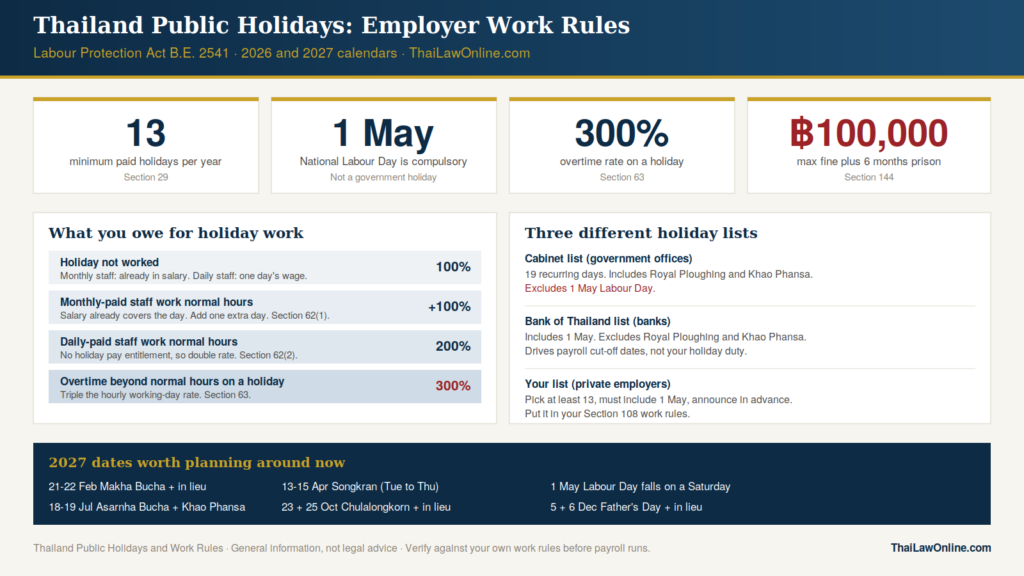
คุณต้องให้วันหยุดนักขัตฤกษ์จำนวนกี่วันในประเทศไทย?
สิบสามวัน ซึ่งเป็นจำนวนขั้นต่ำ และมาจากมาตรา 29 แห่ง พระราชบัญญัติคุ้มครองแรงงาน พ.ศ. 2541 (ค.ศ. 1998).
มาตรานี้สั้นและกำหนดไว้สามเรื่อง โดยกำหนดขั้นต่ำว่าต้องมีวันหยุดตามประเพณีไม่น้อยกว่าสิบสามวันต่อปี และกำหนดให้วันแรงงานแห่งชาติเป็นหนึ่งในนั้นด้วย.
และมันบังคับให้คุณต้องประกาศรายชื่อให้พนักงานของคุณทราบล่วงหน้า.
วันหยุดขั้นต่ำ 13 วันและวันแรงงานแห่งชาติ
นายจ้างชาวต่างชาติส่วนใหญ่กำหนดจำนวนวันได้ถูกต้องแต่ประกาศผิด การประกาศ “ล่วงหน้า” หมายถึงก่อนที่ปีจะเริ่มต้น เป็นลายลักษณ์อักษร ซึ่งพนักงานสามารถมองเห็นได้ ปฏิทินที่เวียนแจกในเดือนมีนาคมสำหรับปีที่เริ่มต้นไปแล้ว ไม่สามารถแก้ไขการกระทำผิดในเดือนมกราคมได้.
วันแรงงานแห่งชาติในวันที่ 1 พฤษภาคมเป็นวันหยุดบังคับ คุณไม่สามารถเปลี่ยนไปใช้วันคริสต์มาสหรือวันอื่นที่เหมาะกับตารางการผลิตของคุณมากกว่าแทนได้ วันหยุดที่เหลือในสิบสามวันของคุณเป็นสิ่งที่คุณเลือกได้ โดยต้องเลือกจากวันหยุดราชการประจำปี วันหยุดทางศาสนา หรือวันหยุดตามขนบธรรมเนียมประเพณีแห่งท้องถิ่น (มาตรา 29).
จากประสบการณ์ของเรา
บริษัทที่จัดการโดยชาวต่างชาติมักจะเข้าใจไปเองว่าบัญชีรายชื่อของรัฐบาลคือมาตรฐานทางกฎหมาย ซึ่งไม่ใช่ บัญชีรายชื่อของคณะรัฐมนตรีใช้บังคับสำหรับหน่วยงานราชการเท่านั้น.
หน้าที่ของคุณคือรายการที่คุณประกาศเอง หากคุณประกาศสิบสี่หรือสิบแปดวัน จำนวนนั้นจะกลายเป็นมาตรฐานตามสัญญาของคุณ.
การให้วันหยุดมากกว่าสิบสามวันนั้นทำได้ แต่การแอบลดลงในปีถัดไปทำไม่ได้ เพราะเป็นการเปลี่ยนแปลงสภาพการจ้างที่มีอยู่เดิมให้แย่ลง.
รายการวันหยุดของรัฐบาล, รายการวันหยุดของธนาคาร, รายการของคุณ
นี่คือจุดที่ความสับสนเริ่มต้นขึ้น ทั้งสามรายชื่อมีความแตกต่างกันอย่างแท้จริง และความแตกต่างเหล่านั้นก็ไม่ใช่เรื่องเล็กน้อยเลย.
| วันหยุด | รายการวันหยุดตามมติคณะรัฐมนตรี (รัฐบาล) | รายการวันหยุดของธนาคารแห่งประเทศไทย (ธนาคาร) | หน้าที่ของนายจ้างเอกชน (LPA) |
|---|---|---|---|
| วันแรงงานแห่งชาติ (1 พฤษภาคม) | Not a holiday | วันหยุด | บังคับ |
| พระราชพิธีจรดพระนังคัลแรกนาขวัญ | วันหยุด | Not a holiday | ไม่จำเป็น |
| เข้าพรรษา | วันหยุด | Not a holiday | ไม่จำเป็น |
| สงกรานต์ (13, 14, 15 เมษายน) | วันหยุด | วันหยุด | เป็นทางเลือก แต่นายจ้างเกือบทุกรายให้ |
| วันอื่นๆ ที่เกิดซ้ำทั้งหมด | วันหยุด | วันหยุด | ไม่จำเป็น |
| วันหยุดพิเศษเชื่อมวันหยุดยาวตามมติคณะรัฐมนตรี | วันหยุด | ทำตามมติคณะรัฐมนตรี | ไม่มีผลผูกพัน |
รายชื่อวันหยุดประจำของคณะรัฐมนตรีมีวันหยุดซ้ำเดิม 19 วันนับตั้งแต่การแก้ไขเพิ่มเติมเมื่อปี 2562 ซึ่งได้เพิ่มวันฉัตรมงคลและวันพระราชสมภพของพระราชินีสุทิดา ดังนั้น หน่วยงานราชการจึงได้รับวันหยุดมากกว่าขั้นต่ำตามกฎหมาย นั่นคือทางเลือกเชิงนโยบาย ไม่ใช่ข้อผูกพันทางกฎหมายที่คุณได้รับสืบทอดมา.
ทำไมรายชื่อวันหยุดของธนาคารแห่งประเทศไทยถึงสำคัญล่ะ ก็ด้วยเหตุผลอื่นนั่นเอง มันบอกคุณว่าธนาคารปิดทำการเมื่อใด ซึ่งเป็นตัวกำหนดวันตัดรอบการจ่ายเงินเดือนและรอบการจ่ายเงินให้แก่ซัพพลายเออร์ของคุณ.
ให้ถือว่าเป็นข้อมูลนำเข้าสำหรับฝ่ายปฏิบัติการ ไม่ใช่ทางกฎหมาย.
วันหยุดราชการไทย ปี 2027: ปฏิทินฉบับเต็ม
ตารางด้านล่างคือปฏิทินการทำงานปี 2027. ธนาคารแห่งประเทศไทย ได้เผยแพร่รายการวันหยุดธนาคารประจำปี พ.ศ. 2570 อย่างเป็นทางการเมื่อวันที่ 25 สิงหาคม 2569 (ประกาศฉบับที่ 37/2569) และวันหยุดธนาคารทั้งหมดด้านล่างนี้ตรงกับประกาศดังกล่าว.
คณะรัฐมนตรียังไม่ได้อนุมัติวันหยุดยาวกรณีพิเศษใด ๆ สำหรับปี พ.ศ. 2570 ณ ช่วงกลางเดือนกันยายน พ.ศ. 2569 เราจึงได้ทำเครื่องหมายวันที่ที่ยังคงต้องรอดูความชัดเจนไว้.
| วันที่ | วัน | วันหยุด | หมายเหตุสำหรับนายจ้าง |
|---|---|---|---|
| 1 มกราคม | วันศุกร์ | วันขึ้นปีใหม่ | ถัดจากวันพฤหัสบดีที่ 31 ธันวาคม 2026 และอยู่ก่อนหน้าวันหยุดสุดสัปดาห์ ทำให้เกิดวันหยุดยาวสี่วัน. |
| 21 ก.พ. | วันอาทิตย์ | มาฆบูชา | ตกในวันอาทิตย์. |
| 22 ก.พ. | วันจันทร์ | วันหยุดชดเชย | ชดเชยวันมาฆบูชา. |
| 6 เม.ย. | วันอังคาร | วันจักรี | วันอังคารที่ถูกตัดขาด คาดว่าจะมีคำขอลาหยุดในวันจันทร์. |
| 13-15 เม.ย. | อังคาร-พฤหัสบดี | สงกรานต์ | ทั้งสามวันตรงกับวันธรรมดา จึงไม่มีวันหยุดชดเชย. |
| 1 พฤษภาคม | วันเสาร์ | วันแรงงานแห่งชาติ | เป็นวันหยุดบังคับ ตรงกับวันเสาร์ ดูหลักเกณฑ์วันหยุดชดเชยด้านล่าง. |
| 3 พฤษภาคม | วันจันทร์ | วันหยุดชดเชยธนาคาร | เฉพาะธนาคารเท่านั้น ไม่ใช่ภาระผูกพันของคุณโดยอัตโนมัติ. |
| 4 พฤษภาคม | วันอังคาร | วันฉัตรมงคล | ได้รับการยืนยันจากหลายแหล่งข่าว. |
| รอกำหนดการเดือนพฤษภาคม | ยังไม่กำหนด | พระราชพิธีจรดพระนังคัลแรกนาขวัญ | กำหนดการที่โหรหลวงกำหนดขึ้นทุกปี ยังไม่ได้ประกาศ สำหรับรัฐบาลเท่านั้น. |
| 20 พฤษภาคม | พฤหัสบดี | วันวิสาขบูชา | วันที่ตามจันทรคติ ตรวจสอบความถูกต้องกับวันพระจันทร์เต็มดวง. |
| 3 มิ.ย. | พฤหัสบดี | วันเฉลิมพระชนมพรรษาสมเด็จพระนางเจ้าสุทิดา พัชรสุธาพิมลลักษณ พระบรมราชินี | วันที่กำหนดตายตัว. |
| 18 ก.ค. | วันอาทิตย์ | วันอาสาฬหบูชา | ตรงกับวันอาทิตย์ ยืนยันตามประกาศของธนาคารแห่งประเทศไทย. |
| 19 ก.ค. | วันจันทร์ | เข้าพรรษา | วันหยุดราชการ ธนาคารปิดทำการเช่นกัน เนื่องจากเป็นวันหยุดชดเชยวันอาสาฬหบูชา. |
| 20 ก.ค. | วันอังคาร | วันหยุดชดเชย | วันหยุดชดเชยจากรัฐบาลคาดว่าจะจัดขึ้นแทนวันอาสาฬหบูชา ยังไม่เป็นทางการ. |
| 28 ก.ค. | วันพุธ | วันเฉลิมพระชนมพรรษาพระบาทสมเด็จพระเจ้าอยู่หัว | วันที่กำหนดตายตัว. |
| 12 ส.ค. | พฤหัสบดี | วันเฉลิมพระชนมพรรษา สมเด็จพระบรมราชชนนีพันปีหลวง | วันแม่. |
| 13 ตุลาคม | วันพุธ | การสวรรคตของพระบาทสมเด็จพระบรมชนกาธิเบศร มหาภูมิพลอดุลยเดชมหาราช บรมนาถบพิตร | วันนวมินทรมหาราช. |
| 23 ต.ค. | วันเสาร์ | วันปิยมหาราช | ตรงกับวันเสาร์. |
| 25 ต.ค. | วันจันทร์ | วันหยุดชดเชย | ชดเชยวันปิยมหาราช. |
| 5 ธันวาคม | วันอาทิตย์ | วันเฉลิมพระชนมพรรษาพระบาทสมเด็จพระบรมชนกาธิเบศร มหาภูมิพลอดุลยเดชมหาราช บรมนาถบพิตร | วันชาติและวันพ่อแห่งชาติ. |
| 6 ธ.ค. | วันจันทร์ | วันหยุดชดเชย | ชดเชยวันที่ 5 ธันวาคม. |
| 10 ธ.ค. | วันศุกร์ | วันรัฐธรรมนูญ | วันหยุดยาวสามวัน. |
| 31 ธ.ค. | วันศุกร์ | วันสิ้นปี | วันหยุดยาวสามวันถึงปี 2028. |
วันที่ต้องดู
วันอาสาฬหบูชาปี 2027 ได้ข้อสรุปแล้ว ประกาศของธนาคารแห่งประเทศไทยกำหนดให้ตรงกับวันอาทิตย์ที่ 18 กรกฎาคม และวันเข้าพรรษาในวันจันทร์ที่ 19 กรกฎาคม ปฏิทินภาษาอังกฤษบางฉบับยังคงพิมพ์วันที่ 19 และ 20 กรกฎาคม สำหรับวันสำคัญทั้งสองวัน ปฏิทินเหล่านั้นไม่ถูกต้อง.
ส่วนที่ยังต้องรอดูก็คือฝั่งของรัฐบาล: วันชดเชยสำหรับวันอาสาฬหบูชา และวันหยุดยาวต่อเนื่องที่คณะรัฐมนตรีอาจประกาศเพิ่ม ประกาศเหล่านี้มักจะออกมาในช่วงปลายปีก่อนหน้า.
วันหยุดราชการที่เหลือในปี 2569
ณ ปลายเดือนสิงหาคม มีการระบุวันที่เหลืออยู่ของปี 2026 ไว้เจ็ดวัน สองวันในนั้นทำให้เกิดวันหยุดยาวสามวัน และหนึ่งวันใช้เฉพาะในกรุงเทพมหานครเท่านั้น.
| วันที่ | วัน | วันหยุด | หมายเหตุสำหรับนายจ้าง |
|---|---|---|---|
| 13 ตุลาคม | วันอังคาร | การสวรรคตของพระบาทสมเด็จพระบรมชนกาธิเบศร มหาภูมิพลอดุลยเดชมหาราช บรมนาถบพิตร | ทั่วประเทศ. |
| 16 ต.ค. | วันศุกร์ | วันหยุดพิเศษ เฉพาะกรุงเทพฯ | ได้รับการอนุมัติสำหรับการประชุมประจำปีธนาคารโลกและไอเอ็มเอฟ รัฐบาลและธนาคารต่างๆ ในกรุงเทพฯ ไม่มีผลผูกพันกับนายจ้างภาคเอกชน. |
| 23 ต.ค. | วันศุกร์ | วันปิยมหาราช | วันหยุดยาวสามวัน. |
| 5 ธันวาคม | วันเสาร์ | วันเฉลิมพระชนมพรรษาพระบาทสมเด็จพระบรมชนกาธิเบศร มหาภูมิพลอดุลยเดชมหาราช บรมนาถบพิตร | ตรงกับวันเสาร์. |
| 7 ธ.ค. | วันจันทร์ | วันหยุดชดเชย | ชดเชยวันที่ 5 ธันวาคม. |
| 10 ธ.ค. | พฤหัสบดี | วันรัฐธรรมนูญ | ทั่วประเทศ. |
| 31 ธ.ค. | พฤหัสบดี | วันสิ้นปี | ต่อเนื่องถึงวันที่ 1 มกราคม 2570 รวมเป็นวันหยุดยาวสี่วัน. |
โปรดสังเกตสิ่งที่ไม่ปรากฏในรายการนั้น มีการเสนอวันหยุดยาวต่อเนื่องเพิ่มอีกสองวันสำหรับเดือนมิถุนายนและกรกฎาคม 2026 คณะรัฐมนตรีได้ถอนวันหยุดเหล่านี้ออกไปในเดือนธันวาคม 2025 เนื่องจากมีความกังวลเกี่ยวกับผลกระทบต่อผู้ประกอบการ.
โพสต์ไวรัลในเดือนพฤษภาคม 2026 อ้างว่าวันหยุดดังกล่าวได้รับการอนุมัติแล้ว โฆษกรัฐบาลปฏิเสธเรื่องดังกล่าว และศูนย์ต่อต้านข่าวปลอมได้บันทึกข้อกล่าวอ้างนั้นไว้ ฝ่ายทรัพยากรบุคคลหลายแห่งได้เผยแพร่ปฏิทินที่แก้ไขแล้วไปก่อนหน้านั้นแล้ว.
วันสำคัญทางพระพุทธศาสนาที่กำหนดตามจันทรคติ
วันหยุดสี่วันของประเทศไทยเคลื่อนเปลี่ยนไปทุกปีตามปฏิทินจันทรคติ ได้แก่ วันมาฆบูชา วันวิสาขบูชา วันอาสาฬหบูชา และวันเข้าพรรษา วันหยุดแต่ละวันยึดตามวันพระจันทร์เต็มดวงในเดือนจันทรคติไทยที่กำหนด และวันเข้าพรรษาจะตรงกับวันถัดจากวันอาสาฬหบูชาเสมอ.
ให้มองวันหยุดเหล่านี้แบบเดียวกับที่นายจ้างชาวอังกฤษมองวันอีสเตอร์ วันที่เปลี่ยนไป แต่สิทธิไม่เปลี่ยน และซอฟต์แวร์จัดตารางงานของคุณจะไม่คำนวณเรื่องนี้ให้เอง.
พิธีพืชมงคลจรดพระนังคัลแรกนาขวัญนั้นมีความแตกต่างออกไปอีก โดยสำนักพระราชวังจะกำหนดวันมงคลขึ้นในทุก ๆ ปี ซึ่งมักจะอยู่ในเดือนพฤษภาคม และเป็นวันหยุดราชการเท่านั้น.
วันหยุดชดเชยและหลักเกณฑ์ที่ใช้จริง
มาตรา 29 วรรคสอง จัดการกับกรณีที่วันหยุดชนกัน เมื่อวันหยุดประเพณีตรงกับวันหยุดประจำสัปดาห์ของลูกจ้าง ให้ลูกจ้างหยุดชดเชยในวันทำงานถัดไป.
มีรายละเอียดเล็กน้อยสองสามอย่างที่ทำให้คนสับสน.
ประการแรก หลักเกณฑ์นี้อ้างอิงจาก วันหยุดประจำสัปดาห์ของลูกจ้าง ไม่ใช่วันเสาร์และวันอาทิตย์ หากวันหยุดประจำสัปดาห์ของทีมรักษาความปลอดภัยของคุณคือวันพุธ วันหยุดตามประเพณีที่ตรงกับวันพุธของพวกเขาจะทำให้เกิดวันหยุดชดเชย แต่วันหยุดที่ตรงกับวันอาทิตย์ของพวกเขา ซึ่งเป็นวันทำงานปกติของพวกเขา จะไม่ทำให้เกิดวันหยุดชดเชย.
ประการที่สอง วันหยุดชดเชยดังกล่าวถือเป็นวันหยุดที่มีการจ่ายค่าจ้างเต็มจำนวน และมีผลทางกฎหมายเรื่องค่าจ้างตามมาตรา 62 และมาตรา 63 เช่นเดียวกัน หากมีผู้ปฏิบัติงานในวันดังกล่าว.
นายจ้างบางครั้งปฏิบัติเสมือนว่าวันหยุดชดเชยเป็นความกรุณาตามอำเภอใจ แต่มันไม่ใช่เช่นนั้น.
วันหยุดพิเศษที่คณะรัฐมนตรีประกาศไม่ได้มีผลผูกพันกับคุณ
ทุกๆ หนึ่งหรือสองปี คณะรัฐมนตรีไทยจะประกาศวันหยุดเพิ่มเป็นกรณีพิเศษเพื่อเชื่อมวันหยุดนักขัตฤกษ์เข้ากับวันหยุดสุดสัปดาห์ โดยมักมีเป้าหมายเพื่อกระตุ้นการท่องเที่ยวภายในประเทศ.
ข้อกำหนดเหล่านี้ใช้กับหน่วยงานราชการ และธนาคารแห่งประเทศไทยมักจะปฏิบัติตามสำหรับธนาคารต่างๆ ส่วนนายจ้างภาคเอกชนมีอิสระที่จะไม่สนใจได้.
บริษัทส่วนใหญ่ก็ปิดทำการอยู่ดี เนื่องจากคู่ค้าครึ่งหนึ่งและธนาคารทั้งหมดต่างก็ปิดทำการ นั่นคือการตัดสินใจทางธุรกิจที่มีผลต่อการจ่ายค่าจ้าง.
หากคุณปิดทำการในวันที่ไม่ได้อยู่ในรายการที่ประกาศไว้ คุณยังคงต้องจ่ายค่าจ้างเต็มจำนวนสำหรับวันนั้น คุณไม่สามารถหักค่าจ้างได้ และไม่สามารถบังคับให้พนักงานใช้วันลาพักผ่อนประจำปีสำหรับวันนั้นได้โดยไม่ได้รับความยินยอม.
ข้อแนะนำเชิงปฏิบัติในการร่าง
เพิ่มข้อกำหนดในระเบียบข้อบังคับเกี่ยวกับการทำงานของคุณว่า บริษัทอาจพิจารณาหยุดงานในวันหยุดตามประกาศของรัฐบาลเพิ่มเติมได้ตามดุลยพินิจของบริษัท ระบุว่าการทำเช่นนั้นในปีหนึ่งๆ จะไม่ถือเป็นสิทธิเรียกร้องสำหรับปีต่อๆ ไป เราใส่ข้อความนี้ไว้ในระเบียบข้อบังคับเกี่ยวกับการทำงานทุกฉบับที่เรายกร่างขึ้น มันไม่มีต้นทุนและช่วยตัดข้ออ้างเรื่อง “แต่ปีที่แล้วเราได้หยุด” ออกไปได้.
ค่าจ้างในวันหยุดในประเทศไทย: สิ่งที่คุณต้องจ่ายและเวลาที่ต้องจ่าย
นี่คือจุดที่เงินอยู่ และจุดที่ข้อพิพาทส่วนใหญ่เริ่มต้นขึ้น โดยมีสามมาตราที่เกี่ยวข้อง.
จ่ายค่าวันหยุด (มาตรา 56)
มาตรา 56 กำหนดให้คุณต้องจ่ายค่าจ้างเท่ากับวันทำงานปกติ สำหรับวันหยุดประจำสัปดาห์ วันหยุดตามประเพณี และวันหยุดพักผ่อนประจำปี สำหรับพนักงานที่ได้รับเงินเดือนเป็นรายเดือน สิ่งนี้จะไม่สามารถมองเห็นได้อย่างชัดเจน เนื่องจากเงินเดือนได้ครอบคลุมทั้งเดือนอยู่แล้ว.
พนักงานที่ได้รับค่าจ้างรายวัน พนักงานที่ได้รับค่าจ้างตามชั่วโมง และพนักงานที่ได้รับค่าจ้างตามชิ้นงานเป็นกรณีพิเศษเฉพาะในวันหยุดประจำสัปดาห์เท่านั้น มาตรา 56 ได้ระบุชัดเจนว่าไม่รวมอยู่ในวันหยุดประจำสัปดาห์ที่ได้รับค่าจ้าง.
แต่พวกเขามีสิทธิ์เต็มที่ที่จะได้รับค่าจ้างในวันหยุดประเพณีและวันลาพักผ่อนประจำปี อ่านประโยคนั้นซ้ำอีกรอบ นี่คือข้อผิดพลาดในการทำเงินเดือนที่พบบ่อยที่สุดที่เราพบในโรงงานและบริษัทก่อสร้าง.
การทำงานในวันหยุด (มาตรา 62)
มาตรา 62 แบ่งตามว่าลูกจ้างมีสิทธิได้รับค่าจ้างในวันหยุดสำหรับวันนั้นหรือไม่.
- มีสิทธิได้รับค่าจ้างในวันหยุด (กรณีพนักงานรายเดือน): คุณต้องจ่ายเพิ่มไม่น้อยกว่าหนึ่งเท่าของอัตราค่าจ้างต่อชั่วโมงในวันทำงานตามจำนวนชั่วโมงที่ทำงาน เงินเดือนครอบคลุม 100% แรกแล้ว ดังนั้นยอดรวมจึงเป็น 200%.
- ไม่มีสิทธิได้รับค่าจ้างในวันหยุด (กรณีลูกจ้างรายวันที่มีวันหยุดประจำสัปดาห์): คุณต้องจ่ายไม่น้อยกว่าสองเท่าของอัตราค่าจ้างต่อชั่วโมงในวันทำงาน.
การทำงานล่วงเวลาในวันหยุด (มาตรา 63)
ชั่วโมงทำงานที่เกินกว่าเวลาทำงานปกติในวันหยุด จะได้รับค่าจ้างในอัตราไม่น้อยกว่าสามเท่าของอัตราค่าจ้างต่อชั่วโมงในวันทำงาน โดยไม่นำไปทับซ้อนกับมาตรา 62 ชั่วโมงปกติในวันนั้นได้รับค่าจ้างตามมาตรา 62 และเฉพาะชั่วโมงที่เกินกว่านั้นเท่านั้นที่ได้รับในอัตราสามเท่า.
| สถานการณ์ | อัตรา | ส่วน | ความหมายในทางปฏิบัติ |
|---|---|---|---|
| วันหยุดนักขัตฤกษ์ไม่ได้ทำงาน ได้รับค่าจ้างรายเดือน | 100% | 56 | รวมอยู่ในเงินเดือนประจำแล้ว ไม่มีรายการแยกต่างหาก. |
| วันหยุดประเพณีไม่มาทำงาน ได้รับค่าจ้างรายวัน | 100% | 56 | จ่ายค่าแรงหนึ่งวันถึงแม้ว่าจะไม่มีใครทำงานเลยก็ตาม. |
| วันหยุดประจำสัปดาห์ไม่ได้ทำงาน ได้รับค่าจ้างรายวัน | 0% | 56 | ยกเว้นไว้อย่างชัดเจน นี่คือข้อยกเว้นเดียวเท่านั้น. |
| ทำงานในชั่วโมงปกติ ลูกจ้างมีสิทธิได้รับค่าจ้างในวันหยุด | +100% | 62(1) | ได้ค่าจ้างเพิ่มอีกหนึ่งวันนอกเหนือจากเงินเดือน รวมเป็น 200%. |
| ทำงานในชั่วโมงปกติ ไม่มีสิทธิได้รับค่าจ้างในวันหยุด | 200% | 62(2) | เพิ่มอัตราค่าจ้างต่อชั่วโมงในวันทำงานเป็นสองเท่า. |
| ชั่วโมงการทำงานล่วงเวลาในวันหยุด | 300% | 63 | เพิ่มอัตราค่าจ้างการทำงานต่อชั่วโมงขึ้นเป็นสามเท่า. |
| ล่วงเวลาในวันทำงานปกติ | 150% | 61 | สำหรับการเปรียบเทียบ. |
| คุณไม่ได้ให้วันหยุดนั้นเลย | อัตราตามมาตรา 62 และ 63 | 64 | ถือเสมือนว่าคุณได้สั่งให้พนักงานทำงานนั้น. |
ตัวอย่างที่แสดงวิธีทำสองตัวอย่าง
ตัวเลขเหล่านี้ทำให้เห็นภาพชัดเจนขึ้น สมมติให้วันทำงานปกติคือแปดชั่วโมงในทั้งสองกรณี.
| ขั้นตอน | สมชาย: เงินเดือน 30,000 บาท | มาลี: ค่าแรงรายวัน 400 บาท |
|---|---|---|
| อัตราค่าจ้างต่อชั่วโมงในวันทำงาน | 30,000 ÷ 30 ÷ 8 = 125 บาท | 400 ÷ 8 = 50 บาท |
| ทำงานปกติ 8 ชั่วโมง ในวันจักรี | เงินเดือนครอบคลุมแล้ว บวกด้วย 8 × 125 = 1,000 บาท | ค่าแรงวันหยุด 400 บาท (มาตรา 56) บวกด้วย 8 × 50 = 400 บาท ภายใต้มาตรา 62(1) |
| บวกค่าล่วงเวลาอีก 3 ชั่วโมงในวันนั้น | 3 × 125 × 3 = 1,125 บาท | 3 × 50 × 3 = 450 บาท |
| ยอดเงินเพิ่มรวมของวัน | 2,125 บาท นอกเหนือจากเงินเดือน | 850 บาท นอกเหนือจากค่าจ้างวันหยุด 400 บาท |
หากมาลีทำงานในวันหยุดประจำสัปดาห์แทน คำตอบจะเปลี่ยนไป พนักงานรายวันไม่ได้รับค่าจ้างสำหรับวันหยุดประจำสัปดาห์ ดังนั้น มาตรา 62(2) จึงมีผลบังคับใช้: 8 × 50 × 2 = 800 บาท สำหรับชั่วโมงปกติ โดยที่ค่าล่วงเวลายังคงเป็นสามเท่า.
ตัวหาร 30 วันต่อเดือนไม่ใช่เรื่องของธรรมเนียมปฏิบัติ มาตรา 68 กำหนดไว้ชัดเจน: สำหรับพนักงานที่ได้รับค่าจ้างเป็นรายเดือน อัตราค่าจ้างต่อชั่วโมงคือค่าจ้างรายเดือนหารด้วยผลคูณของ 30 กับจำนวนชั่วโมงทำงานปกติเฉลี่ยต่อวันทำงาน และนี่ก็คือสิ่งที่ ศาลแรงงาน คาดหวังว่าจะได้เห็น การใช้ 22 หรือ 26 วันทำงานแทนจะทำให้ค่าจ้างรายชั่วโมงสูงเกินจริงและจ่ายเงินเกินไปโดยไม่รู้ตัว การใช้ 31 วันจะจ่ายน้อยเกินไป ซึ่งเป็นเวอร์ชันที่ทำให้คุณถูกตรวจสอบ.
ภายใต้มาตรา 70 ค่าจ้างในวันหยุดและค่าล่วงเวลาในวันหยุดต้องได้รับการจ่ายอย่างน้อยเดือนละครั้ง เมื่อมีการเลิกจ้าง กรอบเวลานั้นกระชั้นชิดกว่ามาก โดยทุกสิ่งที่ค้างชำระต้องได้รับการสะสางภายในสามวัน.
คุณสามารถกำหนดให้พนักงานทำงานในวันหยุดได้เมื่อใดบ้าง
มาตรา 25 คือด่านแรก โดยหลักแล้วคุณไม่สามารถสั่งให้ลูกจ้างทำงานในวันหยุดได้.
คุณอาจกำหนดให้ทำงานในวันหยุดได้โดยไม่ต้องมีความยินยอมในสองสถานการณ์ สถานการณ์แรกคือ งานที่มีลักษณะต้องทำอย่างต่อเนื่อง ซึ่งหากหยุดทำจะทำให้งานเสียหาย สถานการณ์ที่สองคือ งานฉุกเฉินที่แท้จริง.
นอกจากนั้น มาตรา 25 ยังระบุถึงภาคส่วนที่อาจต้องทำงานในวันหยุด โดยมีการระบุชื่อโรงแรม สถานบันเทิง การขนส่ง ร้านจำหน่ายอาหารและเครื่องดื่ม สโมสร สมาคม และสถานพยาบาลทั้งหมด กฎกระทรวงสามารถเพิ่มได้อีก หากคุณกำลังดำเนินกิจการรีสอร์ทในภูเก็ตหรือกิจการด้านโลจิสติกส์ คุณก็น่าจะอยู่ภายใต้ข้อยกเว้นนี้.
บุคคลอื่นๆ ทั้งหมดจำเป็นต้องได้รับความยินยอมล่วงหน้าจากพนักงานในแต่ละครั้ง ข้อสัญญาแบบเหมาเข่งที่ระบุว่าพนักงานตกลงที่จะทำงานในวันหยุดเมื่อใดก็ตามที่มีการร้องขอ นั้นยังไม่เพียงพอที่จะปฏิบัติตามข้อกำหนดนี้.
ความยินยอมต้องเฉพาะเจาะจงและต้องได้รับก่อน ให้ทำเป็นลายลักษณ์อักษร แม้จะเป็นเพียงอีเมลที่ลงวันที่หรือการลงนามรับทราบตารางเวรก็ตาม.
กับดักมาตรา 64
มาตรา 64 คือบทบัญญัติที่นายจ้างไม่เคยคาดคิดมาก่อน หากไม่จัดให้มีวันหยุดตามที่มาตรา 28 มาตรา 29 หรือมาตรา 30 กำหนด กฎหมายจะเข้ามามีผลทันที โดยจะถือเสมือนว่าคุณได้สั่งให้ลูกจ้างทำงานในวันหยุดเหล่านั้น.
คุณจึงค้างจ่ายค่าจ้างในวันหยุดและค่าล่วงเวลาในวันหยุดตามอัตรามาตรา 62 และ 63 สำหรับวันเหล่านั้นทั้งหมด เมื่อคำนวณกับพนักงาน 60 คนเป็นเวลาสามปี ตัวเลขทางคณิตศาสตร์นั้นจึงน่ากลัวอย่างรวดเร็ว.
ผู้ใดได้รับยกเว้น: ผู้จัดการและประเภทพิเศษ
ไม่ใช่ลูกจ้างทุกคนที่มีสิทธิได้รับค่าจ้างในอัตราพิเศษ มาตรา 65 ระบุข้อยกเว้นไว้ และมาตรา 66 ยังเพิ่มผลเสียสำหรับข้อยกเว้นกรณีหนึ่ง.
มาตรา 65 ครอบคลุมลูกจ้างที่มีอำนาจกระทำการแทนนายจ้างในเรื่องการจ้าง การให้บำเหน็จ หรือการเลิกจ้าง รวมถึงงานขายที่ได้รับค่านายหน้า และตำแหน่งงานปฏิบัติการอีกจำนวนหนึ่ง.
การเดินรถไฟ ประตูน้ำ การอ่านระดับน้ำ การดับเพลิง และการป้องกันภัยพิบัติสาธารณะ ล้วนรวมอยู่ในนั้น รวมถึงงานนอกสถานที่ซึ่งไม่สามารถกำหนดเวลาทำงานที่แน่นอนได้ ตลอดจนการเฝ้าระวังทรัพย์สินนอกเหนือจากหน้าที่ปกติ.
พวกเขาทั้งหมดสูญเสียสิทธิในการได้รับค่าล่วงเวลาตามมาตรา 61 และค่าล่วงเวลาในวันหยุดตามมาตรา 63 พนักงานปฏิบัติการในกลุ่ม (3) ถึง (9) ยังคงได้รับเงินเท่ากับอัตราค่าจ้างต่อชั่วโมงในวันทำงานตามชั่วโมงที่ได้ทำงานจริง พนักงานขายที่ได้รับค่าคอมมิชชันภายใต้กลุ่ม (2) ไม่ได้รับสิทธินี้.
หมวดที่หนึ่ง กลุ่มฝ่ายจัดการ จะได้รับการปฏิบัติที่แตกต่างออกไป มาตรา 66 ระบุว่า ลูกจ้างตามมาตรา 65(1) ไม่มีสิทธิได้รับค่าจ้างในวันหยุดตามมาตรา 62 เช่นกัน เว้นแต่นายจ้างตกลงที่จะจ่ายให้ ดังนั้น ผู้จัดการที่แท้จริงซึ่งทำงานในช่วงเทศกาลสงกรานต์จึงไม่ได้รับเงินเพิ่มใดๆ ตามหลักทั่วไป.
ระวัง
การทดสอบตามมาตรา 65(1) พิจารณาจากอำนาจที่มีอยู่จริง ไม่ใช่ชื่อตำแหน่ง การเรียกใครว่า “ผู้ช่วยผู้จัดการ” ทั้งที่เขาไม่มีอำนาจจ้าง ให้บำเหน็จ หรือเลิกจ้าง จะไม่ทำให้คุณพ้นจากการเรียกร้องค่าล่วงเวลาได้.
ศาลแรงงานของไทยพิจารณาจากสิ่งที่บุคคลนั้นปฏิบัติจริง เราเคยเห็นนายจ้างแพ้คดีเรียกร้องค่าจ้างค้างจ่ายจำนวนหลายแสนในประเด็นนี้มาแล้ว หากคุณพึ่งพาข้อยกเว้นนี้ จงจัดทำเอกสารการมอบอำนาจให้เป็นลายลักษณ์อักษรและเกิดขึ้นจริง.
บทลงโทษเมื่อจัดการเรื่องวันหยุดผิดพลาด
พระราชบัญญัติฉบับนี้แบ่งบทลงโทษตามความร้ายแรงของการกระทำความผิด ซึ่งการแบ่งเช่นนี้ไม่ได้เป็นไปตามสัญชาตญาณ การไม่ให้วันหยุดถือเป็นความผิดที่มีราคาถูกกว่า ส่วนการไม่จ่ายค่าจ้างสำหรับวันหยุดเหล่านั้นกลับมีราคาแพงกว่า.
| สิ่งที่คุณทำผิด | ถูกละเมิด | มาตราที่กำหนดโทษ | ความเสี่ยง |
|---|---|---|---|
| ให้วันหยุดน้อยกว่า 13 วัน หรือไม่ประกาศรายชื่อวันหยุด | มาตรา 29 | ม.146 | ปรับเป็นพินัยไม่เกิน 20,000 บาท |
| ไม่ได้จัดให้มีวันหยุดประจำสัปดาห์หรือวันหยุดประจำปี | มาตรา 28 มาตรา 30 | ม.146 | ปรับเป็นพินัยไม่เกิน 20,000 บาท |
| ไม่จ่ายค่าจ้างสำหรับวันหยุด | มาตรา 56 | ม.146 | ปรับเป็นพินัยไม่เกิน 20,000 บาท |
| จ่ายค่าทำงานในวันหยุดหรือค่าล่วงเวลาในวันหยุดไม่ครบ | มาตรา 62, มาตรา 63 | มาตรา 144 | จำคุกไม่เกิน 6 เดือน ปรับไม่เกิน 100,000 บาท หรือทั้งจำทั้งปรับ |
| ไม่จัดวันหยุดให้ จึงถือเป็นการทำงานในวันหยุดที่ไม่ได้รับค่าจ้าง | ม.64 | มาตรา 144 | จำคุกไม่เกิน 6 เดือน ปรับไม่เกิน 100,000 บาท หรือทั้งจำทั้งปรับ |
| ไม่มีข้อบังคับเกี่ยวกับการทำงานเมื่อมีลูกจ้างตั้งแต่ 10 คนขึ้นไป | ม.108 | ม.146 | ปรับเป็นพินัยไม่เกิน 20,000 บาท |
ค่าปรับไม่ใช่ความเสี่ยงที่แท้จริง แต่มาตรา 9 ต่างหาก ค่าจ้าง ค่าล่วงเวลา ค่าทำงานในวันหยุด และค่าล่วงเวลาในวันหยุดที่ยังไม่ได้จ่าย จะต้องเสียดอกเบี้ยในอัตราร้อยละ 15 ต่อปีนับแต่วันที่ถึงกำหนดจ่าย.
การจงใจไม่จ่ายเงินโดยไม่มีเหตุอันสมควรจะยิ่งทำให้แย่ลงไปอีก โดยต้องเสียเงินเพิ่มอีกร้อยละ 15 ทุกระยะเวลาเจ็ดวันที่เงินยังค้างชำระอยู่.
อ่านเรื่องเงินเพิ่มนั้นอีกครั้ง เงินเพิ่มคิดทุกเจ็ดวัน ไม่ใช่รายปี การจงใจไม่จ่ายที่ลากยาวไปสองสามเดือนจะพอกพูนจนกลายเป็นยอดที่ไม่มี กรรมการ ฝ่ายการเงินคนใดอยากออกมาอธิบาย.
โดยทั่วไป การเรียกร้องสิทธิ์จะเริ่มต้นด้วยการร้องเรียนต่อพนักงานตรวจแรงงานที่กรมสวัสดิการและคุ้มครองแรงงาน พนักงานตรวจแรงงานสามารถออกคำสั่งให้จ่ายเงินได้.
จากนั้นเรื่องจะไปสู่ศาลแรงงาน ซึ่งการยื่นฟ้องและทุกขั้นตอนหลังจากนั้นได้รับยกเว้นค่าธรรมเนียมศาลสำหรับทั้งสองฝ่าย (มาตรา 27 แห่งพระราชบัญญัติจัดตั้งศาลแรงงานและวิธีพิจารณาคดีแรงงาน) และลูกจ้างสามารถแถลงข้อเรียกร้องต่อศาลด้วยวาจาแทนการยื่นคำฟ้องเป็นหนังสือได้ (มาตรา 35) หรือให้สหภาพแรงงานหรือเจ้าหน้าที่แรงงานฟ้องแทนได้ (มาตรา 36) จึงไม่จำเป็นต้องมีทนายความ ซึ่งเป็นความตั้งใจของกฎหมาย ผลคือคดีเล็ก ๆ ที่ไม่คุ้มจะฟ้องที่อื่นก็ถูกฟ้องร้องกันที่นี่
ทีละขั้นตอน: การตั้งค่าปฏิทินวันหยุดของคุณ
นี่คือขั้นตอนที่เราพาลูกค้าทำในไตรมาสที่ 4 ของทุกปี.
- ดึงรายชื่ออย่างเป็นทางการในเดือนตุลาคมหรือพฤศจิกายน. นำมติคณะรัฐมนตรีและประกาศของธนาคารแห่งประเทศไทยสำหรับปีหน้า โดยปกติทั้งสองหน่วยงานจะเผยแพร่ในช่วงครึ่งหลังของปีก่อนหน้า.
- เลือกวันของคุณอย่างน้อยสิบสามวัน. เริ่มจากวันที่ 1 พฤษภาคม เนื่องจากเป็นภาคบังคับ เพิ่มสงกรานต์และปีใหม่เพราะพนักงานคาดหวังไว้ เติมส่วนที่เหลือจากรายการวันหยุดของคณะรัฐมนตรี.
- ตรวจสอบดูสิ่งที่คุณทำเมื่อปีที่แล้ว. หากคุณให้วันหยุดสิบหกวันติดต่อกันมาสามปี การลดเหลือสิบสามวันถือเป็นการลดสภาพการจ้างและต้องได้รับความยินยอม: ในกรณีที่ไม่ชัดเจนว่ามีข้อตกลงแยกต่างหากหรือไม่ ให้ถือว่าข้อบังคับเกี่ยวกับการทำงานของคุณเป็นข้อตกลงเกี่ยวกับสภาพการจ้าง (มาตรา 10 แห่งพระราชบัญญัติแรงงานสัมพันธ์) และสัญญาจ้างแรงงานจะมีเงื่อนไขที่เป็นประโยชน์แก่ลูกจ้างน้อยกว่าข้อตกลงนั้นไม่ได้ (มาตรา 20) ให้คงไว้เท่าเดิมหรือมากกว่าแนวปฏิบัติที่มีมา.
- กำหนดวันหยุดชดเชยให้ครบถ้วน. คำนวณว่าวันหยุดนักขัตฤกษ์ใดตรงกับวันหยุดประจำสัปดาห์ของพนักงานแต่ละกลุ่ม ทีมกะและทีมสำนักงานมักจะได้คำตอบที่แตกต่างกัน.
- เขียนลงในข้อบังคับเกี่ยวกับการทำงานของคุณ. มาตรา 108 กำหนดให้นายจ้างที่มีลูกจ้างตั้งแต่ 10 คนขึ้นไปต้องมีข้อบังคับเกี่ยวกับการทำงานเป็นภาษาไทย วันหยุดและหลักเกณฑ์การลาหยุดเป็นรายการที่ต้องมี เช่นเดียวกับข้อบังคับเกี่ยวกับการทำงานล่วงเวลาและการทำงานในวันหยุด.
- ประกาศและโพสต์ก่อนที่ปีจะเริ่มต้นขึ้น. บอร์ดประกาศจริงและอินทราเน็ต เก็บสำเนาที่มีวันที่ไว้ นี่คือหลักฐานของคุณหากผู้ตรวจถาม.
- ชี้แจงฝ่ายเงินเดือนเรื่องอัตราคูณค่าจ้าง. โดยเฉพาะอย่างยิ่งความแตกต่างระหว่างรายเดือนและรายวันตามมาตรา 62 นำไปทดสอบกับสลิปเงินเดือนเดือนธันวาคมของจริงก่อนเดือนมกราคม.
- เก็บบันทึกเหล่านี้ไว้. มาตรา 114 กำหนดให้นายจ้างที่มีลูกจ้างตั้งแต่สิบคนขึ้นไปเก็บรักษาเอกสารการจ่ายค่าจ้าง ซึ่งแสดงวันทำงาน ชั่วโมงทำงาน และจำนวนเงินค่าล่วงเวลาและค่าทำงานในวันหยุด มาตรา 115 กำหนดให้ต้องเก็บรักษาไว้เป็นเวลาสองปี.
หากจำนวนพนักงานของคุณเกินสิบคนในช่วงกลางปี จะต้องจัดให้มีข้อบังคับเกี่ยวกับการทำงานภายในสิบห้าวัน กำหนดเส้นตายนั้นทำให้สตาร์ทอัพที่กำลังเติบโตหลายแห่งตั้งตัวไม่ทัน.
ของเรา คู่มือกฎหมายแรงงานไทยสำหรับนายจ้าง ครอบคลุมภาพรวมการปฏิบัติตามกฎหมายในวงกว้าง นอกจากนี้เรายังมี เทมเพลตสัญญาจ้างงานสำหรับประเทศไทย ที่มีเงื่อนไขวันหยุดที่เหมาะสมอยู่ในนั้นแล้ว.
คำถามที่พบบ่อย
ประเทศไทยมีวันหยุดราชการกี่วัน
นายจ้างภาคเอกชนต้องจัดให้มีวันหยุดตามประเพณีที่ได้รับค่าจ้างอย่างน้อย 13 วันต่อปีตามมาตรา 29 วันแรงงานแห่งชาติในวันที่ 1 พฤษภาคมต้องเป็นหนึ่งในนั้น รายการวันหยุดตามมติคณะรัฐมนตรีที่หน่วยงานราชการใช้มีวันหยุดประจำถึง 19 วัน.
ฉันต้องให้วันหยุดยาวพิเศษที่คณะรัฐมนตรีประกาศแก่พนักงานด้วยหรือไม่
ไม่ใช่ วันหยุดพิเศษเพื่อเชื่อมวันหยุดยาวที่คณะรัฐมนตรีประกาศมีผลผูกพันหน่วยงานราชการ ไม่ใช่นายจ้างภาคเอกชน หากคุณปิดทำการอยู่ดี คุณยังคงต้องจ่ายค่าจ้างเต็มจำนวนสำหรับวันนั้น.
ต้องจ่ายค่าจ้างอย่างไรให้ลูกจ้างรายเดือนที่ทำงานในวันหยุดตามประเพณีในประเทศไทย?
เงินเดือนของพวกเขาครอบคลุมวันดังกล่าวอยู่แล้ว มาตรา 62(1) กำหนดให้จ่ายค่าจ้างเพิ่มอีกหนึ่งวันสำหรับการทำงานในเวลาปกติ ส่วนชั่วโมงที่เกินเวลาทำงานปกติจะได้รับค่าจ้างสามเท่าตามมาตรา 63.
วันหยุดชดเชยในประเทศไทยคืออะไร
หากวันหยุดตามประเพณีตรงกับวันหยุดประจำสัปดาห์ของลูกจ้าง มาตรา 29 กำหนดให้มีวันหยุดชดเชยในวันทำงานถัดไป วันหยุดชดเชยดังกล่าวถือเป็นวันหยุดโดยได้รับค่าจ้างในตัวของมันเอง.
คุณสามารถให้พนักงานทำงานในวันหยุดนักขัตฤกษ์ในประเทศไทยได้หรือไม่
เฉพาะในบางกรณีเท่านั้น มาตรา 25 อนุญาตให้ทำได้สำหรับการทำงานติดต่อกันซึ่งหากหยุดจะเกิดความเสียหาย และสำหรับงานฉุกเฉิน นอกจากนี้ยังอนุญาตในภาคส่วนที่ระบุไว้ เช่น โรงแรม การขนส่ง อาหารและเครื่องดื่ม และสถานพยาบาล มิฉะนั้นคุณต้องได้รับความยินยอมล่วงหน้าทุกครั้ง.
วันแรงงานแห่งชาติเป็นวันหยุดราชการสำหรับหน่วยงานราชการหรือไม่
ไม่เป็น วันที่ 1 พฤษภาคมไม่อยู่ในรายชื่อวันหยุดของคณะรัฐมนตรี หน่วยงานราชการจึงเปิดทำการ การหยุดงานเป็นภาคบังคับสำหรับนายจ้างภาคเอกชนและเป็นวันหยุดของธนาคารแห่งประเทศไทย ธนาคารจึงปิดทำการ.
ผู้จัดการในประเทศไทยได้ค่าจ้างในวันหยุดหรือไม่
ลูกจ้างที่มีอำนาจจริงในการกระทำการแทนนายจ้างในเรื่องการจ้าง การให้บำเหน็จ หรือการเลิกจ้าง อยู่ภายใต้มาตรา 65(1) พวกเขาไม่มีสิทธิได้รับค่าล่วงเวลา ไม่มีสิทธิได้รับค่าล่วงเวลาในวันหยุด และตามมาตรา 66 ไม่มีสิทธิได้รับค่าทำงานในวันหยุด เว้นแต่คุณจะตกลงให้ แต่พวกเขายังคงได้รับวันหยุดนั้นอยู่.
โทษสำหรับการไม่ให้วันหยุดนักขัตฤกษ์แก่พนักงานในประเทศไทยคืออะไร
การฝ่าฝืนมาตรา 29 มีโทษปรับเป็นพินัยไม่เกิน 20,000 บาท ตามมาตรา 146 ซึ่งเปลี่ยนเป็นโทษปรับเป็นพินัยโดยพระราชบัญญัติการปรับเป็นพินัย พ.ศ. 2565 การจ่ายค่าจ้างในวันหยุดไม่ครบตามมาตรา 62, 63 หรือ 64 ร้ายแรงกว่า โดยมาตรา 144 กำหนดโทษจำคุกไม่เกินหกเดือน หรือปรับไม่เกิน 100,000 บาท หรือทั้งจำทั้งปรับ นอกจากนี้ จำนวนเงินที่ค้างจ่ายยังต้องเสียดอกเบี้ยร้อยละ 15 ต่อปี.
ฉันสามารถใช้ วันคริสต์มาส หรือ วันตรุษจีน แทนวันหยุดของไทยได้หรือไม่
ได้สำหรับทุกวันยกเว้นวันที่ 1 พฤษภาคม บริษัทต่างชาติหลายแห่งในกรุงเทพฯ สลับมาใช้วันคริสต์มาสหรือวันตรุษจีนแทน ซึ่งถูกกฎหมายอย่างสมบูรณ์ เพียงแค่ประกาศให้ทราบล่วงหน้าและระบุไว้ในข้อบังคับการทำงานของคุณ.
พนักงานต่างชาติที่มีใบอนุญาตทำงานได้รับวันหยุดเหมือนกันหรือไม่
ใช่ พระราชบัญญัติคุ้มครองแรงงานใช้บังคับแก่ทุกคนที่ได้รับการจ้างงานในประเทศไทยโดยไม่คำนึงถึงสัญชาติ สิทธิวันหยุดย่อมเท่าเทียมกันสำหรับพนักงานควบคุมเครื่องจักรชาวไทยและกรรมการผู้จัดการชาวต่างชาติ ภายใต้ข้อยกเว้นตามมาตรา 65 และ 66.
ThaiLawOnline สามารถช่วยเหลือคุณได้อย่างไร
เราให้คำปรึกษาแก่ผู้จ้างงานในประเทศไทยมาตั้งแต่ปี 2006 การปฏิบัติตามกฎระเบียบเรื่องวันหยุดเป็นหนึ่งในปัญหาที่มีต้นทุนการแก้ไขถูกที่สุด ก่อนที่มันจะกลายเป็นเรื่องที่มีราคาแพง หากคู่มือพนักงานปัจจุบันของคุณได้รับการแปลมาจากแม่แบบของสำนักงานใหญ่ เกือบจะแน่นอนว่าไม่เป็นไปตามมาตรา 108.
เราร่างและจดทะเบียนข้อบังคับเกี่ยวกับการทำงาน ตรวจสอบอัตราคูณในการจ่ายค่าจ้างให้ตรงตามพระราชบัญญัติ และปกป้องนายจ้างในการตรวจแรงงานและในศาลแรงงาน เรายังจัดการกับ ใบอนุญาตทำงานในกรุงเทพฯ, การลงทะเบียนประกันสังคม และ การปฏิบัติตามกฎหมายค่าจ้างขั้นต่ำ สำหรับลูกค้ากลุ่มเดิม.
กำลังมีข้อพิพาทอยู่แล้วใช่ไหม? อ่าน สิ่งที่ควรรู้ก่อนขึ้นศาลในประเทศไทย. แล้วจึงพิจารณาว่า การระงับข้อพิพาททางเลือก ทำให้คุณได้รับผลลัพธ์ที่ดีขึ้น พนักงานสามารถดูมุมมองฝั่งของตนเองได้ในคู่มือของเราเรื่อง สิทธิของลูกจ้างในประเทศไทย.
กำลังเริ่มต้นธุรกิจในประเทศไทยจากศูนย์? เริ่มต้นด้วย การจดทะเบียนบริษัท และ กรอบกฎหมายธุรกิจในภาพรวม, จากนั้นจึงสร้างชั้นการจ้างงานไว้บนนั้น. ติดต่อเรา เพื่อขอคำปรึกษา.
ประเด็นสำคัญ
- วันหยุดตามประเพณีที่ได้รับค่าจ้าง 13 วัน ซึ่งเป็นพื้นฐานตามกฎหมายตามมาตรา 29 และวันที่ 1 พฤษภาคมเป็นวันหยุดที่กฎหมายบังคับ.
- ประกาศรายชื่อของคุณเป็นลายลักษณ์อักษรก่อนปีใหม่จะเริ่ม มิฉะนั้นก็ถือเป็นการละเมิดกฎหมาย.
- รายชื่อคณะรัฐมนตรีและรายชื่อธนาคารแห่งประเทศไทยไม่ใช่หน้าที่ทางกฎหมายของคุณ แต่รายชื่อที่ประกาศไว้ของคุณคือหน้าที่ทางกฎหมายของคุณ.
- วันหยุดพิเศษเชื่อมวันหยุดยาวตามมติคณะรัฐมนตรีไม่ผูกพันนายจ้างเอกชน คุณจะปิดทำการก็ได้ แต่ต้องจ่ายค่าจ้างเต็มจำนวน.
- พนักงานรายเดือนที่ทำงานในวันหยุดได้รับค่าจ้างเพิ่มอีกหนึ่งวัน พนักงานรายวันได้รับสองเท่า ส่วนการทำงานล่วงเวลาในวันหยุดได้รับสามเท่า.
- พนักงานรายวันถูกยกเว้นเฉพาะค่าจ้างในวันหยุดประจำสัปดาห์เท่านั้น โดยยังคงได้รับค่าจ้างในวันหยุดตามประเพณี.
- มาตรา 64 ทำให้การไม่ให้วันหยุดถือเสมือนเป็นคำสั่งให้ทำงานในวันหยุดนั้น โดยต้องจ่ายค่าจ้างตามนั้น.
- การจ่ายเงินไม่ครบมีโทษถึงจำคุกตามมาตรา 144 พร้อมดอกเบี้ยร้อยละ 15 และเงินเพิ่มร้อยละ 15 ทุกระยะเจ็ดวัน.
- พนักงาน 10 คนขึ้นไป หมายถึงต้องจัดให้มีข้อบังคับเกี่ยวกับการทำงานเป็นหนังสือเป็นภาษาไทยภายใน 15 วัน รวมวันหยุดด้วย.
ข่าวสารกฎหมายไทย ฟรีทางอีเมล
อัปเดตข่าวสารเป็นภาษาอังกฤษที่เข้าใจง่ายเกี่ยวกับการเปลี่ยนแปลงของกฎหมายไทยที่ส่งผลกระทบต่อชาวต่างชาติ: อสังหาริมทรัพย์, วีซ่า, การสมรส, ธุรกิจ และพินัยกรรม จดหมายข่าวสั้นเพียงฉบับเดียวต่อเดือน จากสำนักงานกฎหมายที่ดำเนินงานมาตั้งแต่ปี 2549 ไม่มีการส่งสแปม ยกเลิกรับได้ทุกเมื่อ.