


ตรวจสอบโดย ThaiLawOnline สำนักงานกฎหมายไทยที่ได้รับใบอนุญาตและดำเนินกิจการในประเทศไทยตั้งแต่ปี พ.ศ. 2549 ทนายความผู้รับผิดชอบสำนวน: Wichuda Atthamethakon, น.ม., ใบอนุญาตให้เป็นทนายความ เลขที่ 3149/2556.
ปรับปรุงล่าสุดเมื่อ
คู่มือภาษาอังกฤษทุกเล่ม ค่าเลี้ยงดูบุตร ในประเทศไทย บอกคุณเหมือนกันว่าไม่มีสูตร มันขึ้นอยู่กับสถานการณ์ นั่นคือความจริงและไร้ประโยชน์ ศาลไทยก็มีคำนวณผลออกมาได้ พวกเขาใช้สูตรเดียวกันทุกครั้ง และเหตุผลก็อยู่ในส่วนหนึ่งของคำตัดสิน ประมวลกฎหมายแพ่งและพาณิชย์ ซึ่งแทบไม่มีหน้าคู่แข่งใดที่อ้างอิงถึงสิ่งนี้ คู่มือฉบับนี้จะให้คุณได้ทดสอบว่าผู้พิพากษาใช้หลักการอย่างไร กรณีจริงที่มีตัวเลขเป็นหลักฐานในทุกกรณี กฎที่อนุญาตให้เด็กเรียกร้องค่าเลี้ยงดูมาเป็นเวลานานแล้ว และสิ่งที่เกิดขึ้นเมื่อผู้เป็นพ่อเป็นผู้รับเงินเลี้ยงดูต้องเดินทางออกจากประเทศ.
คำตอบสั้นๆ
ประเทศไทยไม่มีสูตรคำนวณค่าอุปการะเลี้ยงดูบุตรตามกฎหมาย ไม่มีการกำหนดเป็นร้อยละของรายได้ ไม่มีเครื่องมือคำนวณของรัฐ ไม่มีตารางที่เผยแพร่ มาตรา 1598/38 แห่งประมวลกฎหมายแพ่งและพาณิชย์ให้ปัจจัยแก่ศาลสามประการและไม่มีอย่างอื่นอีก:
- ความสามารถ ของบุคคลที่ต้องจ่ายเงิน;
- สภาพชีวิต ของเด็กที่ได้รับมัน;
- เงื่อนไขของคดี.
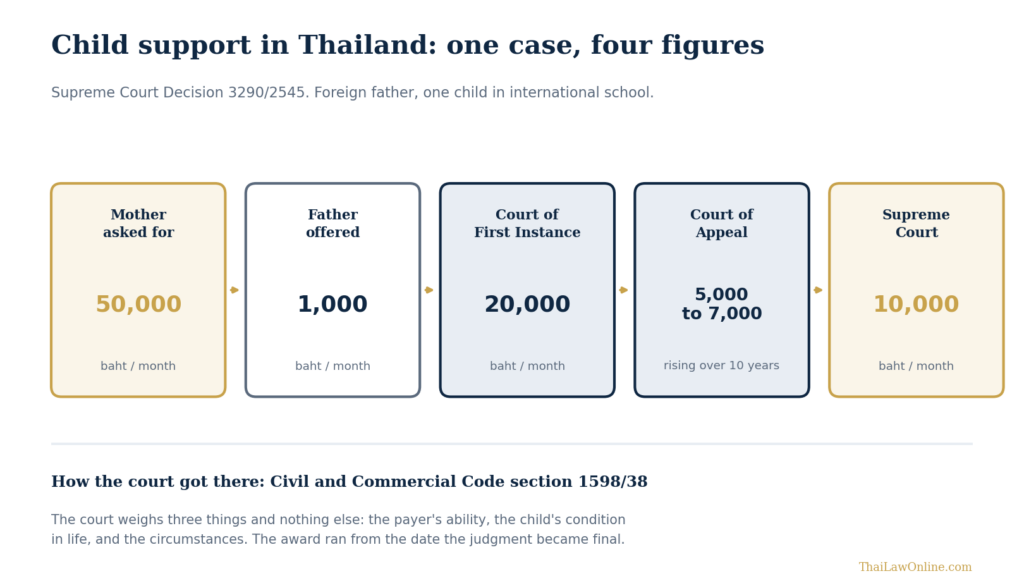
ประโยคสามคำนี้เป็นตัวกำหนดคดีการบำรุงรักษาทุกคดีในประเทศไทย ศาลฎีกา เกี่ยวกับบิดาชาวต่างชาติ มารดาขอเงิน 50,000 บาทต่อเดือน บิดาอ้างว่าจ่ายได้เพียง 1,000 บาท และศาลฎีกากำหนดไว้ที่ 10,000 บาท ด้านล่างนี้คุณสามารถติดตามได้ว่าศาลมาถึงจำนวนนี้ได้อย่างไร.
สารบัญ
สิ่งที่กฎหมายไทยระบุไว้อย่างแท้จริงเกี่ยวกับการจ่ายค่าอุปการะเลี้ยงดูบุตร
มีส่วนต่างๆ จำนวน 5 ส่วนที่ครอบคลุมเนื้อหาทั้งหมด อ่านตามลำดับนี้ ระบบจะเข้าใจได้ดีขึ้น.
| ส่วน | มันทำอะไรได้บ้าง |
|---|---|
| CCC s.1564 | กำหนดหน้าที่ให้แก่ผู้ปกครอง ผู้ปกครองต้องดูแลและส่งเสริมการศึกษาแก่บุตรหลานในช่วงที่ยังเป็นเด็ก ส่วนข้อ 2 ยังกำหนดหน้าที่ให้แก่บุตรที่ยังเป็นผู้ใหญ่ซึ่งพิการและไม่สามารถเลี้ยงชีพได้. |
| ข้อบังคับ CCC ฉบับที่ 19 | อายุเกิน 20 ปี ส่วนใหญ่จะครบกำหนดการปฏิบัติหน้าที่ตามปกติ โดยอยู่ภายใต้บังคับของมาตรา 1564 วรรค 2. |
| CCC s.1598/38 | กำหนดจำนวนเงิน การชดเชยค่าใช้จ่ายอาจได้รับการพิจารณาเมื่อเด็กได้รับเงินไม่ถึงตามที่ควรได้รับหรือได้รับน้อยเกินไปตามสภาพชีวิตของเขา ศาลจะพิจารณาจากความสามารถ สถานภาพในชีวิต และเงื่อนไขต่างๆ. |
| CCC s.1598/39 | อนุญาตให้มีการเปลี่ยนแปลง หากสถานการณ์ ความเป็นไป หรือเงื่อนไขในชีวิตมีการเปลี่ยนแปลง ทางศาลอาจเพิกถอน ลด เพิ่ม หรือคืนเงินค่าเลี้ยงชีพ. |
| CCC s.1598/40 | กำหนดรูปแบบการชำระเงินเป็นรายงวด เว้นแต่ฝ่ายใดฝ่ายหนึ่งตกลงกันหรือศาลมีคำสั่งเป็นอย่างอื่น ในกรณีที่มีเหตุผลพิเศษ ศาลอาจสั่งให้ชำระค่าเลี้ยงดูในรูปแบบอื่น เช่น ส่งเด็กไปเรียนที่โรงเรียนที่ระบุไว้ โดยจ่ายค่าใช้จ่ายของผู้อุปการะเลี้ยงดู. |
| CCC s.1598/41 | คุ้มครองสิทธิ โดยข้อความภาษาไทยระบุถึงสามส่วน คือ สิทธิในการรับเงินเลี้ยงชีพไม่สามารถละทิ้งได้ ไม่สามารถโอนสิทธิได้ และไม่สามารถบังคับใช้ได้ ส่วนสุดท้ายนี้เป็นสิ่งที่ทำให้คำสั่งให้จ่ายเงินเลี้ยงชีพไม่สามารถเข้าถึงได้ของเจ้าหนี้เมื่อได้มีการออกคำสั่งแล้ว ควรสังเกตว่าการแปลภาษาอังกฤษทั่วไปจะเพิ่มคำว่า “attached” ซึ่งไม่ได้ปรากฏในภาษาไทย. |
หน้าคู่แข่งสองหน้าในผลการค้นหาดังกล่าวอ้างอิงถึงมาตรา 1598/33 เป็นหลักฐานสนับสนุนการมีเพศสัมพันธ์นอกสมรส โดยมาตราดังกล่าวอยู่ใน การรับเลี้ยงบุตรบุญธรรม หัวเรื่อง บทความเรื่องการบำรุงรักษาดำเนินตั้งแต่วันที่ 1598/38 ถึง 1598/41 และทุกอย่างที่กล่าวถึงข้างต้นล้วนมาจากบทความเรื่องการบำรุงรักษา.
วิธีที่ศาลไทยกำหนดตัวเลข: หนึ่งคดี ตั้งแต่ต้นจนจบ
คำพิพากษาศาลฎีกา 3290/2545 เป็นตัวอย่างที่ชัดเจนที่สุดในกฎหมายครอบครัวไทย และเราได้เผยแพร่ข้อความภาษาไทยทั้งหมดของเรื่องนี้ไว้ในห้องสมุดของเรา แม่ชาวไทยและชาวต่างชาติได้แต่งงานกันในพิธีการในประเทศอินเดียโดยไม่เคยลงทะเบียนสมรส ลูกสาวของพวกเขาก็ได้เกิดเมื่อเดือนตุลาคมปี 1992 ความสัมพันธ์ก็แตกแยกไป และแม่ก็ย้ายกลับไปอยู่บ้านที่จังหวัดชอนบุรีกับลูกสาว ส่วนพ่อก็ไม่เคยจ่ายเงินค่าเลี้ยงดูและไม่เคยไปเยี่ยมลูกสาวเลย.
มารดาได้ฟ้องร้องในคดีเดียวกันเพื่อเรียกร้องสิ่งสองประการ ได้แก่ คำสั่งที่ประกาศว่าตนเป็นบิดา และค่าเลี้ยงดู โดยการทดสอบดีเอ็นเอ โรงพยาบาลศิริราช จากนั้นจึงพิสูจน์ได้ว่าผู้ต้องหาเป็นพ่อของเด็ก และจากนั้นศาลจึงเริ่มดำเนินการหาตัวเลขนั้น.
| ขั้นตอน | ตัวเลข |
|---|---|
| คำเรียกร้องของแม่ | 50,000 บาทต่อเดือน |
| คำตอบของพ่อ | ไม่เกิน 1,000 บาทต่อเดือน |
| ศาลชั้นต้น | 20,000 บาทต่อเดือน จนกว่าจะครบจำนวนส่วนใหญ่ |
| ศาลอุทธรณ์ | 5,000 สำหรับระยะเวลา 5 ปี จากนั้น 6,000 สำหรับระยะเวลา 5 ปี และ 7,000 จนกว่าจะมีเสียงข้างมาก |
| ศาลฎีกา | 10,000 บาทต่อเดือน นับตั้งแต่วันที่คำพิพากษาเป็นที่สิ้นสุด จนกว่าจะครบจำนวนเสียงข้างมาก |
พยานหลักฐานอธิบายการขยับของจำนวนเงินนี้ บุตรเรียนอยู่ที่โรงเรียนนานาชาติในอินเดีย ค่าใช้จ่าย 150,000 บาทต่อปี และเพิ่มขึ้นเป็น 170,000 บาทในชั้นเรียนที่สูงขึ้น บวกค่าตั๋วเครื่องบินประมาณ 80,000 บาทต่อปี ค่าเสื้อผ้า 30,000 บาท และค่าใช้จ่ายเบ็ดเตล็ด 10,000 บาท บิดาประกอบธุรกิจตัวแทนจำหน่ายรถจักรยานยนต์ ร้านขายผ้า และกิจการรับตัดเย็บเสื้อผ้าบนเกาะสมุย ศาลฎีกาวินิจฉัยว่าบิดาเพียงคนเดียวไม่อาจรับภาระค่าใช้จ่ายทั้งหมดของการศึกษาที่มารดาเป็นผู้เลือกได้ และในขณะเดียวกันก็วินิจฉัยว่า ศาลอุทธรณ์‘แผนการเงินของเขาต่ำเกินไป เขาจึงแทนที่ทั้งสองด้วยเงิน 10,000 บาทต่อเดือน.
รายละเอียดหนึ่งอย่างสำคัญ: ศาลฎีกาได้สั่งให้มีการจ่ายเงิน นับจากวันที่คำพิพากษากลายเป็นที่สิ้นสุด, ไม่ใช่จากวันคลอดของเด็ก การช่วยเหลือที่ย้อนหลังมาถึงได้เมื่อสิบห้าปีต่อมา ในกรณีที่แตกต่างกัน ซึ่งเป็นส่วนที่สอง.
อ่านคำตัดสินที่เขียนเป็นสองภาษาทั้งหมดได้ที่: คำตัดสินที่ 3290/2545 เรื่องการรับบุตรและค่าเลี้ยงดูในคดีเดียวกัน.
คุณสามารถเรียกร้องสำหรับปีที่ผ่านมาแล้วได้หรือไม่
ใช่ ถ้าพ่อแม่ไม่เคยแต่งงานกัน และพ่อเป็น จดทะเบียนรับรอง. นี่เป็นกฎที่มีค่าที่สุดในหน้านี้ และไม่มีคู่มือภาษาอังกฤษใดที่เราพบที่กล่าวถึงเรื่องนี้.
คำพิพากษาศาลฎีกา 7345/2560 (2017) ตัดสินว่าลูกของคู่สมรสที่ยังไม่ได้แต่งงานมีสิทธิได้รับเงินเดือนละ 10,000 บาท ตั้งแต่แรกเกิดจนถึงวันที่ยื่นคำร้อง ซึ่งรวมเป็นเงิน 1,720,000 บาท พ่อฝ่ายชายอ้างว่าสิทธิเรียกร้องดังกล่าวหมดอายุความตามระยะเวลาห้ามฟ้องที่กำหนดไว้ในมาตรา 193/33(4) ของ CCC ศาลชั้นต้น ศาลปฏิเสธข้อโต้แย้งดังกล่าว โดยระบุว่านี่ไม่ใช่คำร้องขอค่าเลี้ยงชีพที่ต้องชำระเป็นระยะ และผู้เป็นบิดาไม่ได้ยื่นอุทธรณ์เพื่อยืนยันข้อโต้แย้งดังกล่าว ดังนั้นคำวินิจฉัยเรื่องระยะเวลาฟ้องจึงยังคงมีผลบังคับใช้.
จากนั้นศาลฎีกาก็ได้ตัดสินคำถามสองข้อที่สำคัญสำหรับผู้ที่อยู่ในสถานการณ์เช่นนี้:
- การสนับสนุนเริ่มตั้งแต่แรกเกิด. มาตรา 1557 เคยกำหนดให้การรับรองสิทธิมีผลบังคับใช้เฉพาะในวันที่ศาลมีคำพิพากษาเท่านั้น การแก้ไขมาตรานี้มีผลบังคับใช้ตั้งแต่วันที่ 8 มีนาคม ค.ศ. 2008 เพื่อให้กำหนดวันรับรองสิทธิกลับไปที่วันคลอดของเด็ก เด็กที่ได้รับการรับรองสิทธิภายหลังการแก้ไขดังกล่าวจะถือว่ามีสิทธิรับเงินบำนาญตั้งแต่แรกเกิด และจึงสามารถเรียกร้องค่าเลี้ยงชีพได้ตั้งแต่วันที่เกิด โดยดำเนินการเดียวกันกับที่ขอให้ศาลประกาศว่ามีบุตรกับเด็กคนนั้น.
- ผู้ปกครองจะไม่แบ่งค่าใช้จ่ายเท่าๆ กัน. ศาลอุทธรณ์ลดจำนวนเงินที่ศาลชั้นต้นกำหนดไว้ 1,370,000 บาทลงครึ่งหนึ่งเหลือ 685,000 บาท โดยให้เหตุผลว่าบิดามารดาทั้งสองฝ่ายต้องรับผิดร่วมกันในส่วนที่เท่ากัน ศาลฎีกาพิพากษาให้กลับไปเป็นจำนวนเต็ม 1,370,000 บาท ความรับผิดร่วมกันตามมาตรา 1564 ไม่ได้หมายความว่าต้องออกเงินเท่ากัน มาตรา 1598/38 เป็นบทที่ใช้บังคับ และพิจารณาจากความสามารถของบิดามารดาแต่ละฝ่าย ไม่ใช่การคำนวณทางคณิตศาสตร์
สำหรับแม่ที่ต้องรอเป็นเวลาหลายปีก่อนที่จะทำให้การรับรองบุตรเป็นที่ถูกต้องตามกฎหมาย กฎข้อนี้เป็นความแตกต่างระหว่างการเริ่มต้นจากศูนย์และเริ่มต้นที่ตัวเลขหลักสิบ.
ในทางปฏิบัติ จำนวนเงินขึ้นอยู่กับอะไรบ้าง
ความสามารถที่แท้จริงของผู้ออกบิล ไม่ใช่รายได้ที่ประกาศโดยผู้ออกบิล. ศาลพิจารณาธุรกิจ อสังหาริมทรัพย์ และไลฟ์สไตล์ ไม่ใช่เพียงเงินเดือนเท่านั้น วิธีแก้ปัญหาที่เห็นได้ชัดก็ไม่สามารถใช้ได้: ผู้ปกครองที่ลดรายได้ของตนเองโดยสมัครใจไม่ได้ลดภาระหน้าที่ เพราะตามมาตรา 1598/39 การเปลี่ยนแปลงที่เกิดจากเหตุการณ์เฉพาะหน้าไม่ถือเป็นเหตุผลหนึ่งที่ทำให้ลดรายได้ได้.
ระดับการครองชีพที่เด็กมีอยู่แล้ว. ค่าเล่าเรียนของโรงเรียนนานาชาติ ความต้องการด้านการรักษาพยาบาล และค่าเดินทางล้วนเป็นปัจจัยที่ทำให้ยอดเงินดังกล่าวเพิ่มขึ้น ดังนั้นในทางกลับกัน ก็มีกรณีที่ศาลไม่อนุญาตให้จ่ายเงินสำหรับค่าเล่าเรียนของโรงเรียนเอกชนให้กับเด็กที่เรียนในโรงเรียนของรัฐได้เช่นกัน.
รูปแบบการชำระเงิน. ตามมาตรา s.1598/40 ศาลไม่จำกัดอยู่เพียงตัวเลขรายเดือนเดียว แต่สามารถกำหนดระยะเวลาการชำระเงินแบบค่อยๆ เพิ่มขึ้นตามอายุของเด็กได้เช่นเดียวกับศาลอุทธรณ์ในคดีหมายเลข 3290/2545 และในกรณีที่มีเหตุผลพิเศษก็สามารถกำหนดให้มีการชำระเงินในรูปแบบอื่น เช่น ค่าเล่าเรียนที่ผู้ปกครองที่ต้องรับผิดชอบค่าเลี้ยงดูต้องจ่ายให้กับสถาบันที่ระบุไว้ก็ได้ หากคุณต้องการให้ค่าเล่าเรียนจ่ายโดยตรงไปยังสถาบันนั้นโดยไม่ผ่านบัญชีของคู่สมรสเก่า คุณสามารถขอคำชี้แจงในคำฟ้องได้.
จำนวนเด็กที่เพิ่มขึ้นไม่ได้หมายความว่าต้องเพิ่มจำนวนตัวเลขขึ้น. การทดสอบนี้เป็นการวัดความสามารถของครอบครัวโดยรวม โดยพิจารณาจากความต้องการของแต่ละบุตร.
พ่อแม่ที่ไม่ได้สมรสกัน: ไม่มีกระบวนการทำให้บุตรชอบด้วยกฎหมาย ไม่มีสิทธิเรียกร้องใด ๆ ต่อบิดา
บุตรที่เกิดจากแม่ที่ไม่สมรสถือเป็นบุตรที่แท้จริงของแม่เพียงคนเดียว (มาตรา 1546) พ่อไม่มีหน้าที่ต้องรับผิดชอบใดๆ จนกว่าจะได้รับการรับรองสิทธิความเป็นบิดาตามมาตรา 1547 โดยมีสามวิธีคือ พ่อและแม่แต่งงานกันหลังจากนั้น พ่อจดทะเบียนรับบุตรไว้ที่สำนักงานเขต หรือศาลประกาศว่ามีบุตรเป็นบุตรของพ่อ.
ประเด็นวิธีพิจารณาความสองประการเป็นตัวชี้ขาดคดีจริง มาตรา 1556 ขึ้นอยู่กับอายุของบุตร ขณะที่บุตรยัง ยังไม่เสร็จสมบูรณ์ 15 ปี, การฟ้องร้องนี้ถูกยื่นโดยผู้แทนตามกฎหมายของเด็ก ในนามของเด็ก, ไม่ใช่โดยมารดาในนามของตนเอง; ในคำพิพากษาศาลฎีกาที่ 3290/2545 ศาลอุทธรณ์ยกคำขอส่วนตัวของมารดา แต่พิพากษาให้ตามคำขอของบุตร และศาลฎีกาเห็นพ้องด้วยเหตุผลดังกล่าว ตั้งแต่อายุ 15 ปี เด็กจะต้องฟ้องร้องด้วยตนเอง, และไม่จำเป็นต้องได้รับความยินยอมจากผู้แทนตามกฎหมายเพื่อดำเนินการดังกล่าว หากเด็กไม่มีผู้แทนตามกฎหมาย หรือมีผู้แทนที่ไม่มีอำนาจในการกระทำใดๆ ก็ตามญาติสนิทหรือบุคคลที่ใกล้ชิด พนักงานอัยการ อาจขอให้ศาลตั้งผู้แทนเฉพาะคดีได้ มาตรา 1556 ยังกำหนดระยะเวลาไว้ด้วย: บุตรที่บรรลุนิติภาวะแล้วต้องยื่นฟ้องภายในหนึ่งปี ซึ่งเป็นประเด็นที่เนื้อหาของเราเอง คำพิพากษาศาลฎีกาที่ 3379/2565 เปิดใช้งาน และมาตรา 1557 ตามที่แก้ไขเพิ่มเติมในปี 2008 ทำให้การรับรองเป็นผลบังคับใช้ตั้งแต่วินาทีที่เด็กเกิด ซึ่งเป็นเหตุผลที่ทำให้สามารถเรียกร้องค่าชดเชยแบบย้อนหลังได้ตามที่กล่าวข้างต้น.
คู่มือการลงทะเบียนของเรามีอยู่ที่นี่: การรับรองสิทธิ์และสิทธิของบิดาในประเทศไทย. สำหรับ อำนาจปกครอง และใครเป็นผู้ตัดสินใจว่าเด็กจะอยู่ที่ไหน ดู สิทธิในการดูแลบุตรในประเทศไทย.
ค่าเลี้ยงดูบุตรในการหย่าร้าง
มาตรา 1522 แบ่งคำถามออกเป็นสองส่วน การหย่าร้างโดยความยินยอมร่วมกัน, ในกรณีที่ฝ่ายใดฝ่ายหนึ่งมีข้อตกลงว่าจะดูแลบุตรร่วมกันระหว่างการหย่าร้างด้วยคำพิพากษาของศาล หรือในกรณีที่ข้อตกลงความยินยอมไม่ได้ระบุถึงเรื่องนี้ ทางศาลจะกำหนดจำนวนเงินค่าเลี้ยงดู.
อย่าตีความว่าเป็นการอนุญาตให้ตกลงกันเองแล้วละเลยศาล มาตรา 1598/41 คือเหตุผล: สิทธิได้รับค่าอุปการะเลี้ยงดูเป็นของบุตร และจะสละหรือโอนไม่ได้ ข้อตกลงส่วนตัวผูกพันบิดามารดาระหว่างกันเอง แต่ไม่อาจผูกพันบุตรได้ ระหว่างบิดามารดา ข้อตกลงนั้นเป็นสัญญาที่ฟ้องร้องบังคับได้ ดังที่คำพิพากษาศาลฎีกาที่ 1218/2567 แสดงให้เห็น แต่ต่างจากคำสั่งศาลตรงที่จะบังคับคดีไม่ได้จนกว่าศาลจะมีคำพิพากษาตามสัญญานั้น ข้อสัญญาที่มารดาสละค่าอุปการะเลี้ยงดูบุตรเพื่อแลกกับการได้บ้านไว้ ไม่ทำให้สิทธิเรียกร้องของบุตรระงับ และบุตรยังฟ้องเรียกได้ในภายหลัง
ดู การหย่าร้างในประเทศไทย สำหรับเส้นทางความยินยอม และ การหย่าร้างที่มีการโต้แย้ง สำหรับกรณีที่อยู่ในกระบวนการฟ้องร้อง การแบ่งทรัพย์สินเป็นกระบวนการที่แยกต่างหาก ซึ่งมีการกล่าวถึงใน ทรัพย์สินระหว่างสามีภริยาตามกฎหมายไทย.
เขาไม่ยอมจ่ายเงิน แล้วจะทำอย่างไรดี
คำสั่งให้ชำระเงินเป็นคำพิพากษาทางแพ่ง และคุณสามารถบังคับใช้คำสั่งดังกล่าวได้เช่นเดียวกับคำพิพากษาทางแพ่งอื่นๆ ตามพระราชบัญญัติวิธีพิจารณาความแพ่ง คุณต้องยื่นคำร้องขอให้ศาลที่ออกคำพิพากษาออกหมายบังคับคดี จากนั้นจึงต้องทำงานร่วมกับกรมบังคับคดี (กรมบังคับคดี) เพื่อบังคับคดีโดยการอายัดเงินเดือนหรือบัญชีธนาคาร หรือการยึดและขายทรัพย์สิน.
สิ่งที่นั่นหมายถึงในทางปฏิบัติสำหรับผู้ชำระเงินต่างชาติในประเทศไทย: นายจ้างชาวไทยที่ได้รับคำสั่งบังคับฝากเงินจะปฏิบัติตาม และบัญชีธนาคารของชาวไทยก็สามารถเข้าถึงได้ ผู้ชำระเงินที่ไม่มีนายจ้างชาวไทย ไม่มีบัญชีในไทย และไม่มีสินทรัพย์ในไทยจึงเป็นเป้าหมายที่ยากกว่ามาก ซึ่งนั่นเป็นเหตุผลว่าแผนการบังคับใช้กฎหมายควรอยู่ในกลยุทธ์การฟ้องร้องก่อนที่คุณจะยื่นฟ้อง ไม่ใช่หลังจากที่คุณชนะแล้ว คาดว่าการบังคับใช้กฎหมายจะใช้เวลาหลายเดือนมากกว่าหลายสัปดาห์ และควรเตรียมงบประมาณไว้ให้พร้อม สิ่งที่ควรรู้ก่อนขึ้นศาลในประเทศไทย ระบุถึงความเป็นจริงทางกระบวนการ.
เขาออกจากประเทศไทยไปแล้ว ฉันยังเรียกเก็บค่าเลี้ยงดูได้อยู่ไหม
เริ่มจากความจริงที่ว่าทุกหน้าผู้แข่งขันล้วนทำผิดหรือหลบหลีก. ประเทศไทยไม่ใช่ประเทศสมาชิกของอนุสัญญาเฮกของวันที่ 23 พฤศจิกายน 2007 ซึ่งเกี่ยวข้องกับการฟื้นฟูค่าเลี้ยงดูบุตรและค่าเลี้ยงดูสมาชิกในครอบครัวอื่น ๆ. ตารางสถานะของ HCCH สำหรับอนุสัญญาดังกล่าวระบุว่า ณ วันปรับปรุงล่าสุดเมื่อวันที่ 30 มิถุนายน 2025 มีรัฐภาคี 56 ประเทศ และประเทศไทยไม่ได้ปรากฏอยู่ในตารางดังกล่าว ไม่มีช่องทางตามสนธิสัญญา ไม่มีหน่วยงานกลาง และไม่มีการลงทะเบียนอัตโนมัติของคำสั่งซื้อจากประเทศไทยในต่างประเทศ.
สิ่งที่ทำงานได้ดีกว่าคือความเคารพซึ่งกันและกัน การตัดสินของศาลในประเทศบ้านเกิดของผู้รับเงินเยียวยาอาจรับรองและบังคับใช้คำตัดสินเยียวยาของไทยภายใต้กฎเกณฑ์ของตนเองเกี่ยวกับคำตัดสินของต่างประเทศ ไม่ว่าผลลัพธ์จะเป็นอย่างไรก็ขึ้นอยู่กับกระบวนการในประเทศไทยเกือบทั้งหมด: ศาลไทยมีเขตอำนาจศาลเหนือจำเลยหรือไม่ เขาได้รับการแจ้งข้อกล่าวหาอย่างถูกต้องหรือไม่ เขามีโอกาสที่จะได้รับการไต่สวนอย่างแท้จริงหรือไม่ ในทางปฏิบัติ ศาลไทยจะรับฟังคดีนี้แม้ว่าผู้ปกครองต่างชาติจะไม่ปรากฏตัวก็ตาม โดยมีเงื่อนไขว่าการแจ้งข้อกล่าวหาได้รับการดำเนินการอย่างถูกต้อง และประวัติการแจ้งข้อกล่าวหาและการเข้าร่วมการไต่สวนที่ปราศจากข้อผิดพลาดเป็นสิ่งที่ทำให้การรับรองในภายหลังเป็นไปได้.
บทเรียนทางปฏิบัตินั้นไม่น่าตื่นเต้นเท่าใดนัก การจัดทำเอกสารสำหรับผู้พิพากษาชาวต่างชาติที่คุณจะไม่มีวันได้พบเห็นนั้นจำเป็นต้องมีดังต่อไปนี้: การส่งเอกสารให้ถูกต้องครบถ้วน การแปลเอกสารให้ถูกต้อง การให้คำวินิจฉัยที่มีเหตุผล และประวัติการชำระเงิน เอกสารดังกล่าวเป็นทรัพย์สินของคุณ หากผู้ชำระเงินย้ายไปอาศัยอยู่ในเขตอำนาจศาลที่ยินยอมรับคำฟ้องของคุณ.
การแก้ไขคำสั่งศาลที่มีอยู่แล้ว
มาตรา 1598/39 มีขอบเขตครอบคลุมมากกว่าที่คู่มือส่วนใหญ่ระบุไว้ ไม่จำกัดเฉพาะผู้ปกครองเท่านั้น: บุคคลที่สนใจ ผู้ที่สามารถแสดงให้เห็นถึงการเปลี่ยนแปลงในสถานการณ์ ความหมาย หรือเงื่อนไขในชีวิต สามารถขอให้ศาลเปลี่ยนแปลงค่าเลี้ยงชีพ ซึ่งรวมถึงตัวแทนตามกฎหมายของเด็กและอัยการด้วย ศาลอาจยกเลิก เพิ่มขึ้น หรือคืนเงินค่าเลี้ยงชีพดังกล่าวได้ ค่าเลี้ยงชีพของคู่สมรสไม่ขึ้นอยู่กับการหย่าร้างเลย: ในกรณีนี้ คำพิพากษาศาลฎีกาที่ 2109/2567 ศาลฎีกาได้เพิกถอนคำร้องขอหย่าของสามี และระบุว่าสิทธิในการเรียกร้องค่าเลี้ยงชีพมิได้เกิดขึ้นเพียงเมื่อมีการยื่นคำร้องขอหย่าเท่านั้น ดังนั้นคู่สมรสที่ไม่ได้ได้รับการเลี้ยงชีพตามสิทธิของตนอาจเรียกร้องได้ตามมาตรา 1598/38 โดยตนเองได้ โดยภรรยาคนดังกล่าวไม่มีงานประจำและมีรายได้ที่ไม่แน่นอน. คำพิพากษาศาลฎีกาที่ 1218/2567 (2024) แสดงให้เห็นสิ่งที่เกิดขึ้นเมื่อบุตรย้ายไปอยู่กับบิดาหรือมารดาฝ่ายที่เป็นผู้จ่ายค่าอุปการะเลี้ยงดูเป็นการถาวร: ศาลฎีกาวินิจฉัยว่าข้อตกลงในสัญญาหย่าที่ให้จ่ายค่าเลี้ยงดูแก่มารดาสิ้นผลใช้บังคับนับแต่การย้ายนั้น และสั่งให้มารดาร่วมออกค่าอุปการะเลี้ยงดูตามมาตรา 1564 และ 1598/38
ข้อควรระวังสองประการ คือ การสูญเสียงานคือการเปลี่ยนแปลงในสถานการณ์ ส่วนการเลือกที่จะรับรายได้น้อยกว่านั้นไม่ใช่ การสั่งจ่ายเงินล่าช้าจะยังคงมีผลจนกว่าศาลจะเปลี่ยนแปลงคำสั่ง และในระหว่างนี้จะมีการสะสมหนี้ค้างชำระ ดังนั้นจึงควรยื่นคำร้องขอชำระหนี้เสียก่อนที่จะจ่ายเงินน้อยลงและอธิบายภายหลัง.
ค่าใช้จ่ายหากใช้บริการของเรา
การปรึกษาเบื้องต้น อยู่ที่ 2,000 บาทต่อชั่วโมง กับทนายความไทยที่มีใบอนุญาตซึ่งสื่อสารได้สองภาษา และรวมถึงการประเมินค่าบริการเป็นลายลักษณ์อักษรก่อนเริ่มงานใดๆ การหย่าโดยความยินยอม ซึ่งข้อตกลงครอบคลุมเรื่องอำนาจปกครองบุตรและค่าเลี้ยงดูบุตร มีค่าบริการคงที่ 9,900 บาท รวมการจดทะเบียนที่สำนักงานเขต งานด้านอำนาจปกครองบุตรและค่าเลี้ยงดูบุตรผ่านศาลเยาวชนและครอบครัวจะเสนอราคาหลังการปรึกษา เนื่องจากแนวทางดำเนินการและคู่กรณีเป็นตัวกำหนดปริมาณงาน การดำเนินคดีที่มีข้อพิพาทเริ่มต้นที่ 70,000 บาท ค่าธรรมเนียมศาลเป็นค่าใช้จ่ายที่ชำระให้แก่รัฐและเรียกเก็บตามจริง ตามตาราง 1 ท้ายประมวลกฎหมายวิธีพิจารณาความแพ่ง คำขอให้ชำระค่าเลี้ยงดูบุตรเป็นงวดในอนาคตเสียค่าธรรมเนียม 100 บาท และคำขอที่ไม่อาจคำนวณเป็นราคาเงินได้ เช่น อำนาจปกครองบุตร เสียค่าธรรมเนียม 200 บาท ส่วนคำขอให้ชำระเงินจำนวนหนึ่ง เช่น ค่าเลี้ยงดูบุตรที่ค้างชำระในอดีต เสียค่าธรรมเนียม 2% ของจำนวนเงิน สูงสุดไม่เกิน 200,000 บาท รายการทั้งหมดดูได้ที่ หน้าแสดงราคา.
จองคิวปรึกษา หากคุณต้องการให้มีการประเมินตัวเลขในกรณีของคุณโดยพิจารณาจากสามปัจจัยข้างต้นแทนที่จะเป็นตัวเลขที่ได้จากบทความในฟอรัม.
คำถามที่พบบ่อย
ศาลไทยจะสั่งให้จ่ายค่าอุปการะเลี้ยงดูบุตรเป็นจำนวนเท่าใด
ไม่มีจำนวนที่กำหนดตายตัว ศาลจะใช้มาตรา 1598/38 แห่งประมวลกฎหมายแพ่งและพาณิชย์ และพิจารณาความสามารถของผู้มีหน้าที่จ่าย ฐานานุรูปของบุตร และพฤติการณ์ประกอบกัน ในคำพิพากษาศาลฎีกาที่ 3290/2545 ศาลแต่ละชั้นกำหนดจำนวนแตกต่างกันระหว่าง 5,000 ถึง 20,000 บาทต่อเดือนสำหรับบุตรหนึ่งคนที่ศึกษาในระบบการศึกษานานาชาติ ก่อนที่ศาลฎีกาจะกำหนดไว้ที่ 10,000 บาท.
ประเทศไทยมีสูตรคำนวณค่าเลี้ยงดูบุตรหรือไม่
ไม่ ประเทศไทยไม่มีสูตรคำนวณตามเปอร์เซ็นต์ของรายได้และไม่มีโปรแกรมคำนวณอย่างเป็นทางการ ปัจจัยสามประการในมาตรา 1598/38 คือวิธีทั้งหมดแล้ว.
ฉันสามารถเรียกค่าเลี้ยงดูบุตรย้อนหลังได้หรือไม่
บุตรของบิดามารดาที่มิได้สมรสกันสามารถเรียกร้องย้อนหลังไปถึงวันเกิดได้เมื่อมีการพิสูจน์ความเป็นบิดาแล้ว ตามคำพิพากษาศาลฎีกาที่ 7345/2560 และการแก้ไขเพิ่มเติมประมวลกฎหมายแพ่งและพาณิชย์ มาตรา 1557 เมื่อปี พ.ศ. 2551 ซึ่งทำให้การเป็นบุตรชอบด้วยกฎหมายมีผลตั้งแต่เกิด การเรียกร้องดังกล่าวสามารถฟ้องร้องรวมไปในคดีเดียวกันกับการฟ้องขอให้รับรองบุตรได้.
เงินค่าเลี้ยงดูบุตรสิ้นสุดลงเมื่ออายุ 20 ปีหรือไม่
โดยปกติแล้วใช่ เพราะบุคคลบรรลุนิติภาวะเมื่ออายุ 20 ปีบริบูรณ์ตามมาตรา 19 มาตรา 1564 วรรคสอง ยังคงกำหนดหน้าที่สำหรับบุตรที่บรรลุนิติภาวะแล้วแต่ทุพพลภาพและไม่สามารถหาเลี้ยงตนเองได้.
เราตกลงจำนวนเงินกันเองแล้วข้ามการขึ้นศาลได้ไหม
คุณสามารถเห็นด้วยได้ และผู้ปกครองจำนวนมากก็ทำเช่นนั้นเช่นกัน ข้อตกลงนี้มีผลผูกพันระหว่างผู้ปกครองกันเอง แต่ไม่ได้ผูกพันกับเด็ก ผู้ปกครองสามารถฟ้องร้องกันได้ แต่แตกต่างจากคำสั่งศาล ข้อตกลงดังกล่าวไม่สามารถบังคับใช้ได้จนกว่าศาลจะตัดสินใจแล้ว ส่วนข้อ 1598/41 ทำให้เรื่องนี้เป็นที่สิ้นสุดแล้ว: สิทธิ์ในการรับเงินเลี้ยงดูไม่สามารถละทิ้งได้.
ฉันไม่เคยแต่งงานกับแม่ของลูก ฉันต้องจ่ายเงินหรือไม่?
ไม่จนกว่าคุณจะได้รับการรับรองว่าเป็นบิดาผ่านการสมรสในภายหลัง การจดทะเบียนที่สำนักงานเขต หรือคำพิพากษาของศาลตามมาตรา 1547 เมื่อสิ่งนั้นเกิดขึ้นหน้าที่ดังกล่าวจะเริ่มนับตั้งแต่วันที่บุตรเกิด.
จะสามารถลดจำนวนเงินได้หรือไม่หากผมตกงาน?
ยื่นคำร้องตามมาตรา s.1598/39 และแสดงให้เห็นถึงการเปลี่ยนแปลง การสูญเสียรายได้อย่างแท้จริงคือการเปลี่ยนแปลงในสถานการณ์ ส่วนการลดรายได้ของตนเองโดยเจตนาไม่ใช่การเปลี่ยนแปลงดังกล่าว.
สามารถบังคับใช้คำสั่งซื้อของชาวไทยในประเทศบ้านเกิดของฉันได้หรือไม่
ไม่มีทางเลือกทางกฎหมาย เนื่องจากไทยไม่ได้เป็นภาคีในอนุสัญญาว่าด้วยค่าเลี้ยงดูบุตรปี 2007 การรับรองขึ้นอยู่กับกฎเกณฑ์ของศาลต่างประเทศเกี่ยวกับคำพิพากษาต่างประเทศ และขึ้นอยู่กับว่ากระบวนการในประเทศไทยได้ให้เขตอำนาจศาลแก่จำเลยหรือไม่ ซึ่งต้องเป็นไปตามหลักเกณฑ์ที่ถูกต้องตามกฎหมาย และมีคำชี้แจงอย่างชัดเจน.
การจ่ายค่าเลี้ยงดูจะทำให้ฉันได้รับสิทธิในการเลี้ยงดูหรือการเข้าเยี่ยมเยียนหรือไม่
ไม่ ไม่ การดูแลและอำนาจในการเลี้ยงดูเป็นเรื่องที่แยกจากกันตามกฎหมายไทย การจ่ายค่าเลี้ยงดูไม่ได้ก่อให้เกิดสิทธิในการพบลูก และการถูกปฏิเสธการติดต่อไม่ได้ทำให้การจ่ายค่าเลี้ยงดูหยุดลง.
แม่สามารถเพิกถอนเงินค่าเลี้ยงลูกตามสัญญาหย่าได้หรือไม่
มารดาไม่อาจสละสิทธิของบุตรได้ มาตรา 1598/41 บัญญัติว่าสิทธิได้รับค่าอุปการะเลี้ยงดูจะสละหรือโอนไม่ได้ ดังนั้นข้อสัญญาสละสิทธิจึงไม่ตัดสิทธิบุตรที่จะเรียกร้องในภายหลัง
เนื้อหาเพิ่มเติมจากคลังคำพิพากษาของเรา
อีกสองคำตัดสินที่เรามีข้อความภาษาไทยทั้งหมดระบุถึงคำถามที่หน้าเว็บนี้มักถูกตั้งขึ้นบ่อยที่สุด.
- คำพิพากษาศาลฎีกาที่ 3772/2565, เมื่อมีการฟ้องคดีอีกครั้ง โดยในครั้งนี้เป็นของพ่อที่เคยฟ้องเพื่อขอรับรองสิทธิ์โดยการลงทะเบียน แต่ในที่สุดก็ยอมยกเลิกคดีลงนามในข้อตกลงแล้ว จึงไม่ถูกห้ามไม่ให้ฟ้องคดีใหม่ เนื่องจากคดีแรกจบลงด้วยข้อตกลง ไม่ใช่การตัดสินคดี.
- คำพิพากษาศาลฎีกาที่ 3902/2568, เกี่ยวกับสิ่งที่เกิดขึ้นกับอำนาจของบิดามารดาเมื่อบิดามารดาเสียชีวิต โดยอำนาจดังกล่าวจะมอบให้แก่ผู้สืบทอดโดยอัตโนมัติ โดยไม่ต้องมีคำสั่งศาลเพิ่มเติม การอ่านเรื่องนี้ควบคู่ไปกับข้อความข้างต้นจึงเป็นเรื่องที่น่าสนใจ เพราะอำนาจการเลี้ยงดูและอำนาจของบิดามารดาเป็นเรื่องที่แยกจากกัน.
จะไปไหนต่อดี
- อำนาจปกครองบุตรในประเทศไทย, สำหรับอำนาจของพ่อแม่ และใครที่ตัดสินใจ
- การรับรองสิทธิ์และสิทธิของบิดา, ขั้นตอนที่ก่อให้เกิดภาระภาษี
- การหย่าร้างในประเทศไทย และ ค่าใช้จ่ายในการหย่าร้างเป็นอย่างไร
- ใบอนุญาตเดินทางสำหรับเด็ก, เมื่อหนึ่งในผู้ปกครองพาเด็กไปต่างประเทศ
- คู่มือกฎหมายครอบครัวฉบับสมบูรณ์ของไทย
ThaiLawOnline ให้คำปรึกษาแก่ชาวต่างชาติที่พำนักในประเทศไทยและครอบครัวนานาชาติมาตั้งแต่ปี 2006 บทกฎหมายที่อ้างอิงเป็นของประมวลกฎหมายแพ่งและพาณิชย์ ส่วนคำพิพากษาศาลฎีกาที่อ้างถึงได้รับการเผยแพร่เป็นข้อความภาษาไทยฉบับเต็มใน ห้องสมุดกฎหมายไทย. คู่มือฉบับนี้เป็นข้อมูล ไม่ใช่คำแนะนำด้านกฎหมายเกี่ยวกับเรื่องของคุณ.
ตรวจสอบล่าสุด: 27 กันยายน 2026 อ่านจากตัวบทภาษาไทย: มาตรา 19, 1522, 1546, 1547, 1556, 1557 แห่งประมวลกฎหมายแพ่งและพาณิชย์ (ตามที่แก้ไขโดยพระราชบัญญัติแก้ไขเพิ่มเติมประมวลกฎหมายแพ่งและพาณิชย์ (ฉบับที่ 19) พ.ศ. 2551 ซึ่งมีผลใช้บังคับเมื่อวันที่ 8 มีนาคม 2008) และมาตรา 1598/38 ถึง 1598/41; คำพิพากษาศาลฎีกาที่ 3290/2545, 3379/2565, 3772/2565, 1218/2567 และ 3902/2568 คำพิพากษาศาลฎีกาที่ 7345/2560 ได้รับการอ่านในการทบทวนครั้งก่อน ตัวเลขค่าธรรมเนียมศาลได้ตรวจสอบเมื่อวันที่ 12 ตุลาคม 2026 กับตาราง 1 ท้ายประมวลกฎหมายวิธีพิจารณาความแพ่งตามที่แก้ไขโดยพระราชบัญญัติแก้ไขเพิ่มเติมประมวลกฎหมายวิธีพิจารณาความแพ่ง (ฉบับที่ 24) พ.ศ. 2551 สถานะเกี่ยวกับ HCCH และการบังคับในต่างประเทศไม่ได้ตรวจสอบกับแหล่งข้อมูลปฐมภูมิในที่นี้.
ข่าวสารกฎหมายไทย ฟรีทางอีเมล
อัปเดตข่าวสารเป็นภาษาอังกฤษที่เข้าใจง่ายเกี่ยวกับการเปลี่ยนแปลงของกฎหมายไทยที่ส่งผลกระทบต่อชาวต่างชาติ: อสังหาริมทรัพย์, วีซ่า, การสมรส, ธุรกิจ และพินัยกรรม จดหมายข่าวสั้นเพียงฉบับเดียวต่อเดือน จากสำนักงานกฎหมายที่ดำเนินงานมาตั้งแต่ปี 2549 ไม่มีการส่งสแปม ยกเลิกรับได้ทุกเมื่อ.