


Révisé par ThaiLawOnline, un cabinet d'avocats thaïlandais agréé exerçant en Thaïlande depuis 2006. Avocate thaïlandaise responsable : Wichuda Atthamethakon, LL.M., licence du barreau thaïlandais 3149/2556.
Dernière mise à jour :
Pour un premier déménagement en Thaïlande, organisez l'autorisation de séjour, l'accès à l'argent, les soins de santé et un logement temporaire avant de vous engager dans des dépenses importantes. Il n'est pas nécessaire de choisir un chez-soi permanent dès votre première semaine.
Des vacances donnent une mauvaise idée de la vie quotidienne. Visitez le quartier pendant les heures de travail, faites le trajet vers l'école ou le travail, et vérifiez comment les tâches ordinaires s'intégreront dans votre budget. Utilisez le premier mois pour tester le plan avant de vous engager dans un bail de longue durée ou l'achat d'un bien immobilier.
Avant le départ : confirmer la base légale du séjour
Choisissez une voie d'immigration correspondant au motif du déménagement, telle que l'emploi, la famille, la retraite ou le télétravail éligible. Vérifiez les exigences relatives à votre nationalité, au lieu de dépôt de la demande et à l'activité envisagée auprès de l'ambassade ou du consulat de Thaïlande compétent. Ne vous fiez pas à une ancienne liste d'exemption de visa.
La validité du visa et l'autorisation de séjour après l'entrée correspondent à des dates différentes. L'autorisation de travailler est une autre question. Si vous avez l'intention de gagner de l'argent tout en vivant ici, décrivez le travail avec précision avant de choisir la voie. Notre recherche de visa aide à comparer les options, et le guide du nomade numérique traite le travail à distance.
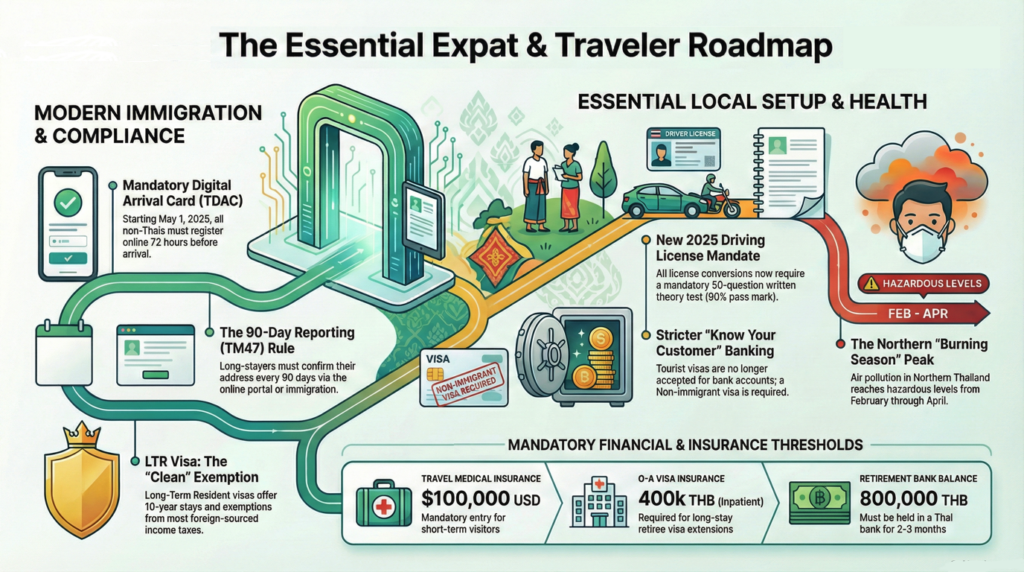
Vérifiez si le Carte d'arrivée numérique de Thaïlande s'applique à votre demande et soumettez-la via le site Web officiel de l'Immigration dans le délai requis. La soumission officielle est gratuite. La carte d'arrivée ne remplace pas un visa et ne garantit pas l'entrée.
Préparez les documents dont vous aurez besoin
Transportez des copies sécurisées séparément des originaux. Selon votre situation, préparez :
- Passeport, visa et dossiers de demande.
- Actes de mariage et de naissance, ainsi que toute traduction ou légalisation requise.
- Preuves d'emploi, de retraite ou financières pertinentes pour la voie d'immigration.
- Détails d'assurance, dossiers médicaux et ordonnances.
- Documents de permis de conduire pour les véhicules que vous prévoyez d'utiliser.
- Dossiers scolaires et documents de consentement parental le cas échéant.
Vérifiez les restrictions concernant les médicaments avec le Service aux voyageurs de la FDA thaïlandaise avant de faire vos bagages. Une ordonnance médicale de votre pays ne lève pas les restrictions thaïlandaises sur les substances contrôlées. Déterminez si un permis est nécessaire suffisamment tôt pour en obtenir un.
Semaine d'arrivée : veillez à bien noter les dates et l'adresse
Vérifiez le registre d'entrée et la date limite d'autorisation dès votre arrivée. Enregistrez une copie claire et notez la date d'expiration ainsi que les délais de déclaration pertinents dans votre calendrier. Signalez rapidement toute erreur apparente au lieu d'attendre la prochaine demande.
Demandez à l'hôtel ou au propriétaire concernant la déclaration d'hébergement et conservez la confirmation disponible. Si vous changez d'adresse par la suite, vérifiez les conditions de déclaration pour le nouveau logement. Une déclaration d'adresse ne prolonge pas votre séjour.
Gardez suffisamment d'argent accessible pour les acomptes et les dépenses imprévues, avec un deuxième moyen de paiement légal au cas où une carte cesserait de fonctionner. Avant de compter sur un compte bancaire thaïlandais, demandez à la banque quels documents votre statut exige. L'obtention d'un compte n'est pas garantie simplement parce que vous détenez un visa de long séjour.
Choisissez le quartier par la routine
Commencez par les endroits où vous devez vous rendre régulièrement : le travail, l'école, l'hôpital, les magasins et les transports en commun. Un logement moins cher le devient s'il est difficile d'y accéder au quotidien. Testez l'itinéraire à l'heure où vous l'utiliserez.
Comparez un quartier en particulier, plutôt que de traiter Bangkok, Chiang Mai ou une ville côtière comme un seul endroit uniforme. Le bruit, la circulation, la qualité de l'air saisonnière, l'exposition aux inondations et l'accès aux soins médicaux varient. Visitez plus d'une fois et posez des questions précises aux personnes qui vivent dans l'immeuble ou dans la rue.
Si vous avez besoin d'une connexion Internet fiable pour travailler, testez la connexion dans le logement et confirmez les conditions d'installation. Un immeuble faisant de la publicité pour le Wi-Fi ne garantit pas la qualité disponible dans votre logement.
Lisez le bail avant de verser un acompte important
Confirmez qui a le droit de louer le bien et qui recevez l'argent. Mettez-vous d'accord sur le loyer, la caution, les charges, les responsabilités en matière de réparations, le registre des états des lieux, la résiliation anticipée et la restitution de la caution. Conservez les reçus et les photographies de l'état des lieux lors de la remise des clés.
Vérifiez les animaux de compagnie, les invités, le tabagisme, le stationnement et toute utilisation liée au travail par rapport au bail et au règlement de l'immeuble. Obtenez par écrit les promesses importantes pour votre décision. Nos guide du contrat de location explique les problèmes juridiques plus en détail.
Pour un premier achat, acheter un bien immobilier sans connaître le quartier ajoute des risques. Si vous décidez d'acheter, vérifiez l'éligibilité à la propriété, le titre de propriété et le contrat avant de verser un acompte non remboursable.
Santé, transports et budget mensuel réel
Choisissez des soins médicaux accessibles, y compris en dehors des heures de bureau habituelles. Comparez la couverture d'assurance, les exclusions, les franchises, les conditions de renouvellement et la procédure de paiement de l'assureur. Vérifiez la disponibilité des traitements continus et des médicaments avant de compter sur une police ou un hôpital particulier.
Prévoyez un budget pour le transport car vous l'utiliserez. Si vous prévoyez de conduire, confirmez les conditions requises en matière de permis et d'assurance pour le véhicule. Un loueur qui remet une moto n'établit pas votre droit légal de conduire ni la couverture d'assurance.
Suivez vos propres dépenses pendant le premier mois. Incluez le loyer, les charges, les transports, l'alimentation, les assurances, les frais de scolarité, les dépenses d'immigration et les voyages de retour. Les budgets moyens publiés sont un point de départ, et non un substitut à vos engagements réels.
Conservez les dossiers financiers dès le début
Consignez les dates de voyage, les revenus et les transferts. Avant de déplacer des fonds importants, distinguez les revenus des épargnes, des prêts et du produit des ventes, et obtenez des conseils sur le traitement fiscal applicable. Vivre en Thaïlande tout en recevant des paiements à l'étranger n'élimine pas automatiquement l'exposition fiscale thaïlandaise.
Conservez les relevés bancaires et les justificatifs de l'origine des fonds. Si vous avez des obligations en cours dans un autre pays, examinez les deux situations ensemble. Notre guide de l’impôt sur le revenu des particuliers explique les questions principales.
À la fin du premier mois
Revoyez ce que vous avez appris avant de prolonger le bail ou de faire un achat important. L'emplacement convient-il ? Le budget est-il réaliste ? Les dispositions en matière de visa, de travail et de fiscalité sont-elles cohérentes avec ce que vous faites ?
Pour les interactions quotidiennes, lisez notre guide de la culture et du savoir-vivre. Si un contrat, une voie d'immigration ou un arrangement familial doit être examiné, réserver une consultation et envoyez les documents avant la date limite de signature ou de dépôt.
Dernière révision : 22 septembre 2026. Read end to end. This guide deliberately states no fees, periods or section numbers, and its specific points were checked: the Thailand Digital Arrival Card is free on the official Immigration portal and does not replace a visa; controlled medicines need the Thai FDA traveller permit; accommodation reporting does not extend a stay. Every link was tested, and the FDA link now points at the permit service it redirects to. Immigration requirements change by mission and nationality, so confirm yours with the responsible Thai embassy or consulate. Re-read on 5 October 2026: every statement still general and accurate (no visa-exemption periods, fees or dates to go stale); no change made.
Actualités juridiques thaïlandaises, gratuites par courriel
Des mises à jour en anglais simple sur les changements législatifs thaïlandais concernant les étrangers : propriété, visas, mariage, affaires et testaments. Un court courriel par mois, envoyé par un cabinet d’avocats établi depuis 2006. Zéro spam, désabonnement possible à tout moment.