


Révisé par ThaiLawOnline, un cabinet d'avocats thaïlandais agréé exerçant en Thaïlande depuis 2006. Avocate thaïlandaise en charge du dossier : Wichuda Atthamethakon, LL.M., licence du barreau thaïlandais 3149/2556.
Dernière mise à jour :
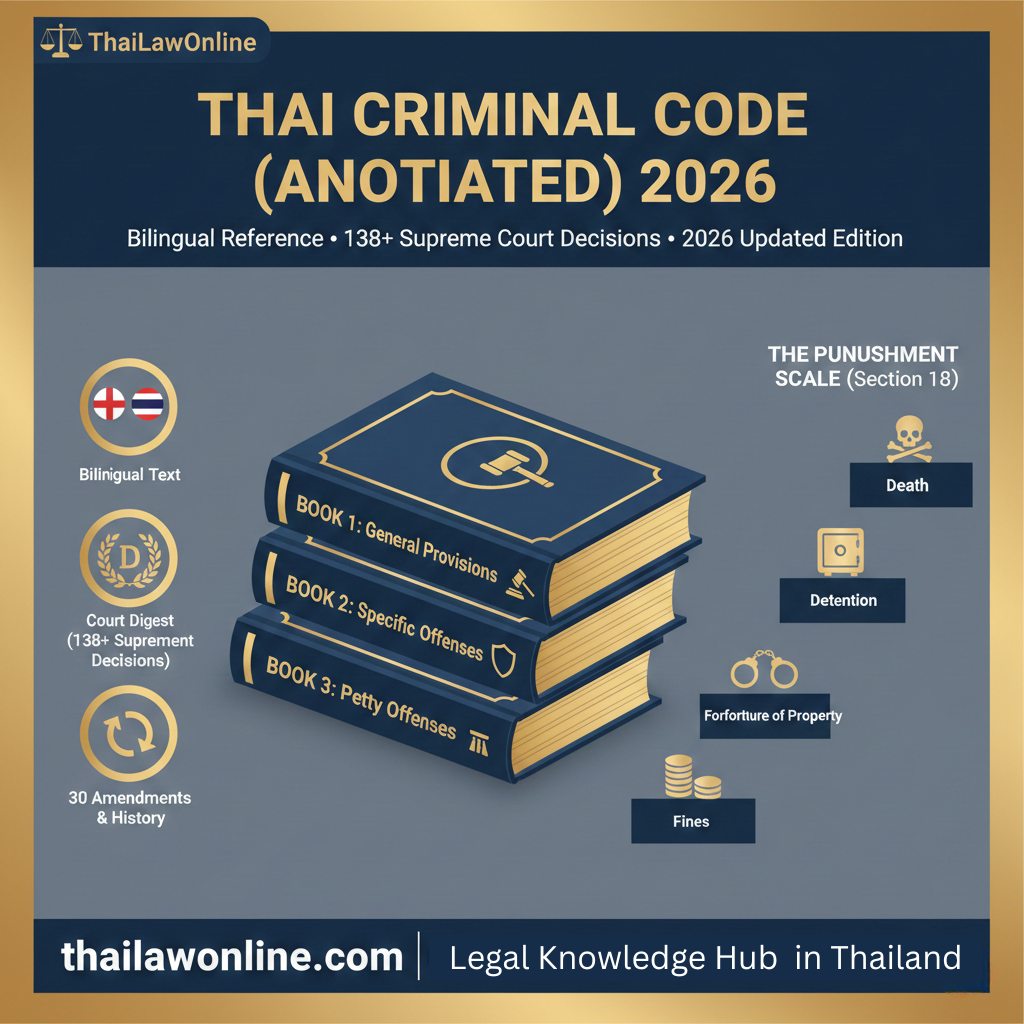
If you have ever looked up a section of the Thai Criminal Code Annotated in English, you know the drill. You find scattered PDFs and outdated translations. There is little context. You also do not find Cour suprême decisions that show how the law works in practice. We decided to fix that. ThaiLawOnline is proud to launch the first free, bilingual, annotated Thai Criminal Code Annotated of Thailand. It is a complete digital resource covering every current section of the Code, including the numbered bis provisions: 448 entries as of June 2026. It is fully up to date as of 2026. It includes the latest Amendment No. 30 (B.E. 2568/2025) which criminalized sexual harassment for the first time in Thai legal history.
Table des matières
→
Découvrez le Code pénal thaïlandais iciQu'est-ce qui différencie cela de tout le reste ?
Comprendre le Code pénal thaïlandais annoté
There are English translations of the Thai Criminal Code floating around the internet. Most of them are incomplete, outdated, or presented as flat text with no context. Ours is none of those things. Here’s what you’ll find:
Full Bilingual Text, Switch Between Languages Instantly
Chaque section est présentée en thaï et en anglais. Vous pouvez basculer entre les deux langues.
Anglais seulement,
Thaï uniquement, ou
côte à côtedisplay with one click. Whether you’re a foreign lawyer doing vérification préalable, a Thai law student comparing translations, or an expat, you’re covered. This helps you understand what Section 334 says about vol.
65 Supreme Court (Dika) Decisions, Linked Directly to the Relevant Sections
This is where it gets really useful. We’ve picked 65 landmark Supreme Court decisions. We summarized each one in English and Thai. We also linked each decision to the Criminal Code section it explains. So when you read Section 334 on theft, you will see nine court decisions. These decisions explain how Thai courts distinguish theft from misappropriation. They also explain what counts as “snatching” and when penalties increase. No more guessing what the law means in practice. The courts have already told us.
Points saillants de la rédaction d'experts sur les sections clés
For the most important and commonly charged sections, we’ve added editorial analysis written by our legal team. Each highlighted section includes:
- Pourquoi cette section est importante, a plain-language explanation of the provision and its practical importance
- Historique législatif, how and why the section was amended over the years
- Importance pratique, how the section connects to related offences and what practitioners should know
All 30 Amendments Tracked, With Royal Gazette References
The Criminal Code has been amended 30 times since 1956. We’ve documented each one, including Royal Gazette publication dates, affected sections, and a bilingual summary of each amendment’s purpose. You can see at a glance, for example, that Section 334’s fine was increased from 6,000 to 60,000 Baht by Amendment No. 26 in 2017.
Références croisées entre les sections
Thai criminal law doesn’t exist in isolation. Our annotated code links related sections with context. You can move from theft (Section 334) to aggravated theft (Section 335). You can also go to snatching (Section 336) with ease. This helps you see how they connect.
Interactive Visual Guides & Charts
Nous avons conçu des outils d'analyse visuelle qui permettent de comprendre la structure du Code pénal de manière intuitive. Nous expliquons sa structure en trois livres. Nous abordons les cinq types de peines prévus à l'article 18. Nous montrons le fonctionnement des délais de prescription à l'article 95. Nous cartographions les catégories d'infractions du livre 2.
Recherche intégrée
Looking for something specific? The search bar lets you find any section by number or search by keyword across the entire code. Type “diffamation” and go straight to Sections 326-333. Type “326” and you’re there instantly.
À qui cela s'adresse-t-il ?
Honestly, anyone dealing with Thai criminal law:
- avocats étrangers effectuer des vérifications préalables transfrontalières ou conseiller des clients exposés au marché thaïlandais
- Expatriés et résidents qui souhaitent comprendre leurs droits et obligations en vertu de la loi thaïlandaise
- étudiants en droit thaïlandais Je recherche une référence bilingue et sans faute, incluant de véritables décisions de justice.
- Universitaires et chercheurs étudier le droit pénal comparé en Asie du Sud-Est
- propriétaires d'entreprises who need to understand offences related to fraude, forgery, trade secrets, or computer crimes
Pourquoi nous avons construit ceci
At ThaiLawOnline, we believe that access to the law shouldn’t depend on how much you can afford to spend on legal research tools. The Thai statutory text is in the public domain. But a useful, annotated, bilingual version of that text did not exist until now. It includes court decisions and expert analysis. This project represents months of work by our legal team, and we’re making it available to everyone at no cost. We hope this makes Thai criminal law clearer. We also hope it is easier to access. We want it to feel less intimidating for people who need to understand it.
📖 Commencez à consulter le Code pénal annoté de Thaïlande →Vous avez des questions concernant une disposition particulière ? Besoin de conseils juridiques en matière pénale en Thaïlande ?
Contactez notre équipe, we’re here to help.
Actualités juridiques thaïlandaises, gratuites par courriel
Des informations claires et concises sur les changements législatifs thaïlandais concernant les étrangers : propriété, visas, mariage, affaires et testaments. Un court courriel par mois, envoyé par un cabinet d’avocats établi depuis 2006. Zéro spam, désabonnement possible à tout moment.