


ตรวจสอบโดย ThaiLawOnline สำนักงานกฎหมายไทยที่ได้รับใบอนุญาตและดำเนินกิจการในประเทศไทยตั้งแต่ปี พ.ศ. 2549 ทนายความผู้รับผิดชอบสำนวน: Wichuda Atthamethakon, น.ม., ใบอนุญาตให้เป็นทนายความ เลขที่ 3149/2556.
ปรับปรุงล่าสุดเมื่อ
การซื้อที่ดินในประเทศไทยผ่านทางคู่สมรสชาวไทยเคยเป็นเรื่องที่ใช้เวลาเพียงสิบสองนาที สำนักงานที่ดิน. คุณจ่ายเงินแล้ว ภรรยาของคุณก็เซ็นต์เอกสารรับรองว่าเงินนั้นเป็นของเธอ และเจ้าหน้าที่ก็ลงทะเบียนกรรมสิทธิ์ไว้ เจ้าหน้าที่ต้องใช้เวลามากกว่านี้ตั้งแต่เดือนพฤษภาคมปี 2026 และเอกสารนั้นก็เป็นเอกสารแรกที่เจ้าหน้าที่อ่าน.
ระหว่างวันที่ 15 ถึง 25 พฤษภาคม 2026 กรมที่ดินได้ส่งจดหมายฉบับเร่งด่วนไปยังสำนักงานที่ดินทุกแห่ง โดยเจ้าหน้าที่ผู้รับผิดชอบการจดทะเบียนต้องตรวจสอบแหล่งเงินทุนก่อนที่จะจดทะเบียนการซื้อขายที่เกี่ยวข้องกับการจ่ายเงินสดจำนวน 2 ล้านบาทขึ้นไป หรือการ ราคาประเมิน of THB 5 million or more. Land Offices check applicants against the Department of Business Development’s company and shareholder records and work with security and other local agencies; separately, land offices report suspicious transactions to the Anti-การฟอกเงิน Office. The circulars target นอมินี โครงสร้าง เมื่อสามีชาวต่างชาติเป็นผู้สนับสนุนการซื้อทรัพย์สินในชื่อภรรยาชาวไทย ดูเหมือนในเอกสารจะตรงตามที่คำสั่งของรัฐบาลระบุอย่างแท้จริง.
คำแนะนำส่วนใหญ่ในภาษาอังกฤษเกี่ยวกับเรื่องนี้มีอายุมากกว่าจดหมายเวียนถึง 5 ปีขึ้นไป และยังคงอ้างถึงข้อกล่าวหาที่ว่าประมวลกฎหมายแพ่งและพาณิชย์ไม่สนับสนุนเรื่องหย่าร้าง และยังระบุว่าคำตัดสินของศาลฎีกาปี 2022 แสดงให้เห็นว่าศาลจะมองไปข้างหน้า ซึ่งในหน้านี้จะแก้ไขทั้งสองประเด็น ประกาศนี้กำหนดว่าใครคือผู้ลงทะเบียน ไม่ใช่ว่าใครเป็นเจ้าของ.
สารบัญ
ชาวต่างชาติสามารถซื้อที่ดินในประเทศไทยได้หรือไม่ หากภรรยาเป็นคนไทย
ไม่ ไม่ใช่ในชื่อของคุณเอง มาตรา 86 ของกฎหมาย ประมวลกฎหมายที่ดิน ปีพ.ศ. 2497 อนุญาตให้ชาวต่างชาติสามารถซื้อที่ดินได้เฉพาะภายใต้สนธิสัญญาเท่านั้น ประเทศไทยไม่มีสนธิสัญญาดังกล่าวให้ใช้บังคับ ดังนั้นนอกเขตการลงทุนตามเส้นทางลงทุนตามมาตรา 96 บีแล้ว ข้อห้ามดังกล่าวถือเป็นข้อห้ามอย่างเคร่งครัด การแต่งงานกับคนไทยไม่ส่งผลต่อสิทธิ์ของคุณในการครอบครองที่ดินแต่อย่างใด.
สิ่งที่การแต่งงานเปลี่ยนแปลงคือสถานะของภรรยาของคุณ สมาชิกในครอบครัวชาวไทยของคุณจะซื้อที่ดินและจดทะเบียนในชื่อของเธอเพียงคนเดียว คุณต้องไปที่สำนักงานที่ดินและลงนามในคำประกาศร่วมกัน นั่นคือการทำธุรกรรม และมันถือว่าถูกต้องตามกฎหมายเมื่อข้อเท็จจริงที่อยู่เบื้องหลังมันเป็นความจริง.
จดหมายยืนยันจากกรมที่ดินคืออะไร?
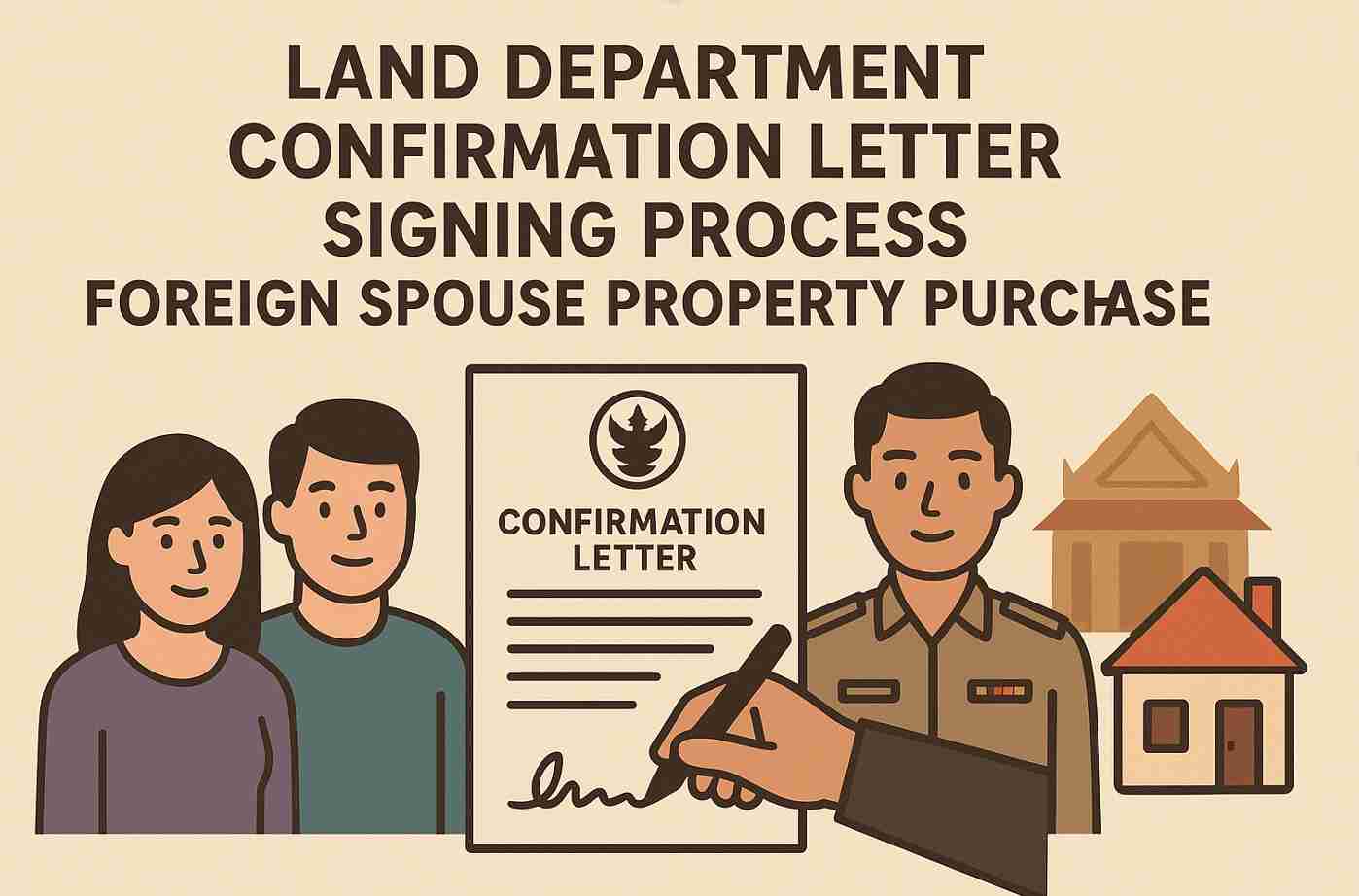
จดหมายยืนยัน หรือที่เรียกกันอย่างเป็นทางการว่า “จดหมายยืนยัน” หรือ “จดหมายรับรอง” เป็นเอกสารทางกฎหมายที่กรมที่ดินของประเทศไทยกำหนดให้ผู้ที่แต่งงานกับชาวต่างชาติเป็นคู่สมรสต้องยื่นเมื่อผู้ที่ถือสัญชาติไทยได้ซื้อที่ดินหรืออสังหาริมทรัพย์ เอกสารฉบับนี้เป็นคำประกาศร่วมกันระหว่างคู่สมรสทั้งสอง โดยยืนยันว่าเงินทั้งหมดที่ใช้ในการซื้อที่ดินนั้นเป็นทรัพย์สินส่วนบุคคลของคู่สมรสชาวไทยเท่านั้นสินส่วนตัว) และไม่ใช่ว่า ทรัพย์สินของคู่สมรส (ซิน ซอมรอส)
ข้อกำหนดนี้มีขึ้นตามระเบียบของกระทรวงมหาดไทยที่ออกเมื่อวันที่ 23 มีนาคม พ.ศ. 2542 ซึ่งกำหนดขั้นตอนเพื่อป้องกันการเลี่ยงข้อจำกัดการถือครองที่ดินของชาวต่างชาติในประเทศไทย ก่อนมีระเบียบฉบับนี้ คนไทยที่สมรสกับชาวต่างชาติแทบจะสูญเสียสิทธิในการได้มาซึ่งที่ดิน เนื่องจากอาจมีปัญหาเรื่องกรรมสิทธิ์ร่วมกัน การลงนามนี้เป็นข้อบังคับ หากไม่ลงนาม กรมที่ดินอาจปฏิเสธการทำธุรกรรมดังกล่าวได้.
จดหมายยืนยัน ทีละบรรทัด
ขั้นตอนดังกล่าวมีอยู่ในหนังสือของกระทรวงมหาดไทย โดยมีชื่อว่า Most Urgent Letter Mor Thor 0710/Wor 792 เมื่อวันที่ 23 มีนาคม 1999 เราอ้างอิงถึงหนังสือเล่มนี้ด้วยหมายเลขเอกสาร ไม่ใช่ด้วยเนื้อหาของหนังสือ โดยหนังสือเล่มนี้ไม่ได้อยู่ในฐานข้อมูลใดๆ ที่เราสามารถค้นหาได้ ดังนั้น หากคุณต้องการเนื้อหาที่ชัดเจนกว่านี้ คุณควรค้นหาหมายเลขดังกล่าวบน dol.go.th ก่อน โดยก่อนหน้านั้น ชาวไทยที่แต่งงานกับชาวต่างชาติจะสูญเสียสิทธิ์ในการจดทะเบียนที่ดินไปอย่างถาวร เพราะกฎหมายเกี่ยวกับทรัพย์สินทางด้านสมรสจะมอบสิทธิประโยชน์ให้กับคู่สมรสชาวต่างชาติ ซึ่งเป็นสิ่งที่ห้ามมิให้เขาถือครองได้ตามกฎหมาย กฎระเบียบในปี 1999 ทำให้ตลาดกลับมาคึกคักอีกครั้ง โดยขอให้คู่รักระบุในหนังสือว่าเงินซื้อที่ดินเป็นของคู่สมรสชาวไทยเพียงคนเดียว.
ประกาศนี้มีพื้นฐานมาจากสองส่วนของ ประมวลกฎหมายแพ่งและพาณิชย์. มาตรา 1471 กำหนดไว้ว่า สินส่วนตัว, ทรัพย์สินส่วนบุคคล: สิ่งที่คู่สมรสเป็นเจ้าของก่อนการสมรส อุปกรณ์ส่วนตัว และทรัพย์สินที่ได้รับระหว่างการสมรสโดยการรับมรดกหรือ การยกทรัพย์สินให้. มาตรา 1472 ทำให้ทรัพย์สินส่วนบุคคลยังคงเป็นทรัพย์สินส่วนบุคคลเมื่อเปลี่ยนรูปเป็นอย่างอื่น เงินที่เคยเป็นของเธอเมื่อก่อนการแต่งงาน และใช้ไปกับการซื้อที่ดินในระหว่างการแต่งงาน ก็จะก่อให้เกิดที่ดินที่ยังเป็นของเธอต่อไป.
ทั้งคู่ฝ่ายสามีและภรรยาลงนามรับรองเอกสาร การที่คู่สมรสชาวต่างชาติยืนยันว่าเงินดังกล่าวเป็นทรัพย์สินส่วนบุคคลของคู่สมรสชาวไทย และว่าตนไม่มีสิทธิใดๆ ในที่ดินนั้น การที่คู่สมรสชาวไทยยืนยันเช่นเดียวกัน เจ้าหน้าที่ทะเบียนจึงยื่นเอกสารดังกล่าวและจดทะเบียนกรรมสิทธิ์.
เอกสารหนึ่งที่อยู่ในแฟ้มเดียวกันมักจะขัดแย้งกับจดหมายนั้น โดยเมื่อเงินมาถึงจากต่างประเทศ ธนาคารผู้รับเงินจะออกเอกสารรับเงิน แบบฟอร์มธุรกรรมแลกเปลี่ยนเงินตราต่างประเทศ สำหรับธุรกรรมการโอนเงินเข้าภายในประเทศจำนวน 50,000 ดอลลาร์สหรัฐฯ หรือมากกว่า โดยในแบบฟอร์มจะระบุชื่อผู้ส่งเงินต่างประเทศ โดยสำนักงานที่ดินจะเก็บรักษาทั้งสองฉบับ.
ทำความเข้าใจกฎหมายที่ดินของไทย: สินส่วนตัว กับ สินสมรส
ประมวลกฎหมายแพ่งและพาณิชย์ของไทยแบ่งทรัพย์สินทางแพ่งออกเป็นสองประเภทที่สำคัญสำหรับการทำคำรับรอง โดยทรัพย์สินส่วนบุคคล (Sin Suan Tua) ประกอบด้วยทรัพย์สินที่ครอบครองก่อนการสมรส กุศลอุทิศและมรดก และทรัพย์สินเพื่อการใช้ส่วนตัว ซึ่งยังคงอยู่ภายใต้การควบคุมโดยเฉพาะของคู่สมรส และต้องปฏิบัติตามสิทธิและกฎหมายของกรรมสิทธิ์ที่ดินในประเทศไทย ส่วนทรัพย์สินทางแพ่ง (Sin Som Ros) ประกอบด้วยทรัพย์สินที่ได้มาจากการสมรส รายได้ที่ได้รับจากคู่สมรส และผลประโยชน์ที่ได้มาจากการใช้ทรัพย์สินทางแพ่ง ซึ่งเป็นทรัพย์สินที่ครอบครองร่วมกันและต้องมีความยินยอมร่วมกันสำหรับการทำธุรกรรมที่สำคัญ.
เมื่อคู่สมรสชาวไทยที่แต่งงานกับชาวต่างชาติซื้ออสังหาริมทรัพย์ การที่กรมที่ดินต้องตรวจสอบให้แน่ใจว่าที่ดินนั้นเป็นที่ดิน Sin Suan Tua เพื่อป้องกันการเป็นเจ้าของร่วมของชาวต่างชาติ ซึ่งเป็นสิ่งที่ถูกห้ามตามกฎหมายไทย ต้องจำไว้ว่าในกรณีการหย่าร้าง แม้ว่าอสังหาริมทรัพย์จะอยู่ภายใต้ชื่อของคู่สมรสชาวไทยก็ตาม แต่ผู้พิพากษาจะมักจะแบ่งทรัพย์สินระหว่างคู่สมรสเป็น 50-50 และเป็นไปตามกฎหมายสำหรับพลเมืองไทยเช่นกัน.
จดหมายยืนยันไม่สามารถเปลี่ยนแปลงลักษณะทางกฎหมายของที่ดินได้โดยลำพัง จดหมายดังกล่าวเป็นคำประกาศทางราชการที่บันทึกไว้ที่สำนักงานที่ดิน และไม่ใช่หนึ่งในสี่ประเภทของทรัพย์สินส่วนบุคคลที่ระบุไว้ใน มาตรา 1471. สิ่งที่มันทำคือสร้างหลักฐานทางเอกสารที่แข็งแกร่งในปัจจุบันของสิ่งที่ทั้งคู่ระบุไว้ในขณะนั้น ซึ่งศาลไทยจะพิจารณาจากหลักฐานนี้กับหลักฐานทางบัญชีเงินหากมีการโต้แย้งในภายหลัง โดยในส่วนนี้เป็นส่วนที่สำคัญมากในทางปฏิบัติ คือ บัญชีทะเบียนบ้านจะแสดงที่ดินในชื่อคู่สมรสชาวไทย เพื่อให้เธอสามารถจัดการเรื่องนี้ได้โดยไม่ต้องขอความยินยอมเพิ่มเติม และเจ้าหน้าที่ทะเบียนบ้านจะดำเนินการตามบัญชีทะเบียนบ้านดังกล่าว.
สิ่งที่ไม่ควรทำในประกาศ
อ่านบทความที่เกี่ยวข้องเกี่ยวกับเรื่องนี้เกือบทุกฉบับ คุณจะพบวลีเช่นนี้ว่า “ที่ดินไม่สามารถเป็นกรรมสิทธิ์ร่วมกันได้ และจะยังคงเป็นกรรมสิทธิ์ส่วนตัวของคู่สมรสชาวไทยอยู่เสมอ” หลายฉบับที่มีชื่อเสียงระบุอย่างชัดเจนเช่นนี้ โดยหนึ่งในฉบับที่ได้รับความนิยมมากที่สุดยังไม่ได้มีการอัปเดตมาตั้งแต่เดือนพฤศจิกายนปี 2019.
ประมวลกฎหมายแพ่งและพาณิชย์ไม่สนับสนุนข้อเสนอดังกล่าว.
มาตรา 1474 แห่งประมวลกฎหมายแพ่งและพาณิชย์กำหนดไว้ว่า สินสมรส, ทรัพย์สินที่เกิดจากการสมรส ซึ่งเป็นทรัพย์สินที่ได้มาจากการสมรส ส่วนที่กล่าวถึงในบทนี้สิ้นสุดลงด้วยข้อสันนิษฐานว่า หากมีข้อสงสัยว่าทรัพย์สินนั้นเป็นทรัพย์สินที่เกิดจากการสมรส ก็จะถือว่าเป็นทรัพย์สินที่เกิดจากการสมรส โดยข้อสันนิษฐานนี้ใช้กับที่ดินเช่นเดียวกับรถยนต์หรือยอดเงินในบัญชีธนาคาร.
สมมติฐานนี้เป็นข้อกำหนดในกฎหมาย และมีผลบังคับตามกฎหมายเพียงอย่างเดียว เราไม่ทราบถึงกรณีที่ถูกตัดสินโดยศาลว่าใช้กฎหมายนี้โดยเฉพาะกับจดหมายยืนยันจากสำนักงานที่ดิน และเราจะไม่ยกตัวอย่างกรณีที่ศาลตัดสินว่าใช้กฎหมายนี้โดยเฉพาะกับจดหมายยืนยันดังกล่าว.
สิ่งที่กรณีที่ถูกรายงานแสดงให้เห็นคือศาลจะมองข้ามเอกสารการยื่นฟ้องไปที่ข้อตกลงที่อยู่เบื้องหลัง คำพิพากษาศาลฎีกาที่ 1523/2565 ชายชาวสวีเดนส่งเงิน 2,300,000 บาทไปซื้อที่ดินและบ้าน โดยมีคู่ชีวิตชาวไทยเป็นผู้รับโอนกรรมสิทธิ์ทั้งหมด เขาได้ให้เธอเซ็นต์สัญญาเงินกู้จำนวน 2,400,000 บาท เก็บหลักฐานการโอนกรรมสิทธิ์ทั้งสองฉบับไว้ และจดทะเบียนกรรมสิทธิ์ตลอดชีวิตโดยไม่มีค่าตอบแทน เมื่อความสัมพันธ์สิ้นสุดลง เขาก็ฟ้องร้องเรื่องเงินกู้ดังกล่าว.
ศาลระบุว่าข้อตกลงสินเชื่อเป็นเพียงการกระทำที่สร้างขึ้นขึ้นมาเพื่อปกปิดสิ่งอื่นอีกอย่างหนึ่ง ไม่เป็นโมฆะตามมาตรา 155 วรรคหนึ่ง. The real transaction was agency under section 797: she bought and held half the land and house on his behalf. Because the purchase preceded the registered marriage and she had shared in the earnings that paid for it, she was หุ้นส่วนของบริษัทที่ถือหุ้นครึ่งหนึ่งตามมาตรา 1356 และ 1357, ไม่ใช่โดยทาง สินสมรส. ตำแหน่งของเขาในฐานะชาวต่างชาติอยู่ภายใต้มาตรา 86 และ 94 ของกฎหมายที่ดิน แต่เขายังไม่ได้ฟ้องร้องเรื่องนี้ จึงทำให้ศาลตัดสินให้เป็นเรื่องที่ต้องแยกกันดำเนินการอีกครั้ง. His loan claim was dismissed, and any claim on the agency was left to separate proceedings.
ดังนั้น คำประกาศจึงเป็นหลักฐาน และเป็นหลักฐานที่แข็งแกร่งว่าเงินดังกล่าวมาจากที่ใด ไม่ใช่การปลดเปลื้องสิทธิในทรัพย์สินระหว่างคู่สมรสตามสัญญา และไม่ทำให้ลักษณะของทรัพย์สินเปลี่ยนแปลง การตัดสินของศาลอาจมีสองผลลัพธ์ได้ หากพบว่าที่ดินเป็นทรัพย์สินร่วมกันระหว่างคู่สมรส ตามมาตรา 1533 สิทธิในทรัพย์สินร่วมกันจะถูกแบ่งเป็นส่วนเท่าๆ กันในกรณีหย่าร้าง หากคุณพิสูจน์ได้ว่ามีส่วนร่วมส่วนบุคคลแทน ก็จะได้รับส่วนนั้นคืน.
ทั้งสองผลลัพธ์ก็ไม่ได้มอบสิทธิ์การครอบครองให้แก่ชาวต่างชาติ ซึ่งนั่นก็คือคำถามถัดไปที่ไม่มีใครตอบได้.
หนังสือรับรองในประเทศไทย: ข้อกำหนดตามสถานการณ์ต่างๆ
ข้อกำหนดเฉพาะสำหรับกระบวนการขอหนังสือรับรองจะแตกต่างกันอย่างมาก ขึ้นอยู่กับว่าคู่สมรสชาวต่างชาติอยู่ในประเทศไทยหรือไม่ และสถานภาพสมรส โดยเฉพาะอย่างยิ่งในส่วนที่เกี่ยวข้องกับที่ดินของคนไทย
คู่สมรสชาวต่างชาติที่อยู่ในประเทศไทย
เมื่อคู่สมรสทั้งสองอยู่ ณ ประเทศไทยด้วยกันทั้งคู่ ต้องมาพบกันที่สำนักงานกรมที่ดินเพื่อลงนามในหนังสือรับรอง โดยมีเจ้าหน้าที่ผู้มีอำนาจเป็นผู้รับรองเอกสารดังกล่าว สำหรับคู่สมรสที่แต่งงานตามกฎหมาย เอกสารที่ต้องใช้ประกอบด้วย บันทึกการสมรสที่ออกโดยเจ้าหน้าที่ผู้มีอำนาจรับรอง บัตรประจำตัวประชาชนของชาวไทย คู่สมรสชาวต่างชาติ หนังสือเดินทางของคู่สมรสที่มีวีซ่าระยะยาวที่ยังไม่หมดอายุ และพยานอย่างน้อยหนึ่งคน (หรือสองคนหากใช้ลายมือชื่อ) สำหรับคู่สมรสที่ยังไม่แต่งงานต้องแสดงหลักฐานการอยู่ร่วมกัน พร้อมเอกสารที่เกี่ยวข้อง โดยต้องลงนามในหนังสือรับรองฉบับที่แก้ไขแล้ว ซึ่งระบุถึงสถานะการไม่เป็นคู่สมรสของทั้งสองฝ่าย.
คู่สมรสชาวต่างชาติที่พำนักอยู่ต่างประเทศ
เมื่อคู่สมรสชาวต่างชาติไม่อยู่ในประเทศไทย กระบวนการจึงมีความซับซ้อนมากขึ้น โดยต้องมีการประสานงานกับสถานทูตหรือสถานกงสุลของไทย โดยคู่สมรสชาวต่างชาติจะต้องเดินทางไปที่สถานทูตหรือสถานกงสุลของไทยในประเทศที่ตนอาศัยอยู่ เพื่อลงนามในหนังสือยืนยันการแต่งงาน จากนั้นเอกสารทั้งหมดจะต้องได้รับการรับรองหรือจดทะเบียนโดยถูกต้องตามข้อกำหนดของสนธิสัญญาระหว่างประเทศ จากนั้นจึงต้องแปลเป็นภาษาไทยและได้รับการรับรองจากกรมการต่างประเทศของไทย โดยในหลายกรณี คู่สมรสชาวต่างชาติที่อยู่ต่างประเทศนั้นอาจไม่ได้รับการปรึกษาหารือเพื่อหลีกเลี่ยงการยุ่งยากดังกล่าว เราสามารถกล่าวได้ว่าเพราะเราเคยพบกับลูกค้าจำนวนมากที่อยู่ต่างประเทศ และกระบวนการนี้มักไม่ค่อยถูกนำมาใช้.
หนังสือรับรองอย่างเป็นทางการในประเทศไทย: แม่แบบและรูปแบบ
กรมที่ดินจัดทำแบบฟอร์มยืนยันที่กำหนดมาตรฐาน เพื่อใช้ในการยืนยันเอกสาร ซึ่งต้องปฏิบัติตามอย่างแม่นยำเพื่อให้เป็นไปตามกฎหมาย.
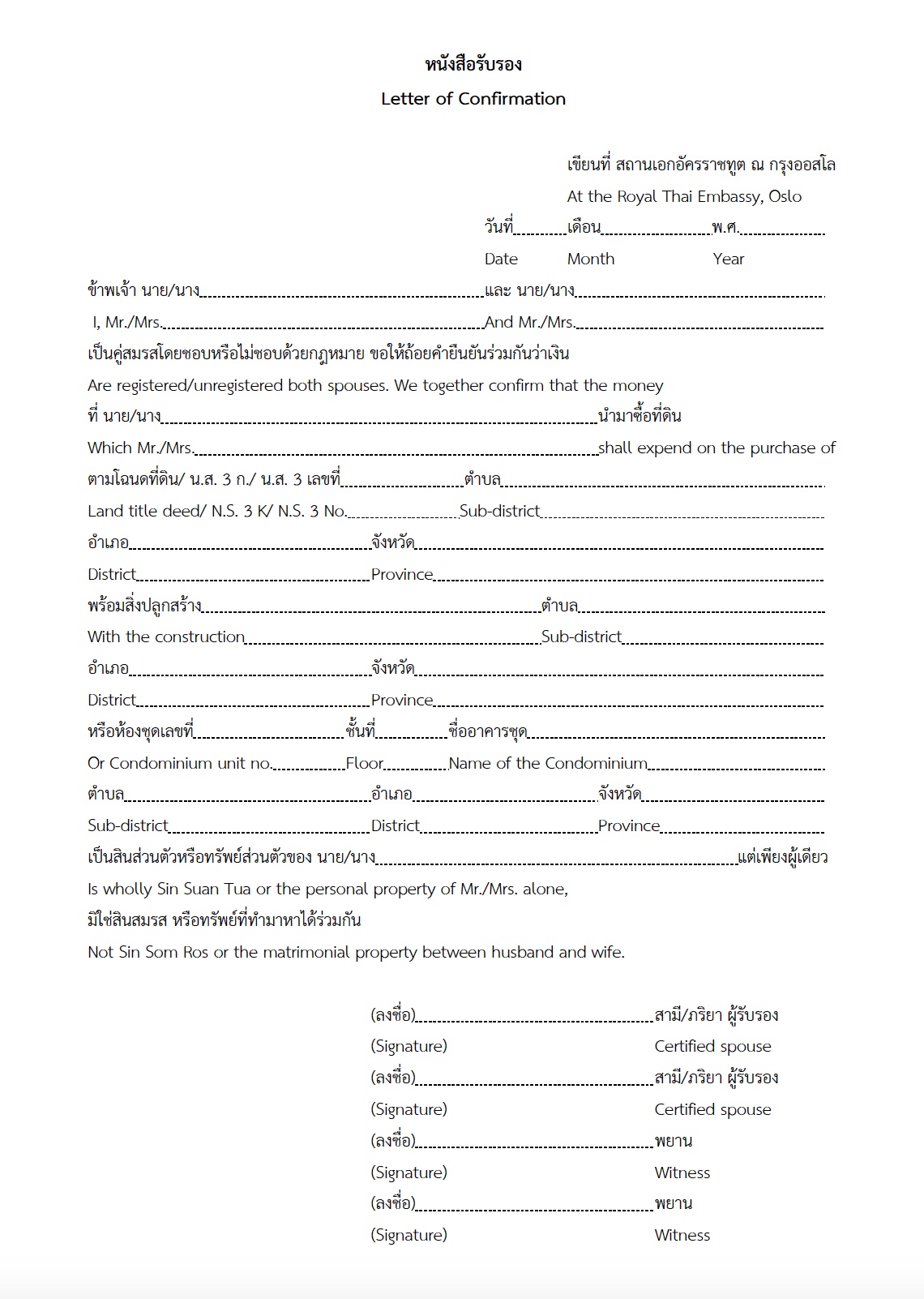
แบบฟอร์มเริ่มต้นด้วยช่องระบุสถานที่และวันที่ ตามด้วยการระบุคู่สมรสทั้งสองว่าเป็นคู่ชีวิตที่จดทะเบียนหรือไม่จดทะเบียน ข้อความหลักระบุว่าเงินที่ใช้ในการซื้อที่ดินเป็นสินส่วนตัว (ทรัพย์สินส่วนตัว) ของคู่สมรสชาวไทยทั้งหมด ไม่ใช่สินสมรส (สินสมรส) ระหว่างสามีภรรยา เพื่อให้มั่นใจถึงสิทธิที่ชัดเจนในบริบทของการเป็นเจ้าของทรัพย์สิน
เทมเพลตนี้มีช่องข้อมูลเฉพาะสำหรับการระบุที่ดิน เช่น หมายเลขโฉนดที่ดิน ตำบล เขต และจังหวัด หรือสำหรับคอนโดมิเนียมที่มีเลขห้องและชื่ออาคาร โดยมีช่องสำหรับลงลายมือชื่อของคู่สมรสที่ได้รับการรับรอง และผู้ให้การยินยอมอีกสองคน และต้องลงนามในที่ปรากฏตัวของเจ้าหน้าที่กรมที่ดินผู้มีอำนาจ.
ขั้นตอนการติดต่อสถานทูตและสถานกงสุลสำหรับคู่สมรสชาวต่างชาติในต่างประเทศ
คู่สมรสชาวต่างชาติที่ไม่สามารถเดินทางมาประเทศไทยได้ ต้องดำเนินการขอหนังสือรับรองจากสถานทูตหรือสถานกงสุลไทยในประเทศที่พำนักอยู่ เพื่ออำนวยความสะดวกในการได้มาซึ่งที่ดิน สถานทูตและสถานกงสุลไทยมีอำนาจในการเป็นพยานลงนามในหนังสือรับรองและรับรองสถานภาพการสมรส แต่ขั้นตอนเฉพาะจะแตกต่างกันไปตามแต่ละสถานที่ เอกสารทุกฉบับต้องได้รับการรับรองอย่างถูกต้องผ่านกระบวนการรับรอง Apostille หรือการรับรองเอกสารโดยทนายความ ตามด้วยการแปลที่ได้รับการรับรองจากประเทศไทย
สถานทูตหรือสถานกงสุลต้องตรวจสอบว่าบุคคลที่ลงนามในจดหมายรับรองนั้นเป็นคู่สมรสหรืออยู่ร่วมกันกับพลเมืองไทยจริง โดยต้องแสดงเอกสารการสมรสหรือหลักฐานแสดงความสัมพันธ์ โดยเวลาในการดำเนินการโดยทั่วไปจะใช้เวลาตั้งแต่หนึ่งถึงสองสัปดาห์ โดยเอกสารที่ได้รับการรับรองจากต้นฉบับจะถูกส่งต่อไปยังสำนักงานกรมที่ดินที่เกี่ยวข้องในประเทศไทย.
รายการเอกสารสำคัญที่ต้องตรวจสอบ สำหรับหนังสือรับรองในประเทศไทย
ความสำเร็จในการดำเนินการขอใบรับรองการแต่งงานขึ้นอยู่กับเอกสารที่ครบถ้วนและได้รับการรับรองถูกต้อง สำหรับคู่สมรสชาวต่างชาติในประเทศไทย เอกสารที่จำเป็นประกอบด้วยหนังสือเดินทางที่มีอายุการใช้งานครบถ้วนพร้อมวีซ่าระยะยาวที่ถูกต้อง หนังสือรับรองการสมรสที่ได้รับการรับรองและแปลแล้ว บัตรประจำตัวประชาชนของคู่สมรสชาวไทย จดหมายรับรองการแต่งงานฉบับจริงที่ใช้แบบฟอร์มอย่างเป็นทางการ และสำเนาบัตรประจำตัวของผู้มีอำนาจลงนาม.
คู่สมรสชาวต่างชาติที่อยู่ต่างประเทศต้องมีหนังสือรับรองจากสถานทูตหรือสถานกงสุลที่ออกโดยถูกต้องตามกฎหมาย เช่น สำเนาถูกต้องตามกฎหมายหรือการรับรองจากกระทรวงการต่างประเทศ การรับรองสถานะคู่สมรสจากสถานทูต การแปลภาษาไทยของเอกสารทั้งหมดอย่างครบถ้วน และเอกสารต้นฉบับที่ได้รับการรับรองจากกรมที่ดิน เพื่อนำส่งต่อให้กรมที่ดิน ในทุกกรณีจะต้องปฏิบัติตามข้อจำกัดของประมวลกฎหมายที่ดินอย่างเคร่งครัด และต้องจัดตั้งทรัพย์สินให้เป็นชื่อ Sin Suan Tua แทน Sin Som Ros.
สิ่งที่ต้องทำก่อนไปสำนักงานที่ดิน
- ตัดสินใจว่าเงินนั้นคืออะไร. ของขวัญหรือให้ยืม จดบันทึกก่อนที่เงินจะเคลื่อนย้าย ไม่ใช่หลังจากนั้น.
- โอนเงินก่อนเวลา. การโอนเงินหลายเดือนก่อนการซื้อ โดยมีเอกสารรับรองการซื้อเป็นหลักฐาน จะก่อให้เกิดคำประกาศที่สามารถใช้เป็นข้ออ้างในการต่อสู้ได้.
- คาดว่าจะมีการถามถึงแหล่งเงินทุน. นำสำเนาบัญชีธนาคารมาด้วย หากมีเงินสดจำนวน 2 ล้านบาทขึ้นไป หรือมีมูลค่าตามราคาประเมิน 5 ล้านบาทขึ้นไป จะทำให้การเช็คเงินสดอัตโนมัติ.
- ให้ค้นหาตามชื่อก่อน. ยืนยันประเภทกรรมสิทธิ์ ขอบเขตที่ดิน การเข้าถึง และทรัพย์สินที่อาจมีอยู่ โฉนดที่ดินในประเทศไทย และ การตรวจสอบสถานะทรัพย์สิน.
- จดทะเบียนสิทธิการคุ้มครองของคุณในวันเดียวกัน. การใช้ประโยชน์, การครอบครอง, การเช่า หรือ การจำนอง ที่จดทะเบียนไว้ที่เคาน์เตอร์เดียวกัน ในการเข้าใช้บริการครั้งเดียวกัน.
- พิจารณาข้อตกลงก่อนแต่งงาน หากคุณยังไม่ได้แต่งงาน มาตรา 1465 และ 1466 อนุญาตให้คู่สมรสกำหนดกฎเกณฑ์การครอบครองทรัพย์สินของตนเองได้ สัญญาก่อนสมรส ทำและจดทะเบียนในขณะที่สมรส และมาตรา 1476/1 ให้ผลบังคับใช้ต่อข้อตกลงดังกล่าวเกี่ยวกับการจัดการทรัพย์สินระหว่างคู่สมรส.
- อ่านข้อความที่ท่านลงนามไว้. ประกาศนี้มีภาษาไทย มีการแปลไว้ก่อนที่ปากกาจะสัมผัสกับกระดาษ.
คำเตือนทางกฎหมายที่สำคัญและตัวเลือกการคุ้มครอง
หนังสือยืนยันการสมรสมีผลทางกฎหมายที่สำคัญ ซึ่งคู่สมรสชาวต่างชาติจะต้องทำความเข้าใจอย่างถ่องแท้ก่อนลงนาม เมื่อลงนามแล้ว คู่สมรสชาวไทยจะเป็นเจ้าของทรัพย์สินโดยสมบูรณ์ โดยคู่สมรสชาวต่างชาติไม่มีสิทธิในการเป็นเจ้าของทางกฎหมายใดๆ ทั้งสิ้น คู่สมรสชาวไทยสามารถขาย จำนอง โอน หรือแลกเปลี่ยนทรัพย์สินได้โดยไม่ต้องได้รับความยินยอมจากคู่สมรสชาวต่างชาติ และทรัพย์สินนั้นไม่สามารถตกทอดเป็นมรดกโดยอัตโนมัติแก่คู่สมรสชาวต่างชาติได้ ซึ่งเน้นย้ำถึงความสำคัญของการทำความเข้าใจสิทธิและกฎหมายที่เกี่ยวข้องกับที่ดินในประเทศไทย
อย่างไรก็ตาม มีกลไกการคุ้มครองหลายประการสำหรับคู่สมรสชาวต่างชาติที่ร่วมสนับสนุนค่าใช้จ่ายในการซื้ออสังหาริมทรัพย์ โดยสัญญาใช้สิทธิประโยชน์หรือสัญญาเช่าที่มีระยะเวลาการใช้ประโยชน์และครอบครอง 30 ปี ขณะที่สัญญาพื้นที่ใช้สอยจะมอบสิทธิในการก่อสร้างที่ดินได้ การจัดทำเอกสารทางการเงินที่ถูกต้องเกี่ยวกับค่าใช้จ่ายและเงื่อนไขในข้อตกลงก่อนแต่งงานสามารถช่วยเสริมความคุ้มครองทางกฎหมายได้อีกด้วย.
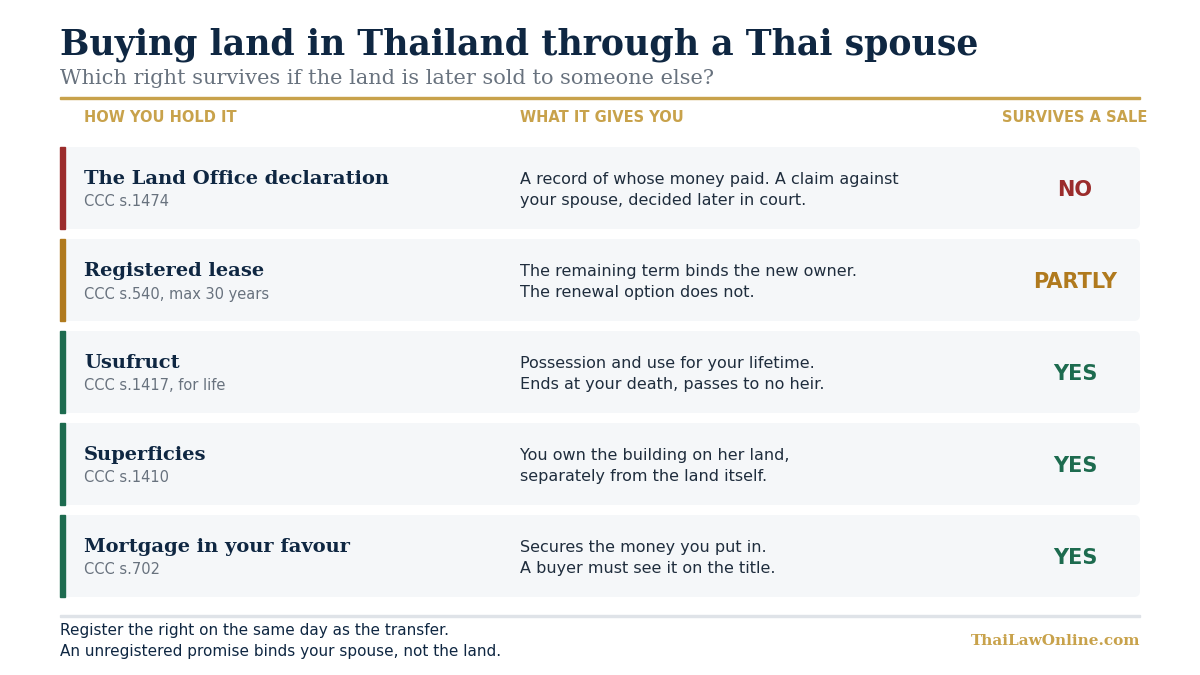
โครงสร้างป้องกันทั้งสี่ เปรียบเทียบกันในหนึ่งคำถาม
คู่มือทุกเล่มระบุตัวเลือกสี่แบบเดียวกัน เกือบจะไม่มีใครเทียบข้อเสนอในกรณีที่ข้อพิพาทเกิดขึ้นจริง: หากเธอขายที่ดินให้กับคนแปลกหน้า สิทธิ์ของคุณจะยังคงอยู่หรือไม่
| โครงสร้าง | รหัส | เงื่อนไข | สามารถรอดจากการขายให้กับบุคคลที่สามได้หรือไม่ |
|---|---|---|---|
| สัญญาเช่าที่จดทะเบียน | CCC มาตรา 540 | สูงสุด 30 ปี สามารถต่ออายุได้ตามข้อตกลง | สัญญาเช่าที่จดทะเบียนจะผูกพันผู้ซื้อจนถึงระยะเวลาที่เหลืออยู่ของสัญญา เช่าแบบมีตัวเลือกการต่อสัญญาจะไม่ผูกพัน ผู้เช่าเดิมจะรับผิดชอบต่อสัญญาดังกล่าว ดังนั้นเจ้าของบ้านคนใหม่จึงสามารถปฏิเสธได้. |
| สิทธิเก็บกิน | CCC มาตราที่ 1417 ถึง 1428 | ระยะเวลาการใช้ประโยชน์ของเจ้าของกรรมสิทธิ์ หรือระยะเวลาที่กำหนดสูงสุด 30 ปี | ใช่. สิทธิประโยชน์ที่จดทะเบียนจะผูกพันกับผู้ซื้อรายต่อไป ตามคำพิพากษาของศาลฎีกาที่ 2783/2516 โดยสิ้นสุดลงเมื่อผู้รับสิทธิเสียชีวิตตามมาตรา 1418 และจะตกทอดไปยังผู้ไม่มีมรดก. |
| สิทธิเหนือพื้นดิน | CCC มาตรา 1410 ถึง 1416 | นานสูงสุด 30 ปี หรือตลอดชีวิต | ใช่ เมื่อลงทะเบียนแล้ว การเป็นเจ้าของอาคารจะแยกออกจากกรรมสิทธิ์ในที่ดิน ซึ่งเป็นจุดประสงค์ในการใช้ประโยชน์จากที่ดินนั้น. |
| สินเชื่อบ้านในชื่อของคุณ | CCC มาตรา 702 และมาตราถัดไป | จนกว่าจะได้รับการชำระคืน | ใช่ มันช่วยในการจัดเก็บเงินแทนการใช้บ้าน และยังทำให้เอกสารสินเชื่อของคุณอยู่ในระบบที่ผู้ซื้อต้องเห็นได้. |
การลงทะเบียนเป็นสิ่งที่ทำให้แตกต่างไปได้ การทำสัญญาระบุชื่อผู้เป็นคู่สมรสที่ไม่ได้รับการลงทะเบียนจะทำให้คุณมีสิทธิ์เรียกร้องต่อคู่สมรสของคุณได้ ส่วนสิทธิ์ที่ได้รับการลงทะเบียนจะทำให้คุณมีสิทธิ์เรียกร้องต่อที่ดินได้ การลงทะเบียนให้เรียบร้อยในวันโอนกรรมสิทธิ์ ณ เคาน์เตอร์เดียวกันในครั้งเดียว การกลับมาอีกครั้งในอีกหกเดือนต่อมาหมายความว่าคุณต้องถามคู่สมรสว่าเขาหรือเธออาจมีแนวคิดอื่นไปแล้วหรือไม่.
รายละเอียดของแต่ละรายการ: สัญญาสิทธิเก็บกิน, สิทธิเหนือพื้นดิน, การเปรียบเทียบสิทธิเก็บกิน สัญญาเช่า และสิทธิเหนือพื้นดิน, และ สิ่งที่ศาลฎีกาได้ตัดสินเกี่ยวกับสัญญาเช่า.
เธอสามารถขายมันโดยไม่บอกฉันได้ไหม
มาตรา 1476 กำหนดรายการการทำธุรกรรมที่ต้องมีการตกลงร่วมกันระหว่างคู่สมรส โดยมีรายการที่เข้มงวดเป็นอย่างยิ่ง การขาย การแลกเปลี่ยน การจำนอง หรือการปล่อยจำนองต่อทรัพย์สินอสังหาริมทรัพย์ทั้งหมดอยู่ในรายการนี้ รวมทั้งการสร้างหรือยุติการเป็นผู้รับประโยชน์จากทรัพย์สินอสังหาริมทรัพย์ การเป็นผู้มีสิทธิอยู่อาศัย การเป็นเจ้าของพื้นที่ส่วนตัว การเป็นผู้รับประโยชน์หรือการเป็นหนี้สินต่อทรัพย์สินอสังหาริมทรัพย์ และการปล่อยเช่าทรัพย์สินอสังหาริมทรัพย์เป็นระยะเวลานานกว่าสามปี ทุกสิ่งทุกอย่างที่อยู่นอกเหนือรายการดังกล่าว คู่สมรสคนใดคนหนึ่งจะดำเนินการได้เพียงคนเดียว.
มาตรา 1476 ปกป้องทรัพย์สินทางด้านการสมรส ทรัพย์สินที่เธอช่วยซื้อนั้นถูกจดทะเบียนเป็นชื่อของเธอแล้ว สินส่วนตัว, และเจ้าหน้าที่ที่เคาน์เตอร์จะเห็นว่าเจ้าของรายเดียวกำลังจัดการกับทรัพย์สินส่วนตัวของตนเอง และการโอนกรรมสิทธิ์ก็เกิดขึ้น เจ้าหน้าที่จึงจะดำเนินการตามขั้นตอนต่อไป หลังจากที่การขายเสร็จสิ้นแล้ว ทางศาลจะพิจารณาคดี และผลลัพธ์จะออกมาในทางที่คัดค้านคู่สมรสของคุณมากกว่าคัดค้านผู้ซื้อ.
ความแตกต่างระหว่างสิ่งที่ระบุในกฎหมายกับสิ่งที่ผู้ขายทำนั้นเป็นข้อโต้แย้งที่ทรงพลังที่สุดในการลงทะเบียนสิทธิที่แท้จริงในชื่อของคุณในวันซื้อสินค้า.
หากศาลพิพากษาให้ที่ดินตกเป็นของคู่สมรสชาวต่างชาติ แล้วจะทำอย่างไรต่อ
คุณไม่สามารถเก็บรักษาไว้ได้ มาตรา 94 ของกฎหมายที่ดินกล่าวถึงที่ดินที่ชาวต่างชาติได้ครอบครองโดยไม่ได้รับอนุญาต กรมเจ้าหน้าที่กำหนดระยะเวลาในการขายไม่น้อยกว่า 180 วันและไม่เกินหนึ่งปี หากคุณไม่ปฏิบัติตามกำหนดเวลา กรมเจ้าหน้าที่จะขายที่ดินนั้นด้วยตนเองโดยใช้กฎเกณฑ์การขายด้วยวิธีบังคับ.
ผลลัพธ์ที่ได้จากการชนะคือเงินสด ไม่ใช่หลักฐานการโอนกรรมสิทธิ์ แผนการฟ้องร้องควรคำนึงถึงข้อเท็จจริงนี้ เพราะมันจะเปลี่ยนลักษณะของข้อตกลงที่เป็นผลดีต่อทั้งสองฝ่าย.
ไม่มีคำตัดสินใดที่ระบุอย่างชัดเจนว่าศาลในประเทศไทยได้มอบที่ดินให้คู่สมรสชาวต่างชาติที่ไม่มีสิทธิ์ครอบครองได้ โดยมาตรา 94 เป็นกลไกที่ระบุไว้ในกฎหมาย และนี่คือการตีความอย่างมีเหตุผลของเรา ไม่ใช่กฎที่ได้รับการยอมรับอย่างเป็นเอกฉันท์ การตีความใดๆ ที่ระบุผลลัพธ์อย่างแน่ชัดควรถูกมองว่าเป็นเพียงการคาดเดาเท่านั้น.
เมื่อคู่สมรสชาวไทยเสียชีวิต
มาตรา 93 ของประมวลกฎหมายที่ดินอนุญาตให้รัฐมนตรีว่าการกระทรวงมหาดไทยอนุญาตให้ชาวต่างชาติที่เป็นผู้สืบทอดมรดกได้รับโฉนดที่ดินโดยอาศัยหลักเกณฑ์ตามมาตรา 87 ในทางปฏิบัติ กระทรวงตีความมาตรา 93 ว่าต้องมีข้อตกลงเป็นพื้นฐาน ไม่มีข้อตกลงใดๆ และการอนุญาตก็ไม่เกิดขึ้น.
คุณได้รับสิทธิ์มาโดยกรรม คุณไม่สามารถจดทะเบียนได้อีก Section 94 จะทำงานอีกครั้ง และนาฬิกาการขายทรัพย์สินก็จะเริ่มทำงาน.
การทำแบบนี้ไม่ได้แก้ปัญหาได้เลย มันจะตัดสินว่าใครจะเป็นผู้รับมรดก ซึ่งหมายความว่ามันจะตัดสินว่าใครจะต้องรับผิดชอบตามข้อกำหนดของมาตรา 94 โดยที่ถ้าคู่รักมีลูกที่ถือสัญชาติไทยอยู่แล้ว การมอบที่ดินให้กับพวกเขาจะช่วยแก้ปัญหาได้โดยสิ้นเชิง และการจดทะเบียนกรรมสิทธิ์ตลอดชีวิตในชื่อของคุณจะช่วยให้คุณสามารถอยู่อาศัยในบ้านได้ ชาวต่างชาติสามารถรับมรดกที่ดินในประเทศไทยได้หรือไม่ และ การโอนกรรมสิทธิ์ที่ดินให้แก่เด็กไทย.
ความเสี่ยงทางอาญาที่ไม่มีใครอยากพูดถึง
Section 267 of the Penal Code punishes anyone who causes an official to make a false entry in a public document intended as evidence, in a manner likely to cause injury to another person or the public. The penalty is imprisonment of up to three years, a fine of up to THB 60,000, or both. The Penal Code Amendment Act (No. 26) B.E. 2560 raised that fine tenfold from the 1956 figure, and older English language sources still print the old THB 6,000. Section 137 covers false statements to an official.
เอกสารที่ระบุว่าเงินดังกล่าวเป็นทรัพย์สินส่วนบุคคลของภรรยาของคุณ และยื่นพร้อมกับแบบฟอร์มธุรกรรมแลกเปลี่ยนเงินตราต่างประเทศ โดยระบุชื่อคุณเป็นผู้โอนเงินนั้น เป็นหลักฐานตามที่ระบุไว้ในส่วนต่าง ๆ เหล่านั้น.
Section 96 of the Land Code adds a second exposure. Where it appears that a person acquired land as owner in place of an alien, the Director-General may dispose of the land. Section 113 punishes anyone who acquires land as agent for an alien (or for a company treated as an alien under sections 97 and 98) with imprisonment of up to two years, a fine of up to THB 20,000, or both. A Land Office investigation can also pull in the Revenue Department, the Anti-Money Laundering Office and Immigration at the same time.
หนึ่งในข้อจำกัดที่ทำให้คู่รักหลีกเลี่ยงพื้นที่นี้คือ เงินที่คุณมอบให้คู่สมรสชาวไทยของคุณอย่างแท้จริงก่อนการซื้อขาย ซึ่งถูกบันทึกไว้ในรูปแบบของของขวัญนั้น จะกลายเป็นทรัพย์สินส่วนตัวของเธอตามมาตรา 1471 และยังคงเป็นทรัพย์สินส่วนตัวต่อไปตามมาตรา 1472 เมื่อเธอใช้เงินนั้นเพื่อซื้อที่ดิน การประกาศดังกล่าวจึงถือว่าถูกต้องตามกฎหมาย เงินที่โอนผ่านบัญชีของเธอในเช้าวันถอนเงินนั้นเป็นกรณีที่แตกต่างกัน และบันทึกของธนาคารจะแสดงให้เห็นว่าเงินนั้นเป็นของใคร.
อ่านบทความของเราที่ การปราบปรามผู้สมัครรายล่าสุดและการดำเนินคดีในศาลที่อยู่เบื้องหลัง ก่อนที่คุณจะตัดสินใจว่าจะจัดสรรเงินอย่างไร.
ข้อผิดพลาดทั่วไปและประเด็นด้านการปฏิบัติตามกฎหมาย
ข้อผิดพลาดทั่วไปหลายประการอาจทำให้ใบรับรองการยืนยันการซื้อขายไม่เป็นผล หรือก่อให้เกิดปัญหาทางกฎหมายในการซื้อขายอสังหาริมทรัพย์ การไม่เปิดเผยข้อมูลการสมรสกับคู่สมรสชาวต่างชาติเมื่อซื้ออสังหาริมทรัพย์อาจถือเป็นการให้ข้อมูลเท็จต่อเจ้าหน้าที่ตามมาตรา 137 แห่งประมวลกฎหมายอาญา ซึ่งทั้งคู่คู่สมรสอาจต้องเผชิญโทษตามมาด้วย การใช้แบบฟอร์มใบรับรองการยืนยันที่ผิดพลาด หรือการไม่ระบุลายเซ็นของพยานที่จำเป็นอาจทำให้การจดทะเบียนการซื้อขายอสังหาริมทรัพย์ล่าช้าหรือทำให้การจดทะเบียนล่าช้าได้.
การตรวจสอบเอกสารที่ไม่เพียงพอสำหรับคู่สมรสชาวต่างชาติที่อยู่ต่างประเทศมักจะทำให้เกิดความล่าช้าในการดำเนินการ โดยเฉพาะเมื่อข้อกำหนดการลงลายมือชื่อรับรองหรือการจดทะเบียนถูกต้องตามกฎหมายไม่ได้รับการปฏิบัติตามอย่างถูกต้อง ความเข้าใจผิดเกี่ยวกับผลทางกฎหมายของการกำหนดชื่อ Sin Suan Tua มักจะนำไปสู่ข้อพิพาทในภายหลัง เมื่อคู่สมรสชาวต่างชาติพบว่าตนไม่มีสิทธิเรียกร้องใดๆ ต่อทรัพย์สินที่ตนได้ช่วยในการจัดหาเงินทุน.
เอกสารอ้างอิงทางกฎหมายและกรอบการกำกับดูแล
ข้อกำหนดการออกจดหมายยืนยันการแต่งงานถูกกำหนดขึ้นภายใต้กฎหมายและระเบียบข้อบังคับหลายฉบับของไทย กฎระเบียบของกระทรวงมหาดไทยที่ออกในวันที่ 23 มีนาคม ค.ศ. 1999 เป็นรากฐานทางกฎหมายหลัก ส่วนมาตรา 1471-1472 ของประมวลกฎหมายแพ่งและพาณิชย์ของไทยกำหนดให้ Sin Suan Tua (ทรัพย์สินส่วนบุคคล) และมาตรา 1474 ของประมวลกฎหมายแพ่งและพาณิชย์ของไทยกำหนดให้ Sin Som Ros (ทรัพย์สินทางสมรส).
พระราชบัญญัติกฎหมายที่ดินได้กำหนดข้อจำกัดการถือครองที่ดินของชาวต่างชาติ และพระราชบัญญัติแก้ไขเพิ่มเติมกฎหมายที่ดิน (ฉบับที่ 8) พ.ศ. 2542 (1999) ได้เพิ่มช่องทางลงทุนตามมาตรา 96 ทวิ เพื่อให้การกำกับดูแลดังกล่าวมีผลบังคับใช้ร่วมกัน โดยสร้างกรอบกฎหมายที่ครอบคลุมเพื่อป้องกันการเลี่ยงการปฏิบัติตามข้อห้ามการถือครองที่ดินของชาวต่างชาติของประเทศไทย พร้อมทั้งอนุญาตให้พลเมืองไทยที่แต่งงานกับชาวต่างชาติสามารถซื้อที่ดินได้ตามกฎหมาย.
มีการตรวจสอบล่าสุดเมื่อวันที่ 26 กันยายน ค.ศ. 2026. อ่านในภาษาไทย:มาตรา 86, 87, 93, 94, 96, 96 ทวิ และ 113 แห่งประมวลกฎหมายที่ดิน; มาตรา 1476 และ 1476/1 แห่งพระราชบัญญัติแพ่งและพาณิชย์; มาตรา 137 และ 267 แห่งประมวลกฎหมายอาญา; และคำพิพากษาของศาลฎีกา 1523/2565 และ 2783/2516 ซึ่งแต่ละฉบับมีคำอธิบายไว้ในแต่ละฉบับ โดยที่คำอธิบายของหน้าดังกล่าวระบุว่ามีเพียงหมายเลขของคำพิพากษาเท่านั้น.
คำถามที่พบบ่อย
จุดประสงค์หลักของหนังสือรับรองคืออะไร เมื่อพลเมืองไทยซื้ออสังหาริมทรัพย์ร่วมกับคู่สมรสชาวต่างชาติ?
วัตถุประสงค์หลักของหนังสือรับรองนี้คือ เพื่อยืนยันต่อกรมที่ดินของไทยว่า เงินที่ใช้ในการซื้อที่ดินนั้นเป็นทรัพย์สินส่วนตัวของคู่สมรสชาวไทย ซึ่งเรียกอีกอย่างว่า... สินส่วนตัวนี่เป็นขั้นตอนที่สำคัญมาก เพราะกฎหมายไทยจำกัดการถือครองที่ดินของชาวต่างชาติ หนังสือฉบับนี้ทำหน้าที่เป็นคำประกาศทางกฎหมายว่าทรัพย์สินนั้นจะไม่กลายเป็นสินทรัพย์ร่วมระหว่างคู่สมรส หรือ ซิน ซอม รอสซึ่งจะทำให้คู่สมรสชาวต่างชาติมีสิทธิในที่ดินนั้น
ใครบ้างที่ต้องลงนามในจดหมายยืนยัน และต้องลงนามที่ไหน?
ทั้งชาวไทยและคู่สมรสชาวต่างชาติจะต้องลงนามในหนังสือยืนยัน โดยควรทำพร้อมกันต่อหน้าเจ้าหน้าที่ผู้มีอำนาจ ณ สำนักงานที่ดินจังหวัดหรืออำเภอ ในวันที่ทำการจดทะเบียนที่ดิน
จะเกิดอะไรขึ้นหากคู่สมรสชาวต่างชาติไม่อยู่ในประเทศไทยในระหว่างการโอนกรรมสิทธิ์ทรัพย์สิน?
หากคู่สมรสชาวต่างชาติอาศัยอยู่ต่างประเทศและไม่สามารถมาแสดงตนได้ จะต้องให้สถานเอกอัครราชทูตหรือสถานกงสุลไทยในประเทศที่พำนัก หรือทนายความรับรองลายเซ็นในหนังสือรับรอง จากนั้นคู่สมรสชาวไทยจะต้องนำหนังสือรับรองฉบับจริงไปที่สำนักงานที่ดินเพื่อดำเนินการจดทะเบียนให้เสร็จสมบูรณ์
มีข้อกำหนดเฉพาะใดบ้างสำหรับเงินทุนที่ใช้ในการซื้อหรือไม่?
ใช่แล้ว คู่สมรสชาวไทยต้องสามารถแสดงให้เห็นว่าเงินที่ใช้ในการซื้อนั้นเป็นทรัพย์สินส่วนตัวของตน ตามประมวลกฎหมายแพ่งและพาณิชย์ สินส่วนตัว รวมถึงสินทรัพย์ที่ตนเป็นเจ้าของก่อนการสมรส ของขวัญส่วนบุคคล หรือมรดกที่ได้รับระหว่างการสมรส ของขวัญระหว่างคู่สมรสถือว่าถูกต้องตามกฎหมาย แต่มีเงื่อนไขสามประการ ซึ่งตามมาตรา 1471(3) และ 1474(2) ของกฎหมายการสมรส ของขวัญที่มอบให้คู่สมรสถือเป็นกรรมสิทธิ์ส่วนบุคคลของคู่สมรส เว้นแต่จะมีการระบุไว้เป็นลายลักษณ์อักษรว่าเป็นการทำผิดศีลธรรม ซึ่งเป็นกรณีที่คำพิพากษาศาลฎีกาที่ 186/2565 ใช้กับที่ดินที่โอนกรรมสิทธิ์ระหว่างคู่สมรส และตามมาตรา 1473 ผู้รับของขวัญจะจัดการทรัพย์สินนั้นด้วยตนเองเพียงลำพัง และตามมาตรา 1469 ข้อตกลงเกี่ยวกับทรัพย์สินระหว่างคู่สมรสที่ทำขึ้นระหว่างการสมรสใดๆ สามารถถูกเพิกถอนได้โดยฝ่ายใดฝ่ายหนึ่งได้ตลอดเวลาในช่วงการสมรส หรือภายในหนึ่งปีนับจากวันสิ้นสุดการสมรส ดังนั้นของขวัญที่จัดทำขึ้นเพื่อตอบสนองความต้องการของสำนักงานที่ดินจึงไม่ถือเป็นที่สิ้นสุด.
คู่สมรสชาวต่างชาติมีความเสี่ยงอะไรบ้างในการลงนามในหนังสือยืนยันฉบับนี้?
ความเสี่ยงที่แท้จริงนั้นมีอยู่จริง แต่ไม่ใช่ความเสี่ยงที่มักถูกกล่าวถึงกัน เพราะทะเบียนบ้านระบุที่ดินเป็นกรรมสิทธิ์ส่วนบุคคลของคู่สมรสชาวไทย ดังนั้นเธอจึงสามารถขาย โอน หรือจำนองที่ดินดังกล่าวได้โดยปราศจากความยินยอมของคุณ และเจ้าหน้าที่ทะเบียนบ้านจะดำเนินการตามทะเบียนบ้านดังกล่าว ไม่ do คือการปลดปล่อยสิทธิในทรัพย์สินทางด้านสมรสของคุณ มันบันทึกว่าเงินซื้อนั้นมาจากที่ใด มันเป็นคำประกาศทางด้านการบริหาร ไม่ใช่สัญญา และไม่มีข้อความใดในนั้นที่ระบุว่าจะเปลี่ยนแปลงกฎหมายแพ่งและพาณิชย์ของคุณ การคุ้มครองที่แท้จริงของคุณคือสิทธิในกรรมสิทธิ์ที่จดทะเบียนไว้ในที่ดินของคุณ ซึ่งเป็นสิทธิในประโยชน์ใช้สอย สิทธิในกรรมสิทธิ์ในที่ดิน หรือสิทธิในเช่าหรือจำนอง ซึ่งได้ถูกบันทึกไว้ในวันที่โอนกรรมสิทธิ์ คุณคู่สมรสชาวต่างชาติควรเข้าใจเรื่องนี้ก่อนที่จะลงนาม เมื่อถึงเวลาหย่าร้าง คำประกาศดังกล่าวจะไม่ถูกละเลย มันเป็นหลักฐานที่สอดคล้องกับสิ่งที่ทั้งสองฝ่ายได้ระบุไว้ในขณะนั้น และศาลจะพิจารณาคำประกาศดังกล่าวกับหลักฐานทางด้านการเงินเมื่อตัดสินว่าที่ดินนั้นเป็น sin suan tua หรือ sin somros หากที่ดินนั้นถือว่าเป็นกรรมสิทธิ์ร่วมกัน สิทธิในมาตรา 1533 จะแบ่งที่ดินออกเป็นส่วนเท่าๆ กัน หากคำประกาศยืนตามนั้น ที่ดินจะไม่มีการแบ่งแยกแต่อย่างใด และคุณมีสิทธิเรียกร้องค่าส่วนแบ่งตามสิทธิของคุณแทนที่จะเป็นค่าที่ดิน.
พลเมืองไทยที่สละสัญชาติไทยแล้วยังสามารถเป็นเจ้าของที่ดินในประเทศไทยได้หรือไม่?
ไม่ บุคคลที่สละสัญชาติไทยโดยทั่วไปแล้วจะไม่ได้รับอนุญาตให้ซื้อที่ดินในประเทศไทย เนื่องจากสิทธิ์นี้สงวนไว้สำหรับพลเมืองไทยเท่านั้น หากพลเมืองไทยที่ครอบครองที่ดินอยู่แล้วสละสัญชาติในภายหลัง อาจต้องขายที่ดินนั้นภายในระยะเวลาที่กำหนด
หากฝ่ายใดฝ่ายหนึ่งไม่สามารถไปที่สำนักงานที่ดินได้ การมอบอำนาจให้ผู้อื่นกระทำการแทนนั้นเป็นทางเลือกที่เหมาะสมหรือไม่?
ใช่ สามารถใช้หนังสือมอบอำนาจได้ แต่กรมที่ดินของไทยรับเฉพาะแบบฟอร์มมาตรฐานที่เป็นทางการของกรมเท่านั้น ซึ่งเรียกว่า... ทอร์ ดอร์ 21 (TD21) สำหรับที่ดินและบ้าน ส่วนคอนโดหรือน.ส. 3 นั้นจะมีแบบอื่น ๆ หนังสือมอบอำนาจทั่วไปไม่สามารถใช้ในการทำธุรกรรมเกี่ยวกับอสังหาริมทรัพย์ได้
จะเกิดอะไรขึ้นหากคู่รักไม่ส่งจดหมายยืนยัน?
หากไม่มีหนังสือยืนยันที่ลงนามร่วมกัน สำนักงานที่ดินจะไม่ดำเนินการจดทะเบียนกรรมสิทธิ์ในชื่อของคู่สมรสชาวไทย การขอจดทะเบียนจะต้องส่งต่อไปยังกรมที่ดินเพื่อขออนุมัติจากรัฐมนตรี ซึ่งกระบวนการอาจซับซ้อนและไม่รับประกันว่าจะสำเร็จ.
เด็กไทยสามารถเป็นเจ้าของที่ดินในประเทศไทยได้หรือไม่
เด็กไทยที่มีพ่อหรือแม่เป็นชาวต่างชาติสามารถซื้อหรือรับที่ดินเป็นของขวัญได้ แต่หากทำไปเพื่อหลีกเลี่ยงกฎหมาย เช่น เพื่อวัตถุประสงค์ในการเป็นเจ้าของโดยชาวต่างชาติ กรมที่ดินจะไม่จดทะเบียนธุรกรรมนั้น นอกจากนี้ กรมที่ดินส่วนใหญ่จะปฏิเสธการโอนที่ดินให้แก่เด็กอายุต่ำกว่า 7 ปี เพราะถือว่าเด็กยังเล็กเกินไป ไม่เข้าใจ และไม่สามารถลงนามได้ ซึ่งส่งผลกระทบต่อสิทธิในที่ดินของเด็กในฐานะพลเมืองไทย อย่างไรก็ตาม ไม่มีกฎหมายกำหนดอายุขั้นต่ำในการเป็นเจ้าของที่ดินในประเทศไทย เราได้เห็นการเปิดกว้างจากกรมที่ดินในช่วงไม่กี่ปีมานี้ (ตั้งแต่ปี 2010 เป็นต้นไป) และพวกเขามักจะยินยอมโอนกรรมสิทธิ์ที่ดินในชื่อของเด็ก แต่ละกรณีแตกต่างกันไป และหากนี่คือสิ่งที่คุณต้องการ คุณควรติดต่อกรมที่ดินในพื้นที่ของคุณเพื่อตรวจสอบขั้นตอนและดูว่าพวกเขาจะยินยอมหรือไม่.
ชาวต่างชาติสามารถเป็นเจ้าของที่ดินในประเทศไทยได้หรือไม่ผ่านทางภรรยาชาวไทย
ไม่ คุณภรรยาเป็นเจ้าของที่ดินในชื่อของตนเอง และคุณต้องลงนามในเอกสารรับรองว่าเงินดังกล่าวเป็นของเธอ ส่วนข้อ 86 ของประมวลกฎหมายที่ดินระบุว่าชาวต่างชาติสามารถเข้าครอบครองที่ดินได้เฉพาะภายใต้สนธิสัญญา ซึ่งไม่มีสนธิสัญญาใดที่บังคับใช้ และการสมรสไม่ก่อให้เกิดสิทธิ์พิเศษใดๆ.
ภรรยาชาวไทยของฉันสามารถขายที่ดินได้โดยปราศจากความยินยอมของฉันหรือไม่?
ที่เคาน์เตอร์ ในทางปฏิบัติ ก็ใช่แล้ว มาตรา 1476 กำหนดให้ทั้งคู่ต้องตกลงขายทรัพย์สินทางคู่ชีวิตกัน แต่ทะเบียนบ้านระบุที่ดินเป็นกรรมสิทธิ์ส่วนบุคคลของเธอ และเจ้าหน้าที่ทะเบียนก็ดำเนินการตามทะเบียนบ้านของคุณ การเรียกร้องทางกฎหมายของคุณจะเกิดขึ้นภายหลังในชั้นศาล โดยการถือครองหรือเช่าที่ดินตามทะเบียนที่ลงนามในนามของคุณจะทำให้การขายทรัพย์สินไม่สามารถทำลายสถานะของคุณได้.
ถ้าเราหย่ากันจะเกิดอะไรขึ้นกับที่ดิน?
ศาลจะตัดสินว่าที่ดินเป็นทรัพย์สินร่วมกันหรือไม่ หากเป็นเช่นนั้นมาตรา 1533 จะแบ่งทรัพย์สินร่วมกันเท่าๆ กัน หากคุณพิสูจน์ได้ว่าคุณได้บริจาคเงินส่วนตัวไป คุณจะได้รับเงินส่วนนั้นกลับคืนมา ในกรณีใดก็ตามคุณไม่สามารถขอรับโฉนดได้ เพราะมาตรา 94 ของกฎหมายที่ดินกำหนดว่าชาวต่างชาติต้องโอนกรรมสิทธิ์ที่ดินภายในระยะเวลา 180 วันถึงหนึ่งปีตามที่ผู้จัดการทั่วไปกำหนด.
จะเกิดอะไรขึ้นกับที่ดินของฉัน หากคู่สมรสชาวไทยของฉันเสียชีวิต?
คุณได้รับสิทธิ์มาแต่ไม่สามารถจดทะเบียนได้ ส่วนการอนุญาตตามมาตรา 93 ไม่ได้ใช้จริง ดังนั้นจึงต้องใช้มาตรา 94 ในการจัดการ โดยเมื่อมีบุตรไทยอยู่ด้วย ก็จะช่วยหลีกเลี่ยงปัญหาได้ หากคุณมอบที่ดินให้แก่พวกเขาและถือครองสิทธิ์ตลอดชีวิตที่จดทะเบียนไว้ด้วยตนเอง.
ฉันจะได้รับเงินคืนได้หรือไม่ถ้าการแต่งงานสิ้นสุดลง
You can claim it, but do not assume you will succeed. Proof means transfer records, the gift or loan document, and the Foreign Exchange Transaction Form. Decision 1523/2565 is the warning rather than the recipe: the foreign funder there lost his case, because the loan agreement he relied on was held to be a sham papering over an arrangement the law does not let him have. Paperwork built to disguise the real transaction is the thing most likely to fail you, precisely when you need it.
การให้เงินแก่ภรรยาชาวไทยของฉันเพื่อซื้อที่ดินเป็นเรื่องผิดกฎหมายหรือไม่?
การมอบเงินให้เธอเป็นสิ่งที่ถูกต้องตามกฎหมาย การให้ข้อมูลเท็จเกี่ยวกับเรื่องนี้ที่สำนักงานที่ดินไม่ใช่สิ่งที่ถูกต้องตามกฎหมาย การมอบของที่ได้บันทึกไว้ก่อนการซื้อจะทำให้การแจ้งข้อมูลนั้นถูกต้องตามกฎหมาย การโอนเงินในวันเดียวกันผ่านบัญชีของเธอเพื่อจัดทำเอกสารนั้นเป็นรูปแบบที่ระบุไว้ในมาตรา 267 ของประมวลกฎหมายอาญาและมาตรา 96 ของกฎหมายที่ดิน ซึ่งมีไว้เพื่อจับกุมผู้กระทำความผิด.
อะไรคือกรรมสิทธิ์ในที่ดิน และจะยังคงอยู่ต่อไปหรือไม่หากเธอขายที่ดินนั้นไป
การใช้ประโยชน์ตามมาตรา 1417 ถึง 1428 ให้สิทธิ์แก่คุณในการครอบครองและใช้ประโยชน์ที่ดินตลอดชีวิตหรือเป็นระยะเวลาที่กำหนดไว้สูงสุด 30 ปี โดยมีทะเบียนที่ดินเป็นหลักฐาน การจดทะเบียนดังกล่าวจะผูกพันต่อผู้ซื้อภายหลัง ซึ่งคำตัดสินของศาลฎีกาฉบับที่ 2783/2516 ได้ยืนยันว่าการจดทะเบียนดังกล่าวจะสิ้นสุดลงเมื่อคุณเสียชีวิตและมอบกรรมสิทธิ์ให้แก่บุคคลอื่นไม่ว่าจะเป็นผู้รับมรดกก็ตาม.
การดำเนินการของคณะกรรมการผู้สมัครในปี 2026 มีผลกระทบอะไรต่อคู่รักหรือไม่?
It changed the counter, not the law. The May 2026 Department of Lands circulars direct registrars to investigate the source of funds on cash payments of THB 2 million or more and appraised values of THB 5 million or more, and to check the Department of Business Development’s company and shareholder records with the help of security and other local agencies. Couples who documented the money properly pass. Couples who did not now get asked.
เรื่องนี้ทำให้คุณอยู่ในจุดไหน
เอกสารสองฉบับกำหนดข้อตกลงในการซื้อขายนี้ และตอบคำถามที่แตกต่างกัน เอกสารเรื่องกรรมสิทธิ์ระบุว่าใครเป็นผู้ถือครอง ส่วนกฎหมายแพ่งและพาณิชย์ระบุว่าใครเป็นเจ้าของ ส่วนคำประกาศที่ท่านลงนามนั้นเป็นคำตอบของคำถามข้อแรก และบริษัทที่บอกว่าคำประกาศนี้จะทำให้เรื่องดังกล่าวจบลงนั้นกำลังดำเนินการตามข้อเสนอที่กฎหมายไม่สนับสนุน.
สิ่งที่คุณควบคุมได้คือเอกสารในวันนั้น วางหลักฐานแหล่งที่มาของเงินอย่างตรงไปตรงมา ยื่นขอสิทธิ์ที่ถูกต้องตามกฎหมายในชื่อของคุณเองในครั้งเดียว และการทำเรื่องต่างๆ จะดำเนินไปได้ดีหรือไม่ก็ขึ้นอยู่กับว่าปัญหาเกิดจากสำนักงานที่ดิน การพิพากษาคดีหย่า หรือสำนวนการโอนกรรมสิทธิ์.
ThaiLawOnline ได้ให้บริการด้านทรัพย์สินและครอบครัวแก่ลูกค้าชาวต่างชาติมาตั้งแต่ปี 2006 หากคุณกำลังวางแผนการซื้อขายทรัพย์สิน โปรดติดต่อเรา แพ็คเกจอสังหาริมทรัพย์แบบชำระเงินล่วงหน้า ครอบคลุมการค้นหาชื่อเรื่อง การแจ้งความและลงทะเบียนสิทธิการคุ้มครองของคุณได้ในครั้งเดียว ชาวต่างชาติซื้อที่ดินในประเทศไทย, ทรัพย์สินระหว่างสามีภริยาตามกฎหมายไทย, การแบ่งทรัพย์สินระหว่างการหย่าร้าง และ การหย่าร้างในประเทศไทย.
ข่าวสารกฎหมายไทย ฟรีทางอีเมล
อัปเดตข่าวสารเป็นภาษาอังกฤษที่เข้าใจง่ายเกี่ยวกับการเปลี่ยนแปลงของกฎหมายไทยที่ส่งผลกระทบต่อชาวต่างชาติ: อสังหาริมทรัพย์, วีซ่า, การสมรส, ธุรกิจ และพินัยกรรม จดหมายข่าวสั้นเพียงฉบับเดียวต่อเดือน จากสำนักงานกฎหมายที่ดำเนินงานมาตั้งแต่ปี 2549 ไม่มีการส่งสแปม ยกเลิกรับได้ทุกเมื่อ.