Last updated on April 12, 2026
The right of habitation (สิทธิอาศัย or arsai in Thai) is a lesser-known but useful legal tool under the Thai Civil and Commercial Code. Often used for family arrangements, elder care, or estate planning, this right allows someone to live in a building rent-free. While it’s not as flexible as a lease or usufruct, it can offer unique advantages when used in the right context.
Table of Contents
What is the Right of Habitation?
Section 1402 of the Thai Civil and Commercial Code defines the right of habitation. This right allows a person to live in a building as their home. They do not have to pay rent for this. This legal concept exists only for residential use and cannot be transferred or inherited. In simple terms, it means that the right holder, often a family member or dependent, can live in a house. This house is registered under someone else’s name, and they do not have to pay rent.
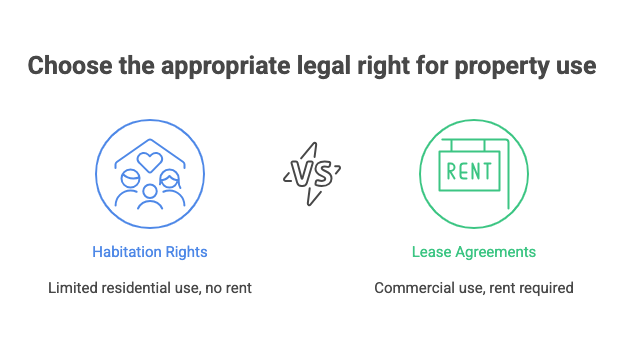
Habitation rights are different from lease agreements and usufructs. A lease is a commercial agreement that always involves rent. A usufruct gives broader rights over land and buildings. In contrast, habitation rights are limited in both scope and purpose.
Legal Framework
The laws governing habitation in Thailand are found in Sections 1402 through 1409 of the Civil and Commercial Code (Book IV, Title V). These sections explain how the right is made. They also describe how long it lasts. Additionally, they outline the responsibilities of both the property owner (grantor) and the right holder (grantee).
For example, Section 1406 clearly states that the grantee must use the building solely for living purposes. Section 1407 says the holder must take care of small maintenance and repairs. The owner does not have to pay for any building upkeep costs.
Registration is Key
To make the right of habitation enforceable, it must be registered at the local Land Office. Without this step, the right has no legal effect against third parties, even if both sides agree informally. The registration fee is low—typically around 50 Baht per plot, with a few additional charges.
Core Characteristics and Obligations
Once registered, the right of habitation in Thailand carries several important features:
- It applies only to buildings, not the land itself.
- It is strictly personal, which means it ends with the death of the right holder.
- It is non-transferable and cannot be leased or passed to someone else, as habitation is not transferable.
- The grantee is not required to pay rent but must maintain the property in a livable condition.
Family members are often presumed to be allowed to live with the right holder unless the contract states otherwise. This makes the right especially suitable for a Thai spouse or elderly parent.
Duration and Termination
Habitation rights can be granted for a fixed term (up to 30 years), for life, or with no specific duration under thailand law. If no end date is stated, the grantor can terminate the agreement with reasonable notice.
Termination occurs when:
- The agreed period expires
- The right holder dies
- The grantor gives proper notice in indefinite arrangements
When the agreement ends, the building must be returned in good shape. The grantee cannot ask for money back for any improvements unless both sides expressly agree.
Habitation vs. Usufruct vs. Lease: A Comparison
To understand the right of habitation in Thai property law, let’s compare it to usufructs and leases
| Feature | Habitation | Usufruct | Lease |
|---|---|---|---|
| Duration | Up to 30 years or lifetime | Up to 30 years or lifetime | Up to 30 years |
| Rent or Payment | None | Optional | Required |
| Use | Residential only | Residential and commercial | Residential or commercial |
| Transferability | Non-transferable | Transferable in some cases | Transferable with consent |
| Scope | Buildings only | Land and buildings | Land and/or buildings |
| Inheritance Possible | No | No | Possibly, by assignment |
Common Uses in Thailand
This legal tool is used when a Thai citizen wants to let a foreign spouse, relative, or dependent live in their home for free. It helps avoid ownership risks or lease obligations. It is also useful for charitable housing, elder care, or family estate planning when no rent is expected.
In some cases, people use the right of habitation to plan for long-term use of property. This allows them to use the property without transferring ownership. It is helpful when a lease or usufruct is not suitable or needed.
Limitations and Practical Realities
While this right has clear advantages, it’s important to be aware of its limits. For instance:
- It cannot be used to rent out the property or run a business.
- It does not apply to the land itself—only the building.
- It terminates upon the holder’s death and cannot be inherited.
- The registration process must be followed precisely to be valid.
The law is the same across the country. However, Land Offices in different provinces may interpret or apply the rules in slightly different ways. This is something we see regularly when assisting clients throughout Thailand.
How Thai Courts Interpret Habitation Rights
Thai courts have confirmed that this personal servitude is strict. They stress that the right to live there cannot be transferred. In disputes, courts typically emphasize property rights under thailand law.
- The non-transferable and non-commercial character of the right
- The need for proper registration
- The assumed inclusion of family members unless specifically excluded
These principles are similar to laws in other civil law countries. For example, they are like the French droit d’habitation or Germany’s Wohnrecht. It also bears some resemblance to the life estate known in common law systems, but with more rigid limitations.
FAQS about Right of Habitation in Thailand
What is the right of habitation in Thailand?
In Thailand, the right of habitation is a legal right. It lets a person, called the grantee, live in a place without paying rent. This right is usually given for a set time. It can be created through a habitation contract. This contract must be registered under Thai law to be valid.
Can the right of habitation be terminated?
Yes, the right of habitation may be terminated at any time. However, reasonable notice must be given to the grantee before termination. This ensures that the grantee has time to vacate the premises and seek alternative housing arrangements.
What duration can the right of habitation be granted for?
The right of habitation is typically granted for a period not exceeding thirty years. This period can be renewed when it expires. The renewal time must be agreed upon in the original contract.
What happens if the right of habitation is not registered?
If the right of habitation is not registered, it may not be enforceable against third parties. Registration is important because it gives legal recognition to the grantee’s rights. It also protects against claims on the property by others.
Can a grantee sublet the property they occupy?
Generally, the right of habitation is personal and cannot be transferred to another party, including subletting the property. This means the grantee cannot let others stay in the home without clear permission from the title deed holder.
What are the implications of Thai law on the right of habitation?
Thai law regulates the right of habitation, ensuring that it is treated as a personal real right. This means that the rights and duties of both the grantor and the grantee are clear. Any disputes can be settled through the legal system.
Can the right of habitation be inherited?
The right of habitation may be inherited but is subject to specific conditions laid out in the habitation contract. The heirs may continue to enjoy the right, but they must adhere to the terms agreed upon by the original grantee and the grantor.
Need Help with Registration or Legal Advice?
At ThaiLawOnline, we have helped many clients, both Thai and foreign, secure their living rights. We do this through the proper use of a habitation agreement. If you are planning for your family, need elder care, or want to explore lease options, we can help. We make the process simple and legally secure.
Let us guide you through drafting, registering, or terminating habitation rights with confidence.