

Last updated on May 15, 2026
If you have ever looked up a section of the Thai Criminal Code Annotated in English, you know the drill. You find scattered PDFs and outdated translations. There is little context. You also do not find Supreme Court decisions that show how the law works in practice.
We decided to fix that.
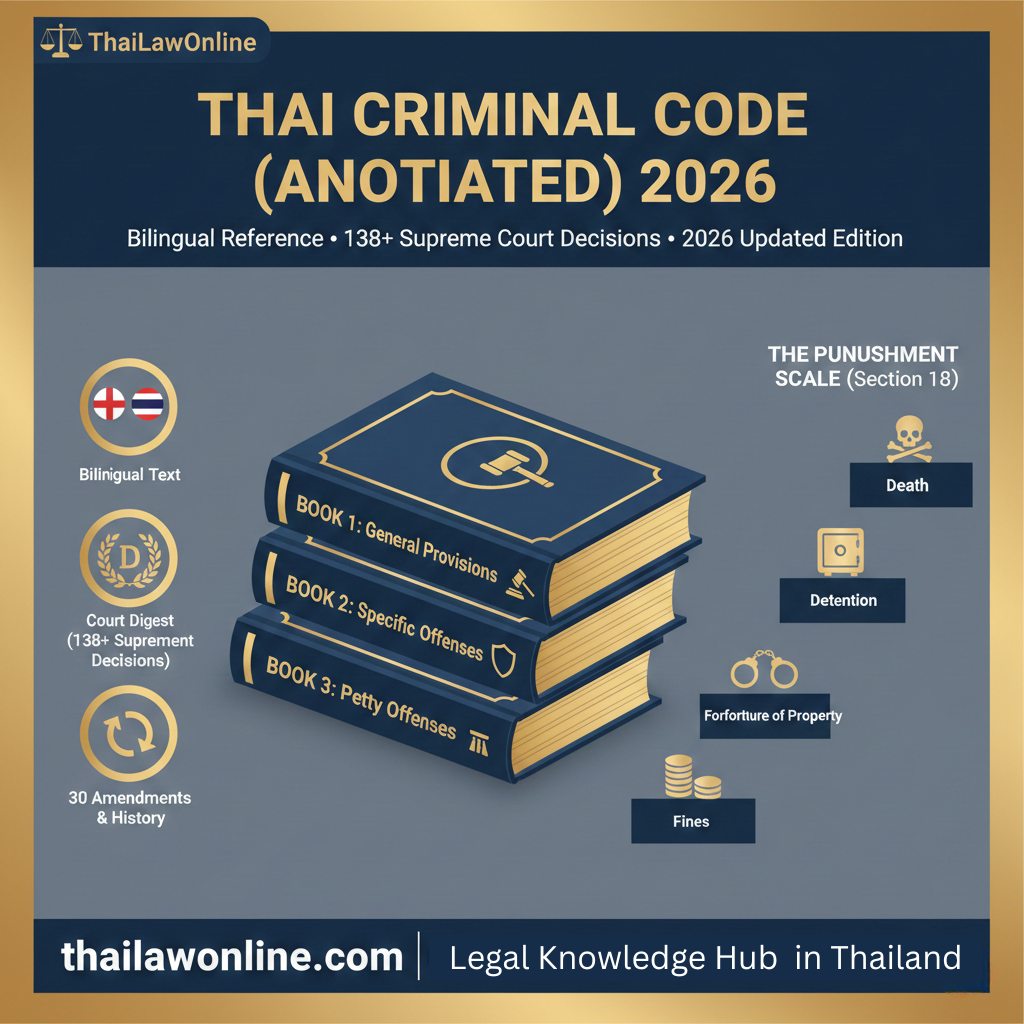
ThaiLawOnline is proud to launch the first free, bilingual, annotated Thai Criminal Code Annotated of Thailand. It is a complete digital resource covering all 429+ sections. It is fully up to date as of 2026. It includes the latest Amendment No. 30 (B.E. 2568/2025) which criminalized sexual harassment for the first time in Thai legal history.
→ Explore the Thai Criminal Code here
What Makes This Different from Everything Else Out There?
Understanding the Thai Criminal Code Annotated
There are English translations of the Thai Criminal Code floating around the internet. Most of them are incomplete, outdated, or presented as flat text with no context. Ours is none of those things.
Here’s what you’ll find:
Full Bilingual Text — Switch Between Languages Instantly
Every single section is presented in both Thai and English. You can toggle between English only, Thai only, or side-by-side display with one click. Whether you’re a foreign lawyer doing due diligence, a Thai law student comparing translations, or an expat, you’re covered. This helps you understand what Section 334 says about theft.
65 Supreme Court (Dika) Decisions — Linked Directly to the Relevant Sections
This is where it gets really useful. We’ve picked 65 landmark Supreme Court decisions. We summarized each one in English and Thai. We also linked each decision to the Criminal Code section it explains. So when you read Section 334 on theft, you will see nine court decisions. These decisions explain how Thai courts distinguish theft from misappropriation. They also explain what counts as “snatching” and when penalties increase.
No more guessing what the law means in practice. The courts have already told us.
Expert Editorial Highlights on Key Sections
For the most important and commonly charged sections, we’ve added editorial analysis written by our legal team. Each highlighted section includes:
- Why This Section Matters — a plain-language explanation of the provision and its practical importance
- Legislative History — how and why the section was amended over the years
- Practical Significance — how the section connects to related offences and what practitioners should know
All 30 Amendments Tracked — With Royal Gazette References
The Criminal Code has been amended 30 times since 1956. We’ve documented each one, including Royal Gazette publication dates, affected sections, and a bilingual summary of each amendment’s purpose. You can see at a glance, for example, that Section 334’s fine was increased from 6,000 to 60,000 Baht by Amendment No. 26 in 2017.
Cross-References Between Sections
Thai criminal law doesn’t exist in isolation. Our annotated code links related sections with context. You can move from theft (Section 334) to aggravated theft (Section 335). You can also go to snatching (Section 336) with ease. This helps you see how they connect.
Interactive Visual Guides & Charts
We built visual analysis tools that break down the Criminal Code’s structure in intuitive ways. We explain the Code’s three-book layout. We cover the five punishment types under Section 18. We show how statutes of limitation work under Section 95. We map offence categories across Book 2.
Built-In Search
Looking for something specific? The search bar lets you find any section by number or search by keyword across the entire code. Type “defamation” and go straight to Sections 326–333. Type “326” and you’re there instantly.
Who Is This For?
Honestly — anyone dealing with Thai criminal law:
- Foreign lawyers conducting cross-border due diligence or advising clients with exposure in Thailand
- Expats and residents who want to understand their rights and obligations under Thai law
- Thai law students looking for a clean bilingual reference with real court decisions
- Academics and researchers studying comparative criminal law in Southeast Asia
- Business owners who need to understand offences related to fraud, forgery, trade secrets, or computer crimes
Why We Built This
At ThaiLawOnline, we believe that access to the law shouldn’t depend on how much you can afford to spend on legal research tools. The Thai statutory text is in the public domain. But a useful, annotated, bilingual version of that text did not exist until now. It includes court decisions and expert analysis.
This project represents months of work by our legal team, and we’re making it available to everyone at no cost.
We hope this makes Thai criminal law clearer. We also hope it is easier to access. We want it to feel less intimidating for people who need to understand it.
📖 Start browsing the Annotated Criminal Code of Thailand →
Have questions about a specific provision? Need legal advice on a criminal matter in Thailand? Contact our team — we’re here to help.

Sebastien H. Brousseau, LL.B., B.Sc. Founder and Managing Partner at ThaiLawOnline. A Canadian lawyer with over 30 years of practice, Mr. Brousseau has been living in Thailand since 2004. He has successfully served 5,000+ client matters for expats and Thais. His areas of focus include Prenuptial Agreements, Family Law, Property Law, Corporate Law, Litigation, Criminal Defense, and Immigration. Admitted to the Bar of Quebec and the International Bar Association, Mr. Brousseau also holds degrees in Criminology and Political Science. He was the founder of Isaan Lawyers (Managing Director 2007-2022) and one of the first foreign lawyers in Isaan. He has written more than 500 legal articles in his career. Our team has 20 years in practice, focus on expat work. All advice and representation are delivered through licensed members of the Lawyers Council of Thailand.