


Reviewed by ThaiLawOnline, a licensed Thai law firm practising in Thailand since 2006. Thai lawyer of record: Wichuda Atthamethakon, LL.M., Thai Bar Licence 3149/2556.
Last updated on
It can be difficult for foreigners to find unskilled jobs for foreigners in Thailand because of the laws and job market. Foreigners must have a work permit to work legally in Thailand, and some jobs are only for Thai citizens. The rules for work permits and job opportunities can be different depending on if the job is with the Board of Investment (BOI) or a regular employer. You might get trapped by these 4 major hurdles.
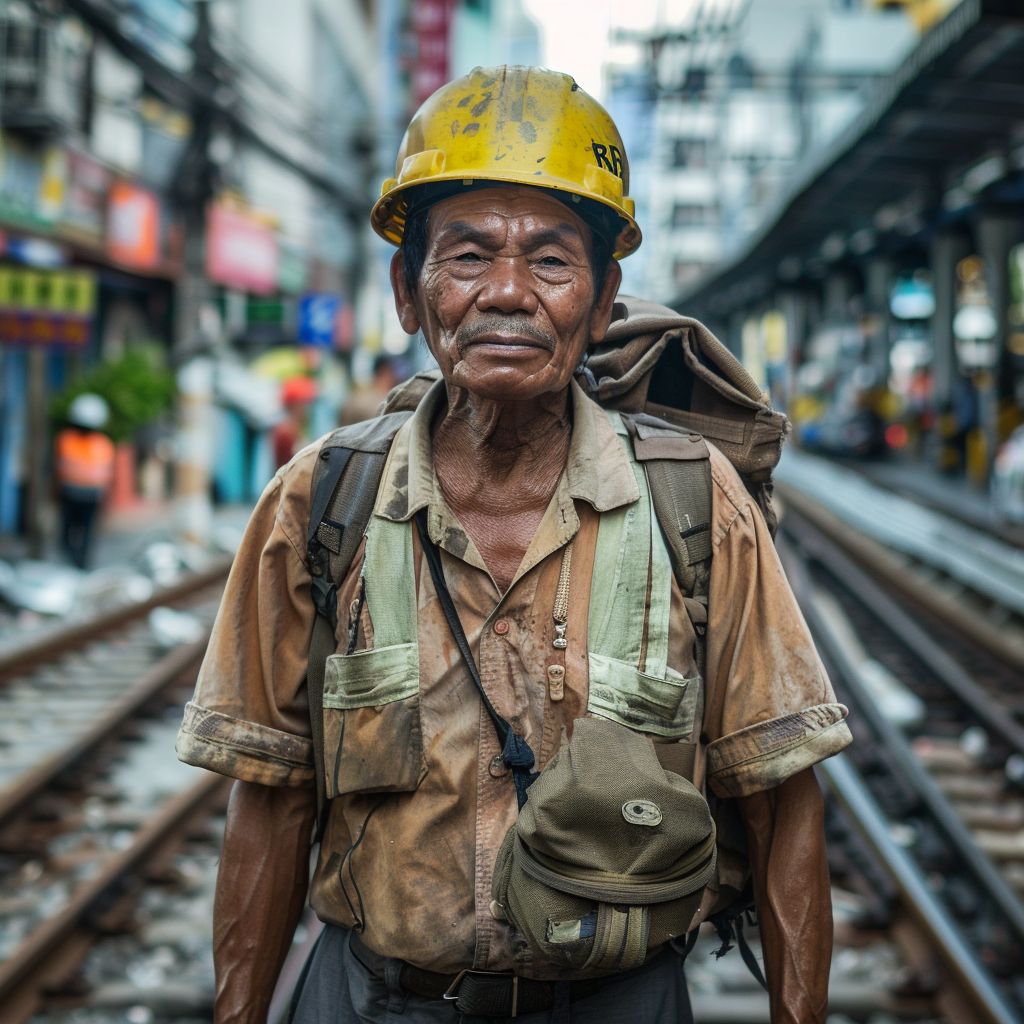
4 Major Hurdles Unskilled jobs for Foreigners in Thailand
1. Legal Requirements and Restrictions
Foreigners wishing to work in Thailand must hold a work permit. The governing law is the Emergency Decree on Managing the Work of Aliens B.E. 2560 (2017), amended in 2018, which replaced the Alien Working Act of 2008. A job offer comes first, and the employer applies for the permit on the foreign employee’s behalf.
The harder point, and it is the whole subject of this page, is that most unskilled work is closed to foreigners. Under the Ministry of Labour Notification prescribing work prohibited to foreigners, made under section 7 of that Emergency Decree and published in the Royal Gazette on 21 April 2020 (vol. 137, special part 92 Ngor), general labouring and shop-front selling are the only two entries in Schedule 4. The notification comes into force once sixty days from publication have elapsed, which is 21 June 2020. The notification defines general labouring as work done with the hands, ordinarily simple work in which physical strength is the main element, and shop-front selling as selling in wholesale or retail premises, including a stall or shop in a market or at the roadside.
Schedule 4 work is permitted only where the foreigner has an employer and was admitted to Thailand under a memorandum of understanding between the Thai government and a foreign government. That is the route by which migrant labour from neighbouring countries is lawfully employed here. A foreigner in Thailand on any other basis cannot be issued a work permit for general labouring under that notification, whatever an employer is willing to write.
Other work often thought of as unskilled is prohibited outright under Schedule 1, the only schedule that carries no condition of its own: hairdressing, perming and beauty work, itinerant street vending, Thai massage, and clerical or secretarial work are four of its twenty-seven entries. Read the entries themselves before concluding, because several carry their own express carve-outs even though the schedule does not: driving is prohibited but piloting an international flight and operating a forklift are excepted, brokerage is prohibited but brokerage in international trade or investment is excepted, and legal services are prohibited but acting as an arbitrator is excepted. Definitions matter here too. The notification defines Thai massage as examination, diagnosis, therapy, prevention, health promotion and rehabilitation using Thai massage knowledge under the law on the Thai traditional medicine professions, so what is closed is that profession rather than every kind of massage; and the beauty-work definition expressly excludes general support tasks such as preparing and cleaning equipment. See prohibited jobs for foreigners in Thailand for all four schedules and the conditions attaching to each.
2. Differences in Employment Rules
The regulations for obtaining a work permit and the types of jobs available to foreigners can differ significantly based on the employer. Companies under the BOI enjoy more lenient rules and incentives designed to attract foreign expertise and investment. These companies can hire foreign employees more easily compared to non-BOI companies.
On the other hand, regular employers face stricter quotas and conditions for hiring foreigners, especially for unskilled positions. Phone call centers are employing French, Italian, and other native speakers but at low salary, like 25,000 baht per month. It’s really difficult to find unskilled jobs for foreigners in Thailand because Thai people can normally do them. But think you might have an opportunity by a speaking a language they don’t.
3. Challenges in Finding Unskilled Jobs for Foreigners in Thailand.
While it is possible to find unskilled jobs as a foreigner in Thailand, it has become increasingly difficult. Twenty years ago, teaching English was relatively easy, with minimal requirements for degrees or licenses. Today, however, schools and language institutes are more stringent, often requiring formal qualifications and teaching licenses.
Unskilled jobs in sectors such as hospitality and retail are also challenging to secure. Foreigners typically demand higher salaries than their Thai counterparts, making them less attractive to employers for these roles. Additionally, jobs like maid, nanny, or construction worker are commonly filled by migrant workers. They come from neighboring countries such as Cambodia, Laos, Myanmar, and Vietnam. They are are willing to accept lower wages and work under conditions that might be unacceptable to many Westerners.
4. Job Search Resources
Individuals on the lookout for teaching positions can benefit greatly from resources such as Ajarn.com and the Bangkok Post. These websites offer valuable insights and job listings. Moreover, online platforms and dedicated Facebook groups focused on job hunting in Thailand can serve as excellent sources for job leads and networking opportunities.
By leveraging these resources, aspiring educators can enhance their job search and connect with potential employers more effectively. Again, it is not common for foreigners to get an unskilled jobs in Thailand. Much of the low-paid work in massage, bars and restaurants is done by workers from Myanmar, Cambodia, Laos and Vietnam, many of them recruited under the government-to-government memorandums described above, and some working without permits. A low salary does not exempt anyone from the work permit requirement: working without one is an offence whatever the pay. If you come from a western country, finding an unskilled jobs for Foreigners in Thailand might be more difficult as you might expect the same salary as your own country.
Conclusion
In summary, most unskilled work is closed to a Western foreigner as a matter of law: general labouring and shop-front selling are open only to workers admitted under a government-to-government memorandum, and much else, from hairdressing to Thai massage and clerical work, is prohibited outright. Where a job is not on those schedules, securing it is still fraught with challenges. Legal restrictions, competitive salary expectations, and an influx of migrant workers from neighboring countries make it difficult for Westerners to find and accept unskilled work. However, with the right qualifications and persistence, opportunities, particularly in teaching, can still be found. Most young foreigners (under 40 yo) are English teachers, some work as diving instructors, and rare are the ones, besides digital nomads in Thailand, finding an opportunity in the land of smiles.
For the governing text, see the Emergency Decree on Managing the Work of Aliens B.E. 2560 (2017) and the Ministry of Labour Notification prescribing work prohibited to foreigners. For the penalties that follow a breach, see work permit violations in Thailand. Also check the resources provided by the Board of Investment.
Whether a job is open to a foreigner is decided together with the work permit rules, and your position once employed is governed by Thai labour law.
Last reviewed: 5 September 2026. The legal section of this page was read in full against the primary instrument: the Ministry of Labour Notification prescribing work prohibited to foreigners, made under section 7 of the Emergency Decree on Managing the Work of Aliens B.E. 2560 as amended by (No. 2) B.E. 2561, and published in the Royal Gazette on 21 April 2020 at vol. 137, special part 92 Ngor. Everything the page said about the law was already correct and nothing was changed on that account. Checked against the notification itself: that general labouring and shop-front selling are the whole of Schedule 4 and are open only to a foreigner who has an employer and was admitted under a government-to-government memorandum, which is clause 5; the two definitions quoted, both of which match the notification word for word; and that haircutting, perming and beauty work, itinerant street vending, Thai massage, and clerical or secretarial work are all in Schedule 1, the last of these being entry 26, which is the one most often reported wrongly. What has been added is precision rather than correction: the Gazette reference, the sixty-day commencement, the size of the two schedules, the express carve-outs that three Schedule 1 entries carry, and the definitions of Thai massage and of beauty work, which are narrower than the job titles suggest. Not verified and not law: the salary observations, the remarks about which nationalities do which work, and the job-search resources, which are market commentary and are presented as such. Note also that the older Royal Decree of B.E. 2522 prescribing prohibited occupations, which is still what most sources reproduce, is not the governing instrument for this page. Re-read on 4 October 2026: two lines of market commentary that contradicted the legal section were corrected, the suggestion that a low salary explains working without a permit and the conclusion that unskilled work is technically available; the corpus holds no later amendment to the Emergency Decree than (No. 2) B.E. 2561.
Thai Law Updates, free by email
Plain-English updates on Thai law changes that affect foreigners: property, visas, marriage, business and wills. One short email a month from a firm practicing since 2006. No spam, unsubscribe anytime.