


Reviewed by ThaiLawOnline, a licensed Thai law firm practising in Thailand since 2006. Thai lawyer of record: Wichuda Atthamethakon, LL.M., Thai Bar Licence 3149/2556.
Last updated on
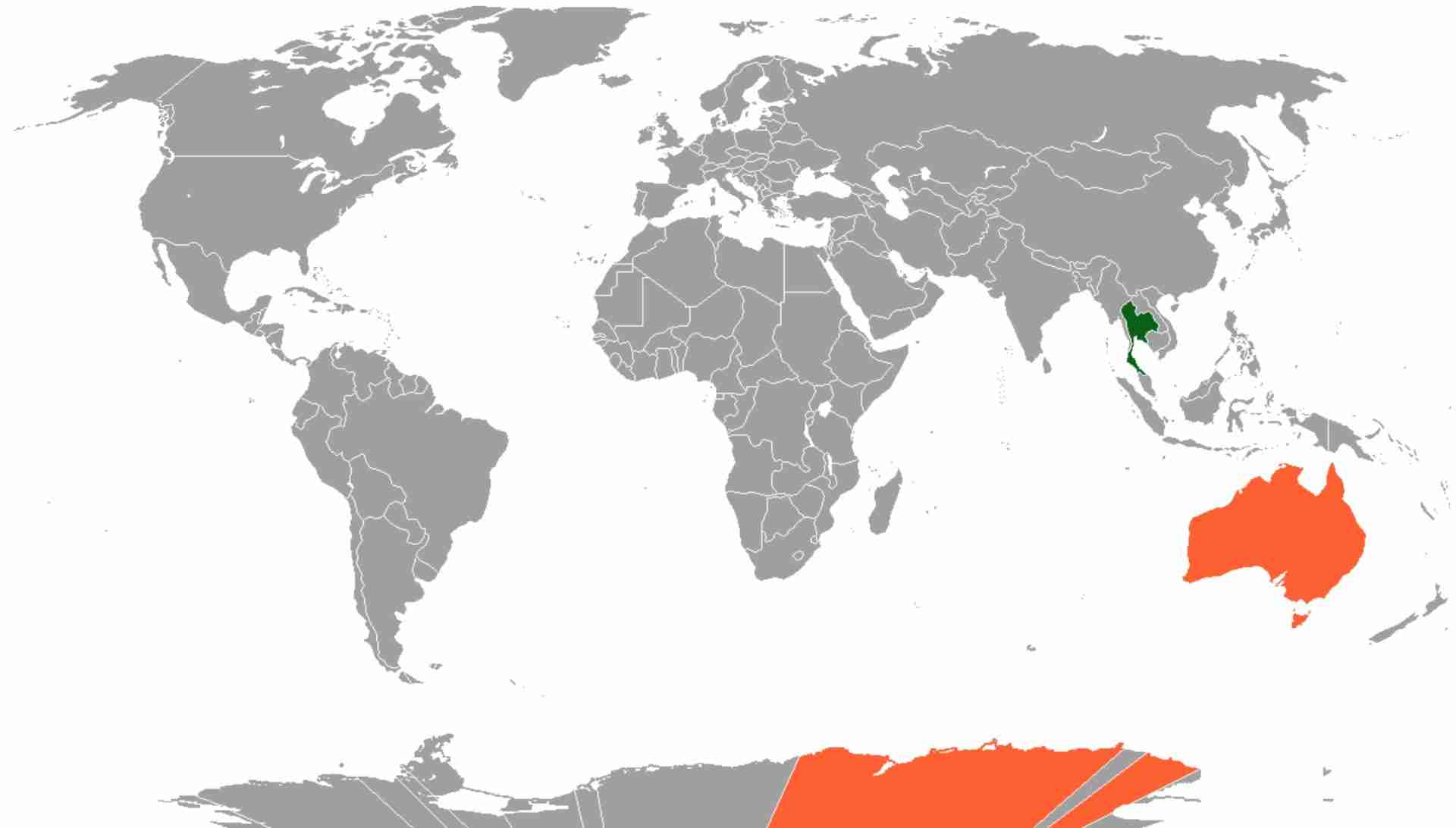
The Thailand Australia Free Trade Agreement (TAFTA) was signed on July 5, 2004 and started on January 1, 2005. The Agreement aims to make trade easier between the two countries by reducing barriers like tariffs and regulations. It also encourages cooperation to solve problems that make trade difficult, like strict health and safety rules and unfair pricing practices.
The cooperation extends also to facilitation of trade in certain categories, such as customs procedures, electronic commerce, intellectual property, government procurement and competition policy. It is anticipated that this agreement will expand two-way trade in goods and services and increase investment on both sides, as well as strengthen the relationship between the two countries. For Australian investors its main practical value in Thailand is a larger foreign share in certain listed activities than the Foreign Business Act would otherwise allow without a licence; it does not give them anything a Thai company lacks. Here is what the agreement covers.
1. Trade in Goods related to Thailand Australia Free Trade Agreement
The TAFTA Agreement eliminated tariffs on 83% of goods from Thailand in Australia. These goods include fruits, vegetables, vehicles, and jewelry. Tariffs on the remaining 17% of imports, such as plastic, rubber and textiles, were phased out by 2015. TAFTA is now fully implemented, so effectively all qualifying goods trade between the two countries is tariff free.
The Agreement calls for Thailand to eliminate tariffs on nearly 50% of all goods imported from Australia as of January 1 2005, most of which is needed raw materials such as mineral ore, fuel, and chemicals, as well as raw and tanned hides. Tariffs on another 45% of Australian imports will be dropped by 2010, with the remaining 5%, comprising dairy and meat products (beef, pork, milk and cheese), tea, and coffee being gradually removed between 2010 and 2015.
At the same time, Thailand removed tariff quotas committed under WTO obligations on 15 of 23 categories of agricultural goods, and offered specific quotas of 10% more than the volume obligated in 2004 under WTO commitments for 6 of the remaining 8 products, including potatoes, coffee, tea, maize, and sugar. In addition, Thailand has also agreed to increase quotas each year by 5% to 10%.
To ensure that domestic industries will have time to adjust to the impacts of the Agreement, Australia and Thailand have agreed to apply Safeguard Measures (SG) in accordance with WTO regulations. Furthermore, in dealing with sensitive agricultural products such as beef, pork, and animal offals, as well as milk and dairy products, the special safeguard measure may be applied.
If the volume of imports of such products exceeds the specified trigger volume level for that year, by increasing the rate of customs duty applicable for that product to the level equal to the current customs duty or to the current ‘Most Favored Nation’ (MFN) rate, whichever is lower. Thailand will be able to apply this special safeguard measure for specific products through 2015 and 2020.”
2. Rules of Origin
This agreement says that only goods meeting certain conditions can get special treatment. The conditions are: 1) goods made only from materials from one country, like minerals, food, or products from animals in that country; or 2) goods that have been changed a lot through processing, with a big part of the cost coming from materials from Thailand and Australia. This means at least 40%-45% of the cost of the product must be from these countries. It is important to know all the benefits of the Thailand Australia Free Trade Agreement and foreigners from Australia can benefits of it.
3. Free Trade in Services and Investment from the Thailand Australia Free Trade Agreement (TAFTA)
Australia has completely opened its borders to Thai investment in all areas except for newspapers, broadcast media, air travel, and airports, with investments of more than A$10 million requiring prior approval from the Board of Foreign Investment. Thai national executives, managers, specialists, and their families will be allowed to remain in-country for periods of up to 4 years with extensions of up to 10 years.
Thai chefs certified by the Department of Skills Development at the Ministry of Labor who have been employed by an Australian concern may work in-country for up to 4 years, and are no longer required to meet the conditions of the economic needs test, whereby an employer must first, for a period of 4 weeks, seek applications from Australian nationals to fill the position before hiring a foreign national.
Thai commitments in this area will enable Australia to make large-scale investments in Thailand, holding up to 60% interest in projects where area, size, and minimum investment amounts are conditions of approval. Such projects include international exhibition centers, conference halls, public infrastructure construction projects, institutions of higher education focusing on science and technology, large hotels, aquatic parks, marinas, and mines. Australian executives, managers, and specialists will be allowed to stay in-country for periods of up to 1 year, with extensions up to 5 years.
Australian businessmen will now be able to use the ‘one-stop service’ for various permits and required documentation, a convenience previously limited to businesses with assets valued at more than Bht. 30 million. Also, businessmen holding APEC Business Travel Cards will be allowed to remain in-country for meetings and other business-related activities for up to 90 days without having to request work permits.
Cooperation in Trade
Thailand and Australia have agreed to work closely together to make sure that trade between them is fair and effective. They have set up a group to talk about food standards and other agricultural issues to help trade between them. They will review progress on market access within two years.
Other matters under consideration are customs procedures, anti-dumping measures, electronic commerce, intellectual property, and competition policy. Efforts being made to resolve these and other issues among the two countries include the exchange of information and the sharing of knowledge through training and seminars.
The Thailand Australia Free Trade Agreement Joint Commission (TAFTA Joint Commission: TAFTA JC) has been established to oversee the implementation of TAFTA and to review the economic relationship and partnership between the Parties. TAFTA JC will meet annually or as mutually determined by both sides. The link with the Treaty of Amity for Americans is the mechanism, not the scope. Section 10 of the Foreign Business Act exempts an alien doing business under a treaty Thailand is bound by from the licence provisions, on that treaty’s terms, and section 11 provides the certificate. The Treaty of Amity gives Americans national treatment across most sectors; TAFTA gives Australians only the specific activities and ownership caps in Thailand’s schedule, such as the 60% share described above.
, Read more about AUSTRADE and how they can help Australians wishing to do business in Thailand
, Thai Tariff Schedule (Zip File, It might not be up to date, From August 2024)
Thai Law Updates, free by email
Plain-English updates on Thai law changes that affect foreigners: property, visas, marriage, business and wills. One short email a month from a firm practicing since 2006. No spam, unsubscribe anytime.