


ตรวจสอบโดย ThaiLawOnline สำนักงานกฎหมายไทยที่ได้รับใบอนุญาตและดำเนินกิจการในประเทศไทยตั้งแต่ปี พ.ศ. 2549 ทนายความผู้รับผิดชอบสำนวน: Wichuda Atthamethakon, น.ม., ใบอนุญาตให้เป็นทนายความ เลขที่ 3149/2556.
ปรับปรุงล่าสุดเมื่อ
การยื่นแบบฟอร์ม DBD จะเป็นแบบออนไลน์ทั้งหมดในวันที่ 1 พฤศจิกายน ค.ศ. 2026
ตั้งแต่วันที่ 1 พฤศจิกายน 2026 เป็นต้นไป การยื่นขอจดทะเบียนบริษัทจำกัดหรือบริษัทร่วมค้าจะต้องดำเนินการผ่าน DBD Biz Regist เท่านั้น. การยื่นเอกสารทางไปรษณีย์จะสิ้นสุดลงสำหรับกรณีการจัดตั้งบริษัทและการลงทะเบียนในภายหลัง รวมถึงการเปลี่ยนแปลงกรรมการหรือผู้มีอำนาจลงนาม การจดทะเบียนสำนักงาน การจัดตั้งทุนและวัตถุประสงค์หลัก รวมถึงการยุบบริษัทและการปิดกิจการ นี่เป็นการเปลี่ยนแปลงขั้นตอนการยื่นเอกสารอย่างเป็นทางการ ไม่ใช่การเปลี่ยนแปลงกฎเกณฑ์ของบริษัทหรือการเป็นเจ้าของต่างชาติ ประกาศอย่างเป็นทางการของกรมพัฒนาธุรกิจการค้า (DBD) และ แพลตฟอร์ม DBD Biz Regist.
ปี 2026 เปลี่ยนแปลงกฎเกณฑ์ หากคุณกำลังคิดเกี่ยวกับการจัดตั้งบริษัทในประเทศไทยในฐานะชาวต่างชาติ หรือหากคุณมีบริษัทอยู่แล้ว การเปลี่ยนแปลงที่มีผลบังคับใช้ตั้งแต่วันที่ 1 มกราคม 2026 ส่งผลกระทบต่อคุณโดยตรง.
สารบัญ
คู่มือนี้เกี่ยวกับ มีอะไรเปลี่ยนแปลงบ้างในปี 2026 และจะปฏิบัติตามกฎระเบียบอย่างไรให้ถูกต้อง. สำหรับค่าธรรมเนียมและกำหนดเวลาของบริการลงทะเบียนมาตรฐาน โปรดดู การจัดตั้งธุรกิจและการจดทะเบียนบริษัทในประเทศไทย.
ตรวจสอบครั้งล่าสุด: 3 กันยายน 2569. มาตรา 4, 8 และ 36 ของ พระราชบัญญัติการประกอบธุรกิจของคนต่างด้าว พ.ศ. 2542 ได้อ่านจากต้นฉบับภาษาไทยแล้ว: มาตรา 4 กำหนดว่าบริษัทที่จดทะเบียนในประเทศไทยจะถือเป็นคนต่างด้าวเมื่อใด มาตรา 8 กำหนดบัญชีธุรกิจที่ถูกจำกัดไว้สามบัญชี และมาตรา 36 กำหนดโทษสำหรับการถือหุ้นแทนคนต่างด้าว ค่าบริการคงที่ของเราสำหรับการจดทะเบียนบริษัทและสิ่งที่รวมอยู่ในค่าบริการนั้นได้รับการยืนยันเทียบกับบันทึกค่าบริการของสำนักงานเองในวันเดียวกัน ข้อเสนอที่จะอนุญาตให้ยึดทรัพย์สินสำหรับ นอมินี การละเมิดยังคงอยู่ภายใต้การตรวจสอบและยังคงเป็นข้อเสนอ; การกำหนดดังกล่าวมาจากรายงานทางกฎหมายมากกว่าจากทะเบียนกฎหมาย ดังนั้นจึงควรถือเป็นคำแนะนำเชิงปฏิบัติและไม่ถือเป็นข้อมูลอ้างอิง การกำหนดขั้นตอนการลงทะเบียน ระบบการตรวจจับ และข้อมูลระยะเวลาที่ปรากฏในหน้านี้เป็นเพียงแนวทางปฏิบัติและยังไม่ได้รับการตรวจสอบเพิ่มเติมโดยใช้แหล่งข้อมูลหลักในบทความนี้ การอ่านเพิ่มเติมในวันที่ 5 ตุลาคม 2026: รายการโทษปรับในขณะนี้ระบุข้อความที่ 36 ตามกฎหมายเช่นเดียวกับที่ระบุไว้ในกฎหมาย (ไม่มีการตัดสิทธิ์หรือยุบบริษัท หรือการเพิ่มจำนวนผู้ถือหุ้น) และมีการปรับ 500,000 บาทต่อปี ซึ่งเราไม่พบเอกสารดังกล่าว; การประกาศรายชื่อผู้ถือหุ้นรายปีภายใต้มาตรา 1139 แห่งประมวลกฎหมายแพ่งและพาณิชย์ ถูกแทนที่ด้วยการประกาศ DBD แบบออนไลน์สำหรับทุกคำขอของบริษัทจำกัดและบริษัทมหาชนตั้งแต่วันที่ 1 พฤศจิกายน 2026; บริษัท Treaty of Amity ยังต้องมี Certificate of Foreign Business เพื่อเข้าทำธุรกิจในต่างประเทศ.
เพื่อการเปรียบเทียบ: ของเราเอง ค่าธรรมเนียมคงที่ 45,000 บาท รวมค่าใช้จ่ายทั้งหมดแล้ว: ซึ่งครอบคลุมค่าธรรมเนียมการจดทะเบียนรัฐบาล ตราประทับบริษัท การแปลเอกสารสำคัญ และคำแนะนำเกี่ยวกับโครงสร้างการถือหุ้นที่เหมาะสม ซึ่งใบเสนอราคาที่ถูกกว่าข้างต้นมักจะคิดเงินแยกต่างหาก บางบริษัทคิดค่าบริการสูงถึง 75,000 บาทสำหรับแพ็กเกจเดียวกัน.
กรมพัฒนาธุรกิจการค้าได้เริ่มให้บริการลงทะเบียนบริษัทใหม่ทางออนไลน์ตั้งแต่วันที่ 1 กรกฎาคม 2026 เป็นต้นไป 1 พฤศจิกายน 2026, กฎระเบียบออนไลน์นี้จะครอบคลุมถึงทุกกรณีที่เกี่ยวข้องกับคู่ค้าและบริษัทจำกัด รวมถึงการแก้ไขเพิ่มเติม การเปลี่ยนแปลงกรรมการและผู้มีอำนาจลงนาม การเปลี่ยนแปลงที่ตั้งสำนักงาน การเปลี่ยนแปลงทุนและวัตถุประสงค์ การยุบเลิกและปิดกิจการ ประกาศอย่างเป็นทางการของกรมพัฒนาธุรกิจการค้า (DBD). . ผู้ถือหุ้น ในบริษัทที่มีการลงทุนจากต่างประเทศ ต้องแสดงหลักฐานการลงทุนด้วยรายงานบัญชีธนาคารของสามเดือน โดยข้อหาผู้มีอำนาจลงนามยังคงเดิม และการยึดทรัพย์ยังคงเป็นแนวทางเสนอ.
ไม่มีอะไรในเรื่องนี้ที่น่าตื่นตระหนก แต่เป็นเหตุผลที่จะต้องตั้งโครงสร้างให้ถูกต้องก่อนที่คุณจะลงทะเบียน และตรวจสอบบริษัทที่มีอยู่ของคุณหากคุณจัดตั้งมาตั้งแต่เมื่อหลายปีก่อน.
เราให้คำแนะนำแก่นักลงทุนต่างชาติเกี่ยวกับ กฎหมายธุรกิจไทย เป็นเวลา 20 ปี คู่มือนี้จะอธิบายถึงสิ่งที่เปลี่ยนแปลงไป ทางเลือกทางกฎหมายของคุณ และโครงสร้างที่เหมาะสมสำหรับสถานการณ์ของคุณ.
ความเข้าใจในพระราชบัญญัติการประกอบธุรกิจของคนต่างด้าว: จุดเริ่มต้น
พระราชบัญญัติการประกอบธุรกิจของคนต่างด้าว พ.ศ. 2542 (ฉบับที่ “FBA”) เป็นกฎหมายที่ควบคุมว่าคนต่างด้าวสามารถทำอะไรได้บ้างและไม่สามารถทำอะไรได้บ้างในทางธุรกิจในประเทศไทย นักลงทุนต่างชาติทุกคนต้องทำความเข้าใจก่อนที่จะดำเนินการใดๆ.
ตามพระราชบัญญัติบริษัท (FBA) “ชาวต่างชาติ” หมายถึงบุคคลใดก็ตามที่ไม่ใช่ชาวไทย บริษัทจะได้รับการจัดประเภทเป็น “บริษัทต่างชาติ” หากมีชาวต่างชาติหรือบริษัทต่างชาติถือหุ้น 50% หรือมากกว่า.
FBA แบ่งกิจกรรมทางธุรกิจที่ถูกจำกัดออกเป็นสามประเภท:
- ตาราง 1 (ข้อห้ามเด็ดขาด): ชาวต่างชาติอาจไม่สามารถประกอบธุรกิจเหล่านี้ได้ ไม่ว่าจะมีใบอนุญาตหรือโครงสร้างอย่างไร ตัวอย่างเช่น การตีพิมพ์หนังสือพิมพ์ การทำนา การป่าไม้ และการค้าที่ดิน.
- ตาราง 2 (ข้อจำกัดด้านผลประโยชน์แห่งชาติ): ชาวต่างชาติอาจยื่นขออนุมัติจากคณะรัฐมนตรีเพื่อดำเนินการได้ ทั้งนี้รวมถึงกิจกรรมที่เกี่ยวข้องกับวัฒนธรรม ประวัติศาสตร์ และทรัพยากรธรรมชาติของไทย.
- ตารางที่ 3 (ความสมดุลในการแข่งขัน): รายการที่เกี่ยวข้องกับธุรกิจเชิงพาณิชย์มากที่สุด ประกอบด้วยธุรกิจบริการ เช่น การบัญชี กฎหมาย สถาปัตยกรรม การค้าปลีก และการค้าส่ง ใบอนุญาตประกอบธุรกิจของคนต่างด้าว (FBL) จาก กรมพัฒนาธุรกิจการค้า จำเป็นต้องดำเนินการนี้ ต้องใช้เวลาประมาณ 3 ถึง 4 เดือน.
ผลที่ได้ในทางปฏิบัติ: ชาวต่างชาติส่วนใหญ่ที่ต้องการดำเนินธุรกิจในประเทศไทยมีสิทธิ์ถือหุ้นได้เพียง 49% ตามกฎหมายไทยทั่วไป บริษัทจำกัด โครงสร้าง ผู้ถือหุ้นชาวไทยต้องถือหุ้นส่วนใหญ่.
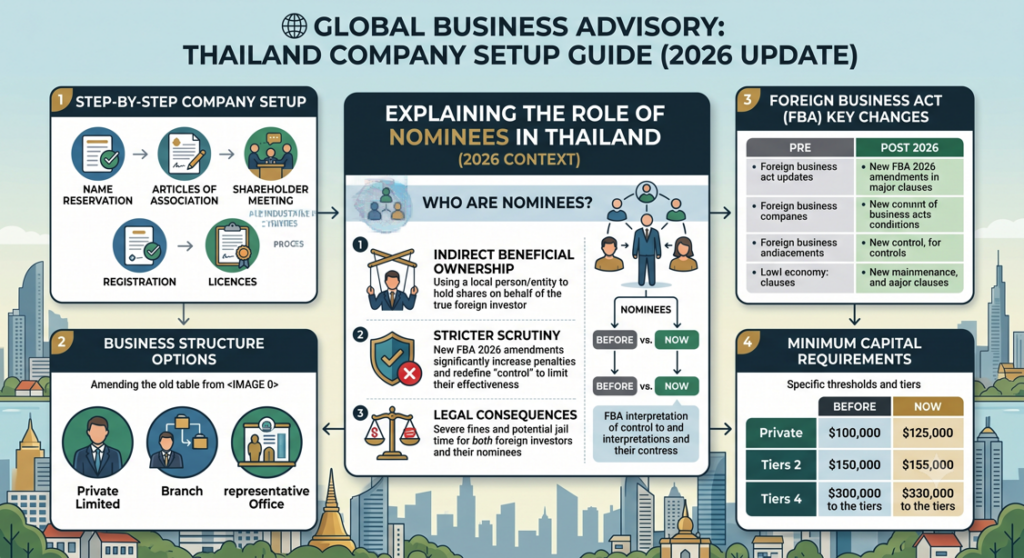
นี่คือจุดเริ่มต้นของปัญหานอมินี.
ผู้รับผลประโยชน์ที่แท้จริง: ทำไมแนวทางเดิมจึงมีความเสี่ยงร้ายแรงในปัจจุบัน
ความเสี่ยงสูง 2026
มานานหลายปี วิธีแก้ปัญหาที่นิยมใช้กันคือการใส่ชื่อผู้มีสิทธิออกเสียงของชาวไทยลงในทะเบียนผู้ถือหุ้น โดยชาวต่างชาติจะถือหุ้น 49% ส่วนที่เหลืออีก 51% จะเป็นของชาวไทยที่ไม่มีส่วนได้ส่วนเสียทางการเงินใดๆ และไม่มีอำนาจควบคุมการออกเสียง. หนังสือมอบอำนาจ เอกสารต่างๆ ไม่มีการกำหนดวันหมดอายุ ใบรับรองการโอนหุ้น และข้อตกลงการออกเสียงลงคะแนนจะทำให้ชาวต่างชาติมีอำนาจควบคุมอย่างเต็มที่.
โครงสร้างนี้ละเมิดมาตรา 36 ของ FBA มาโดยตลอด แต่การบังคับใช้ไม่สม่ำเสมอ และนักลงทุนจำนวนมากมองว่าเป็นการเดิมพันที่คำนวณแล้ว.
แคลคูลัสได้เปลี่ยนแปลงไปอย่างมากในปี 2026.
การเปลี่ยนแปลงการบังคับใช้ในปี 2569 หมายถึงอะไร
IBAS: ระบบตรวจจับผู้สมัคร AI. ตั้งแต่เดือนตุลาคมปี 2025 DBD ได้ดำเนินการระบบวิเคราะห์ข้อมูลเชิงธุรกิจ (IBAS) ซึ่งเป็นแพลตฟอร์ม AI ที่เชื่อมโยงข้อมูลทะเบียนบริษัทเข้ากับฐานข้อมูลของรัฐบาลและบันทึกธนาคาร, ประกันสังคม ข้อมูลการยื่นคำขอ และข้อมูลการเข้าเมือง โดยระบุบริษัทที่แสดงสถิติบ่งชี้ว่ามีผู้ถือหุ้นเป็นบุคคลภายนอก.
2. กฎการแสดงรายการบัญชีธนาคาร 3 เดือน ซึ่งอยู่ในบังคับใช้ตามคำสั่ง 2/2569 (มีผลบังคับใช้ตั้งแต่วันที่ 1 สิงหาคม 2026). Where aliens hold less than 50% of the capital, or a company with no alien shareholder has an alien authorised director, registration requires each Thai shareholder to provide three months of personal bank statements covering the period before the payment date. The statements must show a withdrawal or transfer matching the exact share subscription amount and date. This began under Central Registrar Order 2/2568 on 1 January 2026, but that order and Order 1/2569 were both repealed by คำสั่งนายทะเบียนกลางที่ 2/2569, คำสั่งที่ 2/2569 เป็นเครื่องมือที่ใช้บังคับในปัจจุบัน และกำหนดให้ต้องมีเอกสารสองฉบับที่ระบุมติเดิมไม่กำหนดไว้.
3. การแก้ไขที่อนุญาตให้ชาวต่างชาติเข้ามา และสิ่งที่แทนที่กฎการเข้าเมืองเมื่อเดือนเมษายนปี 2026. คำสั่ง 1/2569 ที่ออกใช้เมื่อวันที่ 16 มีนาคม 2026 และมีผลบังคับใช้เมื่อวันที่ 1 เมษายน 2026, ต้องมีการยืนยันตัวตนด้วยตนเองที่ DBD สำหรับการแก้ไขใดๆ ที่รับรองให้ชาวต่างชาติเป็นหุ้นส่วนหรือเป็นผู้ถือหุ้น กรรมการ ด้วยความสามารถในการเซ็นสัญญา. คำสั่งดังกล่าวถูกยกเลิกเมื่อวันที่ 1 สิงหาคม ค.ศ. 2026 โดยคำสั่งที่ 2/2569, ดังนั้นจึงไม่ใช่กฎเกณฑ์อีกต่อไป และคุณควรละเลยคำแนะนำที่ยังคงระบุไว้เช่นนั้น สิ่งที่เข้ามาแทนที่คือเอกสาร: ข้อ 4 ของคำสั่งที่ 2/2569 กำหนดให้ต้องมี จดหมายยืนยันการลงทุน ในแบบฟอร์มที่แนบมานี้มีข้อกำหนดเฉพาะสำหรับข้อแก้ไขเหล่านั้น โดยแบบฟอร์มดังกล่าวแตกต่างจากจดหมายชี้แจงการลงทุนในย่อหน้าถัดไป ซึ่งเป็นเรื่องเกี่ยวกับการจัดตั้งธุรกิจ และทั้งสองแบบจึงอาจทำให้เข้าใจผิดกันได้ง่าย.
อย่าตีความการยกเลิกนี้ว่าเป็นจุดสิ้นสุดของการตรวจสอบตัวตน เพราะรายการช่องทางที่กรมเผยแพร่ระบุไว้คือการตรวจสอบตัวตนไม่สามารถมอบหมายให้ใครทำได้ ไม่ว่าจะเป็นคนไทยหรือคนต่างชาติ ดังนั้นการตรวจสอบจึงยังคงดำเนินต่อไปตามคำสั่งที่กำหนดไว้เดิม สิ่งที่เราไม่สามารถบอกได้จากเอกสารใดๆ ก็คือว่าบุคคลนั้นจะต้องเดินทางมาที่สำนักงาน DBD หรือไม่ หรือว่าการตรวจสอบภายในแอป DBD e-Service จะทำให้การตรวจสอบนั้นสำเร็จแล้ว เพราะข้อความของคำสั่ง 1/2569 ไม่ได้มีการเผยแพร่ไว้ที่ใดที่เราสามารถอ่านได้ ถามที่สำนักงานที่รับเรื่องของคุณก่อนที่จะจองการเดินทาง.
4. ประกาศที่ 2/2569 ฉบับเพิ่มเติม (1 สิงหาคม 2026). เอกสารเพิ่มเติมอีกสองฉบับได้มาพร้อมกับคำฟ้องแล้ว เอกสารแรกเป็นคำแถลงสำหรับบัญชีรับเงิน และระบุว่าบัญชีนั้นเป็นของหุ้นส่วนผู้จัดการหรือกรรมการ ไม่ใช่ของบริษัท และต้องแสดงหลักฐานว่าเงินดังกล่าวมาจากหุ้นส่วนหรือผู้ถือหุ้นทุกคน หนังสือชี้แจงการลงทุน, แบบฟอร์มที่กำหนดไว้ในคำสั่ง ซึ่งระบุลำดับการโอนเงินจากผู้ถือหุ้นชาวไทยแต่ละรายไปยังบัญชีดังกล่าว โดยมีการโอนเงินไปมาแบบไม่หยุดยั้ง โดยจะถูกเก็บไว้ในแฟ้มของเจ้าหน้าที่ทะเบียนทรัพย์สิน.
คำสั่งนี้ยังจับได้ถึงกรณีที่นักลงทุนต่างชาติส่วนใหญ่ไม่คาดคิด โดยจะบังคับใช้เมื่อผู้ถือหุ้นต่างชาติมีสัดส่วนทุนน้อยกว่าครึ่ง และในกรณีที่ผู้ถือหุ้นต่างชาติมีสัดส่วนทุนเท่ากัน ไม่ ผู้ถือหุ้นที่เป็นชาวต่างชาติ แม้แต่กรรมการผู้มีอำนาจจากชาวต่างชาติก็สามารถทำให้บริษัทต้องรับผิดชอบได้ การจัดโครงสร้างองค์กรโดยอาศัยเพียงแค่การถือหุ้นอย่างเดียวไม่สามารถทำให้คุณหลุดพ้นจากข้อจำกัดดังกล่าวได้.
สิ่งหนึ่งที่องค์กรนี้ไม่ทำก็คือสิ่งที่ควรกล่าวอย่างชัดเจน เพราะบทวิจารณ์ส่วนใหญ่เข้าใจผิดเกี่ยวกับเรื่องนี้ มันกำหนดเอกสารที่ต้องแนบมากับคำขอรับรองและแนบมาด้วย ไม่ ผลของการปฏิเสธหรือการส่งต่อนั้นเป็นผลมาจากการกระทำของตนเอง รายงานที่ระบุว่าเจ้าหน้าที่ทะเบียนปฏิเสธการยื่นฟ้องนั้นเป็นลักษณะปฏิบัติที่พบได้ตามปกติ ไม่ใช่สิ่งที่ระบุในคำสั่ง หลักฐานดังกล่าวถูกเผยแพร่โดย DBD เป็นภาษาอังกฤษ สแกน PDF ของใบสั่งซื้อ 2/2569.
บทลงโทษ
- ค่าปรับอาญาสำหรับนักลงทุนชาวต่างชาติและผู้รับมอบอำนาจชาวไทย
- โทษจำคุกสูงสุดสามปี หรือปรับ 100,000 ถึง 1,000,000 บาท หรือทั้งสองอย่าง สำหรับผู้มีสัญชาติไทยและชาวต่างชาติ (มาตรา 36 ของกฎหมาย FBA)
- คำสั่งศาลเพื่อยุติการถือหุ้นหรือการดำเนินธุรกิจร่วม โดยมีค่าปรับรายวันตั้งแต่ 10,000 ถึง 50,000 บาท หากฝ่าฝืน
- การกำหนดมาตรการยึดทรัพย์สินสำหรับกรณีละเมิดโดยบุคคลที่ได้รับการแต่งตั้ง (ยังเป็นเพียงข้อเสนอ ไม่ใช่กฎหมาย คัดค้านในเดือนกันยายน ปี 2026)
จุดยืนทางกฎหมายที่ชัดเจน การใช้คนไทยเป็นผู้ถือหุ้นแทนเพื่อหลีกเลี่ยงพระราชบัญญัติการประกอบธุรกิจของคนต่างด้าว (ฉบับที่ 2) เป็นความผิดทางอาญาตามมาตรา 36 ของ พ.ร.บ. ดังกล่าว ระบบ AI ของกรมพัฒนาธุรกิจการค้ากำลังสอดส่องโครงสร้างเหล่านี้อยู่.
เส้นทางกฎหมายสู่การเป็นเจ้าของธุรกิจต่างชาติในประเทศไทย
| โครงสร้าง | สัดส่วนการถือหุ้นโดยชาวต่างชาติสูงสุด | ไทม์ไลน์ | เหมาะสำหรับ |
|---|---|---|---|
| บริษัท มาตรฐานไทย จำกัด | 49% | 2-4 สัปดาห์ | หุ้นส่วนแท้จริงของไทย |
| บริษัทที่ได้รับการส่งเสริมการลงทุน | 100% | 60-90 วัน | เทคโนโลยี, การผลิต, ดิจิทัล, สุขภาพ, พลังงานสะอาด |
| สนธิสัญญาไมตรีสหรัฐอเมริกา | 100% (เฉพาะในสหรัฐอเมริกา) | 3-6 เดือน | พลเมืองสหรัฐฯ และบริษัทที่จดทะเบียนในสหรัฐฯ |
| ใบอนุญาตประกอบธุรกิจของคนต่างด้าว (FBL) | 100% | 3-4 เดือน | ธุรกิจบริการตามตารางที่ 3 |
| สำนักงานใหญ่ฝ่ายปฏิบัติการระดับภูมิภาค | 100% | แตกต่างกันไป | บริษัทข้ามชาติที่บริหารงานในภูมิภาคเอเชียแปซิฟิกจากประเทศไทย |
การส่งเสริมการลงทุนจาก BOI: เส้นทางที่โปร่งใสที่สุดสำหรับนักลงทุนต่างชาติส่วนใหญ่
การส่งเสริมการลงทุนจาก BOI เป็นทางเลือกที่น่าสนใจที่สุดในเชิงพาณิชย์สำหรับธุรกิจที่เหมาะสม ผลประโยชน์มีมากมาย สถานะทางกฎหมายชัดเจน และขอบเขตของกิจกรรมที่เข้าเกณฑ์ได้ขยายตัวอย่างมากในช่วงไม่กี่ปีที่ผ่านมา.
สิ่งที่คุณจะได้รับจากโปรโมชั่น BOI
- 100% การเป็นเจ้าของโดยชาวต่างชาติ ถูกต้องตามกฎหมายทุกประการ ไม่มีข้อจำกัดของ FBA
- การยกเว้นภาษีเงินได้นิติบุคคลนานสูงสุด 13 ปี
- การยกเว้นภาษีนำเข้าสำหรับเครื่องจักรและวัตถุดิบ
- สิทธิ์ในการเป็นเจ้าของที่ดินสำหรับกิจกรรมที่ส่งเสริม
- กระบวนการขอใบอนุญาตทำงานสำหรับพนักงานต่างชาติที่รวดเร็วและมีประสิทธิภาพยิ่งขึ้น
- ไม่ต้องมีใบอนุญาตประกอบธุรกิจของคนต่างด้าว
ใครมีคุณสมบัติในปี 2026
- เทคโนโลยีดิจิทัล การพัฒนาซอฟต์แวร์ ศูนย์ข้อมูล บริการคลาวด์ และแพลตฟอร์ม AI
- การผลิตขั้นสูง ระบบอัตโนมัติ และหุ่นยนต์
- รถยนต์ไฟฟ้าและพลังงานสะอาด
- อุปกรณ์ทางการแพทย์ เทคโนโลยีชีวภาพ และบริการด้านการดูแลสุขภาพ
- การเกษตรอัจฉริยะและเทคโนโลยีอาหาร
- โลจิสติกส์และการจัดจำหน่าย (โดยมีเงื่อนไข)
- การคำนวณควอนตัม ปัญญาประดิษฐ์เชิงสร้างสรรค์ และหุ่นยนต์ขั้นสูง
ธุรกิจค้าปลีก การค้าส่ง และธุรกิจบริการส่วนใหญ่ ไม่มีคุณสมบัติที่จะได้รับการส่งเสริมการลงทุนจาก BOI.
สนธิสัญญาไมตรีระหว่างสหรัฐอเมริกาและไทย: ทางเลือกที่นักลงทุนชาวอเมริกันยังไม่ได้ใช้ประโยชน์อย่างเต็มที่
สนธิสัญญามิตรภาพและความสัมพันธ์ทางเศรษฐกิจระหว่างสหรัฐอเมริกาและไทย (ลงนามในปี 1966 มีผลบังคับใช้ในปี 1968) อนุญาตให้พลเมืองสหรัฐฯ และบริษัทที่จดทะเบียนในสหรัฐฯ ถือหุ้นในธุรกิจในไทยได้สูงสุด 100% ในภาคธุรกิจส่วนใหญ่ แต่ไม่ได้เป็นการข้ามพระราชบัญญัติการประกอบธุรกิจของคนต่างด้าว: บริษัทยังต้องได้รับหนังสือรับรองการประกอบธุรกิจของคนต่างด้าวจาก DBD ก่อนเริ่มประกอบธุรกิจ.
ใครมีคุณสมบัติบ้าง
- พลเมืองสหรัฐฯ (กรรมสิทธิ์ส่วนบุคคล)
- บริษัทที่จดทะเบียนในสหรัฐอเมริกาโดยมีผู้ถือหุ้นส่วนใหญ่เป็นชาวอเมริกัน
ภาคส่วนที่ถูกยกเว้น
- การสื่อสารและโทรคมนาคม
- การขนส่งภายในประเทศ (ทางบก ทางอากาศ และทางน้ำ)
- ธุรกิจธนาคาร บริการทางการเงิน และการซื้อขายหลักทรัพย์
- การใช้ประโยชน์จากทรัพยากรธรรมชาติ
- การค้าภายในประเทศในสินค้าเกษตร
- กรรมสิทธิ์ที่ดิน
บริษัท สแตนดาร์ด ไทย จำกัด: ยังคงเป็นตัวเลือกที่น่าสนใจอยู่
โครงสร้าง 49%/51% จะทำงานได้อย่างมีประสิทธิภาพเมื่อผู้ถือหุ้นชาวไทยเป็นพันธมิตรทางธุรกิจที่แท้จริง มีทุนจริง มีบทบาทในการตัดสินใจจริง และมีความเสี่ยงจริงในธุรกิจ สิ่งที่กฎระเบียบปี 2026 กำหนดคือ การถือหุ้นส่วนใหญ่ของชาวไทยต้องเป็นจริง และต้องมีการบันทึกไว้ด้วยใบแจ้งยอดบัญชีธนาคารเป็นระยะเวลาสามเดือน เพื่อแสดงแหล่งที่มาของการลงทุน.
วิธีการจดทะเบียนบริษัทไทยในปี 2026: กระบวนการออนไลน์แบบใหม่
ใหม่ 2026
บริษัทจำกัดส่วนตัวใหม่จะได้รับการจดทะเบียนผ่าน DBD Biz Regist เท่านั้น ตั้งแต่วันที่ 1 กรกฎาคม 2026 เป็นต้นไป 1 พฤศจิกายน 2026, สำหรับทุกคำขอที่เกี่ยวข้องกับบริษัทจำกัดหรือบริษัทร่วมค้า ต้องใช้แพลตฟอร์มเดียวกัน การยื่นเอกสารด้วยตนเองแบบกระดาษจะสิ้นสุดลงสำหรับการแก้ไขเพิ่มเติมในภายหลัง การเปลี่ยนแปลงกรรมการหรือผู้มีอำนาจลงนาม การตั้งสำนักงานใหญ่ ทุนและวัตถุประสงค์ และการจดทะเบียนการยุบรวมและการปิดกิจการ โปรดดูที่ ประกาศอย่างเป็นทางการของกรมพัฒนาธุรกิจการค้า (DBD), แพลตฟอร์ม DBD Biz Regist, และรายละเอียดของเรา คู่มือการลงทะเบียนบริษัท.
- การจองชื่อ: ตรวจสอบความพร้อมของชื่อและทำการจองออนไลน์ การอนุมัติใช้เวลา 1-3 วันทำการ.
- การประชุมตามกฎหมาย: ผู้เริ่มก่อการอย่างน้อย 2 คนต้องประชุมกัน (ลดลงจาก 3 คนตามพระราชบัญญัติแก้ไขเพิ่มเติมประมวลกฎหมายแพ่งและพาณิชย์ (ฉบับที่ 23) พ.ศ. 2565 ซึ่งมีผลใช้บังคับตั้งแต่วันที่ 7 กุมภาพันธ์ 2566) และอนุมัติหนังสือบริคณห์สนธิ โดยอนุญาตให้ประชุมผ่านสื่ออิเล็กทรอนิกส์และใช้ลายมือชื่อดิจิทัลได้.
- การส่งแบบฟอร์มลงทะเบียน: อัปโหลดหนังสือบริคณห์สนธิ ข้อบังคับบริษัท รายชื่อผู้ถือหุ้น/กรรมการ และงบการเงินของธนาคารสำหรับผู้ถือหุ้นชาวไทยในบริษัทต่างชาติที่เกี่ยวข้อง.
- การตรวจสอบและอนุมัติโดย DBD: คำขอทั่วไปจะได้รับการอนุมัติภายใน 5-7 วันทำการ.
- การลงทะเบียนภาษี: หากรายได้ต่อปีเกิน 1.8 ล้านบาท ต้องลงทะเบียนภาษีมูลค่าเพิ่มกับกรมสรรพากร.
- การดำเนินการขอใบอนุญาตทำงานและวีซ่า: ต้องมีทุนจดทะเบียน 2 ล้านบาทต่อพนักงานต่างชาติหนึ่งคน โดยมีจำนวนสูงสุดไม่เกิน 10 คน.
ข้อกำหนดเรื่องรายการเดินบัญชีธนาคาร 3 เดือนในทางปฏิบัติ
For each Thai shareholder in a company with foreign involvement, the bank statement must cover the three months before the payment date and show a specific withdrawal or transfer matching the share subscription amount and date. Statements where money appeared in a lump sum one week before registration will be questioned.
รายการตรวจสอบการปฏิบัติตามข้อกำหนด FBA ปี 2026
- เอกสารแสดงการลงทุนของผู้ถือหุ้นชาวไทย ได้แก่ รายการเดินบัญชีธนาคารส่วนบุคคล 3 เดือน
- ไม่มีเอกสารมอบอำนาจใด ๆ ที่ให้ชาวต่างชาติควบคุมสิทธิออกเสียงของผู้ถือหุ้นชาวไทย
- ชาวต่างชาติรายนี้ไม่ได้ถือครองสัญญาโอนหุ้นที่ไม่ได้ระบุวันที่ใดๆ
- ผู้ถือหุ้นชาวไทยปรากฏชื่อในรายงานการประชุมและเอกสารของกรรมการ โดยมีส่วนร่วมอย่างแท้จริง
- รายชื่อผู้ถือหุ้นประจำปีที่ส่งไปยัง DBD ภายใน 14 วันก่อนการประชุมสามัญประจำปี (มาตรา 1139 แห่งประมวลกฎหมายแพ่งและพาณิชย์)
- บริษัทที่จดทะเบียนผ่านแพลตฟอร์ม DBD Biz Regist (หากจดทะเบียนหลังวันที่ 1 กรกฎาคม 2026)
- Any amendment admitting a foreign partner (partnership) or a foreign authorised director (company) supported by an Investment Confirmation Letter under clause 4 of Order 2/2569 (in force 1 August 2026)
- ทุนจดทะเบียนชำระแล้วเป็นไปตามข้อกำหนด 2 ล้านบาทต่อพนักงานต่างชาติหนึ่งคน
- กิจกรรมทางธุรกิจที่อยู่ภายใต้ FBL, BOI หรือสนธิสัญญาไมตรี หากอยู่ในตาราง FBA ที่มีข้อจำกัด
- ที่อยู่ธุรกิจได้รับการจดทะเบียนอย่างถูกต้องตามกฎการจดทะเบียนที่อยู่ DBD ปี 2026
ภาพรวมค่าใช้จ่ายและระยะเวลา
| รายการ | ค่าใช้จ่ายโดยประมาณ | ไทม์ไลน์ |
|---|---|---|
| การจดทะเบียนบริษัทจำกัด (ค่าบริการของบริษัทอื่น มักไม่รวมค่าธรรมเนียมราชการและค่าแปลเอกสาร) | 15,000 บาท ถึง 75,000 บาท | 2-4 สัปดาห์ |
| การเตรียมและการยื่นใบสมัคร BOI | 40,000 ถึง 120,000 บาท | ระยะเวลาอนุมัติ 60-90 วัน |
| การรับรองตามสนธิสัญญาไมตรีของสหรัฐอเมริกา | 30,000 บาท ถึง 80,000 บาท | 3-6 เดือน |
| ใบสมัครใบอนุญาตประกอบธุรกิจของคนต่างด้าว | 50,000 บาท ถึง 150,000 บาท | 3-4 เดือน |
| ใบอนุญาตทำงาน (ต่อพนักงานต่างชาติ ต่อปี) | 3,000 ถึง 3,750 บาท | 7 วันทำการ |
| คำแนะนำการปรับโครงสร้างนอมินี | ติดต่อเราเพื่อขอใบเสนอราคา | ขึ้นอยู่กับกรณี |
ด้วยเงินทุนขั้นต่ำ: ไม่มีข้อกำหนดขั้นต่ำเรื่องทุนจดทะเบียนสำหรับบริษัทจำกัดในประเทศไทยในทุกภาคส่วน แต่โปรดจำกฎเกี่ยวกับการขอใบอนุญาตทำงานไว้ว่า คุณต้องมีทุนจดทะเบียน 2 ล้านบาทต่อพนักงานต่างชาติหนึ่งคน หากคุณวางแผนที่จะจ้างพนักงานต่างชาติสองคน คุณต้องมีทุนจดทะเบียนอย่างน้อย 4 ล้านบาท.
หากคุณมีบริษัทในประเทศไทยอยู่แล้ว: ควรทำอย่างไรต่อไป
ขั้นตอนที่ 1: ตรวจสอบโครงสร้างผู้ถือหุ้นของคุณ. ใครเป็นเจ้าของหุ้นกันแน่? มีการจดทะเบียนทุนของพวกเขาหรือไม่? พวกเขามีบทบาทที่แท้จริงในบริษัทหรือไม่?
ขั้นตอนที่ 2: ประเมินกิจกรรมทางธุรกิจของคุณ. กิจกรรมปัจจุบันของคุณอยู่ภายใต้ตาราง FBA ที่มีข้อจำกัดหรือไม่? คุณมีใบอนุญาต FBL, ใบอนุญาตส่งเสริมการลงทุนจาก BOI หรือใบรับรองสนธิสัญญาไมตรีหรือไม่?
ขั้นตอนที่ 3: จัดทำแผนการปรับโครงสร้างองค์กร. หากคุณต้องการปรับโครงสร้างองค์กร จงทำอย่างเชิงรุก ระบบ IBAS ของ DBD ทำงานตลอด 24 ชั่วโมง การปรับโครงสร้างองค์กรโดยสมัครใจก่อนการสอบสวนของ DBD จะให้ผลลัพธ์ที่ดีกว่าการปรับโครงสร้างองค์กรที่ถูกบังคับเสมอ.
คำถามที่พบบ่อย
คนต่างชาติถือหุ้นบริษัทในประเทศไทย 100% ได้หรือไม่?
ใช่ แต่ต้องผ่านช่องทางกฎหมายที่เฉพาะเจาะจงเท่านั้น บริษัทที่ได้รับการส่งเสริมจาก BOI สามารถเป็นบริษัทต่างชาติที่ถือครองหุ้น 100% ในภาคส่วนที่กำหนดได้ พลเมืองสหรัฐฯ และบริษัทที่จดทะเบียนในสหรัฐฯ สามารถเป็นเจ้าของหุ้น 100% ได้ผ่านทาง BOI สนธิสัญญาไมตรี. มิฉะนั้น 49% เป็นเพดานสูงสุดตามปกติในทางปฏิบัติ เพราะหากมีสัดส่วนการถือหุ้นจากต่างประเทศถึงครึ่งหนึ่งหรือมากกว่านั้น บริษัทเองก็จะเป็นชาวต่างชาติภายใต้มาตรา 4 และจำเป็นต้องขออนุญาตสำหรับธุรกิจที่กฎหมายกำหนดไว้.
เป็น ผู้ถือหุ้นนอมินีชาวไทย ถูกกฎหมายในปี 2026 หรือไม่?
ไม่ การใช้บุคคลสัญชาติไทยเป็นผู้ถือหุ้นนอมินีเพื่อหลีกเลี่ยงพระราชบัญญัติการประกอบธุรกิจของคนต่างด้าวนั้นผิดกฎหมายตามมาตรา 36 ของพระราชบัญญัติการประกอบธุรกิจของคนต่างด้าว ระบบ IBAS ของกรมธนารักษ์สามารถตรวจจับโครงสร้างผู้ถือหุ้นนอมินีได้.
อะไรที่เปลี่ยนแปลงสำหรับการจดทะเบียนบริษัทในประเทศไทยในปี 2026?
บริษัทใหม่จะได้รับการจดทะเบียนผ่าน DBD Biz Regist เท่านั้น ตั้งแต่วันที่ 1 กรกฎาคม 2026 เป็นต้นไป ตั้งแต่วันที่ 1 พฤศจิกายน 2026 ทุกคำขอเกี่ยวกับการจัดตั้งบริษัทจำกัดหรือบริษัทมหาชนจะต้องยื่นแบบฟอร์มออนไลน์ รวมถึงการแก้ไขเปลี่ยนแปลงผู้ถือหุ้น กรรมการ และผู้มีอำนาจลงนาม การเปลี่ยนแปลงที่อยู่สำนักงาน การเปลี่ยนแปลงทุนและวัตถุประสงค์ การยุบเลิกและปิดกิจการ ผู้ถือหุ้นชาวไทยในบริษัทที่เกี่ยวข้องกับต่างประเทศจะต้องแสดงสำเนาบัญชีธนาคาร 3 เดือนที่แสดงการให้ทุนอย่างแท้จริง.
พระราชบัญญัติการประกอบธุรกิจของคนต่างด้าว (FBA) ในประเทศไทยคืออะไร
พระราชบัญญัติการประกอบธุรกิจของคนต่างด้าว พ.ศ. 2542 (BE 2542 (1999)) ห้ามชาวต่างชาติดำเนินธุรกิจในบางภาคธุรกิจในประเทศไทย โดยไม่ได้กำหนดขีดจำกัดการถือหุ้นของชาวต่างชาติโดยตรง: มาตรา 4 ถือว่าบริษัทที่จดทะเบียนในประเทศไทยเป็นชาวต่างชาติเมื่อมีผู้ถือหุ้นเป็นชาวต่างชาติไม่ถึงครึ่งของทุน หรือมากกว่านั้น และมาตรา 8 จึงห้ามชาวต่างชาติดำเนินธุรกิจที่ระบุไว้ในสามรายการ.
การจดทะเบียนบริษัทในประเทศไทยจะใช้เวลานานเท่าใดในปี 2026
ขึ้นอยู่กับว่าใครอยู่ในบริษัท มากกว่าจะขึ้นอยู่กับแพลตฟอร์ม มาตรา 1111/1 แห่งประมวลกฎหมายแพ่งและพาณิชย์อนุญาตให้จดทะเบียนหนังสือบริคณห์สนธิและจดทะเบียนบริษัทได้ในวันเดียวกับที่ผู้เริ่มก่อการลงนาม โดยมีเงื่อนไขสี่ข้อ บริษัทที่มีผู้ถือหุ้นต่างชาติหรือกรรมการผู้มีอำนาจลงนามที่เป็นชาวต่างชาติจะใช้เวลานานกว่า เนื่องจากคำสั่งที่ 2/2569 กำหนดให้ต้องอัปโหลดหนังสือชี้แจงการลงทุนและรายการเดินบัญชีธนาคารย้อนหลังสามเดือนพร้อมกับคำขอ จึงควรเผื่อเวลา 2 ถึง 4 สัปดาห์ การขอรับการส่งเสริมการลงทุนจาก BOI ใช้เวลา 60 ถึง 90 วัน ใบอนุญาตประกอบธุรกิจของคนต่างด้าวใช้เวลา 3 ถึง 4 เดือน.
BOI คืออะไรในประเทศไทย และช่วยนักลงทุนต่างชาติได้อย่างไร
คณะกรรมการส่งเสริมการลงทุน (BOI) ส่งเสริมการลงทุนในอุตสาหกรรมหลัก บริษัทที่ได้รับการส่งเสริมจาก BOI จะได้รับสิทธิในการถือหุ้นของชาวต่างชาติ 100% การยกเว้นภาษีเงินได้นิติบุคคลเป็นระยะเวลาสูงสุด 13 ปี การยกเว้นภาษีนำเข้า และสิทธิในที่ดิน.
ใครบ้างที่มีสิทธิ์ได้รับสิทธิประโยชน์ภายใต้สนธิสัญญาไมตรีสหรัฐอเมริกา-ไทย
ประชาชนสหรัฐอเมริกาและบริษัทที่จดทะเบียนในสหรัฐอเมริกาซึ่งมีผู้ถือหุ้นส่วนใหญ่เป็นชาวสหรัฐอเมริกา สนธิสัญญาดังกล่าวอนุญาตให้ชาวสหรัฐอเมริกาถือหุ้นได้ถึง 100% ในส่วนใหญ่ของภาคธุรกิจ ภาคธุรกิจที่ไม่รวมอยู่ในสนธิสัญญานี้ ได้แก่ ภาคการสื่อสาร ภาคการขนส่งภายในประเทศ ภาคธนาคาร ภาคการขุดเจาะทรัพยากรธรรมชาติ และภาคการค้าภายในประเทศในผลิตภัณฑ์ทางการเกษตร.
ต้องการความช่วยเหลือในการจัดโครงสร้างบริษัทของคุณในประเทศไทยหรือไม่?
ไม่ว่าคุณจะเริ่มต้นใหม่หรือปรับปรุงโครงสร้างที่มีอยู่เดิม ทนายความธุรกิจชาวไทยที่ได้รับใบอนุญาตของเราสามารถให้คำแนะนำเกี่ยวกับแนวทางที่เหมาะสมกับสถานการณ์ของคุณได้.
ประเด็นสำคัญ
- พระราชบัญญัติการประกอบธุรกิจของคนต่างด้าวจำกัดให้คนต่างด้าวถือหุ้นได้ไม่เกิน 49% ในบริษัทไทยส่วนใหญ่ ผู้ถือหุ้นแทน (nominee) เป็นสิ่งผิดกฎหมายตามมาตรา 36 และปัจจุบันถูกตรวจจับอย่างจริงจังโดยระบบ AI ชื่อ IBAS ของกรมพัฒนาธุรกิจการค้า (DBD)
- สามช่องทางทางกฎหมายสำหรับการถือครองหุ้นโดยชาวต่างชาติ 100% ได้แก่ การส่งเสริมโดย BOI, สนธิสัญญาไมตรีกับสหรัฐอเมริกา และใบอนุญาตประกอบธุรกิจของคนต่างด้าว.
- บริษัทใหม่สามารถลงทะเบียนผ่าน DBD Biz Regist ได้ตั้งแต่วันที่ 1 กรกฎาคม 2026 เป็นต้นไป ตั้งแต่วันที่ 1 พฤศจิกายน 2026 เป็นต้นไป ทุกประเภทการสมัครของบริษัทจำกัดและบริษัทมหาชนจะต้องยื่นผ่านแพลตฟอร์มนี้ ผู้ถือหุ้นชาวไทยจะต้องแสดงสำเนาบัญชีธนาคารส่วนบุคคล 3 เดือน โดยมีผลบังคับใช้ตามคำสั่งที่ 2/2569.
- Since 1 August 2026, adding a foreign authorised director to a company, or a foreign partner to a partnership, requires an Investment Confirmation Letter under clause 4 of Order 2/2569. The in-person verification rule of 1 April 2026 went with Order 1/2569, which that order repealed.
- บริษัทต้องส่งรายชื่อผู้ถือหุ้นให้ DBD ทุกปี ภายใน 14 วันก่อนการประชุมสามัญประจำปี (มาตรา 1139 แห่งประมวลกฎหมายแพ่งและพาณิชย์).
- หากบริษัทของคุณใช้นอมินีในการแต่งตั้ง ควรขอคำปรึกษาด้านกฎหมายโดยทันที.
- การส่งเสริมการลงทุนจาก BOI เป็นตัวเลือกที่ดีที่สุดสำหรับธุรกิจด้านเทคโนโลยี ดิจิทัล การผลิต การดูแลสุขภาพ และพลังงานสะอาด.
ข้อสงวนสิทธิ์ทางกฎหมาย: บทความนี้ให้ข้อมูลทั่วไปเกี่ยวกับกฎหมายธุรกิจและขั้นตอนการจดทะเบียนของไทย ไม่ถือเป็นคำแนะนำทางกฎหมาย กฎหมายและข้อบังคับมีการเปลี่ยนแปลงเสมอ โปรดปรึกษาทนายความไทยที่ได้รับอนุญาตก่อนตัดสินใจเกี่ยวกับโครงสร้างบริษัทในประเทศไทย.
การจดทะเบียนบริษัทมีค่าใช้จ่ายเท่าไหร่? ดูฉบับเต็ม รายละเอียดค่าใช้จ่ายในการจดทะเบียนบริษัท (ปี 2026), ค่าธรรมเนียมทางกฎหมาย, ค่าธรรมเนียมภาครัฐและกรอบเวลา, หรือค่าธรรมเนียมคงที่ทั้งหมดของเรา ณ หน้าค่าธรรมเนียมทางกฎหมาย.
ข่าวสารกฎหมายไทย ฟรีทางอีเมล
อัปเดตข่าวสารเป็นภาษาอังกฤษที่เข้าใจง่ายเกี่ยวกับการเปลี่ยนแปลงของกฎหมายไทยที่ส่งผลกระทบต่อชาวต่างชาติ: อสังหาริมทรัพย์, วีซ่า, การสมรส, ธุรกิจ และพินัยกรรม จดหมายข่าวสั้นเพียงฉบับเดียวต่อเดือน จากสำนักงานกฎหมายที่ดำเนินงานมาตั้งแต่ปี 2549 ไม่มีการส่งสแปม ยกเลิกรับได้ทุกเมื่อ.