


ตรวจสอบโดย ThaiLawOnline สำนักงานกฎหมายไทยที่ได้รับใบอนุญาตและดำเนินกิจการในประเทศไทยตั้งแต่ปี พ.ศ. 2549 ทนายความผู้รับผิดชอบสำนวน: Wichuda Atthamethakon, น.ม., ใบอนุญาตให้เป็นทนายความ เลขที่ 3149/2556.
ปรับปรุงล่าสุดเมื่อ
กฎหมายยาเสพติดของประเทศไทยขึ้นชื่อว่าเข้มงวดมาก การทำผิดพลาดเพียงครั้งเดียวอาจหมายถึงการต้องจำคุกหลายปีหรือแย่กว่านั้น ในฐานะชาวต่างชาติที่อาศัยอยู่ การทำความเข้าใจกฎหมายเหล่านี้จึงไม่ใช่แค่ทางเลือก แต่เป็นสิ่งจำเป็นอย่างยิ่ง. แม้เพียงเม็ดเดียวก็อาจทำให้คุณต้องติดคุก ขณะที่การค้ายาเสพติดในปริมาณมากยังคงมีโทษถึงประหารชีวิต. การปฏิรูปเมื่อเร็วๆ นี้ได้ปรับเปลี่ยนข้อจำกัดและเพิ่มทางเลือกในการบำบัดรักษา ประเด็นหลักนั้นชัดเจน การขายหรือใช้ยาเสพติดผิดกฎหมายถือเป็นภัยคุกคามร้ายแรงต่อความมั่นคงของชาติ เป็นสิ่งสำคัญที่จะต้องเข้าใจกฎหมายยาเสพติดในประเทศไทยหากคุณอาศัยอยู่หรือมาเยือนประเทศนี้ หากคุณ หากคุณเป็นชาวต่างชาติและถูกจับกุมในประเทศไทย โปรดคลิกที่คู่มือนี้.
สารบัญ
สำหรับข้อมูลว่าคดียาเสพติดอยู่ในส่วนใดของกระบวนการโดยรวม โปรดดูภาพรวมของเราเกี่ยวกับ กฎหมายอาญาในประเทศไทย.
นี่คือคู่มือฉบับละเอียดสำหรับชาวต่างชาติและผู้ที่มาพำนักระยะยาว คู่มือนี้อธิบายถึงวิธีการทำงานของกฎหมายและบทลงโทษที่คุณอาจต้องเผชิญ นอกจากนี้ยังครอบคลุมถึงข้อต่อสู้ที่ได้รับการยอมรับและเหตุผลที่การว่าจ้างทนายความผู้เชี่ยวชาญด้านคดียาเสพติดในกรุงเทพฯ มีความสำคัญหากคุณถูกจับกุม.
คู่มือเกี่ยวกับกฎหมายยาเสพติดในประเทศไทยฉบับนี้จะช่วยให้คุณเข้าใจระบบกฎหมายที่ซับซ้อนได้ดียิ่งขึ้น หากคุณกำลังเผชิญข้อกล่าวหา โปรดติดต่อเราเพื่อขอรับความช่วยเหลือจากทนายความผู้เชี่ยวชาญด้านยาเสพติดในกรุงเทพฯ.
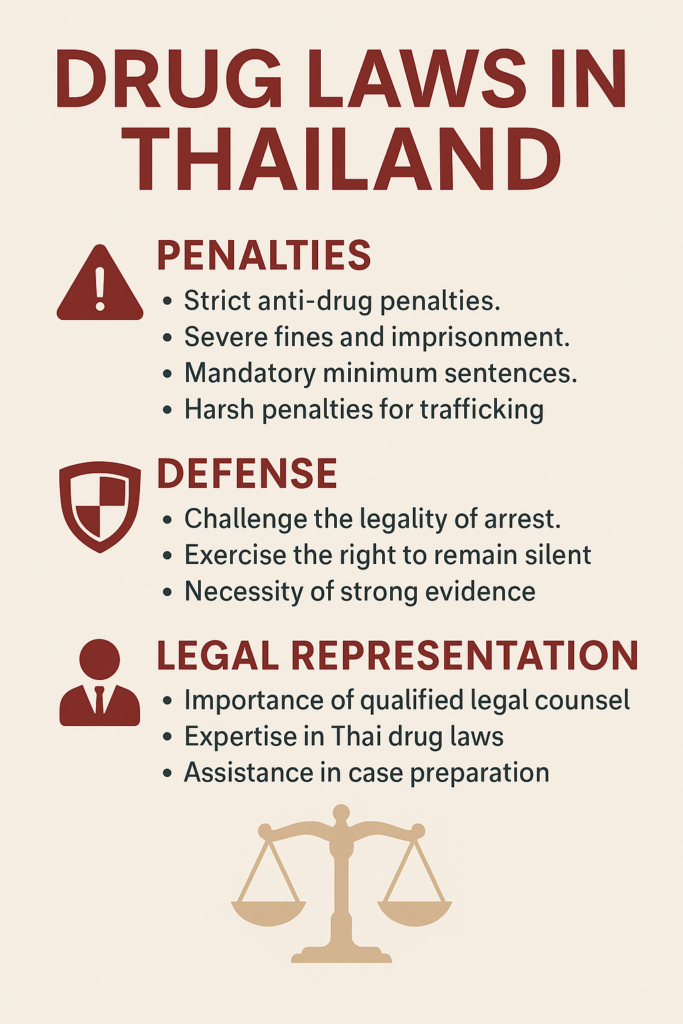
กำลังมองหาตารางบทลงโทษอยู่ใช่ไหม อัตราโทษตามประเภทยาเสพติดและปริมาณ ข้อสันนิษฐานว่ามีไว้เพื่อจำหน่าย และการเปลี่ยนแปลงในช่วงปี 2024 ถึง 2026 ได้ระบุไว้ฉบับเต็มในคู่มืออ้างอิงของเราว่าด้วย กฎหมายยาเสพติดของประเทศไทย บทลงโทษ และความผิดฐานลักลอบค้ายาเสพติด. หน้านี้เกี่ยวกับสิ่งที่ต้องทำเมื่อมีคนถูกจับกุมจริงๆ.
1. ทำความเข้าใจกฎหมายยาเสพติดในประเทศไทย
ระบบควบคุมยาเสพติดของประเทศไทยนั้นสร้างขึ้นบนพื้นฐานสามประการ ได้แก่ การใช้ส่วนบุคคล การค้า และการครอบครอง ภายใต้กฎหมายไทย.
- พระราชบัญญัติยาเสพติดให้โทษ พ.ศ. 2522 และพระราชบัญญัติวัตถุที่ออกฤทธิ์ต่อจิตและประสาท พ.ศ. 2559 ถูกยกเลิก พร้อมด้วยกฎหมายอื่นอีกสิบเก้าฉบับ ตามมาตรา 4 แห่งพระราชบัญญัติให้ใช้ประมวลกฎหมายยาเสพติด ปัจจุบันเรื่องทั้งสองถูกรวมไว้ในที่เดียวกันคือ ประมวลกฎหมายยาเสพติด, “ประมวลกฎหมายยาเสพติด พ.ศ. 2564 (2021)” พระราชบัญญัติดังกล่าวได้รับการประกาศเมื่อวันที่ 8 พฤศจิกายน 2021 และมีผลใช้บังคับในวันถัดไป โดยประมวลกฎหมายที่แนบท้ายมีผลใช้บังคับในอีกสามสิบวันต่อมา คือในวันที่ 9 ธันวาคม 2021.
- ยาเสพติดให้โทษตามมาตรา 29 แบ่งออกเป็น 5 ประเภท ตั้งแต่ประเภทที่ 1 ลงมาถึงประเภทที่ 5 และมีระบบแยกต่างหากสำหรับวัตถุออกฤทธิ์ต่อจิตและประสาทตามมาตรา 30 ซึ่งแบ่งออกเป็น 4 ประเภท ประมวลกฎหมายนี้ระบุเพียงตัวอย่างเท่านั้น ส่วนสารที่ระบุชื่อใดจัดอยู่ในประเภทใด และการย้ายประเภทใดๆ จะกำหนดโดยประกาศของรัฐมนตรีว่าการกระทรวงสาธารณสุข ไม่ใช่โดยประมวลกฎหมาย.
- ในประเทศไทยมีการกำหนดความผิดฐานครอบครอง ใช้ ผลิต นำเข้า/ส่งออก และค้าขายยาเสพติด โดยแต่ละความผิดมีบทลงโทษที่สูงขึ้นอย่างมาก รวมถึงโทษจำคุกหลายปี.
การอัปเดตหลักประจำปี 2024-25
- ปริมาณยาบ้าที่สันนิษฐานว่ามีไว้ในครอบครองเพื่อเสพ ได้ถูกลดจากห้าหน่วยการใช้เหลือเพียงหนึ่งหน่วย ตามกฎกระทรวง (ฉบับที่ 2) พ.ศ. 2567 ลงวันที่ 17 มิถุนายน 2567 ยาบ้าหนึ่งเม็ดนั้นรวมอยู่ในข้อสันนิษฐานดังกล่าว ไม่ใช่นอกเหนือจากนั้น การพกพาที่เกินกว่านี้จะทำให้ข้อสันนิษฐานนั้นตกไปทันที และโจทก์จะต้องพิสูจน์ให้ได้ว่ายาเสพติดนั้นมีไว้เพื่ออะไร.
- กัญชาถูกถอนออกจากประเภท V ในปี 2022 และไม่ได้ถูกจัดกลับเข้าไปอีก นับตั้งแต่วันที่ 26 มิถุนายน 2025 ช่อดอกกัญชาเป็นสมุนไพรควบคุม ร้านค้าที่ได้รับใบอนุญาตจำหน่ายได้เฉพาะแก่ผู้ได้รับใบอนุญาตรายอื่นหรือผู้ซื้อที่มีใบสั่งจ่ายเท่านั้น ตามประกาศกระทรวงสาธารณสุขเรื่องสมุนไพรควบคุม พ.ศ. 2568 กรณีนี้ไม่ใช่ข้อหาเกี่ยวกับยาเสพติด แม้ว่าสารสกัดที่มี THC เกินร้อยละ 0.2 ยังคงเป็นยาเสพติดให้โทษประเภท V ส่วนควันหรือกลิ่นในที่สาธารณะเป็นอีกเรื่องหนึ่งตามพระราชบัญญัติการสาธารณสุข ดู กัญชาถูกกฎหมายในประเทศไทยหรือไม่?
- ช่วงอัตราโทษใหม่ช่วยให้ผู้พิพากษาสามารถลดระยะเวลาจำคุกได้ ซึ่งเป็นไปได้หากความผิดนั้น “ร้ายแรง” แต่ไม่ใช่ “ความผิดที่มีเหตุฉกรรจ์” ตามประมวลกฎหมายปี 2021.
2. บทลงโทษตามประเภท ที่เกี่ยวข้องกับกฎหมายยาเสพติดในประเทศไทย
| ประเภทและมาตราในประมวลกฎหมาย | การผลิต นำเข้า ส่งออก จำหน่าย หรือมีไว้ในครอบครอง โทษพื้นฐาน | ในกรณีที่การกระทำดังกล่าวเป็นการกระทำเพื่อการค้าหรือมีเหตุฉกรรจ์ประการอื่น | หมายเหตุ |
| ยาเสพติดให้โทษประเภท 1 มาตรา 29(1) ระบุชื่อเฮโรอีน ส่วนเมทแอมเฟตามีนและ MDMA ถูกจัดให้อยู่ในประเภทนี้โดยประกาศ ไม่ใช่โดยประมวลกฎหมาย ความผิดตามมาตรา 90 บทกำหนดโทษตามมาตรา 145 | จำคุกไม่เกิน 15 ปี และ ปรับไม่เกิน 1,500,000 บาท | จำคุกตั้งแต่ 2 ถึง 20 ปี และปรับตั้งแต่ 200,000 ถึง 2,000,000 บาท ในกรณีที่ผู้กระทำความผิดเป็นหัวหน้า ผู้มีอำนาจสั่งการ หรือผู้มีอำนาจจัดการในเครือข่ายอาชญากรรม หรือในกรณีที่การกระทำดังกล่าวส่งผลกระทบต่อความมั่นคงของรัฐหรือความปลอดภัยของประชาชนทั่วไป: จำคุกตั้งแต่ 5 ปี ถึงตลอดชีวิต และปรับตั้งแต่ 500,000 ถึง 5,000,000 บาท หรือประหารชีวิต | การมียาเสพติดประเภทที่ 1 ไว้ในครอบครองเพื่อเสพเอง เป็นความผิดต่างหากและมีโทษที่เบากว่ามาก ดูย่อหน้าด้านล่างตาราง |
| ประเภท II ยาเสพติดให้โทษทั่วไป มาตรา 29(2) ระบุ มอร์ฟีน โคเคน โคดีน และฝิ่นยา ประเภท IV สารเคมีที่ใช้ในการผลิตยาเสพติดให้โทษประเภท I หรือ II มาตรา 29(4) ระบุ อาเซติกแอนไฮไดรด์ ความผิดตามมาตรา 91 บทกำหนดโทษตามมาตรา 146 | ระวางโทษจำคุกไม่เกิน 10 ปี และปรับไม่เกิน 1,000,000 บาท | จำคุกตั้งแต่ 1 ถึง 15 ปี และปรับตั้งแต่ 100,000 ถึง 1,500,000 บาท, สำหรับประเภท II เท่านั้น. มาตรา 146 ไม่มีอัตราโทษฐานเหตุฉกรรจ์สำหรับประเภท IV เลย | ประเภท II และ IV ใช้บทบัญญัติความผิดเดียวกันและบทกำหนดโทษพื้นฐานเดียวกัน ประเภท IV ไม่ได้รับโทษที่เบากว่าประเภท II ในระดับพื้นฐาน |
| III ตำรับยาที่มียาเสพติดให้โทษประเภท 2 ผสมอยู่ เช่น ยาผสมโคดีอีน ความผิดตามมาตรา 92 บทกำหนดโทษตามมาตรา 147 | จำคุกไม่เกิน 3 ปี และปรับไม่เกิน 300,000 บาท | ไม่มี มาตรา 147 ไม่มีระดับความผิดที่ฉกรรจ์ยิ่งขึ้น | มาตรา 92 ไม่ได้ห้ามการครอบครอง. ซึ่งครอบคลุมเพียงการผลิต การนำเข้า การส่งออก และการจำหน่ายเท่านั้น ดังนั้นการเพียงแค่มีตำรับยาประเภทที่ 3 ไว้ในครอบครองจึงไม่เป็นความผิดตามบทนี้ |
| ประเภท V ยาเสพติดให้โทษที่ไม่อยู่ในประเภท I ถึง IV มาตรา 29(5) ระบุพืชฝิ่น ความผิดตามมาตรา 93 บทกำหนดโทษตามมาตรา 148 | จำคุกไม่เกิน 5 ปี และปรับไม่เกิน 500,000 บาท | จำคุกตั้งแต่ 1 ถึง 15 ปี และปรับตั้งแต่ 100,000 ถึง 1,500,000 บาท | กัญชาไม่อยู่ในประเภทนี้อีกต่อไป: ถูกถอดถอนโดยประกาศกระทรวงสาธารณสุข ลงวันที่ 9 มิถุนายน พ.ศ. 2565 ซึ่งออกตามความในมาตรา 29 วรรคสอง ดู กัญชาถูกกฎหมายในประเทศไทยหรือไม่ |
*อ่านตารางโดยคำนึงถึงสิ่งสำคัญสี่ประการ ซึ่งทั้งหมดมาจากตัวประมวลกฎหมายเอง. ประการแรก โทษปรับเป็นโทษที่ต้องลงควบคู่กับโทษจำคุก ไม่ใช่โทษที่เลือกลงอย่างใดอย่างหนึ่ง. มาตรา 145 ถึง 148 แต่ละมาตรามีข้อความว่า “จำคุก … และ ปรับ” ดังนั้นศาลที่ลงโทษตามมาตราใดมาตราหนึ่งเหล่านี้จึงต้องลงโทษทั้งสองอย่าง. ประการที่สอง เหตุฉกรรจ์นั้นเป็นเหตุเดียวกันทั้งหกประการในมาตรา 145 มาตรา 146 และมาตรา 148: การกระทำดังกล่าวทำเพื่อการค้า ทำให้ยาเสพติดแพร่กระจายในหมู่ประชาชน จำหน่ายยาเสพติดให้กับบุคคลที่มีอายุไม่เกินสิบแปดปี จำหน่ายในสถานศึกษา สถานที่เคารพทางศาสนา หรือสถานที่ราชการ ใช้กำลังหรือขู่เข็ญว่าจะใช้กำลัง หรือผู้กระทำความผิดมีอาวุธหรือใช้อาวุธ มีเพียงมาตรา 145 เท่านั้นที่เพิ่มระดับที่สามดังที่แสดงไว้ข้างต้น. ประการที่สาม กฎหมายจัดระดับความผิดตามพฤติกรรมและบทบาทของผู้กระทำความผิด ไม่ใช่ตามน้ำหนัก. ไม่มีเกณฑ์ปริมาณขั้นต่ำอยู่ที่ใดในมาตรา 145 ถึง 148 และปริมาณมีความสำคัญในฐานะพยานหลักฐานว่ายาเสพติดนั้นมีไว้เพื่ออะไร มากกว่าที่จะเป็นเกณฑ์กำหนดโทษ. ประการที่สี่ มาตรา 165 บังคับให้ศาล, ในกรณีเหล่านี้ ให้ให้น้ำหนักกับการช่วยเหลือจำเลยให้เลิกเสพยาเสพติดผ่านการบำบัดเหนือกว่าการลงโทษ และให้พิพากษาลงโทษจำเลยแต่ละคนเป็นรายบุคคล แม้ว่าพวกเขาจะกระทำความผิดร่วมกันก็ตาม.
ความผิดเบาอีกสองข้ออยู่นอกเหนือตาราง และเป็นข้อหาที่ชาวต่างชาติมักจะต้องเผชิญมากที่สุด. การเสพยาเสพติดให้โทษในประเภท 1 ประเภท 2 หรือประเภท 5 หรือวัตถุออกฤทธิ์ในประเภท 1 หรือประเภท 2 เป็นการฝ่าฝืนมาตรา 104 และมีบทลงโทษตาม มาตรา 162 โดยการจำคุกไม่เกินหนึ่งปี, หรือ a ปรับ ไม่เกิน 20,000 บาท, หรือ ทั้งจำทั้งปรับ การมียาเสพติดดังกล่าวไว้ในครอบครองเพื่อเสพเองเป็นการฝ่าฝืนมาตรา 107 และต้องระวางโทษตาม มาตรา 164 โดยการจำคุกไม่เกินสองปี, หรือ ปรับไม่เกิน 40,000 บาท, หรือ ทั้งจำทั้งปรับ มาตรา 107 วรรคสองกำหนดให้ปริมาณที่ต่ำกว่าจำนวนที่กำหนดในกฎกระทรวง สันนิษฐานว่า ว่ามีไว้ในครอบครองเพื่อเสพ ในบทบัญญัติสองมาตรานี้ โทษปรับเป็นทางเลือกแทนโทษจำคุก ซึ่งตรงกันข้ามกับมาตรา 145 ถึง 148.
วัตถุออกฤทธิ์เป็นระบบแยกต่างหากซึ่งมี 4 ประเภท ไม่ใช่ 5 ประเภท. มาตรา 30 แบ่งวัตถุออกฤทธิ์ตามประโยชน์ทางการแพทย์และศักยภาพในการนำไปใช้ในทางที่ผิด และมาตรา 94 ห้ามการผลิต นำเข้า ส่งออก จำหน่าย มีไว้ในครอบครอง หรือนำผ่านโดยไม่ได้รับใบอนุญาต ส่วนมาตรา 149 กำหนดโทษไว้ดังนี้: ประเภทที่ 1 จำคุกไม่เกิน 10 ปี และปรับไม่เกิน 1,000,000 บาท; ประเภทที่ 2 จำคุกไม่เกิน 7 ปี และปรับไม่เกิน 700,000 บาท; ประเภทที่ 3 และ 4 จำคุกไม่เกิน 5 ปี และปรับไม่เกิน 500,000 บาท สำหรับประเภทที่ 1 และ 2 เหตุฉกรรจ์หกประการเดียวกันจะเพิ่มโทษเป็นจำคุก 1 ถึง 15 ปี และปรับตั้งแต่ 100,000 ถึง 1,500,000 บาท.
3. เกิดอะไรขึ้นจริง ๆ หลังจากถูกจับกุม
3.1 ระยะตำรวจ (0-48 ชม.)
- ตำรวจอาจค้นโดยไม่ต้องมีหมายค้นหากอ้างว่ามีเหตุฉุกเฉิน ควรทักท้วงการค้นโดยไม่ชอบด้วยกฎหมายตั้งแต่เนิ่นๆ.
- วัฒนธรรมการสารภาพผิดนั้นเข้มแข็ง ดังนั้นจงสุภาพ แต่จงใช้สิทธิ์ของคุณในการเงียบจนกว่าทนายความของคุณจะมาถึง.
- การประกันตัว สำหรับความผิดเกี่ยวกับยาเสพติดเล็กน้อยสามารถชำระได้ที่สถานีตำรวจ ส่วนข้อหาเกี่ยวกับยาเสพติดร้ายแรงต้องผ่านการไต่สวนของ ศาลอาญา และต้องวางหลักประกันจำนวนสูง.
3.2 การสืบสวนและการฝากขัง (วันที่ 3, วันที่ 84)
- ผู้พิพากษาสามารถขยายเวลาการควบคุมตัวได้ครั้งละ 12 วัน สูงสุดถึง 84 วัน ก่อนที่อัยการจะยื่นฟ้อง.
- ในช่วงเวลานี้ ทีมทนายฝ่ายจำเลยควรตรวจสอบหลักฐาน ทำการทดสอบทางนิติวิทยาศาสตร์ และสัมภาษณ์พยาน พวกเขาควรเริ่มตรวจสอบข้อกล่าวหาของฝ่ายโจทก์แล้ว.
3.3 การพิจารณาคดีและการพิพากษา
- ไม่มีระบบลูกขุน คณะผู้พิพากษามืออาชีพเป็นผู้ตัดสินข้อเท็จจริงและข้อกฎหมาย.
- สำหรับข้อหาที่มีโทษจำคุก 5 ปีขึ้นไป ผู้พิพากษาต้องกำหนดให้มี หลักฐานยืนยัน แม้หลังจากรับสารภาพผิดแล้วก็ตาม.
- ปัจจัยที่ลดหย่อนโทษ ได้แก่ การให้ความร่วมมือ การกระทำผิดครั้งแรก การติดยาเสพติดที่พิสูจน์ได้ การล่อให้กระทำความผิด การถูกบังคับ การตรวจค้นที่ไม่ชอบ หรือการละเมิดขั้นตอนตามกฎหมาย.
- ต้องยื่นอุทธรณ์ภายใน 30 วัน และบางครั้งอาจสามารถนำหลักฐานใหม่มาประกอบการอุทธรณ์ได้.
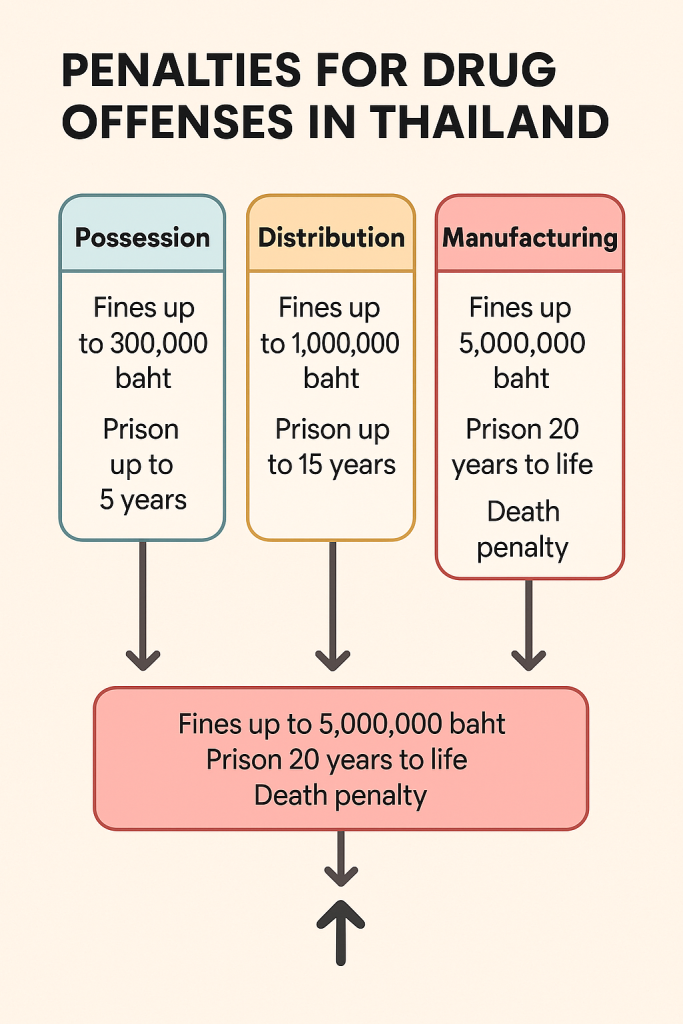
4. แนวทางการต่อสู้คดีและกลยุทธ์การบรรเทาโทษที่พบบ่อย
- ไม่รู้ว่ามียาเสพติด / ไม่มีการพิสูจน์ว่าครอบครอง, มีประโยชน์เมื่อพบยาเสพติดในประเทศไทยในที่พักร่วมหรือยานพาหนะ.
- การล่อให้กระทำความผิดหรือการส่งมอบภายใต้การควบคุมที่ผิดพลาด, มีความสำคัญมากขึ้นเรื่อยๆ เมื่อมีปฏิบัติการล่อซื้อทางออนไลน์.
- การบังคับหรือความจำเป็น (ประมวลกฎหมายอาญา §67), พบได้บ่อยในสถานการณ์ “ผู้ขนยาเสพติด” ที่เกี่ยวข้องกับฝิ่น.
- การละเมิดขั้นตอน, การตรวจค้นโดยไม่ชอบด้วยกฎหมาย บัญชีของกลางที่ไม่มีการลงลายมือชื่อ การไม่มีล่ามระหว่างการสอบสวน.
- การเสพติดและการฟื้นฟู, ตามประมวลกฎหมายปี 2021 ผู้เสพที่มียาเสพติดปริมาณเล็กน้อยสามารถยื่นคำร้องขอเข้ารับการบำบัดแบบบังคับแทนการจำคุกได้.
- การเจรจาต่อรองเรื่องข้อหากับตำรวจ , อัยการไทยไม่มีอำนาจต่อรองคำรับสารภาพแบบสหรัฐอเมริกา การเจรจาเพื่อลดข้อหาจะเกิดขึ้นในชั้นสอบสวนของตำรวจ.
5. ความเสี่ยงพิเศษสำหรับชาวต่างชาติ
- บัญชีดำ & เกินกำหนด, การถูกพิพากษาว่ามีความผิดเกี่ยวกับยาเสพติดใดๆ จะนำไปสู่ การเนรเทศ และการห้ามกลับเข้าประเทศได้สูงสุดถึงตลอดชีวิต.
- การย้ายผู้ต้องขัง, การย้ายกลับประเทศบ้านเกิดเป็นไปได้เฉพาะเมื่อได้ใช้เวลาในเรือนจำครบหนึ่งในสาม (หรือสี่ปี) ของโทษ และชำระค่าปรับทั้งหมด.
- การส่งผู้ร้ายข้ามแดน, ประเทศไทยจะส่งชาวต่างชาติเป็นผู้ร้ายข้ามแดนในคดีค้ายาเสพติดตามสนธิสัญญาทวิภาคี แต่จะไม่ส่งพลเมืองไทยเป็นผู้ร้ายข้ามแดน.
- การยึดทรัพย์สิน, ประมวลกฎหมายยาเสพติดกำหนดให้มีการริบทรัพย์อย่างเข้มงวด ทั้งรถยนต์ คอนโดมิเนียม และคริปโตที่สงสัยว่าเป็นทรัพย์สินที่ได้จากการกระทำความผิดเกี่ยวกับยาเสพติด.
- คดีโทษประหารชีวิต, ชาวต่างชาติเคยถูกพิพากษาประหารชีวิต นาย Ong Gim Wah ชาวมาเลเซีย ถูกพิพากษาประหารชีวิตเมื่อวันที่ 4 มีนาคม 2025 หลังการตรวจยึดเมทแอมเฟตามีนชนิดผลึกจำนวน 998 กิโลกรัมในจังหวัดราชบุรีเมื่อปี 2023 ซึ่งเป็นคำพิพากษาของ ศาลชั้นต้น และสามารถอุทธรณ์ได้ จึงยังไม่ใช่คำพิพากษาถึงที่สุด การประหารชีวิตเกิดขึ้นน้อยมากเนื่องจากมีการระงับการประหารชีวิตโดยพฤตินัย แต่โทษนี้ยังคงบัญญัติไว้ในกฎหมาย.
6. การเลือกทนายความคดียาเสพติดในกรุงเทพฯ
- ภาษาและประสบการณ์ในศาล, ทนายความที่ศาลแต่งตั้งมักขาดความคล่องในภาษาอังกฤษและประสบการณ์เชิงลึกในการพิจารณาคดี ควรเลือกทนายความที่มีผลงานในคดียาเสพติดปริมาณมาก และมีล่ามคอยสนับสนุน.
- การว่าจ้างทนายความตั้งแต่เนิ่นๆ, ในช่วง 48 ชั่วโมงแรกเป็นช่วงที่สำคัญสำหรับการกำหนดเงื่อนไขการประกันตัวและการตั้งข้อหา โดยการล่าช้าอาจนำไปสู่การลงโทษที่รุนแรงกว่าสำหรับคดีเกี่ยวกับยาเสพติด.
- กลยุทธ์การประกันตัว, ทนายความต้องออกแบบ ชุดหลักประกัน (เงินสด, เอกสารสิทธิ์ที่ดิน) และข้อโต้แย้งเรื่องความเสี่ยงในการหลบหนีที่ปรับแต่งมาสำหรับชาวต่างชาติ
- ความสามารถในการตรวจสอบหลักฐานภายใต้กฎหมายไทย., การเข้าถึงห้องปฏิบัติการและผู้เชี่ยวชาญอิสระเพื่อโต้แย้งระดับความบริสุทธิ์และน้ำหนักของยาเสพติด สามารถลดโทษที่อาจได้รับลงได้อย่างมาก.
- ที่ปรึกษาด้านการอุทธรณ์และการเนรเทศ, สำนักงานกฎหมายเดียวกันควรสามารถดำเนินการเรื่องคำร้องขอลดโทษ คำขอโอนตัวนักโทษ และประสานงานกับสถานเอกอัครราชทูตของคุณได้.
7. เคล็ดลับการปฏิบัติตามกฎระเบียบที่ใช้งานได้จริงสำหรับชาวต่างชาติ
- เดินทางพร้อมใบสั่งยาสำหรับยาใช้ส่วนตัว., ขอใบอนุญาตจาก FDA ล่วงหน้าสำหรับยาที่ใช้โคเดอีน ไดอะซาแพม หรือส่วนผสมควบคุมอื่นๆ ที่คล้ายกัน.
- กฎยาเม็ดเดียว, ยาเสพติดหนึ่งหน่วยการใช้ หรือน้ำหนักสุทธิ 100 มิลลิกรัม หรือ 20 มิลลิกรัมในกรณีที่ยาเสพติดอยู่ในลักษณะเกล็ด ผง หรือผลึก เป็นปริมาณที่ให้สันนิษฐานว่ามีไว้เพื่อเสพ การมีมากกว่านี้ไม่ได้ทำให้คุณถูกสันนิษฐานว่าเป็นผู้จำหน่าย และไม่ได้ตัดสิทธิ์การเข้ารับการบำบัด เพียงแต่ทำให้ข้อสันนิษฐานนั้นตกไป วัตถุประสงค์ของการครอบครองจึงกลายเป็นเรื่องที่ต้องพิสูจน์.
- กัญชาไม่ได้หมายความว่าทำอะไรก็ได้, ช่อดอกกัญชาไม่ใช่ยาเสพติดอีกต่อไป แต่เป็นสมุนไพรควบคุม: ร้านค้าจะขายให้คุณได้โดยชอบด้วยกฎหมายเฉพาะเมื่อมีใบสั่งจ่ายเท่านั้น และสารสกัดที่มี THC เกินร้อยละ 0.2 ยังคงเป็นยาเสพติดให้โทษประเภท V ควันหรือกลิ่นในที่สาธารณะถือเป็นเหตุรำคาญตามพระราชบัญญัติการสาธารณสุข และการเพิกเฉยต่อคำสั่งของเจ้าพนักงานให้ระงับอาจทำให้ถูกปรับหรือจำคุกได้ ดู คู่มือกฎหมายกัญชา.
- สถานบันเทิงยามค่ำคืน การตรวจปัสสาวะแบบสุ่มเพื่อค้นหาการใช้ยาเสพติดมักเกิดขึ้นบ่อยครั้งในสถานบันเทิงและงานปาร์ตี้ส่วนตัว ผลตรวจเป็นบวกอาจนำไปสู่การดำเนินคดี.
- ร่องรอยดิจิทัล ตำรวจใช้ข้อมูลจากแอปแชทและบริการจัดส่งบ่อยขึ้นในการล่อซื้อยาเสพติด เพื่อปกป้องตัวเอง ควรเข้ารหัสและลบข้อมูลในอุปกรณ์ของคุณ หรือที่ดียิ่งกว่านั้นคือหลีกเลี่ยงการใช้อุปกรณ์เหล่านั้น.
- หลักฐานเอกสารเกี่ยวกับทรัพย์สินในคดีเกี่ยวกับการใช้และค้าขายยาเสพติด., การโอนเงินจำนวนมากที่ไม่มีคำอธิบายที่ชัดเจนจากต่างประเทศอาจถูกแช่แข็งไว้ชั่วคราว จนกว่าจะมีการสืบสวนเรื่องการฟอกเงินที่เกี่ยวข้องกับยาเสพติดเสร็จสิ้น.
8. คำถามที่พบบ่อยเกี่ยวกับกฎหมายยาเสพติดในประเทศไทย
กฎหมายยาเสพติดของไทยเกี่ยวกับวัตถุออกฤทธิ์ต่อจิตและประสาทมีอะไรบ้าง?
วัตถุออกฤทธิ์ไม่ได้อยู่ภายใต้บังคับของพระราชบัญญัติยาเสพติดให้โทษ พ.ศ. 2522 อีกต่อไป ซึ่งมาตรา 4 แห่งพระราชบัญญัติให้ใช้ประมวลกฎหมายยาเสพติดได้ยกเลิกแล้ว และไม่อยู่ภายใต้พระราชบัญญัติวัตถุออกฤทธิ์ต่อจิตและประสาท พ.ศ. 2559 ซึ่งถูกยกเลิกโดยมาตราเดียวกันเช่นกัน แต่ปัจจุบันวัตถุออกฤทธิ์ดังกล่าวอยู่ในประมวลกฎหมายยาเสพติด พ.ศ. 2564 ซึ่งแบ่งออกเป็นสี่ประเภทตามมาตรา 30 มาตรา 94 ห้ามมิให้ผู้ใดผลิต นำเข้า ส่งออก จำหน่าย มีไว้ในครอบครอง หรือนำผ่านซึ่งวัตถุออกฤทธิ์โดยไม่ได้รับอนุญาต และมาตรา 149 กำหนดบทกำหนดโทษไว้ ดังนี้ จำคุกไม่เกิน 10 ปี และปรับไม่เกิน 1,000,000 บาท สำหรับประเภท 1 จำคุกไม่เกิน 7 ปี และปรับไม่เกิน 700,000 บาท สำหรับประเภท 2 และจำคุกไม่เกิน 5 ปี และปรับไม่เกิน 500,000 บาท สำหรับประเภท 3 และประเภท 4 การเสพวัตถุออกฤทธิ์ในประเภท 1 หรือประเภท 2 เป็นความผิดต่างหากตามมาตรา 104 ซึ่งต้องระวางโทษตามมาตรา 162 โดยจำคุกไม่เกินหนึ่งปี หรือปรับไม่เกิน 20,000 บาท หรือทั้งจำทั้งปรับ.
โทษสำหรับความผิดเกี่ยวกับยาเสพติดในประเทศไทยคืออะไร?
โทษสำหรับความผิดเกี่ยวกับยาเสพติดในประเทศไทยอาจรุนแรง มักจะส่งผลให้ต้องจำคุกหลายปี สำหรับความผิดร้ายแรงเกี่ยวกับยาเสพติด เช่น การค้ายาเสพติด การลงโทษอาจถึงจำคุกตลอดชีวิต หรือแม้กระทั่งประหารชีวิต ทั้งนี้ขึ้นอยู่กับประเภทและปริมาณของยาที่เกี่ยวข้อง การครอบครองยาเสพติดเพื่อใช้ส่วนตัวอาจนำไปสู่การจำคุก อย่างไรก็ตาม โทษขึ้นอยู่กับประเภทของยา.
กฎหมายในประเทศไทยจำแนกประเภทของยาเสพติดอย่างไร
มีสองระบบ และไม่มีระบบใดที่มีสองประเภท มาตรา 29 แห่งประมวลกฎหมายยาเสพติดแบ่งยาเสพติดให้โทษออกเป็นห้าประเภท ได้แก่ ประเภทที่ 1 ยาเสพติดให้โทษร้ายแรง ซึ่งมาตราดังกล่าวระบุชื่อเฮโรอีน ประเภทที่ 2 ยาเสพติดให้โทษทั่วไป ระบุชื่อมอร์ฟีน โคเคน โคดีน และฝิ่นยา ประเภทที่ 3 ตำรับยาที่มียาเสพติดให้โทษในประเภทที่ 2 ผสมอยู่ ประเภทที่ 4 สารเคมีที่ใช้ในการผลิตยาเสพติดให้โทษในประเภทที่ 1 หรือประเภทที่ 2 ระบุชื่ออาเซติกแอนไฮไดรด์ และประเภทที่ 5 ยาเสพติดให้โทษที่มิได้อยู่ในประเภทที่ 1 ถึงประเภทที่ 4 ระบุชื่อพืชฝิ่น มาตรา 30 แยกแบ่งวัตถุออกฤทธิ์ออกเป็นสี่ประเภทตามประโยชน์ทางการแพทย์และศักยภาพในการนำไปใช้ในทางที่ผิด สารที่ระบุชื่อใดจะอยู่ในประเภทใดนั้นถูกกำหนดโดยประกาศของรัฐมนตรีว่าการกระทรวงสาธารณสุข มิใช่โดยประมวลกฎหมาย.
การลักลอบนำยาเสพติดเข้าหรือออกในประเทศไทยมีผลทางกฎหมายอย่างไร?
การลักลอบนำเข้าหรือส่งออกยาเสพติดถือเป็นความผิดร้ายแรงในประเทศไทย โดยมีบทลงโทษที่รุนแรง รวมถึงการจำคุกระยะยาว กฎหมายเหล่านี้ออกแบบมาเพื่อยับยั้งกิจกรรมการค้ายาเสพติด และรัฐบาลได้ดำเนินมาตรการเพื่อปราบปรามผู้กระทำความผิดเกี่ยวกับยาเสพติด การนำเข้าและการส่งออกไม่ได้ถูกกำหนดระดับแยกออกจากกันในประมวลกฎหมายยาเสพติด โดยมาตรา 90 ถึง 93 ได้ระบุไว้คู่กับการผลิต การจำหน่าย และการมีไว้ในครอบครอง ดังนั้นบทลงโทษจึงเป็นไปตามบทลงโทษของประเภทนั้นๆ สำหรับยาเสพติดประเภทที่ 1 มีโทษจำคุกไม่เกิน 15 ปี และปรับไม่เกิน 1,500,000 บาท ตามมาตรา 145 และเพิ่มขึ้นเป็นจำคุก 2 ถึง 20 ปี หากเป็นการกระทำเพื่อการค้า และสำหรับหัวหน้าเครือข่ายหรือในกรณีที่กระทบต่อความมั่นคงของรัฐ โทษจะเพิ่มขึ้นเป็นจำคุกตั้งแต่ 5 ปีจนถึงตลอดชีวิต หรือประหารชีวิต นอกจากนี้ ผู้กระทำความผิดอาจต้องโทษปรับและถูกริบเงินที่ได้มาจากการค้ายาเสพติดด้วย.
บริการทางกฎหมายในประเทศไทยสามารถช่วยเหลือเกี่ยวกับความผิดเกี่ยวกับยาเสพติดได้หรือไม่?
ใช่ บริการทางกฎหมายในประเทศไทย เช่นที่ให้บริการโดย ThaiLawOnline สามารถช่วยเหลือบุคคลที่ต้องเผชิญกับคดีความเกี่ยวกับยาเสพติด บริการเหล่านี้ให้ความช่วยเหลือและคำแนะนำทางกฎหมาย โดยมุ่งเน้นการทำความเข้าใจกฎหมายที่ซับซ้อนเกี่ยวกับการครอบครอง การค้ายาเสพติด และความผิดอื่น ๆ ที่เกี่ยวข้องกับยาเสพติด ขอแนะนำให้ขอความช่วยเหลือจากผู้เชี่ยวชาญด้านกฎหมาย หากสงสัยว่ามีส่วนเกี่ยวข้องกับยาเสพติด.
การครอบครองยาเสพติดเพื่อใช้ส่วนตัวส่งผลกระทบอย่างไรบ้าง?
การครอบครองยาเสพติดเพื่อใช้ส่วนตัวยังคงผิดกฎหมายในประเทศไทย ผู้ที่ถูกจับได้ว่ามียาเสพติดผิดกฎหมายอาจต้องเผชิญกับบทลงโทษที่ร้ายแรง แม้แต่ปริมาณเล็กน้อยก็อาจทำให้ถูกจำคุกและปรับ ซึ่งสะท้อนให้เห็นถึงท่าทีที่เข้มงวดของประเทศในการบังคับใช้กฎหมายเกี่ยวกับยาเสพติด การตระหนักถึงกฎหมายเหล่านี้จึงเป็นสิ่งสำคัญเพื่อหลีกเลี่ยงผลทางกฎหมายที่ร้ายแรง.
ฉันควรรู้อะไรบ้างเกี่ยวกับการตรวจหาสารเสพติดในประเทศไทย?
การตรวจหาสารเสพติดในประเทศไทยเป็นเรื่องปกติที่จะดำเนินการในสถานที่ต่างๆ รวมถึงสถานที่ทำงานและสถานการณ์ที่เกี่ยวข้องกับการบังคับใช้กฎหมาย หากตรวจพบว่าใช้ยาเสพติด คุณอาจต้องเผชิญกับผลทางกฎหมาย ซึ่งอาจรวมถึงค่าปรับหรือจำคุก ขึ้นอยู่กับสถานการณ์และชนิดของยาเสพติด การตระหนักถึงกฎหมายยาเสพติดจึงเป็นสิ่งสำคัญสำหรับผู้ที่อาศัยหรือเดินทางในประเทศไทย.
9. ศาลฎีกาได้บังคับใช้ประมวลกฎหมายยาเสพติด พ.ศ. 2564 อย่างไร
สอง ศาลฎีกา คำพิพากษาเป็นตัวกำหนดว่าประมวลกฎหมายปี 2021 เปลี่ยนแปลงการลงโทษอย่างไร และควรอ่านควบคู่กันเพราะให้ผลไปในทิศทางตรงกันข้าม ทั้งสองฉบับไม่ใช่คำสัญญาทั่วไปว่าจะได้รับความปรานี ทั้งสองเป็นคำวินิจฉัยว่าด้วย กฎหมายใดที่ใช้บังคับ กับการกระทำที่คาบเกี่ยวกับวันที่ประมวลกฎหมายมีผลใช้บังคับคือ 9 ธันวาคม 2021 ซึ่งเป็นประเด็นที่ชี้ขาดคดียาเสพติดจำนวนมากที่ยังอยู่ระหว่างการพิจารณาของศาล.
- คำพิพากษาศาลฎีกาที่ 272/2565 (ประชุมใหญ่): ปริมาณไม่เป็นเกณฑ์อีกต่อไป. ศาลวินิจฉัยว่าพระราชบัญญัติยาเสพติดให้โทษ พ.ศ. 2522 ที่ใช้บังคับเดิม มาตรา 15 ประกอบมาตรา 66 กำหนดโทษที่หนักขึ้นโดยถือเอา ปริมาณของยาเพียงอย่างเดียว เป็นตัวชี้ขาด ในขณะที่มาตรา 145 ของประมวลกฎหมายกำหนดโทษที่หนักขึ้นโดยพิจารณาจาก พฤติกรรมของผู้กระทำความผิดในการก่อเหตุ และบทบาทและหน้าที่ของเขาในเหตุการณ์นั้น, และไม่ได้ถือเอาปริมาณเป็นเกณฑ์อย่างกฎหมายเดิมอีกต่อไป แม้ว่าปริมาณที่มากขึ้นอาจบ่งบอกถึงพฤติการณ์และบทบาทดังกล่าวได้ก็ตาม ผลที่ศาลสรุปไว้นั้นชัดเจน: เมื่อปริมาณถึงเกณฑ์ตามมาตรา 66 วรรคสองหรือวรรคสามเดิม แต่ผู้กระทำความผิดไม่มีพฤติการณ์หรือบทบาทใดๆ ตามที่ระบุไว้ในมาตรา 145 วรรคสองหรือวรรคสาม, ศาลสามารถลงโทษได้เพียงตามมาตรา 145 วรรคหนึ่ง.
- คำพิพากษาเดียวกันนี้ยังวินิจฉัยอีกครึ่งหนึ่งไว้ด้วย และเป็นครึ่งที่มีแนวโน้มจะเป็นผลร้ายต่อจำเลยมากกว่า. มาตรา 21 วรรคหนึ่งแห่งพระราชบัญญัติให้ใช้ประมวลกฎหมายยาเสพติด ยังคงให้ข้อสันนิษฐานตามกฎหมาย เดิม ว่ามีไว้ในครอบครองเพื่อจำหน่ายมีผลใช้บังคับต่อไปสำหรับคดีใดๆ ที่ศาลชั้นต้นได้มีคำพิพากษาก่อนประมวลกฎหมายใช้บังคับ จนกว่าคดีนั้นจะถึงที่สุด ดังนั้น จำเลยที่ศาลชั้นต้นพิพากษาลงโทษก่อนวันที่ 9 ธันวาคม 2021 ยังคงต้องเผชิญกับข้อสันนิษฐานตามมาตรา 15 เดิม ซึ่งการมียาเสพติดประเภท I ไว้ในครอบครองตามปริมาณที่กำหนด โดยสำหรับแอมเฟตามีนคือ 375 มิลลิกรัมขึ้นไปเมื่อคำนวณเป็นสารบริสุทธิ์ ให้สันนิษฐานว่ามีไว้ในครอบครองเพื่อจำหน่าย.
- คำพิพากษาศาลฎีกาที่ 4302/2567: สำหรับความผิดฐานเสพ ให้ใช้กฎหมายที่เป็นคุณมากกว่า และกฎหมายนั้นคือประมวลกฎหมายยาเสพติด. มาตรา 3 แห่งประมวลกฎหมายอาญากำหนดว่ากฎหมายใดใช้บังคับกับการกระทำที่เกิดขึ้นก่อนกฎหมายเปลี่ยนแปลง การเสพเมทแอมเฟตามีนเป็นความผิดตามมาตรา 57 แห่งพระราชบัญญัติยาเสพติดให้โทษ พ.ศ. 2522 ซึ่งมีโทษตามมาตรา 91 คือจำคุกตั้งแต่ 6 เดือนถึง 3 ปี หรือปรับตั้งแต่ 10,000 ถึง 60,000 บาท หรือทั้งจำทั้งปรับ การกระทำเดียวกันนี้ปัจจุบันเป็นความผิดตามมาตรา 104 แห่งประมวลกฎหมายยาเสพติด ซึ่งมีโทษตามมาตรา 162 คือจำคุกไม่เกิน 1 ปี หรือปรับไม่เกิน 20,000 บาท หรือทั้งจำทั้งปรับ มาตรา 162 เป็นคุณมากกว่า จึงต้องใช้มาตรา 162 และเนื่องจากมาตรา 157/1 วรรคสองแห่งพระราชบัญญัติจราจรทางบก พ.ศ. 2522 เพิ่มโทษตามกฎหมายยาเสพติดอีกหนึ่งในสามสำหรับผู้ขับขี่ที่เสพยาเสพติด อัตราโทษขั้นสูงในกรณีนั้นจึงเท่ากับจำคุก 1 ปี 4 เดือน หรือปรับ 26,666.66 บาท หรือทั้งจำทั้งปรับ ในกระทงนั้นจำเลยได้รับโทษจำคุก 3 เดือน, ถูกพักงานเป็นเวลา 2 ปี.
สิ่งนี้หมายถึงอะไรและไม่ได้หมายความว่าอย่างไรสำหรับคุณ. มาตรา 165 แห่งประมวลกฎหมายยาเสพติดกำหนดให้ศาลที่พิจารณาความผิดเหล่านี้ให้น้ำหนักกับการช่วยเหลือให้จำเลยเลิกเสพยาเสพติดด้วยการบำบัดรักษามากกว่าการลงโทษ และให้กำหนดโทษจำเลยแต่ละรายเป็นรายบุคคล แม้ว่าจะกระทำความผิดร่วมกันก็ตาม นี่เป็นคำสั่งที่แท้จริงต่อศาล และเป็นเหตุผลที่การบรรเทาโทษ การบำบัดรักษา และการอธิบายบทบาทของคุณอย่างชัดเจนมีความสำคัญภายใต้ประมวลกฎหมายมากกว่าภายใต้พระราชบัญญัติปี 1979 แต่ไม่ใช่การรับประกัน และสำหรับผู้ที่คดีเริ่มต้นก่อนเดือนธันวาคม 2021 ข้อสันนิษฐานเดิมตามคำพิพากษาที่ 272/2565 อาจยังคงเป็นสิ่งที่ชี้ขาดคดี.
ผลลัพธ์เหล่านี้แสดงให้เห็นว่า แม้กฎหมายยาเสพติดจะยังคงเข้มงวด แต่ผลของคดีสามารถดีขึ้นได้ด้วยการต่อสู้คดีที่อาศัยพยานหลักฐาน ที่ ThaiLawOnline ทีมของเรานำโดย Sébastien Brousseau เรามี ทนายความไทยที่ได้รับใบอนุญาต, เช่น Garn (เนติบัณฑิต), JJ และ Wichuda (ผู้สำเร็จการศึกษาระดับปริญญาโท) เราได้ใช้คดีที่คล้ายกันเพื่อช่วยให้ได้รับการลดโทษ การยกฟ้อง และทางเลือกในการบำบัดฟื้นฟู อย่าเผชิญเรื่องนี้เพียงลำพัง ติดต่อเราได้ที่ info@thailawonline.com เพื่อขอคำแนะนำเฉพาะบุคคลเกี่ยวกับการที่คำพิพากษาเหล่านี้อาจนำมาใช้กับสถานการณ์ของคุณ.
ตรวจสอบครั้งล่าสุด: 5 กันยายน 2026. ตารางบทลงโทษและข้อความเกี่ยวกับการจัดประเภทในหน้านี้ได้รับการอ่านเทียบกับ ประมวลกฎหมายยาเสพติด พ.ศ. 2564 ฉบับตัวบทจริง จากการประกาศในราชกิจจานุเบกษาเมื่อวันที่ 8 พฤศจิกายน 2021 (เล่ม 138 ตอนที่ 73 ก หน้า 1) ซึ่งมีทั้งพระราชบัญญัติให้ใช้ประมวลกฎหมายยาเสพติดและประมวลกฎหมายที่แนบท้าย มาตราที่ได้อ่านครบถ้วน ได้แก่ มาตรา 29 และ 30 (การจำแนกประเภทยาเสพติดให้โทษและวัตถุออกฤทธิ์) บทห้าม มาตรา 90 ถึง 94, มาตรา 104 (การเสพ) และ มาตรา 107 (การครอบครองเพื่อเสพและข้อสันนิษฐานเรื่องปริมาณ) และบทกำหนดโทษ มาตรา 145 ถึง 149, มาตรา 162, มาตรา 164 และ มาตรา 165. ตัวเลขทุกตัวในตารางบทลงโทษห้าแถวผิดเมื่อเทียบกับมาตราเหล่านั้น และทั้งหมดได้ถูกแทนที่แล้ว, รวมถึงคำตอบคำถามที่พบบ่อยสามข้อที่มีข้อผิดพลาดเดียวกันซ้ำในข้อมูลโครงสร้างของหน้าเว็บ ตารางที่เผยแพร่ก่อนหน้านี้ระบุว่าประเภท IV มีโทษจำคุกสูงสุดห้าปี ในขณะที่มาตรา 146 กำหนดจำคุกไม่เกินสิบปีและปรับไม่เกิน 1,000,000 บาท ระบุให้ประเภท III มีโทษถึงจำคุกตลอดชีวิต ในขณะที่มาตรา 147 กำหนดไว้ไม่เกินสามปีและ 300,000 บาท และระบุโทษทุกกรณีว่าเป็นจำคุก หรือ ค่าปรับ ในขณะที่มาตรา 145 ถึง 148 ทุกมาตราใช้คำว่า และ. ขณะนี้ตัวเลขในหน้านี้ตรงกับเนื้อหาที่ละเอียดกว่าของเราใน คู่มืออ้างอิงเกี่ยวกับกฎหมายยาเสพติดและบทลงโทษในประเทศไทย รายมาตราต่อมาตรา; ก่อนหน้านี้ทั้งสองหน้าขัดแย้งกันในเรื่องประเภท I และ V.
สิ่งที่การตรวจทานครั้งนี้ไม่ได้ครอบคลุม ขอกล่าวไว้อย่างตรงไปตรงมา. สารที่ระบุชื่อใดจัดอยู่ในประเภทใดนั้นกำหนดโดยประกาศของรัฐมนตรีว่าการกระทรวงสาธารณสุขตามมาตรา 29 วรรคสอง และประกาศดังกล่าว ไม่ ได้อ่านในการตรวจทานครั้งนี้ มาตรา 29 เองระบุชื่อเฮโรอีน มอร์ฟีน โคเคน โคดีน ฝิ่นยา อาเซติกแอนไฮไดรด์ และพืชฝิ่น และสารทั้งเจ็ดนี้ยกมาจากประมวลกฎหมาย ส่วนสารอื่นทุกชนิดที่ระบุในหน้านี้ รวมถึงเมทแอมเฟตามีนและ MDMA มาจากประกาศที่เรายังไม่ได้อ่าน สถานะของกัญชานำมาจาก คู่มือกฎหมายกัญชา, ซึ่งเป็นคู่มือของเราเองและได้ตรวจทานเทียบกับประกาศเรื่องสมุนไพรควบคุมเมื่อวันที่ 4 กันยายน 2026 และหน้านี้ไม่ได้ยืนยันสถานะของกระท่อมไม่ว่าทางใด ไม่มีเนื้อหาใดในหน้านี้เกี่ยวกับการดำเนินการจับกุม การฝากขังครั้งละสิบสองวัน แนวปฏิบัติเรื่องการประกันตัว พยานหลักฐานสนับสนุนหลังการรับสารภาพ การโอนตัวนักโทษ การส่งผู้ร้ายข้ามแดน หรือการเนรเทศ ที่ได้รับการตรวจสอบเทียบกับประมวลกฎหมายวิธีพิจารณาความอาญาหรือกฎหมายว่าด้วยการโอนตัวนักโทษ.
อัปเดตในวันเดียวกัน. ส่วนสุดท้ายเดิมบรรยายผลคำพิพากษาศาลฎีกาห้าคดีโดยไม่มีเลขคดีใดๆ เลย ไม่มีคดีใดที่สามารถค้นพบได้จากฐานข้อมูลทั้งสองแห่งของเรา จึงได้แทนที่ด้วยคำพิพากษาสองฉบับที่สามารถค้นพบได้ ดังนี้: 272/2565, ซึ่งได้อ่านคำต่อคำ รวมถึงข้อความส่วนที่เป็นมติที่ประชุมใหญ่และคำวินิจฉัยเรื่องบทเฉพาะกาลตามมาตรา 21 และ 4302/2567, ซึ่งได้อ่านจนถึงผลแห่งคำพิพากษา ตัวอย่างคดีโทษประหารชีวิตได้รับการตรวจสอบแทนที่จะถูกลบออก: คำพิพากษาประหารชีวิตนาย Ong Gim Wah เมื่อวันที่ 4 มีนาคม 2025 ได้รับการรายงานตรงกันจากสื่ออิสระหลายแห่งและระบุไว้อย่างถูกต้อง โดยเพิ่มเติมว่าเป็นคำพิพากษาของศาลชั้นต้นและสามารถอุทธรณ์ได้.
ข่าวสารกฎหมายไทย ฟรีทางอีเมล
อัปเดตข่าวสารเป็นภาษาอังกฤษที่เข้าใจง่ายเกี่ยวกับการเปลี่ยนแปลงของกฎหมายไทยที่ส่งผลกระทบต่อชาวต่างชาติ: อสังหาริมทรัพย์, วีซ่า, การสมรส, ธุรกิจ และพินัยกรรม จดหมายข่าวสั้นเพียงฉบับเดียวต่อเดือน จากสำนักงานกฎหมายที่ดำเนินงานมาตั้งแต่ปี 2549 ไม่มีการส่งสแปม ยกเลิกรับได้ทุกเมื่อ.